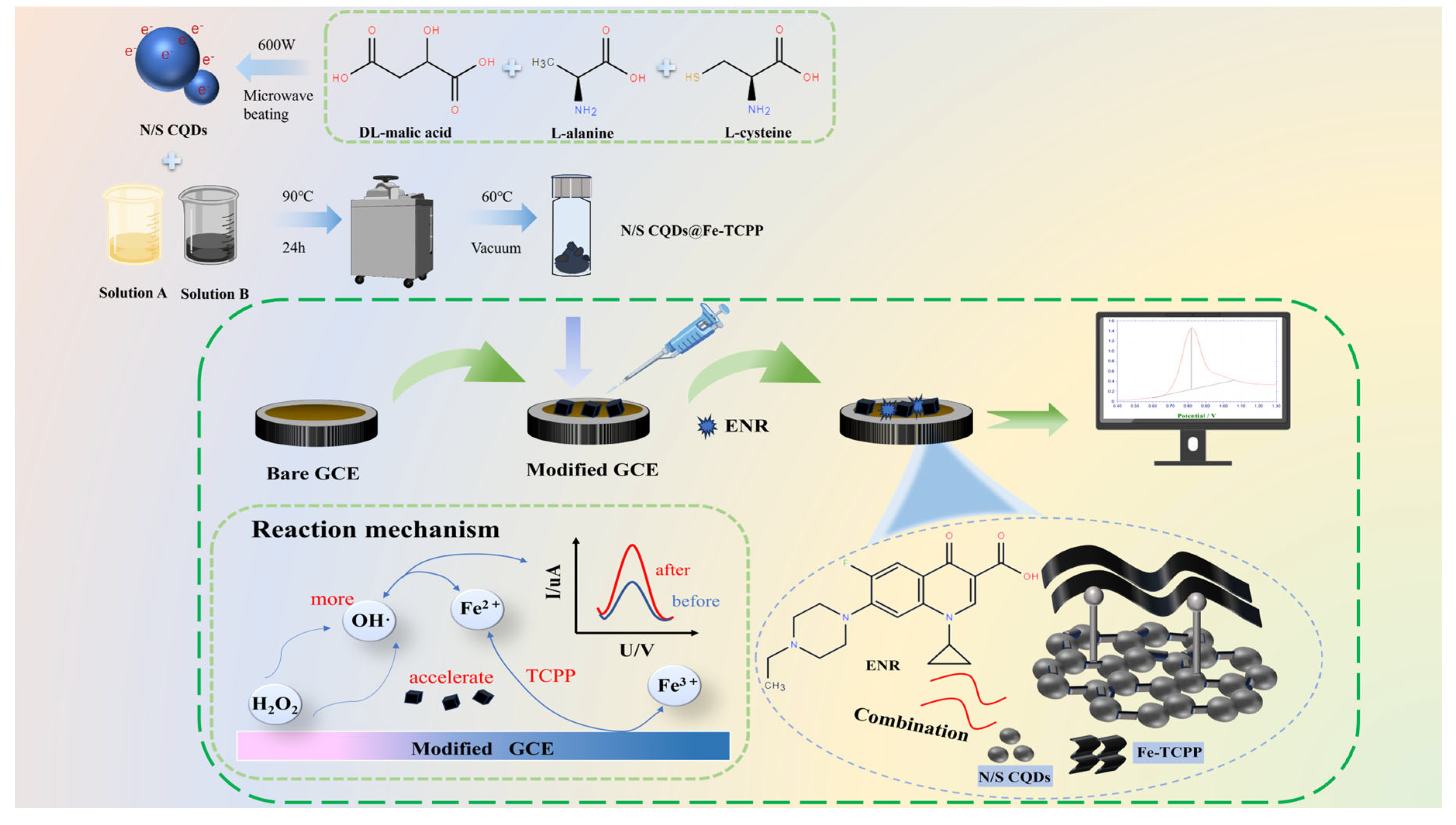
Construction of N/S CQDs@Fe-TCPP Nanocatalyst-Induced Electrochemical Sensors for Rapid and Sensitive Detection of Enrofloxacin Residues in Milk

 , ,
, ,
Abstract
1. Introduction
2. Materials and Methods
2.1. Apparatus and Reagents
2.2. Preparation of N/S CQDs
2.3. Preparation of N/S CQDs@Fe-TCPP
2.4. Preparation of N/S CQDs@Fe-TCPP/GCE
2.5. Electrochemical Measurement and Investigation of Reaction Mechanisms
2.6. Optimisation of Experimental Conditions
2.7. Evaluation of the Detection Performance of Sensors
2.8. Sample Preparation and Methodological Comparison
2.9. Data Processing and Analysis
3. Results
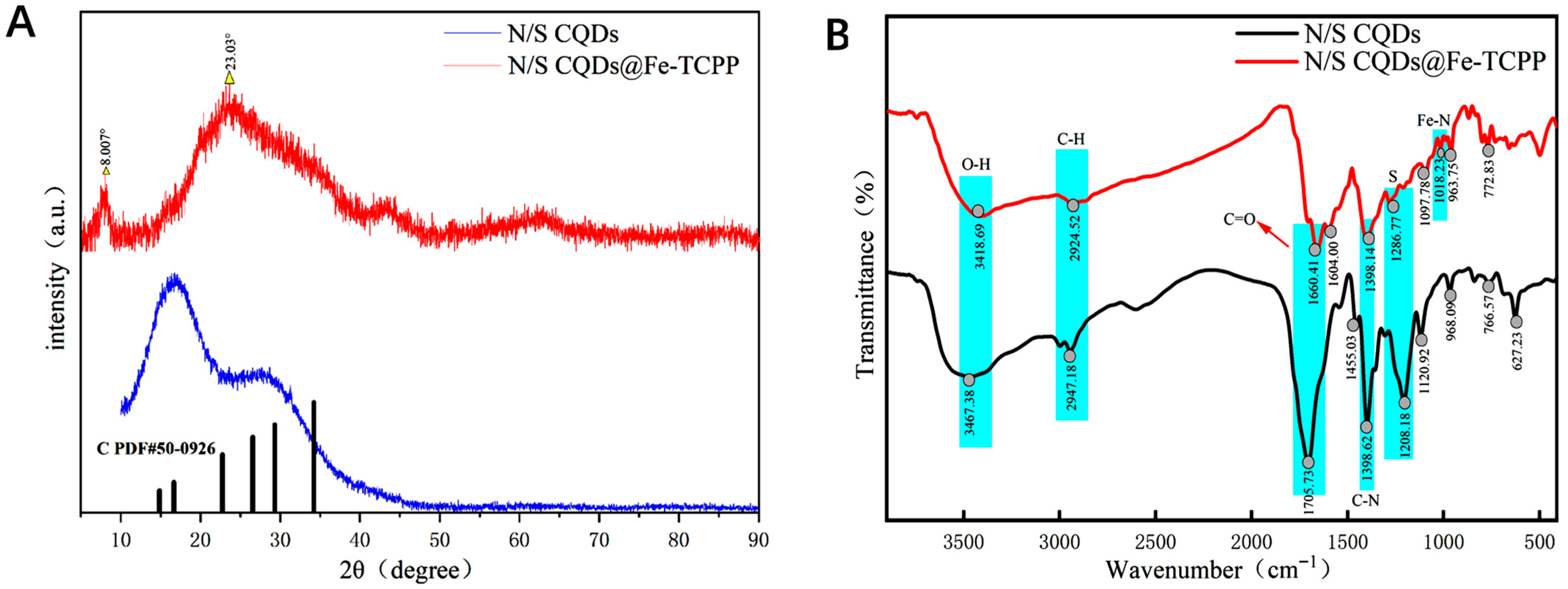
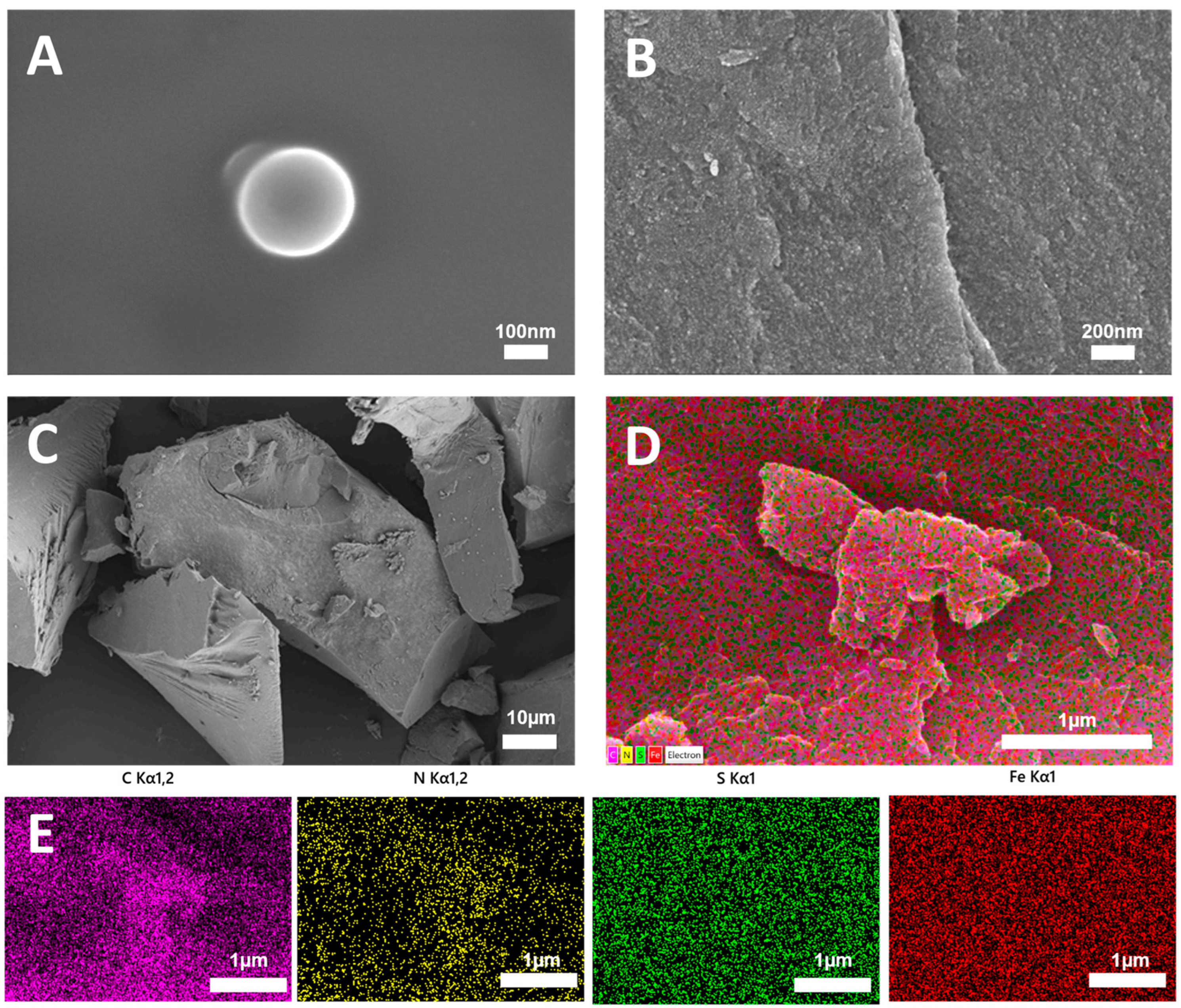
3.1. Characterization of Materials and Polymers
3.2. Mechanism Exploration and Electrochemical Performance
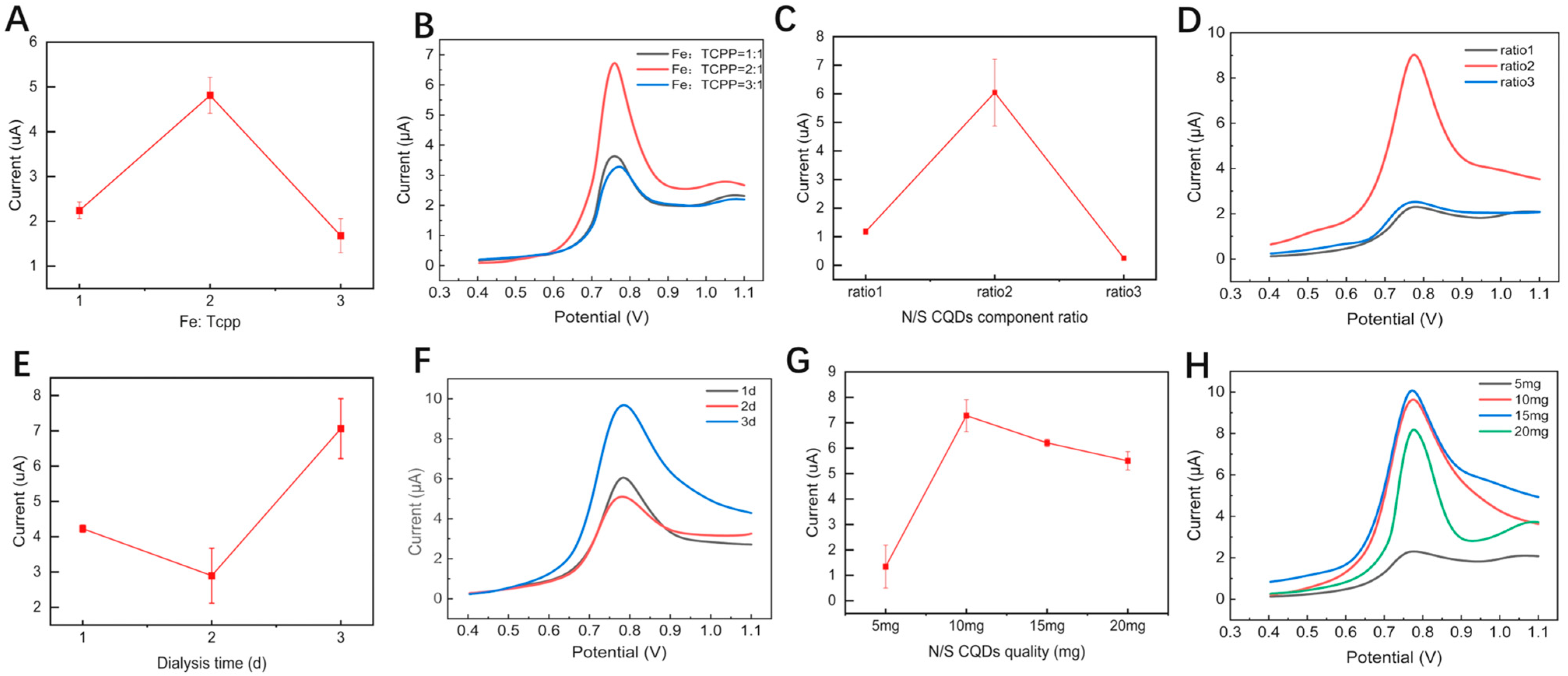
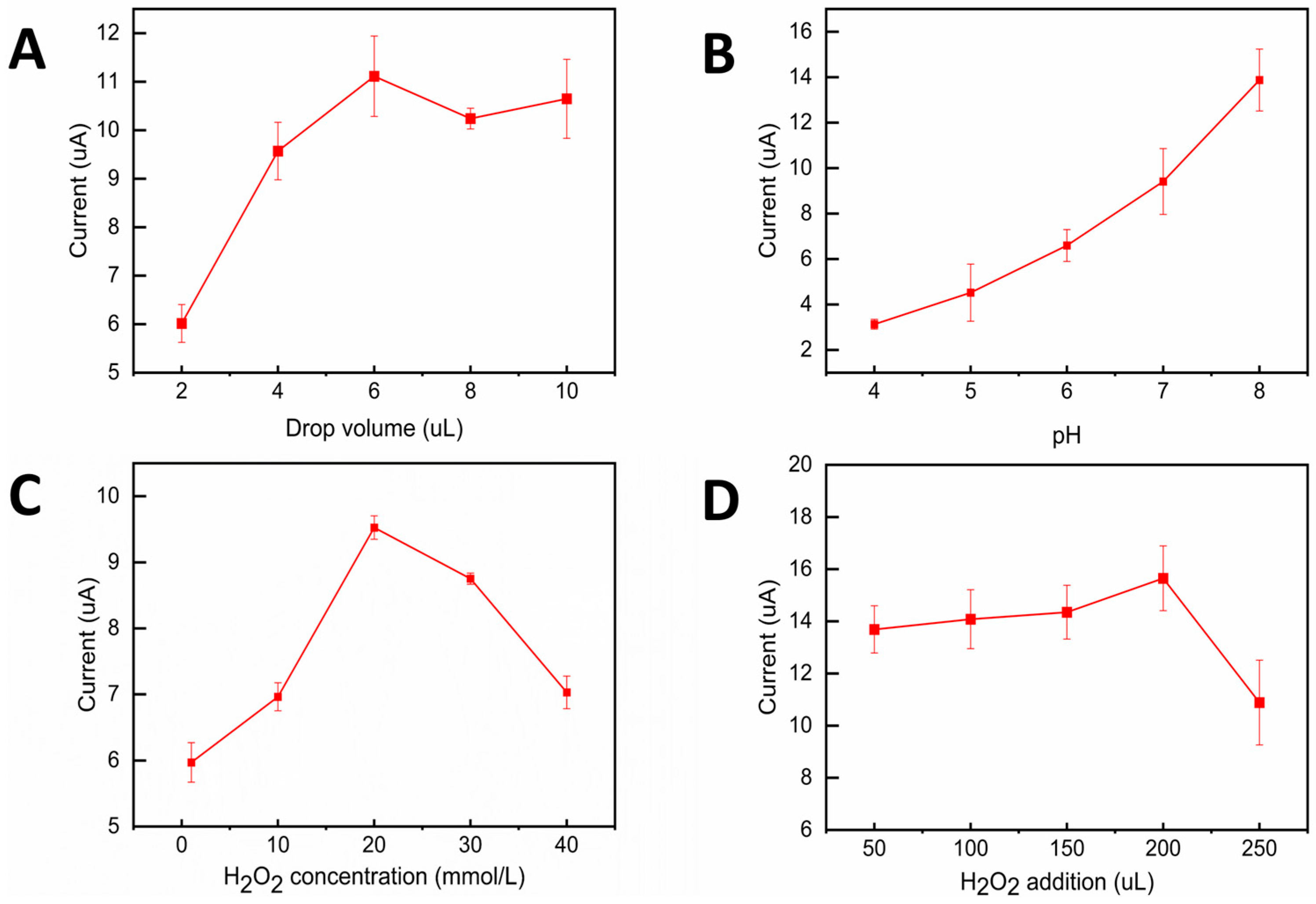
3.3. Optimization of Experimental Conditions
3.3.1. Optimization of Fabrication Conditions of N/S CQDs@Fe-TCPP/GCE
3.3.2. Optimization of Detection Conditions of N/S CQDs@Fe-TCPP/GCE
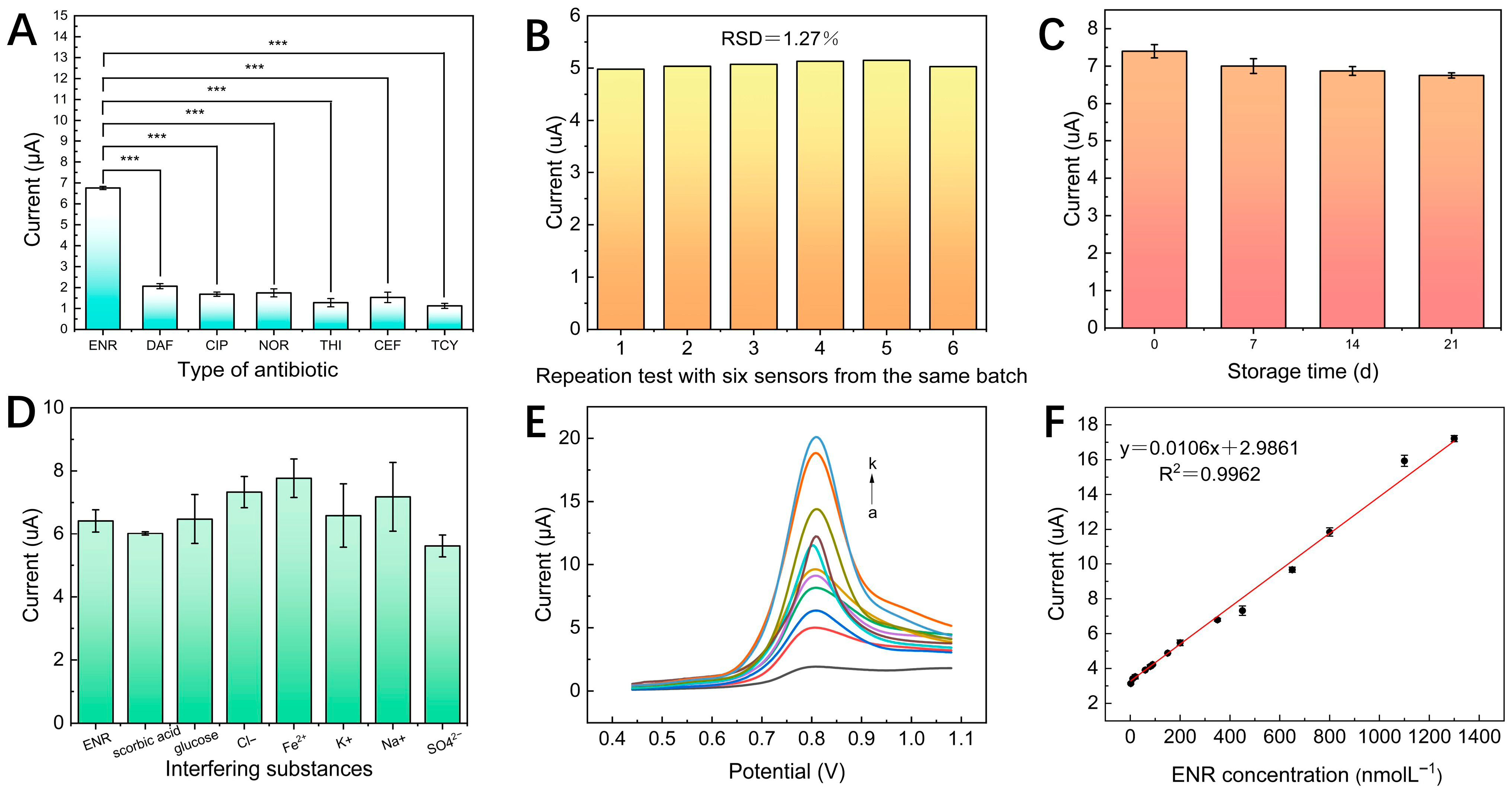
3.4. Detection Performance Evaluation of the N/S CQDs@Fe-TCPP/GCE Sensor
3.5. Application of Real Samples Detection
4. Conclusions
Supplementary Materials
Author Contributions
Funding
Institutional Review Board Statement
Informed Consent Statement
Data Availability Statement
Conflicts of Interest
References
- Suryoprabowo, S.; Nasyiruddin, R.L.; Wang, Z.; Hendriko, A.; Tristanto, N.A. A comprehensive review on the pretreatment and detection methods of fluoroquinolones in food and environment. J. Food Compos. Anal. 2025, 140, 107179. [Google Scholar] [CrossRef]
- Tian, D.; Zhang, W.; Lu, L.; Yu, Y.; Yu, Y.; Zhang, X.; Li, W.; Shi, W.; Liu, G. Enrofloxacin exposure undermines gut health and disrupts neurotransmitters along the microbiota-gut-brain axis in zebrafish. Chemosphere 2024, 356, 141971. [Google Scholar] [CrossRef]
- GB 31650-32019; National Food Safety Standard—Maximum Residue Limits for Veterinary Drugs in Foods. China Agricultural Press: Beijing, China, 2019.
- Ham, J.-H.; Lee, Y.-J.; Kim, H.-Y. A smartphone-integrated colorimetric microbial assay using glucose metabolism for residual antibiotic detection in foods. Food Chem. 2025, 493, 146065. [Google Scholar] [CrossRef] [PubMed]
- Ma, D.; Kang, Y.; Zhou, X.; Ma, H.; Ge, M.; Wei, M.; Li, Z. Synergistic degradation of quinolones by g-C3N4/BiOBr S-scheme heterojunction modified with corn straw biochar. Appl. Surf. Sci. 2025, 710, 163927. [Google Scholar] [CrossRef]
- Afzal, M.H.; Pervaiz, W.; Elahi, N.; Huang, Z.; Li, G.; Liu, H. Development of a low-cost zirconium molybdate bimetallic center electrochemical sensor for simultaneous enrofloxacin and ciprofloxacin detection in food samples. Microchem. J. 2025, 218, 115165. [Google Scholar] [CrossRef]
- Chen, S.; Cheng, X.; Wang, W.; Ye, M.; Cai, Y.; Zhong, F.; Zou, L.; Li, J.; Liu, S.; Hu, K.; et al. Integrating peroxidase-mimicking MOF-based composite nanozymes with molecular imprinting for dual-mode thiamphenicol sensing in animal-derived foods. Food Chem. 2025, 495, 146263. [Google Scholar] [CrossRef]
- Wu, L.; Li, G.; Xu, X.; Zhu, L.; Huang, R.; Chen, X. Application of nano-ELISA in food analysis: Recent advances and challenges. TrAC Trends Anal. Chem. 2019, 113, 140–156. [Google Scholar] [CrossRef]
- Vercelli, C.; Amadori, M.; Gambino, G.; Re, G. A review on the most frequently used methods to detect antibiotic residues in bovine raw milk. Int. Dairy J. 2023, 144, 105695. [Google Scholar] [CrossRef]
- Shrivas, K.; Tandey, K.; Sharma, A.; Chandrawanshi, N.K.; Ghosh, K.K. Advances and challenges in sample preparation and analytical methods for water-soluble vitamins: Application in food, clinical, pharmaceutical samples. J. Pharm. Biomed. Anal. 2025, 266, 117124. [Google Scholar] [CrossRef] [PubMed]
- Wang, X.; Li, X.; Li, S.; Du, W.; Yan, W.; Xu, H. Degradation of Antibiotics by Electrochemical Oxidation: Current Issues, Environmental Risks, and Future Strategies. Chem. Eng. J. 2025, 516, 163941. [Google Scholar] [CrossRef]
- Gao, X.; Wang, L.; Elumalai, P.; Lakshminarayanan, S.; Zhu, X.; Wang, L.; Govindan, R.; Theerthagiri, J.; Parthipan, P.; Zhao, Q.; et al. Emerging sensor technologies for detecting pollutants in ecosystems. Coord. Chem. Rev. 2025, 542, 216849. [Google Scholar] [CrossRef]
- Kalambate, P.K.; Mane, S.; Upadhyay, S.S.; Kalambate, R.P.; Gadhari, N.S.; Sivasurya, E.; Ashamary, F.; Dar, M.A.; Khosropour, H.; Manoj, D. Advances in electrochemical sensors for monitoring of emerging soil contaminants: Innovations, challenges, and environmental impact. TrAC Trends Anal. Chem. 2026, 194, 118503. [Google Scholar] [CrossRef]
- Zhang, C.; Jiang, C.; Lan, L.; Ping, J.; Ye, Z.; Ying, Y. Nanomaterial-based biosensors for agro-product safety. TrAC Trends Anal. Chem. 2021, 143, 116369. [Google Scholar] [CrossRef]
- Quílez-Bermejo, J.; Morallón, E.; Cazorla-Amorós, D.; Celzard, A.; Fierro, V. Progress and perspectives in the electrochemical synthesis of carbon nanomaterials. Carbon 2025, 237, 120151. [Google Scholar] [CrossRef]
- Singh, H.; Thakur, B.; Bhardwaj, S.K.; Khatri, M.; Kim, K.-H.; Bhardwaj, N. Nanomaterial-based fluorescent biosensors for the detection of antibiotics in foodstuffs: A review. Food Chem. 2023, 426, 136657. [Google Scholar] [CrossRef] [PubMed]
- Hassan Ahmed, H.E.; Soylak, M. Exploring the potential of carbon quantum dots (CQDs) as an advanced nanomaterial for effective sensing and extraction of toxic pollutants. TrAC Trends Anal. Chem. 2024, 180, 117939. [Google Scholar] [CrossRef]
- Heydarinasab, H.; Sadeghi, F.H.; Mohammadloo, H.E.; Ramezanzadeh, B. Multi-metal/ligand MOFs: Transformative materials for energy storage, photocatalysis, and sensor technologies. Adv. Colloid Interface Sci. 2025, 344, 103592. [Google Scholar] [CrossRef]
- He, H.; Li, R.; Yang, Z.; Chai, L.; Jin, L.; Alhassan, S.I.; Ren, L.; Wang, H.; Huang, L. Preparation of MOFs and MOFs derived materials and their catalytic application in air pollution: A review. Catal. Today 2021, 375, 10–29. [Google Scholar] [CrossRef]
- Nguyen, H.A.; Phuong, N.T.T.; Tran, N.B.; Trinh, T.N.D.; Mai, N.X.D.; Tran, N.Q.; Tran, N.H.T.; Trinh, K.T.L. Nano-enhanced Fenton/Fenton-like chemistry: Integrating peroxidase nanozymes, MOFs, and MXenes for next-generation colorimetric biosensors. Nanoscale Adv. 2025, 7, 4763–4779. [Google Scholar] [CrossRef]
- Li, X.; Fu, L.; Chen, F.; Lv, Y.; Zhao, S.; Karimi-Maleh, H. Research on the application of metal-organic framework (MOF)-based nanozymes in colorimetric and electrochemical detection of biomolecules. Inorg. Chem. Commun. 2025, 179, 114752. [Google Scholar] [CrossRef]
- Li, M.; Zhang, G.; Boakye, A.; Chai, H.; Qu, L.; Zhang, X. Recent advances in metal-organic framework-based electrochemical biosensing applications. Front. Bioeng. Biotechnol. 2021, 9, 797067. [Google Scholar] [CrossRef] [PubMed]
- Zhang, C.; Zhang, C.; Yi, Y.; Yang, Y.; Zhu, G. Ratiometric electrochemical direct sensing of ciprofloxacin antibiotic via electroless plating of silver on graphynes. Microchem. J. 2025, 216, 114565. [Google Scholar] [CrossRef]
- Chau Nguyen, V.B.; Reut, J.; Ayankojo, A.G.; Syritski, V. Direct electrochemical sensing of ampicillin in aqueous media by a ruthenium oxide electrode decorated with a molecularly imprinted polymer. Talanta 2025, 287, 127580. [Google Scholar] [CrossRef]
- Li, Z.; Hu, J.; Lou, Z.; Zeng, L.; Zhu, M. Molecularly imprinted photoelectrochemical sensor for detecting tetrabromobisphenol A in indoor dust and water. Microchim. Acta 2021, 188, 320. [Google Scholar] [CrossRef]
- Kang, J.-W.; Kang, D.-H. Effect of amino acid-derived nitrogen and/or sulfur doping on the visible-light-driven antimicrobial activity of carbon quantum dots: A comparative study. Chem. Eng. J. 2021, 420, 129990. [Google Scholar] [CrossRef]
- Li, W.-Q.; Wang, Y.-X.; Chen, J.-Q.; Hou, N.-N.; Li, Y.-M.; Liu, X.-C.; Ding, R.-R.; Zhou, G.-N.; Li, Q.; Zhou, X.-G.; et al. Boosting photo-Fenton process enabled by ligand-to-cluster charge transfer excitations in iron-based metal organic framework. Appl. Catal. B Environ. 2022, 302, 120882. [Google Scholar] [CrossRef]
- Chen, Y.; Zheng, L.; Hao, J.; Huang, L.; Wang, Q.; Zhou, Y.; Yin, Z.; Jia, L.; Li, H.; Liao, W.; et al. Facile fabrication of Fe3O4@UiO-66-NH2/popcorn-like gold nanoparticles based SERS substrate for selective enrichment and real-time detection of residual enrofloxacin in milk. Food Control 2024, 159, 110270. [Google Scholar] [CrossRef]
- Guo, Q.; Zhang, J.; Shao, B.; Yin, J.; Yang, Y.; Yang, Y. Rapid Screening for Hazardous Substances with Regu-latory Differences in Milk Between Countries Using Ultra-High Performance Liquid Chromatography Ion Mobility Quadrupole Time-of-Flight Mass Spectrometry. Foods 2025, 14, 967. [Google Scholar] [CrossRef]
- Xia, P.; Liu, M.; Cheng, B.; Yu, J.; Zhang, L. Dopamine modified g-C3N4 and its enhanced visible-light photocatalytic H2-production activity. ACS Sustain. Chem. Eng. 2018, 6, 8945–8953. [Google Scholar] [CrossRef]
- Sun, J.; Zhao, Z.; Wei, X.; Yang, J.; Li, D.; Li, M.; Choonara, Y.E.; Chen, L.; Ding, J.; Chen, X. Multi-bioactive poly(amino acid)-metal-organic framework nanocomposite for reinforced cascading photodynamic immunotherapy of cancer. Biomaterials 2026, 324, 123488. [Google Scholar] [CrossRef] [PubMed]
- Li, C.; Hu, J.; Yan, H. Study on efficient degradation of sodium lignosulfonate using N-CQDs/MgIn2S4 composite photocatalyst. Appl. Surf. Sci. 2025, 710, 164004. [Google Scholar] [CrossRef]
- Mir, T.U.G.; Malik, A.Q.; Shukla, S.; Singh, J.; Kumar, D. Facile synthesis of S-doped carbon quantum dots and their application in the detection of Sudan I in saffron. J. Fluoresc. 2024, 34, 253–263. [Google Scholar] [CrossRef]
- Liang, X.-H.; Chen, Y.; Liu, A.-G.; Zhu, T.; Chen, Z.-T.; Xia, H.-X.; Chen, M.; Li, B. Engineering stable cd-based metal-organic framework photocatalysts via ligand pre-metallization and polynuclear clusters: Enhanced charge separation for ciprofloxacin degradation. J. Colloid Interface Sci. 2025, 700, 138568. [Google Scholar] [CrossRef]
- Yang, X.; Zhang, W.; Yang, Y.; Dong, B. Mechanism of NP@CQDs in the detection of quinolone antibiotics in food waste digestate filtrate based on fluorescence sensitization effect. J. Environ. Chem. Eng. 2025, 13, 115384. [Google Scholar] [CrossRef]
- Marvelraj, L.A.; Priya, V. Visible light degradation of cationic dyes using carbon quantum dots/tin oxide composite. Nanotechnol. Environ. Eng. 2024, 9, 149–159. [Google Scholar] [CrossRef]
- Li, Z.; Zhou, Z.; Wang, J.; Tao, T.; Fu, Y. Aggregation-induced emission enhancement N, S-CQDs for selective detection of CIP in the environment. Nanotechnology 2023, 34, 395503. [Google Scholar] [CrossRef]
- Meng, F.; Xu, H.; Wang, S.; Wei, J.; Zhou, W.; Wang, Q.; Li, P.; Kong, F.; Zhang, Y. One-step high-yield preparation of nitrogen-and sulfur-codoped carbon dots with applications in chromium (vi) and ascorbic acid detection. RSC Adv. 2022, 12, 19686–19694. [Google Scholar] [CrossRef] [PubMed]
- Liu, W.; Wang, A.; Wang, X.; Shen, Z.; Wang, J.; Ma, J.; Zhao, Y.; He, Z. Unveiling the reaction pathways in the degradation mechanism of enrofloxacin by hydroxyl radicals: A DFT and experiment study. J. Hazard. Mater. 2025, 491, 137950. [Google Scholar] [CrossRef]
- Pan, Y.; Yan, S.; Liu, Y.; Tian, Z.; Li, D.; Chen, Y.; Guo, L.; Wang, Y. Significantly enhanced electrochemical performance of 2D Ni-MOF by carbon quantum dot for high-performance supercapacitors. Electrochim. Acta 2022, 422, 140560. [Google Scholar] [CrossRef]
- Sher, F.; Ziani, I.; Smith, M.; Chugreeva, G.; Hashimzada, S.Z.; Prola, L.D.T.; Sulejmanović, J.; Sher, E.K. Carbon quantum dots conjugated with metal hybrid nanoparticles as advanced electrocatalyst for energy applications—A review. Coord. Chem. Rev. 2024, 500, 215499. [Google Scholar] [CrossRef]
- Wang, G.; Tang, T.; Zhang, L.; Liao, S. Improving the electrochemical performance of nickel-cobalt organic framework by hybridizing with carbon quantum dots. Diam. Relat. Mater. 2024, 149, 111591. [Google Scholar] [CrossRef]
- Prajapati, M.; Ravi Kant, C.; Allende, S.; Jacob, M.V. Metal organic framework derived NiCo layered double hydroxide anode aggregated with biomass derived reduced graphene oxide cathode: A hybrid device configuration for supercapattery applications. J. Energy Storage 2023, 73, 109264. [Google Scholar] [CrossRef]
- Rawat, S.; Phogat, P.; Shreya; Chand, B. Advances in nanomaterial-based biosensors: Innovations, challenges, and emerging applications. Mater. Today Commun. 2025, 48, 113334. [Google Scholar] [CrossRef]
- Zhang, Y.; Yang, Z.; Deng, J.; Zhang, Y.; Li, H.; Li, C.; Xu, W.; Hou, Z.; Zhou, B. CoNi-MOF/PANI/RGO-based molecularly imprinted electrochemical sensor for the detection of bisphenol A. J. Food Compos. Anal. 2025, 147, 108035. [Google Scholar] [CrossRef]
- Ding, L.; Wang, Y.; Pu, L.; Wang, T.; Liu, Y.; Zhou, X.; Wang, K. Visible light-responsive enrofloxacin PEC aptasensor based on CN QDs sensitized Bi4O5Br2 nanosheets. Anal. Chim. Acta 2025, 1337, 343545. [Google Scholar] [CrossRef] [PubMed]
- Shen, G.; Ma, Y.; Zhang, H.; Wang, F.; Yang, F.; Ye, H.; Li, R.; Wang, C.; Tang, Y. Novel fluorescence strategy based on G-quadruplex structure-switching aptamer for enrofloxacin detection in food and environmental samples. Food Chem. 2024, 441, 138393. [Google Scholar] [CrossRef] [PubMed]
- Kong, W.-C.; Li, C.-C.; Zhang, A.-H.; Li, X.-L.; Gong, Q.-R.; Jin, B.-T.; Jia, X.-J.; Liu, X.-Y.; Kang, Y.-F. A colorimetric-aptamer-based assay for the determination of enrofloxacin through triggering the aggregation of gold nanoparticles. Anal. Methods 2024, 16, 7121–7129. [Google Scholar] [CrossRef]
- Chen, P.; Li, Y.; Qin, M.; Qi, S.; Ding, N.; Tang, D.; Wang, Z. Inspired by enzyme-linked aptamer assay: Polydopamine coating-enhanced colorimetric-photothermal lateral flow assay for detection of enrofloxacin. Talanta 2025, 293, 128083. [Google Scholar] [CrossRef]
- Yang, F.; Yang, B.; Gu, X.; Li, M.; Qi, K.; Yan, Y. Detection of enrofloxacin residues in dairy products based on their fluorescence quenching effect on AgInS2 QDs. Spectrochim. Acta Part A Mol. Biomol. Spectrosc. 2023, 301, 122985. [Google Scholar] [CrossRef]
- Yang, M.; Xu, Q.; Gu, K.; Wen, R.; Zhou, C.; Zhao, Y.; Guo, B.; Xu, W.; Zhang, Y.; Li, C.; et al. Development of a nanobody-horseradish peroxidase fusion-based competitive ELISA to rapidly and sensitively detect Enrofloxacin residues in animal-derived foods. Spectrochim. Acta Part A Mol. Biomol. Spectrosc. 2025, 327, 125309. [Google Scholar] [CrossRef]
- Lu, S.; Wang, S.; Wu, P.; Wang, D.; Yi, J.; Li, L.; Ding, P.; Pan, H. A composite prepared from covalent organic framework and gold nanoparticles for the electrochemical determination of enrofloxacin. Adv. Powder Technol. 2021, 32, 2106–2115. [Google Scholar] [CrossRef]
- Canales, C.; Peralta, E.; Antilen, M. Electrochemical techniques to detect and quantify Enrofloxacin in presence of highly potential interferences: Assays in Chilean aqueous-soil matrices. J. Electroanal. Chem. 2019, 832, 329–335. [Google Scholar] [CrossRef]
- Guo, X.; Zhang, L.; Wang, Z.; Sun, Y.; Liu, Q.; Dong, W.; Hao, A. Fluorescent carbon dots based sensing system for detection of enrofloxacin in water solutions. Spectrochim. Acta Part A Mol. Biomol. Spectrosc. 2019, 219, 15–22. [Google Scholar] [CrossRef] [PubMed]



| Samples | Added (nM) | Found (nM) | Recovery (%) | RSD (%) | Found (nM) | Recovery (%) |
|---|---|---|---|---|---|---|
| this study | HPLC | |||||
| Milk-1 | 0 | nd a | - | - | ||
| Milk-2 | 5 | 5.04 ± 0.33 | 100.9 ± 0.07 | 4.48 | 3.61 | 72.2 |
| Milk-3 | 50 | 49.51 ± 1.06 | 99.02 ± 0.02 | 4.80 | 44.50 | 89.0 |
| Milk-4 | 500 | 498.84 ± 3.31 | 99.76 ± 0.01 | 0.34 | 467.10 | 93.42 |
| Methods | Technique | Samples | Linear Range (μM) | Limit of Detection (μM) | Ref. |
|---|---|---|---|---|---|
| AgInS2 QDs | Fluorimetry | milk | 0.87–55.65 | 0.067 | [50] |
| ENR-Nb66-vHRP | ELISA | milk and pork | 0.03–0.68 | 0.018 | [51] |
| COFs/AuNPs/GCE | Electrochemical | milk and water | 0.05–10/ 10–120 | 0.041 | [52] |
| Bare GCE | Electrochemical | water | 1–30/ 30–100 | 31.0 ± 4.6 1.64 ± 0.3 | [53] |
| N CQDs | Fluorimetry | water | 2.78–41.74 | 0.45 | [54] |
| AuNRs/PDA-LFA | Colorimetric | milk | 0.00139–0.278 | 8.35 × 10⁻⁴ 3.34 × 10⁻⁴ | [49] |
| N/S CQDs@Fe-TCPP | Electrochemical | milk | 0.0001–1.3 | 0.00736 | this work |
Disclaimer/Publisher’s Note: The statements, opinions and data contained in all publications are solely those of the individual author(s) and contributor(s) and not of MDPI and/or the editor(s). MDPI and/or the editor(s) disclaim responsibility for any injury to people or property resulting from any ideas, methods, instructions or products referred to in the content. |
© 2026 by the authors. Licensee MDPI, Basel, Switzerland. This article is an open access article distributed under the terms and conditions of the Creative Commons Attribution (CC BY) license.
Share and Cite
Wang, W.; Chen, S.; Fu, Y.; Hong, Y.; Tang, C.; Zou, L.; Tang, J.; He, L.; Liu, S.; Hu, K.; et al. Construction of N/S CQDs@Fe-TCPP Nanocatalyst-Induced Electrochemical Sensors for Rapid and Sensitive Detection of Enrofloxacin Residues in Milk. Foods 2026, 15, 266. https://doi.org/10.3390/foods15020266
Wang W, Chen S, Fu Y, Hong Y, Tang C, Zou L, Tang J, He L, Liu S, Hu K, et al. Construction of N/S CQDs@Fe-TCPP Nanocatalyst-Induced Electrochemical Sensors for Rapid and Sensitive Detection of Enrofloxacin Residues in Milk. Foods. 2026; 15(2):266. https://doi.org/10.3390/foods15020266
Chicago/Turabian StyleWang, Wenjing, Shujuan Chen, Yifan Fu, Yike Hong, Chenbo Tang, Likou Zou, Junni Tang, Li He, Shuliang Liu, Kaidi Hu, and et al. 2026. "Construction of N/S CQDs@Fe-TCPP Nanocatalyst-Induced Electrochemical Sensors for Rapid and Sensitive Detection of Enrofloxacin Residues in Milk" Foods 15, no. 2: 266. https://doi.org/10.3390/foods15020266
APA StyleWang, W., Chen, S., Fu, Y., Hong, Y., Tang, C., Zou, L., Tang, J., He, L., Liu, S., Hu, K., & Liu, A. (2026). Construction of N/S CQDs@Fe-TCPP Nanocatalyst-Induced Electrochemical Sensors for Rapid and Sensitive Detection of Enrofloxacin Residues in Milk. Foods, 15(2), 266. https://doi.org/10.3390/foods15020266