
Enhancing the Signature Rose Aroma of Kluyveromyces marxianus-Fermented Milk Beer via Adaptive Laboratory Evolution

 ,
,  and
and 
Abstract
1. Introduction
2. Materials and Methods
2.1. Strains and Cultivation Conditions
2.2. Adaptive Laboratory Evolution
2.3. Phenotypic Validation
2.4. Comparative Genomics Analysis
2.5. Milk Beer Preparation
2.6. Flavoromics Analysis
2.6.1. Sample Preparation and Treatment
2.6.2. GC-MS/MS Conditions
2.6.3. Qualitative and Quantitative Analysis
2.7. Quantitative Descriptive Analysis
2.8. Statistical Analysis
3. Results and Discussion
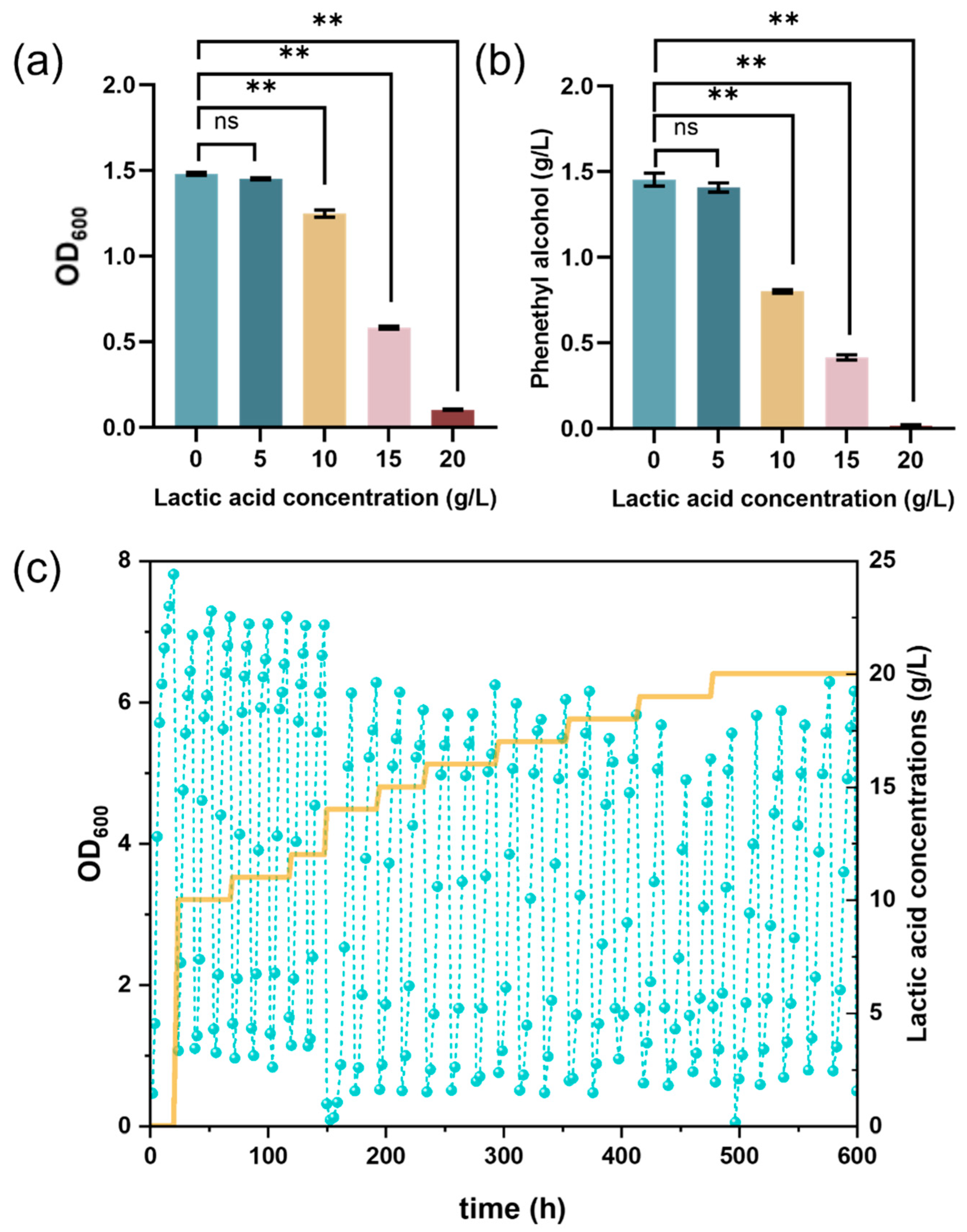
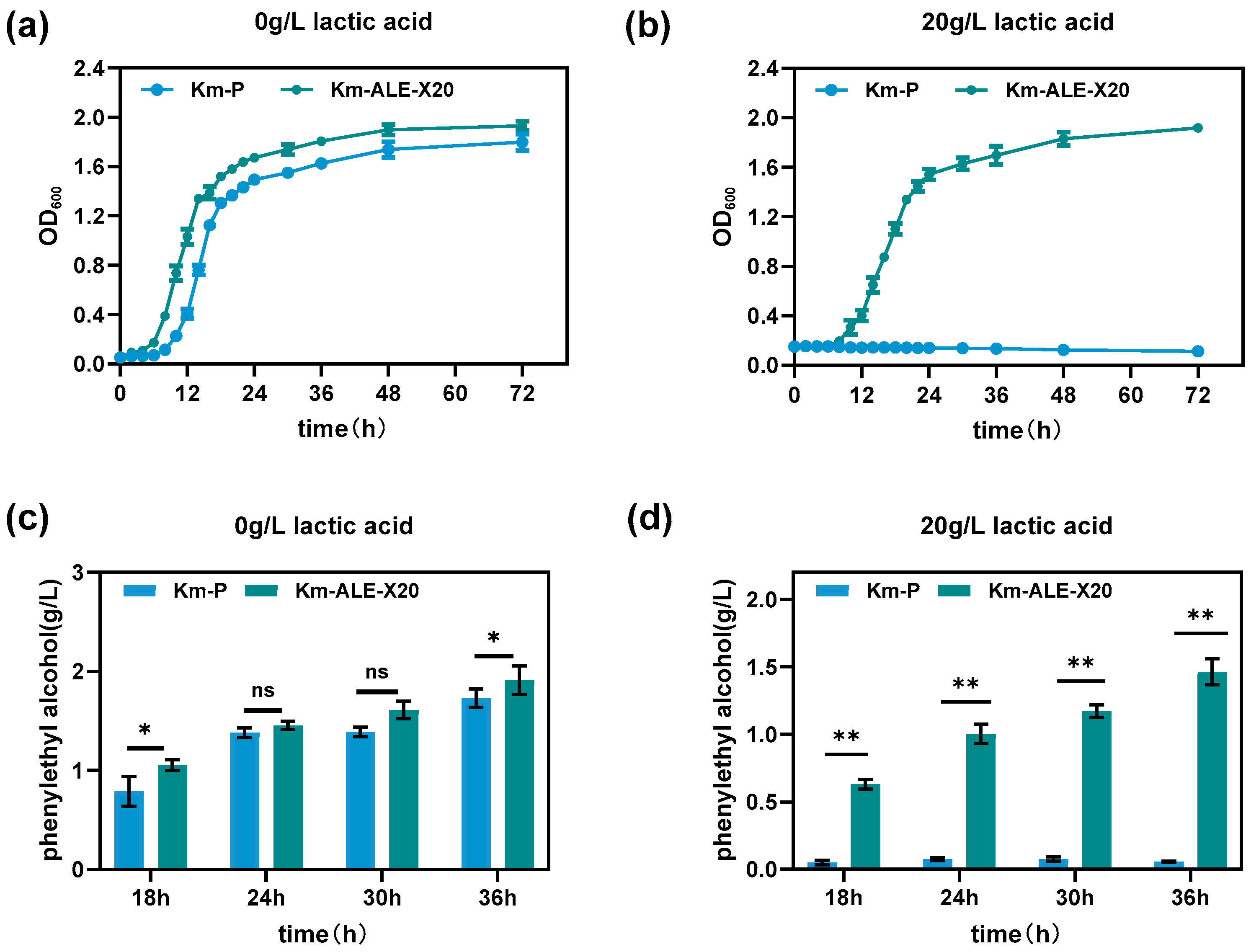
3.1. Determination of Flavor-Enhanced Strain by ALE
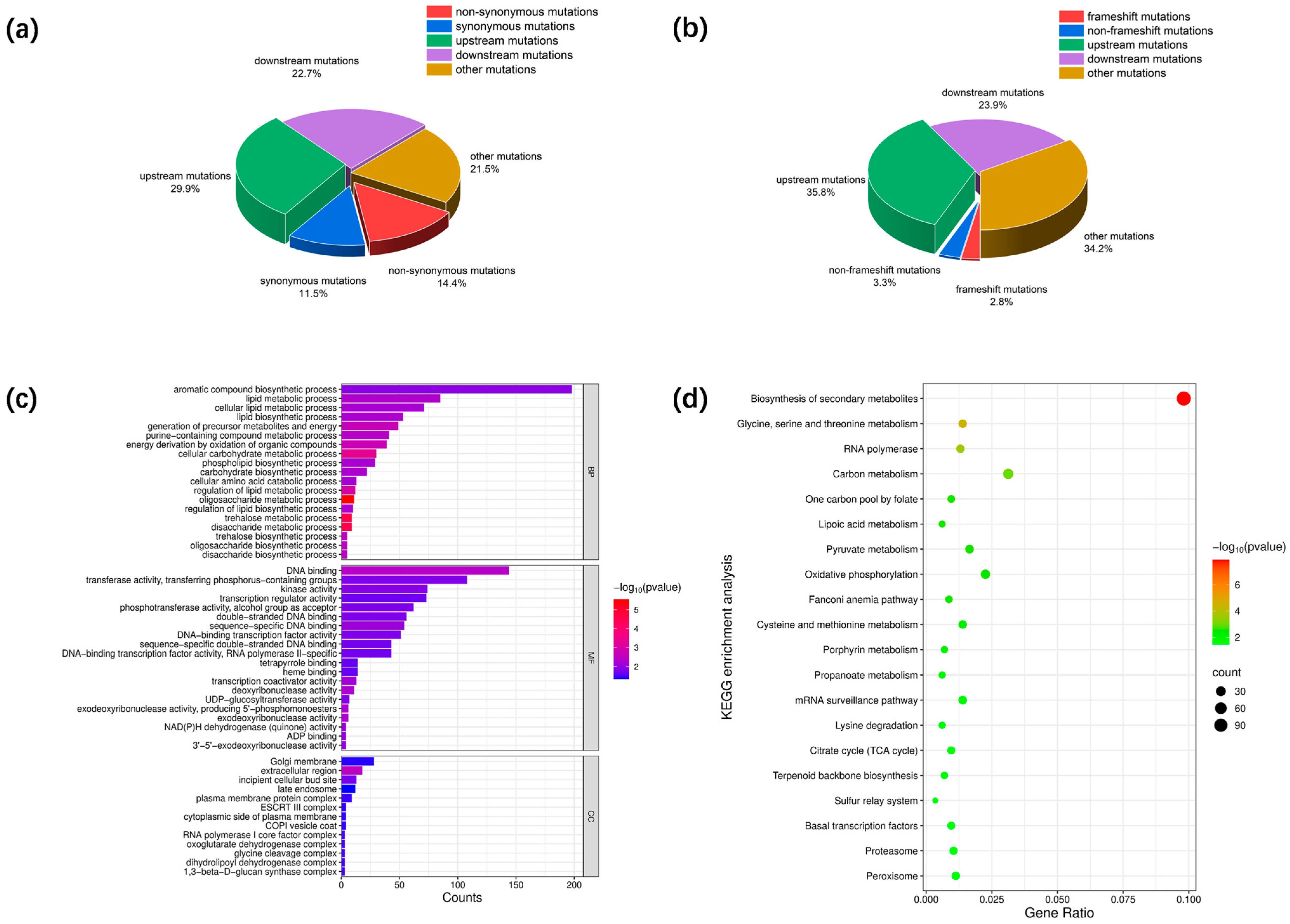
3.2. Identification of Mutated Genes Associated with Enhanced Phenotypes
3.3. Flavoromics Analysis of K. marxianus-Fermented Milk Beer
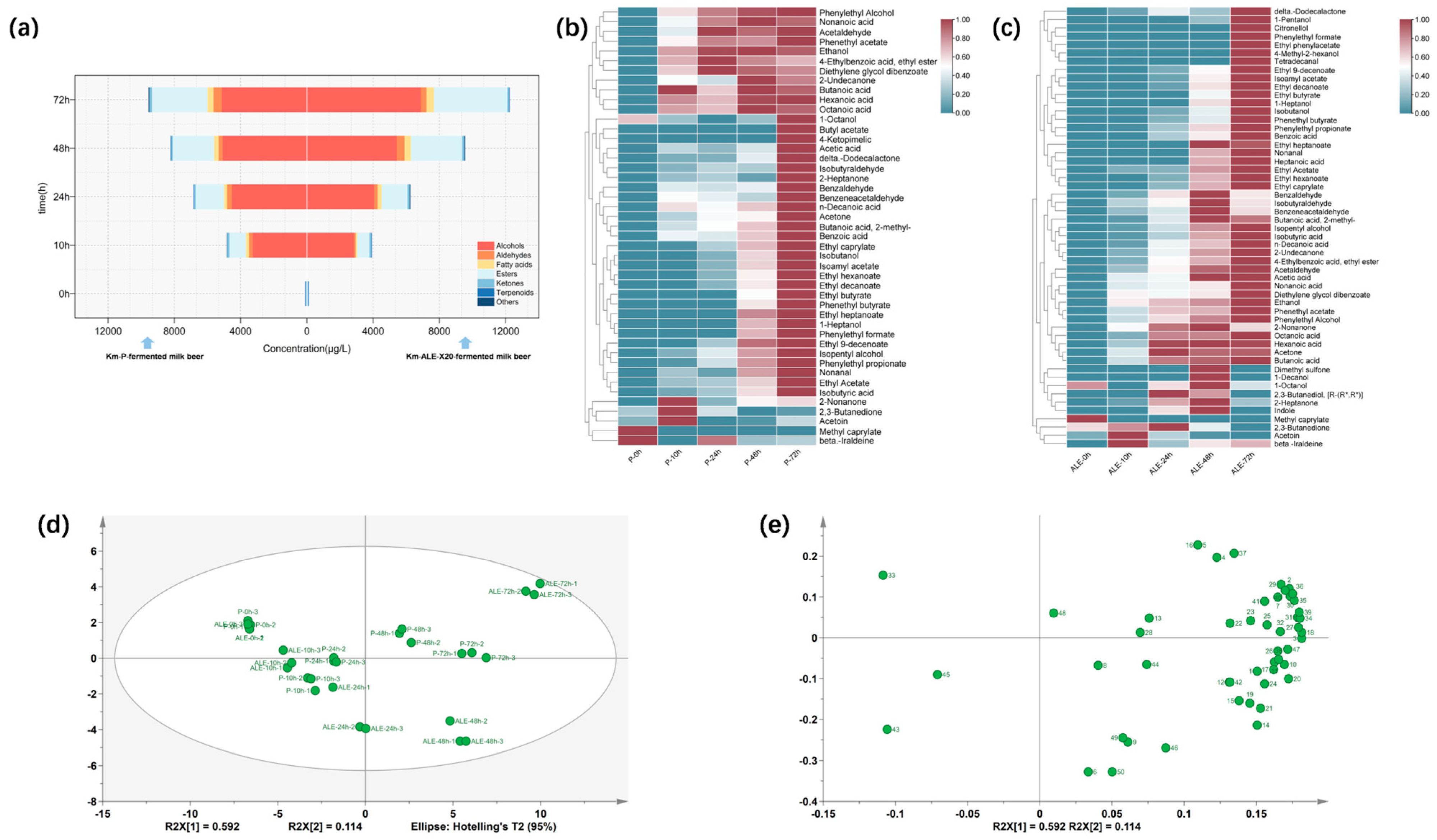
3.3.1. Dynamic Changes in Volatile Organic Compounds
3.3.2. OAV Analysis
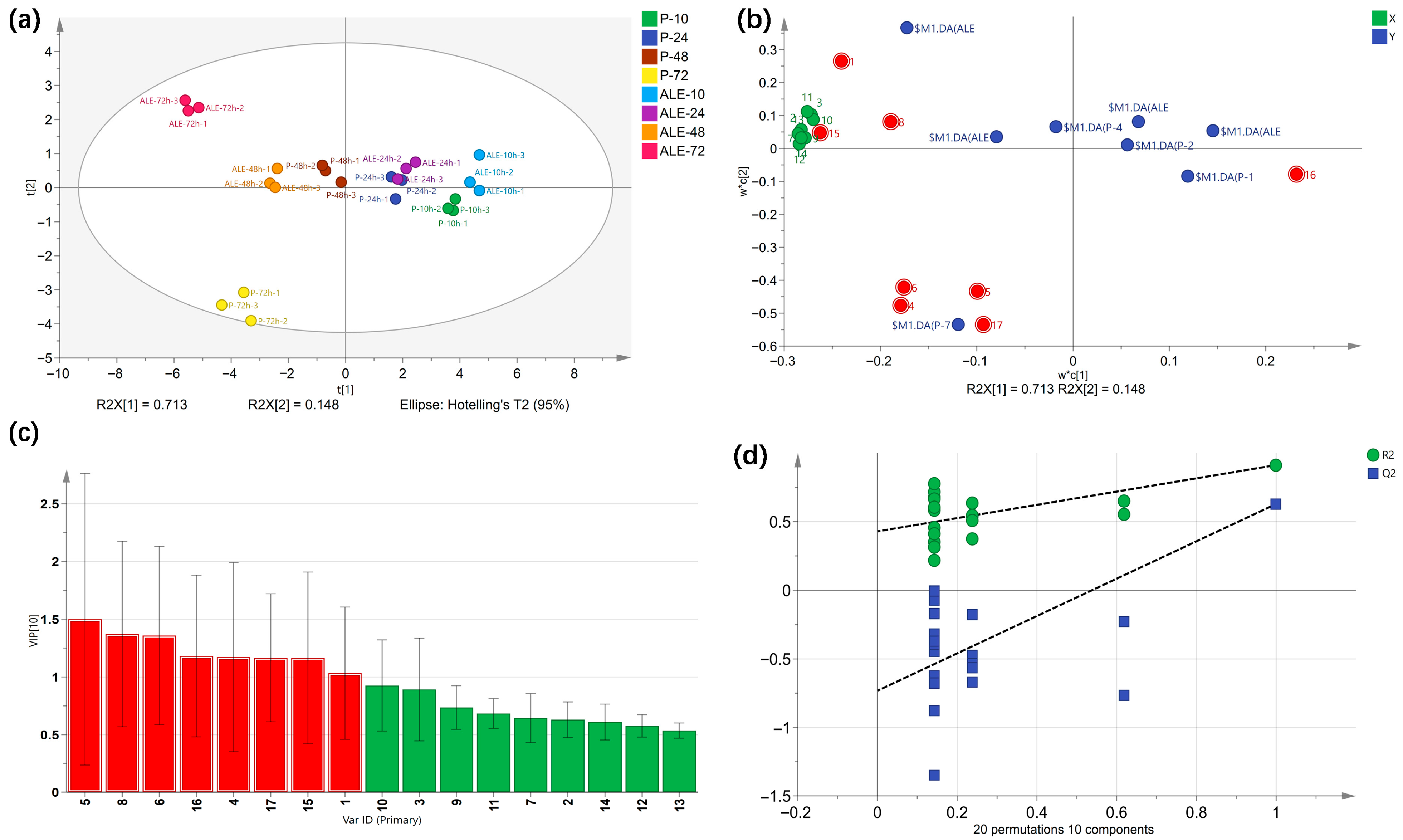
3.3.3. PLS-DA Analysis
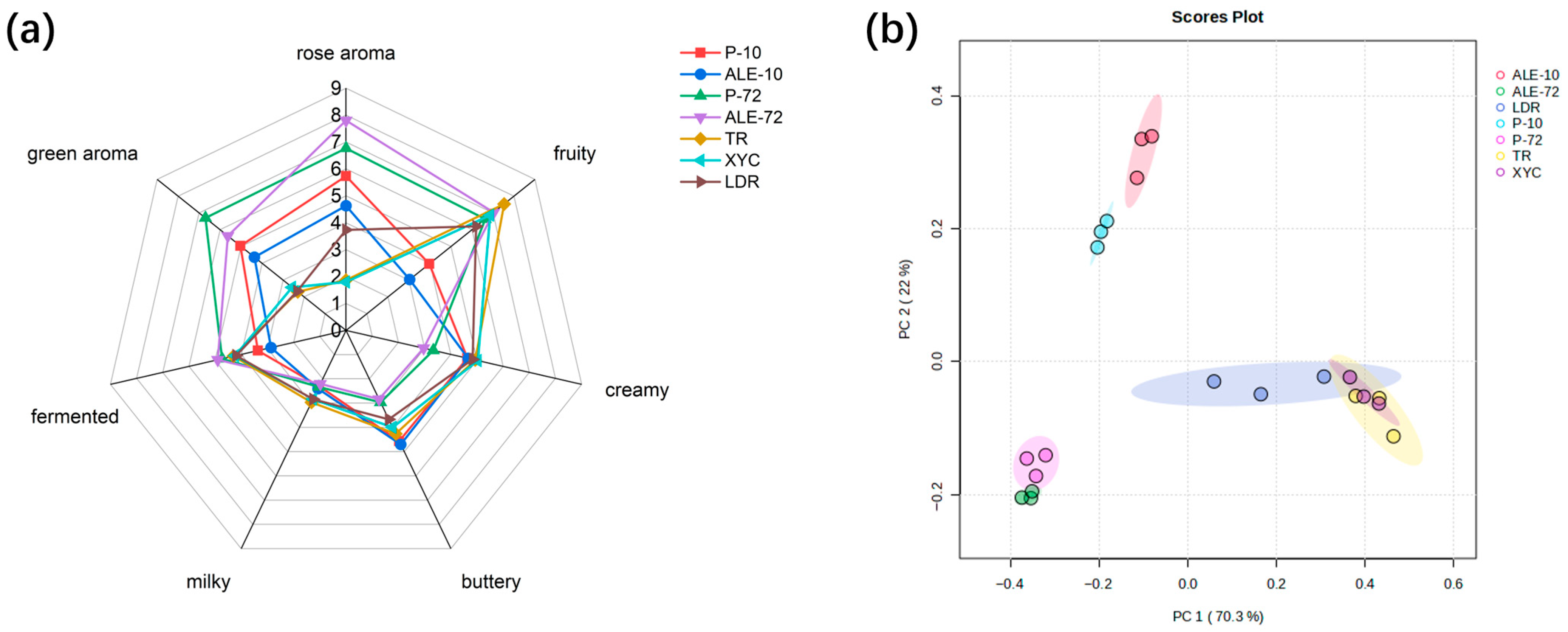
3.4. Sensory Evaluation of K. marxianus-Fermented Milk Beer
4. Conclusions
Supplementary Materials
Author Contributions
Funding
Institutional Review Board Statement
Informed Consent Statement
Data Availability Statement
Conflicts of Interest
References
- Li, X.; Zhang, D.; Lu, D.; Yang, X.; Qi, Q. Study on processing technology and quality control low sugar yoghurt- beer drink. China Dairy 2008, 36, 34–36. [Google Scholar]
- Wang, L.; Gao, E.; Hu, M.; Oladejo, A.; Gong, X.; Wang, J.; Zhong, H. Isolation, identification and screening of high-quality yeast strains for the production of milk beer. Int. J. Dairy Technol. 2018, 71, 944–953. [Google Scholar] [CrossRef]
- Li, X.; Lu, D.; Qi, B.; Luo, X.; Xu, M.; Cai, G.; Wu, L.; Yang, G.; Tuo, Y. Research Progress in Production Technology of Milk Beer. Food Res. Dev. 2025, 46, 173–178. [Google Scholar]
- Ning, M.; Guo, P.; Qi, J.; Cui, Y.; Wang, K.; Du, G.; Wang, Z.; Yuan, Y.; Yue, T. Detoxification of Mycotoxin Patulin by the Yeast Kluyveromyces marxianus YG-4 in Apple Juice. J. Agric. Food Chem. 2024, 72, 12798–12809. [Google Scholar] [CrossRef] [PubMed]
- Adame-Soto, P.J.; Aréchiga-Carvajal, E.T.; González-Herrera, S.M.; Moreno-Jiménez, M.R.; Rutiaga-Quiñones, O.M. Characterization of mating type on aroma production and metabolic properties wild Kluyveromyces marxianus yeasts. World J. Microbiol. Biotechnol. 2023, 39, 216. [Google Scholar] [CrossRef] [PubMed]
- Wu, Y.; Gao, Y.; Zheng, X.; Yu, T.; Yan, F. Enhancement of biocontrol efficacy of Kluyveromyces marxianus induced by N-acetylglucosamine against Penicillium expansum. Food Chem. 2023, 404, 134658. [Google Scholar] [CrossRef] [PubMed]
- Gschaedler, A.; Iñiguez-Muñoz, L.E.; Flores-Flores, N.Y.; Kirchmayr, M.; Arellano-Plaza, M. Use of non-Saccharomyces yeasts in cider fermentation: Importance of the nutrients addition to obtain an efficient fermentation. Int. J. Food Microbiol. 2021, 347, 109169. [Google Scholar] [CrossRef]
- Cao, K.; Wu, J.; Wan, X.; Hou, Y.; Zhang, C.; Wang, Y.; Zhang, L.; Yang, W.; He, Y.; Wu, R. Impact of non-Saccharomyces yeasts derived from traditional fermented foods on beer aroma: Analysis based on HS-SPME-GC/MS combined with chemometrics. Food Res. Int. 2024, 187, 114366. [Google Scholar] [CrossRef]
- Adesulu-Dahunsi, A.T.; Dahunsi, S.O.; Olayanju, A. Synergistic microbial interactions between lactic acid bacteria and yeasts during production of Nigerian indigenous fermented foods and beverages. Food Control 2020, 110, 106963. [Google Scholar] [CrossRef]
- Mira, N.P.; Teixeira, M.C.; Sá-Correia, I. Adaptive Response and Tolerance to Weak Acids in Saccharomyces cerevisiae: A Genome-Wide View. OMICS J. Integr. Biol. 2010, 14, 525–540. [Google Scholar] [CrossRef]
- Trovão, M.; Schüler, L.M.; Machado, A.; Bombo, G.; Navalho, S.; Barros, A.; Pereira, H.; Silva, J.; Freitas, F.; Varela, J. Random Mutagenesis as a Promising Tool for Microalgal Strain Improvement towards Industrial Production. Mar. Drugs 2022, 20, 440. [Google Scholar] [CrossRef]
- Zhang, C.; Wohlhueter, R.; Zhang, H. Genetically modified foods: A critical review of their promise and problems. Food Sci. Hum. 2016, 5, 116–123. [Google Scholar] [CrossRef]
- Sandberg, T.E.; Salazar, M.J.; Weng, L.L.; Palsson, B.O.; Feist, A.M. The emergence of adaptive laboratory evolution as an efficient tool for biological discovery and industrial biotechnology. Metab. Eng. 2019, 56, 1–16. [Google Scholar] [CrossRef]
- Byun, J.A.; Han, N.R.; Yun, E.J.; Cheon, S.; Song, S.; Shim, S.; Lee, S.H.; Kim, K.H. Enhancing lactic acid tolerance in Fructilactobacillus sanfranciscensis via adaptive evolution for sourdough fermentation applications. Int. J. Food Microbiol. 2025, 428, 110978. [Google Scholar] [CrossRef] [PubMed]
- Fernandes, T.; Osório, C.; Sousa, M.J.; Franco-Duarte, R. Contributions of Adaptive Laboratory Evolution towards the Enhancement of the Biotechnological Potential of Non-Conventional Yeast Species. J. Fungi 2023, 9, 186. [Google Scholar] [CrossRef]
- Gibson, B.; Dahabieh, M.; Krogerus, K.; Jouhten, P.; Magalhães, F.; Pereira, R.; Siewers, V.; Vidgren, V. Adaptive Laboratory Evolution of Ale and Lager Yeasts for Improved Brewing Efficiency and Beer Quality. Annu. Rev. Food Sci. Technol. 2020, 11, 23–44. [Google Scholar] [CrossRef] [PubMed]
- Fan, H.; Wan, Y.; Huang, Y.; Yuan, J.; Fan, J.; Kou, Y.; Yu, X.; Pan, Y.; Huang, D.; Fu, G. Breeding of lactic acid-tolerant Saccharomyces cerevisiae based on atmospheric and room temperature plasma technology and automatic high-throughput microbial microdroplet culture system. Food Microbiol. 2025, 128, 104717. [Google Scholar] [CrossRef]
- Xiao, Y.; Wang, X.; Song, Z.; Zhao, X.; Liu, Z.; Chu, C.; Wang, Y.; Hu, X.; Yi, J. Enhancing phenylethyl alcohol production in Pichia fermentans via adaptive laboratory evolution under NaCl stress. Food Biosci. 2024, 62, 105094. [Google Scholar] [CrossRef]
- Zhao, Y.; Li, S.; Shu, Q.; Yang, X.; Deng, Y. Highly efficient production of 2-phenylethanol by wild-type Saccharomyces bayanus strain. Bioresour. Technol. 2024, 403, 130867. [Google Scholar] [CrossRef]
- Ullah, M.; Rizwan, M.; Raza, A.; Xia, Y.; Han, J.; Ma, Y.; Chen, H. Snapshot of the Probiotic Potential of Kluyveromyces marxianus DMKU-1042 Using a Comparative Probiogenomics Approach. Foods 2023, 12, 4329. [Google Scholar] [CrossRef]
- Li, W.; Ren, M.; Duo, L.; Li, J.; Wang, S.; Sun, Y.; Li, M.; Ren, W.; Hou, Q.; Yu, J.; et al. Fermentation Characteristics of Lactococcus lactis subsp. lactis Isolated from Naturally Fermented Dairy Products and Screening of Potential Starter Isolates. Front. Microbiol. 2020, 11, 1794. [Google Scholar] [CrossRef]
- Wa, Y.; Chanyi Ryan, M.; Nguyen Hanh Thi, H.; Gu, R.; Day, L.; Altermann, E. Extracellular Polysaccharide Extraction from Streptococcus thermophilus in Fermented Milk. Microbiol. Spectr. 2022, 10, e02280-21. [Google Scholar] [CrossRef]
- Van Gemert, L.J. Odour Thresholds: Compilations of Odour Threshold Values in Air, Water and Other Media, 2nd ed.; Oliemans Punter & Partners BV: Utrecht, The Netherlands, 2011; pp. 1–80. [Google Scholar]
- Qiu, S.; Han, H.; Zeng, H.; Wang, B. Machine learning based classification of yogurt aroma types with flavoromics. Food Chem. 2024, 438, 138008. [Google Scholar] [CrossRef]
- Enav, H.; Paz, I.; Ley, R.E. Strain tracking in complex microbiomes using synteny analysis reveals per-species modes of evolution. Nat. Biotechnol. 2025, 43, 773–783. [Google Scholar] [CrossRef]
- Conrad, T.M.; Lewis, N.E.; Palsson, B.Ø. Microbial laboratory evolution in the era of genome-scale science. Mol. Syst. Biol. 2011, 7, 509. [Google Scholar] [CrossRef] [PubMed]
- Liu, Z.; Radi, M.; Mohamed, E.T.T.; Feist, A.M.; Dragone, G.; Mussatto, S.I. Adaptive laboratory evolution of Rhodosporidium toruloides to inhibitors derived from lignocellulosic biomass and genetic variations behind evolution. Bioresour. Technol. 2021, 333, 125171. [Google Scholar] [CrossRef]
- Barbosa, C.; Peixeiro, I.; Romão, L. Gene Expression Regulation by Upstream Open Reading Frames and Human Disease. PLoS Genet. 2013, 9, e1003529. [Google Scholar] [CrossRef] [PubMed]
- Gibson, B.R.; Lawrence, S.J.; Boulton, C.A.; Box, W.G.; Graham, N.S.; Linforth, R.S.; Smart, K.A. The oxidative stress response of a lager brewing yeast strain during industrial propagation and fermentation. FEMS Yeast Res. 2008, 8, 574–585. [Google Scholar] [CrossRef]
- Strand Micheline, K.; Stuart Gregory, R.; Longley Matthew, J.; Graziewicz Maria, A.; Dominick Olivia, C.; Copeland William, C. POS5 Gene of Saccharomyces cerevisiae Encodes a Mitochondrial NADH Kinase Required for Stability of Mitochondrial DNA. Eukaryot. Cell 2003, 2, 809–820. [Google Scholar] [CrossRef] [PubMed]
- Veal, E.A.; Ross, S.J.; Malakasi, P.; Peacock, E.; Morgan, B.A. Ybp1 is required for the hydrogen peroxide-induced oxidation of the Yap1 transcription factor. J. Biol. Chem. 2003, 278, 30896–30904. [Google Scholar] [CrossRef]
- Martins, D.; English, A.M. Catalase activity is stimulated by H2O2 in rich culture medium and is required for H2O2 resistance and adaptation in yeast. Redox Biol. 2014, 2, 308–313. [Google Scholar] [CrossRef]
- Sokolov, S.S.; Popova, M.M.; Pohl, P.; Horner, A.; Akimov, S.A.; Kireeva, N.A.; Knorre, D.A.; Batishchev, O.V.; Severin, F.F. Structural role of plasma membrane sterols in osmotic stress tolerance of yeast Saccharomyces cerevisiae. Membranes 2022, 12, 1278. [Google Scholar] [CrossRef] [PubMed]
- Schlarmann, P.; Ikeda, A.; Funato, K. Membrane contact sites in yeast: Control hubs of sphingolipid homeostasis. Membranes 2021, 11, 971. [Google Scholar] [CrossRef] [PubMed]
- Jordá, T.; Puig, S. Regulation of ergosterol biosynthesis in Saccharomyces cerevisiae. Genes 2020, 11, 795. [Google Scholar] [CrossRef] [PubMed]
- Chen, Y.; Yang, Y.; Cai, W.; Zeng, J.; Liu, N.; Wan, Y.; Fu, G. Research progress of anti-environmental factor stress mechanism and anti-stress tolerance way of Saccharomyces cerevisiae during the brewing process. Crit. Rev. Food Sci. Nutr. 2023, 63, 12308–12323. [Google Scholar] [CrossRef]
- Graham, L.A.; Bowers, K.; Flannery, A.R.; Stevens, T.H. Role of the V-ATPase in the Cellular Physiology of the Yeast Saccharomyces cerevisiae. In Handbook of ATPases: Biochemistry, Cell Biology, Pathophysiology, 1st ed.; Futai, M., Wada, Y., Kaplan, J.H., Eds.; Wiley-VCH Verlag GmbH & Co. KGaA: Weinheim, Germany, 2004; pp. 355–377. [Google Scholar] [CrossRef]
- Li, M.; Chu, Y.; Dong, X.; Ji, H. General mechanisms of weak acid-tolerance and current strategies for the development of tolerant yeasts. World J. Microbiol. Biotechnol. 2024, 40, 49. [Google Scholar] [CrossRef]
- Apweiler, E.; Sameith, K.; Margaritis, T.; Brabers, N.; van de Pasch, L.; Bakker, L.V.; van Leenen, D.; Holstege, F.C.; Kemmeren, P. Yeast glucose pathways converge on the transcriptional regulation of trehalose biosynthesis. BMC Genom. 2012, 13, 239. [Google Scholar] [CrossRef]
- Zhou, Y.-F.; Zhou, M.; Wang, Y.-Y.; Jiang, X.-Y.; Zhang, P.; Xu, K.-K.; Tang, B.; Li, C. Characterization of the TcCYPE2 gene and its role in regulating trehalose metabolism in response to high CO2 stress. Agronomy 2023, 13, 2263. [Google Scholar] [CrossRef]
- Zhu, Y.; Jia, X.; Wu, Y.; Hu, Y.; Cheng, L.; Zhao, T.; Huang, Z.; Wang, Y. Quantitative proteomic analysis of Malus halliana exposed to salt-alkali mixed stress reveals alterations in energy metabolism and stress regulation. Plant Growth Regul. 2020, 90, 205–222. [Google Scholar] [CrossRef]
- Khan, S.H.; Okafor, C.D. Interactions governing transcriptional activity of nuclear receptors. Biochem. Soc. Trans. 2022, 50, 1941–1952. [Google Scholar] [CrossRef]
- Zhang, Z.; Cheng, X.; Zhao, Y.; Yang, Y. Lighting Up Live-Cell and In Vivo Central Carbon Metabolism with Genetically Encoded Fluorescent Sensors. Annu. Rev. Anal. Chem. 2020, 13, 293–314. [Google Scholar] [CrossRef]
- Jung, H.-M.; Han, J.-H.; Oh, M.-K. Improved production of 2,3-butanediol and isobutanol by engineering electron transport chain in Escherichia coli. Microb. Biotechnol. 2021, 14, 213–226. [Google Scholar] [CrossRef]
- Styger, G.; Prior, B.; Bauer, F.F. Wine flavor and aroma. J. Ind. Microbiol. Biotechnol. 2011, 38, 1145. [Google Scholar] [CrossRef] [PubMed]
- Geng, X.; Li, Q.; Wang, X.; Zhu, L.; Wang, B.; Zheng, F.; Wang, G.; Chen, E.; Zhang, Y. Environmental factors induced metabolome shifts during Laobaigan-flavor Baijiu fermentation. J. Food Compos. Anal. 2023, 123, 105570. [Google Scholar] [CrossRef]
- Tan, F.; Wang, P.; Zhan, P.; Tian, H. Characterization of key aroma compounds in flat peach juice based on gas chromatography-mass spectrometry-olfactometry (GC-MS-O), odor activity value (OAV), aroma recombination, and omission experiments. Food Chem. 2022, 366, 130604. [Google Scholar] [CrossRef]
- Yang, Y.; Ai, L.; Mu, Z.; Liu, H.; Yan, X.; Ni, L.; Zhang, H.; Xia, Y. Flavor compounds with high odor activity values (OAV > 1) dominate the aroma of aged Chinese rice wine (Huangjiu) by molecular association. Food Chem. 2022, 383, 132370. [Google Scholar] [CrossRef]
- Zhao, Y.; Liu, S.; Yang, Q.; Han, X.; Zhou, Z.; Mao, J. Saccharomyces cerevisiae strains with low-yield higher alcohols and high-yield acetate esters improve the quality, drinking comfort and safety of huangjiu. Food Res. Int. 2022, 161, 111763. [Google Scholar] [CrossRef] [PubMed]
- Deng, Q.; Xia, S.; Han, X.; You, Y.; Huang, W.; Zhan, J. Enhancing the flavour quality of Laiyang pear wine by screening sorbitol-utilizing yeasts and co-fermentation strategies. Food Chem. 2024, 449, 139213. [Google Scholar] [CrossRef]
- Zhao, Y.; Chen, L.; Bian, J.; Li, F.; Wang, Y.; Zhou, H.; Ma, Z.; Xu, P.; Du, X. Black tea addition enhances the aroma release of rose petals by activating related pathways during the scenting process. Food Chem. 2025, 487, 144801. [Google Scholar] [CrossRef]
- Meng, D.; Zhao, D.; Zhao, Z.; Wang, X.; Wu, Y.; Li, Y.; Lv, Z.; Zhong, Q. Revealing key aroma compounds and the potential metabolic pathways in sea buckthorn berries. Food Chem. 2025, 476, 143430. [Google Scholar] [CrossRef]
- Cao, W.; Shu, N.; Wen, J.; Yang, Y.; Jin, Y.; Lu, W. Characterization of the Key Aroma Volatile Compounds in Nine Different Grape Varieties Wine by Headspace Gas Chromatography–Ion Mobility Spectrometry (HS-GC-IMS), Odor Activity Values (OAV) and Sensory Analysis. Foods 2022, 11, 2767. [Google Scholar] [CrossRef] [PubMed]
- Lan, L.; Wang, W.; Su, Y.; Xu, H.; Han, J.; Chi, X.; Xi, Y.; Sun, B.; Ai, N. Exploration of milk flavor: From the perspective of raw milk, pasteurized milk, and UHT milk. Food Chem. X 2025, 25, 102083. [Google Scholar] [CrossRef] [PubMed]
- Vilela, A.; Bacelar, E.; Pinto, T.; Anjos, R.; Correia, E.; Gonçalves, B.; Cosme, F. Beverage and Food Fragrance Biotechnology, Novel Applications, Sensory and Sensor Techniques: An Overview. Foods 2019, 8, 643. [Google Scholar] [CrossRef] [PubMed]



| Gene | Function | Mutation Type | Protein-Altering | Non-Protein-Altering |
|---|---|---|---|---|
| Mutated genes associated with acid resistance | ||||
| CTA1 | Catalasa | SNP, indel | 2 | 17 |
| YBP1 | Oxidative-stress sensor that mediates the activation of the Cap1 transcription factor | SNP, indel | 7 | 13 |
| POS5 | NADH kinase | SNP | 1 | 0 |
| IPT1 | Inositol Phosphoryl Transferase | SNP | 3 | 9 |
| ERG2 | C-8 sterol isomerase | SNP, indel | 1 | 27 |
| ERG7 | Lanosterol synthase | SNP | 1 | 2 |
| VMA16 | V-ATPase V0 subunit c | SNP, indel | 3 | 8 |
| PDR12 | ATP-binding cassette (ABC) transporter | SNP | 3 | 4 |
| TSL1 | Trehalose-6-phosphate synthase regulatory subunit | SNP, indel | 6 | 16 |
| TRE2 | Neutral trehalase | SNP, indel | 4 | 11 |
| Mutated genes associated with aroma production | ||||
| ARO8 | Aromatic aminotransferase I | SNP, indel | 0 | 5 |
| ARO9 | Aromatic aminotransferase II | SNP, indel | 0 | 3 |
| ADH1 | Alcohol dehydrogenase 1 | indel | 0 | 1 |
| FAS2 | Fatty acid synthetase subunits α | indel | 0 | 1 |
| PYK1 | Pyruvate kinase 1 | SNP, indel | 0 | 13 |
| PDC2 | Pyruvate decarboxylase 2 | SNP | 2 | 1 |
| ILV1 | Threonine deaminase | SNP, indel | 2 | 11 |
| ILV2 | Acetolactate synthase | indel | 0 | 4 |
| BAT1 | Mitochondrial branched-chain amino acid aminotransferase | SNP | 0 | 1 |
| LEU3 | Leucine-responsive regulatory protein | SNP, indel | 5 | 10 |
| Compounds | Odor Descriptions | Thresholds (μg/L) | OAV | |||
|---|---|---|---|---|---|---|
| P-10 h | P-72 h | ALE-10 h | ALE-72 h | |||
| Ethanol * | alcoholic, ethereal | 3500 | <1 | <1 | <1 | 1 |
| Isopentyl alcohol * | fruity, banana, malt | 4 | 30 | 195 | 20 | 255 |
| Phenylethyl alcohol * | rose | 0.015 | 50,654 | 86,252 | 37,269 | 108,632 |
| Acetaldehyde | pungent, ethereal, fruity | 0.7 | 94 | 205 | 65 | 257 |
| Isobutyraldehyde * | fresh, floral, green, malt | 0.32 | 18 | 108 | 17 | 33 |
| Nonanal * | rose, orange, green | 0.32 | 6 | 25 | <1 | 1 |
| Benzeneacetaldehyde * | rose, honey, green | 0.3 | 487 | 991 | 163 | 451 |
| Isobutyric acid * | sharp, pungent, sour | 10 | 1 | 8 | <1 | 11 |
| Butanoic acid, 2-methyl- | pungent, cheese | 10 | 1 | 3 | <1 | 4 |
| Hexanoic acid * | sour, cheese | 35.6 | 1 | 1 | <1 | 2 |
| Ethyl acetate * | apple, banana, fruity | 5 | 46 | 205 | 39 | 270 |
| Ethyl butyrate * | fruity pineapple | 0.001 | <1 | 5920 | <1 | 10,020 |
| Isoamyl acetate * | sweet fruity banana | 0.15 | <1 | 213 | <1 | 366 |
| Ethyl hexanoate * | fruity pineapple banana | 0.01 | <1 | 2699 | <1 | 3434 |
| Ethyl heptanoate | fruity pineapple | 1.9 | <1 | 1 | <1 | 1 |
| Ethyl caprylate * | pineapple, banana, pear | 5 | <1 | 30 | <1 | 41 |
| Ethyl decanoate * | fruity apple grape | 5 | <1 | 8 | <1 | 11 |
| Phenethyl acetate * | rose, fruity, tropical | 19 | 33 | 62 | 25 | 73 |
| δ.-Dodecalactone | peach, coconut | 0.46 | 14 | 79 | 13 | 78 |
| Acetone | ethereal, apple, pear | 40 | <1 | 2 | <1 | 1 |
| 2,3-Butanedione * | butter, sweet, creamy | 0.05 | 642 | 261 | 461 | 151 |
| 2-Heptanone * | fruity, green, fatty | 1 | 11 | 21 | 9 | 9 |
| Acetoin | sweet, buttery creamy | 14 | 2 | 1 | 3 | <1 |
| 2-Nonanone | fresh, sweet, green, herbal | 5 | 2 | 2 | 2 | 2 |
| 2-Undecanone | Fruity, creamy, fatty, floral | 5.5 | <1 | 1 | <1 | 1 |
Disclaimer/Publisher’s Note: The statements, opinions and data contained in all publications are solely those of the individual author(s) and contributor(s) and not of MDPI and/or the editor(s). MDPI and/or the editor(s) disclaim responsibility for any injury to people or property resulting from any ideas, methods, instructions or products referred to in the content. |
© 2026 by the authors. Licensee MDPI, Basel, Switzerland. This article is an open access article distributed under the terms and conditions of the Creative Commons Attribution (CC BY) license.
Share and Cite
Xing, C.; Tan, Y.; Jiang, X.; Li, W.; Wang, Q.; Liu, Z.; Zeng, H.; Wang, Y. Enhancing the Signature Rose Aroma of Kluyveromyces marxianus-Fermented Milk Beer via Adaptive Laboratory Evolution. Foods 2026, 15, 229. https://doi.org/10.3390/foods15020229
Xing C, Tan Y, Jiang X, Li W, Wang Q, Liu Z, Zeng H, Wang Y. Enhancing the Signature Rose Aroma of Kluyveromyces marxianus-Fermented Milk Beer via Adaptive Laboratory Evolution. Foods. 2026; 15(2):229. https://doi.org/10.3390/foods15020229
Chicago/Turabian StyleXing, Chen, Youming Tan, Xinchi Jiang, Wenlu Li, Qihao Wang, Zihao Liu, Hong Zeng, and Yanbo Wang. 2026. "Enhancing the Signature Rose Aroma of Kluyveromyces marxianus-Fermented Milk Beer via Adaptive Laboratory Evolution" Foods 15, no. 2: 229. https://doi.org/10.3390/foods15020229
APA StyleXing, C., Tan, Y., Jiang, X., Li, W., Wang, Q., Liu, Z., Zeng, H., & Wang, Y. (2026). Enhancing the Signature Rose Aroma of Kluyveromyces marxianus-Fermented Milk Beer via Adaptive Laboratory Evolution. Foods, 15(2), 229. https://doi.org/10.3390/foods15020229