Glutamine Modulates mVOC Biosynthesis in Streptomyces alboflavus Through a gluR-Dependent Signaling Pathway and Enhances Its Inhibitory Activity Against Aspergillus flavus

Abstract
1. Introduction
2. Materials and Methods
2.1. Microorganisms
2.2. Effects of S. alboflavus TD-1 mVOCs on Conidial Germination and Mycelial Biomass of A. flavus
2.3. mVOCs Extraction and GC-MS Analysis
2.4. Total RNA Isolation, RNA Sequencing, and Analysis
2.5. qRT-PCR Analysis
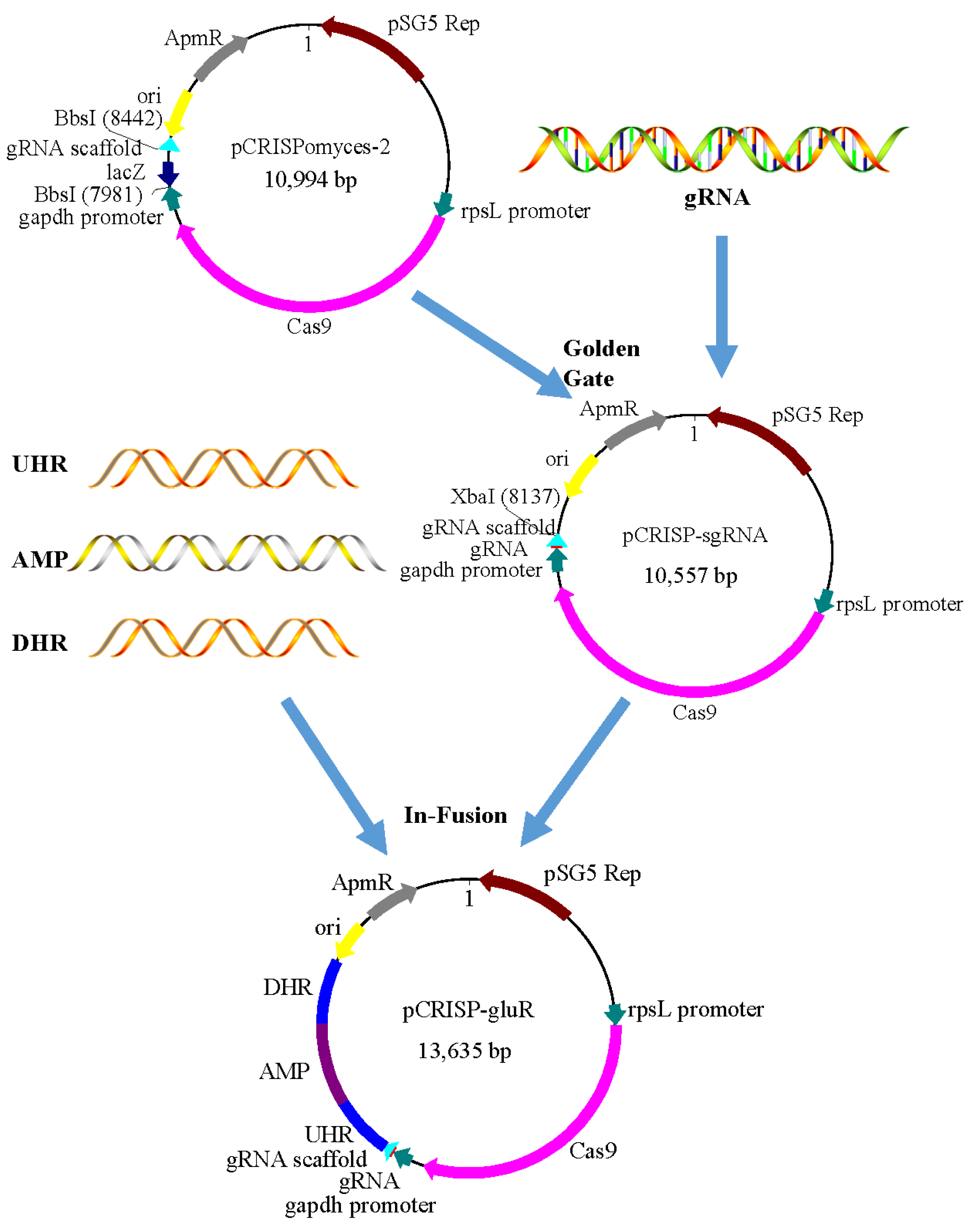
2.6. CRISPR/Cas9-Mediated Deletion of gluR in S. alboflavus TD-1
2.7. Assay for Inhibitory Effects of mVOCs on A. flavus
2.8. Statistical Analysis
3. Results
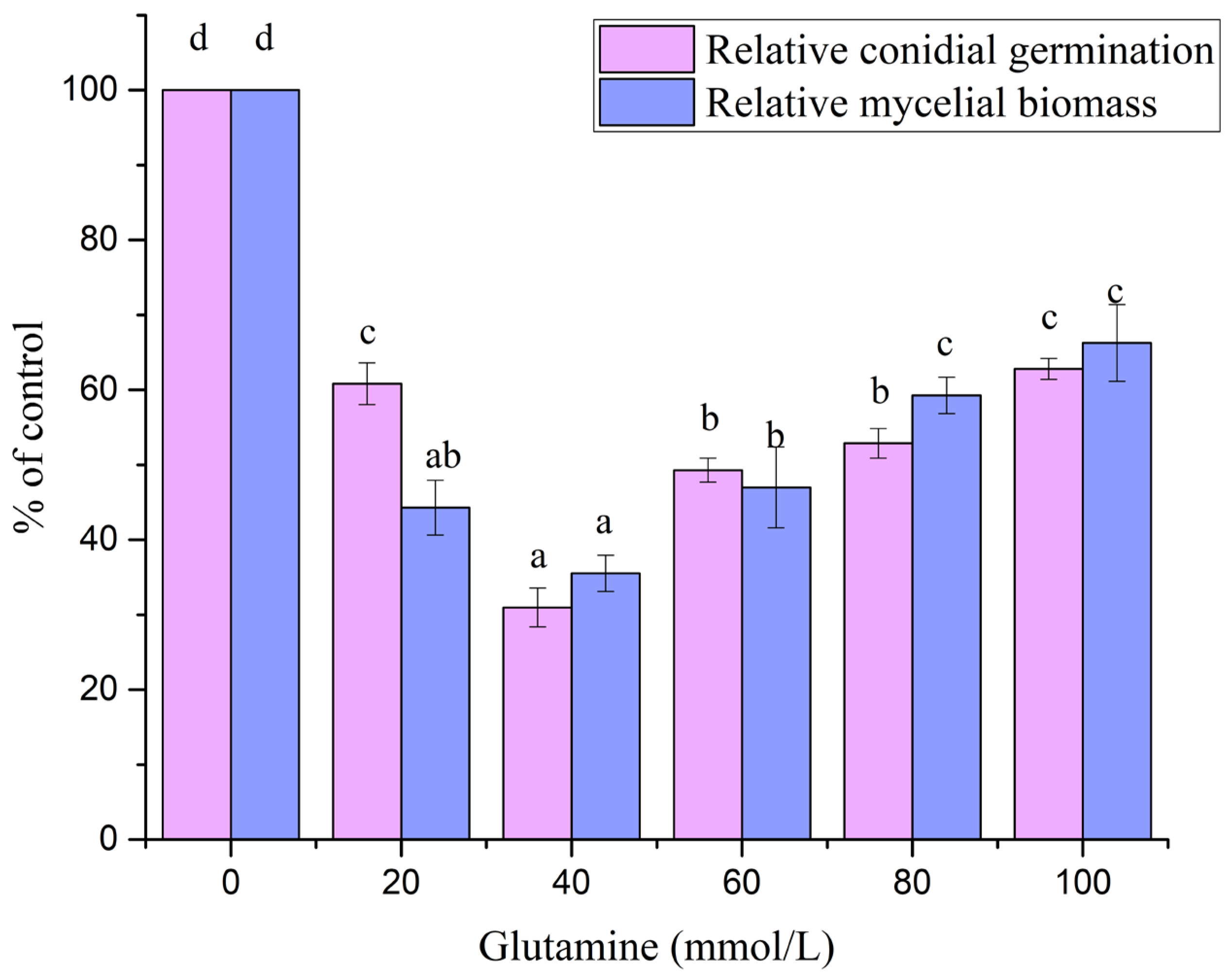
3.1. Effect of Glutamine on Antifungal Activity and mVOC Production in S. alboflavus TD-1
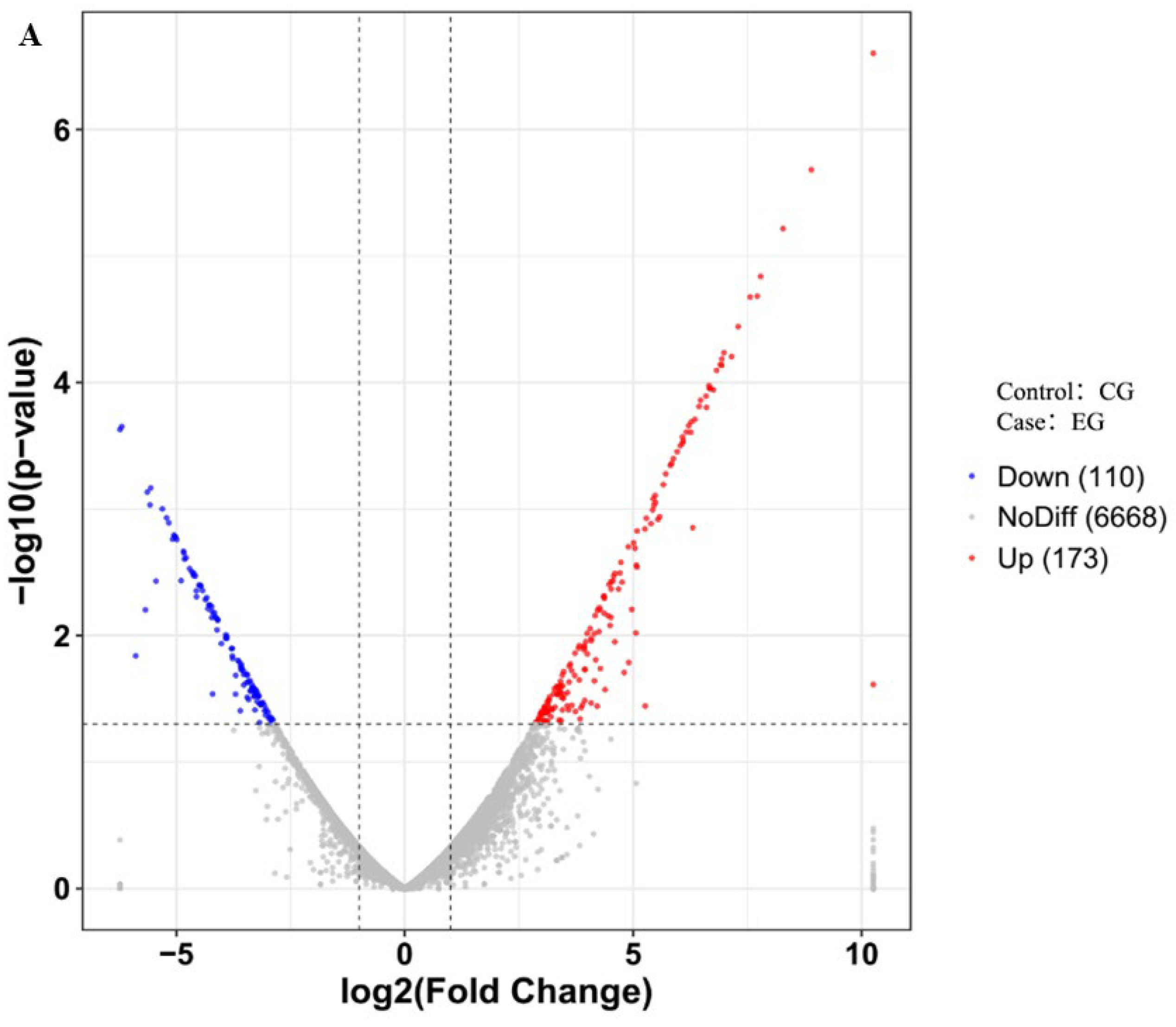
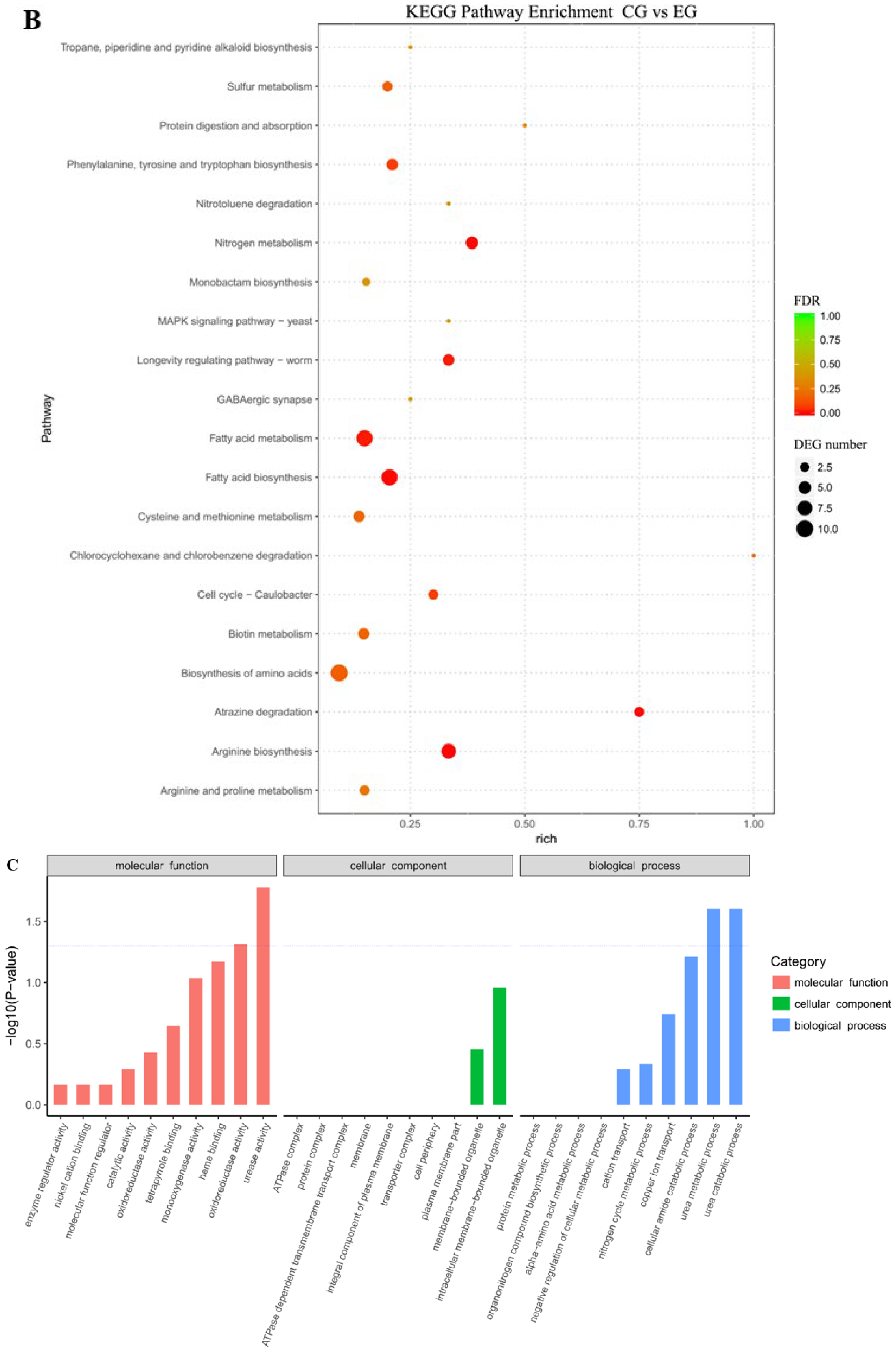
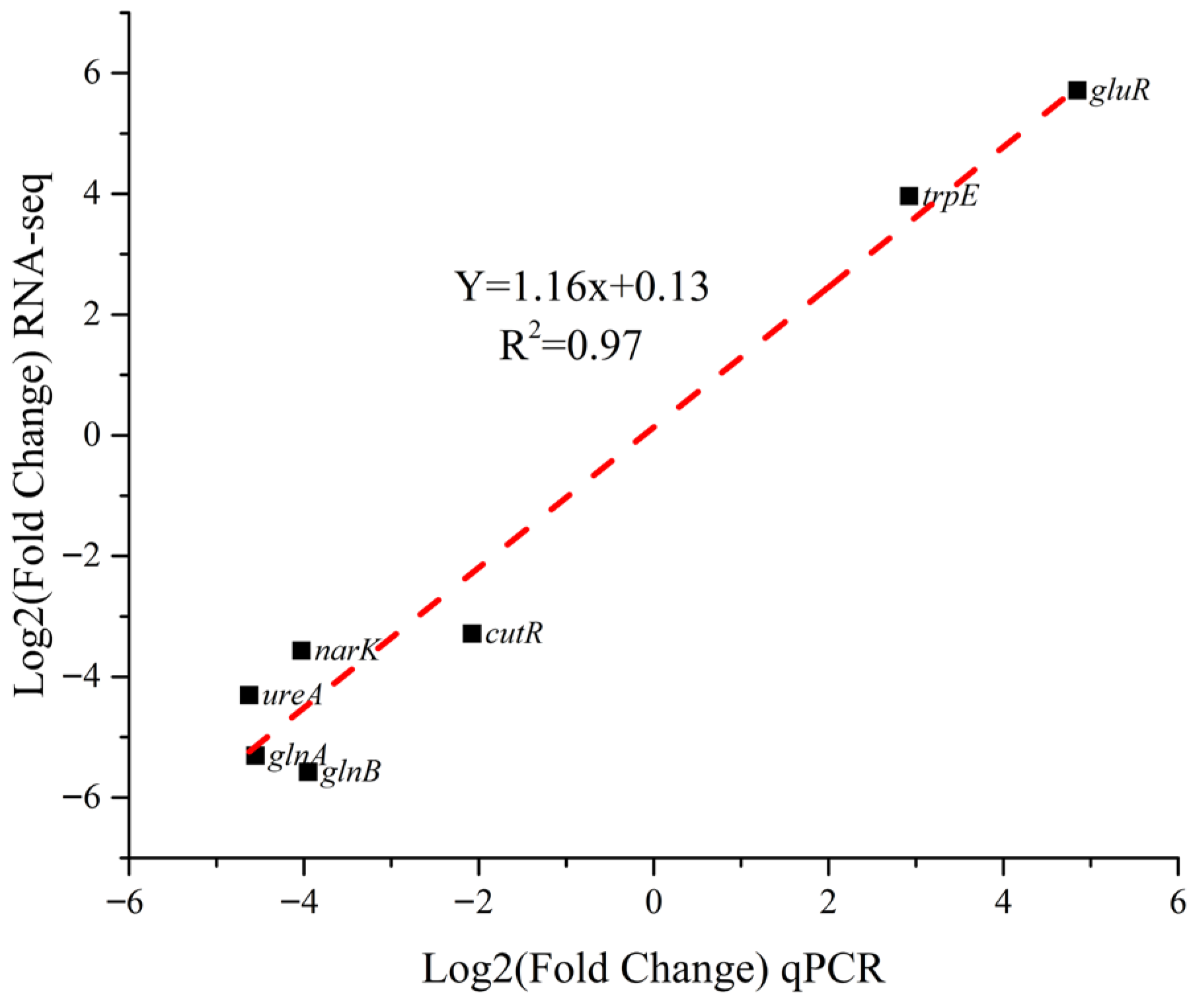
3.2. Transcriptomic Response of S. alboflavus TD-1 to Glutamine Supplementation
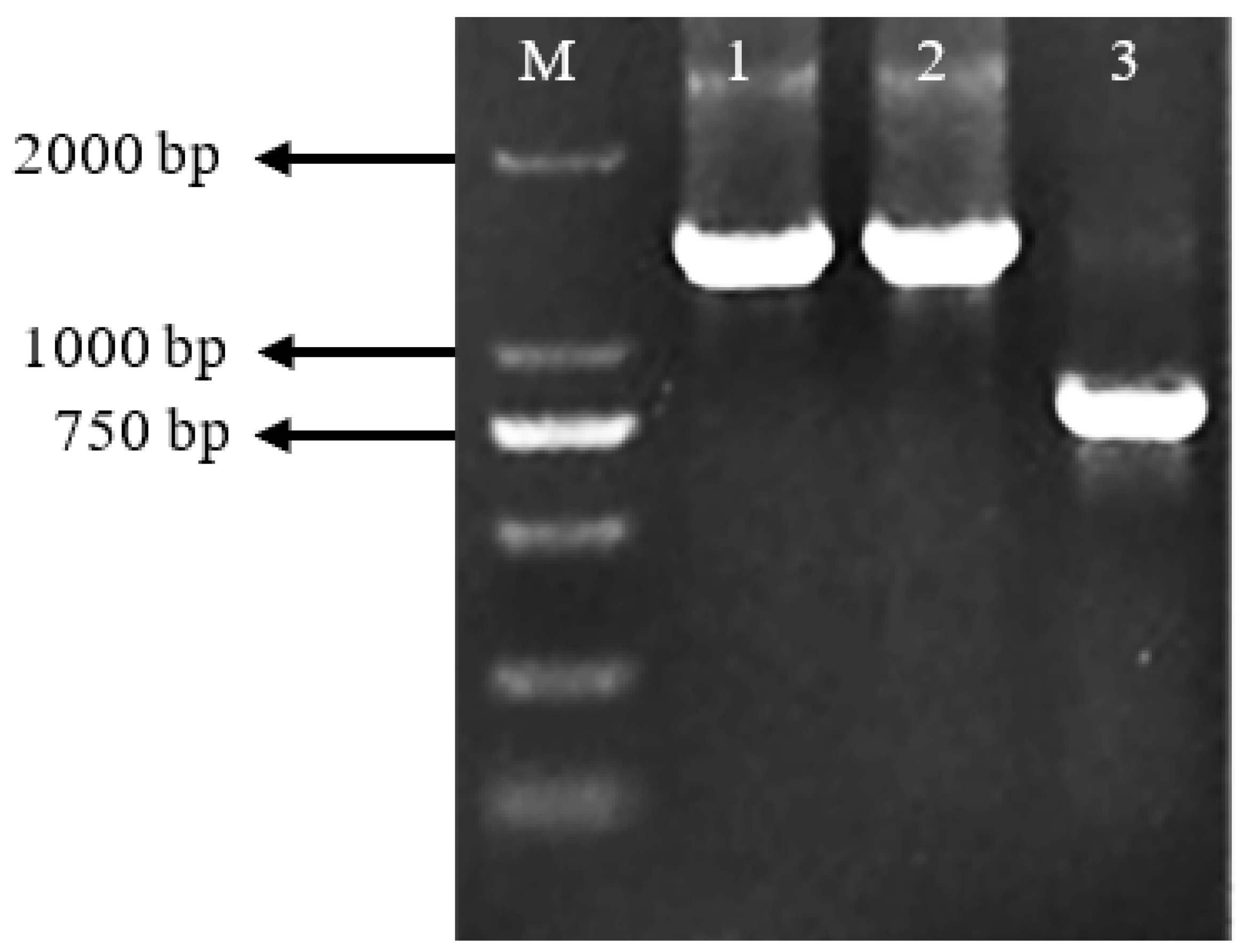
3.3. CRISPR/Cas9-Mediated Deletion of gluR
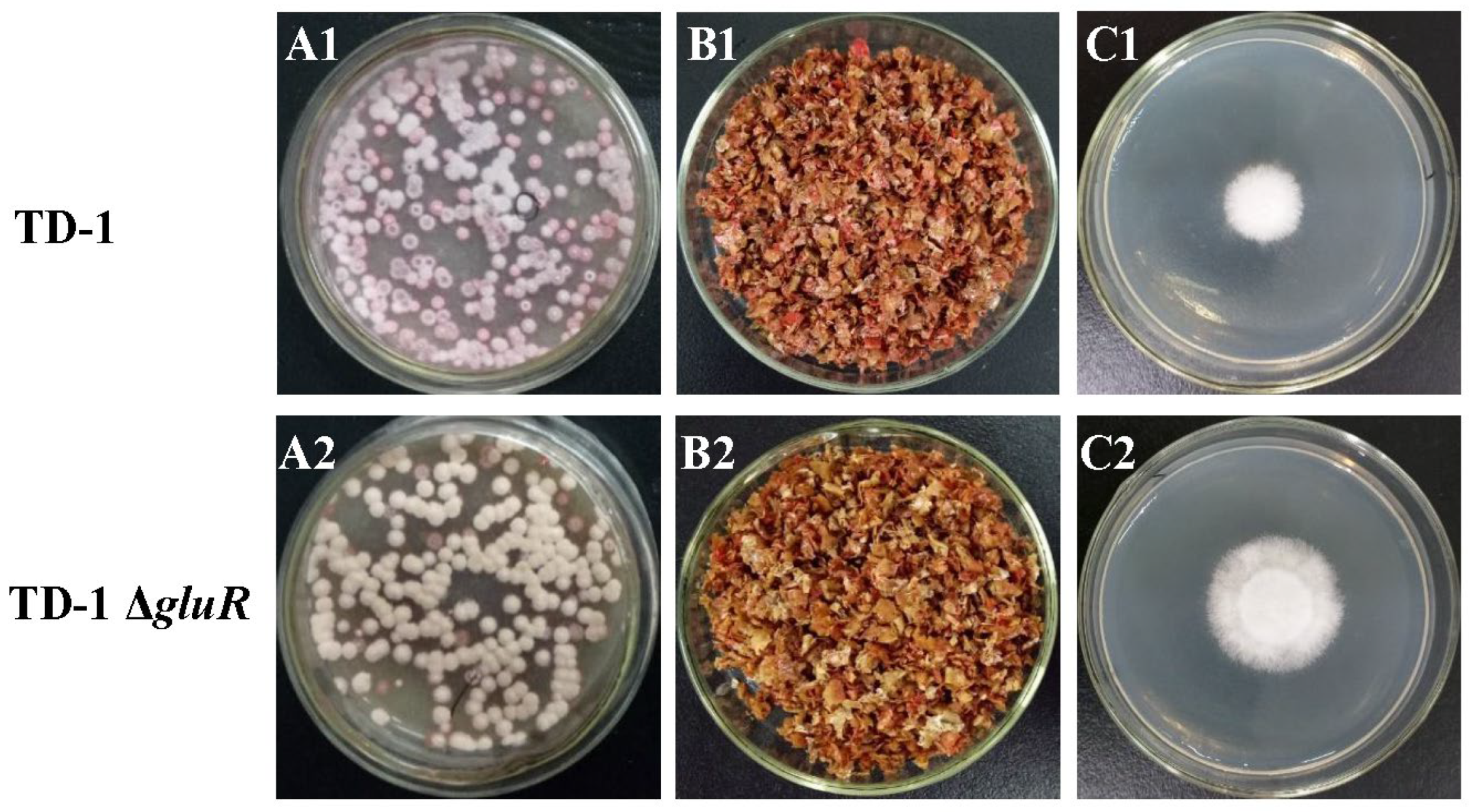
3.4. Effects of gluR Deletion on Phenotype, Antifungal Activity, and mVOC Profiles
4. Discussion
5. Conclusions
Author Contributions
Funding
Institutional Review Board Statement
Informed Consent Statement
Data Availability Statement
Acknowledgments
Conflicts of Interest
References
- Wang, P.; Ma, L.; Jin, J.; Zheng, M.; Pan, L.; Zhao, Y.; Sun, X.; Liu, Y.; Xing, F. The anti-aflatoxigenic mechanism of cinnamaldehyde in Aspergillus flavus. Sci. Rep. 2019, 9, 10499. [Google Scholar] [CrossRef]
- Gilbert, M.K.; Mack, B.M.; Lebar, M.D.; Chang, P.-K.; Gross, S.R.; Sweany, R.R.; Cary, J.W.; Rajasekaran, K.J.J.o.F. Putative core transcription factors affecting virulence in Aspergillus flavus during infection of maize. J. Fungi 2023, 9, 118. [Google Scholar] [CrossRef]
- Wang, H.; Liu, M.; Zhang, Y.; Zhao, H.; Lu, W.; Lin, T.; Zhang, P.; Zheng, D. Rapid Detection of Aspergillus flavus and Quantitative Determination of Aflatoxin B(1) in Grain Crops Using a Portable Raman Spectrometer Combined with Colloidal Au Nanoparticles. Molecules 2022, 27, 5280. [Google Scholar] [CrossRef]
- Sun, Y.; Yao, Z.; Long, M.; Zhang, Y.; Huang, K.; Li, L. Alveolar Macrophages Participate in the Promotion of Influenza Virus Infection by Aflatoxin B1 at an Early Stage. Toxins 2023, 15, 67. [Google Scholar] [CrossRef] [PubMed]
- Abdelhamid, H.N.; Mahmoud, G.A.E.; Sharmoukh, W. A cerium-based MOFzyme with multi-enzyme-like activity for the disruption and inhibition of fungal recolonization. J. Mater. Chem. B 2020, 8, 7548–7556. [Google Scholar] [CrossRef] [PubMed]
- Hu, Z.; Yuan, K.; Zhou, Q.; Lu, C.; Du, L.; Liu, F.J.F.c. Mechanism of antifungal activity of Perilla frutescens essential oil against Aspergillus flavus by transcriptomic analysis. Food Control 2021, 123, 107703. [Google Scholar] [CrossRef]
- Dini, I.; Alborino, V.; Lanzuise, S.; Lombardi, N.; Marra, R.; Balestrieri, A.; Ritieni, A.; Woo, S.L.; Vinale, F. Trichoderma Enzymes for Degradation of Aflatoxin B1 and Ochratoxin A. Molecules 2022, 27, 3959. [Google Scholar] [CrossRef]
- Ahmad, M.F.; Ahmad, F.A.; Alsayegh, A.A.; Zeyaullah, M.; AlShahrani, A.M.; Muzammil, K.; Saati, A.A.; Wahab, S.; Elbendary, E.Y.; Kambal, N.J.H. Pesticides impacts on human health and the environment with their mechanisms of action and possible countermeasures. Heliyon 2024, 10, e29128. [Google Scholar] [CrossRef] [PubMed]
- Islam, T.; Danishuddin; Tamanna, N.T.; Matin, M.N.; Barai, H.R.; Haque, M.A. Resistance Mechanisms of Plant Pathogenic Fungi to Fungicide, Environmental Impacts of Fungicides, and Sustainable Solutions. Plants 2024, 13, 2737. [Google Scholar] [CrossRef]
- Garcia-Diaz, M.; Patino, B.; Vazquez, C.; Gil-Serna, J. A Novel Niosome-Encapsulated Essential Oil Formulation to Prevent Aspergillus flavus Growth and Aflatoxin Contamination of Maize Grains During Storage. Toxins 2019, 11, 646. [Google Scholar] [CrossRef]
- Lv, A.; Lv, Y.; Tian, P.; Wei, S.; Hu, Y. The antifungal activity of puroindoline A protein and its biocontrol potential for inhibiting Aspergillus flavus infection in peanut and corn. LWT Food Sci. Technol. 2020, 134, 110184. [Google Scholar] [CrossRef]
- Cerimi, K.; Pöther, D.-C.; Klar, S. A bibliometric analysis of fungal volatile organic compounds. Fungal Biol. Biotechnol. 2025, 12, 12. [Google Scholar] [CrossRef]
- Napitupulu, T.P. Antagonistic fungal volatiles as potential biocontrol countermeasure for microbial postharvest fruit diseases. Egypt. J. Biol. Pest Control 2023, 33, 100. [Google Scholar] [CrossRef]
- Lyu, A.; Yang, L.; Wu, M.; Zhang, J.; Li, G. High Efficacy of the Volatile Organic Compounds of Streptomyces yanglinensis 3-10 in Suppression of Aspergillus Contamination on Peanut Kernels. Front. Microbiol. 2020, 11, 142. [Google Scholar] [CrossRef] [PubMed]
- Jaibangyang, S.; Nasanit, R.; Limtong, S. Biological control of aflatoxin-producing Aspergillus flavus by volatile organic compound-producing antagonistic yeasts. BioControl 2020, 65, 377–386. [Google Scholar] [CrossRef]
- Krysenko, S. Impact of Nitrogen-Containing Compounds on Secondary Metabolism in Streptomyces spp.—A Source of Metabolic Engineering Strategies. SynBio 2023, 1, 204–225. [Google Scholar] [CrossRef]
- Sánchez-Torres, P. Emerging alternatives to control fungal contamination. Curr. Opin. Food Sci. 2025, 61, 101255. [Google Scholar] [CrossRef]
- Razo-Belman, R.; Ozuna, C. Volatile Organic Compounds: A Review of Their Current Applications as Pest Biocontrol and Disease Management. Horticulturae 2023, 9, 441. [Google Scholar] [CrossRef]
- Almeida, O.A.C.; de Araujo, N.O.; Dias, B.H.S.; de Sant’Anna Freitas, C.; Coerini, L.F.; Ryu, C.-M.; de Castro Oliveira, J.V. The power of the smallest: The inhibitory activity of microbial volatile organic compounds against phytopathogens. Front. Microbiol. 2023, 13, 951130. [Google Scholar] [CrossRef]
- Zhao, X.; Zhou, J.; Tian, R.; Liu, Y. Microbial volatile organic compounds: Antifungal mechanisms, applications, and challenges. Front. Microbiol. 2022, 13, 922450. [Google Scholar] [CrossRef]
- Afsah-Hejri, L.; Rajaram, P.; O′Leary, J.; McGivern, J.; Baxter, R.; Mesbah, A.; Maboudian, R.; Ehsani, R. Identification of volatile organic compounds (VOCs) by SPME-GC-MS to detect Aspergillus flavus infection in pistachios. Food Control 2023, 154, 110033. [Google Scholar] [CrossRef]
- Natarajan, S.; Balachandar, D.; Paranidharan, V. Inhibitory effects of epiphytic Kluyveromyces marxianus from Indian senna (Cassia angustifolia Vahl.) on growth and aflatoxin production of Aspergillus flavus. Int. J. Food Microbiol. 2023, 406, 110368. [Google Scholar] [CrossRef] [PubMed]
- Ling, L.J.; Jiang, K.L.; Cheng, W.T.; Wang, Y.Y.; Pang, M.M.; Luo, H.; Lu, L.; Gao, K.; Tu, Y.X. Biocontrol of volatile organic compounds obtained from Bacillus subtilis CL2 against Aspergillus flavus in peanuts during storage. Biol. Control 2022, 176, 105094. [Google Scholar] [CrossRef]
- Pipponzi, S.; Licciardello, F.; Caradonia, F.; Stefani, E. Volatile organic compounds produced by Streptomyces sp. SA51 mitigate Fusarium oxysporum f.sp. lactucae infection and stimulate lettuce seedling growth. Eur. J. Plant Pathol. 2025, 173, 125–142. [Google Scholar] [CrossRef]
- Yang, M.; Lu, L.; Pang, J.; Hu, Y.; Guo, Q.; Li, Z.; Wu, S.; Liu, H.; Wang, C. Biocontrol activity of volatile organic compounds from Streptomyces alboflavus TD-1 against Aspergillus flavus growth and aflatoxin production. J. Microbiol. 2019, 57, 396–404. [Google Scholar] [CrossRef]
- Gong, A.-D.; Lei, Y.-Y.; He, W.-J.; Liao, Y.-C.; Ma, L.; Zhang, T.-T.; Zhang, J.-B. The Inhibitory Effect of Pseudomonas stutzeri YM6 on Aspergillus flavus Growth and Aflatoxins Production by the Production of Volatile Dimethyl Trisulfide. Toxins 2022, 14, 788. [Google Scholar] [CrossRef]
- Ramadan, K.M.A.; Bendary, E.S.A.; Khalil, H.B.; Ali, S.A.; Ahmed, A.R.; Mahmoud, M.A.A. Smart Detection of Food Spoilage Using Microbial Volatile Compounds: Technologies, Challenges, and Future Outlook. J. Agric. Food Chem. 2025, 73, 19222–19243. [Google Scholar] [CrossRef]
- Chevrette, M.G.; Carlson, C.M.; Ortega, H.E.; Thomas, C.; Ananiev, G.E.; Barns, K.J.; Book, A.J.; Cagnazzo, J.; Carlos, C.; Flanigan, W. The antimicrobial potential of Streptomyces from insect microbiomes. Nat. Commun. 2019, 10, 516. [Google Scholar] [CrossRef] [PubMed]
- Khan, S.; Srivastava, S.; Karnwal, A.; Malik, T. Streptomyces as a promising biological control agents for plant pathogens. Front. Microbiol. 2023, 14, 1285543. [Google Scholar] [CrossRef]
- Cruz-Bautista, R.; Ruíz-Villafán, B.; Romero-Rodríguez, A.; Rodríguez-Sanoja, R.; Sánchez, S. Trends in the two-component system’s role in the synthesis of antibiotics by Streptomyces. Appl. Microbiol. Biotechnol. 2023, 107, 4727–4743. [Google Scholar] [CrossRef]
- Schumann, W. Regulation of bacterial heat shock stimulons. Cell Stress Chaperones 2016, 21, 959–968. [Google Scholar] [CrossRef]
- Zhu, Y.; Zhang, P.; Zhang, J.; Wang, J.; Lu, Y.; Pang, X. Impact on multiple antibiotic pathways reveals MtrA as a master regulator of antibiotic production in Streptomyces spp. and potentially in other actinobacteria. Appl. Environ. Microbiol. 2020, 86, e01201–e01220. [Google Scholar] [CrossRef]
- Som, N.F.; Heine, D.; Holmes, N.A.; Munnoch, J.T.; Chandra, G.; Seipke, R.F.; Hoskisson, P.A.; Wilkinson, B.; Hutchings, M.I.J.F.i.m. The conserved actinobacterial two-component system MtrAB coordinates chloramphenicol production with sporulation in Streptomyces venezuelae NRRL B-65442. Front. Microbiol. 2017, 8, 1145. [Google Scholar] [CrossRef]
- Jin, S.; Hui, M.; Lu, Y.; Zhao, Y. An overview on the two-component systems of Streptomyces coelicolor. World J. Microbiol. Biotechnol. 2023, 39, 78. [Google Scholar] [CrossRef] [PubMed]
- Marks, B.B.; Nogueira, M.A.; Hungria, M. Microbial Secondary Metabolites and Their Use in Achieving Sustainable Agriculture: Present Achievements and Future Challenges. Agronomy 2025, 15, 1350. [Google Scholar] [CrossRef]
- Newsholme, P.; Procopio, J.; Lima, M.M.R.; Pithon-Curi, T.C.; Curi, R. Glutamine and glutamate—Their central role in cell metabolism and function. Cell Biochem. Funct. 2003, 21, 1–9. [Google Scholar] [CrossRef]
- Li, L.; Jiang, W.; Lu, Y.J.J.o.B. A novel two-component system, GluR-GluK, involved in glutamate sensing and uptake in Streptomyces coelicolor. J. Bacteriol. 2017, 199, e00097-17. [Google Scholar] [CrossRef] [PubMed]
- Galvan, A.I.; Hernandez, A.; de Guía Córdoba, M.; Martin, A.; Serradilla, M.J.; Lopez-Corrales, M.; Rodriguez, A. Control of toxigenic Aspergillus spp. in dried figs by volatile organic compounds (VOCs) from antagonistic yeasts. Int. J. Food Microbiol. 2022, 376, 109772. [Google Scholar] [CrossRef] [PubMed]
- Tyagi, A.; Lama Tamang, T.; Kashtoh, H.; Mir, R.A.; Mir, Z.A.; Manzoor, S.; Manzar, N.; Gani, G.; Vishwakarma, S.K.; Almalki, M.A.J.H. A review on biocontrol agents as sustainable approach for crop disease management: Applications, production, and future perspectives. Horticulturae 2024, 10, 805. [Google Scholar] [CrossRef]
- Wang, C.; Wang, Z.; Qiao, X.; Li, Z.; Li, F.; Chen, M.; Wang, Y.; Huang, Y.; Cui, H. Antifungal activity of volatile organic compounds from Streptomyces alboflavus TD-1. FEMS Microbiol. Lett. 2013, 341, 45–51. [Google Scholar] [CrossRef]
- Fernando, K.; Reddy, P.; Hettiarachchige, I.K.; Spangenberg, G.C.; Rochfort, S.J.; Guthridge, K.M. Novel Antifungal Activity of Lolium-Associated Epichloë Endophytes. Microorganisms 2020, 8, 955. [Google Scholar] [CrossRef]
- Pop, R.M.; Sabin, O.; Suciu, S.; Vesa, S.C.; Socaci, S.A.; Chedea, V.S.; Bocsan, I.C.; Buzoianu, A.D. Nigella Sativa’s Anti-Inflammatory and Antioxidative Effects in Experimental Inflammation. Antioxidants 2020, 9, 921. [Google Scholar] [CrossRef] [PubMed]
- Warren, W.C.; Clayton, D.F.; Ellegren, H.; Arnold, A.P.; Hillier, L.W.; Künstner, A.; Searle, S.; White, S.; Vilella, A.J.; Fairley, S.; et al. The genome of a songbird. Nature 2010, 464, 757–762. [Google Scholar] [CrossRef]
- Grabherr, M.G.; Haas, B.J.; Yassour, M.; Levin, J.Z.; Thompson, D.A.; Amit, I.; Adiconis, X.; Fan, L.; Raychowdhury, R.; Zeng, Q.; et al. Full-length transcriptome assembly from RNA-Seq data without a reference genome. Nat. Biotechnol. 2011, 29, 644–652. [Google Scholar] [CrossRef]
- Anders, S.; Huber, W. Differential expression analysis for sequence count data. Genome Biol. 2010, 11, R106. [Google Scholar] [CrossRef]
- Cobb, R.E.; Wang, Y.; Zhao, H.J.A.s.b. High-efficiency multiplex genome editing of Streptomyces species using an engineered CRISPR/Cas system. ACS Synth. Biol. 2015, 4, 723–728. [Google Scholar] [CrossRef] [PubMed]
- Zeng, H.; Wen, S.; Xu, W.; He, Z.; Zhai, G.; Liu, Y.; Deng, Z.; Sun, Y. Highly efficient editing of the actinorhodin polyketide chain length factor gene in Streptomyces coelicolor M145 using CRISPR/Cas9-CodA(sm) combined system. Appl. Microbiol. Biotechnol. 2015, 99, 10575–10585. [Google Scholar] [CrossRef] [PubMed]
- Davies, C.R.; Wohlgemuth, F.; Young, T.; Violet, J.; Dickinson, M.; Sanders, J.-W.; Vallieres, C.; Avery, S.V. Evolving challenges and strategies for fungal control in the food supply chain. Fungal Biol. Rev. 2021, 36, 15–26. [Google Scholar] [CrossRef]
- Krysenko, S.; Wohlleben, W. Role of Carbon, Nitrogen, Phosphate and Sulfur Metabolism in Secondary Metabolism Precursor Supply in Streptomyces spp. Microorganisms 2024, 12, 1571. [Google Scholar] [CrossRef]
- Fink, D.; Weißschuh, N.; Reuther, J.; Wohlleben, W.; Engels, A. Two transcriptional regulators GlnR and GlnRII are involved in regulation of nitrogen metabolism in Streptomyces coelicolor A3(2). Mol. Microbiol. 2002, 46, 331–347. [Google Scholar] [CrossRef]
- Yang, M.; Huang, C.; Xue, Y.; Li, S.; Lu, L.; Wang, C. Biofumigation with volatile organic compounds from Streptomyces alboflavus TD-1 and pure chemicals to control Aspergillus ochraceus. Ann. Appl. Biol. 2018, 173, 313–322. [Google Scholar] [CrossRef]
- Sánchez de la Nieta, R.; Santamaría, R.I.; Díaz, M. Two-Component Systems of Streptomyces coelicolor: An Intricate Network to Be Unraveled. Int. J. Mol. Sci. 2022, 23, 15085. [Google Scholar] [CrossRef] [PubMed]



| Gene | Primer Sequence (5′-3′) |
|---|---|
| 16 S rRNA | Forward primer 5′-CGACGCAACGCGAAGAACCT-3′ |
| Reverse primer 5′-GACGACAGCCATGCACCACC-3′ | |
| trpE | Forward primer 5′-CCCGACGAGGAGGAGAACC-3′ |
| Reverse primer 5′-GATGTCGTTGCGGCACAGG-3′ | |
| glnA | Forward primer 5′-CTGCCGATCTGGGGTTTCG-3′ |
| Reverse primer 5′-TCCAGGACCTCGCACAGGA-3′ | |
| glnB | Forward primer 5′-GATCCGCATCGAGGTGCTC-3′ |
| Reverse primer 5′-TTGCCGTCGCCGATCTTGC-3′ | |
| gluR | Forward primer 5′-ATCCACGGCCTCAACCTCG-3′ |
| Reverse primer 5′-GTGTCGGCGGACTTCTTCG-3′ | |
| cutR | Forward primer 5′-CCCAAGCCCTTCGCGTTCA-3′ |
| Reverse primer 5′-TCCTTGCCGTCGCGGAACA-3′ | |
| nasA | Forward primer 5′-CGTGAACACGGGCAGAAGG-3′ |
| Reverse primer 5′-GCGTCGAGAAGCTCGTAGGC-3′ | |
| narK | Forward primer 5′-AGCCCGCTGAGCACGAAGA-3′ |
| Reverse primer 5′-CCGCATCACGCTGTGGAACT-3′ | |
| sgRNA | Forward primer 5′-GCGTCTACGGGCACCTTACC-3′ |
| Reverse primer 5′-TCGCCACCTCTGACTTGAGC-3′ | |
| UHR | Forward primer 5′-GCGTTTTTTATCTAGATCGTCGAAGAGCATCACCT-3′ |
| Reverse primer 5′-GGTGATGACGGTGAAGCAGTCTCATACGGTCTCCCT-3′ | |
| DHR | Forward primer 5′-GTTCCACTGAGCGTCCTGCACATGCCCGCCCTGAT-3′ |
| Reverse primer 5′-GGTTCCTGGCCTCTAGAGCGATCTCCTCGTTGCCCTC-3′ | |
| AMP | Forward primer 5′-ACCGTATGAGACTGCTTCACCGTCATCACCGAAAC-3′ |
| Reverse primer 5′-GGCGGGCATGTGCAGGACGCTCAGTGGAACGAAAA-3′ |
| Compounds | RT | Log2 (EG/CG) |
|---|---|---|
| Hydrocarbons | ||
| 3-Heptene * | 13.21 | −0.49 |
| Cycloheptane * | 14.16 | −0.24 |
| Nonane * | 15.25 | −0.30 |
| 2-Decene | 16.70 | −0.11 |
| 4-Decene * | 19.83 | −0.46 |
| 1,3-Cyclopentadiene | 12.12 | 0.09 |
| 1,5-Cyclooctadiene * | 21.63 | 3.40 |
| 1H-Indene * | 22.10 | 3.22 |
| 1,4-Dimethyladamantane * | 22.65 | 3.64 |
| Azulene * | 30.05 | 3.36 |
| Naphthalene * | 30.38 | 1.81 |
| Ketones | ||
| 2-Decanone * | 21.02 | 0.93 |
| Terpenoids | ||
| beta-Pinene * | 11.84 | −0.30 |
| 2-Methyl-2-bornene | 13.70 | 0.24 |
| 2-Methylisoborneol * | 20.50 | 1.20 |
| beta-Copaene | 30.90 | 0.12 |
| Alcohols | ||
| 4a(2H)-Naphthalenol * | 28.61 | 3.34 |
| Ethers | ||
| Anisole * | 9.54 | 0.84 |
| Others | ||
| Dimethyl trisulfide * | 11.56 | 2.65 |
| o-Anisidine * | 19.88 | 0.63 |
| 2H-3,9a-Methano-1-benzoxepin * | 30.31 | 3.05 |
| Gene ID | Gene Name | Log2 (EG/CG) | p-Value | Function |
|---|---|---|---|---|
| Nitrogen metabolism | ||||
| gene1147 | ureC | −3.35 | 2.44 × 10⁻² | Urease subunit alpha |
| gene1148 | ureB | −5.89 | 1.45 × 10⁻² | Urease subunit beta |
| gene1149 | ureA | −4.31 | 6.14 × 10⁻³ | Urease subunit gamma |
| gene2353 | glnA | −5.31 | 9.99 × 10⁻⁴ | Glutamine synthetase |
| gene2671 | nasA | −5.56 | 6.81 × 10⁻⁴ | Nitrite reductase |
| gene3194 | narK | −3.57 | 1.80 × 10⁻² | Nitrate/nitrite transporter |
| gene6084 | glnB | −5.58 | 9.27 × 10⁻⁴ | Nitrogen regulatory protein |
| Amino acid metabolism | ||||
| gene469 | slcC | 4.18 | 1.55 × 10⁻² | Glyoxylate reductase |
| gene3047 | trpE | 3.96 | 1.12 × 10⁻² | Anthranilate synthase |
| gene3048 | trpG | 3.40 | 2.85 × 10⁻² | Anthranilate synthase |
| gene4517 | speE | 3.14 | 3.51 × 10⁻² | Spermidine synthase |
| gene6372 | aspC | 5.81 | 4.52 × 10⁻⁴ | Aspartate aminotransferase |
| gene7223 | argD | 2.99 | 4.09 × 10⁻² | Acetylornithine aminotransferase |
| Fatty acid metabolism | ||||
| gene3964 | fabH | 5.07 | 2.78 × 10⁻³ | 3-Oxoacyl-ACP synthase |
| gene3965 | fabG | 4.49 | 8.32 × 10⁻³ | Hypothetical protein |
| gene381 | curA | −4.09 | 7.54 × 10⁻³ | Hypothetical protein |
| gene383 | fabG | −4.29 | 5.72 × 10⁻⁵ | Hypothetical protein |
| gene384 | fabH | −4.66 | 3.13 × 10⁻³ | 3-Oxoacyl-ACP synthase |
| Sulfur metabolism | ||||
| gene6566 | sir | 2.97 | 4.11 × 10⁻² | Sulfite reductase |
| gene7899 | ssuC | 6.94 | 6.52 × 10⁻⁵ | ABC transporter permease |
| gene7975 | ssuD | 6.17 | 2.46 × 10⁻⁴ | Alkanesulfonate monooxygenase |
| Transcriptional regulator | ||||
| gene1755 | tctB | 3.45 | 3.87 × 10⁻² | Integral membrane protein |
| gene1895 | tetR | 4.21 | 3.60 × 10⁻² | TetR family transcriptional regulator |
| gene3049 | gabR | 3.06 | 3.71 × 10⁻² | GntR family transcriptional regulator |
| gene6252 | gluR | 5.71 | 5.27 × 10⁻⁴ | Sensory transcriptional regulator |
| gene6339 | cutR | −3.29 | 2.66 × 10⁻² | Transcriptional regulatory protein |
| Compounds | RT | Log2 (EG/CG) |
|---|---|---|
| Hydrocarbons | ||
| Hexane * | 5.40 | 0.52 |
| Heptane | 13.45 | 0.02 |
| Nonane * | 15.25 | 0.38 |
| 2-Undecene * | 16.10 | 0.52 |
| Decane * | 17.07 | 0.48 |
| Octane * | 17.60 | 0.59 |
| Dodecane | 21.01 | 0.12 |
| 1,4-Dimethyladamantane | 22.65 | 0.05 |
| Azulene | 30.05 | 0.07 |
| Naphthalene * | 30.38 | 0.26 |
| 2,4-Dimethyl-1-heptene * | 5.15 | −0.84 |
| 1,3-Cyclopentadiene * | 12.12 | −1.01 |
| 1,5-Cyclooctadiene | 21.63 | −0.09 |
| 1H-Indene | 22.10 | −0.03 |
| Cyclohexane | 23.01 | −0.08 |
| Heneicosane | 28.82 | −0.02 |
| Ketones | ||
| 2-Decanone | 21.01 | 0.15 |
| 2-Hexanone * | 5.01 | −0.86 |
| 2-Heptanone * | 8.53 | −0.30 |
| Alcohols | ||
| 1-Hexanol * | 7.83 | −0.61 |
| 4a(2H)-Naphthalenol * | 28.61 | −0.71 |
| Aldehydes | ||
| Heptanal * | 8.70 | 1.03 |
| Benzaldehyde * | 11.21 | 0.33 |
| Terpenoids | ||
| Cedrene | 29.70 | 0.18 |
| gamma-Muurolene | 30.69 | 0.11 |
| beta-Copaene | 30.90 | 0.10 |
| beta-Pinene * | 11.83 | −0.83 |
| 2-Methyl-2-bornene * | 13.70 | −0.96 |
| D-Limonene * | 14.13 | −0.29 |
| 2-Methylisoborneol | 20.50 | −0.20 |
| Isoledene | 32.18 | −0.03 |
| alpha-Muurolene * | 32.75 | −0.26 |
| Ethers | ||
| Anisole * | 9.51 | −0.63 |
| Others | ||
| Furan | 12.56 | 0.05 |
| 2H-3,9a-Methano-1-benzoxepin * | 31.93 | 0.69 |
| Dimethyl trisulfide * | 11.56 | −0.63 |
| o-Anisidine | 19.88 | −0.19 |
Disclaimer/Publisher’s Note: The statements, opinions and data contained in all publications are solely those of the individual author(s) and contributor(s) and not of MDPI and/or the editor(s). MDPI and/or the editor(s) disclaim responsibility for any injury to people or property resulting from any ideas, methods, instructions or products referred to in the content. |
© 2026 by the authors. Licensee MDPI, Basel, Switzerland. This article is an open access article distributed under the terms and conditions of the Creative Commons Attribution (CC BY) license.
Share and Cite
Li, W.; Yang, M.; Dong, Z.; Liu, T.; Liu, X.; Liu, D.; Ding, C.; Lu, L.; Ding, W.; Li, Z.; et al. Glutamine Modulates mVOC Biosynthesis in Streptomyces alboflavus Through a gluR-Dependent Signaling Pathway and Enhances Its Inhibitory Activity Against Aspergillus flavus. Foods 2026, 15, 228. https://doi.org/10.3390/foods15020228
Li W, Yang M, Dong Z, Liu T, Liu X, Liu D, Ding C, Lu L, Ding W, Li Z, et al. Glutamine Modulates mVOC Biosynthesis in Streptomyces alboflavus Through a gluR-Dependent Signaling Pathway and Enhances Its Inhibitory Activity Against Aspergillus flavus. Foods. 2026; 15(2):228. https://doi.org/10.3390/foods15020228
Chicago/Turabian StyleLi, Wangqiang, Mingguan Yang, Zehua Dong, Tong Liu, Xiuyu Liu, Dan Liu, Chengfang Ding, Laifeng Lu, Wentao Ding, Zhenjing Li, and et al. 2026. "Glutamine Modulates mVOC Biosynthesis in Streptomyces alboflavus Through a gluR-Dependent Signaling Pathway and Enhances Its Inhibitory Activity Against Aspergillus flavus" Foods 15, no. 2: 228. https://doi.org/10.3390/foods15020228
APA StyleLi, W., Yang, M., Dong, Z., Liu, T., Liu, X., Liu, D., Ding, C., Lu, L., Ding, W., Li, Z., Liu, H., Wang, Z., Guo, Q., & Wang, C. (2026). Glutamine Modulates mVOC Biosynthesis in Streptomyces alboflavus Through a gluR-Dependent Signaling Pathway and Enhances Its Inhibitory Activity Against Aspergillus flavus. Foods, 15(2), 228. https://doi.org/10.3390/foods15020228