Review

Postharvest Fruit Grading Technologies and Equipment: A Review

1
School of Agricultural Engineering, Jiangsu University, Zhenjiang 212013, China
2
School of Food Science and Engineering, Jiangsu University, Zhenjiang 212013, China
3
College of Water Resources and Intelligence Engineering, China Agricultural University, Beijing 100083, China
*
Author to whom correspondence should be addressed.
Foods 2026, 15(18), 3308; https://doi.org/10.3390/foods15183308 (registering DOI)
Submission received: 10 August 2026 / Revised: 12 September 2026 / Accepted: 14 September 2026 / Published: 18 September 2026
(This article belongs to the Section Food Analytical Methods)

Abstract

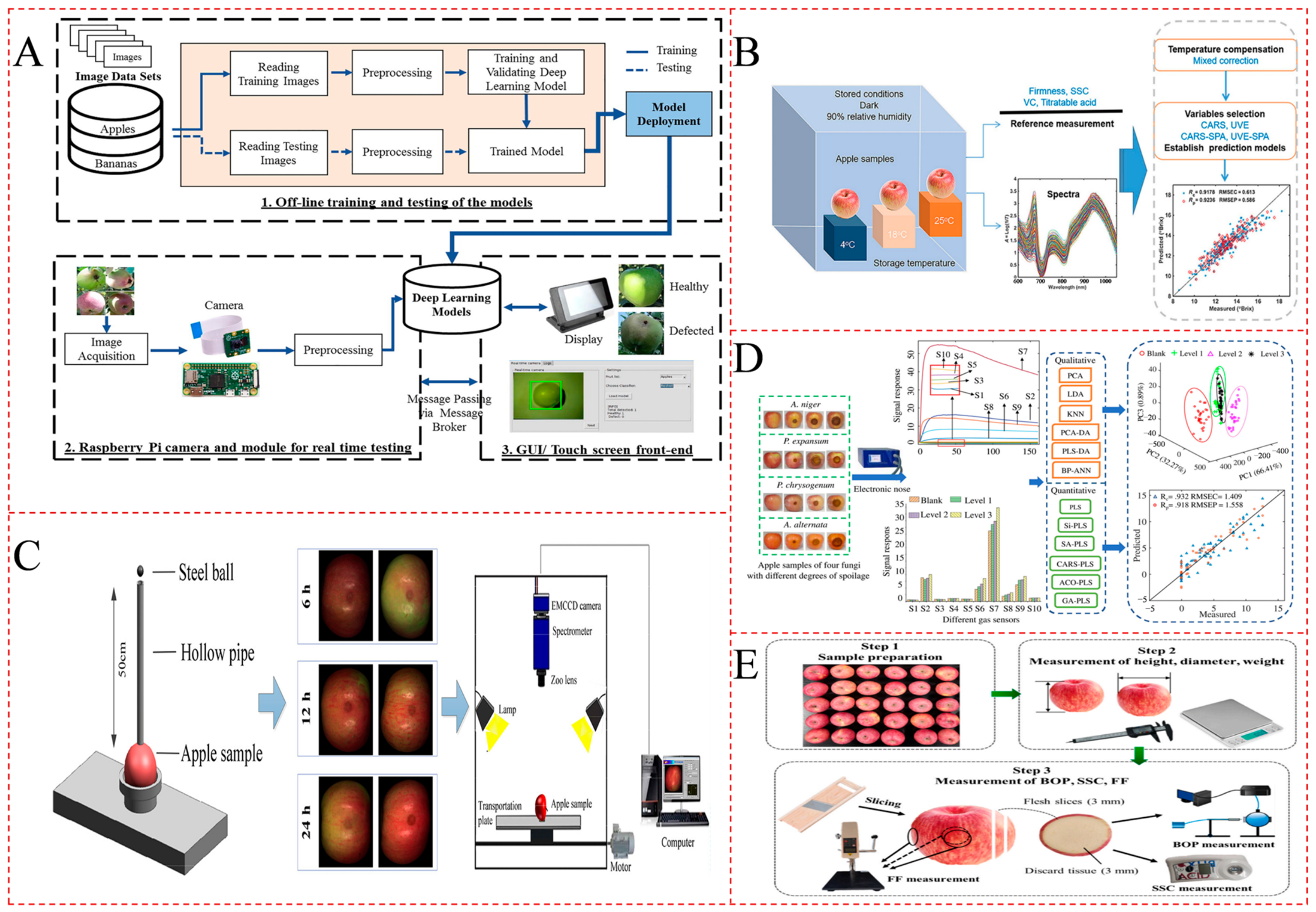
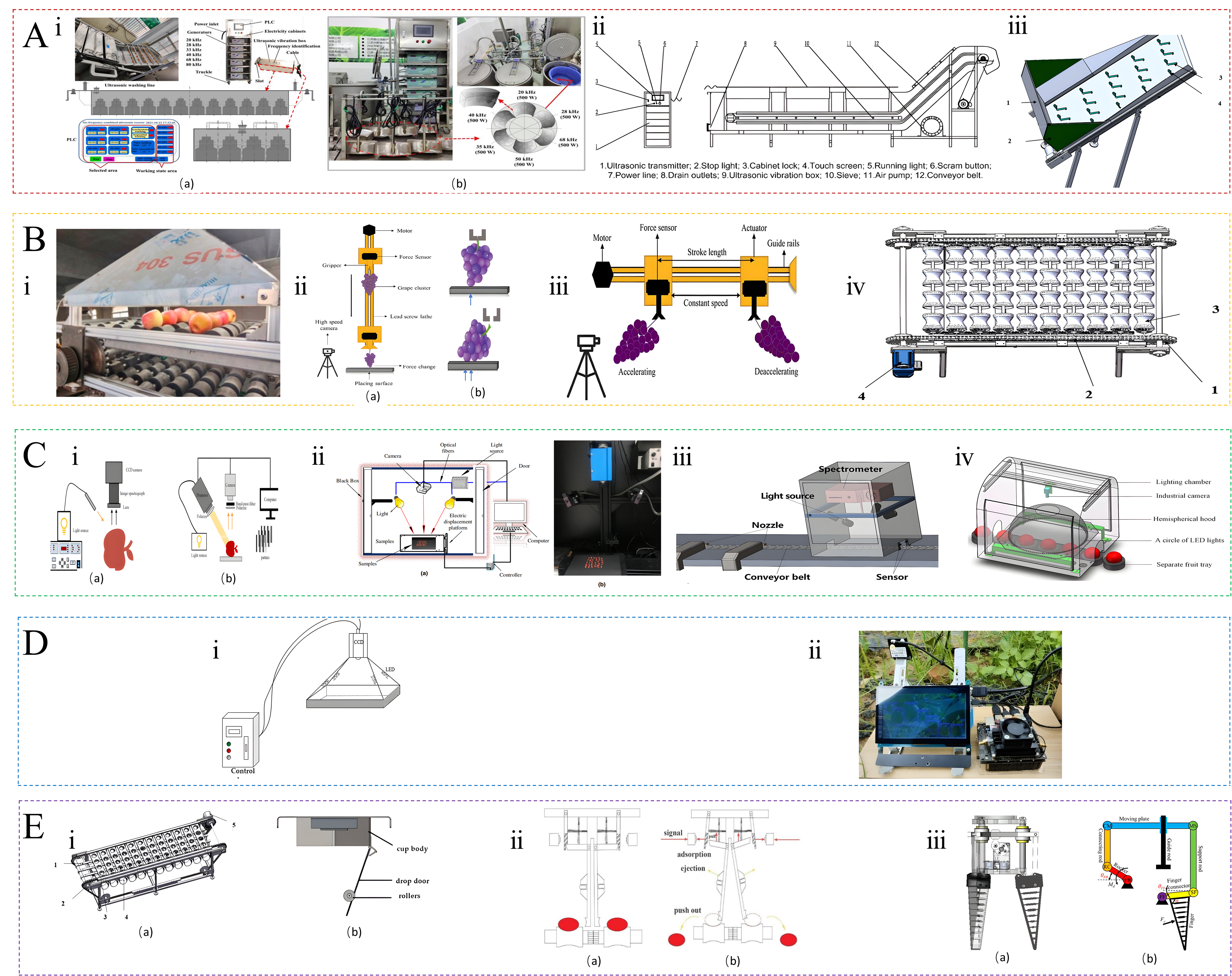
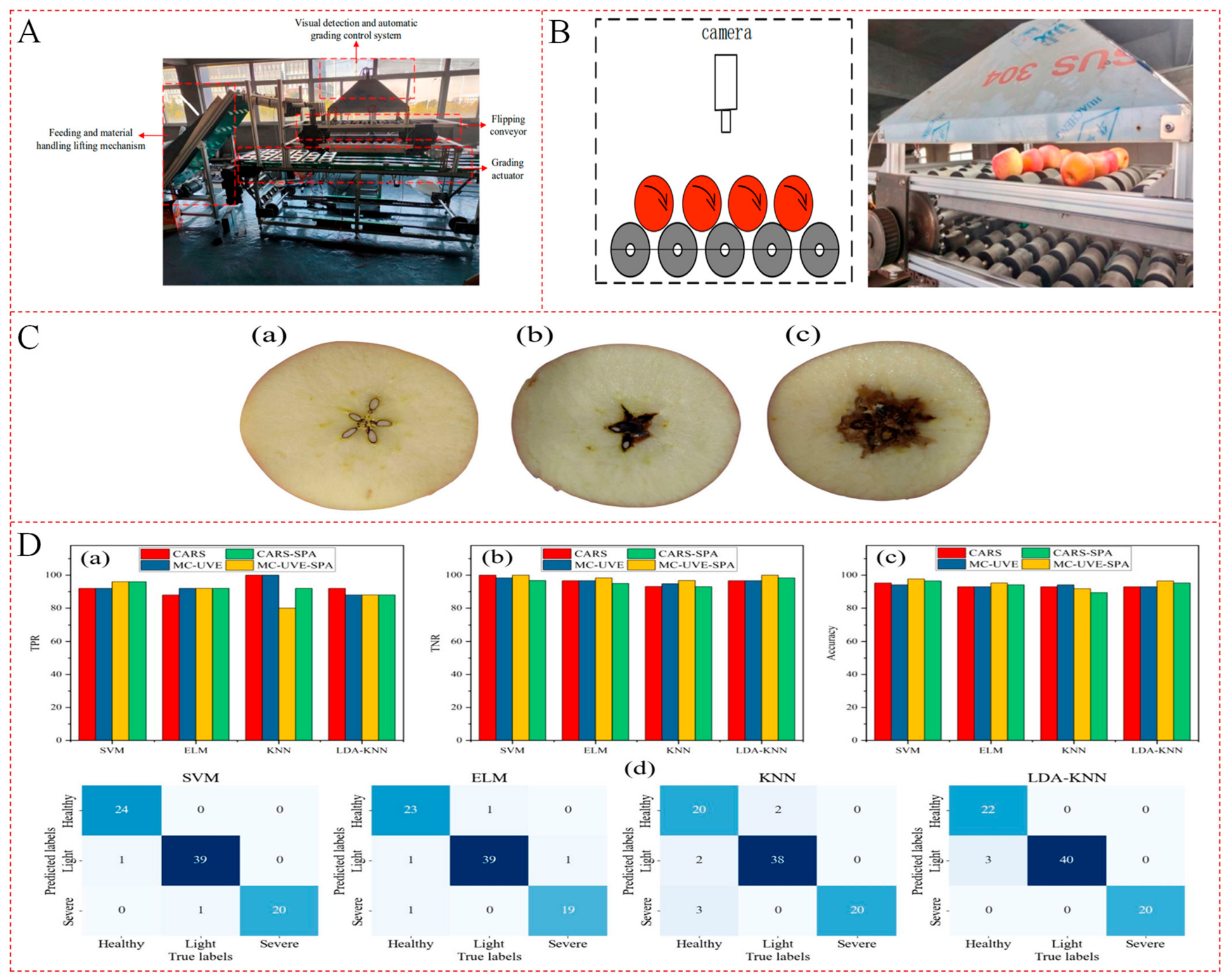
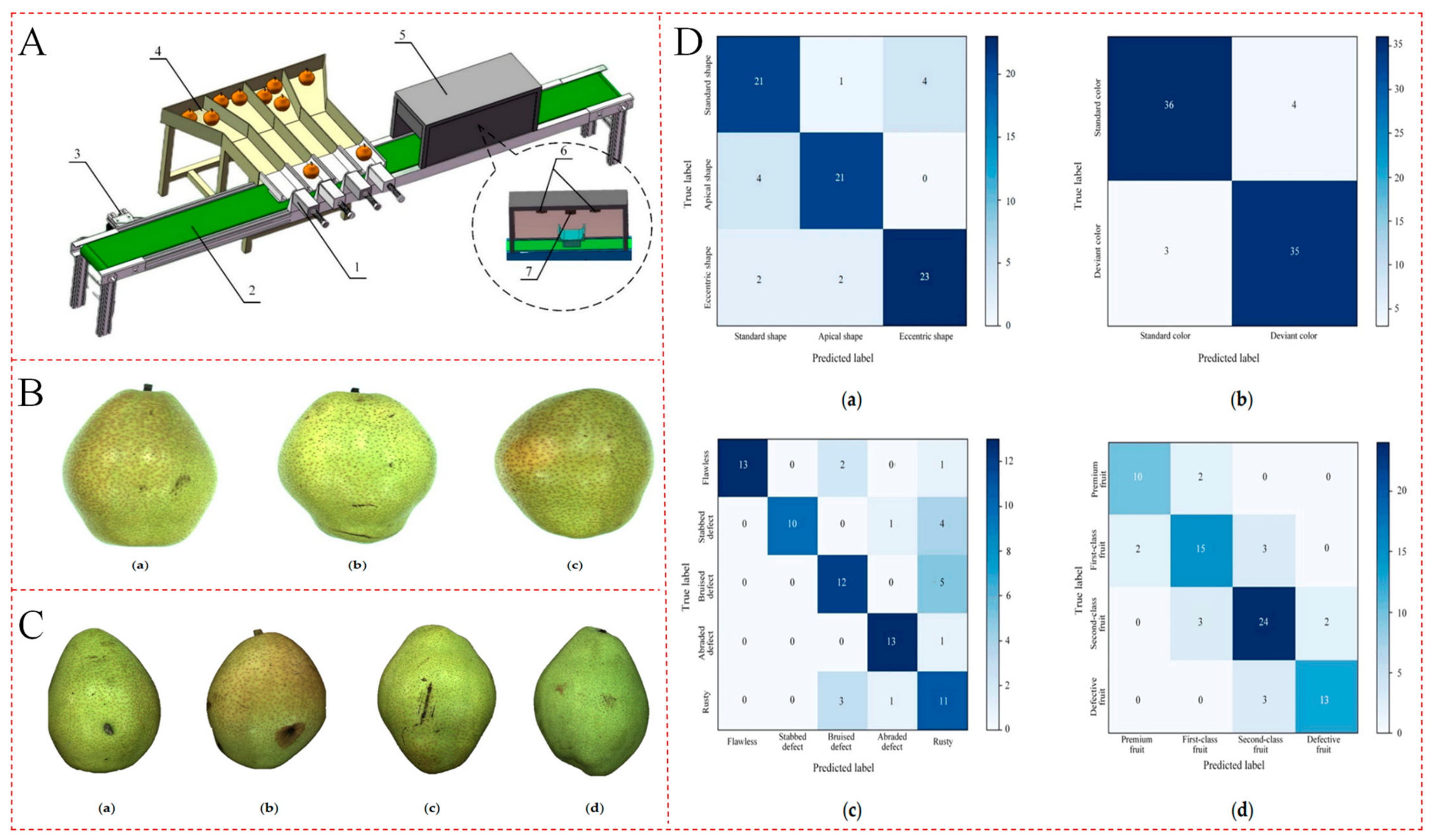
Postharvest fruit quality differs among various fruits and alters during sorting, packaging, transportation and storage. Therefore, it is important to have an efficient and objective grading method that causes little mechanical damage to ensure the uniformity of products and decrease market price and losses in the supply chain. This paper describes the grading norms, detection techniques, processing algorithms, structural designs and practical uses in different types of fruits. It examines the external features, internal quality and hidden faults by using machine vision, visible-near-infrared spectroscopy, hyperspectral and X-ray imaging, acoustic and mechanical detection, electronic noses and the integration of multiple sensors. In addition, it also investigates conventional machine learning, deep learning, transfer learning and lightweight implementations. The research has developed from grading according to size, weight and color to a complete evaluation of ripeness, juice volume, hardness, internal defects and shelf life. Moreover, single detection devices are joined together to construct integrated systems including feeding, separation, inspection, classification, redirection, packaging and data management. However, the application is restricted by the discrepancy between the grading criteria and measurable results, the lack of cross-species and batch generalization ability, and the difficulty in coordinating multiple sensors in real time. The systems should maintain a balance between production speed, mechanical damage and costs. Some matters needing attention are to standardize the quality description, choose multi-source fusion, develop adaptive lightweight models, design modular structures and guarantee end-to-end traceability. Solving these problems will facilitate the transition from accurate laboratory identification to reliable, economic and extensive commercial grading.
Keywords: Postharvest fruit grading; nondestructive quality assessment; data-processing algorithms; multisensor fusion; intelligent grading equipment Postharvest fruit grading; nondestructive quality assessment; data-processing algorithms; multisensor fusion; intelligent grading equipment