Corporate Resonance of Food Safety Risk: A Space–Time Perspective

Abstract
1. Introduction
2. Theoretical Background
3. Materials and Methods
3.1. The CA-SHIRS Model of Corporate Resonance Diffusion of Food Safety Risk
3.1.1. Definition of Cellular States
- (1)
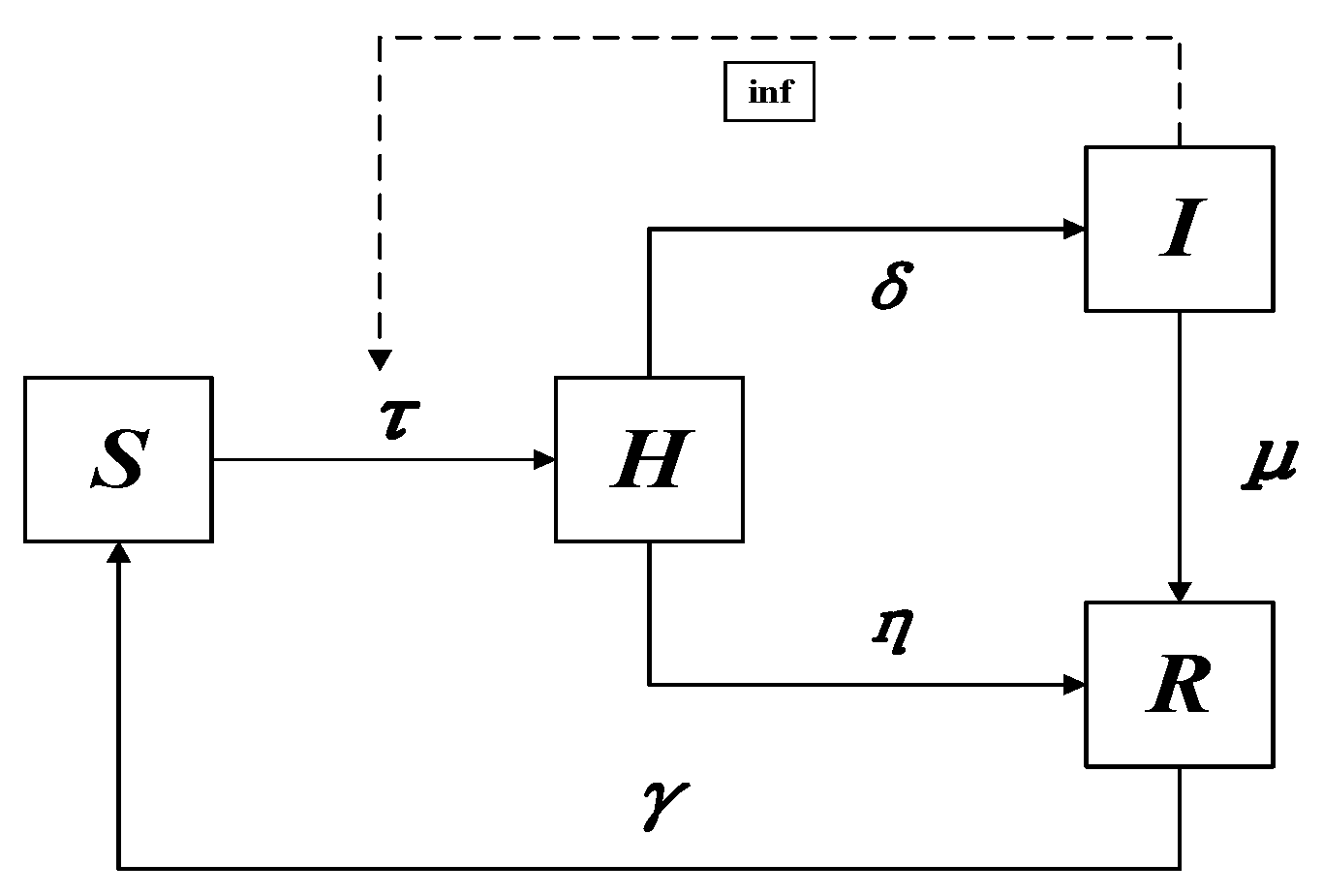
- Susceptible-state firms (): These have not yet experienced risk resonance but, under the combined influence of media communication strategy, government regulatory policies, and the heterogeneity of food firms, are susceptible to being influenced by infected-state firms and may subsequently develop risk resonance.
- (2)
- Latent-state firms (): Firms that have been affected by risk resonance but do not yet exhibit resonant characteristics. After a certain period, they may transform into infected-state firms or directly into immune-state firms.
- (3)
- Infected firms (): Food firms that have already experienced risk resonance, are highly sensitive to food safety incidents, and are capable of transmitting risks to associated firms.
- (4)
- Immune-state firms (): Food firms possessing strong risk resilience, capable of remaining unaffected by infected-state firms or transitioning from an infected state through risk prevention and control measures. They may also revert to a susceptible state due to the failure of immunity.
3.1.2. Dynamical Evolution Rule
- (1)
- Under a food safety incident, a susceptible firm moves from state to state with probability , provided that infected firms exist among its neighboring nodes. The variable here stands for the count of infected firms in the neighborhood.
- (2)
- After a food safety incident occurs, most latent-state firms shift to the infected state with probability , provided that media influence is substantial and reporting preference is extreme, and given the combined effect of corporate influence and corporate risk preference. Meanwhile, a smaller portion of latent-state firms, driven by strong corporate social responsibility and extreme risk preference, move directly to the immune state with probability , as they internalize food safety risk for self-regulation purposes.
- (3)
- When government penalties are severe and regulatory information transparency is high, infected firms transition to immune firms with a probability of . When government penalties and regulatory information transparency are low, and media disclosure intensity is also low, immune firms revert to susceptible firms with a probability of .
3.1.3. Threshold Analysis of Corporate Resonance Diffusion of Food Safety Risk
3.1.4. Theoretical Analysis of Corporate Resonance Diffusion of Food Safety Risk
4. Results
4.1. Analysis of the Equilibrium Point for Corporate Resonance Diffusion of Food Safety Risk
4.2. Spatial–Temporal Evolution Characteristics of Corporate Resonance Diffusion of Food Safety Risk
4.2.1. Spatial–Temporal Evolutionary Characteristics of Corporate Resonance Diffusion of Food Safety Risk Under the Influence of Food Firm Heterogeneity
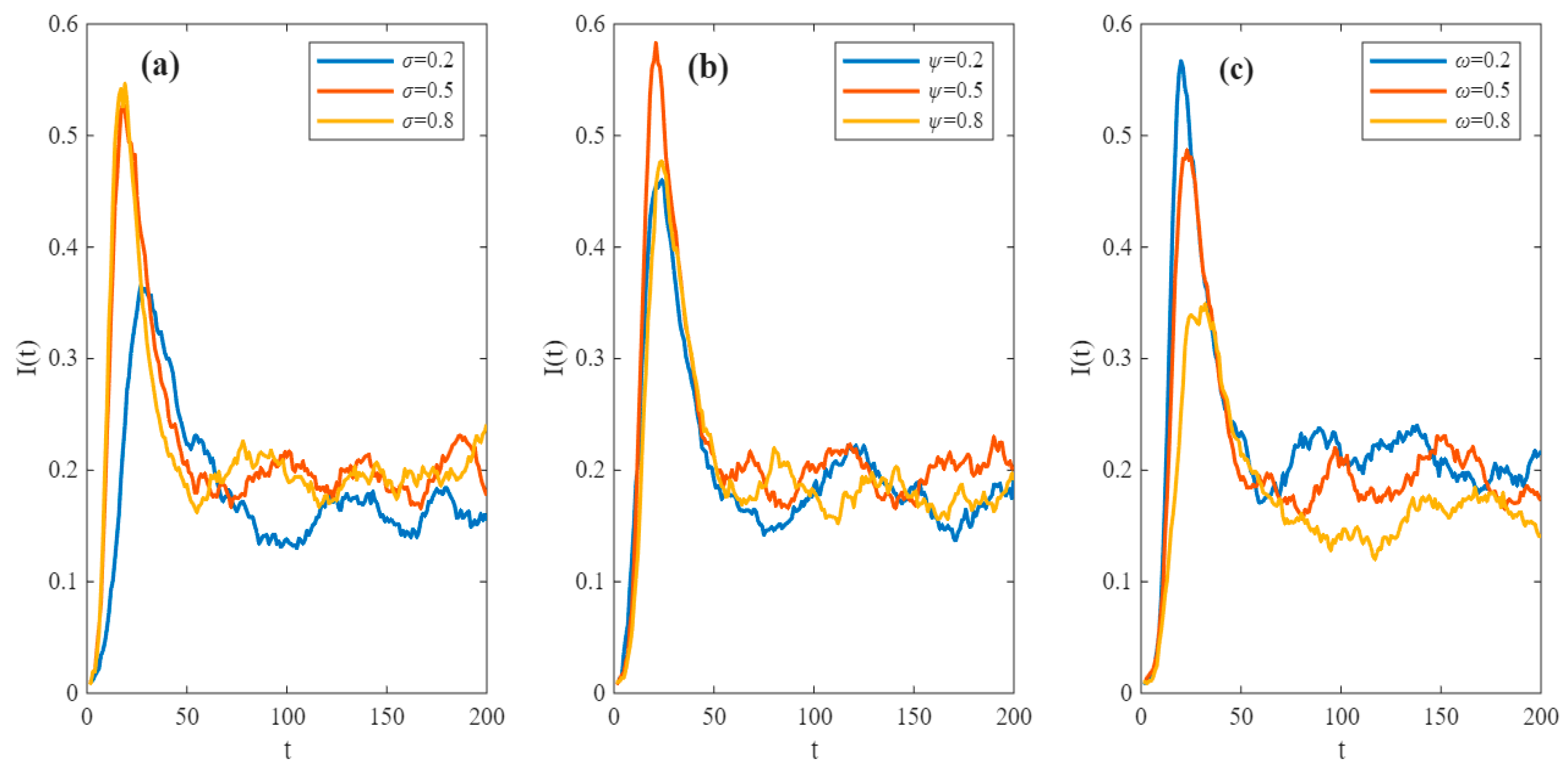
4.2.2. Spatial–Temporal Evolution Characteristics of Corporate Resonance Diffusion of Food Safety Risk Under the Influence of Media Communication Strategy
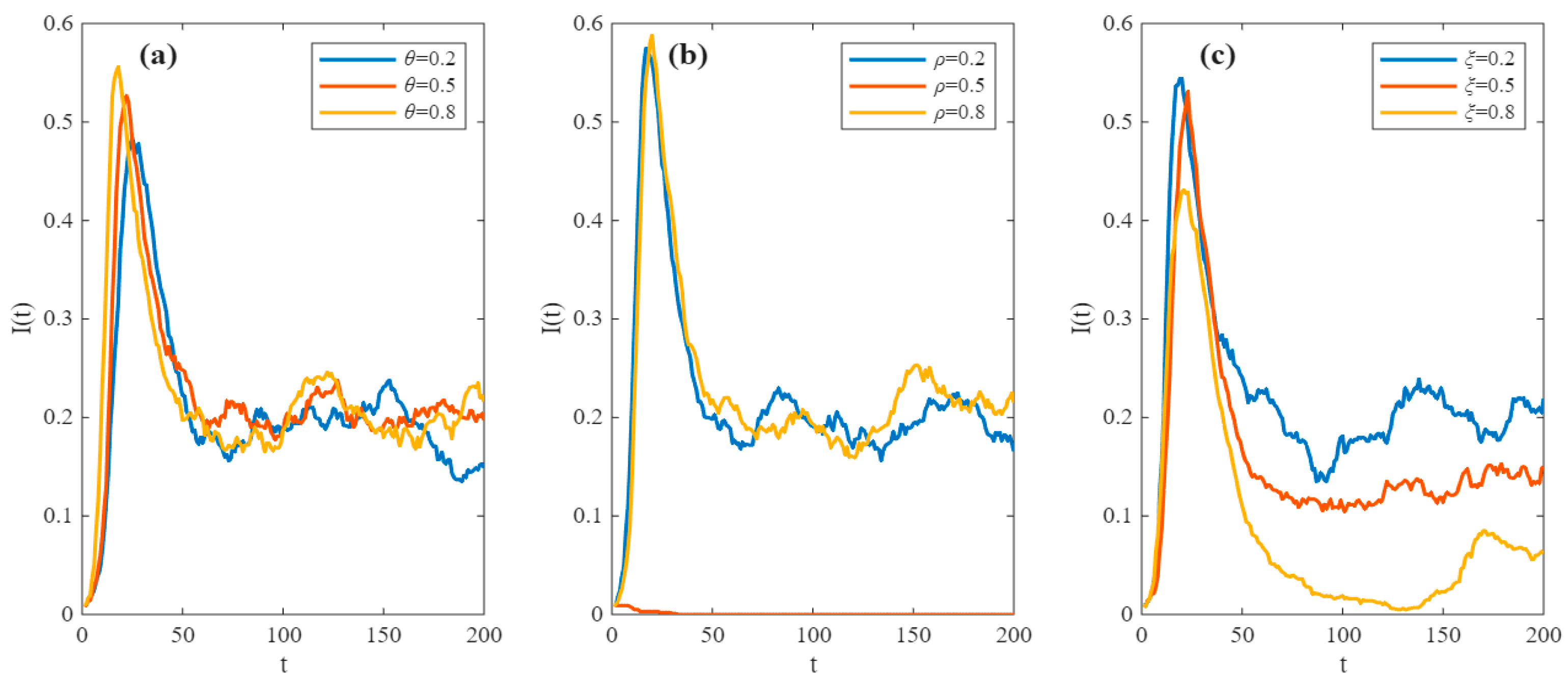
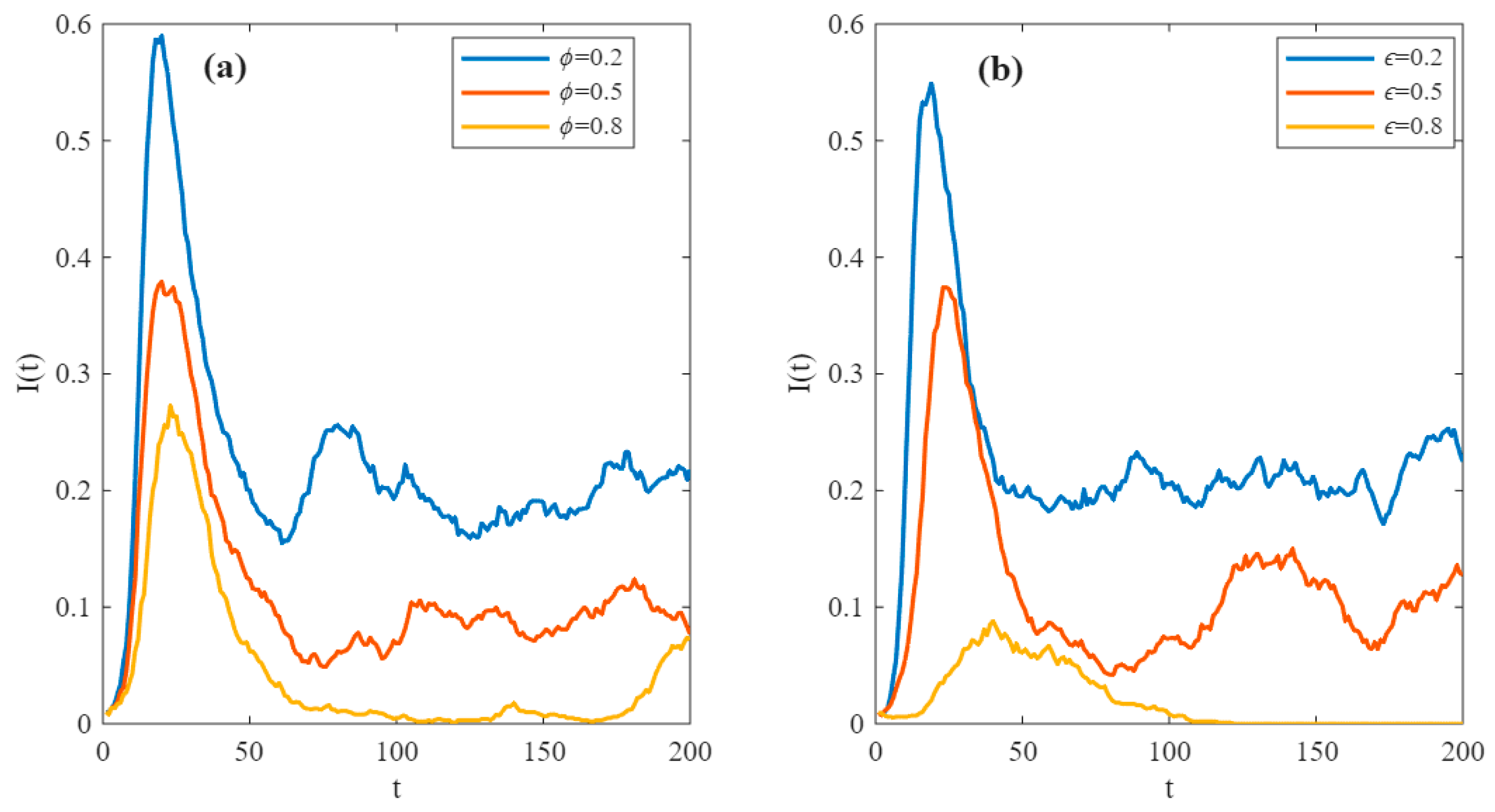
4.2.3. Spatial–Temporal Evolution Characteristics of Corporate Resonance Diffusion of Food Safety Risk Under the Influence of Government Regulatory Strategy
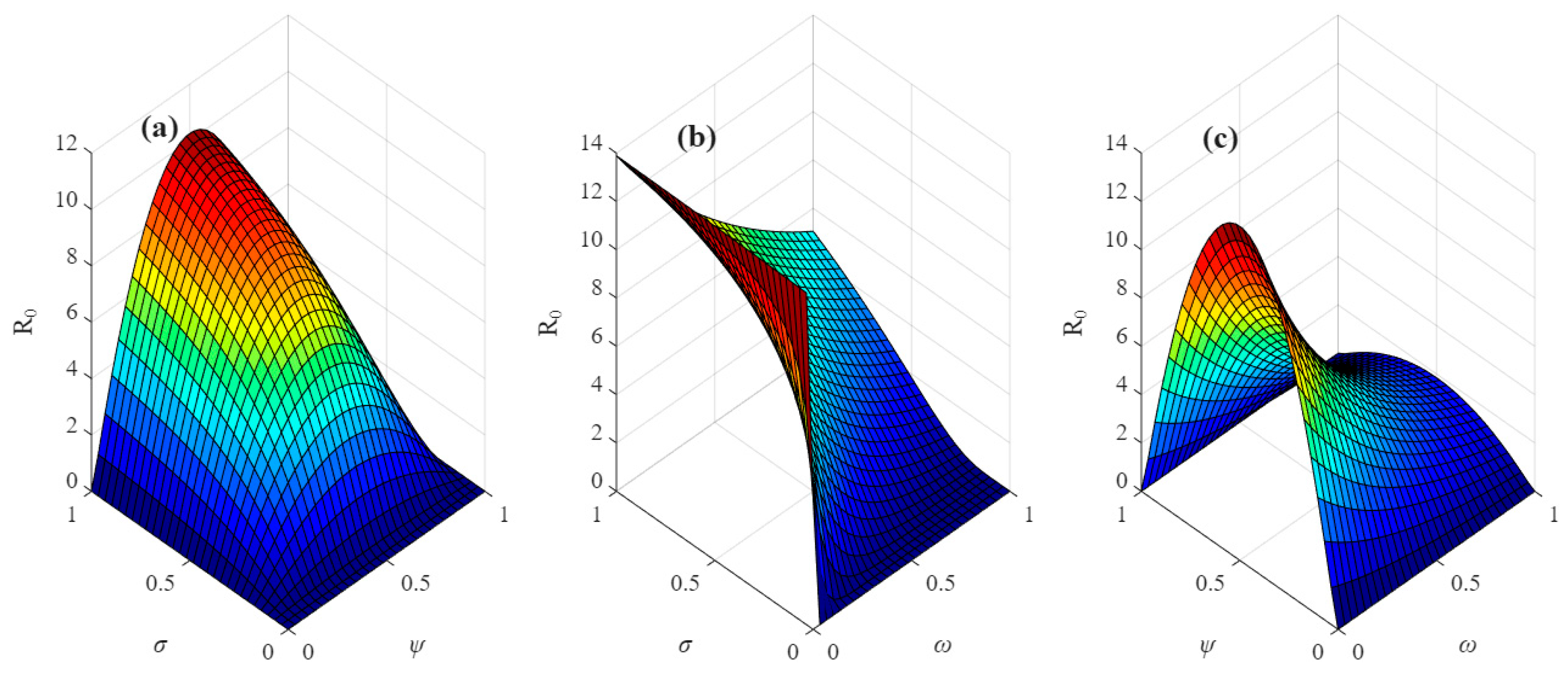
4.2.4. Spatial–Temporal Evolution Characteristics of Corporate Resonance Diffusion of Food Safety Risk Under the Interaction of Food Firm Heterogeneity, Media Communication Strategy and Government Regulatory Strategy
4.3. Robustness Test
4.4. Result Discussion
- (1)
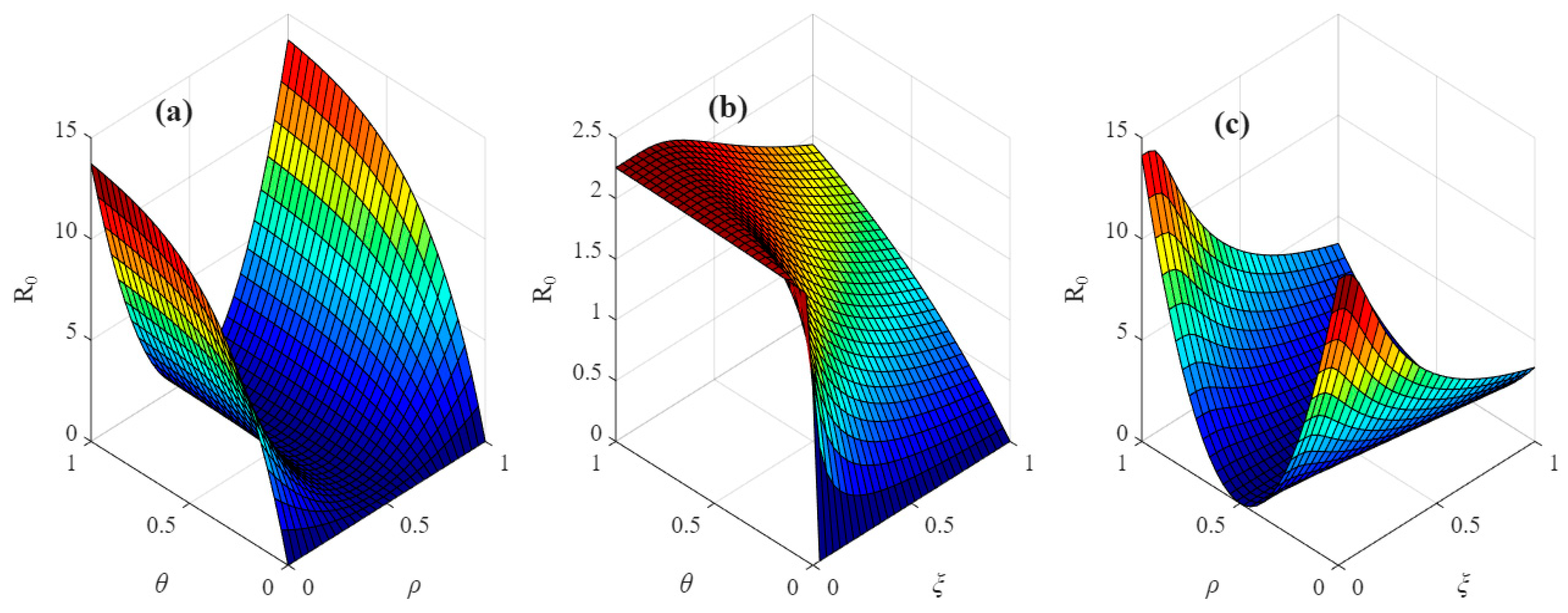
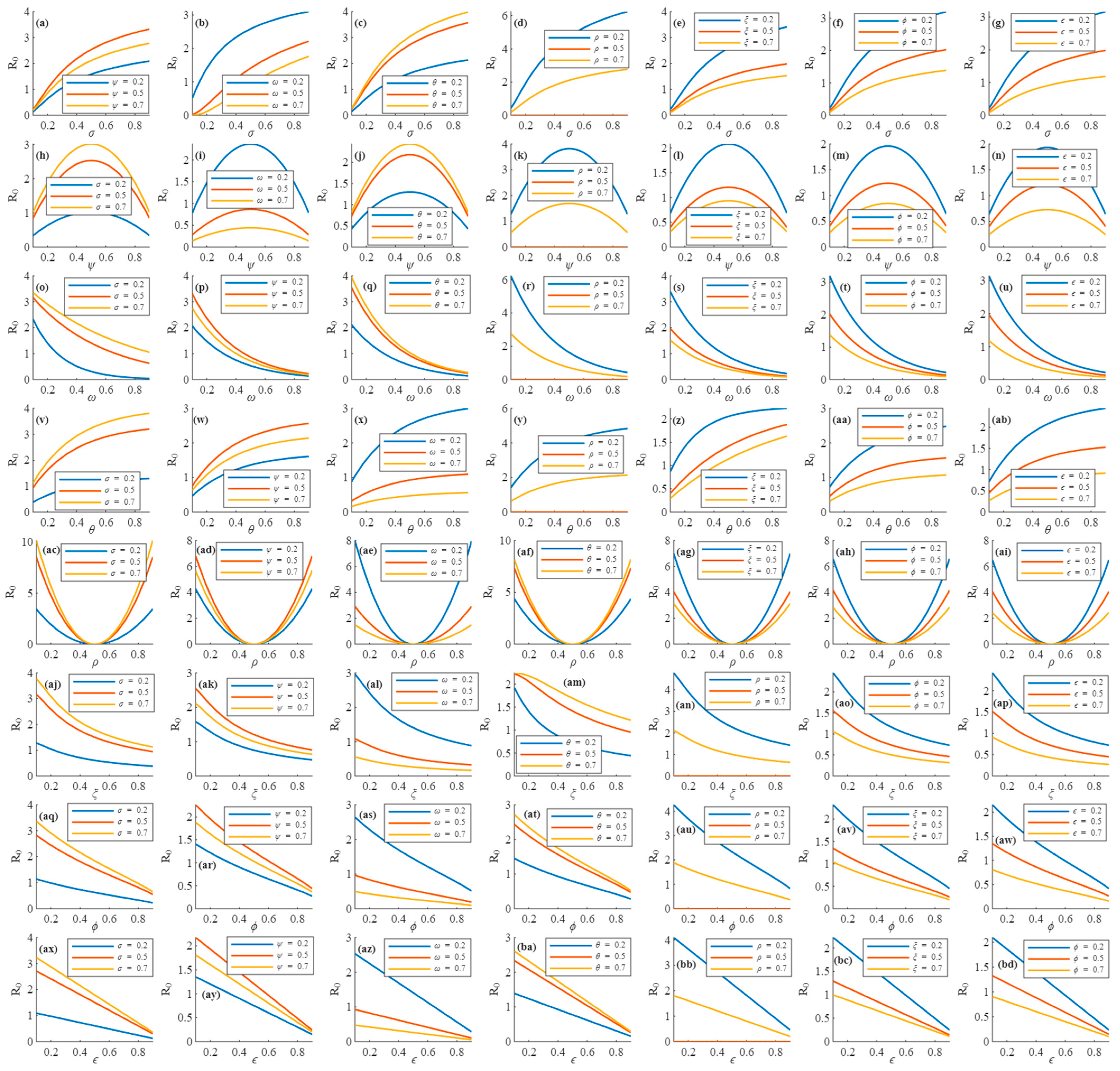
- Our finding that corporate influence amplifies resonance diffusion aligns with studies showing that high-degree nodes serve as key transmission hubs, and that enterprise influence increases the diffusion probability of unethical behavior among food firms. The inverted U-shaped relationship between risk preference and diffusion echoes the behavioral economics literature, where firms with moderate risk preference are most susceptible to peer influence and thus serve as the most effective transmission nodes. The inhibitory effect of corporate social responsibility is consistent with the finding that enterprise ethical climate can suppress the propagation of negative behaviors.
- (2)
- Our results on media influence and reporting preference extend the findings of Wang et al. [13], who showed that media report tendency accelerates the spatial–temporal diffusion of food safety risk resonance. More importantly, we distinguish between media reporting preference and media information disclosure intensity which are two dimensions with opposite effects on diffusion.
- (3)
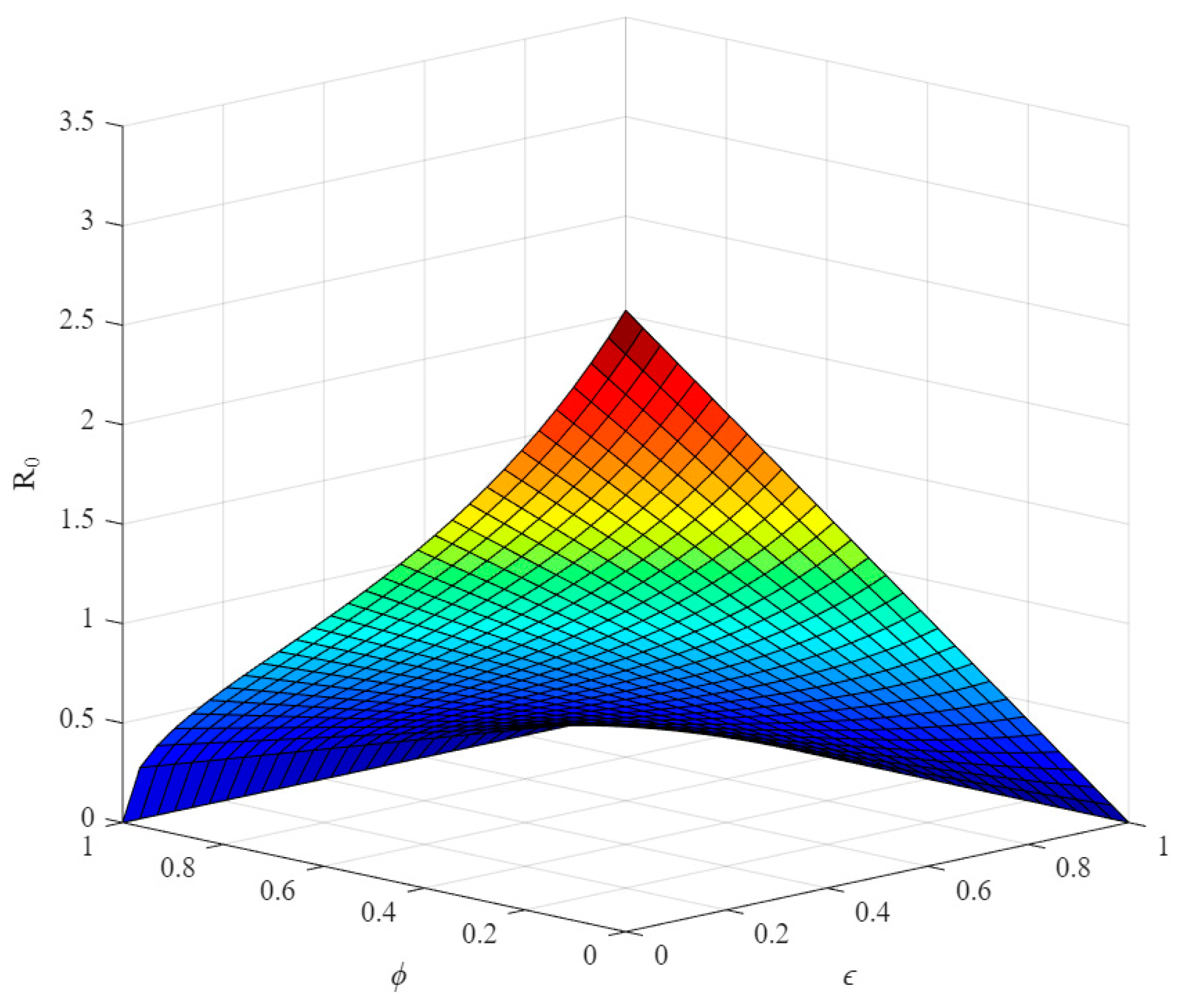
- Our finding that stricter penalties and greater transparency suppress diffusion is consistent with Ma et al. [47], who advocated for stronger sanctions and improved information disclosure in food safety governance. Notably, when both penalties and transparency are weak, diffusion intensifies markedly, suggesting that regulatory failure is a key driver of resonance amplification.
- (4)
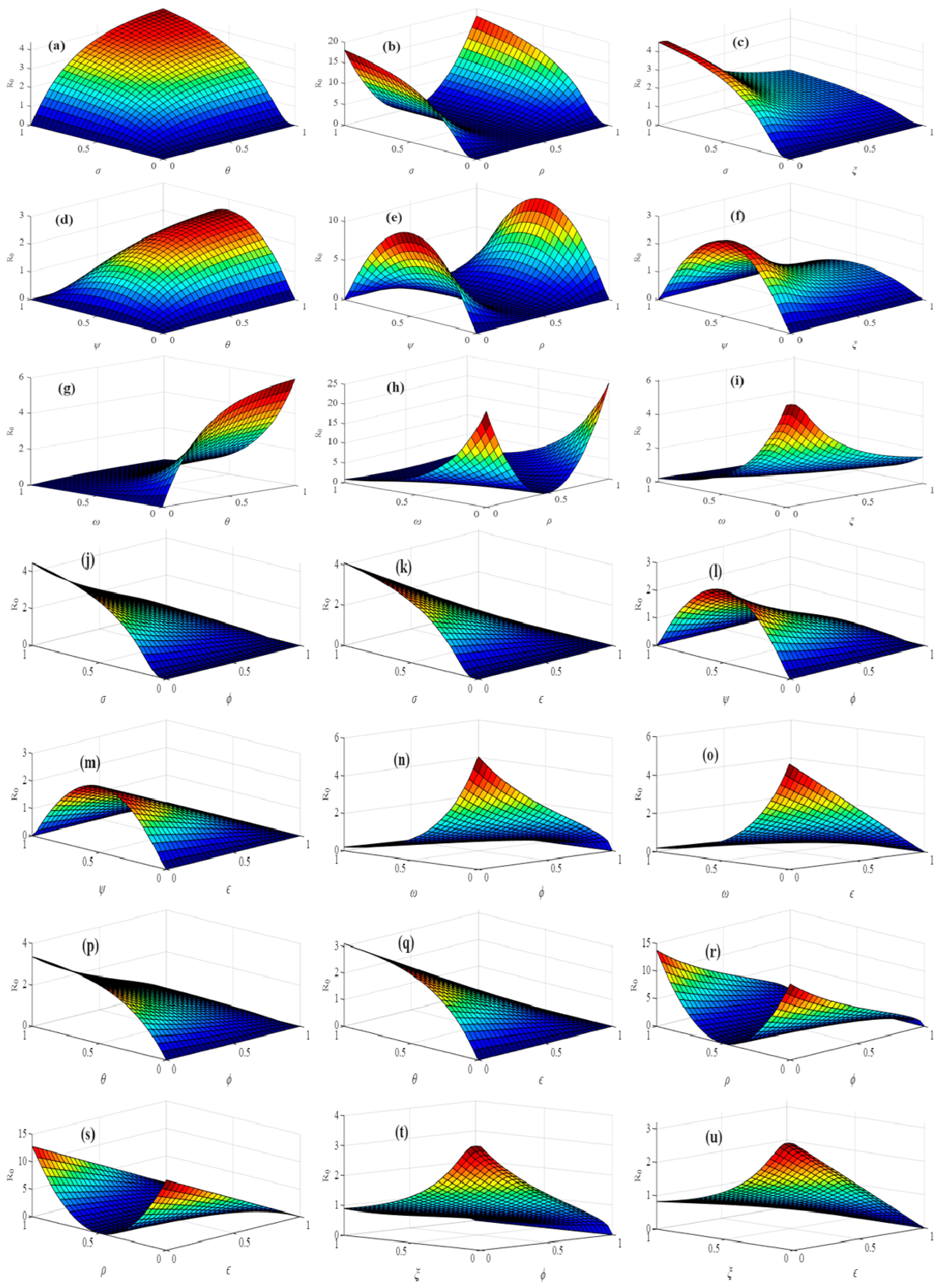
- The interaction analyses reveal that corporate influence and media influence exert a dual reinforcing effect, while corporate social responsibility and media information disclosure intensity exert a synergistic inhibitory effect. These findings extend the existing literature, which has largely focused on isolated factors. The result that government regulation exerts a stronger inhibitory effect than the amplifying effect of media communication provides quantitative support for a government-led governance framework in food safety management.
5. Conclusions
Author Contributions
Funding
Institutional Review Board Statement
Informed Consent Statement
Data Availability Statement
Conflicts of Interest
References
- Doménech, E.; Martorell, S. Review of the terminology, approaches, and formulations used in the guidelines on quantitative risk assessment of chemical hazards in food. Foods 2024, 13, 714. [Google Scholar] [CrossRef] [Scilit]
- Wang, L.; Yu, X. Research hotspots and evolution trends of food safety risk assessment techniques and methods. Environ. Food Health 2024, 5, e70025. [Google Scholar] [CrossRef] [Scilit]
- Cioca, A.A.; Tušar, L.; Langerholc, T. Food risk analysis: Towards a better understanding of “hazard” and “risk” in EU food legislation. Foods 2023, 12, 2857. [Google Scholar] [CrossRef] [Scilit] [PubMed]
- Zhong, G.Y.; Li, J.C. Multiple stochastic and inverse stochastic resonances with transition phenomena in complex corporate financial systems. Chaos Interdiscip. J. Nonlinear Sci. 2024, 34, 063115. [Google Scholar] [CrossRef] [Scilit] [PubMed]
- Ouyang, Z.; Deng, Y.; Zhu, T. Collective risk resonance behavior and network resilience in Chinese stock sectors: Evidence from higher-order financial network. China Financ. Rev. Int. 2025, 1–34. [Google Scholar] [CrossRef] [Scilit]
- Cortés Rufé, M.; Martí Pidelaserra, J.; Kindelán Amorrich, C. Uncovering systemic risk in ASEAN corporations: A framework based on graph theory and hidden models. Risks 2025, 13, 95. [Google Scholar] [CrossRef] [Scilit]
- Lentz, E.; Baylis, K.; Michelson, H.; Kim, C. Inside the black box: How consistent are global food security crisis analyses? Food Policy 2026, 138, 103028. [Google Scholar] [CrossRef] [Scilit]
- Yang, C.; Baker, L.M. Impact of reliable news information on consumers’ perceptions and information seeking intentions from a food safety risk. Br. Food J. 2024, 126, 3805–3821. [Google Scholar] [CrossRef] [Scilit]
- Ma, J.; Hou, Q. Nonlinear dynamics of risk propagation in supply chains: A stochastic SEIR-cellular automaton approach. Nonlinear Dyn. 2025, 113, 28477–28509. [Google Scholar] [CrossRef] [Scilit]
- Zhu, L.; Long, R. Research on food safety social co-governance strategies from the perspective of collaborative rewards. Food Secur. 2026, 18, 1109–1131. [Google Scholar] [CrossRef] [Scilit]
- Ze, Y.; van Asselt, E.D.; Focker, M.; van der Fels-Klerx, H.J. Risk factors affecting the food safety risk in food business operations for risk-based inspection: A systematic review. Compr. Rev. Food Sci. Food Saf. 2024, 23, e13403. [Google Scholar] [CrossRef] [Scilit] [PubMed]
- Xie, Q.; Fang, T.; Rong, X.; Xu, X. Nonlinear behavior of tail risk resonance and early warning: Insight from global energy stock markets. Int. Rev. Financ. Anal. 2024, 93, 93103162. [Google Scholar] [CrossRef] [Scilit]
- Wang, L.; Sun, H.; Chen, T. The Psychosocial Resonance of Food Safety Risk: A Space-Time Perspective. Foods 2025, 14, 2260. [Google Scholar] [CrossRef] [Scilit] [PubMed]
- Gao, H.; Dai, X.; Wu, L.; Zhang, J.; Hu, W. Food safety risk behavior and social Co-governance in the food supply chain. Food Control 2023, 152, 109832. [Google Scholar] [CrossRef] [Scilit]
- Zhang, Y.; Lu, S. Food politics in China: How strengthened accountability enhances food security. Food Policy 2024, 128, 102692. [Google Scholar] [CrossRef] [Scilit]
- Hassoun, A.; Jagtap, S.; Trollman, H.; Garcia-Garcia, G.; Duong, L.N.K.; Saxena, P.; Bouzembrak, Y.; Treiblmaier, H.; Parra-López, C.; Carmona-Torres, C.; et al. From food industry 4.0 to food industry 5.0: Identifying technological enablers and potential future applications in the food sector. Compr. Rev. Food Sci. Food Saf. 2024, 23, e370040. [Google Scholar] [CrossRef] [Scilit] [PubMed]
- Tao, C.; Zhong, G.Y.; Li, J.C. Dynamic correlation and risk resonance among industries of Chinese stock market: New evidence from time-frequency domain and complex network perspectives. Phys. A Stat. Mech. Its Appl. 2023, 614, 128558. [Google Scholar] [CrossRef] [Scilit]
- Long, W.; Meng, T.; Tian, X.; Fan, S. China’s food security and food system governance: Recent developments and global implications. Food Policy 2025, 137, 103000. [Google Scholar] [CrossRef] [Scilit]
- Lee, J.C.; Neonaki, M.; Alexopoulos, A.; Varzakas, T. Case Studies of Small-Medium Food Enterprises around the World: Major Constraints and Benefits from the Implementation of Food Safety Management Systems. Foods 2023, 12, 3218. [Google Scholar] [CrossRef] [Scilit] [PubMed]
- Siddiqui, S.A.; Erol, Z.; Rugji, J.; Taşçı, F.; Kahraman, H.A.; Toppi, V.; Musa, L.; Di Giacinto, G.; Bahmid, N.A.; Mehdizadeh, M.; et al. An overview of fermentation in the food industry–looking back from a new perspective. Bioresour. Bioprocess. 2023, 10, 85. [Google Scholar] [CrossRef] [Scilit] [PubMed]
- Li, Y.; Hu, J. Sentiment amplification and optimal control of an enhanced SEIR-based model for public opinion dissemination. Front. Phys. 2025, 13, 1725899. [Google Scholar] [CrossRef] [Scilit]
- Wang, J.; Yin, Y.; Wei, L. Modeling public opinion dynamics in social networks using a GAN-SEIR framework. Soc. Netw. Anal. Min. 2025, 15, 40. [Google Scholar] [CrossRef] [Scilit]
- Yang, L.; Song, Q.; Liu, Y. Dynamics analysis of a new fractional-order SVEIR-KS model for computer virus propagation: Stability and hopf bifurcation. Neurocomputing 2024, 598, 128075. [Google Scholar] [CrossRef] [Scilit]
- Mohanty, S.; Parida, C.; Nayak, P.K.; Mahanta, G. Modeling virus spread in computer networks: An extended SEIR approach using artificial neural networks with levenberg-marquardt algorithm. Comput. Math. Organ. Theory 2026, 32, 1. [Google Scholar] [CrossRef] [Scilit]
- Berger, N.; Schulze-Schwering, S.; Long, E.; Spinler, S. Risk management of supply chain disruptions: An epidemic modeling approach. Eur. J. Oper. Res. 2023, 304, 1036–1051. [Google Scholar] [CrossRef] [Scilit]
- Liu, X.; Gao, J.; He, M. Risk Contagion Mechanism and Control Strategies in Supply Chain Finance Using SEIR Epidemic Model from the Perspective of Commercial Banks. Mathematics 2025, 13, 2051. [Google Scholar] [CrossRef] [Scilit]
- Trazias, H.; Irunde, J.I.; Kgosimore, M.; Mayengo, M.M. Dynamics of salmonellosis and the impacts of contaminated dairy products and environments: Mathematical modeling perspective and parameter estimation. Ecol. Modell. 2024, 497, 110862. [Google Scholar] [CrossRef] [Scilit]
- Reinoso-Burrows, J.C.; Toro, N.; Cortés-Carmona, M.; Pineda, F.; Henriquez, M.; Galleguillos Madrid, F.M. Cellular Automata Modeling as a Tool in Corrosion Management. Materials 2023, 16, 6051. [Google Scholar] [CrossRef] [Scilit] [PubMed]
- Zhi, Y.; Jiang, Y.; Ke, D.; Hu, X.; Liu, X. Review on Cellular Automata for Microstructure Simulation of Metallic Materials. Materials 2024, 17, 1370. [Google Scholar] [CrossRef] [Scilit] [PubMed]
- Chen, T.; Zhu, R.; Wang, L. Risk transmission in low-carbon supply chains considering corporate risk aversion. Mathematics 2024, 12, 2009. [Google Scholar] [CrossRef] [Scilit]
- Chakori, S.; Grigg, N.J.; Biely, K.; Hinton, J.B.; Plumecocq, G.; Richards, R.; Robra, B. From innovation to exnovation: Insights from post-growth food enterprises in australia. Ecol. Econ. 2026, 239, 108785. [Google Scholar] [CrossRef] [Scilit]
- Rana, J.; Daultani, Y.; Goswami, M.; Kumar, S. Exploring the impact of supply chain digital transformation on supply chain performance: An empirical investigation. Bus. Strategy Environ. 2025, 34, 3497–3521. [Google Scholar] [CrossRef] [Scilit]
- Ivanov, D. Comparative analysis of product and network supply chain resilience. Int. Tran. Oper. Res. 2026, 33, 2358–2376. [Google Scholar] [CrossRef] [Scilit]
- Wang, T.; Zhang, X.; Ma, Y.; Wang, Y. Risk contagion and decision-making evolution of carbon market enterprises: Comparisons with China, the United States, and the European Union. Environ. Impact Assess. Rev. 2023, 99, 107036. [Google Scholar] [CrossRef] [Scilit]
- Hassan, M.H.; El-Azab, T.; AlNemer, G.; Sohaly, M.A.; El-Metwally, H. Analysis Time-Delayed SEIR Model with Survival Rate for COVID-19 Stability and Disease Control. Mathematics 2024, 12, 3697. [Google Scholar] [CrossRef] [Scilit]
- Pereira, F.H.; Schimit, P.H.T.; Bezerra, F.E. A deep learning based surrogate model for the parameter identification problem in probabilistic cellular automaton epidemic models. Comput. Methods Programs Biomed. 2021, 205, 106078. [Google Scholar] [CrossRef] [Scilit] [PubMed]
- Mugnaine, M.; Gabrick, E.C.; Protachevicz, P.R.; Iarosz, K.C.; de Souza, S.L.; Almeida, A.C.; Batista, A.M.; Caldas, I.L.; Szezech, J.D., Jr.; Viana, R.L. Control attenuation and temporary immunity in a cellular automata SEIR epidemic model. Chaos Solitons Fractals 2022, 155, 111784. [Google Scholar] [CrossRef] [Scilit]
- Bennett, E.; Topp, S.M.; Moodie, A.R. National Public Health Surveillance of Corporations in Key Unhealthy Commodity Industries–A Scoping Review and Framework Synthesis. Int. J. Health Policy Manag. 2023, 12, 6876. [Google Scholar] [CrossRef] [Scilit] [PubMed]
- Garbero, A.; Stanghellini, E. Addressing selection bias while estimating aggregate development effectiveness: Can we obtain externally valid estimates at portfolio level? J. Dev. Eff. 2025, 17, 257–276. [Google Scholar] [CrossRef] [Scilit]
- Li, X. Patent infringement litigation, executive team risk appetite and corporate innovation. Econ. Innov. New Technol. 2025, 34, 1016–1039. [Google Scholar] [CrossRef] [Scilit]
- Brugman, C.B.; Huijstee, V.D.; Droog, E. Debunking the corporate paint shop: Examining the effects of misleading corporate social responsibility claims on social media. New Media Soc. 2026, 28, 333–356. [Google Scholar] [CrossRef] [Scilit]
- Dickinson, M.; Karaminis, T. The relationship between newspaper reading preferences and attitudes towards autism. Autism 2025, 30, 574–591. [Google Scholar] [CrossRef] [Scilit] [PubMed]
- Redlicki, B. Persuading Through Media Bias with News Diffusion. J. Public Econ. Theory 2025, 27, e70073. [Google Scholar] [CrossRef] [Scilit]
- Daoudi, O.; Gainous, J.; Hussain, S.A.; Zamoum, K. Media Bias in Sports Journalism: A Comparative Study of Qatar 2022 World Cup Coverage. Commun. Sport 2026, 14, 207–230. [Google Scholar] [CrossRef] [Scilit]
- Li, Y.; Shen, D.; Li, H. Silence is safer: ESG disclosure via social media. Financ. Res. Lett. 2026, 90, 109326. [Google Scholar] [CrossRef] [Scilit]
- Plaisance, L.P.; Chen, J. Transparency, disclosure and autonomy: Moral judgment and attitudes toward branded content among media workers. Journalism 2026, 27, 62–82. [Google Scholar] [CrossRef] [Scilit]
- Ma, R.; Chen, Y.; Ji, Q.; Zhai, P. How does environmental regulatory stringency shape ESG? Evidence from cross-listing. Int. Rev. Financ. Anal. 2025, 104, 104316. [Google Scholar] [CrossRef] [Scilit]
- Du, J.; Zhu, X. Regulatory transparency and citizen support for government decisions: Evidence from nuclear power acceptance in China. J. Environ. Policy Plan. 2023, 25, 766–780. [Google Scholar] [CrossRef] [Scilit]
- Liu, X.; Zhao, X.; Zhong, X.; Wei, W. Global dynamics and optimal control of SEIQR epidemic model on heterogeneous complex networks. Chin. Phys. B 2025, 34, 060203. [Google Scholar] [CrossRef] [Scilit]
- Tian, C.; Liu, Z.; Ruan, S. Asymptotic behavior of susceptible-infectious epidemic models on heterogeneous dynamical networks. J. Nonlinear Sci. 2025, 35, 97. [Google Scholar] [CrossRef] [Scilit]
- Zhu, J.; Jin, Z.; Meng, X.; Yin, Z.; Wang, N. Dynamics of infectious disease transmission in heterogeneous networks considering population interaction mechanism. Chaos Interdiscip. J. Nonlinear Sci. 2026, 36, 033118. [Google Scholar] [CrossRef] [Scilit] [PubMed]
- Boiral, O.; Brotherton, M.C.; Talbot, D.; Guillaumie, L. Assessing and managing environmental, social, and governance risks in agri-food companies. Corp. Soc. Responsib. Environ. Manag. 2024, 31, 5690–5708. [Google Scholar] [CrossRef] [Scilit]
- Chen, L.; Niu, R.; Yang, Y.; Zhao, L.; Xie, G.; Khan, I. Managerial interlocking networks and firm risk spillover: Evidence from China. Int. J. Manag. Financ. 2024, 21, 503–523. [Google Scholar] [CrossRef] [Scilit]
- Shen, C.; Wei, M.; Li, C.; Hao, X.; Wang, L. An investigation into China’s online catering food safety governance efficacy based on the strategies of frequent supervision and strict penalty. Front. Sustain. Food Syst. 2024, 8, 1308394. [Google Scholar] [CrossRef] [Scilit]
- Zhao, T.; Li, T.; Luo, Y.; Liu, D. Preference of Chinese food production enterprises to government regulatory information—A choice experiment approach. Heliyon 2024, 10, e32971. [Google Scholar] [CrossRef] [Scilit] [PubMed]
- Han, H.; Hu, R.; Tang, J.J.; Fu, Q. Media coverage and goodwill impairment. Emerg. Mark. Rev. 2025, 70, 101395. [Google Scholar] [CrossRef] [Scilit]
- Heilprin, E.; Erev, I. The relative importance of the contrast and assimilation effects in decisions under risk. J. Behav. Decis. Mak. 2024, 37, e2408. [Google Scholar] [CrossRef] [Scilit]
- Hong, Y.; Jiang, Y.; Su, X.; Deng, C. Extreme state media reporting and the extreme stock market during COVID-19: A multi-quantile VaR Granger causality approach in China. Res. Int. Bus. Financ. 2024, 67, 102143. [Google Scholar] [CrossRef] [Scilit]
- Carlini, F.; Farina, V.; Gufler, I.; Previtali, D. Do stress and overstatement in the news affect the stock market? Evidence from COVID-19 news in The Wall Street Journal. Int. Rev. Financ. Anal. 2024, 93, 103178. [Google Scholar] [CrossRef] [Scilit]
- Liang, D.; Bhamra, R.; Liu, Z.; Pan, Y. Risk propagation and supply chain health control based on the SIR epidemic model. Mathematics 2022, 10, 3008. [Google Scholar] [CrossRef] [Scilit]



| Parameters | Descriptions | Baseline Values | Value Ranges |
|---|---|---|---|
| Infection probability | 1 | [0, 1] | |
| Conversion probability | 0.5 | [0, 1] | |
| Direct immune probability | 0.02 | [0, 1] | |
| Immune probability | 0.05 | [0, 1] | |
| Immune failure probability | 0.05 | [0, 1] | |
| The total quantity of food firms in the network | 1000 | Positive Integer | |
| The number of edges connected when each new node joins | 3 | Positive Integer | |
| The number of connections of the initial node | 3 | Positive Integer | |
| Corporate influence | 0.8 | [0, 1] | |
| Corporate risk preference | 0.5 | [0, 1] | |
| Corporate social responsibility | 0.2 | [0, 1] | |
| Media influence | 0.8 | [0, 1] | |
| Media reporting preference | 0.2 | [0, 1] | |
| Media information disclosure intensity | 0.2 | [0, 1] | |
| Government penalty intensity | 0.2 | [0, 1] | |
| Government regulatory information transparency | 0.2 | [0, 1] |
| Parameter Variations | Trend Chart | |||||
|---|---|---|---|---|---|---|
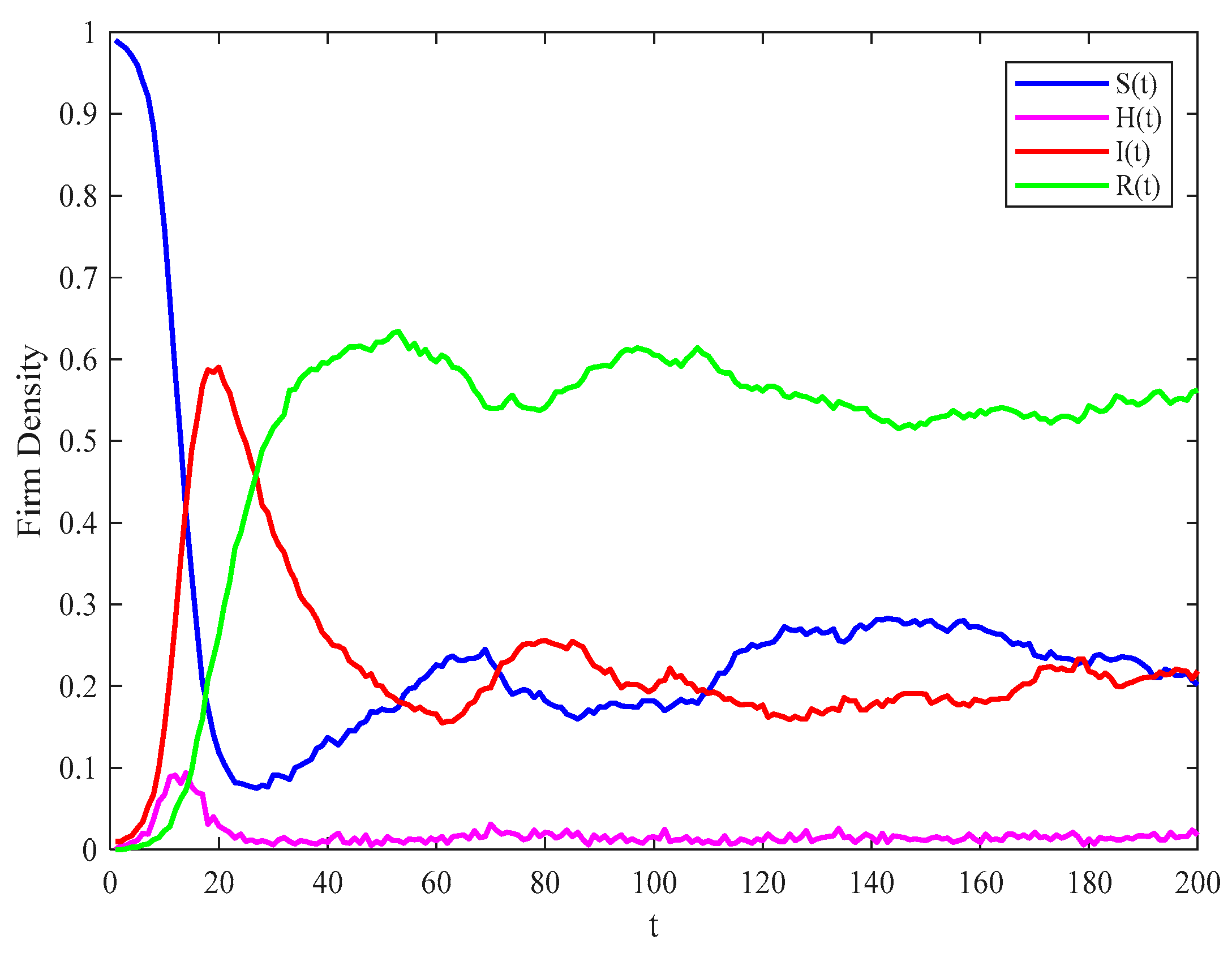
| 1 | 0.5 | 0.02 | 0.05 | 0.05 | Unchanged | Figure 3 |
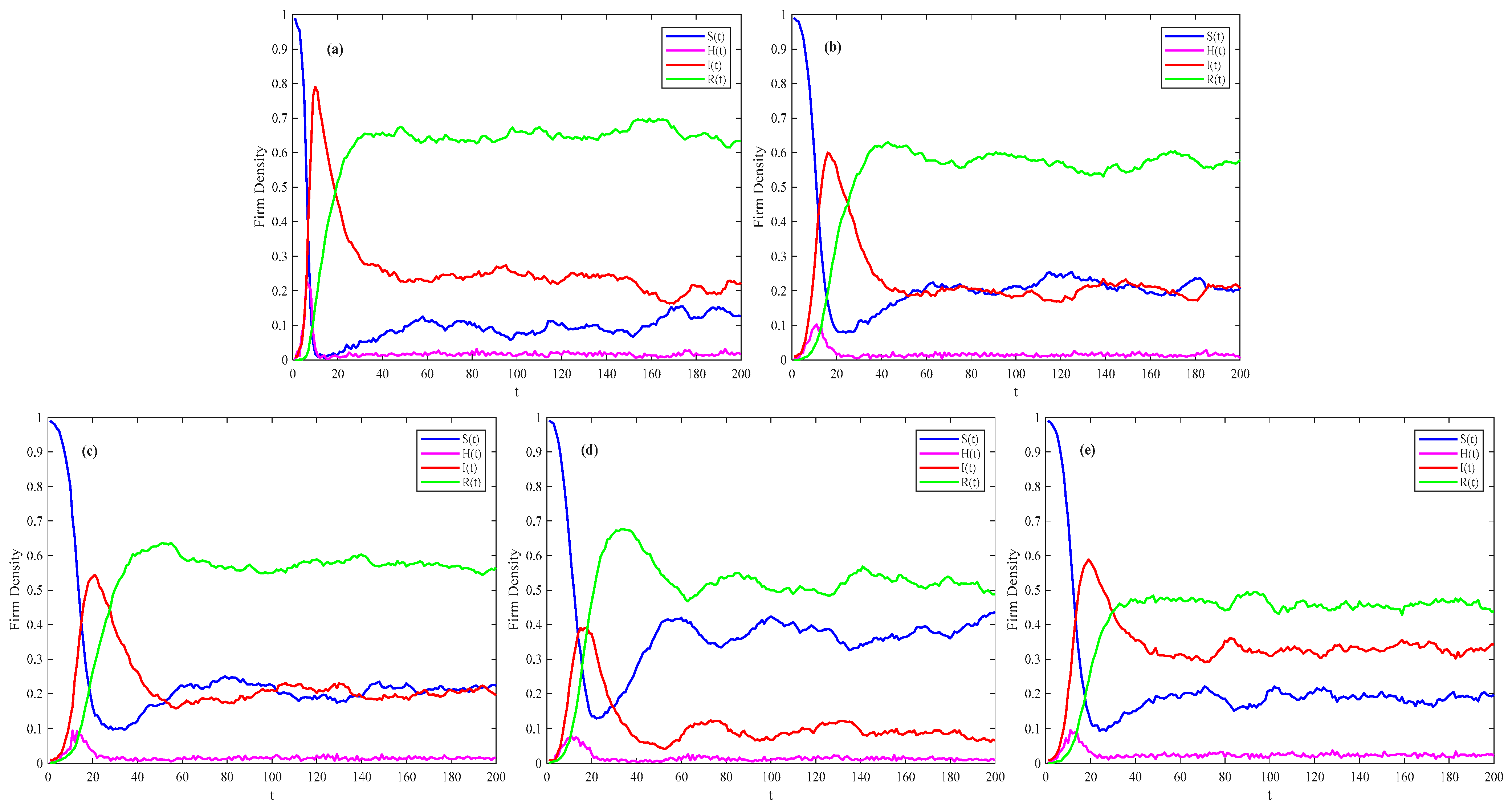
| 2 | 0.5 | 0.02 | 0.05 | 0.05 | Increase infection probability | Figure 4a |
| 1 | 0.7 | 0.02 | 0.05 | 0.05 | Increase conversion probability | Figure 4b |
| 1 | 0.5 | 0.05 | 0.05 | 0.05 | Increase direct immune probability | Figure 4c |
| 1 | 0.5 | 0.02 | 0.1 | 0.05 | Increase immune probability | Figure 4d |
| 1 | 0.5 | 0.02 | 0.05 | 0.1 | Increase immune failure probability | Figure 4e |
Disclaimer/Publisher’s Note: The statements, opinions and data contained in all publications are solely those of the individual author(s) and contributor(s) and not of MDPI and/or the editor(s). MDPI and/or the editor(s) disclaim responsibility for any injury to people or property resulting from any ideas, methods, instructions or products referred to in the content. |
© 2026 by the authors. Licensee MDPI, Basel, Switzerland. This article is an open access article distributed under the terms and conditions of the Creative Commons Attribution (CC BY) license.
Share and Cite
Wang, L.; Wang, T.; Sun, H.; Wang, S. Corporate Resonance of Food Safety Risk: A Space–Time Perspective. Foods 2026, 15, 2940. https://doi.org/10.3390/foods15162940
Wang L, Wang T, Sun H, Wang S. Corporate Resonance of Food Safety Risk: A Space–Time Perspective. Foods. 2026; 15(16):2940. https://doi.org/10.3390/foods15162940
Chicago/Turabian StyleWang, Lei, Tao Wang, Han Sun, and Shuaibin Wang. 2026. "Corporate Resonance of Food Safety Risk: A Space–Time Perspective" Foods 15, no. 16: 2940. https://doi.org/10.3390/foods15162940
APA StyleWang, L., Wang, T., Sun, H., & Wang, S. (2026). Corporate Resonance of Food Safety Risk: A Space–Time Perspective. Foods, 15(16), 2940. https://doi.org/10.3390/foods15162940