Interactive Effects of Temperature and Nutrient Conditions on Growth and Virulence Factor Expression of Staphylococcus aureus Under Model Food-Relevant Environments

 , and
, and
Abstract
1. Introduction
2. Materials and Methods
2.1. Bacterial Strain and Culture Conditions
2.2. Measurement of Bacterial Growth
2.3. Biofilm Formation Assay
2.4. Detection of Staphylococcal Enterotoxins (SEA and SEB)
2.5. Hemolytic Activity Assay
2.6. Statistical Analysis
3. Results
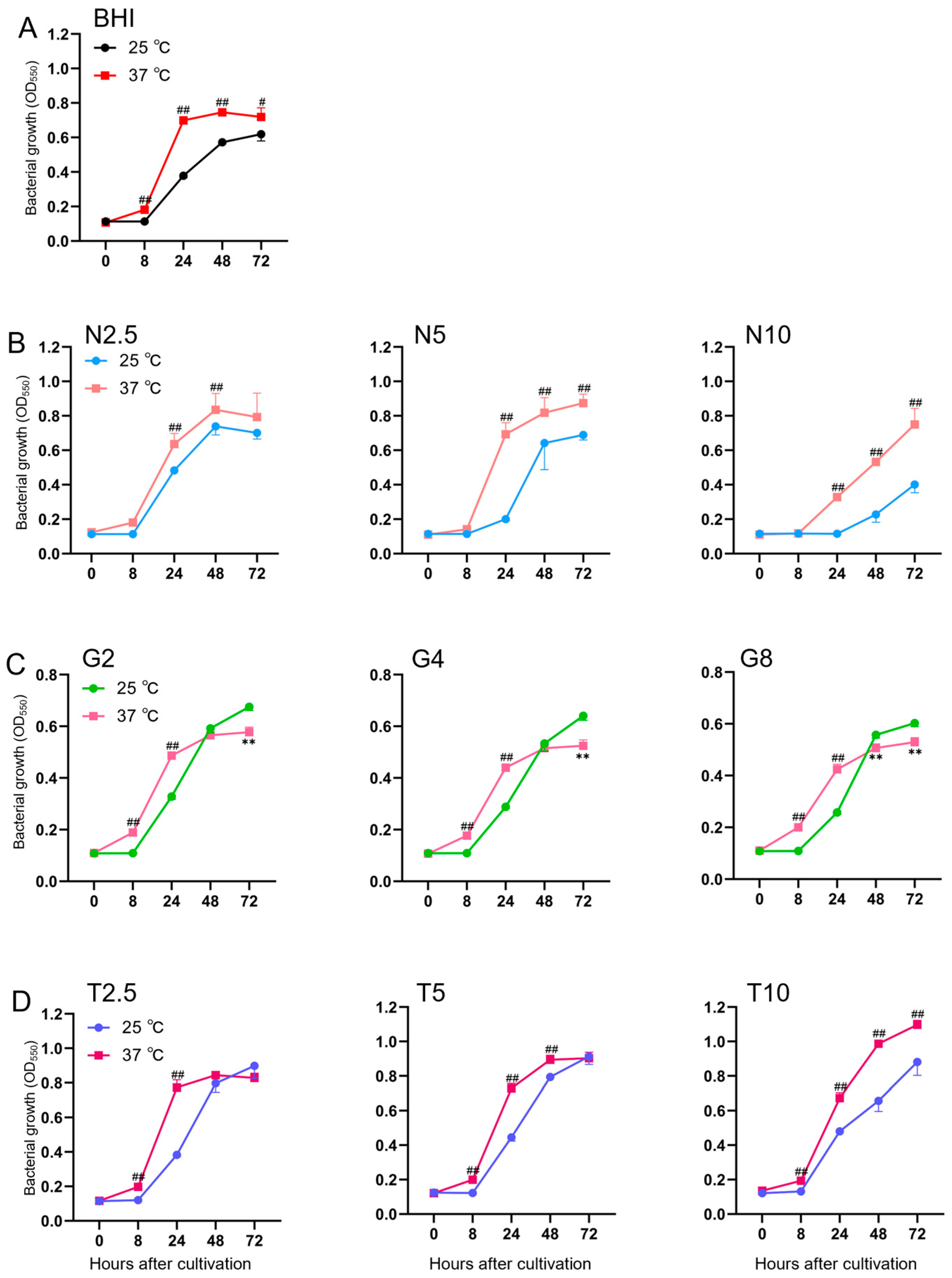
3.1. Growth Kinetics of S. aureus Under Different Temperature and Nutritional Conditions
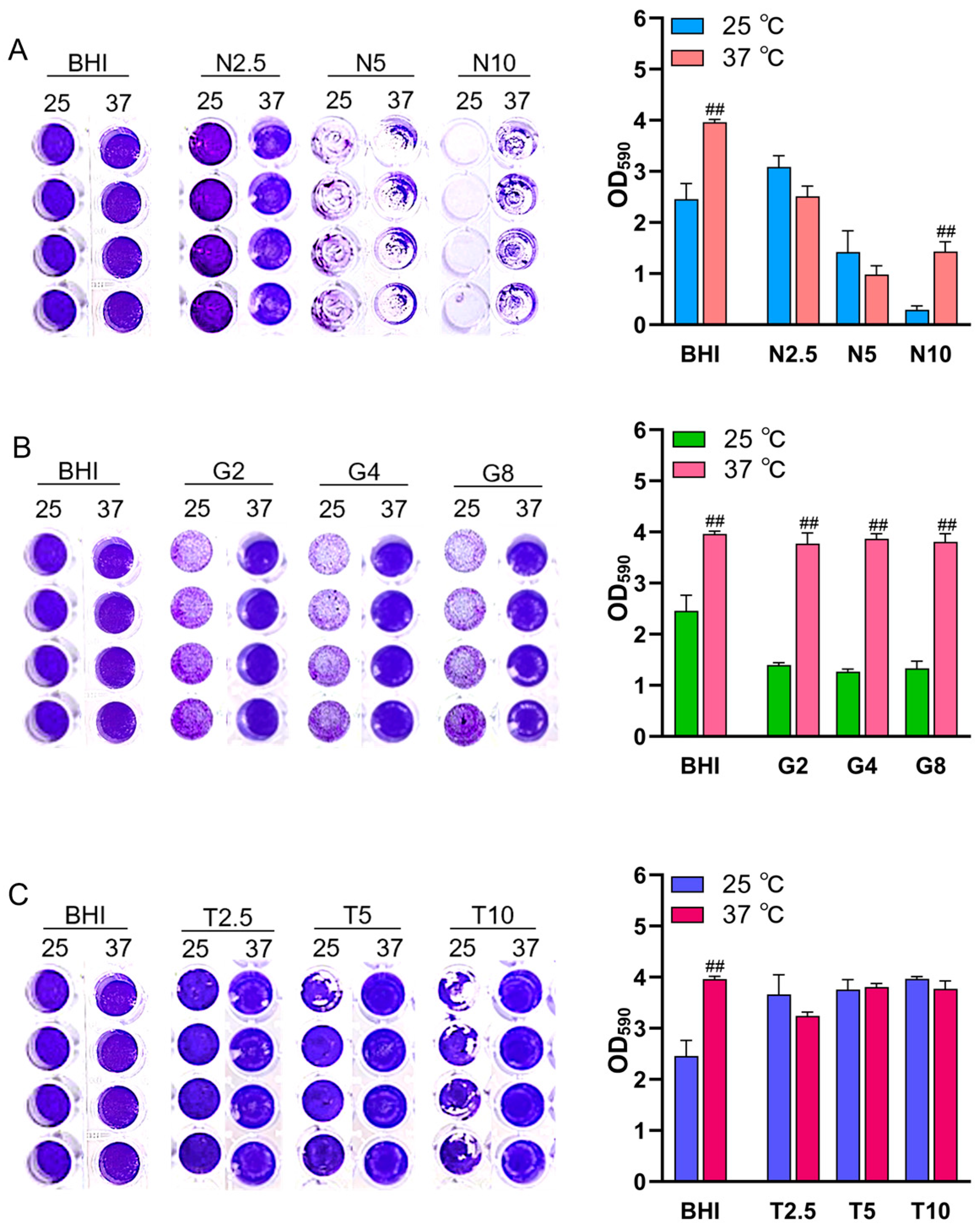
3.2. Biofilm Formation Under Different Temperature and Nutritional Environments
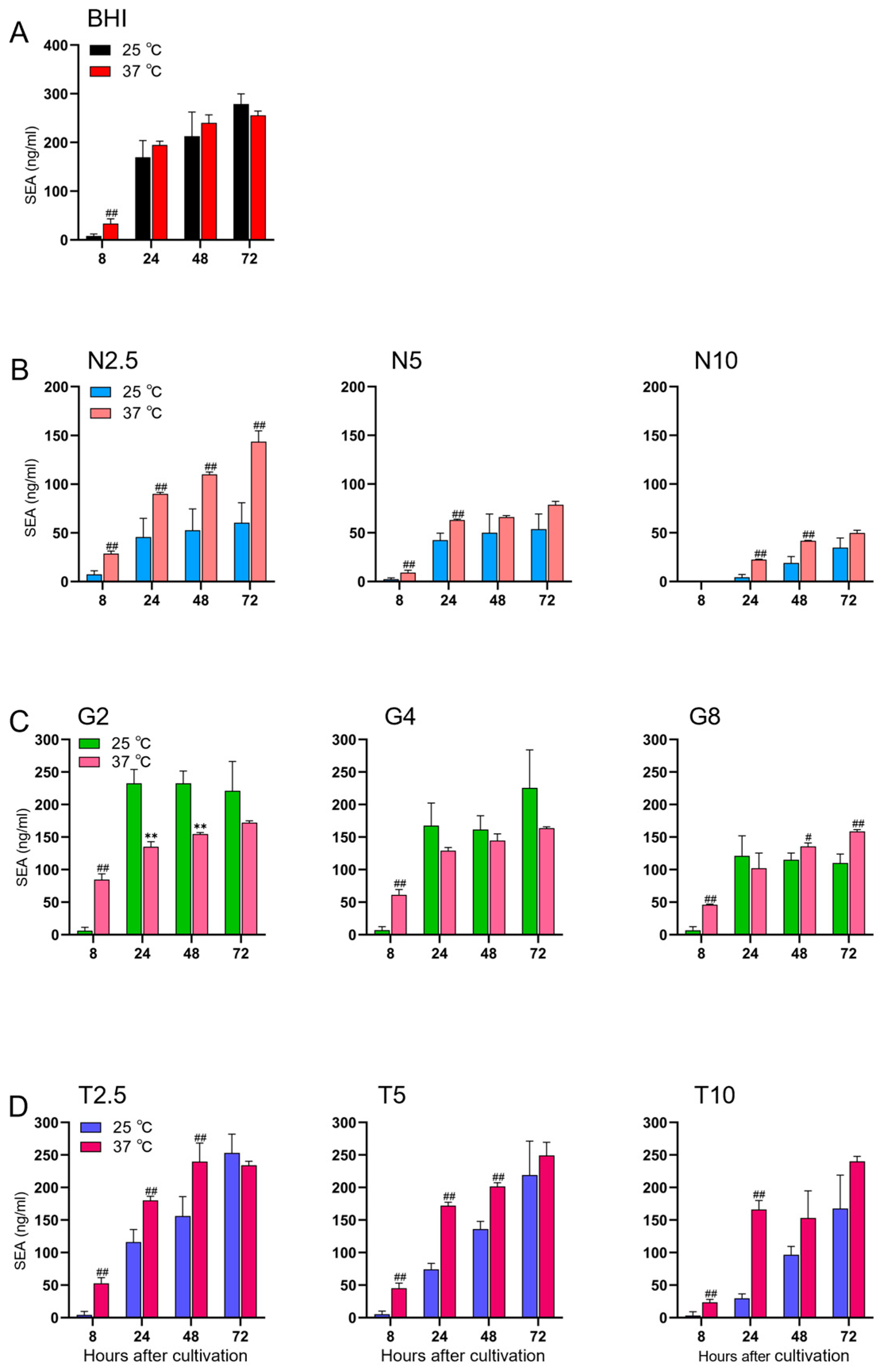
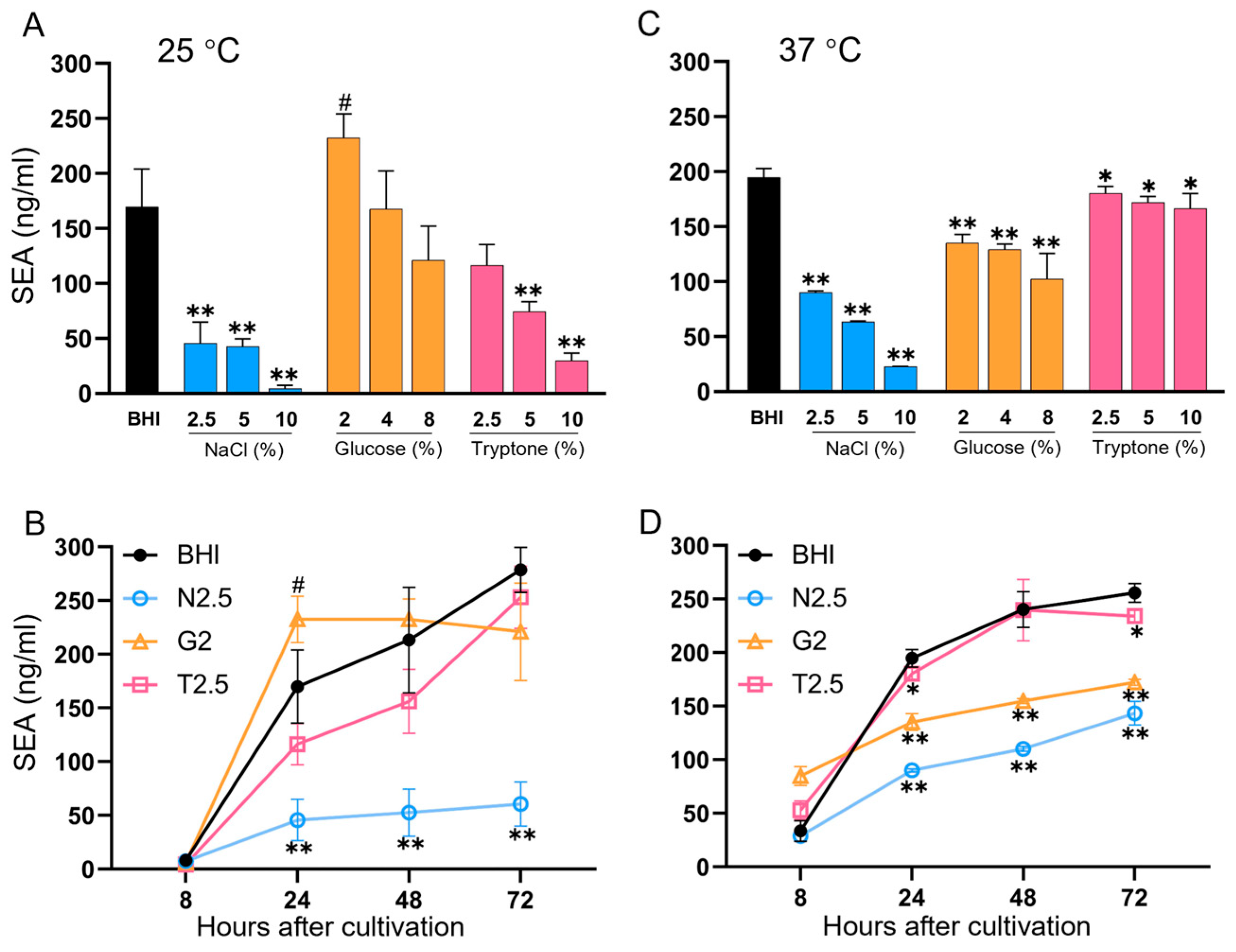
3.3. Regulation of SEA Production by Temperature and Nutritional Conditions
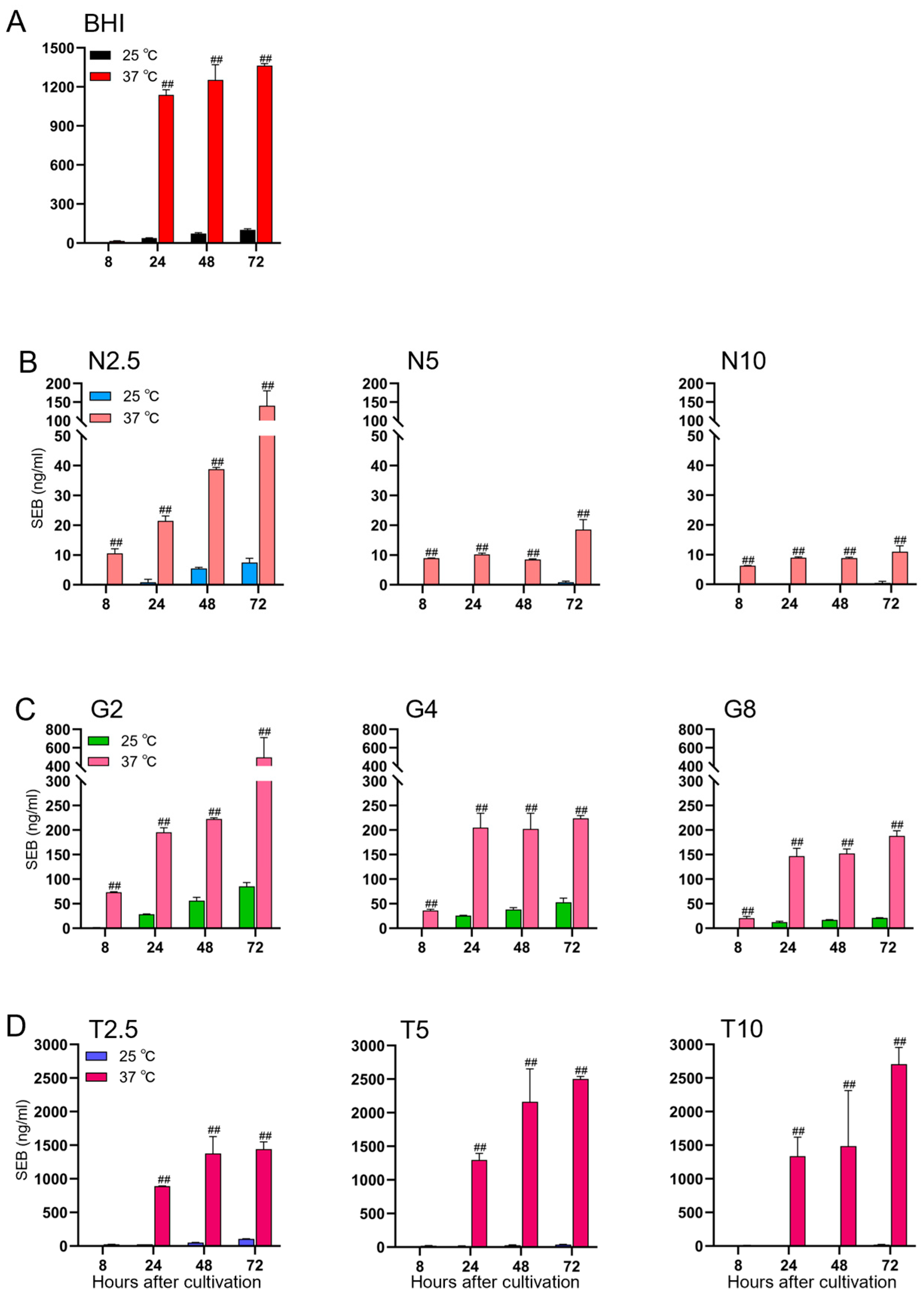
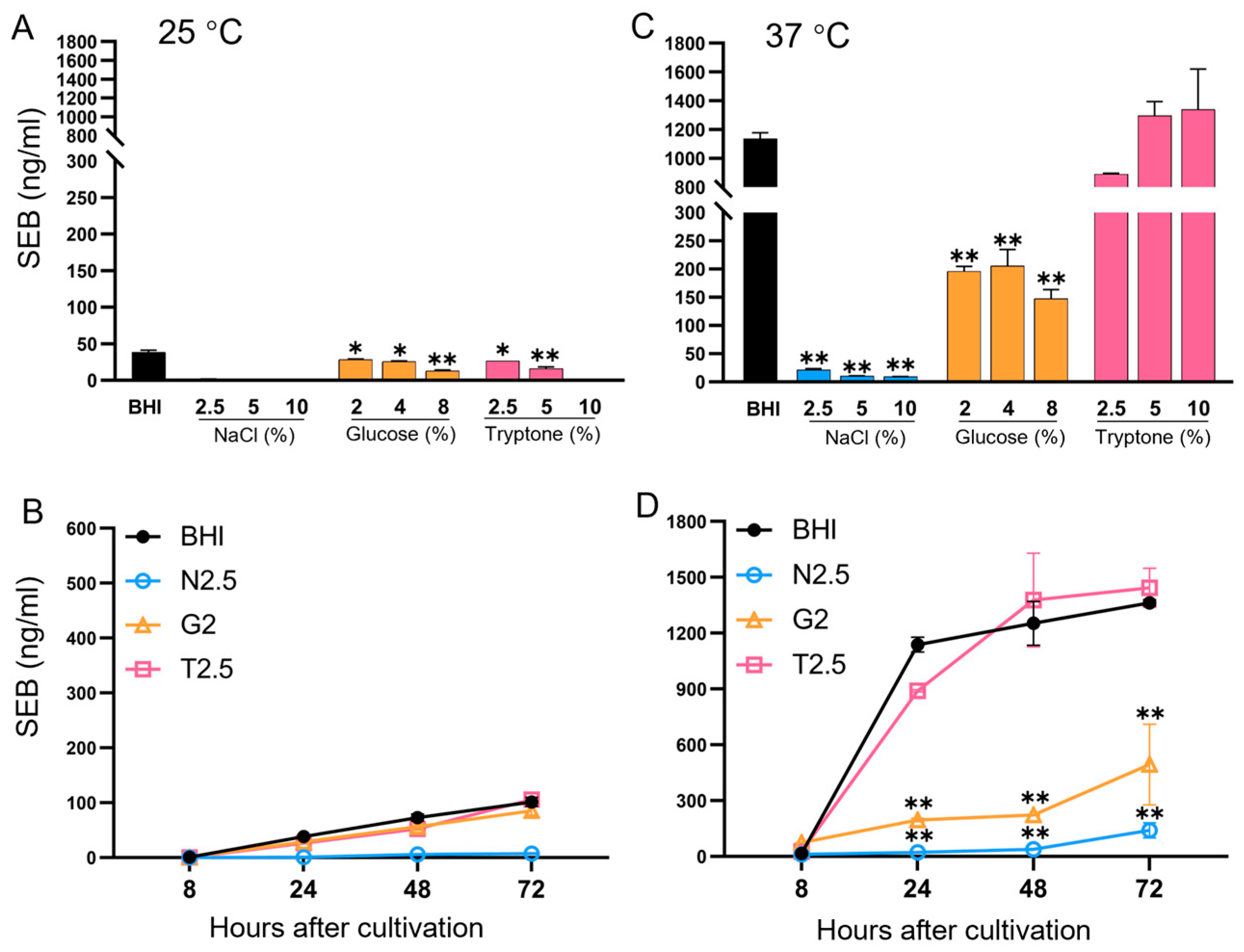
3.4. Regulation of SEB Production by Temperature and Nutritional Conditions
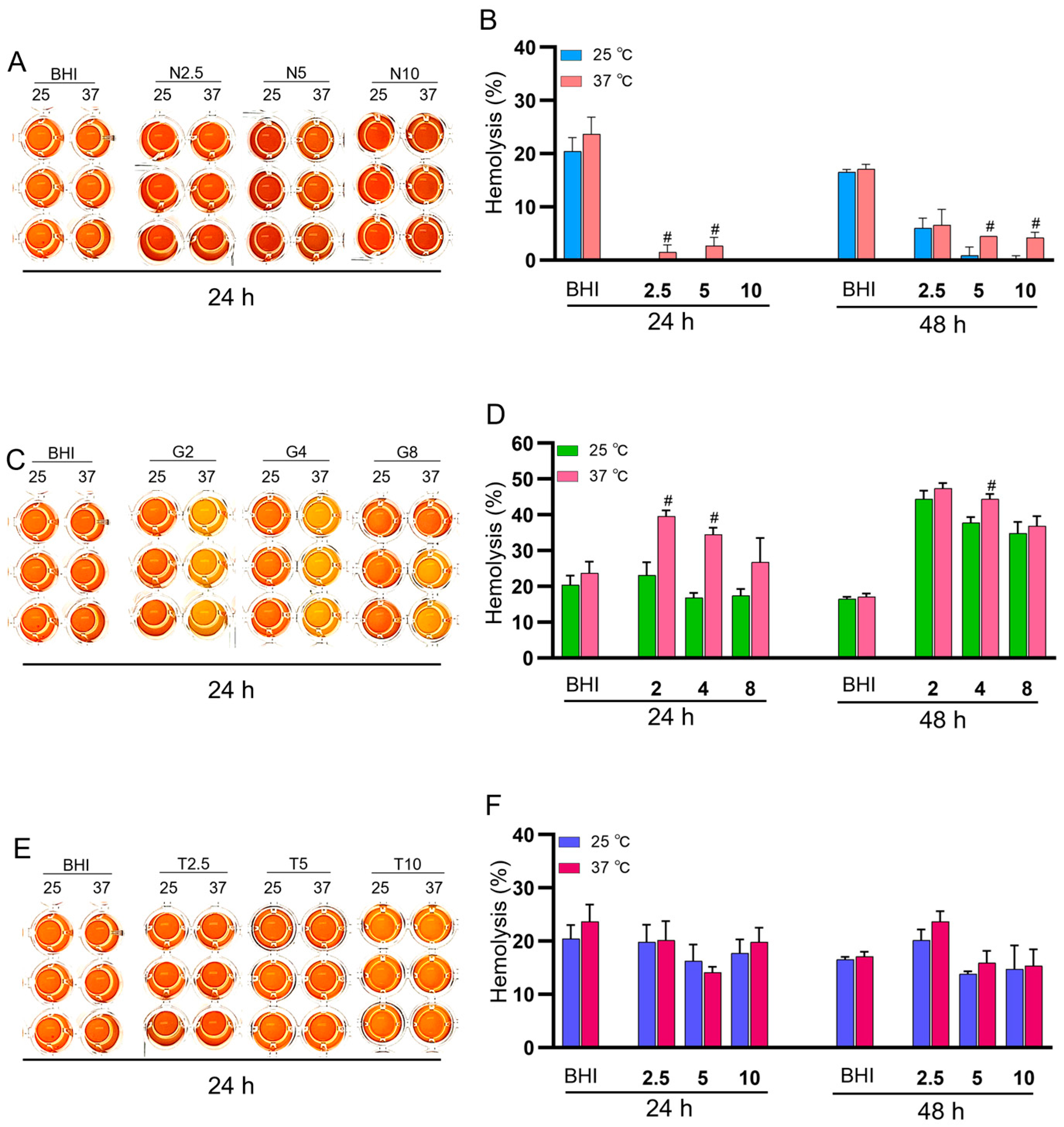
3.5. Effects of Temperature and Nutritional Conditions on Hemolytic Activity
4. Discussion
5. Conclusions
Author Contributions
Funding
Data Availability Statement
Acknowledgments
Conflicts of Interest
References
- Emiliano, J.V.D.S.; Fusieger, A.; Camargo, A.C.; Rodrigues, F.F.D.C.; Nero, L.A.; Perrone, Í.T.; Carvalho, A.F. Staphylococcus aureus in dairy industry: Enterotoxin production, biofilm formation, and use of lactic acid bacteria for its biocontrol. Foodborne Pathog. Dis. 2024, 21, 601–616. [Google Scholar] [CrossRef] [PubMed]
- Hu, D.-L.; Li, S.; Fang, R.; Ono, H.K. Update on molecular diversity and multipathogenicity of staphylococcal superantigen toxins. Anim. Dis. 2021, 1, 7. [Google Scholar] [CrossRef]
- Velasco, V.; Vergara, J.L.; Bonilla, A.M.; Muñoz, J.; Mallea, A.; Vallejos, D.; Quezada-Aguiluz, M.; Campos, J.; Rojas-García, P. Prevalence and characterization of Staphylococcus aureus strains in the pork chain supply in Chile. Foodborne Pathog. Dis. 2018, 15, 262–268. [Google Scholar] [CrossRef]
- Kittl, S.; Brodard, I.; Heim, D.; Andina-Pfister, P.; Overesch, G. Methicillin-resistant Staphylococcus aureus strains in swiss pigs and their relation to isolates from farmers and veterinarians. Appl. Environ. Microbiol. 2020, 86, e01865-19. [Google Scholar] [CrossRef]
- Otto, M. Staphylococcus aureus toxins. Curr. Opin. Microbiol. 2014, 17, 32–37. [Google Scholar] [CrossRef]
- Zhu, Z.; Hu, Z.; Li, S.; Fang, R.; Ono, H.K.; Hu, D.-L. Molecular characteristics and pathogenicity of Staphylococcus aureus exotoxins. Int. J. Mol. Sci. 2023, 25, 395. [Google Scholar] [CrossRef]
- Chang, J.; Lee, C.; Kim, I.; Kim, J.; Kim, J.H.; Yun, T.; Hooper, D.C.; Walker, S.; Lee, W. Environmental cues in different host niches shape the survival fitness of Staphylococcus aureus. Nat. Commun. 2025, 16, 6928. [Google Scholar] [CrossRef]
- Howden, B.P.; Giulieri, S.G.; Lung, T.W.F.; Baines, S.L.; Sharkey, L.K.; Lee, J.Y.H.; Hachani, A.; Monk, I.R.; Stinear, T.P. Staphylococcus aureus host interactions and adaptation. Nat. Rev. Microbiol. 2023, 21, 380–395. [Google Scholar] [CrossRef]
- Touaitia, R.; Mairi, A.; Ibrahim, N.A.; Basher, N.S.; Idres, T.; Touati, A. Staphylococcus aureus: A review of the pathogenesis and virulence mechanisms. Antibiotics 2025, 14, 470. [Google Scholar] [CrossRef]
- Asao, T.; Kumeda, Y.; Kawai, T.; Shibata, T.; Oda, H.; Haruki, K.; Nakazawa, H.; Kozaki, S. An extensive outbreak of staphylococcal food poisoning due to low-fat milk in Japan: Estimation of enterotoxin A in the incriminated milk and powdered skim milk. Epidemiol. Infect. 2003, 130, 33. [Google Scholar] [CrossRef] [PubMed]
- Freitas, J.K.G.R.; Assis, C.F.; Oliveira, T.R.M.; Maia, C.M.M.; de Sousa, B.J.; Medeiros, G.C.B.S.; Seabra, L.M.J.; Chaves Damasceno, K.S.F.D.S. Prevalence of staphylococcal toxin in food contaminated by Staphylococcus spp.: Protocol for a systematic review with meta-analysis. PLoS ONE 2023, 18, e0282111. [Google Scholar] [CrossRef]
- Kadariya, J.; Smith, T.C.; Thapaliya, D. Staphylococcus aureus and staphylococcal food-borne disease: An ongoing challenge in public health. BioMed. Res. Int. 2014, 2014, 827965. [Google Scholar] [CrossRef] [PubMed]
- EFSA; ECDC. The European Union summary report on trends and sources of zoonoses, zoonotic agents and food-borne outbreaks in 2017. EFSA J. 2018, 16, e05500. [Google Scholar] [CrossRef]
- EFSA; ECDC. The European Union summary report on antimicrobial resistance in zoonotic and indicator bacteria from humans, animals and food in 2018/2019. EFSA J. 2021, 19, e06490. [Google Scholar] [CrossRef]
- Haghi, F.; Zeighami, H.; Hajiloo, Z.; Torabi, N.; Derakhshan, S. High frequency of enterotoxin encoding genes of Staphylococcus aureus isolated from food and clinical samples. J. Health Popul. Nutr. 2021, 40, 27. [Google Scholar] [CrossRef] [PubMed]
- Paudyal, N.; Pan, H.; Liao, X.; Zhang, X.; Li, X.; Fang, W.; Yue, M. A meta-analysis of major foodborne pathogens in Chinese food commodities between 2006 and 2016. Foodborne Pathog. Dis. 2018, 15, 187–197. [Google Scholar] [CrossRef]
- Suzuki, Y.; Ono, H.K.; Shimojima, Y.; Kubota, H.; Kato, R.; Kakuda, T.; Hirose, S.; Hu, D.-L.; Nakane, A.; Takai, S. A novel staphylococcal enterotoxin SE02 involved in a staphylococcal food poisoning outbreak that occurred in Tokyo in 2004. Food Microbiol. 2020, 92, 103588. [Google Scholar] [CrossRef] [PubMed]
- Zheng, J.; Liu, L.; Chen, G.; Xu, W.; Huang, Y.; Lei, G.; Huang, W.; Lv, H.; Yang, X. Molecular characteristics of Staphylococcus aureus isolates form food-poisoning outbreaks (2011–2022) in Sichuan, China. Foodborne Pathog. Dis. 2024, 21, 323–330. [Google Scholar] [CrossRef]
- Argudín, M.A.; Mendoza, M.C.; Rodicio, M.R. Food poisoning and Staphylococcus aureus enterotoxins. Toxins 2010, 2, 1751–1773. [Google Scholar] [CrossRef]
- Ishizaki, N.; Kamata, Y.; Furuhata, K.; Sugita-Konishi, Y. Behavior of Staphylococcus aureus and staphylococcal enterotoxins A and Q in scrambled eggs. Shokuhin Eiseigaku Zasshi 2020, 61, 132–137. [Google Scholar] [CrossRef]
- Hennekinne, J.A.; De Buyser, M.L.; Dragacci, S. Staphylococcus aureus and its food poisoning toxins: Characterization and outbreak investigation. FEMS Microbiol. Rev. 2012, 36, 815–836. [Google Scholar] [CrossRef]
- Hu, Z.; Zhu, Z.; Ono, H.K.; Hirose, S.; Hara-Kudo, Y.; Li, S.; Hu, D.-L. Effects of nutritional condition on growth, biofilm formation, and enterotoxin production in Staphylococcus aureus associated with food poisoning. Int. J. Mol. Sci. 2025, 26, 9791. [Google Scholar] [CrossRef]
- Schelin, J.; Wallin-Carlquist, N.; Cohn, M.T.; Lindqvist, R.; Barker, G.C.; Rådström, P. The formation of Staphylococcus aureus enterotoxin in food environments and advances in risk assessment. Virulence 2011, 2, 580–592. [Google Scholar] [CrossRef] [PubMed]
- Bastock, R.A.; Marino, E.C.; Wiemels, R.E.; Holzschu, D.L.; Keogh, R.A.; Zapf, R.L.; Murphy, E.R.; Carroll, R.K. Staphylococcus aureus responds to physiologically relevant temperature changes by altering its global transcript and protein profile. mSphere 2021, 6, e01303-20. [Google Scholar] [CrossRef]
- Solar Venero, E.C.; Galeano, M.B.; Luqman, A.; Ricardi, M.M.; Serral, F.; Fernandez Do Porto, D.; Robaldi, S.A.; Ashari, B.A.Z.; Munif, T.H.; Egoburo, D.E.; et al. Fever-like temperature impacts on Staphylococcus aureus and Pseudomonas aeruginosa interaction, physiology, and virulence both in vitro and in vivo. BMC Biol. 2024, 22, 27. [Google Scholar] [CrossRef]
- Balasubramanian, D.; Harper, L.; Shopsin, B.; Torres, V.J. Staphylococcus aureus pathogenesis in diverse host environments. Pathog. Dis. 2017, 75, ftx005. [Google Scholar] [CrossRef] [PubMed]
- Lee, J.E.; Kim, M.J.; Park, J.; Cho, Y.S. Environmental triggers of enterotoxin production in foodborne Staphylococcus aureus: A focus on growth-dependent risk. LWT–Food Sci. Tech. 2025, 234, 118590. [Google Scholar] [CrossRef]
- Baba, T.; Takeuchi, F.; Kuroda, M.; Yuzawa, H.; Aoki, K.; Oguchi, A.; Nagai, Y.; Iwama, N.; Asano, K.; Naimi, T.; et al. Genome and virulence determinants of high virulence community-acquired MRSA. Lancet 2002, 359, 1819–1827. [Google Scholar] [CrossRef]
- Lindsay, J.A.; Holden, M.T.G. Staphylococcus aureus: Superbug, super genome? Trends Microbiol. 2004, 12, 378–385. [Google Scholar] [CrossRef]
- Qi, Y.; Miller, K.J. Effect of low water activity on staphylococcal enterotoxin A and B biosynthesis. J. Food Prot. 2000, 63, 473–478. [Google Scholar] [CrossRef]
- Harrington, N.E.; Sweeney, E.; Harrison, F. Building a better biofilm-formation of in vivo-like biofilm structures by Pseudomonas aeruginosa in a porcine model of cystic fibrosis lung infection. Biofilm 2020, 2, 100024. [Google Scholar] [CrossRef]
- Hu, D.-L.; Omoe, K.; Sashinami, H.; Shinagawa, K.; Nakane, A. Immunization with a nontoxic mutant of staphylococcal enterotoxin A, SEAD227A, protects against enterotoxin-induced emesis in house musk shrews. J. Infect. Dis. 2009, 199, 302–310. [Google Scholar] [CrossRef]
- Vandenesch, F.; Lina, G.; Henry, T. Staphylococcus aureus hemolysins, bicomponent leukocidins, and cytolytic peptides: A redundant arsenal of membrane-damaging virulence factors? Front. Cell. Infect. Microbiol. 2012, 2, 12. [Google Scholar] [CrossRef]
- Zeaki, N.; Johler, S.; Skandamis, P.N.; Schelin, J. The role of regulatory mechanisms and environmental parameters in staphylococcal food poisoning and resulting challenges to risk assessment. Front. Microbiol. 2019, 10, 1307. [Google Scholar] [CrossRef] [PubMed]
- Elahi, S.; Fujikawa, H. Comprehensive study of the boundaries of enterotoxin A production and growth of Staphylococcus aureus at various temperatures and salt concentrations. J. Food Sci. 2019, 84, 121–126. [Google Scholar] [CrossRef] [PubMed]
- Valero, A.; Pérez-Rodríguez, F.; Carrasco, E.; Fuentes-Alventosa, J.M.; García-Gimeno, R.M.; Zurera, G. Modelling the growth boundaries of Staphylococcus aureus: Effect of temperature, pH and water activity. Int. J. Food Microbiol. 2009, 133, 186–194. [Google Scholar] [CrossRef]
- Lopes, G.V.; Bastos, C.P.; da Silva, W.P. The effect of sodium chloride and temperature on the levels of transcriptional expression of staphylococcal enterotoxin genes in Staphylococcus aureus isolates from broiler carcasses. Braz. J. Microbiol. 2021, 52, 2343–2350. [Google Scholar] [CrossRef]
- Sato’o, Y.; Hisatsune, J.; Aziz, F.; Tatsukawa, N.; Shibata-Nakagawa, M.; Ono, H.K.; Naito, I.; Omoe, K.; Sugai, M. Coordination of prophage and global regulator leads to high enterotoxin production in staphylococcal food poisoning associated lineage. Microbiol. Spectr. 2024, 12, e02927-23. [Google Scholar] [CrossRef]
- Arunachalam, K.; Pandurangan, P.; Shi, C.; Lagoa, R. Regulation of Staphylococcus aureus virulence and application of nanotherapeutics to eradicate S. aureus infection. Pharmaceutics 2023, 15, 310. [Google Scholar] [CrossRef]
- Stephens, A.C.; Thurlow, L.R.; Richardson, A.R. Mechanisms behind the indirect impact of metabolic regulators on virulence factor production in Staphylococcus aureus. Microbiol. Spectr. 2022, 10, e02063-22. [Google Scholar] [CrossRef]
- Tuchscherr, L.; Bischoff, M.; Lattar, S.M.; Llana, M.N.; Pförtner, H.; Niemann, S.; Geraci, J.; Vyver, H.V.; Fraunholz, M.J.; Cheung, A.L.; et al. Sigma factor SigB is crucial to mediate Staphylococcus aureus adaptation during chronic infections. PLoS Pathog. 2015, 11, e1004870. [Google Scholar] [CrossRef]
- Schmidt, K.A.; Donegan, N.P.; Kwan, W.A., Jr.; Cheung, A. Influences of sigmaB and agr on expression of staphylococcal enterotoxin B (seb) in Staphylococcus aureus. Can. J. Microbiol. 2004, 50, 351–360. [Google Scholar] [CrossRef]
- Jenul, C.; Horswill, A.R. Regulation of Staphylococcus aureus virulence. Microbiol. Spectr. 2019, 7. [Google Scholar] [CrossRef]
- Zeaki, N.; Susilo, Y.B.; Pregiel, A.; Rådström, P.; Schelin, J. Prophage-encoded staphylococcal enterotoxin A: Regulation of production in Staphylococcus aureus strains representing different sea regions. Toxins 2015, 7, 5359–5376. [Google Scholar] [CrossRef] [PubMed]
- Etter, D.; Jenni, C.; Edwards, V.; Greutmann, M.; Waltenspul, T.; Tasara, T.; Johler, S. Glucose stress lowers staphylococcal enterotoxin C production independently of Agr, SarA, and SigB. J. Food Prot. 2023, 86, 100127. [Google Scholar] [CrossRef]
- Seidl, K.; Müller, S.; François, P.; Kriebitzsch, C.; Schrenzel, J.; Engelmann, S.; Bischoff, M.; Berger-Bächi, B. Effect of a glucose impulse on the CcpA regulon in Staphylococcus aureus. BMC Microbiol. 2009, 9, 95. [Google Scholar] [CrossRef]
- Liu, C.; Shen, Y.; Yang, M.; Chi, K.; Guo, N. Hazard of staphylococcal enterotoxins in food and promising strategies for natural products against virulence. J. Agric. Food Chem. 2022, 70, 2450−2465. [Google Scholar] [CrossRef]
- Boles, B.R.; Horswill, A.R. Agr-mediated dispersal of Staphylococcus aureus biofilms. PLoS Pathog. 2008, 4, e1000052. [Google Scholar] [CrossRef]
- Cheung, G.Y.C.; Bae, J.S.; Otto, M. Pathogenicity and virulence of Staphylococcus aureus. Virulence 2021, 12, 547–569. [Google Scholar] [CrossRef] [PubMed]
- Yarwood, J.M.; Paquette, K.M.; Tikh, I.B.; Volper, E.M.; Greenberg, E.P. Generation of virulence factor variants in Staphylococcus aureus biofilms. J. Bacteriol. 2007, 189, 7961–7967. [Google Scholar] [CrossRef] [PubMed]
- Syed, A.K.; Baral, R.; Van Vlack, E.R.; Gil-Marqués, M.L.; Lenhart, T.; Hooper, D.C.; Kahne, D.; Losick, R.; Bradshaw, N. Biofilm formation by Staphylococcus aureus is triggered by a drop in the levels of a cyclic dinucleotide. Proc. Natl. Acad. Sci. USA 2024, 121, e2417323121. [Google Scholar] [CrossRef]
- Kaushik, A.; Kest, H.; Sood, M.; Steussy, B.W.; Thieman, C.; Gupta, S. Biofilm producing methicillin-resistant Staphylococcus aureus (MRSA) infections in humans: Clinical implications and management. Pathogens 2024, 13, 76. [Google Scholar] [CrossRef]
- Tomlinson, K.L.; Lung, T.W.F.; Dach, F.; Annavajhala, M.K.; Gabryszewski, S.J.; Groves, R.A.; Drikic, M.; Francoeur, N.J.; Sridhar, S.H.; Smith, M.L.; et al. Staphylococcus aureus induces an itaconate-dominated immunometabolic response that drives biofilm formation. Nat. Commun. 2021, 12, 1399. [Google Scholar] [CrossRef]


Disclaimer/Publisher’s Note: The statements, opinions and data contained in all publications are solely those of the individual author(s) and contributor(s) and not of MDPI and/or the editor(s). MDPI and/or the editor(s) disclaim responsibility for any injury to people or property resulting from any ideas, methods, instructions or products referred to in the content. |
© 2026 by the authors. Licensee MDPI, Basel, Switzerland. This article is an open access article distributed under the terms and conditions of the Creative Commons Attribution (CC BY) license.
Share and Cite
Hu, Z.; Ono, H.K.; Zhu, Z.; Hirose, S.; Hara-Kudo, Y.; Li, S.; Hu, D.-L. Interactive Effects of Temperature and Nutrient Conditions on Growth and Virulence Factor Expression of Staphylococcus aureus Under Model Food-Relevant Environments. Foods 2026, 15, 2062. https://doi.org/10.3390/foods15122062
Hu Z, Ono HK, Zhu Z, Hirose S, Hara-Kudo Y, Li S, Hu D-L. Interactive Effects of Temperature and Nutrient Conditions on Growth and Virulence Factor Expression of Staphylococcus aureus Under Model Food-Relevant Environments. Foods. 2026; 15(12):2062. https://doi.org/10.3390/foods15122062
Chicago/Turabian StyleHu, Zuo, Hisaya K. Ono, Zhihao Zhu, Shouhei Hirose, Yukiko Hara-Kudo, Shaowen Li, and Dong-Liang Hu. 2026. "Interactive Effects of Temperature and Nutrient Conditions on Growth and Virulence Factor Expression of Staphylococcus aureus Under Model Food-Relevant Environments" Foods 15, no. 12: 2062. https://doi.org/10.3390/foods15122062
APA StyleHu, Z., Ono, H. K., Zhu, Z., Hirose, S., Hara-Kudo, Y., Li, S., & Hu, D.-L. (2026). Interactive Effects of Temperature and Nutrient Conditions on Growth and Virulence Factor Expression of Staphylococcus aureus Under Model Food-Relevant Environments. Foods, 15(12), 2062. https://doi.org/10.3390/foods15122062