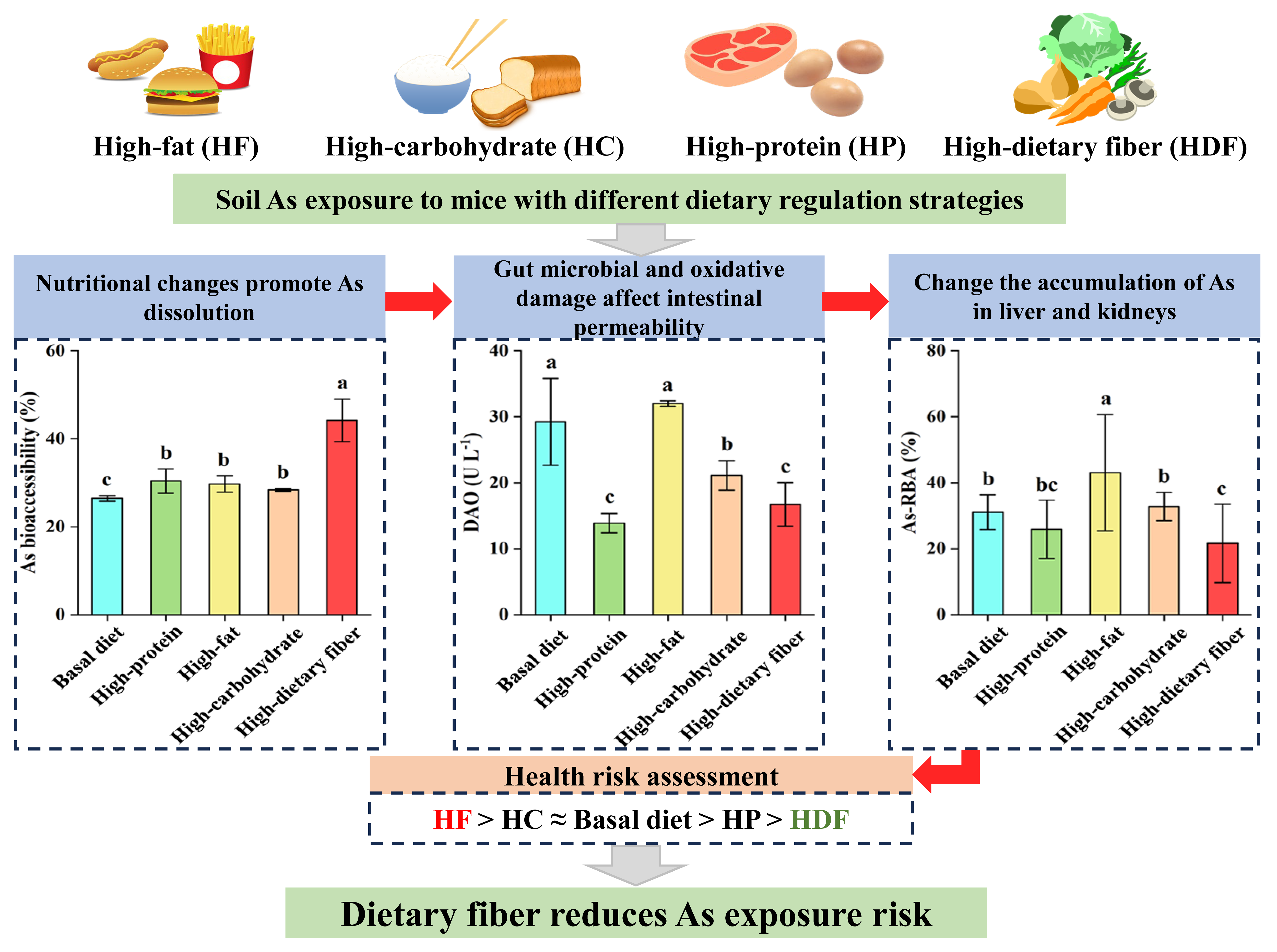
High-Dietary Fiber Diet Reduces Arsenic Oral Bioavailability and Health Risk from Soils by Regulating Gut Microbiota and Intestinal Barrier Function

Abstract
1. Introduction
2. Materials and Methods
2.1. Soil Samples
2.2. Mouse Assay
2.2.1. Mouse Chow Preparation
2.2.2. As Concentration Analysis
2.3. Arsenic Solubility Assessment
2.4. Characterizing Gut Barrier
2.5. Oxidative Injury
2.6. Characterization of the Gut Microbial Community
2.7. Data Processing
3. Results and Discussion
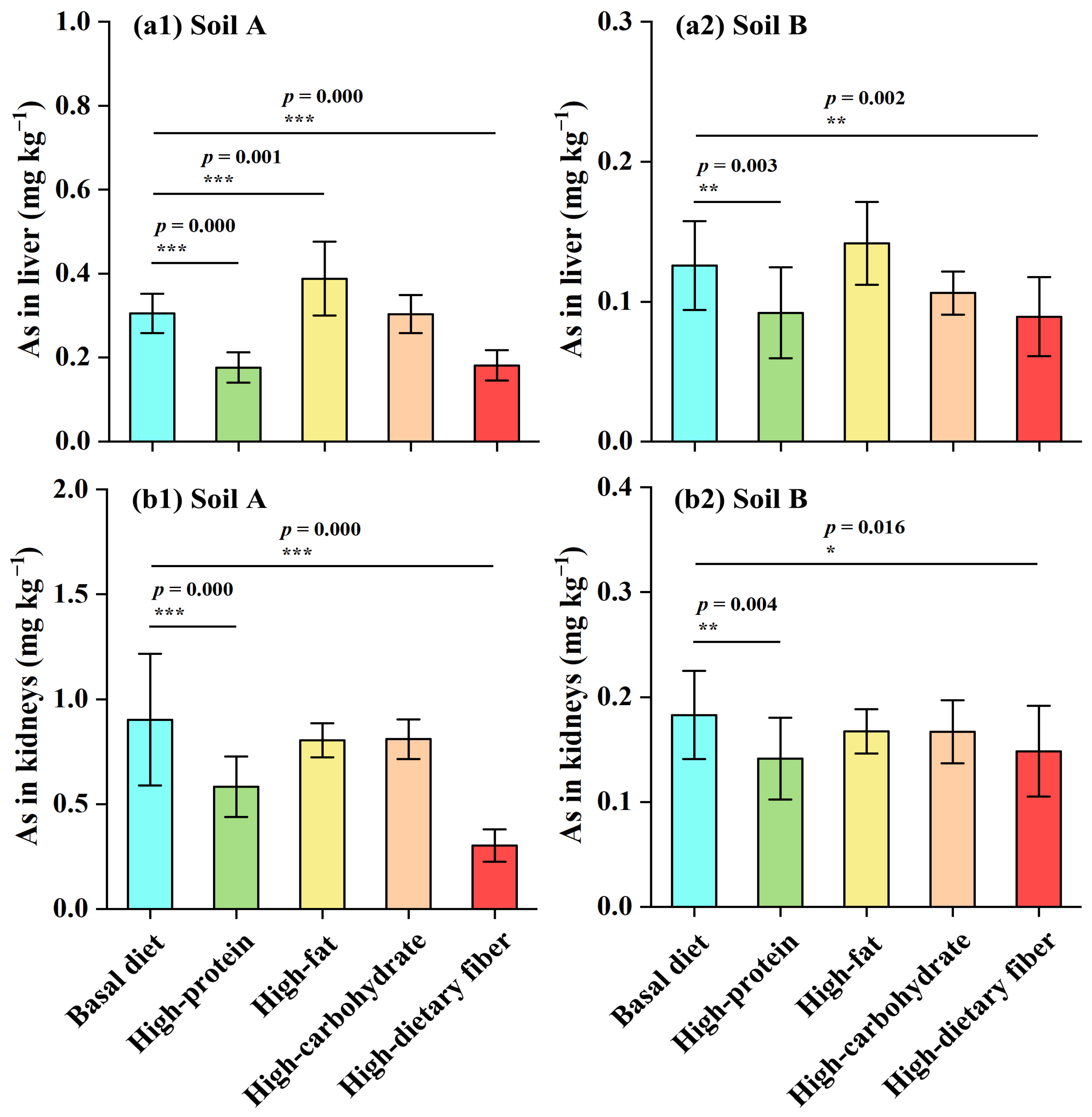
3.1. Effect of Diet on As Accumulation in Mouse Tissue
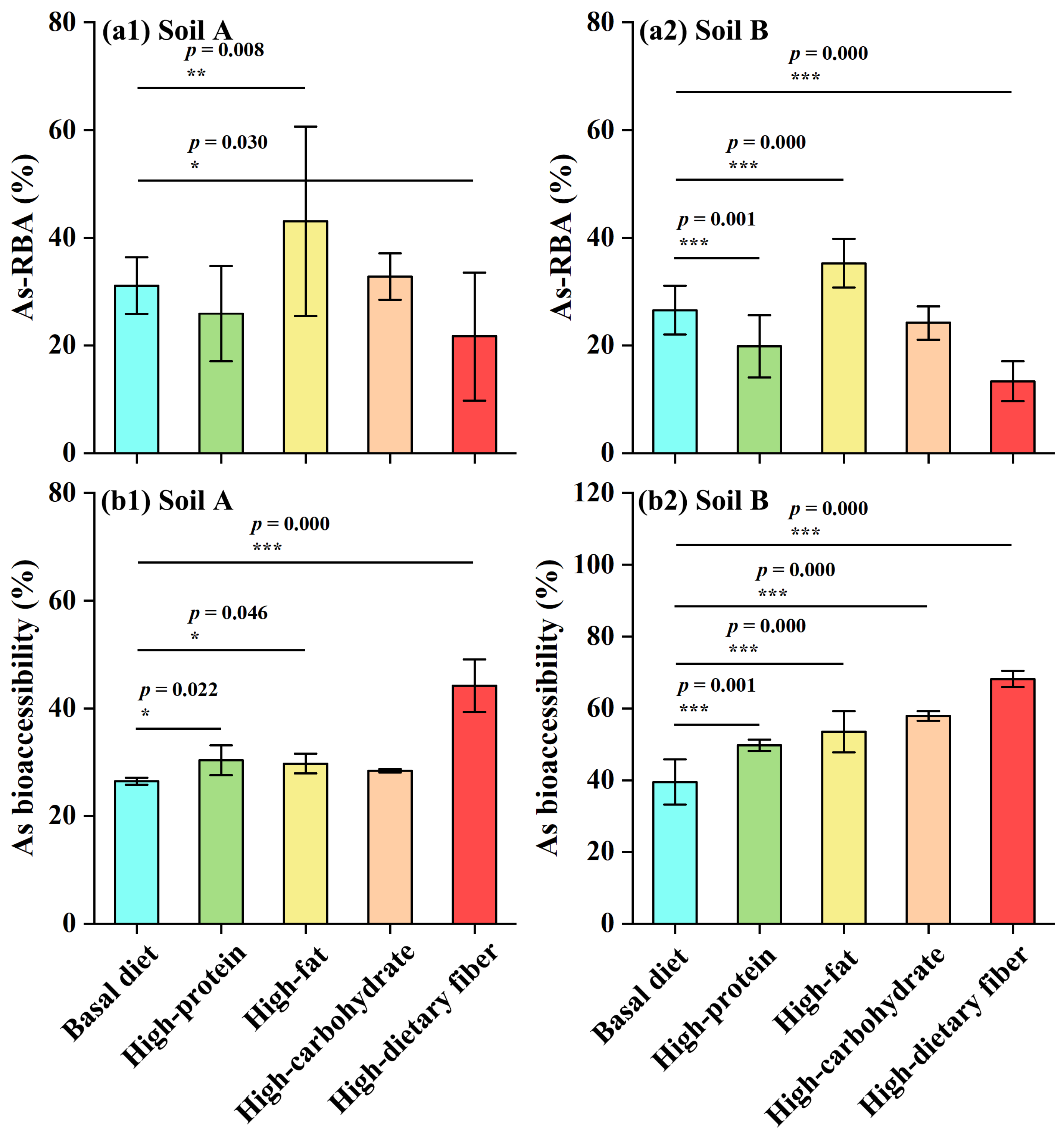
3.2. Effect of Diet on As-RBA and As Bioaccessibility
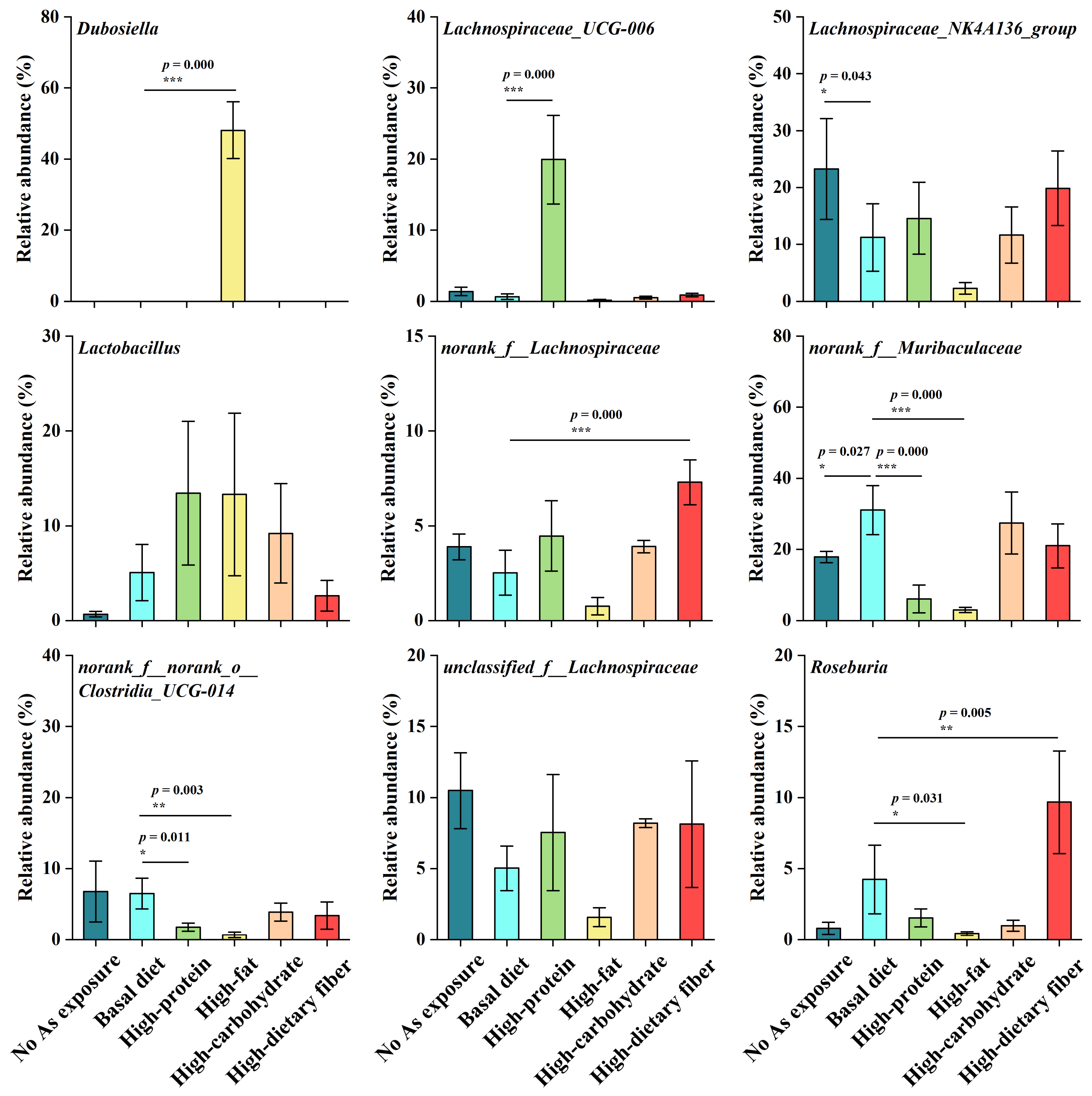
3.3. Effect of Diet on Gut Microbiota
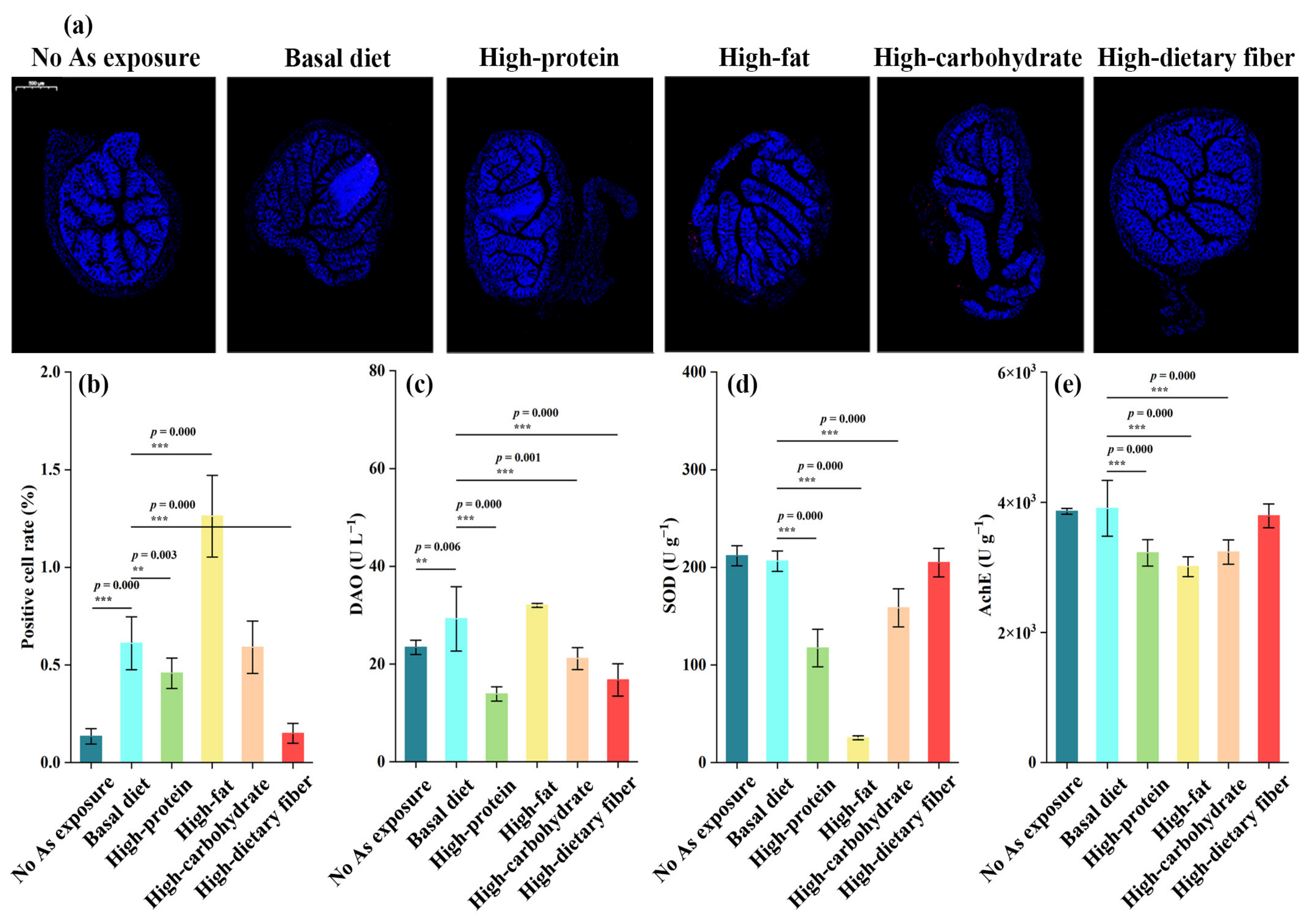
3.4. Damage of Intestinal Barrier Improved As Absorption
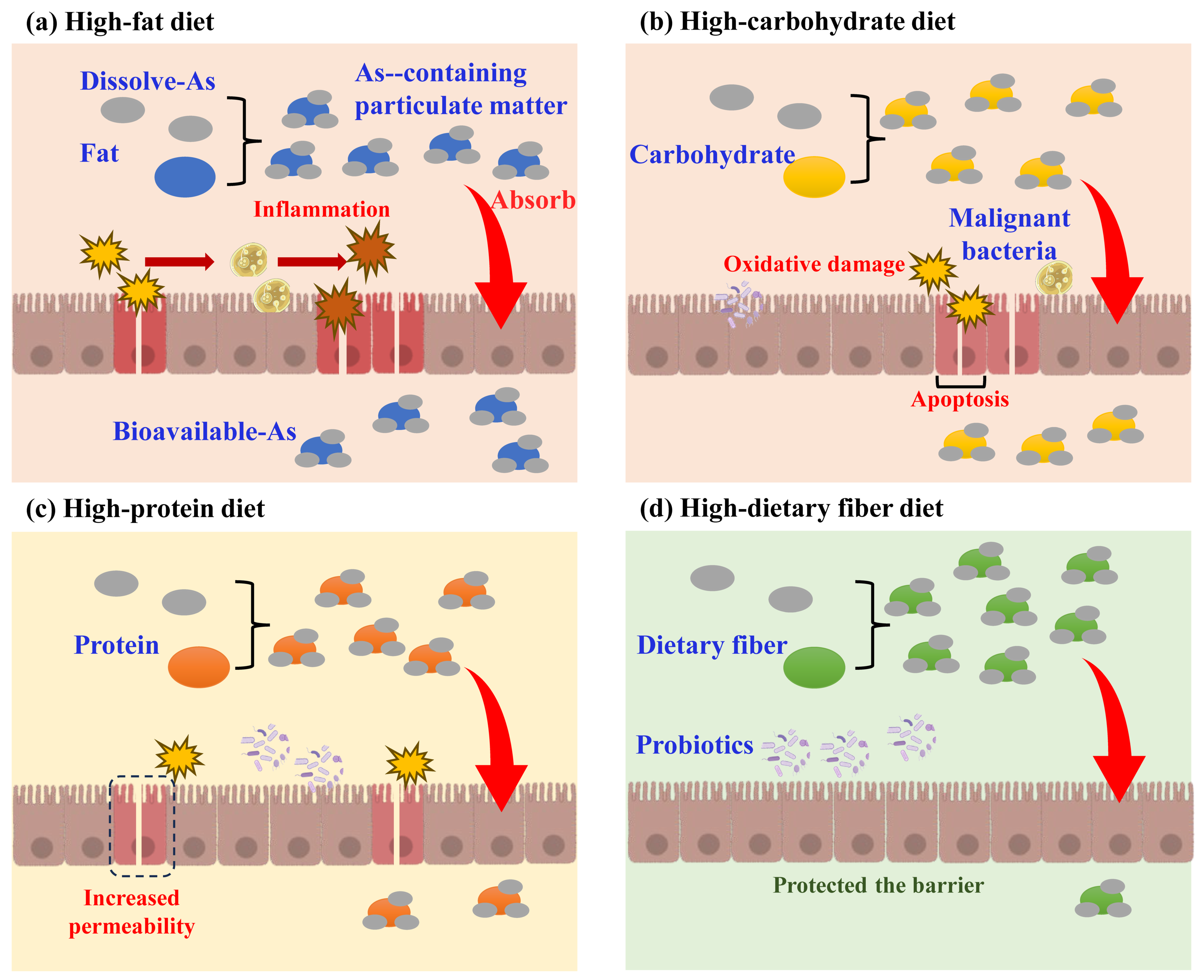
3.5. Mechanisms of Diet Effects on As-RBA
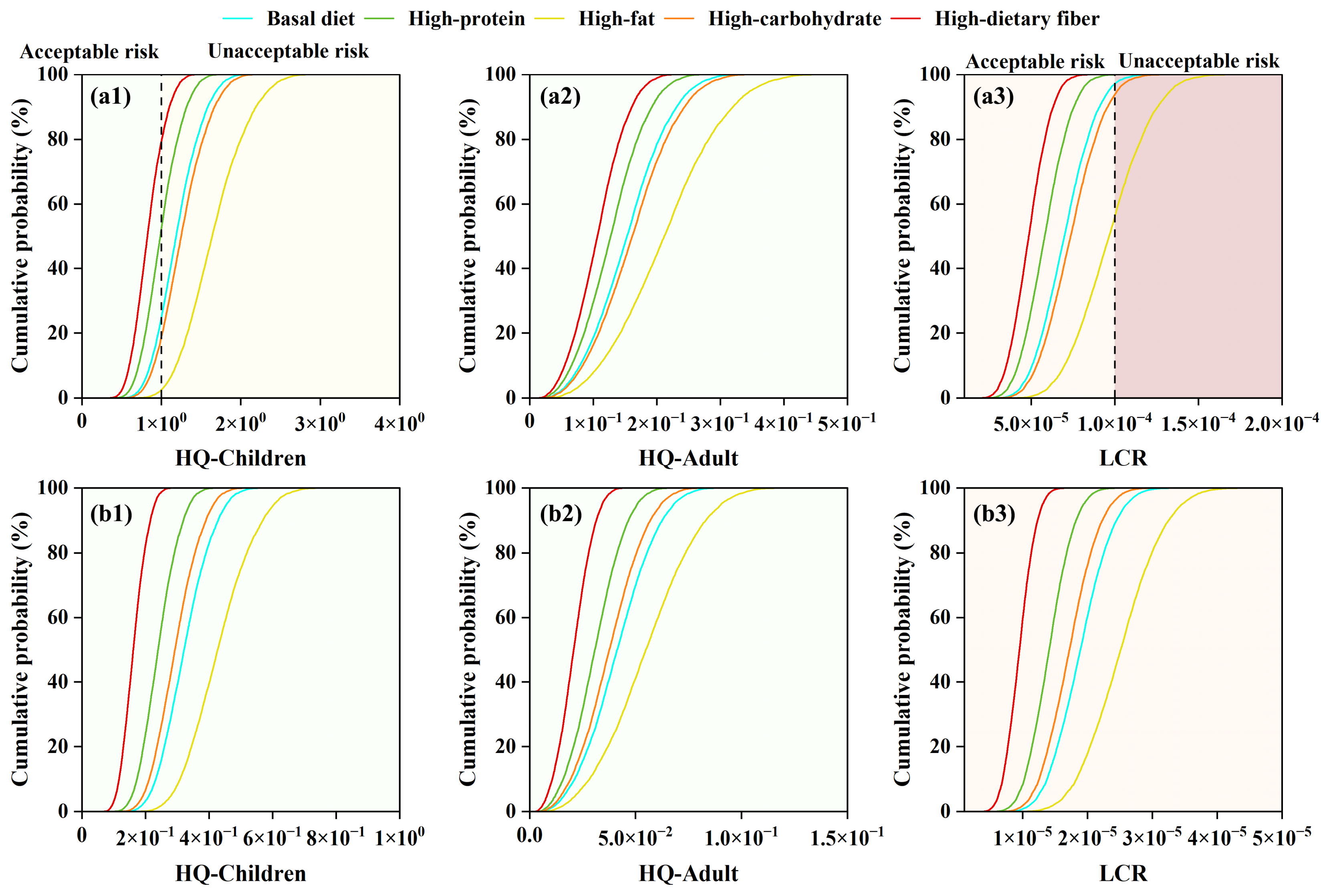
3.6. Health Risk Assessment of As Exposure Under Different Diets
4. Conclusions
Supplementary Materials
Author Contributions
Funding
Institutional Review Board Statement
Informed Consent Statement
Data Availability Statement
Conflicts of Interest
References
- IARC Working Group on the Evaluation of Carcinogenic Risks to Humans. Some drinking-water disinfectants and contaminants. IARC Monogr. Eval. Carcinog. Risks Hum. 2004, 84, 269–477.
- Patel, K.S.; Pandey, P.K.; Martín-Ramos, P.; Corns, W.T.; Varol, S.; Bhattacharya, P.; Zhu, Y. A review on arsenic in the environment: Contamination, mobility, sources, and exposure. RSC Adv. 2023, 13, 8803–8821. [Google Scholar] [CrossRef]
- Tseng, C.H.; Tai, T.Y.; Chong, C.K.; Tseng, C.P.; Lai, M.S.; Lin, B.J.; Chiou, H.Y.; Hsueh, Y.M.; Hsu, K.H.; Chen, C.J. Long-term arsenic exposure and incidence of non-insulin-dependent diabetes mellitus: A cohort study in arseniasis-hyperendemic villages in Taiwan. Environ. Health Persp. 2000, 108, 847–851. [Google Scholar] [CrossRef] [PubMed][Green Version]
- Li, J.; Li, C.; Sun, H.-J.; Juhasz, A.L.; Luo, J.; Li, H.-B.; Ma, L.Q. Arsenic Relative Bioavailability in Contaminated Soils: Comparison of Animal Models, Dosing Schemes, and Biological End Points. Environ. Sci. Technol. 2016, 50, 453–461. [Google Scholar] [CrossRef]
- Wang, B.; Lin, C.; Zhang, X.; Duan, X.; Xu, D.; Cheng, H.; Wang, Q.; Liu, X.; Ma, J.; Ma, J.; et al. A soil ingestion pilot study for teenage children in China. Chemosphere 2018, 202, 40–47. [Google Scholar] [CrossRef]
- Xiao, P.; Li, Y.; Xiong, S.; Zhou, Y.; Yin, N.; Li, Y.; Jiang, X.; Chang, X.; Wang, P.; Cai, X.; et al. Arsenic bioavailability and transformation from As(V)-sorbed aluminum oxides: The influence of Fe(III) and human gut microbiota. J. Hazard. Mater. 2025, 496, 139288. [Google Scholar] [CrossRef] [PubMed]
- Li, H.-B.; Xue, R.-Y.; Chen, X.-Q.; Lin, X.-Y.; Shi, X.-X.; Du, H.-Y.; Yin, N.-Y.; Cui, Y.-S.; Li, L.-N.; Scheckel, K.G.; et al. Ca Minerals and Oral Bioavailability of Pb, Cd, and As from Indoor Dust in Mice: Mechanisms and Health Implications. Environ. Health Persp. 2022, 130, 127004. [Google Scholar] [CrossRef] [PubMed]
- Gamble, M.V.; Liu, X.; Slavkovich, V.; Pilsner, J.R.; Ilievski, V.; Factor-Litvak, P.; Levy, D.; Alam, S.; Islam, M.; Parvez, F.; et al. Folic acid supplementation lowers blood arsenic2. Am. J. Clin. Nutr. 2007, 86, 1202–1209. [Google Scholar] [CrossRef]
- Zhang, Y.-S.; Juhasz, A.L.; Xi, J.-F.; Ma, L.Q.; Zhou, D.; Li, H.-B. Dietary Galactooligosaccharides Supplementation as a Gut Microbiota-Regulating Approach to Lower Early Life Arsenic Exposure. Environ. Sci. Technol. 2023, 57, 19463–19472. [Google Scholar] [CrossRef]
- Savarino, G.; Corsello, A.; Corsello, G. Macronutrient balance and micronutrient amounts through growth and development. Ital. J. Pediatr. 2021, 47, 109. [Google Scholar] [CrossRef]
- Huang, Y.; Burgoine, T.; Theis, D.R.Z.; Adams, J. Differences in energy and nutrient content of menu items served by large chain restaurants in the USA and the UK in 2018. Public Health Nutr. 2022, 25, 2671–2679. [Google Scholar] [CrossRef]
- Jindrich, C.; Joyce, J.; Daniels, E.; Procter, S.B.; Sauer, K.; Hanson, J. The Nutritional Adequacy and Diet Quality of Vegetarian Menu Substitutions in Urban Kansas Childcare Centers. Nutrients 2022, 14, 3464. [Google Scholar] [CrossRef]
- Yuan, X.; Wei, Y.; Jiang, H.; Wang, H.; Wang, Z.; Dong, M.; Dong, X.; Zhang, J. Longitudinal Relationship between the Percentage of Energy Intake from Macronutrients and Overweight/Obesity among Chinese Adults from 1991 to 2018. Nutrients 2024, 16, 666. [Google Scholar] [CrossRef]
- Liu, T.; Liang, X.; Lei, C.; Huang, Q.; Song, W.; Fang, R.; Li, C.; Li, X.; Mo, H.; Sun, N.; et al. High-Fat Diet Affects Heavy Metal Accumulation and Toxicity to Mice Liver and Kidney Probably via Gut Microbiota. Front. Microbiol. 2020, 11, 1604. [Google Scholar] [CrossRef]
- Wang, P.; Yin, N.; Cai, X.; Du, H.; Li, Z.; Sun, G.; Cui, Y. Nutritional status affects the bioaccessibility and speciation of arsenic from soils in a simulator of the human intestinal microbial ecosystem. Sci. Total Environ. 2018, 644, 815–821. [Google Scholar] [CrossRef]
- Gruber, J.F.; Karagas, M.R.; Gilbert-Diamond, D.; Bagley, P.J.; Zens, M.S.; Sayarath, V.; Punshon, T.; Morris, J.S.; Cottingham, K.L. Associations between toenail arsenic concentration and dietary factors in a New Hampshire population. Nutr. J. 2012, 11, 45. [Google Scholar] [CrossRef]
- Snauwaert, E.; Paglialonga, F.; Vande Walle, J.; Wan, M.; Desloovere, A.; Polderman, N.; Renken-Terhaerdt, J.; Shaw, V.; Shroff, R. The benefits of dietary fiber: The gastrointestinal tract and beyond. Pediatr. Nephrol. 2023, 38, 2929–2938. [Google Scholar] [CrossRef] [PubMed]
- Meldrum, O.W.; Yakubov, G.E. Journey of dietary fiber along the gastrointestinal tract: Role of physical interactions, mucus, and biochemical transformations. Crit. Rev. Food Sci. 2025, 65, 4264–4292. [Google Scholar] [CrossRef] [PubMed]
- Zhou, L.; Chen, S.-Z.; Li, Y.-Y.; Xue, R.-Y.; Duan, X.; Lin, X.-Y.; Chen, S.; Zhou, D.; Li, H.-B. Gut Dysbiosis Exacerbates Intestinal Absorption of Cadmium and Arsenic from Cocontaminated Rice in Mice Due to Impaired Intestinal Barrier Functions. Environ. Sci. Technol. 2025, 59, 3459–3471. [Google Scholar] [CrossRef] [PubMed]
- Snelson, M.; Clarke, R.E.; Nguyen, T.-V.; Penfold, S.A.; Forbes, J.M.; Tan, S.M.; Coughlan, M.T. Long Term High Protein Diet Feeding Alters the Microbiome and Increases Intestinal Permeability, Systemic Inflammation and Kidney Injury in Mice. Mol. Nutr. Food Res. 2021, 65, 2000851. [Google Scholar] [CrossRef]
- de La Serre, C.B.; Ellis, C.L.; Lee, J.; Hartman, A.L.; Rutledge, J.C.; Raybould, H.E. Propensity to high-fat diet-induced obesity in rats is associated with changes in the gut microbiota and gut inflammation. AJP Gastrointest. Liver Physiol. 2010, 299, 440−448. [Google Scholar] [CrossRef] [PubMed]
- Gregersen, S.; Samocha-Bonet, D.; Heilbronn, L.K.; Campbell, L.V. Inflammatory and Oxidative Stress Responses to High-Carbohydrate and High-Fat Meals in Healthy Humans. J. Nutr. Metab. 2012, 2012, 238056. [Google Scholar] [CrossRef]
- Qiao, Y.; Sun, J.; Ding, Y.; Le, G.; Shi, Y. Alterations of the gut microbiota in high-fat diet mice is strongly linked to oxidative stress. Appl. Microbiol. Biot. 2013, 97, 1689–1697. [Google Scholar] [CrossRef]
- Estévez, M.; Xiong, Y. Intake of Oxidized Proteins and Amino Acids and Causative Oxidative Stress and Disease: Recent Scientific Evidences and Hypotheses. J. Food Sci. 2019, 84, 387–396. [Google Scholar] [CrossRef] [PubMed]
- Rooks, M.G.; Garrett, W.S. Gut microbiota, metabolites and host immunity. Nat. Rev. Immunol. 2016, 16, 341–352. [Google Scholar] [CrossRef] [PubMed]
- World Health Organization. Total Fat Intake for the Prevention of Unhealthy Weight Gain in Adults and Children: WHO Guideline; World Health Organization: Geneva, Switzerland, 2023. [Google Scholar]
- Society, C.N. Dietary Reference Intakes for China; People’s Medical Publishing House: Beijing, China, 2023. [Google Scholar]
- Li, H.B.; Ning, H.; Li, S.W.; Li, J.; Xue, R.Y.; Li, M.Y.; Wang, M.Y.; Liang, J.H.; Juhasz, A.L.; Ma, L.Q. An interlaboratory evaluation of the variability in arsenic and lead relative bioavailability when assessed using a mouse bioassay. J. Toxicol. Environ. Health Part A 2021, 84, 593–607. [Google Scholar] [CrossRef]
- Kan, J.; Sima, J.; Cao, X. Transformation and bioaccessibility of lead induced by steamed bread feed in the gastrointestinal tract. Ecotox. Environ. Safe. 2017, 137, 158–164. [Google Scholar] [CrossRef]
- Li, H.-B.; Li, M.-Y.; Zhao, D.; Zhu, Y.-G.; Li, J.; Juhasz, A.L.; Cui, X.-Y.; Luo, J.; Ma, L.Q. Food influence on lead relative bioavailability in contaminated soils: Mechanisms and health implications. J. Hazard. Mater. 2018, 358, 427–433. [Google Scholar] [CrossRef]
- Chen, S.-Z.; Lin, X.-Y.; Xue, R.-Y.; Duan, X.; Zhou, D.-M.; Ma, L.Q.; Li, H.-B. Fortifying casein phosphopeptides and Ca in wheat reduces the As, Cd, and Pb bioavailability based on a mouse model: Calcium and phosphate transporters and gut microbiota. Soil. Environ. Health 2024, 2, 100111. [Google Scholar] [CrossRef]
- Chen, Y.; Juhasz, A.; Li, H.; Li, C.; Ma, L.Q.; Cui, X. The Influence of Food on the In Vivo Bioavailability of DDT and Its Metabolites in Soil. Environ. Sci. Technol. 2020, 54, 5003–5010. [Google Scholar] [CrossRef]
- Tan, Z.; Ou, Y.; Cai, W.; Zheng, Y.; Li, H.; Mao, Y.; Zhou, S.; Tu, J. Advances in the Clinical Application of Histamine and Diamine Oxidase (DAO) Activity: A Review. Catalysts 2023, 13, 48. [Google Scholar] [CrossRef]
- Demori, I.; Voci, A.; Fugassa, E.; Burlando, B. Combined effects of high-fat diet and ethanol induce oxidative stress in rat liver. Alcohol 2006, 40, 185–191. [Google Scholar] [CrossRef] [PubMed]
- Xia, J.; Fang, Y.; Shi, Y.; Shen, X.; Wu, J.; Xie, M.; Li, P.; Pei, F.; Hu, Q. Effect of food matrices on the in vitro bioavailability and oxidative damage in PC12 cells of lead. Food Chem. 2018, 266, 397–404. [Google Scholar] [CrossRef] [PubMed]
- Rohr, M.W.; Narasimhulu, C.A.; Rudeski-Rohr, T.A.; Parthasarathy, S. Negative Effects of a High-Fat Diet on Intestinal Permeability: A Review. Adv. Nutr. 2020, 11, 77–91. [Google Scholar] [CrossRef] [PubMed]
- Shi, Z.; Wen, M.; Zhao, Y.; Wang, C. Vermitoxicity of aged biochar and exploring potential damage factors. Environ. Int. 2023, 172, 107787. [Google Scholar] [CrossRef]
- Bradham, K.D.; Diamond, G.L.; Burgess, M.; Juhasz, A.; Klotzbach, J.M.; Maddaloni, M.; Nelson, C.; Scheckel, K.; Serda, S.M.; Stifelman, M.; et al. In vivo and in vitro methods for evaluating soil arsenic bioavailability: Relevant to human health risk assessment. J. Toxicol. Environ. Health Part B Crit. Rev. 2018, 21, 83–114. [Google Scholar] [CrossRef]
- Zhang, Y.; Li, Q.; Welsh, W.J.; Moghe, P.V.; Uhrich, K.E. Micellar and structural stability of nanoscale amphiphilic polymers: Implications for anti-atherosclerotic bioactivity. Biomaterials 2016, 84, 230–240. [Google Scholar] [CrossRef]
- Breton, J.; Daniel, C.; Dewulf, J.; Pothion, S.; Froux, N.; Sauty, M.; Thomas, P.; Pot, B.; Foligné, B. Gut microbiota limits heavy metals burden caused by chronic oral exposure. Toxicol. Lett. 2013, 222, 132–138. [Google Scholar] [CrossRef]
- Zhai, Q.; Wang, J.; Cen, S.; Zhao, J.; Zhang, H.; Tian, F.; Chen, W. Modulation of the gut microbiota by a galactooligosaccharide protects against heavy metal lead accumulation in mice. Food Funct. 2019, 10, 3768–3781. [Google Scholar] [CrossRef] [PubMed]
- Brinkworth, G.D.; Noakes, M.; Clifton, P.M.; Bird, A.R. Comparative effects of very low-carbohydrate, high-fat and high-carbohydrate, low-fat weight-loss diets on bowel habit and faecal short-chain fatty acids and bacterial populations. Brit. J. Nutr. 2009, 101, 1493–1502. [Google Scholar] [CrossRef]
- David, L.A.; Maurice, C.F.; Carmody, R.N.; Gootenberg, D.B.; Button, J.E.; Wolfe, B.E.; Ling, A.V.; Devlin, A.S.; Varma, Y.; Fischbach, M.A.; et al. Diet rapidly and reproducibly alters the human gut microbiome. Nature 2014, 505, 559–563. [Google Scholar] [CrossRef] [PubMed]
- Tsai, Y.-C.; Tai, W.-C.; Liang, C.-M.; Wu, C.-K.; Tsai, M.-C.; Hu, W.-H.; Huang, P.-Y.; Chen, C.-H.; Kuo, Y.-H.; Yao, C.-C.; et al. Alternations of the gut microbiota and the Firmicutes/Bacteroidetes ratio after biologic treatment in inflammatory bowel disease. J. Microbiol. Immunol. 2025, 58, 62–69. [Google Scholar] [CrossRef] [PubMed]
- Qi, L.; Mao, H.; Lu, X.; Shi, T.; Wang, J. Cinnamaldehyde Promotes the Intestinal Barrier Functions and Reshapes Gut Microbiome in Early Weaned Rats. Front. Nutr. 2021, 8, 748503. [Google Scholar] [CrossRef]
- Shao, J.; Li, Z.; Gao, Y.; Zhao, K.; Lin, M.; Li, Y.; Wang, S.; Liu, Y.; Chen, L. Construction of a “Bacteria-Metabolites” Co-Expression Network to Clarify the Anti–Ulcerative Colitis Effect of Flavonoids of Sophora flavescens Aiton by Regulating the “Host–Microbe” Interaction. Front. Pharmacol. 2021, 12, 710052. [Google Scholar] [CrossRef]
- Pan, S.; Yan, H.; Zhu, J.; Ma, Y.; Wang, P.; Liu, Y.; Chen, Z. GYY4137, as a slow-releasing H2S donor, ameliorates sodium deoxycholate–induced chronic intestinal barrier injury and gut microbiota dysbiosis. Front. Pharmacol. 2024, 15, 1476407. [Google Scholar] [CrossRef]
- Zhang, Y.; Dong, A.; Xie, K.; Yu, Y. Dietary Supplementation with High Fiber Alleviates Oxidative Stress and Inflammatory Responses Caused by Severe Sepsis in Mice Without Altering Microbiome Diversity. Front. Physiol. 2019, 9, 1929. [Google Scholar] [CrossRef]
- Yao, M.; Shao, X.; Wei, Y.; Zhang, X.; Wang, H.; Xu, F. Dietary fiber ameliorates lead-induced gut microbiota disturbance and alleviates neuroinflammation. J. Sci. Food Agr. 2022, 102, 6795–6803. [Google Scholar] [CrossRef]
- Liu, T.-H.; Chen, M.-H.; Zhang, C.-Y.; Xie, T.; Zhang, S.; Hao, H.; Bai, Z.-Y.; Xue, Y.-Z.; Wang, J.-W.; Xiao, Y.; et al. Hypertension inhibition by Dubosiella newyorkensis via reducing pentosidine synthesis. npj Biofilms. Microbi. 2025, 11, 34. [Google Scholar] [CrossRef]
- Bolan, S.; Seshadri, B.; Keely, S.; Kunhikrishnan, A.; Bruce, J.; Grainge, I.; Talley, N.J.; Naidu, R. Bioavailability of arsenic, cadmium, lead and mercury as measured by intestinal permeability. Sci. Rep. 2021, 11, 14675. [Google Scholar] [CrossRef] [PubMed]
- Dong, L.; Luo, P.; Zhang, A. Intestinal microbiota dysbiosis contributes to the liver damage in subchronic arsenic-exposed mice. Acta Biochim. Biophys. Sin. 2024, 56, 1774–1788. [Google Scholar] [CrossRef]
- Clemente, M.J.; Devesa, V.; Vélez, D. In Vitro Reduction of Arsenic Bioavailability Using Dietary Strategies. J. Agric. Food Chem. 2017, 65, 3956–3964. [Google Scholar] [CrossRef] [PubMed]
- Payling, L.; Fraser, K.; Loveday, S.M.; Sims, I.; Roy, N.; McNabb, W. The effects of carbohydrate structure on the composition and functionality of the human gut microbiota. Trends Food Sci. Technol. 2020, 97, 233–248. [Google Scholar] [CrossRef]
- Elce, A.; Amato, F.; Zarrilli, F.; Calignano, A.; Troncone, R.; Castaldo, G.; Canani, R.B. Butyrate modulating effects on pro-inflammatory pathways in human intestinal epithelial cells. Benef. Microbes 2017, 8, 841–848. [Google Scholar] [CrossRef] [PubMed]
- Sanmarco, L.M.; Wheeler, M.A.; Gutiérrez-Vázquez, C.; Polonio, C.M.; Linnerbauer, M.; Pinho-Ribeiro, F.A.; Li, Z.; Giovannoni, F.; Batterman, K.V.; Scalisi, G.; et al. Gut-licensed IFNγ+ NK cells drive LAMP1+TRAIL+ anti-inflammatory astrocytes. Nature 2021, 590, 473–479. [Google Scholar] [CrossRef]
- Li, J.; Li, K.; Cui, X.-Y.; Basta, N.T.; Li, L.-P.; Li, H.-B.; Ma, L.Q. In vitro bioaccessibility and in vivo relative bioavailability in 12 contaminated soils: Method comparison and method development. Sci. Total Environ. 2015, 532, 812–820. [Google Scholar] [CrossRef]
- USEPA. Regional Screening Levels (RSLs)-User’s Guide. National Center for Environmental Assessment c/o-Risk Website; USEPA: Washington, DC, USA, 2018.
- Huang, J.; Wu, Y.; Sun, J.; Li, X.; Geng, X.; Zhao, M.; Sun, T.; Fan, Z. Health risk assessment of heavy metal(loid)s in park soils of the largest megacity in China by using Monte Carlo simulation coupled with Positive matrix factorization model. J. Hazard. Mater. 2021, 415, 125629. [Google Scholar] [CrossRef]
- Wang, X.; Liu, E.; Yan, M.; Zheng, S.; Fan, Y.; Sun, Y.; Li, Z.; Xu, J. Contamination and source apportionment of metals in urban road dust (Jinan, China) integrating the enrichment factor, receptor models (FA-NNC and PMF), local Moran’s index, Pb isotopes and source-oriented health risk. Sci. Total Environ. 2023, 878, 163211. [Google Scholar] [CrossRef]
- Yang, Y.; Lu, X.; Yu, B.; Zuo, L.; Wang, L.; Lei, K.; Fan, P.; Liang, T.; Rennert, T.; Rinklebe, J. Source-specific risk judgement and environmental impact of potentially toxic elements in fine road dust from an integrated industrial city, North China. J. Hazard. Mater. 2023, 458, 131982. [Google Scholar] [CrossRef]


Disclaimer/Publisher’s Note: The statements, opinions and data contained in all publications are solely those of the individual author(s) and contributor(s) and not of MDPI and/or the editor(s). MDPI and/or the editor(s) disclaim responsibility for any injury to people or property resulting from any ideas, methods, instructions or products referred to in the content. |
© 2026 by the authors. Licensee MDPI, Basel, Switzerland. This article is an open access article distributed under the terms and conditions of the Creative Commons Attribution (CC BY) license.
Share and Cite
Chen, S.; Han, L.; Liu, E.; Li, H.; Li, J. High-Dietary Fiber Diet Reduces Arsenic Oral Bioavailability and Health Risk from Soils by Regulating Gut Microbiota and Intestinal Barrier Function. Foods 2026, 15, 1961. https://doi.org/10.3390/foods15111961
Chen S, Han L, Liu E, Li H, Li J. High-Dietary Fiber Diet Reduces Arsenic Oral Bioavailability and Health Risk from Soils by Regulating Gut Microbiota and Intestinal Barrier Function. Foods. 2026; 15(11):1961. https://doi.org/10.3390/foods15111961
Chicago/Turabian StyleChen, Shuo, Lei Han, Enfeng Liu, Hongbo Li, and Jie Li. 2026. "High-Dietary Fiber Diet Reduces Arsenic Oral Bioavailability and Health Risk from Soils by Regulating Gut Microbiota and Intestinal Barrier Function" Foods 15, no. 11: 1961. https://doi.org/10.3390/foods15111961
APA StyleChen, S., Han, L., Liu, E., Li, H., & Li, J. (2026). High-Dietary Fiber Diet Reduces Arsenic Oral Bioavailability and Health Risk from Soils by Regulating Gut Microbiota and Intestinal Barrier Function. Foods, 15(11), 1961. https://doi.org/10.3390/foods15111961