Rapeseed Meal as a Sustainable Source of Proteins, Peptides, and Phenolics: Composition, Interactions, and Functional Potential



Abstract
1. Introduction
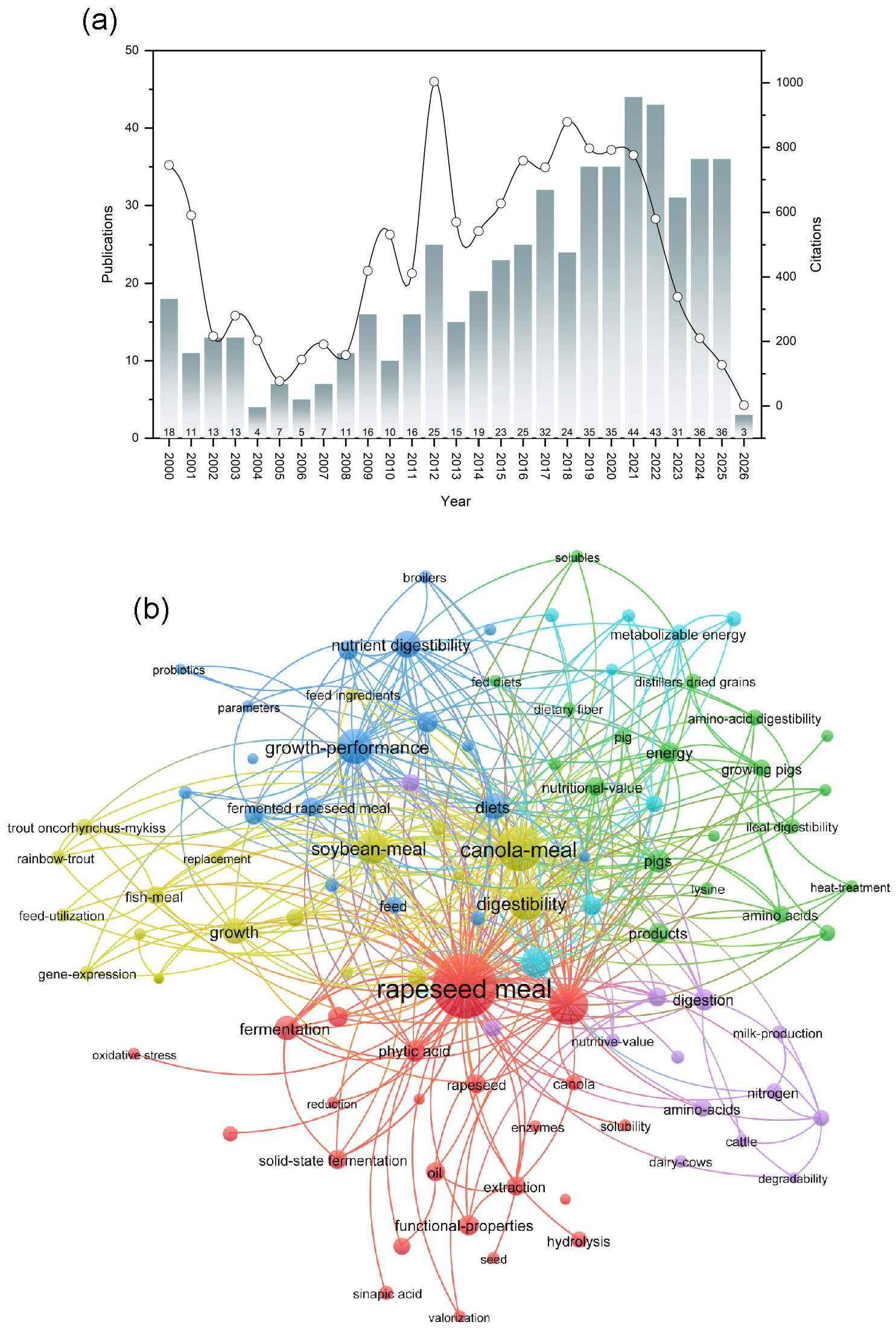
2. Methods
3. Bioactive Compounds of RSM
3.1. Phenolic Compounds
3.1.1. Sinapine
3.1.2. Flavonoids
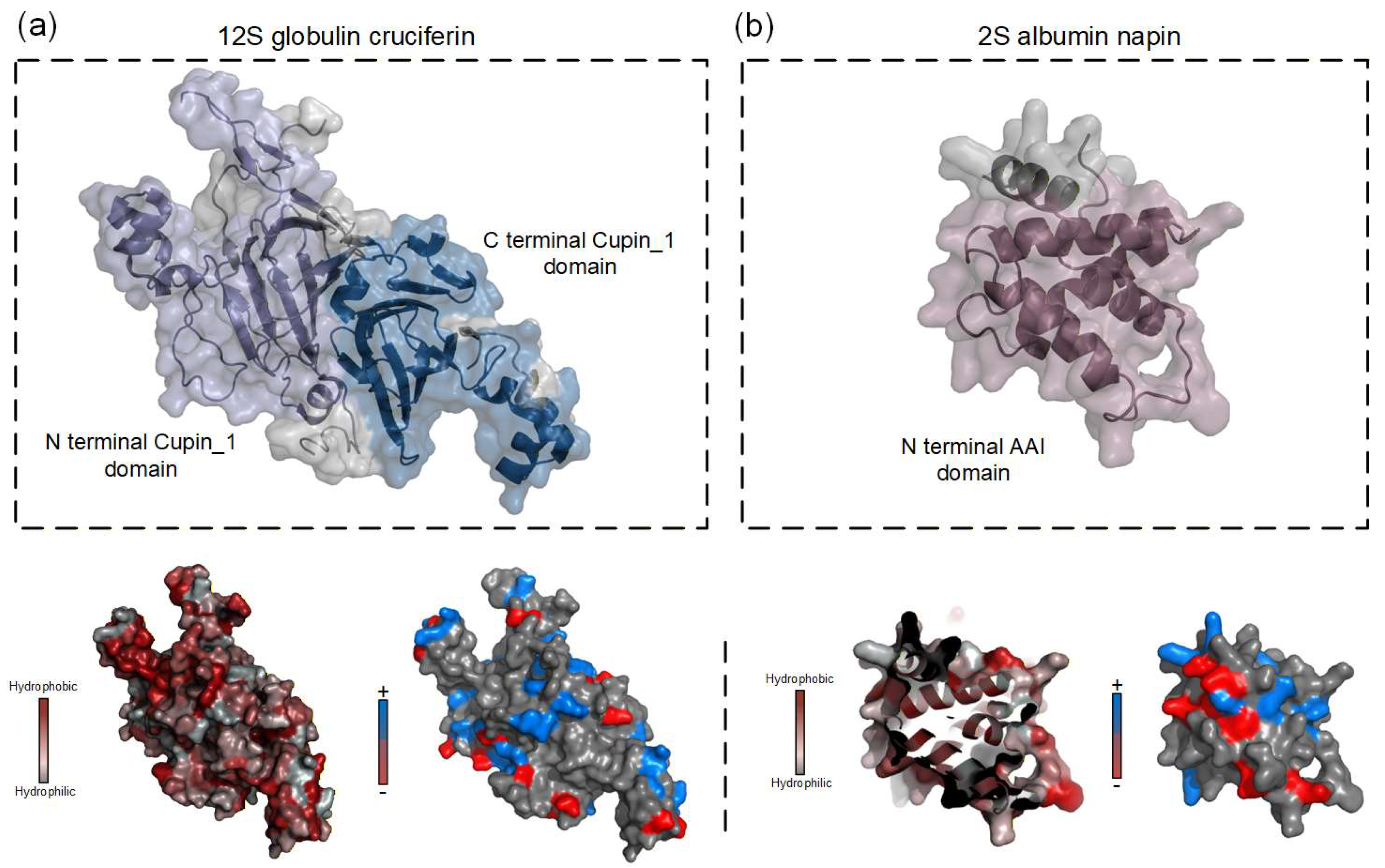
3.2. Storage Proteins
3.3. Amino Acid Composition

| Constitute | Compounds | Quantity | References |
|---|---|---|---|
| Proteins, fats and carbohydrates (%) | Total Protein | 35–45 | [8,9] |
| Carbohydrates | 29–54.7 | ||
| Fat | 2.8 | ||
| Essential amino acids (g/kg) | Isoleucine | 15.3–38 | [8,9,66,67] |
| Valine | 19.7–52 | ||
| Threonine | 17.6–45 | ||
| Lysine | 19.5–58 | ||
| Leucine | 27–66 | ||
| Methionine | 7.6–19 | ||
| Histidine | 10.1–27 | ||
| Phenylalanine | 15.3–37 | ||
| Tryptophan | 5.1–13 | ||
| Non-essential amino acids (g/kg) | Serine | 41 | [8,66,67] |
| Aspartic acid | 71 | ||
| Proline | 60 | ||
| Glycine | 48 | ||
| Glutamic acid | 173 | ||
| Tyrosine | 25 | ||
| Arginine | 58 | ||
| Alanine | 43 | ||
| Cysteine | 24 |
3.4. Other Bioactive Compounds
4. Techno Functional Properties of RSM Bioactive Compounds
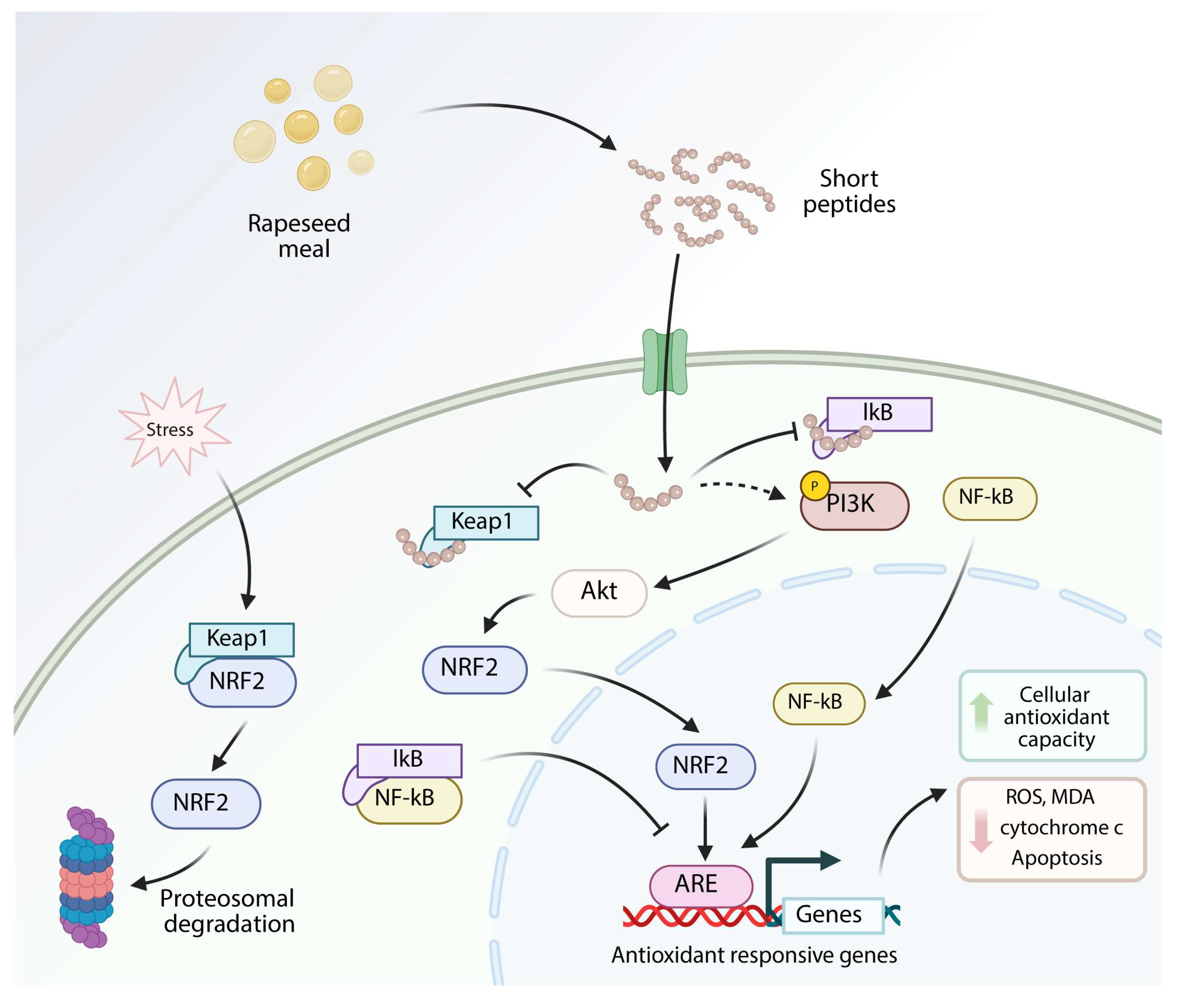
4.1. Radical-Scavenging Capacity
4.2. Anti-Inflammatory Activity
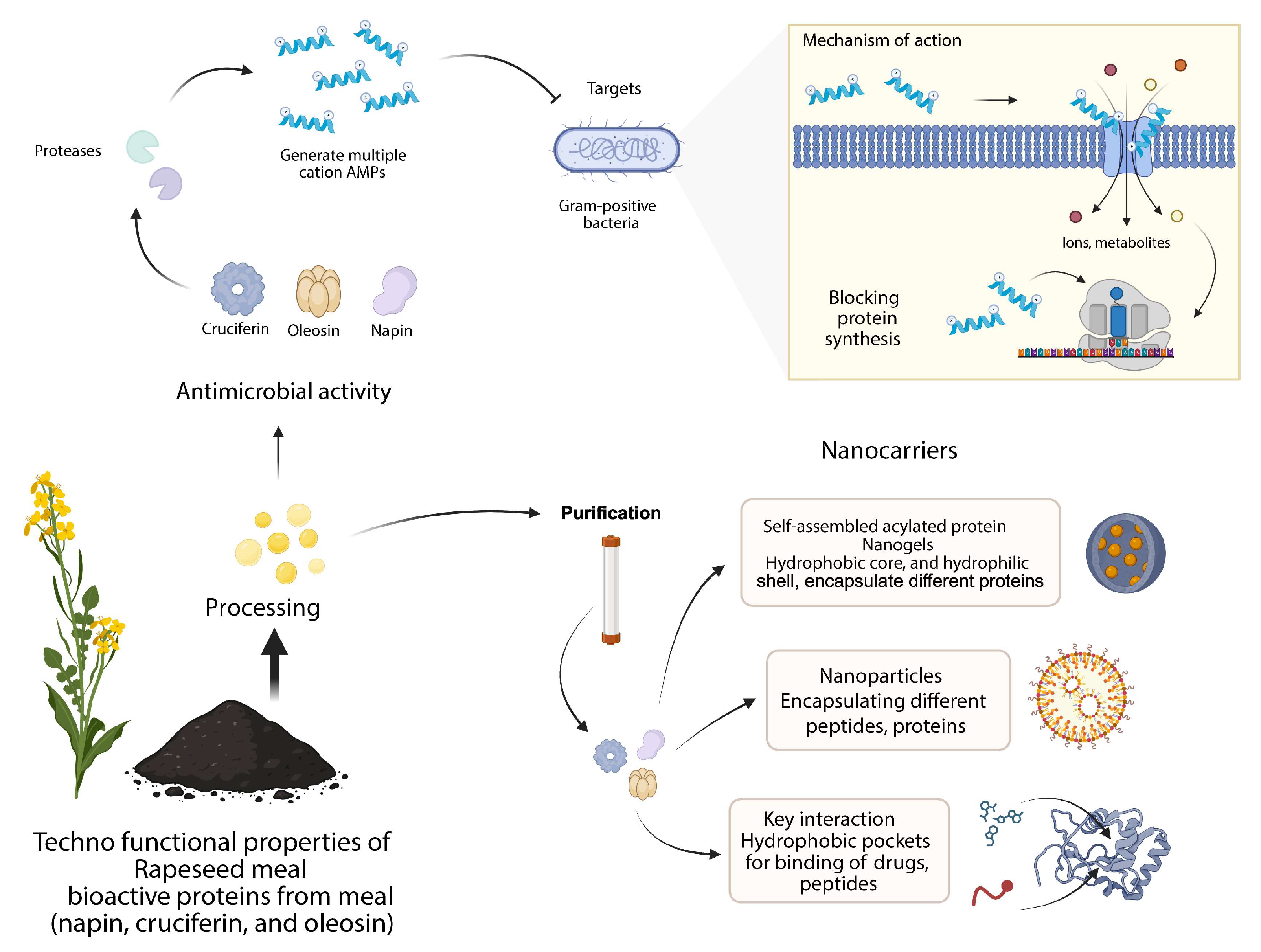
4.3. Antimicrobial Agents
| Biological Activity | RSM Bioactive Components | Study Model | Key Functional Outcomes | References |
|---|---|---|---|---|
| Antioxidant | Phenolic extracts, sinapine, sinapic acid, and protein hydrolysates | In vitro and animal model | Strong in vitro radical scavenging and ACE/renin inhibition; oral intake lowers blood pressure in SHR, suggesting in vivo antioxidant contribution alongside antihypertensive effects. | [88] |
| Anti-inflammatory | Protein hydrolysates, peptides, and fermented RSM | In vitro, cell models, and animal models | ACE-inhibitory peptides LY, RALP, and GHS reduce NO and pro-inflammatory cytokines in LPS-stimulated RAW264.7 cells and in the plasma of hypertensive rats 2.2. Napin-derived Thr-Leu (TL) shows anti-inflammatory and barrier-protective effects in the Caco-2/RAW264.7 coculture model. | [90,92] |
| Antihypertensive | ACE-inhibitory peptides and phenolic extracts | Animal models and in vitro enzyme assays | Multiple peptides show strong ACE/renin inhibition in vitro and significantly reduce systolic blood pressure in spontaneously hypertensive rats after oral intake. | [88,104,105,106,107,108,109] |
| Antimicrobial | Napin and cruciferin-derived peptides | In silico and in vitro | In silico hydrolysis identifies multiple candidate antimicrobial peptides from rapeseed proteins; purified napin shows clear antibacterial activity in vitro, while cruciferin does not, despite docking-based predictions. In silico proteomic profiling of RSM identifies rare predicted antibacterial peptides, highlighting the need for experimental confirmation. | [48,98] |
4.4. Oil Binding, Nanocarriers and Delivery Matrices
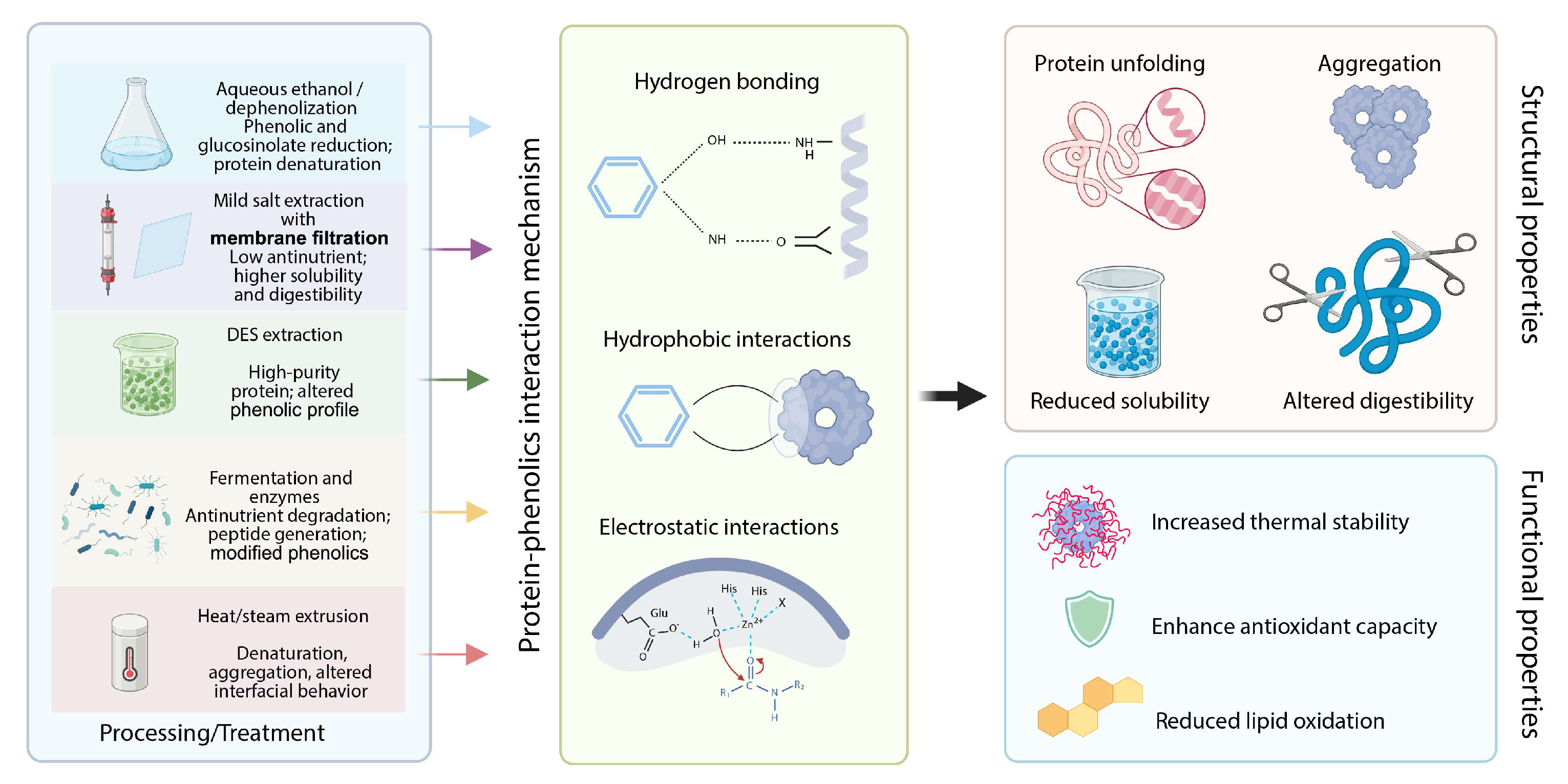
5. Protein–Phenolic Interactions and Their Impact on Structure–Function Relationships
5.1. Functional Synergy Among Phenolics and Bioactive Peptides
5.2. Molecular Mechanism of Protein–Phenolic Binding in Rapeseed Systems
5.2.1. Non-Covalent Interactions and Structural Modulation
5.2.2. Covalent Oxidative Interactions and Cross-Linking
5.3. Effects of Antinutritional Factors and Processing Strategies on Protein–Phenolic Complexes
6. Potential Application of RSM Bioactive Compounds as Functional Ingredients
6.1. Potential in Cereal, High Protein Beverages, and Dair Type Products
6.2. Potential in Extrusion-Based Foods
7. Processing Strategies to Balance Antinutritional Factors
8. Limitations and Future Prospects
Author Contributions
Funding
Data Availability Statement
Conflicts of Interest
Abbreviations
| RSM | Rapeseed meal |
| BCAAs | Branched-chain amino acids |
| DPPH | 1,1-Diphenyl-2-picrylhydrazyl |
| MAPK | Mitogen-activated protein kinase |
| JNK | N-terminal kinase |
| AP-1 | Activator protein-1 |
| NF-κB | Nuclear factor kappa-light-chain-enhancer of activated B cells |
| KEAP1 | Kelch-like ECH-associated protein 1 |
| NRF2 (Nrf2) | Nuclear factor erythroid 2-related factor 2 |
| ARE | Antioxidant response element |
| EDTA | Ethylenediaminetetraacetic acid |
| DES | Deep eutectic solvent |
| SCFA | Short-chain fatty acids |
| HPLC-MS/MS | High-performance liquid chromatography tandem mass spectrometry |
| UPLC | Ultra-performance liquid chromatography |
| Caco-2 | Human intestinal epithelial cell line |
| HT29 | Human colon adenocarcinoma cell line |
| RAW264.7 | Murine macrophage cell line RAW 264.7 |
| LPS | Lipopolysaccharides |
| kDa | Kilodalton |
| GWAS | Genome-wide association studies |
| GBS | Genotyping-by-sequencing |
References
- Tang, J.; Yao, D.; Xia, S.; Cheong, L.; Tu, M. Recent progress in plant-based proteins: From extraction and modification methods to applications in the food industry. Food Chem. X 2024, 23, 101540. [Google Scholar] [CrossRef] [PubMed]
- Wen, C.; Liu, G.; Ren, J.; Deng, Q.; Xu, X.; Zhang, J. Current progress in the extraction, functional properties, interaction with polyphenols, and application of legume protein. J. Agric. Food Chem. 2022, 70, 992–1002. [Google Scholar] [CrossRef]
- Dimina, L.; Rémond, D.; Huneau, J.-F.; Mariotti, F. Combining plant proteins to achieve amino acid profiles adapted to various nutritional objectives—An exploratory analysis using linear programming. Front. Nutr. 2022, 8, 809685. [Google Scholar] [CrossRef]
- Murphy, D.J. Agronomy and Environmental Sustainability of the Four Major Global Vegetable Oil Crops: Oil Palm, Soybean, Rapeseed, and Sunflower. Agronomy 2025, 15, 1465. [Google Scholar] [CrossRef]
- Tan, M.; Zhang, H.-B.; Ye, P.-P.; Cui, F.-J.; Chen, C.; Zhou, T.-L.; Shi, J.-C.; Zhang, W.; Shu, X.-Q.; Chen, Z.-W. Distinguishing strong, mellow and light fragrant rapeseed oils in China using physicochemical, nutritional and aroma profiles. J. Food Meas. Charact. 2023, 17, 1671–1684. [Google Scholar] [CrossRef]
- Falcetta, F.; Domingo-Olivé, F.; Capra, F.; Becchi, P.P.; Minuti, A.; Senizza, B.; Sfulcini, M.; González-Llinàs, E.; Ardenti, F.; Tabaglio, V. Optimizing rapeseed (Brassica napus L. var. oleifera) yield, nutritional profile, and functional traits: Dominant role of seasonal conditions and fertilization strategy over cultivar effects. J. Sci. Food Agric. 2026, 106, 1914–1926. [Google Scholar] [CrossRef]
- Wanasundara, J.P.; Kapel, R.; Albe-Slabi, S. Proteins from canola/rapeseed—Current status. In Sustainable Protein Sources; Elsevier: Amsterdam, The Netherlands, 2024; pp. 285–309. [Google Scholar]
- Gołębiewska, K.; Fraś, A.; Gołębiewski, D. Rapeseed meal as a feed component in monogastric animal nutrition–a review. Ann. Anim. Sci. 2022, 22, 1163–1183. [Google Scholar] [CrossRef]
- Karolina, W.-A.; Justyna, N. Rapeseed Meal as an Alternative Protein Source in Fish Feed and Its Impact on Growth Parameters, Digestive Tract, and Gut Microbiota. Animals 2025, 15, 1264. [Google Scholar] [CrossRef]
- Ding, L.-N.; Li, T.; Guo, X.-J.; Li, M.; Liu, X.-Y.; Cao, J.; Tan, X.-L. Sclerotinia stem rot resistance in rapeseed: Recent progress and future prospects. J. Agric. Food Chem. 2021, 69, 2965–2978. [Google Scholar] [CrossRef] [PubMed]
- Jia, W.; Rodriguez-Alonso, E.; Bianeis, M.; Keppler, J.K.; van der Goot, A.J. Assessing functional properties of rapeseed protein concentrate versus isolate for food applications. Innov. Food Sci. Emerg. Technol. 2021, 68, 102636. [Google Scholar] [CrossRef]
- Georgiev, R.; Kalaydzhiev, H.; Ivanova, P.; Silva, C.L.; Chalova, V.I. Multifunctionality of rapeseed meal protein isolates prepared by sequential isoelectric precipitation. Foods 2022, 11, 541. [Google Scholar] [CrossRef] [PubMed]
- Le, T.T.; Framboisier, X.; Aymes, A.; Ropars, A.; Frippiat, J.-P.; Kapel, R. Identification and capture of phenolic compounds from a rapeseed meal protein isolate production process by-product by macroporous resin and valorization their antioxidant properties. Molecules 2021, 26, 5853. [Google Scholar] [CrossRef]
- Cairone, F.; Allevi, D.; Cesa, S.; Fabrizi, G.; Goggiamani, A.; Masci, D.; Iazzetti, A. Valorisation of Side Stream Products through Green Approaches: The Rapeseed Meal Case. Foods 2023, 12, 3286. [Google Scholar] [CrossRef]
- Siger, A.; Czubinski, J.; Dwiecki, K.; Kachlicki, P.; Nogala-Kalucka, M. Identification and antioxidant activity of sinapic acid derivatives in Brassica napus L. seed meal extracts. Eur. J. Lipid Sci. Technol. 2013, 115, 1130–1138. [Google Scholar] [CrossRef]
- Wongsirichot, P.; Gonzalez-Miquel, M.; Winterburn, J. Rapeseed meal biorefining: Fractionation, valorization and integration approaches. Biocatal. Agric. Biotechnol. 2024, 62, 103460. [Google Scholar] [CrossRef]
- Wongsirichot, P.; Gonzalez-Miquel, M.; Winterburn, J. Recent advances in rapeseed meal as alternative feedstock for industrial biotechnology. Biochem. Eng. J. 2022, 180, 108373. [Google Scholar] [CrossRef]
- Shi, C.; He, J.; Yu, J.; Yu, B.; Huang, Z.; Mao, X.; Zheng, P.; Chen, D. Solid state fermentation of rapeseed cake with Aspergillus niger for degrading glucosinolates and upgrading nutritional value. J. Anim. Sci. Biotechnol. 2015, 6, 13. [Google Scholar] [CrossRef]
- Wu, J.; Xu, F.; Wu, Y.; Xiong, W.; Pan, M.; Zhang, N.; Zhou, Q.; Wang, S.; Ju, X.; Wang, L. Characterization and analysis of an oil-in-water emulsion stabilized by rapeseed protein isolate under pH and ionic stress. J. Sci. Food Agric. 2020, 100, 4734–4744. [Google Scholar] [CrossRef]
- Li, Y.; Xu, H.; Pan, J.; Mintah, B.K.; Dabbour, M.; He, R.; Ma, H. Improving the emulsification characteristics of rapeseed protein isolate by ultrasonication assisted pH shift treatment. Int. J. Biol. Macromol. 2024, 282, 137221. [Google Scholar] [CrossRef]
- Karabulut, G.; Subasi, B.G.; Ivanova, P.; Goksen, G.; Chalova, V.; Capanoglu, E. Towards sustainable and nutritional-based plant protein sources: A review on the role of rapeseed. Food Res. Int. 2025, 202, 115553. [Google Scholar] [CrossRef] [PubMed]
- Chmielewska, A.; Kozłowska, M.; Rachwał, D.; Wnukowski, P.; Amarowicz, R.; Nebesny, E.; Rosicka-Kaczmarek, J. Canola/rapeseed protein–nutritional value, functionality and food application: A review. Crit. Rev. Food Sci. Nutr. 2021, 61, 3836–3856. [Google Scholar] [CrossRef]
- Di Lena, G.; Schwarze, A.-K.; Lucarini, M.; Gabrielli, P.; Aguzzi, A.; Caproni, R.; Casini, I.; Ferrari Nicoli, S.; Genuttis, D.; Ondrejíčková, P. Application of rapeseed meal protein isolate as a supplement to texture-modified food for the elderly. Foods 2023, 12, 1326. [Google Scholar] [CrossRef] [PubMed]
- Nguyen, T.; Nioi, P.; Pickett, C.B. The Nrf2-antioxidant response element signaling pathway and its activation by oxidative stress. J. Biol. Chem. 2009, 284, 13291–13295. [Google Scholar] [CrossRef]
- Yang, S.-C.; Arasu, M.V.; Chun, J.-H.; Jang, Y.-S.; Lee, Y.-H.; Kim, I.H.; Lee, K.-T.; Hong, S.-T.; Kim, S.-J. Identification and determination of phenolic compounds in rapeseed meals (Brassica napus L.). J. Agric. Chem. Environ. 2015, 4, 10–4236. [Google Scholar] [CrossRef]
- Bhinder, G.; Sharma, S.; Kaur, H.; Akhatar, J.; Mittal, M.; Sandhu, S. Genomic regions associated with seed meal quality traits in Brassica napus germplasm. Front. Plant Sci. 2022, 13, 882766. [Google Scholar] [CrossRef]
- Reungoat, V.; Allais, F.; Ducatel, H.; Ioannou, I. Extraction and purification processes of sinapic acid derivatives from rapeseed and mustard seed by-products. Sep. Purif. Rev. 2022, 51, 521–544. [Google Scholar] [CrossRef]
- Gil-Martín, E.; Forbes-Hernández, T.; Romero, A.; Cianciosi, D.; Giampieri, F.; Battino, M. Influence of the extraction method on the recovery of bioactive phenolic compounds from food industry by-products. Food Chem. 2022, 378, 131918. [Google Scholar] [CrossRef] [PubMed]
- Yates, K.; Pohl, F.; Busch, M.; Mozer, A.; Watters, L.; Shiryaev, A.; Lin, P.K.T. Determination of sinapine in rapeseed pomace extract: Its antioxidant and acetylcholinesterase inhibition properties. Food Chem. 2019, 276, 768–775. [Google Scholar] [CrossRef] [PubMed]
- Gao, Q.; Li, Y.; Li, Y.; Zhang, Z.; Liang, Y. Antioxidant and prooxidant activities of phenolic acids commonly existed in vegetables and their relationship with structures. Food Sci. Technol. 2022, 42, e07622. [Google Scholar] [CrossRef]
- Zago, E.; Lecomte, J.; Barouh, N.; Aouf, C.; Carré, P.; Fine, F.; Villeneuve, P. Influence of rapeseed meal treatments on its total phenolic content and composition in sinapine, sinapic acid and canolol. Ind. Crops Prod. 2015, 76, 1061–1070. [Google Scholar] [CrossRef]
- Nandasiri, R.; Fadairo, O.; Nguyen, T.; Zago, E.; Anas, M.M.; Eskin, N.M. Optimization of canolol production from canola meal using microwave digestion as a pre-treatment method. Foods 2023, 12, 318. [Google Scholar] [CrossRef]
- Oskoueian, E.; Abdullah, N.; Hendra, R.; Karimi, E. Bioactive compounds, antioxidant, xanthine oxidase inhibitory, tyrosinase inhibitory and anti-inflammatory activities of selected agro-industrial by-products. Int. J. Mol. Sci. 2011, 12, 8610–8625. [Google Scholar] [CrossRef]
- Liu, H.; Li, Z.; Xia, X.; Zhang, R.; Wang, W.; Xiang, X. Chemical profile of phenolic extracts from rapeseed meal and inhibitory effects on α-glucosidase: UPLC-MS/MS analysis, multispectral approaches, molecular simulation and ADMET analysis. Food Res. Int. 2023, 174, 113517. [Google Scholar] [CrossRef]
- Zhang, Y.; Lv, X.; Wang, D.; Zheng, C.; Chen, H.; Yuan, Y.; Wei, F. Metabolomics combined with biochemical analyses revealed phenolic profiles and antioxidant properties of rapeseeds. Food Chem. 2025, 466, 142250. [Google Scholar] [CrossRef] [PubMed]
- Qu, C.; Yin, N.; Chen, S.; Wang, S.; Chen, X.; Zhao, H.; Shen, S.; Fu, F.; Zhou, B.; Xu, X. Comparative analysis of the metabolic profiles of yellow-versus black-seeded rapeseed using UPLC–HESI–MS/MS and transcriptome analysis. J. Agric. Food Chem. 2020, 68, 3033–3049. [Google Scholar] [CrossRef]
- Petraru, A.; Amariei, S. Rapeseed—An Important Oleaginous Plant in the Oil Industry and the Resulting Meal a Valuable Source of Bioactive Compounds. Plants 2024, 13, 3085. [Google Scholar] [CrossRef]
- Di Lena, G.; Sanchez del Pulgar, J.; Lucarini, M.; Durazzo, A.; Ondrejíčková, P.; Oancea, F.; Frincu, R.-M.; Aguzzi, A.; Ferrari Nicoli, S.; Casini, I. Valorization potentials of rapeseed meal in a biorefinery perspective: Focus on nutritional and bioactive components. Molecules 2021, 26, 6787. [Google Scholar] [CrossRef] [PubMed]
- Tarahi, M.; Gharagozlou, M.; Niakousari, M.; Hedayati, S. Protein–chlorogenic acid interactions: Mechanisms, characteristics, and potential food applications. Antioxidants 2024, 13, 777. [Google Scholar] [CrossRef] [PubMed]
- Mattila, P.H.; Pihlava, J.-M.; Hellström, J.; Nurmi, M.; Eurola, M.; Mäkinen, S.; Jalava, T.; Pihlanto, A. Contents of phytochemicals and antinutritional factors in commercial protein-rich plant products. Food Qual. Saf. 2018, 2, 213–219. [Google Scholar] [CrossRef]
- Perera, S.P.; McIntosh, T.C.; Wanasundara, J.P. Structural properties of cruciferin and napin of Brassica napus (canola) show distinct responses to changes in pH and temperature. Plants 2016, 5, 36. [Google Scholar] [CrossRef]
- Garbacz, K.; Wawrzykowski, J.; Czelej, M.; Waśko, A. In Silico Proteomic Profiling and Bioactive Peptide Potential of Rapeseed Meal. Foods 2025, 14, 2451. [Google Scholar] [CrossRef] [PubMed]
- Rödin, J.; Rask, L. Characterization of the 12S storage protein of Brassica napus (cruciferin): Disulfide bonding between subunits. Physiol. Plant. 1990, 79, 421–426. [Google Scholar] [CrossRef]
- Ahlström, C.; Thuvander, J.; Rayner, M.; Matos, M.; Gutiérrez, G.; Östbring, K. The effect of precipitation pH on protein recovery yield and emulsifying properties in the extraction of protein from cold-pressed rapeseed press cake. Molecules 2022, 27, 2957. [Google Scholar] [CrossRef]
- Zhu, H.; Wang, L.; Li, X.; Shi, J.; Scanlon, M.; Xue, S.; Nosworthy, M.; Vafaei, N. Canola seed protein: Pretreatment, extraction, structure, physicochemical and functional characteristics. Foods 2024, 13, 1357. [Google Scholar] [CrossRef]
- Wan, L.; Ross, A.R.; Yang, J.; Hegedus, D.D.; Kermode, A.R. Phosphorylation of the 12 S globulin cruciferin in wild-type and abi1-1 mutant Arabidopsis thaliana (thale cress) seeds. Biochem. J. 2007, 404, 247–256. [Google Scholar] [CrossRef] [PubMed]
- Đermanović, B.; Marić, A.; Sakač, M.; Tomić, D.; Dragojlović, D.; Popović, L.; Šarić, B.; Jovanov, P. Impact of alkaline and deep eutectic solvent extraction on rapeseed protein isolates characteristics and in vitro digestibility. Curr. Res. Food Sci. 2025, 10, 101075. [Google Scholar] [CrossRef]
- Rahman, M.; Browne, J.J.; Van Crugten, J.; Hasan, M.F.; Liu, L.; Barkla, B.J. In silico, molecular docking and in vitro antimicrobial activity of the major rapeseed seed storage proteins. Front. Pharmacol. 2020, 11, 1340. [Google Scholar] [CrossRef]
- Antonini, G.; Pitari, G.; Caccuri, A.M.; Ricci, G.; Boschi, D.; Fruttero, R.; Gasco, A.; Ascenzi, P. Inhibition of human Placenta Glutathione transferase Pl-1 by the antibiotic calvatic acid and its diazocyanide analogue: Evidence for multiple catalytic intermediates. Eur. J. Biochem. 1997, 245, 663–667. [Google Scholar] [CrossRef]
- Wu, J.; Muir, A. Comparative structural, emulsifying, and biological properties of 2 major canola proteins, cruciferin and napin. J. Food Sci. 2008, 73, C210–C216. [Google Scholar] [CrossRef]
- Yang, J.; Shen, P.; de Groot, A.; Mocking-Bode, H.C.; Nikiforidis, C.V.; Sagis, L.M. Oil-water interface and emulsion stabilising properties of rapeseed proteins napin and cruciferin studied by nonlinear surface rheology. J. Colloid Interface Sci. 2024, 662, 192–207. [Google Scholar] [CrossRef]
- Shen, P.; Yang, J.; Nikiforidis, C.V.; Mocking-Bode, H.C.; Sagis, L.M. Cruciferin versus napin–air-water interface and foam stabilizing properties of rapeseed storage proteins. Food Hydrocoll. 2023, 136, 108300. [Google Scholar] [CrossRef]
- Ntone, E.; Kornet, R.; Venema, P.; Meinders, M.B.; van der Linden, E.; Bitter, J.H.; Sagis, L.M.; Nikiforidis, C.V. Napins and cruciferins in rapeseed protein extracts have complementary roles in structuring emulsion-filled gels. Food Hydrocoll. 2022, 125, 107400. [Google Scholar] [CrossRef]
- Puumalainen, T.J.; Poikonen, S.; Kotovuori, A.; Vaali, K.; Kalkkinen, N.; Reunala, T.; Turjanmaa, K.; Palosuo, T. Napins, 2S albumins, are major allergens in oilseed rape and turnip rape. J. Allergy Clin. Immunol. 2006, 117, 426–432. [Google Scholar] [CrossRef] [PubMed]
- Rahman, M.; Baten, A.; Mauleon, R.; King, G.J.; Liu, L.; Barkla, B.J. Identification, characterization and epitope mapping of proteins encoded by putative allergenic napin genes from Brassica rapa. Clin. Exp. Allergy 2020, 50, 848–868. [Google Scholar] [CrossRef] [PubMed]
- Fiocchi, A.; Dahdah, L.; Riccardi, C.; Mazzina, O.; Fierro, V. Preacutionary labelling of cross-reactive foods: The case of rapeseed. Asthma Res. Pract. 2016, 2, 13. [Google Scholar] [CrossRef] [PubMed]
- Puumalainen, T.; Puustinen, A.; Poikonen, S.; Turjanmaa, K.; Palosuo, T.; Vaali, K. Proteomic identification of allergenic seed proteins, napin and cruciferin, from cold-pressed rapeseed oils. Food Chem. 2015, 175, 381–385. [Google Scholar] [CrossRef]
- Arrutia, F.; Binner, E.; Williams, P.; Waldron, K.W. Oilseeds beyond oil: Press cakes and meals supplying global protein requirements. Trends Food Sci. Technol. 2020, 100, 88–102. [Google Scholar] [CrossRef]
- Ye, Z.; Hu, F.; Zhang, W.; Fang, D.; Dong, K.; Cao, J. Amino acid transporters of Brassica napus: Identification, evolution, expression and response to various stresses. Ind. Crops Prod. 2023, 194, 116338. [Google Scholar] [CrossRef]
- Tessier, R.; Calvez, J.; Airinei, G.; Khodorova, N.; Dauguet, S.; Galet, O.; Chapelais, M.; Tomé, D.; Benamouzig, R.; Gaudichon, C. Digestive and metabolic bioavailability in healthy humans of 15N-labeled rapeseed and flaxseed protein incorporated in biscuits. Am. J. Clin. Nutr. 2023, 117, 896–902. [Google Scholar] [CrossRef]
- Bailey, H.M.; Fanelli, N.S.; Stein, H.H. Effect of heat treatment on protein quality of rapeseed protein isolate compared with non-heated rapeseed isolate, soy and whey protein isolates, and rice and pea protein concentrates. J. Sci. Food Agric. 2023, 103, 7251–7259. [Google Scholar] [CrossRef]
- Kapel, R.; Niquet-Léridon, C.; Tessier, F.; Mession, J.-L.; Buffière, C.; Hafnaoui, N.; Migné, C.; Houinsou-Houssou, B.; Riaublanc, A.; Solé, V. True ileal amino acid digestibility and digestible amino acid scores (DIAASs) of the cruciferin and napin fractions of rapeseed: Impact of processing. Food Chem. 2025, 474, 143161. [Google Scholar] [CrossRef] [PubMed]
- Hafeez, Z.; Beaubier, S.; Aymes, A.; Christophe, S.; Akbar, S.; Kapel, R.; Miclo, L. Study on Rapeseed Albumin Hydrolysis by PrtS Protease from Streptococcus thermophilus and Bioactivity Characterization of Resulting Hydrolysates. Foods 2025, 14, 2235. [Google Scholar] [CrossRef]
- Spaccasassi, A.; Walser, C.; Nisov, A.; Sozer, N.; Frank, O.; Dawid, C.; Hofmann, T.F. Reducing the Bitterness of Rapeseed Protein: Integrating Enzymatic Treatment, Metabolomics, and Sensory Analysis to Elucidate Underlying Mechanisms. J. Agric. Food Chem. 2025, 73, 3657–3668. [Google Scholar] [CrossRef]
- Nisov, A.; Valtonen, A.; Aisala, H.; Spaccasassi, A.; Walser, C.; Dawid, C.; Sozer, N. Effect of peptide formation during rapeseed fermentation on meat analogue structure and sensory properties at different pH conditions. Food Res. Int. 2024, 180, 114070. [Google Scholar] [CrossRef] [PubMed]
- Florou-Paneri, P.; Christaki, E.; Giannenas, I.; Bonos, E.; Skoufos, I.; Tsinas, A.; Tzora, A.; Peng, J. Alternative protein sources to soybean meal in pig diets. J. Food Agric. Env. 2014, 12, 655–666. [Google Scholar]
- Ivanova, P.; Kalaydzhiev, H.; Rustad, T.; Silva, C.L.; Chalova, V. Comparative biochemical profile of protein-rich products obtained form industrial rapeseed meal. Emir. J. Food Agric. 2017, 29, 170–178. [Google Scholar] [CrossRef]
- Yang, Z.; Huang, Z.; Cao, L. Biotransformation technology and high-value application of rapeseed meal: A review. Bioresour. Bioprocess. 2022, 9, 103. [Google Scholar] [CrossRef]
- Đermanovć, B.; Vujetić, J.; Sedlar, T.; Dragojlović, D.; Popović, L.; Kojić, P.; Jovanov, P.; Šarić, B. Optimization of Protein Extraction from Rapeseed Oil Cake by Dephenolization Process for Scale-Up Application Using Artificial Neural Networks. Foods 2025, 14, 1762. [Google Scholar] [CrossRef]
- Zhang, Z.; Chen, J.; Zheng, L.; Zhao, J.; Guo, N.; Fang, X.; Lu, X.; Zhang, F.; Zhu, G. The potential meat flavoring derived from Maillard reaction products of rice protein isolate hydrolysate-xylose via the regulation of temperature and cysteine. Food Chem. X 2024, 22, 101491. [Google Scholar] [CrossRef]
- Axentii, M.; Codină, G.G. Exploring the nutritional potential and functionality of hemp and rapeseed proteins: A review on unveiling anti-nutritional factors, bioactive compounds, and functional attributes. Plants 2024, 13, 1195. [Google Scholar] [CrossRef]
- Luo, S.; An, R.; Zhou, H.; Zhang, Y.; Ling, J.; Hu, H.; Li, P. The glucosinolate profiles of Brassicaceae vegetables responded differently to quick-freezing and drying methods. Food Chem. 2022, 383, 132624. [Google Scholar] [CrossRef]
- Sun, Y.; Tang, Z.; Hao, T.; Qiu, Z.; Zhang, B. Simulated digestion and fermentation in vitro by obese human gut microbiota of sulforaphane from broccoli seeds. Foods 2022, 11, 4016. [Google Scholar] [CrossRef]
- He, W.S.; Rui, J.; Wang, Q.; Chen, Z.Y. Antioxidant activity of piceatannol in canola oil. Eur. J. Lipid Sci. Technol. 2021, 123, 2000398. [Google Scholar] [CrossRef]
- Manikandan, A.; Muthusamy, S.; Wang, E.S.; Ivarson, E.; Manickam, S.; Sivakami, R.; Narayanan, M.B.; Zhu, L.-H.; Rajasekaran, R.; Kanagarajan, S. Breeding and biotechnology approaches to enhance the nutritional quality of rapeseed byproducts for sustainable alternative protein sources-a critical review. Front. Plant Sci. 2024, 15, 1468675. [Google Scholar] [CrossRef]
- Zhou, C.; Pan, W.; Peng, Q.; Chen, Y.; Zhou, T.; Wu, C.; Hartley, W.; Li, J.; Xu, M.; Liu, C. Characteristics of metabolites by seed-specific inhibition of FAD2 in Brassica napus L. J. Agric. Food Chem. 2021, 69, 5452–5462. [Google Scholar] [CrossRef]
- Chen, C.; Ye, P.-P.; Cui, F.-J.; Tan, M.; Zhang, H.-B.; Zhou, T.-L.; Shi, J.-C.; Shu, X.-Q.; Chen, Z.-W. Overall quality changes and deterioration mechanism of fragrant rapeseed oils during 6-Month storage. Food Chem. 2024, 439, 138116. [Google Scholar] [CrossRef]
- Ding, Q.; Jiang, H.; Chen, Y.; Luo, L.; He, R.; Ma, H.; Wu-Chen, R.A.; Zhang, T. Influence of nitrogen protection on the extraction yield and antioxidant activities of polyphenols by ultrasonic-assisted extraction from rapeseed meal. J. Food Process Eng. 2019, 42, e13104. [Google Scholar] [CrossRef]
- Platzer, M.; Kiese, S.; Asam, T.; Schneider, F.; Tybussek, T.; Herfellner, T.; Schweiggert-Weisz, U.; Eisner, P. Quantitative structure-property relationship (QSPR) of plant phenolic compounds in rapeseed oil and comparison of antioxidant measurement methods. Processes 2022, 10, 1281. [Google Scholar] [CrossRef]
- Pan, M.; Jiang, T.S.; Pan, J.L. Antioxidant activities of rapeseed protein hydrolysates. Food Bioprocess Technol. 2011, 4, 1144–1152. [Google Scholar] [CrossRef]
- Liu, D.; Guo, Y.; Ma, H. Production, bioactivities and bioavailability of bioactive peptides derived from walnut origin by-products: A review. Crit. Rev. Food Sci. Nutr. 2023, 63, 8032–8047. [Google Scholar] [CrossRef]
- Zou, T.-B.; He, T.-P.; Li, H.-B.; Tang, H.-W.; Xia, E.-Q. The structure-activity relationship of the antioxidant peptides from natural proteins. Molecules 2016, 21, 72. [Google Scholar] [CrossRef]
- Wen, C.; Zhang, J.; Zhang, H.; Duan, Y.; Ma, H. Plant protein-derived antioxidant peptides: Isolation, identification, mechanism of action and application in food systems: A review. Trends Food Sci. Technol. 2020, 105, 308–322. [Google Scholar] [CrossRef]
- Zhou, C.; Yu, X.; Qin, X.; Ma, H.; Yagoub, A.E.A.; Hu, J. Hydrolysis of rapeseed meal protein under simulated duodenum digestion: Kinetic modeling and antioxidant activity. LWT-Food Sci. Technol. 2016, 68, 523–531. [Google Scholar] [CrossRef]
- Wen, C.; Zhang, J.; Zhang, H.; Duan, Y.; Ma, H. Study on the structure–activity relationship of watermelon seed antioxidant peptides by using molecular simulations. Food Chem. 2021, 364, 130432. [Google Scholar] [CrossRef]
- Hu, Y.; Wang, Y.; Li, A.; Wang, Z.; Zhang, X.; Yun, T.; Qiu, L.; Yin, Y. Effects of fermented rapeseed meal on antioxidant functions, serum biochemical parameters and intestinal morphology in broilers. Food Agric. Immunol. 2016, 27, 182–193. [Google Scholar] [CrossRef]
- Zhang, X.; Wang, H.; Zhang, J.; Lin, B.; Chen, L.; Wang, Q.; Li, G.; Deng, J. Assessment of rapeseed meal as fish meal alternative in diets for juvenile Asian red-tailed catfish (Hemibagrus wyckioides). Aquac. Rep. 2020, 18, 100497. [Google Scholar] [CrossRef]
- He, R.; Alashi, A.; Malomo, S.A.; Girgih, A.T.; Chao, D.; Ju, X.; Aluko, R.E. Antihypertensive and free radical scavenging properties of enzymatic rapeseed protein hydrolysates. Food Chem. 2013, 141, 153–159. [Google Scholar] [CrossRef]
- Yan, H.; He, L.; Lv, D.; Yang, J.; Yuan, Z. The role of the dysregulated JNK signaling pathway in the pathogenesis of human diseases and its potential therapeutic strategies: A comprehensive review. Biomolecules 2024, 14, 243. [Google Scholar] [CrossRef]
- Zhang, J.; Yao, Y.; Xu, F.; Yuan, Q.; Ju, X.; Wang, L. Anti-inflammatory and transepithelial transport activities of rapeseed (Brassica napus) napin-derived dipeptide Thr-Leu in Caco-2 and RAW264. 7 cocultures. J. Agric. Food Chem. 2023, 71, 8437–8447. [Google Scholar] [CrossRef]
- Han, R.; Alvarez, A.J.H.; Maycock, J.; Murray, B.S.; Boesch, C. Differential effects of oilseed protein hydrolysates in attenuating inflammation in murine macrophages. Food Biosci. 2022, 49, 101860. [Google Scholar] [CrossRef]
- He, R.; Wang, Y.; Yang, Y.; Wang, Z.; Ju, X.; Yuan, J. Rapeseed protein-derived ACE inhibitory peptides LY, RALP and GHS show antioxidant and anti-inflammatory effects on spontaneously hypertensive rats. J. Funct. Foods 2019, 55, 211–219. [Google Scholar] [CrossRef]
- Ding, Q.; Wu, R.A.; Yin, L.; Zhang, W.; He, R.; Zhang, T.; Jiang, H.; Luo, L.; Ma, H.; Dai, C. Antioxidation and memory protection effects of solid-state-fermented rapeseed meal peptides on D-galactose-induced memory impairment in aging-mice. J. Food Process Eng. 2019, 42, e13145. [Google Scholar] [CrossRef]
- Taranu, I.; Pistol, G.C.; Anghel, A.C.; Marin, D.; Bulgaru, C. Yeast-fermented rapeseed meal extract is able to reduce inflammation and oxidative stress caused by Escherichia coli lipopolysaccharides and to replace zno in Caco-2/Htx29 co-culture cells. Int. J. Mol. Sci. 2022, 23, 11640. [Google Scholar] [CrossRef]
- Wang, Y.; Sun, H.; Liu, X. A novel fermented rapeseed meal, inoculated with selected protease-assisting screened B. subtilis YY-4 and L. plantarum 6026, showed high availability and strong antioxidant and immunomodulation potential capacity. Foods 2022, 11, 2118. [Google Scholar] [CrossRef]
- Tkaczenko, H.; Kurhaluk, N. Antioxidant-rich functional foods and exercise: Unlocking metabolic health through Nrf2 and related pathways. Int. J. Mol. Sci. 2025, 26, 1098. [Google Scholar] [CrossRef]
- Liu, S.; Pi, J.; Zhang, Q. Signal amplification in the KEAP1-NRF2-ARE antioxidant response pathway. Redox Biol. 2022, 54, 102389. [Google Scholar] [CrossRef]
- Duan, X.; Zhang, M.; Chen, F. Prediction and analysis of antimicrobial peptides from rapeseed protein using in silico approach. J. Food Biochem. 2021, 45, e13598. [Google Scholar] [CrossRef]
- Contreras, G.; Barahona, S.; Sepúlveda, D.; Baeza, M.; Cifuentes, V.; Alcaino, J. Identification and analysis of metabolite production with biotechnological potential in Xanthophyllomyces dendrorhous isolates. World J. Microbiol. Biotechnol. 2015, 31, 517–526. [Google Scholar] [CrossRef]
- Ahmed, T.A.; Hammami, R. Recent insights into structure–function relationships of antimicrobial peptides. J. Food Biochem. 2019, 43, e12546. [Google Scholar] [CrossRef]
- Kaugarenia, N.; Beaubier, S.; Durand, E.; Aymes, A.; Villeneuve, P.; Lesage, F.; Kapel, R. Optimization of selective hydrolysis of cruciferins for production of potent mineral chelating peptides and napins purification to valorize total rapeseed meal proteins. Foods 2022, 11, 2618. [Google Scholar] [CrossRef]
- Yan, J.; Cai, J.; Zhang, B.; Wang, Y.; Wong, D.F.; Siu, S.W. Recent progress in the discovery and design of antimicrobial peptides using traditional machine learning and deep learning. Antibiotics 2022, 11, 1451. [Google Scholar] [CrossRef]
- Kaugarenia, N.; Beaubier, S.; Durand, E.; Lesage, F.; Framboisier, X.; Aymes, A.; Villeneuve, P.; Kapel, R. Optimization of potent mineral chelating peptides production from rapeseed meal proteins proteolysis and peptide characterizations. J. Am. Oil Chem. Soc. 2022, 99, 167–168. [Google Scholar]
- Mäkinen, S.; Streng, T.; Larsen, L.B.; Laine, A.; Pihlanto, A. Angiotensin I-converting enzyme inhibitory and antihypertensive properties of potato and rapeseed protein-derived peptides. J. Funct. Foods 2016, 25, 160–173. [Google Scholar] [CrossRef]
- Marczak, E.D.; Usui, H.; Fujita, H.; Yang, Y.; Yokoo, M.; Lipkowski, A.W.; Yoshikawa, M. New antihypertensive peptides isolated from rapeseed. Peptides 2003, 24, 791–798. [Google Scholar] [CrossRef]
- He, R.; Aluko, R.E.; Ju, X.-R. Evaluating molecular mechanism of hypotensive peptides interactions with renin and angiotensin converting enzyme. PLoS ONE 2014, 9, e91051. [Google Scholar] [CrossRef]
- He, R.; Yang, Y.-J.; Wang, Z.; Xing, C.-R.; Yuan, J.; Wang, L.-F.; Udenigwe, C.; Ju, X.-R. Rapeseed protein-derived peptides, LY, RALP, and GHS, modulates key enzymes and intermediate products of renin–angiotensin system pathway in spontaneously hypertensive rat. npj Sci. Food 2019, 3, 1. [Google Scholar] [CrossRef]
- Wang, Y.; Li, Y.; Ruan, S.; Lu, F.; Tian, W.; Ma, H. Antihypertensive effect of rapeseed peptides and their potential in improving the effectiveness of captopril. J. Sci. Food Agric. 2021, 101, 3049–3055. [Google Scholar] [CrossRef]
- Duan, X.; Dong, Y.; Zhang, M.; Li, Z.; Bu, G.; Chen, F. Identification and molecular interactions of novel ACE inhibitory peptides from rapeseed protein. Food Chem. 2023, 422, 136085. [Google Scholar] [CrossRef]
- Zhang, Z.; He, S.; Liu, H.; Sun, X.; Ye, Y.; Cao, X.; Wu, Z.; Sun, H. Effect of pH regulation on the components and functional properties of proteins isolated from cold-pressed rapeseed meal through alkaline extraction and acid precipitation. Food Chem. 2020, 327, 126998. [Google Scholar] [CrossRef]
- Kalaydzhiev, H.; Ivanova, P.; Stoyanova, M.; Pavlov, A.; Rustad, T.; Silva, C.L.; Chalova, V.I. Valorization of rapeseed meal: Influence of ethanol antinutrients removal on protein extractability, amino acid composition and fractional profile. Waste Biomass Valorization 2020, 11, 2709–2719. [Google Scholar] [CrossRef]
- Yang, J.; Peng, D.; Jin, W.; Geng, F.; Cheng, C.; Wang, L.; Zhang, H.; Duan, Y.; Deng, Q. Redesign of air/oil-water interface via physical fields coupled with pH shifting to improve the emulsification, foaming, and digestion properties of plant proteins. Crit. Rev. Food Sci. Nutr. 2025, 65, 1093–1108. [Google Scholar] [CrossRef]
- Gu, H.; Lv, R.; Huang, X.; Chen, Q.; Dong, Y. Rapid quantitative assessment of lipid oxidation in a rapeseed oil-in-water (o/w) emulsion by three-dimensional fluorescence spectroscopy. J. Food Compos. Anal. 2022, 114, 104762. [Google Scholar] [CrossRef]
- Arnecke, J.; Gillmann, J.; Börner, T.; Hafner, M.; Frech, C. Optimizing rapeseed protein purification: A continuous chromatographic approach for napin and cruciferin. J. Chem. Technol. Biotechnol. 2025. [Google Scholar] [CrossRef]
- Hadidi, M.; Tan, C.; Assadpour, E.; Kharazmi, M.S.; Jafari, S.M. Emerging plant proteins as nanocarriers of bioactive compounds. J. Control. Release 2023, 355, 327–342. [Google Scholar] [CrossRef] [PubMed]
- Wang, Y.; Li, M.; Wen, X.; Tao, H.; Wang, K.; Fu, R.; Tao, H.; Wang, F.; Chen, N.; Ni, Y. Conformational changes and the formation of new bonds achieving robust nanoemulsions by electrostatic interactions between whey protein isolate and chondroitin sulfate. Food Hydrocoll. 2023, 136, 108263. [Google Scholar] [CrossRef]
- Wang, Z.; Zhang, R.X.; Zhang, C.; Dai, C.; Ju, X.; He, R. Fabrication of stable and self-assembling rapeseed protein nanogel for hydrophobic curcumin delivery. J. Agric. Food Chem. 2019, 67, 887–894. [Google Scholar] [CrossRef] [PubMed]
- Wen, C.; Zhang, J.; Zhang, H.; Duan, Y. New perspective on natural plant protein-based nanocarriers for bioactive ingredients delivery. Foods 2022, 11, 1701. [Google Scholar] [CrossRef] [PubMed]
- Shi, W.; Xie, H.; Ouyang, K.; Wang, S.; Xiong, H.; Woo, M.W.; Zhao, Q. The effect of rice protein-polyphenols covalent and non-covalent interactions on the structure, functionality and in vitro digestion properties of rice protein. Food Chem. 2024, 450, 139241. [Google Scholar] [CrossRef]
- Zhang, Q.; Cheng, Z.; Wang, Y.; Fu, L. Dietary protein-phenolic interactions: Characterization, biochemical-physiological consequences, and potential food applications. Crit. Rev. Food Sci. Nutr. 2021, 61, 3589–3615. [Google Scholar] [CrossRef]
- Voudouris, P.; Mocking-Bode, H.C.; Sagis, L.M.; Nikiforidis, C.V.; Meinders, M.B.; Yang, J. Effect of membrane filtration and direct steam injection on mildly refined rapeseed protein solubility, air-water interfacial and foaming properties. Food Hydrocoll. 2025, 160, 110754. [Google Scholar] [CrossRef]
- Ntone, E.; Qu, Q.; Gani, K.P.; Meinders, M.B.; Sagis, L.M.; Bitter, J.H.; Nikiforidis, C.V. Sinapic acid impacts the emulsifying properties of rapeseed proteins at acidic pH. Food Hydrocoll. 2022, 125, 107423. [Google Scholar] [CrossRef]
- Vidal, N.P.; Roman, L.; Swaraj, V.S.; Ragavan, K.; Simsek, S.; Rahimi, J.; Kroetsch, B.; Martinez, M.M. Enhancing the nutritional value of cold-pressed oilseed cakes through extrusion cooking. Innov. Food Sci. Emerg. Technol. 2022, 77, 102956. [Google Scholar] [CrossRef]
- Jiang, J.; Nie, Y.; Sun, X.; Xiong, Y.L. Partial removal of phenolics coupled with alkaline pH shift improves canola protein interfacial properties and emulsion in in vitro digestibility. Foods 2021, 10, 1283. [Google Scholar] [CrossRef]
- Hao, L.; Sun, J.; Pei, M.; Zhang, G.; Li, C.; Li, C.; Ma, X.; He, S.; Liu, L. Impact of non-covalent bound polyphenols on conformational, functional properties and in vitro digestibility of pea protein. Food Chem. 2022, 383, 132623. [Google Scholar] [CrossRef]
- Li, D.; Zhu, L.; Wu, Q.; Chen, Y.; Wu, G.; Zhang, H. Identification of binding sites for Tartary buckwheat protein-phenols covalent complex and alterations in protein structure and antioxidant properties. Int. J. Biol. Macromol. 2023, 233, 123436. [Google Scholar] [CrossRef]
- Zhang, M.; Wang, O.; Cai, S.; Zhao, L.; Zhao, L. Composition, functional properties, health benefits and applications of oilseed proteins: A systematic review. Food Res. Int. 2023, 171, 113061. [Google Scholar] [CrossRef]
- Zhu, X.; Chen, Y.; Hao, S.; Jin, S.; Li, X. Improvement of the Nutritional Quality of Rapeseed Meal through Solid-State Fermentation with B. subtilis, S. cerevisiae, and B. amyloliquefaciens. Fermentation 2023, 9, 492. [Google Scholar] [CrossRef]
- Wang, Y.; Sun, H.; Han, B.; Li, H.; Liu, X. Improvement of nutritional value, molecular weight patterns (soluble peptides), free amino acid patterns, total phenolics and antioxidant activity of fermented extrusion pretreatment rapeseed meal with Bacillus subtilis YY-1 and Saccharomyces cerevisiae YY-2. LWT 2022, 160, 113280. [Google Scholar] [CrossRef]
- Betchem, G.; Dabbour, M.; Tuly, J.A.; Lu, F.; Liu, D.; Monto, A.R.; Dusabe, K.D.; Ma, H. Effect of magnetic field-assisted fermentation on the in vitro protein digestibility and molecular structure of rapeseed meal. J. Sci. Food Agric. 2024, 104, 3883–3893. [Google Scholar] [CrossRef]
- Tian, Y.; Zhou, Y.; Kriisa, M.; Anderson, M.; Laaksonen, O.; Kütt, M.-L.; Föste, M.; Korzeniowska, M.; Yang, B. Effects of fermentation and enzymatic treatment on phenolic compounds and soluble proteins in oil press cakes of canola (Brassica napus). Food Chem. 2023, 409, 135339. [Google Scholar] [CrossRef] [PubMed]
- Silva, F.; Veiga, F.; Cardoso, C.; Dias, F.; Cerqueira, F.; Medeiros, R.; Paiva-Santos, A.C. A rapid and simplified DPPH assay for analysis of antioxidant interactions in binary combinations. Microchem. J. 2024, 202, 110801. [Google Scholar] [CrossRef]
- Zhang, K.; Huang, J.; Wang, D.; Wan, X.; Wang, Y. Covalent polyphenols-proteins interactions in food processing: Formation mechanisms, quantification methods, bioactive effects, and applications. Front. Nutr. 2024, 11, 1371401. [Google Scholar] [CrossRef]
- Yan, X.; Zeng, Z.; McClements, D.J.; Gong, X.; Yu, P.; Xia, J.; Gong, D. A review of the structure, function, and application of plant-based protein–phenolic conjugates and complexes. Compr. Rev. Food Sci. Food Saf. 2023, 22, 1312–1336. [Google Scholar] [CrossRef]
- Lipșa, F.-D.; Snowdon, R.J.; Wittkop, B.; Friedt, W. Quantitative genetic analysis of phenolic acids in oilseed rape meal. J. Appl. Life Sci. Environ. 2023, 55, 133–144. [Google Scholar] [CrossRef]
- Nicolescu, A.; Babotă, M.; Barros, L.; Rocchetti, G.; Lucini, L.; Tanase, C.; Mocan, A.; Bunea, C.I.; Crișan, G. Bioaccessibility and bioactive potential of different phytochemical classes from nutraceuticals and functional foods. Front. Nutr. 2023, 10, 1184535. [Google Scholar] [CrossRef]
- Du, Z.; Zheng, P.; Yu, J.; Yan, H.; Wu, A.; Yu, B.; Chen, D. Rapeseed protein as a sustainable source of protein in humans: Modification of rapeseed meal by physical and chemical methods. Crit. Rev. Food Sci. Nutr. 2025, 65, 8790–8800. [Google Scholar] [CrossRef] [PubMed]
- Wang, Y.; Rosa-Sibakov, N.; Edelmann, M.; Sozer, N.; Katina, K.; Coda, R. Enhancing the utilization of rapeseed protein ingredients in bread making by tailored lactic acid fermentation. Food Biosci. 2022, 50, 102028. [Google Scholar] [CrossRef]
- Zhang, R.; Fang, X.; Feng, Z.; Chen, M.; Qiu, X.; Sun, J.; Wu, M.; He, J. Protein from rapeseed for food applications: Extraction, sensory quality, functional and nutritional properties. Food Chem. 2024, 439, 138109. [Google Scholar] [CrossRef] [PubMed]
- Zahari, I.; Ferawati, F.; Purhagen, J.K.; Rayner, M.; Ahlström, C.; Helstad, A.; Östbring, K. Development and characterization of extrudates based on rapeseed and pea protein blends using high-moisture extrusion cooking. Foods 2021, 10, 2397. [Google Scholar] [CrossRef]
- Zhang, Y.; Shao, F.; Wan, X.; Zhang, H.; Cai, M.; Hu, K.; Duan, Y. Effects of rapeseed protein addition on soybean protein-based textured protein produced by low-moisture extrusion: Changes in physicochemical attributes, structural properties and barrel flow behaviors. Food Hydrocoll. 2024, 149, 109631. [Google Scholar] [CrossRef]
- Papchenko, V.; Stepankova, G.; Karatieieva, O.; Balandina, I.; Shapovalenko, D.; Kariuk, A.; Statyvka, Y.; Bakumenko, O.; Melnyk, A.; Horbas, S. Determining the Effect of Raw Materials Moisture and Lipid Content on the Technological Properties of the Extruded Protein-Fat System. East.-Eur. J. Enterp. Technol. 2023, 124, 37. [Google Scholar]
- Martin, A.; Osen, R.; Karbstein, H.P.; Emin, M.A. Impact of rapeseed press cake on the rheological properties and expansion dynamics of extruded maize starch. Foods 2021, 10, 616. [Google Scholar] [CrossRef] [PubMed]
- Martin, A.; Osen, R.; Karbstein, H.P.; Emin, M.A. Linking expansion behaviour of extruded potato starch/rapeseed press cake blends to rheological and technofunctional properties. Polymers 2021, 13, 215. [Google Scholar] [CrossRef] [PubMed]
- Kadam, A.; Scanlon, M.G.; Koksel, F. Extrusion of Oilseed-Based Ingredients: Unlocking New Potential for Sustainable Protein Solutions. Compr. Rev. Food Sci. Food Saf. 2025, 24, e70185. [Google Scholar] [CrossRef]
- Guyony, V.; Fayolle, F.; Jury, V. High moisture extrusion of vegetable proteins for making fibrous meat analogs: A review. Food Rev. Int. 2023, 39, 4262–4287. [Google Scholar] [CrossRef]
- Fenwick, G.R.; Spinks, E.A.; Wilkinson, A.P.; Heaney, R.K.; Legoy, M.A. Effect of processing on the antinutrient content of rapeseed. J. Sci. Food Agric. 1986, 37, 735–741. [Google Scholar] [CrossRef]
- do Carmo, C.S.; Mecha, E.; Schmidt, G.; Oliveira, J.; Bronze, M.R.; Knutsen, S.H.; Serra, T. Impact of low-moisture extrusion on carbohydrate constituents and antinutrients of a blend of a faba bean protein concentrate and a beta-glucan enriched oat fraction. Food Res. Int. 2025, 221, 117542. [Google Scholar] [CrossRef]
- Martin, A.; Naumann, S.; Osen, R.; Karbstein, H.P.; Emin, M.A. Extrusion processing of rapeseed press cake-starch blends: Effect of starch type and treatment temperature on protein, fiber and starch solubility. Foods 2021, 10, 1160. [Google Scholar] [CrossRef]
- Karkle, E.L.; Alavi, S.; Dogan, H. Cellular architecture and its relationship with mechanical properties in expanded extrudates containing apple pomace. Food Res. Int. 2012, 46, 10–21. [Google Scholar] [CrossRef]
- Li, Y.; Zhang, Z.; Ren, W.; Wang, Y.; Mintah, B.K.; Dabbour, M.; Hou, Y.; He, R.; Cheng, Y.; Ma, H. Inhibition effect of ultrasound on the formation of lysinoalanine in rapeseed protein isolates during pH shift treatment. J. Agric. Food Chem. 2021, 69, 8536–8545. [Google Scholar] [CrossRef]
- Tan, M.; Chen, C.; Cui, F.-J.; Ye, P.-P.; Zhang, H.-B.; Zhou, T.-L.; Shi, J.-C.; Shu, X.-Q.; Chen, Z.-W. Flavor enhancement of strong fragrant rapeseed oils by enzymatic treatment. Ind. Crops Prod. 2024, 210, 118098. [Google Scholar] [CrossRef]
- Betchem, G.; Dabbour, M.; Tuly, J.A.; Billong, L.F.; Ma, H. Optimization of fermentation conditions to improve the functional and structural characteristics of rapeseed meal with a mutant Bacillus subtilis species. Ind. Crops Prod. 2023, 205, 117424. [Google Scholar] [CrossRef]
- Guo, L.; Guo, Y.; Wu, P.; Liu, S.; Gu, C.; Yolandani; Wu, M.; Ma, H.; He, R. Enhancement of polypeptide yield derived from rapeseed meal with low-intensity alternating magnetic field. Foods 2022, 11, 2952. [Google Scholar] [CrossRef] [PubMed]
- Huang, W.; Xu, H.; Pan, J.; Dai, C.; Mintah, B.K.; Dabbour, M.; Zhou, R.; He, R.; Ma, H. Mixed-strain fermentation conditions screening of polypeptides from rapeseed meal and the microbial diversity analysis by high-throughput sequencing. Foods 2022, 11, 3285. [Google Scholar] [CrossRef]
- Hou, X.; Dai, C.; Tang, Y.; Xing, Z.; Mintah, B.K.; Dabbour, M.; Ding, Q.; He, R.; Ma, H. Thermophilic solid-state fermentation of rapeseed meal and analysis of microbial community diversity. LWT 2019, 116, 108520. [Google Scholar] [CrossRef]
- Xing, Z.; Jiang, H.; He, R.; Mintah, B.K.; Dabbour, M.; Dai, C.; Sun, L.; Ma, H. Rapid detection model of Bacillus subtilis in solid-state fermentation of rapeseed meal. J. Food Saf. 2020, 40, e12754. [Google Scholar] [CrossRef]
- Betchem, G.; Dabbour, M.; Tuly, J.A.; Billong, L.F.; Ma, H. Experimental investigation into the implications of low-intensity magnetic field treatment on the structural and functional properties of rapeseed meal during biofermentation. Food Chem. 2024, 446, 138858. [Google Scholar] [CrossRef] [PubMed]
- Pang, W.; Zuo, Z.; Sun, W.; Zhang, Z.; Wang, J.; Wang, Y.; Zhang, D. Kidney bean derived exosome-like nanovesicles ameliorate high-fat diet-induced obesity via reshaping gut microbiota. J. Funct. Foods 2024, 113, 105997. [Google Scholar] [CrossRef]
- Grahovac, N.; Aleksić, M.; Trajkovska, B.; Marjanović Jeromela, A.; Nakov, G. Extraction and Valorization of Oilseed Cakes for Value-Added Food Components—A Review for a Sustainable Foodstuff Production in a Case Process Approach. Foods 2025, 14, 2244. [Google Scholar] [CrossRef]


Disclaimer/Publisher’s Note: The statements, opinions and data contained in all publications are solely those of the individual author(s) and contributor(s) and not of MDPI and/or the editor(s). MDPI and/or the editor(s) disclaim responsibility for any injury to people or property resulting from any ideas, methods, instructions or products referred to in the content. |
© 2026 by the authors. Licensee MDPI, Basel, Switzerland. This article is an open access article distributed under the terms and conditions of the Creative Commons Attribution (CC BY) license.
Share and Cite
Sarwar, R.; Song, Y.; Zhang, Y.; Tan, X.; Liang, Y. Rapeseed Meal as a Sustainable Source of Proteins, Peptides, and Phenolics: Composition, Interactions, and Functional Potential. Foods 2026, 15, 1930. https://doi.org/10.3390/foods15111930
Sarwar R, Song Y, Zhang Y, Tan X, Liang Y. Rapeseed Meal as a Sustainable Source of Proteins, Peptides, and Phenolics: Composition, Interactions, and Functional Potential. Foods. 2026; 15(11):1930. https://doi.org/10.3390/foods15111930
Chicago/Turabian StyleSarwar, Rehman, Yixiang Song, Yao Zhang, Xiaoli Tan, and Yuanxue Liang. 2026. "Rapeseed Meal as a Sustainable Source of Proteins, Peptides, and Phenolics: Composition, Interactions, and Functional Potential" Foods 15, no. 11: 1930. https://doi.org/10.3390/foods15111930
APA StyleSarwar, R., Song, Y., Zhang, Y., Tan, X., & Liang, Y. (2026). Rapeseed Meal as a Sustainable Source of Proteins, Peptides, and Phenolics: Composition, Interactions, and Functional Potential. Foods, 15(11), 1930. https://doi.org/10.3390/foods15111930