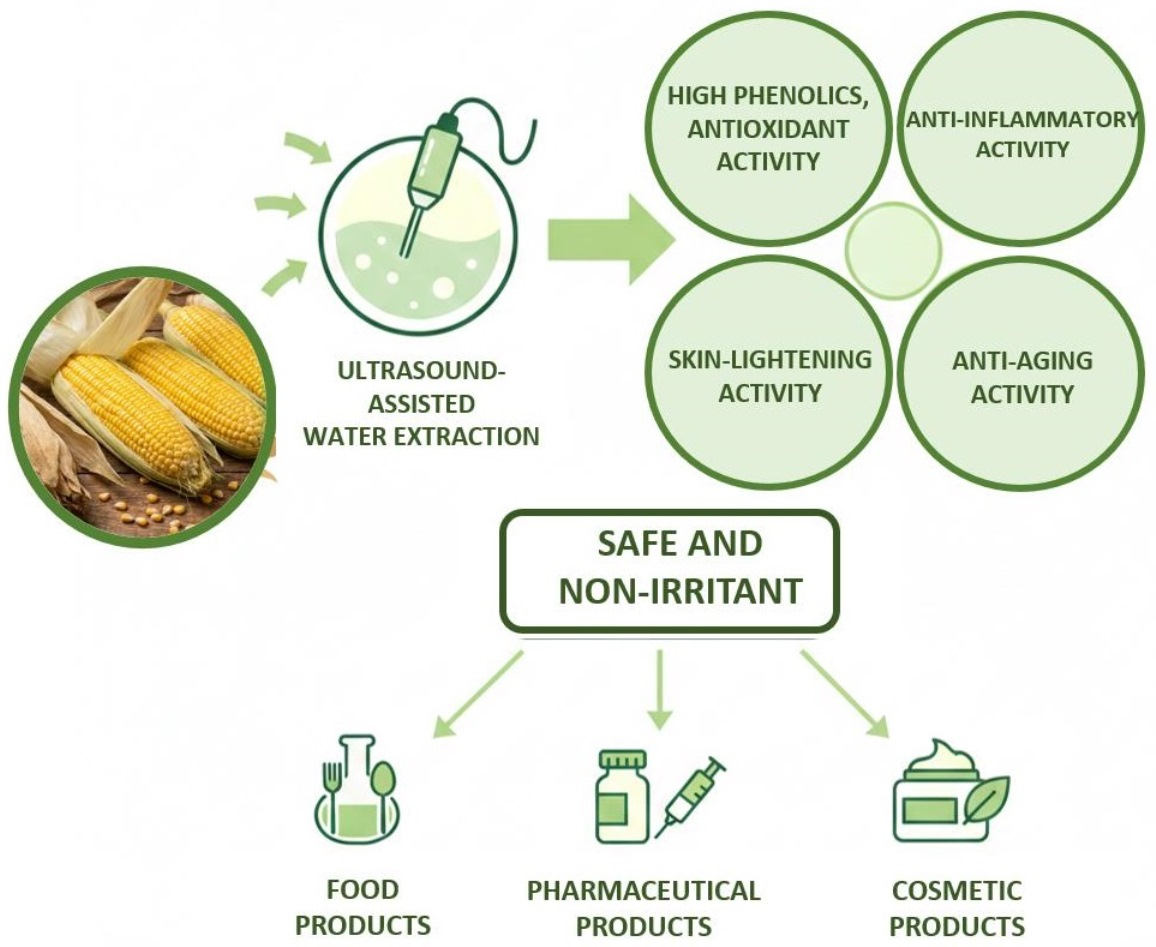
Bioresource Potential and Safety Evaluations of Thai Zea mays L. Husk Waste Extracts


 , , ,
, , ,  and
and
Abstract
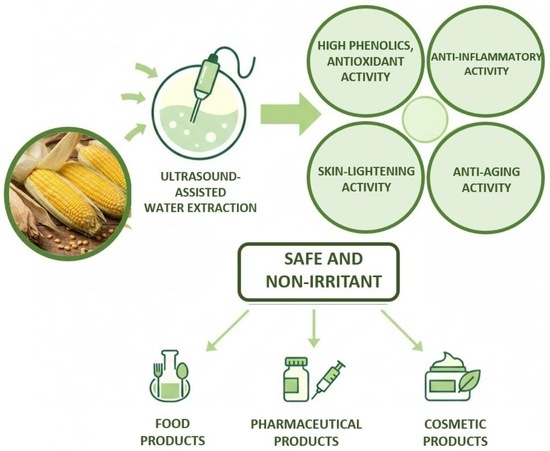
1. Introduction
2. Materials and Methods
2.1. Materials
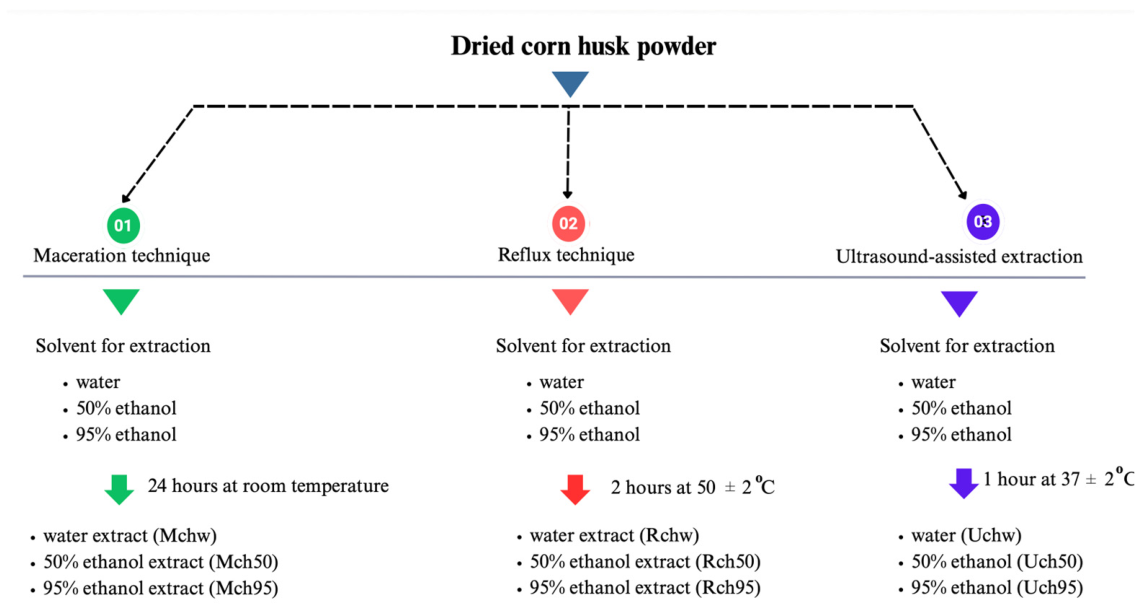
2.2. Extraction of Botanical Substances
2.3. Investigation of Total Phenolic Content (TPC) and Total Flavonoid Content (TFC)
2.4. Assay of Antioxidant Activities
2.5. Assay of Anti-Tyrosinase Activity
2.6. Assay of Scavenging of Nitric Oxide (NO) Radical
2.7. Assay of Anti-Aging Activity
2.8. Hen’s Egg Chorioallantoic Membrane (HET-CAM) Observation
2.9. Cytotoxicity Assessment via the MTT Assay
2.10. Quantification of Active Constituents in the Extract by High-Performance Liquid Chromatography (HPLC) Analysis
2.11. Statistical Analysis
3. Results and Discussion
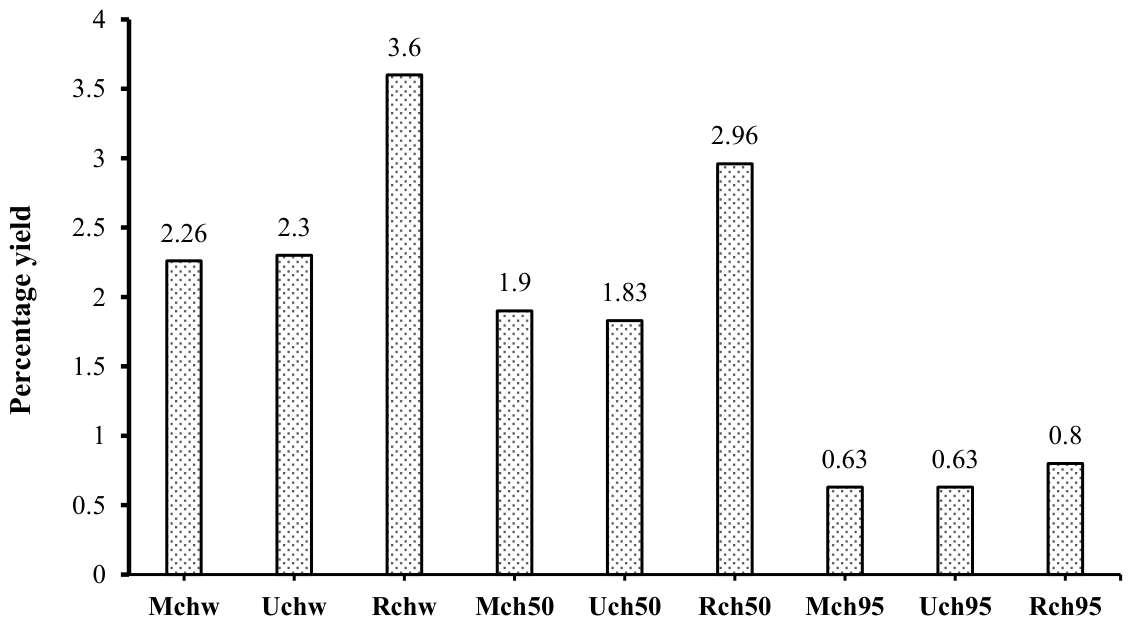
3.1. Extraction of Plant Materials and Percentage Yield
3.2. TPC and TFC Investigation
3.3. Antioxidant Activities
3.4. Anti-Tyrosinase Activity
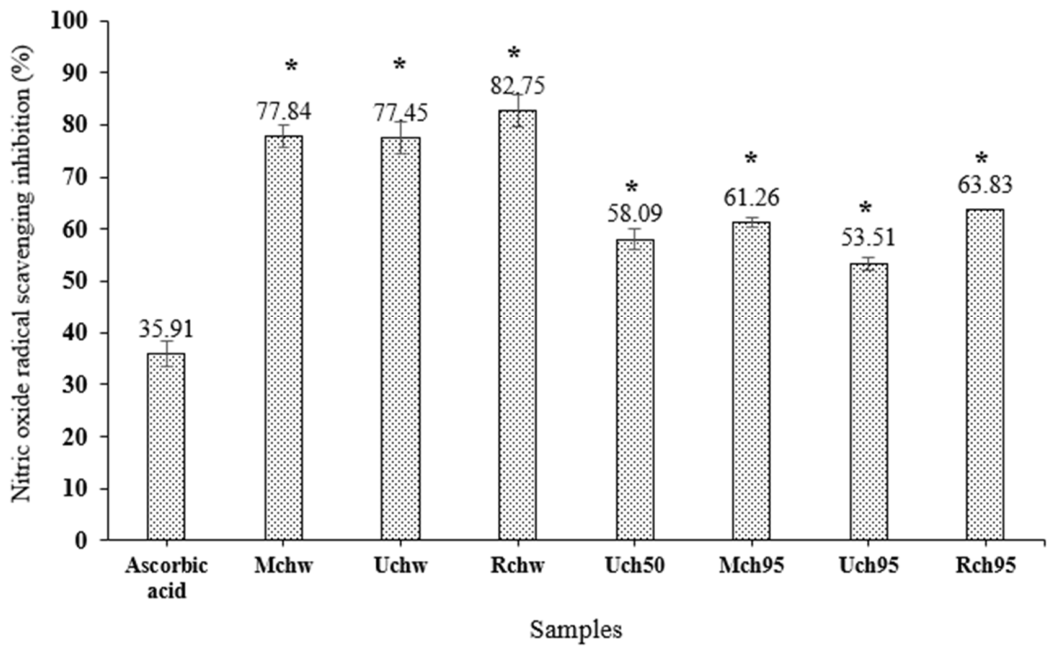
3.5. NO Scavenging Activity
3.6. Anti-Aging Activities
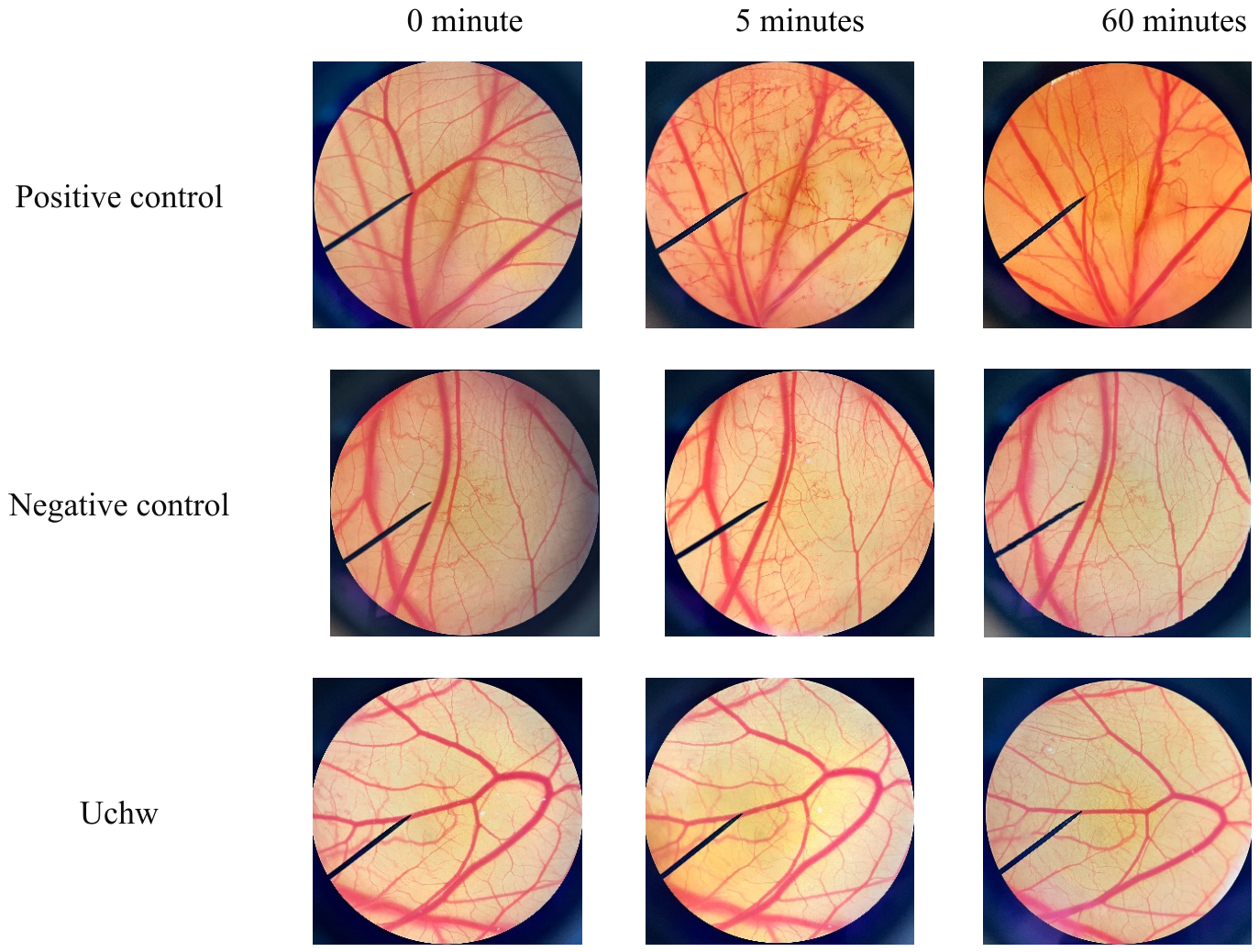
3.7. HET-CAM Study
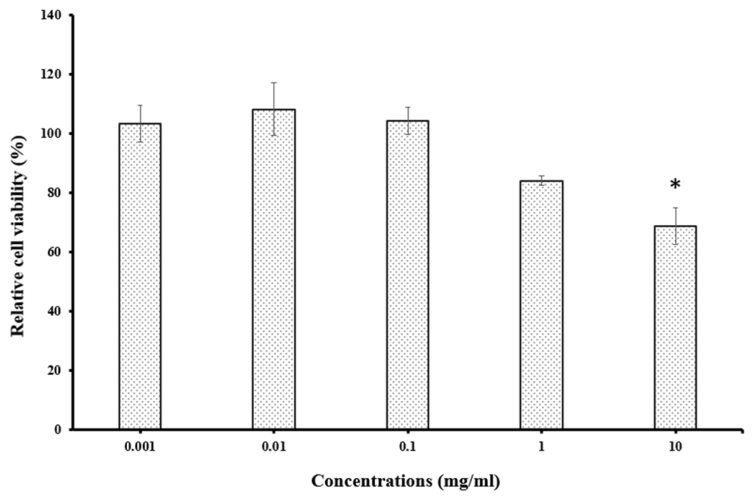
3.8. Cell Viability Assessment
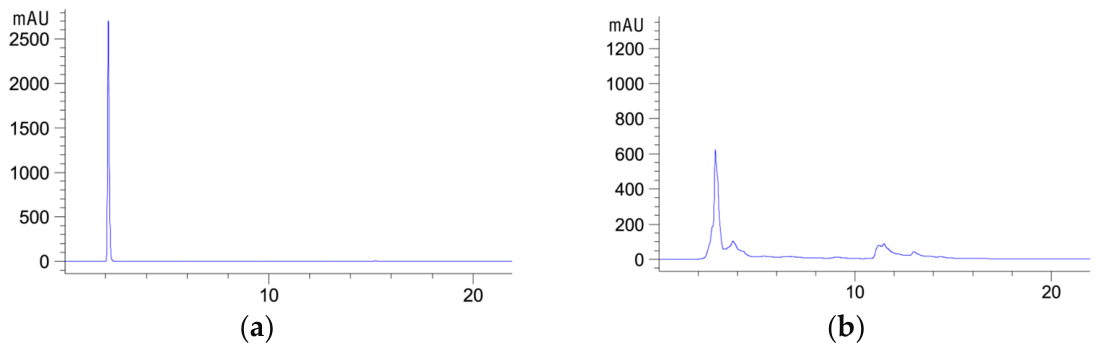
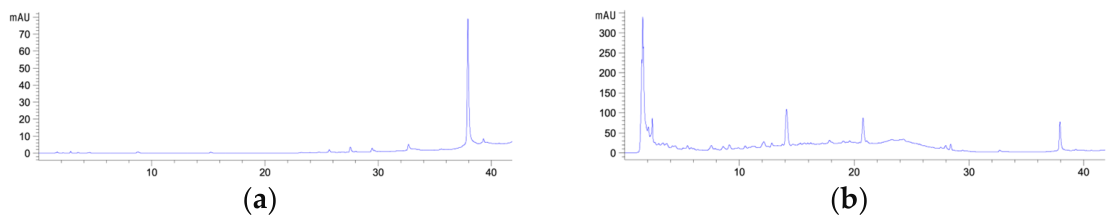
3.9. Analysis of Active Content by the HPLC Assay
4. Conclusions
5. Limitation
Author Contributions
Funding
Institutional Review Board Statement
Informed Consent Statement
Data Availability Statement
Acknowledgments
Conflicts of Interest
References
- Fawzy, S.; Osman, A.I.; Doran, J.; Rooney, D.W. Strategies for mitigation of climate change: A review. Environ. Chem. Lett. 2020, 18, 2069–2094. [Google Scholar] [CrossRef]
- Osman, A.I.; Hefny, M.; Abdel Maksoud, M.I.A.; Elgarahy, A.M.; Rooney, D.W. Recent advances in carbon capture storage and utilisation technologies: A review. Environ. Chem. Lett. 2021, 19, 797–849. [Google Scholar] [CrossRef]
- Barbulova, A.; Colucci, G.; Apone, F. New Trends in Cosmetics: By-Products of Plant Origin and Their Potential Use as Cosmetic Active Ingredients. Cosmetics 2015, 2, 82–92. [Google Scholar] [CrossRef]
- Comunian, T.A.; Silva, M.P.; Souza, C.J.F. The use of food by-products as a novel for functional foods: Their use as ingredients and for the encapsulation process. Trends Food Sci. Technol. 2021, 108, 269–280. [Google Scholar] [CrossRef]
- Li, Z.; Cai, S.; Wang, Z.; Chen, Q.; Zeng, M.; Chen, J.; Zheng, Z.; Guo, F.; He, Z. Synergistic enzymatic-ultrasonic extraction enhances yield and stability of yellow pigments from corn husk: A comparative study on extraction techniques. Food Biosci. 2025, 74, 107924. [Google Scholar] [CrossRef]
- Sun, W.; Zhang, N.-D.; Hou, W.-S.; Wang, A.-Q.; Wang, Y.; Jin, C.-H. Corn Husk Ferulic Acid Induces Apoptosis of Breast Cancer Cells via ROS-Mediated Signaling Pathways. J. Food Biochem. 2024, 2024, 8125193. [Google Scholar] [CrossRef]
- Riaz, M.; Nawaz, S.; Ilyas, I.; Rehman, M.M.U.; Qadir, R.; Mehmood, T.; Afzal, M.; Abdul Rehman, N.; Ali, A. Evaluation of antidiabetic, antioxidant, and cytotoxic potential of maize (Zea mays L.) husk leaf extracts. Cell. Mol. Biol. 2021, 67, 165–170. [Google Scholar] [CrossRef]
- Roh, K.-B.; Kim, H.; Shin, S.; Kim, Y.S.; Lee, J.-A.; Kim, M.; Jung, E.; Lee, J.; Park, D. Anti-inflammatory effects of Zea mays L. husk extracts. BMC Complement. Altern. Med. 2016, 16, 298. [Google Scholar] [CrossRef]
- Mungmai, L.; Preedalikit, W.; Rungsang, T.; Sainakham, M. Bioactivity Determination and Development of Oil in Water Emulsion Containing Cassia fistula Bark Extract. Walailak J. Sci. Technol. (WJST) 2021, 18, 8943. [Google Scholar] [CrossRef]
- Wuttikul, K.; Sainakham, M. In vitro bioactivities and preparation of nanoemulsion from coconut oil loaded Curcuma aromatica extracts for cosmeceutical delivery systems. Saudi J. Biol. Sci. 2022, 29, 103435. [Google Scholar] [CrossRef]
- Sainakham, M.; Jantrawut, P.; Kiattisin, K.; Chittasupho, C.; Singh, S. Potential of green extraction using edible deep eutectic solvents on the bioactivities from Curcuma aromatica rhizome extracts for food application. J. Agric. Food Res. 2023, 14, 100868. [Google Scholar] [CrossRef]
- Dewi, I.K.; Pramono, S.; Rohman, A.; Matien, R. Potential of corncobs (Zea mays) fraction as tyrosinase inhibitor and natural antioxidant in vitro. Food Res. 2021, 5, 67–73. [Google Scholar] [CrossRef]
- Krzemińska, A.; Kwiatos, N.; Arenhart Soares, F.; Steinbüchel, A. Theoretical Studies of Cyanophycin Dipeptides as Inhibitors of Tyrosinases. Int. J. Mol. Sci. 2022, 23, 3335. [Google Scholar] [CrossRef]
- Phumat, P.; Chaichit, S.; Potprommanee, S.; Preedalikit, W.; Sainakham, M.; Poomanee, W.; Chaiyana, W.; Kiattisin, K. Influence of Benincasa hispida Peel Extracts on Antioxidant and Anti-Aging Activities, including Molecular Docking Simulation. Foods 2023, 12, 3555. [Google Scholar] [CrossRef]
- Chaiyana, W.; Jiamphun, S.; Bezuidenhout, S.; Yeerong, K.; Krueathanasing, N.; Thammasorn, P.; Jittasai, P.; Tanakitvanicharoen, S.; Tima, S.; Anuchapreeda, S. Enhanced Cosmeceutical Potentials of the Oil from Gryllus bimaculatus de Geer by Nanoemulsions. Int. J. Nanomed. 2023, 18, 2955–2972. [Google Scholar] [CrossRef]
- Somwongin, S.; Chantawannakul, P.; Chaiyana, W. Antioxidant activity and irritation property of venoms from Apis species. Toxicon 2018, 145, 32–39. [Google Scholar] [CrossRef]
- López-García, J.; Lehocký, M.; Humpolíček, P.; Sáha, P. HaCaT Keratinocytes Response on Antimicrobial Atelocollagen Substrates: Extent of Cytotoxicity, Cell Viability and Proliferation. J. Funct. Biomater. 2014, 5, 43–57. [Google Scholar] [CrossRef]
- Hu, X.; Yang, T.; Qi, X.; Guo, X.; Hu, J. Effects of different drying methods on phenolic composition and antioxidant activity in corn silk (Stigma maydis). J. Food Process. Preserv. 2022, 46, e17101. [Google Scholar] [CrossRef]
- Kumar, K.; Srivastav, S.; Sharanagat, V.S. Ultrasound assisted extraction (UAE) of bioactive compounds from fruit and vegetable processing by-products: A review. Ultrason. Sonochem. 2021, 70, 105325. [Google Scholar] [CrossRef]
- Wang, L.; Liu, H.-M.; Xie, A.-J.; Zhu, C.-Y.; Qin, G.-Y. Dietary Fiber Extraction from Defatted Corn Hull by Hot-Compressed Water. Pol. J. Food Nutr. Sci. 2018, 68, 133–140. [Google Scholar] [CrossRef]
- Pan, Y.; Wang, C.; Chen, Z.; Li, W.; Yuan, G.; Chen, H. Physicochemical properties and antidiabetic effects of a polysaccharide from corn silk in high-fat diet and streptozotocin-induced diabetic mice. Carbohydr. Polym. 2017, 164, 370–378. [Google Scholar] [CrossRef]
- Oleszek, M.; Kowalska, I.; Bertuzzi, T.; Oleszek, W. Phytochemicals Derived from Agricultural Residues and Their Valuable Properties and Applications. Molecules 2023, 28, 342. [Google Scholar] [CrossRef]
- Galanakis, C.; Goulas, V.; Tsakona, S.; Gekas, V. Predicting the solubilization preference of natural phenols to different solvents. In Proceedings of the 11th International Congress on Engineering and Food, Athens, Greece, 22–26 May 2011. [Google Scholar]
- Sun, S.; Yu, Y.; Jo, Y.; Han, J.H.; Xue, Y.; Cho, M.; Bae, S.-J.; Ryu, D.; Park, W.; Ha, K.-T.; et al. Impact of extraction techniques on phytochemical composition and bioactivity of natural product mixtures. Front. Pharmacol. 2025, 16, 1615338. [Google Scholar] [CrossRef]
- Ramesh, H.; Mayr, T.; Hobisch, M.; Borisov, S.; Klimant, I.; Krühne, U.; Woodley, J.M. Measurement of oxygen transfer from air into organic solvents. J. Chem. Technol. Biotechnol. 2016, 91, 832–836. [Google Scholar] [CrossRef]
- Antony, A.; Farid, M. Effect of Temperatures on Polyphenols during Extraction. Appl. Sci. 2022, 12, 2107. [Google Scholar] [CrossRef]
- Wisuitiprot, V.; Jaidee, W.; Pheangsalud, K.; Ngernsoungnern, A.; Ngernsoungnern, P.; Wangboon, C.; Saowakon, N.; Sritangos, P.; Wisuitiprot, W. Thermal degradation kinetics of phenylbutanoids in Zingiber montanum extract and stability improvement by oil extraction. ScienceAsia 2025, 51, 1–9. [Google Scholar] [CrossRef]
- Wang, H.; Helliwell, K. Determination of flavonols in green and black tea leaves and green tea infusions by high-performance liquid chromatography. Food Res. Int. 2001, 34, 223–227. [Google Scholar] [CrossRef]
- Wang, Z.; Yang, S.; Gao, Y.; Huang, J. Extraction and purification of antioxidative flavonoids from Chionanthus retusa leaf. Front. Bioeng. Biotechnol. 2022, 10, 1085562. [Google Scholar] [CrossRef]
- Gil-Martín, E.; Forbes-Hernández, T.; Romero, A.; Cianciosi, D.; Giampieri, F.; Battino, M. Influence of the extraction method on the recovery of bioactive phenolic compounds from food industry by-products. Food Chem. 2022, 378, 131918. [Google Scholar] [CrossRef]
- Liu, W.; Li, J.; Chen, Z.; Liang, Z.; Yang, B.; Du, K.; Fu, J.; Mahjoub, A.R.; Xing, M. Unveiling the “sono-physico-chemical” essence: Cavitation and vibration effects in ultrasound–assisted processes. Chin. J. Catal. 2024, 61, 37–53. [Google Scholar] [CrossRef]
- Lin, S.; Simal-Gandara, J.; Cao, H.; Xiao, J. The stability and degradation products of polyhydroxy flavonols in boiling water. Curr. Res. Food Sci. 2023, 6, 100509. [Google Scholar] [CrossRef]
- Liu, J.; Guo, X.; Yang, T.; Wang, X.; Liang, Y. Study on the extraction and stability of total flavonoids from Millettia speciosa Champ. PLoS ONE 2025, 20, e0326570. [Google Scholar] [CrossRef] [PubMed]
- Kim, J.S. Evaluation of In Vitro Antioxidant Activity of the Water Extract Obtained from Dried Pine Needle (Pinus densiflora). Prev. Nutr. Food Sci. 2018, 23, 134–143. [Google Scholar] [CrossRef]
- Kiokias, S.; Oreopoulou, V. Review on the Antioxidant Activity of Phenolics in o/w Emulsions along with the Impact of a Few Important Factors on Their Interfacial Behaviour. Colloids Interfaces 2022, 6, 79. [Google Scholar] [CrossRef]
- Zuo, A.-R.; Dong, H.-H.; Yu, Y.-Y.; Shu, Q.-L.; Zheng, L.-X.; Yu, X.-Y.; Cao, S.-W. The antityrosinase and antioxidant activities of flavonoids dominated by the number and location of phenolic hydroxyl groups. Chin. Med. 2018, 13, 51. [Google Scholar] [CrossRef]
- Wang, N.; Hebert, D.N. Tyrosinase maturation through the mammalian secretory pathway: Bringing color to life. Pigment Cell Res. 2006, 19, 3–18. [Google Scholar] [CrossRef]
- Ando, H.; Kondoh, H.; Ichihashi, M.; Hearing, V.J. Approaches to identify inhibitors of melanin biosynthesis via the quality control of tyrosinase. J. Investig. Dermatol. 2007, 127, 751–761. [Google Scholar] [CrossRef] [PubMed]
- Kothapalli, L.; Sawant, P.; Thomas, A.; Ravindra, W.; Bhosale, K. Understanding the Molecular Mechanism of Phytoconstituents as Tyrosinase Inhibitors for Treatment of Hyperpigmentation. Saudi J. Med. Pharm. Sci. 2021, 7, 135–144. [Google Scholar] [CrossRef]
- Choi, S.Y.; Lee, Y.; Kim, S.S.; Ju, H.M.; Baek, J.H.; Park, C.S.; Lee, D.H. Inhibitory effect of corn silk on skin pigmentation. Molecules 2014, 19, 2808–2818. [Google Scholar] [CrossRef] [PubMed]
- Thangboonjit, W.; Limsaeng-u-rai, S.; Pluemsamran, T.; Panich, U. Comparative Evaluation of Antityrosinase and Antioxidant Activities of Dietary Phenolics and their Activities in Melanoma Cells Exposed to UVA. Siriraj Med. J. 2014, 66, 5–10. [Google Scholar]
- Ramli, S.; Ruangrungsi, N. Tyrosinase inhibition, antioxidant activity and total phenolic content of selected Mimosaceae pericarps ethanolic extracts. Int. J. Pharm. Nutraceuticals Cosmet. Sci. 2021, 4, 47–57. [Google Scholar] [CrossRef]
- Andrabi, S.M.; Sharma, N.S.; Karan, A.; Shahriar, S.M.S.; Cordon, B.; Ma, B.; Xie, J. Nitric Oxide: Physiological Functions, Delivery, and Biomedical Applications. Adv. Sci. 2023, 10, 2303259. [Google Scholar] [CrossRef] [PubMed]
- Marcocci, L.; Maguire, J.J.; Droy-Lefaix, M.T.; Packer, L. The nitric oxide-scavenging properties of Ginkgo biloba extract EGb 761. Biochem. Biophys. Res. Commun. 1994, 201, 748–755. [Google Scholar] [CrossRef]
- Cai, S.; Mao, Y.; Gu, Y.; Huang, B.; He, Z.; Zeng, M.; Wang, Z.; Chen, Q.; Tang, M.; Chen, J. Carotenoid and Phenolic Compositions and Antioxidant Activity of 23 Cultivars of Corn Grain and Corn Husk Extract. Foods 2024, 13, 3375. [Google Scholar] [CrossRef]
- Srisuksomwong, P.; Kaenhin, L.; Mungmai, L. Collagenase and Tyrosinase Inhibitory Activities and Stability of Facial Cream Formulation Containing Cashew Leaf Extract. Cosmetics 2023, 10, 17. [Google Scholar] [CrossRef]
- Luepke, N.P.; Kemper, F.H. The HET-CAM test: An alternative to the draize eye test. Food Chem. Toxicol. 1986, 24, 495–496. [Google Scholar] [CrossRef]
- Rivero, M.N.; Lenze, M.; Izaguirre, M.; Pérez Damonte, S.H.; Aguilar, A.; Wikinski, S.; Gutiérrez, M.L. Comparison between HET-CAM protocols and a product use clinical study for eye irritation evaluation of personal care products including cosmetics according to their surfactant composition. Food Chem. Toxicol. 2021, 153, 112229. [Google Scholar] [CrossRef]
- Wilson, T.D.; Steck, W.F. A modified HET-CAM assay approach to the assessment of anti-irritant properties of plant extracts. Food Chem. Toxicol. 2000, 38, 867–872. [Google Scholar] [CrossRef]
- Präbst, K.; Engelhardt, H.; Ringgeler, S.; Hübner, H. Basic Colorimetric Proliferation Assays: MTT, WST, and Resazurin. In Cell Viability Assays: Methods and Protocols; Gilbert, D.F., Friedrich, O., Eds.; Springer: New York, NY, USA, 2017; pp. 1–17. [Google Scholar]
- Brobbey, A.; Somuah-Asante, S.; Asare-Nkansah, S.; Boateng, F.; Ayensu, I. Preliminary phytochemical screening and scientific validation of the anti-diabetic effect of the dried husk of Zea mays L. (Corn, Poaceae). Int. J. Phytopharm. 2017, 7, 1–5. [Google Scholar]
- Anand David, A.V.; Arulmoli, R.; Parasuraman, S. Overviews of Biological Importance of Quercetin: A Bioactive Flavonoid. Pharmacogn. Rev. 2016, 10, 84–89. [Google Scholar] [CrossRef] [PubMed]
- Harwood, M.; Danielewska-Nikiel, B.; Borzelleca, J.F.; Flamm, G.W.; Williams, G.M.; Lines, T.C. A critical review of the data related to the safety of quercetin and lack of evidence of in vivo toxicity, including lack of genotoxic/carcinogenic properties. Food Chem. Toxicol. 2007, 45, 2179–2205. [Google Scholar] [CrossRef] [PubMed]
- Bai, J.; Zhang, Y.; Tang, C.; Hou, Y.; Ai, X.; Chen, X.; Zhang, Y.; Wang, X.; Meng, X. Gallic acid: Pharmacological activities and molecular mechanisms involved in inflammation-related diseases. Biomed. Pharmacother. 2021, 133, 110985. [Google Scholar] [CrossRef] [PubMed]



| Solvent | Total Phenolic Content (mg GAE/g Extract) | Total Flavonoid Content (mg QE/g Extract) | ||||
|---|---|---|---|---|---|---|
| Maceration | Ultrasound-Assisted | Reflux | Maceration | Ultrasound-Assisted | Reflux | |
| 95% ethanol | 3.16 ± 0.55 c | 2.80 ± 0.10 c | 7.22 ± 0.64 b | 71.58 ± 4.29 d | 17.08 ± 6.57 e | 44.08 ± 6.66 g |
| 50% ethanol | 5.88 ± 0.08 b | 6.49 ± 1.08 b | 7.76 ± 0.22 b | 73.00 ± 6.31 d | 126.42 ± 12.34 f | 113.25 ± 14.56 f |
| Water | 17.13 ± 1.60 a | 17.30 ± 2.24 a | 4.23 ± 0.38 c | 82.92 ± 11.55 d | 15.50 ± 5.88 e | 51.17 ± 9.06 g |
| Variables | TPC | TFC | Extraction Method | Solvent Type |
|---|---|---|---|---|
| TPC | 1.000 | −0.173 | −0.180 | 0.660 * |
| TFC | −0.173 | 1.000 | −0.070 | −0.073 |
| Extraction method | −0.180 | −0.070 | 1.000 | 0.000 |
| Solvent type | 0.660 * | −0.073 | 0.000 | 1.000 |
| Samples | DPPH (mg/mL) | Ascorbic Acid-Equivalent Potency (Fold) | Lipid Peroxidation Inhibition (mg/mL) | Ascorbic Acid-Equivalent Potency (Fold) |
|---|---|---|---|---|
| Mchw | 0.03 ± 0.01 | 13.33 | 0.02 ± 0.01 | 4.00 |
| Uchw | 0.52 ± 0.20 | 0.77 | 0.03 ± 0.01 | 2.67 |
| Rchw | ND | - | 0.03 ± 0.02 | 2.67 |
| Mch50 | 0.11 ± 0.01 | 3.64 | ND | - |
| Uch50 | 0.02 ± 0.01 | 20.00 | 0.21 ± 0.10 | 0.38 |
| Rch50 | 0.05 ± 0.01 | 8.00 | ND | - |
| Mch95 | 0.06 ± 0.03 | 6.67 | 0.01 ± 0.01 | 8.00 |
| Uch95 | 0.05 ± 0.01 | 8.00 | 0.08 ± 0.02 | 1.00 |
| Rch95 | 0.01 ± 0.01 | 40.00 | 0.01 ± 0.01 | 8.00 |
| Ascorbic acid | 0.40 ± 0.03 | - | 0.08 ± 0.06 | - |
| Samples | IC50 (mg/mL) | Selectivity Index (L-Tyrosine/L-Dopa) | Interpretation | |
|---|---|---|---|---|
| L-DOPA | L-Tyrosine | |||
| Mchw | >1000 | >1000 | - | Inactive |
| Uchw | 7.54 ± 0.27 | 0.10 ± 0.02 | 0.013 | Strong monophenolase selective |
| Rchw | ND | >1000 | - | Inactive |
| Uch50 | >1000 | ND | - | Inactive |
| Mch95 | ND | >1000 | - | Inactive |
| Uch95 | >1000 | >1000 | - | Inactive |
| Rch95 | >1000 | >1000 | - | Inactive |
| Ascorbic acid | 0.20 ± 0.05 | 0.21 ± 0.09 | 1.05 | Non-selective |
| Arbutin | >1000 | 1.13 ± 0.24 | - | Inactive |
| Samples | % Hyaluronidase Inhibition | % Collagenase Inhibition |
|---|---|---|
| Uchw (5 mg/mL) | 2.88 ± 1.99 | 91.49 ± 4.01 *,** |
| Ascorbic acid (2 mg/mL) | 0.88 ± 0.53 | 29.79 ± 1.00 |
| EGCG (1 mg/mL) | 1.41 ± 1.34 | 82.27 ± 1.00 |
| Samples | Irritation Score |
|---|---|
| Sodium lauryl sulfate (1% w/w) | 19.7 ± 0.8 |
| Normal saline solution (0.9% w/w) | 0.0 ± 0.0 |
| Uchw (10 mg/mL) | 0.0 ± 0.0 |
| Sample | Gallic Acid Concentration (mg/g Extract ± SD) | Quercetin Concentration (mg/g Extract ± SD) |
|---|---|---|
| Uchw | 17.21 ± 0.34 | 63.09 ± 19.12 |
Disclaimer/Publisher’s Note: The statements, opinions and data contained in all publications are solely those of the individual author(s) and contributor(s) and not of MDPI and/or the editor(s). MDPI and/or the editor(s) disclaim responsibility for any injury to people or property resulting from any ideas, methods, instructions or products referred to in the content. |
© 2026 by the authors. Licensee MDPI, Basel, Switzerland. This article is an open access article distributed under the terms and conditions of the Creative Commons Attribution (CC BY) license.
Share and Cite
Sainakham, M.; Chaiyana, W.; Kiattisin, K.; Somwongin, S.; Poomanee, W.; Wisuitiprot, V. Bioresource Potential and Safety Evaluations of Thai Zea mays L. Husk Waste Extracts. Foods 2026, 15, 1906. https://doi.org/10.3390/foods15111906
Sainakham M, Chaiyana W, Kiattisin K, Somwongin S, Poomanee W, Wisuitiprot V. Bioresource Potential and Safety Evaluations of Thai Zea mays L. Husk Waste Extracts. Foods. 2026; 15(11):1906. https://doi.org/10.3390/foods15111906
Chicago/Turabian StyleSainakham, Mathukorn, Wantida Chaiyana, Kanokwan Kiattisin, Suvimol Somwongin, Worrapan Poomanee, and Vanuchawan Wisuitiprot. 2026. "Bioresource Potential and Safety Evaluations of Thai Zea mays L. Husk Waste Extracts" Foods 15, no. 11: 1906. https://doi.org/10.3390/foods15111906
APA StyleSainakham, M., Chaiyana, W., Kiattisin, K., Somwongin, S., Poomanee, W., & Wisuitiprot, V. (2026). Bioresource Potential and Safety Evaluations of Thai Zea mays L. Husk Waste Extracts. Foods, 15(11), 1906. https://doi.org/10.3390/foods15111906