Study on the Effects of Polyphenols on the Properties, Microstructure, and Digestibility of Rice Protein Gel and the Interaction Mechanisms Between Polyphenols and Rice Protein

Abstract
1. Introduction
2. Materials and Methods
2.1. Standards and Reagents
2.2. Instruments and Equipment
2.3. Sample Preparation
2.3.1. Preparation of Gel Samples
2.3.2. Preparation of Solution Samples
2.4. Dynamic Rheological Properties
2.4.1. Temperature Sweep
2.4.2. Frequency Sweep
2.5. Texture Profile Analysis (TPA)
2.6. Simulated In Vitro Digestion
2.7. Determination of Protein Digestibility
2.8. Determination of ABTS+ Radical Scavenging Capacity
2.9. Determination of DPPH· Radical Scavenging Rate
2.10. Scanning Electron Microscopy
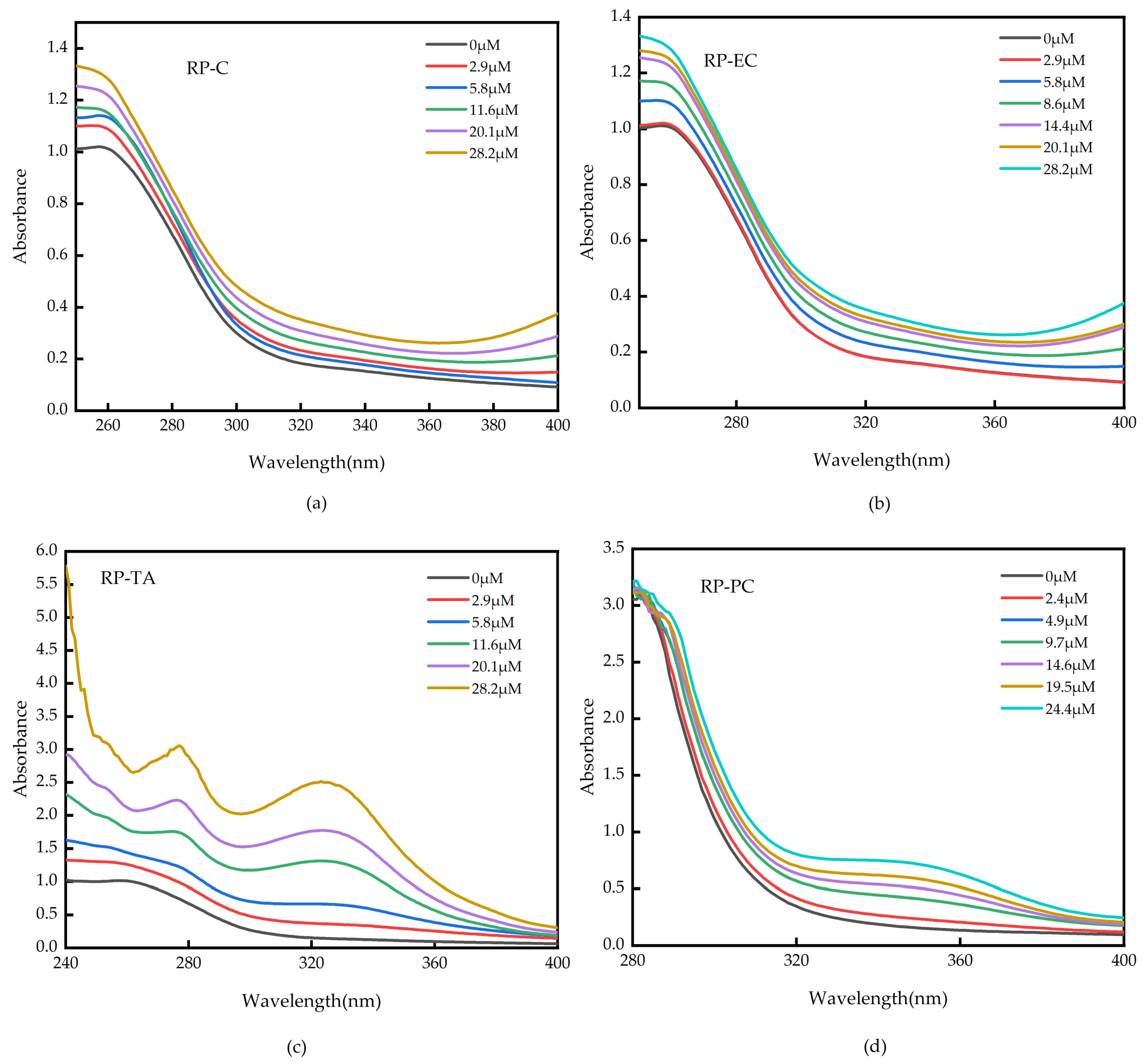
2.11. UV-Vis Spectroscopy Method
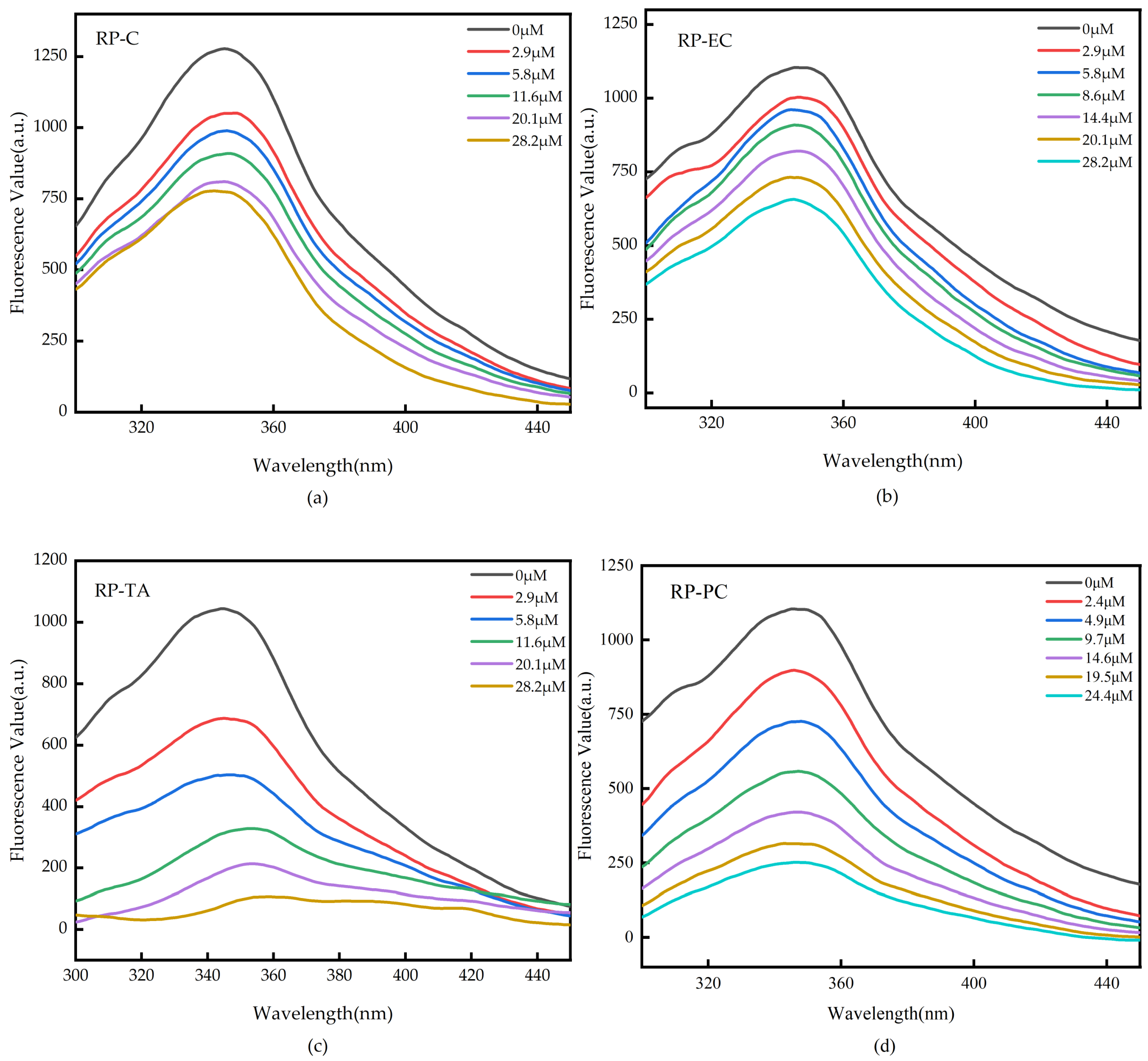
2.12. Fluorescence Spectroscopy Method
2.13. Synchronous Fluorescence Spectroscopy
2.14. Three-Dimensional Fluorescence Spectroscopy
2.15. Molecular Docking Simulation of Polyphenols with Rice Protein
2.16. Statistical Analysis
2.17. FTIR Measurement
3. Results and Analysis
3.1. Effect of Polyphenols on the Rheological Properties of Rice Protein Gels
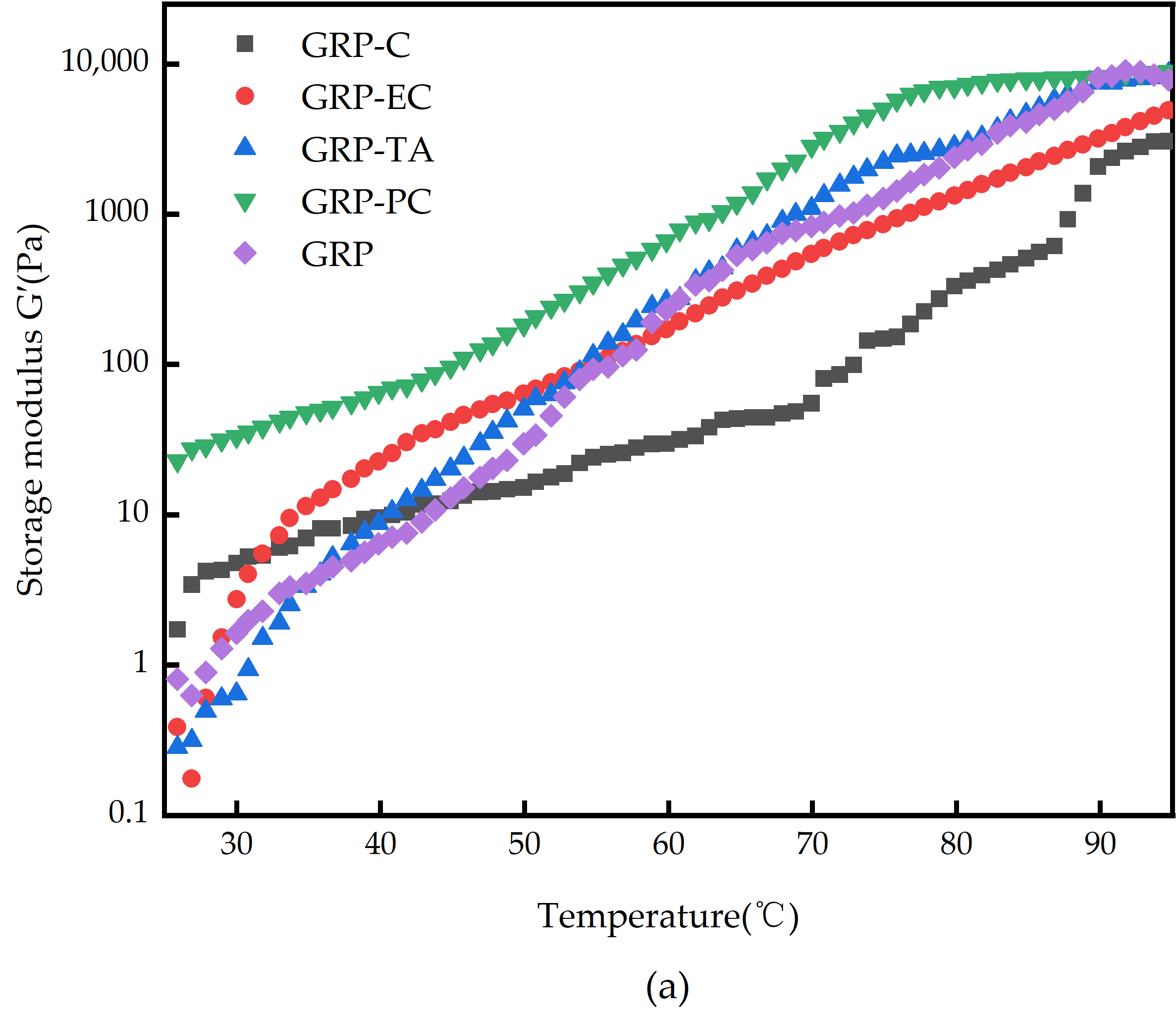
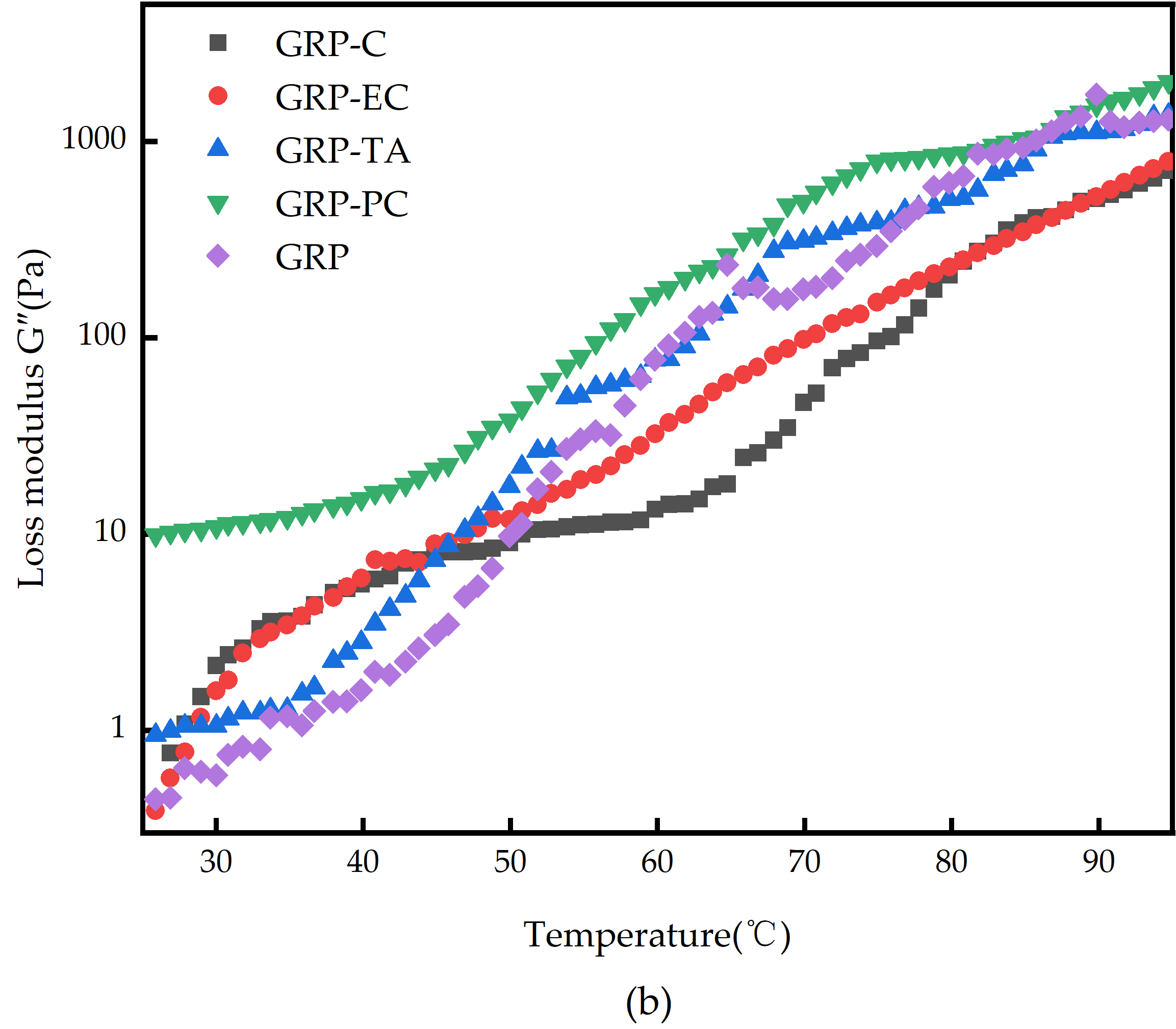
3.1.1. Temperature Sweep Analysis
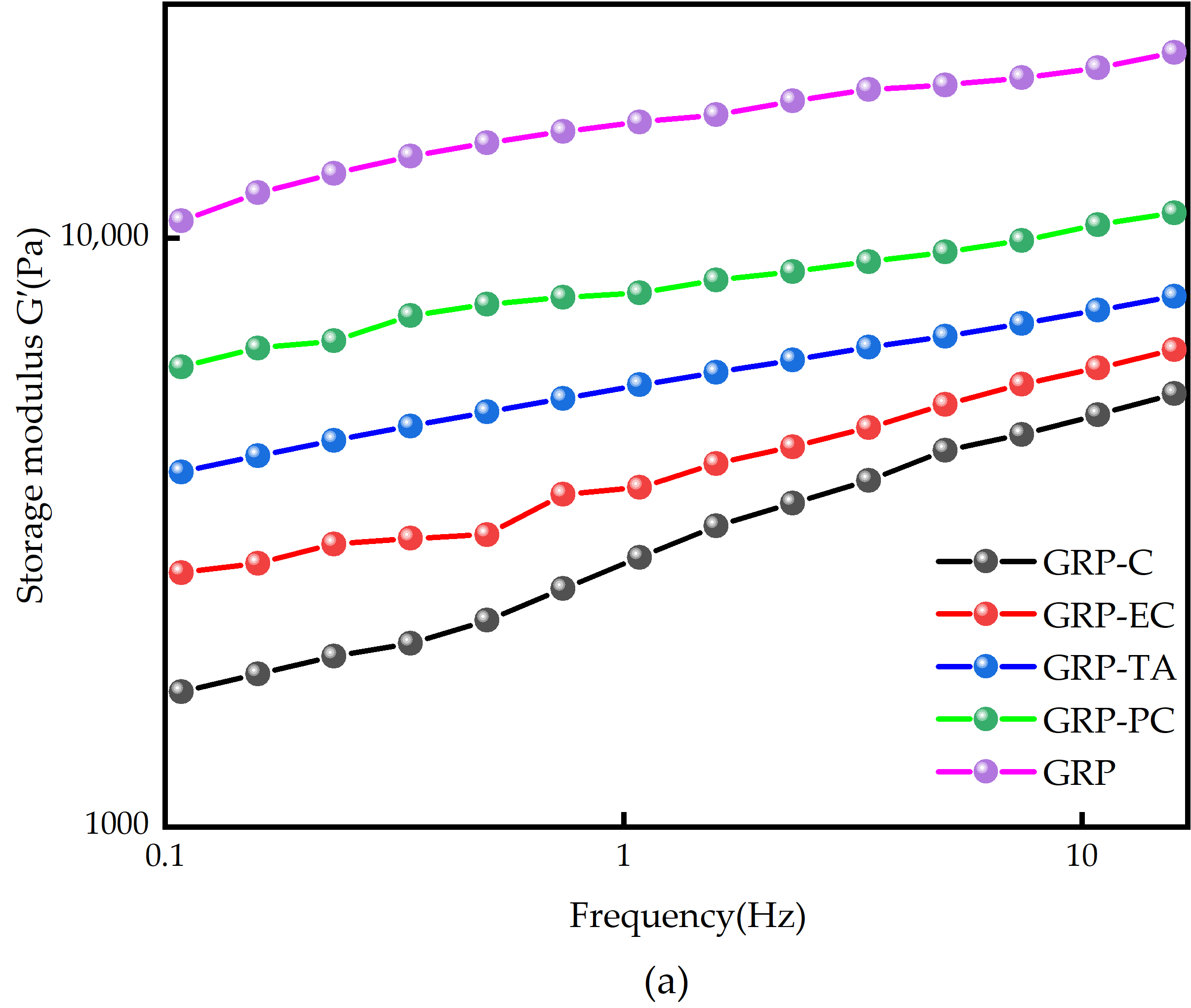
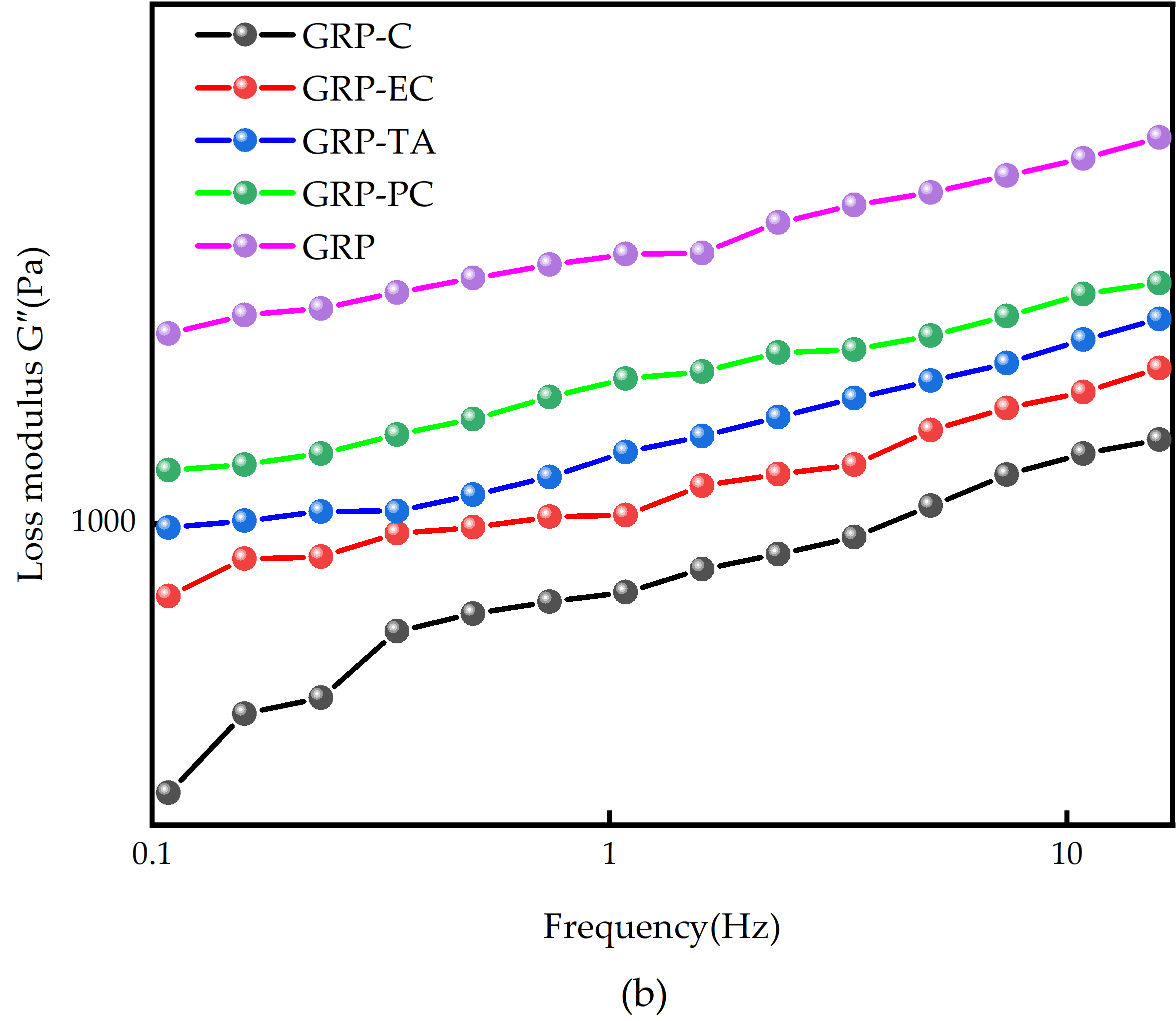
3.1.2. Frequency Sweep Analysis
3.2. Effect of Polyphenols on TPA of Rice Protein Gels
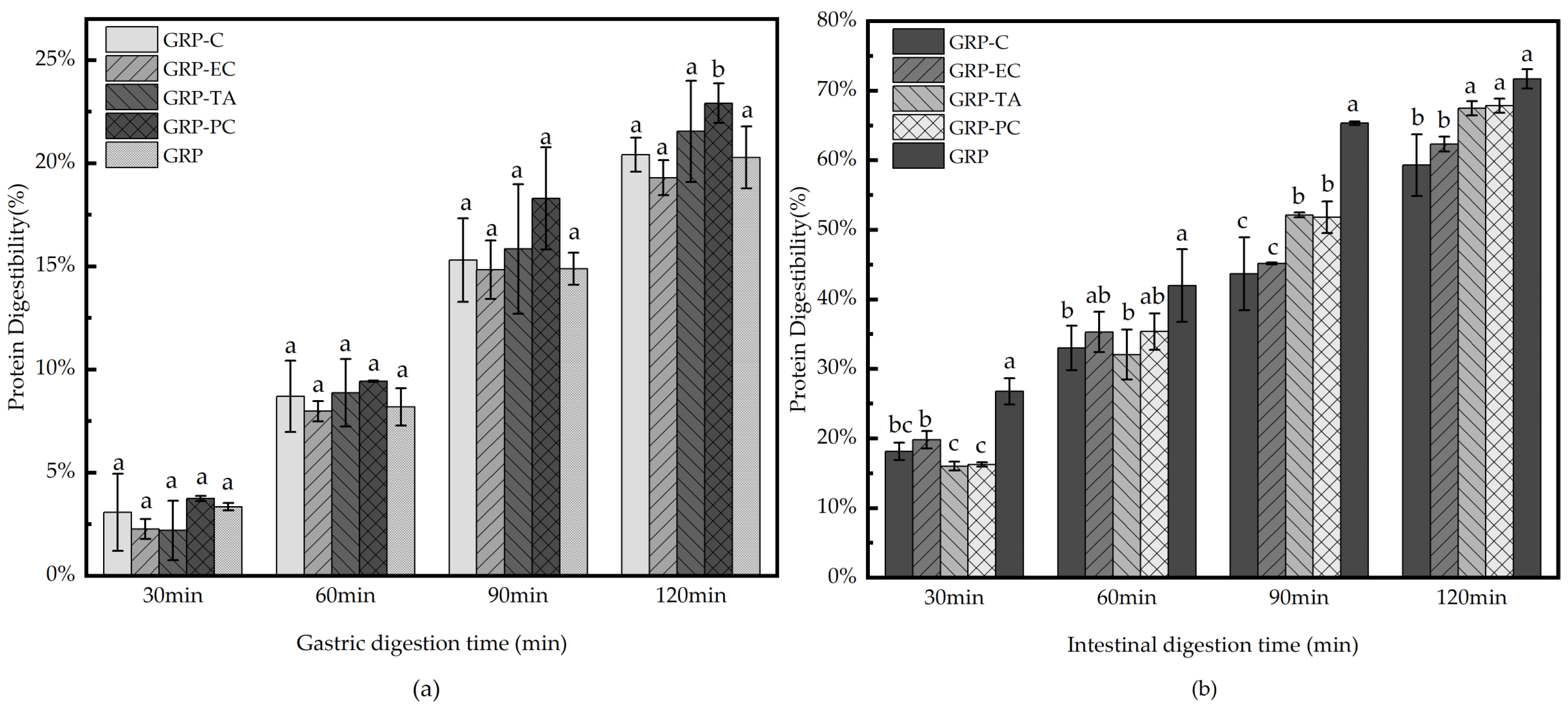
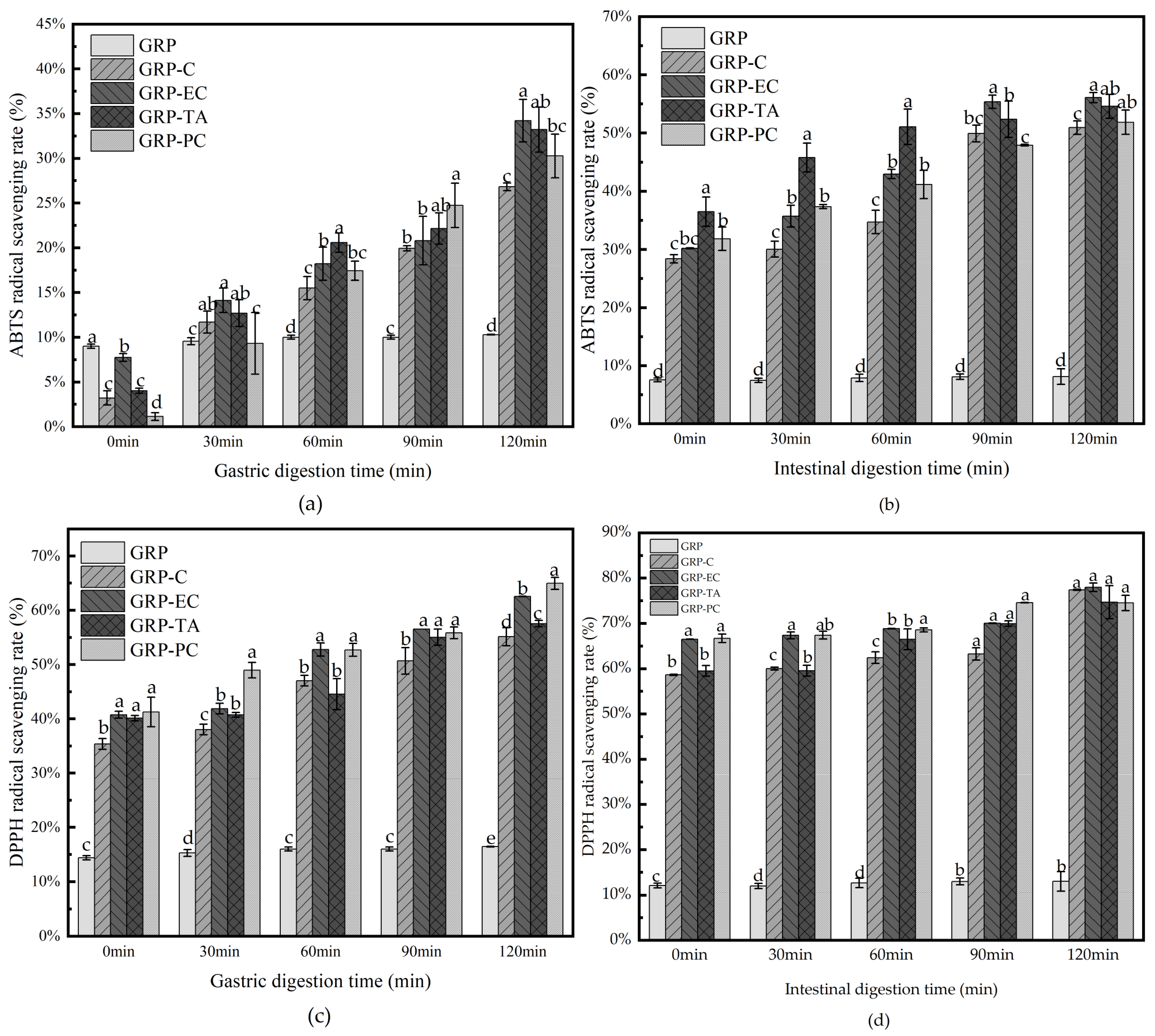
3.3. Effect of Polyphenols on Simulated In Vitro Digestion of Rice Protein Gels


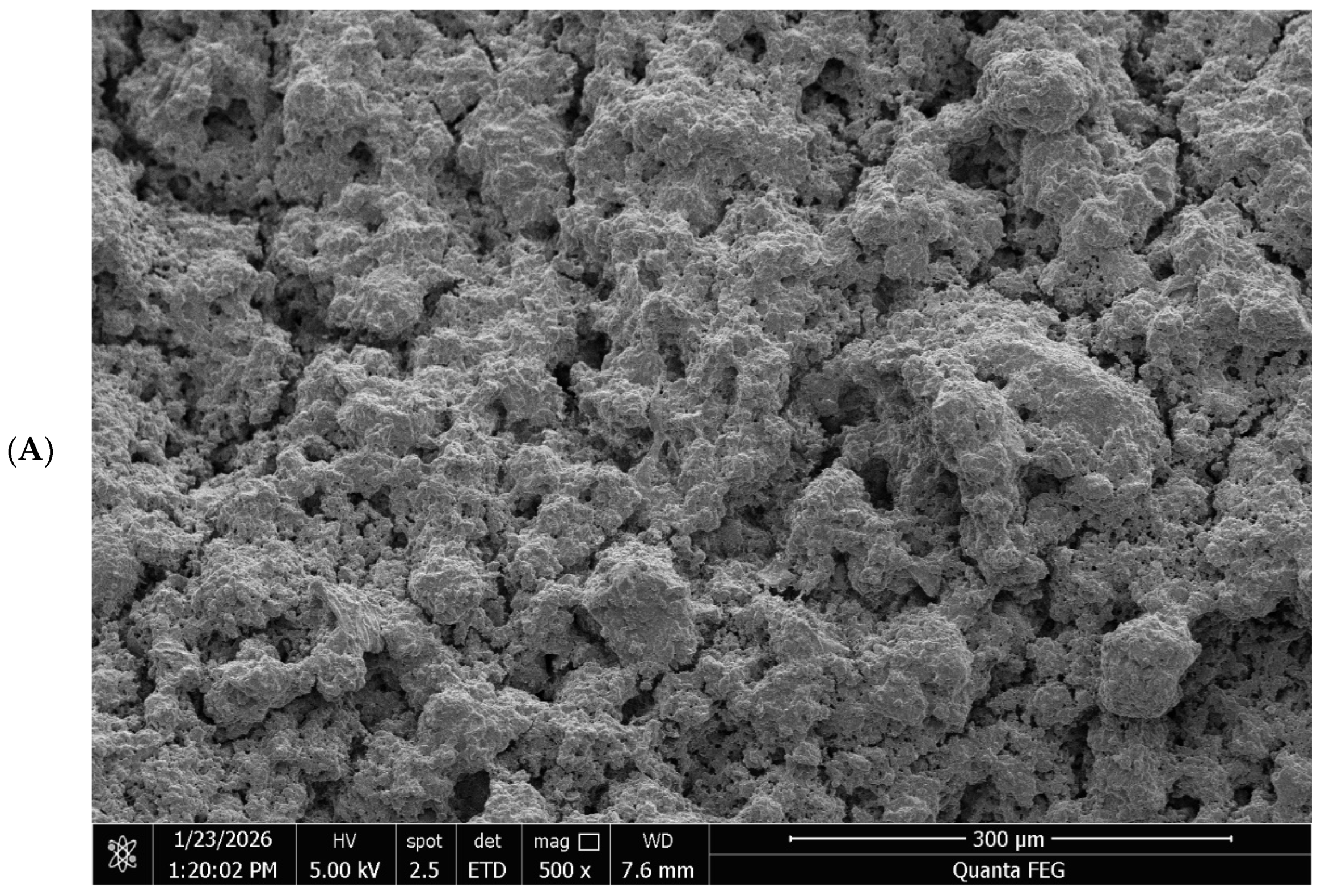
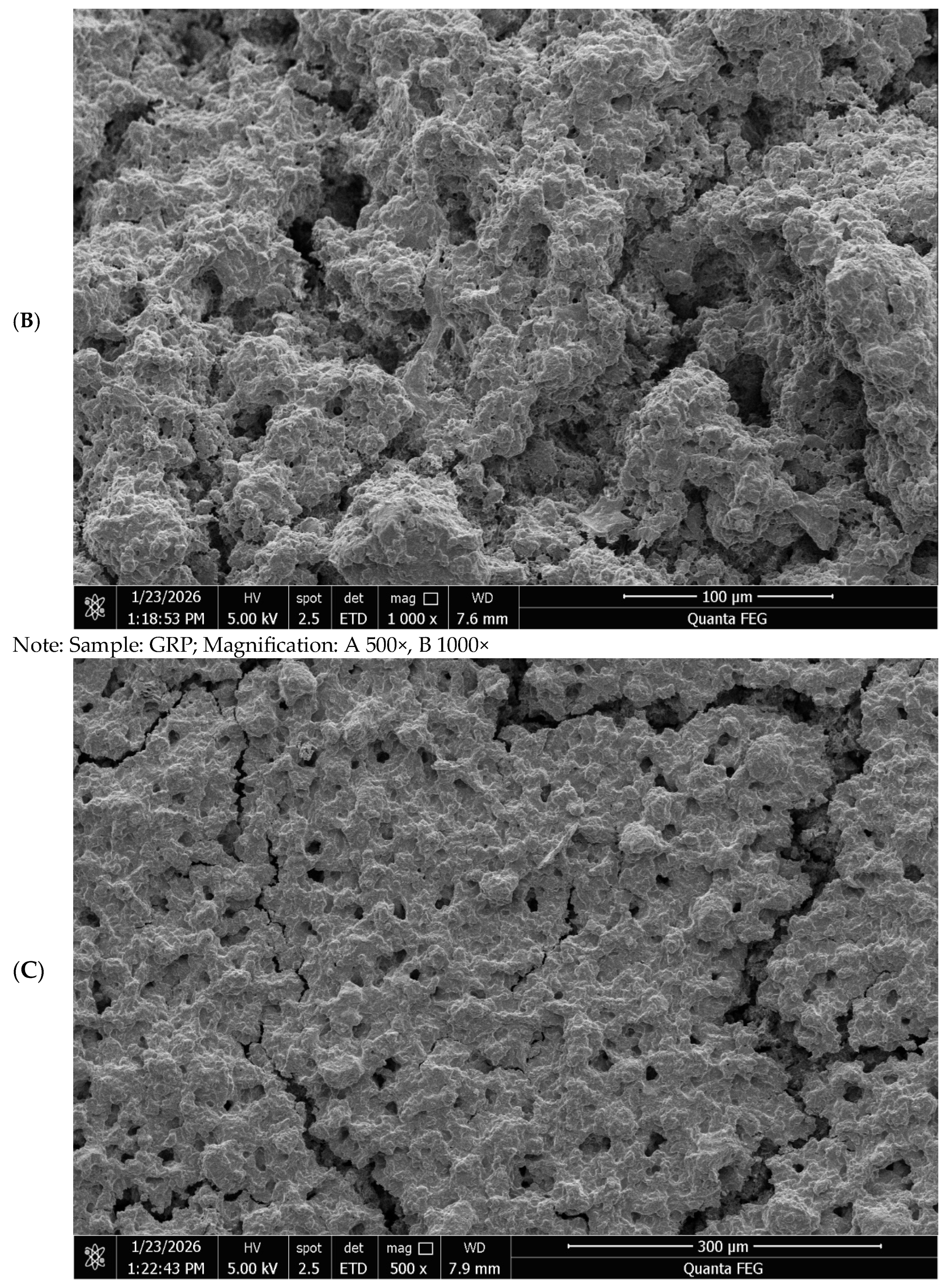
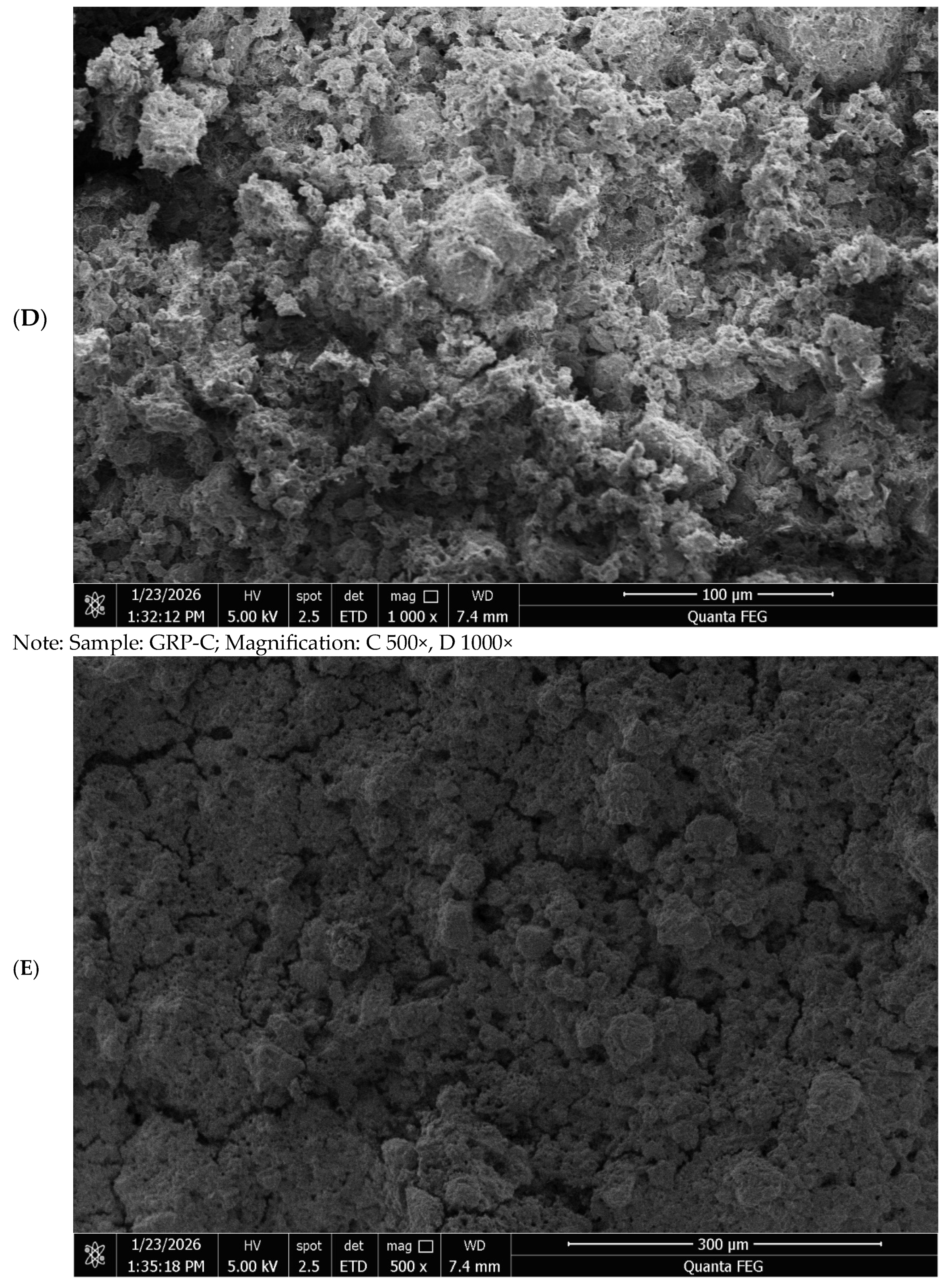
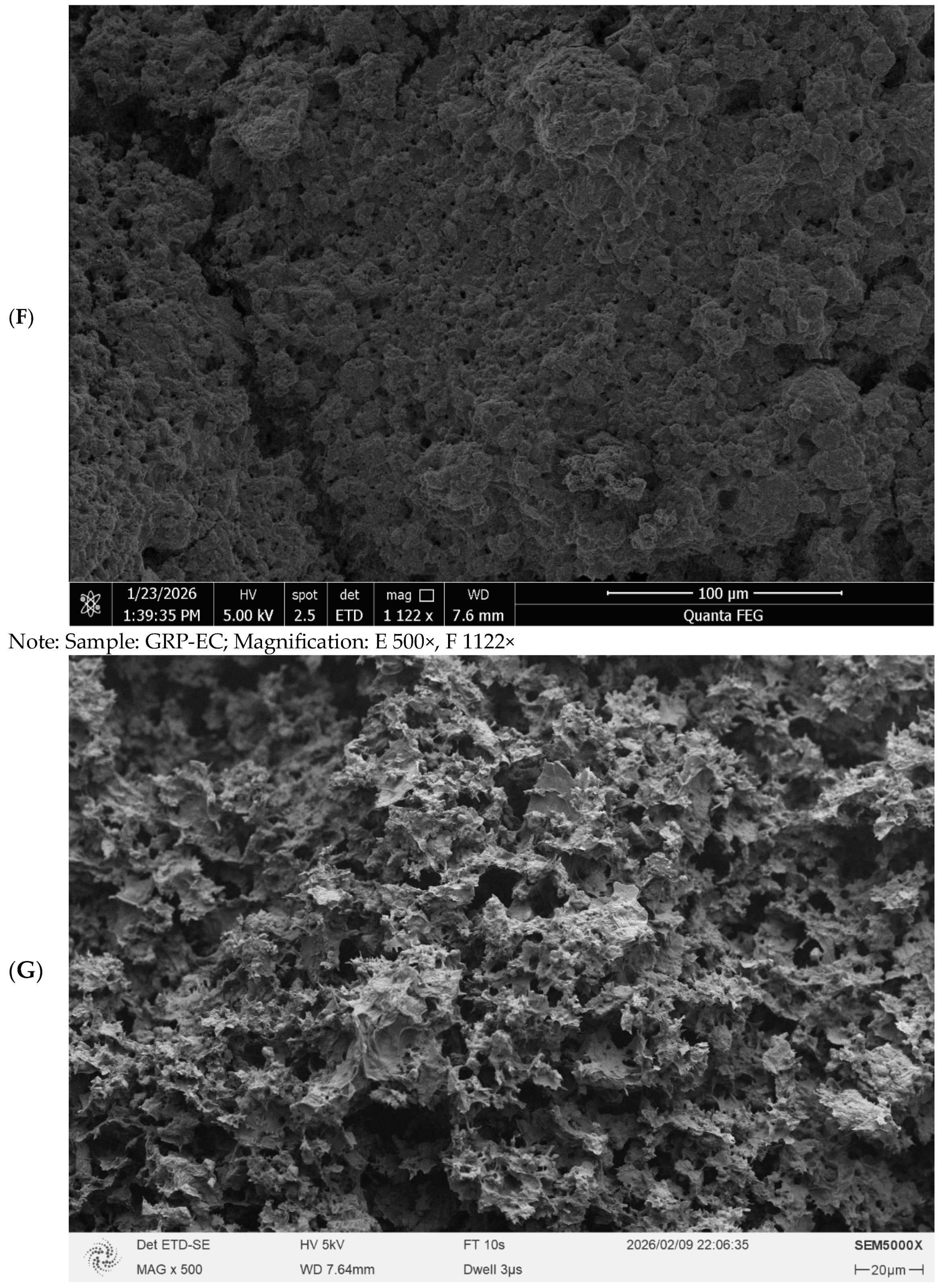
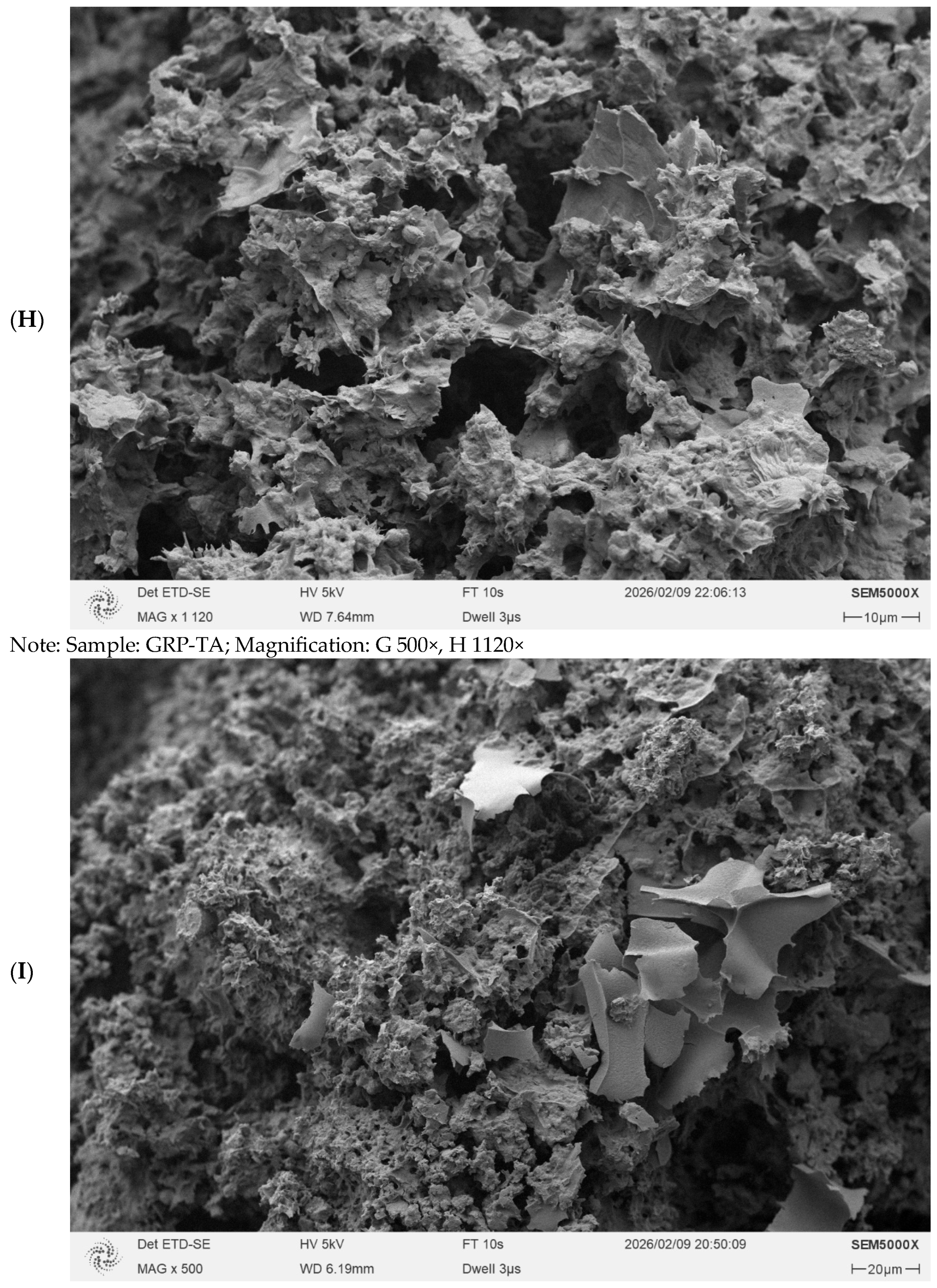
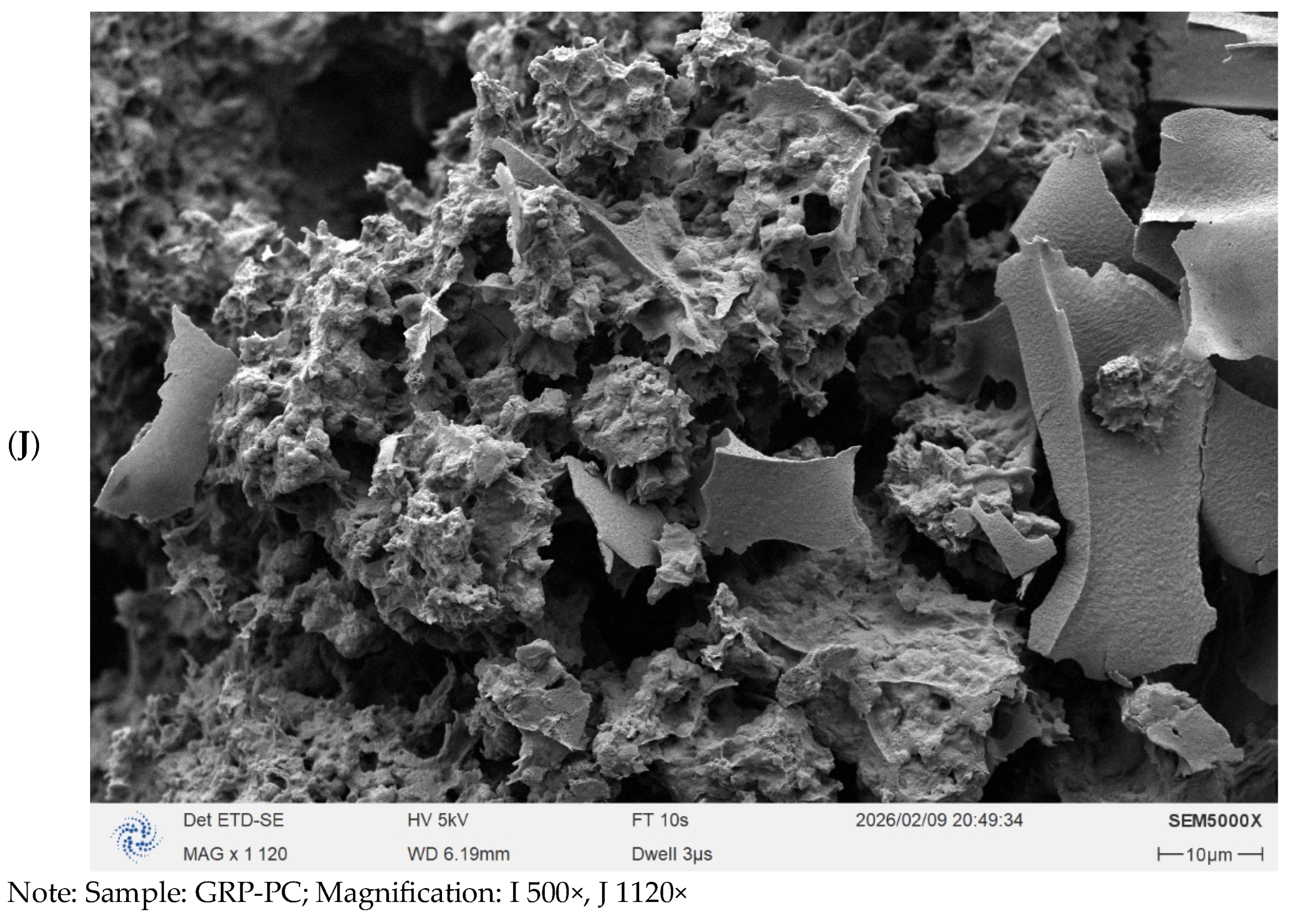
3.4. Scanning Electron Microscope


3.5. UV-Vis Analysis
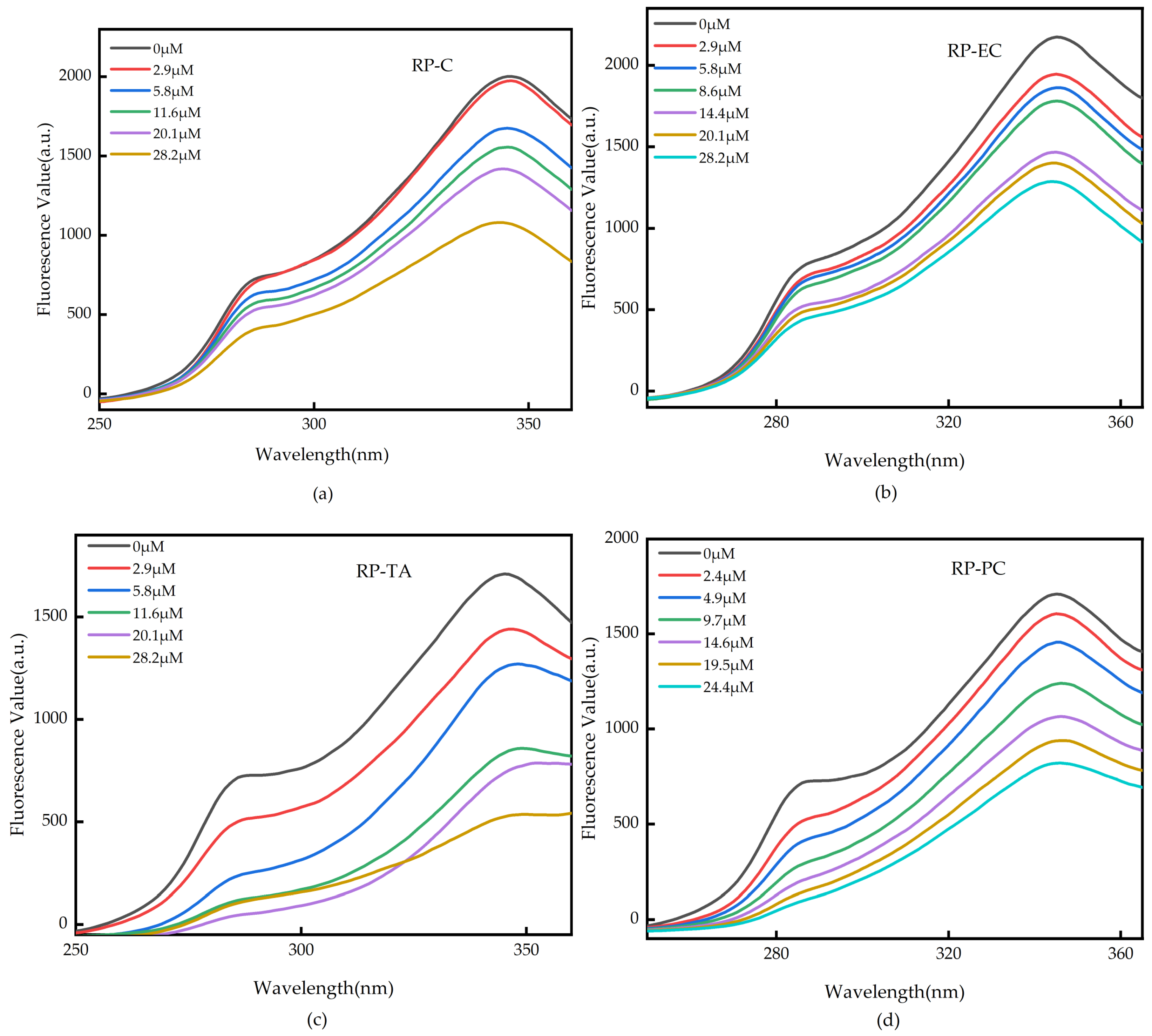
3.6. Fluorescence Spectrum
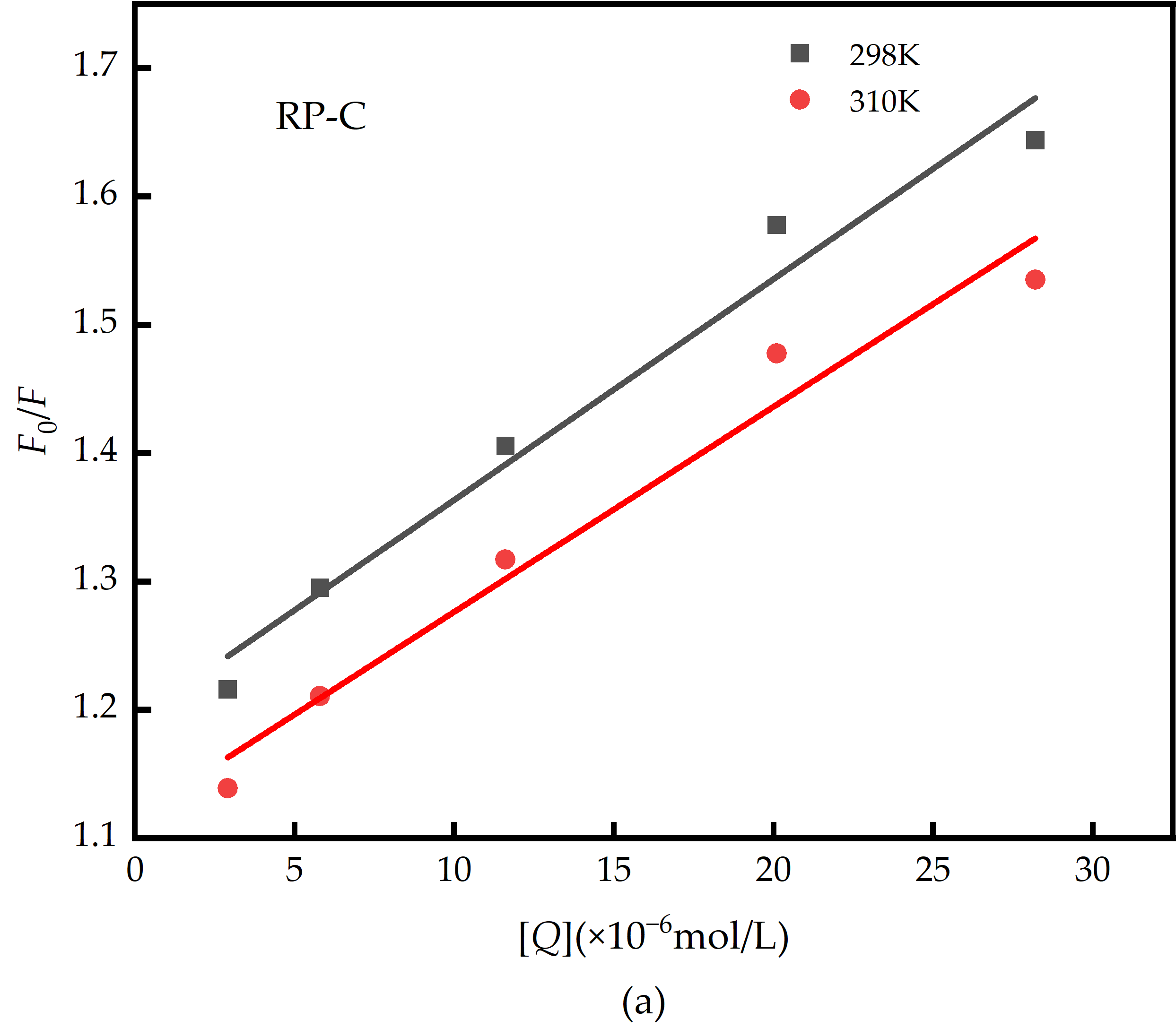
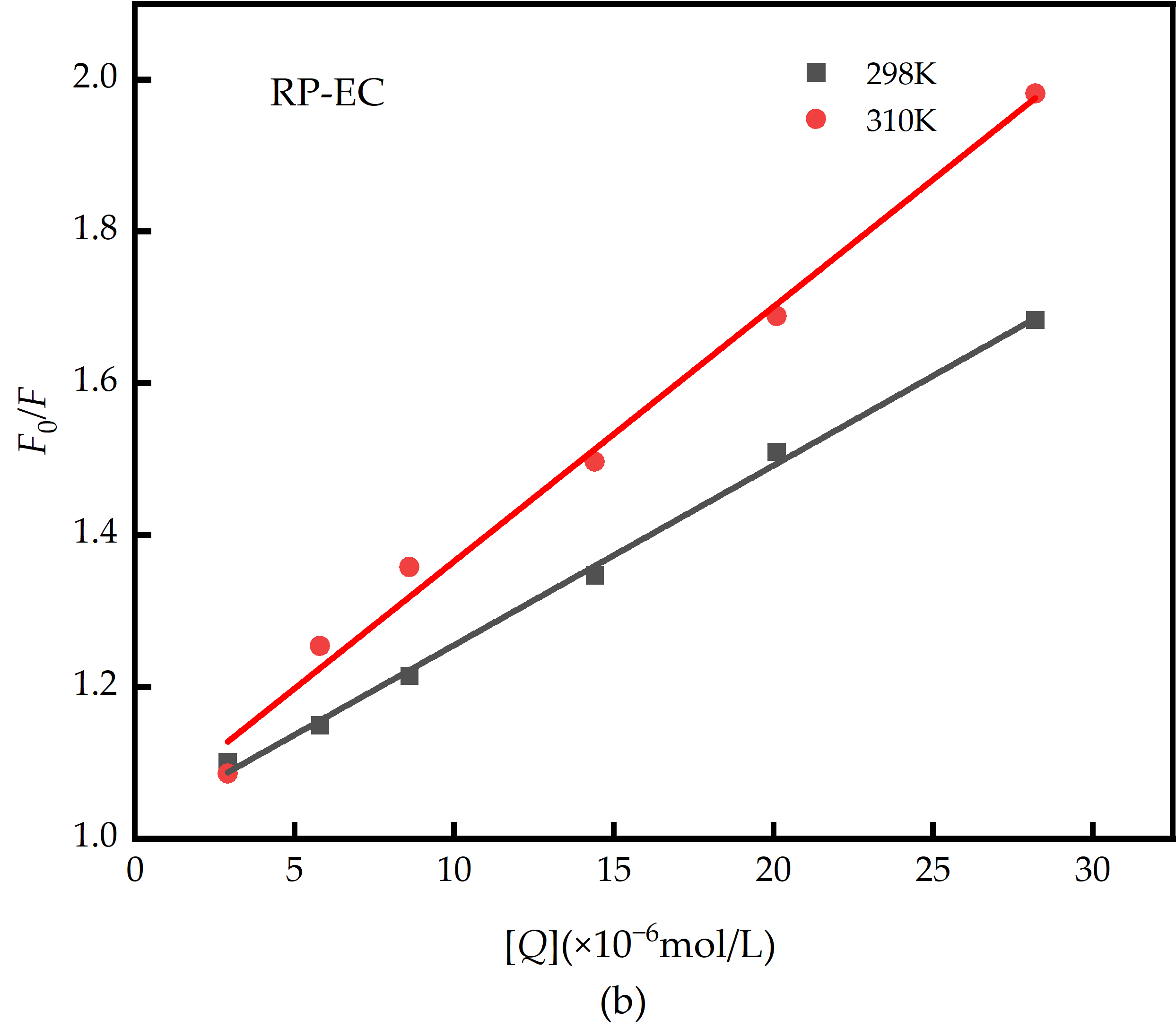
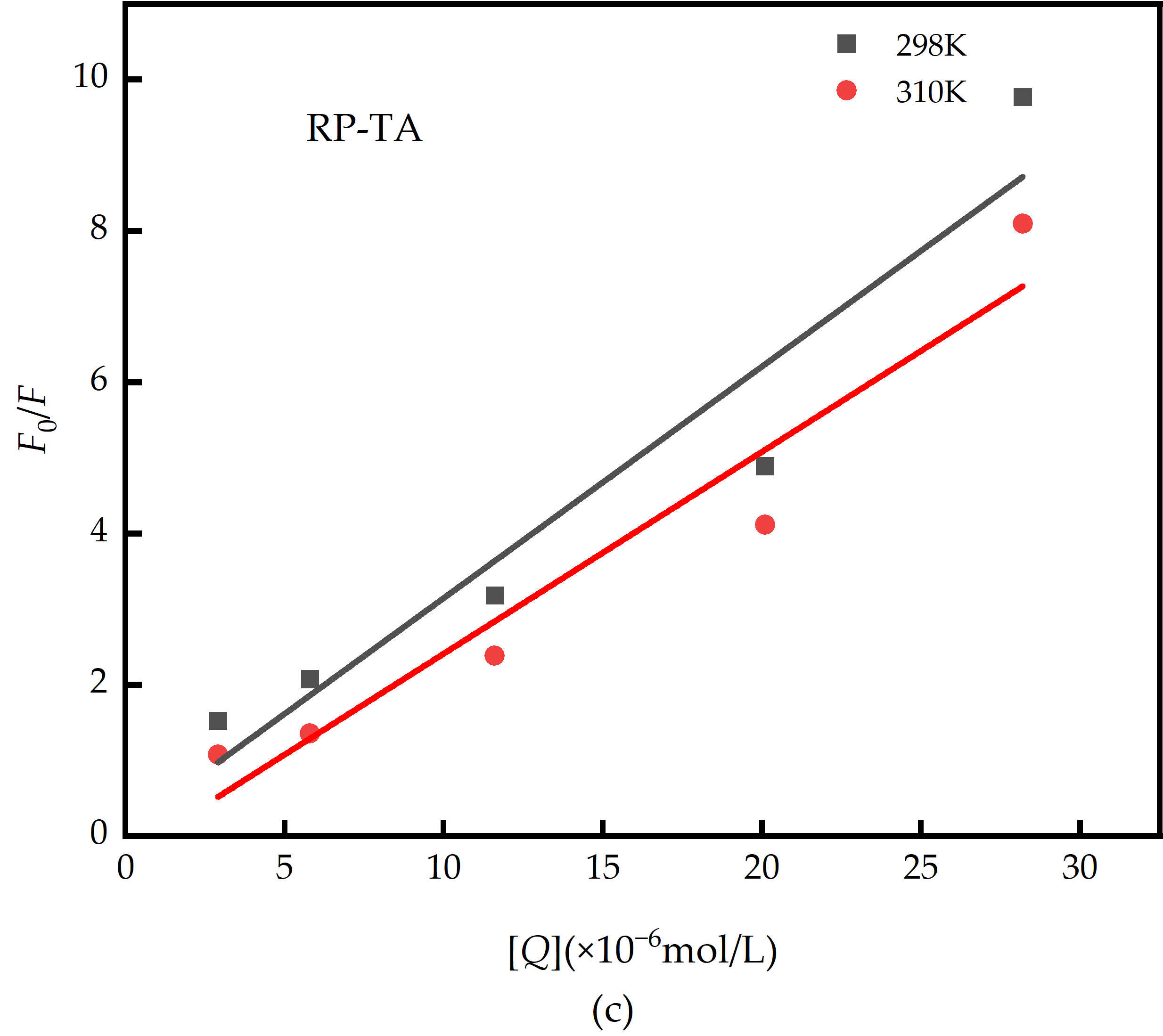
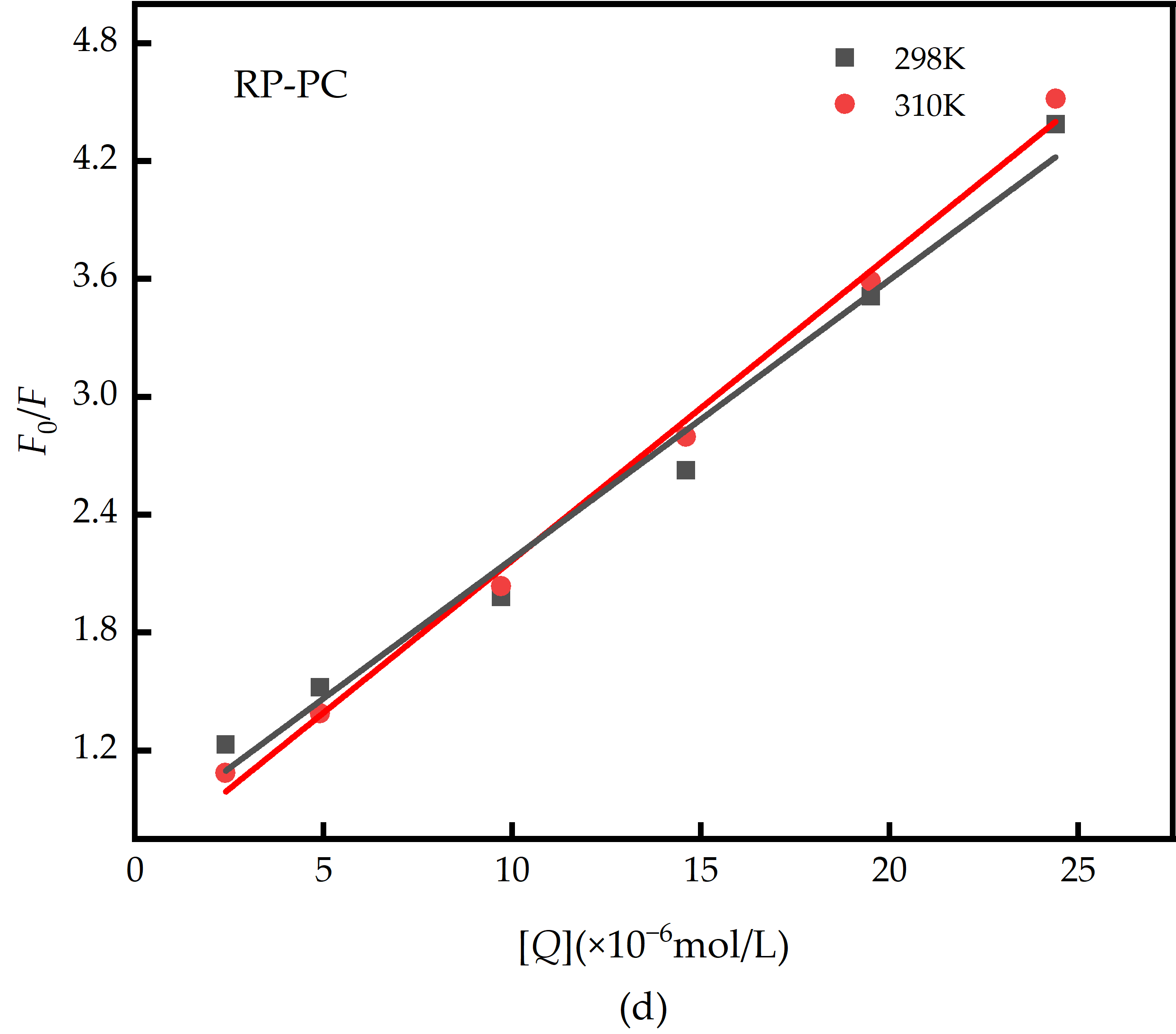
3.7. Analysis of Quenching Type


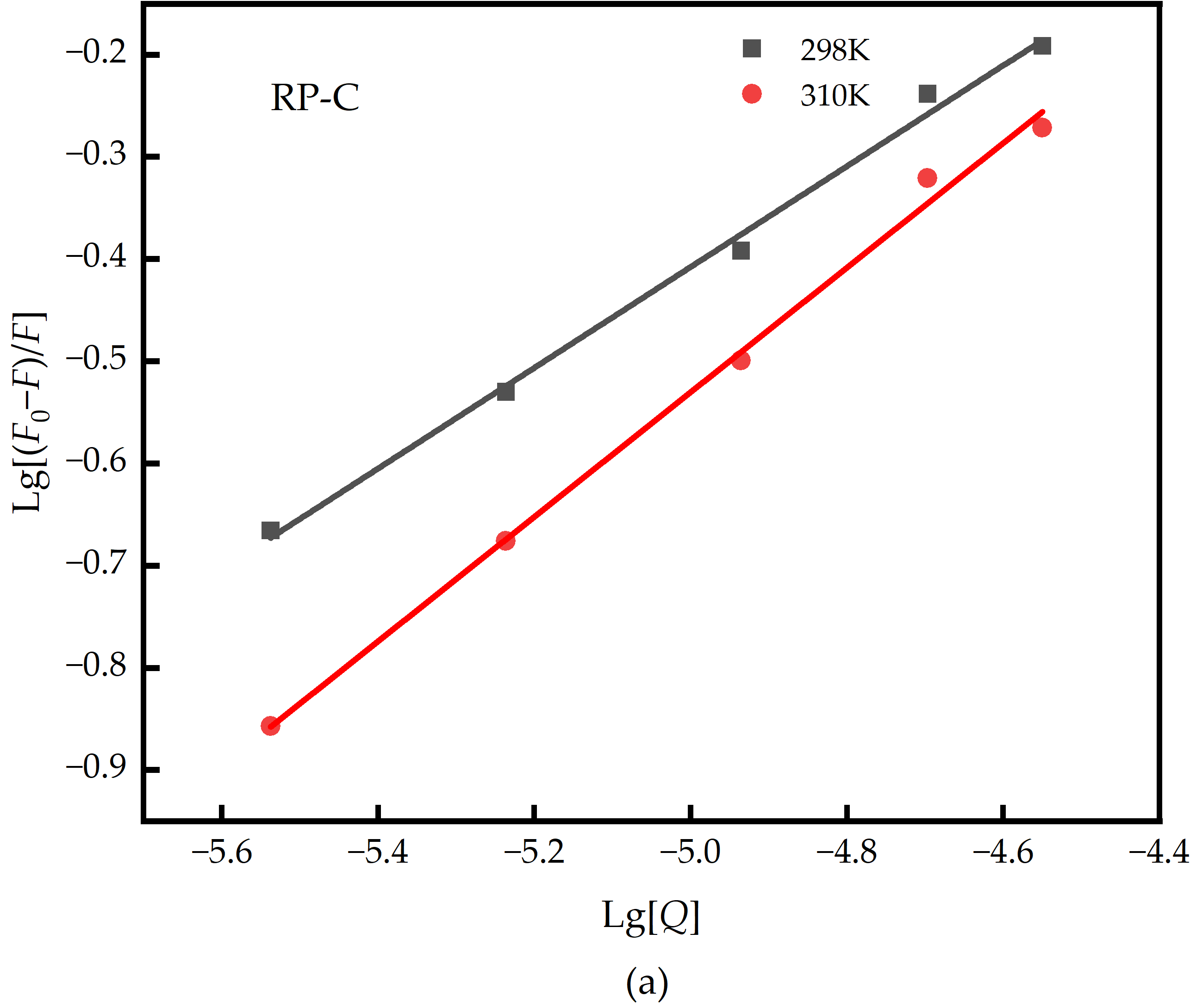
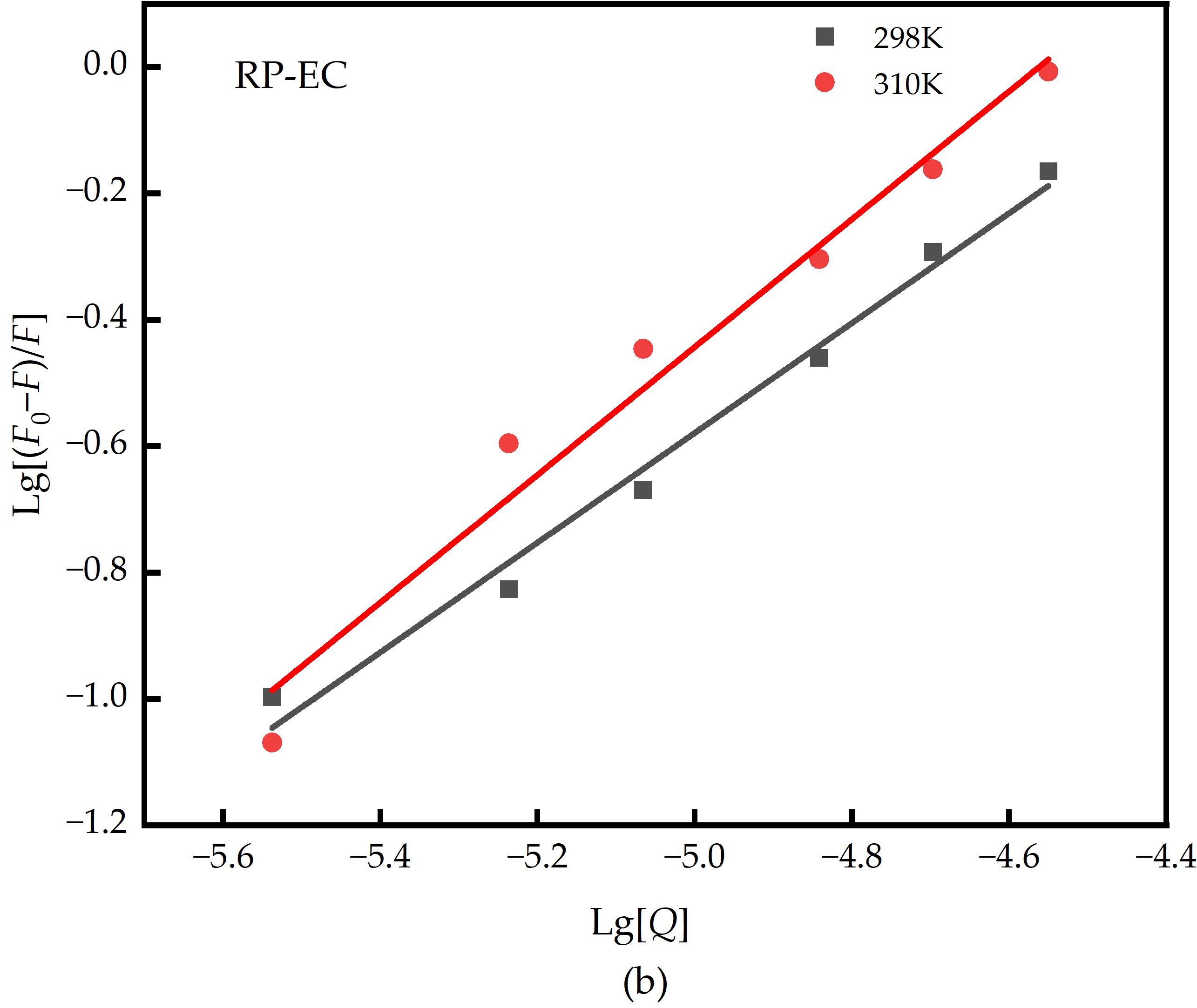
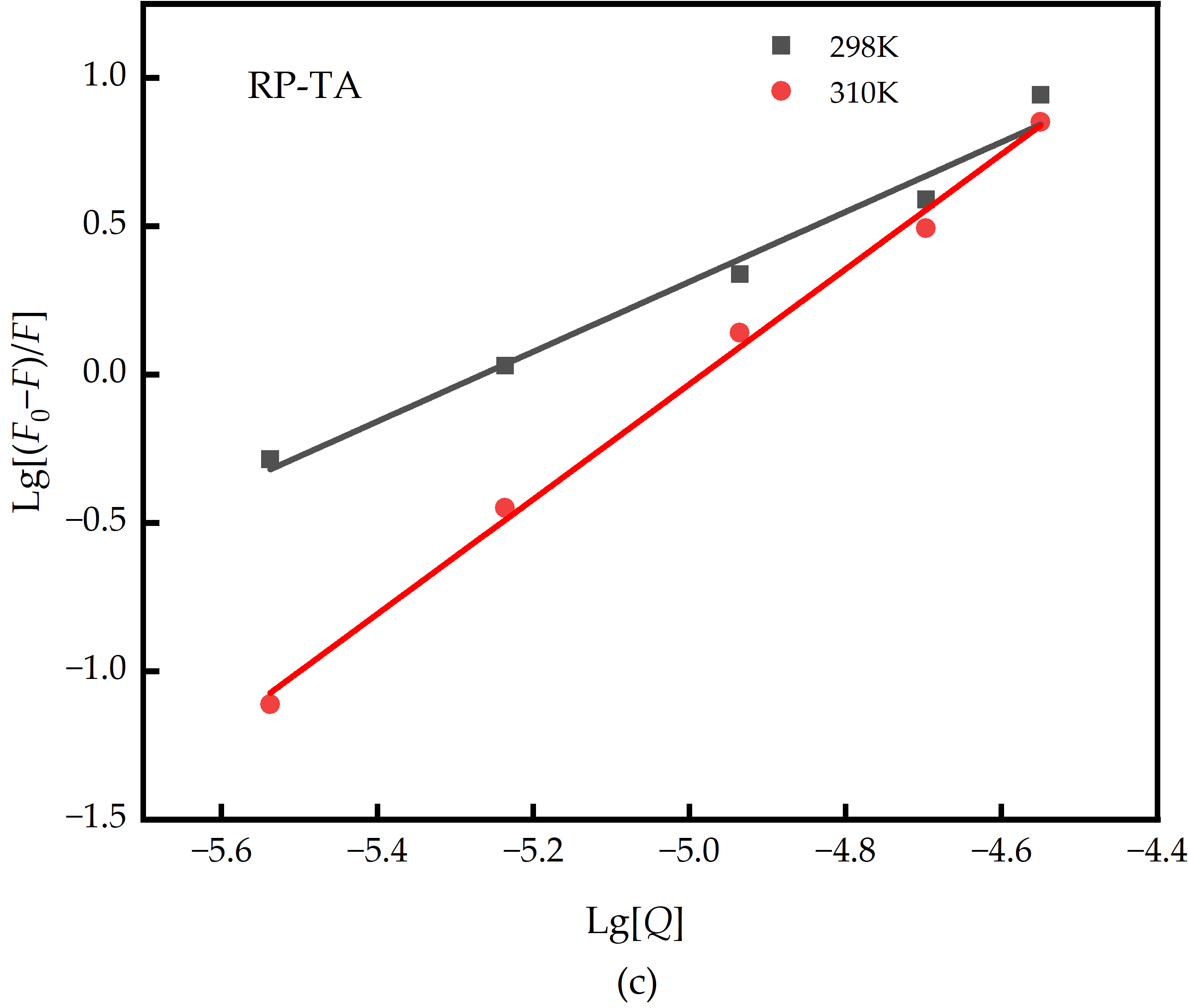
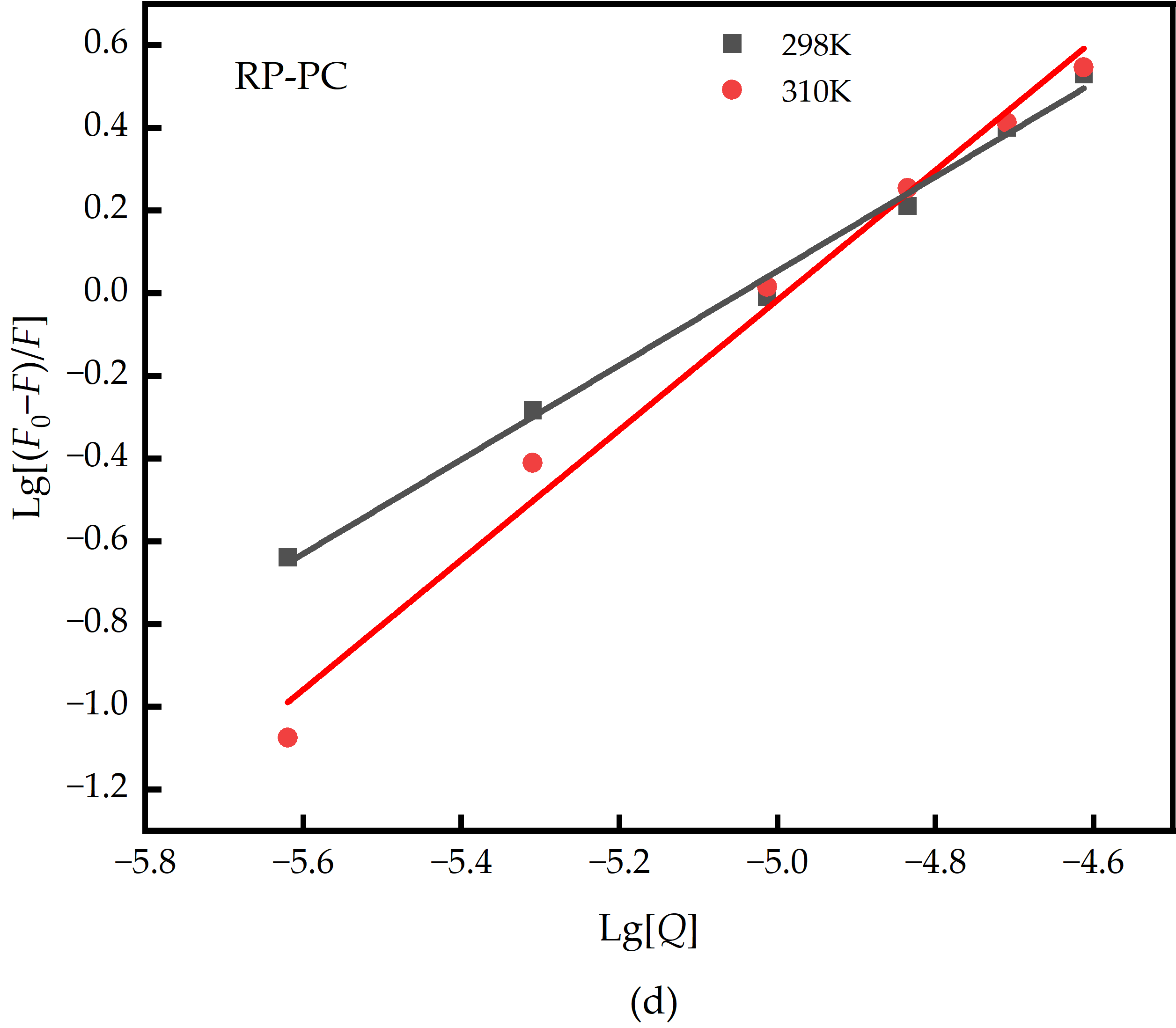
3.8. Analysis of Binding Constant and Binding Sites
3.9. Analysis of Non-Covalent Interaction Forces
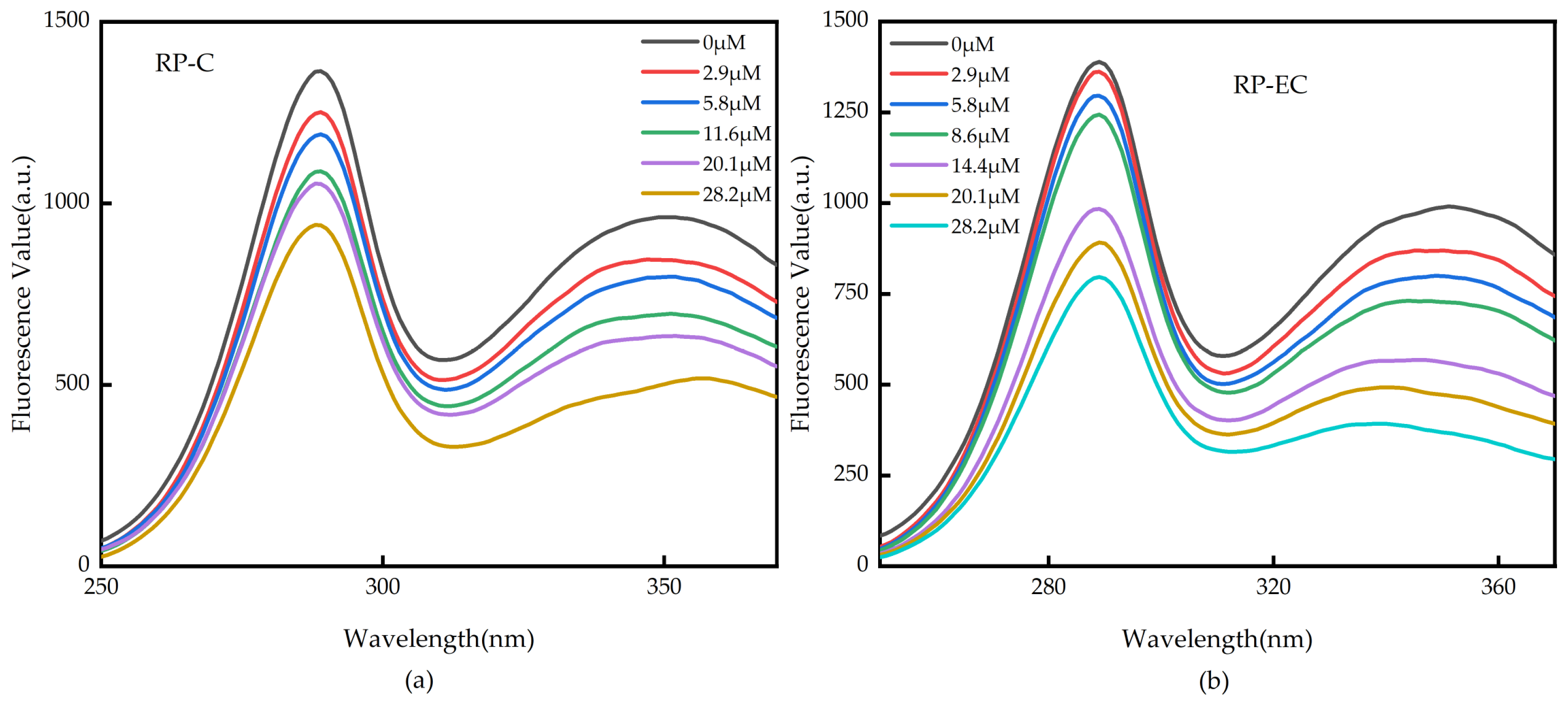
3.10. Synchronous Fluorescence Spectral Analysis
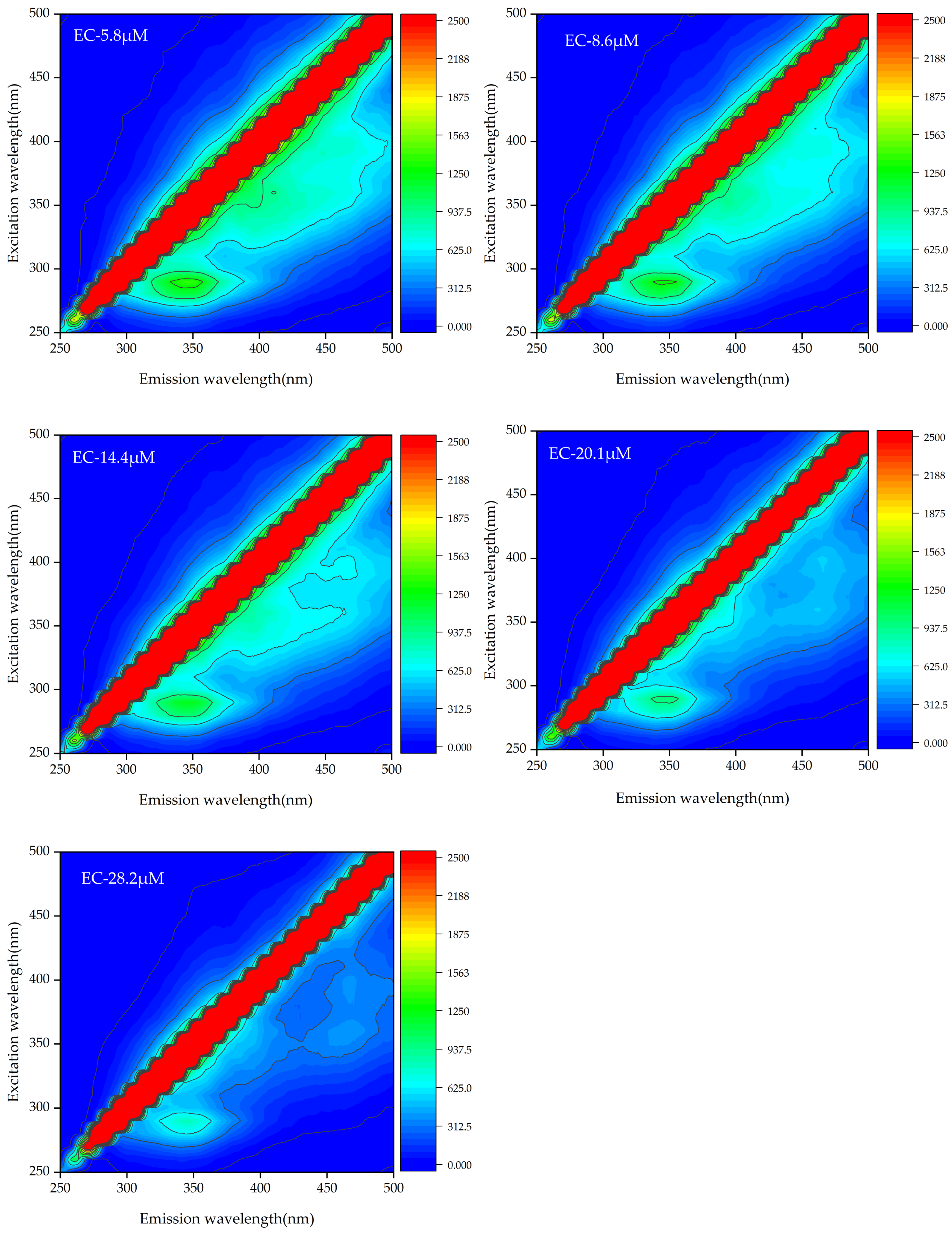
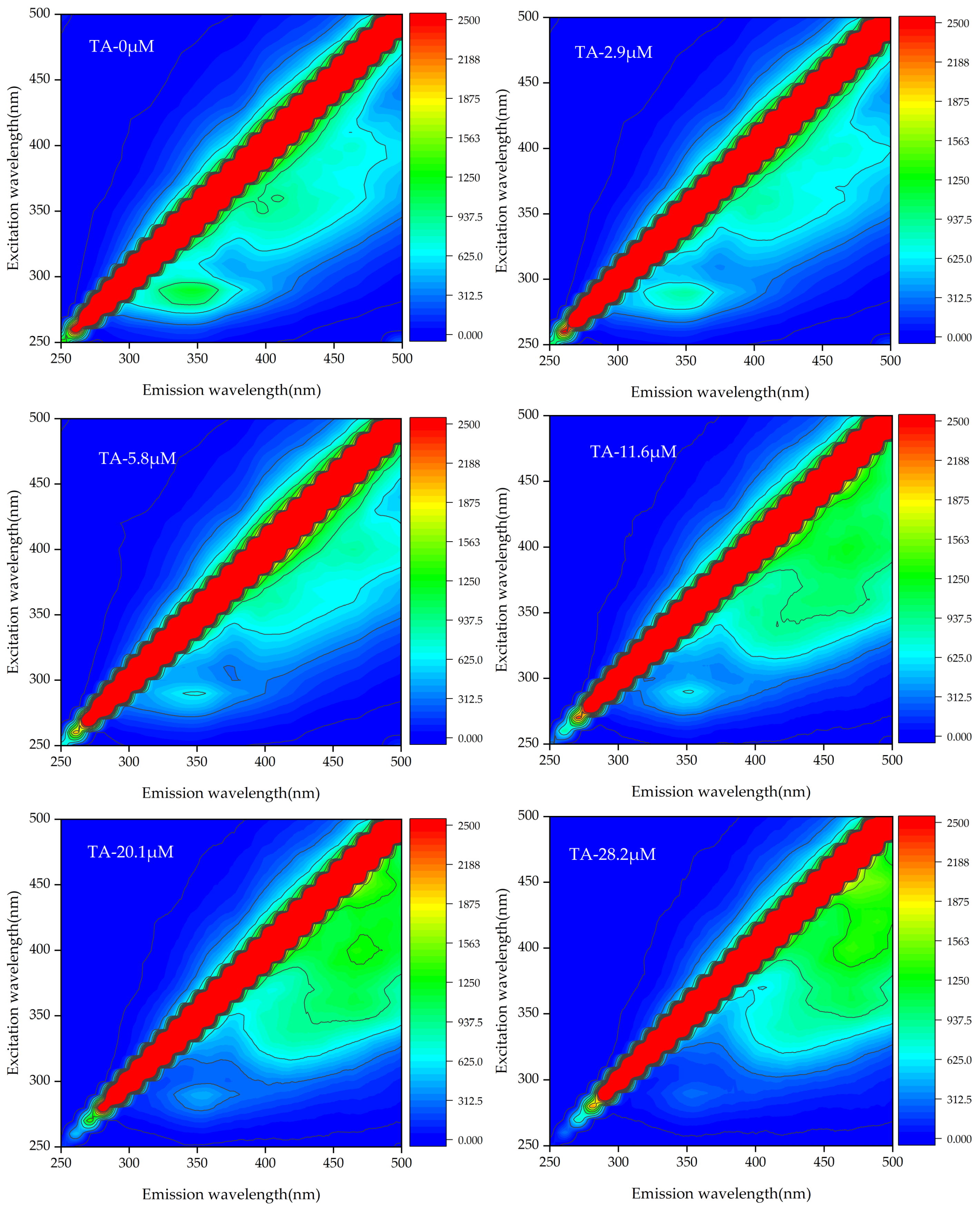
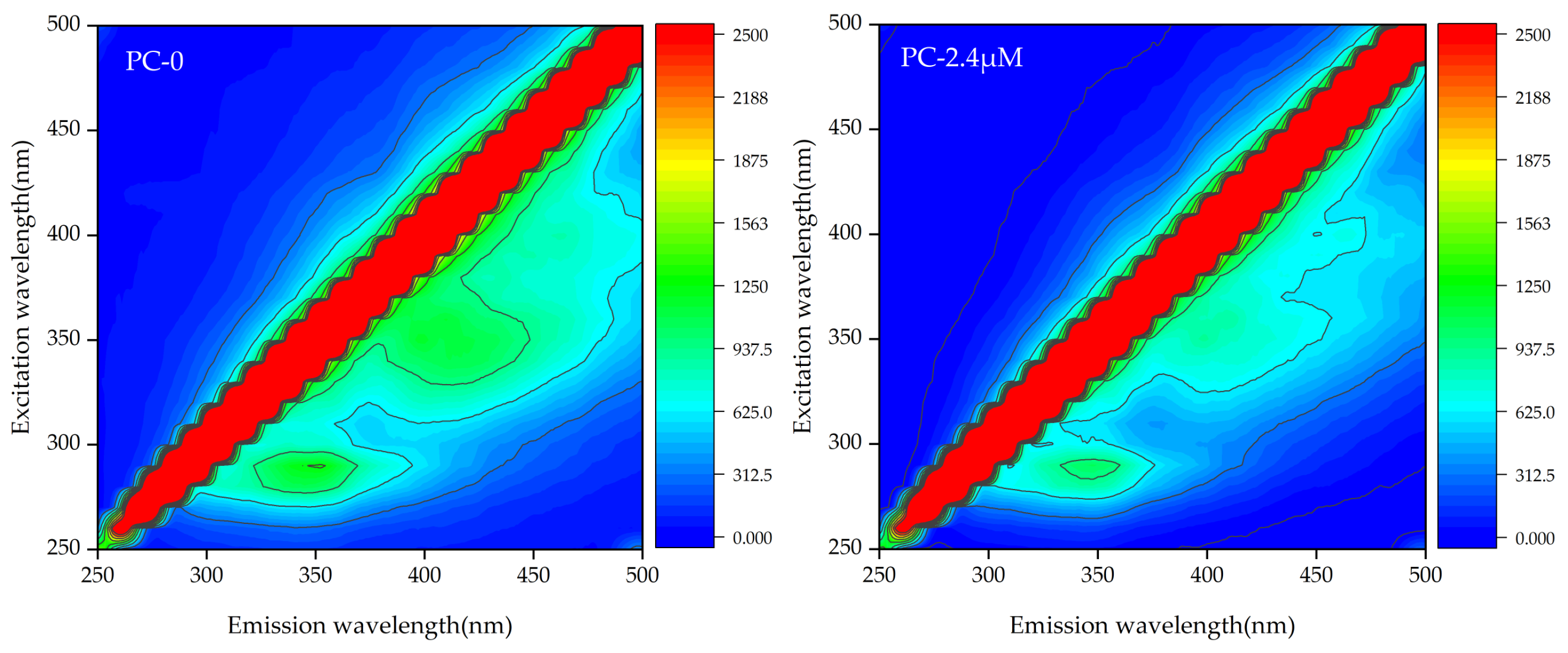
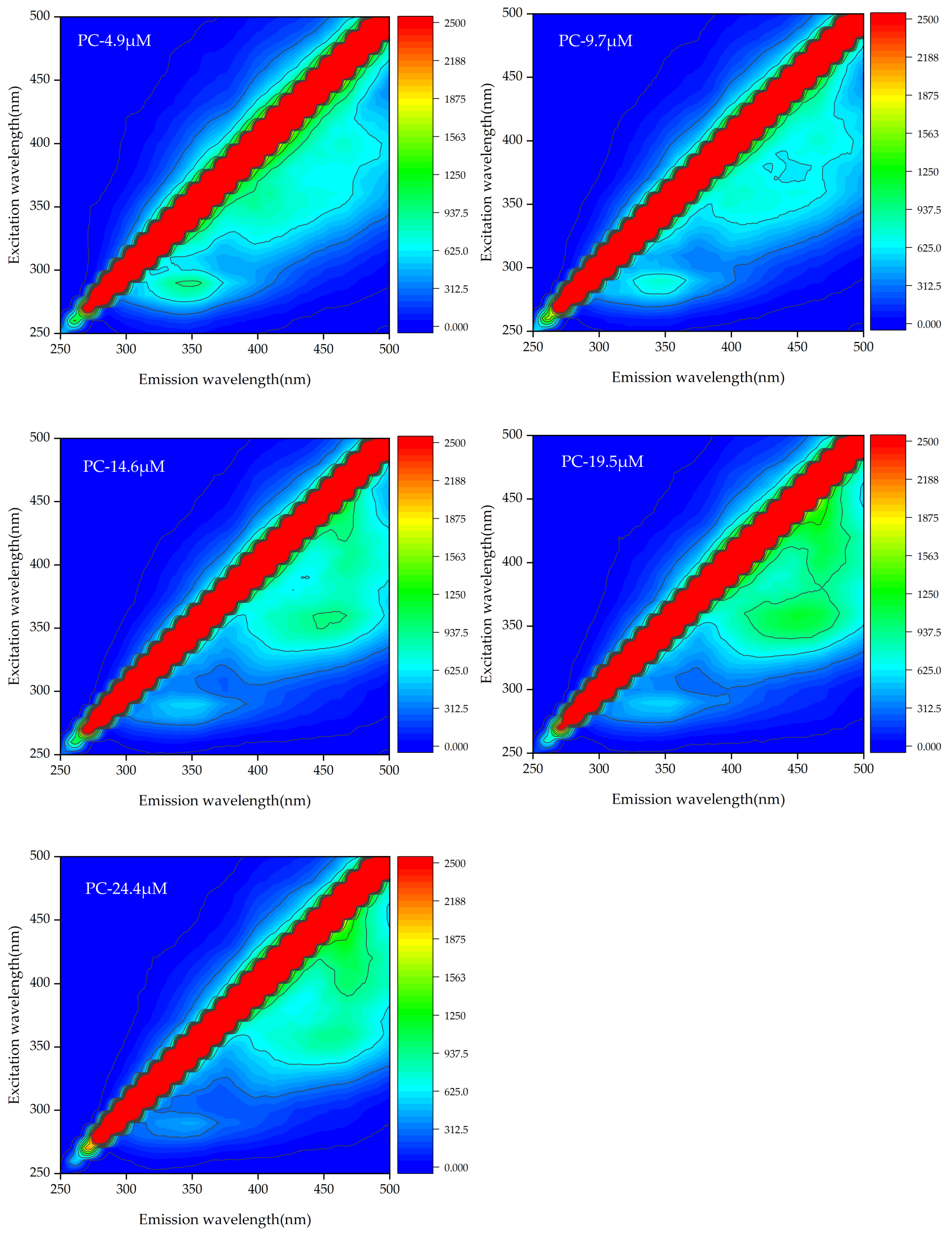
3.11. Three-Dimensional Fluorescence Spectroscopy Analysis
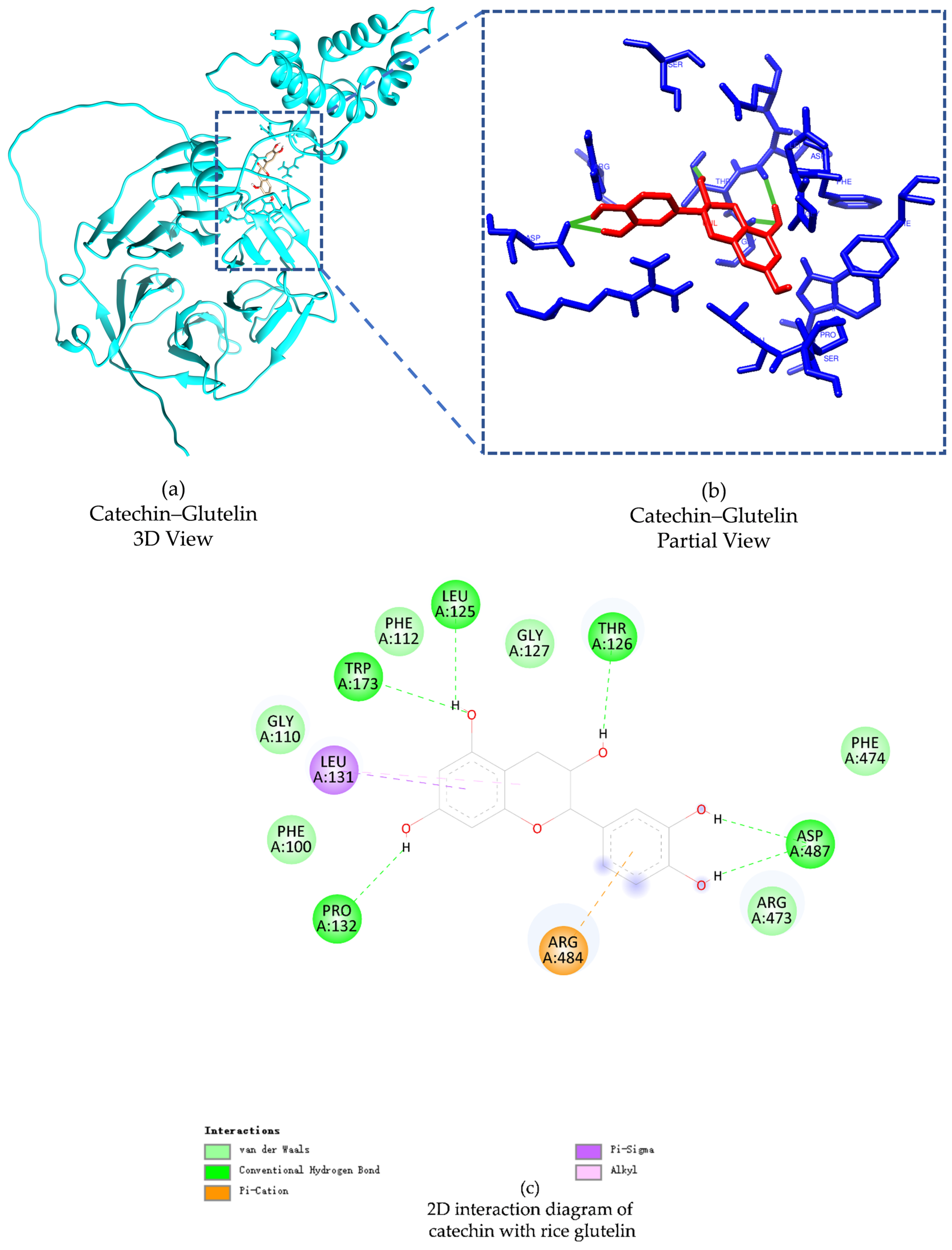
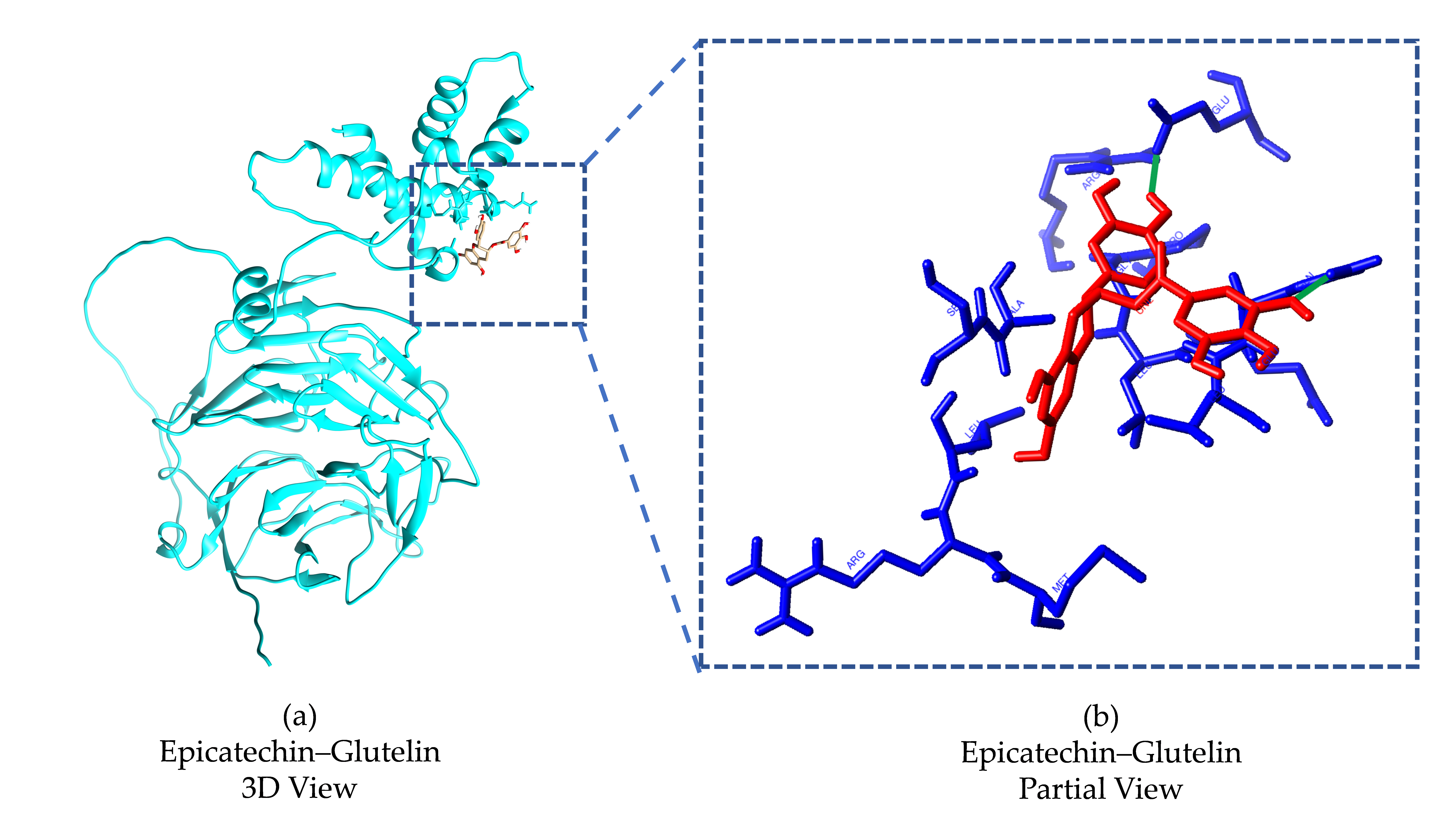
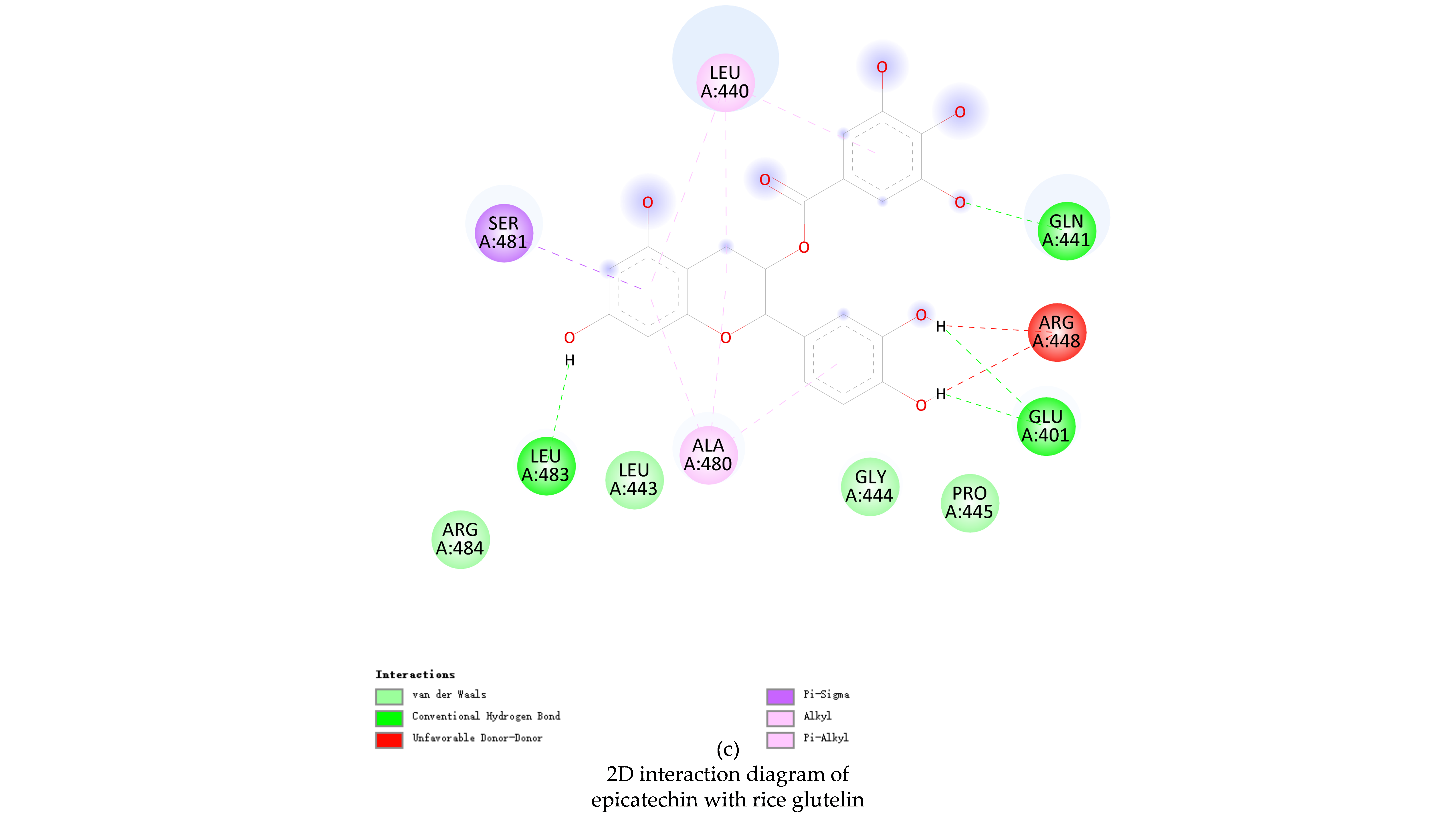
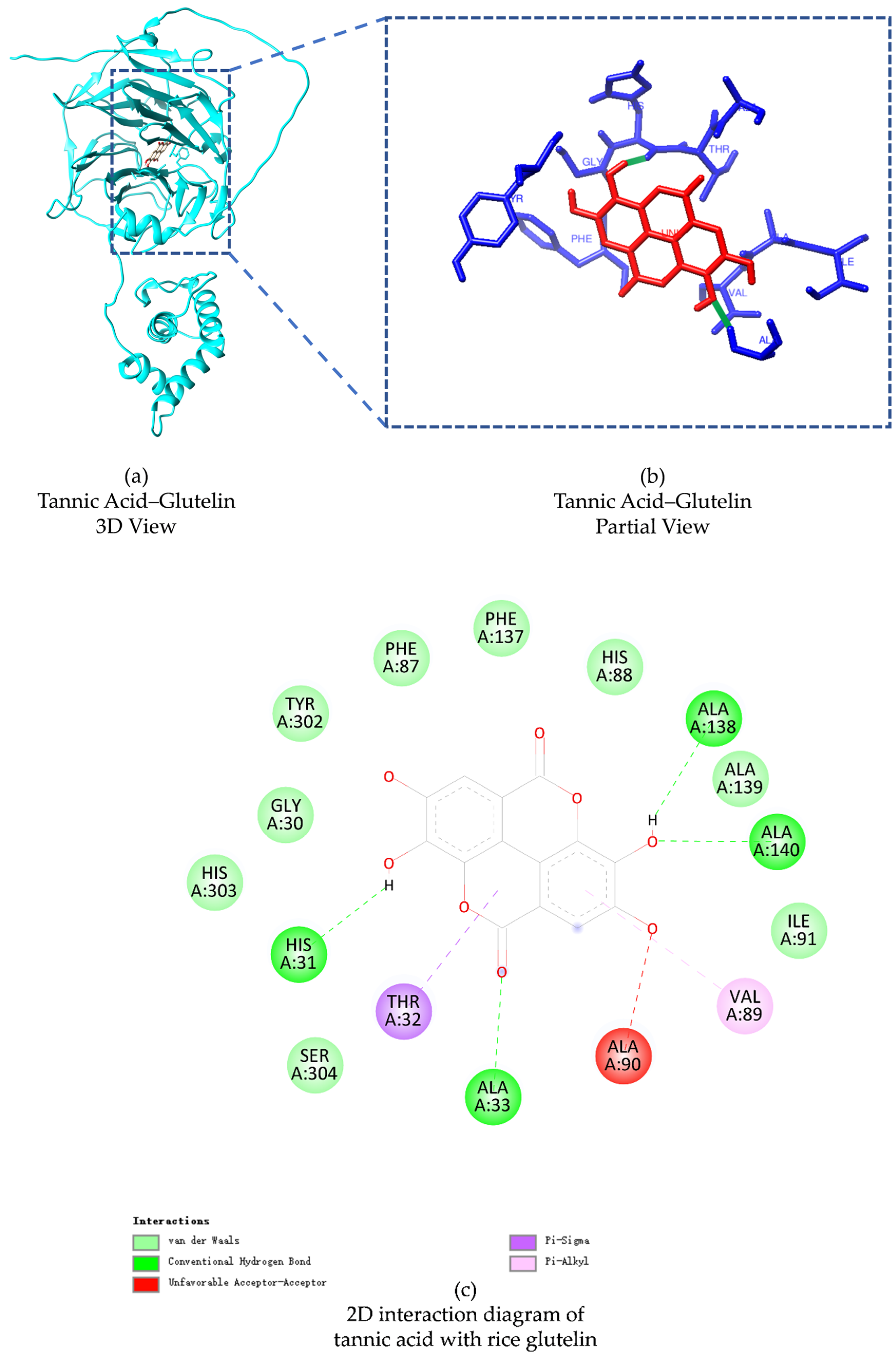
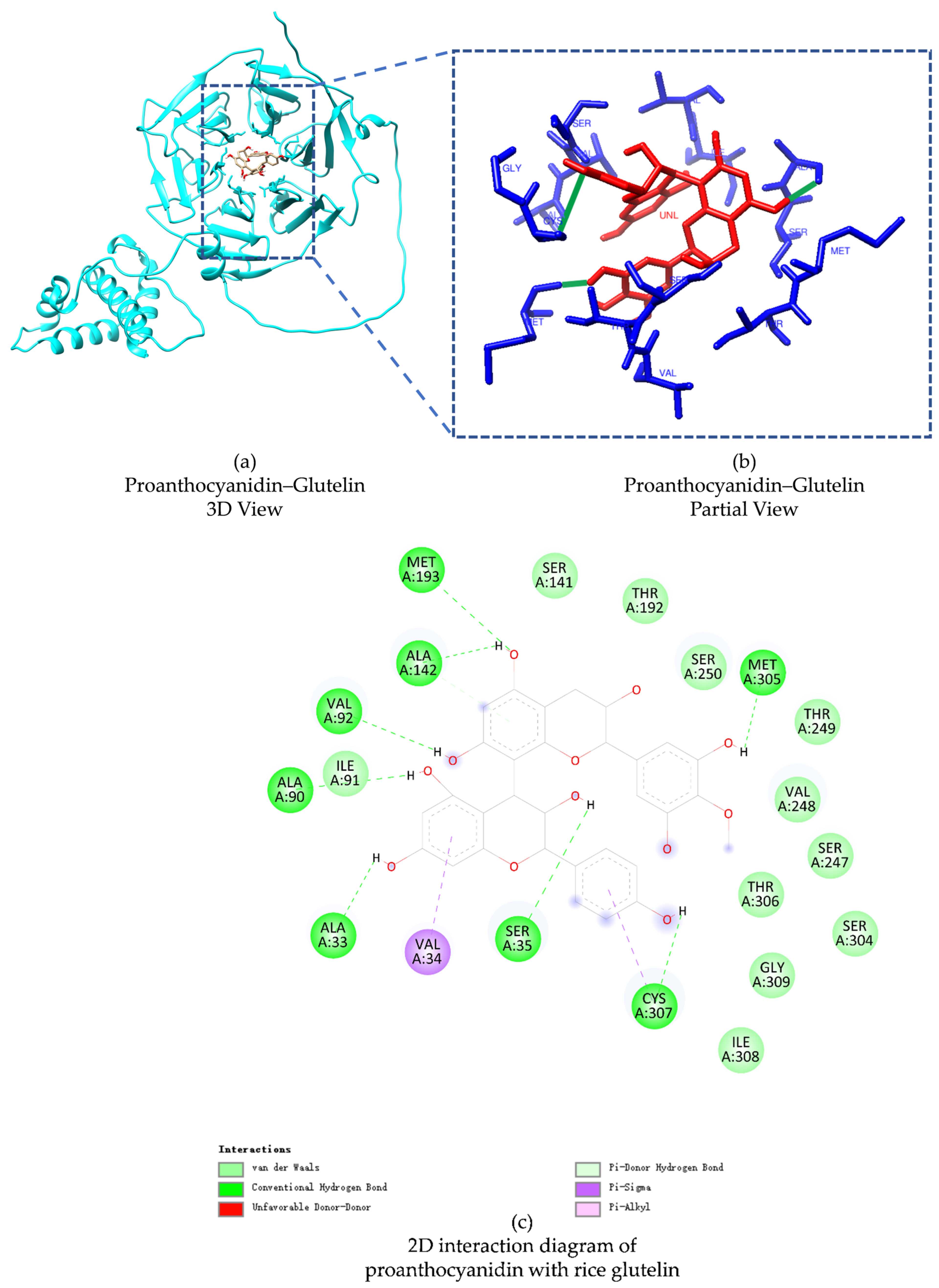
3.12. Molecular Docking Simulation of Polyphenols with Rice Glutenin
4. Conclusions
- (1)
- At the end of the temperature sweep (95 °C), the storage moduli of GRP-PC, GRP-TA, and GRP were comparable and nearly superimposable, while GRP-EC and GRP-C were distinctly lower. In contrast, after cold storage, the frequency sweep (25 °C) showed that GRP had a much higher modulus (20,670 Pa) than all polyphenol-composite gels, indicating that the pure protein network can rearrange more freely during refrigeration, whereas the crosslinks introduced by polyphenols, especially PC and TA, restrict chain mobility and result in a more shear-sensitive structure.
- (2)
- Digestibility was reduced by all polyphenols. C caused the strongest reduction (from 77.4% to 67.6%, a decrease of 9.8%), followed by EC (to 69.6%, a decrease of 7.8%), while PC and TA caused only minor reductions (to 75.2% and 74.5%, respectively). The stronger inhibitory effect of C and EC is likely due to their weaker binding to rice protein, allowing rapid release from the gel matrix and early inhibition of digestive enzymes. In contrast, all polyphenol-containing gels exhibited markedly increased radical scavenging activity; EC and PC showed the highest DPPH scavenging rates (77.99% and 76.51% in the intestinal phase, respectively), more than six times that of GRP (12.98%).
- (3)
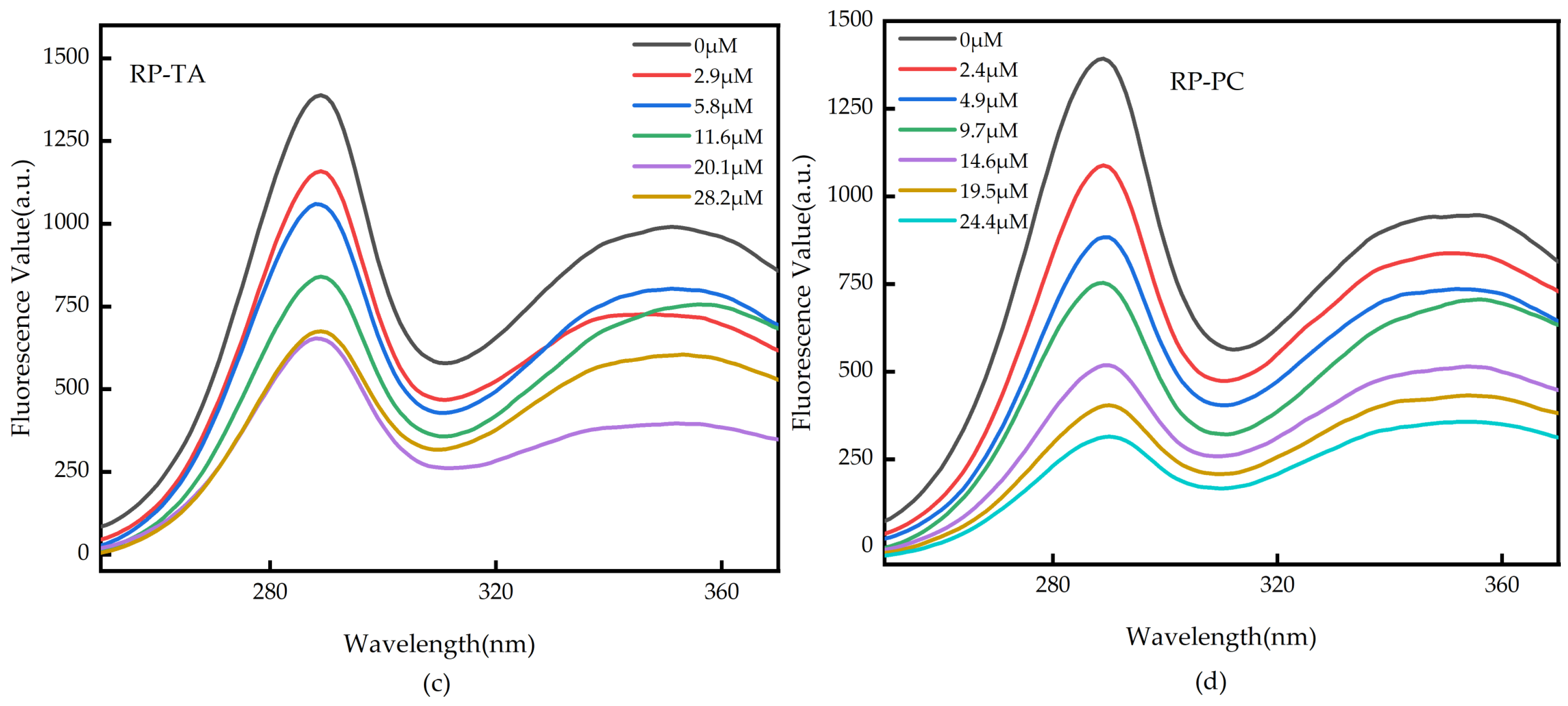
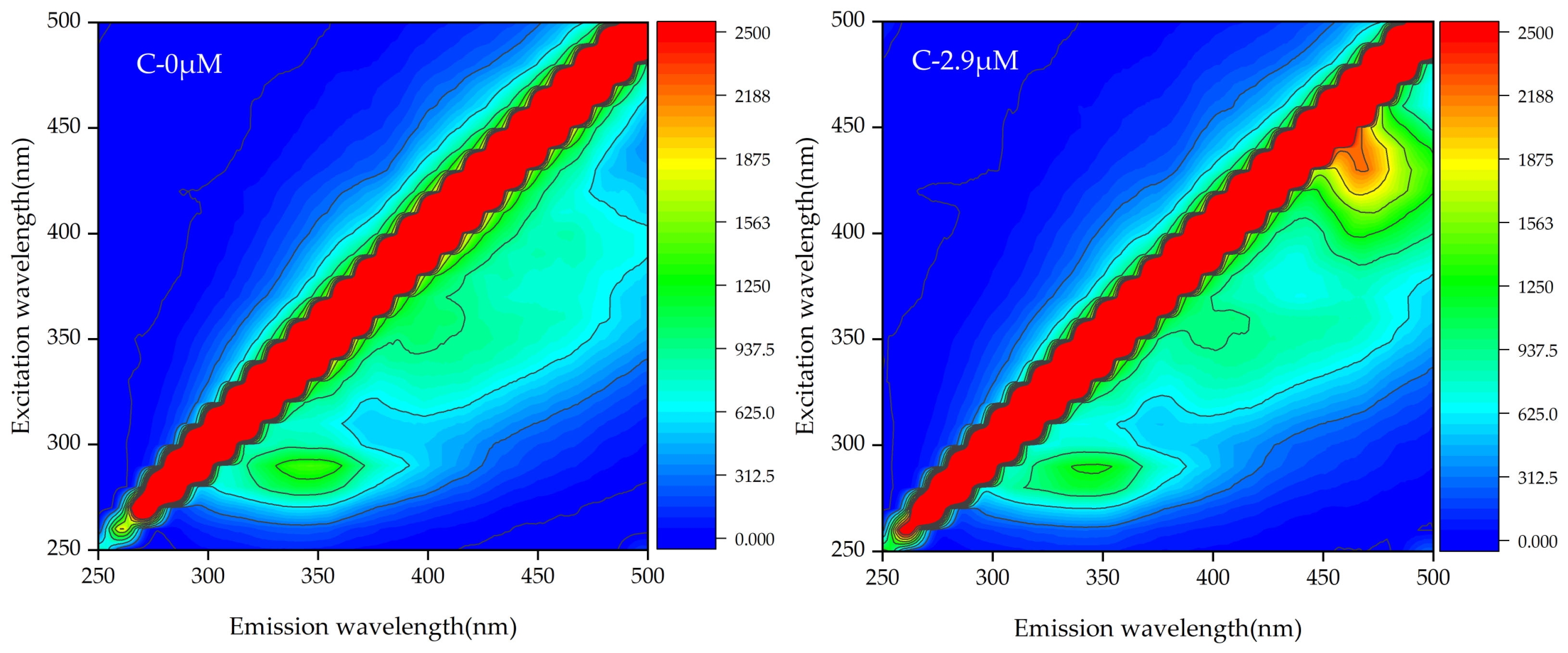
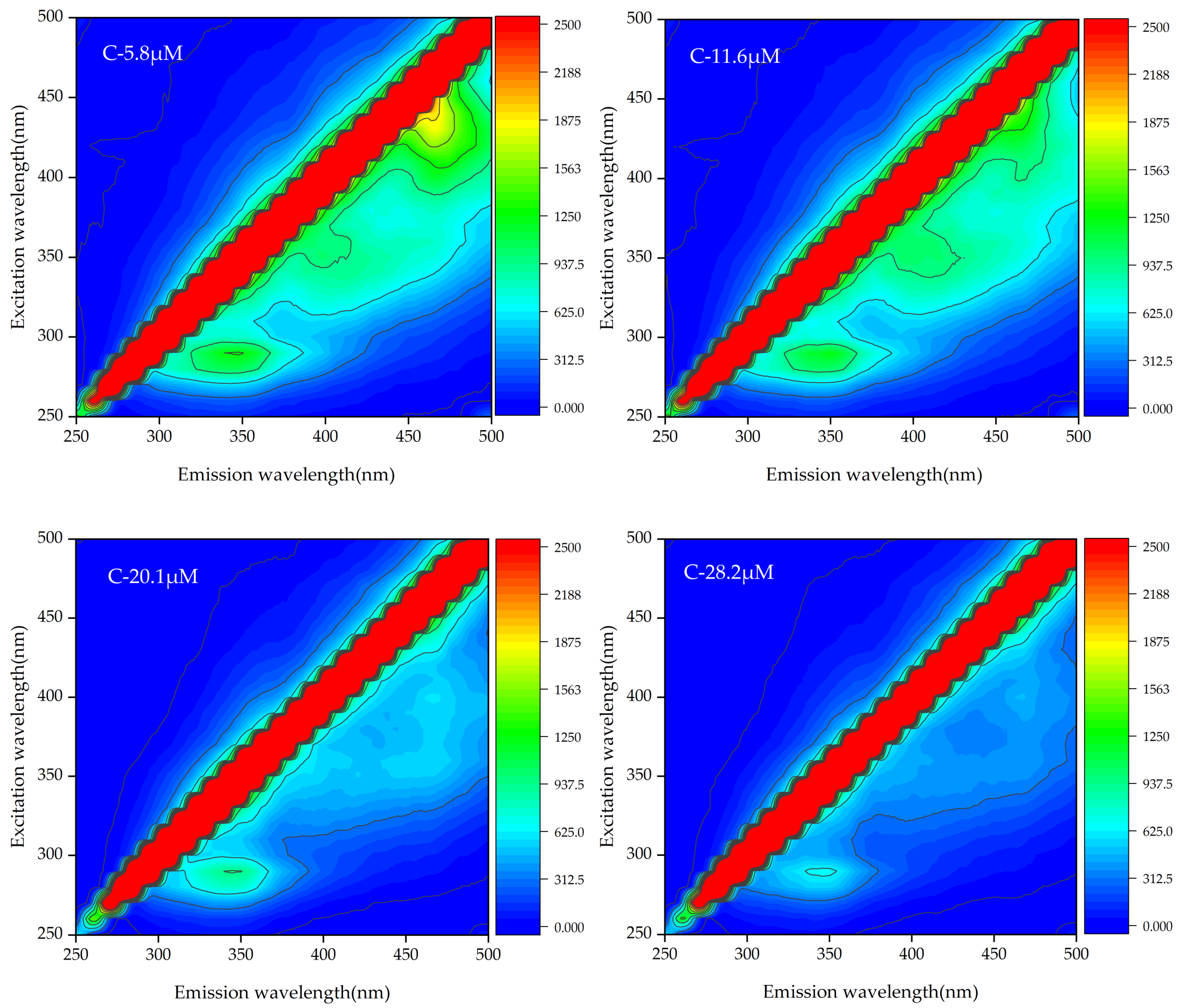
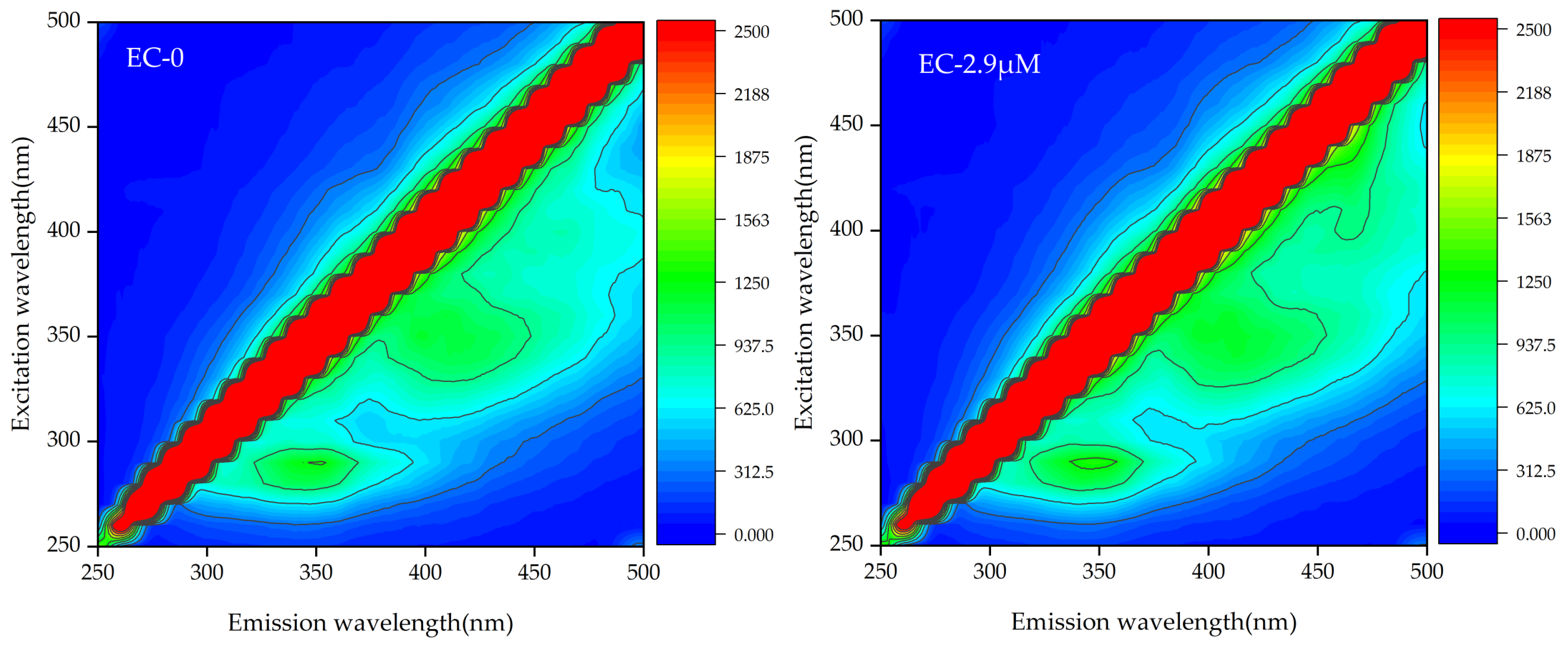
- Microstructurally, C and EC induced loosely crosslinked, porous networks, whereas TA and PC formed dense, sheet-like aggregates. Fluorescence quenching and thermodynamic analysis indicated static, spontaneous binding driven by hydrophobic interactions (ΔH > 0, ΔS > 0, ΔG < 0). Molecular docking showed that PC formed 8 hydrogen bonds with rice glutelin, TA 4, C 5, and EC 3.
Supplementary Materials
Author Contributions
Funding
Institutional Review Board Statement
Informed Consent Statement
Data Availability Statement
Conflicts of Interest
References
- Rivero Meza, S.L.; Cañizares, L.; Dannenberg, B.; Peres, B.B.; Rodrigues, L.A.; Mardade, C.; De Leon, M.A.; Gaioso, C.A.; Egea, I.; De Oliveira, M. Sustainable Rice Bran Protein: Composition, Extraction, Quality Properties and Applications. Trends Food Sci. Technol. 2024, 145, 104355. [Google Scholar] [CrossRef]
- Liu, B.; Wang, Z.; Lai, S.; Yang, L. Rice Protein: Recent Advances in Composition and Protential Physiological Functions. Food Sci. Hum. Wellness 2025. [Google Scholar] [CrossRef]
- Chen, W.; Ding, Y.; Zhao, Y.-M.; Ma, H. Strategies to Improve the Emulsification Properties of Rice Proteins as a Promising Source of Plant-Based Emulsifiers: An Updated Mini-Review. Food Biosci. 2023, 53, 102697. [Google Scholar] [CrossRef]
- Roy, T.; Singh, A.; Sari, T.P.; Homroy, S. Rice Protein: Emerging Insights of Extraction, Structural Characteristics, Functionality, and Application in the Food Industry. J. Food Compos. Anal. 2023, 123, 105581. [Google Scholar] [CrossRef]
- Yu, Y.; Gaine, G.K.; Zhou, L.; Zhang, J.; Wang, J.; Sun, B. The Classical and Potential Novel Healthy Functions of Rice Bran Protein and Its Hydrolysates. Crit. Rev. Food Sci. Nutr. 2022, 62, 8454–8466. [Google Scholar] [CrossRef] [PubMed]
- Mahmud, N.; Valizadeh, S.; Oyom, W.; Tahergorabi, R. Exploring Functional Plant-Based Seafood: Ingredients and Health Implications. Trends Food Sci. Technol. 2024, 144, 104346. [Google Scholar] [CrossRef]
- Lv, P.; Ye, Q.; Wang, Y.; Mao, L.; Yu, R.; Selomulya, C. Rice Protein-Based Gel Particles for Pickering Emulsion. Food Hydrocoll. 2025, 169, 111655. [Google Scholar] [CrossRef]
- Ma, Z.; Guo, A.; Jing, P. Advances in Dietary Proteins Binding with Co-Existed Anthocyanins in Foods: Driving Forces, Structure-Affinity Relationship, and Functional and Nutritional Properties. Crit. Rev. Food Sci. Nutr. 2023, 63, 10792–10813. [Google Scholar] [CrossRef]
- Can, B.; Sanlier, N. Alzheimer, Parkinson, Dementia, and Phytochemicals: Insight Review. Crit. Rev. Food Sci. Nutr. 2025, 65, 1706–1728. [Google Scholar] [CrossRef] [PubMed]
- Shahidi, F.; Pan, Y. Influence of Food Matrix and Food Processing on the Chemical Interaction and Bioaccessibility of Dietary Phytochemicals: A Review. Crit. Rev. Food Sci. Nutr. 2022, 62, 6421–6445. [Google Scholar] [CrossRef]
- Ye, J.-H.; Augustin, M.A. Nano- and Micro-Particles for Delivery of Catechins: Physical and Biological Performance. Crit. Rev. Food Sci. Nutr. 2019, 59, 1563–1579. [Google Scholar] [CrossRef]
- Dvorakova, M.; Soudek, P.; Pavicic, A.; Langhansova, L. The Traditional Utilization, Biological Activity and Chemical Composition of Edible Fern Species. J. Ethnopharmacol. 2024, 324, 117818. [Google Scholar] [CrossRef]
- Jiao, T.; Huang, Y.; Wu, Y.-L.; Jiang, T.; Li, T.; Liu, Y.; Liu, Y.; Han, Y.; Liu, Y.; Jiang, X.; et al. Functional Diversity of Subgroup 5 R2R3-MYBs Promoting Proanthocyanidin Biosynthesis and Their Key Residues and Motifs in Tea Plant. Hortic. Res. 2023, 10, uhad135. [Google Scholar] [CrossRef] [PubMed]
- Brewer, M.S. Natural Antioxidants: Sources, Compounds, Mechanisms of Action, and Potential Applications. Compr. Rev. Food Sci. Food Saf. 2011, 10, 221–247. [Google Scholar] [CrossRef]
- Guo, Y.; Wang, M.; Xing, K.; Pan, M.; Wang, L. Covalent Binding of Ultrasound-Treated Japonica Rice Bran Protein to Catechin: Structural and Functional Properties of the Complex. Ultrason. Sonochem. 2023, 93, 106292. [Google Scholar] [CrossRef]
- Ma, Z.; Zhou, X.; Chen, L.; Chen, X.; Feng, X. Dietary Polyphenol-Protein Interactions: A Literature Review of Advantages, Binding Mechanisms, and Improved Health Applications. Food Res. Int. 2025, 222, 117721. [Google Scholar] [CrossRef] [PubMed]
- Li, Y.; Wan, Z.; Zhao, S.; Lu, H.; McClements, D.J.; Liu, X.; Liu, F. Development of Zein-Based Complexes and Conjugates with Enhanced Surface Hydrophilicity: Structure, Emulsifying, Foaming, and Antioxidant Properties. Food Hydrocoll. 2024, 154, 110064. [Google Scholar] [CrossRef]
- Liu, Z.; Bhandari, B.; Prakash, S.; Mantihal, S.; Zhang, M. Linking Rheology and Printability of a Multicomponent Gel System of Carrageenan-Xanthan-Starch in Extrusion Based Additive Manufacturing. Food Hydrocoll. 2019, 87, 413–424. [Google Scholar] [CrossRef]
- Feng, L.; Wu, J.; Cai, L.; Li, M.; Dai, Z.; Li, D.; Liu, C.; Zhang, M. Effects of Different Hydrocolloids on the Water Migration, Rheological and 3D Printing Characteristics of β-Carotene Loaded Yam Starch-Based Hydrogel. Food Chem. 2022, 393, 133422. [Google Scholar] [CrossRef]
- Chang, H.; Hu, Y.; Shi, Y.; Xiong, J.; Bo, Z. Effects of Gnaphalium Affine Extract on the Gel Properties of •OH-Induced Oxidation of Myofibrillar Proteins. Foods 2024, 13, 1447. [Google Scholar] [CrossRef]
- Li, J.; Shen, J.; Shen, W.; Jin, W.; Guo, C.; Xiong, S.; Hu, Y. Comparative Study on the in Vitro Digestive Characteristics of Surimi Gels Cross-Linked by EGCG and/or TGase. Food Chem. X 2026, 35, 103742. [Google Scholar] [CrossRef] [PubMed]
- Untea, A.E.; Oancea, A.-G.; Vlaicu, P.A.; Varzaru, I.; Saracila, M. Blackcurrant (Fruits, Pomace, and Leaves) Phenolic Characterization before and after In Vitro Digestion, Free Radical Scavenger Capacity, and Antioxidant Effects on Iron-Mediated Lipid Peroxidation. Foods 2024, 13, 1514. [Google Scholar] [CrossRef]
- Wang, Y.; Zhou, J.; Tian, X.; Bai, L.; Ma, C.; Chen, Y.; Li, Y.; Wang, W. Effects of Covalent or Noncovalent Binding of Different Polyphenols to Acid-Soluble Collagen on Protein Structure, Functionality, and Digestibility. J. Agric. Food Chem. 2023, 71, 19020–19032. [Google Scholar] [CrossRef] [PubMed]
- Hu, X.-X.; Huang, Z.-F.; Lu, G.-S.; Huang, J.-Y.; Tan, X.; Huang, G.-T. Interaction of Emodin and Its Derivative Frangulin-a with Bovine Serum Albumin and Calf Thymus DNA. J. Appl. Spectrosc. 2020, 87, 46–53. [Google Scholar] [CrossRef]
- Duan, S.-T.; Liu, B.-S.; Li, T.-T.; Cui, M.-M. Study of the Interaction of Cefonicid Sodium with Bovine Serum Albumin by Fluorescence Spectroscopy. J. Appl. Spectrosc. 2017, 84, 431–438. [Google Scholar] [CrossRef]
- McClements, D.J. Food hydrocolloids: Application as functional ingredients to control lipid digestion and bioavailability. Food hydrocolloids 2021, 111, 106404. [Google Scholar] [CrossRef]
- Wang, L.; Zhang, Y.; Xu, F.; Chen, J. Effects of Ultrasound-Assisted Resting on the Tensile Properties and Gluten Network Formation of Wheat Noodle Dough. J. Food Meas. Charact. 2022, 16, 4273–4283. [Google Scholar] [CrossRef]
- Zhang, X.; Sun, J.; Xu, Y.; Li, C.; Zhou, H.; Xu, B. Elucidating the Synergistic Mechanism of Dextran and Polyphenols in Modulating Thermal Aggregation Behavior and Gel Properties of Myofibrillar Protein Induced by High Temperature. Food Hydrocoll. 2026, 175, 112423. [Google Scholar] [CrossRef]
- Zhang, N.; Zhang, X.; Zhang, Y.; Li, Y.; Gao, Y.; Li, Q.; Yu, X. Non-Covalent Interaction between Pea Protein Isolate and Catechin: Effects on Protein Structure and Functional Properties. Food Funct. 2022, 13, 12208–12218. [Google Scholar] [CrossRef]
- Cao, W.; Li, L.; Wang, J.; Guo, W.; Chen, W.; Pan, L.; Li, D. Effects of Black Garlic Polyphenols on the Physicochemical Characteristics, Antioxidant Activity, and Sensory Evaluation of Yogurt. Gels 2025, 11, 561. [Google Scholar] [CrossRef]
- Chen, D.; Zhu, X.; Ilavsky, J.; Whitmer, T.; Hatzakis, E.; Jones, O.G.; Campanella, O.H. Polyphenols Weaken Pea Protein Gel by Formation of Large Aggregates with Diminished Noncovalent Interactions. Biomacromolecules 2021, 22, 1001–1014. [Google Scholar] [CrossRef]
- Kim, W.; Wang, Y.; Selomulya, C. Emerging Technologies to Improve Plant Protein Functionality with Protein-Polyphenol Interactions. Trends Food Sci. Technol. 2024, 147, 104469. [Google Scholar] [CrossRef]
- Qie, X.; Wu, Y.; Chen, Y.; Liu, C.; Zeng, M.; Qin, F.; Wang, Z.; Chen, J.; He, Z. Competitive Interactions among Tea Catechins, Proteins, and Digestive Enzymes Modulate in Vitro Protein Digestibility, Catechin Bioaccessibility, and Antioxidant Activity of Milk Tea Beverage Model Systems. Food Res. Int. 2021, 140, 110050. [Google Scholar] [CrossRef] [PubMed]
- Chen, J.; Lin, C.; Yang, L.; Liu, Y.; Su, G.; Zhang, Y.; Liu, W.; Zhao, M.; Zhao, X.; Huang, L.; et al. Influence of Catechin–PAYCS Interactions on Gastrointestinal Structural and Bioactivity Stability: Key Mechanisms in Digestive Enzymes Inhibition. Food Chem. 2025, 490, 145132. [Google Scholar] [CrossRef]
- Lund, M.N. Reactions of Plant Polyphenols in Foods: Impact of Molecular Structure. Trends Food Sci. Technol. 2021, 112, 241–251. [Google Scholar] [CrossRef]
- Ha, S.M.L.; Schild, K.; Heyn, T.R.; Marel, A.-K.; Schwarz, K.; De Bruijn, W.J.C.; Keppler, J.K. Covalent Protein-Phenolic Modification—Effect of the Phenolic Compound Structure on Protein Modification and Conformational Changes. Food Hydrocoll. 2026, 174, 112405. [Google Scholar] [CrossRef]
- Xu, W.; Ning, Y.; Cao, S.; Wu, G.; Sun, H.; Chai, L.; Wu, S.; Li, J.; Luo, D. Insight into the Interaction between Tannin Acid and Bovine Serum Albumin from a Spectroscopic and Molecular Docking Perspective. RSC Adv. 2023, 13, 10592–10599. [Google Scholar] [CrossRef]
- Wang, N.; Zhao, M.; Li, Y.; Xue, H.-Y.; Si, X.; Shu, C.; Zhou, Y.; Yang, B.-R.; Makarov, S.S.; Chudetsky, A.I.; et al. Multispectral Analysis and Molecular Docking Simulation of the Inhibition Mechanism of Dietary Anthocyanins on Acetylcholinesterase. Food Biosci. 2025, 71, 107136. [Google Scholar] [CrossRef]
- Vivian, J.T.; Callis, P.R. Mechanisms of Tryptophan Fluorescence Shifts in Proteins. Biophys. J. 2001, 80, 2093–2109. [Google Scholar] [CrossRef]
- Lyu, S.; Wang, W. Spectroscopic Methodologies and Computational Simulation Studies on the Characterization of the Interaction between Human Serum Albumin and Astragalin. J. Biomol. Struct. Dyn. 2021, 39, 2959–2970. [Google Scholar] [CrossRef] [PubMed]
- Qian, H.; Guo, F.; Xiong, H.; Zhang, H.; Jiang, L.; Sun, Y. The Interactional Characterization of Lentil Protein Isolate (LPI) with Cyanidin-3-O-Glucoside (C3G) and Their Effect on the Stability and Antioxidant Activity of C3G. Foods 2022, 12, 104. [Google Scholar] [CrossRef] [PubMed]
- Ren, G.; Sun, H.; Guo, J.; Fan, J.; Li, G.; Xu, S. Molecular Mechanism of the Interaction between Resveratrol and Trypsin via Spectroscopy and Molecular Docking. Food Funct. 2019, 10, 3291–3302. [Google Scholar] [CrossRef]
- Yu, S.; He, M.; Zhai, Y.; Xie, Z.; Xu, S.; Yu, S.; Xiao, H.; Song, Y. Inhibitory Activity and Mechanism of Trilobatin on Tyrosinase: Kinetics, Interaction Mechanism and Molecular Docking. Food Funct. 2021, 12, 2569–2579. [Google Scholar] [CrossRef]
- Wang, T.; Wang, N.; Yu, Y.; Yu, D.; Xu, S.; Wang, L. Study of Soybean Protein Isolate-Tannic Acid Non-Covalent Complexes by Multi-Spectroscopic Analysis, Molecular Docking, and Interfacial Adsorption Kinetics. Food Hydrocoll. 2023, 137, 108330. [Google Scholar] [CrossRef]
- Aree, T. Atomic-Level Understanding on Conformational Flexibility of Neochlorogenic and Chlorogenic Acids and Their Inclusion Complexation with β-Cyclodextrin. Food Hydrocoll. 2023, 141, 108742. [Google Scholar] [CrossRef]
- Tao, Y.; Fan, Y.; Liu, G.; Zhang, Y.; Wang, M.; Wang, X.; Li, L. Interaction Study of Astilbin, Isoastilbin and Neoastilbin toward CYP2D6 by Multi-Spectroscopy and Molecular Docking. Luminescence 2021, 36, 1412–1421. [Google Scholar] [CrossRef] [PubMed]
- El Gammal, R.N.; Elmansi, H.; El-Emam, A.A.; Belal, F.; Elzahhar, P.A.; Belal, A.S.F.; Hammouda, M.E.A. Insights on the In-Vitro Binding Interaction between Donepezil and Bovine Serum Albumin. BMC Chem. 2023, 17, 31. [Google Scholar] [CrossRef]
- Li, Y.; Zhou, L.; Zhang, H.; Liu, G.; Qin, X. Preparation, Characterization and Antioxidant Activity of Glycosylated Whey Protein Isolate/Proanthocyanidin Compounds. Foods 2023, 12, 2153. [Google Scholar] [CrossRef] [PubMed]
- Wang, Y.; Zhang, J.; Zhang, L. Study on the Mechanism of Non-Covalent Interaction between Rose Anthocyanin Extracts and Whey Protein Isolate under Different pH Conditions. Food Chem. 2022, 384, 132492. [Google Scholar] [CrossRef]
- Skrt, M.; Benedik, E.; Podlipnik, Č.; Ulrih, N.P. Interactions of Different Polyphenols with Bovine Serum Albumin Using Fluorescence Quenching and Molecular Docking. Food Chem. 2012, 135, 2418–2424. [Google Scholar] [CrossRef]
- Wu, X.; Guo, T.; Luo, F.; Lin, Q. Brown Rice: A Missing Nutrient-Rich Health Food. Food Sci. Hum. Wellness 2023, 12, 1458–1470. [Google Scholar] [CrossRef]



| Sample | Hardness (N) | Gumminess (N) | Chewiness (N) | Springiness | Cohesiveness | Resilience |
|---|---|---|---|---|---|---|
| GRP | 2.35 ± 0.06 a | 0.87 ± 0.02 a | 0.81 ± 0.02 a | 0.92 ± 0.003 b | 0.37 ± 0.001 a | 0.04 ± 0.001 b |
| GRP-C | 2.29 ± 0.04 a | 0.81 ± 0.01 b | 0.79 ± 0.01 a | 0.98 ± 0.023 a | 0.35 ± 0.002 a | 0.05 ± 0.001 a |
| GRP-EC | 2.06 ± 0.03 b | 0.78 ± 0.01 b | 0.77 ± 0.01 a | 0.98 ± 0.005 a | 0.38 ± 0.005 a | 0.05 ± 0.001 a |
| GRP-TA | 1.33 ± 0.13 d | 0.33 ± 0.05 c | 0.25 ± 0.04 c | 0.78 ± 0.009 c | 0.24 ± 0.031 c | 0.03 ± 0.005 c |
| GRP-PC | 1.57 ± 0.03 c | 0.49 ± 0.02 a | 0.49 ± 0.02 b | 1 ± 0.001 a | 0.31 ± 0.006 b | 0.04 ± 0.001 b |
| Sample | T/K | SV Equation | Ksv (106 L·mol−1) | Kq (1014 L·mol−1·s−1) | R2 |
|---|---|---|---|---|---|
| RP-C | 298 | F0/F = 0.0172[Q] + 1.1918 | 0.0172 | 0.0172 | 0.97 |
| 310 | F0/F = 0.0160[Q] + 1.1165 | 0.016 | 0.016 | 0.97 | |
| RP-EC | 298 | F0/F = 0.0237[Q] + 1.0185 | 0.0237 | 0.0237 | 0.99 |
| 310 | F0/F = 0.0335[Q] + 1.0301 | 0.0335 | 0.0335 | 0.99 | |
| RP-TA | 298 | F0/F = 0.3060[Q] + 0.0869 | 0.306 | 0.306 | 0.92 |
| 310 | F0/F = 0.2668[Q] − 0.2565 | 0.2668 | 0.2668 | 0.93 | |
| RP-PC | 298 | F0/F = 0.1420[Q] + 0.7549 | 0.142 | 0.142 | 0.98 |
| 310 | F0/F = 0.1551[Q] + 0.6167 | 0.1551 | 0.1551 | 0.99 |
| Sample | T/K | Double Logarithmic Equation | Ka | n | R2 |
|---|---|---|---|---|---|
| RP-C | 298 | lg[(F0 − F)/F] = 0.493lg[Q] + 2.0571 | 1.14 × 10² | 0.493 | 0.99 |
| 310 | lg[(F0 − F)/F] = 0.6092lg[Q] + 2.5158 | 3.28 × 10² | 0.6092 | 0.99 | |
| RP-EC | 298 | lg[(F0 − F)/F] = 0.8682lg[Q] + 3.7622 | 5.78 × 10³ | 0.8682 | 0.99 |
| 310 | lg[(F0 − F)/F] = 1.0107lg[Q] + 4.6104 | 4.08 × 10⁴ | 1.0107 | 0.97 | |
| RP-TA | 298 | lg[(F0 − F)/F] = 1.1761lg[Q] + 6.1938 | 1.56 × 10⁶ | 1.1761 | 0.98 |
| 310 | lg[(F0 − F)/F] = 1.9366lg[Q] + 9.6507 | 4.47 × 10⁹ | 1.9366 | 0.99 | |
| RP-PC | 298 | lg[(F0 − F)/F] = 1.1395lg[Q] + 5.7516 | 5.64 × 10⁵ | 1.1395 | 0.99 |
| 310 | lg[(F0 − F)/F] = 1.5701lg[Q] + 7.834 | 6.82 × 10⁷ | 1.5701 | 0.99 |
| Sample | T/K | ΔH (kJ·mol−1) | ΔG (kJ·mol−1) | ΔS (kJ·mol−1·K−1) |
|---|---|---|---|---|
| RP-C | 298 | 67.6 | −11.74 | 0.04 |
| 310 | −14.93 | 0.05 | ||
| RP-EC | 298 | 125 | −21.46 | 0.08 |
| 310 | −27.36 | 0.09 | ||
| RP-TA | 298 | 509.46 | −35.33 | 0.15 |
| 310 | −57.27 | 0.21 | ||
| RP-PC | 298 | 306.89 | −32.81 | 0.13 |
| 310 | −46.49 | 0.17 |
| Sample | Minimum Binding Energy (kcal·mol−1) |
|---|---|
| Rice Gluten–Catechin | 5.97 |
| Rice Gluten–Epicatechin | 4.34 |
| Rice Gluten–Tannic Acid | 5.94 |
| Rice Gluten–Proanthocyanidins | 5.76 |
Disclaimer/Publisher’s Note: The statements, opinions and data contained in all publications are solely those of the individual author(s) and contributor(s) and not of MDPI and/or the editor(s). MDPI and/or the editor(s) disclaim responsibility for any injury to people or property resulting from any ideas, methods, instructions or products referred to in the content. |
© 2026 by the authors. Licensee MDPI, Basel, Switzerland. This article is an open access article distributed under the terms and conditions of the Creative Commons Attribution (CC BY) license.
Share and Cite
Wang, A.; Fan, M.; Wu, L. Study on the Effects of Polyphenols on the Properties, Microstructure, and Digestibility of Rice Protein Gel and the Interaction Mechanisms Between Polyphenols and Rice Protein. Foods 2026, 15, 1854. https://doi.org/10.3390/foods15111854
Wang A, Fan M, Wu L. Study on the Effects of Polyphenols on the Properties, Microstructure, and Digestibility of Rice Protein Gel and the Interaction Mechanisms Between Polyphenols and Rice Protein. Foods. 2026; 15(11):1854. https://doi.org/10.3390/foods15111854
Chicago/Turabian StyleWang, Anna, Mengran Fan, and Ligen Wu. 2026. "Study on the Effects of Polyphenols on the Properties, Microstructure, and Digestibility of Rice Protein Gel and the Interaction Mechanisms Between Polyphenols and Rice Protein" Foods 15, no. 11: 1854. https://doi.org/10.3390/foods15111854
APA StyleWang, A., Fan, M., & Wu, L. (2026). Study on the Effects of Polyphenols on the Properties, Microstructure, and Digestibility of Rice Protein Gel and the Interaction Mechanisms Between Polyphenols and Rice Protein. Foods, 15(11), 1854. https://doi.org/10.3390/foods15111854