Article

Evaluation of Various Interventions to Valorize Dry-Aged Waste Products in Ground Beef Formulations


by
Peyton S. Arnold
1,
Cameron C. Catrett
1,
Palika Dias-Morse
2,
Jennifer C. Acuff
3,4 and
Derico Setyabrata
1,2,*
1
Department of Animal Science, University of Arkansas, Fayetteville, AR 72701, USA
2
Department of Animal Science, University of Arkansas Division of Agriculture, Fayetteville, AR 72701, USA
3
Department of Food Science, University of Arkansas, Fayetteville, AR 72704, USA
4
Department of Food Science, Center for Food Safety, University of Arkansas Division of Agriculture, Fayetteville, AR 72704, USA
*
Author to whom correspondence should be addressed.
Foods 2026, 15(11), 1853; https://doi.org/10.3390/foods15111853 (registering DOI)
Submission received: 23 April 2026 / Revised: 19 May 2026 / Accepted: 21 May 2026 / Published: 23 May 2026
(This article belongs to the Section Meat)

Abstract

This study evaluated the impact of treated dry-aged crust inclusions on final ground beef quality. Ground beef (80 lean: 20 fat) was divided into: CON (beef only), NTC (non-treated crust), WW (warm-water-washed crust), DH (dehydrated crust), and SV (sous-vide crust). Treated crusts were chopped, mixed with ground beef (10% inclusion), reground, formed into patties, and subjected to quality and microbial analyses. The pH for day 1 (d1) samples was lower than for day 7 (d7) samples regardless of treatment (p < 0.05). No differences were found for proximate analysis, cook loss, or display loss (p > 0.05). An interaction effect was observed for all color traits (p < 0.05), demonstrating rapid color decline during display in both NTC and WW treatments compared to other treatments. Greater lipid oxidation was observed in CON compared to other treatments before and after display (p < 0.05). The CON, DH, and SV treatments had lower microbial concentrations than NTC and WW (p < 0.05). Texture profile analysis showed elevated hardness values in SV compared to CON, NTC, and WW, while DH did not differ from any treatment (p < 0.05). Our results indicate that DH and SV interventions minimally impact product quality while reducing initial microbial concentrations, suggesting potential use as intervention methods for dry-aged crust.

1. Introduction

Consumers desire an enjoyable eating experience, especially when it comes to meat products. Postmortem aging is a widely accepted natural process that can improve meat quality attributes such as tenderness, juiciness, and flavor [1]. In particular, the dry-aging process has been reported to greatly enhance meat flavor, generating unique flavors such as “beefy,” “brown-roasted,” and “nutty,” which are highly desirable to consumers and further increase demand [2,3].
During the dry-aging process, meat products are exposed to a controlled refrigerated environment without any packaging. Due to the lack of protective barriers, excessive moisture loss will occur, leading to the formation of a crust (dehydrated surfaces) that requires trimming to obtain the consumable portion.
Studies have reported that evaporative and trim losses following dry-aging can range from 15 to 50%, making the process highly costly [4,5,6,7,8]. Recent reports have indicated that dry-aged crust could be upcycled to enhance product functionality and flavor. A study by Xue et al. [9] reported that dry-aged crust inclusion in meat emulsion and ground beef generated a product with higher antioxidative properties and emulsifying capacity, while also increasing the brown-roasted flavor observed in the final product. Similarly, Park et al. [10] also identified that the crust can act as a flavor enhancer for ground beef patties and may also have antioxidant capacity.
Although recent studies have indicated the potential benefits of the crust as a functional ingredient, the utilization of the crust remains limited due to microbial contamination concerns from environmental exposure during the aging process. Recent studies reported that aerobic microbial concentration from the surface of dry-aged meat could range from 4 to 6 Log10 CFU/cm2 [6,8,11]. While some reports indicated a reduction in pathogenic bacteria (e.g., Salmonella spp., E. coli O157:H7, Listeria monocytogenes) concentration following dry aging [12,13], other studies also indicated that the extent of pathogen reduction was dependent on environmental conditions [14,15]. This indicated that both spoilage and pathogenic microorganisms could grow and persist on the dry-aged crust, necessitating interventions to mitigate microbial concerns prior to its use as a functional ingredient.
Currently, only limited information is available on potential interventions to mitigate microbial concerns in dry-aged crust. A recent investigation into the application of interventions to dry-aged crust suggests a reduction in microbial concentration following high-pressure processing [16]. However, the technology is mainly available to large-scale food manufacturers due to its high equipment costs and high-volume requirements, limiting its potential application to small-scale producers commonly associated with dry-aged production. Our recent parallel study evaluated six different low-cost and simple intervention techniques (acid wash, warm water wash, cold water wash, dehydration, sous vide, and UV light) to reduce microbial presence in dry-aged crust [17]. The authors found that dehydration and sous vide treatment of the crust significantly reduced the presence of E. coli O157:H7, Salmonella Heidelberg, and Listeria monocytogenes, indicating potential application of the techniques as an intervention step to minimize microbial concern from dry-aged crust. However, the impact of those interventions on final meat quality and palatability attributes remains unclear. Therefore, this study aims to evaluate low-cost interventions on the dry-aged crust and to assess the effect of crust inclusion on both quality and textural properties of ground beef patties. We hypothesize that processing interventions will improve microbial quality while minimally impacting patty quality.

2. Materials and Methods

2.1. Dry-Aged Crust Sample Preparation

Dry-aged crust trim was obtained from a commercial dry-aging processing facility. The crust sample was collected from beef striploins that were dry-aged for 14 days at 3 °C and 90% relative humidity. The crusts were shipped overnight in a plastic bag placed in a Styrofoam box with gel packs to the University of Arkansas Red Meat Laboratory. Upon arrival, crust samples were vacuum packaged and kept frozen until use (−80 °C). The frozen crust was thawed at 2 °C, divided into four groups, and assigned to the following treatments: non-treated crust (NTC), warm water wash (WW), dehydrated (DH), and sous-vide (SV). The WW treatment was selected for its low cost and accessibility for processors, and the DH and SV treatments were chosen based on the pathogen reduction efficiency reported by Sananikone et al. [17]. The WW crust was washed with 50 °C water for one minute, then allowed to drip for one minute. The DH crust was placed into a dehydrator (Pioneer 5-Tray Food Dehydrator; Cosori, Tustin, CA, USA) set to 60 °C for six hours. The SV crust was placed in a single layer in a vacuum bag, vacuum-packaged (Proxmax Vac. Table Top Vacuum Chamber Sealer; Promarksvac, Ontario, CA, USA), and then placed in a hot water bath (SmartVide sous-vide cooker; Sammic, Evanston, IL, USA) at 60 °C for 2 h. Following treatment, all treated crusts were vacuum-packaged and frozen until further processing (−80 °C). The crust samples were thawed (2 °C) 24 h before use and chopped in a food processor (Premier Series 11-Cup Food Processor; Cuisinart, Stamford, CT, USA) immediately prior to inclusion.

2.2. Beef Patty Preparation

A total of 3 independent batches were prepared in the current study. For each batch, ground beef patties were made from ground beef chubs (80 lean: 20 fat) combined with the previously treated crust. The chubs were equally divided into 5 groups and randomly assigned to 5 treatments: control (CON, no crust inclusion), NTC-, WW-, DH-, or SV-treated crust inclusion. The crust treatments were formulated with a 10% replacement of ground beef with the respective treated crust. The ground beef mixture was then mixed in a stand mixer (NSF Certified Commercial Series 8 Quart Stand Mixer; KitchenAid, Benton Harbor, MI, USA) for one minute at speed 4. Following mixing, each treatment was reground in a meat grinder for uniformity (4.5 mm plate; AE-G12N Meat Grinder; American Eagle, Chicago, IL, USA) and formed into at least 4 patties (125 g) for quality and textural analyses. The first patty was assigned for cook loss and texture profile analysis. The second patty was used for proximate analysis and d1 biochemical analyses. The third patty was designated for d1 microbial analysis and pH. The last patty was assigned for 7-day simulated color display, display loss, d7 microbial analysis and d7 biochemical analyses. The first and second patties were individually vacuum-packaged and kept frozen at −80 °C until analysis. The third and fourth patties were immediately used. The displayed patties were individually vacuum-packed and kept frozen at −80 °C following all analyses except biochemical analysis. The same prepared crust samples were utilized in all three independent batches.

2.3. pH

Measurements were taken with a benchtop meter (VWR pHenomenal IS 2100 L; Radnor, PA, USA) before and after the simulated display. The pH meter was calibrated using pH 4, 7, and 10 solutions. Three grams of each ground beef sample and 27 mL of deionized water were homogenized (T-25 Ultra Turrax, IKA Works Inc., Wilmington, NC, USA) at 8000 rpm for 15 s. The pH measurements were conducted in duplicate, recorded, and averaged.

2.4. Proximate Analysis

Two grams of d1 sample were weighed into aluminum dishes, placed in a 100 °C oven (1370GM Signature Gravity Convection Oven; VWR International, Radnor, PA, USA) for 24 h, then placed in a desiccator for 1 h before the final weight was taken. Moisture was calculated using the following equation: 1 O v e n w t . P a n w t . S a m p l e w t . 100 % . Samples were then placed in a furnace overnight to calculate ash content. Ash was determined using the following equation: (Ash & Pan wt. − Pan wt.). Nitrogen was determined by the combustion method (AOAC 992.15-1992 (1996)) [18] using an ECS 8020 (ECS 8020—CHNS-O Analyzer; NC Technologies, Milan, Italy). Crude protein was calculated by the following equation: % nitrogen × 6.25. Fat percentages were calculated by difference: (100 − (Moisture +Protein + Ash).

2.5. Water Holding Capacity

Ground beef patties assigned for display loss were weighed (g) on d1, then packaged in polyvinyl chloride film (PVC; AEP Industries Inc., South Hackensack, NJ, USA) with an oxygen transmission rate of 1450 cm−3 · 645.2 cm−2 · 24 h−1 on a white 2S foam tray with a Dri-Loc 50 absorbent pad (Cryovac Sealed Air Corp., Duncan, SC, USA). Samples were subjected to a 7d simulated retail display, then removed after the display period. Patties were weighed on d7, and display loss was calculated using the following equation: [{(d1 wt. − d7 wt.)/(d1 wt.)} × 100].
To analyze cook loss, previously frozen patties (d1) were thawed (2 °C) 24 h before analysis. Patties were dried with a paper towel to remove excess moisture and weighed. Samples were cooked on a clamshell grill (149 °C) (Griddler GR-150; Cuisinart, Glendale, AZ, USA) until they reached an internal temperature of 69 °C, measured using a thermocouple. Samples were removed from the grill, placed on a paper towel, and allowed to rest for 10 min. Patties were blotted dry with a paper towel, then weighed to obtain the final cooked weight. Cook loss was calculated using the following equation: [{(raw wt. − cooked wt.)/(raw wt.)} × 100].

2.6. Microbial Analysis

Microbial analysis was performed on d1 and d7 to assess aerobic plate counts (APC), lactic acid bacteria (LAB), and yeast/mold (YM) concentrations before and after simulated display. A total of 20 g of sample was combined in a stomacher bag (WhirlPak; Madison, WI, USA) with 60 mL of 0.1% peptone water (BD Difco™; Sparks, MD, USA) and stomached (Stomacher 400; Seward, West Sussex, UK) at 260 rpm for 60 s. The rinsate was filtered out of the stomacher bag into a sterile tube and serially diluted (1:10). Samples were plated in duplicate to determine APC (Plate Count Agar; BD Difco™, Sparks, MD, USA), LAB (DeMan, Rogosa, and Sharpe Agar; HiMedia Laboratories LLC., Kennett Square, PA, USA), and YM (Yeast/mold cassettes; CompactDry™, Hardy Diagnostics, Santa Maria, CA, USA). APC plates were incubated at 38 °C for 48 h; LAB plates were incubated in an anaerobic environment at 35 °C for 72 h, and YM plates were incubated at room temperature (22 °C) for 72 h. Colonies were counted between detectable limits (25–350 for APC and LAB; 1–300 for YM), logarithmically altered, and expressed in log 10 CFU/mL rinsate.

2.7. Simulated Retail Display and Color Evaluation

Patties assigned for color evaluation were weighed (g), then packaged in polyvinyl chloride film (PVC; AEP Industries Inc., South Hackensack, NJ, USA) with an oxygen transmission rate of 1450 cm−3 · 645.2 cm−2 · 24 h−1 on a white 2S foam tray with a Dri-Loc 50 absorbent pad (Cryovac Sealed Air Corp., Duncan, SC, USA). Samples were then subjected to a 7d simulated retail display in an open-front multi-deck case with LED light bars (P105998A, Lux 1628–2040, 3500 K, 48″, 4.80 Watt., Hillphoenix Inc., Conyers, GA, USA) (2 °C) with daily location rotation and color measurement. On d7, patties were removed and used for further analysis.
Three color measurements were taken on the surface of each sample using a MiniScan (Model 4500; HunterLab; Reston, VA, USA) using Illuminant A, 31.8 mm aperture, and 10° observer to determine Commission Internationale de l’Eclairage (International Commission on Illumination) L*, a*, and b* values. Prior to the measurements being taken, the MiniScan was calibrated using black and white tiles, according to the manufacturer’s recommendations. Hue angle and chroma values were calculated from the L*, a*, and b* values using the following equations: hue angle = arctangent (b*/a*); chroma = (a*2 + b*2) ½ [19].

2.8. Thiobarbituric Acid Reactive Substances

Methods used in Thiobarbituric Acid Reactive Substances (TBARS) analysis were performed using those described in Setyabrata et al. [20] with minor modifications. Five grams of sample, 15 g of deionized water, and 50 µL of butylated hydroxyanisole were homogenized for 15 s. Then, 1 mL of homogenate was transferred into a 15 mL tube and combined with 2 mL of 20 mM 2-thiobarbituric acid/15% trichloroacetic acid reagent, then vortexed. Tubes were placed in a hot water bath (80 °C) for 15 min, then transferred into an ice water bath. After 10 min, samples were vortexed and centrifuged at 2000× g at 25 °C for 10 min. After being removed from the centrifuge, samples were filtered into a new 15 mL test tube through Whatman filter paper #4. A total of 200 µL of sample was transferred into a 96-well plate, and absorbance was read at 531 nm on a SynergyLX Microplate Spectrophotometer (BioTek Instrument Inc., Winooski, VT, USA). Final values were reported as mg malondialdehyde/kg of meat.

2.9. Texture Profile Analysis

Patties previously utilized for the cook loss evaluation were used for the texture profile analysis (TPA). After cooking and resting, samples were wrapped in aluminum foil and placed at 2 °C for 24 h. Four cores (2.54 cm diameter) were manually taken from each sample, and measurements were taken using a texture analyzer (TA.XTPlus Connect; Texture Technologies, Hamilton, MA, USA). Values for hardness, adhesiveness, resilience, cohesion, springiness, and chewiness were recorded and averaged for each attribute.

2.10. Statistical Analysis

Data were fit using a mixed model and analyzed using an ANOVA procedure in RStudio (Version 2026.04.0+526) (Boston, MA, USA), with patty as the observational unit. The study was a randomized complete block design (RCBD) with batch serving as the block. Data for pH, microbial enumeration, and TBARS were analyzed as a RCBD with a 5 × 2 factorial arrangement and the fixed effects of treatment, display day, and their interaction. For proximate analysis, water-holding capacity, and TPA, data was analyzed as a RCBD with treatment serving as the fixed effect. Instrumental color data were analyzed as a RCBD with repeated measures, with display day serving as the repeated measure, compound symmetry as the covariance structure, and the fixed effects of treatment, display day, and their interaction. Pairwise comparisons between the least-square means were computed using the lme4 and emmeans packages in RStudio (Version 2026.04.0+526). Differences were considered statistically significant at p < 0.05, with tendencies between 0.05 < p < 0.10.

3. Results and Discussion

3.1. pH

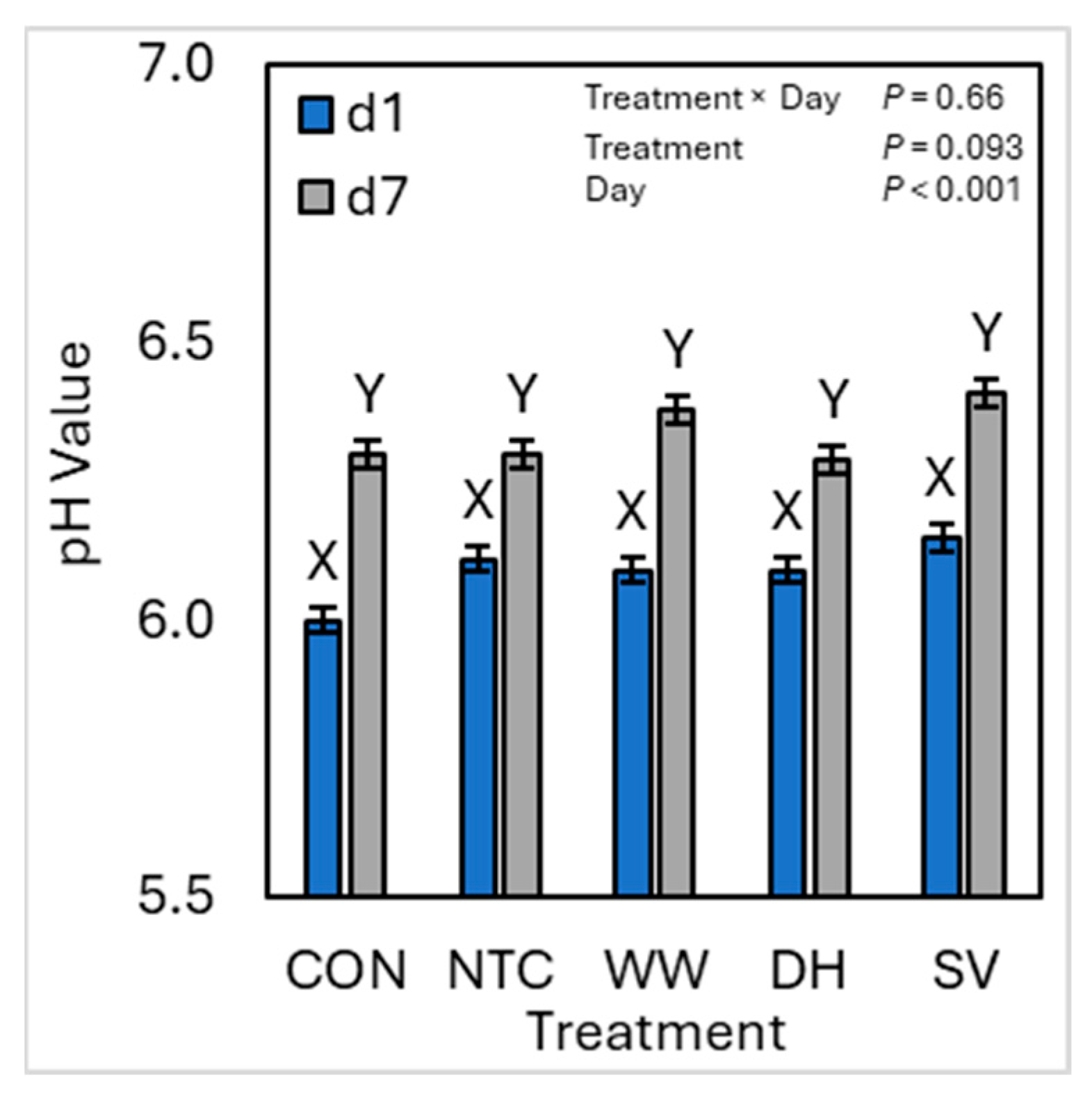
The only significant day effect was observed for pH, with d1 samples having lower pH than d7 samples (p < 0.05; Figure 1). However, a tendency was identified in which the addition of the treated crust increased the pH of the samples compared to CON (p = 0.09). Previous studies evaluating the impact of dry-aged crust inclusion reported inconsistent impacts on the final pH of the product. Lee et al. [5] found that the inclusion of dry-aged beef crust decreased the pH of pork patties. Conversely, Park et al. [21] and Setyabrata et al. [22] reported an increase in pH when dry-aged crust or trim was added to the product. These conflicting observations indicated that the pH alteration likely depends on the pH of the added crust. In the current study, the added crust had pH values of 6.61, 6.55, 6.54, and 6.89 for NTC, WW, DH, and SV, respectively, explaining the increasing pH trend.

3.2. Proximate Composition

No significant differences were found in the moisture, ash, protein, or fat content of the samples (p > 0.05; Table 1). Regardless of the crust preparation method, the final ground beef products had comparable compositions. The observed results, however, differ from those reported by Xue et al. [9], who reported decreased moisture and ash with the addition of crust. The discrepancy could be attributed to differences in crust preparation methods between the studies, with the previous study using lyophilization. Due to the nature of the process, lyophilization tends to remove more moisture than air dehydration. Additionally, most of the methods used in the current study did not remove any moisture and, therefore, minimal alterations to the final product composition were expected.

3.3. Water Holding Capacity

No significant differences were found among display loss values, indicating similar loss across all treatments (p = 0.484; Table 1). Similarly, no differences were found between treatments for cook loss (p = 0.161; Table 1).
The currently observed results differ from previous investigations. Previous studies reported an improvement in water holding capacity with the addition of dry-aged beef crust, leading to lower cook loss and greater yield in ground meat products [5,9] and emulsion sausages [23]. Furthermore, both Lee et al. [5] and Lee et al. [23] found that greater water-holding capacity was observed with higher dry-aged crust inclusion. It is worth noting that although not statistically significant, the ground beef patties with treated crust inclusions in the current study displayed lower cook loss values (ranging from 3.7 to 4.9%) compared to CON. However, no clear trend was observed for display loss in the current study, which conflicts with the previous report by Xue et al. [9], in which the authors found lower display values in patties with crust inclusion.
As mentioned in the previous discussion, the observed difference in water-holding capacity might be attributed to the form of the crust when incorporated into the product. The studies by Xue et al. [9], Lee et al. [23], and Lee et al. [5] utilized lyophilized dry-aged crust in their experiments. Lee et al. [5] suggested that the lyophilized crust may form stronger bonds with water molecules, allowing it to retain moisture more effectively. The same authors also suggested that the lyophilization process enabled the final dried crust to have a high rehydration potential, thus making it capable of absorbing any moisture released from the meat and limiting moisture loss. Compared with the current study, most of the selected treatments were less likely to cause extensive dehydration caused by the lyophilization process. The treated dry-aged crust used in the current study likely still contained a high moisture content and had low rehydration potential. This could explain the minimal alteration in the overall moisture content of the ground beef patties and corroborates the reported proximate composition results. However, given the trend toward lower cook loss with crust inclusion, it could be hypothesized that greater inclusion of non-lyophilized crust could still increase the water-holding capacity of the final products, although further study would be required to confirm the hypothesis.

3.4. Microbial Analysis

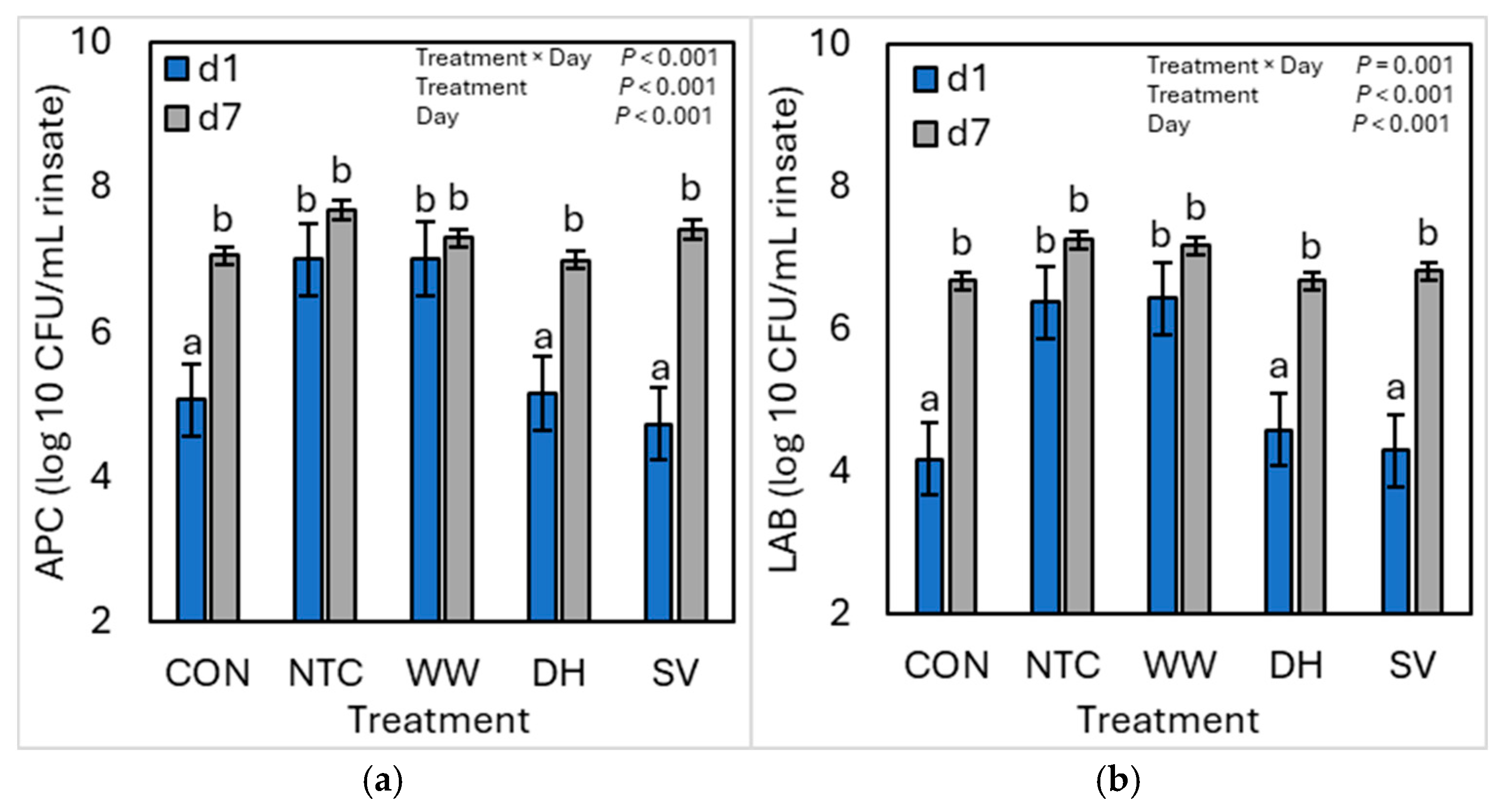
Both APC (Figure 2a) and LAB (Figure 2b) had a significant treatment × day interaction effect (p < 0.05). For both APC and LAB counts, CON, DH, and SV samples were observed to have lower microbial counts than NTC and WW on d1. However, all treatments did not differ from each other on d7. Both NTC and WW microbial counts were not different between d1 and d7.
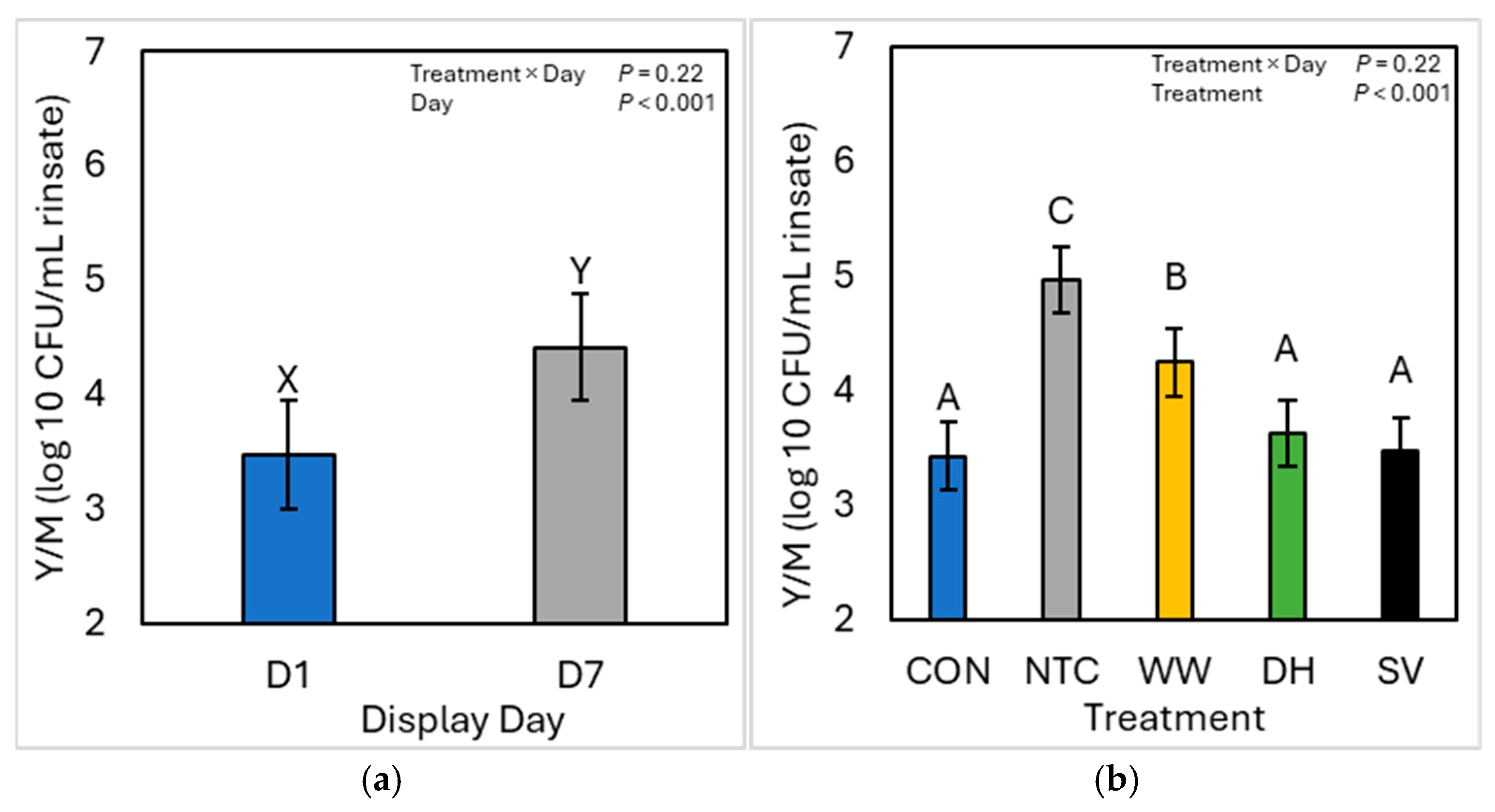
The YM counts showed a significant day (p < 0.05; Figure 3a) and treatment effect (p < 0.05; Figure 3b). No significant interaction effect was observed for YM concentration (p = 0.215). As expected, the concentration of YM increased from d1 to d7 (p < 0.05), regardless of treatment. Among the observed treatments, lower YM counts were observed in CON, DH, and SV, with WW as an intermediate, and NTC had the highest YM count (p < 0.05).
Microorganisms have been suggested to play a critical role in the dry aging process, as their activity might contribute to the palatability improvement observed in dry-aged meat [4,24,25,26]. Microorganisms such as Thamnidium, Mucor, and Debaryomyces hansenii have been reported to release proteases and produce collagenolytic enzymes that improve the tenderness and flavor of the final dry-aged products [27,28,29]. Recent studies have also evaluated the potential inoculation during the dry-aging process to accelerate and enhance the final dry-aged product [30,31]. However, this heightens concerns about dry-aged crust utilization, as microbial contamination could lead to safety and spoilage issues. In mitigating this issue, several approaches have been evaluated as interventions during the dry-aging process, such as UV light application [8,25], dry-aging permeable bags [32,33] and coating application [34,35]. While reducing the microbial concentrations on the surface, the microorganisms were not completely eliminated and may pose a safety and quality threat.
Currently, little information is available on microbial intervention evaluation of dry-aged crust and the microbial quality of final meat products following the inclusion of dry-aged crust. Park et al. [10] reported that the inclusion of 5% lyophilized crust significantly increased the total aerobic bacteria concentration of beef patties compared to a beef-only control, which is not surprising, as lyophilization could preserve microorganisms’ viability [36]. A recent study by Witte et al. [16] explored the utilization of high-pressure processing as an intervention to reduce microbial concentration in dry-aged crust prior to incorporation into raw fermented sausages. The authors reported a significant reduction in microbial concentration in the dry-aged crust, and comparable microbial concentrations between the control and the sample with dry-aged crust addition were measured throughout the ripening day, suggesting a potential intervention for dry-aged crust.
Based on the results of the current study, DH and SV treatments may serve as effective interventions to minimize spoilage concerns associated with the utilization of dry-aged crust. Regarding pathogen mitigation, our recent parallel study [17] evaluated various intervention methods that could be applied to potentially reduce E. coli O157:H7, Salmonella Heidelberg, and Listeria monocytogenes contamination on the crust. The authors observed that dehydration and sous vide treatments resulted in a 5-log reduction in E. coli O157:H7 and Salmonella Heidelberg. These results align with the current study, indicating that DH and SV had lower microbial concentrations than NTC and WW, and were comparable to CON. However, further targeted challenge studies are required to fully validate the microbiological safety of including dry-aged crust in final formulations. Compared with NTC and WW, both DH and SV treatments may have been more effective because the heat application during the treatment significantly reduced microbial survivability. It has been reported that a spoilage concentration of 107–108 CFUs is deemed unacceptable for consumption [37]. All treatments except d7 NTC and WW were below this threshold, while d7 NTC and WW were within this range.

3.5. Instrumental Color

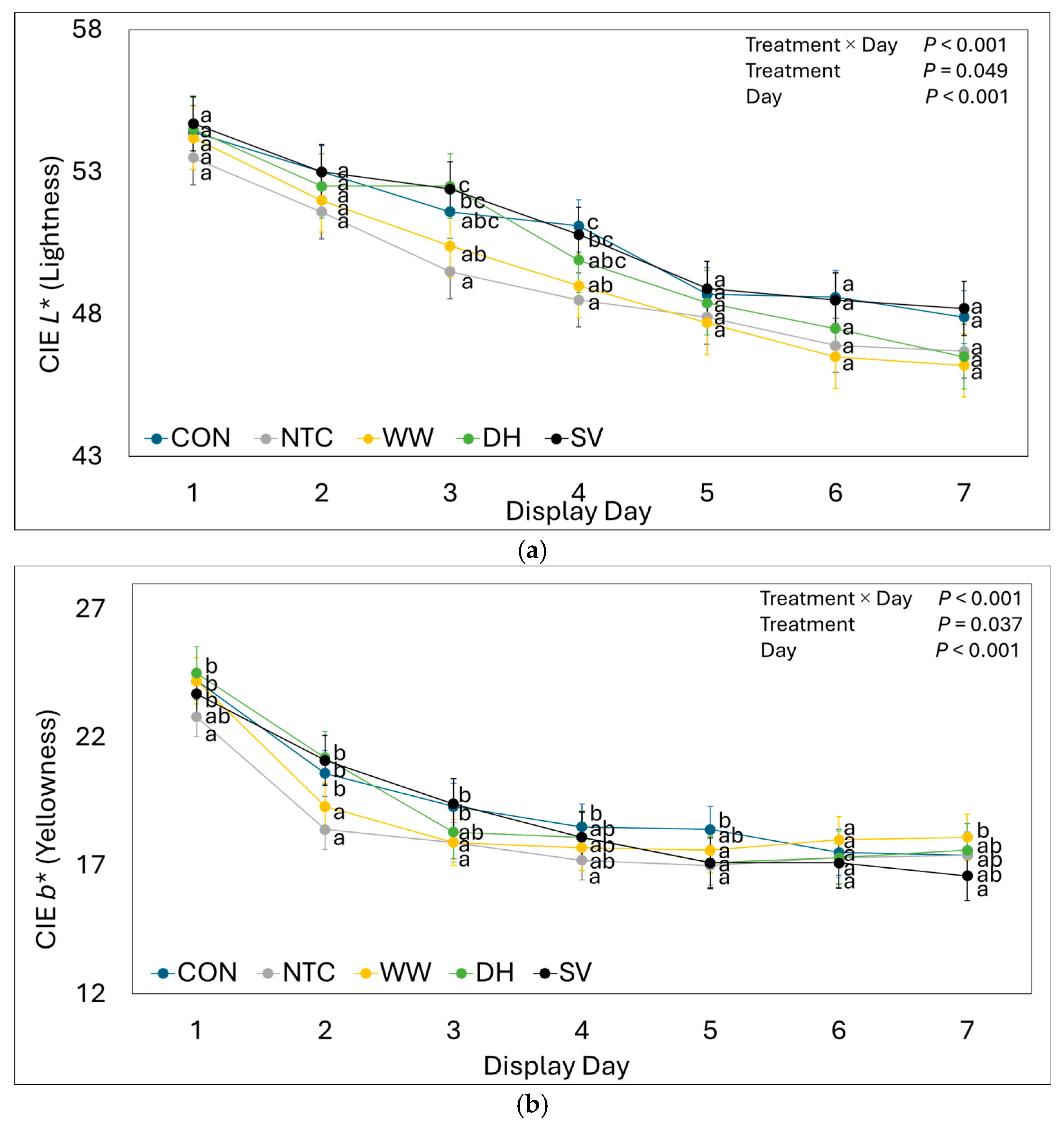
A significant treatment × day interaction effect was observed on all color traits measured in the current study (Figure 4 and Figure A1). Both lightness (CIE L*; Figure A1a) and yellowness (CIE b*; Figure A1b) decreased continuously throughout the simulated retail period, regardless of treatment (p < 0.05). While significant differences among treatments were observed within each day, differences in L* and b* values across samples were minimal throughout display and might not be practically meaningful.
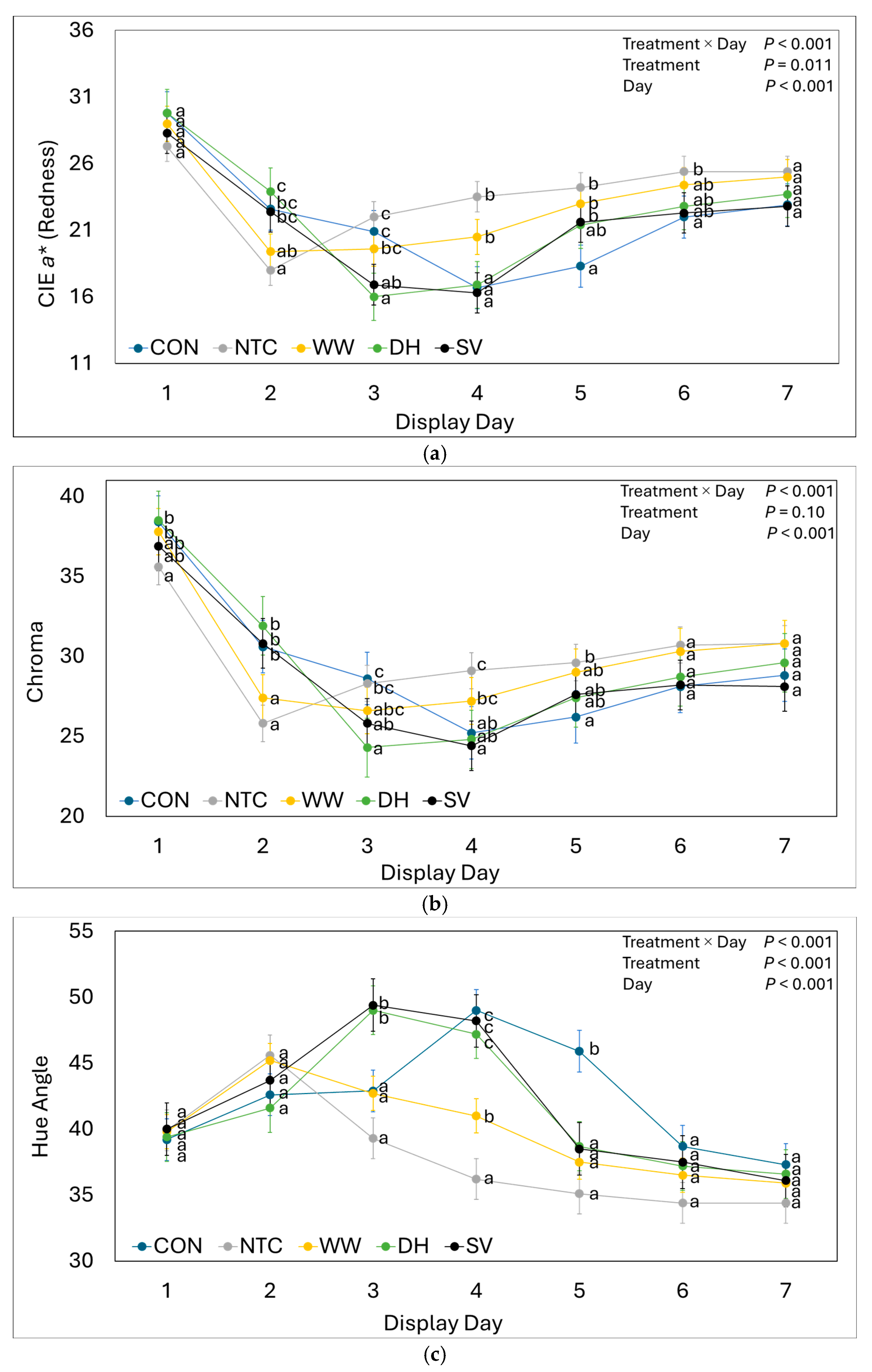
Changes in redness (CIE a*; Figure 4a) were also observed across the samples throughout the display, showing an initial decline in redness, followed by a recovery in redness, regardless of treatment. Although not different on d1, a significant reduction in redness was observed on d2, with NTC exhibiting the lowest value, followed by WW, SV and CON as intermediate, and DH had the highest redness (p < 0.05). On d3 of display, however, NTC was observed to have a recovery in redness, showing higher redness compared to DH and SV (p < 0.05), where those treatments continued to decline in redness. On d4 of display, DH, SV, and CON were found to have lower redness compared to both NTC and WW (p < 0.05). On d5, a redness recovery pattern was observed across all samples until the end of display, where the samples showed similar redness values at the completion of display (p > 0.05). Chroma (Figure 4b) measurement also demonstrated a similar pattern, with the chroma value rapidly decreasing for both NTC and WW on d2 of the display compared to the other treatments (p < 0.05) and immediately starting to recover from d3 until the end of the display. Chroma for DH samples was observed to reach a minimum at d3 of display, while CON and SV reached the lowest level at d4, which was then followed by a color recovery until the end of display.
Hue angle (instrumental discoloration, Figure 4c) results showed the inverse of CIE a* and chroma, where the discoloration increased at the beginning of the display and disappeared by the end of the display. No differences were observed between the treatments on d1 and d2 of display (p > 0.05). However, NTC and WW samples showed reduced discoloration on d3 and were lower than all other treatments (p < 0.05). On d4, CON, SV and DH had the highest hue angle value compared to all other treatments (p < 0.05), and CON maintained the highest discoloration among all treatments until d5 of display (p < 0.05). All samples exhibited discoloration reduction on d6 and did not differ from each other until the end of display (p > 0.05).
The removal of moisture during dry-aging created dehydrated meat surfaces that have a darker color. The dry-aging process also generated a product with a darker color than its wet-aged counterpart, as the moisture removal reduces light reflectance [38]. The inclusion of treated dry-aged crust in beef patties in the current study did not immediately impact the initial color of the products. Nonetheless, the inclusion of treated crust altered the color quality and the color stability during the display. The current results showed a rapid color decline and discoloration development in patties containing WW and NTCs compared to SV and DH crusts. In the current study, the addition of NTC and WW crust increased the initial microbial concentrations in beef patties, whereas those with SV and DH crust additions had lower microbial concentrations, potentially due to the heat treatments applied to SV and DH crusts reducing microbial concentrations in the added crusts. Microbial growth has been well-reported to contribute to and accelerate meat discoloration [39], and thus the application of heat treatment to the dry-aged crust prior to incorporation could help reduce microbial presence and minimize negative color impact on the final beef patties due to their activity.
Interestingly, the high initial microbial concentration introduced by WW and NTC at the beginning of the display might also have a role in the faster color reversion observed in those samples in the current study. A previous study by Faustman et al. [40] reported that a very high population of psychrotropic bacteria could induce color recovery in meat homogenate. Those authors found a reduction in metmyoglobin percentage when microbial concentration reached around 108 CFU and hypothesized that the recovery potentially occurred due to the interaction between myoglobin and bacterial metabolites, altering the form of myoglobin. The color recovery phenomenon has been previously reported by Smith et al. [41] and Catrett et al. [42], in which an improvement in color quality was observed during the display of ground beef and whole-muscle beef products, although no clear explanation was provided by those authors. Nevertheless, direct biochemical evaluation, such as metmyoglobin quantification and characterization of specific bacterial metabolites, is still required to definitively validate this hypothesis.

3.6. Thiobarbituric Acid Reactive Substance (TBARS)

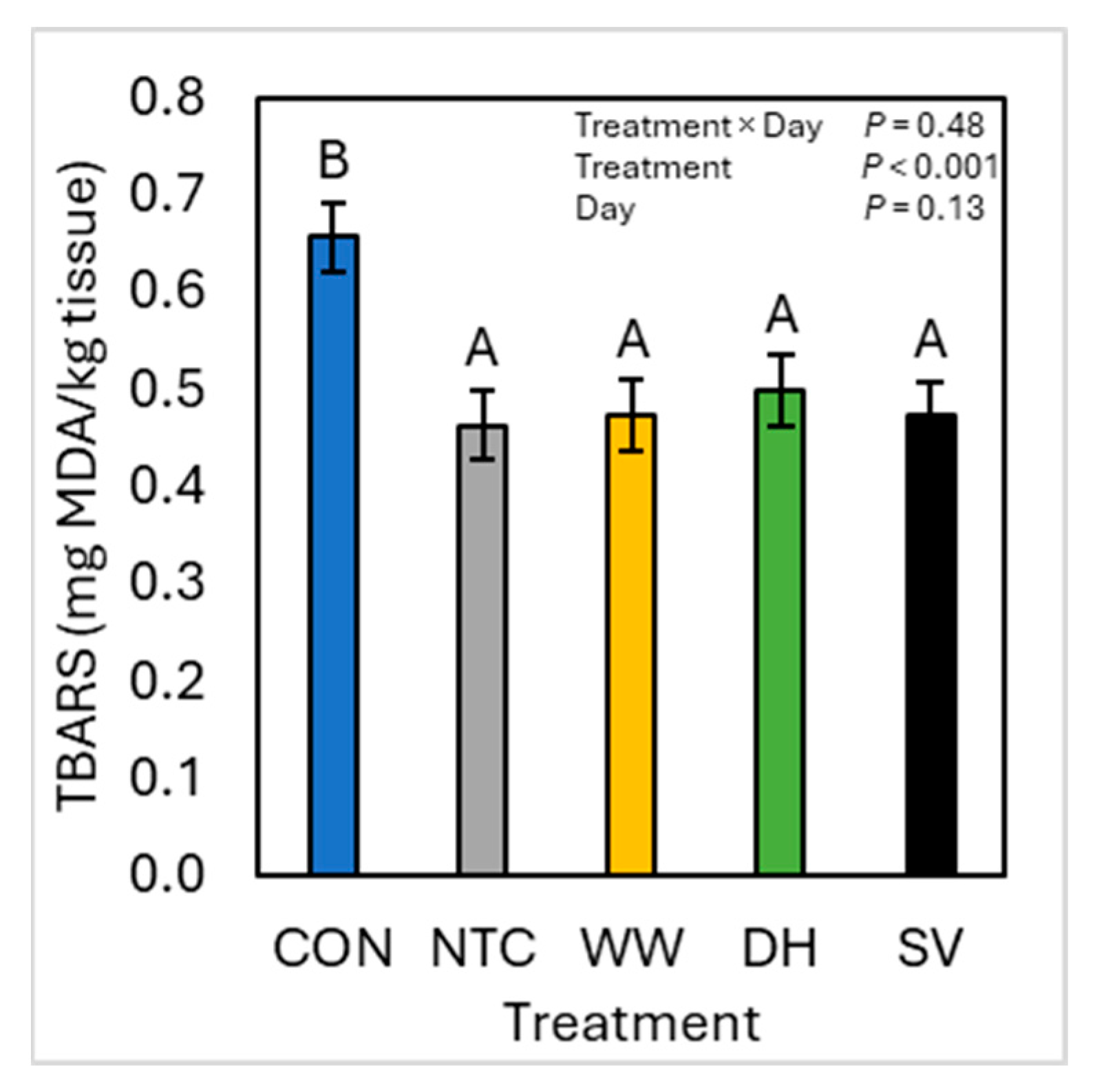
Significant differences in lipid oxidation were observed (p = 0.00196; Figure 5), with greater oxidation in CON than in other treatments. There were no significant differences found in the day (p = 0.127) and treatment × day interactions (p = 0.481).
As retail display continues, it is expected that meat will continue to oxidize. This oxidation can result in off-flavors and color changes that are not desirable to the consumer. The current study aligns with the results reported by Park et al. [10], which found decreased lipid oxidation with the inclusion of crust. These results, however, conflict with those of Xue et al. [9], in which the authors found increased lipid oxidation in the patties with the dry-aged crust inclusion. The authors explained that this might be due to increased exposure to ambient oxygen during aging, leading to greater lipid oxidation in the crust and thus influencing the final dry-aged product.
While the inclusion of crust at different levels or following different aging conditions could impact the final product differently, in this study, the inclusion of treated dry-aged crust did not increase TBARS values of the final ground beef product. A previous study suggested that dry-aged crust contains small bioactive peptides produced through endogenous and microbial proteolysis, which possess potential antioxidant properties [43]. Although not directly measured in the current study, it is possible that the dry-aged crust used in this experiment contained similar antioxidative peptides generated through the dry-aging process, which might have contributed to the lower lipid oxidation observed in patties with crust inclusions. Further investigation, however, is required to isolate and identify these specific bioactive compounds to validate this mechanism. Although there were changes in lipid oxidation levels, Campo et al. [44] reported that a TBARS value of 2.28 mg malonaldehyde/kg is the threshold at which consumers begin to notice off-flavors in beef products. All samples in this study were under this level, showing that unacceptable off-flavors after a 7 d retail display are not likely.

3.7. Texture Profile Analysis (TPA)

Texture profile analysis (TPA) was used to determine the structural and sensory traits of meat products. Significant differences were found in hardness (p = 0.006), with SV samples exhibiting the highest values compared with CON, NTC, and WW, whereas DH did not differ from any of the other treatments. The resilience (p = 0.008) of the CON patties was significantly higher than that of the NTC and SV patties, while WW and DH patties were intermediate and did not differ from any of the treatments. The cohesion (p = 0.014) of the patties showed significant differences, demonstrating a similar trend to resilience. No significant differences were found in the adhesiveness (p = 0.852), springiness (p = 0.087), and chewiness (p = 0.163) of the products regardless of the treatment (Table 2).
The increased hardness observed in the SV and DH samples may be attributed to the crusts being exposed to heat during preparation. It has been well reported that exposure to heat could cause the muscle structure to contract and shrink, leading to an increase in toughness [45]. It is likely that those crusts underwent thermal shrinkage during preparation, which could subsequently contribute to the increased hardness observed in the current SV and DH patties compared to those from the NTC and WW patties. Further investigation into structural shrinkage and changes in protein binding ability would be required to validate this proposed mechanism.
In general, the current study observed increased hardness when crust was added into the patties. Similar observations were reported by Xue et al. [9] in beef patties and Lee et al. [5] in pork patties. As previously mentioned, those authors added the crust in lyophilized form. Lee et al. [5] explained that lyophilized crust might absorb moisture and exhibit increased binding strength, thereby increasing patty hardness. This aligns with findings from Choi et al. [46], where they found increased binding strength with the addition of lyophilized tofu powder into ground patties. However, as minimal dehydration occurred in the crust utilized in the study compared to lyophilized crusts, the impact on hardness was less pronounced. This was also observed by Park et al. [10], where the author reported that the addition of lyophilized crust combined with water into ground beef reduced the hardness and chewiness of the patties, demonstrating that final textural properties could be heavily influenced by the hydration state of the additive and overall formulation moisture.

4. Conclusions

In the current study, the impact of incorporating differently treated dry-aged crust into ground beef was evaluated. The results showed that the addition of treated crust produced products with similar pH and water holding capacity. The application of dehydration and sous vide to dry-aged crust significantly reduced the overall microbial concentration of the products compared to those with untreated or warm-water-washed crust, potentially leading to better color stability in those products. The addition of the crust reduced the extent of lipid oxidation, regardless of treatment. Additionally, the inclusion of crust did not affect most of the texture attributes of the product. This indicated that dehydration and sous vide interventions have minimal impact on final product quality while reducing initial microbial concentrations, suggesting their potential use as intervention methods for dry-aged crust.
While this study provides insights into potential interventions to valorize dry-aged crust, several limitations remain, and future research is needed to facilitate their broader use. In the current study, dry-aged crusts were obtained from a single company and used at a single inclusion level. This limits the variability of the raw dry-aging crust material and constrains the implications of our study. Further studies to evaluate different dry-aged crust sources/composition and with different inclusion levels would greatly help to optimize the applicability of the proposed interventions. Future research should also focus on exploring the underlying mechanisms responsible for the antioxidative capacity measured in the dry-aged crust, pathogen evaluation in final products to confirm safety, and applying sensory evaluation to assess consumer acceptability to further validate the potential application of the crust.

Author Contributions

P.S.A.: Data curation, Formal analysis, Investigation, Visualization, Writing—Original Draft. C.C.C.: Data curation, Investigation, Visualization, Writing—Review and Editing. P.D.-M.: Conceptualization, Data curation, Investigation, Writing—Review and Editing. J.C.A.: Methodology, Supervision, Resources, Writing—Review and Editing. D.S.: Conceptualization, Formal analysis, Funding acquisition, Methodology, Project administration, Resources, Supervision, Validation, Writing—Review and Editing. All authors have read and agreed to the published version of the manuscript.

Funding

This research was partially funded by the Arkansas Beef Council.

Institutional Review Board Statement

Not applicable.

Informed Consent Statement

Not applicable.

Data Availability Statement

The original contributions presented in this study are included in the article. Further inquiries can be directed to the corresponding author.

Acknowledgments

The authors would like to thank the University of Arkansas Meat Science and Muscle Biology lab for their help in sample collection and processing for the project. Grammarly (v1.2.262.1891) was utilized in the preparation of the manuscript. No other AI tools were utilized. The authors have reviewed and edited the output and take full responsibility for the content of this publication.

Conflicts of Interest

The authors declare no conflicts of interest.

Abbreviations

The following abbreviations are used in this manuscript:
d1Day 1
d7Day 7
CONControl; no crust inclusion
NTCNon-treated crust
WWWarm water wash
DHDehydrated
SVSous-vide
APCAerobic plate count
LABLactic acid bacteria
YMYeast/mold
TBARSThiobarbituric acid reactive substances
TPATexture profile analysis
RCBDRandomized complete block design

Appendix A

Figure A1. Instrumental color evaluation of ground beef patties with differently treated dry-aged crust inclusions: (a) CIE L*, (b) CIE b*. a–c Different superscript letters indicate significant differences between treatments within the same display day (p < 0.05). Error bars represent the standard error of means.
Foods 15 01853 g0a1

References

  1. Khan, M.I.; Jung, S.; Nam, K.C.; Jo, C. Postmortem Aging of Beef with a Special Reference to the Dry Aging. Korean J. Food Sci. Anim. Resour. 2016, 36, 159–169. [Google Scholar] [CrossRef] [PubMed]
  2. Kim, J.-H.; Kim, J.-H.; Yoon, D.-K.; Ji, D.-S.; Jang, H.-J.; Lee, C.-H. A Comparison of Dry and Wet Aging on Physicochemical and Sensory Characteristics of Pork Loin with Two Aging Times. Food Sci. Biotechnol. 2018, 27, 1551–1559. [Google Scholar] [CrossRef]
  3. Zhang, R.; Yoo, M.J.Y.; Ross, A.B.; Farouk, M.M. Mechanisms and Strategies to Tailor Dry-Aged Meat Flavour. Trends Food Sci. Technol. 2022, 119, 400–411. [Google Scholar] [CrossRef]
  4. Dashdorj, D.; Tripathi, V.K.; Cho, S.; Kim, Y.; Hwang, I. Dry Aging of Beef; Review. J. Anim. Sci. Technol. 2016, 58, 20. [Google Scholar] [CrossRef]
  5. Lee, J.-A.; Kim, H.-Y.; Seol, K.-H. Quality Properties of Dry-Aged Beef (Hanwoo Cattle) Crust on Pork Patties. Foods 2022, 11, 2191. [Google Scholar] [CrossRef]
  6. Bernardo, A.P.D.S.; Da Silva, A.C.M.; Ferreira, F.M.S.; Do Nascimento, M.D.S.; Pflanzer, S.B. The Effects of Time and Relative Humidity on Dry-Aged Beef: Traditional versus Special Bag. Food Sci. Technol. Int. 2021, 27, 626–634. [Google Scholar] [CrossRef]
  7. Ribeiro, F.A.; Lau, S.K.; Furbeck, R.A.; Herrera, N.J.; Henriott, M.L.; Bland, N.A.; Fernando, S.C.; Subbiah, J.; Pflanzer, S.B.; Dinh, T.T.; et al. Effects of Relative Humidity on Dry-Aged Beef Quality. Meat Sci. 2024, 213, 109498. [Google Scholar] [CrossRef] [PubMed]
  8. Setyabrata, D.; Xue, S.; Vierck, K.; Legako, J.; Ebner, P.; Zuelly, S.; Kim, Y.H.B. Impact of Various Dry-Aging Methods on Meat Quality and Palatability Attributes of Beef Loins (M. longissimus lumborum) from Cull Cow. Meat Muscle Biol. 2022, 6, 13025. [Google Scholar] [CrossRef]
  9. Xue, S.; Setyabrata, D.; Bonham, C.C.; Kim, Y.H.B. Evaluation of Functional and Chemical Properties of Crust from Dry-Aged Beef Loins as a Novel Food Ingredient. Meat Sci. 2021, 173, 108403. [Google Scholar] [CrossRef] [PubMed]
  10. Park, B.; Yong, H.I.; Choe, J.; Jo, C. Utilization of the Crust from Dry-Aged Beef to Enhance Flavor of Beef Patties. Korean J. Food Sci. Anim. Resour. 2018, 38, 1019–1028. [Google Scholar] [CrossRef]
  11. Shi, Y.; Zhang, W.; Zhou, G. Effects of Different Moisture-Permeable Packaging on the Quality of Aging Beef Compared with Wet Aging and Dry Aging. Foods 2020, 9, 649. [Google Scholar] [CrossRef]
  12. Knudsen, G.M.; Sommer, H.M.; Sørensen, N.D.; Olsen, J.E.; Aabo, S. Survival of Salmonella on Cuts of Beef Carcasses Subjected to Dry Aging: Salmonella Survival on Beef Carcasses. J. Appl. Microbiol. 2011, 111, 848–854. [Google Scholar] [CrossRef]
  13. Tittor, A.W.; Tittor, M.G.; Brashears, M.M.; Brooks, J.C.; Garmyn, A.J.; Miller, M.F. Effects of Simulated Dry and Wet Chilling and Aging of Beef Fat and Lean Tissues on the Reduction of Escherichia Coli O157:H7 and Salmonella. J. Food Prot. 2011, 74, 289–293. [Google Scholar] [CrossRef]
  14. Da Silva, A.C.M.; De Oliveira Pena, P.; Pflanzer, S.B.; Da Silva Do Nascimento, M. Effect of Different Dry Aging Temperatures on Listeria innocua as Surrogate for Listeria monocytogenes. Meat Sci. 2019, 157, 107884. [Google Scholar] [CrossRef] [PubMed]
  15. Van Damme, I.; Varalakshmi, S.; De Zutter, L.; Vossen, E.; De Smet, S. Decrease of Salmonella and Escherichia coli O157:H7 Counts during Dry-Aging of Beef but Potential Growth of Listeria Monocytogenes under Certain Dry-Aging Conditions. Food Microbiol. 2022, 104, 104000. [Google Scholar] [CrossRef] [PubMed]
  16. Witte, F.; Smetana, S.; Heinz, V.; Terjung, N. High-Pressure Processing of Usually Discarded Dry Aged Beef Trimmings for Subsequent Processing. Meat Sci. 2020, 170, 108241. [Google Scholar] [CrossRef]
  17. Sananikone, T.; Setyabrata, D.; Desiree, K.; Rubinelli, P.; Acuff, J.C. Interventions for Dry-Aged Beef Crusts Inoculated with Salmonella Heidelberg, Escherichia coli O157:H7, and Listeria monocytogenes 4b. Food Prot. Trends 2026, 46, 8–15. [Google Scholar]
  18. AOAC. Official Method 992.15—Crude Protein in Meat and Meat Products. In Official Methods of Analysis of AOAC International; AOAC International: Gaithersburg, MD, USA, 1996. [Google Scholar]
  19. King, D.A.; Hunt, M.C.; Barbut, S.; Claus, J.R.; Cornforth, D.P.; Joseph, P.; Kim, Y.H.B.; Lindahl, G.; Mancini, R.A.; Nair, M.N.; et al. American Meat Science Association Guidelines for Meat Color Measurement. Meat Muscle Biol. 2023, 6, 12473. [Google Scholar] [CrossRef]
  20. Setyabrata, D.; Kim, Y.H.B. Impacts of Aging/Freezing Sequence on Microstructure, Protein Degradation and Physico-Chemical Properties of Beef Muscles. Meat Sci. 2019, 151, 64–74. [Google Scholar] [CrossRef] [PubMed]
  21. Park, S.-Y.; Seol, K.-H.; Kim, H.-Y. Effect of Dry-Aged Beef Crust Levels on Quality Properties of Brown Sauce. Food Sci. Anim. Resour. 2020, 40, 699–709. [Google Scholar] [CrossRef]
  22. Setyabrata, D.; Hernandez, S.; Cooper, B.R.; Legako, J.F.; Kim, Y.H.B. Inclusion of Dry-Aged Beef Trimmings as a Quality and Flavor Enhancer for Ground Beef. Meat Muscle Biol. 2024, 8, 17794. [Google Scholar] [CrossRef]
  23. Lee, J.-A.; Kim, H.-Y. Effect of Hanwoo Crust on the Physicochemical Properties of Emulsion-Type Sausages. Food Sci. Anim. Resour. 2021, 41, 440–451. [Google Scholar] [CrossRef]
  24. Kim, Y.H.B.; Kemp, R.; Samuelsson, L.M. Effects of Dry-Aging on Meat Quality Attributes and Metabolite Profiles of Beef Loins. Meat Sci. 2016, 111, 168–176. [Google Scholar] [CrossRef]
  25. Setyabrata, D.; Wagner, A.D.; Cooper, B.R.; Kim, Y.H.B. Effect of Dry-Aging on Quality and Palatability Attributes and Flavor-Related Metabolites of Pork Loins. Foods 2021, 10, 2503. [Google Scholar] [CrossRef]
  26. Ribeiro, A.J.; Silva, F.; Teixeira, P.; Saraiva, C.M. Dry-Aged Beef: A Global Review of Meat Quality Traits, Microbiome Dynamics, Safety, and Sustainable Strategies. J. Food Sci. 2025, 90, e70589. [Google Scholar] [CrossRef]
  27. Oh, H.; Lee, H.J.; Lee, J.; Jo, C.; Yoon, Y. Identification of Microorganisms Associated with the Quality Improvement of Dry-Aged Beef Through Microbiome Analysis and DNA Sequencing, and Evaluation of Their Effects on Beef Quality. J. Food Sci. 2019, 84, 2944–2954. [Google Scholar] [CrossRef] [PubMed]
  28. Capouya, R.; Mitchell, T.; Clark, D.I.; Clark, D.L.; Bass, P. A Survey of Microbial Communities on Dry-Aged Beef in Commercial Meat Processing Facilities. Meat Muscle Biol. 2020, 4, 10373. [Google Scholar] [CrossRef]
  29. Mikami, N.; Toyotome, T.; Yamashiro, Y.; Sugo, K.; Yoshitomi, K.; Takaya, M.; Han, K.-H.; Fukushima, M.; Shimada, K. Dry-Aged Beef Manufactured in Japan: Microbiota Identification and Their Effects on Product Characteristics. Food Res. Int. 2021, 140, 110020. [Google Scholar] [CrossRef]
  30. Mikami, N.; Toyotome, T.; Takaya, M.; Tamura, K. Direct Rub Inoculation of Fungal Flora Changes Fatty Acid Composition and Volatile Flavors in Dry-Aged Beef: A Preliminary Study. Animals 2022, 12, 1391. [Google Scholar] [CrossRef]
  31. Jaworska, D.; Pawłowska, J.; Kostyra, E.; Piotrowska, A.; Płecha, M.; Ostrowski, G.; Symoniuk, E.; Hopkins, D.L.; Sawicki, K.; Przybylski, W. Dry-Aged Beef Quality with the Addition of Mucor Flavus—Sensory, Chemosensory and Fatty Acid Analysis. Meat Sci. 2025, 220, 109691. [Google Scholar] [CrossRef] [PubMed]
  32. Li, X.; Babol, J.; Bredie, W.L.P.; Nielsen, B.; Tománková, J.; Lundström, K. A Comparative Study of Beef Quality after Ageing Longissimus Muscle Using a Dry Ageing Bag, Traditional Dry Ageing or Vacuum Package Ageing. Meat Sci. 2014, 97, 433–442. [Google Scholar] [CrossRef]
  33. Berger, J.; Kim, Y.H.B.; Legako, J.F.; Martini, S.; Lee, J.; Ebner, P.; Zuelly, S.M.S. Dry-Aging Improves Meat Quality Attributes of Grass-Fed Beef Loins. Meat Sci. 2018, 145, 285–291. [Google Scholar] [CrossRef]
  34. Zhang, S.; Sun, X.; Lei, Y.; Sun, B.; Xie, P.; Liu, X. Effects of Chitosan/Collagen Peptides/Cinnamon Bark Essential Oil Composite Coating on the Quality of Dry-Aged Beef. Foods 2022, 11, 3638. [Google Scholar] [CrossRef]
  35. Rezende-de-Souza, J.H.; Nassu, R.T.; Macedo, R.E.F.; Francisco, V.C.; Karwowski, M.S.M.; Pflanzer, S.B. Yield and quality attributes of aged beef through lipid coatings: A comparative study of milk butter and pork lard. Meat Muscle Biol. 2024, 8, 16909. [Google Scholar] [CrossRef]
  36. Ge, S.; Han, J.; Sun, Q.; Zhou, Q.; Ye, Z.; Li, P.; Gu, Q. Research Progress on Improving the Freeze-Drying Resistance of Probiotics: A Review. Trends Food Sci. Technol. 2024, 147, 104425. [Google Scholar] [CrossRef]
  37. Chai, C.; Lee, S.-Y.; Oh, S.-W. Shelf-Life Charts of Beef According to Level of Bacterial Contamination and Storage Temperature. LWT—Food Sci. Technol. 2017, 81, 50–57. [Google Scholar] [CrossRef]
  38. Ribeiro, F.A.; Lau, S.K.; Pflanzer, S.B.; Subbiah, J.; Calkins, C.R. Color and Lipid Stability of Dry Aged Beef during Retail Display. Meat Sci. 2021, 171, 108274. [Google Scholar] [CrossRef]
  39. Nychas, G.-J.E.; Skandamis, P.N.; Tassou, C.C.; Koutsoumanis, K.P. Meat Spoilage during Distribution. Meat Sci. 2008, 78, 77–89. [Google Scholar] [CrossRef]
  40. Faustman, C.; Johnson, J.L.; Cassens, R.G.; Doyle, M.P. Color reversion in beef: Influence of psychrotrophic bacteria. Fleischwirtschaft 1990, 70, 676–679. [Google Scholar]
  41. Smith, C.L.; Gonzalez, S.V.; Metcalf, J.L.; Geornaras, I.; Nair, M.N. Differences in spoilage microflora growth kinetics could be contributing to beef muscle-specific color stability. Meat Muscle Biol. 2024, 8, 16915. [Google Scholar] [CrossRef]
  42. Catrett, C.C.; Nasiu, F.; Drouillard, J.S.; Stelzleni, A.M.; Devane, S.A.; McKinney, G.A.; Li, X.; Alambarrio, D.A.; Gonzalez, J.M. Utilizing Flaxseed and Microalgae (Nannochloropsis Oculata; Great O Plus) to Enhance Beef Omega-3 Content: Effects on 90/10 Round and 80/20 Chuck Ground Beef Patty Fatty Acid Composition, Color Stability, and Palatability. Meat Sci. 2025, 226, 109833. [Google Scholar] [CrossRef] [PubMed]
  43. Choe, J.; Park, B.; Lee, H.J.; Jo, C. Potential Antioxidant and Angiotensin I-Converting Enzyme Inhibitory Activity in Crust of Dry-Aged Beef. Sci. Rep. 2020, 10, 7883. [Google Scholar] [CrossRef] [PubMed]
  44. Campo, M.M.; Nute, G.R.; Hughes, S.I.; Enser, M.; Wood, J.D.; Richardson, R.I. Flavour Perception of Oxidation in Beef. Meat Sci. 2006, 72, 303–311. [Google Scholar] [CrossRef]
  45. Tornberg, E. Effects of Heat on Meat Proteins—Implications on Structure and Quality of Meat Products. Meat Sci. 2005, 70, 493–508. [Google Scholar] [CrossRef]
  46. Choi, S.-H.; Kim, D.-S. Quality Characteristics of Hamburger Patties adding with Tofu Powder. Culin. Sci. Hosp. Res. 2014, 20, 28–40. [Google Scholar]
Figure 1. pH values of ground beef patties with differently treated dry-aged crust inclusions. XY Different superscript letters indicated a significant day effect (p < 0.05). Error bars represent the standard error of means.
Foods 15 01853 g001
Figure 2. Aerobic bacteria (APC; (a)) and lactic acid bacteria (LAB; (b)) concentration of ground beef patties with treated dry-aged crust inclusions. ab Different superscript letters indicated a significant Treatment × Day interaction (p < 0.05). Error bars represent the standard error of means.
Foods 15 01853 g002
Figure 3. Yeast/mold concentration of ground beef patties with treated dry-aged crust inclusions. (a) day effect, (b) treatment effect. XY Different superscript letters indicated a significant day effect (p < 0.05). A–C Different superscript letters indicated a significant treatment effect (p < 0.05). Error bars represent the standard error of means.
Foods 15 01853 g003
Figure 4. Instrumental color evaluation of ground beef patties with differently treated dry-aged crust inclusions: (a) CIE a*, (b) chroma, (c) hue angle. a–c Different superscript letters indicate significant differences between treatments within the same display day (p < 0.05). Error bars represent the standard error of means.
Foods 15 01853 g004
Figure 5. Thiobarbituric acid reactive substance (TBARS) values of ground beef patties with differently treated dry-aged crust inclusions. AB Different superscript letters indicated a significant treatment effect (p < 0.05). Error bars represent the standard error of means.
Foods 15 01853 g005
Table 1. Proximate composition, display loss, and cook loss values of ground beef patties with differently treated dry-aged crust inclusions.
Treatment 1Moisture (%)Ash (%)Protein (%)Fat 2 (%)Display Loss 3 (%)Cook Loss 4 (%)
CON61.300.01625.6013.001.2831.90
NTC60.200.01625.6014.201.6127.00
WW60.300.01626.9012.801.5528.20
DH59.800.01626.0014.201.2627.20
SV60.000.01625.8014.101.8527.80
SEM0.790.00541.011.300.261.38
p-value0.680.980.900.880.480.16
Significance was declared at p < 0.05. 1 CON = no crust inclusion; NTC = non-treated crust inclusion (10%); WW = warm water crust inclusion (10%); DH = dehydrated crust inclusion (10%); SV = sous vide crust inclusion (10%). 2 Fat: 100 − (Moisture + Ash + Protein). 3 Display loss: [{(d1 wt. − d7 wt.)/(d1 wt.)} × 100]. 4 Cook loss: [{(raw wt. − cooked wt.)/(raw wt.)} × 100]. SEM: standard error of means.
Table 2. Textural properties of cooked ground beef patties with differently treated dry-aged crust inclusions.
Treatment 1Hardness
(g)
Adhesiveness
(g.s)
Resilience
(%)
Cohesion
(%)
Springiness
(%)
Chewiness
CON9926 A0.158.04 B0.24 B23.60567
NTC11,023 A0.174.67 A0.16 A17.30312
WW10,950 A0.216.56 AB0.21 AB22.00519
DH12,503 AB0.275.56 AB0.19 AB19.90463
SV14,551 B0.174.18 A0.15 A14.50306
SEM6880.080.620.0172.1482.20
p-value0.00600.850.0100.0140.0900.16
AB Means within a column with different superscripts are significantly different (p < 0.05). 1 CON = no crust inclusion; NTC = non-treated crust inclusion (10%); WW = warm water crust inclusion (10%); DH = dehydrated crust inclusion (10%); SV = sous vide crust inclusion (10%). SEM: standard error of means.
Disclaimer/Publisher’s Note: The statements, opinions and data contained in all publications are solely those of the individual author(s) and contributor(s) and not of MDPI and/or the editor(s). MDPI and/or the editor(s) disclaim responsibility for any injury to people or property resulting from any ideas, methods, instructions or products referred to in the content.