Nutritional Supply vs. Flavor Quality: Characterizing the Physicochemical Properties and Amino Acid Profiles of Tomatoes from Beijing and Shandong
 ,
,  ,
, 

Abstract
1. Introduction
2. Materials and Methods
2.1. Plant Materials and Pre-Treatments
2.2. Reagents and Chemicals
2.3. Determination Methods
2.4. Data Processing and Statistical Analysis
2.4.1. Descriptive Statistics and Significance Testing
2.4.2. Pearson Correlation Analysis
2.4.3. Principal Component Analysis (PCA)
2.4.4. Hierarchical Cluster Analysis (HCA)
2.4.5. Data Visualization
3. Results
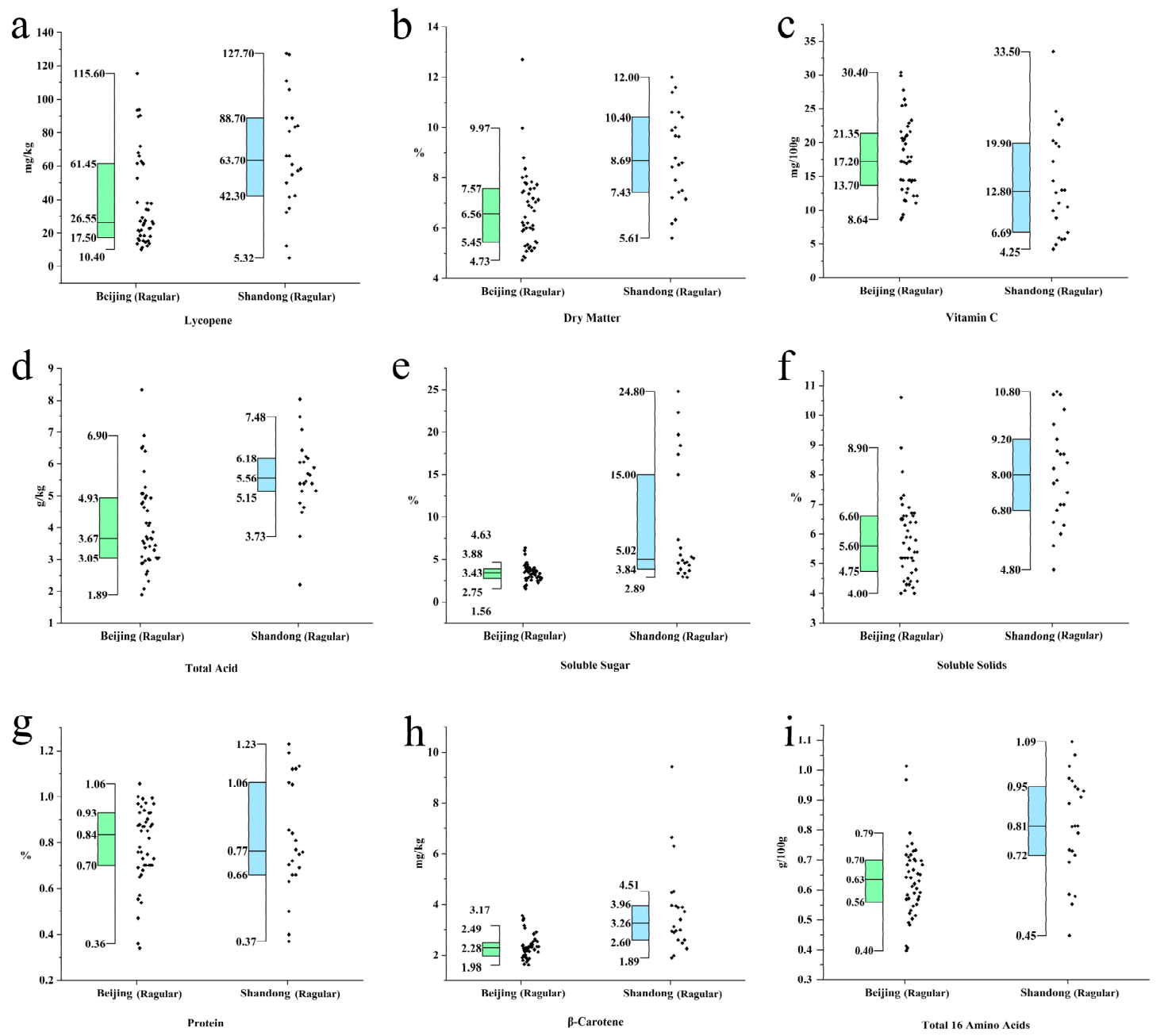
3.1. Analysis of Flavor and Texture Quality Differences in Regular Tomatoes from Different Origins
3.1.1. Comparison of Functional Pigments and Antioxidant Components
3.1.2. Analysis of Basic Nutritional Components
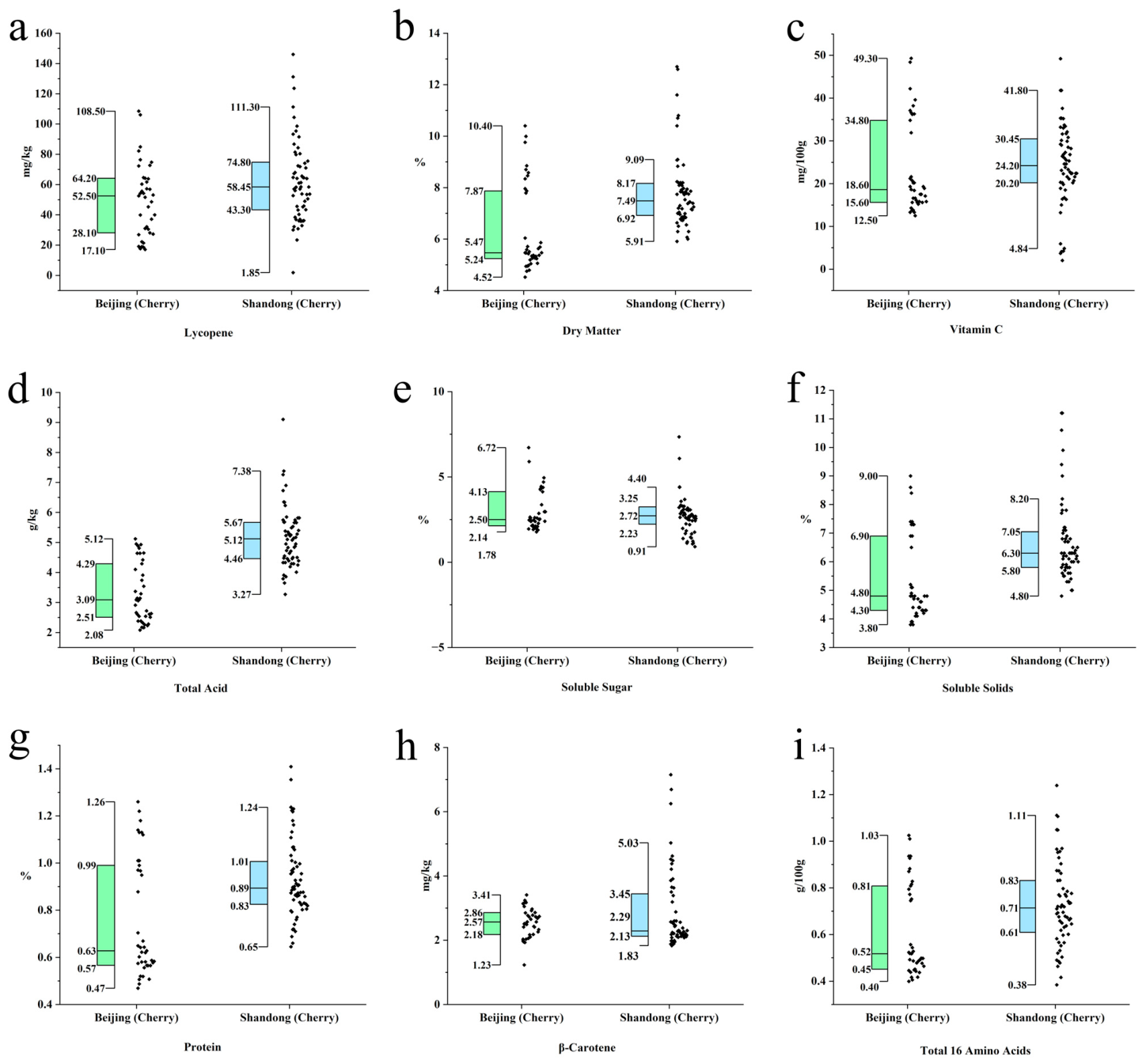
3.2. Difference Analysis of Quality Indices of Cherry Tomatoes in Beijing and Shandong Regions
3.2.1. Analysis of Basic Flavor Substances and Texture Indices
3.2.2. Analysis of Functional Antioxidant Components
3.3. Comprehensive Effect Analysis of Regional Environment on Quality Characteristics of Different Tomato Types
3.3.1. Consistency of Regional Flavor Orientation and Dry Matter Accumulation
3.3.2. Population Differentiation Characteristics of Sugar Accumulation
3.3.3. Water Characteristics and Nutrient Retention Under Nutritional Supply-Oriented Mode
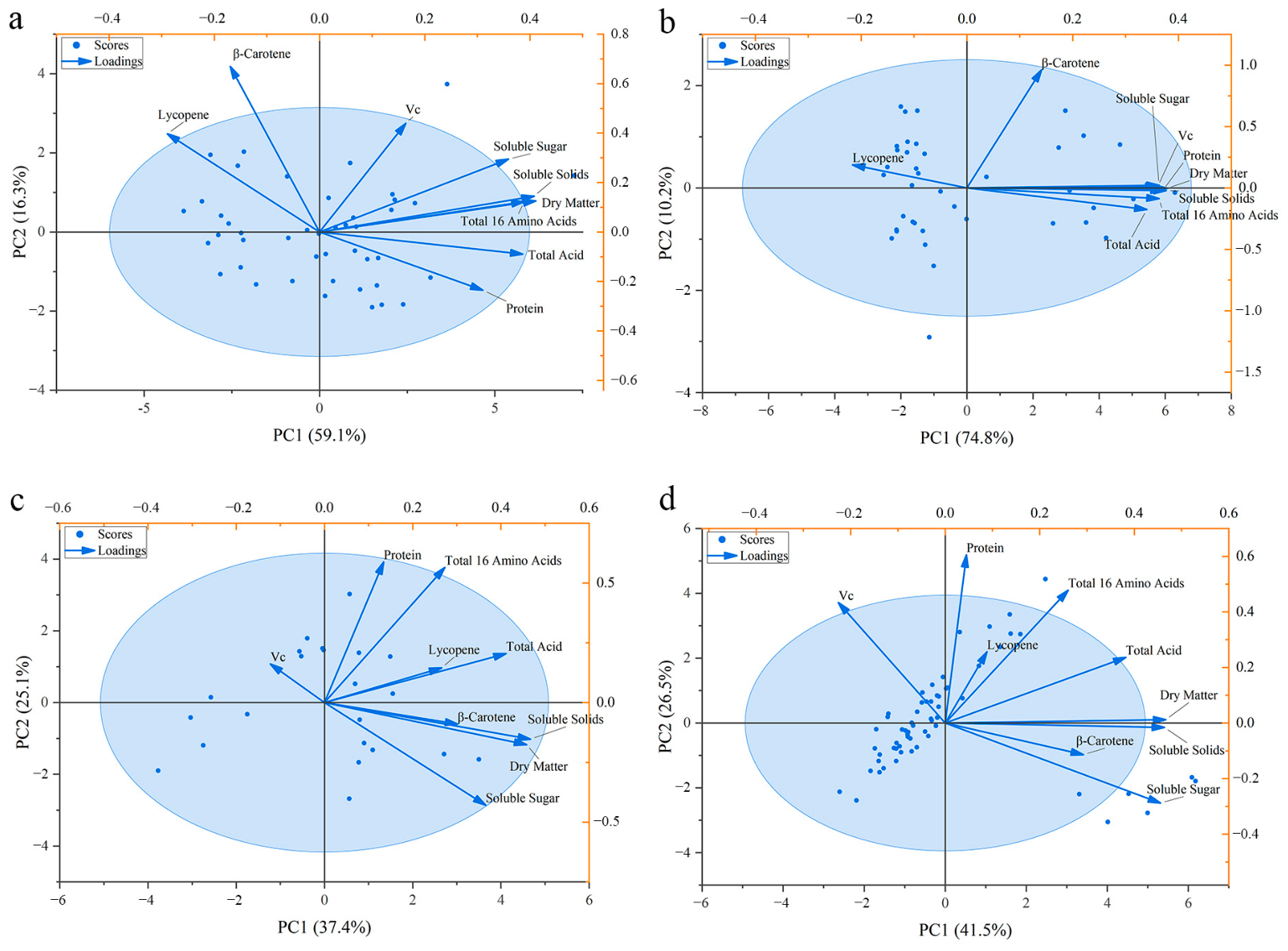
3.4. Regional Quality Clustering Characteristics Based on Principal Component Analysis (PCA)
3.4.1. Multivariate Association of Quality Indices
3.4.2. Definition and Drivers of the Flavor-Texture Axis (PC1)
3.4.3. Divergent Loading Pattern of Vitamin C Relative to Flavor-Texture Indices
3.4.4. Differences in Clustering Morphology Between Regular and Small Fruit Types
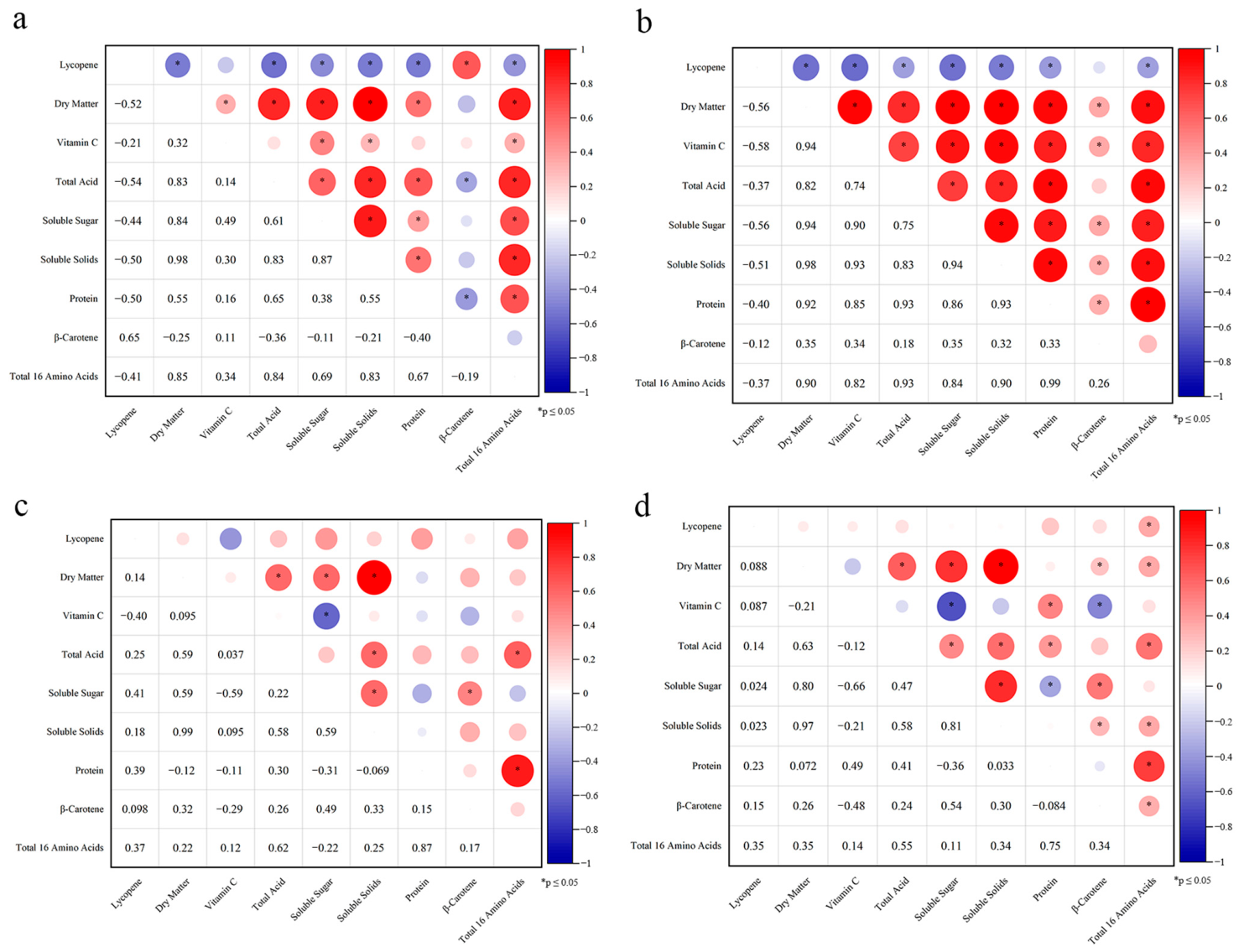
3.5. Correlation Analysis of Quality Indices and Compositional Relationships
3.5.1. Coordinated Accumulation Pattern Associated with Dry Matter Concentration Effect
3.5.2. Divergent Association Patterns Between Sugar/Acid Accumulation and Vitamin C
3.5.3. Coupling of Flavor Substances: Strong Association Between Sugar and Acid
3.5.4. Relative Independence of Pigment-Related Components
3.6. Analysis of Amino Acid Component Characteristics and Taste Profile Differences
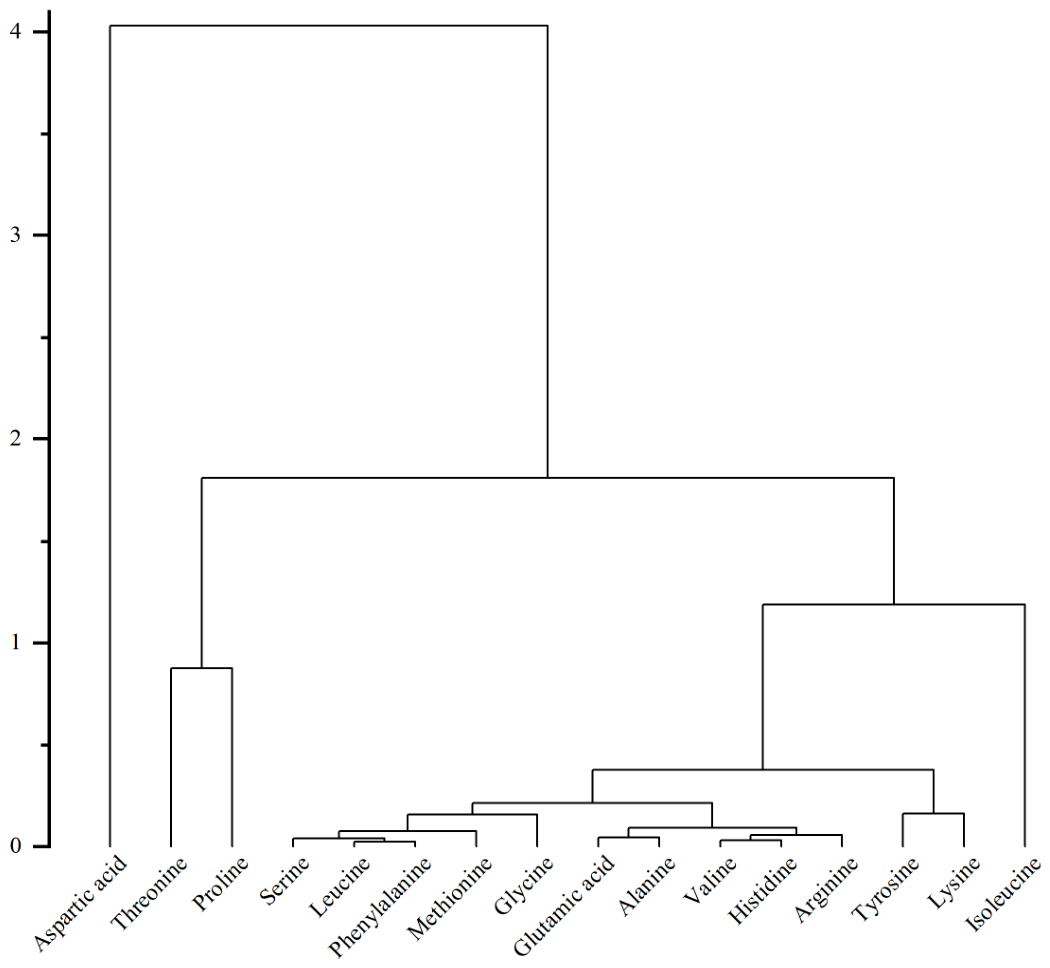
3.6.1. Clustering Characteristics and Distribution of Amino Acid Components
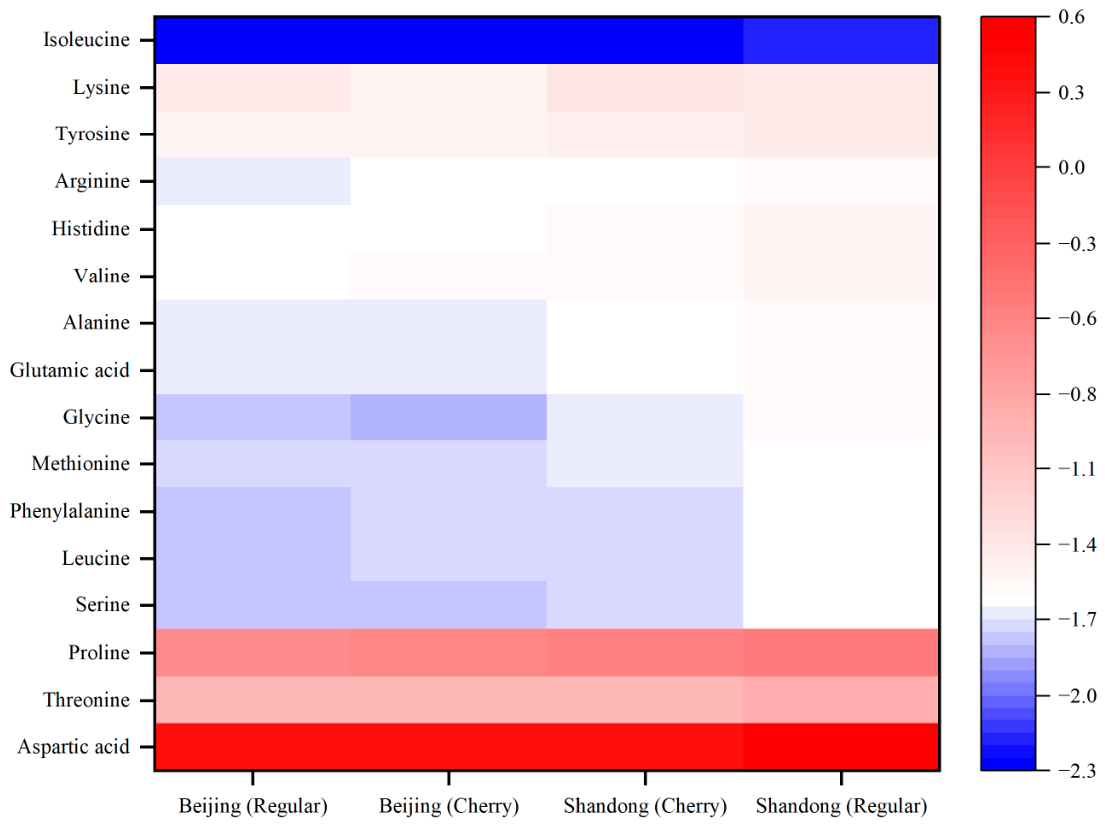
3.6.2. Glutamate-Dominated Umami Fingerprint Characteristics
3.6.3. Interaction of Sweet-Umami Flavors
4. Discussion
4.1. Source–Sink Balance and Carbon Allocation
4.2. Potential Association of TCA-Cycle-Related Processes with Flavor Formation
4.3. Relative Independence and Environmental Responsiveness of Vitamin C Accumulation
4.4. Dry Matter Concentration Effect as the Physiological Basis for Quality Differentiation
4.5. Coordinated Carbon–Nitrogen Compositional Patterns in Flavor Formation
4.6. Fruit Type-Specific Quality Formation Pathways
4.7. Limitations
5. Conclusions
Supplementary Materials
Author Contributions
Funding
Institutional Review Board Statement
Informed Consent Statement
Data Availability Statement
Conflicts of Interest
Abbreviations
| FAO | Food and Agriculture Organization |
| G × E | Genotype × Environment |
| PSY1 | Phytoene Synthase 1 |
| HPLC | High-Performance Liquid Chromatography |
| TSS | Total Soluble Solids |
| GB | Guobiao/National Standards of China |
| SD | Standard Deviation |
| PCA | Principal Component Analysis |
| HCA | Hierarchical Cluster Analysis |
| PC1 | First Principal Component |
| PC2 | Second Principal Component |
| Vc | Vitamin C |
| TCA | Tricarboxylic Acid Cycle |
| Glu | Glutamate |
| Asp | Aspartate |
References
- Collins, E.J.; Bowyer, C.; Tsouza, A.; Chopra, M. Tomatoes: An Extensive Review of the Associated Health Impacts of Tomatoes and Factors That Can Affect Their Cultivation. Biology 2022, 11, 239. [Google Scholar] [CrossRef] [PubMed]
- Wang, S.; Qiang, Q.; Xiang, L.; Fernie, A.R.; Yang, J. Targeted Approaches to Improve Tomato Fruit Taste. Hortic. Res. 2023, 10, uhac229. [Google Scholar] [CrossRef]
- Tagiakas, R.I.; Avdikos, I.D.; Goula, A.; Koutis, K.; Nianiou-Obeidat, I.; Mavromatis, A.G. Characterization and Evaluation of Greek Tomato Landraces for Productivity and Fruit Quality Traits Related to Sustainable Low-Input Farming Systems. Front. Plant Sci. 2022, 13, 994530. [Google Scholar] [CrossRef]
- Kaur, G.; Abugu, M.; Tieman, D. The Dissection of Tomato Flavor: Biochemistry, Genetics, and Omics. Front. Plant Sci. 2023, 14, 1144113. [Google Scholar] [CrossRef]
- Ali, M.Y.; Sina, A.A.I.; Khandker, S.S.; Neesa, L.; Tanvir, E.M.; Kabir, A.; Khalil, M.I.; Gan, S.H. Nutritional Composition and Bioactive Compounds in Tomatoes and Their Impact on Human Health and Disease: A Review. Foods 2021, 10, 45. [Google Scholar] [CrossRef]
- Tohge, T.; Fernie, A.R. Metabolomics-Inspired Insight into Developmental, Environmental and Genetic Aspects of Tomato Fruit Chemical Composition and Quality. Plant Cell Physiol. 2015, 56, 1681–1696. [Google Scholar] [CrossRef]
- Przybylska, S. Lycopene—A Bioactive Carotenoid Offering Multiple Health Benefits: A Review. Int. J. Food Sci. Technol. 2020, 55, 11–32. [Google Scholar] [CrossRef]
- Li, N.; Wu, X.; Zhuang, W.; Xia, L.; Chen, Y.; Wu, C.; Rao, Z.; Du, L.; Zhao, R.; Yi, M.; et al. Tomato and Lycopene and Multiple Health Outcomes: Umbrella Review. Food Chem. 2021, 343, 128396. [Google Scholar] [CrossRef] [PubMed]
- Liu, L.; Mao, Y.; Zheng, J.; Hu, S.; Wang, T.; Shao, Z.; Li, Z.; Jian, Y.; Li, Y.; Meng, F.; et al. Water Saving Irrigation Mediates Bioactive Pigments Metabolism and Storage Capacity in Tomato Fruit. Plant Physiol. Biochem. 2024, 208, 108477. [Google Scholar] [CrossRef] [PubMed]
- Bhandari, H.R.; Srivastava, K.; Tripathi, M.K.; Chaudhary, B.; Biswas, S. Genotype-Environment Interaction for Quality Traits in Tomato Hybrids. Agric. Res. 2022, 11, 382–389. [Google Scholar] [CrossRef]
- Zheng, Y.; Yang, Z.; Wei, T.; Zhao, H. Response of Tomato Sugar and Acid Metabolism and Fruit Quality under Different High Temperature and Relative Humidity Conditions. Phyton Int. J. Exp. Bot. 2022, 91, 2033–2054. [Google Scholar] [CrossRef]
- D’Esposito, D.; Di Donato, A.; Puleo, S.; Nava, M.; Diretto, G.; Di Monaco, R.; Frusciante, L.; Ercolano, M.R. The Impact of Growing Area on the Expression of Fruit Traits Related to Sensory Perception in Two Tomato Cultivars. Int. J. Mol. Sci. 2024, 25, 9015. [Google Scholar] [CrossRef] [PubMed]
- Zheng, J.; Qi, X.; Shi, C.; Yang, S.; Wu, Y. Tomato Comprehensive Quality Evaluation and Irrigation Mode Optimization with Biogas Slurry Based on the Combined Evaluation Model. Agronomy 2022, 12, 1391. [Google Scholar] [CrossRef]
- Tang, H.; Zhang, X.; Gong, B.; Yan, Y.; Shi, Q. Proteomics and Metabolomics Analysis of Tomato Fruit at Different Maturity Stages and Under Salt Treatment. Food Chem. 2020, 311, 126009. [Google Scholar] [CrossRef]
- GB/T 22249-2008/ICS 67.040; Determination of Lycopene in Health Foods. Standardization Administration of China: Beijing, China, 2008.
- GB 5009.83-2016; Determination of Carotene in Food. China Food and Drug Administration: Beijing, China, 2016.
- GB 5009.124-2016; Determination of Amino Acids in Food. China Food and Drug Administration: Beijing, China, 2016.
- Najjar, K.; Abu-Khalaf, N. Non-Destructive Quality Measurement for Three Varieties of Tomato Using VIS/NIR Spectroscopy. Sustainability 2021, 13, 10747. [Google Scholar] [CrossRef]
- Ogugua, U.V.; Kanu, S.A.; Ntushelo, K. Relationship between Different Physiological Processes of Tomato Seedlings Exposed to Acid Mine Water Uncovered Using Correlation Analysis. Heliyon 2023, 9, e18975. [Google Scholar] [CrossRef]
- Sivakumar, J.; Sridhar Reddy, M.; Sergeant, K.; Hausman, J.F.; ShaValli Khan, P.S.; Osman Basha, P. Principal Component Analysis-Assisted Screening and Selection of Salt-Tolerant Tomato Genotypes. Plant Physiol. Rep. 2023, 28, 272–288. [Google Scholar] [CrossRef]
- Aghaie, P.; Hosseini Tafreshi, S.A.; Ebrahimi, M.A.; Haerinasab, M. Tolerance Evaluation and Clustering of Fourteen Tomato Cultivars Grown under Mild and Severe Drought Conditions. Sci. Hortic. 2018, 232, 1–12. [Google Scholar] [CrossRef]
- Li, N.; Wang, J.; Wang, B.; Huang, S.; Hu, J.; Yang, T.; Asmutola, P.; Lan, H.; Qinghui, Y. Identification of the Carbohydrate and Organic Acid Metabolism Genes Responsible for Brix in Tomato Fruit by Transcriptome and Metabolome Analysis. Front. Genet. 2021, 12, 714942. [Google Scholar] [CrossRef]
- Li, F.; Shen, S.; Yang, Z.; Zhang, J.; Ibrahim, A.N.; Zhang, Y. Protection Mechanism of β-Carotene on the Chlorophyll Photostability through Aggregation: A Quantum Chemical Perspective. Food Innov. Adv. 2024, 3, 222–231. [Google Scholar] [CrossRef]
- Ding, N.; Zhou, Y.; Dou, P.; Chang, S.K.C.; Feng, R.; Hong, H.; Luo, Y.; Tan, Y. Colorful and Nutritious Abundance: Potential of Natural Pigment Application in Aquatic Products. Food Innov. Adv. 2024, 3, 232–243. [Google Scholar] [CrossRef]
- Chang, Y.; Zhang, X.; Wang, C.; Ma, N.; Xie, J.; Zhang, J. Fruit Quality Analysis and Flavor Comprehensive Evaluation of Cherry Tomatoes of Different Colors. Foods 2024, 13, 1898. [Google Scholar] [CrossRef]
- Wang, S.; Jin, N.; Jin, L.; Xiao, X.; Hu, L.; Liu, Z.; Wu, Y.; Xie, Y.; Zhu, W.; Lyu, J.; et al. Response of Tomato Fruit Quality Depends on Period of LED Supplementary Light. Front. Nutr. 2022, 9, 833723. [Google Scholar] [CrossRef]
- Burato, A.; Fusco, G.; Pentangelo, A.; Nicastro, R.; Modugno, F.; Scotto di Covella, F.; Ronga, D.; Carillo, P.; Pasquale, C.; Parisi, M. Regulated Deficit Irrigation to Boost Processing Tomato Sustainability and Fruit Quality. Sustainability 2024, 16, 3798. [Google Scholar] [CrossRef]
- Prudent, M.; Lecomte, A.; Bouchet, J.-P.; Bertin, N.; Causse, M.; Génard, M. Combining Ecophysiological Modelling and Quantitative Trait Locus Analysis to Identify Key Elementary Processes Underlying Tomato Fruit Sugar Concentration. J. Exp. Bot. 2011, 62, 907–919. [Google Scholar] [CrossRef] [PubMed]
- Saito, T.; Matsukura, C.; Ban, Y.; Shoji, K.; Sugiyama, M.; Fukuda, N.; Nishimura, S. Salinity Stress Affects Assimilate Metabolism at the Gene-expression Level during Fruit Development and Improves Fruit Quality in Tomato (Solanum lycopersicum L.). J. Jpn. Soc. Hortic. Sci. 2008, 77, 61–68. [Google Scholar] [CrossRef]
- Panthee, D.R.; Cao, C.; Debenport, S.J.; Rodríguez, G.R.; Labate, J.A.; Robertson, L.D.; Breksa, A.P.; van der Knaap, E.; McSpadden Gardener, B.B. Magnitude of Genotype × Environment Interactions Affecting Tomato Fruit Quality. HortScience 2012, 47, 721–726. [Google Scholar] [CrossRef]
- Sánchez, F.B.; Ribeiro, L.P.; Cotrim, M.F.; da Silva Junior, C.A.; Bhering, L.L.; Teodoro, P.E. Genetic Gains with Selection for Yield and Soluble Solids Content in Cherry Tomato Hybrids. HortScience 2020, 55, 400–402. [Google Scholar] [CrossRef]
- Merk, H.L.; Yarnes, S.C.; Van Deynze, A.; Tong, N.; Menda, N.; Mueller, L.A.; Mutschler, M.A.; Loewen, S.A.; Myers, J.R.; Francis, D.M. Trait Diversity and Potential for Selection Indices Based on Variation Among Regionally Adapted Processing Tomato Germplasm. J. Am. Soc. Hortic. Sci. 2012, 137, 427–437. [Google Scholar] [CrossRef]
- Tripodi, P.; D’Alessandro, A.; Francese, G. An Integrated Genomic and Biochemical Approach to Investigate the Potentiality of Heirloom Tomatoes: Breeding Resources for Food Quality and Sustainable Agriculture. Front. Plant Sci. 2023, 13, 1031776. [Google Scholar] [CrossRef]
- Guo, J.; Dong, L.; Kandel, S.L.; Jiao, Y.; Shi, L.; Yang, Y.; Shi, A.; Mou, B. Transcriptomic and Metabolomic Analysis Provides Insights into the Fruit Quality and Yield Improvement in Tomato under Soilless Substrate-Based Cultivation. Agronomy 2022, 12, 923. [Google Scholar] [CrossRef]
- Habibi, N.; Terada, N.; Sanada, A.; Kamata, A.; Koshio, K. Impact of Limited Irrigation on Fruit Quality and Ethylene Biosynthesis in Tomato: A Comprehensive Analysis of Physical, Biochemical, and Metabolomic Traits. Plants 2025, 14, 406. [Google Scholar] [CrossRef]
- Villanueva-Gutierrez, E.E.; Gustavsson, K.-E.; Olsson, M.E.; Geleta, M.; Johansson, E. Delving into the Bioactive and Nutritional Compounds in Bolivian Accessions of Tomato (Solanum lycopersicum L.) Fruits: Relationship with Genetic, Phenotypic, and Origin Indicators. ACS Food Sci. Technol. 2024, 4, 1082–1093. [Google Scholar] [CrossRef]
- Coyago-Cruz, E.; Corell, M.; Moriana, A.; Hernanz, D.; Benítez-González, A.M.; Stinco, C.M.; Meléndez-Martínez, A.J. Antioxidants (Carotenoids and Phenolics) Profile of Cherry Tomatoes as Influenced by Deficit Irrigation, Ripening and Cluster. Food Chem. 2018, 240, 870–884. [Google Scholar] [CrossRef]
- Mauro, R.P.; Agnello, M.; Onofri, A.; Leonardi, C.; Giuffrida, F. Scion and Rootstock Differently Influence Growth, Yield and Quality Characteristics of Cherry Tomato. Plants 2020, 9, 1725. [Google Scholar] [CrossRef] [PubMed]
- Yang, X.; Zhao, X.; Fu, D.; Zhao, Y. Integrated Analysis of Widely Targeted Metabolomics and Transcriptomics Reveals the Effects of Transcription Factor NOR-like1 on Alkaloids, Phenolic Acids, and Flavonoids in Tomato at Different Ripening Stages. Metabolites 2022, 12, 1296. [Google Scholar] [CrossRef] [PubMed]
- Kawasaki, H.; Sekizaki, Y.; Hirota, M.; Sekine-Hayakawa, Y.; Nonaka, M. Analysis of Binary Taste-Taste Interactions of MSG, Lactic Acid, and Nacl by Temporal Dominance of Sensations. Food Qual. Prefer. 2016, 52, 1–10. [Google Scholar] [CrossRef]
- Dou, J.; Wang, J.; Tang, Z.; Yu, J.; Wu, Y.; Liu, Z.; Wang, J.; Wang, G.; Tian, Q. Application of Exogenous Melatonin Improves Tomato Fruit Quality by Promoting the Accumulation of Primary and Secondary Metabolites. Foods 2022, 11, 4097. [Google Scholar] [CrossRef]
- Luo, A.; Kang, S.; Chen, J. SUGAR Model-Assisted Analysis of Carbon Allocation and Transformation in Tomato Fruit Under Different Water Along with Potassium Conditions. Front. Plant Sci. 2020, 11, 712. [Google Scholar] [CrossRef]
- Jia, H.; Xu, Y.; Deng, Y.; Xie, Y.; Gao, Z.; Lang, Z.; Niu, Q. Evaluation of the Effects of Ripening-Related Genes on Fruit Metabolites and the Associated Regulatory Mechanisms in Tomato. bioRxiv 2024. [Google Scholar] [CrossRef]
- Wang, R.; Yang, Y.; Xu, K.; Wang, T.; Elsadek, M.A.; Yuan, L.; Hu, Z.; Lv, Y.; Yuan, X.; Chen, X.; et al. Multi-omics Analysis Reveals Improvement of Tomato Quality by Grafting on Goji Rootstock. Food Qual. Saf. 2024, 8, fyae023. [Google Scholar] [CrossRef]
- Zheng, Y.; Yang, Z.; Luo, J.; Zhang, Y.; Jiang, N.; Khattak, W.A. Transcriptome Analysis of Sugar and Acid Metabolism in Young Tomato Fruits under High Temperature and Nitrogen Fertilizer Influence. Front. Plant Sci. 2023, 14, 1197553. [Google Scholar] [CrossRef]
- Bournonville, C.; Mori, K.; Deslous, P.; Decros, G.; Blomeier, T.; Mauxion, J.-P.; Jorly, J.; Gadin, S.; Cassan, C.; Maucourt, M.; et al. Blue Light Promotes Ascorbate Synthesis by Deactivating the PAS/LOV Photoreceptor that Inhibits GDP-L-galactose Phosphorylase. Plant Cell 2023, 35, 2615–2634. [Google Scholar] [CrossRef] [PubMed]
- Bhattarai, S.; Jha, D.K.; Balyan, S.; Zhen, S.; Patil, B.S. Blue and UV-B Light Supplementation Enhances Desirable Volatile Organic Compounds: Implications for Improving Flavor in Greenhouse-grown Tomatoes. Food Chem. 2026, 501, 147590. [Google Scholar] [CrossRef] [PubMed]
- Brunda, G.; Kavyashree, U.; Shetty, S. Comparative Study of Not from Concentrate and Reconstituted from Concentrate of Pomegranate Juices on Nutritional and Sensory Profile. Food Sci. Technol. Int. 2021, 28, 10820132211003707. [Google Scholar] [CrossRef] [PubMed]
- Hou, X.; Zhang, W.; Du, T.; Kang, S.; Davies, W.J. Responses of Water Accumulation and Solute Metabolism in Tomato Fruit to Water Scarcity and Implications for Main Fruit Quality Variables. J. Exp. Bot. 2020, 71, 1249–1264. [Google Scholar] [CrossRef]
- Xu, Y.; Zhang, K.; Li, S.; Zhou, Y.; Ran, S.; Xu, R.; Lin, Y.; Shen, L.; Huang, W.; Zhong, F. Carbon and Nitrogen Metabolism in Tomato (Solanum lycopersicum L.) Leaves Response to Nitrogen Treatment. Plant Growth Regul. 2023, 100, 747–756. [Google Scholar] [CrossRef]
- Zhu, F.; Wen, W.; Cheng, Y.; Fernie, A.R. The Metabolic Changes that Effect Fruit Quality during Tomato Fruit Ripening. Mol. Hortic. 2022, 2, 2. [Google Scholar] [CrossRef]
- Tieman, D.; Zhu, G.; Resende, M.F.R.; Lin, T.; Nguyen, C.; Bies, D.; Rambla, J.L.; Beltran, K.S.O.; Taylor, M.; Zhang, B.; et al. A Chemical Genetic Roadmap to Improved Tomato Flavor. Science 2017, 355, 391–394. [Google Scholar] [CrossRef]
- Ceballos-Aguirre, N.; Vallejo-Cabrera, F.A.; Morillo-Coronado, Y. Estimating Genotype-environment Interactions for Internal Fruit Quality Traits in Cherry Tomatoes. Rev. Colomb. Cienc. Hortíc. 2020, 14, 361–374. [Google Scholar] [CrossRef]



| Traits | Beijing | Shandong | p-Value |
|---|---|---|---|
| Lycopene (mg/kg) | 38.22 ± 23.9 ** | 67.32 ± 32.1 | 0.0012 |
| Dry Matter (%) | 6.73 ± 1.3 *** | 8.88 ± 1.8 | 3.0 × 10⁻⁵ |
| Vitamin C (mg/100 g) | 17.79 ± 5.7 * | 13.98 ± 5.1 | 0.0483 |
| Total Acid (g/kg) | 4.08 ± 1.1 *** | 5.57 ± 1.1 | 6.0 × 10⁻⁵ |
| Soluble Sugar (%) | 3.41 ± 0.8 ** | 8.66 ± 7.0 | 0.0025 |
| Soluble Solids (%) | 5.80 ± 1.4 *** | 8.04 ± 1.8 | 6.0 × 10⁻⁶ |
| Protein (%) | 0.79 ± 0.1 | 0.82 ± 0.2 | 0.6132 |
| β-Carotene (mg/kg) | 2.32 ± 0.5 *** | 3.76 ± 1.6 | 0.001 |
| Total 16 Amino Acids (g/100 g) | 0.63 ± 0.1 *** | 0.82 ± 0.2 | 0.0001 |
| Parameters | Beijing | Shandong | p-Value |
|---|---|---|---|
| Lycopene (mg/kg) | 49.99 ± 23.95 * | 62.46 ± 27.02 | 0.0182 |
| Dry Matter (%) | 6.29 ± 1.68 *** | 7.82 ± 1.45 | 1.27 × 10⁻⁵ |
| Vitamin C (mg/100 g) | 23.21 ± 10.73 | 24.23 ± 9.67 | 0.63 |
| Total Acid (g/kg) | 3.30 ± 0.98 *** | 5.16 ± 1.01 | 4.13 × 10⁻¹⁴ |
| Soluble Sugar (%) | 3.01 ± 1.19 * | 6.66 ± 12.32 | 0.0259 |
| Soluble Solids (%) | 5.34 ± 1.49 *** | 6.69 ± 1.42 | 2.48 × 10⁻⁵ |
| Protein (%) | 0.76 ± 0.25 *** | 0.93 ± 0.17 | 3.04 × 10⁻⁴ |
| β-Carotene (mg/kg) | 2.56 ± 0.46 | 3.00 ± 1.73 | 0.0625 |
| Total 16 Amino Acids (g/100 g) | 0.61 ± 0.20 ** | 0.73 ± 0.18 | 0.0051 |
Disclaimer/Publisher’s Note: The statements, opinions and data contained in all publications are solely those of the individual author(s) and contributor(s) and not of MDPI and/or the editor(s). MDPI and/or the editor(s) disclaim responsibility for any injury to people or property resulting from any ideas, methods, instructions or products referred to in the content. |
© 2026 by the authors. Licensee MDPI, Basel, Switzerland. This article is an open access article distributed under the terms and conditions of the Creative Commons Attribution (CC BY) license.
Share and Cite
Zhao, Y.; Lyu, F.; Ai, N.; Yu, Q.; Ding, X.; Huang, Y.; Xu, X.; Chen, G.; Liu, J.; Xu, D.; et al. Nutritional Supply vs. Flavor Quality: Characterizing the Physicochemical Properties and Amino Acid Profiles of Tomatoes from Beijing and Shandong. Foods 2026, 15, 1816. https://doi.org/10.3390/foods15101816
Zhao Y, Lyu F, Ai N, Yu Q, Ding X, Huang Y, Xu X, Chen G, Liu J, Xu D, et al. Nutritional Supply vs. Flavor Quality: Characterizing the Physicochemical Properties and Amino Acid Profiles of Tomatoes from Beijing and Shandong. Foods. 2026; 15(10):1816. https://doi.org/10.3390/foods15101816
Chicago/Turabian StyleZhao, Yiming, Fengzhi Lyu, Nasi Ai, Qian Yu, Xin Ding, Yanyan Huang, Xiaomin Xu, Ge Chen, Junmei Liu, Donghui Xu, and et al. 2026. "Nutritional Supply vs. Flavor Quality: Characterizing the Physicochemical Properties and Amino Acid Profiles of Tomatoes from Beijing and Shandong" Foods 15, no. 10: 1816. https://doi.org/10.3390/foods15101816
APA StyleZhao, Y., Lyu, F., Ai, N., Yu, Q., Ding, X., Huang, Y., Xu, X., Chen, G., Liu, J., Xu, D., Yang, M., & Liu, G. (2026). Nutritional Supply vs. Flavor Quality: Characterizing the Physicochemical Properties and Amino Acid Profiles of Tomatoes from Beijing and Shandong. Foods, 15(10), 1816. https://doi.org/10.3390/foods15101816