Three-Dimensional (3D)-Printed Snacks from Indigenous Composite Inks Improve Metabolic Dysfunctions Associated with High-Fat-Diet-Induced Obesity in Wistar Rats

 , , , , and
Abstract
1. Introduction
2. Materials and Methods
2.1. Materials
2.2. Formulation of Composite Flours for 3D Printing
2.3. 3D Printing and Post-Processing of Composite Snacks
2.4. In Vivo Study
2.4.1. Experimental Animals and Study Design
2.4.2. High-Fat and Test Diet Formulation
2.5. Analysis
2.6. Statistical Analysis
3. Results
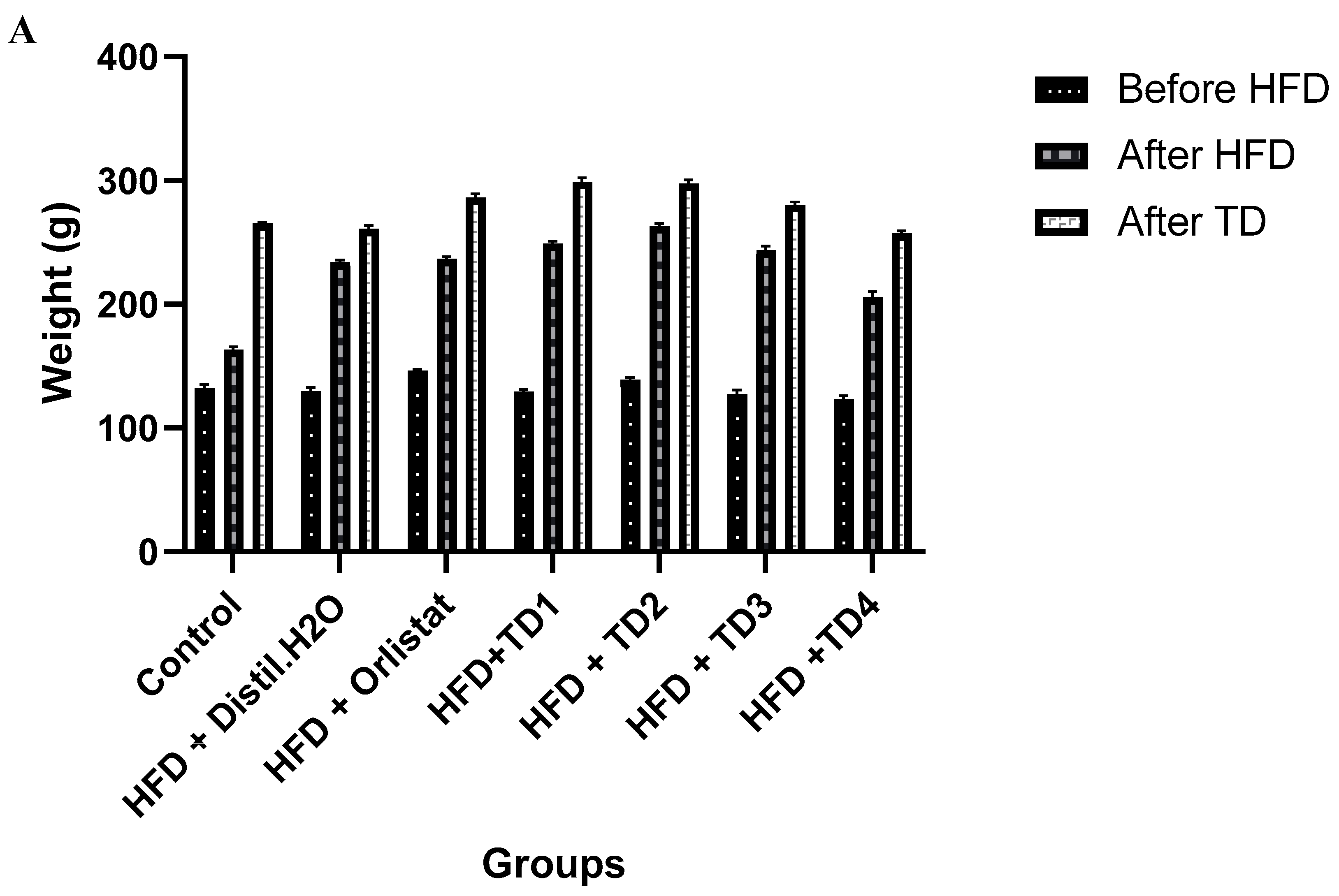
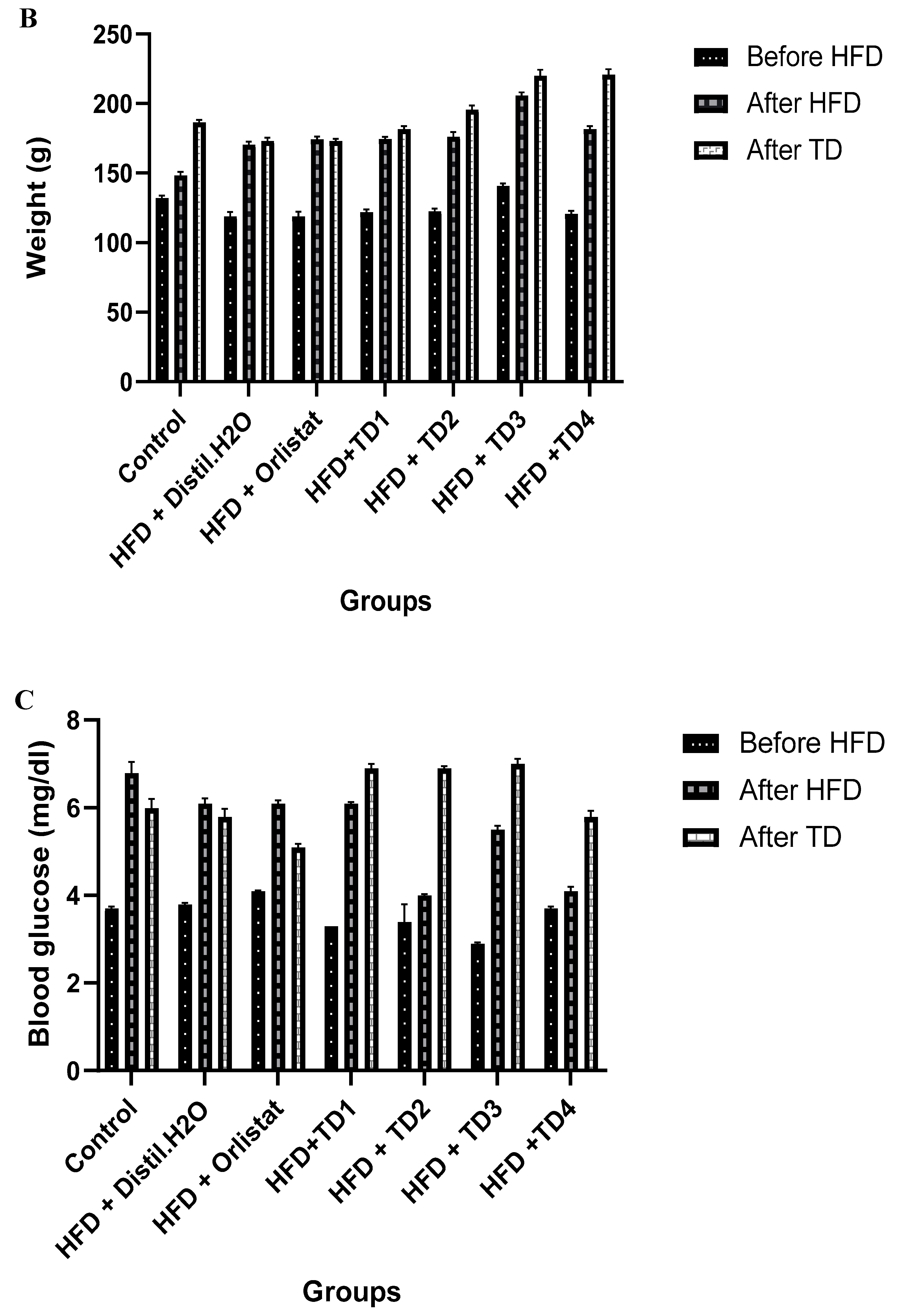
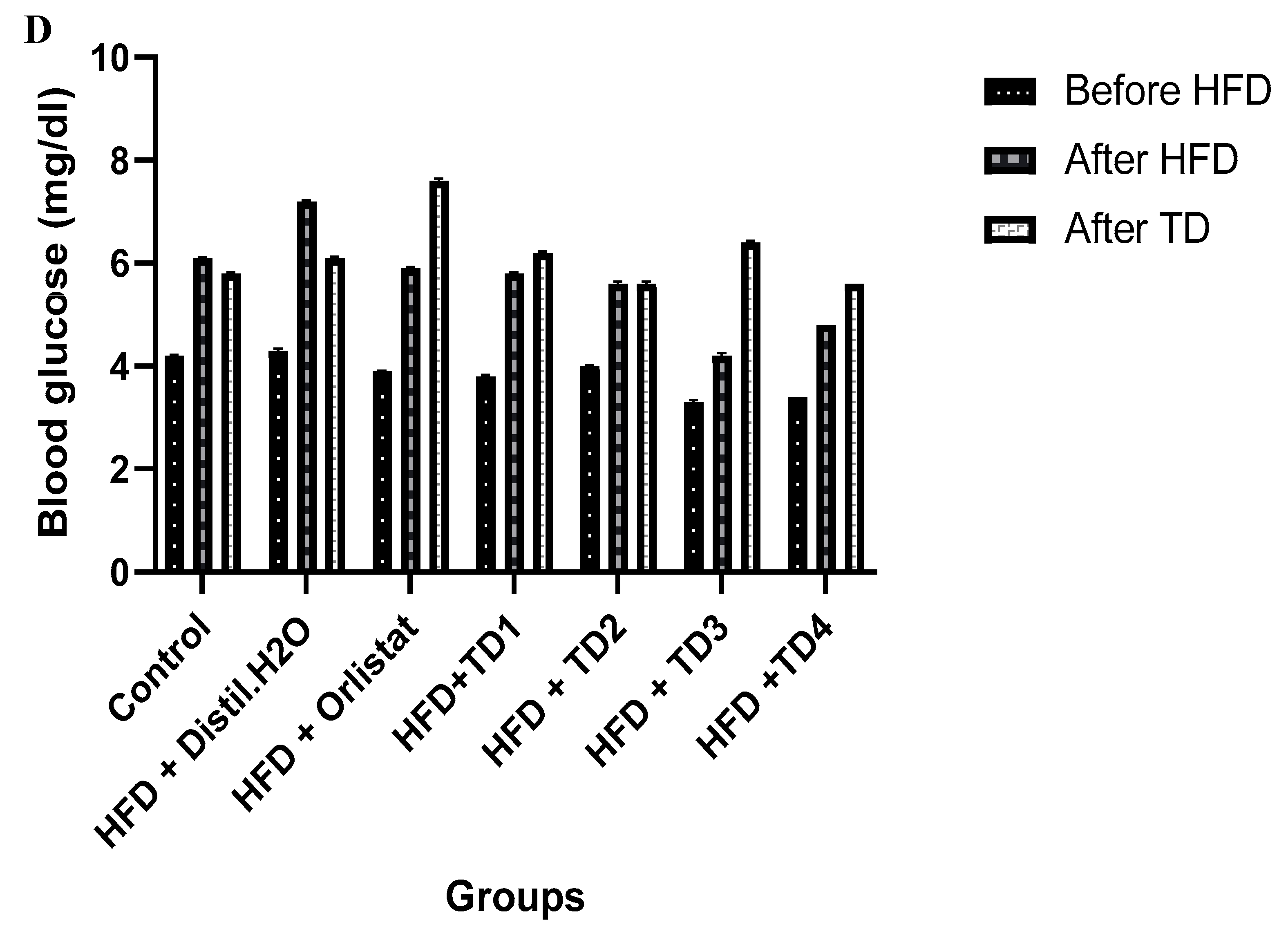
3.1. Changes in Body Weight and Fasting Blood Glucose of HFD-Fed Rats
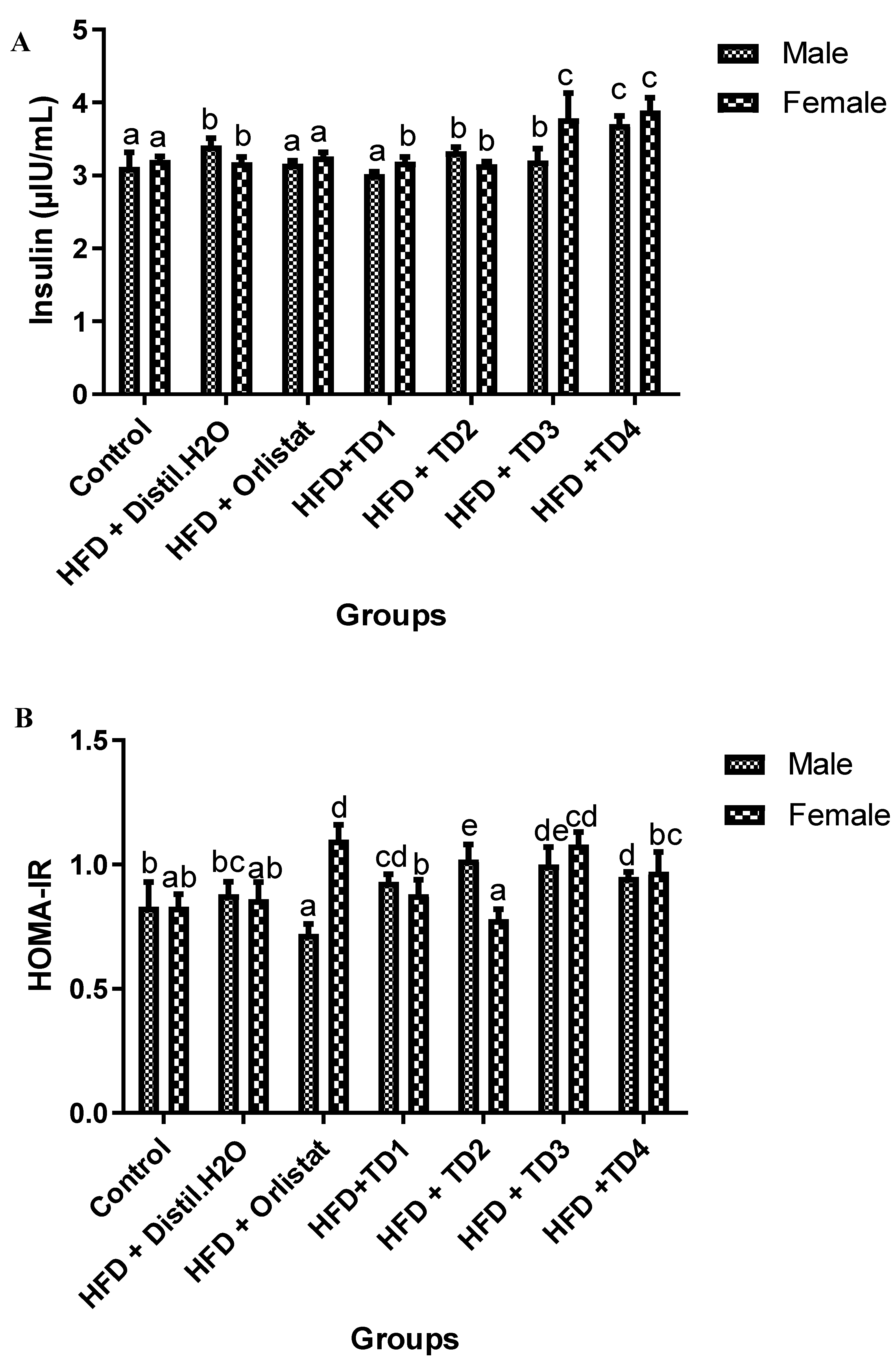
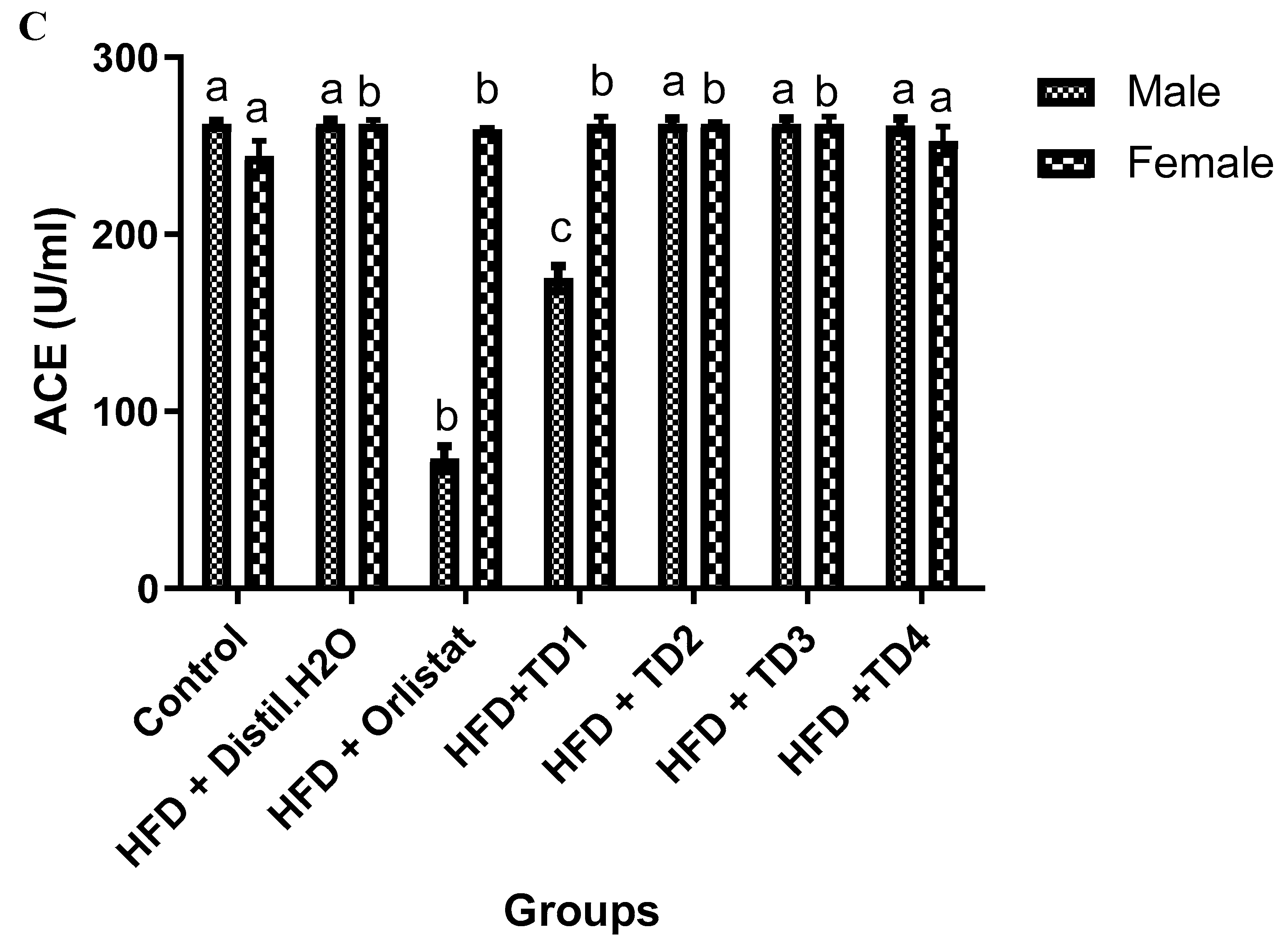
3.2. Changes in Serum Insulin, HOMA-IR and Angiotensin Converting Enzyme of HFD-Fed Rats
3.3. Changes in Systemic Lipid Profiles
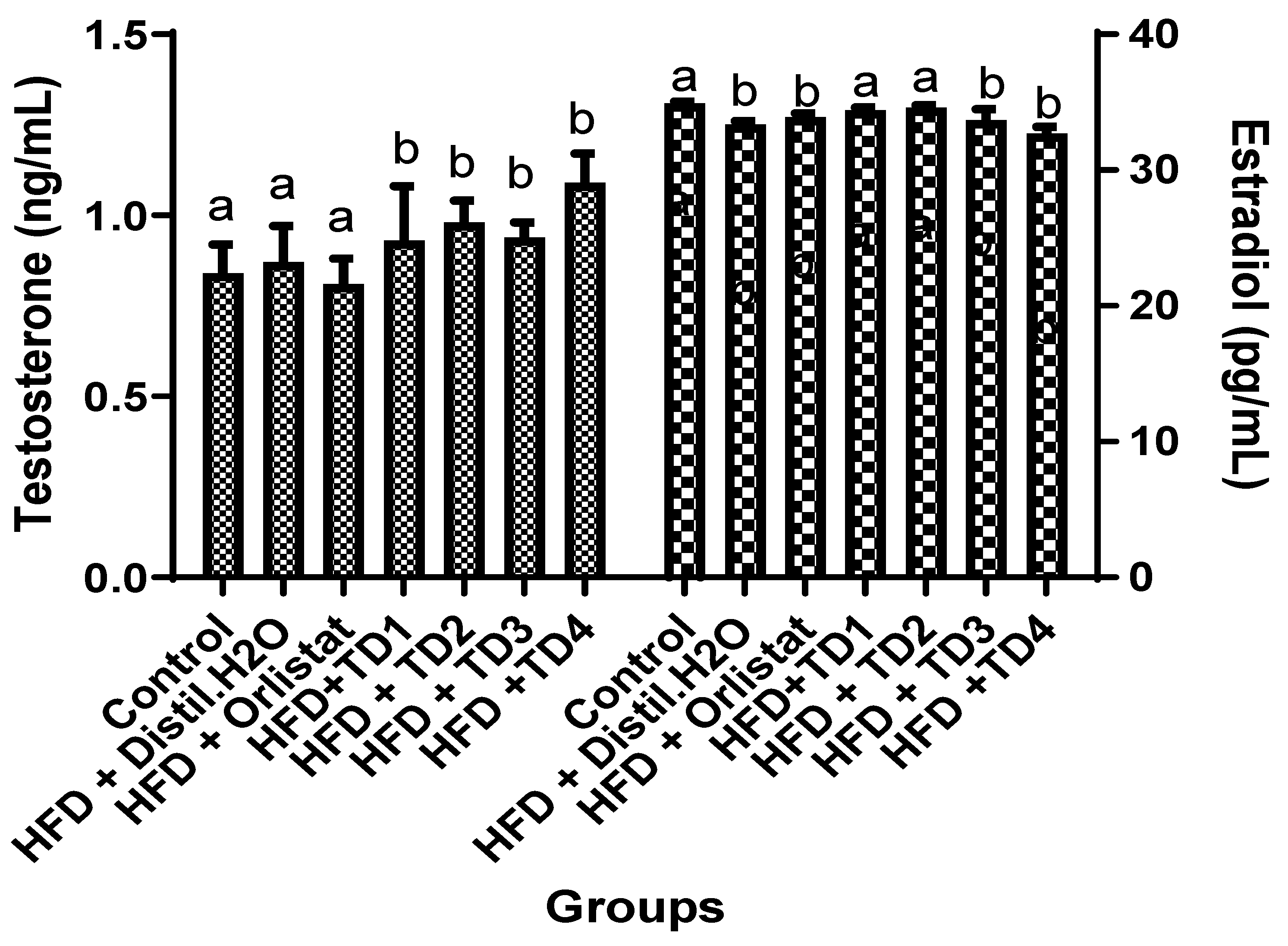
3.4. Response of Composite 3D-Printed Snacks to Serum Sex Hormones
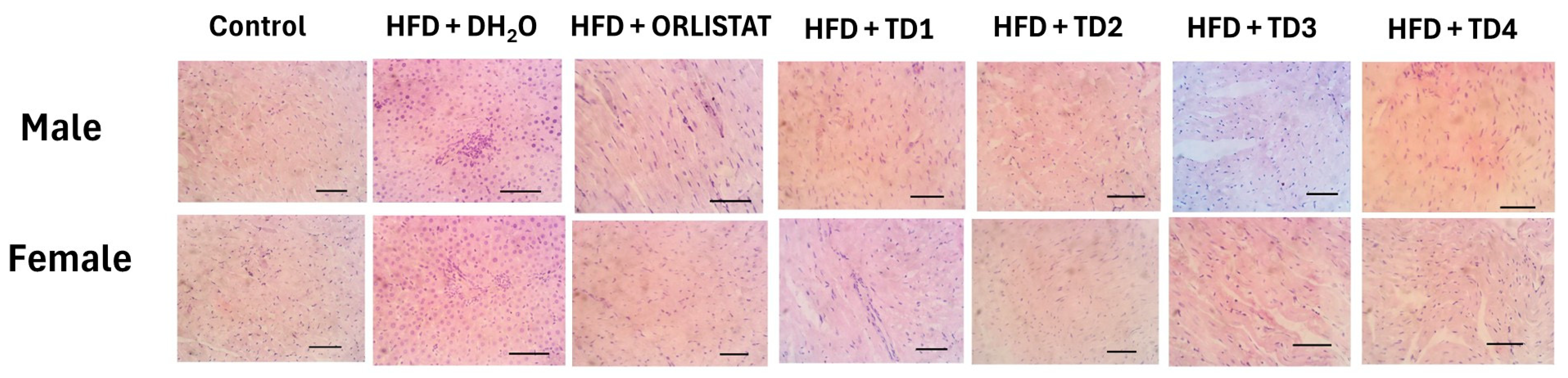
3.5. Histological Examination of Heart Tissues
4. Discussion
5. Conclusions
Author Contributions
Funding
Institutional Review Board Statement
Informed Consent Statement
Data Availability Statement
Conflicts of Interest
References
- Abad-Jiménez, Z.; Vezza, T. Obesity: A Global Health Challenge Demanding Urgent Action. Biomedicines 2025, 13, 502. [Google Scholar] [CrossRef]
- Lin, X.; Li, H. Obesity: Epidemiology, Pathophysiology, and Therapeutics. Front. Endocrinol. 2021, 12, 706978. [Google Scholar] [CrossRef]
- Jimoh, A.A.; Adebo, O.A. Evaluation of antiobesogenic properties of fermented foods: In silico insights. J. Food Sci. 2025, 90, e70074. [Google Scholar] [CrossRef]
- Mann, V.; Sundaresan, A.; Shishodia, S. Overnutrition and Lipotoxicity: Impaired Efferocytosis and Chronic Inflammation as Precursors to Multifaceted Disease Pathogenesis. Biology 2024, 13, 241. [Google Scholar] [CrossRef]
- Powell-Wiley, T.M.; Poirier, P.; Burke, L.E.; Després, J.-P.; Gordon-Larsen, P.; Lavie, C.J.; Lear, S.A.; Ndumele, C.E.; Neeland, I.J.; Sanders, P.; et al. Obesity and Cardiovascular Disease: A Scientific Statement From the American Heart Association. Circulation 2021, 143, e984–e1010. [Google Scholar] [CrossRef] [PubMed]
- Wadden, T.A.; Tronieri, J.S.; Butryn, M.L. Lifestyle modification approaches for the treatment of obesity in adults. Am. Psychol. 2020, 75, 235–251. [Google Scholar] [CrossRef] [PubMed]
- WHO. Obesity and Overweight; WHO: Geneva, Switzerland, 2025. [Google Scholar]
- Hamadou, M. Bioactive peptides and metabolic health: A mechanistic review of the impact on insulin sensitivity, lipid profiles, and inflammation. Appl. Food Res. 2025, 5, 101056. [Google Scholar] [CrossRef]
- Ma, Z.F.; Fu, C.; Lee, Y.Y. The Modulatory Role of Bioactive Compounds in Functional Foods on Inflammation and Metabolic Pathways in Chronic Diseases. Foods 2025, 14, 821. [Google Scholar] [CrossRef] [PubMed]
- Kewuyemi Yusuf, O.; Oluwafemi, A. Adebo, Phytochemical Distribution in 3D-Printed Biscuits From Bioprocessed Wholegrain and Multigrain Food Inks. Legume Sci. 2025, 7, e70037. [Google Scholar] [CrossRef]
- Kewuyemi, Y.O.; Adebo, O.A. Complementary nutritional and health promoting constituents in germinated and probiotic fermented flours from cowpea, sorghum and orange fleshed sweet potato. Sci. Rep. 2024, 14, 1987. [Google Scholar] [CrossRef]
- Kanimozhi, N.V.; Sukumar, M. Harnessing probiotic fermentation to enhance the bioavailability and health impact of dietary phytochemicals. Food Wellness 2025, 1, 100018. [Google Scholar] [CrossRef]
- Kewuyemi, Y.O.; Chinma, C.E.; Kesa, H.; Adebo, O.A. Phenolic Composition, Functional Groups, In Vitro Bioactivities, and Techno-Functional Properties of Whole and Composite Bioprocessed Flours From Cowpea, Sorghum and Orange-Fleshed Sweet Potato. J. Food Sci. 2025, 90, e70541. [Google Scholar] [CrossRef] [PubMed]
- Prithviraj, V.; Díaz, L.P.; Lemus-Mondaca, R.; Ullah, A.; Roopesh, M.S. Emerging advancements in 3D food printing. Front. Food Sci. Technol. 2025, 5, 1607449. [Google Scholar] [CrossRef]
- Zhang, Z.; Zheng, B.; Tang, Y.; Chen, L. Starch concentration is an important factor for controlling its digestibility during hot-extrusion 3D printing. Food Chem. 2022, 379, 132180. [Google Scholar] [CrossRef]
- Guo, T.; Wang, T.; Chen, L.; Zheng, B. Whole-grain highland barley premade biscuit prepared by hot-extrusion 3D printing: Printability and nutritional assessment. Food Chem. 2024, 432, 137226. [Google Scholar] [CrossRef]
- Peng, M.; Gao, Z.; Liao, Y.; Guo, J.; Shan, Y. Development of Citrus-Based Functional Jelly and an Investigation of Its Anti-Obesity and Antioxidant Properties. Antioxidants 2022, 11, 2418. [Google Scholar] [CrossRef]
- Liu, Y.; Yi, S.; Ye, T.; Leng, Y.; Hossen, A.; Sameen, D.E.; Dai, J.; Li, S.; Qin, W. Effects of ultrasonic treatment and homogenization on physicochemical properties of okara dietary fibers for 3D printing cookies. Ultrason. Sonochem. 2021, 77, 105693. [Google Scholar] [CrossRef]
- Kewuyemi, Y.O.; Kesa, H.; Meijboom, R.; Alimi, O.A.; Adebo, O.A. 3D food printing improves color profile and structural properties of the derived novel whole-grain sourdough and malt biscuits. Sci. Rep. 2022, 12, 12347. [Google Scholar] [CrossRef] [PubMed]
- Sihag, S.; Mathur, R.; Bissa, M.S.; Bhawani, J. Assessment of Serum Insulin and VASPIN Levels Among Type 2 Diabetes Mellitus Patients with or Without Obesity: A Cross-sectional Analytical Study. J. Pharm. Bioallied Sci. 2024, 16 (Suppl. 3), S2094–S2096. [Google Scholar] [CrossRef]
- Krause, W.J. The Art of Examining and Interpreting Histologic Preparations: A Student Handbook; CRC Press: Boca Raton, FL, USA, 2001. [Google Scholar]
- Engin, A. The definition and prevalence of obesity and metabolic syndrome. In Obesity and Lipotoxicity; Springer: Cham, Switzerland, 2017; pp. 1–17. [Google Scholar]
- Abbasi, E.; Khodadadi, I. High-fat diet may increase the risk of insulin resistance by inducing dysbiosis. Metab. Open 2025, 27, 100381. [Google Scholar] [CrossRef]
- Li, M.; Chi, X.; Wang, Y.; Setrerrahmane, S.; Xie, W.; Xu, H. Trends in insulin resistance: Insights into mechanisms and therapeutic strategy. Signal Transduct. Target. Ther. 2022, 7, 216. [Google Scholar] [CrossRef]
- Freeman, A.M.; Pennings, N. Insulin Resistance; Nova Science Pub Inc.: Hauppauge, NY, USA, 2018. [Google Scholar]
- Lim, S.M.; Goh, Y.M.; Mohtarrudin, N.; Loh, S.P. Germinated brown rice ameliorates obesity in high-fat diet induced obese rats. BMC Complement. Altern. Med. 2016, 16, 140. [Google Scholar] [CrossRef]
- Beazer, J.D.; Freeman, D.J. Estradiol and HDL Function in Women—A Partnership for Life. J. Clin. Endocrinol. Metab. 2022, 107, e2192–e2194. [Google Scholar] [CrossRef]
- Krauss, R.; Lindgren, F.T.; Wingerd, J.; Bradley, D.D.; Ramcharan, S. Effects of estrogens and progestins on high density lipoproteins. Lipids 1979, 14, 113–118. [Google Scholar] [CrossRef]
- Thalia, O.P. Micronutrients and Plant Bioactives in Reproductive Health: Bridging Nutrition and Endocrine Function. EEJMMS 2025, 6, 7–11. [Google Scholar]
- Tramunt, B.; Smati, S.; Grandgeorge, N.; Lenfant, F.; Arnal, J.-F.; Montagner, A.; Gourdy, P. Sex differences in metabolic regulation and diabetes susceptibility. Diabetologia 2020, 63, 453–461. [Google Scholar] [CrossRef]
- Varlamov, O.; Bethea, C.L.; Roberts, C.T., Jr. Sex-specific differences in lipid and glucose metabolism. Front. Endocrinol. 2014, 5, 241. [Google Scholar] [CrossRef] [PubMed]
- Mauvais-Jarvis, F.; Lindsey, S.H. Metabolic benefits afforded by estradiol and testosterone in both sexes: Clinical considerations. J. Clin. Investig. 2024, 134, e180073. [Google Scholar] [CrossRef] [PubMed]
- Kalupahana, N.S.; Moustaid-Moussa, N. The renin-angiotensin system: A link between obesity, inflammation and insulin resistance. Obes. Rev. 2012, 13, 136–149. [Google Scholar] [CrossRef] [PubMed]
- Zhu, W.; Iskandar, M.M.; Baeghbali, V.; Kubow, S. Three-Dimensional Printing of Foods: A Critical Review of the Present State in Healthcare Applications, and Potential Risks and Benefits. Foods 2023, 12, 3287. [Google Scholar] [CrossRef]
- Derossi, A.; Spence, C.; Corradini, M.G.; Jekle, M.; Fahmy, A.R.; Caporizzi, R.; Devahastin, S.; Moses, J.A.; Le-Bail, A.; Zhou, W.; et al. Personalized, digitally designed 3D printed food towards the reshaping of food manufacturing and consumption. NPJ Sci. Food 2024, 8, 54. [Google Scholar] [CrossRef] [PubMed]





| Groups | Triglyceride (mmol/L) | High-Density Lipoprotein (mmol/L) | Total Cholesterol (mmol/L) | Low-Density Lipoprotein (mmol/L) |
|---|---|---|---|---|
| Male | ||||
| Control | 1.57 ± 0.40 b | 6.82 ± 0.13 g | 5.04 ± 0.10 a | 4.72 ± 0.07 a |
| HFD + Distilled H2O | 2.14 ± 0.08 d | 3.99 ± 0.36 e | 4.40 ± 0.08 ᵈ | 4.99 ± 0.45 a |
| HFD + Orlistat | 2.02 ± 0.10 c | 3.49 ± 0.68 b | 3.32 ± 0.35 c | 4.36 ± 0.00 a |
| HFD + TD1 | 2.78 ± 0.72 f | 2.64 ± 0.54 a | 3.42 ± 0.39 c | 3.13 ± 0.54 c |
| HFD + TD2 | 2.33 ± 0.35 e | 3.68 ± 0.10 d | 4.15 ± 0.10 c | 3.00 ± 0.25 c |
| HFD + TD3 | 1.12 ± 0.22 a | 4.52 ± 0.66 f | 3.58 ± 0.74 c | 3.94 ± 0.00 ᵇ |
| HFD + TD4 | 3.04 ± 0.73 g | 3.59 ± 0.42 c | 5.63 ± 0.66 ᵇ | 2.27 ± 0.23 c |
| Female | ||||
| Control | 1.82 ± 0.07 a | 4.49 ± 0.07 a | 5.37 ± 0.03 a | 7.10 ± 0.69 a |
| HFD + Distilled H2O | 1.93 ± 0.05 a | 4.82 ± 0.82 ᵇ | 2.53 ± 0.57 ᵇ | 4.46 ± 0.08 c |
| HFD + Orlistat | 5.10 ± 0.48 c | 3.05 ± 0.27 ᶠ | 4.59 ± 1.09 c | 4.29 ± 0.00 c |
| HFD + TD1 | 1.95 ± 0.57 ᵇ | 7.87 ± 1.07 ᵈ | 4.57 ± 0.69 c | 5.25 ± 0.34 c |
| HFD + TD2 | 1.32 ± 0.45 a | 5.48 ± 0.44 c | 4.89 ± 0.33 c | 4.61 ± 0.00 c |
| HFD + TD3 | 1.86 ± 0.00 a | 1.42 ± 0.21 c | 3.96 ± 0.72 ᵇ | 2.59 ± 0.12 ᵇ |
| HFD + TD4 | 2.14 ± 0.34 ᵇ | 2.95 ± 0.00 c | 3.08 ± 0.68 ᵇ | 4.61 ± 0.29 c |
Disclaimer/Publisher’s Note: The statements, opinions and data contained in all publications are solely those of the individual author(s) and contributor(s) and not of MDPI and/or the editor(s). MDPI and/or the editor(s) disclaim responsibility for any injury to people or property resulting from any ideas, methods, instructions or products referred to in the content. |
© 2025 by the authors. Licensee MDPI, Basel, Switzerland. This article is an open access article distributed under the terms and conditions of the Creative Commons Attribution (CC BY) license (https://creativecommons.org/licenses/by/4.0/).
Share and Cite
Jimoh, A.A.; Kappo, A.P.; Femi-Olabisi, F.J.; Kewuyemi, Y.O.; Omosebi, O.M.; Adebo, O.A. Three-Dimensional (3D)-Printed Snacks from Indigenous Composite Inks Improve Metabolic Dysfunctions Associated with High-Fat-Diet-Induced Obesity in Wistar Rats. Foods 2025, 14, 4185. https://doi.org/10.3390/foods14244185
Jimoh AA, Kappo AP, Femi-Olabisi FJ, Kewuyemi YO, Omosebi OM, Adebo OA. Three-Dimensional (3D)-Printed Snacks from Indigenous Composite Inks Improve Metabolic Dysfunctions Associated with High-Fat-Diet-Induced Obesity in Wistar Rats. Foods. 2025; 14(24):4185. https://doi.org/10.3390/foods14244185
Chicago/Turabian StyleJimoh, Abdullahi Adekilekun, Abidemi Paul Kappo, Fehintoluwa Joy Femi-Olabisi, Yusuf Olamide Kewuyemi, Omolola Mary Omosebi, and Oluwafemi Ayodeji Adebo. 2025. "Three-Dimensional (3D)-Printed Snacks from Indigenous Composite Inks Improve Metabolic Dysfunctions Associated with High-Fat-Diet-Induced Obesity in Wistar Rats" Foods 14, no. 24: 4185. https://doi.org/10.3390/foods14244185
APA StyleJimoh, A. A., Kappo, A. P., Femi-Olabisi, F. J., Kewuyemi, Y. O., Omosebi, O. M., & Adebo, O. A. (2025). Three-Dimensional (3D)-Printed Snacks from Indigenous Composite Inks Improve Metabolic Dysfunctions Associated with High-Fat-Diet-Induced Obesity in Wistar Rats. Foods, 14(24), 4185. https://doi.org/10.3390/foods14244185