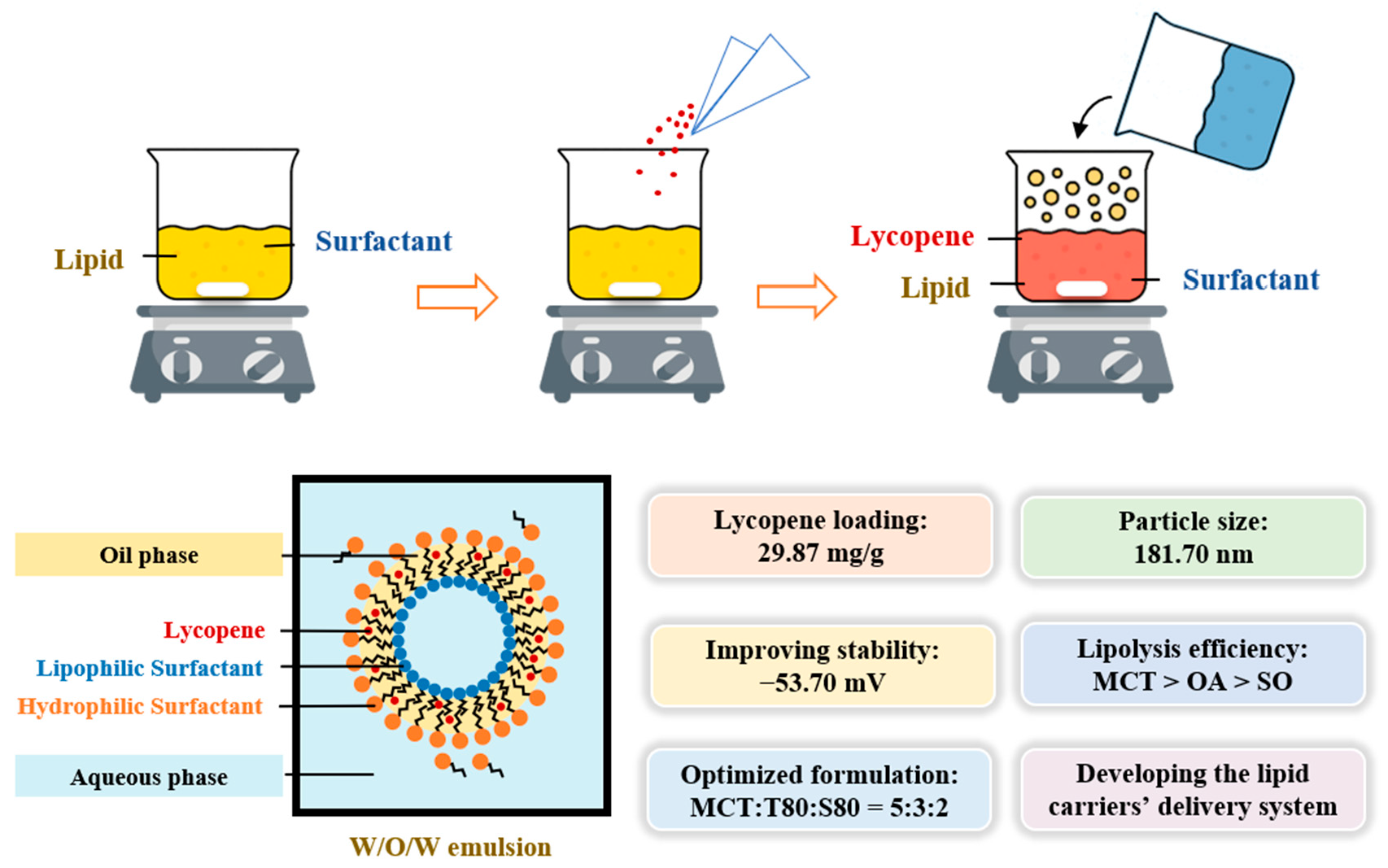
Formulation, Characterization, and Lipolysis Properties of Lycopene-Loaded Self-Emulsifying Delivery Systems Based on Different Lipids

Abstract
1. Introduction
2. Materials and Methods
2.1. Materials and Chemicals
2.2. Quality Indices of SEDS
2.2.1. Miscibility Test
- HLBmix = The final HLB value of the mixed surfactants.
- HLBi = The individual HLB values of the surfactants.
- Wi = The respective amounts of surfactants (expressed as a weight or molar ratio).
- SOR = The surfactant-to-oil ratio.
- Wsurfactant = The weight (or volume) of the surfactant.
- Woil = The weight (or volume) of the oil.
2.2.2. Solubility of Lycopene
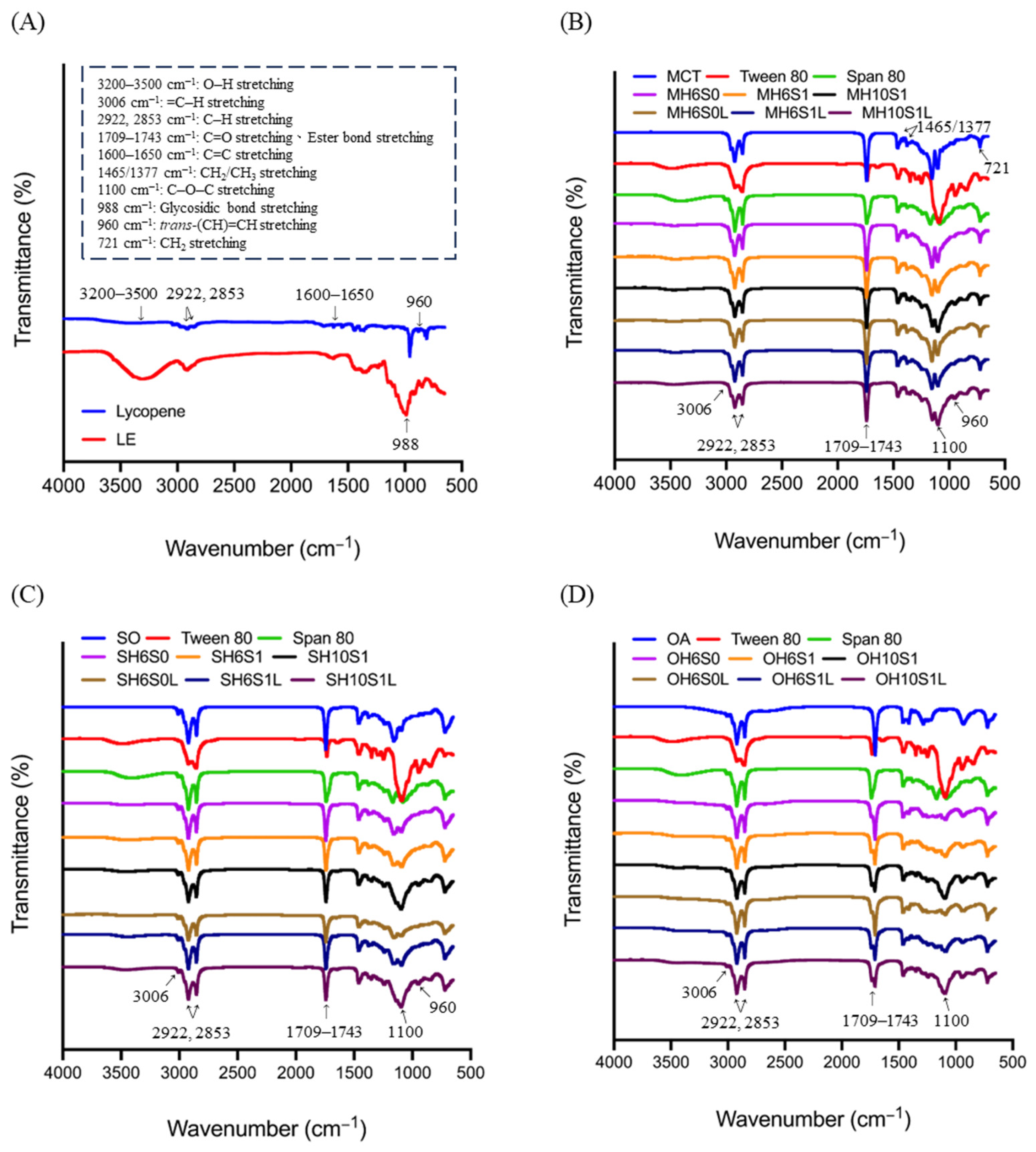
2.2.3. Fourier-Transform Infrared (FTIR) Spectroscopy and Unsaturation Degree (UD)
- A3006 = The absorbance at wavenumber 3006 cm−1.
- A2922 = The absorbance at wavenumber 2922 cm−1.
2.3. Quality Indices of W/O/W Emulsion
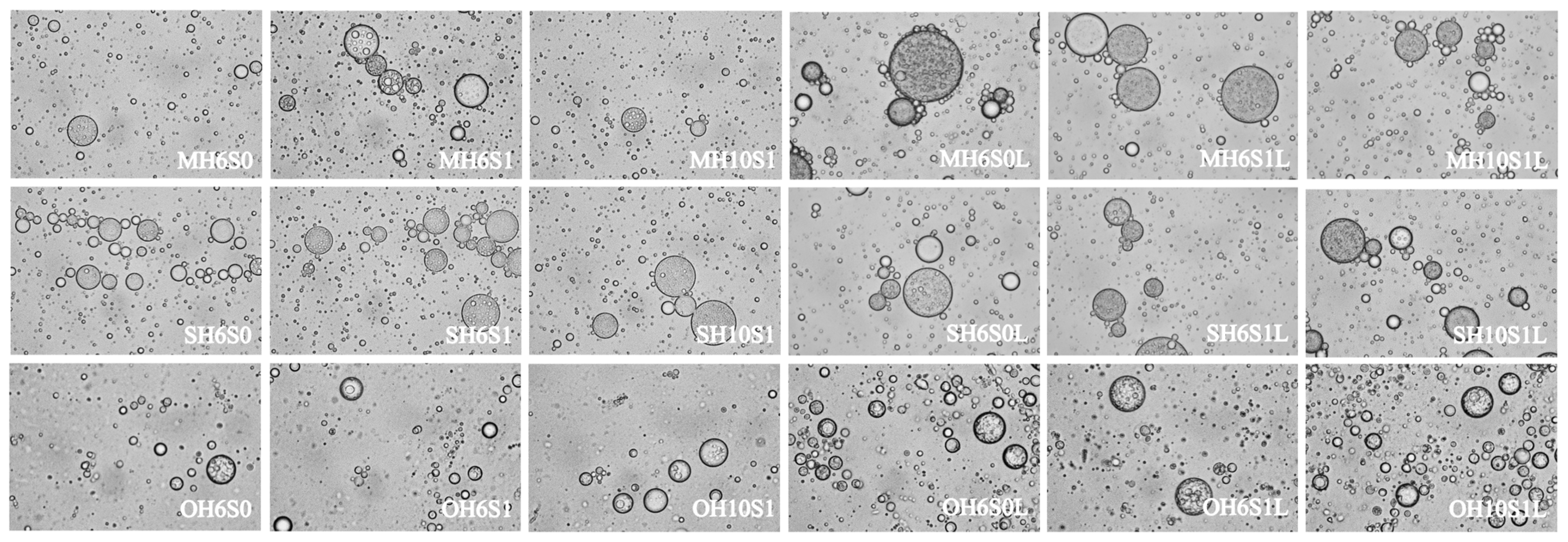
2.3.1. Microstructure
2.3.2. Measurement of Droplet Size, PDI, and ζ-Potential
2.3.3. Turbidity
2.4. Antioxidant Capacities and Lipolysis Dynamics
2.4.1. 2,2′-Azino-Bis (3-Ethylbenzothiazoline-6-Sulfonic Acid) (ABTS) Radical Cation Scavenging Activity
- Asample = The absorbance of the SEDS solution.
- Acontrol = The absorbance of the analyte solution alone.
2.4.2. Ferric Reducing Antioxidant Power (FRAP)
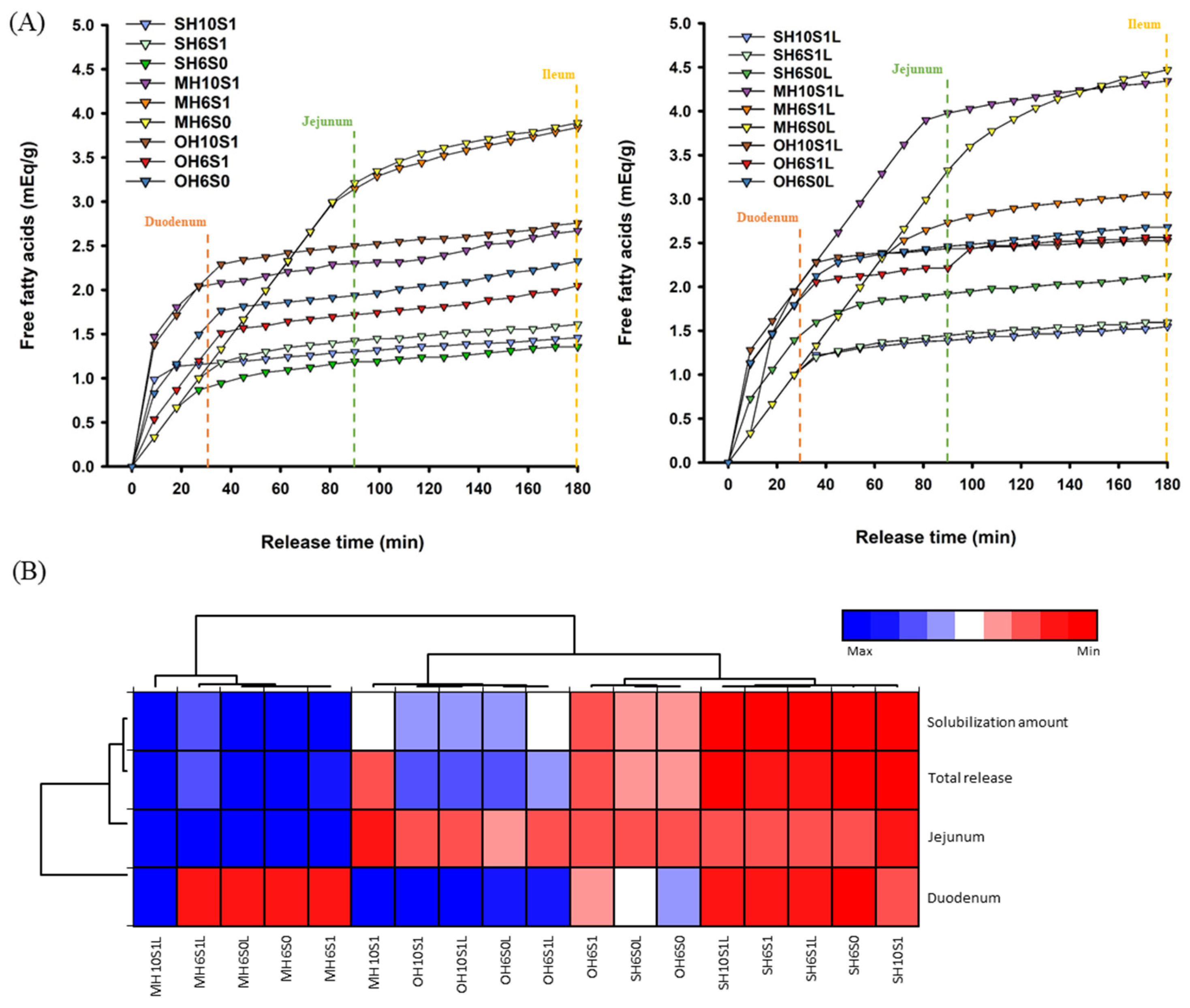
2.4.3. Lipolysis Dynamics of Intestinal Fluids and Solubilization Amount
- Rduodenum = The cumulative release amount of FFAs between 0 and 30 min.
- Rjejunum = The cumulative release amount of FFAs between 30 and 90 min.
2.5. Statistical Analysis
3. Results and Discussion
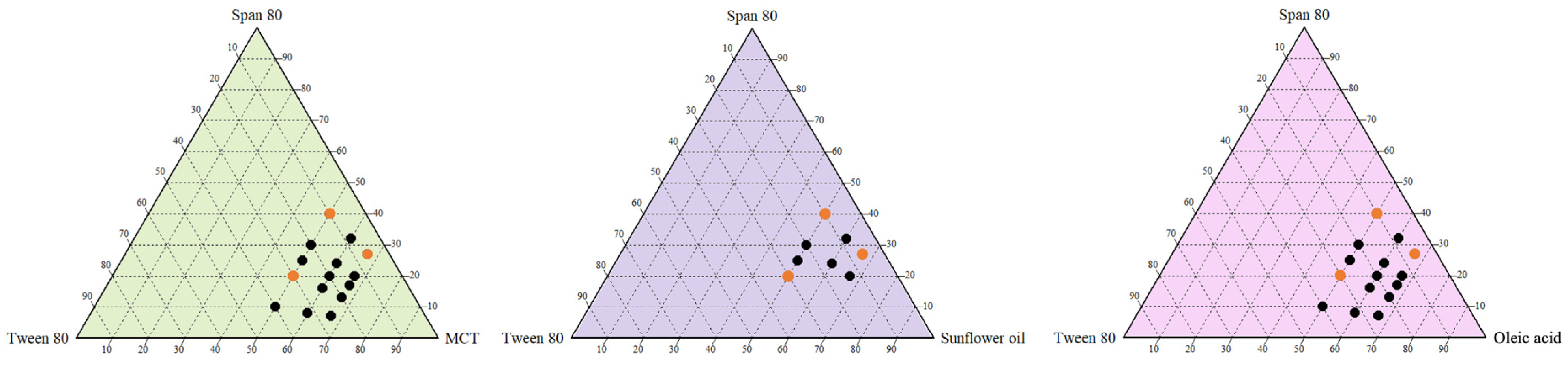
3.1. Formulation Screening
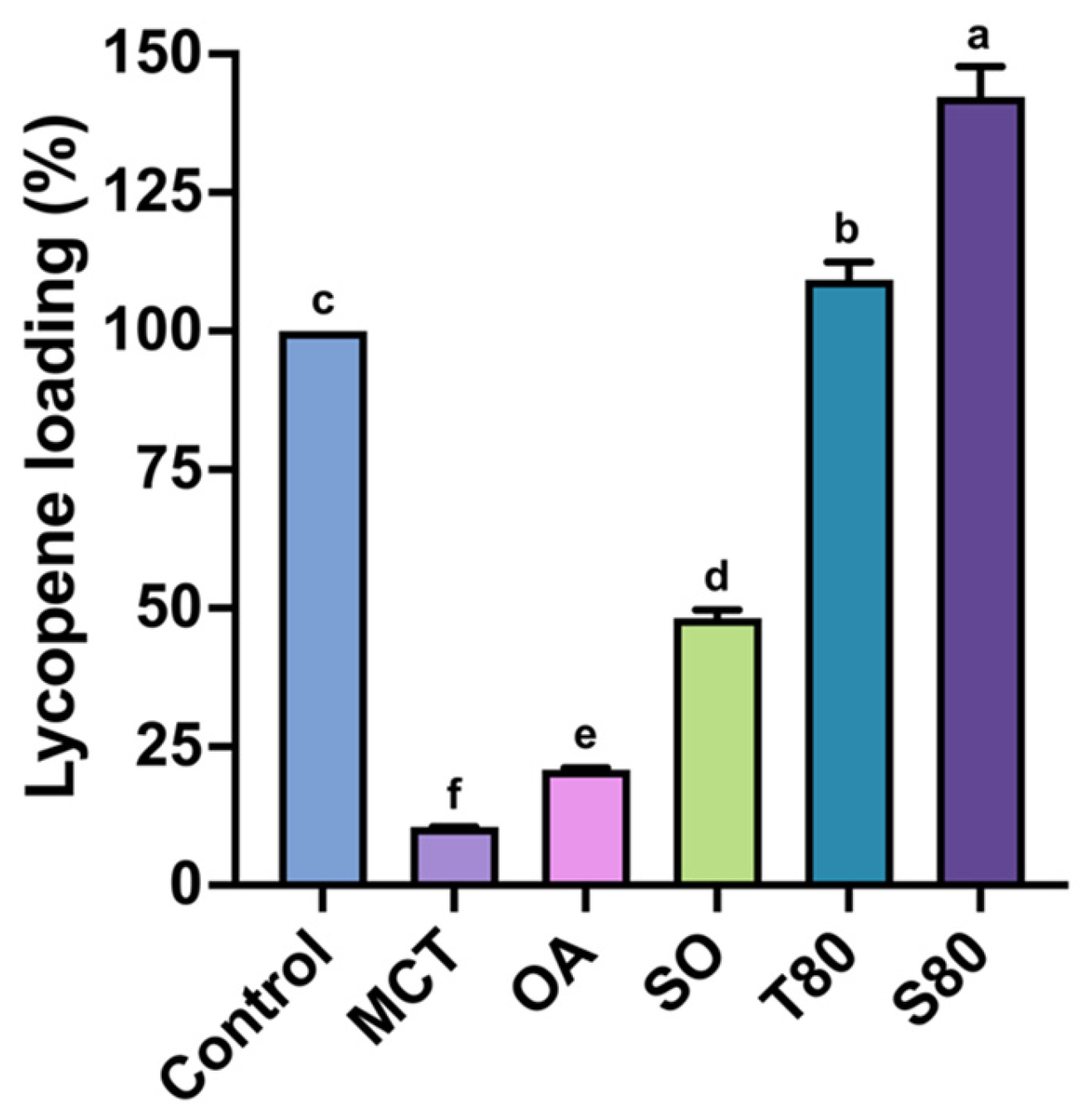
3.2. Lycopene Solubility in the Oils and Surfactants
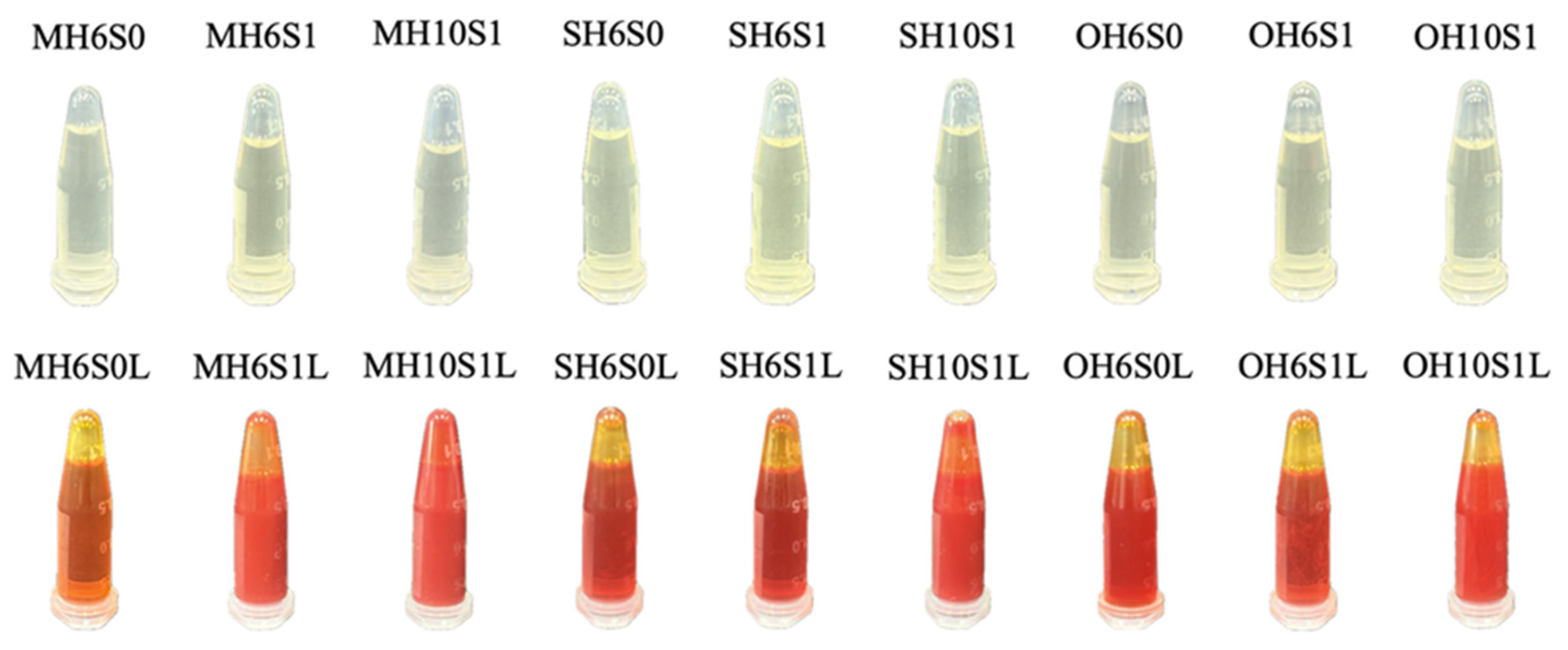
3.3. Formulation and FTIR Measurement of LL-SEDS
3.4. Quality Assessment and Structural Characteristics of W/O/W Emulsion
3.5. Antioxidant Capacity and Lipolysis Dynamics of LL-SEDS
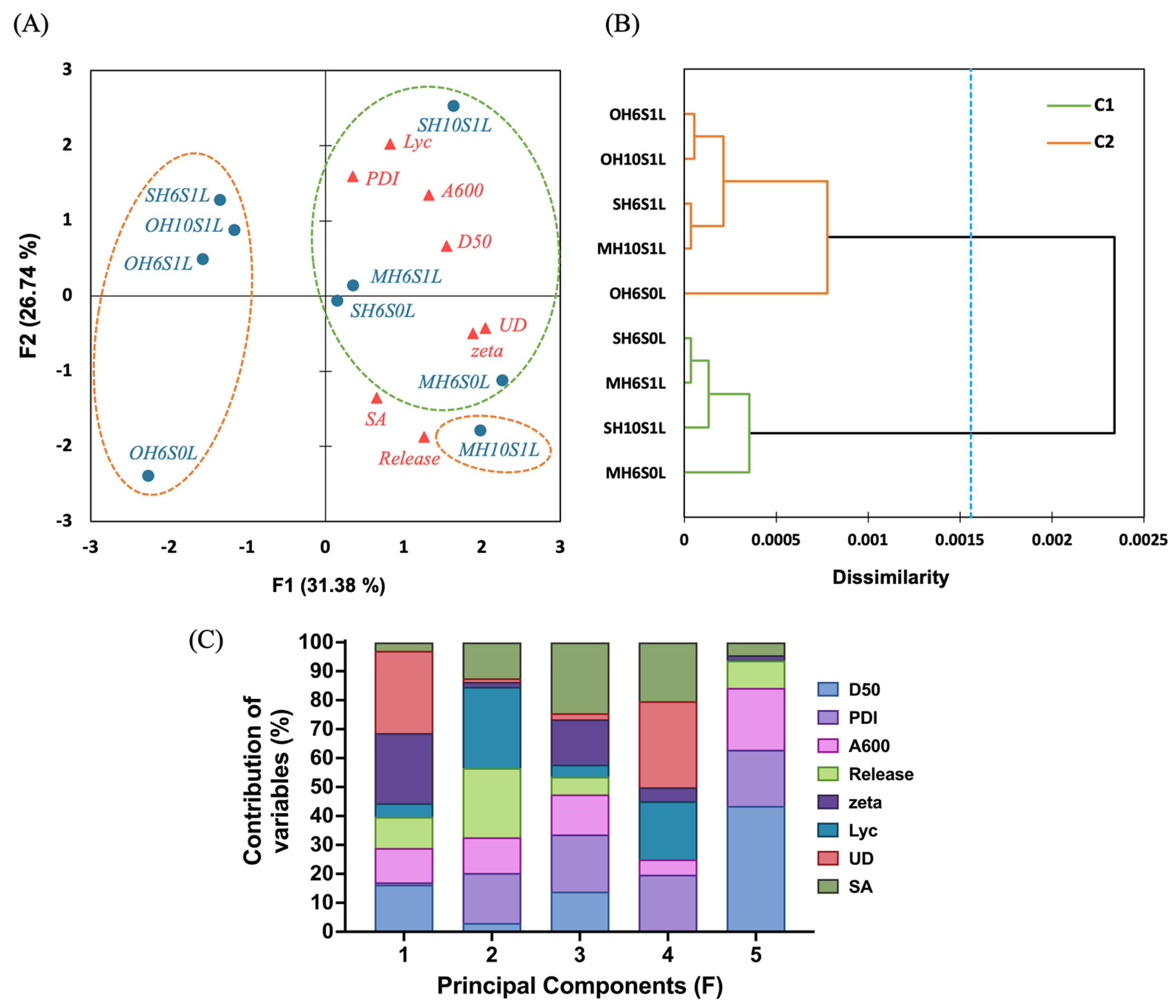
3.6. Multivariate Analysis of LL-SEDS
4. Conclusions
Author Contributions
Funding
Institutional Review Board Statement
Informed Consent Statement
Data Availability Statement
Acknowledgments
Conflicts of Interest
References
- Granato, D.; Barba, F.J.; Kovačević, D.B.; Lorenzo, J.M.; Cruz, A.G.; Putnik, P. Functional Foods: Product Development, Technological Trends, Efficacy Testing, and Safety. Annu. Rev. Food Sci. Technol. 2020, 11, 93–118. [Google Scholar] [CrossRef]
- Rao, A.V.; Young, G.L.; Rao, L.G. (Eds.) Lycopene and Tomatoes in Human Nutrition and Health, 1st ed.; CRC Press: Boca Raton, FL, USA, 2018. [Google Scholar] [CrossRef]
- Khan, U.M.; Sevindik, M.; Zarrabi, A.; Nami, M.; Ozdemir, B.; Kaplan, D.N.; Selamoglu, Z.; Hasan, M.; Kumar, M.; Alshehri, M.M.; et al. Lycopene: Food Sources, Biological Activities, and Human Health Benefits. Oxidative Med. Cell. Longev. 2021, 2021, 2713511. [Google Scholar] [CrossRef]
- Shafe, M.O.; Gumede, N.M.; Nyakudya, T.T.; Chivandi, E. Lycopene: A Potent Antioxidant with Multiple Health Benefits. J. Nutr. Metab. 2024, 2024, 6252426. [Google Scholar] [CrossRef]
- Liang, X.; Yan, J.; Guo, S.; McClements, D.J.; Ma, C.; Liu, X.; Liu, F. Enhancing lycopene stability and bioaccessibility in homogenized tomato pulp using emulsion design principles. Innov. Food Sci. Emerg. Technol. 2021, 67, 102525. [Google Scholar] [CrossRef]
- Novikov, V.; Kuzmin, V.; Darvin, M.; Lademann, J.; Sagitova, E.; Prokhorov, K.; Ustynyuk, L.; Nikolaeva, G. Relations between the Raman spectra and molecular structure of selected carotenoids: DFT study of α-carotene, β-carotene, γ-carotene and lycopene. Spectrochim. Acta Part A Mol. Biomol. Spectrosc. 2022, 270, 120755. [Google Scholar] [CrossRef]
- Kulawik, A.; Cielecka-Piontek, J.; Zalewski, P. The Importance of Antioxidant Activity for the Health-Promoting Effect of Lycopene. Nutrients 2023, 15, 3821. [Google Scholar] [CrossRef]
- Liang, X.; Ma, C.; Yan, X.; Liu, X.; Liu, F. Advances in research on bioactivity, metabolism, stability and delivery systems of lycopene. Trends Food Sci. Technol. 2019, 93, 185–196. [Google Scholar] [CrossRef]
- Ma, P.; Zeng, Q.; Tai, K.; He, X.; Yao, Y.; Hong, X.; Yuan, F. Preparation of curcumin-loaded emulsion using high pressure homogenization: Impact of oil phase and concentration on physicochemical stability. LWT 2017, 84, 34–46. [Google Scholar] [CrossRef]
- Lv, L.Z.; Tong, C.Q.; Lv, Q.; Tang, X.J.; Li, L.M.; Fang, Q.X.; Min Han, J.Y.; Gao, J.Q. Enhanced absorption of hydroxysafflor yellow A using a self-double-emulsifying drug delivery system: in vitro and in vivo studies. Int. J. Nanomed. 2012, 2012, 4099–4107. [Google Scholar] [CrossRef]
- Lv, G.; Wang, F.; Cai, W.; Zhang, X. Characterization of the addition of lipophilic Span 80 to the hydrophilic Tween 80-stabilized emulsions. Colloids Surf. A Physicochem. Eng. Asp. 2014, 447, 8–13. [Google Scholar] [CrossRef]
- Gursoy, R.N.; Benita, S. Self-emulsifying drug delivery systems (SEDDS) for improved oral delivery of lipophilic drugs. Biomed. Pharmacother. 2004, 58, 173–182. [Google Scholar] [CrossRef] [PubMed]
- Rohrer, J.; Zupančič, O.; Hetényi, G.; Kurpiers, M.; Bernkop-Schnürch, A. Design and evaluation of SEDDS exhibiting high emulsifying properties. J. Drug Deliv. Sci. Technol. 2018, 44, 366–372. [Google Scholar] [CrossRef]
- Ravichandran, V.; Lee, M.; Cao, T.G.N.; Shim, M.S. Polysorbate-Based Drug Formulations for Brain-Targeted Drug Delivery and Anticancer Therapy. Appl. Sci. 2021, 11, 9336. [Google Scholar] [CrossRef]
- Belhaj, A.F.; Elraies, K.A.; Mahmood, S.M.; Zulkifli, N.N.; Akbari, S.; Hussien, O.S. The effect of surfactant concentration, salinity, temperature, and pH on surfactant adsorption for chemical enhanced oil recovery: A review. J. Pet. Explor. Prod. Technol. 2019, 10, 125–137. [Google Scholar] [CrossRef]
- Cortés, H.; Hernández-Parra, H.; Bernal-Chávez, S.A.; Del Prado-Audelo, M.L.; Caballero-Florán, I.H.; Borbolla-Jiménez, F.V.; González-Torres, M.; Magaña, J.J.; Leyva-Gómez, G. Non-Ionic Surfactants for Stabilization of Polymeric Nanoparticles for Biomedical Uses. Materials 2021, 14, 3197. [Google Scholar] [CrossRef]
- Uttreja, P.; Karnik, I.; Youssef, A.A.A.; Narala, N.; Elkanayati, R.M.; Baisa, S.; Alshammari, N.D.; Banda, S.; Vemula, S.K.; Repka, M.A. Self-Emulsifying Drug Delivery Systems (SEDDS): Transition from Liquid to Solid—A Comprehensive Review of Formulation, Characterization, Applications, and Future Trends. Pharmaceutics 2025, 17, 63. [Google Scholar] [CrossRef]
- Matsaridou, I.; Barmpalexis, P.; Salis, A.; Nikolakakis, I. The Influence of Surfactant HLB and Oil/Surfactant Ratio on the Formation and Properties of Self-emulsifying Pellets and Microemulsion Reconstitution. AAPS PharmSciTech 2012, 13, 1319–1330. [Google Scholar] [CrossRef]
- Liang, Y.-X.; Li, P.-H.; Chiang, Y.-C.; Song, H.-Y.; Lai, Y.-J.; Chiang, P.-Y. Assessment of curcumin self-emulsion containing high methoxyl pectin-whey protein complex: Quality stability by thermal, freeze-thaw treatment, and release characteristics. LWT 2023, 188, 115398. [Google Scholar] [CrossRef]
- Báo, S.N.; Machado, M.; Da Silva, A.L.; Melo, A.; Cunha, S.; Sousa, S.S.; Malheiro, A.R.; Fernandes, R.; Leite, J.R.S.A.; Vasconcelos, A.G.; et al. Potential Biological Properties of Lycopene in a Self-Emulsifying Drug Delivery System. Molecules 2023, 28, 1219. [Google Scholar] [CrossRef]
- Sandmeier, M.; Wong, E.T.; Nikolajsen, G.N.; Purwanti, A.; Lindner, S.; Bernkop-Schnürch, A.; Xia, W.; Hoeng, J.; Kjær, K.; Bruun, H.Z.; et al. Oral formulations for cannabidiol: Improved absolute oral bioavailability of biodegradable cannabidiol self-emulsifying drug delivery systems. Colloids Surf. B Biointerfaces 2025, 255, 114879. [Google Scholar] [CrossRef]
- Wu, D.Y.; Chiang, P.Y. The Evaluation of Self-emulsifying Delivery System (SEDS) on Curcumin Loading and Its Vitro Simulated Releaseing Contents. Taiwan. J. Agric. Chem. Food Sci. 2019, 57, 154–163. [Google Scholar] [CrossRef]
- Chiang, Y.-C.; Chiang, P.-Y. Accentuation of the browning characteristics and functional properties of aged tomatoes (Solanum lycopersicum cv.). Food Chem. X 2024, 22, 101499. [Google Scholar] [CrossRef] [PubMed]
- Moharam, M.A.; Abbas, L.M. A study on the effect of microwave heating on the properties of edible oils using FTIR spectroscopy. Afr. J. Microbiol. Res. 2010, 4, 1921–1927. [Google Scholar]
- Chao, P.-W.; Yang, K.-M.; Chiang, Y.-C.; Chiang, P.-Y. The formulation and the release of low–methoxyl pectin liquid-core beads containing an emulsion of soybean isoflavones. Food Hydrocoll. 2022, 130, 107722. [Google Scholar] [CrossRef]
- Shahba, A.A.-W.; Mohsin, K.; Alanazi, F.K. The Studies of Phase Equilibria and Efficiency Assessment for Self-Emulsifying Lipid-Based Formulations. AAPS PharmSciTech 2012, 13, 522–533. [Google Scholar] [CrossRef][Green Version]
- Rumpf, J.; Burger, R.; Schulze, M. Statistical evaluation of DPPH, ABTS, FRAP, and Folin-Ciocalteu assays to assess the antioxidant capacity of lignins. Int. J. Biol. Macromol. 2023, 233, 123470. [Google Scholar] [CrossRef]
- Li, P.-H.; Shih, Y.-J.; Lu, W.-C.; Huang, P.-H.; Wang, C.-C.R. Antioxidant, antibacterial, anti-inflammatory, and anticancer properties of Cinnamomum kanehirae Hayata leaves extracts. Arab. J. Chem. 2023, 16, 104873. [Google Scholar] [CrossRef]
- O’Toole, D.; Hentic, O.; Corcos, O.; Ruszniewski, P. Chemotherapy for gastro-enteropancreatic endocrine tumours. Neuroendocrinology 2004, 80 (Suppl. S1), 79–84. [Google Scholar] [CrossRef]
- Pouton, C.W. Lipid formulations for oral administration of drugs: Non-emulsifying, self-emulsifying and ‘self-microemulsifying’drug delivery systems. Eur. J. Pharm. Sci. 2000, 11, S93–S98. [Google Scholar] [CrossRef]
- Porter, C.J.H.; Pouton, C.W.; Cuine, J.F.; Charman, W.N. Enhancing intestinal drug solubilisation using lipid-based delivery systems. Adv. Drug Deliv. Rev. 2008, 60, 673–691. [Google Scholar] [CrossRef]
- Eid, A.M.; El-Enshasy, H.A.; Aziz, R.; Elmarzugi, N.A. The preparation and evaluation of self-nanoemulsifying systems containing Swietenia oil and an examination of its anti-inflammatory effects. Int. J. Nanomed. 2014, 9, 4685–4695. [Google Scholar] [CrossRef][Green Version]
- Debraj, D.; Carpenter, J.; Vatti, A.K. Understanding the effect of the oil-to-surfactant ratio on eugenol oil-in-water nanoemulsions using experimental and molecular dynamics investigations. Ind. Eng. Chem. Res. 2023, 62, 16766–16776. [Google Scholar] [CrossRef]
- Pouton, C.W. Formulation of self-emulsifying drug delivery systems. Adv. Drug Deliv. Rev. 1997, 25, 47–58. [Google Scholar] [CrossRef]
- Mehta, S.K.; Kaur, G.; Bhasin, K.K. Tween-embedded microemulsions—physicochemical and spectroscopic analysis for antitubercular drugs. AAPS PharmSciTech 2010, 11, 143–153. [Google Scholar] [CrossRef]
- Chudasama, A.S.; Patel, V.V.; Nivsarkar, M.; Vasu, K.K.; Shishoo, C.J. In vivo evaluation of self emulsifying drug delivery system for oral delivery of nevirapine. Indian J. Pharm. Sci. 2014, 76, 218. [Google Scholar]
- Amiri-Rigi, A.; Abbasi, S. Microemulsion-based lycopene extraction: Effect of surfactants, co-surfactants and pretreatments. Food Chem. 2016, 197, 1002–1007. [Google Scholar] [CrossRef]
- Guo, Y.; Mao, X.; Zhang, J.; Sun, P.; Wang, H.; Zhang, Y.; Ma, Y.; Xu, S.; Lv, R.; Liu, X. Oral delivery of lycopene-loaded microemulsion for brain-targeting: Preparation, characterization, pharmacokinetic evaluation and tissue distribution. Drug Deliv. 2019, 26, 1191–1205. [Google Scholar] [CrossRef]
- O’Sullivan, S.M.; Woods, J.A.; O’Brien, N.M. Use of Tween 40 and Tween 80 to deliver a mixture of phytochemicals to human colonic adenocarcinoma cell (CaCo-2) monolayers. Br. J. Nutr. 2004, 91, 757–764. [Google Scholar] [CrossRef]
- Mahdi, E.S.; Sattar, M.A.; Sakeena, M.H.; Abdulkarim, M.F.; Noor, A.M.; Abdullah, G.Z. Effect of surfactant and surfactant blends on pseudoternary phase diagram behavior of newly synthesized palm kernel oil esters. Drug Des. Dev. Ther. 2011, 5, 311–323. [Google Scholar] [CrossRef] [PubMed]
- Sonntag, F.; Schmidt, I.; Buchhaupt, M.; Schrader, J. Effect of Linoleic Acids on the Release of β-Carotene from Carotenoid-Producing Saccharomyces cerevisiae into Sunflower Oil. Microb. Physiol. 2013, 23, 233–238. [Google Scholar] [CrossRef]
- Campos-Lozada, G.; Pérez-Marroquín, X.A.; Callejas-Quijada, G.; Campos-Montiel, R.G.; Morales-Peñaloza, A.; León-López, A.; Aguirre-Álvarez, G. The Effect of High-Intensity Ultrasound and Natural Oils on the Extraction and Antioxidant Activity of Lycopene from Tomato (Solanum lycopersicum) Waste. Antioxidants 2022, 11, 1404. [Google Scholar] [CrossRef]
- Rane, S.S.; Anderson, B.D. What determines drug solubility in lipid vehicles: Is it predictable? Adv. Drug Deliv. Rev. 2008, 60, 638–656. [Google Scholar] [CrossRef]
- Vasconcelos, A.G.; Barros, A.L.A.N.; Cabral, W.F.; Moreira, D.C.; da Silva, I.G.M.; Silva-Carvalho, A.É.; de Almeida, M.P.; Albuquerque, L.F.F.; dos Santos, R.C.; Brito, A.K.S.; et al. Promising self-emulsifying drug delivery system loaded with lycopene from red guava (Psidium guajava L.): in vivo toxicity, biodistribution and cytotoxicity on DU-145 prostate cancer cells. Cancer Nanotechnol. 2021, 12, 30. [Google Scholar] [CrossRef]
- Jost, F.; Leiter, H.; Schwuger, M.J. Synergisms in binary surfactant mixtures. Colloid Polym. Sci. 1988, 266, 554–561. [Google Scholar] [CrossRef]
- Choi, S.J.; McClements, D.J. Nanoemulsions as delivery systems for lipophilic nutraceuticals: Strategies for improving their formulation, stability, functionality and bioavailability. Food Sci. Biotechnol. 2020, 29, 149–168. [Google Scholar] [CrossRef] [PubMed]
- Sarheed, O.; Dibi, M.; Ramesh, K.V.R.N.S. Studies on the Effect of Oil and Surfactant on the Formation of Alginate-Based O/W Lidocaine Nanocarriers Using Nanoemulsion Template. Pharmaceutics 2020, 12, 1223. [Google Scholar] [CrossRef]
- Wiercigroch, E.; Szafraniec, E.; Czamara, K.; Pacia, M.Z.; Majzner, K.; Kochan, K.; Kaczor, A.; Baranska, M.; Malek, K. Raman and infrared spectroscopy of carbohydrates: A review. Spectrochim. Acta Part A Mol. Biomol. Spectrosc. 2017, 185, 317–335. [Google Scholar] [CrossRef]
- Halim, Y.; Schwartz, S.J.; Francis, D.; Baldauf, N.A.; E Rodriguez-Saona, L. Direct Determination of Lycopene Content in Tomatoes (Lycopersicon esculentum) by Attenuated Total Reflectance Infrared Spectroscopy and Multivariate Analysis. J. AOAC Int. 2006, 89, 1257–1262. [Google Scholar] [CrossRef]
- De Nardo, T.; Shiroma-Kian, C.; Halim, Y.; Francis, D.; Rodriguez-Saona, L.E. Rapid and Simultaneous Determination of Lycopene and β-Carotene Contents in Tomato Juice by Infrared Spectroscopy. J. Agric. Food Chem. 2009, 57, 1105–1112. [Google Scholar] [CrossRef]
- Rohman, A.; Man, Y.B.C. Quantification and Classification of Corn and Sunflower Oils as Adulterants in Olive Oil Using Chemometrics and FTIR Spectra. Sci. World J. 2012, 2012, 250795. [Google Scholar] [CrossRef]
- Yuzhen, L.; Changwen, D.; Yanqiu, S.; Jianmin, Z. Characterization of rapeseed oil using FTIR-ATR spectroscopy. J. Food Sci. Eng. 2014, 4, 244–249. [Google Scholar]
- Alshuiael, S.M.; Al-Ghouti, M.A. Multivariate analysis for FTIR in understanding treatment of used cooking oil using activated carbon prepared from olive stone. PLoS ONE 2020, 15, e0232997. [Google Scholar] [CrossRef] [PubMed]
- Bhattacharjee, A.; Verma, S.; Verma, P.R.P.; Singh, S.K.; Chakraborty, A. Fabrication of liquid and solid self-double emulsifying drug delivery system of atenolol by response surface methodology. J. Drug Deliv. Sci. Technol. 2017, 41, 45–57. [Google Scholar] [CrossRef]
- Nampoothiri, P.K.; Gandhi, M.N.; Kulkarni, A.R. Nd3+ sensitized Yb3+ luminescence in oleic acid functionalized LaF3: Nd3+Yb3+ nanoparticles. Adv. Mater. Proc. 2017, 2, 289–293. [Google Scholar] [CrossRef][Green Version]
- Schmidts, T.; Dobler, D.; Guldan, A.C.; Paulus, N.; Runkel, F. Multiple W/O/W emulsions—Using the required HLB for emulsifier evaluation. Colloid Surf. A Physicochem. Eng. Asp. 2010, 372, 48–54. [Google Scholar] [CrossRef]
- Luo, T.; Wei, Z. Recent progress in food-grade double emulsions: Fabrication, stability, applications, and future trends. Food Front. 2023, 4, 1622–1642. [Google Scholar] [CrossRef]
- Zhang, N.; Liu, C.; Jin, L.; Zhang, R.; Siebert, H.-C.; Wang, Z.; Prakash, S.; Yin, X.; Li, J.; Hou, D.; et al. Influence of Long-Chain/Medium-Chain Triglycerides and Whey Protein/Tween 80 Ratio on the Stability of Phosphatidylserine Emulsions (O/W). ACS Omega 2020, 5, 7792–7801. [Google Scholar] [CrossRef]
- Kurniawan, J.; Suga, K.; Kuhl, T.L. Interaction forces and membrane charge tunability: Oleic acid containing membranes in different pH conditions. Biochim. Biophys. Acta Biomembr. 2017, 1859, 211–217. [Google Scholar] [CrossRef]
- Danaei, M.; Dehghankhold, M.; Ataei, S.; Hasanzadeh Davarani, F.; Javanmard, R.; Dokhani, A.; Khorasani, S.; Mozafari, M.R. Impact of Particle Size and Polydispersity Index on the Clinical Applications of Lipidic Nanocarrier Systems. Pharmaceutics 2018, 10, 57. [Google Scholar] [CrossRef]
- Duranova, H.; Kuzelova, L.; Fialkova, V.; Simora, V.; Kovacikova, E.; Joanidis, P.; Borotova, P.; Straka, D.; Hoskin, R.T.; Moncada, M.; et al. Coconut-sourced MCT oil: Its potential health benefits beyond traditional coconut oil. Phytochem. Rev. 2024, 24, 659–700. [Google Scholar] [CrossRef]
- Petraru, A.; Ursachi, F.; Amariei, S. Nutritional Characteristics Assessment of Sunflower Seeds, Oil and Cake. Perspective of Using Sunflower Oilcakes as a Functional Ingredient. Plants 2021, 10, 2487. [Google Scholar] [CrossRef] [PubMed]
- Krajewska, M.; Dopierała, K.; Prochaska, K. The Biomimetic System of Oleanolic Acid and Oleic Acid at the Air-Water Interface–Interactions in Terms of Nanotechnology-Based Drug Delivery Systems. Membranes 2022, 12, 1215. [Google Scholar] [CrossRef] [PubMed]
- Sari, T.; Mann, B.; Kumar, R.; Singh, R.; Sharma, R.; Bhardwaj, M.; Athira, S. Preparation and characterization of nanoemulsion encapsulating curcumin. Food Hydrocoll. 2015, 43, 540–546. [Google Scholar] [CrossRef]
- Arballo, J.; Amengual, J.; Erdman, J.W., Jr. Lycopene: A Critical Review of Digestion, Absorption, Metabolism, and Excretion. Antioxidants 2021, 10, 342. [Google Scholar] [CrossRef]
- Déat, E.; Blanquet-Diot, S.; Jarrige, J.-F.; Denis, S.; Beyssac, E.; Alric, M. Combining the Dynamic TNO-Gastrointestinal Tract System with a Caco-2 Cell Culture Model: Application to the Assessment of Lycopene and α-Tocopherol Bioavailability from a Whole Food. J. Agric. Food Chem. 2009, 57, 11314–11320. [Google Scholar] [CrossRef]
- Van Loo-Bouwman, C.A.; Naber, T.H.J.; Minekus, M.; van Breemen, R.B.; Hulshof, P.J.M.; Schaafsma, G. Food Matrix Effects on Bioaccessibility of β-Carotene Can be Measured in an in Vitro Gastrointestinal Model. J. Agric. Food Chem. 2014, 62, 950–955. [Google Scholar] [CrossRef]
- Porter, C.J.H.; Trevaskis, N.L.; Charman, W.N. Lipids and lipid-based formulations: Optimizing the oral delivery of lipophilic drugs. Nat. Rev. Drug Discov. 2007, 6, 231–248. [Google Scholar] [CrossRef]
- McClements, D.J.; Li, Y. Structured emulsion-based delivery systems: Controlling the digestion and release of lipophilic food components. Adv. Colloid Interface Sci. 2010, 159, 213–228. [Google Scholar] [CrossRef]
- Macierzanka, A.; Torcello-Gómez, A.; Jungnickel, C.; Maldonado-Valderrama, J. Bile salts in digestion and transport of lipids. Adv. Colloid Interface Sci. 2019, 274, 102045. [Google Scholar] [CrossRef]
- Salvia-Trujillo, L.; Verkempinck, S.; Sun, L.; Van Loey, A.; Grauwet, T.; Hendrickx, M. Lipid digestion, micelle formation and carotenoid bioaccessibility kinetics: Influence of emulsion droplet size. Food Chem. 2017, 229, 653–662. [Google Scholar] [CrossRef]
- Zhang, R.; Zhang, Z.; Zhang, H.; Decker, E.A.; McClements, D.J. Influence of lipid type on gastrointestinal fate of oil-in-water emulsions: In vitro digestion study. Food Res. Int. 2015, 75, 71–78. [Google Scholar] [CrossRef]
- Brodkorb, A.; Egger, L.; Alminger, M.; Alvito, P.; Assunção, R.; Ballance, S.; Bohn, T.; Bourlieu-Lacanal, C.; Boutrou, R.; Carrière, F.; et al. INFOGEST static in vitro simulation of gastrointestinal food digestion. Nat. Protoc. 2019, 14, 991–1014. [Google Scholar] [CrossRef]
- Molteni, C.; La Motta, C.; Valoppi, F. Improving the Bioaccessibility and Bioavailability of Carotenoids by Means of Nanostructured Delivery Systems: A Comprehensive Review. Antioxidants 2022, 11, 1931. [Google Scholar] [CrossRef]



| Formulation | SO | MCT | OA | T80 | S80 | Theoretical Loading of Lycopene | Real Loading of Lycopene | Bias |
|---|---|---|---|---|---|---|---|---|
| Unit | % | % | % | % | % | mg/g | mg/g | % |
| MH6S0 | – | 66.67 | – | 6.67 | 26.67 | – | – | – |
| MH6S1 | – | 50.00 | – | 10.00 | 40.00 | – | – | – |
| MH10S1 | – | 50.00 | – | 30.00 | 20.00 | – | – | – |
| MH6S0L | – | 66.67 | – | 6.67 | 26.67 | 11.99 ± 0.03 i | 23.99 ± 0.73 c | 100.08 |
| MH6S1L | – | 50.00 | – | 10.00 | 40.00 | 16.78 ± 0.08 e | 28.99 ± 0.47 a | 72.77 |
| MH10S1L | – | 50.00 | – | 30.00 | 20.00 | 15.26 ± 0.02 g | 22.32 ± 0.16 d | 46.26 |
| SH6S0 | 66.67 | – | – | 6.67 | 26.67 | – | – | – |
| SH6S1 | 50.00 | – | – | 10.00 | 40.00 | – | – | – |
| SH10S1 | 50.00 | – | – | 30.00 | 20.00 | – | – | – |
| SH6S0L | 66.67 | – | – | 6.67 | 26.67 | 17.75 ± 0.10 d | 21.85 ± 0.15 d | 23.10 |
| SH6S1L | 50.00 | – | – | 10.00 | 40.00 | 21.10 ± 0.14 a | 27.15 ± 0.94 b | 28.67 |
| SH10S1L | 50.00 | – | – | 30.00 | 20.00 | 19.58 ± 0.08 b | 29.87 ± 0.16 a | 52.55 |
| OH6S0 | – | – | 66.67 | 6.67 | 26.67 | – | – | – |
| OH6S1 | – | – | 50.00 | 10.00 | 40.00 | – | – | – |
| OH10S1 | – | – | 50.00 | 30.00 | 20.00 | – | – | – |
| OH6S0L | – | – | 66.67 | 6.67 | 26.67 | 13.57 ± 0.04 h | 14.53 ± 0.81 e | 7.07 |
| OH6S1L | – | – | 50.00 | 10.00 | 40.00 | 17.96 ± 0.09 c | 27.23 ± 1.05 b | 51.61 |
| OH10S1L | – | – | 50.00 | 30.00 | 20.00 | 16.45 ± 0.03 f | 22.32 ± 0.22 d | 35.68 |
| Formulation | D50 (nm) | PDI | A600 | Appearance | ζ-Potential (mV) |
|---|---|---|---|---|---|
| MH6S0 | 380.17 ± 19.13 e | 0.51 ± 0.08 def | 0.02 ± 0.00 hi | transparent | −34.70 ± 2.44 bc |
| MH6S1 | 488.30 ± 48.33 b | 0.86 ± 0.19 a | 0.01 ± 0.01 i | transparent | −53.70 ± 3.81 i |
| MH10S1 | 260.37 ± 4.02 h | 0.33 ± 0.04 gh | 0.31 ± 0.00 c | milky | −22.90 ± 0.26 a |
| MH6S0L | 572.27 ± 11.73 a | 0.54 ± 0.07 de | 0.12 ± 0.00 f | turbid | −37.07 ± 0.93 c |
| MH6S1L | 446.83 ± 17.50 c | 0.56 ± 0.03 cd | 0.17 ± 0.00 e | turbid | −44.17 ± 1.68 ef |
| MH10S1L | 280.73 ± 2.25 h | 0.40 ± 0.04 efgh | 0.46 ± 0.01 b | milky | −32.67 ± 1.70 b |
| SH6S0 | 428.10 ± 14.54 cd | 0.48 ± 0.13 defg | 0.01 ± 0.01 ij | transparent | −42.97 ± 2.44 def |
| SH6S1 | 446.60 ± 9.60 c | 0.60 ± 0.01 cd | 0.03 ± 0.01 gh | transparent | −45.60 ± 3.16 fg |
| SH10S1 | 491.87 ± 10.64 b | 0.45 ± 0.06 defg | 0.31 ± 0.00 c | milky | −32.27 ± 0.31 b |
| SH6S0L | 414.30 ± 9.92 d | 0.48 ± 0.06 defg | 0.10 ± 0.02 f | turbid | −40.53 ± 1.45 d |
| SH6S1L | 350.93 ± 5.84 f | 0.47 ± 0.08 defg | 0.17 ± 0.00 e | turbid | −44.77 ± 1.60 fg |
| SH10S1L | 414.30 ± 3.40 d | 0.52 ± 0.03 def | 0.93 ± 0.01 a | milky | −32.77 ± 1.06 b |
| OH6S0 | 215.70 ± 3.15 i | 0.33 ± 0.02 gh | 0.00 ± 0.00 j | transparent | −40.37 ± 1.15 d |
| OH6S1 | 181.70 ± 1.71 j | 0.38 ± 0.01 fgh | 0.01 ± 0.01 ij | transparent | −52.93 ± 0.64 i |
| OH10S1 | 287.37 ± 20.77 h | 0.80 ± 0.15 ab | 0.02 ± 0.00 hi | transparent | −43.40 ± 0.62 def |
| OH6S0L | 212.17 ± 1.92 i | 0.29 ± 0.03 h | 0.04 ± 0.00 gh | transparent | −41.07 ± 1.59 de |
| OH6S1L | 322.03 ± 5.38 g | 0.53 ± 0.01 def | 0.04 ± 0.00 g | transparent | −47.63 ± 2.72 gh |
| OH10S1L | 315.93 ± 18.66 g | 0.69 ± 0.04 bc | 0.26 ± 0.02 d | turbid | −49.17 ± 1.55 h |
| ABTS (%) | FRAP (mg TE/g DW) | |
|---|---|---|
| MH6S0L | ND | 2.70 ± 0.03 d |
| MH6S1L | 2.94 ± 0.77 c | 2.63 ± 0.03 d |
| MH10S1L | 20.09 ± 1.24 a | 0.67 ± 0.01 f |
| SH6S0L | 13.18 ± 1.10 b | 5.60 ± 0.04 b |
| SH6S1L | 19.85 ± 1.61 a | 2.94 ± 0.02 d |
| SH10S1L | 21.80 ± 1.04 a | 8.87 ± 0.07 a |
| OH6S0L | ND | 3.65 ± 0.09 c |
| OH6S1L | ND | 3.79 ± 0.13 c |
| OH10S1L | ND | 0.88 ± 0.05 e |
Disclaimer/Publisher’s Note: The statements, opinions and data contained in all publications are solely those of the individual author(s) and contributor(s) and not of MDPI and/or the editor(s). MDPI and/or the editor(s) disclaim responsibility for any injury to people or property resulting from any ideas, methods, instructions or products referred to in the content. |
© 2025 by the authors. Licensee MDPI, Basel, Switzerland. This article is an open access article distributed under the terms and conditions of the Creative Commons Attribution (CC BY) license (https://creativecommons.org/licenses/by/4.0/).
Share and Cite
Lin, S.-J.; Chiang, Y.-C.; Yang, K.-M.; Chiang, P.-Y. Formulation, Characterization, and Lipolysis Properties of Lycopene-Loaded Self-Emulsifying Delivery Systems Based on Different Lipids. Foods 2025, 14, 4162. https://doi.org/10.3390/foods14234162
Lin S-J, Chiang Y-C, Yang K-M, Chiang P-Y. Formulation, Characterization, and Lipolysis Properties of Lycopene-Loaded Self-Emulsifying Delivery Systems Based on Different Lipids. Foods. 2025; 14(23):4162. https://doi.org/10.3390/foods14234162
Chicago/Turabian StyleLin, Siao-Jhen, Yi-Chan Chiang, Kai-Min Yang, and Po-Yuan Chiang. 2025. "Formulation, Characterization, and Lipolysis Properties of Lycopene-Loaded Self-Emulsifying Delivery Systems Based on Different Lipids" Foods 14, no. 23: 4162. https://doi.org/10.3390/foods14234162
APA StyleLin, S.-J., Chiang, Y.-C., Yang, K.-M., & Chiang, P.-Y. (2025). Formulation, Characterization, and Lipolysis Properties of Lycopene-Loaded Self-Emulsifying Delivery Systems Based on Different Lipids. Foods, 14(23), 4162. https://doi.org/10.3390/foods14234162