Development of a Complex Biologically Active Supplement for Immunomodulation

Abstract
1. Introduction
2. Materials and Methods
- Temperature: maintained at 16–18 °C using a thermostatic control module;
- Humidity: 85 ± 2%, ensured through automatic misting nozzles;
- Light conditions: germination performed in the dark to ensure uniform sprouting;
- Duration: 36–48 h, with monitoring every 6 h;
- Air circulation: controlled ventilation system ensuring 0.3 m/s airflow.
- determination of germination energy and germination capacity according to GOST 10968-88 [22];
- moisture content of flour determined according to GOST 13586.5-2015 [23] using a Memmert drying oven;
- flour acidity determined according to GOST 27493-87 [24];
- quality analysis and organoleptic assessment of grain raw materials performed according to GOST 27558-87 [25];
- microbiological parameters determined according to GOST ISO 7218-2015 [26] using a LaminarFlow-BAV microbiological workstation;
- moisture determination according to GOST 24027.2-80 [27];
- fat content measured according to GOST 23042-86 [28] using a Soxhlet extraction unit;
- ash content determined according to GOST R 53642-2009 [31] using a muffle furnace Nabertherm L9/11 (Nabertherm GmbH, Lilienthal, Germany);
- magnesium and calcium content measured according to GOST EN 15505-2013 [32];
- phosphorus content determined spectrophotometrically according to GOST R 51482-99 (ISO 13730-96) [33];
2.1. Determination of Powder Flowability by Slope Angle Determination
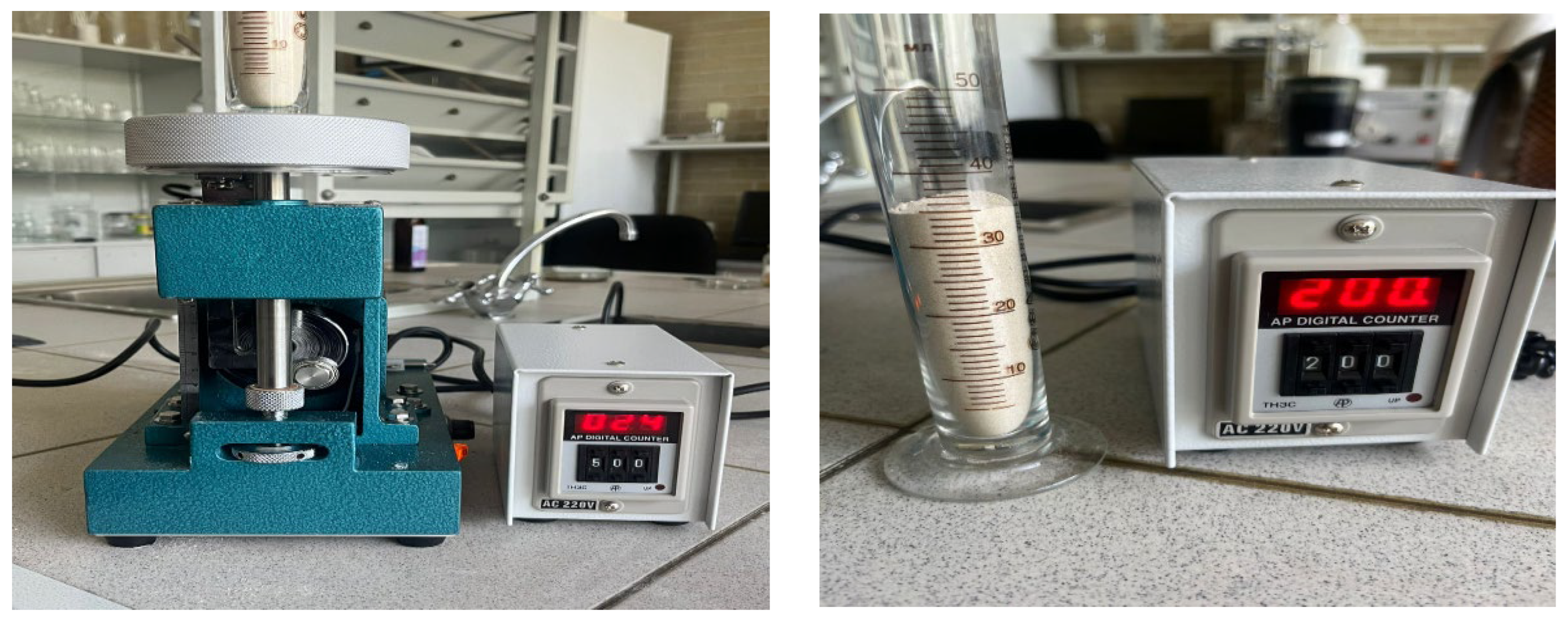
2.2. Determination of Bulk and Compacted Powder Density Using the Hsiang Tai PT-20 Tester
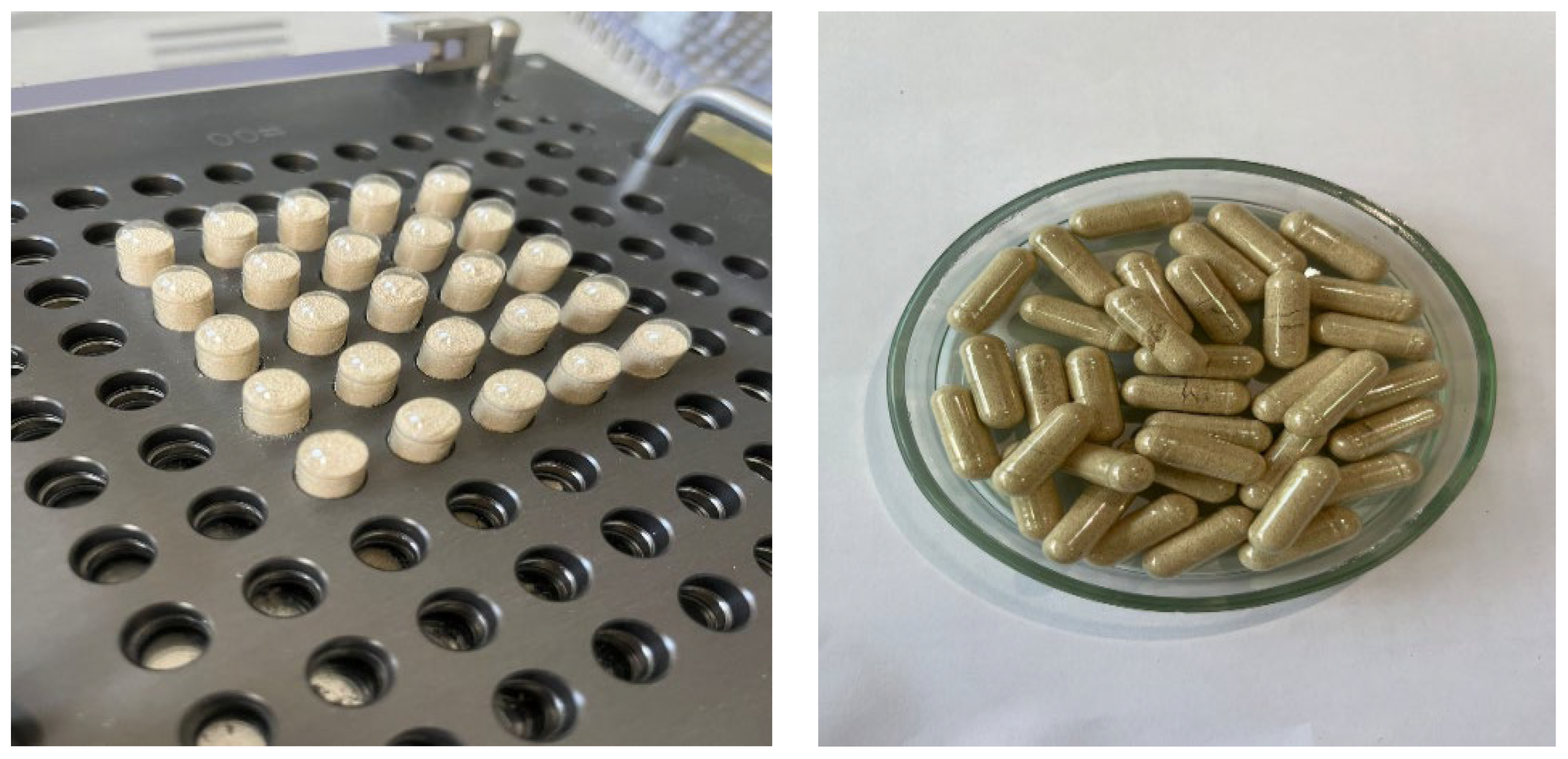
2.3. Powder Encapsulation
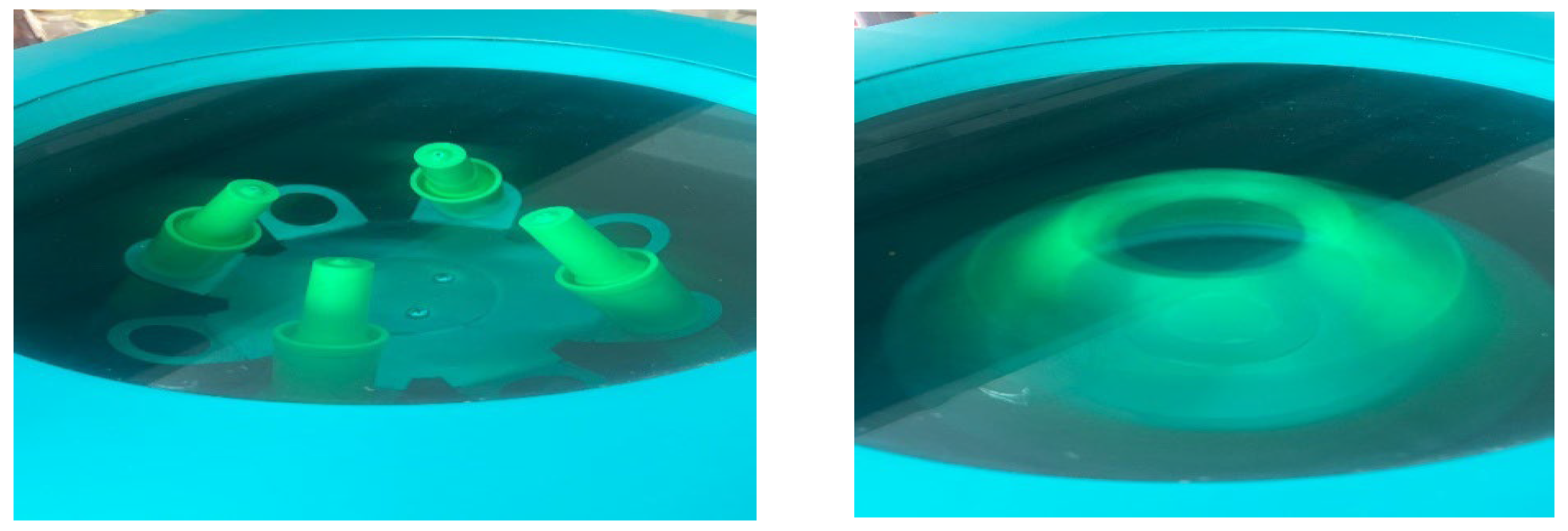
2.4. Determination of the Water Holding Capacity of Four Samples
- A sample of powder (1 g) was placed in a centrifuge tube.
- 10 mL of distilled water was added, and the mixture was left at room temperature for 30 min.
- The tubes were centrifuged for 15 min (Figure 3).
- The separated water was drained, and the remaining sediment was weighed.
- The water holding capacity (WHC) was calculated using the formula:
3. Results
- − physical suitability of the mixture (flowability, moisture retention capacity);
- − functional balance ensuring sufficient intake of prebiotic substances, dietary fiber, and biologically active compounds.
4. Discussion
- in vitro assays (macrophage activation, cytokine profiling, antioxidant capacity);
- in vivo models of metabolic dysregulation or immune suppression;
- microbiome analysis to evaluate prebiotic synergy.
- Metabolic regulation:
- −
- inulin improves glucose tolerance and insulin sensitivity;
- −
- sprouted grains enhance amino acid availability, supporting muscle metabolism and glycaemic stability;
- −
- liquorice flavonoids modulate carbohydrate metabolism and reduce oxidative stress.
- Immunomodulation:
- −
- glycyrrhizic acid regulates immune signaling pathways (NF-κB, IL-6, IL-1β);
- −
- antioxidant compounds in sprouted grains and Jerusalem artichoke reduce inflammatory stress;
- −
- prebiotic fibers enhance gut microbiome diversity, promoting mucosal immunity.
- Synergy:
- −
- prebiotic fibers amplify the bioactivity of flavonoids;
- −
- germinated grain enzymes improve micronutrient bioavailability, enhancing the body’s adaptive responses.
5. Conclusions
Author Contributions
Funding
Institutional Review Board Statement
Informed Consent Statement
Data Availability Statement
Conflicts of Interest
References
- Donchenko, L.B.; Nadykta, V.D. Food products in domestic and foreign history: Textbook for specialties 311200 “Technology of production and processing of agricultural products”. Mosc. DeLi Print 2006, 295, 122–136. [Google Scholar]
- Efimenko, S.A. Socio-economic importance of the health of the able-bodied population. Sociol. Med. 2006, 9, 17–23. [Google Scholar]
- Kebbe, M.; Gao, M.; Perez-Cornago, A.; Jebb, S.A.; Piernas, C. Adherence to international dietary recommendations in association with all-cause mortality and fatal and non-fatal cardiovascular disease risk: A prospective analysis of UK Biobank participants. BMC Med. 2021, 19, 1. [Google Scholar] [CrossRef]
- Leme, A.C.B.; Hou, S.; Fisberg, R.M.; Fisberg, M.; Haines, J. Adherence to Food-Based Dietary Guidelines: A Systemic Review of High-Income and Low- and Middle-Income Countries. Nutrients 2021, 13, 1038. [Google Scholar] [CrossRef] [PubMed]
- Poznyakovsky, V.M.; Chugunova, V.; Tamova, M.Y. Food ingredients and biologically active additives: A textbook for training bachelors and masters in the areas of training 19.03.04 and 19.04.04 “Product Technology and Organization of Public Catering”. Mosc. INFRA-M 2017, 141, 76–89. [Google Scholar]
- Ma, Z.F.; Fu, C.; Lee, Y.Y. The Modulatory Role of Bioactive Compounds in Functional Foods on Inflammation and Metabolic Pathways in Chronic Diseases. Foods 2025, 14, 821. [Google Scholar] [CrossRef]
- Narayanan, M.; Prabhu, N. The Effect of Bioactive Compounds in Multiple Sclerosis as the Adjuvant Immunomodulatory: A Comprehensive Review. Casp. J. Neurol. Sci. 2025, 11, 185–197. [Google Scholar] [CrossRef]
- Vieira, S.F.; Reis, R.L.; Ferreira, H.; Neves, N.M. Plant-derived bioactive compounds as key players in the modulation of immune-related conditions. Phytochem. Rev. 2024, 24, 343–460. [Google Scholar] [CrossRef]
- Drannikov, A.V.; Iskusnykh, A.Y.; Derkanosova, A.A.; Torshina, A.A. Use of a complex of biologically active additives in complete compound feed for farm animals. Conf. Ser. Earth Environ. Sci. 2022, 1052, 012020. [Google Scholar] [CrossRef]
- Belousova, O.V.; Belousov, E.A.; Ivashchenkova, E.A. Studying the consumer of biologically active additives. Young Sci. 2016, 20, 66–69. [Google Scholar]
- Katsericova, N.V. Technology of Functional Nutrition Products: A Textbook; Kemerovo Technological Institute of Food Industry: Kemerovo, Russia, 2004; pp. 15–17. [Google Scholar]
- Tapera, R.F.; Siwe-Noundou, X.; Shai, L.J.; Mokhele, S. Exploring the Therapeutic Potential, Ethnomedicinal Values, and Phytochemistry of Helianthus tuberosus L.: A Review. Pharmaceuticals 2024, 17, 1672. [Google Scholar] [CrossRef]
- Sun, Y.; Li, C.; Lee, A. Sprouted Grains as a Source of Bioactive Compounds for Modulating Insulin Resistance. Appl. Sci. 2025, 15, 8574. [Google Scholar] [CrossRef]
- Shao, L.; Li, B.; Jiang, Y.; Yang, B. New insights of licorice (Glycyrrhiza genus) as a functional food. Food Chem. 2025, 492, 145332. [Google Scholar] [CrossRef]
- Bigliardi, B.; Galati, F. Innovation trends in the food industry: The case of functional foods. Trends Food Sci. Technol. 2013, 31, 118–129. [Google Scholar] [CrossRef]
- Temple, N.J. A rational definition for functional foods: A perspective. Front. Nutr. 2022, 9, 957516. [Google Scholar] [CrossRef]
- Galanakis, C.M. Functionality of Food Components and Emerging Technologies. Foods 2021, 10, 128. [Google Scholar] [CrossRef]
- Corbo, M.R.; Bevilacqua, A.; Petruzzi, L.; Casanova, F.P.; Sinigaglia, M. Functional Beverages: The Emerging Side of Functional Foods: Commercial trends, research, and health implications. Compr. Rev. Food Sci. Food Saf. 2014, 13, 1192–1206. [Google Scholar] [CrossRef]
- Intrasook, J.; Tsusaka, T.W.; Anal, A.K. Trends and current food safety regulations and policies for functional foods and beverages containing botanicals. J. Food Drug Anal. 2024, 32, 118–145. [Google Scholar] [CrossRef] [PubMed]
- Xiaoyu, J.; Ning, L.; Shu-Cheng, H.; Cai, Z. A Comprehensive Review of Liquorice: The Preparation, Chemical Composition, Bioactivities and Its Applications. Am. J. Chin. Med. 2024, 52, 667–716. [Google Scholar] [CrossRef]
- GOST 28672-2018; Barley. Specifications. Publishing House of Standards: Moscow, Russia, 2019.
- GOST 10968-88; Seed. Methods for Determining Germination Energy and Germination Capacity. Publishing House of Standards: Moscow, Russia, 1989.
- GOST 13586.5–2015; Seed. Methods for Determining Humidity. Standartinform: Moscow, Russia, 2015.
- GOST 27493-87; Wheat Flour. Methods for Determining Acidity. Publishing House of Standards: Moscow, Russia, 1988.
- GOST 27558-87; Seed. Methods of Organoleptic Quality Assessment. Publishing House of Standards: Moscow, Russia, 1988.
- GOST ISO 7218-2015; Microbiology of Food Products. General Requirements and Methods. Standartinform: Moscow, Russia, 2015.
- GOST 24027.2–80; Grain Processing Products. Methods for Determining Humidity. Publishing House of Standards: Moscow, Russia, 1981.
- GOST 23042-86; Grain Processing Products. Methods of Fat Determination. Publishing House of Standards: Moscow, Russia, 1987.
- GOST 25011-81; Meat and Meat Products. Methods of Protein Determination. Publishing House of Standards: Moscow, Russia, 2010.
- GOST R 50453-92/ISO 937-78; Meat and Meat Products. Determination of Nitrogen Content (Kjeldahl Method). Gosstandart of Russia: Moscow, Russia, 1992.
- GOST R 53642-2009; Food Products. Methods for Determining the Mass Fraction of Ash. Standartinform: Moscow, Russia, 2010.
- GOST EN 15505-2013; Food Products. Determination of Calcium and Magnesium Content by Atomic Absorption Spectrometry. Standartinform: Moscow, Russia, 2014.
- GOST R 51482-99/ISO 13730-96; Food Products. Determination of Phosphorus by the Spectrophotometric Method. Gosstandart of Russia: Moscow, Russia, 2000.
- GOST 26931-86; Raw Materials and Food Products. Methods for Determining Copper. Publishing House of Standards: Moscow, Russia, 1987.
- GOST 26928-86; Raw Materials and Food Products. Methods for the Determination of Iron. Publishing House of Standards: Moscow, Russia, 1987.
- GOST 26932-86; Raw Materials and Food Products. Methods for the Determination of Lead. Publishing House of Standards: Moscow, Russia, 1987.
- GOST 26933-86; Raw Materials and Food Products. Methods for the Determination of Cadmium. Publishing House of Standards: Moscow, Russia, 1987.
- GOST 7636-85; Fish, Marine Mammals, Invertebrates and Products of Their Processing. Methods for Analysis. Publishing House of Standards: Moscow, Russia, 2010.
- Essa, M.M.; Bishir, M.; Bhat, A.; Chidambaram, S.B.; Al-Balushi, B.; Hamdan, H.; Govindarajan, N.; Freidland, R.P.; Qoronfleh, M.W. Functional foods and their impact on health. J. Food Sci. Technol. 2021, 60, 820–834. [Google Scholar] [CrossRef] [PubMed]
- Navigating the Future: Unveiling the Dynamics of the Global Functional Food Market. Spherical Insights. Available online: https://www.sphericalinsights.com/blogs/navigating-the-future-unveiling-the-dynamics-of-the-global-functional-food-market (accessed on 1 June 2025).
- Petrova, L.V.; Ivanova, E.A. Technology of germination of grain crops and its effect on the bioavailability of nutrients. Food J. 2020, 4, 45–52. [Google Scholar]
- Urgent Action Needed as Global Diabetes Cases Increase Four-Fold Over Past Decades. World Health Organization (WHO). Available online: https://www.who.int/ru/news/item/13-11-2024-urgent-action-needed-as-global-diabetes-cases-increase-four-fold-over-past-decades (accessed on 25 June 2025).
- Mitrofanov, I.Y.; Yanitskaya, A.V.; Shulenina, Y.S. Prospects for the use of inulin in medical and pharmaceutical practice. Bull. New Med. Techn. 2012, 2, 45–46. [Google Scholar]
- Illippangama, A.U.; Jayasena, D.D.; Jo, C.; Mudannayake, D.C. Inulin as a functional ingredient and their applications in meat products. Carbohydr. Polym. 2022, 275, 118706. [Google Scholar] [CrossRef]
- Kheto, A.; Bist, Y.; Awana, A.; Kaur, S.; Kumar, Y.; Sehrawat, R. Utilization of inulin as a functional ingredient in food: Processing, physicochemical characteristics, food applications, and future research directions. Food Chem. Adv. 2023, 3, 100443. [Google Scholar] [CrossRef]
- González-Herrera, S.M.; Herrera, R.R.; López, M.G.; Rutiaga, O.M.; Aguilar, C.N.; Esquivel, J.C.C.; Martínez, L.A.O. Inulin in food products: Prebiotic and functional ingredient. Br. Food J. 2015, 117, 371–387. [Google Scholar] [CrossRef]
- Shams, Z.A.; Wadhawan, N. Inulin a Crucial Component in Food Industry: A Review. Int. J. Trend Sci. Res. Dev. 2021, 5, 742–745. [Google Scholar]
- Stoyanova, S.; Geuns, J.; Hideg, É.; Ende, W.V.D. The food additives inulin and stevioside counteract oxidative stress. Int. J. Food Sci. Nutr. 2011, 62, 207–214. [Google Scholar] [CrossRef]
- Richard, S.A. Exploring the Pivotal Immunomodulatory and Anti-Inflammatory Potentials of Glycyrrhizic and Glycyrrhetinic Acids. Mediat. Inflamm. 2021, 2021, 6699560. [Google Scholar] [CrossRef]
- Osadchenko, I.M.; Gorlov, I.F.; Kharchenko, O.V.; Churzin, V.N. The use of electrochemically activated water in the cultivation of spring barley. Fodd. Prod. 2007, 8, 26–28. [Google Scholar]
- Naumenko, N.V.; Paimulina, A.V.; Velyamov, M.T. The effect of particle sizes of flour from sprouted grain on its technological properties and the quality of finished products. Bull. South Ural. State University. Ser. Food Biotechnol. 2019, 7, 36–42. [Google Scholar] [CrossRef]
- Zhuchkova, M.A.; Skripnikov, S.G. Jerusalem Artichoke—A plant of the XXI century. Veg. Russ. 2017, 1, 31–33. [Google Scholar] [CrossRef][Green Version]
- Jakobson, K.; Kaleda, A.; Adra, K.; Tammik, M.-L.; Vaikma, H.; Kriščiunaite, T.; Vilu, R. Techno-Functional and Sensory Characterization of Commercial Plant Protein Powders. Foods 2023, 12, 2805. [Google Scholar] [CrossRef] [PubMed]
- Pharmaceutical and Medical Devices Agency (PMDA). Powder Flowability Testing—Q6A Specifications: Test Procedures and Acceptance Criteria for New Drug Substances and New Drug Products: Chemical Substances. 2017. Available online: https://www.pmda.go.jp/files/000233963.pdf (accessed on 29 June 2025).



| Slope Angle (°) | Flowability |
|---|---|
| 25–30 | excellent |
| 31–35 | good |
| 36–40 | satisfactory |
| 41–45 | mediocre |
| 46–55 | bad |
| >55 | very bad |
| Duration of Germination | Humidity (%) | Acidity (°C) | Sprout Length (mm) | Germination Rate (%) | ||||
|---|---|---|---|---|---|---|---|---|
| Oats | Barley | Oats | Barley | Oats | Barley | Oats | Barley | |
| 24 h | 45.5 | 45.4 | 0.28 | 0.32 | 2 | 4 | 20 | 40 |
| 36 h | 47.5 | 48.1 | 0.32 | 0.36 | 6 | 8 | 40 | 80 |
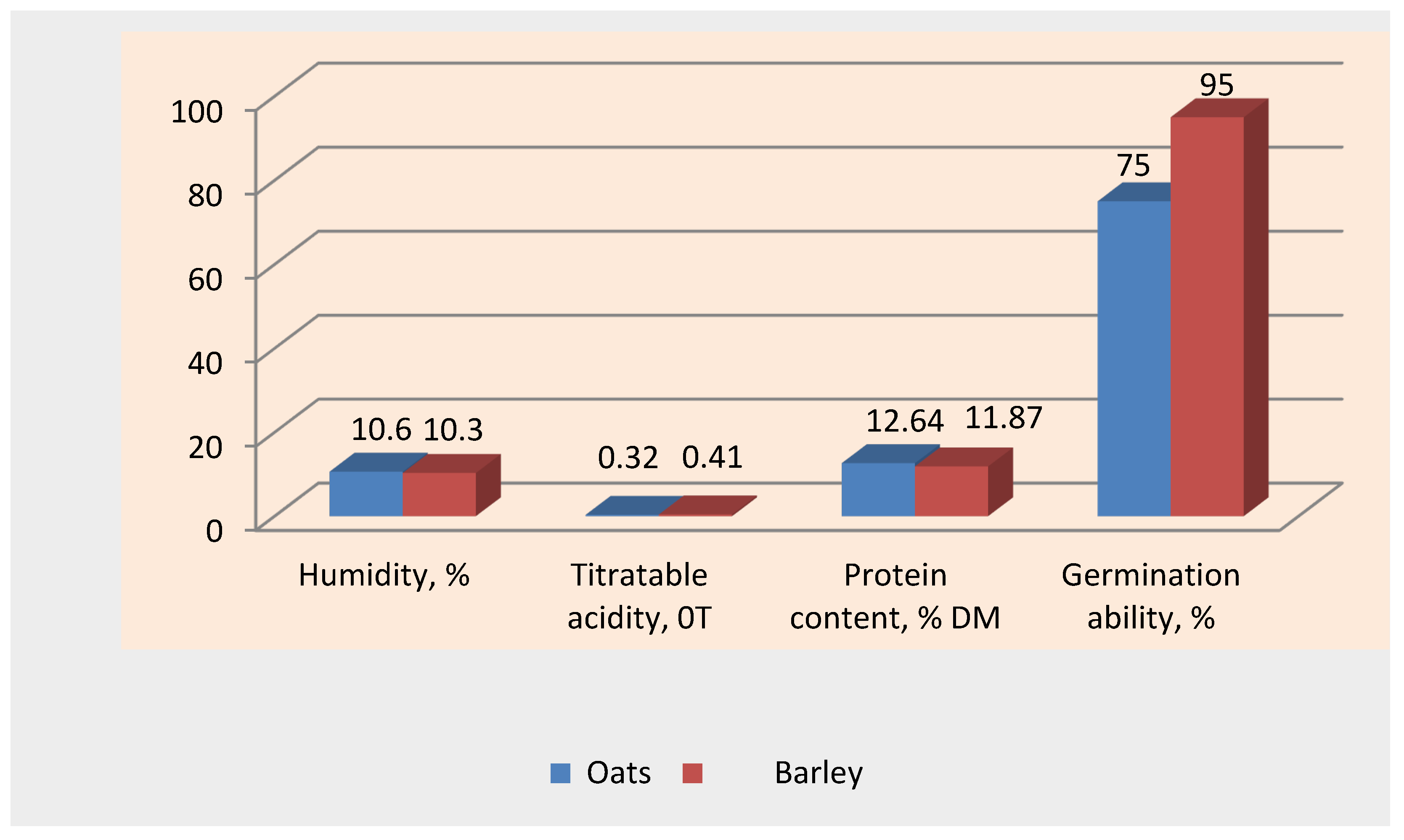
| 48 h | 47.8 | 48.3 | 0.34 | 0.43 | 8 | 10 | 75 | 95 |
| Jerusalem Artichoke | Oats | Sprouted Oats | Barley | Sprouted Barley | Liquorice Root | |
|---|---|---|---|---|---|---|
| Physico-chemical parameters | ||||||
| Mass fraction of protein, % | 8.32 ± 0.09 | 11.95 ± 0.16 | 12.64 ± 0.15 | 10.83 ± 0.14 | 11.87 ± 0.14 | 10.48 ± 0.12 |
| Mass fraction of moisture, % | 9.63 ± 0.13 | 9.89 ± 0.17 | 6.59 ± 0.10 | 10.21 ± 0.17 | 8.58 ± 0.13 | 7.1 ± 0.23 |
| Mass fraction of ash, % | 5.17 ± 0.02 | 3.37 ± 0.05 | 3.35 ± 0.04 | 2.77 ± 0.03 | 1.93 ± 0.04 | 6.245 ± 0.005 |
| Mass fraction of fiber, % | 24.65 ± 0.29 | 11.31 ± 0.13 | 10.03 ± 0.12 | 12.09 ± 0.16 | 8.62 ± 0.10 | 3.47 ± 0.04 |
| Titrated acidity, °T | 0.86 ± 0.019 | 0.422 ± 0.005 | 0.364 ± 0.008 | 0.508 ± 0.006 | 0.463 ± 0.011 | 1.521 ± 0.034 |
| Foreign impurities | Not detected | |||||
| Vitamin content of raw materials, mg/100 g | ||||||
| Vitamin E | 0.912 ± 0.01 | 1.554 ± 0.02 | 2.61 ± 0.03 | 1.398 ± 0.019 | 1.01 ± 0.01 | 0.08 ± 0.001 |
| Vitamin B1 | 0.365 ± 0.073 | 0.38 ± 0.075 | 0.472 ± 0.094 | 0.361 ± 0.07 | 0.294 ± 0.058 | 0.413 ± 0.082 |
| Vitamin B2 | 0.274 ± 0.115 | - | 0.093 ± 0.039 | - | 0.114 ± 0.047 | 0.77 ± 0.032 |
| Vitamin B3 | 8.21 ± 1.64 | 4.28 ± 0.86 | 1.38 ± 0.27 | 5.24 ± 1.05 | 2.69 ± 0.54 | 2.15 ± 0.43 |
| Vitamin B6 | - | 2.46 ± 0.049 | 0.26 ± 0.05 | 0.317 ± 0.063 | 0.276 ± 0.055 | 0.103 ± 0.02 |
| Vitamin C | 31.95 ± 5.7 | - | - | - | - | 2.57 ± 0.46 |
| Mineral content, mg/100 g | ||||||
| Iron | 1.83 ± 0.021 | 5.61 ± 0.07 | 10.27 ± 0.12 | 5.95 ± 0.08 | 4.64 ± 0.05 | 2.75 ± 0.03 |
| Magnesium | 63.89 ± 0.76 | 110.32 ± 1.54 | 126.10 ± 1.51 | 142.01 ± 1.98 | 89.61 ± 1.07 | 27.46 ± 0.33 |
| Calcium | 98.77 ± 1.18 | 120.07 ± 1.68 | 109.29 ± 1.31 | 105.16 ± 1.47 | 55.48 ± 0.66 | 80.25 ± 0.96 |
| Potassium | 1007.44 ± 12.09 | 463.24 ± 6.48 | 393.25 ± 4.72 | 459.72 ± 7.43 | 260.97 ± 3.13 | 315.02 ± 3.78 |
| Phosphorus | 424.46 ± 5.09 | 248.16 ± 3.47 | 337.21 ± 4.04 | 292.30 ± 4.09 | 210.79 ± 2.59 | 56.17 ± 0.67 |
| Iodine | - | 0.0033 ± 0.00001 | 0.008 ± 0.0001 | 0.004 ± 0.0001 | 0.0059 ± 0.0001 | 0.013 ± 0.0001 |
| Jerusalem Artichoke | Oats | Sprouted Oats | Barley | Sprouted Barley | Liquorice Root | |
|---|---|---|---|---|---|---|
| Arginine | 0.964 ± 0.385 | 1.570 ± 0.628 | 1.267 ± 0.507 | 1.363 ± 0.545 | 1.097 ± 0.439 | 1.138 ± 0.455 |
| Lysine | 0.450 ± 0.153 | 1.221 ± 0.415 | 1.429 ± 0.486 | 1.107 ± 0.376 | 1.426 ± 0.485 | 1.138 ± 0.387 |
| Tyrosine | 0.418 ± 0.125 | 0.406 ± 0.122 | 0.747 ± 0.224 | 0.426 ± 0.128 | 0.695 ± 0.208 | 0.534 ± 0.160 |
| Phenylalanine | 0.610 ± 0.183 | 0.872 ± 0.262 | 0.747 ± 0.224 | 0.809 ± 0.243 | 0.621 ± 0.186 | 0.569 ± 0.171 |
| Histidine | 0.308 ± 0.15 | 0.523 ± 0.262 | 0.845 ± 0.42 | 0.468 ± 0.234 | 0.512 ± 0.256 | 0.391 ± 0.196 |
| Leucine + isoleucine | 0.675 ± 0.175 | 1.090 ± 0.283 | 1.104 ± 0.287 | 1.022 ± 0.266 | 1.060 ± 0.276 | 0.889 ± 0.231 |
| Methionine | 0.145 ± 0.049 | 0.148 ± 0.05 | 0.552 ± 0.188 | 0.183 ± 0.062 | 0.548 ± 0.186 | 0.462 ± 0.157 |
| Valine | 0.707 ± 0.283 | 0.959 ± 0.384 | 0.975 ± 0.390 | 0.894 ± 0.358 | 0.951 ± 0.380 | 0.889 ± 0.356 |
| Proline | 1.028 ± 0.267 | 0.828 ± 0.215 | 0.747 ± 0.194 | 0.766 ± 0.199 | 0.731 ± 0.190 | 0.747 ± 0.194 |
| Threonine | 0.482 ± 0.193 | 0.698 ± 0.279 | 0.845 ± 0.338 | 0.639 ± 0.255 | 0.877 ± 0.351 | 0.747 ± 0.299 |
| Serine | 0.803 ± 0.209 | 0.785 ± 0.204 | 0.715 ± 0.186 | 0.724 ± 0.188 | 0.695 ± 0.181 | 0.605 ± 0.157 |
| Alanine | 0.578 ± 0.150 | 0.741 ± 0.193 | 1.234 ± 0.321 | 0.681 ± 0.177 | 1.133 ± 0.295 | 1.032 ± 0.268 |
| Glycine | 0.675 ± 0.229 | 0.741 ± 0.252 | 0.780 ± 0.265 | 0.681 ± 0.232 | 0.768 ± 0.261 | 0.783 ± 0.266 |
| Jerusalem Artichoke | Sprouted Oats | Oats | Sprouted Barley | Barley | Liquorice Root | |
|---|---|---|---|---|---|---|
| TMAFAM (CFU/g) | 3 × 10⁴ | 3 × 10⁴ | 4 × 10³ | 7 × 10³ | 7 × 10³ | 4 × 10⁴ |
| EC group bacteria (coliforms) in 1.0 cm3 of product | not detected | |||||
| Yeast (CFU/g) | 5 | 2 | 6 | 6 | 5 | 1 |
| Mold growth rate (CFU/g) | not detected | |||||
| Ingredient | Contribution to Dietary Supplement | Interaction with Other Components | Possible Risks |
|---|---|---|---|
| Jerusalem artichoke | A natural source of inulin improves intestinal microflora and promotes mineral absorption. | Enhances the bioavailability of minerals from sprouted cereals. | Large doses can cause bloating. |
| Sprouted oats | A source of dietary fiber, enzymes, and B vitamins. | Improves inulin absorption and lowers the glycaemic index. | Possible loss of enzymes during prolonged storage. |
| Sprouted barley | Contains beta-glucans and increases metabolism. | Enhances the prebiotic effect of inulin. | It can affect digestion due to its dietary fiber and active enzymes. |
| Liquorice root | Anti-inflammatory and antioxidant effects. | Improves the taste (sweet), can mask the bitterness of cereals | Glycyrrhizic acid can trap sodium in the body. |
| Ingredient Quantity (g) | Inulin Content | ||||
|---|---|---|---|---|---|
| Jerusalem Artichoke | Sprouted Oats | Sprouted Barley | Liquorice Root | ||
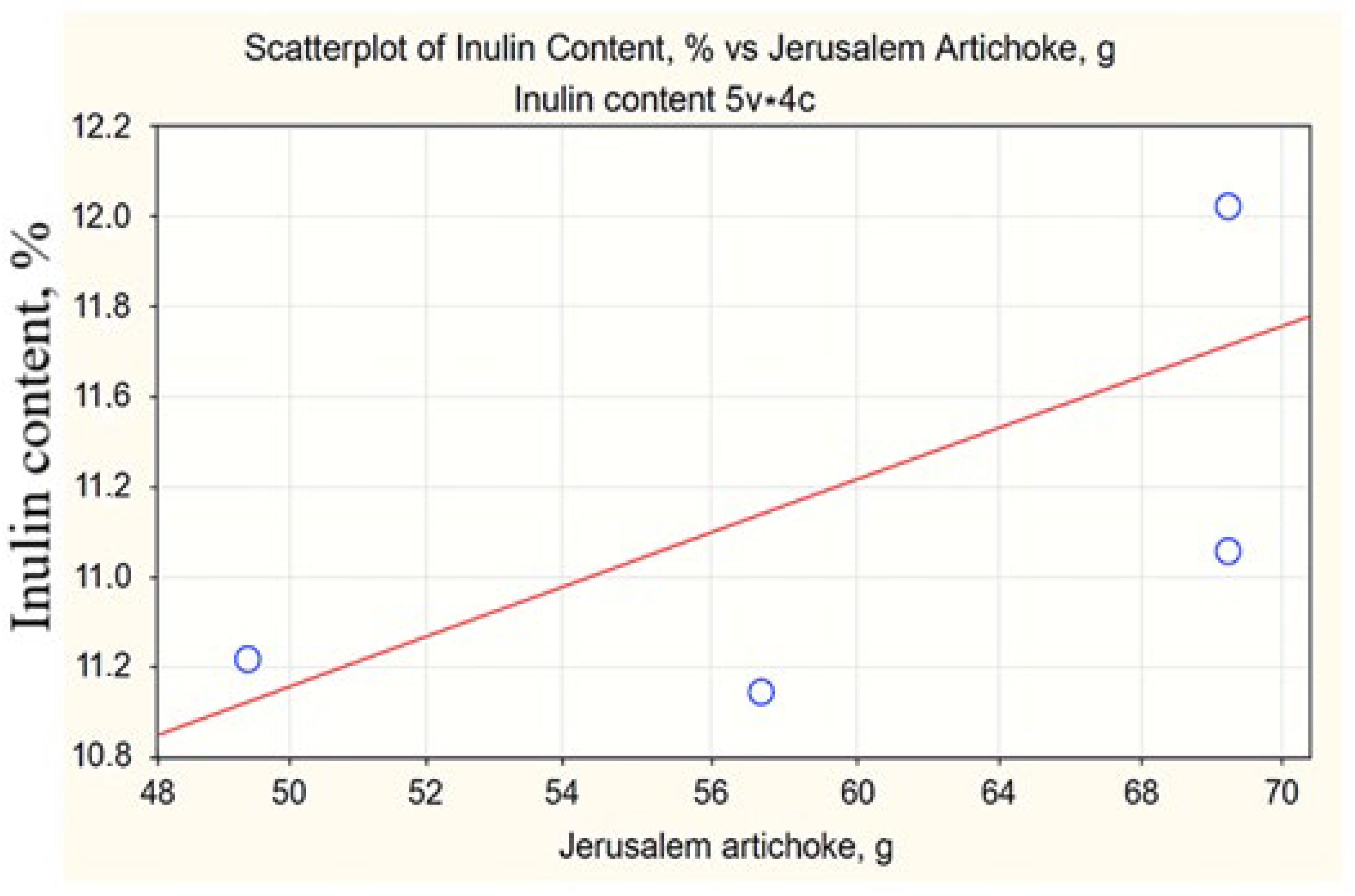
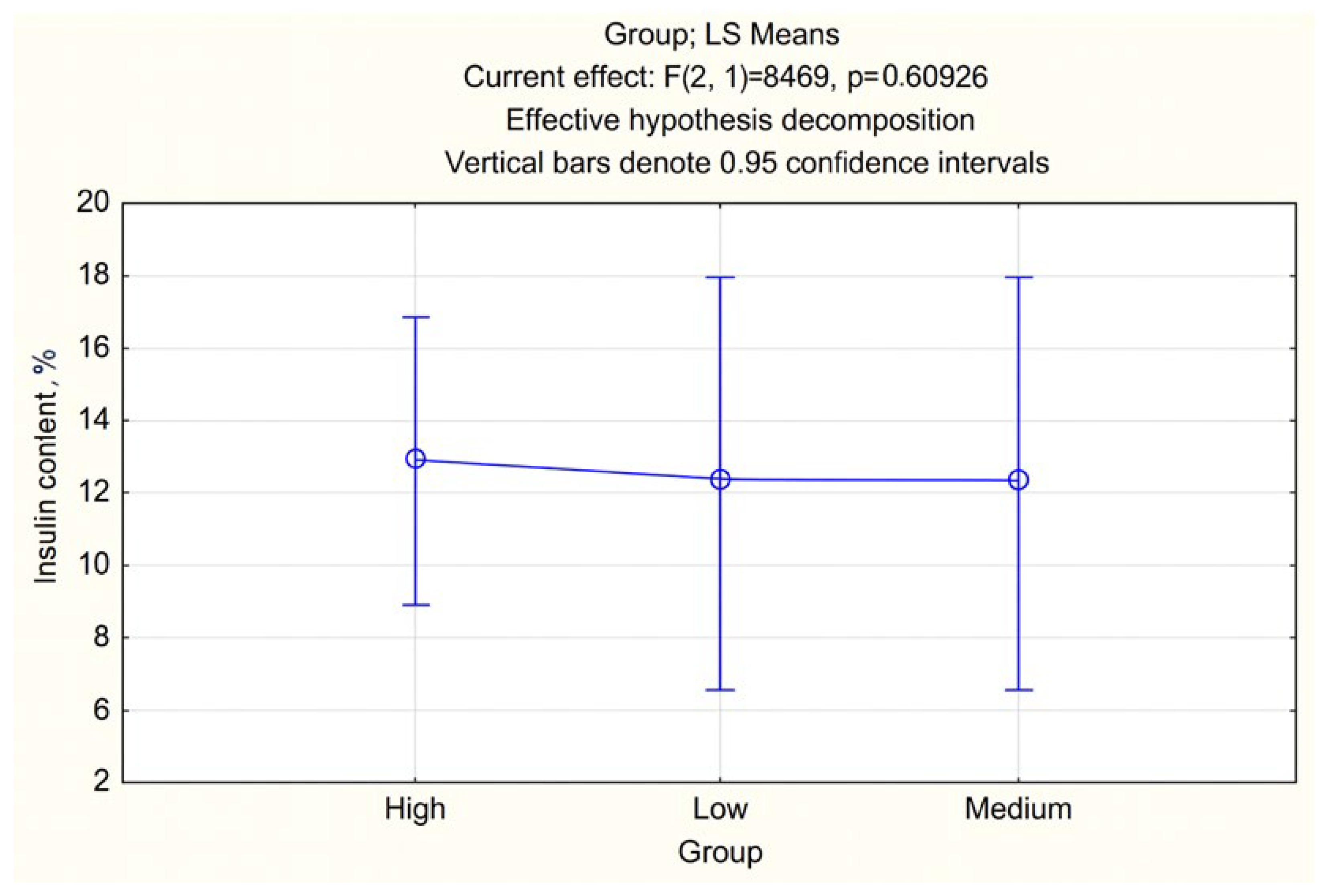
| Recipe 1 | 70 | 5 | 5 | 20 | 11.25% |
| Recipe 2 | 70 | 10 | 10 | 10 | 12.00% |
| Recipe 3 | 50 | 25 | 20 | 5 | 11.00% |
| Recipe 4 | 60 | 12.5 | 12.5 | 15 | 10.88% |
| Appearance | Color | Smell | Taste | Consistency | Humidity | |
|---|---|---|---|---|---|---|
| Recipe 1 | coarse powder | beige-gray | strong, vegetative | sweet, with an unpleasant aftertaste | slightly lumpy | 7.2% |
| Recipe 2 | slightly heterogeneous | light beige | vegetative | tart | medium | 6.9% |
| Recipe 3 | heterogeneous | gray | sharp | bittersweet | lumpy | 7.4% |
| Recipe 4 | homogeneous | beige | pleasant, herbal | moderately sweet | loose | 6.5% |
| Water Holding Capacity (g/g) | Bulk Density (g/mL) | Compacted Density (g/mL) | Slope Angle (°) | Flowability | |
|---|---|---|---|---|---|
| Recipe 1 | 1.022 | 0.50 | 0.62 | 42 | mediocre |
| Recipe 2 | 0.316 | 0.58 | 0.72 | 35 | good |
| Recipe 3 | 0.205 | 0.53 | 0.67 | 46 | bad |
| Recipe 4 | 0.701 | 0.60 | 0.74 | 34 | good |
| Jerusalem Artichoke | Sprouted Oats | Sprouted Barley | Liquorice Root | Inulin Content | |
|---|---|---|---|---|---|
| Jerusalem artichoke | 1 | −0.946 | −0.940 | 0.674 | 0.670 |
| Sprouted oats | −0.946 | 1 | 0.989 * | −0.872 | −0.396 |
| Sprouted barley | −0.940 | 0.989 * | 1 | −0.878 | −0.389 |
| Liquorice root | 0.674 | −0.872 | −0.878 | 1 | −0.095 |
| Inulin content | 0.670 | −0.396 | −0.389 | −0.095 | 1 |
| Recipe 1 | Recipe 2 | Recipe 3 | Recipe 4 | |
|---|---|---|---|---|
| Physico-chemical parameters | ||||
| Mass fraction of protein (%) | 11.42 ± 0.13 | 11.24 ± 0.10 | 11.70 ± 0.15 | 11.97 ± 017 |
| Mass fraction of moisture (%) | 7.06 ± 0.06 | 7.18 ± 0.08 | 7.49 ± 0.08 | 7.16 ± 0.05 |
| Mass fraction of ash (%) | 5.01 ± 0.04 | 5.46 ± 0.05 | 3.99 ± 0.02 | 4.30 ± 0.03 |
| Mass fraction of fiber (%) | 10.43 ± 0.12 | 7.39 ± 0.11 | 5.04 ± 0.08 | 9.24 ± 0.13 |
| Titrated acidity (°T) | 12.0 °T | 12.0 °T | 7.0 °T | 9.0 °T |
| Vitamin content (mg/100 g) | ||||
| Vitamin E | 25.34 | 52.45 | 32.78 | 57.75 |
| Vitamin B1 | 0.12 ± 0.024 | 0.10 ± 0.020 | 0.13 ± 0.026 | 0.09 ± 0.018 |
| Vitamin B2 | 0.15 ± 0.063 | 0.11 ± 0.046 | 0.16 ± 0.067 | 0.13 ± 0.055 |
| Vitamin B3 | 0.64 ± 0.12 | 0.45 ± 0.09 | 0.68 ± 0.13 | 0.48 ± 0.10 |
| Vitamin B5 | 0.53 ± 0.10 | 0.36 ± 0.06 | 0.59 ± 0.10 | 0.39 ± 0.07 |
| Vitamin B6 | 0.17 ± 0.034 | 0.13 ± 0.026 | 0.20 ± 0.040 | 0.10 ± 0.020 |
| Vitamin C | 0.022 ± 0.0003 | 0.015 ± 0.0001 | 0.017 ± 0.0002 | 0.018 ± 0.0003 |
| Mineral content (mg/100 g) | ||||
| Iron | 1.25 ± 0.019 | 1.05 ± 0.015 | 1.20 ± 0.016 | 1.15 ± 0.012 |
| Magnesium | 32.20 ± 0.48 | 29.21 ± 0.35 | 30.34 ± 0.45 | 31.25 ± 0.43 |
| Calcium | 105.50 ± 1.09 | 110.63 ± 1.43 | 112.24 ± 1.68 | 98.38 ± 1.15 |
| Potassium | 325.30 ± 4.88 | 310.48 ± 4.22 | 320.63 ± 3.64 | 318.74 ± 3.96 |
| Phosphorus | 64.5 ± 0.84 | 59.28 ± 0.79 | 60.49 ± 0.80 | 62.03 ± 0.75 |
| Iodine | Not detected | |||
| Recipe 1 (%) | Recipe 2 (%) | Recipe 3 (%) | Recipe 4 (%) | |
|---|---|---|---|---|
| Arginine | 2.388 ± 0.955 | 2.207 ± 0.883 | 1.249 ± 0.499 | 1.806 ± 0.723 |
| Lysine | 1.298 ± 0.441 | 0.331 ± 0.113 | 0.568 ± 0.193 | 0.365 ± 0.124 |
| Tyrosine | 0.649 ± 0.195 | 0.435 ± 0.130 | 0416 ± 0.125 | 0.384 ± 0.115 |
| Phenylalanine | 0.597 ± 0.179 | 0.635 ± 0.191 | 0.832 ± 0.250 | 0.846 ± 0.254 |
| Histidine | 0.088 ± 0.044 | 0.097 ± 0.048 | 0.061 ± 0.030 | 0.127 ± 0.063 |
| Leucine + isoleucine | 1.038 ± 0.270 | 0.836 ± 0.217 | 1.135 ± 0.295 | 0.922 ± 0.240 |
| Methionine | 0.519 ± 0.176 | 0.368 ± 0.125 | 0.363 ± 0.123 | 0.423 ± 0.144 |
| Valine | 0.882 ± 0.353 | 0.635 ± 0.254 | 0.870 ± 0.348 | 0.730 ± 0.292 |
| Proline | 0.623 ± 0.162 | 2.240 ± 0.582 | 1.967 ± 0.512 | 2.460 ± 0.640 |
| Threonine | 0.701 ± 0.280 | 0.535 ± 0.214 | 0.681 ± 0.272 | 0.615 ± 0.246 |
| Serine | 0.649 ± 0.169 | 0.702 ± 0.183 | 1.022 ± 0.266 | 0.884 ± 0.230 |
| Alanine | 0.934 ± 0.243 | 0.468 ± 0.122 | 0.757 ± 0.197 | 0.576 ± 0.150 |
| Glycine | 0.597 ± 0.203 | 0.535 ± 0.182 | 0.605 ± 0.206 | 0.538 ± 0.183 |
| Recipe 1 | Recipe 2 | Recipe 3 | Recipe 4 | |
|---|---|---|---|---|
| TMAFAM (CFU/g) | 7.3 × 10⁴ | 7 × 10⁴ | 8.3 × 10⁴ | 6.3 × 10⁴ |
| EC Group Bacteria (coliforms) in 1.0 cm3 of product | Not detected | |||
| Yeast (CFU/g) | 19 | 12 | 16 | 13 |
| Mold growth rate (CFU/g) | 39 | 14 | 10 | 8 |
Disclaimer/Publisher’s Note: The statements, opinions and data contained in all publications are solely those of the individual author(s) and contributor(s) and not of MDPI and/or the editor(s). MDPI and/or the editor(s) disclaim responsibility for any injury to people or property resulting from any ideas, methods, instructions or products referred to in the content. |
© 2025 by the authors. Licensee MDPI, Basel, Switzerland. This article is an open access article distributed under the terms and conditions of the Creative Commons Attribution (CC BY) license (https://creativecommons.org/licenses/by/4.0/).
Share and Cite
Zhumaliyeva, G.; Chomanov, U.; Kenenbay, G.; Shoman, A.; Baizakova, A.; Akzholtayeva, S. Development of a Complex Biologically Active Supplement for Immunomodulation. Foods 2025, 14, 4072. https://doi.org/10.3390/foods14234072
Zhumaliyeva G, Chomanov U, Kenenbay G, Shoman A, Baizakova A, Akzholtayeva S. Development of a Complex Biologically Active Supplement for Immunomodulation. Foods. 2025; 14(23):4072. https://doi.org/10.3390/foods14234072
Chicago/Turabian StyleZhumaliyeva, Gulzhan, Urishbay Chomanov, Gulmira Kenenbay, Assiya Shoman, Ainel Baizakova, and Shynar Akzholtayeva. 2025. "Development of a Complex Biologically Active Supplement for Immunomodulation" Foods 14, no. 23: 4072. https://doi.org/10.3390/foods14234072
APA StyleZhumaliyeva, G., Chomanov, U., Kenenbay, G., Shoman, A., Baizakova, A., & Akzholtayeva, S. (2025). Development of a Complex Biologically Active Supplement for Immunomodulation. Foods, 14(23), 4072. https://doi.org/10.3390/foods14234072