Article

Gluten-Free Diet Adherence Evaluation in Adults with Long-Standing Celiac Disease

by
Marek K. Kowalski
1,
Danuta Domżał-Magrowska
1,
Piotr Szcześniak
2,
Magdalena Bulska
2,
Daria Orszulak-Michalak
2 and
Ewa Małecka-Wojciesko
1,*
1
Department of Digestive Tract Diseases, Medical University of Lodz, 90-153 Lodz, Poland
2
Department of Biopharmacy, Medical University of Lodz, 90-151 Lodz, Poland
*
Author to whom correspondence should be addressed.
Foods 2025, 14(1), 76; https://doi.org/10.3390/foods14010076
Submission received: 7 November 2024 / Revised: 17 December 2024 / Accepted: 23 December 2024 / Published: 31 December 2024
(This article belongs to the Special Issue Gluten-Free Food and Celiac Disease: 2nd Edition)

Abstract

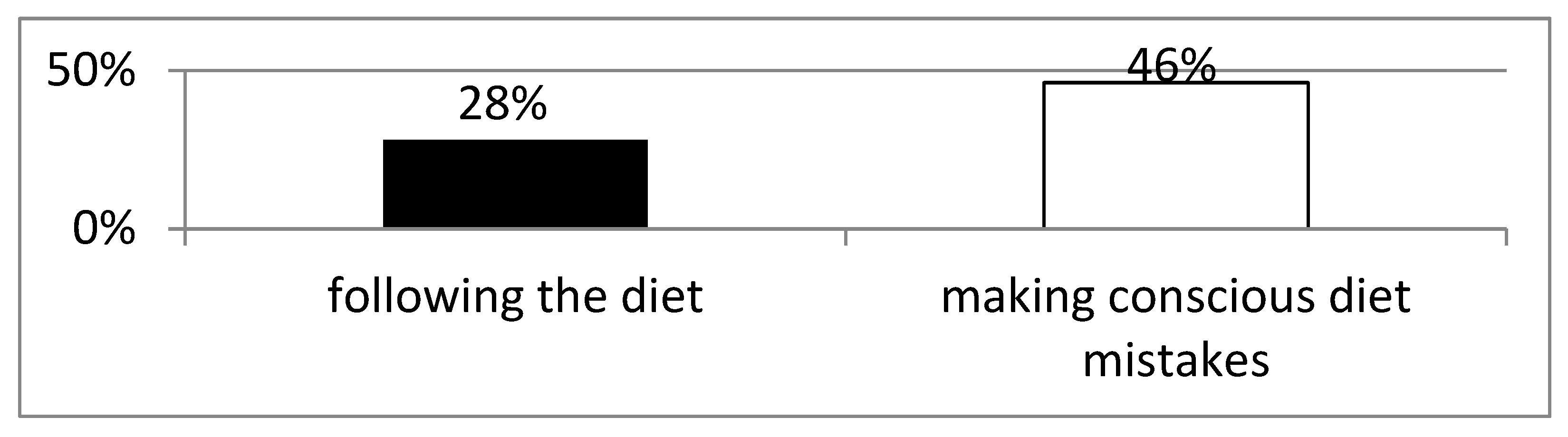
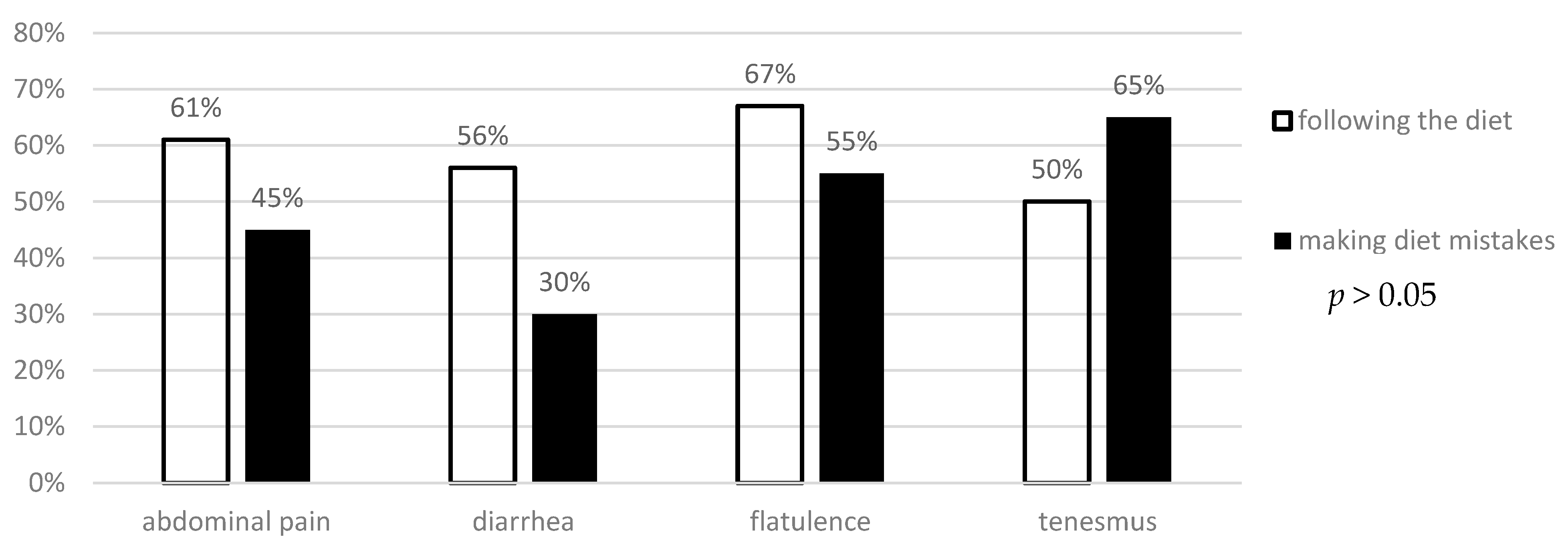
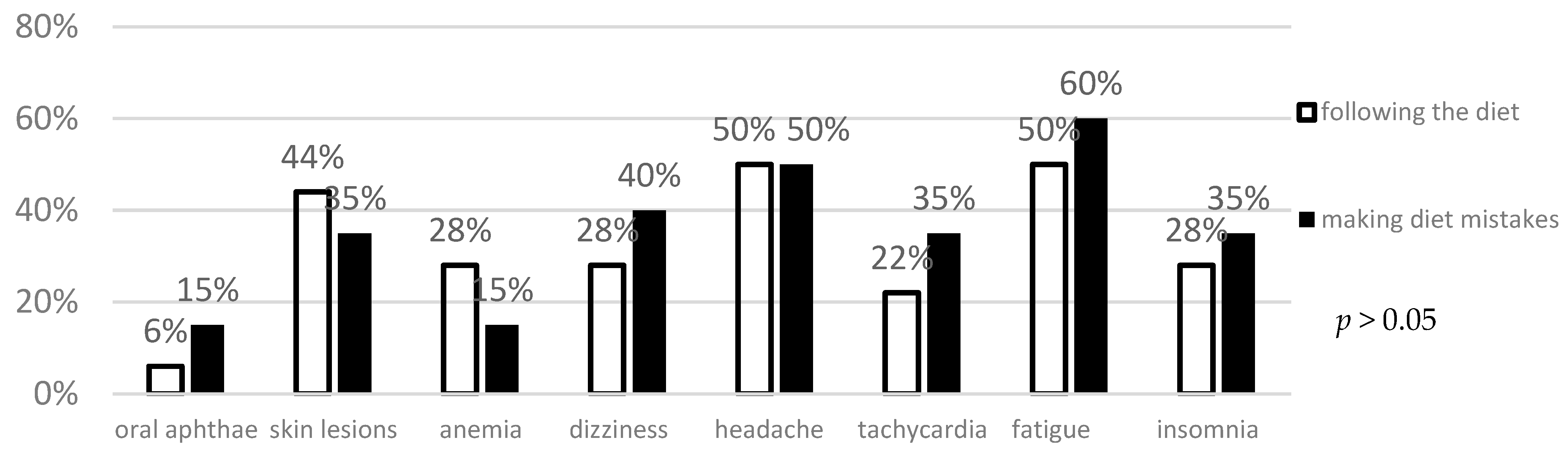
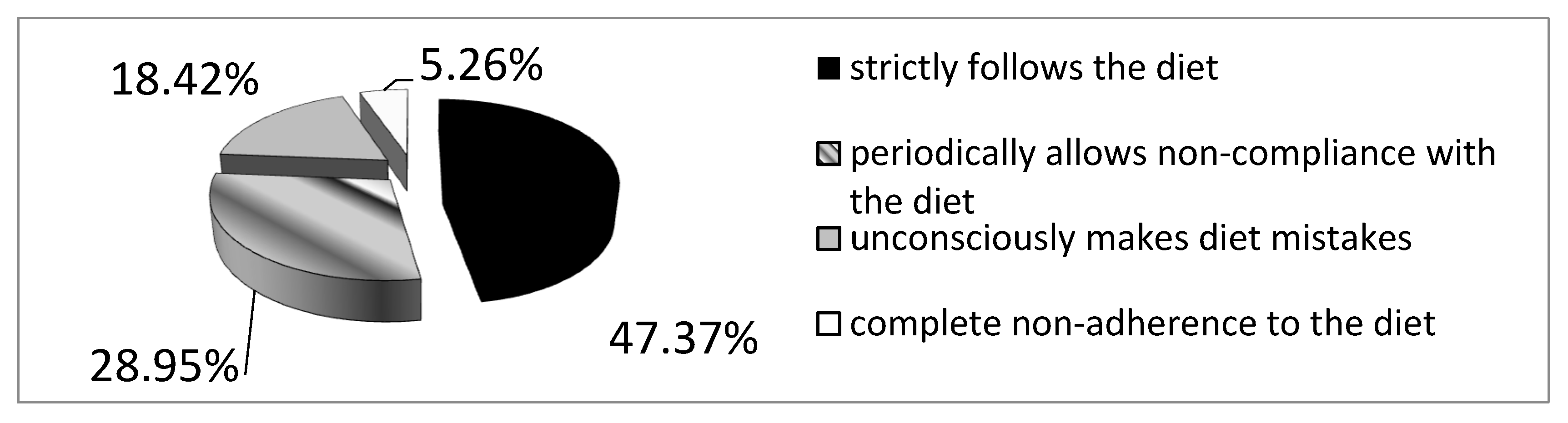
Background: Celiac disease (CD) is an autoimmune disease that results from the interaction of genetic, immune, and environmental factors. According to the 2020 European Society for Pediatric Gastroenterology Hepatology and Nutrition (ESPGHAN) guidelines, an elimination diet (i.e., excluding products that may contain gluten) is the basic method of treating celiac disease. Following a gluten-free diet is extremely problematic, and patients often make unconscious deviations from the diet. According to the current Oslo definitions for celiac disease, depending on the clinical picture and adequate tests, several forms of celiac disease have been identified: typical, atypical, asymptomatic, potential, and refractory. Objective: The aim of the study was to assess the frequency of conscious diet mistakes and unconscious deviations from a gluten-free diet in a group of patients with long-standing celiac disease and their impact on the frequency of typical and atypical symptoms. Methods: The study included 57 people diagnosed with celiac disease between 1980 and 2010. After verifying the history of the disease according to the ESPGHAN guidelines from 2020, we excluded 19 patients who had Marsh grade 1 at the time of diagnosis or those without HLA DQ2 or DQ8 haplotypes detected. After verification, the study included 38 patients, 30 women and 8 men, with a verified diagnosis of typical celiac disease. The effectiveness of the gluten-free diet was assessed in all participants. Blood was collected to determine IgA anti-tissue transglutaminase II antibodies (anti-tTG) and IgG antibodies against deamidated gliadin peptides by ELISA. All survey participants provided data concerning current gastrointestinal and systemic symptoms, bowel habits, comorbidities, dietary habits, physical activity, and socioeconomic conditions. Results: A total of 25 patients (65.78%) declared strict adherence to the gluten-free diet. However, in this group, seven (18.4%) patients had significantly increased levels of anti-tTG antibodies (mean 82.3 RU/mL ± 78.9 SD at N < 20 RU/mL). Among the patients who consciously made dietary mistakes, six (46.2%) demonstrated increased levels of anti-tTG antibodies. The analysis did not reveal any difference between the frequency of intestinal and extraintestinal symptoms in patients making dietary mistakes and following the gluten-free diet. Conclusions: More than half of celiac patients unconsciously or consciously make dietary mistakes, which indicates an urgent need to increase their general knowledge of CD and the appropriate diet. Regardless of whether the gluten-free diet is followed, both typical and atypical symptoms of the disease have been observed among celiac patients.
Keywords: celiac disease; gluten-free diet; gluten-free diet adherence celiac disease; gluten-free diet; gluten-free diet adherence