Valuable Data “Gain” and “Loss”: The Quantitative Impact of Information Choice on Consumers’ Decision to Buy Selenium-Rich Agricultural Products
Abstract
1. Introduction
- In Section 1, we provide a background and purpose for our research, as well as propose strategies to enhance consumer information about selenium-rich foods and increase awareness of selenium-rich agricultural products. Additionally, we identify scientific challenges related to this topic.
- In Section 2, we construct the theoretical model, namely Nutrition Information Intervention–Food Safety Perception–Consumer Adoption, and propose the research hypothesis.
- In Section 3, we present an experimental method involving the manipulation of access to nutritional information. Participants are asked to answer questions regarding various means of obtaining information on selenium-rich agricultural products available for purchase.
- In Section 4, we will discuss the research hypotheses, the data analysis, and the results of the experimental tests.
- In Section 5, a fuzzy qualitative comparative analysis is conducted to explore the consumer’s willingness to purchase selenium-rich agricultural products. This analysis involves examining a variety of conditions and combined variables for structural analysis.
- The final section includes the presentation of experimental results and the analysis of the fsQCA (Fuzzy-set Qualitative Comparative Analysis, which is a new analytic technique that uses Boolean algebra to implement principles of comparison used by scholars engaged in the qualitative study of macro social phenomena) results, as well as offering policy recommendations.
2. Theoretical Review and Research Hypothesis
2.1. Impact of Information Interventions on Consumers’ Perceptions of Safety of Selenium-Rich Agricultural Products
2.2. Information Intervention and Purchase Intention
2.3. Information Intervention and Value Identity
2.4. Value Identity and Purchase Intention
2.5. Intermediary Role of Value Identity
2.6. Regulatory Effect of Information Intervention Behavior
3. Experimental Design and Data Analysis
3.1. Experimental Design
3.1.1. Experimental Group and Participants
3.1.2. Experimental Materials Design
- Questionnaire design. The questionnaire was designed separately to measure the impact of an information intervention on consumers’ willingness to purchase and how it affected their behavior. This involved creating an experimental manual for the information intervention.
- Correction and modification of the questionnaire.
- Questionnaire testing. We randomly selected two classes of students to pilot the questionnaire in order to further enhance its quality.
- Appropriate subjects were selected in accordance with the sampling method for the inter-group experiment.
3.1.3. Experimental Process
- Before the test. In order to assess validity and ensure homogeneity among the participants, pre-cognitive testing was utilized to measure subjective knowledge of selenium-rich agricultural products. This was conducted to ensure that there were no significant differences across the sample. The knowledge test questionnaire was based on previous studies [64] and used a 5-point Likert scale. The questions included Do you know anything about selenium?, Do you think people need selenium?, and What do you know about selenium-rich agricultural products? The results indicated that there were no significant differences between the experimental and control groups (Mexperiment group = 2.52, Mcontrol group = 2.41, t = 1.633, p > 0.050).
- Prescribed experiments. Firstly, two separate classrooms were designated for the experimental and control groups. The experimental group watched promotional videos, viewed publicity graphics, read relevant materials, and listened to the host provide details outlining the nature of selenium-rich agricultural products and their advantages. Subsequently, a questionnaire was distributed to the experimental group without allowing any discussion during its completion. After 10 min, the questionnaires were collected. The control group also completed the questionnaire without discussion or input from the host and had 10 min to submit their responses.
3.2. Scale Design
3.3. Descriptive Statistics
3.4. Inspection and Reliability and Validity of Exploratory Factor Analysis
4. Hypothesis Testing and Results of Analysis
4.1. Information Intervention and Consumer Food Safety Perception Hypothesis Test
4.2. Main Effect Inspection
4.3. Mediation Effect of Inspection
4.4. Regulating Effect Inspection
5. Qualitative Comparison Analysis and Fuzzy Sets
5.1. Selection and Calibration of Variables
5.2. Analysis of fsQCA Results
- Emotional, sensory, and behavioral interventions could influence consumers to purchase selenium-rich agricultural products, even without subjective knowledge of the products.
- When consumers had subjective knowledge of selenium-rich agricultural products, sensory, behavioral, and knowledge interventions stimulated their desire to buy the products.
- The emotional intervention stimulated vitality in consumers and influenced their recognition of value when purchasing selenium-rich agricultural products through emotional and sensory intervention.
- Consumers were motivated to buy selenium-rich agricultural products through sensory and knowledge intervention, as well as value identification under the influence of sensory, behavioral, and knowledge interventions.
- Even without any behavioral intervention, consumers with subjective knowledge of selenium-rich agricultural products may still be stimulated to purchase through emotional and knowledge interventions.
- Subjective knowledge alone could motivate consumers to buy selenium-rich agricultural products regardless of emotional or sensory intervention.
6. Discussion and Conclusion
6.1. Further Discussions
- In the context of asymmetric information, providing valuable information on nutrition interventions related to selenium-rich agricultural products to promote food safety awareness may incentivize consumers to make purchases. Emotional interventions that highlight the nutritional value of selenium-rich agricultural products have the most direct impact on consumer purchase decisions [19]. In essence, as a dynamic communication tool, promotional videos not only provide a comprehensive and intuitive presentation of selenium-rich agricultural products but also evoke strong emotional responses. The conclusion further confirms hypotheses 1–4. Emotions and values are more relatable and can drive consumer emotions while enhancing their desire to make a purchase. The next most significant impacts on purchase intention come from knowledge and behavioral interventions, indicating that although informative text is closely associated with sensory stimuli such as vision, smell, and taste, these interventions are no longer as effective due to an overload of information [23]. Therefore, in promoting selenium-rich agricultural products, marketers should prioritize emotional intervention followed by knowledge intervention, then behavioral intervention, and, finally, sensory intervention.
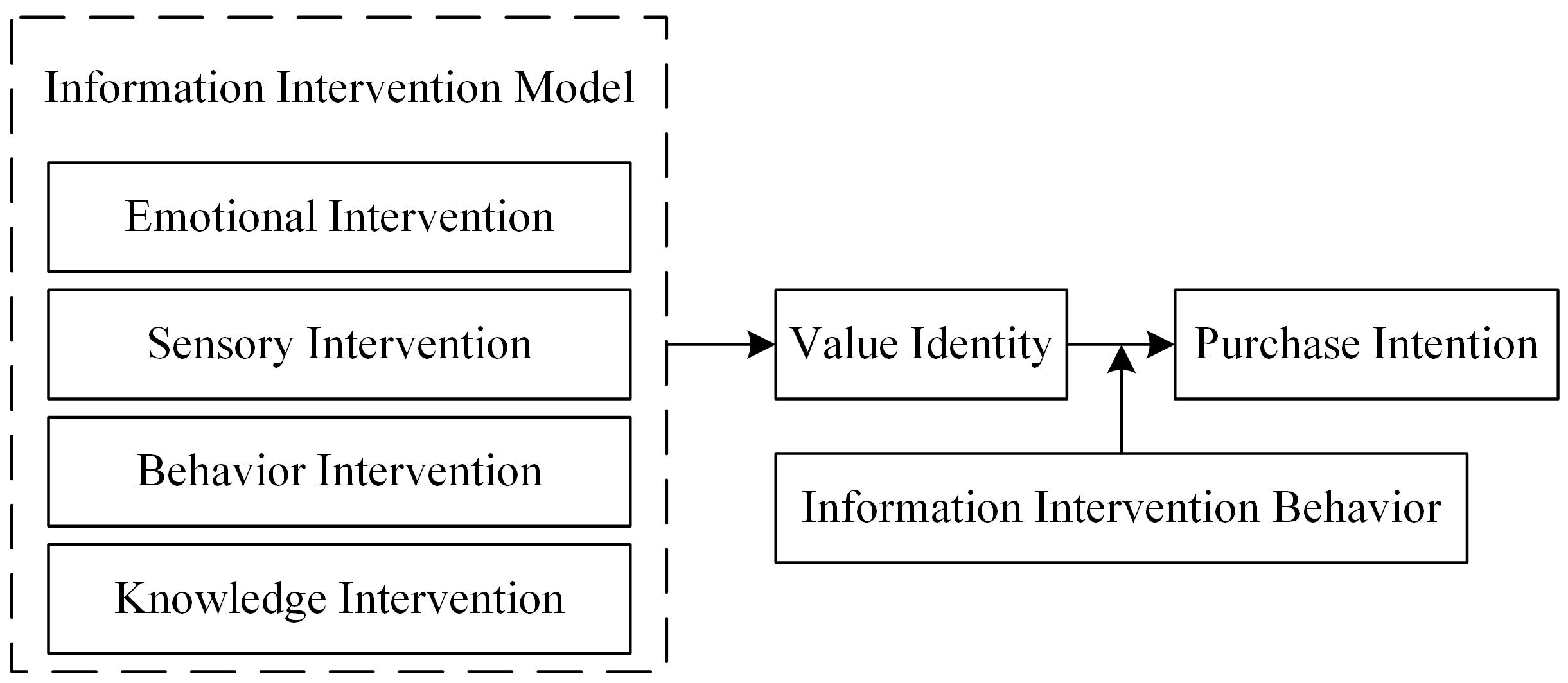
- Value recognition plays a crucial role in influencing the purchase decision of selenium-rich agricultural products and acts as a partial mediator in the relationship between the four factors of information intervention and purchase intention [34]. The conclusion further confirms hypothesis 5. This indicates that nutritional information interventions can effectively drive consumers towards purchasing these products.
- Information intervention behavior positively influences the causal relationship between value identity and purchase intention, suggesting that the experimental group with interventions performs better than the group without them. This conclusion further confirms the theoretical model. Information intervention significantly enhances value identity, which, in turn, strengthens purchase intentions.
6.2. Theoretical Contributions
6.3. Policy Suggestions
- The government should take the initiative to establish a reliable, comprehensive, and transparent information service platform for selenium-rich agricultural products to combat misinformation. Meanwhile, enterprises should utilize big data, artificial intelligence, and other digital technologies to effectively gather and integrate valuable information related to selenium-rich agricultural products for consumers. Meanwhile, the government is obligated to establish a traceable system covering the entire supply chain and allocate codes to enterprises based on the cloud. Consumers have the ability to scan these codes to acquire information regarding the entire supply chain production process, thereby achieving comprehensive transparency in both production and supervision. Consumers themselves should carefully consider the information they receive as their scientific understanding of selenium-rich agricultural products improves, using it as a reference for their purchasing decisions.
- Enterprises offering selenium-rich products should clarify the product advantages and enhance the communication and appeal of product information. They should expand communication channels to include television, newspapers, and radio, as well as new media platforms such as WeChat TM, TikTok TM, Weibo TM, and Facebook TM to disseminate valuable information regarding selenium-rich agricultural products. Furthermore, they should leverage the influence of experts and community leaders in spreading this information.
- In terms of exploring emotional connections between brands and consumers, selenium-rich enterprises should guide consumer understanding of selenium-rich agricultural products. They ought to adjust publicity methods based on customer feedback while promoting an appreciation for the value of the products. Enterprises must also provide consumers with diverse and personalized channels for receiving information, thereby strengthening emotional resonance with consumers and enhancing alignment between customers’ preferences and products.
6.4. Conclusions
Author Contributions
Funding
Data Availability Statement
Conflicts of Interest
References
- Rhodes, E.C.; Suchdev, P.S.; Narayan, K.V.; Cunningham, S. The co-occurrence of overweight and micronutrient deficiencies or anemia among women of reproductive age in Malawi. J. Nutr. 2020, 150, 1554–1565. [Google Scholar] [CrossRef] [PubMed]
- Adetunji, C.O.; Kremer, R.J.; Makanjuola, R.; Sarin, N.B. Application of molecular biotechnology to manage biotic stress affecting crop enhancement and sustainable agriculture. Adv. Agron. 2021, 168, 39–81. [Google Scholar] [CrossRef]
- Ali, S.; Tyagi, A.; Bae, H. Ionomic Approaches for Discovery of Novel Stress-Resilient Genes in Plants. Int. J. Mol. Sci. 2021, 22, 7182. [Google Scholar] [CrossRef] [PubMed]
- Qing, P. Build a new agro-food system to ensure food and nutrition security. J. Huazhong Agric. Univ. 2021, 31, 1–4. [Google Scholar] [CrossRef]
- Buturi, C.V.; Mauro, R.P.; Fogliano, V.; Leonardi, C.; Giuffrida, F. Mineral biofortification of vegetables as a tool to improve human diet. Foods 2021, 10, 223. [Google Scholar] [CrossRef]
- De Brito Mateus, M.P.; Tavanti, R.F.R.; Tavanti, T.R.; Santos, E.F.; Jalal, A.; Dos Reis, A.R. Selenium biofortification enhances ROS scavenge system increasing yield of coffee plants. Ecotoxicol. Environ. Saf. 2021, 209, 111772. [Google Scholar] [CrossRef]
- Trippe, R.C.; Pilon-Smits, E.A.H. Selenium transport and metabolism in plants: Phytoremediation and biofortification implica-tions. J. Hazard. Mater. 2021, 404, 124178. [Google Scholar] [CrossRef]
- González-Salitre, L.; Román-Gutiérrez, A.; Contreras-López, E.; Bautista-Vila, M.; González-Olivares, L. Promising use of selenized yeast to develop new enriched food: Human health implications. Food Rev. Int. 2021, 12, 1594–1611. [Google Scholar] [CrossRef]
- Liu, X.; Wang, Y.; Han, S.; Zhang, Y.; Wang, T. A spatial ecological study on serum selenium and keshan disease in Heilongjiang Province, China. Biol. Trace Elem. Res. 2021, 199, 3253–3261. [Google Scholar] [CrossRef]
- Yang, C.; Yao, H.; Wu, Y.; Sun, G.; Shang, L. Status and risks of selenium deficiency in a traditional selenium-deficient area in northeast China. Sci. Total Environ. 2020, 762, 144103. [Google Scholar] [CrossRef]
- Rosenberg, A.M.; Maluccio, J.A.; Harris, J.; Mwanamwenge, M.; Nguyen, P.H.; Tembo, G.; Rawat, R. Nutrition-sensitive agri-cultural interventions, agricultural diversity, food access and child dietary diversity: Evidence from rural Zambia. Food Policy 2018, 80, 10–23. [Google Scholar] [CrossRef]
- Gu, C.; Yi, Y. Can access to disclosed information improve food trust: Based on the survey data of fresh products information publicity in Changsha City, Hunan Province. J. Agrotech. Econ. 2020, 39, 68–79. [Google Scholar] [CrossRef]
- Timpanaro, G.; Bellia, C.; Foti, V.T.; Scuderi, A. Consumer behaviour of purchasing biofortified food products. Sustainability 2020, 12, 6297. [Google Scholar] [CrossRef]
- Zeng, J.; Qing, P.; Huo, J.; Li, J.; You, L. Prioritizing reqions in China for biofortification interventions based on the sub-national biofortification prioritization index: A case study of biofortified iron-rich rice. J. Agrotech. Econ. 2020, 39, 4–20. [Google Scholar] [CrossRef]
- Xiong, X.; Zhu, C.; Zhu, H. The formation mechanism of consumer trust in e-commerce live streaming of agricultural products: The perspective of intermediary capabilities. J. Nanjing Agric. Univ. 2021, 21, 142–154. [Google Scholar] [CrossRef]
- Li, Y.; Wang, Y. Accurate recommendation model of academic new media information based on user dynamic profile. Inf. Sci. 2022, 40, 88–93, 101. [Google Scholar] [CrossRef]
- Han, W.; Yang, M.; Zhu, Q.; Han, X. Exploring the characteristics and information intervention strategies in different stages of health behavior change. Inf. Stud. Theory Appl. 2022, 45, 57–64. [Google Scholar] [CrossRef]
- Stadler, G.; Oettingen, G.; Gollwitzer, P.M. Intervention effects of information and self-regulation on eating fruits and vegetables over two years. Health Psychol. 2010, 29, 274. [Google Scholar] [CrossRef]
- Zhao, J.; Wang, J. From accuracy to agility: The dynamic impact of digital information intervention on the decision-making process of green agricultural product consumption. Collect. Essays Financ. Econ. 2024, 37, 89–100. [Google Scholar] [CrossRef]
- Bakken, S. Progress toward contextualized, persuasive, and integrated consumer information technologies for health. J. Am. Med. Inform. Assoc. 2021, 28, 2311–2312. [Google Scholar] [CrossRef]
- Msungu, S.D.; Mushongi, A.A.; Venkataramana, P.B.; Mbega, E.R. A review on the trends of maize biofortification in alleviating hidden hunger in sub-sahara Africa. Sci. Hortic. 2022, 299, 111029. [Google Scholar] [CrossRef]
- Li, J.; Jiao, J.; Tang, Y. Analysis of the impact of policies intervention on electric vehicles adoption considering information transmission: Based on consumer network model. Energy Policy 2020, 144, 111560. [Google Scholar] [CrossRef]
- Lin, W.; Nayga, R.M. Green identity labeling, environmental information, and pro-environmental food choices. Food Policy 2022, 106, 102187. [Google Scholar] [CrossRef]
- De Canio, F.; Martinelli, E. EU quality label vs organic food products: A multigroup structural equation modeling to assess consumers’ intention to buy in light of sustainable motives. Food Res. Int. 2021, 139, 109846. [Google Scholar] [CrossRef]
- Bhatia, P.; Aureli, F.; D’Amato, M.; Prakash, R.; Cameotra, S.S.; Nagaraja, T.P.; Cubadda, F. Selenium bioaccessibility and spe-ciation in biofortified Pleurotus mushrooms grown on selenium-rich agricultural residues. Food Chem. 2013, 140, 225–230. [Google Scholar] [CrossRef]
- Byrd, K.; Almanza, B.; Ghiselli, R.F.; Behnke, C.; Eicher-Miller, H.A. Adding sodium information to casual dining restaurant menus: Beneficial or detrimental for consumers? Appetite 2018, 125, 474–485. [Google Scholar] [CrossRef]
- Kitano, S.; Mitsunari, Y.; Yoshino, A. The impact of information asymmetry on animal welfare-friendly consumption: Evidence from milk market in Japan. Ecol. Econ. 2022, 191, 107230. [Google Scholar] [CrossRef]
- Xie, M.; Sun, X.; Li, P.; Shen, X.; Fang, Y. Selenium in cereals: Insight into species of the element from total amount. Compr. Rev. Food Sci. Food Saf. 2021, 20, 2914–2940. [Google Scholar] [CrossRef]
- Chapman, E.; Haby, M.M.; Toma, T.S.; De Bortoli, M.C.; Illanes, E.; Oliveros, M.J.; Barreto, J.O.M. Knowledge translation strategies for dissemination with a focus on healthcare recipients: An overview of systematic reviews. Implement. Sci. 2020, 15, 14. [Google Scholar] [CrossRef]
- Le, D.; Pratt, M.; Wang, Y.; Scott, N.; Gui, L. How to win the consumer’s heart? exploring appraisal determinants of consumer pre-consumption emotions. Int. J. Hosp. Manag. 2020, 88, 102542. [Google Scholar] [CrossRef]
- Ramanathan, U.; Williams, N.L.; Zhang, M.; Sa-Nguanjin, P.; Borges, L.A. A new perspective of e-trust in the era of social media: Insights from customer satisfaction data. IEEE Trans. Eng. Manag. 2020, 69, 1417–1431. [Google Scholar] [CrossRef]
- Shulga, L.V.; Busser, J.A.; Bai, B.; Kim, H.L. Branding co-creation with consumer-generated advertising: Effect on creators and observers. J. Advert. 2021, 6, 5–23. [Google Scholar] [CrossRef]
- Castro, D.M.; Chambers, I.V.E.; Carbonell, B.A.; Noguera, A.L.; Vidal, Q.R.; Burgos, H.A. Consumer acceptability in the USA, Mexico, and Spain of chocolate chip cookies made with partial insect powder replacement. J. Food Sci. 2020, 85, 1621–1628. [Google Scholar] [CrossRef]
- Bemfeito, C.M.; Guimarães, A.S.; De Oliveira, A.L.; Andrade, B.F.; De Paula, L.M.A.F.; Pimenta, C.J. Do consumers perceive sensory differences by knowing information about coffee quality? LWT Food Sci. Technol. 2021, 138, 110778. [Google Scholar] [CrossRef]
- Lipan, L.; Cano-Lamadrid, M.; Vázquez-Araújo, L.; Łyczko, J.; Moriana, A.; Hernández, F.; Carbonell-Barrachina, Á.A. Opti-mization of roasting conditions in hydroSOStainable almonds using volatile and descriptive sensory profiles and consumer acceptance. J. Food Sci. 2020, 85, 3969–3980. [Google Scholar] [CrossRef]
- Poupis, L.M.; Rubin, D.; Lteif, L. Turn up the volume if you’re feeling lonely: The effect of mobile application sound on consumer outcomes. J. Bus. Res. 2021, 126, 263–278. [Google Scholar] [CrossRef]
- Zhong, K.; Wang, Y.; Wang, H. Sense hardness: Effect of haptic perception on consumer attitudes towards brand extension. J. Consum. Behav. 2021, 20, 535–549. [Google Scholar] [CrossRef]
- Flanagan, A.; Priyadarshini, A. A study of consumer behaviour towards food-waste in Ireland: Attitudes, quantities and global warming potentials. J. Environ. Manag. 2021, 284, 112046. [Google Scholar] [CrossRef] [PubMed]
- Kilders, V.; Caputo, V.; Liverpool-Tasie, L.S.O. Consumer ethnocentric behavior and food choices in developing countries: The case of Nigeria. Food Policy 2021, 99, 101973. [Google Scholar] [CrossRef]
- Redding, L.E.; Parsons, B.; Bender, J.S. Educational interventions to address misconceptions about antibiotic residues in milk can alter consumer perceptions and may affect purchasing habits. J. Dairy Sci. 2021, 104, 11474–11485. [Google Scholar] [CrossRef]
- Sweet, M.N.; Laidlaw, K. No longer in the driver’s seat: How do affective motivations impact consumer interest in automated vehicles. Transportation 2020, 47, 2601–2634. [Google Scholar] [CrossRef]
- Xu, S.; Yu, M.; Xue, K.; Zhou, G. Research on the influence mechanism between brand experience and consumer response under new media environment. Manag. Rev. 2021, 33, 341–352. [Google Scholar] [CrossRef]
- Tlb, A.; Lh, B.; Bc, A.; Hss, A. Consumer acceptability and monetary value perception of iced coffee beverages vary with drinking conditions using different types of straws or lids. Food Res. Int. 2021, 140, 109849. [Google Scholar] [CrossRef]
- Saraiva, G.C.; Souza, C.J.D.D.; Abadia, R.R.R.; Carvalho de Rezende, D. The impact of varying educational intervention on consumer understanding and attitude toward reducing sodium in food: Implications for marketing strategies. J. Sens. Stud. 2020, 35, e12558. [Google Scholar] [CrossRef]
- Tal, A.; Gvili, Y.; Amar, M. To protect and support: Why would consumers find foods tastier if these foods help support a desired self-identity. Psychol. Mark. 2022, 39, 701–714. [Google Scholar] [CrossRef]
- An, R.; Liu, J.; Liu, R.; Barker, A.R.; Figueroa, R.B.; McBride, T.D. Impact of sugar-sweetened beverage warning labels on con-sumer behaviors: A systematic review and meta-analysis. Am. J. Prev. Med. 2021, 60, 115–126. [Google Scholar] [CrossRef] [PubMed]
- Gong, S.; Sheng, G. Research on the influence mechanism of the effect of centrality of green attributes on consumer purchase intention: The moderating role of product type and the mediating effect of perceived benefit. J. Bus. Econ. 2021, 41, 52–64. [Google Scholar] [CrossRef]
- Zeng, J.; Qing, P.; Li, J.; Guo, Z. The impact of nutrition-information intervention on farmers’ adoption of biofortified new varieties. J. Huazhong Agric. Univ. 2021, 23, 30–38, 184. [Google Scholar] [CrossRef]
- Cao, E.; Zhou, Y.; Guo, F. Designing reward-based crowdfunding parameters under participators’ behaviors and information asymmetry. Chin. J. Manag. 2022, 19, 723–730. [Google Scholar] [CrossRef]
- Ajibade, I.; Boateng, G.O. Predicting why people engage in pro-sustainable behaviors in Portland Oregon: The role of envi-ronmental self-identity, personal norm, and socio-demographics. J. Environ. Manag. 2021, 289, 112538. [Google Scholar] [CrossRef]
- Weiss, L. Egocentric processing: The advantages of person-related features in consumers’ product decisions. J. Consum. Res. 2021, 49, 288–311. [Google Scholar] [CrossRef]
- Zhang, K.; Wu, J.; Xu, Y.; Li, K. Impacts of internet celebrities’ short videos on consumers’ tourism attitude: A case study on Ding Zhen. Tour. Trib. 2022, 37, 105–119. [Google Scholar] [CrossRef]
- Xiao, K.; Lei, B. Opinion leader traits, promotion stimulus and purchasing intention of social e-commerce consumers: Based on the survey of consumers on wechat group. J. Manag. 2021, 34, 99–110. [Google Scholar] [CrossRef]
- Garcia-Casal, M.N.; Peña-Rosas, J.P.; Mclean, M.; De-Regil, L.M.; Zamora, G.; Consultation Working Groups. Fortification of condiments with micronutrients in public health: From proof of concept to scaling up. Ann. N. Y. Acad. Sci. 2016, 1379, 38–47. [Google Scholar] [CrossRef]
- Nelson, S.C.; Bowen, D.J.; Fullerton, S.M. Third-party genetic interpretation tools: A mixed-methods study of consumer mo-tivation and behavior. Am. J. Hum. Genet. 2019, 105, 122–131. [Google Scholar] [CrossRef]
- Scapin, T.; Fernandes, A.C.; Curioni, C.C.; Pettigrew, S.; Neal, B.; Coyle, D.H.; Proença, R.P. Influence of sugar label formats on consumer understanding and amount of sugar in food choices: A systematic review and meta-analyses. Nutr. Rev. 2021, 79, 788–801. [Google Scholar] [CrossRef]
- Conrad, Z.; Blackstone, N.T. Identifying the links between consumer food waste, nutrition, and environmental sustainability: A narrative review. Nutr. Rev. 2021, 79, 301–314. [Google Scholar] [CrossRef]
- Frehner, A.; De Boer, I.J.M.; Muller, A.; Van Zanten, H.H.E.; Schader, C. Consumer strategies towards a more sustainable food system: Insights from Switzerland. Am. J. Clin. Nutr. 2022, 115, 1039–1047. [Google Scholar] [CrossRef]
- Wang, X.; Nie, K.; Chen, R. Explain action or explain reaction? Which is more useful? Based upon the effectiveness of online comments in explanation type on consumers’ purchasing decision and boundarv condition. Nankai Bus. Rev. 2017, 20, 27–37. [Google Scholar] [CrossRef]
- Margetts, H.Z. Experiments for public management research. Public Manag. Rev. 2011, 13, 189–208. [Google Scholar] [CrossRef]
- Shen, W.; Kiger, T.B.; Davies, S.E.; Rasch, R.L.; Simon, K.M.; Ones, D.S. Samples in applied psychology: Over a decade of research in review. J. Appl. Psychol. 2011, 96, 1055. [Google Scholar] [CrossRef]
- Gao, X. Performance, Expectancy disconfirmation and citizen satisfaction with public services. Public Adm. Policy Rev. 2022, 11, 50–64. [Google Scholar] [CrossRef]
- Sirichokchatchawan, W.; Taneepanichskul, N.; Prapasarakul, N. Predictors of knowledge, attitudes, and practices towards food safety among food handlers in Bangkok, Thailand. Food Control 2021, 126, 108020. [Google Scholar] [CrossRef]
- Liu, B.; Qing, P.; Kuang, Y. Expensive and Fine or Inexpensive but Deserved: Consumers’ decision-making for biofortification products. J. Huazhong Agric. Univ. 2019, 21, 60–69, 162. [Google Scholar] [CrossRef]
- Giller, K.E.; Zingore, S. Mapping micronutrients in grain and soil unearths hidden hunger in Africa. Nature 2021, 594, 31–32. [Google Scholar] [CrossRef]
- Wang, D.; Rensing, C.; Zheng, S. Microbial reduction and resistance to selenium: Mechanisms, applications and prospects. J. Hazard. Mater. 2022, 421, 126684. [Google Scholar] [CrossRef]
- Radomska, D.; Czarnomysy, R.; Radomski, D.; Bielawska, A.; Bielawski, K. Selenium as a bioactive micronutrient in the human diet and its cancer chemopreventive activity. Nutrients 2021, 13, 1649. [Google Scholar] [CrossRef]
- Winther, K.H.; Rayman, M.P.; Bonnema, S.J.; Hegedüs, L. Selenium in thyroid disorders: Essential knowledge for clinicians. Nat. Rev. Endocrinol. 2020, 16, 165–176. [Google Scholar] [CrossRef]
- Gómez-Suárez, M.; Yagüe, M.J. Making sense from experience: How a sustainable multi-sensory event spurs word-of-mouth recommendation of a destination brand. Sustainability 2021, 13, 5873. [Google Scholar] [CrossRef]
- Pyo, E.; Tsang, B.L.; Parker, M.E. Rice as a vehicle for micronutrient fortification: A systematic review of micronutrient retention, organoleptic properties, and consumer acceptability. Nutr. Rev. 2022, 80, 1062–1085. [Google Scholar] [CrossRef]
- Lin, P.; Wang, X.; Lv, J.; Huang, W. Prediction of e-opinion leaders based on the growth characteristics of professional authority. J. Intell. 2021, 40, 59–65. [Google Scholar] [CrossRef]
- Hong, L.; Yao, L.; Xie, P.; Li, W. An empirical study on consumer purchase intention for nuts and influencing factors: Survey based on consumers from Zhejiang. Food Control 2020, 117, 107343. [Google Scholar] [CrossRef]
- Takahashi, K.; Noritomo, Y.; Ikegami, M.; Jensen, N.D. Understanding pastoralists’ dynamic insurance up take decisions: Evi-dence from four-year panel data in ethiopia. Food Policy 2020, 95, 101910. [Google Scholar] [CrossRef]
- Ren, L.; Zhu, B.; Xu, Z. Robust consumer preference analysis with a social network. Inf. Sci. 2021, 566, 379–400. [Google Scholar] [CrossRef]
- Wang, M.; Bai, L.; Gong, S.; Huang, L. Determinants of consumer food safety self-protection behavior: An analysis using grounded theory. Food Control 2020, 113, 107198. [Google Scholar] [CrossRef]
- Tangri, N.; Garg, A.X.; Ferguson, T.W.; Dixon, S.; Rigatto, C.; Allu, S.; Chau, E.; Komenda, P.; Naimark, D.; Nesrallah, G.E.; et al. Effects of a knowledge-translation intervention on early dialysis initiation: A cluster randomized trial. J. Am. Soc. Nephrol. 2021, 32, 1791–1800. [Google Scholar] [CrossRef]
- Mahorter, S.S.; Knerr, S.; Bowles, E.; Wernli, K.J.; Gao, H.; Schwartz, M.D.; O’Neill, S.C. Prior breast density awareness, knowledge, and communication in a health system–embedded behavioral intervention trial. Cancer 2020, 126, 1614–1621. [Google Scholar] [CrossRef]
- Hati, S.R.H.; Zulianti, I.; Achyar, A.; Safira, A. Perceptions of nutritional value, sensory appeal, and price influencing customer intention to purchase frozen beef: Evidence from Indonesia. Meat Sci. 2021, 172, 108306. [Google Scholar] [CrossRef]
- Campbell, C.G.; Feldpausch, G.L. Invited review: The consumer and dairy food waste: An individual plus policy, systems, and environmental perspective. J. Dairy Sci. 2022, 105, 3736–3745. [Google Scholar] [CrossRef]
- Feng, Q.; Cai, S. Research on the model and example of engaged customer identification in virtual brand community. Chin. J. Manag. 2020, 17, 1364–1372. [Google Scholar] [CrossRef]
- Lutzke, L.; Árvai, J. Consumer acceptance of products from carbon capture and utilization. Clim. Chang. 2021, 166, 15. [Google Scholar] [CrossRef]
- Katt, F.; Meixner, O. A systematic review of drivers influencing consumer willingness to pay for organic food. Trends Food Sci. Technol. 2020, 100, 374–388. [Google Scholar] [CrossRef]
- Yang, Y.; Hobbs, J.E.; Natcher, D.C. Assessing consumer willingness to pay for Arctic food products. Food Policy 2020, 92, 101846. [Google Scholar] [CrossRef]
- Morgan, S.L. Redesigning social inquiry: Fuzzy sets and beyond. Soc. Forces 2010, 88, 1934–1936. [Google Scholar] [CrossRef]


| Variables | Measure Item | References |
|---|---|---|
| Subjective knowledge (SK) | SK1: Do you know anything about selenium? | Giller, 2021 [65] |
| SK2: Do you think people need selenium? | Wang, 2022 [66] | |
| SK3: How much do you know about selenium-rich agricultural products? | Liu et al., 2019 [64] | |
| Emotional intervention (EI) | EI1: After watching the video, it is clear that selenium deficiency will cause certain diseases. | Radomska et al., 2021 [67] Winther et al., 2020 [68] |
| EI2: The video says that the five longevity zones are soil-based selenium-rich areas. | ||
| EI3: Selenium is an essential trace element for the human body. | ||
| Sensory intervention (SI) | SI1: In the figure, selenium-rich navel oranges feel good and are sweet. | Gómez et al., 2021 [69] |
| SI2: Selenium-rich rice has crystal clear particles and a mellow taste. | Le et al., 2020 [30] | |
| SI3: In the figure, selenium-rich sweet potatoes have thin skins, red meat, and a rich aroma. | Pyo et al., 2022 [70] | |
| Behavioral intervention (BI) | BI1: Selenium-rich blueberries are aesthetically pleasing and boost immunity. Selenium-rich experts to promote propaganda. | Lin et al., 2021 [71] |
| BI2: Selenium-rich blueberries are aesthetically pleasing and boost immunity. Star big V promotion propaganda. | Hong et al., 2020 [72] | |
| BI3: In the figure, customers in the store snapped up selenium-rich agricultural products. | Takahashi et al., 2020 [73] | |
| BI4: Friends and relatives have bought selenium-rich agricultural products. | Xiao et al., 2022 [53] | |
| BI5: Selenium-rich agricultural products are starting to become popular. | Ren et al., 2021 [74] | |
| Knowledge intervention material | What is selenium? (1) Although the Chinese people are full, 300 million people lack trace elements, which can lead to malnutrition, and they lose a lot of money every year. (2) Scientists say selenium can fight cancer, is good for the eyes and the cardiovascular system, prevents liver disease, treats diabetes, detoxifies, has anti-aging properties, and improves fertility. (3) General Secretary Xi said that Jiangxi province should develop a selenium-rich industry, an idea strongly supported by the provincial government. Jiangxi Agricultural University established the Jiangxi Selenium-rich Agricultural Research Institute. (4) People who eat selenium-rich agricultural products also feel good about cancer-free villages and longevity villages. | |
| Knowledge intervention (KI) | KI1: Read the above materials; do you think selenium-rich foods are useful? | Wang et al., 2020 [75] Tangri et al., 2021 [76] Mahorter et al., 2020 [77] |
| KI2: Read the above materials; do you agree that selenium prevents cancer? | ||
| KI3: Read the above materials; do you agree that selenium benefits the eyes? | ||
| KI4: Read the above materials; do you agree that selenium has anti-aging properties? | ||
| Value identity (VI) | VI1: I think the nutritional function of selenium-rich products is credible. | Hati et al., 2021 [78] |
| VI2: Se deficiency causes malnutrition; therefore, I support selenium-rich products. | Campbell et al., 2022 [79] | |
| VI3: I think overall, selenium-rich produce is good for your health. | Feng et al., 2020 [80] | |
| Purchase intention (PI) | PI1: After participating in the experiment, I will learn more about selenium-rich agricultural products. | Lutzke et al., 2021 [81] |
| PI2: After participating in the experiment, I will recommend selenium-rich agricultural products to others. | Katt et al., 2020 [82] | |
| PI3: After participating in the experiment, I am willing to buy selenium-rich agricultural products. | Yang et al., 2020 [83] | |
| Overall Sample | Experimental Group | Control Group | |||||
|---|---|---|---|---|---|---|---|
| No. | (%) | No. | (%) | No. | (%) | ||
| Gender | Male | 110 | 40.90 | 63 | 48.46 | 47 | 33.81 |
| Female | 159 | 59.10 | 67 | 51.54 | 92 | 66.19 | |
| Age | Under the age of 18 | 35 | 13.00 | 8 | 6.15 | 27 | 19.42 |
| 19~35 Years old | 232 | 86.20 | 120 | 92.31 | 112 | 80.58 | |
| 36~45 Years old | 2 | 0.70 | 2 | 1.54 | 0 | 0.00 | |
| Education | College or undergraduate | 212 | 78.80 | 80 | 61.54 | 132 | 94.96 |
| Master’s degree or above | 57 | 21.20 | 50 | 38.46 | 7 | 5.04 | |
| Have you ever had farming experience? | Yes | 204 | 75.80 | 101 | 77.69 | 103 | 74.10 |
| No | 65 | 24.20 | 29 | 22.31 | 36 | 25.90 | |
| Monthly income | RMB 2000 or less | 215 | 79.90 | 99 | 76.15 | 116 | 83.45 |
| RMB 2000–4000 | 40 | 14.90 | 19 | 14.62 | 21 | 15.11 | |
| RMB 4000–6000 | 6 | 2.20 | 5 | 3.85 | 1 | 0.72 | |
| above | 8 | 3.00 | 7 | 5.38 | 1 | 0.72 | |
| Monthly expenditure | RMB 2000 or less | 196 | 72.90 | 99 | 76.15 | 97 | 69.78 |
| RMB 2000–4000 | 49 | 18.20 | 22 | 16.92 | 27 | 19.42 | |
| RMB 4000–6000 | 15 | 5.60 | 3 | 2.31 | 12 | 8.63 | |
| above | 9 | 3.30 | 6 | 4.62 | 3 | 2.16 | |
| Purchasing behavior | No | 201 | 74.72 | 97 | 74.62 | 104 | 74.82 |
| Yes | 68 | 25.28 | 33 | 25.38 | 35 | 25.18 | |
| Variables | Measure Items | Cronbach’s α | Delete the Post-Measure Values | Factor Loading | CR | AVE |
|---|---|---|---|---|---|---|
| Subjective knowledge | SK1 | 0.602 | 0.576 | 0.782 | 0.787 | 0.553 |
| SK2 | 0.518 | 0.691 | ||||
| SK3 | 0.404 | 0.756 | ||||
| Emotional intervention | EI1 | 0.687 | 0.651 | 0.713 | 0.826 | 0.614 |
| EI2 | 0.576 | 0.816 | ||||
| EI3 | 0.549 | 0.817 | ||||
| Sensory intervention | SI1 | 0.764 | 0.795 | 0.786 | 0.864 | 0.680 |
| SI2 | 0.596 | 0.859 | ||||
| SI3 | 0.642 | 0.827 | ||||
| Behavioral intervention | BI1 | 0.877 | 0.863 | 0.790 | 0.911 | 0.671 |
| BI2 | 0.860 | 0.774 | ||||
| BI3 | 0.855 | 0.807 | ||||
| BI4 | 0.833 | 0.881 | ||||
| BI5 | 0.844 | 0.840 | ||||
| Knowledge intervention | KI1 | 0.905 | 0.907 | 0.835 | 0.934 | 0.779 |
| KI2 | 0.862 | 0.904 | ||||
| KI3 | 0.871 | 0.892 | ||||
| KI4 | 0.866 | 0.897 | ||||
| Valueidentity | VI1 | 0.874 | 0.819 | 0.897 | 0.923 | 0.799 |
| VI2 | 0.848 | 0.876 | ||||
| VI3 | 0.800 | 0.908 | ||||
| Purchase intention | PI1 | 0.711 | 0.771 | 0.676 | 0.839 | 0.637 |
| PI2 | 0.530 | 0.874 | ||||
| PI3 | 0.534 | 0.832 |
| SK | VI | EI | SI | KI | BI | PI | |
|---|---|---|---|---|---|---|---|
| SK | 0.894 | ||||||
| VI | 0.496 | 0.784 | |||||
| EI | 0.519 | 0.422 ** | 0.824 | ||||
| SI | 0.264 | 0.174 ** | 0.238 ** | 0.744 | |||
| KI | 0.698 | 0.537 ** | 0.555 ** | 0.226 ** | 0.883 | ||
| BI | 0.539 * | 0.434 ** | 0.733 ** | 0.247 ** | 0.604 ** | 0.819 | |
| PI | 0.586 ** | 0.437 ** | 0.516 ** | 0.298 ** | 0.481 ** | 0.467 ** | 0.798 |
| Variables | Measure Items | Group (Mean Value of ± Standard Deviation) | t | |
|---|---|---|---|---|
| Experimental Group (N = 130) | Control Group(N = 139) | |||
| Emotional intervention | EI1 | 4.02 ± 0.87 | 3.65 ± 0.74 | 3.718 *** |
| EI2 | 3.95 ± 0.61 | 3.45 ± 0.59 | 6.692 *** | |
| EI3 | 4.24 ± 0.72 | 3.82 ± 0.78 | 4.554 *** | |
| Sensory intervention | SI1 | 3.02 ± 0.89 | 2.38 ± 0.84 | 6.041 *** |
| SI2 | 3.22 ± 0.83 | 2.65 ± 0.81 | 5.667 *** | |
| SI3 | 3.08 ± 0.82 | 2.58 ± 0.77 | 5.177 *** | |
| Behavioral intervention | BI1 | 3.37 ± 0.82 | 2.78 ± 0.81 | 5.840 *** |
| BI2 | 2.92 ± 0.92 | 2.49 ± 0.87 | 3.887 *** | |
| BI3 | 3.16 ± 0.72 | 2.90 ± 0.72 | 2.986 ** | |
| BI4 | 3.34 ± 0.69 | 2.91 ± 0.69 | 5.066 *** | |
| BI5 | 3.27 ± 0.75 | 2.83 ± 0.76 | 4.711 *** | |
| Knowledge intervention | KI1 | 3.90 ± 0.71 | 3.43 ± 0.65 | 5.619 *** |
| KI2 | 3.64 ± 0.75 | 3.09 ± 0.67 | 6.294 *** | |
| KI3 | 3.71 ± 0.79 | 3.08 ± 0.64 | 7.140 *** | |
| KI4 | 3.69 ± 0.82 | 3.06 ± 0.67 | 6.910 *** | |
| Path Relationship | Coefficient | t | p |
|---|---|---|---|
| EI → PI | 0.290 | 6.777 | 0.000 *** |
| SI → PI | 0.251 | 6.776 | 0.000 *** |
| BI → PI | 0.279 | 7.178 | 0.000 *** |
| KI → PI | 0.285 | 8.912 | 0.000 *** |
| EI → VI | 0.426 | 6.584 | 0.001 *** |
| SI → VI | 0.463 | 8.697 | 0.000 *** |
| BI → VI | 0.554 | 10.249 | 0.000 *** |
| KI → VI | 0.725 | 14.829 | 0.000 *** |
| VI →PI | 0.586 | 14.385 | 0.000 *** |
| Step | Explanatory Variable | Explained Variable | β | Establishment Conditions |
|---|---|---|---|---|
| Step 1 | Independent variable | Dependent variable | β1 | β1 should be significant |
| Emotional intervention | Purchase intention | 0.290 *** | ||
| Sensory intervention | 0.251 *** | |||
| Behavioral intervention | 0.279 *** | |||
| Knowledge intervention | 0.285 *** | |||
| Step 2 | Independent variable | Metavariable | β2 | β2 should be significant |
| Emotional intervention | Value identity | 0.426 *** | ||
| Sensory intervention | 0.463 *** | |||
| Behavioral intervention | 0.554 *** | |||
| Knowledge intervention | 0.725 *** | |||
| Step 3 | Explanatory variable | Explained variable | β3 | β4 should be significant β3 has no significance, The full mediation effect holds true β3 has significance Part of the intermediary effect is established |
| Emotional intervention | Purchase intention | 0.113 ** | ||
| Sensory intervention | 0.121 *** | |||
| Behavioral intervention | 0.084 ** | |||
| Knowledge intervention | 0.142 *** | |||
| Metavariable | β4 | |||
| Value identity | 0.315 *** | |||
| 0.289 *** | ||||
| 0.310 *** | ||||
| 0.263 *** |
| Items | Conclusion | c | a × b | c’ | Effect Ratio |
|---|---|---|---|---|---|
| X1-M-Y | Part of the intermediary | 0.29 | 0.131 | 0.159 | 45.08% |
| X2-M-Y | Part of the intermediary | 0.251 | 0.142 | 0.108 | 56.79% |
| X3-M-Y | Part of the intermediary | 0.279 | 0.168 | 0.111 | 60.21% |
| X4-M-Y | Part of the intermediary | 0.285 | 0.143 | 0.142 | 50.26% |
| Variable Type | Variable | Model 1 | Model 2 | Model 3 |
|---|---|---|---|---|
| t | t | t | ||
| Control variable | Gender | 0.987 | 1.359 | 1.718 |
| Age | 0.115 | −1.664 | −1.808 | |
| Rural experience | −0.901 | −0.763 | −1.028 | |
| Job | −2.042 * | −2.152 * | −2.262 * | |
| Income | 0.545 | −0.696 | −0.536 | |
| Consumer expenditure | −4.13 | 1.554 | 1.591 | |
| Subjective knowledge | 4.321 *** | 2.834 ** | 2.239 * | |
| Independent variable | Value identity | 7.143 *** | 7.939 *** | |
| Regulated variable | Group | −3.524 *** | −3.509 *** | |
| Regulatory effect | Value identity × Group | 4.225 *** | ||
| R2 | 0.126 | 0.375 | 0.416 | |
| ΔR2 | 0.100 | 0.351 | 0.391 | |
| F change | 4.705 | 51.405 | 17.847 | |
| F change significance | 0.000 *** | 0.000 *** | 0.000 *** |
| Dependent Variable | Outcome Variable (Willingness to Buy) | |
|---|---|---|
| Consistency | Coverage | |
| EI | 0.576960 | 0.829049 |
| ~EI | 0.423040 | 0.685417 |
| SI | 0.606343 | 0.841471 |
| ~SI | 0.393657 | 0.664337 |
| BI | 0.647222 | 0.821453 |
| ~BI | 0.352778 | 0.671660 |
| KI | 0.458586 | 0.862347 |
| ~KI | 0.541414 | 0.692927 |
| SK | 0.472778 | 0.804458 |
| ~SK | 0.527222 | 0.726767 |
| VI | 0.483010 | 0.824761 |
| ~VI | 0.516990 | 0.710644 |
| Variable | A1 | A2 | A3 | A4 | A5 | A6 |
|---|---|---|---|---|---|---|
| EI | ● | • | • | ⨂ | ||
| SI | ● | ● | ● | ● | ⨂ | |
| BI | ● | • | • | ⨂ | ⨂ | |
| KI | ● | ● | ● | ● | ● | |
| SK | ⨂ | • | ● | ● | ||
| VI | • | • | • | ⨂ | ||
| Consistency | 0.842 | 0.867 | 0.875 | 0.884 | 0.829 | 0.806 |
| Coverage | 0.310 | 0.265 | 0.349 | 0.367 | 0.132 | 0.116 |
| Unique coverage | 0.049 | 0.010 | 0.003 | 0.007 | 0.002 | 0.009 |
| Solution consistency | 0.554172 | |||||
| Solution coverage | 0.859803 | |||||
Disclaimer/Publisher’s Note: The statements, opinions and data contained in all publications are solely those of the individual author(s) and contributor(s) and not of MDPI and/or the editor(s). MDPI and/or the editor(s) disclaim responsibility for any injury to people or property resulting from any ideas, methods, instructions or products referred to in the content. |
© 2024 by the authors. Licensee MDPI, Basel, Switzerland. This article is an open access article distributed under the terms and conditions of the Creative Commons Attribution (CC BY) license (https://creativecommons.org/licenses/by/4.0/).
Share and Cite
Zhou, B.; Wu, H.; Wu, B.; Song, Z. Valuable Data “Gain” and “Loss”: The Quantitative Impact of Information Choice on Consumers’ Decision to Buy Selenium-Rich Agricultural Products. Foods 2024, 13, 3256. https://doi.org/10.3390/foods13203256
Zhou B, Wu H, Wu B, Song Z. Valuable Data “Gain” and “Loss”: The Quantitative Impact of Information Choice on Consumers’ Decision to Buy Selenium-Rich Agricultural Products. Foods. 2024; 13(20):3256. https://doi.org/10.3390/foods13203256
Chicago/Turabian StyleZhou, Bo, Huizhen Wu, Baoshu Wu, and Zhenjiang Song. 2024. "Valuable Data “Gain” and “Loss”: The Quantitative Impact of Information Choice on Consumers’ Decision to Buy Selenium-Rich Agricultural Products" Foods 13, no. 20: 3256. https://doi.org/10.3390/foods13203256
APA StyleZhou, B., Wu, H., Wu, B., & Song, Z. (2024). Valuable Data “Gain” and “Loss”: The Quantitative Impact of Information Choice on Consumers’ Decision to Buy Selenium-Rich Agricultural Products. Foods, 13(20), 3256. https://doi.org/10.3390/foods13203256