Article

An 11-Year Analysis of Bacterial Foodborne Disease Outbreaks in Zhejiang Province, China
Department of Nutrition and Food Safety, Zhejiang Provincial Center for Disease Control and Prevention, 3399 Binsheng Road, Binjiang District, Hangzhou 310051, China
*
Author to whom correspondence should be addressed.
Foods 2022, 11(16), 2382; https://doi.org/10.3390/foods11162382
Submission received: 14 June 2022 / Revised: 1 August 2022 / Accepted: 4 August 2022 / Published: 9 August 2022
(This article belongs to the Section Food Microbiology)

Abstract

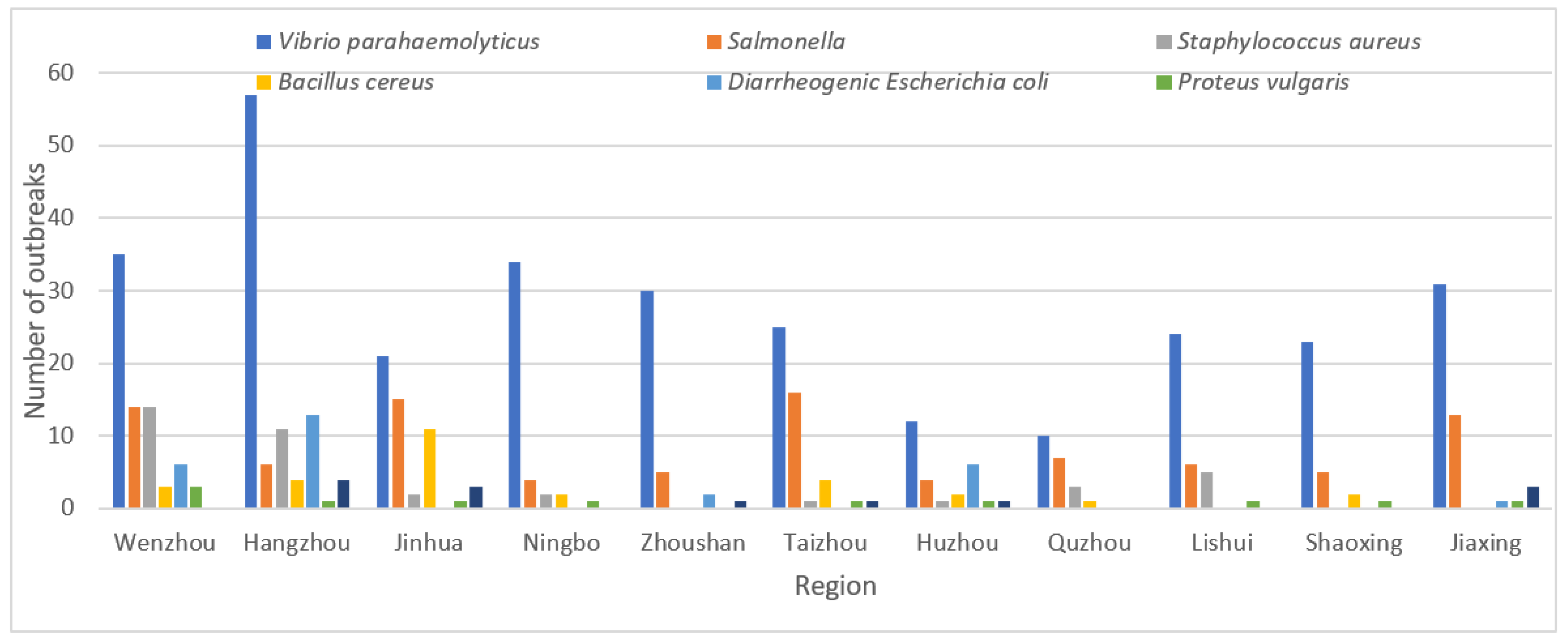
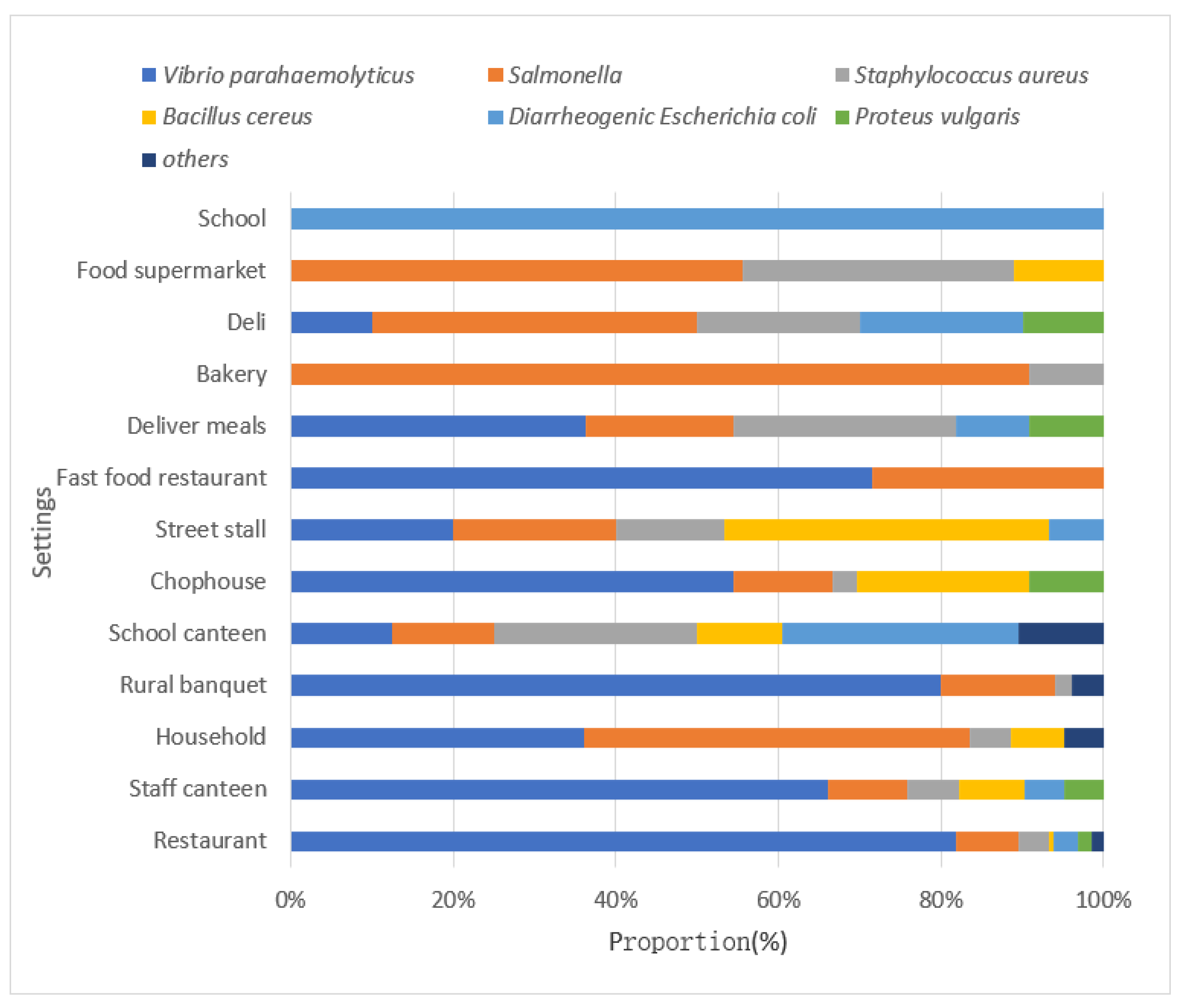
Background: Foodborne diseases are a growing public health problem and contribute significantly to the global burden of disease and mortality. Bacteria are the most common foodborne pathogens. We aimed to explore characteristics of bacterial foodborne disease outbreaks (FBDOs) in Zhejiang Province and to provide data support for foodborne disease prevention and control. Methods: Descriptive statistical methods were used to analyze the data reported by centers for disease control (CDCs) at all levels in Zhejiang Province through Foodborne Disease Outbreaks Surveillance System (FDOSS) during 2010–2020. Results: CDCs in Zhejiang Province reported 517 bacterial FBDOs in 11 years, resulting in 7031 cases, 911 hospitalizations, and 3 deaths. Vibrio parahaemolyticus had the highest number of outbreaks, accounting for 58.41% of the total bacterial outbreaks, followed by Salmonella (18.38%). In all settings, restaurants (37.14%), staff canteens (11.99%), and households (11.80%) were responsible for the large number of outbreaks. Aquatic products (42.08%), meat and meat products (23.56%), cereals (10.81%), and flour products (9.27%) were the most common single foods reported. Further analysis showed that the settings and food vehicles of outbreaks caused by different pathogens were different. Conclusions: Bacterial outbreaks are the most common type of FBDOs in Zhejiang Province. By analyzing the epidemiological characteristics of common pathogenic bacteria, we can identify the etiology, food, and setting that the government needs to focus on, and issue relevant targeted policies to reduce the number of FBDOs.
Keywords: foodborne disease outbreak; Vibrio parahaemolyticus; Salmonella foodborne disease outbreak; Vibrio parahaemolyticus; Salmonella