Article

Scientific Excellence and Publication Patterns: The Winning Applicants of the Bolyai János Research Scholarship in Hungary in 2021


1
Faculty of Public Governance and International Studies, University of Public Service, 1083 Budapest, Hungary
2
Faculty of Mechanical Engineering and Informatics, University of Miskolc, 3515 Miskolc, Hungary
*
Author to whom correspondence should be addressed.
Publications 2023, 11(3), 43; https://doi.org/10.3390/publications11030043

Submission received: 18 June 2023 / Revised: 4 September 2023 / Accepted: 4 September 2023 / Published: 6 September 2023

Abstract

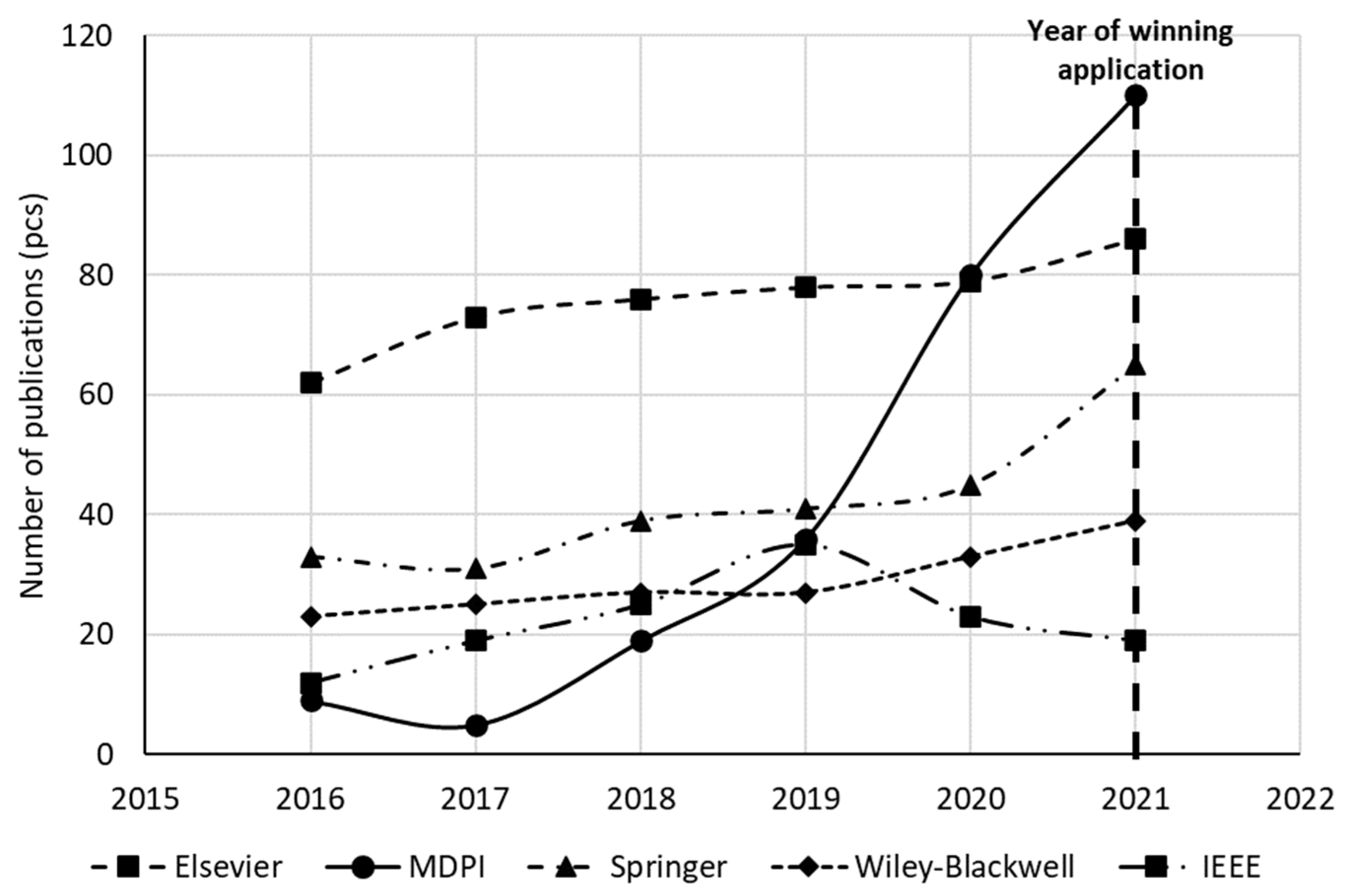
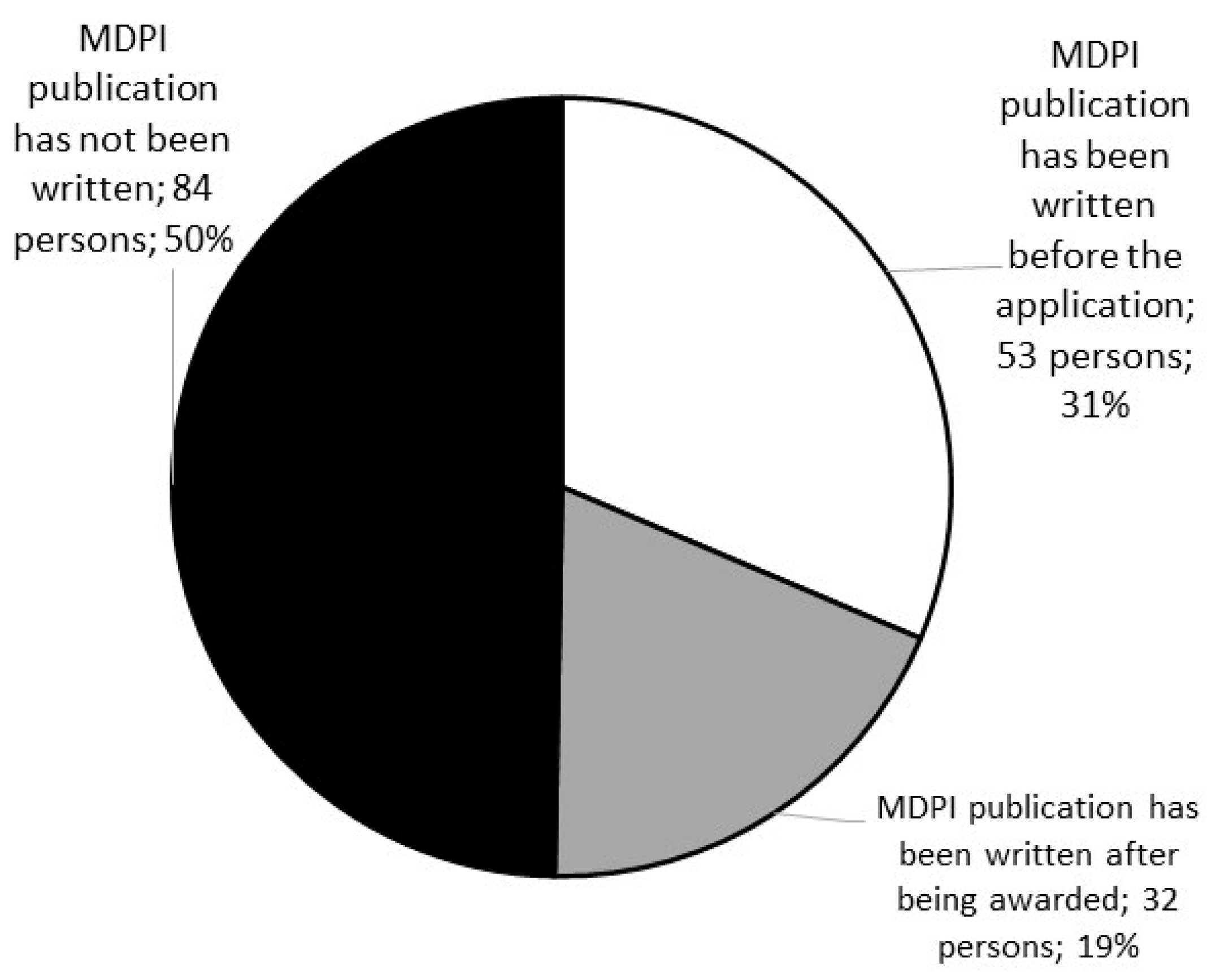
The following paper examines some of the publishing habits observed among the winning applicants of the Bolyai János Research Scholarship. As an academic support programme, the Bolyai Research Scholarship forms a bridge between scholars with the title of doctor of the Hungarian Academy of Sciences (HAS) and the young generation of researchers with an academic degree. The winning applicants in 2021 were researchers under the age of 45, cooperating with international co-authors, having highly cited publications and showing a continuous publication history of 15 years on average. The scholarship holders come primarily from research centres and universities. The paper argues that the achievements of scholarship holders follow the international patterns of academic excellence and publication as well as the requirements for international cooperation and publishing mainly in open access journals. In doing so, they prefer journals under the umbrella of Elsevier for performing their publication activities; however, there has been a significant increase in those publishing in MDPI journals, recently. The results show that one-third of the applicants had published before and a fifth of them had published in one of the journals of MDPI two months after announcing the list of the winning applicants. At the same time, differences in publication traditions and award systems reveal marked differences in publication strategies and evaluation criteria across fields of science. Based on this, the descriptive statistics presented in this paper contribute to our understanding of the conscious career planning of young scholars in line with international standards.
Keywords: Bolyai János Research Scholarship; MDPI; scientific excellence; open access publications; scientific career paths; scientometrics Bolyai János Research Scholarship; MDPI; scientific excellence; open access publications; scientific career paths; scientometrics