
The Bisphosphonate Accumulation Index (BAI): A Quantitative Metric for Cumulative Antiresorptive Exposure in Pre-Procedural Dental and Surgical Assessment

 ,
,  , , and
Abstract
1. Introduction
2. Materials and Methods
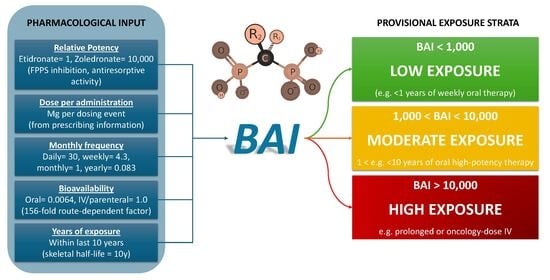
2.1. Conceptual Framework
2.2. Relative Antiresorptive Potency
2.3. Dose per Administration
2.4. Dosing Frequency (Monthly)
2.5. Bioavailability Correction
2.6. Duration of Exposure: The 10-Year Window
3. Results
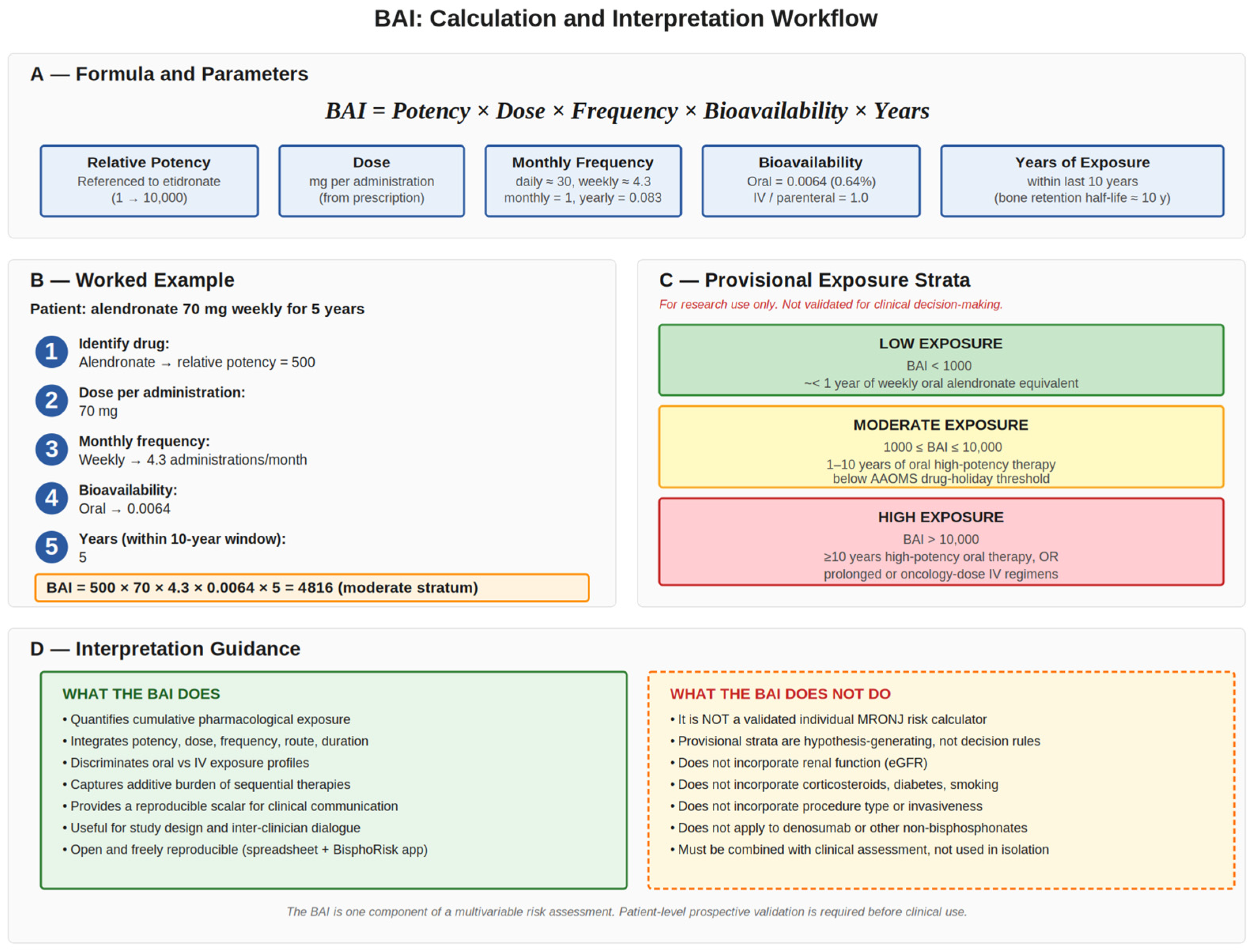
3.1. Worked Clinical Examples
- •
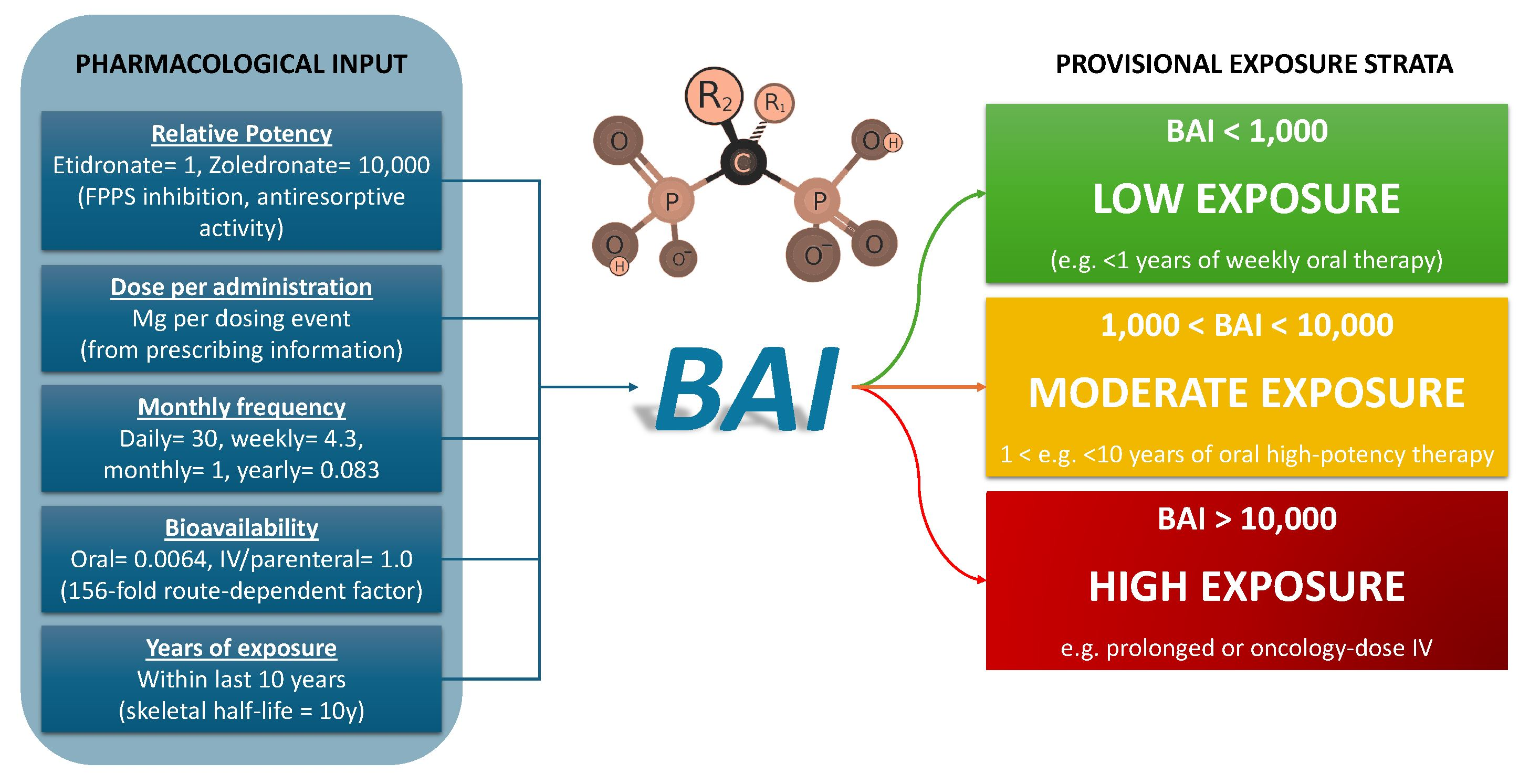
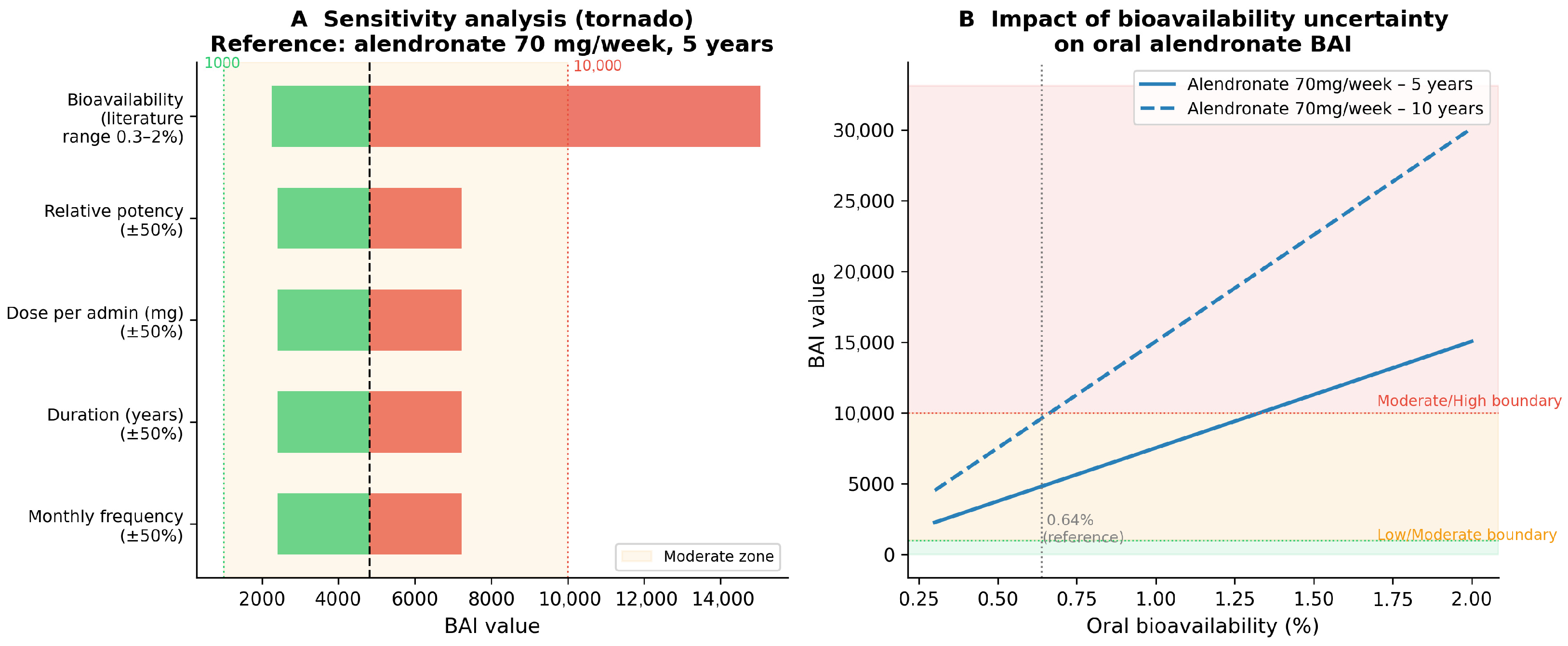
- Scenario A (BAI = 4816) represents a postmenopausal woman with osteoporosis receiving weekly alendronate 70 mg for five years. The BAI falls in the moderate-exposure stratum, reflecting the substantial attenuation of systemic bioavailability of oral formulations (factor 0.0064).
- •
- Scenario B (BAI = 9632) represents the same patient after ten years of uninterrupted therapy. The BAI approaches but does not cross the provisional high-exposure boundary of 10,000, consistent with the AAOMS 2022 recommendation to consider a drug holiday specifically at this duration [1]. The progressive increase with duration is consistent with the dose-dependent increase in ONJ risk reported by Park et al. [10].
- •
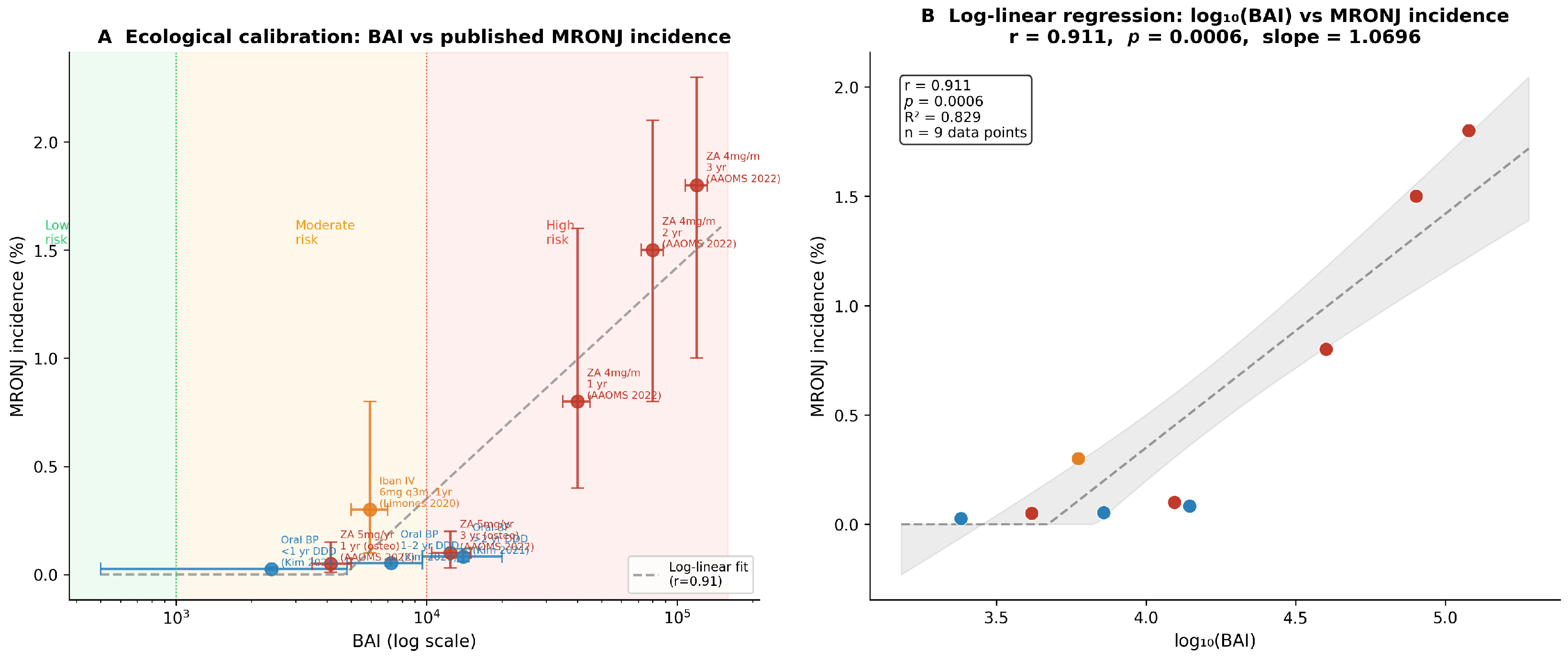
- Scenario C (BAI = 120,000) represents an oncological patient receiving monthly intravenous zoledronic acid 4 mg for three years. The 25-fold higher BAI relative to Scenario A reflects the combined effect of higher potency (10,000 vs. 500), 100% bioavailability (vs. 0.64%), and the higher absolute dose per infusion, a finding pharmacologically consistent with the dramatically higher MRONJ incidence (1–17%) documented in this population [4].
- •
- Scenario D (BAI = 15,340) illustrates sequential therapy: a patient who received alendronate 70 mg weekly for three years (BAI = 500 × 70 × 4.3 × 0.0064 × 3 = 2890) and then transitioned to annual intravenous zoledronic acid 5 mg (Aclasta schedule for osteoporosis) for three additional years (BAI = 10,000 × 5 × 0.083 × 1 × 3 = 12,450). The total BAI of 15,340 crosses the provisional high-exposure boundary, demonstrating that even a low-frequency intravenous osteoporosis regimen, when following years of oral therapy, places the patient in the high-exposure stratum. The correctly calculated BAI for an annual IV osteoporosis schedule is 8-fold lower than for a monthly oncological schedule (Scenario C), accurately preserving the pharmacological distinction between osteoporosis and oncology regimens.
3.2. Computational Validation
3.2.1. Sensitivity Analysis
3.2.2. Ecological Calibration Against Published MRONJ Incidence Data
3.2.3. Monte Carlo Simulation on a Synthetic Cohort
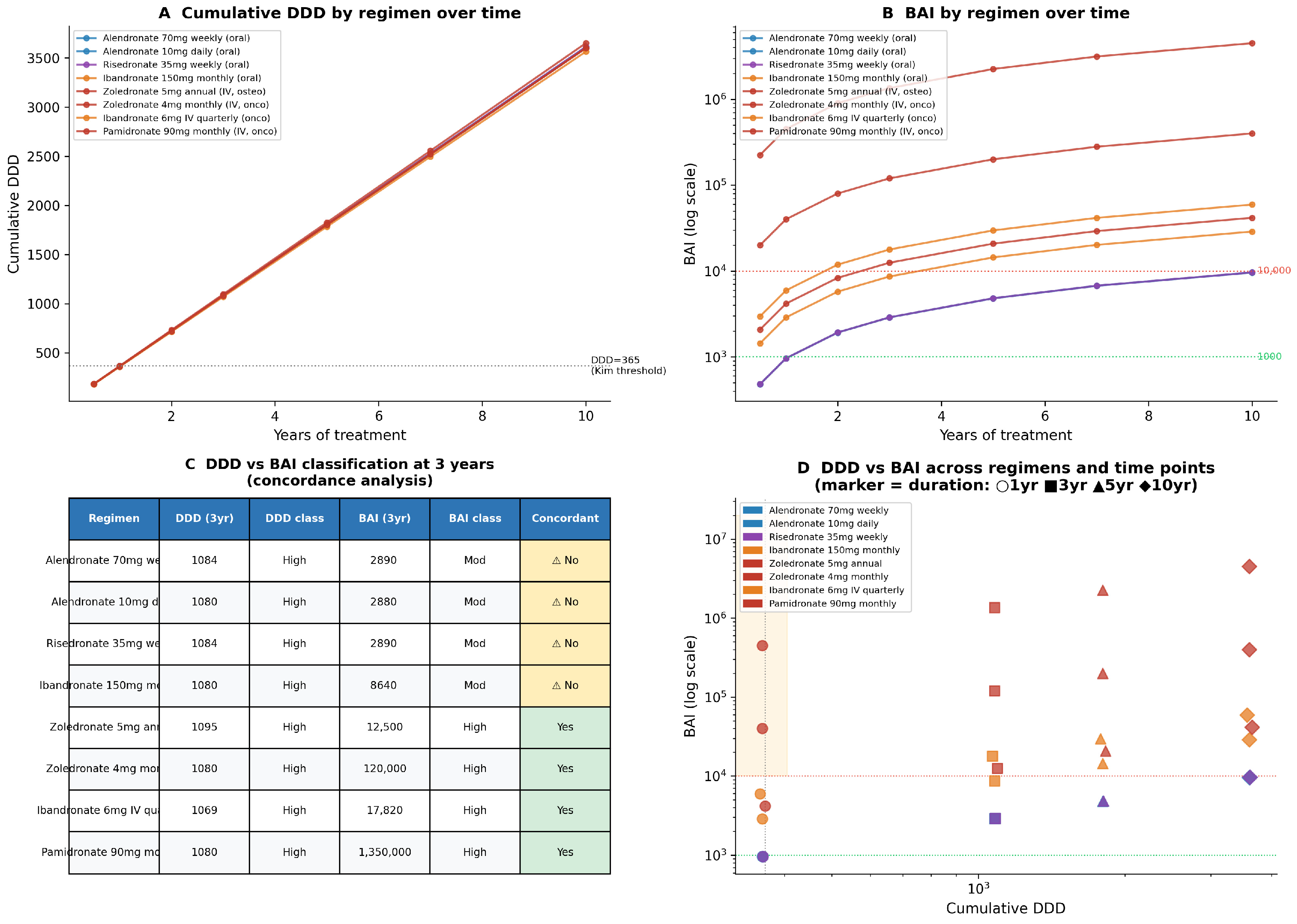
3.2.4. Concordance Analysis: BAI vs. Defined Daily Dose (DDD)
3.2.5. Computational Validation: Summary
4. Discussion
4.1. Comparison with Existing Tools
4.2. Provisional Exposure Strata for Research Purposes: Derivation and Rationale
4.2.1. Low-Risk Threshold (BAI < 1000)
4.2.2. High-Risk Threshold (BAI > 10,000)
4.2.3. Interpretation and Clinical Use of Provisional Thresholds
4.3. Strengths
4.4. Limitations
4.5. Framework for Future Validation Studies
5. Conclusions
Author Contributions
Funding
Institutional Review Board Statement
Informed Consent Statement
Data Availability Statement
Acknowledgments
Conflicts of Interest
References
- Ruggiero, S.L.; Dodson, T.B.; Aghaloo, T.; Damato, K.; Chow, W.; Freiberger, J.J. American Association of Oral and Maxillofacial Surgeons’ Position Paper on Medication-Related Osteonecrosis of the Jaws—2022 Update. J. Oral Maxillofac. Surg. 2022, 80, 920–943. [Google Scholar] [CrossRef]
- Marx, R.E. Pamidronate (Aredia) and zoledronate (Zometa) have been associated with jaw avascular necrosis: A growing epidemic. J. Oral Maxillofac. Surg. 2003, 61, 1115–1117. [Google Scholar] [CrossRef]
- Khosla, S.; Burr, D.; Cauley, J.; Dempster, D.W.; Ebeling, P.R.; Felsenberg, D.; Gagel, R.F.; Gilsanz, V.; Guise, T.; Koka, S.; et al. Bisphosphonate-associated osteonecrosis of the jaw: Report of a task force of the American Society for Bone and Mineral Research. J. Bone Miner. Res. 2007, 22, 1479–1491. [Google Scholar] [CrossRef]
- Ruggiero, S.L.; Mehrotra, B.; Rosenberg, T.J.; Engroff, S.L. Osteonecrosis of the jaws associated with the use of bisphosphonates: A review of 63 cases. J. Oral Maxillofac. Surg. 2004, 62, 527–534. [Google Scholar] [CrossRef] [PubMed]
- Chin, K.Y.; Ekeuku, S.O.; Trias, A. The Role of Geranylgeraniol in Managing Bisphosphonate-Related Osteonecrosis of the Jaw. Front. Pharmacol. 2022, 13, 878556. [Google Scholar] [CrossRef]
- AlRowis, R.; Aldawood, A.; AlOtaibi, M.; Alnasser, E.; AlSaif, I.; Aljaber, A.; Natto, Z. Medication-Related Osteonecrosis of the Jaw (MRONJ): A Review of Pathophysiology, Risk Factors, Preventive Measures and Treatment Strategies. Saudi Dent. J. 2022, 34, 202–210. [Google Scholar] [CrossRef]
- Kuroshima, S.; Al-Omari, F.A.; Sasaki, M.; Sawase, T. Medication-related osteonecrosis of the jaw: A literature review and update. Genesis 2022, 60, e23500. [Google Scholar] [CrossRef]
- Campisi, G.; Mauceri, R.; Bedogni, A.; Cappare, P.; Dezio, M.; Fusco, V.; Lo Muzio, L.; Marchetti, C.; Marcianò, A.; Meleti, M.; et al. Medication-Related Osteonecrosis of the Jaws: A Comparison of SICMF–SIPMO and AAOMS Guidelines. Diagnostics 2023, 13, 2137. [Google Scholar] [CrossRef]
- Hellstein, J.W.; Adler, R.A.; Edwards, B.; Jacobsen, P.L.; Kalmar, J.R.; Koka, S.; Migliorati, C.A.; Ristic, H. Managing the care of patients receiving antiresorptive therapy for prevention and treatment of osteoporosis: Executive summary of recommendations from the American Dental Association Council on Scientific Affairs. J. Am. Dent. Assoc. 2011, 142, 1243–1251. [Google Scholar] [CrossRef]
- Park, J.H.; Kwoen, M.J.; Lee, J.R.; Kim, K.S.; Lee, H.J.; Kim, J.W.; Lee, H. Gradual, but Not Sudden, Dose-Dependent Increase of ONJ Risk With Bisphosphonate Exposure: A Nationwide Cohort Study in Women With Osteoporosis. Front. Endocrinol. 2021, 12, 774820. [Google Scholar] [CrossRef]
- Tzeng, J.I.; Chen, C.Y.; Lin, Y.J.; Chen, Y.H.; Wang, J.J.; Bai, C.H. Time since last intravenous bisphosphonate and risk of osteonecrosis of the jaw in osteoporotic patients. Sci. Rep. 2025, 15, 26651. [Google Scholar] [CrossRef]
- Browne, M.; Miles, B.; Mackey, J. Efficacy and risk of osteonecrosis of the jaw for pamidronate, zoledronic acid, and denosumab in comparison to alendronate in multiple myeloma patients. Bayl. Univ. Med. Cent. Proc. 2024, 37, 227–229. [Google Scholar] [CrossRef]
- Liu, F.C.; Luk, K.C.; Chen, Y.C. Risk comparison of osteonecrosis of the jaw in osteoporotic patients treated with bisphosphonates vs. denosumab: A multi-institutional retrospective cohort study in Taiwan. Osteoporos. Int. 2023, 34, 1729–1737. [Google Scholar] [CrossRef]
- Dunford, J.E.; Kwaasi, A.A.; Rogers, M.J.; Barnett, B.L.; Ebetino, F.H.; Russell, R.G.; Oppermann, U.; Kavanagh, K.L. Structure–Activity Relationships Among the Nitrogen Containing Bisphosphonates in Clinical Use and Other Analogues: Time-Dependent Inhibition of Human Farnesyl Pyrophosphate Synthase. J. Med. Chem. 2008, 51, 2187–2195. [Google Scholar] [CrossRef]
- Kavanagh, K.L.; Guo, K.; Dunford, J.E.; Wu, X.; Knapp, S.; Ebetino, F.H.; Rogers, M.J.; Russell, R.G.; Oppermann, U. The molecular mechanism of nitrogen-containing bisphosphonates as antiosteoporosis drugs. Proc. Natl. Acad. Sci. USA 2006, 103, 7829–7834. [Google Scholar] [CrossRef]
- Rogers, M.J.; Crockett, J.C.; Coxon, F.P.; Mönkkönen, J. Biochemical and molecular mechanisms of action of bisphosphonates. Bone 2011, 49, 34–41. [Google Scholar] [CrossRef]
- Fernández, D.; Ramis, R.; Ortega-Castro, J.; Frau, J.; Vilanova, B.; Donoso, J.; Muñoz, F. New insights into human farnesyl pyrophosphate synthase inhibition by second-generation bisphosphonate drugs. J. Comput. Aided Mol. Des. 2017, 31, 675–688. [Google Scholar] [CrossRef]
- Lin, J.H. Bisphosphonates: A review of their pharmacokinetic properties. Bone 1996, 18, 75–85. [Google Scholar] [CrossRef] [PubMed]
- Cremers, S.C.L.M.; Pillai, G.; Papapoulos, S.E. Pharmacokinetics/pharmacodynamics of bisphosphonates: Use for optimisation of intermittent therapy for osteoporosis. Clin. Pharmacokinet. 2005, 44, 551–570. [Google Scholar] [CrossRef]
- Gertz, B.J.; Holland, S.D.; Kline, W.F.; Matuszewski, B.K.; Freeman, A.; Quan, H.; Lasseter, K.C.; Mucklow, J.C.; Porras, A.G. Studies of the oral bioavailability of alendronate. Clin. Pharmacol. Ther. 1995, 58, 288–298. [Google Scholar] [CrossRef] [PubMed]
- Papapoulos, S.E.; Cremers, S.C.L.M. Prolonged Bisphosphonate Release after Treatment in Children. N. Engl. J. Med. 2007, 356, 1075–1076. [Google Scholar] [CrossRef]
- Fatoye, F.; Smith, P.; Gebrye, T.; Yeowell, G. Real-world persistence and adherence with oral bisphosphonates for osteoporosis: A systematic review. BMJ Open 2019, 9, e027049. [Google Scholar] [CrossRef]
- Adler, R.A.; El-Hajj Fuleihan, G.; Bauer, D.C.; Camacho, P.M.; Clarke, B.L.; Clines, G.A.; Compston, J.E.; Drake, M.T.; El Muderis, M.; Eastell, R.; et al. Managing Osteoporosis in Patients on Long-Term Bisphosphonate Treatment: Report of a Task Force of the American Society for Bone and Mineral Research. J. Bone Miner. Res. 2016, 31, 16–35. [Google Scholar] [CrossRef]
- Cotté, F.E.; Fardellone, P.; Mercier, F.; Gaudin, A.F.; Roux, C. Adherence to monthly and weekly oral bisphosphonates in women with osteoporosis. Osteoporos. Int. 2010, 21, 145–155. [Google Scholar] [CrossRef]
- Cramer, J.A.; Gold, D.T.; Silverman, S.L.; Lewiecki, E.M. A systematic review of persistence and compliance with bisphosphonates for osteoporosis. Osteoporos. Int. 2007, 18, 1023–1031. [Google Scholar] [CrossRef]
- Marx, R.E.; Cillo, J.E.; Ulloa, J.J. Oral bisphosphonate-induced osteonecrosis: Risk factors, prediction of risk using serum CTX testing, prevention, and treatment. J. Oral Maxillofac. Surg. 2007, 65, 2397–2410. [Google Scholar] [CrossRef]
- Chen, J.; Wu, C.Y.; Gallagher, K.; Wang, C.W. Revisiting best practice guidelines and patient care workflow for managing the risk of medication-related osteonecrosis of the jaw: Comparative summary and case studies. Quintessence Int. 2023, 54, 832–843. [Google Scholar] [CrossRef]
- Yamamoto, Y.; Kuroda, I.; Mori, S.; Tsuchiya, T.; Kawaguchi, K.; Aoki, J.; Tsujikawa, T. ΔBSIJ: A quantitative marker for early detection of medication-related osteonecrosis of the jaw in patients with prostate cancer receiving bone-modifying agents. Ann. Nucl. Med. 2025, 39, 1192–1200. [Google Scholar] [CrossRef]
- Whitlock, R.; MacDonald, K.; Tangri, N.; Walsh, M.; Collister, D. The Efficacy and Safety of Bisphosphonate Therapy for Osteopenia/Osteoporosis in Patients With Chronic Kidney Disease: A Systematic Review and Individual Patient-Level Meta-Analysis of Placebo-Controlled Randomized Trials. Can. J. Kidney Health Dis. 2024, 11, 20543581241283523. [Google Scholar] [CrossRef]
- Warin, K.; Lochanachit, S.; Pavarangkoon, P.; Techapanurak, E.; Somyanonthanakul, R. Prediction of Medication-Related Osteonecrosis of the Jaw in Patients Receiving Antiresorptive Therapy Using Machine Learning Models. J. Oral Maxillofac. Surg. 2025, 83, 353–365. [Google Scholar] [CrossRef]



| Active Principle | Commercial Name (Italy) | Relative Potency | Dose per Administration (mg) | Monthly Frequency (n) | Bioavailability | Route |
|---|---|---|---|---|---|---|
| Etidronic acid (disodium salt) | Didronel, Etidros | 1 | 300/200 | Variable | 0.0064 | Oral |
| Clodronic acid | Clodron, Difosfonal, Bonefos | 10 | 100–400 | Variable | 0.0064/1 * | Oral/IV |
| Tiludronic acid | Skelid | 50 | 200 | Monthly | 0.0064 | Oral |
| Neridronic acid (sodium salt) | Nerixia | 100 | 25–100 | 0.33 (quarterly parenteral cycle) | 1.0 | IV/IM |
| Alendronic acid | Fosamax, Alendros, Adronat | 500 | 10/70 | Daily/Weekly | 0.0064 | Oral |
| Risedronic acid (sodium salt) | Actonel, Optinate | 1000 | 5/30 | Daily/Monthly | 0.0064 | Oral |
| Ibandronic acid | Bonviva, Bondronat | 3000 | 150 | Monthly/infusion | 0.0064/1 * | Oral/IV |
| Pamidronic acid | Aredia, Pamidrobell | 5000 | 15–90 | Infusion | 1 * | IV |
| Zoledronic acid | Zometa, Aclasta | 10,000 | 4/5 | Annual/Variable | 1 * | IV |
| Scenario | Drug | Dose (mg) | Frequency (×/Month) | Years (Last 10) | Index Value |
|---|---|---|---|---|---|
| A—Moderate risk (oral, short-term) | Alendronate | 70 | 4.3 (weekly) | 5 | 500 × 70 × 4.3 × 0.0064 × 5 = 4816 |
| B—Moderate/High boundary (oral, 10 years) | Alendronate | 70 | 4.3 (weekly) | 10 | 500 × 70 × 4.3 × 0.0064 × 10 = 9632 |
| C—High risk (IV oncology) | Zoledronic acid | 4 | 1 (monthly) | 3 | 10,000 × 4 × 1 × 1 × 3 = 120,000 |
| D—Sequential therapy | Alendronate + Zoledronic acid (annual) | 70/5 | 4.3/0.083 | 3 (oral) + 3 (IV) = 6 | Alendronate: 500 × 70 × 4.3 × 0.0064 × 3 = 2890; Zoledronate: 10,000 × 5 × 0.083 × 1 × 3 = 12,450; Total = 2890 + 12,450 = 15,340 |
| Regimen | DDD (3 yr) | DDD Class | BAI (3 yr) | BAI Class | Concordant? |
|---|---|---|---|---|---|
| Alendronate 70 mg/week (oral) | 1310 | High | 2890 | Mod | No |
| Alendronate 10 mg/day (oral) | 1095 | High | 2880 | Mod | No |
| Risedronate 35 mg/week (oral) | 1309 | High | 2890 | Mod | No |
| Ibandronate 150 mg/month (oral) | 1080 | High | 8640 | Mod | No |
| Zoledronate 4 mg/month IV (oncology) | 360 | Low | 120,000 | High | No |
| Zoledronate 5 mg/year IV (osteoporosis) | 548 | Mod | 12,450 | High | No |
| Ibandronate 6 mg IV q3m (oncology) | 243 | Low | 17,982 | High | No |
| Pamidronate 90 mg/month IV (oncology) | 1080 | High | 1,350,000 | High | Yes |
| Feature | AAOMS Staging (2022) | SICMF-SIPMO | CTX Threshold (Marx) | BAI (This Tool) |
|---|---|---|---|---|
| Quantitative output | No (categorical) | No (categorical) | Partial (single biomarker) | Yes (continuous scalar) |
| Integrates drug potency | No | Partial | No | Yes |
| Integrates the route of administration | Qualitative only | Qualitative only | No | Yes |
| Integrates dose and frequency | No | No | No | Yes |
| Integrates therapy duration | Duration mentioned | Duration mentioned | Implicit | Yes (10-year window) |
| Applicable pre-procedure | Yes | Yes | Yes | Yes |
| Validated clinically | Yes | Yes | Disputed | Not yet (proposed) |
| Risk Class | BAI Range | Clinical Equivalent | Estimated MRONJ Incidence | Pharmacological Anchor |
|---|---|---|---|---|
| Low | <1000 | <1 year of weekly oral alendronate equivalent | <0.1% (background) | Below Park et al. inflexion point (DDD < 365, HR reference) |
| Moderate | 1000–10,000 | 1–10 years of oral BP therapy (potency 500–1000) | 0.1–1% | Park et al. risk elevation zone; below AAOMS drug-holiday threshold |
| High | >10,000 | ≥10 years oral high-potency BP, OR any IV zoledronate/ibandronate | >1% | AAOMS drug-holiday recommendation zone; IV oncology population incidence |
Disclaimer/Publisher’s Note: The statements, opinions and data contained in all publications are solely those of the individual author(s) and contributor(s) and not of MDPI and/or the editor(s). MDPI and/or the editor(s) disclaim responsibility for any injury to people or property resulting from any ideas, methods, instructions or products referred to in the content. |
© 2026 by the authors. Licensee MDPI, Basel, Switzerland. This article is an open access article distributed under the terms and conditions of the Creative Commons Attribution (CC BY) license.
Share and Cite
Zecca, P.A.; Miotto, R.E.; Brusamolino, F.; Vercellini, N.; Serafin, M.; Borgese, M. The Bisphosphonate Accumulation Index (BAI): A Quantitative Metric for Cumulative Antiresorptive Exposure in Pre-Procedural Dental and Surgical Assessment. Dent. J. 2026, 14, 364. https://doi.org/10.3390/dj14060364
Zecca PA, Miotto RE, Brusamolino F, Vercellini N, Serafin M, Borgese M. The Bisphosphonate Accumulation Index (BAI): A Quantitative Metric for Cumulative Antiresorptive Exposure in Pre-Procedural Dental and Surgical Assessment. Dentistry Journal. 2026; 14(6):364. https://doi.org/10.3390/dj14060364
Chicago/Turabian StyleZecca, Piero Antonio, Rachele Elisa Miotto, Fabio Brusamolino, Nicolò Vercellini, Marco Serafin, and Marina Borgese. 2026. "The Bisphosphonate Accumulation Index (BAI): A Quantitative Metric for Cumulative Antiresorptive Exposure in Pre-Procedural Dental and Surgical Assessment" Dentistry Journal 14, no. 6: 364. https://doi.org/10.3390/dj14060364
APA StyleZecca, P. A., Miotto, R. E., Brusamolino, F., Vercellini, N., Serafin, M., & Borgese, M. (2026). The Bisphosphonate Accumulation Index (BAI): A Quantitative Metric for Cumulative Antiresorptive Exposure in Pre-Procedural Dental and Surgical Assessment. Dentistry Journal, 14(6), 364. https://doi.org/10.3390/dj14060364