Article

Multivariate Analysis of the Survival Rates and Risk Factors of One-Piece Zirconia Implants Supporting Single Crowns or Fixed Dental Prostheses: A Retrospective Cohort Study with Follow-Up Periods of up to 8 Years


by
Jorge Cortés-Bretón Brinkmann
1,2,*,
Santiago Bazal-Bonelli
1,*,
María Jesús Suárez
3,
Cristina Meniz-García
1,2,
Cristina Madrigal Martìnez-Pereda
1,2 and
Juan López-Quiles
1,2
1
Department of Dental Clinical Specialties, Faculty of Dentistry, Complutense University of Madrid, Plaza Ramón y Cajas S/N, 28040 Madrid, Spain
2
Surgical and Implant Therapies in the Oral Cavity Research Group, Complutense University of Madrid, 28040 Madrid, Spain
3
Department of Conservative Dentistry and Buccofacial Prosthesis, Faculty of Dentistry, Complutense University of Madrid, 28040 Madrid, Spain
*
Authors to whom correspondence should be addressed.
Dent. J. 2026, 14(5), 282; https://doi.org/10.3390/dj14050282
Submission received: 4 March 2026 / Revised: 2 May 2026 / Accepted: 7 May 2026 / Published: 9 May 2026

Abstract

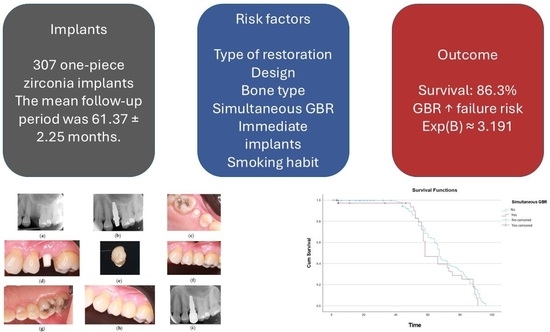
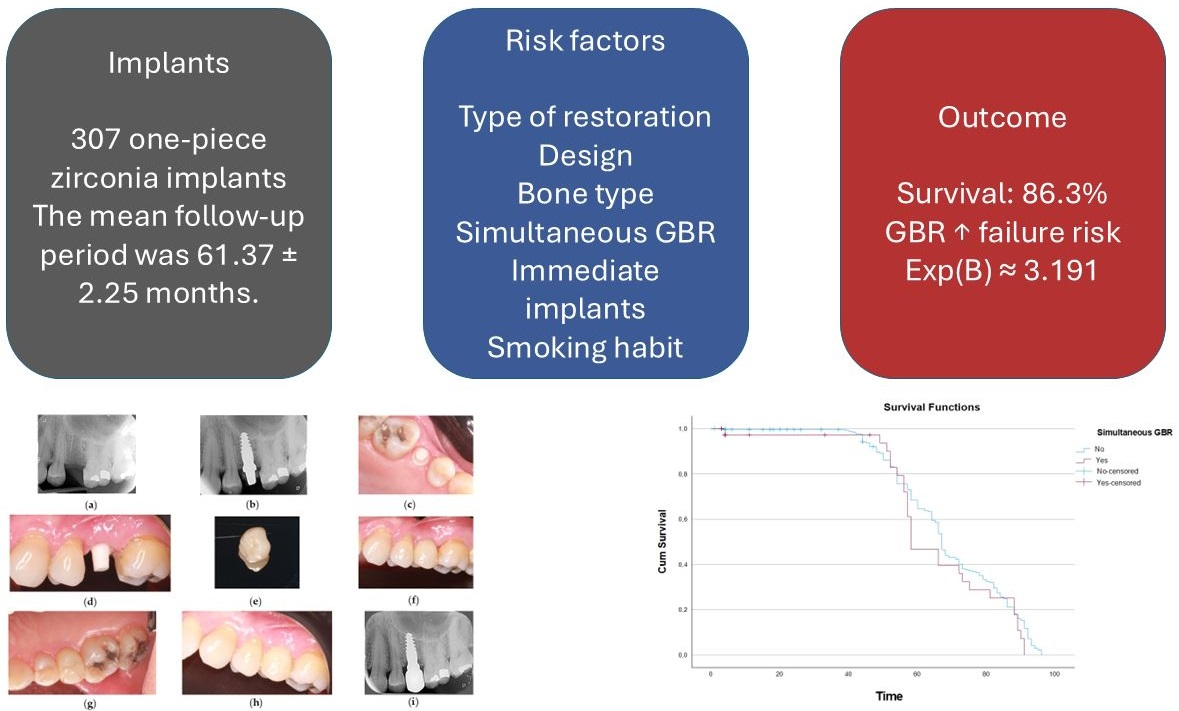
Background/Objectives: Titanium implants remain the gold standard in implant dentistry. However, growing interest in metal-free alternatives has led to increased use of zirconia implants. Despite encouraging short-term outcomes, evidence regarding the medium- to long-term survival of one-piece zirconia implants (O-PZIs) and associated risk factors remains limited. The aim of this retrospective cohort study was to evaluate the survival of O-PZIs over follow-up periods of up to 8 years and to explore variables potentially associated with implant failure. Methods: This retrospective observational cohort study was conducted at a private dental clinic (Madrid, Spain). A total of 307 O-PZIs placed in 196 patients between 2017 and 2021 were analyzed. Implant survival was assessed using Kaplan–Meier analysis, while associations between clinical variables and implant failure were explored using chi-square tests and multivariate Cox regression models (p < 0.05). The mean follow-up period was 61.37 ± 2.25 months. Results: After a mean follow-up of 61.37 ± 2.25 months (range: 39–96 months), 42 failures were recorded, resulting in a cumulative survival rate of 86.32% (CI 95%: 79.28–92.96%). Most failures (64.29%) occurred before prosthetic loading. Kaplan–Meier analysis revealed significantly lower survival for tapered implants (p < 0.001) and among smokers (p < 0.001). Multivariate analysis indicated that only simultaneous guided bone regeneration (GBR) was independently associated with implant failure (Exp(B) = 3.191; 95% CI: 1.299–7.840; p = 0.011). However, this association should be interpreted with caution due to the retrospective design, potential confounding, limited number of events, and lack of adjustment for clustering at the patient level. The discrepancies observed between statistical methods highlight the importance of time-to-event analyses in implant research. Conclusions: Within the limitations of this study, O-PZIs demonstrated acceptable medium- to long-term survival. Simultaneous GBR may be associated with increased risk of failure. However, these findings should be considered exploratory. Further prospective studies are required to confirm these results and to better define risk factors in ceramic implant therapy.

1. Introduction

Titanium and its alloys remain the most widely used materials for dental implant manufacture due to their excellent biocompatibility, favorable mechanical properties, and well-documented long-term survival rates. Extensive clinical evidence supports their predictability, making them the gold standard in implant dentistry. These materials have significantly improved the clinical outcomes of tooth replacement therapies [1,2,3].
Nevertheless, despite their overall success, certain biological and esthetic limitations have been reported, prompting interest in alternative materials [4,5]. Possible adverse biological reactions have been described, with one systematic review reporting high prevalence rates of peri-implant mucositis (43%) and peri-implantitis (22%) associated with titanium implants [6,7]. In this context, Wachi et al. argue that worsening of mucositis may be the result of titanium ions released by corrosion, which will evolve into peri-implantitis leading to bone resorption [8]. Although these complications are multifactorial and not exclusively material-dependent, they have led to ongoing research into alternative biomaterials [9].
Another problem is patient hypersensitivity to titanium. Several articles state that some patients—albeit very few—exhibit clinical signs of allergy to titanium and/or their traces [10]. Additionally, titanium’s dark gray color can compromise esthetic outcomes. This is a more frequent problem for patients with thin periodontal biotypes in the anterior region, as the metal may become visible through the peri-implant mucosa [11,12].
These problems have driven the development and clinical uptake of alternative materials, with ceramics becoming more widely used due to their superior esthetic properties [13]. In particular, yttria-stabilized tetragonal zirconia polycrystal (Y-TZP) has gained prominence due to its fracture resistance, which is well within clinically acceptable limits, as shown by in vitro studies [14]. Alumina-toughened zirconia (ATZ) implants are also recommended for their enhanced mechanical stability compared with Y-TZP [15].
At present, a wide range of zirconia implant brands and designs are available. One-piece and, more recently, two-piece ceramic implants are increasingly being used with promising results. A recent systematic review (SR) concludes that O-PZIs appear to be a reliable option for restoring missing teeth, with an implant survival rate of 94.5% and a success rate of 92% after follow-up periods of at least 3 years [5].
It is important to distinguish between ‘implant survival’ (defined as the implant remaining in situ regardless of complications) and ‘implant success,’ which demands stricter biological and prosthetic criteria [16]. While short- to medium-term outcomes of zirconia implants are promising, long-term data—particularly beyond five years—remain limited. Moreover, given the inherent limitations of one-piece implants, there is no clear evidence of the risk factors that can determine the success or failure of this type of ceramic implant. Therefore, the primary objective of this study was to establish the survival rate of one-piece implants with follow-up periods of up to 8 years. The secondary objective was to determine which potential risk factors are critical to compromising implant survival and to provide clinically relevant data to inform treatment planning and patient management.

2. Materials and Methods

2.1. Study Design and Approval

This retrospective observational cohort study aimed to assess clinical outcomes and to explore variables potentially associated with O-PZI failure. All patients attended a private dental clinic (Madrid, Spain), receiving at least one implant placed between January 2017 and January 2021; a total of 221 patients received 346 O-PZIs. However, 25 patients missed follow-up appointments and/or disappeared at some point during the therapeutic process and were thus withdrawn from the study. Eighteen patients from other European countries (predominantly the UK and Germany) attended the clinic solely for O-PZI placement and did not return for subsequent periodic follow-up. Additionally, five patients relocated to another city, and two patients passed away during the follow-up period. Consequently, data from 307 O-PZIs in 196 patients were analyzed.
Patients were contacted retrospectively and, for the purposes of the study, gave their consent for the use of their medical histories and details of the clinical procedures undergone. All procedures met the ethical standards of the institutional and/or national research committee for research involving human subjects and the 1964 Helsinki Declaration and subsequent amendments. The study was conducted following the STROBE (Strengthening the Reporting of Observational Studies in Epidemiology) guidelines [17].
The study protocol was assessed and approved by the Research Ethics Committee at the San Carlos Hospital of Madrid, Spain, in 17 November 2025 (Registration Code No. 25/7611-E).

2.2. Population

All patients were adults (≥18 years) of either male or female sex, classified as ASA physical status I or II, presenting one or more missing teeth requiring implant therapy. All consented to both surgical and follow-up procedures and received subsequent restoration with single crowns (SCs) or fixed dental prostheses (FDPs).
Exclusion criteria comprised pregnancy or lactation, inability to attend follow-up visits, systemic diseases or treatments contraindicating implant placement (including infectious diseases, uncontrolled diabetes, recent cardiovascular events, neurodegenerative disorders, autoimmune conditions, and use of immunosuppressants or anticoagulants, among others).

2.3. Data Collection

A case history was created for each participant. One researcher (S.B.B.) reviewed patients’ medical records, extracting demographic and clinical data including age, sex, smoking status, implant survival or failure, implant location (maxilla or mandible; anterior or posterior), dental implant diameter and length, implant design (tapered or cylindrical), number of implants and type of implant-supported restoration (SC or FDP), bone type (pristine or regenerated), presence of simultaneous GBR, timing of implant placement (immediate vs. delayed), and duration of clinical follow-up. Pristine bone was defined as native bone without prior or simultaneous regenerative procedures, whereas regenerated bone included sites treated with sinus lift, alveolar ridge preservation, or guided bone regeneration. Smoking status was recorded as a binary variable (smoker vs. non-smoker), without further stratification according to the number of cigarettes per day. In the event of implant failure, the exact time (in months) was also noted, and whether or not it failed before loading.
Implant survival was defined as the absence of mobility, persistent infection, or progressive radiographic bone loss leading to implant removal [18,19]. Therefore, if any of these criteria appeared during follow-up for any of the O-PZIs, it was considered a failure. Biological or technical complications not resulting in implant failure were not systematically recorded due to the retrospective nature of the study.

2.4. Surgical Procedure

All surgeries were carried out by the same surgeon (J.C.-B.B.) under local anesthesia (4% articaine with 1:100,000 adrenalin). A full-thickness mucoperiosteal flap was elevated, both vestibular and palatal, by means of mid-crestal incision. When the alveolar bone had been exposed, the implant bed was prepared using a sequential drilling protocol with a round bur for cortical marking followed by pilot and twist drills of increasing diameter corresponding to the selected implant size, with depth-controlled preparation according to the manufacturer’s guidelines, prior to placement of O-PZIs.
All implants placed were Z-Systems® implants (Oensingen, Switzerland), comprising cylindrical (Z5m®) and tapered (Z5m(t)®) designs, with a sandblasted, patented laser-modified micro-rough surface. When indicated, guided bone regeneration was performed with deproteinized bovine bone material (Bio-oss®, Geistlich® (Wolhusen, Switzerland)) and a collagen membrane (Bio-gide®, Geistlich® (Wolhusen, Switzerland). Due to the retrospective study design, defect morphology, size, and classification were not consistently recorded, and no standardized GBR protocol could be verified across all cases.
All patients were prescribed 1 g of amoxicillin 1 h before the surgical procedure [20] and an anti-inflammatory (400 mg Ibuprofen) every 6 h for 4 days in combination with 500 mg of acetaminophen every 8 h for 5 days for pain relief [21] and were advised to rinse with 0.2% chlorhexidine mouthwash every 12 h for 7 days. Sutures were removed after 7 days. In cases of simultaneous guided bone regeneration, the sutures were removed after 2 weeks.
The provisional restoration selected was a vacuum stent, serving both as provisional restoration and protective stent.
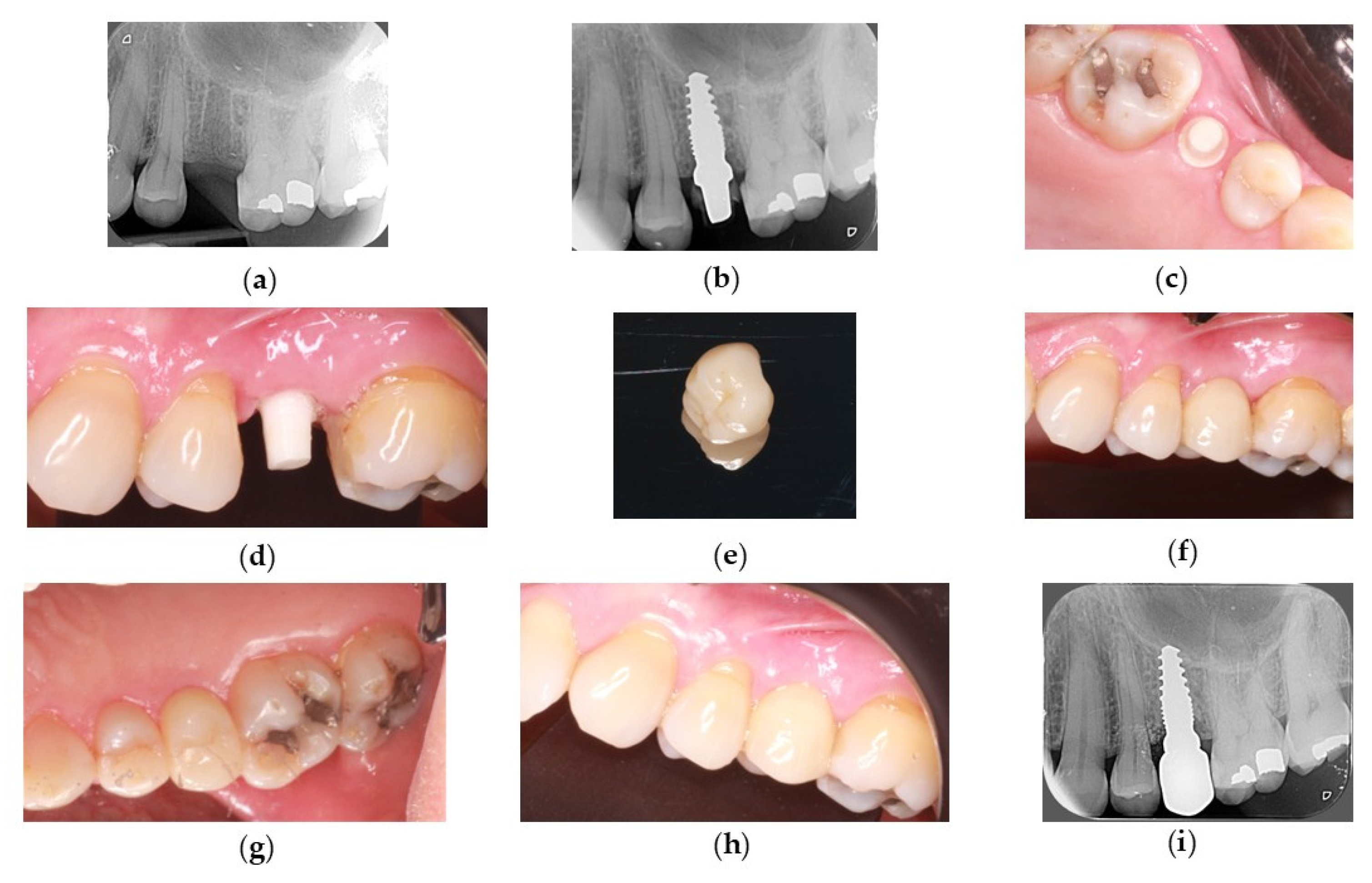
After a 5-month osseointegration period in the maxilla or a 4-month period in the mandible, provisional prostheses were replaced with definitive restorations. At regenerated sites, the implants were left to heal for longer before receiving the definitive restoration. SCs or FDPs were fabricated from veneered or monolithic zirconia. The final prostheses were cemented onto the implant abutments with resin cement (RelyX Unicem 2, Aplicap, 3M, Espe). Any excess material was removed, and the restoration bonded, applying rigorous isolation measures to prevent cement from invading the areas adjoining the implant (Figure 1).
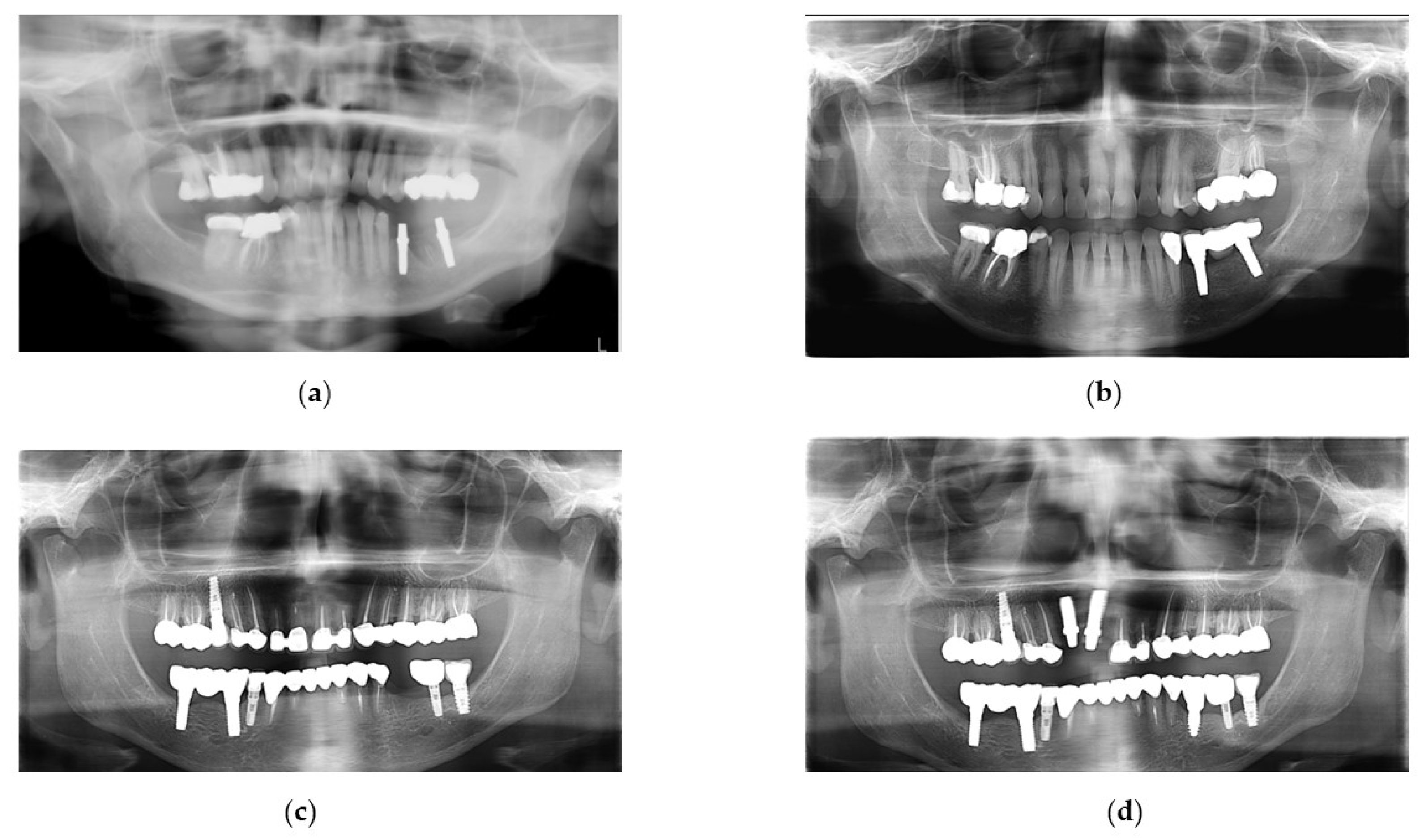
Follow-up visits were scheduled every 6–12 months after prosthesis delivery, followed by annual reviews. The minimum follow-up period was 39 months and the maximum was 96 months. These follow-up visits included professional maintenance (ultrasonic cleaning and supportive peri-implant and periodontal therapy tailored to individual needs) and clinical and radiographic examinations for peri-implant tissue health and prosthesis integrity according to the ALADA (As Low As Diagnostically Acceptable) principle and ADA/FDA guidelines [22] (Figure 2).

2.5. Statistical Analysis

Statistical analysis was conducted by an independent statistician. Data were analyzed with SPSS Statistics 29.0 software (SPSS® Inc., Chicago, IL, USA).
Descriptive statistics (mean, median, standard deviation, percentage distribution, and confidence interval) were calculated for implant characteristics. Implant survival was analyzed using Kaplan–Meier survival curves. In addition, Cox regression was performed as a complement to survival analysis to assess risk factors, and a log-rank test was conducted to compare differences in survival between different groups. Statistical survival relationships were determined using the chi-square test. Statistical significance was established with a 95% confidence interval (CI) (p < 0.05, two-tailed).
Variables included in the model were selected based on clinical relevance and prior evidence drawn from the literature [23].
Analysis was conducted in terms of implant outcomes. Although a number of patients received various implants, no statistical adjustment for clustering was performed, which could have affected variance estimation. This limitation should be considered when interpreting the results.

3. Results

3.1. Participants

Data derived from 307 O-PZIs placed in 196 patients were analyzed. The sample comprised 204 women (66.45%. CI 95%: 61.03–71.56%) and 103 men (33.55%. CI 95%: 28.44–39.97%). The mean patient age at implant placement was 57.15 ± 11.14 years and the mean follow-up period was 61.37 ± 2.25 months (range: 39–96 months).

3.2. Descriptive Data

Of the 307 O-PZIs, 38 (12.38%. CI 95%: 9.05–16.41%) had a size of 3.6 × 10 mm; 22 (7.17%. CI 95%: 4.68–10.46%) had a size of 3.6 × 12 mm; 46 (14.98%. CI 95%: 11.33–19.30%) had a size of 4 × 8 mm; 127 (41.37%. CI 95%: 35.96–46.94%) had a size of 4 × 10 mm; 59 (19.22%. CI 95%: 15.11–23.90%) had a size of 4 × 12 mm; 1 (0.33%. CI 95%: 0.04–1.51%) had a size of 5 × 8 mm; 11 (3.58%. CI 95%: 1.92–6.12%) had a size of 5 × 10 mm; and 3 (0.98%. CI 95%: 0.28–2.58%) had a size of 5 × 12 mm. Regarding implant design, 87 implants (28.34%. CI 95%: 23.52–33.57%) were tapered, while 220 implants (71.66%. CI 95%: 66.43–76.48%) were cylindrical.
Concerning implant restoration, 148 implants (48.21%. CI 95%: 42.66–53.79% were restored with SCs and 159 (51.79%. CI 95%: 46.21–57.34%) with FDPs.
As for the distribution of implants (maxilla or mandible), 121 implants (39.41%. 95% CI: 34.07–44.96%) were placed in the maxilla and 186 implants (60.59%. 95% CI: 55.04–65.93%) in the mandible. Moreover, 46 implants (14.98%. 95% CI: 11.33–19.30%) were placed in the anterior region (incisors and canines) and 261 implants (85.02%. 95% CI: 80.70–88.67%) in the posterior region (premolars and molars).
Seventy implants (22.80%. CI 95%: 18.38–27.74%) were placed in patients who were smokers. A total of 242 implants (78.83%. CI 95%: 74.00–83.11%) were placed in pristine bone, while 65 implants (21.17%. CI 95%: 16.89–26.00%) were placed in regenerated bone (sinus lift, alveolar preservation, or some other GBR technique). Thirty-nine implants (12.70%. CI 95%: 9.33–16.77%) were placed simultaneously with guided bone regeneration and/or sinus lifting. Twenty-four implants (7.82%. CI 95%: 5.21–11.22%) were placed simultaneously with dental extraction.
The distribution of implants across these variables is summarized in Table 1. No missing data were identified for the variables included in survival and regression analyses.

3.3. Outcome Data

During the observation period, a total of 42 implant failures (13.68%. CI 95%: 10.00–18.14%) were recorded among the 307 O-PZIs. These 42 implants failed in 42 patients, resulting in an overall cumulative implant survival rate of 86.32% (CI 95%: 79.28–92.96%) at implant level and 78.57% (CI 95%: 62.29–84.61%) at patient level.
The failures occurred at different time points throughout the follow-up periods: 27 (out of 42) (64.29%. CI 95%: 56.77–71.73%) did so before loading (0–6 months), 8 (out of 42) (19.05%. CI 95%: 16.82–21.25%) failed between >6 and 24 months after placement and 7 (out of 42) (16.67%. CI 95%: 14.76–19.59%) failed between >24 and 60 months after placement. Characteristics of the failed implants are shown in Table 2.

3.4. Survival Analysis

3.4.1. Bivariate Analysis

Bivariate chi-square analysis demonstrated a statistically significant association between implant survival and restoration type as well as simultaneous GBR (p < 0.05).
Implants supporting SCs showed a survival rate of 80.40% compared with 91.82% for implants supporting FDPs (p = 0.004). Similarly, implants placed with simultaneous GBR exhibited a lower survival rate (71.79%) compared with those placed without regeneration procedures (88.43%) (p = 0.005). Among the 11 implants that failed following simultaneous GBR, 2 failures were attributed to infection at the regenerated site, while 9 were due to insufficient stability.
No statistically significant associations were observed between implant survival and implant morphology, implant design, bone type, or smoking (p > 0.05). Detailed survival percentages and p-values are shown in Table 3.

3.4.2. Kaplan–Meier Survival Analyses

Kaplan–Meier survival curves were constructed to evaluate time-to-event differences among clinical variables.
Survival analysis based on implant-supported restoration (SCs versus FDPs) revealed no statistically significant differences in implant survival; the log-rank test demonstrated no significant differences between survival curves (χ2 = 0.790. df = 1; p = 0.364).
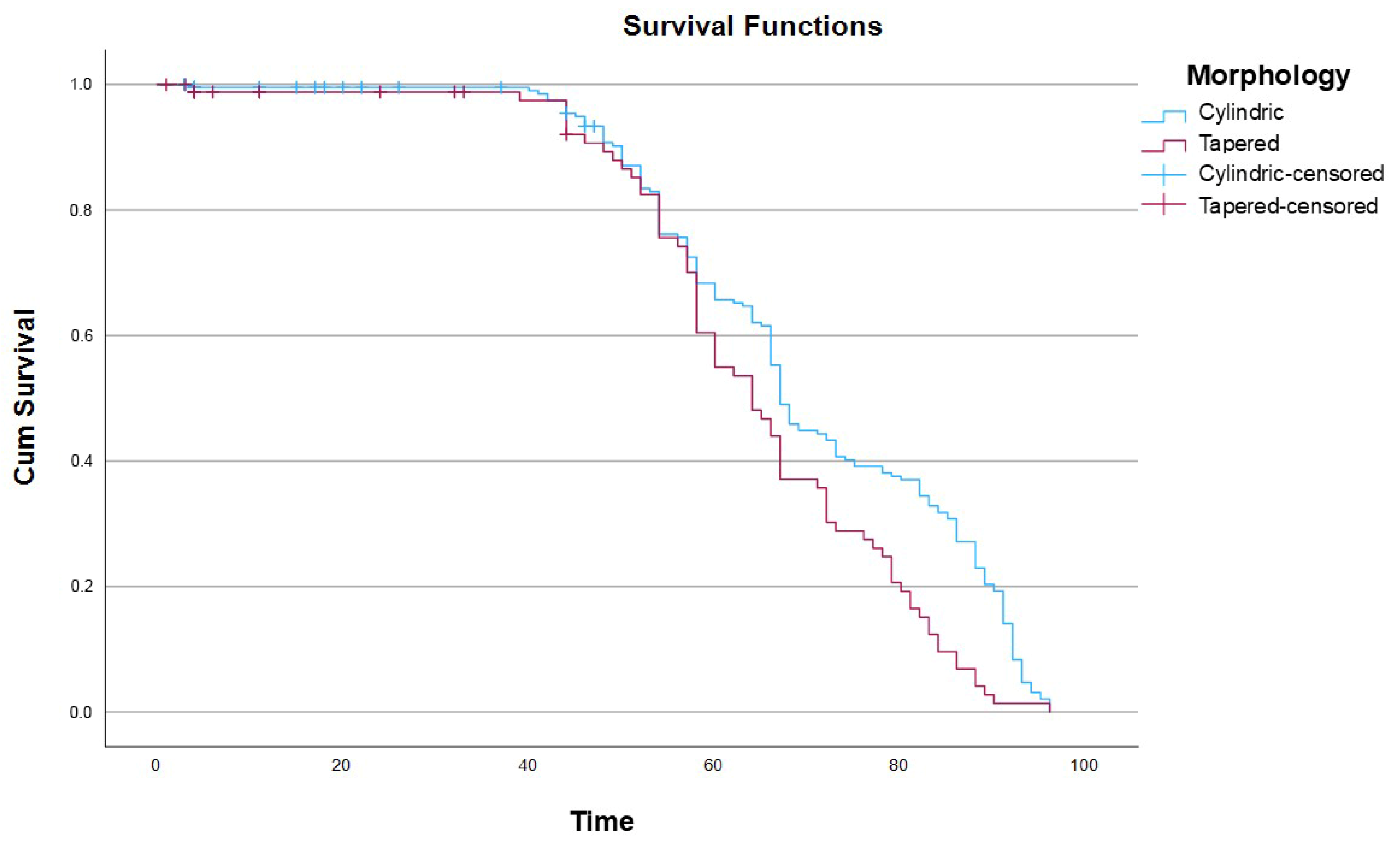
When survival was analyzed according to implant morphology, a significantly lower cumulative survival rate was observed for tapered implants compared with cylindrical implants. This difference was statistically significant, as confirmed by the log-rank test (χ2 = 11.349. df = 1; p < 0.001) (Figure 3).
Survival analysis according to bone type showed no statistically significant differences between implants placed in pristine bone and those placed in regenerated bone. The log-rank test revealed no significant differences between survival curves (χ2 = 0.170. df = 1; p = 0.679).
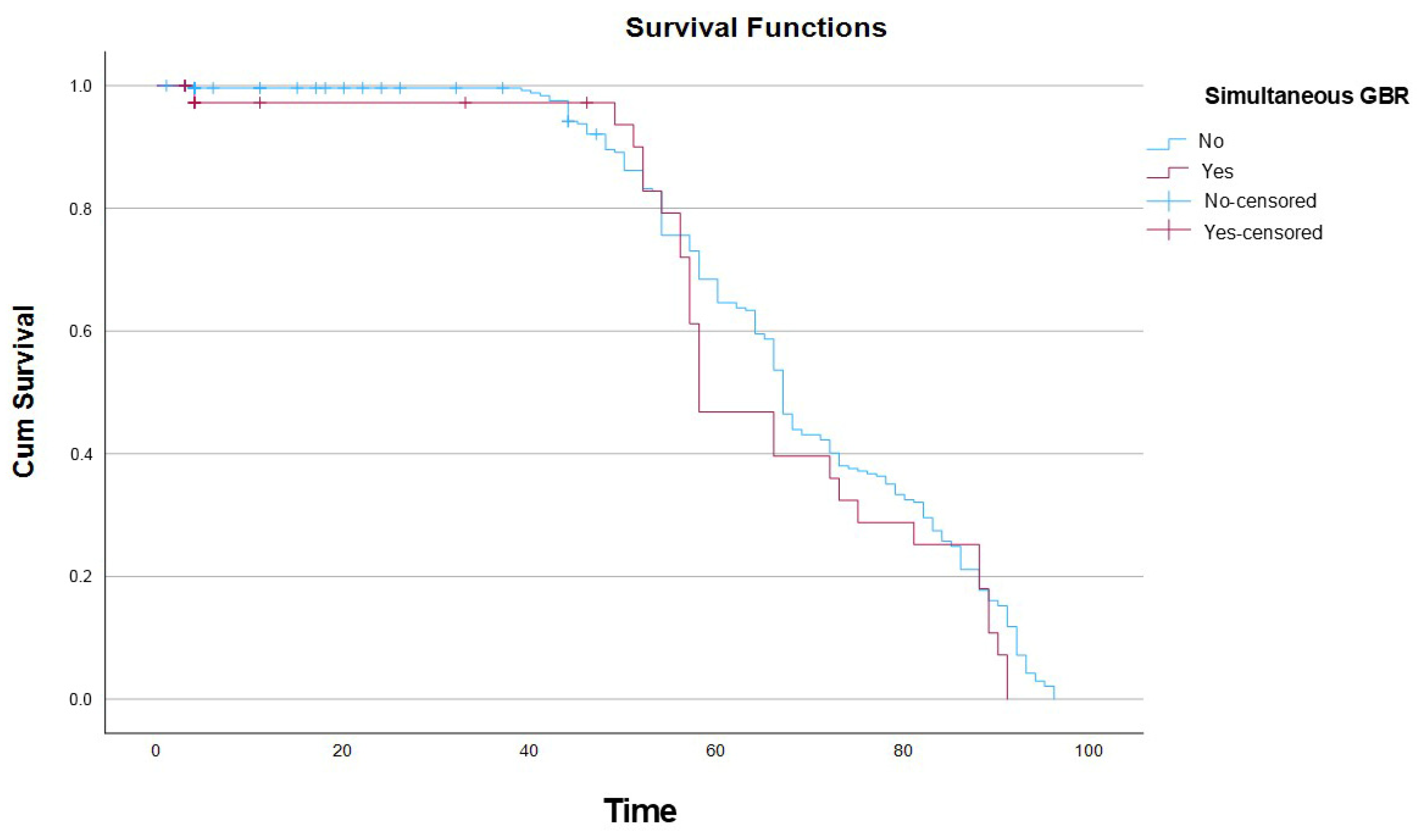
Similarly, in univariate analysis, the use of simultaneous GBR at the time of implant placement did not result in statistically significant differences in implant survival. The log-rank test demonstrated no significant differences between the survival curves of implants placed with or without simultaneous GBR (χ2 = 1.670. df = 1; p = 0.196) (Figure 4).
No statistically significant differences in implant survival were observed when immediate implant placement was compared with delayed placement after tooth extraction. The log-rank test confirmed the absence of significant differences between survival curves (χ2 = 0.198. df = 1; p = 0.656).
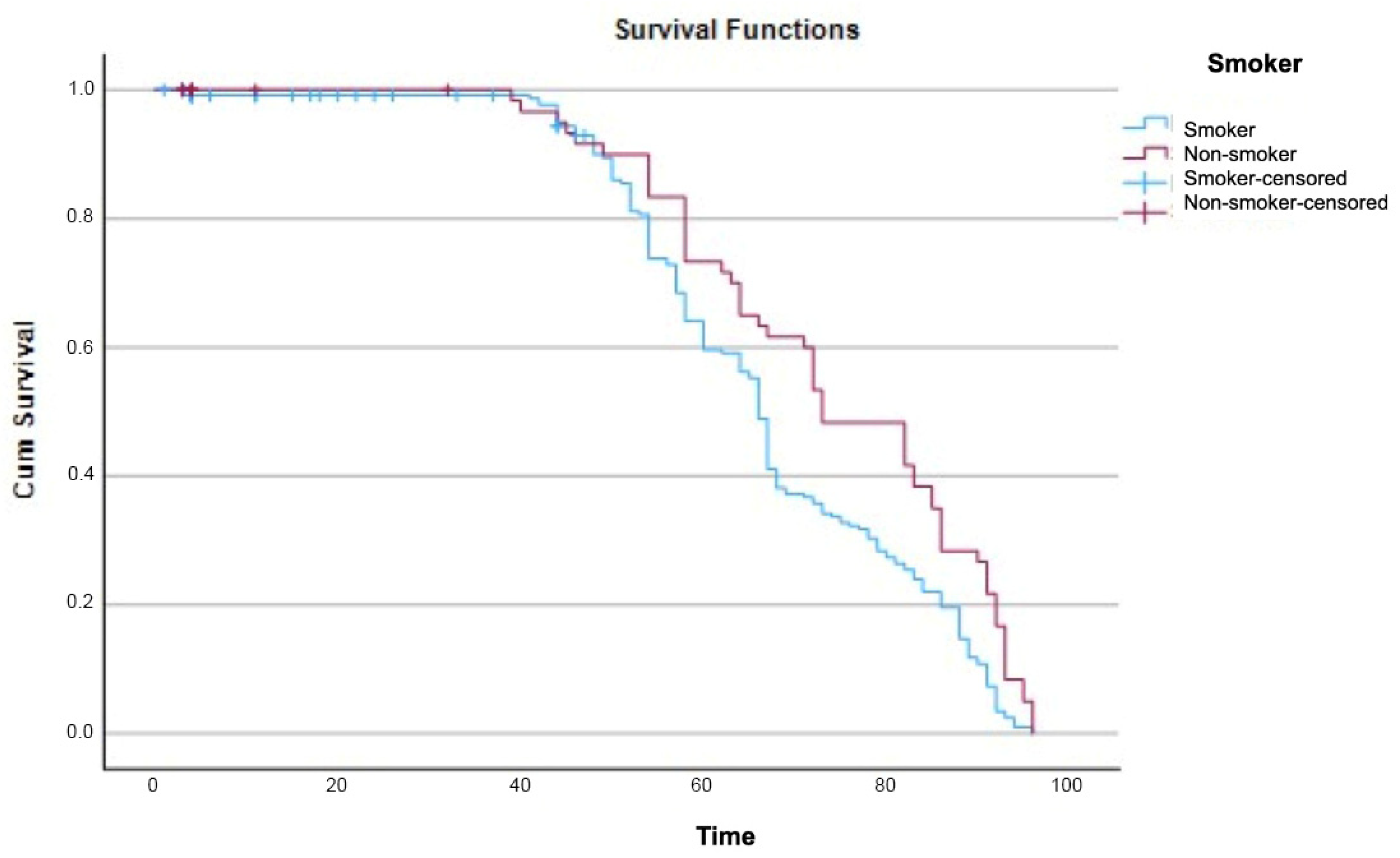
In contrast, survival analysis based on smoking status demonstrated a significantly lower cumulative survival rate among smokers compared with non-smokers. The log-rank test confirmed a statistically significant difference between the survival curves (χ2 = 10.116. df = 1; p < 0.001) (Figure 5).

3.4.3. Multivariate Analysis

The Cox regression method was used to analyze simultaneous GBR. The results presented lower odds of survival in implants placed simultaneously with GBR compared to those placed without GBR (Exp(B) = 3.191. CI 95%: 1.299–7.840%) with statistically significant difference (p = 0.011). In other words, the probability of implant failure increased by 3.191 times when the O-PZIs were placed simultaneously with GBR.
Other variables, including implant morphology, smoking status, implant design, bone type and timing of placement, did not reach statistical significance in the multivariate model (p > 0.05). The results of the multivariate analysis are shown in Table 4.

4. Discussion

This retrospective cohort study evaluated the medium- to long-term clinical survival of O-PZIs and explored potential factors associated with implant failure. The overall cumulative implant survival rate was 86.32% (CI 95%: 79.28–92.96%) at implant level and 78.57% (CI 95%: 62.29–84.61%) at patient level after a mean follow-up of 61.37 ± 2.25 months. These findings provide relevant information about a series of potential factors associated with implant failure.
The survival rate observed in the present study was lower than those reported in two recent SRs that ranged from 94.40% for O-PZIs to 96.31% for two-piece implants over shorter follow-up periods of 1–3 years [5,24]. However, other studies with follow-up periods of up to 15 years have obtained survival rates ranging between 59.26% and 98.69% [25,26,27,28,29], which align more closely with the present results. This supports the well-established concept that implant survival decreases over time, highlighting the importance of long-term observation when evaluating ceramic implant systems [30].
The overall survival rate of titanium implants is higher compared with zirconium implants. Jung et al. [31] observed a survival rate of 95.2% over 10 years for titanium implants supporting SCs, while Pjetursson et al. [32] obtained a survival rate of 93.1% over 10 years for implants supporting FDPs.
It should be noted that one-piece implants are immediately exposed to forces exerted by the tongue or resulting from chewing [33,34,35]. At the same time, the initial healing period depends not only on the clinician’s decision but on patient compliance as well. In the present study, bivariate analysis showed that both the type of restoration and simultaneous GBR were significantly associated with implant survival. Implants supporting FDPs demonstrated higher survival rates compared with SCs, while implants placed with simultaneous GBR showed lower survival rates. However, when time-to-event analysis was performed using Kaplan–Meier curves, restoration type and simultaneous GBR no longer showed statistically significant differences, whereas implant morphology and smoking status did exhibit significant differences in survival curves. These discrepancies might be explained by differences between statistical methods. Bivariate analyses evaluate crude proportions without considering the temporal distribution of events, whereas Kaplan–Meier methods incorporate time-to-event data, and Cox regression further adjusts for the simultaneous influence of multiple covariates. Consequently, variables identified as significant in unadjusted analyses may lose statistical significance after accounting for time and confounding effects [36,37,38].
In the present study, in Multivariate Cox regression, only simultaneous GBR remained independently associated with implant failure (Exp(B) = 3.191. 95% CI: 1.299–7.840; p = 0.011). The odds (probability of implant failure) increased by 3.191 times when the O-PZIs were placed simultaneously with GBR. However, this finding should be interpreted with caution and should be limited only to the variables included in this model. The retrospective design, the limited number of failure events, and the potential influence of unmeasured confounders may have affected the stability of the model. Furthermore, the analysis was conducted in terms of implants without accounting for clustering within patients, which may have influenced variance estimation and p-values. Additionally, the relatively limited number of failure events in relation to the number of variables included in the Cox regression model may have affected model stability. Although variables were selected based on clinical relevance and prior evidence, the events-per-variable ratio was relatively low, which may increase the risk of overfitting and reduce the robustness of the results. Therefore, the association observed should be considered exploratory rather than definitive.
The association between simultaneous GBR and lower implant survival may reflect the biological complexity of augmented sites. Reduced vascularization alters bone remodeling; this can make it difficult to achieve optimal primary stability and could contribute to early implant failure [39,40]. However, due to the lack of standardized reporting of defect characteristics and failure modes, it was not possible to determine the underlying mechanisms in this cohort. In this context, it should be noted that Kaplan–Meier analysis did not reveal significant differences between pristine and regenerated bone, suggesting that the timing of regenerative procedures may play a more relevant role than the mere presence of regenerated bone. Moreover, given their clinical interrelationship, the potential collinearity between bone type and simultaneous GBR was considered during model construction. Both variables were retained due to their distinct clinical meaning (baseline bone condition vs. timing of regeneration), although some degree of overlap cannot be discounted. This finding should be interpreted with caution and warrants further investigation.
A high proportion of failures occurred before prosthetic loading, which may be partially related to the one-piece implant design. Immediate transmucosal exposure may increase susceptibility to unintended micro-loading during healing, potentially compromising osseointegration, particularly in situations with suboptimal primary stability. This aspect should be considered when interpreting early biological failures in one-piece implant systems [41].
Regarding implant morphology, Kaplan–Meier analysis demonstrated significantly lower cumulative survival for tapered implants compared with cylindrical designs. A possible explanation may be the higher insertion torque (<50 Ncm) frequently required for tapered implants, potentially leading to excessive compression of the cortical bone, local ischemia, and early biological complications [42]. Nevertheless, this variable did not remain significant in the multivariate model, suggesting that its effect may be influenced by other factors such as bone condition or case selection.
Likewise, smoking was significantly associated with lower survival in Kaplan–Meier analysis, consistent with extensive evidence demonstrating that tobacco use negatively affects osseointegration due to impaired vascularization, altered immune response, and delayed bone healing [43,44]. Similar findings have been reported in other studies of ceramic implants [45,46]. However, this variable did not remain significant in the multivariate model, which may be related to limited statistical power, lack of stratification of smoking intensity, or interaction with other clinical variables. Similarly, implant morphology showed an association in univariate survival analysis but not after adjustment, suggesting that its effect may be influenced by other factors such as bone conditions or surgical variables.
It is important to emphasize that implant failure is a multifactorial process influenced not only by surgical and prosthetic variables but also by host-related factors, including systemic conditions, immune response, and potential genetic predisposition. Moreover, implant failure is a biologically complex process involving dynamic interaction between biomaterials and host tissues. In this context, the host immune response plays a critical role in modulating osseointegration, as an excessive or dysregulated inflammatory reaction may impair early healing and compromise bone formation. Furthermore, bone metabolism and remodeling dynamics are essential for implant stability, particularly during the early phases of healing, where a balance between osteoblastic activity and bone resorption is required. In augmented sites, these processes may be altered due to reduced vascularization, delayed maturation of regenerated bone, and changes in the local biological environment, potentially increasing susceptibility to early implant failure [47,48]. These variables were not available in the present dataset and should be considered when interpreting the results. Consequently, the associations identified are limited to the variables included in the analysis.
This study has several limitations. Its retrospective design introduces potential selection and attrition bias and limits control over confounding variables. Relevant factors such as periodontal status, oral hygiene, occlusal loading, insertion torque, the type of implant failure and primary stability were not consistently recorded. Biological and technical complications not leading to implant failure were not systematically recorded, and failure modes could not be classified consistently. The absence of adjustment for clustering in terms of patients receiving more than one implant may have affected statistical inference. In addition, the relatively low number of failure events in relation to the number of variables included in the multivariate model may have increased the risk of overfitting. Moreover, although loss to follow-up was clearly documented, the potential impact of attrition bias should be considered. Patients who did not complete follow-up may have experienced different clinical outcomes compared with those retained in the study, which could have influenced the estimated survival rates. Finally, the external validity of the present findings may be limited. The study was conducted in a single private clinical setting with specific inclusion criteria and a standardized surgical approach, which may not fully reflect broader clinical practice conditions. Therefore, caution should be exercised when extrapolating these results to different populations or clinical environments. These limitations should not be interpreted in isolation but rather in direct relation to the study findings. In particular, the absence of key host-related variables—such as periodontal status, oral hygiene, occlusal loading, and systemic or genetic factors—may have introduced unmeasured confounding, potentially influencing the observed associations. Consequently, the identification of independent predictors in the present model should be interpreted with caution, as these factors may partially account for the variability in implant outcomes.
Despite these limitations, this study provides one of the largest retrospective cohorts with medium- to long-term follow-up for O-PZIs published to date and contributes clinically relevant data on their performance in routine practice.
Future prospective, controlled comparative studies with standardized surgical protocols together with assessment of other valuable clinical variables such as marginal bone loss (MBL) or biological parameters such as Probing Depth (PD), Bleeding Index (BI) and Plaque Index (PI) are necessary to confirm the present findings and further clarify the influence of regenerative procedures and implant design on long-term survival.

5. Conclusions

Within the limitations of this retrospective cohort study, one-piece zirconia implants demonstrated a cumulative survival rate of 86.32% (CI 95%: 79.28–92.96%) over a mean follow-up of 61.37 ± 2.25 months.
Although several variables showed associations with implant survival in unadjusted analyses, multivariate Cox regression identified simultaneous guided bone regeneration as the only variable significantly associated with implant failure. However, this finding should be interpreted with caution due to methodological limitations, including potential confounding, limited event numbers, and lack of adjustment for clustered data.
The discrepancies observed between bivariate, Kaplan–Meier, and multivariate analyses underscore the importance of using appropriate time-to-event statistical methods when evaluating implant outcomes.
From a clinical perspective, careful case selection—particularly in sites requiring simultaneous regenerative procedures—may be relevant when planning treatment with one-piece ceramic implants. Nevertheless, the present findings should be considered exploratory, and further well-designed prospective studies are needed to confirm these associations and to refine risk assessment strategies.

Author Contributions

Conceptualization, J.C.-B.B. and S.B.-B.; methodology, C.M.-G.; software, C.M.M.-P.; validation, M.J.S., J.C.-B.B. and J.L.-Q.; formal analysis, C.M.M.-P.; investigation, C.M.-G.; resources, M.J.S.; data curation, S.B.-B.; writing—original draft preparation, J.L.-Q.; writing—review and editing, S.B.-B.; visualization, S.B.-B.; supervision, J.L.-Q.; project administration, J.C.-B.B. All authors have read and agreed to the published version of the manuscript.

Funding

This research received no external funding.

Institutional Review Board Statement

The study was conducted in accordance with the Declaration of Helsinki and approved by the Ethics Committee of the San Carlos Hospital of Madrid, Spain in 17 November 2025 (Registration Code No. 25/7611-E).

Informed Consent Statement

Informed consent was obtained from all subjects involved in the study.

Data Availability Statement

The original contributions presented in this study are included in the article. Further inquiries can be directed to the corresponding author.

Conflicts of Interest

The authors declare no conflicts of interest.

Abbreviations

The following abbreviations are used in this manuscript:
O-PZIOne-Piece Zirconia Implants
GBRGuided Bone Regeneration
SRSystematic Review
SCSingle Crown
FDPFixed Dental Protheses
MxMaxilla
MbMandible
ALADAAs Low As Diagnostically Acceptable
MBLMarginal Bone Loss
PIPlaque Index
PDProbing Depth
BIBleeding index
Y-TZPYttria-Stabilized Tetragonal Zirconia Polycrystal
ATZAlumina-Toughened Zirconia

References

  1. Depprich, R.; Zipprich, H.; Ommerborn, M.; Naujoks, C.; Wiesmann, H.P.; Kiattavorncharoen, S.; Lauer, H.C.; Meyer, U.; Kübler, N.R.; Handschel, J. Osseointegration of zirconia implants compared with titanium: An in vivo study. Head Face Med. 2008, 4, 30. [Google Scholar] [CrossRef]
  2. Steinemann, S.G. Titanium—The material of choice? Periodontology 2000 1998, 17, 7–21. [Google Scholar] [CrossRef]
  3. Abdo, V.L.; Vieira-Silva, I.F.; Dias, B.M.F.; de Arruda, J.A.A.; Barreiros, I.D.; Sampaio, A.A.; Abreu, L.G.; Jardilino, F.D.M. Success and survival of titanium surface modification on dental implant osseointegration: A systematic review. Br. Dent. J. 2025, 239, 571–577. [Google Scholar] [CrossRef]
  4. Cionca, N.; Hashim, D.; Mombelli, A. Zirconia dental implants: Where are we now, and where are we heading? Periodontology 2000 2017, 73, 241–258. [Google Scholar] [CrossRef]
  5. Santmartí-Oliver, M.; Hernando-Calzado, L.; Cortés-Bretón Brinkmann, J.; Sánchez-Labrador, L.; Sáez-Alcaide, L.M.; Meniz-García, C. Medium-term clinical behaviour of one-piece zirconia implants supporting single crowns or fixed dental prostheses: A systematic review and meta-analysis. Int. J. Oral Implantol. 2023, 16, 181–194. [Google Scholar]
  6. Ribeiro dos Reis, I.N.; Huamán-Mendoza, A.; Ramadan, D.; Botticelli, D.; Albrektsson, T.; Lang, N.P. The prevalence of peri-implant mucositis and peri-implantitis based on the World Workshop criteria: A systematic review and meta-analysis. J. Dent. 2025, 160, 105914. [Google Scholar] [CrossRef]
  7. Derks, J.; Tomasi, C. Peri-implant health and disease: A systematic review of current epidemiology. J. Clin. Periodontol. 2015, 42, S158–S171. [Google Scholar] [CrossRef]
  8. Wachi, T.; Shuto, T.; Shinohara, Y.; Matono, Y.; Makihira, S. Release of titanium ions from an implant surface and their effect on cytokine production related to alveolar bone resorption. Toxicology 2015, 327, 1–9. [Google Scholar] [CrossRef]
  9. Comisso, I.; Arias-Herrera, S.; Gupta, S. Zirconium dioxide implants as an alternative to titanium: A systematic review. J. Clin. Exp. Dent. 2021, 13, e511–e519. [Google Scholar] [CrossRef]
  10. Comino-Garayoa, R.; Cortés-Bretón Brinkmann, J.; Peláez, J.; López-Suárez, C.; Martínez-González, J.M.; Suárez, M.J. Allergies to titanium dental implants: What do we really know about them? A scoping review. Biology 2020, 9, 404. [Google Scholar] [CrossRef]
  11. Ioannidis, A.; Cathomen, E.; Jung, R.E.; Fehmer, V.; Hüsler, J.; Thoma, D.S. Discoloration of the mucosa caused by different restorative materials: A spectrophotometric in vitro study. Clin. Oral Implant. Res. 2017, 28, 1133–1138. [Google Scholar] [CrossRef]
  12. Thoma, D.S.; Ioannidis, A.; Cathomen, E.; Hämmerle, C.H.F.; Hüsler, J.; Jung, R.E. Discoloration of the peri-implant mucosa caused by zirconia and titanium implants. Int. J. Periodontics Restor. Dent. 2016, 36, 39–45. [Google Scholar] [CrossRef]
  13. Kohal, R.J.; Klaus, G. A zirconia implant–crown system: A case report. Int. J. Periodontics Restor. Dent. 2004, 24, 147–153. [Google Scholar]
  14. Andreiotelli, M.; Kohal, R.J. Fracture strength of zirconia implants after artificial aging. Clin. Implant Dent. Relat. Res. 2009, 11, 158–166. [Google Scholar] [CrossRef] [PubMed]
  15. Kohal, R.J.; Wolkewitz, M.; Mueller, C. Alumina-reinforced zirconia implants: Survival rate and fracture strength in a masticatory simulation trial. Clin. Oral Implant. Res. 2010, 21, 1345–1352. [Google Scholar] [CrossRef] [PubMed]
  16. Buser, D.; Sennerby, L.; De Bruyn, H. Modern implant dentistry based on osseointegration: 50 years of progress, current trends and open questions. Periodontology 2000 2017, 73, 7–21. [Google Scholar] [CrossRef] [PubMed]
  17. Cuschieri, S. The STROBE guidelines. Saudi J. Anaesth. 2019, 13, S31–S34. [Google Scholar] [CrossRef]
  18. Marconcini, S.; Covani, U.; Giammarinaro, E.; Velasco-Ortega, E.; De Santis, D.; Alfonsi, F.; Barone, A. Clinical success of dental implants placed in posterior mandible augmented with interpositional block graft: Three-year results from a prospective cohort clinical study. J. Oral Maxillofac. Surg. 2019, 77, 289–298. [Google Scholar] [CrossRef]
  19. Ortiz-Vigón, A.; Martínez-Villa, S.; Suárez, I.; Vignoletti, F.; Sanz, M. Histomorphometric and immunohistochemical evaluation of collagen-containing xenogeneic bone blocks used for lateral bone augmentation in staged implant placement. Int. J. Implant Dent. 2017, 3, 24. [Google Scholar] [CrossRef]
  20. Salgado-Peralvo, A.O.; García-Sánchez, A.; Kewalramani, N.; Barone, A.; Martínez-González, J.-M.; Velasco-Ortega, E.; López-López, J.; Kaiser-Cifuentes, R.; Guerra, F.; Matos-Garrido, N.; et al. Consensus report on preventive antibiotic therapy in dental implant procedures: Summary of recommendations from the Spanish Society of Implants. Antibiotics 2022, 11, 655. [Google Scholar] [CrossRef]
  21. Atkinson, H.C.; Currie, J.; Moodie, J.; Carson, S.; Evans, S.; Worthington, J.P.; Steenberg, L.J.; Bisley, E.; Frampton, C. Combination paracetamol and ibuprofen for pain relief after oral surgery: A dose-ranging study. Eur. J. Clin. Pharmacol. 2015, 71, 579–587. [Google Scholar] [CrossRef]
  22. Mendonça, R.P.; Estrela, C.; Bueno, M.R.; Carvalho, T.C.A.S.G.; Estrela, L.R.A.; Chilvarquer, I. Principles of radiological protection and application of ALARA, ALADA, and ALADAIP: A critical review. Braz. Oral Res. 2025, 39, e14. [Google Scholar] [CrossRef]
  23. Zhu, Y.; Du, M.; Li, P.; Lu, H.; Li, A.; Xu, S. Prediction models for the complication incidence and survival rate of dental implants: A systematic review and critical appraisal. J. Clin. Med. 2024, 11, 5. [Google Scholar] [CrossRef]
  24. Bazal-Bonelli, S.; Castro-Janeiro, M.; Ríos-Barbero, J.; Cano Sánchez de Tembleque, M.; López-Quiles, J.; Meniz-García, C.; Cortés-Bretón Brinkmann, J. Clinical behavior of two-piece zirconia implants: A systematic review. Med. Oral Patol. Oral Cir. Bucal 2025, 30, e313–e332. [Google Scholar] [CrossRef] [PubMed]
  25. Kohal, R.J.; Komine, F.; Lith, A.; Spies, B.C.; Burkhardt, F.; Vach, K. One-piece zirconia oral implants supporting three-unit fixed dental prostheses: Ten-year results from a prospective case series. J. Dent. 2025, 160, 105911. [Google Scholar] [CrossRef]
  26. Kohal, R.J.; Lith, A.; Komine, F.; Honda, J.; Spies, B.C.; Burkhardt, F.; Vach, K. Ten-year results of a prospective study on one-piece zirconia oral implants for single-tooth reconstruction. Clin. Oral Implant. Res. 2026, 37, 33–34. [Google Scholar] [CrossRef]
  27. Herber, V.; Steyer, E.; Koller, M.; Nassehi, Y.; Pichler, A.; Payer, M. Long-term follow-up of immediately temporized zirconia and titanium one-piece dental implants: A prospective cohort study. Int. J. Implant Dent. 2025, 11, 70. [Google Scholar] [CrossRef] [PubMed]
  28. Roehling, S.; Bormann, K.H.; Bornstein, M.M.; Laval, S.; Thieringer, F.; Gahlert, M. Long-term clinical, radiographic and esthetic outcomes of zirconia dental implants: A 10-year prospective multicenter study. Clin. Oral Implant. Res. 2026, 37, 439–452. [Google Scholar] [CrossRef] [PubMed]
  29. Oliva, J.; Oliva, X. 15-Year Post-Market Clinical Follow-up Study of 1828 Ceramic (Zirconia) Implants in Humans. Int. J. Oral Maxillofac. Implant. 2023, 38, 357–366. [Google Scholar] [CrossRef]
  30. French, D.; Ofec, R.; Levin, L. Long term clinical performance of 10 871 dental implants with up to 22 years of follow-up: A cohort study in 4247 patients. Clin. Implant Dent. Relat. Res. 2021, 23, 289–297. [Google Scholar] [CrossRef]
  31. Jung, R.E.; Zembic, A.; Pjetursson, B.E.; Zwahlen, M.; Thoma, D.S. Systematic review of the survival rate and the incidence of biological, technical, and aesthetic complications of single crowns on implants reported in longitudinal studies with a mean follow-up of 5 years. Clin. Oral Implant. Res. 2012, 23, 2–21. [Google Scholar] [CrossRef]
  32. Pjetursson, B.E.; Thoma, D.; Jung, R.; Zwahlen, M.; Zembic, A. A systematic review of the survival and complication rates of implant-supported fixed dental prostheses (FDPs) after a mean observation period of at least 5 years. Clin. Oral Implant. Res. 2012, 23, 22–38. [Google Scholar] [CrossRef]
  33. Wenz, H.J.; Bartsch, J.; Wolfart, S.; Kern, M. Osseointegration and clinical success of zirconia dental implants: A systematic review. Int. J. Prosthodont. 2008, 21, 27–36. [Google Scholar]
  34. Kohal, R.J.; Wolkewitz, M.; Tsakona, A. The effects of cyclic loading and preparation on the fracture strength of zirconium-dioxide implants: An in vitro investigation. Clin. Oral Implant. Res. 2011, 22, 808–814. [Google Scholar] [CrossRef] [PubMed]
  35. Payer, M.; Arnetzl, V.; Kirmeier, R.; Koller, M.; Arnetzl, G.; Jakse, N. Immediate provisional restoration of single-piece zirconia implants: A prospective case series—Results after 24 months of clinical function. Clin. Oral Implant. Res. 2013, 24, 569–575. [Google Scholar] [CrossRef]
  36. Clark, T.G.; Bradburn, M.J.; Love, S.B.; Altman, D.G. Survival analysis part I: Basic concepts and first analyses. Br. J. Cancer 2003, 89, 232–238. [Google Scholar] [CrossRef]
  37. In, J.; Lee, D.K. Survival analysis: Part I—Analysis of time-to-event. Korean J. Anesthesiol. 2018, 71, 182–191. [Google Scholar] [CrossRef] [PubMed]
  38. Abd ElHafeez, S.; D’Arrigo, G.; Leonardis, D.; Fusaro, M.; Tripepi, G.; Roumeliotis, S. Methods to analyze time-to-event data: The Cox regression analysis. Oxid. Med. Cell Longev. 2021, 2021, 1302811. [Google Scholar] [CrossRef]
  39. Shen, X.; Yang, S.; Xu, Y.; Xu, J.; Feng, Y.; He, F. Analysis of implant loss risk factors after simultaneous guided bone regeneration: A retrospective study of 5404 dental implants. Clin. Implant Dent. Relat. Res. 2022, 24, 276–286. [Google Scholar] [CrossRef]
  40. Hong, J.Y.; Shin, E.Y.; Herr, Y.; Chung, J.H.; Lim, H.C.; Shin, S.I. Implant survival and risk factor analysis in regenerated bone: Results from a 5-year retrospective study. J. Periodontal Implant Sci. 2020, 50, 379–391. [Google Scholar] [CrossRef] [PubMed]
  41. Kohal, R.J.; Burkhardt, F.; Chevalier, J.; Patzelt, S.B.M.; Butz, F. One-piece zirconia oral implants for single tooth replacement: Five-year results from a prospective cohort study. J. Funct. Biomater. 2023, 14, 116. [Google Scholar] [CrossRef] [PubMed]
  42. Manfredini, M.; Ghizzoni, M.; Cusaro, B.; Beretta, M.; Maiorana, C.; Souza, F.Á.; Poli, P.P. High insertion torque—Clinical implications and drawbacks: A scoping review. Medicina 2025, 61, 1187. [Google Scholar] [CrossRef] [PubMed]
  43. Fan, Y.Y.; Li, S.; Cai, Y.J.; Wei, T.; Ye, P. Smoking in relation to early dental implant failure: A systematic review and meta-analysis. J. Dent. 2024, 151, 105396. [Google Scholar] [CrossRef] [PubMed]
  44. Mustapha, A.D.; Salame, Z.; Chrcanovic, B.R. Smoking and dental implants: A systematic review and meta-analysis. Medicina 2021, 58, 39. [Google Scholar] [CrossRef]
  45. Shukla, A.K.; Priyadarshi, M.; Kumari, N.; Singh, S.; Goswami, P.; Srivastava, S.B.; Makkad, R.S. Investigating the long-term success and complication rates of zirconia dental implants: A prospective clinical study. J. Pharm. Bioallied Sci. 2024, 16, S477–S479. [Google Scholar] [CrossRef]
  46. Alsahhaf, A.; Alshagroud, R.S.; Al-Aali, K.A.; Alofi, R.S.; Vohra, F.; Abduljabbar, T. Survival of titanium-zirconium and titanium dental implants in cigarette-smokers and never-smokers: A 5-year follow-up. Chin. J. Dent. Res. 2019, 22, 265–272. [Google Scholar]
  47. Duttenhoefer, F.; Fuessinger, M.A.; Beckmann, Y.; Schmelzeisen, R.; Groetz, K.A.; Boeker, M. Dental implants in immunocompromised patients: A systematic review and meta-analysis. Int. J. Implant Dent. 2019, 5, 43. [Google Scholar] [CrossRef]
  48. Ferrer, N.; Aceituno-Antezana, O.; Astudillo-Rozas, W.; Valdivia-Gandur, I. Genetic polymorphisms associated with early implant failure: A systematic review. Int. J. Oral Maxillofac. Implant. 2021, 36, 219–233. [Google Scholar] [CrossRef]
Figure 1. Complete clinical case with 3-year follow-up. (a,b) Periapical radiographs showing the post-extraction socket before implant placement and the tapered implant in place (Z-Systems Z5m(t) -4010). (c,d) Clinical images at the end of the osseointegration period. Note the health of the soft tissue. (e) Monolithic zirconium permanent crown manufactured using CAD/CAM technology. (f,g) Intraoral images of the crown in place. (h) Clinical image taken 3 years after placement. Note the excellent health of the soft tissue and integration of the restoration. (i) Periapical X-ray taken 3 years post-loading showing stable bone tissue.
Dentistry 14 00282 g001
Figure 2. Panoramic radiographs of two patients: (a,b) 73-month follow-up of two O-PZIs supporting FDPs in the third quadrant; (c,d) 51-month follow-up of two O-PZIs supporting FDPs in the fourth quadrant and 23-month follow-up of one O-PZI supporting an SC in the third quadrant.
Dentistry 14 00282 g002
Figure 3. Kaplan–Meier survival curves at 96 months according to implant morphology.
Dentistry 14 00282 g003
Figure 4. Kaplan–Meier 96-month survival curves according to simultaneous GBR.
Dentistry 14 00282 g004
Figure 5. Kaplan–Meier 96-month survival curves according to smoking status.
Dentistry 14 00282 g005
Table 1. Distribution of implant characteristics.
Implant CharacteristicsNo. of ImplantsPercentage (%)
Type of restorationSC14848.21 (42.66–53.79)
FDP15951.79 (46.21–57.34)
MorphologyTapered8728.34 (23.52–33.57)
Cylindrical22071.66 (66.43–76.48)
Bone typePristine24278.83 (74.00–83.11)
Regenerated6521.17 (16.89–26.00)
Simultaneous GBRYes3912.70 (9.33–16.77)
No26887.30 (83.23–90.67)
Post-extraction implantYes247.82 (5.21–11.22)
No28392.18 (88.78–94.79)
SmokingYes7022.80 (18.38–27.74)
No23777.20 (72.26–81.62)
(SC: single crown; FDP: fixed dental prostheses; GBR: guided bone regeneration).
Table 2. Details of failed implants.
No.GenderSiteDiameter
and Length
(mm)
ShapeSmoker
Habit
Bone TypeType of
Restoration
Simultaneous
Grafting
Post-ExtractionMoment of Failure
(Months)
1ManMb4 × 12TaperedNoPristine
bone
SCNoNo24
2ManMx4 × 10CylindricalYesPristine
bone
SCYesNoBefore
loading
3WomanMx4 × 8CylindricalNoPristine
bone
FDPYesNoBefore
loading
4ManMb4 × 12TaperedNoPristine
bone
SCYesNoBefore loading
5WomanMb4 × 8CylindricalYesPristine
bone
FDPNoNoBefore
loading
6WomanMx3.6 × 10CylindricalNoPristine
bone
FDPYesNoBefore
loading
7WomanMb5 × 10CylindricalYesPristine
bone
SCNoNoBefore
loading
8ManMb4 × 10CylindricalNoPristine
bone
FDPYesYesBefore
loading
9WomanMx4 × 10CylindricalNoPristine
bone
SCNoNoBefore
loading
10ManMx3.6 × 10CylindricalNoRegenerated boneSCNoNoBefore
loading
11WomanMb5 × 10CylindricalYesRegenerated boneSCNoNoBefore
loading
12ManMx4 × 12TaperedNoRegenerated boneSCYesNo19
13WomanMx4 × 10CylindricalNoRegenerated boneFDPNoNoBefore
loading
14ManMb4 × 10CylindricalNoRegenerated boneSCNoNoBefore
loading
15ManMx3.6 × 12CylindricalYesPristine
bone
FDPNoNoBefore
loading
16WomanMx4 × 10CylindricalNoPristine
bone
SCNoNoBefore
loading
17ManMb4 × 10CylindricalNoPristine
bone
FDPNoNoBefore
loading
18WomanMb4 × 10CylindricalNoPristine
bone
SCYesNoBefore
loading
19ManMb4 × 10CylindricalNoRegenerated bone FDPNoNoBefore
loading
20WomanMx4 × 8CylindricalYesRegenerated bone FDPNoNoBefore
loading
21WomanMb5 × 10CylindricalNoPristine
bone
SCNoNo32
22WomanMx4 × 10TaperedNoRegenerated bone SCNoNo30
23ManMx4 × 12TaperedNoPristine
bone
SCYesYesBefore
loading
24WomanMb4 × 10TaperedNoPristine
bone
SCNoNoBefore
loading
25ManMb4 × 10CylindricalNoRegenerated
bone
FDPNoNoBefore loading
26WomanMb4 × 10CylindricalNoPristine
bone
FDPNoNo19
27WomanMx4 × 8CylindricalYesRegenerated
bone
FDPYesNoBefore
loading
28WomanMb5 × 10CylindricalYesPristine
bone
SCNoNo11
29WomanMx4 × 10TaperedNoPristine
bone
SCNoNo11
30ManMx4 × 12TaperedNoRegenerated
bone
SCYesYesBefore
loading
31ManMx4 × 8TaperedYesPristine
bone
SCNoNo32
32WomanMx4 × 10TaperedNoPristine
bone
SCNoYes44
33ManMx4 × 12TaperedYesPristine
bone
SCNoNoBefore
loading
34ManMb4 × 10CylindricalNoPristine
bone
SCNoNo47
35ManMb4 × 10CylindricalNoPristine
bone
SCNoNo18
36WomanMx3.6 × 10CylindricalNoPristine
bone
SCNoNoBefore
loading
37WomanMb4 × 10TaperedNoPristine
bone
SCNoNoBefore
loading
38WomanMb4 × 10TaperedNoPristine
bone
SCNoNo17
39WomanMx3.6 × 12TaperedNoRegenerated
bone
SCYesYesBefore loading
40ManMb4 × 8CylindricalNoPristine
Bone
SCNoNo44
41WomanMx4 × 10CylindricalNoPristine
bone
SCNoNo22
42WomanMx4 × 10CylindricalNoPristine
bone
FDPNoNo26
(Mb: mandible; Mx: maxilla; SC: single crown; FDP: fixed dental prostheses.)
Table 3. Implant-based survival rate comparison.
Implant CharacteristicsVariablesFailed Implants/Total Number of ImplantsSuccess/Survival Rate (%)p-Value
Type of restorationSC
FDP
29/148
13/159
80.40
91.82
0.004
DesignCylindrical
Tapered
28/220
14/87
87.27
83.90
0.439
Bone typePristine bone
Regenerated bone
30/242
12/65
87.60
81.54
0.206
Simultaneous GBRYes
No
11/39
31/268
71.79
88.43
0.005
Immediate implantsYes
No
5/24
37/283
79.16
86.92
0.288
Smoking habitYes
No
10/70
32/237
85.71
86.50
0.867
(SC: single crown; FDP: fixed dental prostheses; GBR: guided bone regeneration).
Table 4. Results of multivariate analysis.
VariableCategoryExp(B)95% CIp-Value
Restoration typeSC vs. FDP0.4210.229–2.7630.298
Implant morphologyTapered vs. Cylindrical0.6740.434–3.1150.108
Smoking statusSmoker vs. Non-smoker0.8530.319–2.1420.074
Bone typePristine vs. Regenerated0.6090.289–1.2860.193
Simultaneous GBRNo vs. Yes3.1911.299–7.8400.011
Timing of placementImmediate vs. Delayed0.8700.260–2.9140.822
(GBR: guided bone regeneration; SC: single crown; FDP: fixed dental prostheses).
Disclaimer/Publisher’s Note: The statements, opinions and data contained in all publications are solely those of the individual author(s) and contributor(s) and not of MDPI and/or the editor(s). MDPI and/or the editor(s) disclaim responsibility for any injury to people or property resulting from any ideas, methods, instructions or products referred to in the content.