1. Introduction
Calcium sulfoaluminate cement (CSA) is increasingly recognized as a low-carbon alternative to ordinary Portland cement (OPC) due to its lower clinkerization temperature and reduced limestone decarbonation requirements. Life-cycle assessments indicate that CSA clinker production can reduce CO
2 emissions by approximately 0.02 tons per ton of cement compared with OPC, corresponding to reductions on the order of 10 to 20 percent depending on raw material sources and kiln efficiency [
1]. In addition to its environmental advantages, CSA exhibits distinctive hydration chemistry dominated by the rapid formation of ettringite from ye’elimite (C
4A
3Ŝ) and calcium sulfate. This rapid ettringite precipitation promotes fast setting and high early strength, while also contributing to early pore refinement. In blended systems, the ettringite-based framework can incorporate secondary reaction products derived from supplementary materials, supporting dimensional stability and microstructural densification. These characteristics make CSA suitable for repair mortars, precast components, shrinkage-compensating systems, and soil stabilization applications [
2].
Despite these advantages, the broader adoption of CSA cement is partially constrained by the cost and availability of alumina-rich raw materials required for its production. To improve economic and environmental viability, partial substitution with supplementary cementitious materials has been widely investigated. Industrial by-products such as fly ash and blast furnace slag (BFS) are of particular interest due to their availability and latent hydraulic reactivity [
3,
4]. In CSA–BFS systems, slag participates in secondary hydration reactions that promote the formation of aluminosilicate hydrates and strätlingite, contributing to pore refinement and microstructural stabilization even at relatively high replacement levels (above 50 wt%) [
5]. Moreover, CSA–BFS blends have demonstrated limited expansion and shrinkage under both submerged and air-exposed conditions, confirming favorable dimensional stability and durability potential [
6]. These findings highlight the feasibility of combining CSA with industrial by-products to enhance sustainability while preserving mechanical performance.
While the structural and environmental aspects of CSA-based systems have been extensively studied, their functional properties beyond load-bearing capacity remain comparatively underexplored. In particular, imparting photocatalytic activity to CSA binders represents an emerging research direction with significant relevance for urban infrastructure. CSA materials are commonly used in façade panels, architectural elements, rapid repair overlays, and pavement systems, many of which are directly exposed to atmospheric pollutants and solar radiation. Integrating photocatalytic functionality into these applications offers the possibility of combining structural performance with environmental remediation capabilities, including degradation of organic contaminants, mitigation of nitrogen oxides, and self-cleaning surfaces. Such multifunctional behavior aligns with current efforts to develop construction materials that contribute to improved air quality while maintaining reduced carbon footprints.
Over the past two decades, extensive research has been conducted on TiO2-modified cementitious materials, predominantly within OPC-based systems. In these matrices, TiO2 has been incorporated either through bulk blending, surface coatings, or thin mortar layers to enable photocatalytic degradation of dyes, volatile organic compounds, and nitrogen oxides under ultraviolet or simulated solar irradiation. Reported efficiencies vary depending on photocatalyst dosage, particle dispersion, irradiation conditions, and surface exposure. Studies have also addressed challenges such as nanoparticle agglomeration, reduced light penetration within dense matrices, carbonation effects, and long-term durability under environmental exposure. A recurring limitation of bulk-modified systems is that a significant fraction of TiO2 particles may become embedded within the cement matrix, limiting their exposure to light and reducing effective photocatalytic activity. Surface-applied systems may enhance efficiency but can face durability concerns related to abrasion or weathering. In addition, most investigations rely on artificial ultraviolet sources, which represent only a small portion of the solar spectrum reaching the Earth’s surface. Consequently, laboratory-scale performance under controlled UV conditions does not always translate directly to realistic outdoor environments.
Beyond model dye degradation, several pioneering investigations have evaluated the antimicrobial and anti-fouling performance of TiO
2-modified cement-based materials under biologically relevant conditions. Janus et al. demonstrated effective bacterial inactivation on concrete plates incorporating modified TiO
2 photocatalysts under visible light irradiation, confirming that photocatalytic activation can suppress microbial colonization on cementitious substrates [
7]. Maury-Ramírez and De Belie reported algacidal activity of TiO
2 in autoclaved aerated concrete, highlighting its potential to mitigate biological staining and surface biodeterioration in humid environments [
8]. The importance of material properties in such processes was further emphasized by Giannantonio et al., who showed that fungal colonization and fouling are strongly influenced by concrete composition, porosity, and nutrient availability [
9]. These findings demonstrate that self-cleaning performance extends beyond simple discoloration removal and involves inhibition of microorganisms responsible for biofilm formation, staining, and long-term surface degradation.
At the same time, laboratory assessments based on Rhodamine B degradation provide an indicator of photocatalytic oxidative potential through the breakdown of a model organic compound. Such tests enable controlled comparison of reaction kinetics and photocatalyst efficiency, yet they do not fully replicate the heterogeneous and nutrient-driven mechanisms associated with real environmental fouling, which may involve complex mixtures of organic matter, airborne particulates, fungi, algae, and bacteria. Dye degradation should therefore be interpreted as a proxy for oxidative capacity rather than a direct simulation of field performance. Understanding how binder chemistry and microstructure influence photocatalytic activation remains essential for bridging the gap between laboratory indicator tests and realistic outdoor self-cleaning functionality.
In contrast to OPC systems, the hydration environment of CSA differs substantially in terms of phase assemblage, pore solution chemistry, and alkalinity. CSA hydration produces an ettringite-dominated microstructure with lower portlandite content compared to OPC. These differences may influence TiO2 dispersion, interfacial interactions, and the stability of photogenerated reactive species. Variations in pore structure and surface chemistry can affect pollutant adsorption, light accessibility, and overall photocatalytic efficiency. Therefore, evaluating TiO2 performance within CSA matrices requires dedicated investigation to understand how alternative binder chemistry modifies photocatalytic behavior.
To date, only a limited number of studies have examined photocatalytic activity in CSA-based systems. Baral et al. investigated calcium sulfoaluminate–belite cement containing TiO
2 at dosages of 2.5 and 5 wt% and reported self-cleaning efficiencies of up to 60 percent under UVA irradiation using Rhodamine B as a model pollutant [
10]. However, the incorporation of fly ash and recycled glass reduced photocatalytic performance, highlighting the importance of optimizing supplementary materials. Subsequent work on carbonated CSA-based systems demonstrated moderate nitrogen oxide removal efficiencies under UVA exposure [
11]. Maximum NOx removal efficiencies of approximately 20% were achieved after 30 min of exposure. Although these studies provide valuable insights, they remain largely restricted to calcium sulfoaluminate–belite compositions and artificial ultraviolet irradiation, leaving important questions regarding pure CSA matrices, blast furnace slag substitution, and performance under natural solar conditions unresolved.
Despite the extensive body of research on TiO2-modified OPC systems, the influence of alternative cement chemistries on photocatalytic activation mechanisms remains insufficiently understood. CSA binders differ fundamentally from OPC in terms of hydration products, pore solution composition, alkalinity, and microstructural evolution, all of which can directly affect TiO2 dispersion, surface accessibility, charge carrier recombination dynamics, and interfacial reactions under irradiation. In particular, the rapid formation of ettringite, the lower portlandite content, and the distinct pore network in CSA-based systems may modify light scattering behavior, pollutant adsorption capacity, and reactive oxygen species generation at the TiO2–matrix interface. We therefore hypothesize that the photocatalytic efficiency of TiO2 is strongly influenced by the chemical and microstructural environment provided by the cement matrix, rather than being governed solely by its intrinsic semiconductor properties or dosage. Under natural solar irradiation, these matrix-dependent effects are expected to become more pronounced due to the broader spectral distribution and lower ultraviolet intensity compared with laboratory sources.
Accordingly, the central objective of this study is to determine how partial substitution of CSA with blast furnace slag influences the mechanical performance, microstructural evolution, and photocatalytic efficiency of TiO2-modified systems under natural solar irradiation. Particular emphasis is placed on clarifying the coupled effects of BFS incorporation and TiO2 addition on the balance between structural integrity and functional self-cleaning behavior. The findings presented herein are specific to the CSA–BFS–TiO2 compositions and replacement levels investigated and should not be generalized to other supplementary cementitious materials, alternative industrial by-products, or different photocatalytic semiconductors without further experimental validation. By addressing this defined material system under realistic solar exposure conditions, this work provides mechanistic insight into the interaction between binder chemistry, supplementary materials, and photocatalytic functionality, supporting the rational design of sustainable cement-based materials with added environmental performance.
2. Results and Discussions
The crystalline structure, morphology, and optical properties of the TiO
2 nanoparticles were previously characterized in the work conducted by Luévano-Hipólito et al. [
12]. The XRD pattern derived from that work confirms that the photocatalyst consists predominantly of the anatase phase (JCPDS 21-1272), with no detectable secondary crystalline phases within the instrument sensitivity. The sharp and well-defined diffraction peaks indicate good crystallinity, which is essential for efficient charge carrier generation during photocatalytic activation. A representative SEM micrograph is also presented in that previous work, where the particles exhibit a predominantly quasi-spherical morphology with nanoscale dimensions and a relatively narrow size distribution. Although the manufacturer reports a primary particle size between 20 and 40 nm, the micrograph reveals the formation of soft agglomerates, a common feature in nanometric TiO
2 powders due to their high surface energy and strong interparticle interactions. These agglomerates appear loosely packed rather than sintered, suggesting that mechanical dispersion during dry mixing can partially deagglomerate them. The nanoscale size and high specific surface area are particularly relevant for photocatalytic applications as they directly influence the number of active surface sites and the efficiency of interfacial redox reactions. The UV–Vis absorption spectrum of the TiO
2 nanoparticles is also reported. The material exhibits strong absorption in the ultraviolet region below approximately 400 nm, which is characteristic of anatase TiO
2. A sharp absorption edge is observed near 380 nm, corresponding to the intrinsic band gap transition from the valence band to the conduction band. This absorption behavior is consistent with a band gap energy close to 3.2 eV, typical of anatase-phase TiO
2. In contrast, minimal absorption is detected in the visible region, confirming that photocatalytic activation is primarily driven by UV irradiation. The well-defined absorption edge and absence of sub-bandgap absorption features suggest limited structural defects or impurity states, which is advantageous for minimizing electron–hole recombination. These optical characteristics confirm that the selected TiO
2 nanoparticles are suitable for solar-assisted photocatalytic applications, particularly under irradiation conditions where the UV fraction of sunlight can effectively activate the semiconductor.
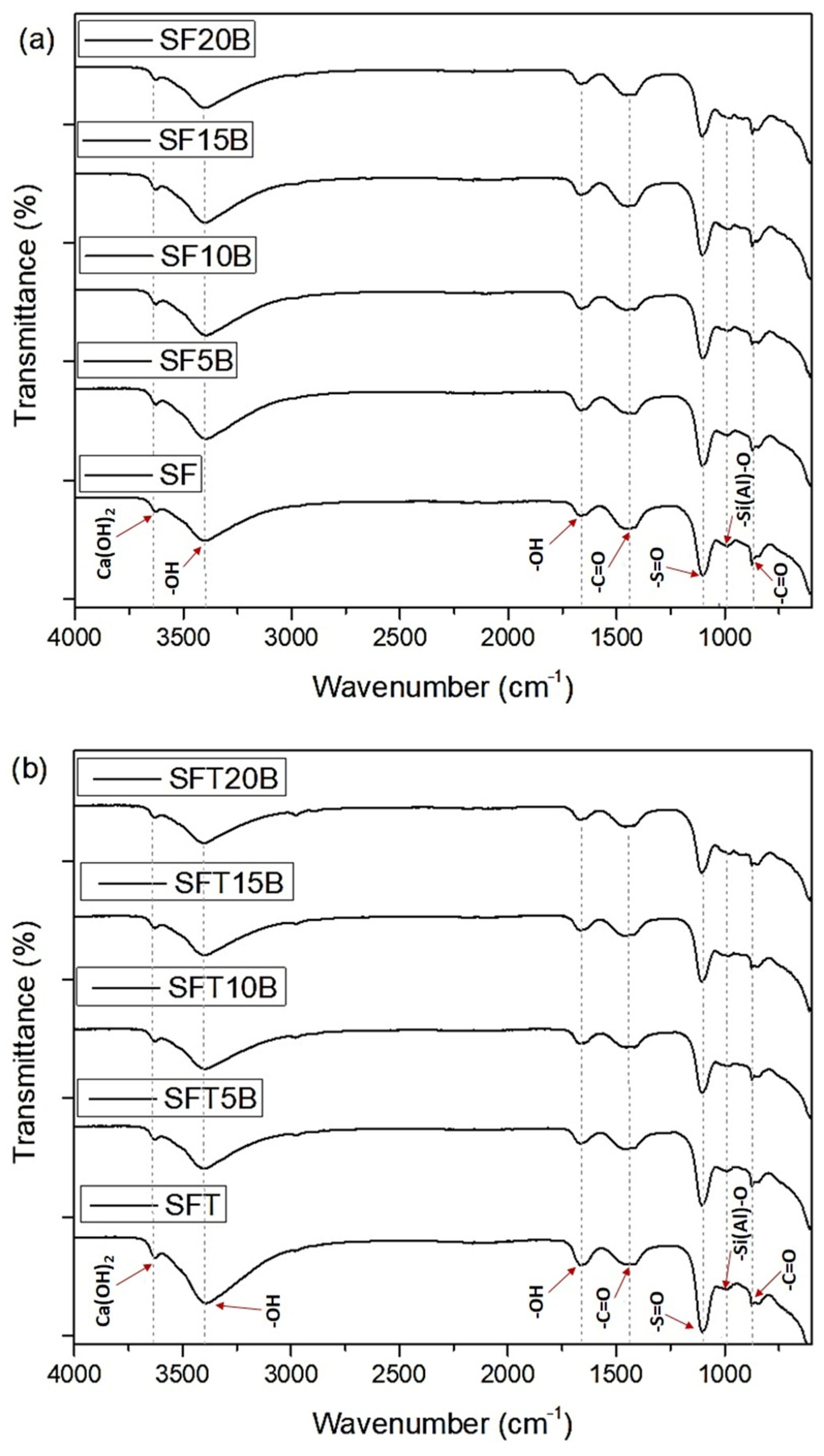
Figure 1 shows the FTIR spectra of CSA-based systems without TiO
2 (
Figure 1a) and with TiO
2 incorporation (
Figure 1b). All spectra exhibit characteristic vibrational features associated with CSA hydration products. The broad absorption bands centered around 3400 cm
−1, together with a weak shoulder near 1650 cm
−1, are attributed to O–H stretching and bending vibrations of physically adsorbed water and hydroxyl groups within the hydrated matrix, which are closely associated with pore filling and early matrix densification [
13]. The band observed in the range of 1120–990 cm
−1 corresponds to asymmetric stretching vibrations of Si–O–Si and Si–O–Al bonds, indicating the formation of aluminosilicate-rich hydration products, such as strätlingite or C–A–S–H-type gels, commonly reported in CSA systems, which contribute to pore refinement and long-term stability [
14]. A distinct band near 1090 cm
−1 is present in all samples and is assigned to the antisymmetric stretching of sulfate groups, characteristic of ettringite formation [
15].
With increasing BFS content, the band in the 1120–990 cm
−1 region exhibits a gradual increase in relative intensity, reflecting the enhanced contribution of Si-rich hydration products formed through slag activation. This behavior is consistent with the progressive formation of C–A–S–H-type gels and strätlingite, which incorporate silica and alumina released from BFS during hydration. In addition to intensity changes, a slight shift of this band toward lower wavenumbers is observed at higher BFS replacement levels, suggesting increased aluminum incorporation within the silicate network and modifications in the degree of polymerization of aluminosilicate hydrates. These spectral features are consistent with the occurrence of secondary hydration reactions typically associated with matrix densification. However, FTIR analysis provides indirect structural information, and direct quantification of pore refinement would require complementary techniques such as mercury intrusion porosimetry or nitrogen adsorption analysis. It is well established that the latent hydraulic activation of blast furnace slag promotes the formation of secondary C–(A)–S–H gels, which partially fill capillary voids and reduce critical pore diameters in blended systems, resulting in refined pore structures and improved matrix compactness [
16,
17].
The sulfate band near 1090 cm−1 remains relatively stable at low to moderate BFS contents, indicating that sulfate availability and ettringite formation are not significantly hindered by slag incorporation at early ages. At higher BFS replacement levels, slight band broadening and a modest reduction in intensity are observed, which may indicate partial sulfate consumption and a more dispersed ettringite morphology rather than a decrease in total ettringite content. This behavior is consistent with the latent hydraulic nature of BFS and its limited competition with ye’elimite for sulfate ions during early hydration.
The FTIR spectra of TiO2-modified systems show band positions comparable to those of the corresponding reference pastes, confirming that the primary hydration reactions of CSA, including ettringite formation and aluminosilicate hydrate development, are preserved in the presence of the photocatalyst. Minor variations in band intensity and broadening, particularly in the sulfate- and silicate-related regions, are observed. Given its chemical stability under alkaline conditions and the relatively low dosage employed, TiO2 is not expected to participate directly in hydration reactions but rather to act predominantly as a physically inert filler and as a heterogeneous nucleation site for hydration products.
The observed spectral broadening can be attributed to physical effects such as increased light scattering due to the high refractive index of TiO
2 nanoparticles and interfacial interactions between TiO
2 surfaces and hydration products. Similar FTIR broadening effects have been reported in TiO
2-containing Portland cement and blended cement systems, where spectral changes were associated with nanoscale dispersion effects rather than modifications in hydration chemistry [
18,
19,
20].
The preservation of ettringite-related sulfate bands and the progressive development of aluminosilicate hydration products across all formulations indicate that neither BFS incorporation nor TiO2 addition disrupts the fundamental hydration mechanisms of CSA cement. Instead, BFS enhances secondary hydration reactions that promote pore refinement and microstructural densification, while TiO2 modifies the spatial organization of hydration products without altering phase assemblage. This stable hydration environment is favorable for maintaining early-age dimensional stability and mechanical integrity while also supporting the exposure and durability of photocatalytically active surfaces, which are essential for the functional performance of self-cleaning CSA-based materials.
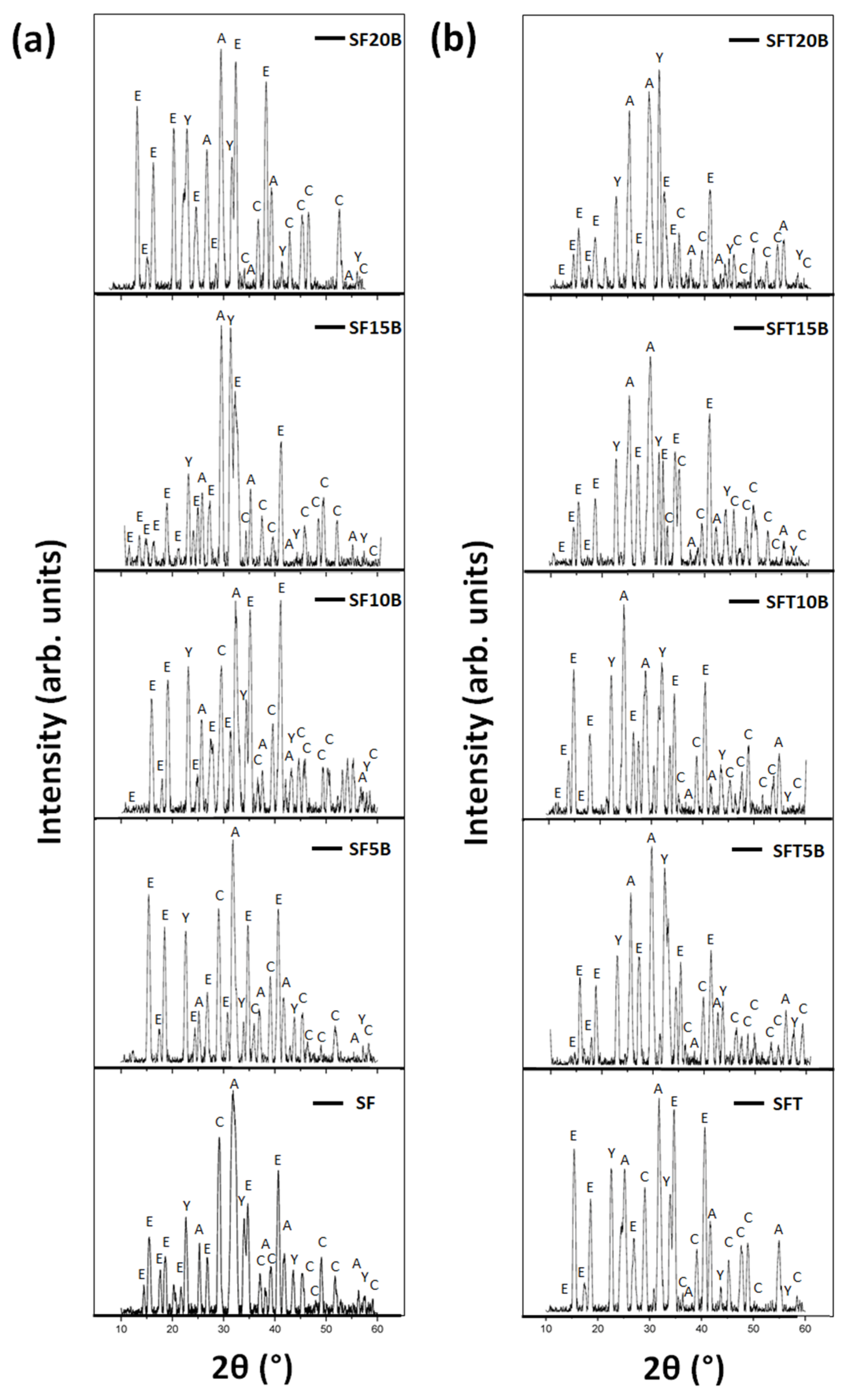
Figure 2 presents the XRD patterns of the CSA-based pastes containing blast furnace slag (BFS), both without and with TiO
2 nanoparticles. The main crystalline phases identified in all samples are ettringite (E), ye’elimite (Y), anhydrite (A), and calcite (C), which are characteristic of hydrated calcium sulfoaluminate systems. These results confirm that the primary hydration reactions of CSA are preserved across the investigated compositions.
In the reference CSA–BFS pastes (
Figure 2a), a gradual decrease in the intensity of ye’elimite reflections is observed with increasing BFS content. This trend can be attributed to the combined effects of CSA clinker dilution and the progressive consumption of ye’elimite during hydration. Despite this reduction, ettringite remains the dominant crystalline phase in all formulations, indicating that sulfate–aluminate reactions proceed effectively even in the presence of slag. This behavior is consistent with the latent hydraulic nature of BFS, which reacts more slowly and does not significantly compete for sulfate ions at early hydration stages. The persistence of ettringite across BFS-substituted systems supports the FTIR observations of stable sulfate-related bands, suggesting controlled hydration and favorable early-age dimensional stability.
An increase in calcite peak intensity is observed at higher BFS replacement levels. This increase may arise from both the carbonate content inherently present in BFS and partial carbonation occurring during curing under ambient conditions. While calcite does not directly contribute to strength development, its presence may influence pore structure and matrix densification, indirectly affecting mechanical performance. The absence of new well-defined crystalline phases associated with slag hydration is expected, as BFS primarily contributes to the formation of poorly crystalline or amorphous products, such as C–A–S–H-type gels and strätlingite. These phases are not readily detected by XRD but were inferred from FTIR band evolution.
The XRD patterns of the TiO
2-containing systems (
Figure 2b) show phase assemblages similar to those of the corresponding reference pastes, indicating that the addition of TiO
2 nanoparticles does not significantly alter the crystalline hydration products of CSA-based systems. No distinct diffraction peaks associated with TiO
2 polymorphs, such as anatase, are detected. This absence is attributed to the relatively low TiO
2 content and its nanoscale particle size, which likely result in diffraction intensities below the detection limit. These findings indicate that TiO
2 acts primarily as a physically dispersed functional additive rather than as a reactive phase influencing CSA hydration chemistry.
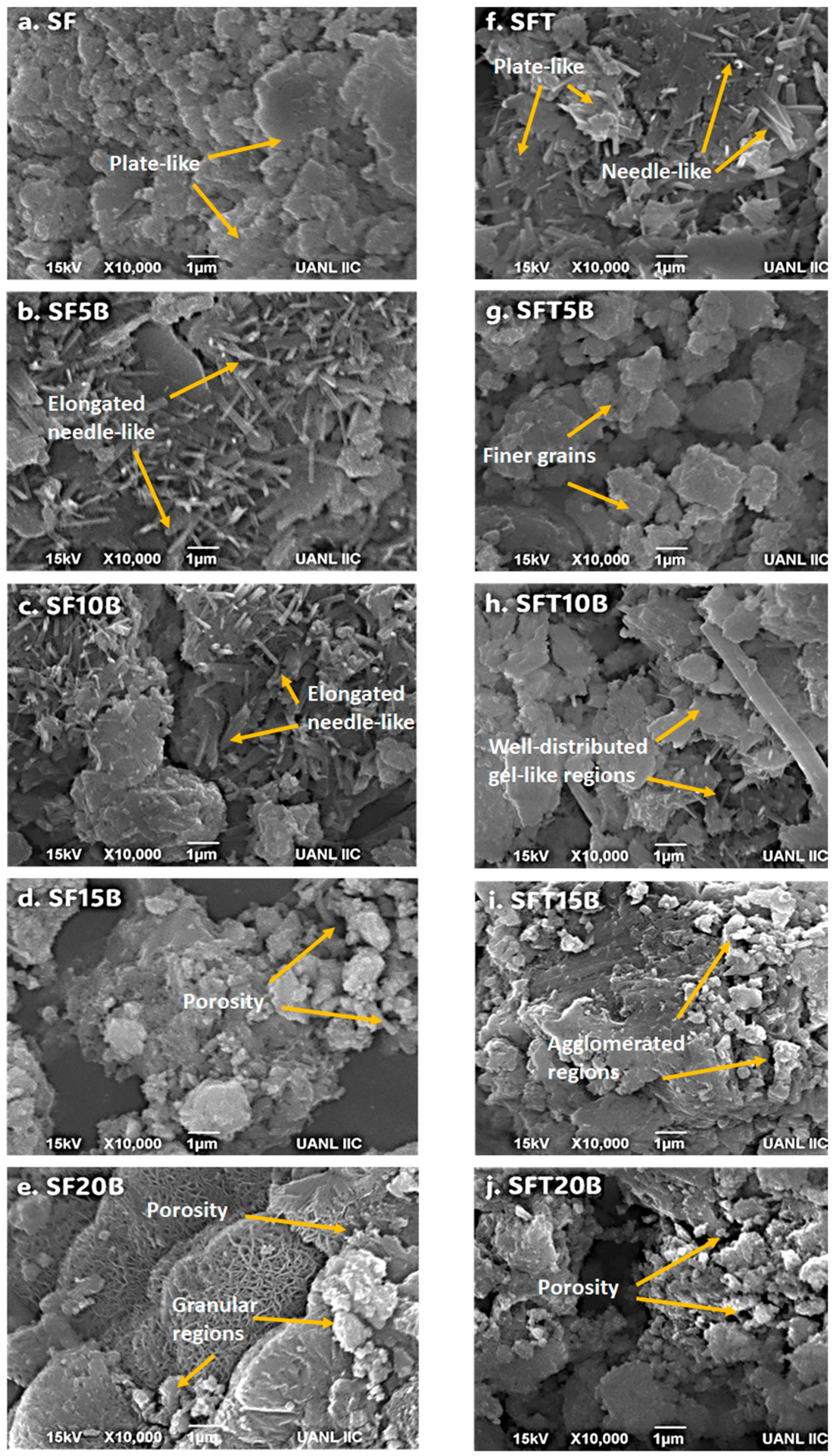
Figure 3 presents SEM micrographs of CSA-based pastes without TiO
2 (
Figure 3a–e) and with TiO
2 nanoparticles (
Figure 3f–j), recorded at a magnification of 10,000×. The reference CSA paste (SF) exhibits a relatively dense and homogeneous microstructure composed of intergrown plate-like hydration products (
Figure 3a). This morphology is typical of ettringite-rich CSA systems and is consistent with the strong sulfate-related bands observed in the FTIR spectra and the dominant ettringite reflections identified by XRD. The compact arrangement of this phase supports the high early-age strength development characteristic of CSA cement.
The incorporation of BFS induces progressive changes in microstructural features. At low replacement levels of 5 and 10 wt% (SF5B and SF10B,
Figure 3b,c), elongated needle-like crystals remain clearly visible but are increasingly embedded within a continuous gel-like matrix. This microstructural refinement suggests partial slag activation and the formation of additional aluminosilicate-rich hydration products. These observations correlate well with the FTIR results, which show an increase in the intensity of the Si–O–Si and Si–O–Al vibration band in the 1120–990 cm
−1 region, indicating the development of C–A–S–H-type gels or strätlingite. The denser matrix observed at these BFS levels might be consistent with the maintained or slightly improved compressive strength.
At higher BFS substitution levels of 15 and 20 wt% (SF15B and SF20B,
Figure 3d,e), the microstructure becomes more heterogeneous, with increased porosity and the presence of granular regions. These features are indicative of a less continuous hydration matrix and may be associated with delayed slag reaction kinetics and partial dilution of reactive CSA phases. Although FTIR analysis still confirms the presence of aluminosilicate hydrates, the broader and slightly shifted silicate bands suggest changes in gel composition and polymerization degree. This microstructural heterogeneity is consistent with the observed reduction in compressive strength at higher BFS contents, reflecting a less effective load-bearing network.
Pastes containing TiO
2 nanoparticles exhibit similar overall trends with increasing BFS content but show notable differences in matrix organization (
Figure 3f–j). The reference CSA with TiO
2 paste (SFT) exhibits a relatively dense and homogeneous microstructure composed of needle-like hydration products (
Figure 3f). This morphology is typical of ettringite-rich CSA systems. The compact arrangement of this phase supports the high early-age strength development characteristic of CSA cement. At low to moderate BFS levels (SFT5B and SFT10B,
Figure 3g,h), the microstructure appears finer and more uniform, with well-distributed gel-like regions and reduced visible porosity compared to their TiO
2-free counterparts. This local densification effect is attributed to the role of TiO
2 nanoparticles as heterogeneous nucleation sites for hydration products [
21]. Such behavior has been widely reported in TiO
2-modified cementitious systems and is consistent with the FTIR results, which show preserved band positions but slight band broadening, indicative of physical dispersion effects rather than changes in phase assemblage. The refined microstructure at these compositions might be supports the mechanical performance while providing a favorable surface environment for photocatalytic activity.
At higher BFS contents in TiO
2-containing pastes (SFT15B and SFT20B,
Figure 3i,j), agglomerated regions and increased heterogeneity are observed. These features likely arise from the combined effects of higher slag replacement and nanoparticle dispersion limitations, leading to localized clustering of TiO
2 and uneven hydration product distribution. Despite this, the persistence of ettringite-related morphologies and sulfate bands in FTIR spectra indicates that the primary CSA hydration reactions remain active and that ettringite stability is not significantly compromised. This is relevant for maintaining dimensional stability, even as microstructural uniformity decreases.
The SEM observations demonstrate that moderate BFS incorporation promotes microstructural refinement through secondary hydration reactions, while excessive replacement leads to increased heterogeneity and porosity. The addition of TiO2 nanoparticles does not alter the fundamental hydration chemistry of CSA but modifies the spatial organization of hydration products by acting as a physical filler and nucleation aid.
The XRD results, together with FTIR and SEM analyses, demonstrate that BFS and TiO2 incorporation modifies the microstructural organization and phase distribution of CSA-based pastes without disrupting their fundamental hydration mechanisms. The preservation of ettringite as the dominant crystalline phase, combined with the formation of amorphous slag-derived hydration products, provides a microstructural framework that could explain the trends in mechanical performance. At the same time, the absence of adverse phase changes supports the retention of photocatalytic functionality, as TiO2 remains accessible at the surface without interfering with the stability of the cementitious matrix.
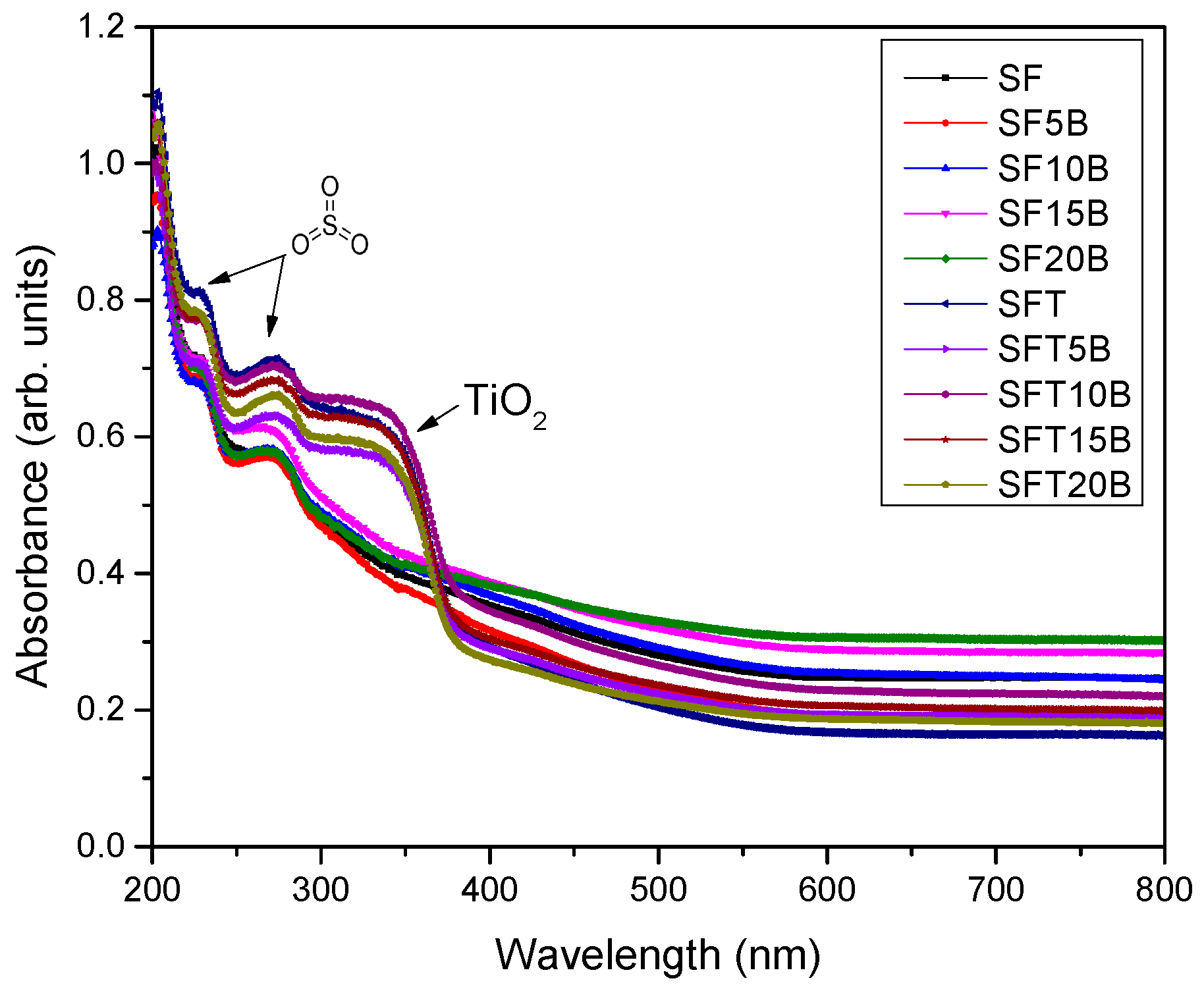
Figure 4 presents the UV–Vis absorption spectra of the reference and photocatalytic CSA-based systems. All compositions exhibit strong absorption in the ultraviolet region between 200 and 400 nm, which is characteristic of hydrated cementitious materials. The absorption bands observed below 280 nm are mainly associated with electronic transitions involving sulfate groups (SO
42−), consistent with the presence of anhydrite and ettringite as dominant hydration products in CSA systems [
22,
23]. These features confirm that the incorporation of blast furnace slag does not introduce additional electronic transitions in the UV–Vis range and preserves the typical optical response of CSA matrices.
In the TiO
2-containing pastes of the SFT series, a distinct absorption edge becomes evident in the range of 320 to 380 nm. This behavior corresponds to the intrinsic band gap absorption of TiO
2 and confirms its effective incorporation within the cementitious matrix [
24]. The presence of this absorption edge indicates that the photocatalyst remains optically active after hydration and curing. Among these samples, SFT10B and SFT15B exhibit slightly higher absorption intensities in this region, suggesting a more favorable dispersion of TiO
2 particles or improved exposure of photocatalytically active surfaces within the hydrated matrix.
The addition of BFS does not generate new absorption bands but influences the baseline and intensity of the spectra. These variations are attributed to indirect effects such as changes in pore structure, surface roughness, and light scattering associated with slag reaction and microstructural refinement. As discussed in the SEM and FTIR sections, moderate BFS contents promote the formation of aluminosilicate-rich hydration products, which may enhance TiO2 distribution and surface accessibility without altering its electronic properties.
No significant absorption is observed in the visible region, which is consistent with the wide band gap of TiO2 and confirms that photocatalytic activation is primarily driven by the UV fraction of the solar spectrum. Nevertheless, the demonstrated UV absorption under natural solar irradiation supports the feasibility of activating these CSA–TiO2 systems in outdoor environments. Overall, the UV–Vis results corroborate the photocatalytic performance trends discussed later, indicating that samples with enhanced absorption near the TiO2 band edge also exhibit improved self-cleaning efficiency. These findings confirm that the combined use of CSA cement, BFS, and TiO2 enables the development of cementitious materials with preserved structural characteristics and effective photocatalytic functionality suitable for self-cleaning applications.
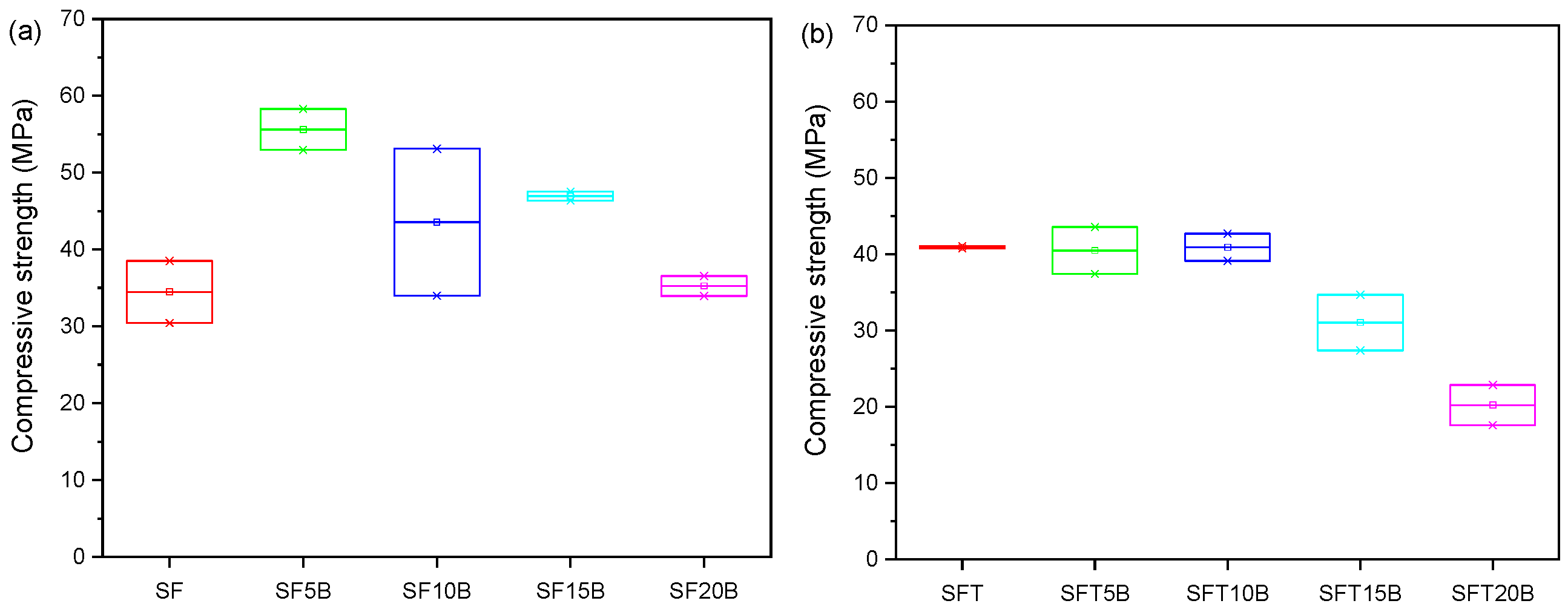
Figure 5 summarizes the compressive strength results of the CSA-based systems without TiO
2 (
Figure 5a) and with TiO
2 modification (
Figure 5b) as a function of BFS content. All values correspond to specimens tested at the same curing age, ensuring direct comparison among formulations.
In the reference series, the incorporation of BFS at moderate replacement levels (5–15 wt%) leads to a noticeable enhancement in compressive strength compared with the plain CSA paste. The highest strength values are recorded for SF5B and SF10B, reaching approximately 55 MPa and 43 MPa, respectively. This improvement can be attributed to the combined filler effect and latent hydraulic reactivity of BFS, which promote a denser microstructure through pore refinement and contribute to the formation of additional binding phases. These interpretations are consistent with the XRD and FTIR results, which indicate sustained ettringite formation and the presence of hydration products associated with slag activation. SEM observations further corroborate this behavior by revealing a more compact and homogeneous matrix in compositions containing 5–10 wt% BFS.
In contrast, increasing the BFS content to 20 wt% results in a reduction in compressive strength. This decline suggests that excessive slag substitution leads to dilution of the reactive CSA clinker phases, thereby limiting the extent of early hydration reactions and the development of a well-connected load-bearing network. Similar trends have been reported for CSA-based systems incorporating high levels of supplementary cementitious materials, where the balance between dilution and hydraulic contribution becomes unfavorable.
The reference data also exhibit noticeable variability, particularly for SF10B, as reflected by a wider interquartile range. This dispersion likely arises from local heterogeneities in particle distribution and hydration degree, highlighting the sensitivity of CSA-based systems to mixture design and processing conditions. Such variability underscores the importance of controlling raw material dispersion and curing conditions when optimizing mechanical performance.
In the TiO
2-modified series, the overall trend in compressive strength with increasing BFS content is similar to that observed for the reference systems; however, the absolute strength values are consistently lower (
Figure 5b). The TiO
2-modified control sample (SFT) exhibits compressive strength comparable to that of the unmodified CSA paste, indicating that TiO
2 addition alone does not significantly impair mechanical performance. Nevertheless, as BFS content increases, a gradual reduction in strength is observed. Samples SFT5B and SFT10B retain moderate compressive strengths of approximately 40 MPa, whereas SFT15B and SFT20B show more pronounced decreases, with their strengths falling below 31 MPa and 20 MPa, respectively.
The observed strength reduction in the TiO
2-containing systems can be attributed primarily to physical and microstructural effects rather than to substantial alterations in hydration chemistry. As evidenced by XRD and FTIR analyses, TiO
2 does not modify the nature of the crystalline hydration products. However, SEM observations suggest that partial agglomeration of TiO
2 nanoparticles and their interaction with BFS particles may disrupt particle packing efficiency, leading to increased localized porosity. Additionally, the combined addition of BFS and TiO
2 may slightly increase water demand and interfere with optimal matrix densification, resulting in reduced mechanical performance. Similar effects have been reported for CSA and Portland cement systems incorporating photocatalytic nanoparticles [
25,
26].
From a quantitative standpoint, the incorporation of 5 wt% BFS increases compressive strength by approximately 20–25% relative to the plain CSA reference, while the 10 wt% substitution results in an improvement of roughly 10–15%. Conversely, increasing BFS content to 20 wt% leads to a strength reduction of approximately 15–20% compared with the optimal formulation, indicating the onset of dilution effects.
In the TiO
2-modified series, samples containing 5–10 wt% BFS retain between 70% and 80% of the maximum strength achieved in the reference BFS-modified systems, demonstrating that the mechanical penalty associated with TiO
2 incorporation remains moderate at low slag contents. Even at 10 wt% BFS with TiO
2, compressive strengths remain within the range typically reported for CSA-based binders incorporating supplementary cementitious materials, which commonly fall between 30 and 45 MPa at comparable curing ages, confirming their suitability for structural and functional applications [
3,
4,
6].
The mechanical results demonstrate that moderate BFS substitution (5–10 wt%) enhances the compressive strength of CSA-based materials, while TiO2 incorporation introduces a trade-off between mechanical performance and photocatalytic functionality. When combined with the FTIR, XRD, and SEM analyses, the results indicate that formulations containing 5–10 wt% BFS with TiO2 addition achieve a balanced microstructure that preserves mechanical integrity while enhancing surface characteristics relevant to photocatalytic activity. This balance is critical for the development of multifunctional CSA-based materials intended for self-cleaning and environmentally responsive infrastructure applications.
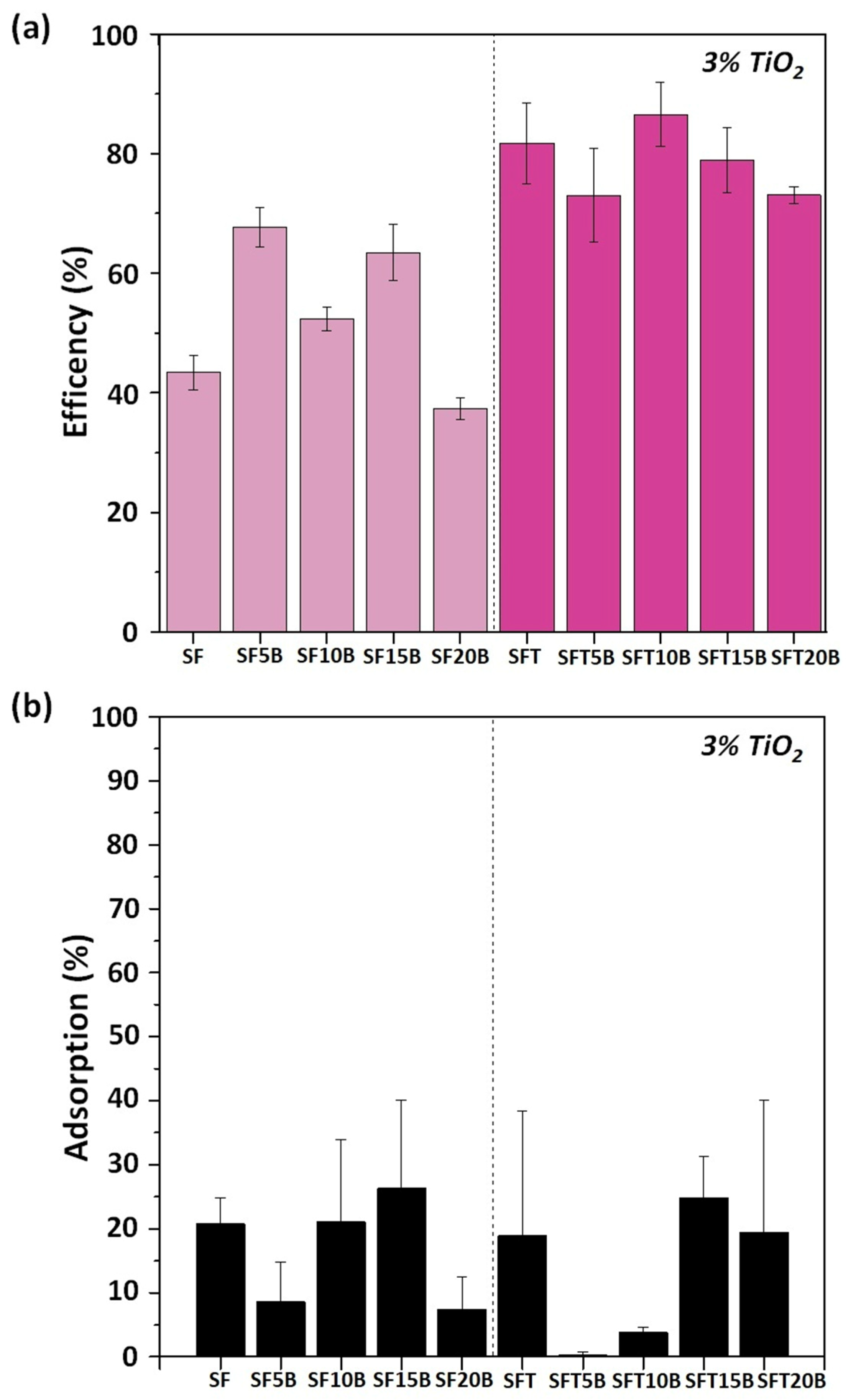
Figure 6a illustrates the photocatalytic degradation of Rhodamine B by CSA-based systems under solar irradiation. All compositions exhibit a measurable degree of dye removal, including the reference pastes without TiO
2. This baseline activity can be attributed primarily to surface adsorption and weak photo-assisted processes associated with hydrated CSA phases, rather than true photocatalytic oxidation. Nevertheless, the degradation efficiencies observed in the TiO
2-containing systems (SFTxB series) are significantly higher than those of their corresponding reference formulations, clearly demonstrating the effectiveness of TiO
2 incorporation in enhancing photocatalytic performance.
The enhanced activity of the SFT systems is attributed to the photoactivation of TiO2 under solar irradiation, predominantly driven by the UVA fraction of sunlight. Upon irradiation, TiO2 generates electron–hole pairs that promote the formation of reactive oxygen species, such as hydroxyl and superoxide radicals, which accelerate the oxidative decomposition of Rhodamine B at the material surface. This interpretation is consistent with the UV–Vis absorption results, which show a distinct absorption edge in the 320–380 nm range for TiO2-modified pastes, confirming the optical activation of the photocatalyst within the CSA matrix.
The influence of BFS content on photocatalytic efficiency within the TiO
2-containing series is comparatively limited, as similar degradation levels are achieved across the investigated BFS replacement range. This indicates that BFS does not adversely affect the photocatalytic functionality imparted by TiO
2, nor does it significantly enhance it under the tested conditions. In contrast, the reference systems without TiO
2 display a modest increase in apparent dye removal with increasing BFS content, particularly for SF5B, SF15B, and SF20B. This behavior may be associated with changes in surface texture and pore structure induced by BFS incorporation, which can increase specific surface area and promote dye adsorption rather than true photocatalytic degradation. Previous studies have shown that surface roughness, porosity, and capillary absorption capacity can significantly influence dye retention and apparent discoloration in cement-based materials independently of photocatalytic activity [
18,
19]. Therefore, based on the present experimental evidence, the relative contribution of adsorption-related effects versus intrinsic photocatalytic mechanisms cannot be definitively distinguished. Minor contributions from trace oxides present in BFS also cannot be excluded, although their influence is expected to be secondary.
Dark adsorption experiments (
Figure 6b) further clarify the dominant removal mechanisms. Adsorption percentages measured in the absence of irradiation are substantially lower than the corresponding degradation values under solar exposure, confirming that photocatalytic oxidation is the primary mechanism governing dye removal in TiO
2-containing systems. Samples with higher BFS contents, such as SF15B, SF20B, and SFT20B, show slightly increased adsorption capacities, consistent with their more porous microstructures observed by SEM. However, these differences remain limited and cannot account for the markedly higher removal efficiencies observed under illumination.
Quantitatively, the incorporation of TiO2 results in an increase in Rhodamine B degradation efficiency of approximately 30–50% compared with the corresponding TiO2-free systems, confirming that photocatalytic oxidation is the dominant removal mechanism under solar irradiation. Variations in degradation efficiency within the TiO2-containing series remain within a relatively narrow range of less than 10–15% across the investigated BFS contents, further demonstrating that BFS does not significantly influence intrinsic photocatalytic activity.
The degradation efficiencies achieved after 3 h of solar exposure are comparable to or higher than those commonly reported for TiO
2-modified cementitious systems under similar irradiation intensities, which typically range between 40% and 70% depending on catalyst loading and test configuration [
10,
27,
28,
29]. This places the present CSA–TiO
2 systems within the upper performance range reported in the literature for solar-driven self-cleaning cementitious materials. These results demonstrate that TiO
2 plays a central and indispensable role in achieving effective self-cleaning performance in CSA-based materials under solar irradiation. Importantly, BFS incorporation (while influencing microstructure and adsorption behavior) does not compromise photocatalytic efficiency when TiO
2 is present.
The combined mechanical and photocatalytic results demonstrate that formulations containing 5–10 wt% BFS with 3 wt% TiO2 achieve a performance window in which compressive strength remains above 40 MPa while maintaining high solar-driven degradation efficiency, representing a favorable multifunctional balance compared with previously reported CSA-based photocatalytic systems. These findings confirm the feasibility of developing CSA–TiO2 composites as multifunctional construction materials capable of combining mechanical performance with environmentally responsive, self-cleaning functionality.




 ,
,