
Article

Characterization of Fe-CDs/Mn-CeO2 and Its Colorimetric Sensing Studies of H2O2, Glu, and GSH
1
Key Laboratory of Microecology-Immune Regulatory Network and Related Diseases, School of Basic Medicine, Jiamusi University, Jiamusi 154000, China
2
College of Pharmacy, Jiamusi University, Jiamusi 154007, China
3
School of Information Science and Technology, Beijing University of Chemical Technology, Beijing 100029, China
4
China Testing & Certification International Group Co., Ltd., Beijing 100024, China
*
Authors to whom correspondence should be addressed.
Inorganics 2026, 14(3), 88; https://doi.org/10.3390/inorganics14030088
Submission received: 14 February 2026 / Revised: 10 March 2026 / Accepted: 17 March 2026 / Published: 21 March 2026
(This article belongs to the Special Issue Multifunctional Composites and Hybrid Materials)

Abstract

This study systematically investigated the characterization of 2Fe-CDs/12Mn-CeO2 composites and the colorimetric sensing properties of H2O2, glucose (Glu), and glutathione (GSH). The morphology, structure, and optical properties of the 2Fe-CDs/12Mn-CeO2 composite were analyzed in detail by XRD, FT-IR, SEM, TEM, XPS, and Raman spectroscopy, and its formation was supported by multiple complementary characterization techniques. The catalytic efficiency (kcat/Km) of the nanozyme is 152-fold higher than natural HRP under optimal conditions and remains 59-fold higher even after temperature normalization to 25 °C. In the colorimetric sensing experiments, the detection limits of Fe-CDs/Mn-CeO2 were 0.21 μM, 2.7 μM, and 0.63 μM for H2O2, Glu, and GSH, respectively. Rapid and accurate determination of the concentrations of these biomolecules can be achieved by observing the color changes after Fe-CDs/Mn-CeO2 reaction with the objects to be measured. The experimental results show that Fe-CDs/Mn-CeO2 have high sensitivity and selectivity for H2O2, Glu, and GSH, which provides a solid theoretical and experimental basis for the application of Fe-CDs/Mn-CeO2 in the field of biosensing and medical diagnosis.

1. Introduction

Significant progress has been made in nanomaterials, especially in modeling enzymes. As unique nanomaterials, carbon dots have attracted the attention of researchers for their peroxidase-like activity. CDs are a new class of light-emitting nanomaterials with unique optical properties and good biocompatibility, with a particle size usually less than 10 nm [1]. Due to their excellent optical performance and biological application potential, CDs have shown broad application prospects in many fields, such as biosensing, drug delivery, drug carriers, and analog enzymes [2,3,4]. In particular, in the field of simulated enzymes, CDs offer entirely new possibilities for enzymatic reactions of their properties similar to natural peroxidases [5]. Compared with natural enzymes, CD analog enzymes have the advantages of high substrate specificity and high catalytic efficiency, better stability, lower cost, and being more prone to synthesis and modification [5]. Therefore, CDs, as an emerging simulated enzyme material, have broad application potential in biosensors, drug development, environmental monitoring, and other fields [6].
Carbon dots have the advantages of high substrate specificity and high efficiency of natural enzymes. CDs can avoid the disadvantages of natural enzymes, making them favorable candidates for developing enzyme mimetics [7]. However, the nanoenzymes of single CDs have problems of low enzyme activity and poor stability, which limit their application in biosensors [8]. Therefore, in order to solve these problems, further optimization and improvement of CDs’ structure are needed. The doping of elements can change the surface structure and electron distribution of carbon dots, and the added metal elements can adjust the band structure to optimize the optical characteristics of carbon dots and give them many new functions [9,10]. The electrocatalytic properties of nitrogen-doped carbon nanotubes (NCNTs) were investigated [11,12]. The efficient fluorescent CDs have been synthesized to enable sensitive sensing of H2O2 and glucose. According to Yan et al. [13], synthesis methods with metal-doped carbon nanomaterials demonstrated their capability for the sensitive and selective detection of H2O2 and glucose. Zhang et al. [14] demonstrated that Fe-CDs have excellent peroxidase-like activity and used colorimetric and fluorescence assays to verify Fe-CDs’ efficacy for glucose detection in human serum samples. Building on previous research, to enhance the enzymatic catalytic activity, researchers fabricated a composite of flower-like Mn-CeO2 nanomaterials and Fe-CDs (denoted as Mn-CeO2/Fe-CDs). O-phenylenediamine (OPD), 2,2′-azino-bis(3-ethylbenzothiazoline-6-sulfonic acid) (ABTS), and 3,3′,5,5′-tetramethylbenzidine (TMB) were selected as chromogenic substrates to evaluate the nanozymatic catalytic activity of the composite. The colorimetric sensing properties of Fe-CDs/Mn-CeO2 nanocomposites were thoroughly evaluated and explored by colorimetric sensing detection of H2O2, glucose (Glu), and glutathione (GSH) content. The results show that, through the colorimetric sensing experiment, the composite combines the advantages of Fe-CDs and Mn-CeO2 and has good detection performance for H2O2, glucose (Glu), and glutathione (GSH), which not only improves the enzyme activity but also enhances the stability. In addition, we also explored the factors influencing the activity of Fe-CDs/Mn-CeO2 peroxidase to exert the highest catalytic activity of Fe-CDs/Mn-CeO2 nanoenzymes.
This study aims to fabricate a composite of Fe-CDs and Mn-CeO2. By regulating the concentrations of manganese ions and carbon dots during composite synthesis, the structure and performance of the resultant material are further optimized, thereby enhancing its enzymatic activity and stability. This research is expected to promote the application and development of nanomaterials in the field of nanozymes, as well as to provide valuable insights and an experimental basis for the design of high-performance biosensing platforms related to biomolecule detection, laying a foundation for subsequent studies in related disciplines.

2. Results and Discussions

2.1. Structural Characterization

2.1.1. X-Ray Powder Diffraction Pattern Analysis

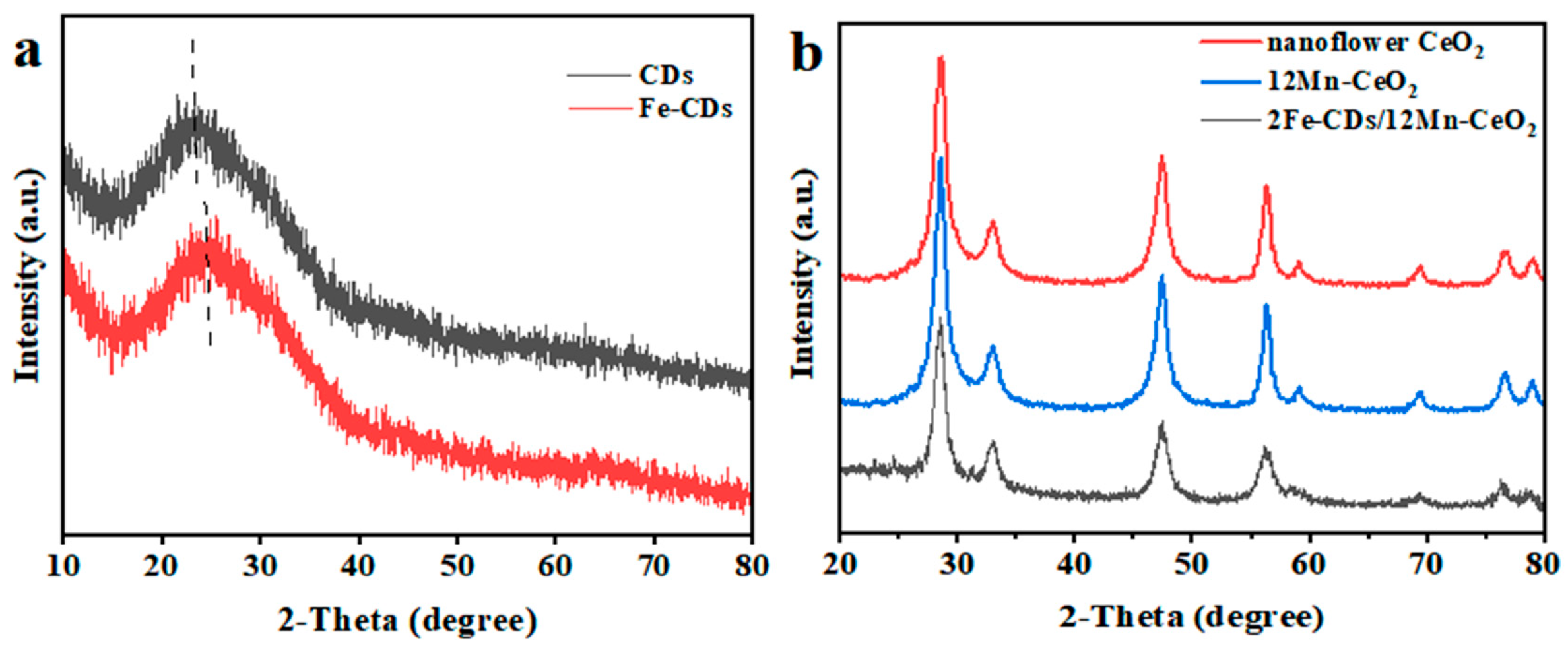
As shown in Figure 1a, in the XRD characterization analysis of the prepared CDs and Fe-CDs, both CDs and Fe-CDs show a broad diffraction peak corresponding to amorphous graphitic carbon around 25, and the peak level of Fe-CDs is close to 26, which is higher than the peak level of CDs. The introduction of Fe into the carbon frame probably leads to a higher disordered graphite-like structure [15], and the synthesized Fe-CDs are correct. As shown in Figure 1b, the XRD comparison of the prepared 2Fe-CDs/12Mn-CeO2 with 12Mn-CeO2 and flower-shaped CeO2 shows several high intensities at 2θ values of 28.76, 32.89, 47.52, 56.48, 59.1, 69.57, 69.67, 77.7, and 79.1. They are respectively distributed to (111), (200), (220), (311), (222), (400), (331), and (420) crystal planes, showing the crystal structure of CeO2 and no diffraction peak from Fe-CDs is observed, which may be due to the small particle size of Fe-CDs in the composite material. The XRD results support the formation of 2Fe-CDs/12Mn-CeO2 composites with retention of the CeO2 fluorite structure. The absence of distinct Fe-CDs diffraction peaks is consistent with their amorphous or nanocrystalline nature, as confirmed by TEM analysis (Figure 4). However, XRD alone cannot confirm Fe-CDs loading; therefore, additional characterization (FT-IR, XPS, Raman) was employed to verify the composite formation

2.1.2. FT-IR Analysis

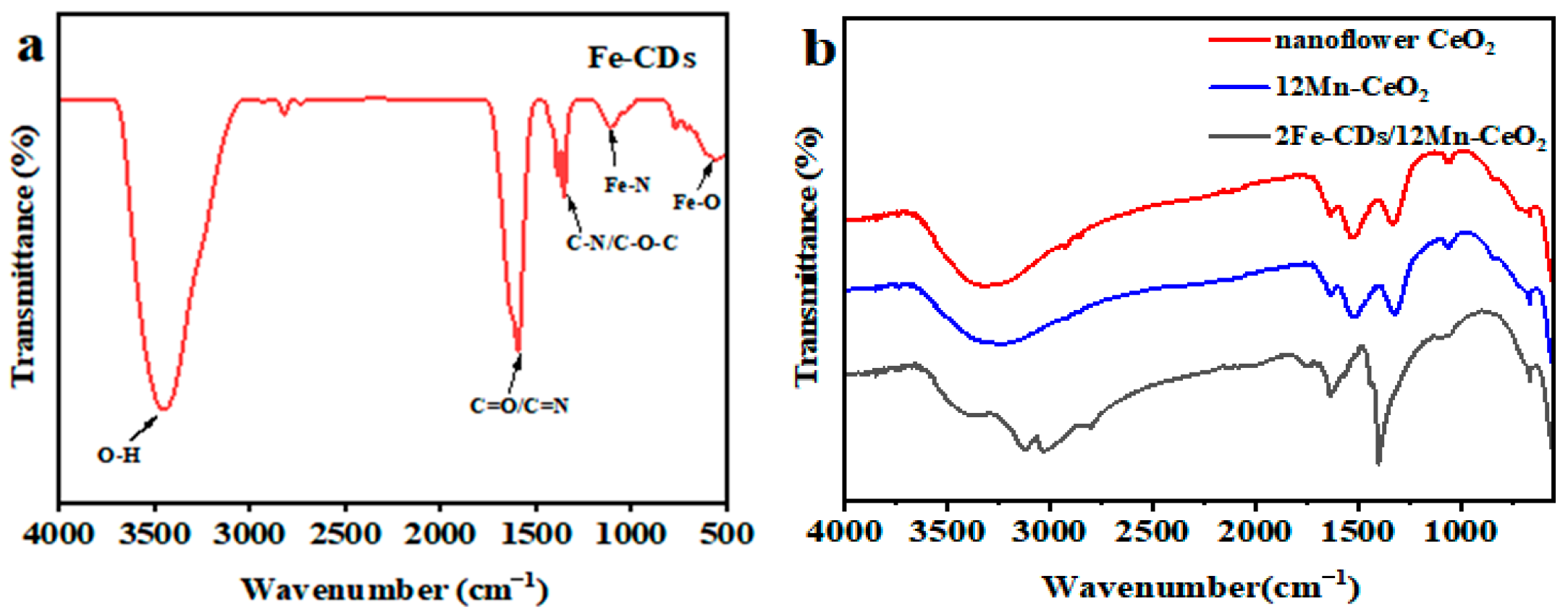
In the FT-IR profile of Figure 2a of Fe-CDs, 3449 cm−1 is attributed to the stretching vibration of the -OH of adsorbed water molecules on the sample surface, 1600 cm−1, 1343 cm−1 and 1100 cm−1 are due to the C=O/C=C and C-N/C-O-C and Fe-N of the carboxyl or amide group, respectively [16].
Multiple absorption peaks indicate that the surface contains various hydrophilic groups such as amino and carboxyl groups. The absorption peak at 572 cm−1 is assigned to the stretching vibration of Fe-O bonds, which is associated with the coordination of Fe species (Fe3+/Fe2+) to the oxygen-containing functional groups on the surface of CDs [17]. Thus, FT-IR results only support the formation of Fe-O/Fe-N coordination bonds between Fe ions and the carbon framework of CDs, verifying the successful doping of Fe into CDs, but they cannot reflect the valence state of Fe ions and their redox changes (e.g., the reduction of Fe3+ to Fe2+). The valence state distribution and reduction of Fe ions were confirmed by XPS characterization (Section 2.1.5). It is not difficult to find from Figure 2b that by comparing the infrared spectra of CeO2, 12Mn-CeO2 nanocomposites and 2Fe-CDs/12Mn-CeO2 nanocomposites, it can be found that the infrared spectra of 2Fe-CDs/12Mn-CeO2 are very similar to those of CeO2 and 12Mn-CeO2, but with the introduction of Fe-CDs, 2Fe-CDs/12Mn-CeO2. It can be proven that 2Fe-CDs/12Mn-CeO2 nanocomposites have been successfully prepared.

2.1.3. SEM Analysis

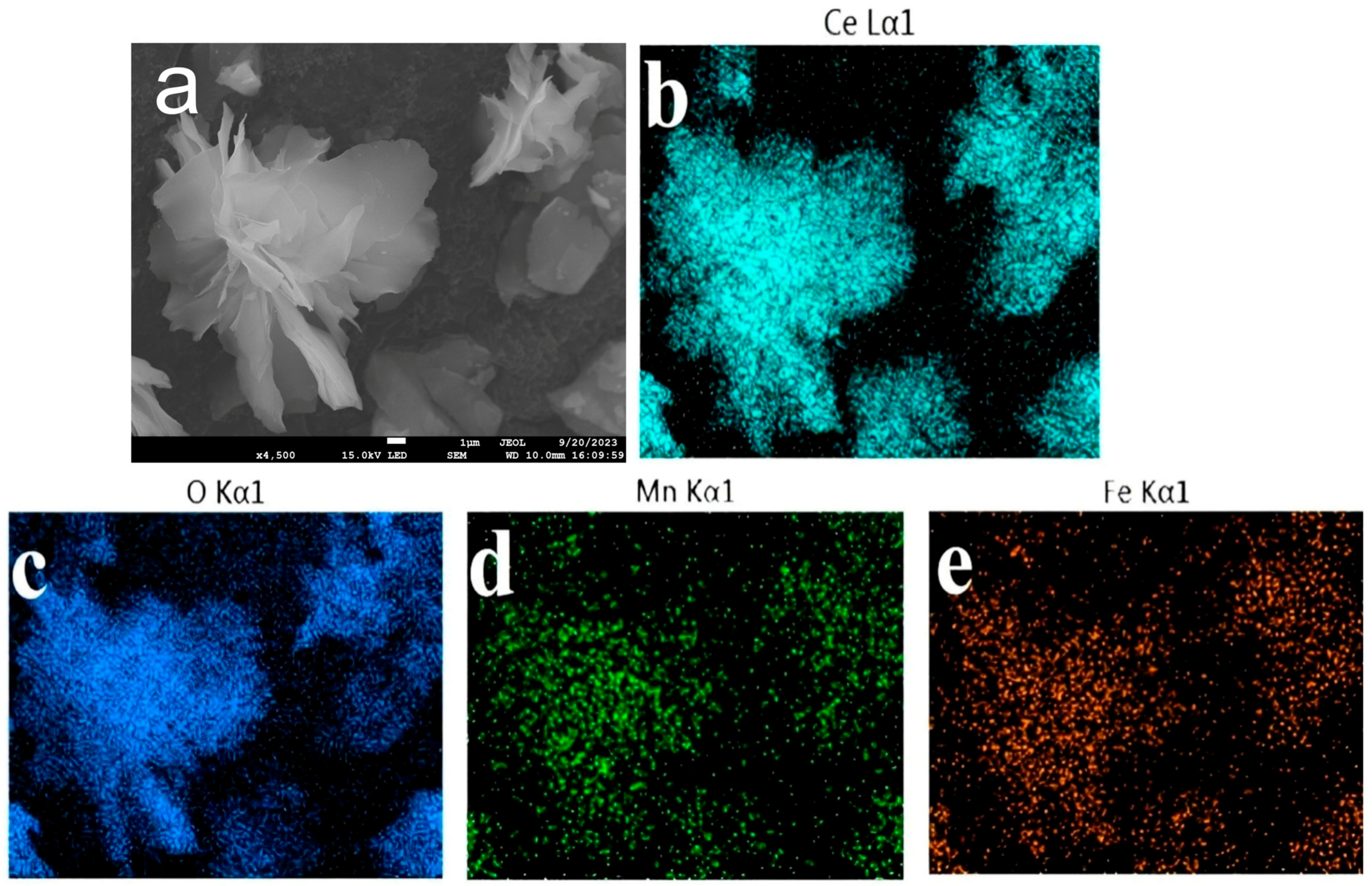
The morphology of 2Fe-CDs/12Mn-CeO2 was observed by scanning electron microscope, as shown in Figure 3a. The morphology of 12Mn-CeO2 was not affected by the recombination of Fe-CDs, but it still maintained the shape of a flower-like morphology. In the SEM mapping mode, the element mapping analysis was carried out. The image shows elements such as Ce, O, Mn, and Fe in the 2Fe-CDs/12Mn-CeO2sample, and the content of elements is observed through the relative brightness of the element mapping. The EDS elemental mapping was employed to characterize the qualitative distribution of constituent elements in 2Fe-CDs/12Mn-CeO2, and the clear and uniform signals of Ce, O, Mn, Fe, and C in the mapping images (Figure 3b–e) directly confirm the homogeneous coexistence of all designed elements in the composite (Ce and O from Mn-CeO2, Mn from Mn doping, Fe and C from Fe-CDs). The uniform distribution of Fe and C signals on the Mn-CeO2 substrate further verifies the successful and homogeneous loading of Fe-CDs on the flower-like Mn-CeO2 surface, which is consistent with the designed composite structure. For the quantitative compositional analysis of the composite, the X-ray Photoelectron Spectroscopy (XPS) was used as a reliable alternative (Section 2.1.5), and the XPS survey spectrum and high-resolution spectra determined the relative atomic content of the main elements (Ce: 15.2 at%, Mn: 2.1 at%, Fe: 1.8 at%, O: 58.3 at%, C: 22.6 at%). A comparison between the experimental elemental ratio (XPS) and the theoretical designed ratio (based on feeding ratio) was further conducted: the relative atomic ratio of Mn/Ce in the composite is ~13.8:86.2 (close to the theoretical 12:88), and the Fe content is consistent with the theoretical loading amount of Fe-CDs (2 wt%) in the composite. The slight deviation (<10%) between the experimental and theoretical values is attributed to the minor loss of Fe-CDs during the composite preparation and the slight inhomogeneity of Mn doping, which is an acceptable error in nanomaterial synthesis. Overall, the qualitative element distribution evidence from EDS mapping combined with the quantitative elemental ratio data from XPS fully confirms that the composition of the prepared 2Fe-CDs/12Mn-CeO2 nanocomposite is highly consistent with the theoretical design. These observations, together with TEM and XPS data, collectively support the composite formation.

2.1.4. TEM Analysis

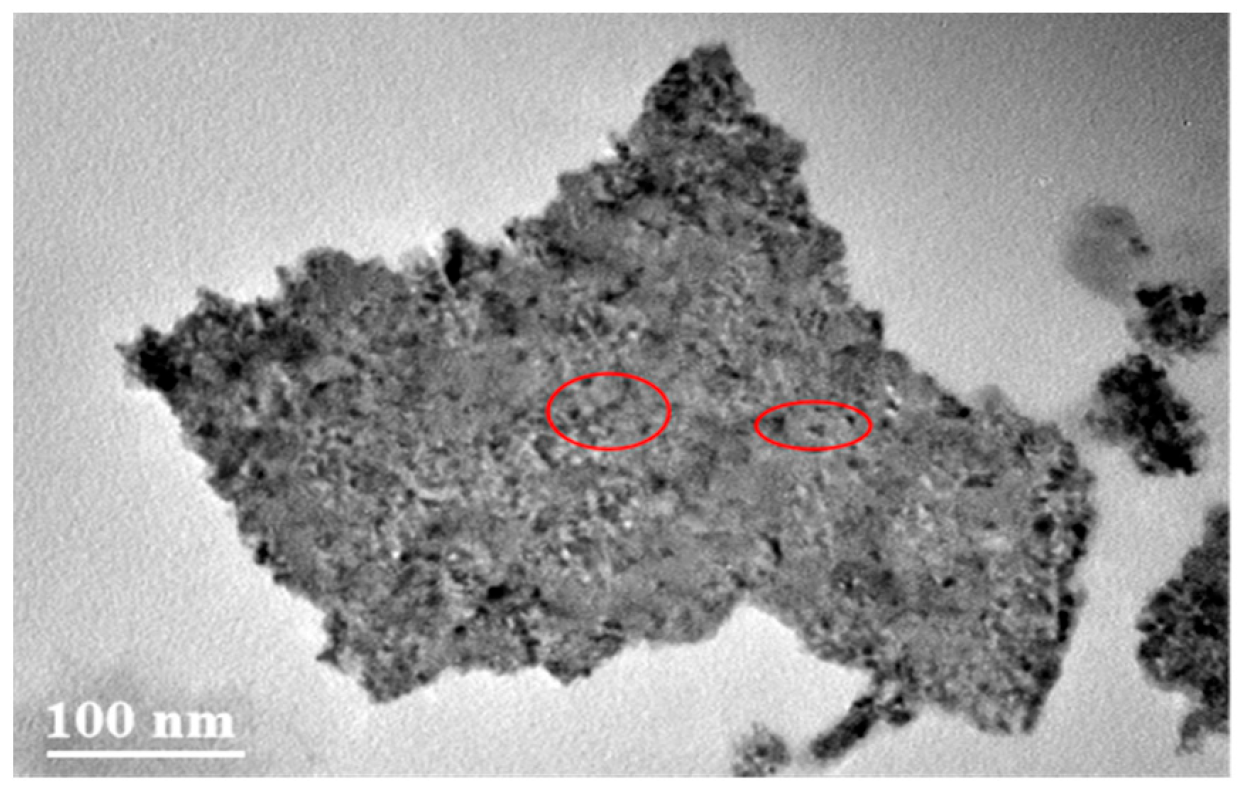
As shown in Figure 4 for the TEM map of 2Fe-CDs/12Mn-CeO2, we can intuitively see that many irregular small black dots with a diameter less than 10 nm grow on 12Mn-CeO2. The TEM images show irregular dark spots with diameters < 10 nm distributed on the Mn-CeO2 surface, consistent with the expected size of Fe-CDs. While these spots are morphologically consistent with Fe-CDs, definitive identification requires complementary techniques due to the similar contrast of carbon-based and metal oxide materials. Therefore, the TEM results are interpreted in conjunction with FT-IR, XPS, and Raman data to support the successful loading of Fe-CDs.

2.1.5. XPS Analysis

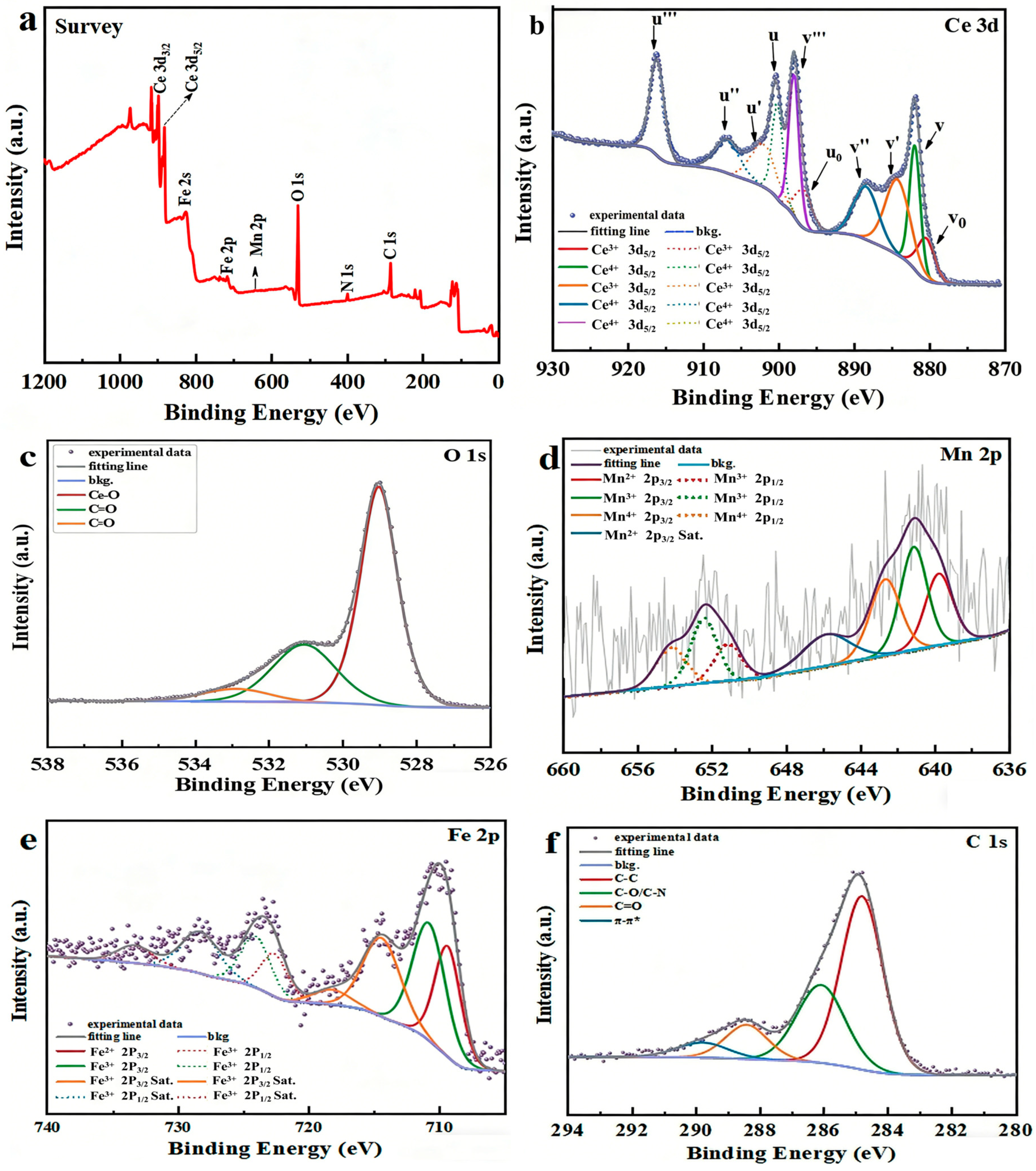
XPS was used to analyze the synthesized nanocomposites’ elemental composition and information on electronic structure. Figure 5a is the full XPS spectrum of the 2Fe-CDs/12Mn-CeO2 nanocomposite samples, confirming the presence of five elements—Ce, O, Mn, Fe, and C—which is consistent with the EDS mapping test results of SEM.
The Mn 2p spectrum (Figure 5c) shows Mn 2p3/2 peaks at 641.2 eV (Mn2+) and 642.5 eV (Mn3+), with a Mn2+/Mn3+ ratio of approximately 68:32. The presence of Mn3+ creates oxygen vacancies in the CeO2 lattice to maintain charge neutrality, which enhances H2O2 adsorption and decomposition. The Ce 3d spectrum (Figure 5b) confirms the coexistence of Ce3+ and Ce4+, with the Ce3+/(Ce3+ + Ce4+) ratio increasing from 12.5% in pure CeO2 to 18.3% in 12Mn-CeO2 and 21.6% in 2Fe-CDs/12Mn-CeO2~. This increased Ce3+ content indicates oxygen vacancy formation, which synergizes with Fe-N~x~ sites to enhance electron transfer efficiency and catalytic activity. Since the preparation of 2Fe-CDs/12Mn-CeO2 nanocomposites is based on 12Mn-CeO2 as a whole, the high-resolution spectra of Ce, O, and Mn of 2Fe-CDs/12Mn-CeO2 nanocomposites and 12Mn-CeO2 remain unchanged, but the content changes slightly. As a result of introducing a new substance, Fe-CDs, as shown in Figure 5e, there are four apparent peaks of Fe in the 2Fe-CDs/12Mn-CeO2 material, of which two characteristic peaks of 710.8 eV (Fe3+ 2p3/2) and 724.1 eV (Fe3+ 2p1/2) are Fe3+ and 709.4 eV [18]. The content ratio of Fe3+ to Fe2+ is 57:43 (1.33:1) by peak fitting calculation. This mixed-valence state is crucial for the peroxidase-like activity, as the Fe2+/Fe3+ redox couple facilitates electron transfer between the nanozyme and H2O2, mimicking the catalytic mechanism of natural peroxidases. Specifically, Fe2+ (43%) provides active sites for H2O2 activation via Fenton-like reactions (Fe2+ + H2O2 → Fe3+ + •OH + OH), while Fe3+ can be regenerated to Fe2+ by accepting electrons from the carbon framework or CeO2 support, completing the catalytic cycle. The optimal Fe3+/Fe2+ ratio in 2Fe-CDs/12Mn-CeO2 contributes to its superior catalytic activity compared to single Fe-CDs or Mn-CeO2 (Figure 10b). Element C mainly exists in the forms of C-C, C-O/C-N, C=O, π-π *, and the corresponding binding energies are 284.8 eV, 286.08 eV, 288.41 eV, and 289.79 eV, respectively. This can explain the existence of Fe-CDs well and is consistent with the results of a transmission electron microscope. Structure–activity relationship based on XPS analysis: The XPS results reveal that the high peroxidase-like activity of 2Fe-CDs/12Mn-CeO2 originates from the synergistic effect of multiple active sites: (1) Fe-N~x~ coordination in Fe-CDs (Fe3+/Fe2+ = 1.33:1) provides Fenton-like catalytic centers; (2) Mn3+ doping in CeO2 creates oxygen vacancies for H2O2 adsorption; (3) increased Ce3+ content (21.6%) enhances electron transfer between the support and Fe-CDs. This multi-component redox system mimics the complex active center of natural peroxidases, explaining the enhanced catalytic performance of the composite compared to single components.

2.1.6. N2 Adsorption–Desorption Isotherms and Pore Size Distribution

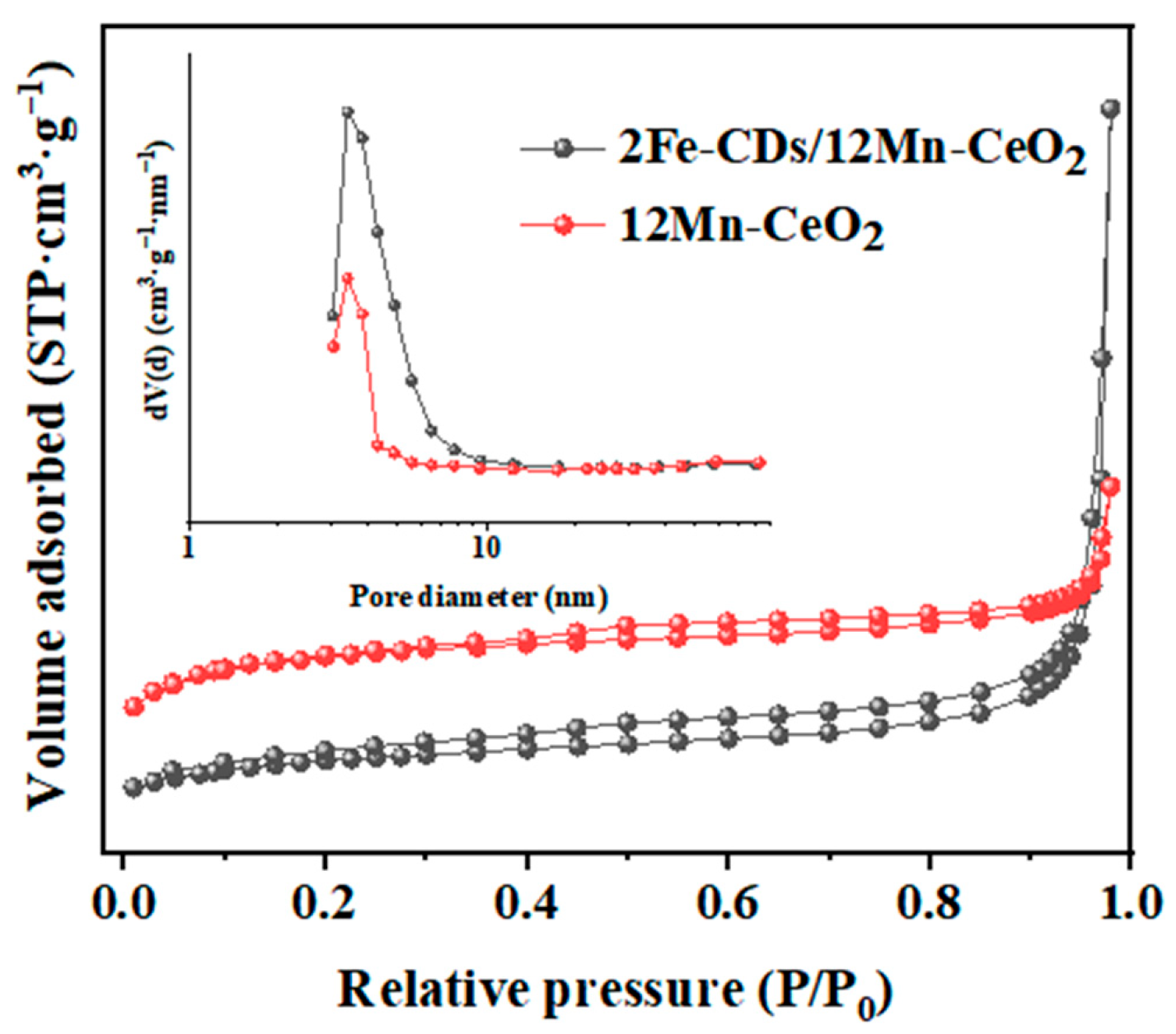
Figure 6 shows the N2 adsorption–desorption isotherms and pore size distribution curves of 2Fe-CDs/12Mn-CeO2 and 12Mn-CeO2 nanocomposites. The N2 adsorption–desorption isotherm of 2Fe-CDs/12Mn-CeO2 exhibits a typical Type IV isotherm with a Type H2 hysteresis loop, which is a characteristic of mesoporous materials (2–50 nm), consistent with the pore size results in Table 1. The BET specific surface area, pore volume, and average pore size of the composites were calculated based on the adsorption data, and the key validity parameters of the BET analysis were supplemented to verify the linearity of the adsorption curve: the linear fitting was conducted in the standard BET valid relative pressure range (P/P0 = 0.05–0.35), and the linear correlation coefficient (R2) of the BET plot (P/[V(P0−P)] vs. P/P0) reached 0.998 (close to the ideal value of 1). This high correlation coefficient fully confirms the good linearity of the adsorption curve in the BET coordinate system, which verifies the rationality and reliability of the BET calculation results.
Table 1 shows that the BET specific surface area of 2Fe-CDs/12Mn-CeO2 is 31.57 m2·g−1, with a pore volume of 0.082 cm3·g−1 and an average pore size of 3.409 nm, compared with 91.22 m2·g−1, 0.056 cm3·g−1, and 3.411 nm for 12Mn-CeO2. The decrease in BET specific surface area of the composite is attributed to the successful loading of Fe-CDs on the surface and in the mesopores of 12Mn-CeO2, which partially blocks the pore channels of the carrier. Despite the reduced surface area, the catalytic activity of 2Fe-CDs/12Mn-CeO2 is significantly higher than that of 12Mn-CeO2 (Figure 10b), demonstrating that the active sites (Fe-Nx coordination in Fe-CDs and the Mn-CeO2 interface) rather than the specific surface area dominate the peroxidase-like catalytic performance. The increase in pore volume (from 0.056 to 0.082 cm3·g−1) indicates that the loading of Fe-CDs introduces additional mesopores on the 12Mn-CeO2 surface, which is conducive to the diffusion of substrates (TMB, H2O2) to the active sites and thus promotes the catalytic reaction.

2.1.7. Raman Test

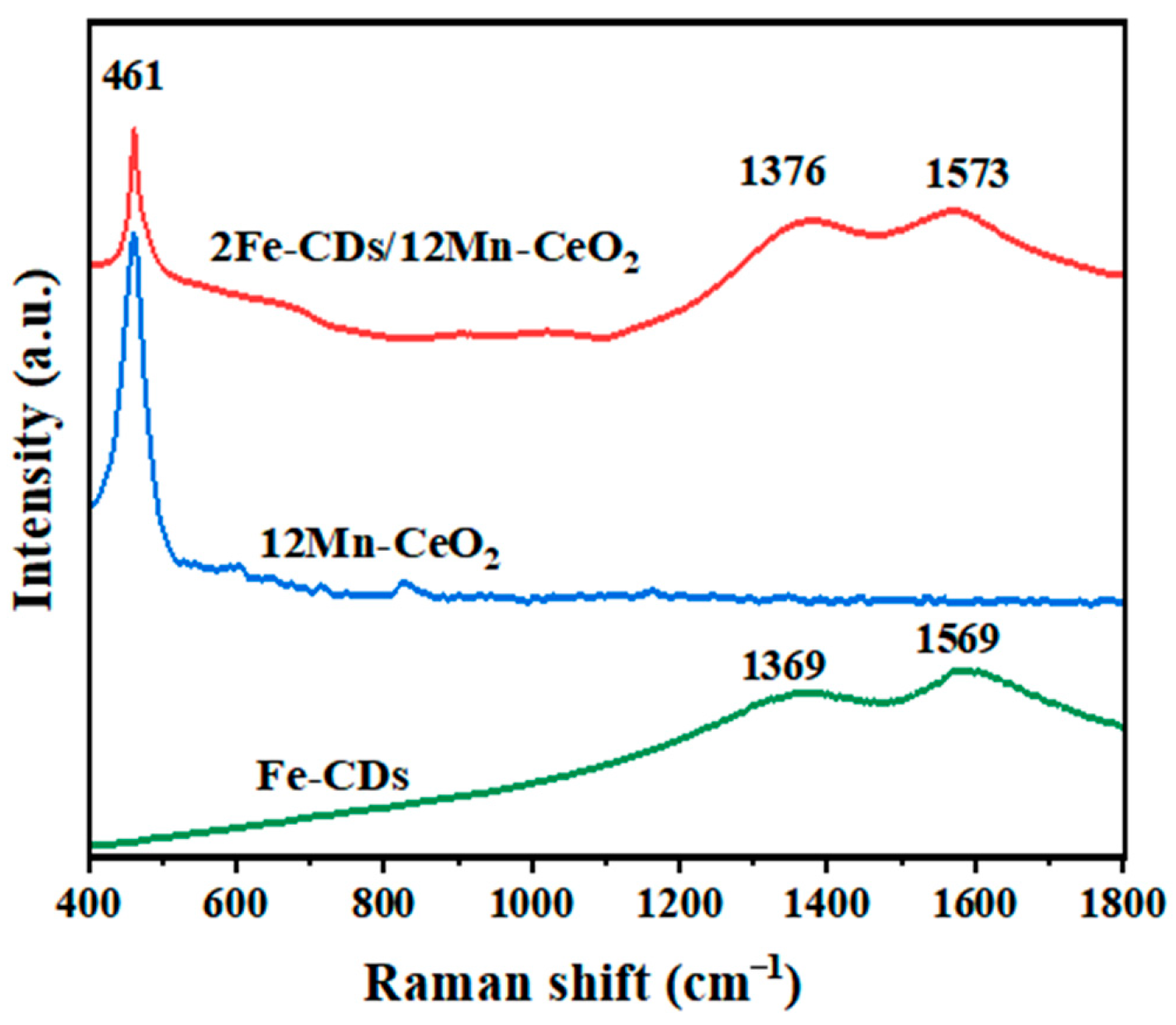
Figure 7 shows the Raman spectra of 2Fe-CDs/12Mn-CeO2, 12Mn-CeO2, and Fe-CDs. For Fe-CDs, two prominent peaks are observed at 1365 cm−1 (D band, disordered sp3 carbon) and 1570 cm−1 (G band, graphitic sp2 carbon). The intensity ratio I~D~/I~G~ is calculated to be 0.87 (by integrating peak areas from 1340–1380 cm−1 and 1550–1600 cm−1 using Lorentzian fitting after baseline correction), indicating a moderate degree of graphitization with abundant structural defects. These defects serve as active sites for enzyme mimicry by facilitating radical generation and electron transfer. For 2Fe-CDs/12Mn-CeO2, the ID/IG ratio increases to 0.95, suggesting increased disorder due to strong interfacial interaction between Fe-CDs and Mn-CeO2. This enhanced defect density correlates with improved peroxidase-like activity (Figure 10b), as defect-rich carbon structures promote H2O2 activation and •OH generation. The Raman spectrum of 12Mn-CeO2 shows a characteristic F 2g mode at 457 cm−1 corresponding to the symmetric Ce-O vibrational stretching [19]. In 2Fe-CDs/12Mn-CeO2, this peak remains unchanged while the D and G bands of Fe-CDs appear, confirming the structural integrity of the Mn-CeO2 support and successful loading of Fe-CDs. Moreover, 2Fe-CDs/12Mn-CeO2 exhibited characteristic peaks of both Fe-CDs and 12Mn-CeO2, demonstrating that the 2Fe-CDs/12Mn-CeO2 nano complexes have been successfully prepared.

2.2. Determination of the Enzymatic Properties of the Fe-CDs/12Mn-CeO2 Composite Material

2.2.1. Assay of the Peroxidase Activity of the Fe-CDs/12Mn-CeO2

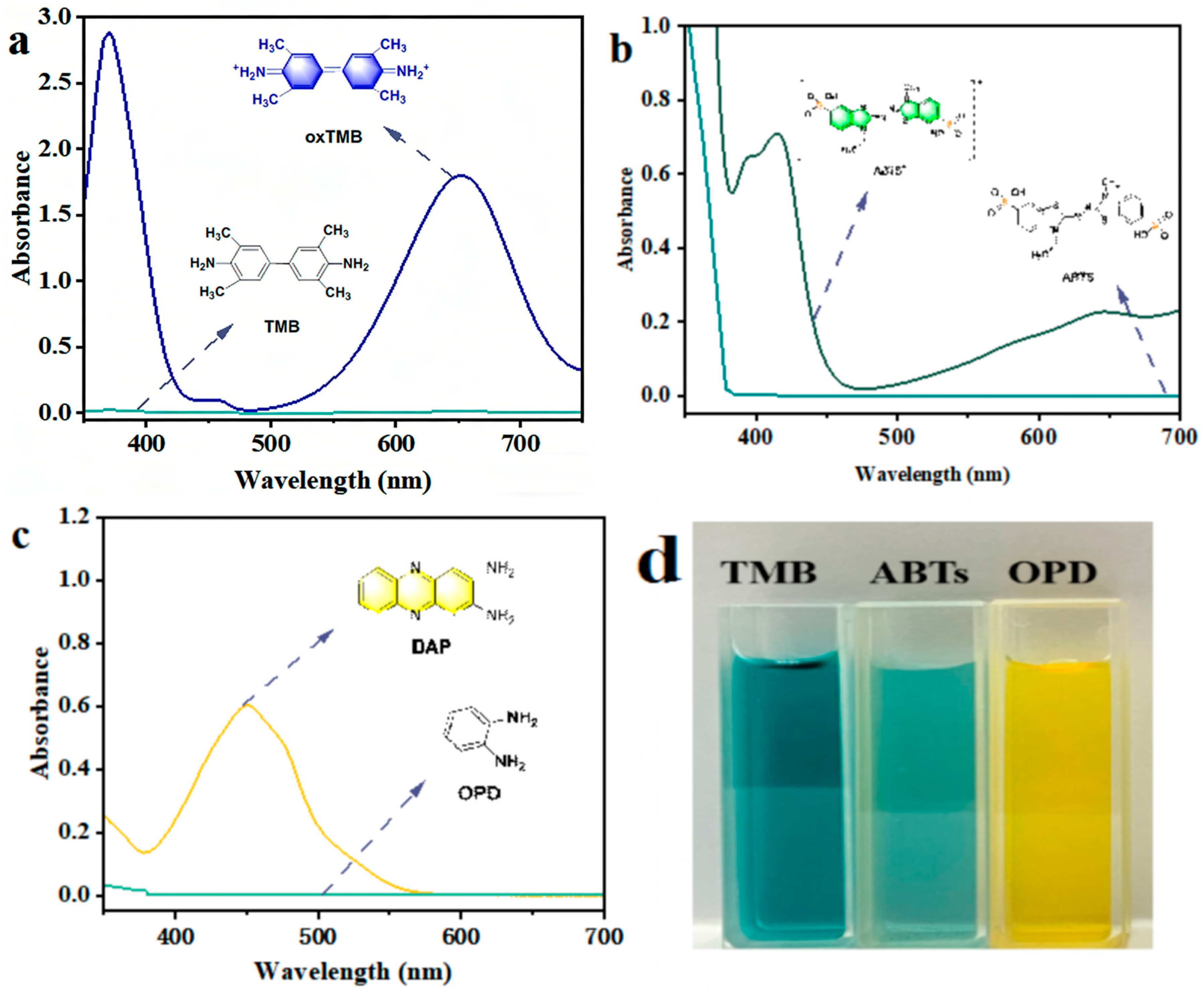
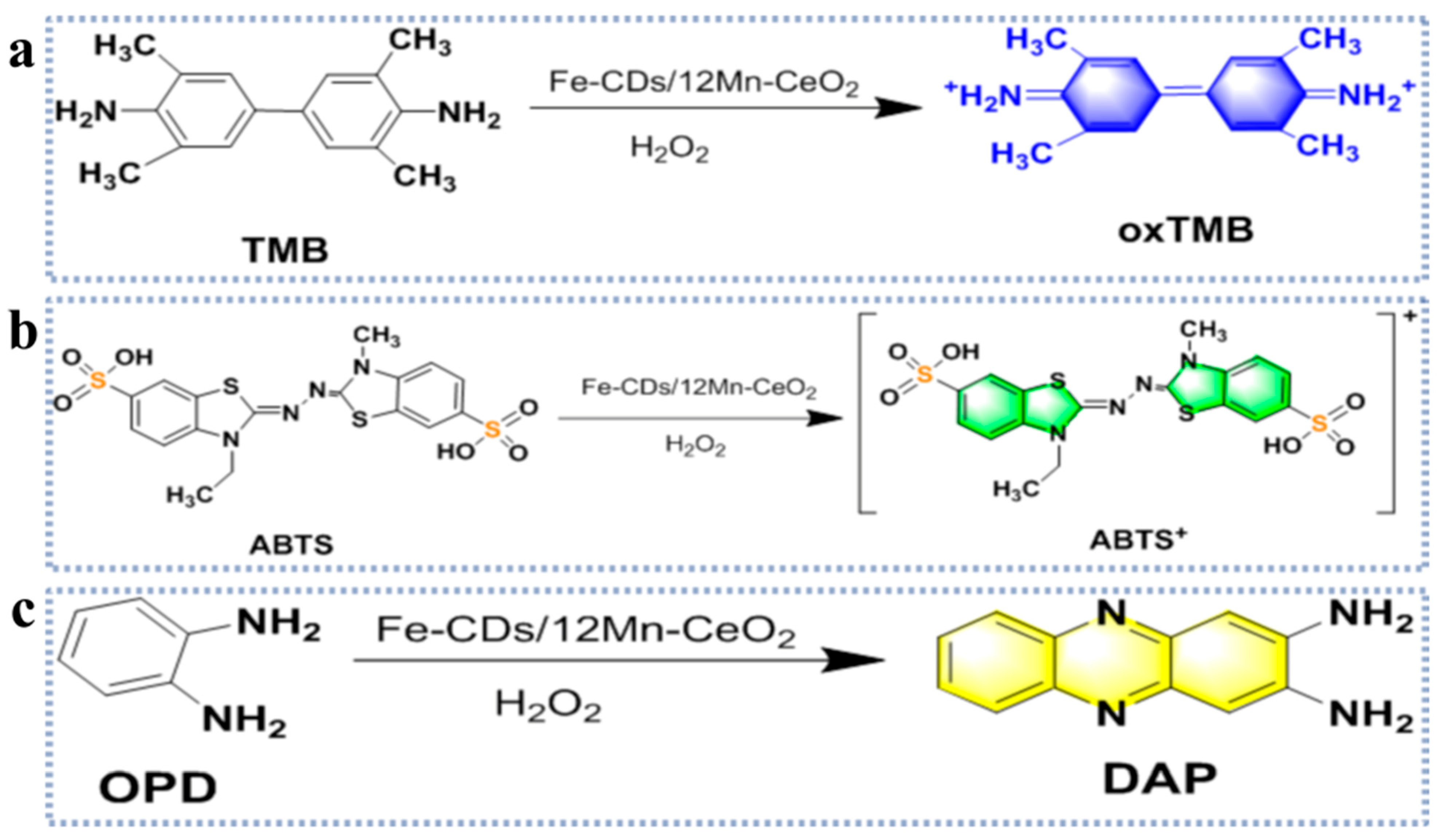
In order to verify whether Fe-CDs/12Mn-CeO2 composite has peroxidase-like activity, OPD, ABTS, and TMB were selected as chromogenic substrates to test the enzyme-like catalytic activity of composite nanomaterials. As shown in Figure 8a–c, Fe-CDs/12Mn-CeO2 can oxidize TMB, ABTs, and OPD with characteristic absorption peaks at 652 nm, 416 nm, and 450 nm, respectively, and oxidize the substrate into blue ox TMB, green ABTS+, and yellow DAP (as shown in Figure 8d). Figure 9 shows Fe-CDs/12 mn. Because ABTS reagent is expensive, OPD is irritating and carcinogenic, and TMB reagent is non-toxic and low-cost, TMB is chosen as the chromogenic substrate for subsequent experiments.
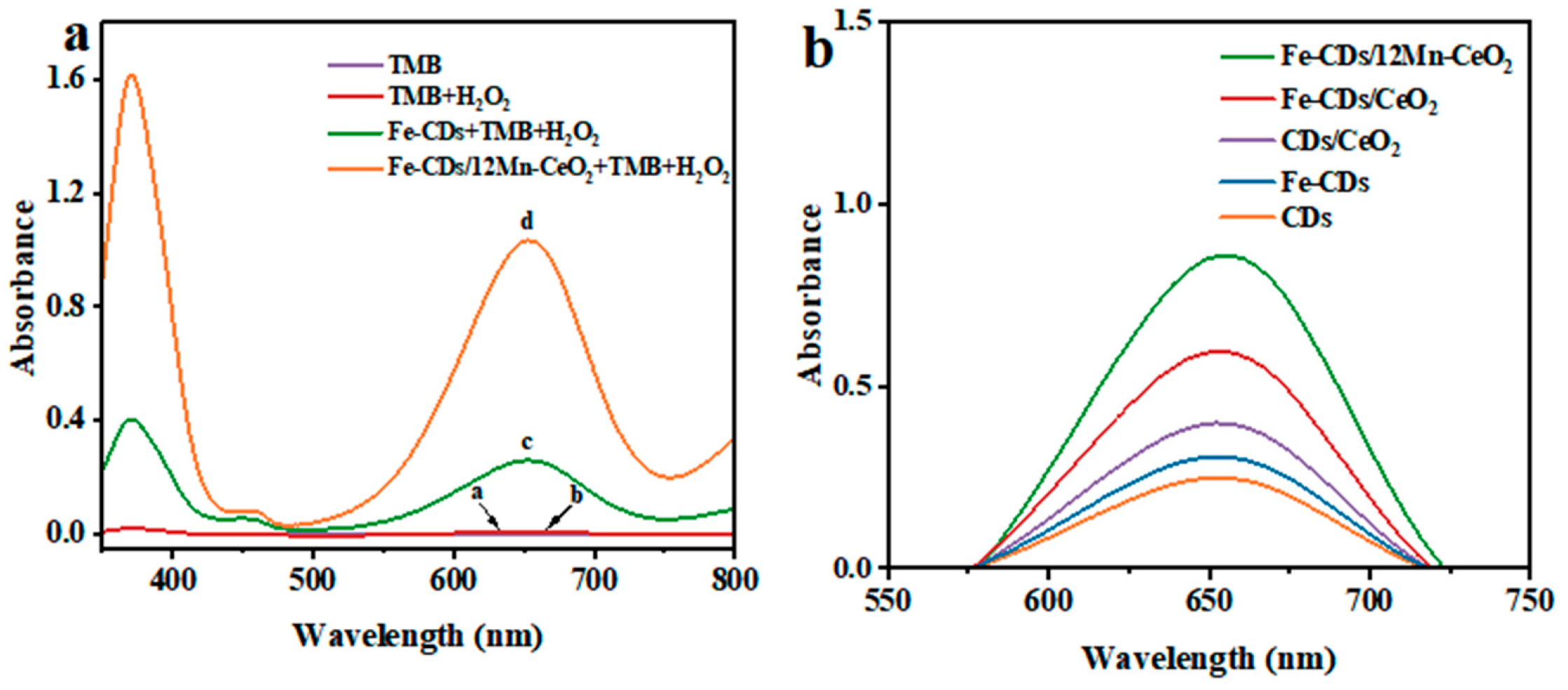
We preliminarily evaluated the peroxidase-like activity of the synthesized nanocomposites by catalyzing the oxidation degree of the chromogenic substrate TMB. The termination concentration of Fe-CDs/12Mn-CeO2 was 16 g mL−1, and TMB was 0.4 mM, respectively. The final concentration of H2O2 was 6 mM and reacted at 55 °C in HAc-NaAc buffer solution with 0.2 M pH = 4 for 10 min. As shown in Figure 10a, the ultraviolet–visible absorbance was measured in the wavelength range of 350–800 nm, and a strong absorption peak was observed at 652 nm in the Fe-CDs/12Mn-CeO2-TMB-H2O2 system. The chromogenic substrate TMB can be oxidized to oxTMB, as shown in Figure 10a under the current conditions. At the same time, in the case of only TMB and TMB-H2O2, or in the case of where H2O2 is lacking in Figure 10a ), there is no or weak absorption peak at 652 nm, which proves that Fe-CDs/12Mn-CeO2. For comparison, different catalysts were added to the HAc-NaAc-TMB-H2O2 system, and the order of peroxidase-like enzymes from Figure 10b was as follows: Fe-CDs/12Mn-CeO2 > Fe-CDs/CeO2 > CDs/CeO2 > Fe-CDs> CDs.
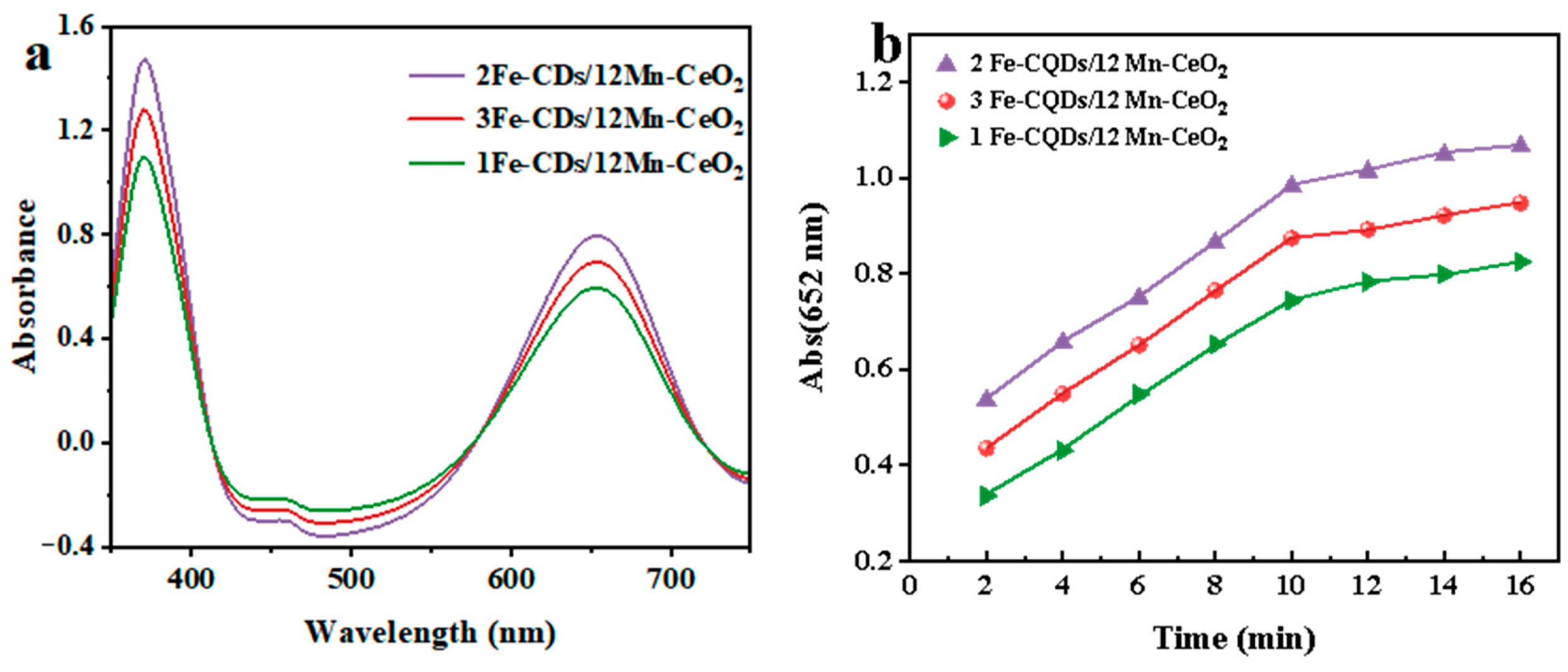
In addition, Figure 11a and Figure 11b compare the peroxidase-like activities of nanocomposites loaded with 12Mn-CeO2 and different proportions of Fe-CDs, and the results show that 2Fe-CDs/12Mn-CeO2 > 3Fe-CDs/12Mn-CeO2 > 1Fe-CDs/12Mn-CeO2 (1Fe, 2Fe, and 3Fe refer to the mass ratios of Fe-CDs to 12Mn-CeO2 at 1:100, 2:100, and 3:100 (w/w), respectively). The introduction of Fe-CDs has further enhanced the peroxidase-like activity of 12Mn-CeO2. The reasons for the above results can be summarized as follows: (1) CDs have also been proven to exhibit this activity in experiments and existing reports. However, based on CDs, we further introduced Fe, and Fe acted as the acceptor or donor of vital electrons, which further promoted the reaction [20]. (2) It has been proven that 12Mn-CeO2 has peroxidase-like activity, and the synergistic effect of Fe-CDs and 12Mn-CeO2 can increase the electron transfer rate and accelerate the decomposition of H2O2 into OH, thus enhancing the peroxidase-like activity of 12Mn-CeO2. 2Fe-CDs/12Mn-CeO2 has the best catalytic activity, so 2Fe-CDs/12Mn-CeO2 was selected to carry out the follow-up experiments.

2.2.2. 2Fe-CDs/12Mn-CeO2 Peroxidase Activity

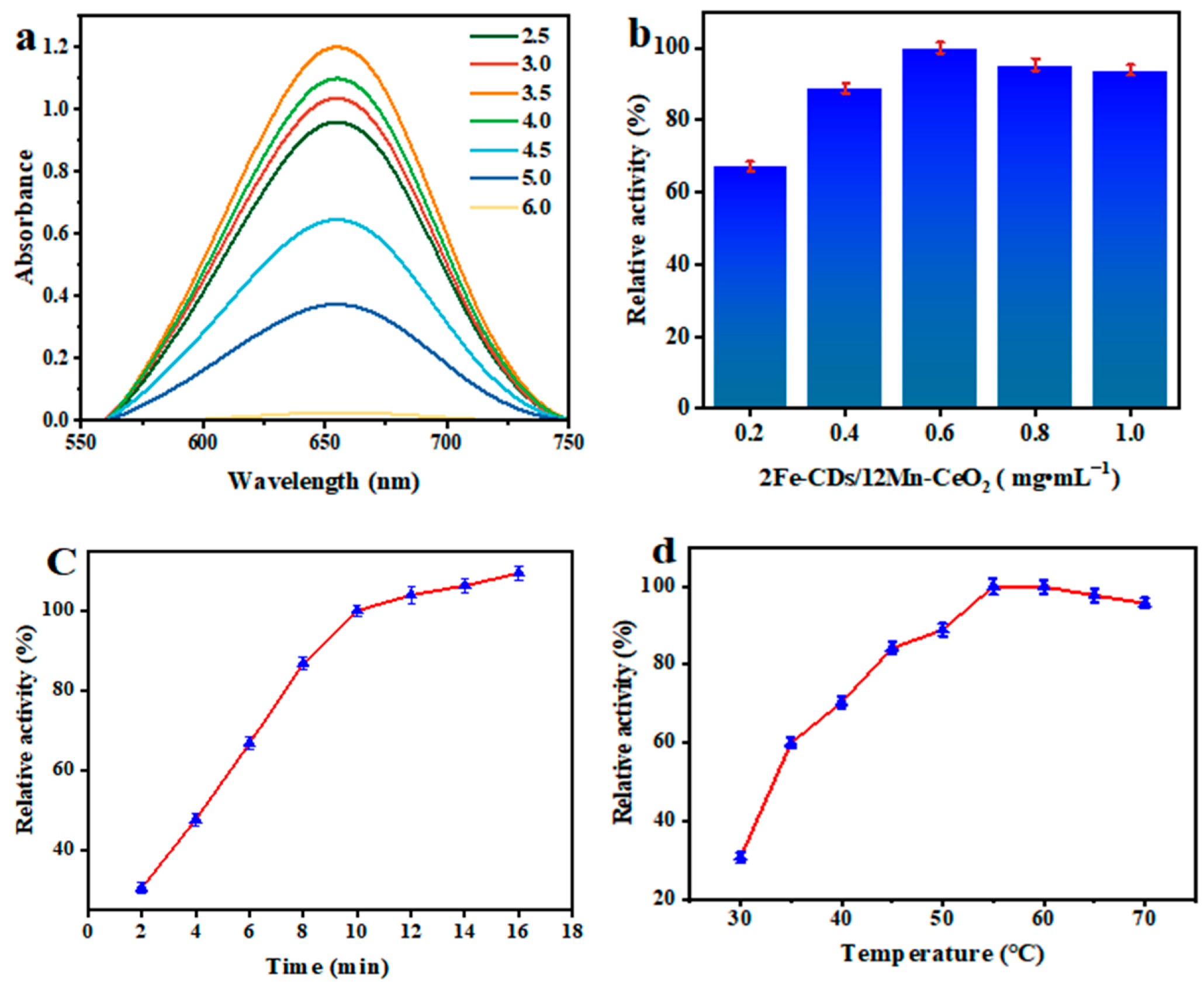
In order to maximize the catalytic activity of 2Fe-CDs/12Mn-CeO2 nanoenzyme, the reaction conditions such as pH, catalyst concentration, reaction time, and reaction temperature were optimized. As shown in Figure 12a, it was found that 2Fe-CDs/12Mn-CeO2 had catalytic activity only under acidic conditions. When the pH was in the range of 2.5–6, with the increase in pH value, the catalytic activity of nanoenzyme showed a trend of first increasing and then decreasing. The catalytic activity was the highest when the pH value was 3.5 because TMB was more conducive to forming TMB oxidation intermediates in weakly acidic reaction systems. However, the case that pH is less than 2.0 is not considered in this paper because, under the condition of peracid, TMB will form yellow diimine, interfering with the colorimetric sensing of blue oxTMB. Therefore, pH = 3.5 was selected for the follow-up study. It should be noted that while the acetate buffer has optimal buffering capacity within pH 3.8–5.8 (pKa ≈ 4.76), we extended the tested pH range to 2.5–7.0 to comprehensively evaluate the pH-dependent activity of the nanozyme. For pH values outside the effective buffering range (2.5–3.0 and 6.5–7.0), the pH stability was verified before and after each measurement to ensure reliability. The optimal activity observed at pH 3.5 falls within the reasonable working range of the acetate system. As for the influence of catalyst concentration on catalytic activity, as shown in Figure 12b, when the catalyst amount of 2Fe-CDs/12Mn-CeO2 is increased from 0.2 to 1.0 mg mL−1, the absorbance gradually increases. After the concentration of nanoenzyme is higher than 0.6 mg·mL−1, the absorbance shows a downward trend, so the optimal catalyst amount of 2Fe-CDs/12Mn-CeO2 is determined to be 0.6 mg·mL−1; Figure 12c shows that the absorbance was tested in 2~16 min, and the absorbance showed an upward trend with the increase in time, but the growth rate slowed down after 10 min, so 10 min was finally selected as the best reaction time. When the reaction temperature changes in the range of 30~70 °C, as shown in Figure 12d, with the continuous increase in the reaction temperature, the nanoenzyme activity increases first before decreasing and reaching the maximum catalytic activity at 55~60 °C. Finally, we determine that the optimal reaction temperature is 55 °C.
Compared with natural peroxidase, the catalytic activity will decrease at higher temperatures, and the 2Fe-CDs/12Mn-CeO2 nanoenzyme shows significant advantages. To sum up, the catalytic activity of the 2Fe-CDs/12Mn-CeO2 nanoenzyme is similar to that of natural enzymes, and its performance is affected by pH, catalyst concentration, reaction time, and temperature. Finally, the best experimental conditions selected in this work are pH = 3.5, dosage of 0.6 mg·mL−1, time of 10 min, and temperature of 55 °C for the next experiment.

2.2.3. Steady-State Kinetic Study

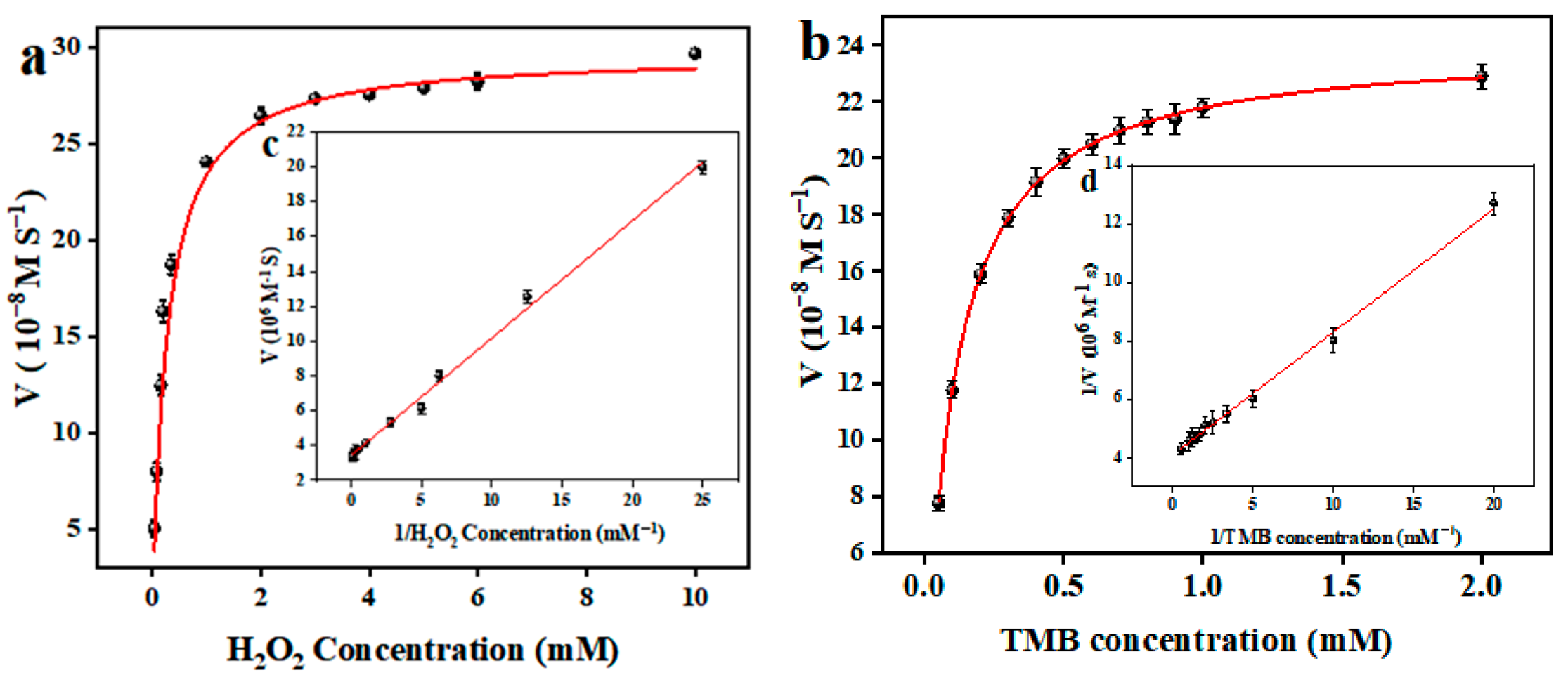
The catalytic kinetic data of the 2Fe-CDs/12Mn-CeO2 nanoenzyme were studied using the enzyme kinetics theory and method [21]. Since peroxidase is a double-substrate reaction, the steady-state kinetic parameters of 2Fe-CDs/12Mn-CeO2 peroxidase activity can be obtained by fixing the concentration of one substrate (TMB or H2O2) in the double substrate while changing the concentration of the other substrate. Figure 13a–d shows that in the catalytic reaction involved by 2Fe-CDs/12Mn-CeO2, the initial rate of the catalytic reaction gradually increases with the increasing substrate concentration. The high concentrations of TMB and H2O2 can inhibit the reaction and then tend to saturation, which fits the typical Michaelis–Menten curve.
The Michaelis–Menten curve is linearly fitted by the Lineweaver-Burk double reciprocal, and it can be seen from the illustrations in Figure 13c,d that there is an excellent linear relationship. The dynamic parameters of 2Fe-CDs/12Mn-CeO2 can be calculated from the slope and intercept of the Lineweaver-Burk diagram. Km is the Michaelis constant, a concrete reflection of the enzyme’s affinity to the substrate. The smaller the Km value, the better the enzyme’s affinity to the substrate. From the results in Table 2, it can be seen that the Km value of 2Fe-CDs/12Mn-CeO2 for TMB or H2O2 is lower than that of horseradish peroxidase (HRP), which proves that our synthetic strategy has good affinity for TMB and H2O2 as well as good catalytic activity, and it can be used as an artificial simulated enzyme to replace natural HRP.

2.3. The Catalytic Mechanism of 2Fe-CDs/12Mn-CeO2

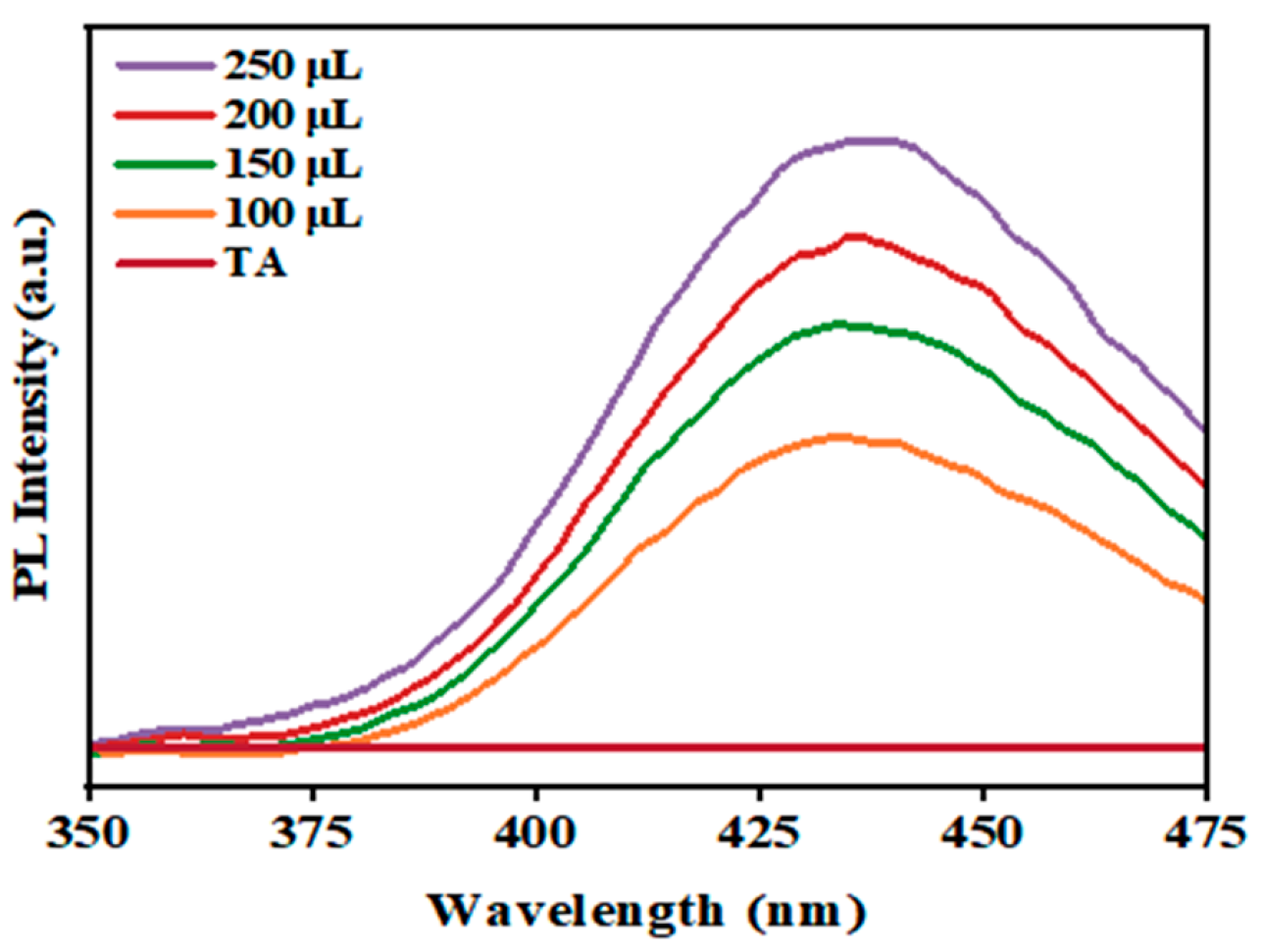
As we all know, enzymes can accelerate the chemical reaction by significantly reducing the activation energy required, thus greatly increasing the reaction rate. The catalytic pathways of peroxidase are generally divided into two types: the generation of hydroxyl radical (OH) and electron transfer [22]. In order to accurately explore the production of hydroxyl radicals in the reaction process, we chose a specific fluorescent probe—TA. Once hydroxyl radicals are captured, TA will be transformed into TAOH with high fluorescence characteristics. As shown in Figure 14, by adding different concentrations of 2Fe-CDs/12Mn-CeO2 into the reaction system containing H2O2 and TA, the system produces fluorescence at 435 nm under the excitation wavelength of 315 nm, and the fluorescence intensity increases with the increase in the concentration of nanoenzyme, which shows that the mechanism of 2Fe-CDs/12Mn-CeO2 as a peroxidase can be attributed to the generation of ·OH.

2.4. The Fe-CDs/Analysis of 12Mn-CeO2

2.4.1. Fe-CDs/12Mn-CeO2 Was Applied to the Determination of H2O2

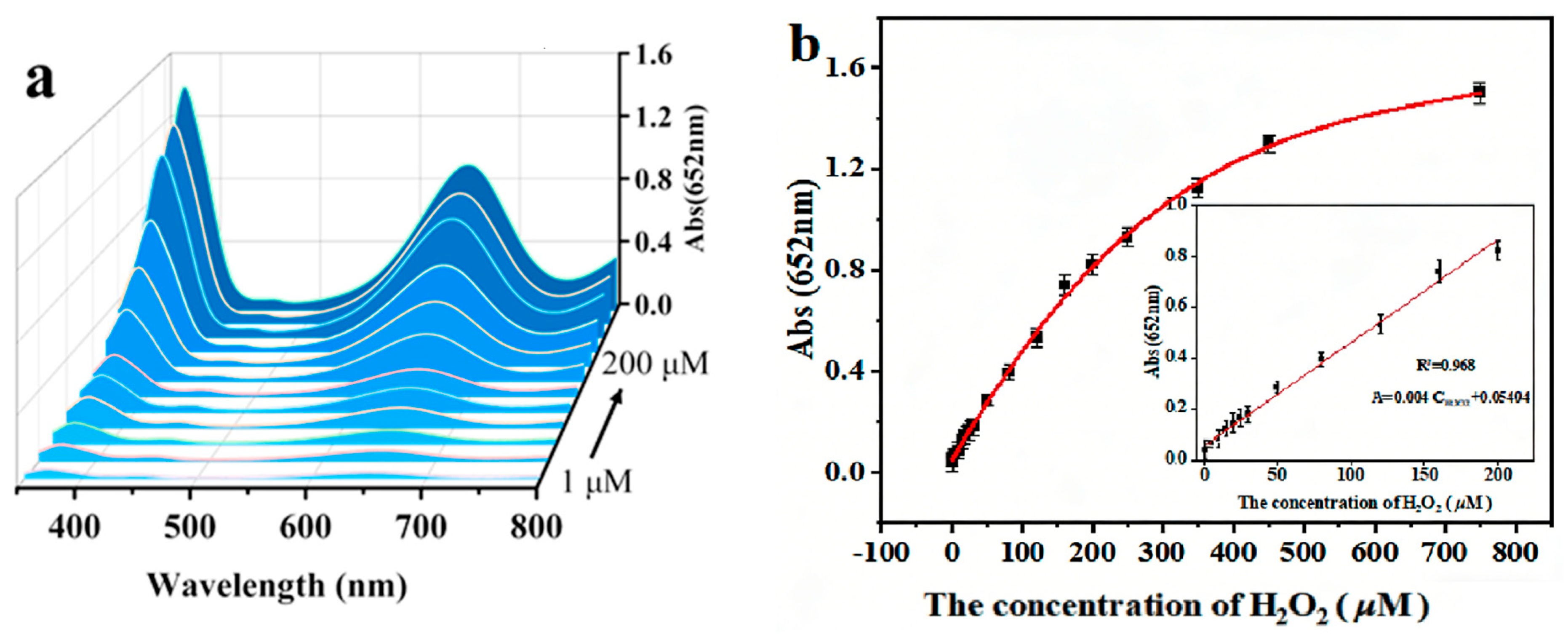
Based on the peroxidase activity of 2Fe-CDs/12Mn-CeO2, the applicability of the 2Fe-CDs/12Mn-CeO2 nanoenzyme to H2O2 detection was explored under optimized experimental conditions. As shown in Figure 15, when the H2O2 concentration is 1–200 μM, the absorbance at 652 nm is linearly related to the H2O2 concentration, and the linear equation (R2 = 0.993) is determined as A. The corresponding detection limit is 0.21 μm. In order to compare 2Fe-CDs/12Mn-CeO2 with other nanoenzymes that detect H2O2, other related detection lines are listed in Table 3. The results show that our synthesized 2Fe-CDs/12Mn-CeO2 has a more comprehensive linear range and lower detection limit than other nanoenzymes.

2.4.2. The Selectivity and Utility of 2Fe-CDs/12Mn-CeO2 Application in H2O2

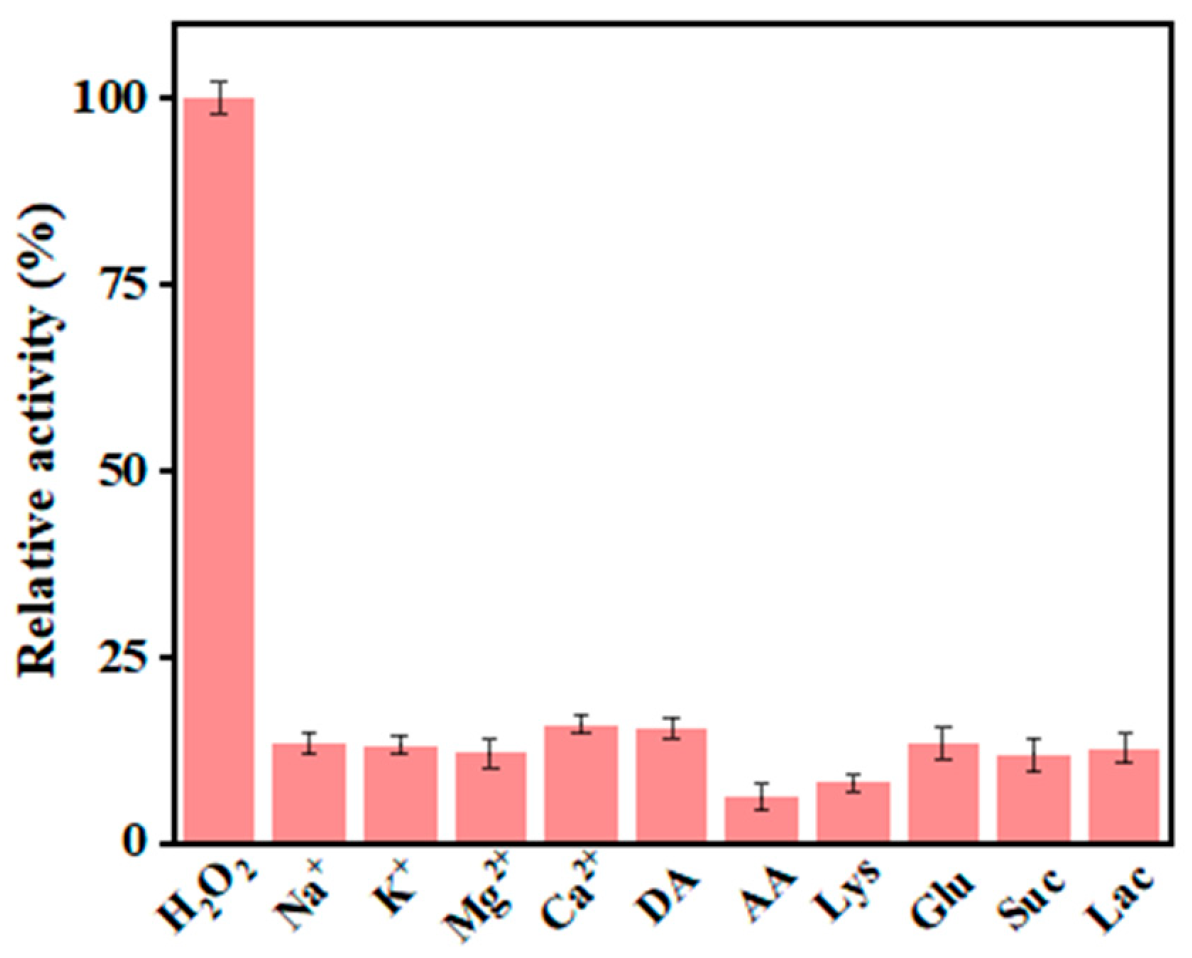
When 2Fe-CDs/12Mn-CeO2 is used as a nano-sensor, its selectivity to H2O2 is very important. In this experiment, the absorbance change in the presence of potential interfering ions is determined when Na+, K+, Mg2+, Ca2+, DA, AA, Lys, Glu, Suc, and Lac are contained. The concentration of H2O2 is 100 μM, and the concentration of interfering ions is ten times that of H2O2. When other conditions are the same, the color and absorbance of the solution in the system with interfering ions have no noticeable change compared with the blank solution. As shown in Figure 16, the results show that the colorimetric detection of H2O2 by 2Fe-CDs/12Mn-CeO2 is highly selective..
Hydrogen peroxide is widely used in production and life and is often used for sterilization and disinfection of dairy products, drinks, fruits, meat, and other products [23]. Based on the excellent catalytic activity of 2Fe-CDs/12Mn-CeO2, the feasibility of applying it to infant milk powder solution to determine the actual sample detection was studied. Different concentrations of H2O2 were added to the infant milk powder solution to carry out the recovery experiment. The experimental results are shown in Table 4. The recovery rate of this method is in the range of 98.72~101.2%, which meets the standard. Therefore, the system can be applied to the analysis of H2O2 content in actual infant milk powder, and the method is reliable and accurate.

2.4.3. 2Fe-CDs/12Mn-CeO2 Were Applied to the Determination of Glucose

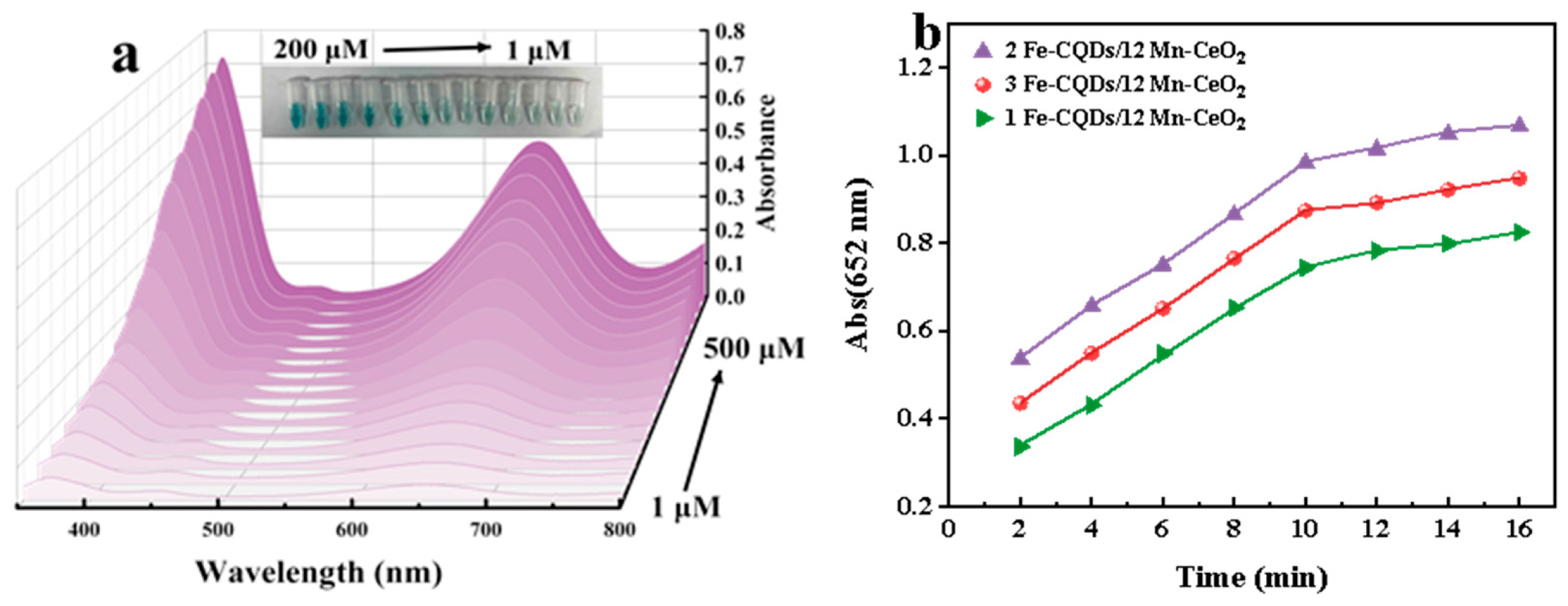
As we all know, glucose will be oxidized in the presence of GOx to generate gluconic acid and H2O2. The generated H2O2 will be catalyzed by 2Fe-CDs/12Mn-CeO2 to generate OH, which will oxidize TMB to oxTMB, so 2Fe-CDs/12Mn-CeO2 can indirectly determine the content of glucose and then realize colorimetric and visual detection of glucose according to the change in absorbance and color [24]. As shown in Figure 17a, under the best experimental conditions, the characteristic absorption peak of TMB at 652 nm of the solution increased with increasing glucose concentration. In contrast, the absorbance showed an excellent linear correlation with glucose concentration at 1–200 μM, with the linear equation A = 0.00179 CGlu + 0.04361(R2 = 0.996), LOD = 2.7 μM; compared with most other materials (as shown in Table 5), 2Fe-CDs/12Mn-CeO2 had a lower detection limit and a more comprehensive linear range, indicating a promising prospect for the detection of glucose.

2.4.4. The Selectivity and Utility of 2Fe-CDs/12Mn-CeO2 Application in Glucose

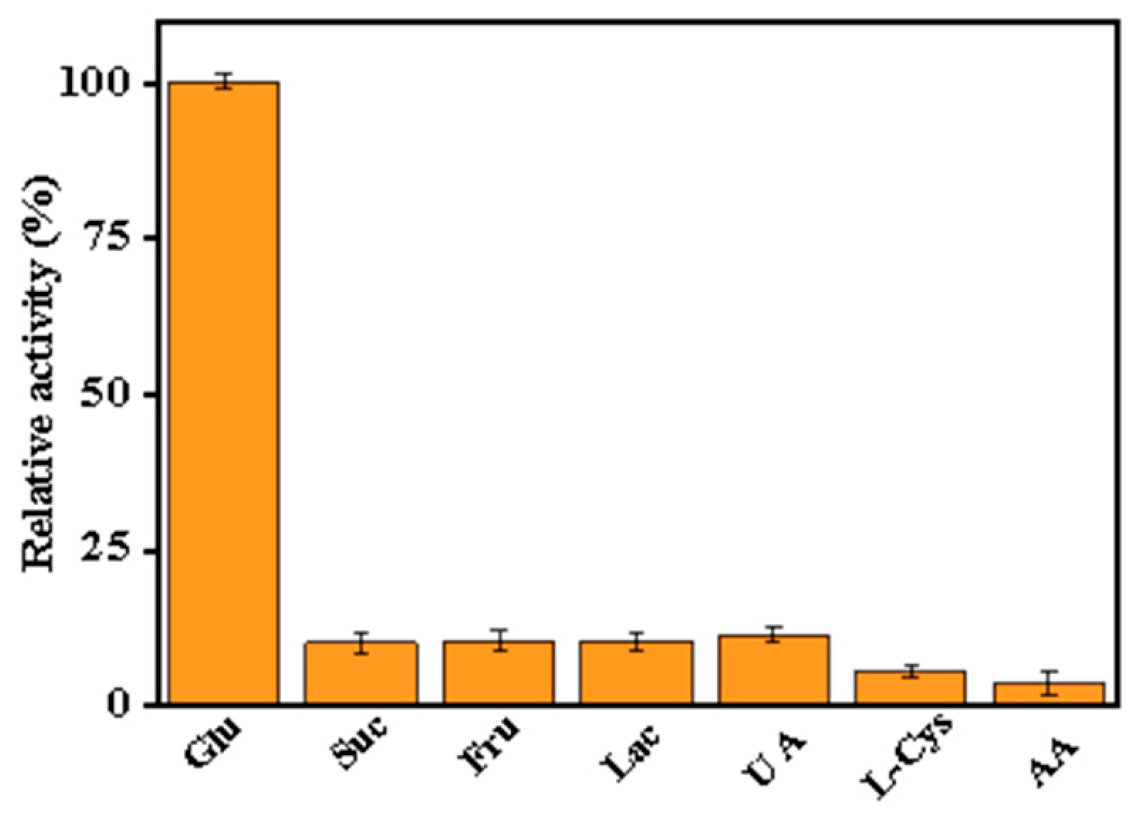
The selectivity of 2Fe-CDs/12Mn-CeO2 in detecting glucose was further evaluated. As shown in Figure 18, under the same experimental conditions, even if the concentration of interfering substances was ten times that of glucose, the absorbance of glucose was much higher than that of other control groups. Therefore, the results show that glucose analogs have little interference with glucose detection, and the developed 2Fe-CDs/12Mn-CeO2 has good selectivity for glucose.
To evaluate the utility of 2Fe-CDs/12Mn-CeO2 nanomaterials for glucose detection in real samples, we added different concentrations of glucose to superior neonatal bovine serum (NBS). The results are shown in Table 6. The recovery of glucose added in NBS is between 99.04 and 101.65%, and RSD is between 1.75 and 2.56%. The results show that our established system is suitable for accurately detecting trace glucose in actual samples.

2.4.5. 2Fe-CDs/12Mn-CeO2 Was Applied to the Determination of GSH

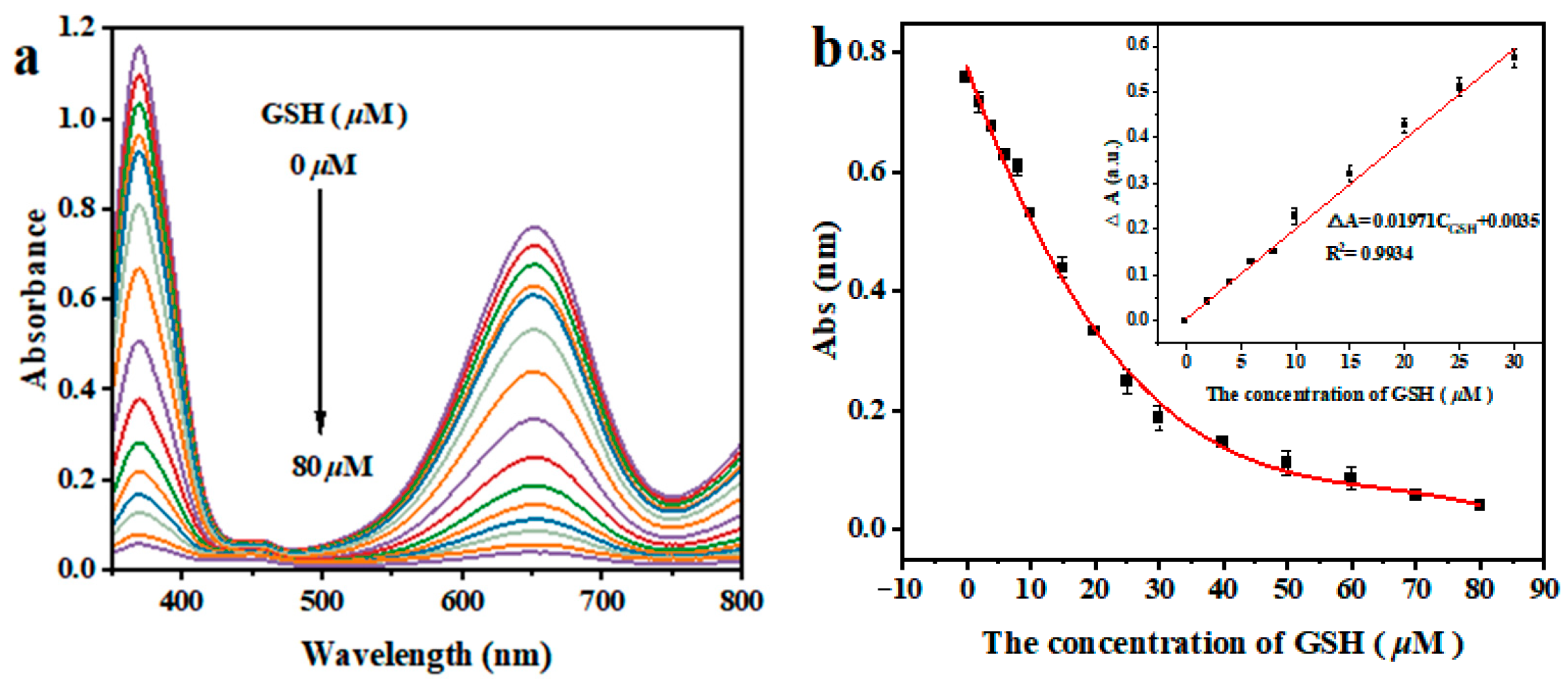
Glutathione (GSH), as an essential antioxidant, plays a vital role in human life activities. However, abnormal GSH levels in living organisms can cause many diseases, so detecting its content is of great significance [25]. Given that the 2Fe-CDs/12Mn-CeO2 nanoenzymes can oxidize the colorless substrate TMB to the blue oxidation state, the GSH reduces and can redox-react with oxTMB to trigger a color change. Figure 4, Figure 5, Figure 6, Figure 7, Figure 8, Figure 9, Figure 10, Figure 11, Figure 12, Figure 13, Figure 14, Figure 15, Figure 16, Figure 17, Figure 18 and Figure 19a are the experimental results for detecting GSH, and the absorbance gradually decreases with the increase in GSH concentration. When the concentration of GSH is near 80 μ M, the absorbance of the solution is close to 0, and the solution is close from blue to colorless. Figure 4, Figure 5, Figure 6, Figure 7, Figure 8, Figure 9, Figure 10, Figure 11, Figure 12, Figure 13, Figure 14, Figure 15, Figure 16, Figure 17, Figure 18 and Figure 19b show the dose–response curve of GSH, with an excellent linear relationship between ΔA (A0-A) and C (GSH) in the range of 1–30 μM (R2 = 0.9934). Its detection limit, LOD = 0.63 μM, as shown in Table 7, is better than most reported GSH sensors.

2.4.6. The Selectivity and Utility of 2Fe-CDs/12Mn-CeO2 Application in GSH

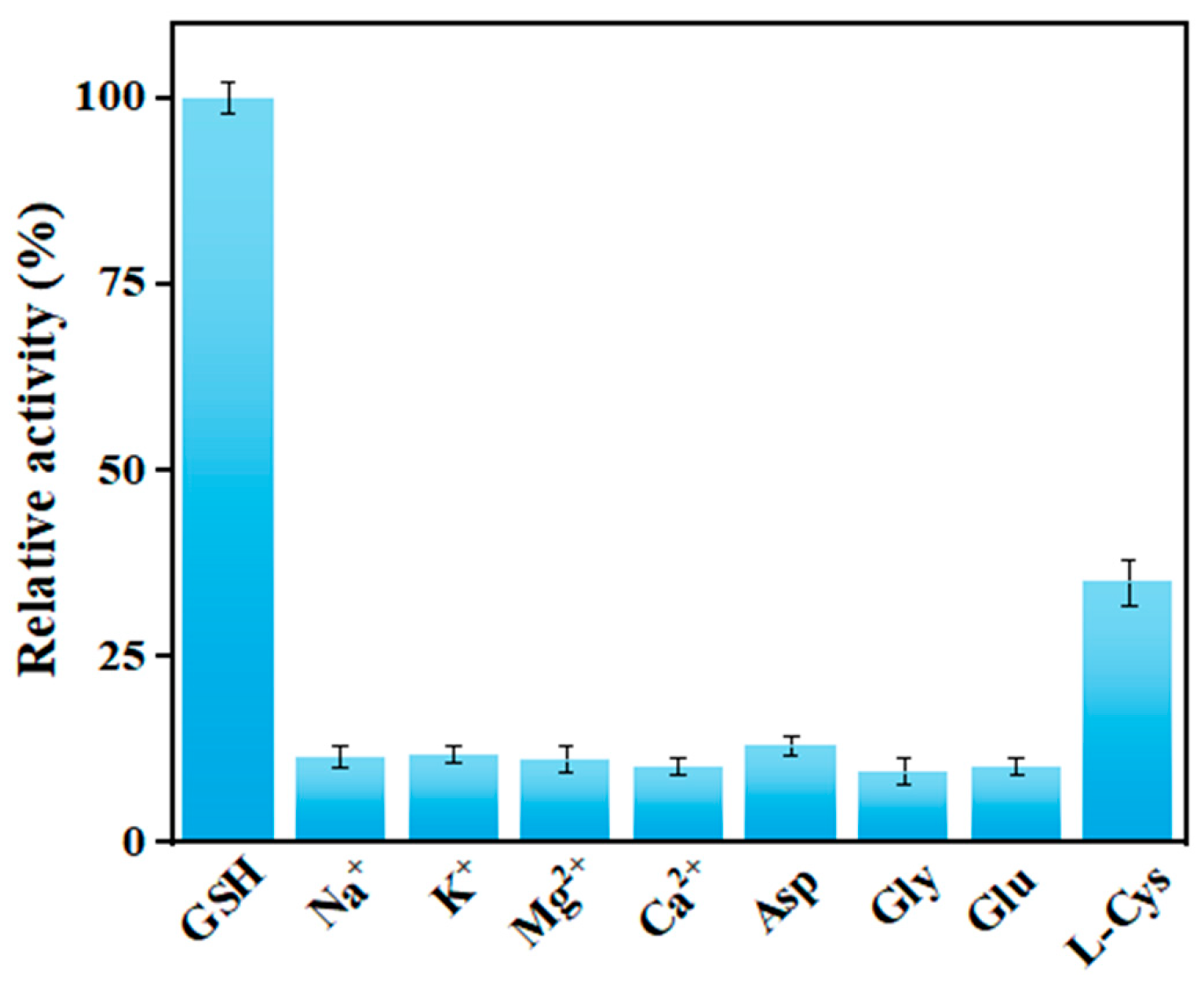
To further evaluate the sensor’s selectivity, we also studied the competition results for other biomolecules or ions, as shown in Figure 20, except for Cys, showing that the results of GSH did not affect the absorbance value of the solution at 652 nm. Since Cys is a component of GSH, Cys also inhibited the generation of oxTMB, but because Cys is 1000 times less than GSH in serum, the effect of Cys for GSH in actual samples is relatively limited. This method is used to detect GSH. In addition, because this method is based on the substrate’s catalytic oxidation and redox reaction to detect GSH, the high content of solid oxidant or reducing agent in the test sample should be avoided to avoid interfering with the detection results.
Since GSH is present in living organisms, NBS was used to verify the feasibility of testing its actual samples. Under optimal conditions, a GSH standard solution was added to diluted cattle serum to determine the total GSH content. The recovery and RSD were calculated, as shown in Table 8, to evaluate its utility in actual samples. The experimental results show that this method can be reliably used for the determination of GSH in bovine serum, with the recovery rate (93.2–103.4%) and RSD (0.86–1.88%).

2.5. Mechanism Study of the Colorimetric Sensing of 2Fe-CDs/12Mn-CeO2 for H2O2, Glucose, and GSH

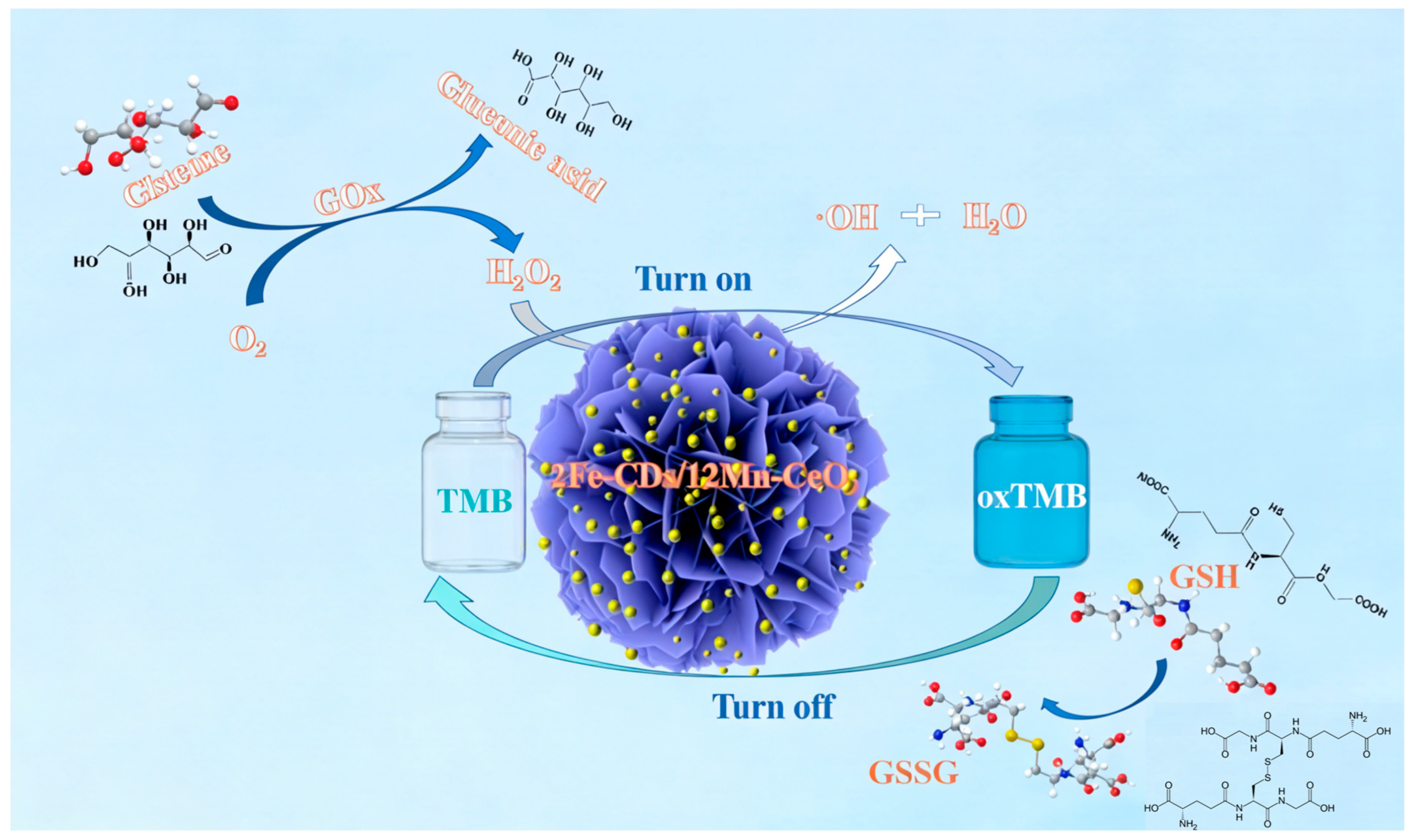
According to the above experiments, it can be inferred that 2Fe-CDs/12Mn-CeO2 has excellent peroxidase-like activity as follows: First, CDs themselves have excellent POD enzyme-like activity. Metal Fe atoms were doped into the carbon framework of CDs with the formation of Fe-O/Fe-N coordination bonds (confirmed by FTIR). Partial initial Fe3+ was reduced to Fe2+ during the synthesis (confirmed by XPS), and the formed Fe2+/Fe3+ redox couple acts as a strong electron acceptor/donor in the reaction process to accelerate the electron transfer and promote the catalytic reaction. Second, under the same conditions, Fe-CDs/12Mn-CeO2 showed better catalytic performance than the Fe-CDs and Mn-CeO2 alone, showing that Fe-CDs can improve the peroxidase-like activity of Mn-CeO2. This is most likely because, for natural peroxidases, the active site is the Heme, Heme is composed of four pyrrole subunits forming a ring, Ring is centered on a Fe2+. In the Fe-CDs, pyridine and pyrrole nitrogen can form M-Nx coordination bonds. However, the Fe-Nx bond in Fe-CDs can mimic metalloproteinases, with Heme as the catalytic active center, thus significantly enhancing the catalytic activity of 2Fe-CDs/12Mn-CeO2. Third, the synergistic interaction among Fe-CDs, Mn, and CeO2 further increased the peroxidase-like activity of 2Fe-CDs/12Mn-CeO2. Meanwhile, the mechanism of 2Fe-CDs/12Mn-CeO2 detection of H2O2, glucose, and GSH was investigated in Figure 21. First, TMB can be adsorbed onto 2Fe-CDs/12Mn-CeO2 to provide amino lone pair electrons to 2Fe-CDs/12Mn-CeO2 along with electron transfer from 2Fe-CDs/12Mn-CeO2 to H2O2. Next, H2O2 is catalytically decomposed by the active site of 2Fe-CDs/12Mn-CeO2 OH oxidizing the TMB on the surface of 2Fe-CDs/12Mn-CeO2 into a blue oxTMB. GOx catalyzes glucose to produce gluconic acid and H2O2 for glucose content detection. Therefore, the glucose content can be detected indirectly by measuring the absorbance at λ = 652 nm. Last, the added GSH restores the blue oxTMB to a colorless TMB, The simultaneous conversion of GSH to GSSG causes the blue fading (Figure 21).

2.6. Determination of ·OH by Electron Paramagnetic Method

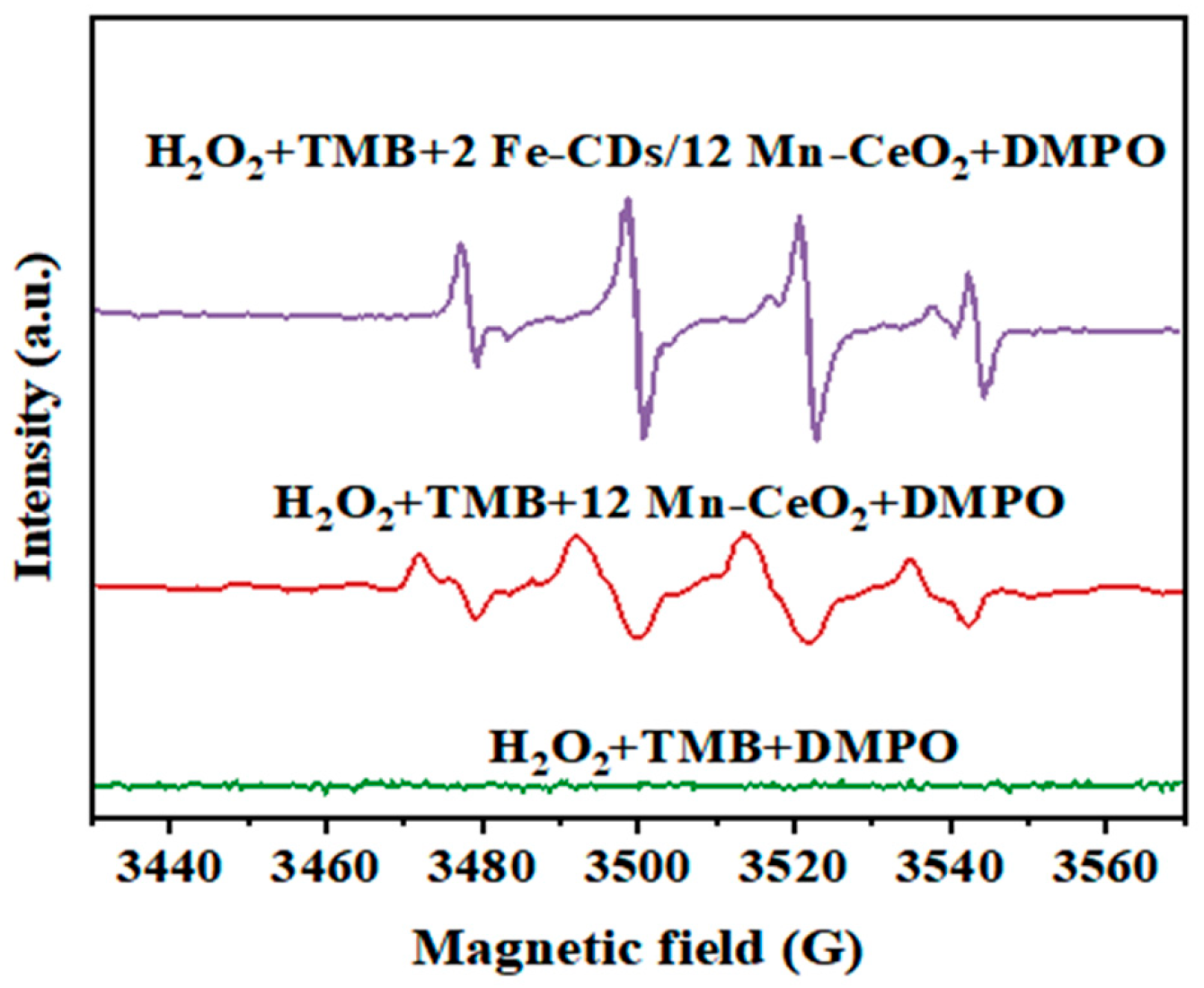
In order to confirm the generation of ·OH in the reaction process, electron paramagnetic resonance (EPR) was used to verify the generation of ·OH, and DMPO was used as the capture agent of ·OH to form a typical ESR signal peak with a relative intensity of 1:2:2:1. Figure 22 shows that the characteristic ESR signal peak of DMPO/·OH spin adduct appears in the presence of 2 Fe-CDs/12Mn-CeO2 and H2O2. On the contrary, no ESR signal is observed in the reaction system without 2 Fe-CDs/12Mn-CeO2, which proves that 2Fe-CDs/12Mn-CeO2 can catalyze H2O2 to produce ·OH. The two characterization methods firmly explain that the mechanism of 2Fe-CDs/12Mn-CeO2 as peroxidase can be attributed to the production of ·OH.

3. Experiment

3.1. Material

Rutin, Urea, FeCl3, and Mn-CeO2 were used, while the water used in the experiment is deionized water. All the above reagents were purchased from Aladdin Reagent Co., Ltd. (South Tower, No. 36 Xinjinqiao Road, Pudong New Area, Shanghai, China)), and the purity of the reagents was analytically pure.

3.2. Synthesis of Flower-like Mn-CeO2

The cold co-precipitation method was adopted. First, 0.8 g of NaHCO3 was dissolved in 200 mL of ultrapure water under stirring at 4 °C. Then, 1.38 g of Ce(NO3)6·6H2O and Mn2+ with different molar doping ratios (3%, 6%, 12%, 18%, and 24%) were co-dissolved completely in another 200 mL portion of ultrapure water at 4 °C. The two solutions were mixed rapidly, followed by continuous stirring for 1 h. The mixture was then allowed to stand for aging at 4 °C for 24 h. The resulting product was collected by centrifugation, washed three times with deionized water and absolute ethanol, respectively, to remove any potential ionic residues, and dried at 80 °C for 6 h. Finally, the dried product was calcined at 450 °C for 4 h with a heating rate controlled at 10 °C·min−1, yielding the flower-like Mn-CeO2 nanomaterials.

3.3. Preparation of CDs

Exactly 0.15 g of rutin and 0.15 g of urea were weighed into a 50 mL beaker, followed by the addition of 10 mL of deionized water. The mixture was dissolved via ultrasonic oscillation, then transferred into a stainless-steel autoclave lined with polytetrafluoroethylene and reacted at 200 °C for 6 h. After the reaction completed, the system was naturally cooled down to room temperature. The resulting reaction solution was centrifuged at 12,000 rpm for 15 min. The supernatant was filtered through a 0.22 μm membrane filter, and the filtrate was dialyzed against deionized water using a dialysis bag with a molecular weight cutoff (MWCO) of 1000 kDa for 24 h (with water replacement every 3 h) to obtain the CD solution. Subsequently, the CD solution was subjected to vacuum drying at 60 °C to yield solid CDs.

3.4. Preparation of Fe-CDs

Exactly 0.15 g of rutin, 0.15 g of urea, and 0.1 g of ferric chloride (FeCl3) were weighed into a 50 mL beaker, and 10 mL of deionized water was added. The mixture was dissolved by ultrasonic oscillation, then transferred into a stainless-steel autoclave lined with polytetrafluoroethylene, and reacted at 200 °C for 6 h. After the reaction finished, the system was naturally cooled to room temperature. The reaction solution was centrifuged at 12,000 rpm for 15 min. The supernatant was filtered through a 0.22 μm membrane filter, and the filtrate was dialyzed against deionized water using a dialysis bag with a MWCO of 1000 kDa for 24 h (with water replacement every 3 h) to obtain the Fe-CDs solution. Finally, the Fe-CDs solution was vacuum-dried at 60 °C to afford a brownish-black Fe-CDs solid [25].

3.5. Synthesis of the Fe-CDs/12Mn-CeO2

A sample of 10 mg of Fe-CDs were dissolved in 10 mL of ultrapure water to yield an aqueous solution of Fe-CDs at a concentration of 1 g L−1. Subsequently, 0.1 g of flower-like Mn-CeO2 powder was added to 10 mL 1 g L−1 aqueous solution of Fe-CDs and dried at 60 °C for 12 h, resulting in the Fe-CDs/12Mn-CeO2 composite system. By changing the ratio between the carbon point concentrations, the corresponding 1Fe-CDs/12Mn-CeO2, 2Fe-CDs/12Mn-CeO2, and 3Fe-CDs/12Mn-CeO2 composite systems were obtained.

3.6. Preparation of Solution

Preparation of 0.2 M acetate (NaAc-HAc) buffer solution: At 25 °C, accurately measure 4.1015 g NaAc to a constant volume in a 250 mL volumetric flask to obtain 0.2 M NaAc solution; accurately measure 2.95 mL glacial acetic acid to a constant volume and put it into a 250 mL volumetric flask to obtain 0.2 M HAc. Gradually add HAc or NaOH into the NaAc-HAc solution to adjust the pH to 3.5, 4.0, 4.5, 5.0, 5.5, and 6.0. For pH values outside the effective buffering range of acetate (pH < 3.8 or pH > 5.8), glycine-HCl buffer (pH 2.5–3.5) and phosphate buffer (pH 6.0–7.0) were used, respectively, to ensure adequate buffering capacity. The final pH of each solution was verified using a calibrated pH meter before use.
Preparation of TMB solution: accurately measure TMB 12 mg of TMB and dissolve it in 5 mL DMSO to obtain 10 mM TMB solution, seal it with tin foil paper, and store it in a refrigerator at 4 °C in the dark.
Preparation of H2O2 solution: accurately measure 150.4 μL of 30% hydrogen peroxide solution and dissolve it in a 10 mL brown volumetric flask to obtain 0.15 M H2O2 solution; accurately measure 102.2 μL of 30% hydrogen peroxide solution and dissolve it in a 10 mL brown volumetric flask to obtain 0.1 M H2O2 solution and store it in the dark.

3.7. Application of Fe-CQDs/12Mn-CeO2 in the Determination of H2O2, Glucose, and GSH

3.7.1. Determination of H2O2

To eliminate the interference of other substances on H2O2 detection, common interfering substances including Na+, K+, Mg2+, Ca2+, dopamine (DA), ascorbic acid (AA), lysine (Lys), glutamic acid (Glu), sucrose (Suc), and lactose (Lac) were prepared into 1 mM solutions, respectively, to replace 100 μM H2O2. The variation in absorbance in the presence of these potential interfering ions was determined, and the absorbance at 652 nm was measured and recorded using a UV spectrophotometer.
As infant milk powder is a special food for consumption, ensuring its safety is of great importance. Therefore, it is crucial to establish a simple and efficient method for the detection of H2O2 content in infant milk powder. The specific steps for H2O2 determination are as follows: 5 g of infant milk powder was dissolved in 10 mL of ultrapure water, ultrasonicated for 20 min, and then centrifuged at 10,000 rpm for 10 min. The supernatant was filtered and diluted 10-fold to obtain the standard infant milk powder solution. H2O2 solutions with different concentrations were added to the standard solution to prepare spiked infant milk powder solutions. The H2O2 content in the milk powder was detected following the procedure for H2O2 determination. Specifically, 2260 μL of 0.2 M NaAc-HAc buffer solution (pH = 3.5), 80 μL of 0.6 mg·mL−1 Fe-CDs/12Mn-CeO2 dispersion, 80 μL of 10 mM TMB solution, and 80 μL of spiked milk powder solutions with different concentrations (10, 50, 100 μM) were mixed thoroughly, reacted at 55 °C for 10 min. The absorbance of the system at 652 nm was measured in triplicate, and the values were recorded.

3.7.2. Determination of Glucose

Glucose solutions with different concentrations (1–500 μM) and 5 mg·mL−1 glucose oxidase (GOx) solution were prepared. A sample of 100 μL of glucose solution was mixed with 40 μL of GOx solution, and the mixture was incubated in a water bath at 37 °C for 30 min. Subsequently, 2200 μL of 0.2 M NaAc-HAc buffer solution (pH = 3.5), 80 μL of 10 mM TMB solution, and 80 μL of 0.6 mg·mL−1 Fe-CDs/12Mn-CeO2 dispersion were added to the above mixture. After heating in a water bath at 55 °C for 10 min, the absorbance of the reaction system at 652 nm was measured in triplicate using a UV–Vis spectrophotometer.
A sample comprising 10 mM solutions of Suc, fructose (Fru), Lac, uric acid (UA), L-cysteine (L-Cys), and AA, as well as 1 mM glucose, were prepared. The selectivity of 2Fe-CDs/12Mn-CeO2 towards glucose was evaluated following the aforementioned experimental procedure.
For the detection of glucose in newborn bovine serum (NBS) of superior grade, the standard addition method was adopted. Firstly, NBS was centrifuged at 10,000 rpm for 20 min and diluted to a certain multiple. Glucose standard solutions (25, 50, 75 μM) and 40 μL of 5 mg·mL−1 GOx solution were added to the filtrate, and the mixture was incubated in a PBS buffer solution at 37 °C for 30 min to obtain the diluted spiked serum samples. The detection procedure was consistent with that described in the above steps, except that 140 μL of spiked serum samples were used to replace the glucose–peroxidase mixture system.

3.7.3. Determination of GSH

A sample comprising 100 μM solutions of Na+, K+, Mg2+, Ca2+, aspartic acid (Asp), glycine (Gly), glutamic acid (Glu), and L-cysteine (L-Cys), as well as a 10 μM glutathione (GSH) solution, were prepared to investigate the selectivity of Fe-CDs/12Mn-CeO2 towards GSH.
For the determination of GSH content in newborn bovine serum (NBS), NBS was diluted to a certain multiple with PBS solution, and GSH solutions with different concentrations (5, 10, 15 μM) were added to prepare spiked samples. The detection procedure was consistent with the following steps, except that 100 μL of the spiked serum sample was used to replace the GSH solution system. To 2100 μL of 0.2 M NaAc-HAc buffer solution (pH = 3.5), 100 μL of 10 mM TMB solution, 100 μL of 0.6 mg·mL−1 Fe-CDs/12Mn-CeO2 dispersion, 100 μL of 0.1 M H2O2 solution, and 100 μL of GSH solutions with different concentrations (0–80 μM) were sequentially added. After reacting at 37 °C for 10 min, the mixture was immediately filtered through a syringe filter. The absorbance of the reaction system at 652 nm was measured and recorded using an ultraviolet–visible (UV–Vis) spectrophotometer.

4. Summary

In this study, ternary Fe-CDs/12Mn-CeO2 nanocomposites were successfully prepared, and the Fe-CDs/12Mn-CeO2 were characterized using XRD, FT-IR, SEM, TEM, XPS, and Raman tests. The quantitative evaluation of peroxidase-like activity, determined by steady-state kinetics with statistical validation (n = 3, CV < 8%), demonstrated that 2Fe-CDs/12Mn-CeO2 possesses catalytic efficiency (kcat/Km~ = 4.1 × 10⁵ M−1·S−1) superior to natural HRP and comparable to state-of-the-art nanozymes. This superior catalytic activity, derived from the synergistic effect of Fe-Nx active sites in Fe-CDs, and oxygen vacancies in 12Mn-CeO2, is an intrinsic property of the composite. Even after temperature normalization to 25 °C (the optimal temperature of natural HRP) based on the Arrhenius equation, the catalytic efficiency of 2Fe-CDs/12Mn-CeO2 is still 59-fold higher than that of natural HRP, which fully confirms the excellent catalytic performance of the nanozyme relative to natural peroxidase under non-physiological conditions. It was also applied to actual samples to successfully test the H2O2, Glu, and GSH content, with a relatively wide linear range and a lower detection limit. The optimal reaction conditions for 2Fe-CDs/12Mn-CeO2 peroxidase activity were also explored. The 2Fe-CDs/12Mn-CeO2 nanocomposites with excellent stability and biocompatibility show potential for biomedical research and biosensing applications. As a proof-of-concept study, this work demonstrates the feasibility of the composite as a biosensing platform for the detection of H2O2, glucose, and GSH. Through further research and optimization (e.g., in vitro/in vivo biocompatibility verification, actual clinical sample validation, and sensing system miniaturization), the nanocomposite is expected to become a promising tool in biosensing analytical detection, providing technical support for the development of disease-related diagnostic methods.

Author Contributions

Methodology, Y.L. (Yi Li); Investigation, J.L. and X.C.; Writing—original draft, K.L.; Writing—review & editing, N.C., Y.L. (Yi Li), C.G., C.X., S.L., J.L., X.C. and Y.L. (Yuguang Lv); Visualization, C.X.; Supervision, N.C. and S.L.; Project administration, K.L.; Funding acquisition, K.L. and Y.L. (Yuguang Lv). All authors have read and agreed to the published version of the manuscript.

Funding

This work has been supported by the Department of Scientific Research project in Heilongjiang province (no. PL2024H010), 2024 Heilongjiang Provincial Colleges and Universities Fundamental Scientific Research Business Funds Scientific Research Project (No.: 2024-KYYWF-0583), Scientific research and innovation team (No.: CXTD202102) and “Research and development team of northern unique medicinal resources”, Jiamusi University “East Pole” academic team (team no. DJXSTD202403).

Institutional Review Board Statement

Not applicable.

Informed Consent Statement

Not applicable.

Data Availability Statement

The original contributions presented in this study are included in the article. Further inquiries can be directed to the corresponding author.

Conflicts of Interest

Author Kuilin Lv was employed by the China Testing & Certification International Group Co., Ltd. The remaining authors declare that the research was conducted in the absence of any commercial or financial relationships that could be construed as a potential conflict of interest.

References

  1. Korah, B.K.; Murali, A.; John, B.K.; Mathew, B. Carbon dots as a sustainable nanoplatform. Biomass Convers. Biorefin. 2023, 14, 24889–24910. [Google Scholar] [CrossRef]
  2. Tuerhong, M.; Yang, X.U.; Xue-Bo, Y.I.N. Review on carbon dots and their applications. Chin. J. Anal. Chem. 2017, 45, 139–150. [Google Scholar] [CrossRef]
  3. Liu, H.; Zhong, X.; Pan, Q.; Zhang, Y.; Deng, W.; Zou, G.; Hou, H.; Ji, X. A review of carbon dots in synthesis strategy. Coord. Chem. Rev. 2024, 498, 215468. [Google Scholar] [CrossRef]
  4. Alafeef, M.; Srivastava, I.; Aditya, T.; Pan, D. Carbon dots: From synthesis to unraveling the fluorescence mechanism. Small 2024, 20, 2303937. [Google Scholar] [CrossRef]
  5. Lopez-Cantu, D.O.; González-González, R.B.; Melchor-Martínez, E.M.; Martínez, S.A.H.; Araújo, R.G.; Parra-Arroyo, L.; Sosa-Hernández, J.E.; Parra-Saldívar, R.; Iqbal, H.M. Enzyme-mimicking capacities of carbon-dots nanozymes: Properties, catalytic mechanism, and applications—A review. Int. J. Biol. Macromol. 2022, 194, 676–687. [Google Scholar] [CrossRef]
  6. Li, M.; Chen, T.; Gooding, J.J.; Liu, J. Review of carbon and graphene quantum dots for sensing. ACS Sens. 2019, 4, 1732–1748. [Google Scholar] [CrossRef] [PubMed]
  7. Feng, H.; Qian, Z. Functional carbon quantum dots: A versatile platform for chemosensing and biosensing. Chem. Rec. 2018, 18, 491–505. [Google Scholar] [CrossRef]
  8. Hu, J.; Sun, Y.; Aryee, A.A.; Qu, L.; Zhang, K.; Li, Z. Mechanisms for carbon dots-based chemosensing, biosensing, and bioimaging: A review. Anal. Chim. Acta 2022, 1209, 338885. [Google Scholar] [CrossRef] [PubMed]
  9. Li, X.; Fu, Y.; Zhao, S.; Xiao, J.; Lan, M.; Wang, B.; Zhang, K.; Song, X.; Zeng, L. Metal ions-doped carbon dots: Synthesis, properties, and applications. Chem. Eng. J. 2022, 430, 133101. [Google Scholar] [CrossRef]
  10. Miao, S.; Liang, K.; Zhu, J.; Yang, B.; Zhao, D.; Kong, B. Hetero-atom-doped carbon dots: Doping strategies, properties and applications. Nano Today 2020, 33, 100879. [Google Scholar] [CrossRef]
  11. Kuilin, L.; Detian, W.; Ruina, P.; Suo, W.; Zhu, Y. Curvature of NCNTs induced selectivity of CO2 electroreduction into CO. Carbon Neutralization 2022, 1, 189–197. [Google Scholar] [CrossRef]
  12. Shen, C.L.; Zheng, G.S.; Wu, M.Y.; Wei, J.-Y.; Lou, Q.; Ye, Y.-L.; Liu, Z.-Y.; Zang, J.-H.; Dong, L.; Shan, C.-X. Chemiluminescent carbon nanodots as sensors for hydrogen peroxide and glucose. Nanophotonics 2020, 9, 3597–3604. [Google Scholar] [CrossRef]
  13. Bao, Y.W.; Hua, X.W.; Ran, H.H.; Zenga, J.; Wu, F.-G. Metal-doped carbon nanoparticles with intrinsic peroxidase-like activity for colorimetric detection of H2O2 and glucose. J. Mater. Chem. B 2019, 7, 296–304. [Google Scholar] [CrossRef] [PubMed]
  14. Zhang, R.; Liu, L.; Li, W.; Luo, X.; Wu, F. Luminescent carbon dots with excellent peroxidase mimicking property for fluorometric and colorimetric detection of glucose. Colloids Surf. B Biointerfaces 2023, 222, 113125. [Google Scholar] [CrossRef]
  15. Junaid, M.; Imran, M.; Ikram, M.; Naz, M.; Aqeel, M.; Afzal, H.; Majeed, H.; Ali, S. The study of Fe-doped CdS nanoparticle-assisted photocatalytic degradation of organic dye in wastewater. Appl. Nanosci. 2019, 9, 1593–1602. [Google Scholar] [CrossRef]
  16. Yang, M.; Li, H.; Liu, X.; Huang, L.; Zhang, B.; Liu, K.; Xie, W.; Cui, J.; Li, D.; Lu, L.; et al. Fe-doped carbon dots: A novel biocompatible nanoplatform for multi-level cancer therapy. J. Nanobiotechnol. 2023, 21, 431. [Google Scholar] [CrossRef]
  17. Luo, H.; Liu, H.; Sun, C. Removal of Sulfide Ions from Kraft Washing Effluents by Photocatalysis with N and Fe Codoped Carbon Dots. Polymers 2023, 15, 679. [Google Scholar] [CrossRef]
  18. Huang, C.; Duan, M.; Shi, Y.; Liu, H.; Zhang, P.; Zuo, Y.; Yan, L.; Xu, Y.; Niu, Y. Insights into the antibacterial mechanism of iron doped carbon dots. J. Colloid Interface Sci. 2023, 645, 933–942. [Google Scholar] [CrossRef]
  19. Li, Q.; Lu, H.; Wang, X.; Hong, Z.; Fu, Z.; Liu, X.; Zhou, J. Visible-light-driven N and Fe co-doped carbon dots for peroxymonosulfate activation and highly efficient aminopyrine photodegradation. Chem. Eng. J. 2022, 443, 136473. [Google Scholar] [CrossRef]
  20. Liu, Y.; Xu, B.; Lu, M.; Li, S.; Guo, J.; Chen, F.; Xiong, X.; Yin, Z.; Liu, H.; Zhou, D. Ultrasmall Fe-doped carbon dots nanozymes for photoenhanced antibacterial therapy and wound healing. Bioact. Mater. 2022, 12, 246–256. [Google Scholar] [CrossRef] [PubMed]
  21. Tang, J.; Riley, W.J. A chemical kinetics theory for interpreting the non-monotonic temperature dependence of enzymatic reactions. Biogeosciences 2024, 21, 1061–1070. [Google Scholar] [CrossRef]
  22. Huang, Y.; Ren, J.; Qu, X. Nanozymes: Classification, catalytic mechanisms, activity regulation, and applications. Chem. Rev. 2019, 119, 4357–4412. [Google Scholar] [CrossRef]
  23. Chen, Z.; Yao, D.; Chu, C.; Mao, S. Photocatalytic H2O2 production Systems: Design strategies and environmental applications. Chem. Eng. J. 2023, 451, 138489. [Google Scholar] [CrossRef]
  24. Tan, W.; Yao, G.; Yu, H.; He, Y.; Lu, M.; Zou, T.; Li, X.; Yin, P.; Na, P.; Yang, W.; et al. Ultra-trace Ag doped carbon quantum dots with peroxidase-like activity for the colorimetric detection of glucose. Food Chem. 2024, 447, 139020. [Google Scholar] [CrossRef]
  25. Ito, T.; Ohkama-Ohtsu, N. Degradation of glutathione and glutathione conjugates in plants. J. Exp. Bot. 2023, 74, 3313–3327. [Google Scholar] [CrossRef]
Figure 1. XRD patterns—(a) and (b)—of the synthetic materials.
Inorganics 14 00088 g001
Figure 2. FT-IR spectra. (a) CDs and Fe-CDs; (b) CeO2, 12Mn-CeO2, and 2Fe-CDs/12Mn-CeO2. Key vibrational modes are labeled with wavenumbers (cm−1).
Inorganics 14 00088 g002
Figure 3. Morphological and elemental analysis of 2Fe-CDs/12Mn-CeO2. (a) SEM image at ×50,000 magnification; (be) EDS elemental mapping images of (b) Ce, (c) O, (d) Mn, and (e) Fe.
Inorganics 14 00088 g003
Figure 4. TEM patterns of 2Fe-CDs/12Mn-CeO2. (The irregular black nanoparticles in the red circles are Fe-CDs).
Inorganics 14 00088 g004
Figure 5. XPS spectra of 2Fe-CDs/12Mn-CeO2. (a) Survey spectrum; high-resolution spectra of (b) Ce 3d, (c) Mn 2p, (d) O 1s, (e) Fe 2p, and (f) C 1s.
Inorganics 14 00088 g005
Figure 6. Absorption and desorption curves and pore size distribution spectra of 2Fe-CDs/12Mn-CeO2 and 12Mn-CeO2 nanocomposites.
Inorganics 14 00088 g006
Figure 7. Raman mapping of 2Fe-CDs/12Mn-CeO2, 12Mn-CeO2 and Fe-CDs.
Inorganics 14 00088 g007
Figure 8. Peroxidase-like activity of 2Fe-CDs/12Mn-CeO2 with different chromogenic substrates. UV-Vis absorption spectra of (a) TMB (λmax = 652 nm), (b) ABTS (λmax = 416 nm), and (c) OPD (λmax = 450 nm) after catalytic oxidation. (d) Photographs of color changes (left to right): TMB (blue), ABTS (green), OPD (yellow).
Inorganics 14 00088 g008
Figure 9. Schematic illustration of the peroxidase-like catalytic mechanism of 2Fe-CDs/12Mn-CeO2. (a) TMB oxidation to blue oxTMB; (b) ABTS oxidation to green ABTS+; (c) OPD oxidation to yellow DAP.
Inorganics 14 00088 g009
Figure 10. UV–Vis absorption spectra demonstrating peroxidase-like activity. (a) Control experiments: a—TMB only, b—TMB + H2O2, c—TMB + 2Fe-CDs/12Mn-CeO2, d—TMB + H2O2 + 2Fe-CDs/12Mn-CeO2. (b) Comparison of different catalysts: CDs, Fe-CDs, CDs/CeO2, Fe-CDs/CeO2, 2Fe-CDs/12Mn-CeO2.
Inorganics 14 00088 g010
Figure 11. (a) UV–Vis absorption spectra of Fe-CDs/12Mn-CeO2 systems with different ratios. (b) Variation in absorbance with time in UV–Vis absorption spectra of Fe-CDs/12Mn-CeO2 systems in different ratios.
Inorganics 14 00088 g011
Figure 12. Effect of pH (a), catalyst concentration (b), reaction time (c), and temperature (d) on the catalytic performance of 2Fe-CDs/12Mn-CeO2 nanoenzyme. (The error bars represent the standard deviation of the results from three parallel experiments).
Inorganics 14 00088 g012
Figure 13. Steady-state kinetic assays of 2Fe-CDs/12Mn-CeO2, control reaction solution with a total volume of 2500 µL, buffer solution with pH = 3.5. (a) When the test substrate was TMB, the fixed H2O2 concentration was 6 mM, and (b), when the test substrate was H2O2, the fixed TMB concentration was 1 mM. (The error bars represent the standard deviation of the results from three parallel experiments).
Inorganics 14 00088 g013
Figure 14. Variation in fluorescence intensity with concentration of 2Fe-CDs/12Mn-CeO2.
Inorganics 14 00088 g014
Figure 15. (a) UV–Vis absorbance varies with concentration of H2O2; (b) linear plot of absorbance change with addition of different concentrations of H2O2. (The error bars represent the standard deviation of the results from three parallel experiments).
Inorganics 14 00088 g015
Figure 16. The selectivity of H2O2 was determined by 2Fe-CDs/12Mn-CeO2. (The error bars represent the standard deviation of the results from three parallel experiments).
Inorganics 14 00088 g016
Figure 17. (a) UV–Vis absorbance and photographs varies with concentration of glucose; (b) linear plot of absorbance change with addition of different concentrations of glucose. (The error bars represent the standard deviation of the results from three parallel experiments).
Inorganics 14 00088 g017
Figure 18. The selectivity of glucose was determined by 2Fe-CDs/12 Mn-CeO2. (The error bars represent the standard deviation of the results from three parallel experiments).
Inorganics 14 00088 g018
Figure 19. (a) UV–Vis absorbance varies with concentration of GSH; (b) dose–response curve and linear calibration of GSH. (The error bars represent the standard deviation of the results from three parallel experiments).
Inorganics 14 00088 g019
Figure 20. Selectivity of the 2Fe-CDs/12Mn-CeO2 for GSH sensing. (The error bars represent the standard deviation of the results from three parallel experiments).
Inorganics 14 00088 g020
Figure 21. The mechanism scheme of 2Fe-CDs/12Mn-CeO2 detecting H2O2, glucose, and GSH.
Inorganics 14 00088 g021
Figure 22. The ESR spectra of the different reaction systems.
Inorganics 14 00088 g022
Table 1. Specific surface area, pore volume, and pore size of 2Fe-CDs/12Mn-CeO2 and 12Mn-CeO2.
MaterialSBET (m2·g−1)VP (cm3·g−1)Dp (nm)
2Fe-CDs/12Mn-CeO231.570.0823.409
12Mn-CeO291.220.0563.411
Table 2. Km and Vmax comparison of nanozymes.
NanozymesH2O2TMBkcat/Km (M−1·S−1)Conditions (pH, T)Ref.
Km (mM)Vmax (10−8 M·S−1)kcat (104 S−1)Km (mM)Vmax (10−8 M·S−1)kcat (104 S−1)
HRP3.78.711.0 ± 0.060.434101.0 ± 0.062.7 × 103pH 7.0, 25 °C[12]
Co1Ce50.22946.272.0 ± 0.0928.0630.032.0 ± 0.098.7 × 105pH 4.0, 37 °C[13]
N,Fe-CDs0.41.190.05 ± 0.0030.351.610.05 ± 0.0031.3 × 104pH 4.0, 45 °C[14]
GQDs/CuO0.328.010.35 ± 0.020.0983.20.35 ± 0.021.1 × 105pH 4.5, 25 °C[15]
2Fe-CDs/12Mn-CeO20.2729.681.1 ± 0.060.10324.041.1 ± 0.064.1 × 105pH 3.5, 55 °CThis work
Table 3. The linear range and LOD of H2O2 were measured by nanoenzymes of different materials.
MaterialLinear Range (μM)LOD (μM)Ref.
CDs@ZIF-810–10003.6[16]
g-C3N4
O2
5~300.9[17]
Go/Fe3O41~500.32[18]
2Fe-CDs/12Mn-CeO21–2000.21This work
Table 4. Detection of H2O2 in baby milk.
Enzyme
Mimics
SamplesAdded H2O2
(μM)
Found H2O2
(μM)
Recover
(%)
RSD
(% n = 3)
2Fe-CDs/12Mn-CeO2baby milk1010.12
8.71
0.434
101.22.05
5049.36
0.098
98.721.98
100100.2100.23.18
Table 5. The linear range and LOD of glucose were measured by nanoenzymes of different materials.
MaterialLinear Range (μM)LOD (μM)Ref.
Fe3O450–100030[20]
CeVO410–1203.3[21]
6Fe/CeO21–1003.41[22]
2Fe-CDs/12Mn-CeO21–2002.7This work
Table 6. Detection of glucose in NBS samples.
Enzyme
Mimics
SamplesAdded Glucose
(μM)
Found Glucose
(μM)
Recover
(%)
RSD
(%)
2Fe-CDs/12Mn-CeO2NBS2524.76
8.71
0.434
99.042.56
5050.34
0.098
100.681.68
7576.24101.651.75
Table 7. The linear range and LOD of glucose were measured by nanoenzymes of different materials.
MaterialLinear Range (μM)LOD (μM)Ref.
Fe3O4 MNPs3~303[23]
Fe-CDs2~300.8[24]
Mn3O45~600.889[25]
2Fe-CDs/12Mn-CeO21–300.62This work
Table 8. Detection of GSH in NBS samples.
Enzyme
Mimics
SamplesAdded GSH
(μM)
Found GSH
(μM)
Recover
(%)
RSD
(%)
2Fe-CDs/12Mn-CeO2NBS54.66
8.71
0.434
93.20.86
1010.26
0.098
102.61.88
1515.51103.41.38
Disclaimer/Publisher’s Note: The statements, opinions and data contained in all publications are solely those of the individual author(s) and contributor(s) and not of MDPI and/or the editor(s). MDPI and/or the editor(s) disclaim responsibility for any injury to people or property resulting from any ideas, methods, instructions or products referred to in the content.