
Article

One-Pot Synthesis of NiO-Doped Fe3O4/MgAl2O4 Nanocomposites for Effective Removal of Pharmaceutical Pollutants from Water


by
Soad S. Alzahrani
Chemistry Department, College of Science, Imam Mohammad Ibn Saud Islamic University (IMSIU), P.O. Box 90905, Riyadh 11623, Saudi Arabia
Inorganics 2026, 14(3), 69; https://doi.org/10.3390/inorganics14030069
Submission received: 17 November 2025 / Revised: 15 February 2026 / Accepted: 20 February 2026 / Published: 27 February 2026
(This article belongs to the Section Inorganic Materials)

Abstract

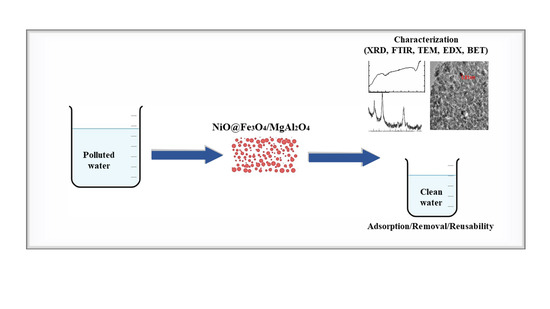
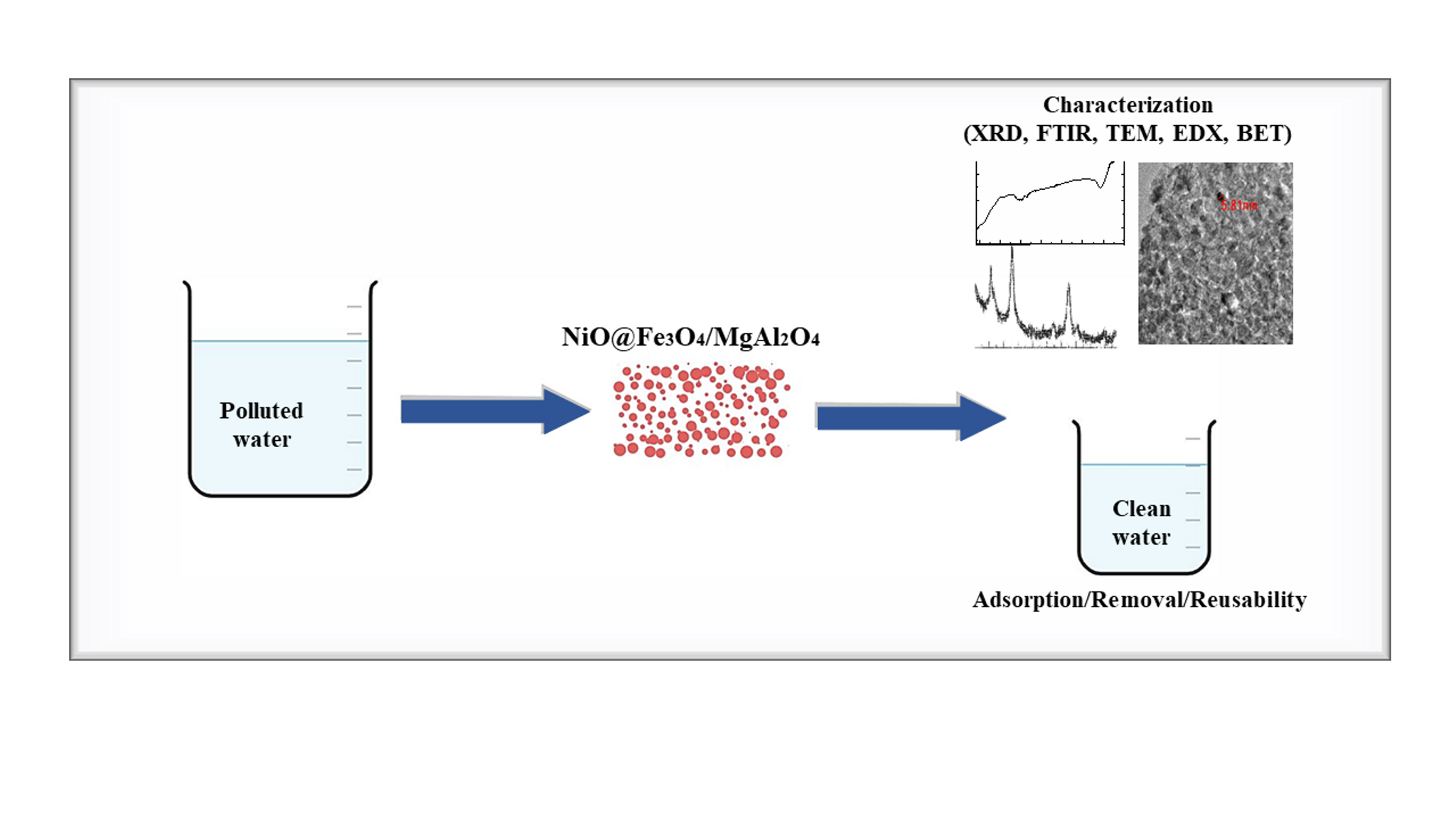
The presence of antibiotics in aquatic systems presents significant ecological and health risks. Herein, Fe3O4/MgAl2O4 (MgFeAl-1), 2.5%NiO@Fe3O4/MgAl2O4 (MgFeAl-2), 5%NiO@Fe3O4/MgAl2O4 (MgFeAl-3), and 10%NiO@Fe3O4/MgAl2O4 (MgFeAl-4) were synthesized, selecting glucose as a capping agent, and 600 °C as calcination temperature. The TEM, EDX, BET, XRD, and FTIR techniques were employed to characterize the preidentified sorbents. The average size of MgFeAl-1, MgFeAl-2, MgFeAl-3, and MgFeAl-4 was about 6.53, 5.0, 7.61, and 10.52 nm, respectively, and they exhibited surface areas of 114.15, 154.02, 153.36, and 128.54 m2 g−1, respectively. The sorbents were tested for the removal of ciprofloxacin (CFCN) from aqueous solutions using the batch protocol. The MgFeAl-2 exhibited the highest performance, achieving an adsorption capacity of 99.45 mg g−1, and the sorption equilibrium was reached within 60 min. The pseudo-second-order model best described CFCN sorption onto MgFeAl-2, and liquid-film diffusion influenced CFCN sorption. The CFCN adsorption onto MgFeAl-2 was well represented by the Langmuir isotherm model (R2 = 0.93), indicating a monolayer adsorption. The thermodynamic results indicated a spontaneous, endothermic sorption process. A four-cycle MgFeAl-2 reusability study showed an average efficiency of 90%. Notably, MgFeAl-2 was effective in treating natural-water matrices, with a slight reduction in seawater due to ionic interference. The findings highlight the potential of MgFeAl-2 as an affordable and reusable adsorbent for removing antibiotics from contaminated water.

Graphical Abstract

1. Introduction

Water is considered polluted when any quality indicator is compromised, typically as a result of unregulated and uncontrolled human activities. Water contamination represents a significant environmental challenge worldwide. Advancements in medical and pharmacological technologies have significantly increased the life spans of both humans and animals. Although human life modernization offers substantial benefits, including improved healthcare, greater efficiency, and enhanced living standards, it also has adverse outcomes, particularly concerning the environment, such as water pollution [1]. Pharmaceutical pollutants (PhPOs) pose a global problem with concentrations ranging from nanograms to several micrograms per liter [2,3,4]. The extensive occurrence of PhPOs has heightened concerns about their impacts on water quality, ecological balance, and human health. Several studies revealed the presence of PhPOs and organic dyes in the ocean, rivers, and tap water [5,6]. PhPOs were initially recognized in surface water in the USA and Europe in the 1960s and were declared a threat around 1999, giving PhPOs a 40-year head start in pollution [7]. Currently, PhPOs are raising global concerns significantly due to their bioaccumulation, persistence in aquatic ecosystems, and detrimental impacts on human health [8].
Antibiotics (ANBs) constitute a significant branch of pharmaceuticals used to treat illnesses and eradicate microbes. ANBs are engineered to interact with biological targets, causing dramatic harm and disrupting their very existence [9,10]. The introduction of ANBs into aquatic environments from hospitals, manufacturing companies, veterinary applications, and agricultural systems is an escalating concern [11]. Prior art research has demonstrated that many antibiotics, including ciprofloxacin (CFCN), amoxicillin, chloramphenicol, tetracycline, enrofloxacin, and oxytetracycline, have been detected in aquaculture and other environmental elements [12,13]. CFCN is a second-generation fluoroquinolone antibiotic known for its broad-spectrum antibacterial activity and has been extensively used in recent decades to treat bacterial infections in humans and animals [14,15,16,17,18,19]. CFCN is recognized for its high water solubility (about 1.35 mg mL−1) across a range of pH values, indicating its considerable stability in wastewater and soil [20]. CFCN exhibits 70–80% bioavailability with oral dosing, with approximately 35% and 50% of the dose eliminated unmetabolized in feces and urine, respectively [21]. CFCN has been detected at concentrations of 5.01, 2.50, and 4.54 mg L−1 in surface water, rivers, and wastewater influent [22].
Due to the limitations of traditional treatments employed in STPs, there is an urgent necessity for innovative, sustainable, and effective technologies [23]. Various techniques were used to eliminate ANB residues, including photocatalysis, membrane filtration, electroflocculation, advanced oxidation, and sorption [24]. Among these, the adsorption method is notable for its numerous advantages, including easy access to raw materials, various material preparation techniques, straightforward design and operation, potential for adsorbent regeneration, efficacy in removing low concentrations of micropollutants, and minimal secondary pollution [25]. The sorption protocol stands out for its success, sustainability, and cost-effectiveness, especially when a suitable sorbent is designed. Therefore, developing and modifying sorbents for effective ANB removal is essential and of considerable scientific importance [26]. The literature documents the use of several adsorbents, including activated carbon, carbon nanotubes, graphene oxide, bentonite, nanostructured hybrid materials, and clays [27,28,29]. Metal oxide nanomaterials, characterized by layered double hydroxides and hierarchical nanostructures, exhibit exceptional sorption capabilities due to their high surface area, substantial sorption capacity, diverse physicochemical properties, and reactivity [30,31]. Aluminum and magnesium are sought after for several applications owing to their widespread mineral availability on Earth and their relative safety and ease of extraction. Various techniques exist for the synthesis of alumina and magnesia oxides, which have been employed as catalysts, catalytic supports, adsorbents, and abrasion-resistant coatings. Multiple strategies exist for synthesizing oxides from these two substances [32]. Al2O3-MgO has superior surface area and adsorption capacity compared to Al2O3 and/or MgO individually [33]. Spinel MgAl2O4 is a naturally occurring and easily synthesized nanohybrid, demonstrating exceptional properties including a melting point of 2135 °C, a hardness of 16 GPa, and a low density of 3.58 g cm−3 [34,35]. These significant attributes have extensive applications in additive manufacturing, including ceramics, cement, photocatalysis, methane production from CO2, ethanol synthesis, energy storage, hydrogen generation, and adsorption [36,37,38]. These characteristics could be further improved by doping with supplementary materials to meet specific requirements and applications [39,40]. Incorporating NiO into a Fe2O3-MgAl2O4 heterostructured material may cause simultaneous enhancement of the intrinsic properties of Fe3O4 and MgAl2O4 phases. Substituting Ni2+ into the spinel lattice can change the cationic distribution and increase the number of defects, leading to phase evolution and a different microstructure compared to the base material [41,42]. Also, the presence of NiO at the interfaces between Fe3O4 and MgAl2O4 affects electron movement, magnetic field interactions, and the behavior of oxygen vacancies. Consequently, the synthesis of NiO-doped Fe3O4-MgAl2O4 exemplifies a unique materials approach that combines dopant-induced defect engineering with multicomponent phase interactions, thereby optimizing this system for superior functional performance as an adsorbent.
Aiming to produce an effective novel adsorbent for treating the above-identified pollution dilemma, this work seeks to synthesize novel adsorbents of Fe3O4/MgAl2O4 (MgFeAl-1), 2.5%NiO@Fe3O4/MgAl2O4 (MgFeAl-2), 5%NiO@Fe3O4/MgAl2O4 (MgFeAl-3), and 10%NiO@Fe3O4/MgAl2O4 (MgFeAl-4) via a straightforward, simplified process. The NiO doping doses of 2.5, 5, and 10% were applied to evaluate the optimally effective ratio for making the best sorbent for water treatment. The characteristics of MgFeAl-1, MgFeAl-2, MgFeAl-3, and MgFeAl-4 will be studied. The sorbent’s efficacy in treating water will be studied employing CFCN as an ANB model. The CFCN’s kinetics, isotherm, pH impact, and thermodynamics will be investigated.

2. Results and Discussion

2.1. Characteristics of MgFeAl-1, MgFeAl-2, MgFeAl-3, and MgFeAl-4

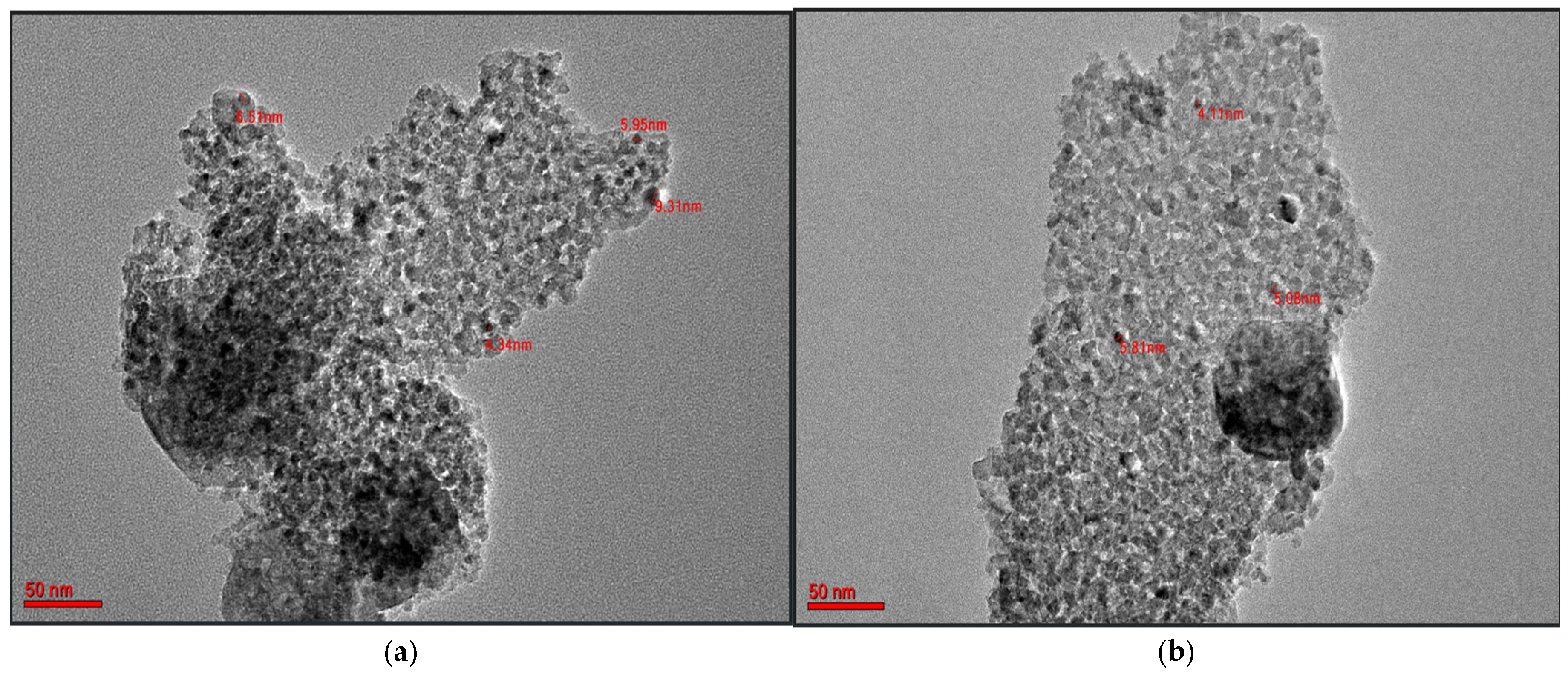
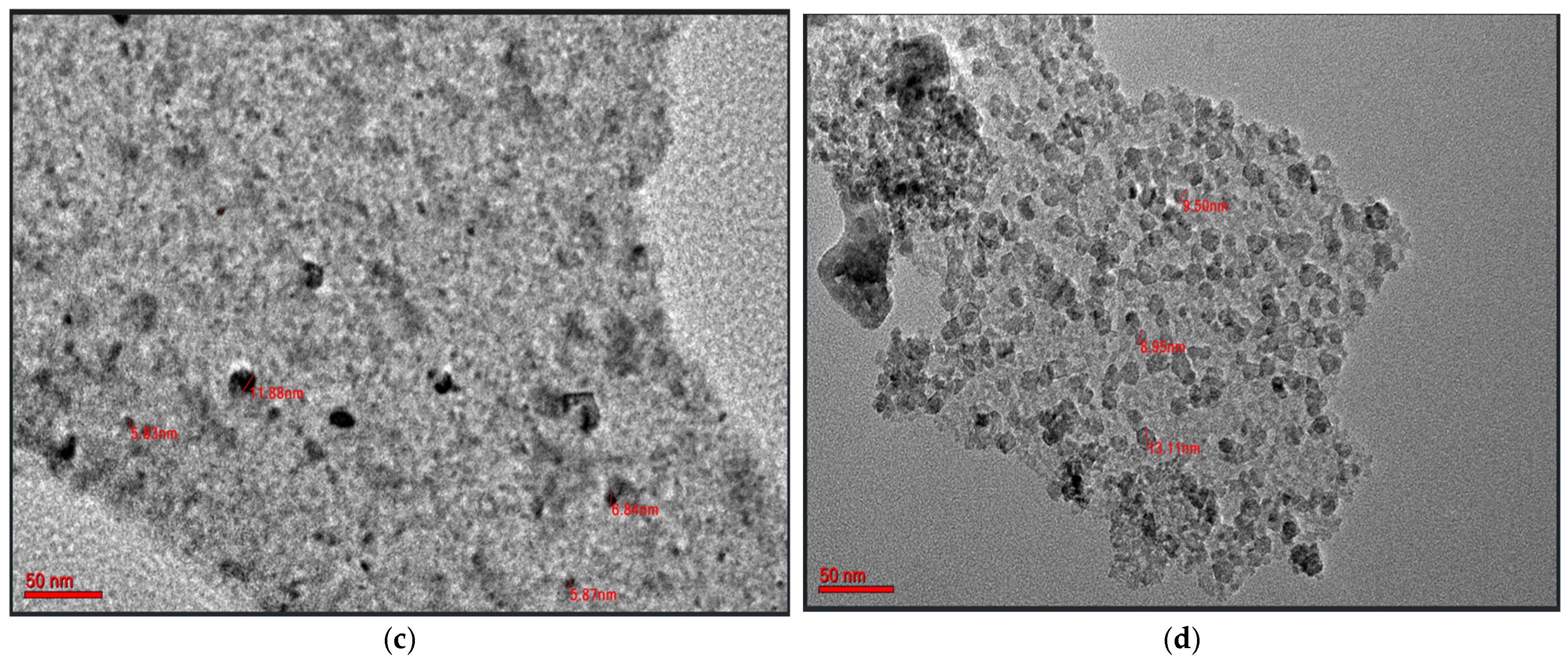
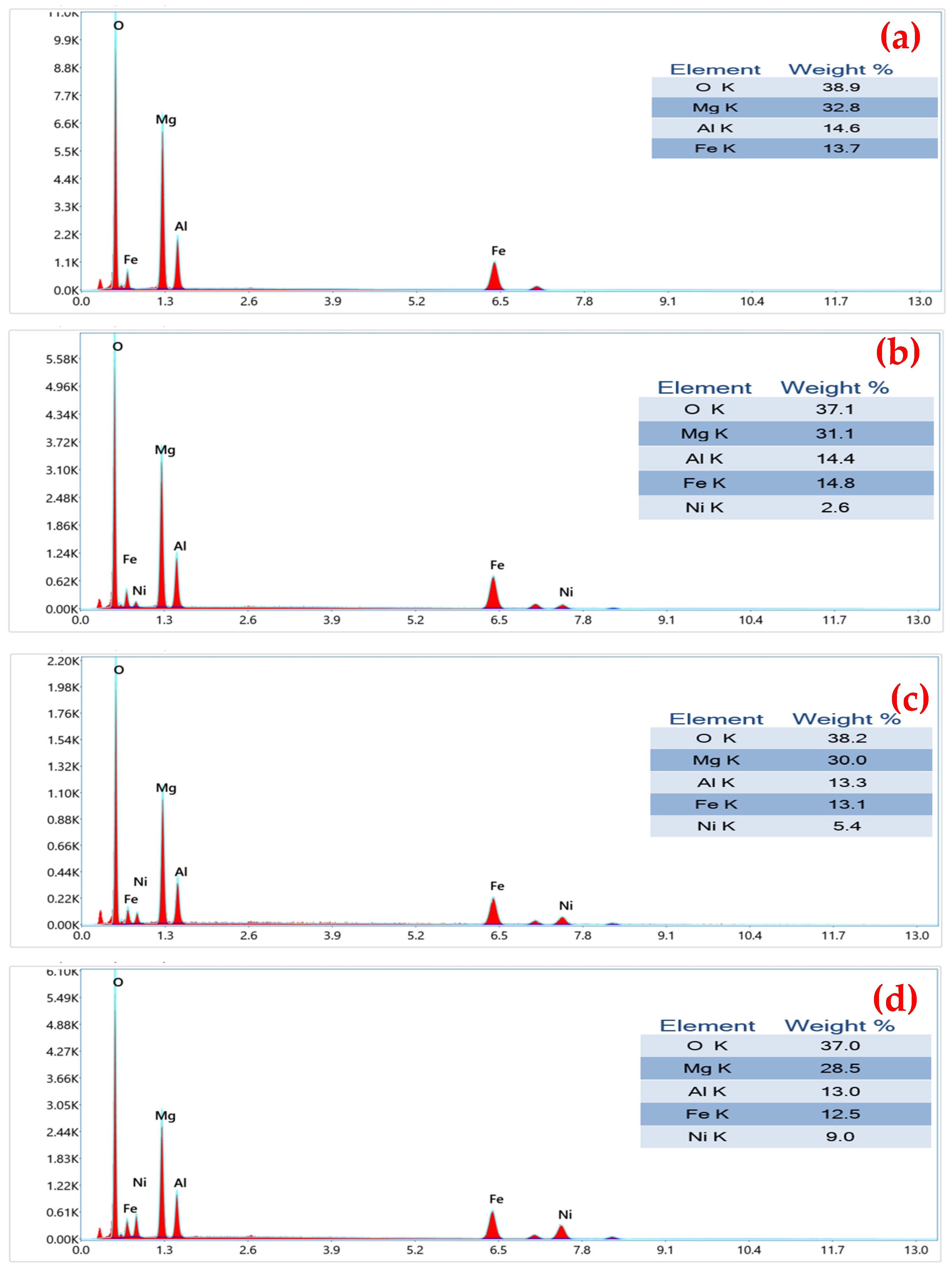
The detailed morphology and particle size of the MgFeAl-1, MgFeAl-2, MgFeAl-3, and MgFeAl-4 nanocomposites were examined utilizing TEM. Figure 1a–d demonstrates that the MgFeAl-1, MgFeAl-2, MgFeAl-3, and MgFeAl-4 exhibit irregularly shaped ultrasmall nanoparticles, namely quantum dots (QuDs). The average QuD size of MgFeAl-1, MgFeAl-2, MgFeAl-3, and MgFeAl-4 was about 6.53, 5.0, 7.61, and 10.52 nm, respectively. Furthermore, the elemental composition of the as-prepared MgFeAl-1, MgFeAl-2, MgFeAl-3, and MgFeAl-4 was determined through EDX analysis, and their spectra are depicted in Figure 2a–d. The outcomes confirmed the presence of oxygen, magnesium, aluminum, and iron in the four nanocomposites, with the addition of nickel in the spectra of MgFeAl-2, MgFeAl-3, and MgFeAl-4. Notably, the Fe, Al, Mg, and O peaks were found in the right proportions, as shown in the insert table, while the Ni peak increased in the order of MgFeAl-2, MgFeAl-3, and MgFeAl-4, with a slight rise in O attributed to the formation of NiO.
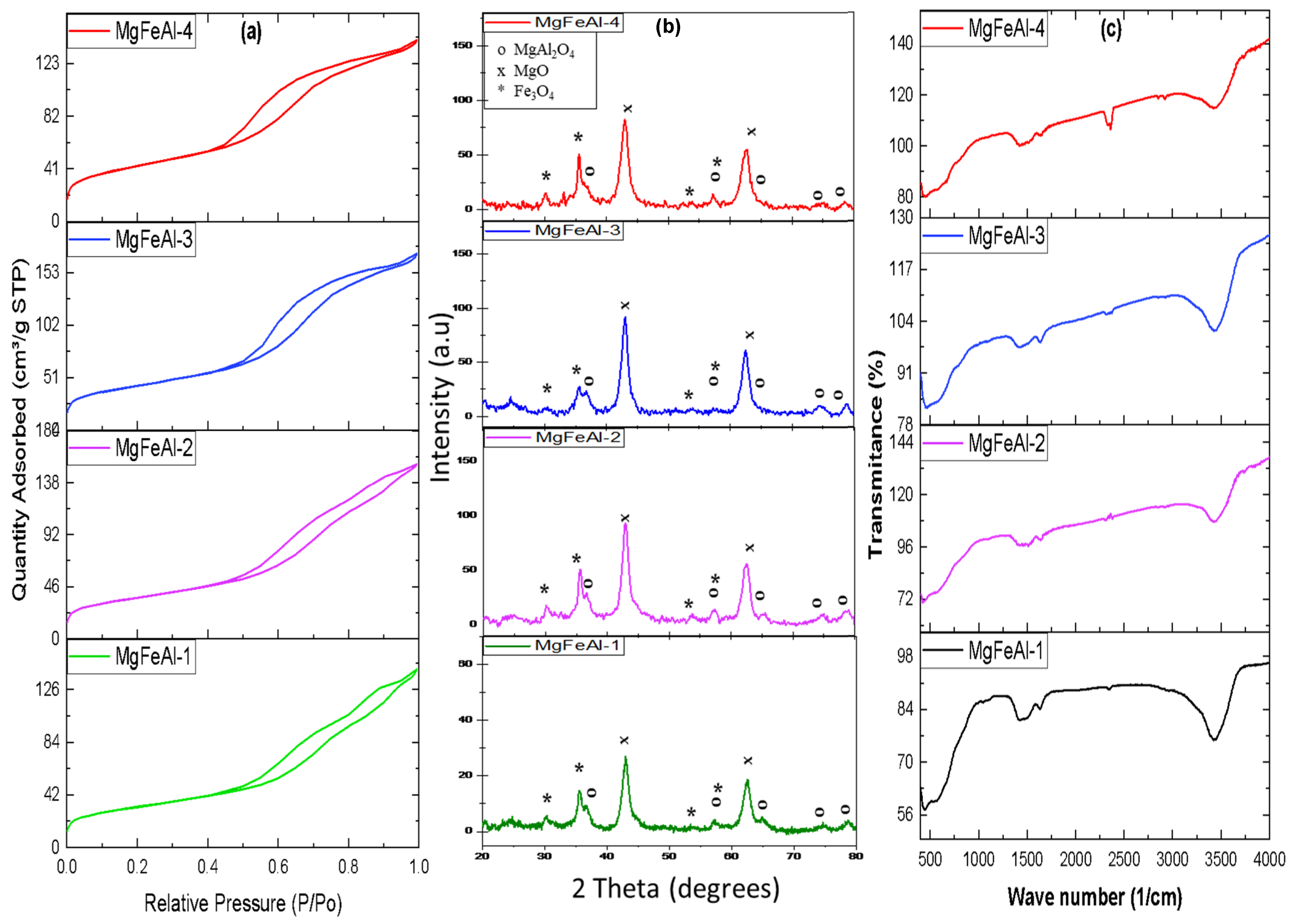
The surface characteristics of MgFeAl-1, MgFeAl-2, MgFeAl-3, and MgFeAl-4 were analyzed utilizing the N2 adsorption–desorption method (Figure 3a). The four nanosorbents exhibit a noticeable enhancement in N2 adsorption at relative pressures above 0.4 and show an H3-type hysteresis loop with a type IV isotherm, as per the IUPAC classification [43]. This isotherm type is indicative of mesoporous materials with slit-shaped pores [44]. The surface area (SA) was determined by the BET method, and the BJH method was used to compute the pore volume (PV) and diameter (PD). The MgFeAl-1, MgFeAl-2, MgFeAl-3, and MgFeAl-4 exhibited surface areas of 114.15, 154.02, 153.36, and 128.54 m2 g−1, respectively, with average pore volumes of 0.22, 0.27, 0.22, and 0.24 cm3 g−1. These outcomes indicated that doping Fe3O4/MgAl2O4 with NiO improved the surface properties, with a 2.5% NiO doping dose being the most effective. Undoped Fe3O4/MgAl2O4 particles tend to grow and fuse (sinter), reducing surface area. Conversely, doping Fe3O4/MgAl2O4 with NiO increases surface characteristics by inhibiting Fe3O4/MgAl2O4 sintering during calcination. Also, incorporating Ni doping doses into the Fe3O4/MgAl2O4 lattices or dispersing them on its surface acts as a physical barrier that impedes the surface diffusion of Fe3+/Al3+ ions and the migration of grain boundaries, thus retarding particle growth, preserving a higher surface area material. The obtained SA of MgFeAl-1, MgFeAl-2, MgFeAl-3, and MgFeAl-4 are higher than other metal oxide-doped spinel MgAl2O4 nanocomposites [5,45,46]. This indicates the effectiveness of forming an MgFeAl nanocomposite and the NiO doping ratios suggested in this study.
The crystallography of MgFeAl-1, MgFeAl-2, MgFeAl-3, and MgFeAl-4 was investigated using the powder XRD technique Figure 3b. The diffraction peaks at 2θ° = 36.52, 56.85, 65.42, 74.63, and 78.79 are allocatable to MgAl2O4 spinel cubic crystal phases (311), (422), (440), (620), and (622), respectively (JCPDS: 00-900-2164) [37]. The 42.88, 62.29 2θ° peaks are indicative of MgO planes (200) and (220) (COD No. 9006789) [37,47]. Additionally, the peaks at 30.28, 35.69, 53.44, and 57.24 correspond to the magnetite planes of (220), (311), (422), and (511) (PDF No. 96–900-7645) [48]. These outcomes indicated successful synthesis of the intended compounds, and all diffractograms belonged to the composites intended to be prepared.
The functions of MgFeAl-1, MgFeAl-2, MgFeAl-3, and MgFeAl-4 were examined via FTIR, and the resulting spectra are depicted in Figure 3c. The broad band between 3000 and 3600 cm−1 could be attributed to O–H stretching vibration from adsorbed moisture. The band at 1630 cm−1 presumably relates to the H–O–H bending vibration of water molecules. The zone between 1100 and 1000 cm−1 may exhibit M–O stretching vibrations, whereas the bands below 800 cm−1 are generally attributed to metal–oxygen (M–O) lattice vibrations, associated with Mg–O, Fe–O, or Al–O bonds in the structure. All spectra exhibit analogous functional groups (O–H, H–O–H, M–O), signifying their derivation from the same layered double hydroxide (LDH) structure [49,50].

2.2. Contact Time and Kinetic Investigations

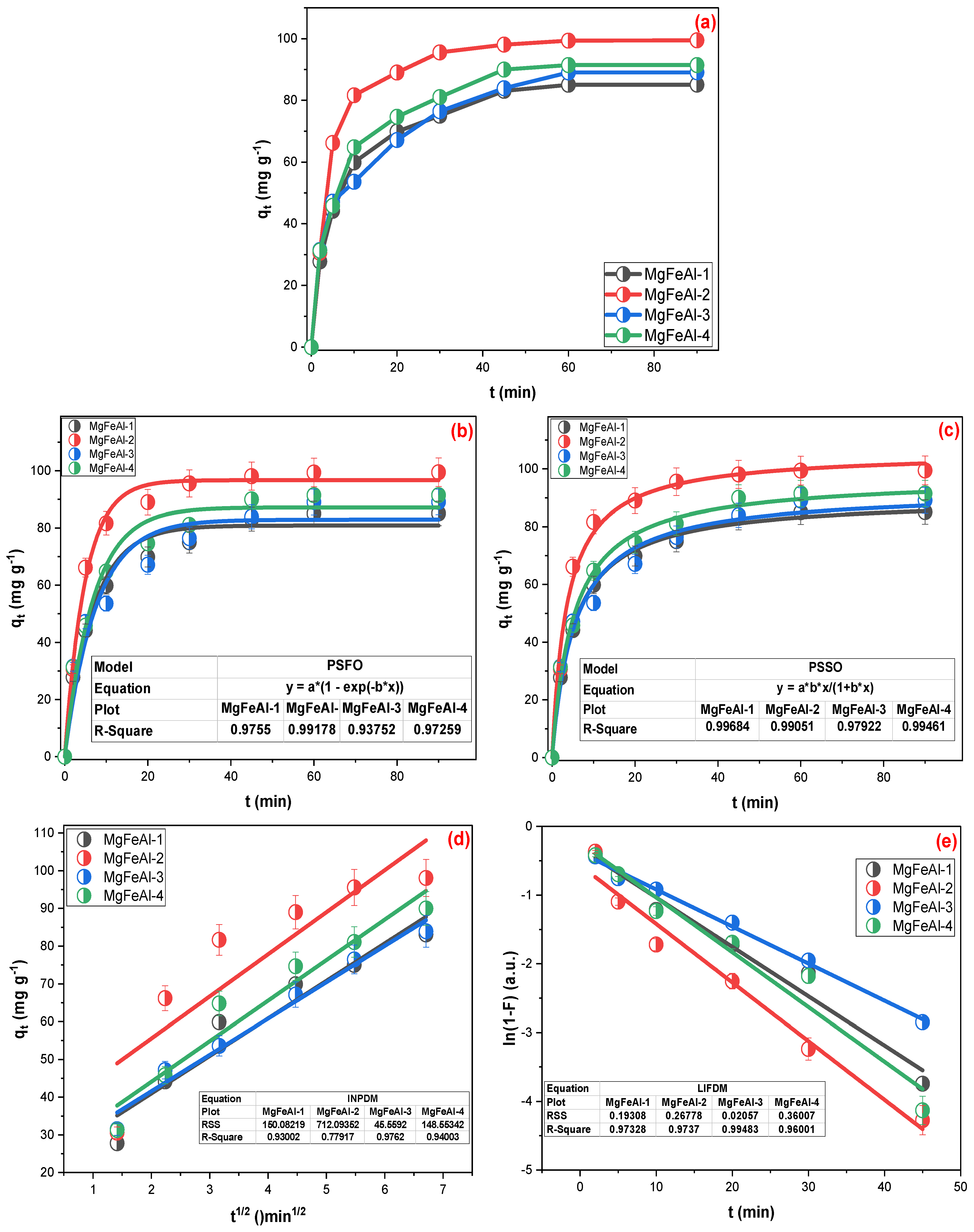
The sorbent-sorbate contact time was investigated for the removal of CFCN by MgFeAl-1, MgFeAl-2, MgFeAl-3, and MgFeAl-4, as shown in Figure 4a. The adsorption of CFCN on MgFeAl-1, MgFeAl-2, MgFeAl-3, and MgFeAl-4 reached equilibrium within 60 min. The swift increase in CFCN sorption capacity (qt, mg g−1) from 0 to 20 min is attributable to the abundance of active sites on the sorbent surfaces [51]. Subsequently, qt begins to diminish from 20 to 45 min, followed by a weak ascending trend due to the mostly occupied sorption sites [52]. MgFeAl-1, MgFeAl-2, MgFeAl-3, and MgFeAl-4 resulted in qt values of 85.10, 99.45, 89.09, and 91.44 CFCN mg per 1.0 g adsorbent, respectively, which match the surface area observations, indicating that 2.5% NiO was the appropriate doping dosage, creating more holes in the underlying nanocomposite. The capabilities of MgFeAl-1, MgFeAl-2, MgFeAl-3, and MgFeAl-4 to remove CFCN were aligned with their surface area outputs. Although MgFeAl-2 and MgFeAl-3 had almost similar surface areas, MgFeAl-2’s wider pore volume might justify its superiority over MgFeAl-3. It is worthnoting that MgFeAl-2 performance in removing CFCN was quite cooperative compared to similar adsorbents in the literature (Table 1).
The PSFO and PSSO regressions of CFCN removal by MgFeAl-1, MgFeAl-2, MgFeAl-3, and MgFeAl-4 are depicted in Figure 4b,c. The computed PSFO and PSSO parameters are shown in Table 2, indicating that PSSO provided a better explanation of CFCN sorption on MgFeAl-1, MgFeAl-3, and MgFeAl-4. The results showed that the surfaces of MgFeAl-1, MgFeAl-3, and MgFeAl-4 exhibited multilayer adsorption, in which the sorbed CFCN molecules interact with each other and with localized adsorbent sites. In contrast, the CFCN sorption on MgFeAl-2 was better described by the PSFO, implying that the availability of free adsorption sites on MgFeAl-2’s surface is more influential than the concentration of CFCN in solution [53]. This finding is supported by the highest R2 value, the lowest X2 and RSS values, and the semi-typical qe value [37]. Nevertheless, having such close R2 values could be interpreted as the co-influence of the PSFO and PSSO models on CFCN removal by MgFeAl-1, MgFeAl-2, MgFeAl-3, and MgFeAl-4 [36].
For a clearer understanding of CFCN sorption through the active pores of MgFeAl-1, MgFeAl-2, MgFeAl-3, and MgFeAl-4 in bulk solution, both the INPDM and LIFDM are considered. Figure 4d,e, along with data presented in Table 1, demonstrate that the LIFDM with the higher regression coefficients (R2) represents the rate-controlling step for CFCN sorption onto these four sorbents, indicating rapid pore diffusion and a strong affinity of CFCN for the nanocomposites developed in this study. This phenomenon can be attributed to the high surface area and/or relatively large pores of MgFeAl-1, MgFeAl-2, MgFeAl-3, and MgFeAl-4. Additionally, the Ci values for all four nanocomposites further suggest a discrepancy in sorption with the INPDM model [37,53].
Table 1. Comparison of CFCN removal by other similar adsorbents.
Sorbentqm (mg. g−1)Reference
MFA-299.45This study
MgO3.46[54]
Mica/MnO2/F2O321.8[55]
Fe3O4/C46.0[56]
Fe3O428.0[57]
Activated carbon/Fe3O481.6[58]
MgAl/Activated carbon82.4[59]
Graphene oxide-carbon nitride spheres (CNSs)51.3[60]
Modified bamboo biochar78.4[61]
Table 2. Kinetic outcomes of CFCN sorption onto MgFeAl-1, MgFeAl-2, MgFeAl-3, and MgFeAl-4 nanocomposites.
Adsorption rate order
Sorbentqmax exp
(mg g−1)
PSFOPSSO
qe (mg g−1)K1R2X2RSSqe (mg. g−1)K2R2X2RSS
MgFeAl-185.1080.8850.1480.97524.469171.2890.2450.1970.9973.15822.109
MgFeAl-299.4596.6750.2040.99111.78082.458105.9300.2790.99013.61295.282
MgFeAl-389.0982.9300.1330.93764.299450.0992.6110.1830.97921.386149.70
MgFeAl-491.4487.1810.1460.97231.631221.4297.2150.1960.9946.21643.510
Adsorption rate mechanism
SorbentINPDMLIFDM
KIP (mg.g−1 min1/2)Ci (mg. g−1)R2RSSKLF (min−1)R2RSS
MgFeAl-19.93921.0970.930150.0820.0720.9730.193
MgFeAl-211.15533.2080.779712.0930.0850.9730.268
MgFeAl-39.61922.3310.97645.5590.0540.9940.021
MgFeAl-410.73922.5960.940148.5530.0790.9600.360

2.3. Sorption Equilibria

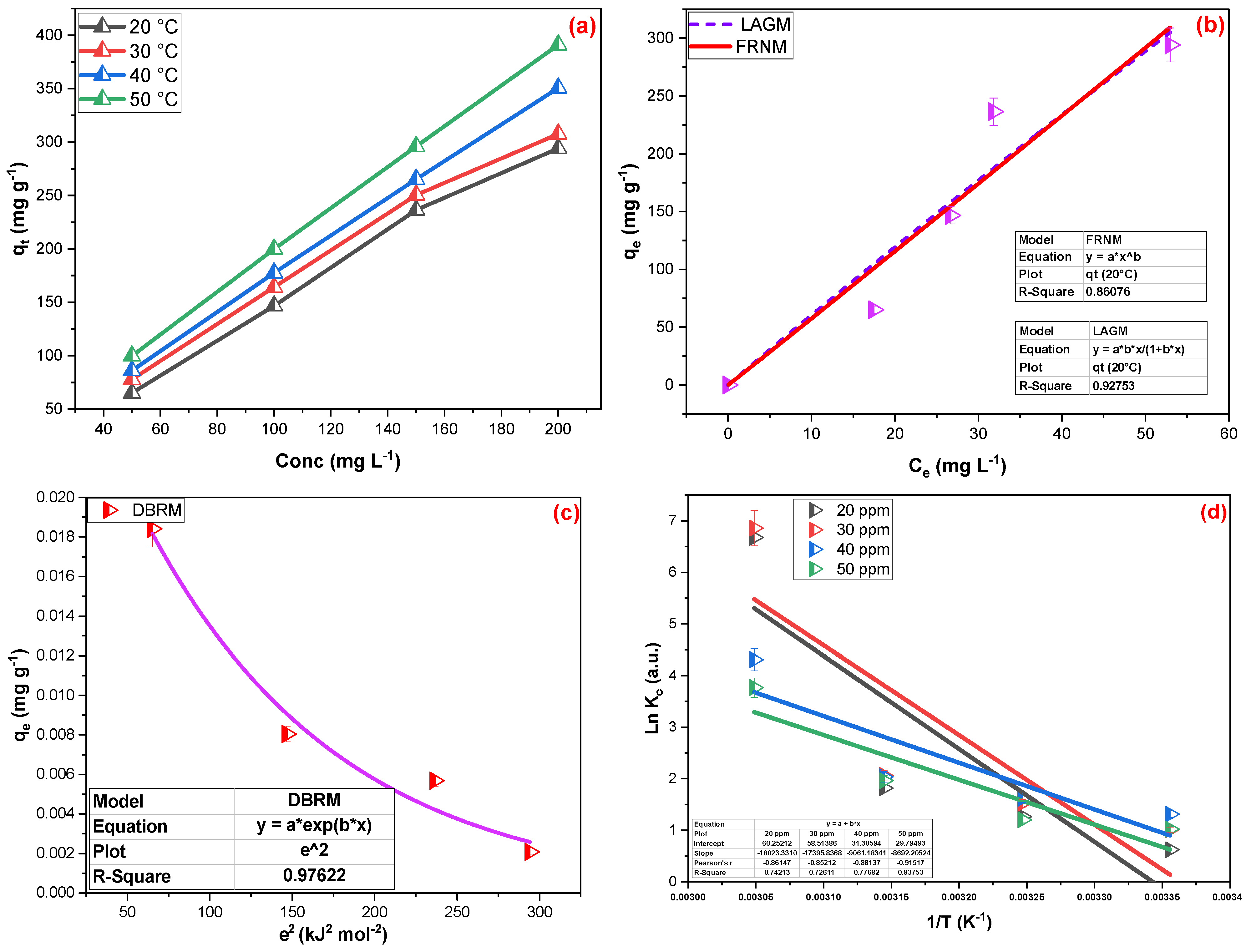
The temperature and initial CFCN feeding concentration are influential elements affecting the availability of binding sites on the adsorbent surface and the diffusion of CFCN towards the MgFeAl-2 surface and through the interior shells. Figure 5a demonstrates the temperature/concentration impacts on the CFCN sorption by MgFeAl-2, reflecting the increased qt values from 65.09 to 294.08 mg g−1 from 50 to 200 mg L−1 at 20 °C. This can be attributed to the elevated starting concentration, which offers a substantial impetus to overcome all mass transfer resistances between the CFCN molecules and the MgFeAl-2 surface [47]. Raising the CFCN solution temperature from 20 to 50 °C enhanced sorption at all tested concentrations (Figure 5a). For example, heating the 50 mg L−1 CFCN solution from 20 to 50 °C increased the qt value from 65.09 to 99.87 mg·g−1. This could be explained by heat-enhanced CFCN mobility and/or the exposure of unoccupied sites on the MgFeAl-2 surface, a transition indicating endothermic CFCN adsorption by MgFeAl-2 [39].
The CFCN concentration/temperature outputs were applied for studying the sorption isotherm of CFCN onto MgFeAl-2. The combined nonlinear plots of LGIM and FRIM of CFCN adsorption onto MgFeAl-2 are presented in Figure 5b, with corresponding parameters gathered in Table 3. The results demonstrate that the LGIM isotherm provides a far better description of the adsorption of CFCN on MgFeAl-2, exhibiting a superior R2 value of 0.928 and lower RSS and X2 values compared to FRIM. This suggests that the adsorption process occurs as a monolayer on a homogeneous surface with a finite number of identical active sites, ceasing once saturation is attained [48]. Furthermore, to determine the mean free energy (ΔG) and ascertain the nature of adsorption—whether physical or chemical—the DBRIM isotherm was used to assess the adsorption of CFCN onto MgFeAl-2. The fitting results of the DBRIM model presented in Figure 5c, along with the corresponding parameters in Table 3, indicate that physisorption is involved in the CFCN adsorption. The ED value of 7.661 kJ mol−1 suggests that the CFCN is removed by MgFeAl-2 via physisorption, characterized by robust interactions between CFCN molecules and the MgFeAl-2 active adsorption sites [49].
The thermodynamics of CFCN adsorption on MgFeAl-2 were studied at 293, 303, 313, and 323 K using four concentrations (50, 100, 150, and 200 mg L−1) [6,45,62,63]. Table 3 presents the thermodynamic outcomes; the positive ΔH° and negative ΔG° indicate that CFCN adsorption onto MgFeAl-2 is endothermic and spontaneous, and that the process becomes more favorable with increasing temperature. The positive values of ΔS° indicated stronger MgFeAl-2-CFCN interactions, reflecting CFCN’s affinity for MgFeAl-2 [47,50].

2.4. Effect of pH, PZC, Andsuggested Sorption Mechanism

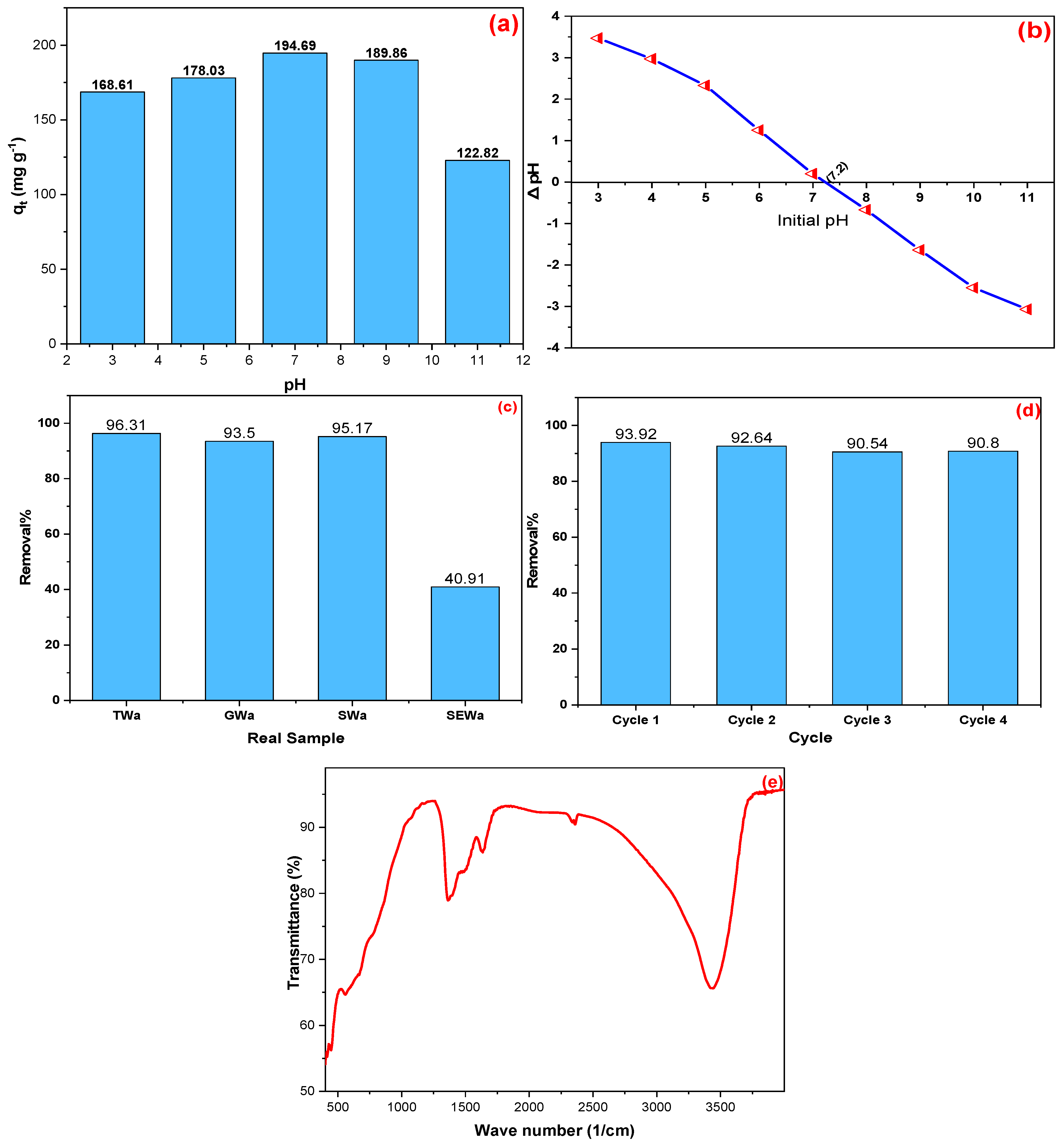
Solution pH is a primary factor influencing adsorption because it significantly affects the surface charge of adsorbents, the degree of pollutant ionization, and the segregation of functional groups at adsorbent active sites. Figure 6a illustrates the influence of pH on the CFCN sorption onto MgFeAl-2 nanocomposite. The outcomes indicate that the CFCN had a pH-dependent pattern, with qt first increasing from pH 3 to 7, reaching a maximum of 194.7 mg g−1 at pH 7.0, followed by a minor decrease in qt from pH 9 to 11. The point of zero charge (PZC) outcomes were illustrated in Figure 6b, which provides a clear explanation for this behavior, indicating a PZC of 7.2 for MgFeAl-2. At this pH, the sorbent surface exhibits a net neutral charge. At pH levels below the PZC, MgFeAl-2 exhibits a predominantly positive charge resulting from surface protonation, whereas CFCN exists primarily in its cationic form (CFCN+). This results in electrostatic repulsion, consequently diminishing adsorption capacity. As the pH approaches the PZC, the surface charge diminishes, while the CFCN exists in its zwitterionic form. This condition reduces electrostatic attraction and enhances the accessibility of adsorption sites, resulting in maximum adsorption near neutral pH. The decrease in adsorption capacity in alkaline conditions (pH > PZC) can be explained by electrostatic repulsion between the negatively charged surface and the anionic form of CFCN (CFCN-). Similar results were noted in recent studies regarding CFCN adsorption [9,13,17,64].
The CFCN comprised seven π-electron-rich atoms, with ene-groups and a benzene ring creating negative and/or partially negative centers. The CFCN-MgFeAl-2 interaction may involve many binding mechanisms, including electrostatic attraction, complexation/chelation, hydrogen bonding, and π–π interactions. In the presence of zwitterionic or deprotonated forms of CFCN, the electron-rich groups of CFCN (Lewis bases) may interact with Lewis acids (Mn+ = Ni2+, Fe3+, Mg2+, Al3+), resulting in Mn+–CFCN surface bonding/chelation that synergizes with hydrogen bonding, orienting the CFCN on the MgFeAl-2 surface. The CFCN aromatic ring and the ene-group function as π binding sites; although CFCN defect-induced electron-rich groups may limit their efficacy, they may serve as additional sorption stabilization forces that boost the CFCN removal by the MgFeAl-2.

2.5. Application of MgFeAl-2 to Natural Water Samples

Natural aqueous matrices, specifically tap water (TWa), groundwater (GWa), surface water (SWa), and seawater (SEWa), were utilized to assess the efficacy of MgFeAl-2 in removing CFCN at a pilot scale. The water samples exhibited pH values of 7.1 (TWa), 6.2 (GWa), 6.8 (SWa), and 5.9 (SEWa), with corresponding conductivities of 315, 2173, 643, and 2315 µS/cm, respectively. The adsorption study was performed for 45 min, during which 50 mg of MgFeAl-2 was mixed with 100 mL of 100 mg L−1 CFCN. Removal efficiencies of 96.31%, 93.50%, 95.17%, and 40.91% were achieved for TWa, GWa, SWa, and SEWa, respectively (Figure 6b). The significantly reduced removal efficiency observed with the SEWa sample is primarily due to its high ionic strength. Such a condition might reduce the sorption by hindering the diffusion of CFCN molecules toward the MgFeAl-2 active sites. In addition, the negative anions in SEW may compete with the electron-rich groups of CFCN for the binding sites on the MgFeAl-2 surface.

2.6. Regeneration and Reusability

To assess the economic value and predict the feasibility of MgFeAl-2, the reusability was evaluated as shown in Figure 6c. The used MgFeAl-2 quantity was collected, washed with 10 mL of ethyl alcohol and 10 mL of deionized water, dried at 100 °C for 1 h, and subsequently reused. The CFCN removal by MgFeAl-2 within four sequential regeneration cycles, with efficiencies of 93.92%, 92.64%, 90.05%, and 90.80%, yielded an average of 91.85%. These outcomes indicate that MgFeAl-2 remains suitable for prolonged use and has significant potential for reusability in CFCN elimination. The sorbent stability was assessed by analyzing reused MgFeAl-2 via FTIR (Figure 6e). The outcomes were consistent with the original FTIR spectrum of the virgin MgFeAl-2 (Figure 3c), except for the increased intensity of the O–H, attributable to the moisture and/or transformation of oxides to hydroxides as a consequence of stirring in aqueous media.

3. Materials and Methods

3.1. Materials

Nickel nitrate (Ni(NO3)2.6H2O), and iron (iii) nitrate (Fe(NO3)3.9H2O), were purchased from Fisher, Notingham, UK. Magnesium acetate (Mg(Ac)2.4H2O) was from Therm Scientific Dortmund, Germany. Aluminum nitrate nonahydrate (Al(NO3)3.9H2O) was purchased from Merck, Miami, FL, USA. Glucose (GLU) was purchased from LOBA, Mumbai, India, and the ciprofloxacin (CFCN) was supplied by Rhanboxy, Mumbai, India. The NaOH and HCl (37%) used for pH adjustments were provided by Sharlau, Barcelona, Spain. Laboratory-distilled water (L-DW) was used for all preparations.

3.2. Preparation Protocol

The nanocomposites were synthesized using GLU as the capping agent. Initially, 10 g of GLU, 6.33 g of Fe(NO3)3.9H2O, 4.60 g of Al(NO3)3.9H2O, and 6.65 g of Mg(Ac)2.4H2O were dissolved in 30 mL of L-DW. The mixture was heated to 100 °C until GLU began to carbonize. The mixture was dried at 120 °C for 4.0 h, followed by calcination at 600 °C for 4.0 h. The obtained nanocomposite was labeled as Fe3O4/MgAl2O4 (MgFeAl-1). To prepare NiO-doped nanocomposites, namely, MgFeAl-2, MgFeAl-3, and MgFeAl-4, the procedure remained identical except for adding the appropriate quantity of Ni(NO3)2.6H2O to obtain final nickel oxide loadings of 2.5%, 5%, and 10% (w/w), respectively.

3.3. Characterizations

The detailed morphology and elemental composition of MgFeAl-1, MgFeAl-2, MgFeAl-3, and MgFeAl-4 nanocomposites were studied using transmission electron microscopy (TEM, JEM-2100 F JEOL, Akishimashi, Tokyo, Japan) and energy dispersive X-ray spectroscopy (EDX, EDAX Element, GATAN, Pleasanton, CA, USA). The surface characteristics of the produced nanocomposites were investigated using the N2-adsorption–desorption technique. Utilizing X-ray diffraction (XRD) with a Cu Kα radiation source, the structural phase of the nanocomposites in their as-prepared state was determined by (XRD, PROTO Axrd, Benchtop, ON, Canada). Fourier transform infrared spectroscopy (FTIR, Shimadzu, Tracer100, Tokyo, Japan) is used to study chemical structures.

3.4. Adsorption of CFCN

A batch adsorption study was conducted to evaluate the capabilities of MgFeAl-1, MgFeAl-2, MgFeAl-3, and MgFeAl-4 in removing CFCN. The experiment utilized 150 mL conical flasks containing 100 mL of a 50 mg L−1 CFCN solution and 50 mg of sorbent stirred together at 700 RPM. The influence of contact time was evaluated by filtering aliquots of the sorbent-sorbate at sequential time intervals, with absorbance determined using the Shimadzu UV-vis spectrophotometer-2600i (Tokyo, Japan). The obtained absorbance results were used to calculate the unadsorbed CFCN concentration (Ct, mg L−1), which was then fed into Equation (1) to compute the sorption capacity (mg g−1) of MgFeAl-1, MgFeAl-2, MgFeAl-3, and MgFeAl-4.
q t = v × ( C o C t ) m
The contact time outputs fueled further study of the CFCN sorption kinetics, including the rate order and rate-control mechanism. The rate order study of CFCN removal by MgFeAl-1, MgFeAl-2, MgFeAl-3, and MgFeAl-4 was analyzed using the pseudo-first-order (PSFO) and pseudo-second-order (PSSO) models, employing their nonlinear models as outlined in Equations (2) and (3). The investigation of the CFCN sorption-controlling step was performed using the liquid-film diffusion model (LIFDM, Equation (4)) and the intraparticle diffusion model (INPDM, Equation (5)) [62].
q t = q e ( 1 e x p K 1 · t )
q t = k 2 · q e 2 · t 1 + k 2 · q e · t
l n 1 F = K L F t
q t = K I P t 1 2 + C i
where k1 (min−1) and k2 (g mg−1 min−1) represent the PSFO and PSSO constants, which were calculated from the slope and intercept values, respectively; KIP (mg g−1 min−1/2) and KLF (min−1) signify LIFDM and INPDM, respectively; Ci denotes the boundary layer factor.
The influence of CFCN feed concentration on its removal by MgFeAl-1, MgFeAl-2, MgFeAl-3, and MgFeAl-4 was assessed using 50, 100, 150, and 200 mg L−1 CFCN concentration. The temperature impact on CFCN sorption was evaluated by examining prior concentrations within the temperature range of 20 to 50 °C. The obtained results fueled the sorption equilibria studies, including the CFCN sorption isotherms and thermodynamics. The monolayer/multilayer possibilities of CFCN sorption were inspected using the Langmuir (LGIM, Equation (6)) and the Freundlich (FRIM, Equation (7)) models, while the Dubinin-Radushkevich model (DBRIM, Equation (8)) was utilized to inspect the sorption nature of CFCN (physi/chemi). The Polanyi potential (ε, kJ mol−1) was computed via Equation (9) (the ideal gas constant R = 0.0081345 kJ mol−1). At the same time, the energy required to detach a CFCN molecule from the MgFeAl-2 site, as per Equation (10), was utilized for computing the Dubinin energy (ED, kJ mol−1).
q e = K l q m C e 1 + q m C e
q e = K F · C e 1 n
q e = q m e K D ε 2
ε = R T   l n 1 + 1 C e
E D = 2 K D 0.5
KL (L mg−1) signifies the LGIM constant, Ce (mg L−1) denotes the CFCN concentration, qm represents the maximal qt, KF (L.g−1), and n denotes the FRIM constant and favorability factor, respectively. The mean free energy of adsorption is denoted by KD (mol2 kJ−2), the gas constant is R (J mol−1 K−1), and the absolute temperature is represented by T (K). The qm (mg g−1) is indicative of maximum qt [5,6]. Following the thermodynamic characteristics, enthalpy (ΔH°) and entropy (ΔS°) were determined from the slope and intercept of Equation (11) plot, while the makeup of their values in Equation (12) gave out the free energy (ΔG°).
l n   K c = Δ H o R T + Δ S o R
Δ G o = Δ H o T Δ S o
Furthermore, the impact of CFCN solution pH on its sorption onto MgFeAl-2 was investigated by adjusting the pH of a 50 mg L−1 CFCN solution from 3.0 to 11.0. An extra 50 mg/L CFCN solution volume was adjusted to eliminate absorbance alteration consequent to the pH, using the excess as the standard for each sample at each pH. Moreover, the applicability of MgFeAl-2 to remove CFCN from environmental samples was evaluated. 5.0 and 10 mg L−1 CFCN concentrations were prepared in natural water matrices, namely, tapwater (TWa), groundwater (GWa), surface water (SWa), and seawater (SEWa). Additionally, the reusability of regenerated MgFeAl-2 was tested through five consecutive CFCN batches, where the used MgFeAl-2 was regenerated using 20 mL of ethanol and dried at 100 °C for 1.0 h.

4. Conclusions

For this study, the following compounds were synthesized: MgFeAl-1, MgFeAl-2, MgFeAl-3, and MgFeAl-4. The calcination temperature was set at 600 degrees Celsius. The TEM, EDX, BET, XRD, and FTIR techniques were used to characterize the preidentified sorbents. The average QuD sizes of MgFeAl-1, MgFeAl-2, MgFeAl-3, and MgFeAl-4 were approximately 6.53, 5.0, 7.61, and 10.52 nm, respectively. Using the batch technique, the sorbents were examined to determine whether they could remove CFCN from aqueous solutions. Additionally, the MgFeAl-1, MgFeAl-2, MgFeAl-3, and MgFeAl-4 possessed surface areas of 114.15, 154.02, 153.36, and 128.54 m2 g−1, respectively. Within 60 min, MgFeAl-2 reached sorption equilibrium, demonstrating the best performance. It achieved an adsorption capacity of 99.45 mg g−1. The structural changes in the different nanohybrids were not very obvious, which can be attributed to the excellent distribution of NiO within and on the surface of the base material. Nevertheless, the impact of NiO doping doses is evident in the variation in SA and qt values obtained for MgFeAl-1, MgFeAl-2, MgFeAl-3, and MgFeAl-4. The pseudo-second-order model provided the most accurate description of CFCN sorption onto MgFeAl-2, and liquid-film diffusion controlled the BFD sorption. According to the Langmuir isotherm model, the adsorption of CFCN onto MgFeAl-2 was accurately described (R2 = 0.93), indicating that adsorption occurred in a single layer. The results of the thermodynamic analysis pointed to an endothermic sorption process that occurred spontaneously. An investigation on the reusability of MgFeAl-2 across four cycles revealed an average efficiency of 90%. Particularly noteworthy is the fact that MgFeAl-2 proved successful in treating natural-water matrices, albeit with a minor abatement in seawater due to ionic interference. The findings shed light on the potential of magnesium fluoride (MgFeAl-2) as an inexpensive, reusable adsorbent for the removal of antibiotics from contaminated water. These outcomes indicated that a doping dosage of 2.5% NiO was the most appropriate for producing the effective adsorbent among the tested doping range.

Funding

This work was supported and funded by the Deanship of Scientific Research at Imam Mohammad Ibn Saud Islamic University (IMSIU) (grant number IMSIU-DDRSP2602).

Data Availability Statement

Data will be made available on request.

Conflicts of Interest

The author declares that they have no conflicts of interest.

References

  1. Wang, L.; Xu, Y.; Qin, T.; Wu, M.; Chen, Z.; Zhang, Y.; Liu, W.; Xie, X. Global trends in the research and development of medical/pharmaceutical wastewater treatment over the half-century. Chemosphere 2023, 331, 138775. [Google Scholar] [CrossRef] [PubMed]
  2. Almufarij, R.S.; Abdulkhair, B.Y.; Salih, M.; Aldosari, H.; Aldayel, N.W. Optimization, nature, and mechanism investigations for the adsorption of ciprofloxacin and malachite green onto carbon nanoparticles derived from low-cost precursor via a green route. Molecules 2022, 27, 4577. [Google Scholar] [CrossRef] [PubMed]
  3. Yu, B.; Chang, H.; Wei, W.; Yu, H.; Chen, Z.; Cheng, X.; Chen, D.; Jin, Y.; Han, D.; Xu, W. Highly effective removal of ciprofloxacin antibiotic from water by magnetic metal–organic framework. Water 2023, 15, 2531. [Google Scholar] [CrossRef]
  4. Campos, V.N.; Santos, J.D.; Araújo, R.J.; Lopes, P.H.; Garcia, M.A.; Rojas, A.; Teixeira, M.M.; Bezerra, C.W.; Alcântara, A.C. High Performance of Ciprofloxacin Removal Using Heterostructure Material Based on the Combination of CeO2 and Palygorskite Fibrous Clay. Minerals 2024, 14, 792. [Google Scholar] [CrossRef]
  5. Almufarij, R.S.; Abdulkhair, B.Y.; Salih, M. Fast-simplistic fabrication of MoO3@ Al2O3-MgO triple nanocomposites for efficient elimination of pharmaceutical contaminants. Results Chem. 2024, 7, 101281. [Google Scholar] [CrossRef]
  6. Elamin, M.; Abdulkhair, B.; Elzupir, A. Removal of ciprofloxacin and indigo carmine from water by carbon nanotubes fabricated from a low-cost precursor: Solution parameters and recyclability. Ain Shams Eng. J. 2023, 14, 101844. [Google Scholar] [CrossRef]
  7. Daughton, C.G.; Ternes, T.A. Pharmaceuticals and personal care products in the environment: Agents of subtle change? Environ. Health Perspect. 1999, 107, 907–938. [Google Scholar] [CrossRef]
  8. Dhiman, N. Analysis of non competitive and competitive adsorption behaviour of ciprofloxacin hydrochloride and ofloxacin hydrochloride from aqueous solution using oryza sativa husk ash (single and binary adsorption of antibiotics). Clean. Mater. 2022, 5, 100108. [Google Scholar] [CrossRef]
  9. Meseguer, V.F.; Ortuño, J.F.; Aguilar, M.I.; Lloréns, M.; Pérez-Marín, A.B.; Fuentes, E. Ciprofloxacin uptake from an aqueous solution via adsorption with K2CO3-activated biochar derived from brewing industry bagasse. Processes 2024, 12, 199. [Google Scholar] [CrossRef]
  10. Rahdar, A.; Rahdar, S.; Ahmadi, S.; Fu, J. Adsorption of ciprofloxacin from aqueous environment by using synthesized nanoceria. Ecol. Chem. Eng. 2019, 26, 299–311. [Google Scholar]
  11. Ibrahim, T.G.; Almufarij, R.S.; Abdulkhair, B.Y.; Abd Elaziz, M.E. Eliminating Manifold Pharmaceutical Pollutants with Carbon Nanoparticles Driven via a Short-Duration Ball-Milling Process. Surfaces 2024, 7, 493–507. [Google Scholar] [CrossRef]
  12. Yanardag, D.; Kaya, G.G.; Edebali, S. Ciprofloxacin adsorption performance of Co-doped UiO-66. Appl. Organomet. Chem. 2024, 38, e7311. [Google Scholar] [CrossRef]
  13. Hoang, B.N.; Tran, H.D.; Ngo, T.C.Q.; Dung, N.T.N.; Giang, L. Adsorption of Ciprofloxacin using Composite Film from PVA, Agarose and Maltodextrin. Sains Malays. 2023, 52, 2021–2035. [Google Scholar] [CrossRef]
  14. Akhtar, J.; Amin, N.A.S.; Shahzad, K. A review on removal of pharmaceuticals from water by adsorption. Desalination Water Treat. 2016, 57, 12842–12860. [Google Scholar] [CrossRef]
  15. Coimbra, R.N.; Escapa, C.; Otero, M. Adsorption separation of analgesic pharmaceuticals from ultrapure and waste water: Batch studies using a polymeric resin and an activated carbon. Polymers 2018, 10, 958. [Google Scholar] [CrossRef]
  16. Heidari, G.; Afruzi, F.H.; Zare, E.N. Molecularly imprinted magnetic nanocomposite based on carboxymethyl dextrin for removal of ciprofloxacin antibiotic from contaminated water. Nanomaterials 2023, 13, 489. [Google Scholar] [CrossRef]
  17. Gamoń, F.; Tomaszewski, M.; Cema, G.; Ziembińska-Buczyńska, A. Adsorption of oxytetracycline and ciprofloxacin on carbon-based nanomaterials as affected by pH. Arch. Environ. Prot. 2022, 4, 34–41. [Google Scholar] [CrossRef]
  18. Wei, F.; Wang, K.; Li, W.; Ren, Q.; Qin, L.; Yu, M.; Liang, Z.; Nie, M.; Wang, S. Preparation of Fe/Ni-MOFs for the adsorption of ciprofloxacin from wastewater. Molecules 2023, 28, 4411. [Google Scholar] [CrossRef]
  19. Ajduković, M.; Stevanović, G.; Marinović, S.; Mojović, Z.; Banković, P.; Radulović, K.; Jović-Jovičić, N. Ciprofloxacin adsorption onto a smectite–chitosan-derived nanocomposite obtained by hydrothermal synthesis. Water 2023, 15, 2608. [Google Scholar] [CrossRef]
  20. Al-Jubouri, S.M.; Al-Jendeel, H.A.; Rashid, S.A.; Al-Batty, S. Antibiotics adsorption from contaminated water by composites of ZSM-5 zeolite nanocrystals coated carbon. J. Water Process Eng. 2022, 47, 102745. [Google Scholar] [CrossRef]
  21. Jara-Cobos, L.; Peñafiel, M.E.; Montero, C.; Menendez, M.; Pinos-Vélez, V. Ciprofloxacin removal using pillared clays. Water 2023, 15, 2056. [Google Scholar] [CrossRef]
  22. Bhagat, C.; Kumar, M.; Tyagi, V.K.; Mohapatra, P.K. Proclivities for prevalence and treatment of antibiotics in the ambient water: A review. NPJ Clean Water 2020, 3, 42. [Google Scholar] [CrossRef]
  23. Nogueira, J.; Antonio, M.; Mikhalev, S.; Fateixa, S.; Trindade, T.; Daniel-da-Silva, A. Porous carrageenan-derived carbons for efficient ciprofloxacin removal from water. Nanomaterials 2018, 8, 1004. [Google Scholar] [CrossRef] [PubMed]
  24. Yang, L.; Qiu, H.; Zhao, L.; Xiao, P.; Liu, G.; Chang, J.; Zhang, T.; Yang, S.; Xiao, F. Effect of the composition of PVDF-NIPAM-GO membrane for the removal of organic contaminant and anti-fouling from biofilter effluent under the responsible temperature. J. Water Process Eng. 2025, 79, 109039. [Google Scholar] [CrossRef]
  25. Gong, Y.; Wang, Y.; Tang, M.; Zhang, H.; Wu, P.; Liu, C.; He, J.; Jiang, W. A two-step process coupling photocatalysis with adsorption to treat tetracycline-Copper (II) hybrid wastewaters. J. Water Process Eng. 2022, 47, 102710. [Google Scholar] [CrossRef]
  26. Wang, J.; Li, X.; Lan, Y.; Wang, H.; Ma, X.; Wang, H.; Xu, H.; Liu, H. Study on the adsorption mechanism of ciprofloxacin in wastewater by modified fly ash under the coexistence of copper. J. Environ. Chem. Eng. 2024, 12, 114336. [Google Scholar] [CrossRef]
  27. Dhiman, N.; Sharma, N. Removal of pharmaceutical drugs from binary mixtures by use of ZnO nanoparticles:(Competitive adsorption of drugs). Environ. Technol. Innov. 2019, 15, 100392. [Google Scholar] [CrossRef]
  28. Malakootian, M.; Faraji, M.; Malakootian, M.; Nozari, M. Ciprofloxacin removal from aqueous media by adsorption process: A systematic review and meta-analysis. Desalination Water Treat. 2021, 229, 252–282. [Google Scholar] [CrossRef]
  29. Antonelli, R.; Malpass, G.R.P.; da Silva, M.G.C.; Vieira, M.G.A. Adsorption of ciprofloxacin onto thermally modified bentonite clay: Experimental design, characterization, and adsorbent regeneration. J. Environ. Chem. Eng. 2020, 8, 104553. [Google Scholar] [CrossRef]
  30. Adam, F.A.; Ghoniem, M.; Diawara, M.; Rahali, S.; Abdulkhair, B.Y.; Elamin, M.; Aissa, M.A.B.; Seydou, M. Enhanced adsorptive removal of indigo carmine dye by bismuth oxide doped MgO based adsorbents from aqueous solution: Equilibrium, kinetic and computational studies. RSC Adv. 2022, 12, 24786–24803. [Google Scholar] [CrossRef]
  31. Rezania, S.; Darajeh, N.; Rupani, P.F.; Mojiri, A.; Kamyab, H.; Taghavijeloudar, M. Recent advances in the adsorption of different pollutants from wastewater using carbon-based and metal-oxide nanoparticles. Appl. Sci. 2024, 14, 11492. [Google Scholar] [CrossRef]
  32. Carnes, C.L.; Kapoor, P.N.; Klabunde, K.J.; Bonevich, J. Synthesis, characterization, and adsorption studies of nanocrystalline aluminum oxide and a bimetallic nanocrystalline aluminum oxide/magnesium oxide. Chem. Mater. 2002, 14, 2922–2929. [Google Scholar] [CrossRef]
  33. Mudd, G.M. Assessing the availability of global metals and minerals for the sustainable century: From aluminium to zirconium. Sustainability 2021, 13, 10855. [Google Scholar] [CrossRef]
  34. Ganesh, I. A review on magnesium aluminate (MgAl2O4) spinel: Synthesis, processing and applications. Int. Mater. Rev. 2013, 58, 63–112. [Google Scholar] [CrossRef]
  35. Bromiley, G.D.; Nestola, F.; Redfern, S.A.; Zhang, M. Water incorporation in synthetic and natural MgAl2O4 spinel. Geochim. Cosmochim. Acta 2010, 74, 705–718. [Google Scholar] [CrossRef]
  36. You, X.; Liu, M.; Chen, X.; Li, Y.; Yang, Y. Mechanistic insight into the simultaneous removal of Cr (VI) and phosphate by a novel versatile bimetallic material. J. Environ. Chem. Eng. 2024, 12, 114446. [Google Scholar] [CrossRef]
  37. Almahmoud, S.A.; Alzahrani, S.S.; Abdulkhair, B.Y. Efficacious Removal of Organic Contaminants from Water Using a Novel CoO–NiO@ MgAl2O4 Nanocomposite. ACS Omega 2025, 10, 11188–11201. [Google Scholar] [CrossRef]
  38. Abdulkhair, B.Y.E.; Ibrahim, M.N.A.E.-H.; Omran, M.K. Nanocomposite of Graphitic C3N4, MnO2, and MgAl2O4 for Hydrogen Generation. U.S. Patent 12,365,586, 22 July 2025. [Google Scholar]
  39. Modwi, A.; Elamin, M.R.; Idriss, H.; Elamin, N.Y.; Adam, F.A.; Albadri, A.E.; Abdulkhair, B.Y. Excellent adsorption of dyes via MgTiO3@ g-C3N4 nanohybrid: Construction, description and adsorption mechanism. Inorganics 2022, 10, 210. [Google Scholar] [CrossRef]
  40. Omran, M.K.A.F.; Abdulkhair, B.Y.E. Nanocomposite-based supercapacitors for energy storage. U.S. Patent 12,368,008, 22 July 2025. [Google Scholar]
  41. Brik, M.G.; Avram, N.; Avram, C.; Rudowicz, C.; Yeung, Y.Y.; Gnutek, P. Ground and excited state absorption of Ni2+ ions in MgAl2O4: Crystal field analysis. J. Alloys Compd. 2007, 432, 61–68. [Google Scholar] [CrossRef]
  42. Deng, Y.; Gao, Y.; Zhu, F.; Zhu, B.; Huang, L.; Qiu, J. Sol-gel combustion synthesis and near-infrared luminescence of Ni2+-doped MgAl2O4 spinel phosphor. Ceram. Int. 2024, 50, 12319–12325. [Google Scholar] [CrossRef]
  43. Thommes, M.; Kaneko, K.; Neimark, A.V.; Olivier, J.P.; Rodriguez-Reinoso, F.; Rouquerol, J.; Sing, K.S. Physisorption of gases, with special reference to the evaluation of surface area and pore size distribution (IUPAC Technical Report). Pure Appl. Chem. 2015, 87, 1051–1069. [Google Scholar] [CrossRef]
  44. El Ouardi, M.; Laabd, M.; Abou Oualid, H.; Brahmi, Y.; Abaamrane, A.; Elouahli, A.; Ait Addi, A.; Laknifli, A. Efficient removal of p-nitrophenol from water using montmorillonite clay: Insights into the adsorption mechanism, process optimization, and regeneration. Environ. Sci. Pollut. Res. 2019, 26, 19615–19631. [Google Scholar] [CrossRef] [PubMed]
  45. Elhory, S.H.; Elamin, M.R.; Ibrahim, T.G.; Salih, M.; Algethami, F.K.; Eltoum, M.S.; Abdulkhair, B.Y. A γ-Al2O3 and MgO/MgAl2O4 Fabricated via a Facile Pathway as Excellent Dye Eliminators from Water. Inorganics 2025, 13, 284. [Google Scholar] [CrossRef]
  46. Salih, M.; Ibrahim, T.G.; Ramadan, R.S.; Alarifi, N.; Abdulkhair, B.Y. Fabrication of Spinel Magnesium Aluminate Doped with Divalent-First-Row Transition-Metal Oxides as Efficient Sorbents for Pharmaceutical Contaminants. Processes 2025, 13, 3095. [Google Scholar] [CrossRef]
  47. Dercz, G.; Prusik, K.; Pajak, L.; Pielaszek, R.; Malinowski, J.J.; Pudło, W. Structure studies on nanocrystalline powder of MgO xerogel prepared by the sol-gel method. Mater. Sci. 2009, 27, 202–207. [Google Scholar]
  48. Dawn, R.; Zzaman, M.; Faizal, F.; Kiran, C.; Kumari, A.; Shahid, R.; Panatarani, C.; Joni, I.; Verma, V.; Sahoo, S. Origin of magnetization in silica-coated Fe3O4 nanoparticles revealed by soft X-ray magnetic circular dichroism. Braz. J. Phys. 2022, 52, 99. [Google Scholar] [CrossRef]
  49. Ilie, A.; Predoană, L.; Anastasescu, C.; Preda, S.; Hosu, I.S.; Costescu, R.M.; Culiță, D.C.; Brătan, V.; Balint, I.; Zaharescu, M. Layered Perovskite La2Ti2O7 Obtained by Sol–Gel Method with Photocatalytic Activity. Appl. Sci. 2025, 15, 7665. [Google Scholar] [CrossRef]
  50. Nunes, V.L.; Mulvaney, R.L.; Cantarutti, R.B.; Pinto, F.G.; Tronto, J. Improving nitrate fertilization by encapsulating Zn-Al Layered Double Hydroxides in alginate beads. Nitrogen 2020, 1, 11. [Google Scholar] [CrossRef]
  51. Elamin, M.R.; Elzupir, A.O.; Abdulkhair, B.Y. Synthesis and characterization of functionalized carbon nanofibers for efficient removal of highly water-soluble dextromethorphan and guaifenesin from environmental water samples. Environ. Nanotechnol. Monit. Manag. 2021, 15, 100397. [Google Scholar]
  52. Wu, Y.; Li, C.; Wang, Z.; Li, F.; Li, J.; Xue, W.; Zhao, X. Enhanced Adsorption of Aqueous Pb (II) by Acidic Group-Modified Biochar Derived from Peanut Shells. Water 2024, 16, 1871. [Google Scholar] [CrossRef]
  53. Elamin, M.R.; Abdulkhair, B.Y.; Elamin, N.Y.; Albadri, A.; Ismail, M.; Bakheit, R.; Taha, K.K.; Modwi, A. Ru@ Co3O4@ g-C3N4 as a novel adsorbent for enhanced copper and cadmium abolition. J. Sci. Adv. Mater. Devices 2024, 9, 100725. [Google Scholar]
  54. Khoshnamvand, N.; Ahmadi, S.; Mostafapour, F.K. Kinetic and isotherm studies on ciprofloxacin an adsorption using magnesium oxide nanopartices. J. Appl. Pharm. Sci. 2017, 7, 079–083. [Google Scholar]
  55. Pintea, S.; Stegarescu, A.; Lung, I.; Mihet, M.; Tripon, S.; Turza, A.; Soran, M.-L.; Opriș, O. Fe3O4 and MnO2 modified mica-based adsorbents for ciprofloxacin removal from aqueous solutions. Inorg. Chem. Commun. 2025, 179, 114792. [Google Scholar] [CrossRef]
  56. Shi, S.; Fan, Y.; Huang, Y. Facile low temperature hydrothermal synthesis of magnetic mesoporous carbon nanocomposite for adsorption removal of ciprofloxacin antibiotics. Ind. Eng. Chem. Res. 2013, 52, 2604–2612. [Google Scholar] [CrossRef]
  57. Lin, C.-C.; Lee, C.-Y. Adsorption of ciprofloxacin in water using Fe3O4 nanoparticles formed at low temperature and high reactant concentrations in a rotating packed bed with co-precipitation. Mater. Chem. Phys. 2020, 240, 122049. [Google Scholar] [CrossRef]
  58. Oruganti, R.K.; Bandyopadhyay, S.; Panda, T.K.; Shee, D.; Bhattacharyya, D. Synthesis of algal–bacterial sludge activated carbon/Fe3O4 nanocomposite and its potential in antibiotic ciprofloxacin removal by simultaneous adsorption and heterogeneous Fenton catalytic degradation. Environ. Sci. Pollut. Res. 2024, 31, 67594–67612. [Google Scholar]
  59. Umdor, R.S.; Sharma, S.; Longchar, I.T.; Sinha, D. Enhanced adsorption of ciprofloxacin antibiotic using novel Rubus alceifolius activated carbon/MgAl LDH composite: Mechanistic insight. Chem. Eng. Sci. 2025, 313, 121723. [Google Scholar]
  60. Ghahremani, M.; Danafar, H.; Bahrami, H. Removal of ciprofloxacin from water by graphene oxide-like carbon nanosheets derived from onion peel. Sci. Rep. 2025, 15, 35877. [Google Scholar] [CrossRef]
  61. Wakejo, W.K.; Meshasha, B.T.; Kang, J.W.; Chebude, Y. Enhanced ciprofloxacin removal from aqueous solution using a chemically modified biochar derived from bamboo sawdust: Adsorption process optimization with response surface methodology. Adsorpt. Sci. Technol. 2022, 2022, 2699530. [Google Scholar] [CrossRef]
  62. Elamin, M.R.; Abdulkhair, B.Y.; Algethami, F.K.; Khezami, L. Linear and nonlinear investigations for the adsorption of paracetamol and metformin from water on acid-treated clay. Sci. Rep. 2021, 11, 13606. [Google Scholar] [CrossRef]
  63. Abdulkhair, B.Y.; Elamin, M.R. Low-cost carbon nanoparticles for removing hazardous organic pollutants from water: Complete remediation study and multi-use investigation. Inorganics 2022, 10, 136. [Google Scholar] [CrossRef]
  64. Jara-Cobos, L.; Abad-Delgado, D.; Ponce-Montalvo, J.; Menendez, M.; Peñafiel, M.E. Removal of ciprofloxacin from an aqueous medium by adsorption on natural and hydrolyzed bentonites. Front. Environ. Sci. 2023, 11, 1239754. [Google Scholar] [CrossRef]
Figure 1. The TEM images of (a) MgFeAl-1, (b) MgFeAl-2, (c) MgFeAl-3, and (d) MgFeAl-4.
Inorganics 14 00069 g001aInorganics 14 00069 g001b
Figure 2. The EDX results of (a) MgFeAl-1, (b) MgFeAl-2, (c) MgFeAl-3, and (d) MgFeAl-4.
Inorganics 14 00069 g002
Figure 3. (a) Surface area, (b) the XRD patterns, and (c) the FTIR results of MgFeAl-1, MgFeAl-2, MgFeAl-3, and MgFeAl-4.
Inorganics 14 00069 g003
Figure 4. (a), contact time results, (b) PSFO, (c) PSSO, (d) INPDM, (e) LIFDM plots of CFCN removal by MgFeAl-1, MgFeAl-2, MgFeAl-3, and MgFeAl-4 from 50 mg L−1 solution at 20 °C.
Inorganics 14 00069 g004
Figure 5. (a) Effect of concentration and temperature on CFCN sorption onto MgFeAl-2 from 50 to 200 mg L−1 concentration range and 293 to 323 K, (b) LGIM and FRIM fittings from 50 to 200 mg L−1 CFCN concentration range, (c) DBRIM fittings, and (d) thermodynamic plot from the above-identified concentration and temperature ranges.
Inorganics 14 00069 g005
Figure 6. (a) illustrates the effect of pH on the CFCN sorption by MgFeAl-2, (b) PZC study of MgFeAl-2, (c) The application of MgFeAl-2 in the removal of CFCN from real samples, (d) The reusability of MgFeAl-2 in removing CFCN from water, and (e) the FTIR results of reused MgFeAl-2.
Inorganics 14 00069 g006
Table 3. Isotherm results of CFCN sorption by MgFeAl-2 using concentrations ranging from 50 to 200 mgL−1 at 293 K, and the thermodynamic results of 25 to 200 mgL−1 CFCN concentrations at 293, 303, 313, and 323 K.
Adsorption isotherms
Isotherm model →LGIMFRIMDBRIM
SorbentR2KLqmR2Kf1/nR2KDRED
MgFeAl-20.9280.0015582.8250.8615.6241.0090.9760.0097.661
Thermodynamic results
Conc. (mg L−1)ΔH°ΔS°ΔG° (293 K)ΔG° −303 KΔG° −313 KΔG° −323 KR2
50.0149.8540.5010.567−4.443−9.452−14.4620.742
100.0144.6370.487−0.343−5.208−10.074−14.9390.726
150.075.3390.260−2.228−4.831−7.434−10.0370.777
200.072.2710.248−1.552−4.029−6.507−8.9840.838
Disclaimer/Publisher’s Note: The statements, opinions and data contained in all publications are solely those of the individual author(s) and contributor(s) and not of MDPI and/or the editor(s). MDPI and/or the editor(s) disclaim responsibility for any injury to people or property resulting from any ideas, methods, instructions or products referred to in the content.