


Abstract
With the expanding electric vehicle market, there is increasing demand for improved battery safety and fast-charging performance. Ceramic-based solid electrolytes have attracted attention due to their high thermal and electrochemical stabilities. Li-glass solid electrolytes (e.g., Li2O–LiCl–B2O3–Al2O3, LCBA) are promising materials because they enable low-temperature sintering (<550 °C), suppress lithium volatilization, mitigate ionic conductivity degradation, and enable cost-effective manufacturing. LCBA can be co-sintered with graphite anodes to form composite anode materials for LCBA-based all-solid-state batteries. However, insufficient densification and shrinkage mismatch often lead to limited ionic conductivity and interfacial delamination. In this study, the sintering behavior of LCBA was investigated using a hot-press-assisted process, and LCBA/graphite composite anodes were co-sintered to evaluate their electrochemical and interfacial properties. The LCBA electrolyte sintered at 550 °C exhibited high densification and an ionic conductivity of 3.86 × 10⁻⁵ S cm−1. Additionally, the composite containing 50 wt% LCBA achieved a maximum tensile stress of ~0.23 MPa and a high interfacial fracture energy of ~180–200 J m−2, indicating enhanced deformation tolerance and fracture resistance. This approach improves the densification, ionic conductivity, and interfacial mechanical stability of LCBA solid electrolytes and their composite anodes, highlighting their potential for next-generation all-solid-state secondary battery applications.
1. Introduction
Recently, secondary batteries have been widely utilized as energy storage devices in various application fields, including electric vehicles (EVs), robotics, mobile devices, and energy-storage systems (ESS). Secondary batteries efficiently convert electrical energy into chemical energy and vice versa, and their high gravimetric energy density has led to a continuous expansion of their application range [1,2,3,4]. Among the various secondary battery systems reported to date, lithium-ion batteries (LIBs), which employ lithium as the active material, are extensively used due to their lightweight nature, high energy density, fast charge–discharge capability, and long cycle life [5,6,7,8,9]. However, conventional LIBs possess a structural configuration in which the cathode and anode are separated by a separator and an organic liquid electrolyte. While the organic electrolyte blocks electron transport and allows lithium-ion migration during charge and discharge, the organic solvents used in the electrolyte can decompose at the anode, generating various gaseous byproducts. During charging, lithium metal can be electroplated onto the surface of the graphite anode, leading to the growth of needle-like lithium dendrites. These dendrites may penetrate the separator, causing internal short circuits and thermal runaway [10,11,12,13,14]. Such issues degrade battery performance and pose serious safety hazards, including fire risks. Therefore, the development of new secondary battery technologies based on thermally stable materials is essential to improve battery safety [15,16,17,18].
All-solid-state batteries (ASSBs) utilizing inorganic solid electrolytes have emerged as a highly reliable next-generation technology to overcome the flammability issues of liquid electrolytes, offering enhanced thermal stability, safety, and energy density [19,20,21,22,23]. Among various candidates, sulfide-based electrolytes exhibit high ionic conductivity (10−3–10−2 S cm−1) and excellent ductility, enabling low-resistance interfacial contact through cold pressing [24,25,26]. However, their commercialization is hindered by chemical instability in moisture, toxic H2S generation, and high manufacturing costs [27,28,29,30]. In contrast, oxide-based electrolytes (e.g., LISICON, NASICON, perovskite, and garnet types) offer superior chemical stability and compatibility with existing manufacturing infrastructures. Despite these advantages, most oxide electrolytes require high-temperature sintering (>1000 °C) to achieve high densification, which often triggers detrimental side reactions with electrodes. Particularly for carbon-based anodes, oxidation occurs above 600 °C, making low-temperature processing essential. Therefore, developing oxide-based solid electrolytes that maintain high ionic conductivity at reduced sintering temperatures is a critical research priority [31,32,33,34,35,36,37,38,39,40].
Recently, lithium-based glassy solid electrolytes have attracted attention as promising electrolyte candidates for next-generation all-solid-state batteries due to their capability for low-temperature thermal processing. Specifically, lithium-ion–conducting glass electrolytes can be sintered at temperatures below 600 °C, thereby enabling co-sintering with conventional cathode and anode materials; however, they typically exhibit low ionic conductivity and poor densification. To overcome these limitations, extensive research has focused on enhancing both stability and ionic conductivity by inducing the partial crystallization of amorphous glass structures through controlled heat treatment. In particular, the design of glass electrolytes with glass transition temperatures (Tg) below 430 °C and crystallization temperatures (Tc) below 500 °C improves stability and enables high ionic conductivity, while ensuring compatibility with commercial cathode materials such as LCO, NCM, and NCA, as well as graphite and silicon anode materials. The ability to employ graphite anodes, which are otherwise prone to oxidation under oxidative conditions, represents a significant advantage for realizing highly efficient and reliable ASSBs [41,42,43,44,45,46].
In this study, a multilayered solid electrolyte structure based on Li-glass (Li2O–LiCl–B2O3–Al2O3, LCBA) and a graphite-based anode is developed for application in multilayer ceramic batteries (MLCBs). To enable low-temperature co-sintering with graphite while suppressing lithium volatilization, a hot-press-assisted fabrication process is employed at temperatures below 550 °C. In addition, a graphite/LCBA composite interlayer is introduced at the anode interface to enhance interfacial bonding with the LCBA electrolyte. Furthermore, the LCBA/graphite ratio is systematically varied (i.e., 3:7, 4:6, and 5:5) to investigate its effect on interfacial adhesion. Subsequently, the structural evolution and densification behavior of the LCBA electrolytes sintered at 400–550 °C are examined using X-ray diffractometry (XRD) and scanning electron microscopy (SEM), and their ionic conductivities are evaluated to assess lithium-ion transport under low-temperature processing conditions. Furthermore, tensile tests are conducted on LCBA/LCBA–graphite composite/LCBA structures to quantitatively evaluate the interfacial mechanical integrity in terms of tensile stress and interfacial fracture energy. Overall, this study aims to demonstrate that hot-press-assisted low-temperature sintering combined with composite interlayer design effectively improves both ionic conductivity and interfacial mechanical stability, while highlighting the potential of LCBA-based solid electrolyte architectures for next-generation battery applications [47,48].
2. Results and Discussion
2.1. Morphological, Compositional, and Thermal Properties of LCBA
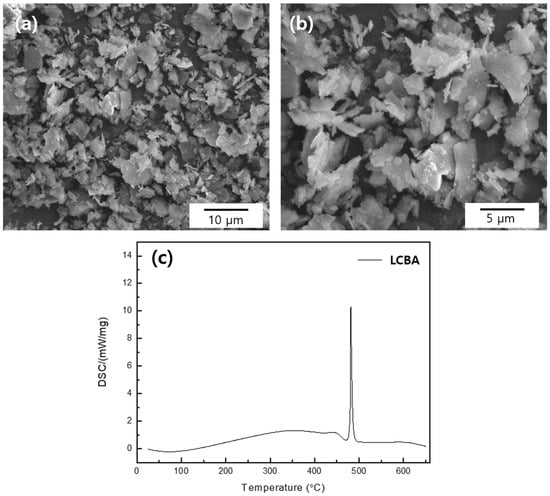
Figure 1a,b present the low- and high-magnification field-emission scanning electron microscopy (FE-SEM) images obtained for the LCBA sample. As shown, the LCBA powder exhibits a predominantly plate-like particle morphology, with particle sizes in the range of ~5–10 μm. The particle surfaces appear relatively smooth, and no distinct grain boundaries are observed, indicating that the LCBA powder maintains an amorphous (glassy) structure. Such amorphous characteristics have been reported to be advantageous for low-temperature sintering processes and co-sintering with electrode materials.
Figure 1.
(a,b) SEM images of the LCBA powder at magnifications of ×5000 and ×10,000, respectively. (c) DSC curve of the LCBA powder.
Subsequently, the thermal behavior of the LCBA powder was evaluated using thermogravimetry–differential scanning calorimetry (TG–DSC, Figure 1c). In the DSC curve, a gradual change in slope is observed at ~430 °C, which corresponds to the Tg of LCBA. Subsequently, a pronounced exothermic peak appears at ~480 °C, which is attributed to the Tc associated with the structural rearrangement of the amorphous phase. Specifically, this exothermic peak is considered to originate from the release of latent heat during the crystallization process. At temperatures above 500 °C, the DSC signal remains relatively stable, indicating that LCBA reaches a thermally stable state after the formation of crystalline phases.
These Tg and Tc characteristics provide important guidelines for determining the sintering temperature window of LCBA solid electrolytes. In particular, controlling the sintering process at temperatures below Tg, or within the temperature range between Tg and Tc, is expected to enable low-temperature co-sintering between the electrolyte and the electrode, while maintaining an amorphous or partially crystallized structure. This offers a significant processing advantage for solid electrolyte applications, as it facilitates the simultaneous achievement of favorable ionic transport properties and interfacial stability.
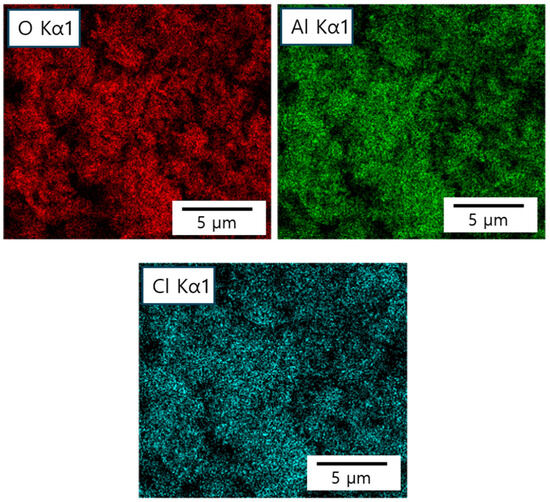
Figure 2 presents the energy-dispersive X-ray spectroscopy (EDS) elemental mapping images and corresponding quantitative analysis of the LCBA powder. The elemental maps indicate that O, Al, and Cl are uniformly distributed throughout the observed region, suggesting that a homogeneous composition is achieved within the LCBA particles, without any noticeable elemental segregation or local compositional deviation. These results imply that the mixing and synthesis of the raw materials were effectively accomplished through the solid-state reaction process.
Figure 2.
EDS elemental mapping images of the LCBA powder showing the distributions of O, Al, and Cl.
The elemental composition of the LCBA powder was subsequently investigated using EDS, as summarized in Table 1. Specifically, quantitative EDS analysis reveals that the LCBA powder consists primarily of O, Al, and Cl, with weight percentages of 70.97, 20.76, and 8.27 wt%, respectively. The corresponding atomic percentages were determined to be 81.56 at% (O), 14.15 at% (Al), and 4.29 at% (Cl). Although boron was expected to be a constituent element of the LCBA composition, it was not clearly detected by EDS, likely due to the inherent limitations of EDS in detecting light elements with low atomic numbers. This homogeneous distribution of the major constituent elements within the LCBA powder is considered advantageous for solid electrolyte applications, as it minimizes local variations in ionic transport properties arising from compositional inhomogeneity, while also contributing to improved reproducibility with respect to the electrochemical performance. In particular, the uniform incorporation of chloride species into the LCBA matrix may influence the glass structure and thermal behavior, consistent with the low-temperature sintering characteristics observed by thermal analysis.
Table 1.
Elemental composition of the LCBA powder, as determined by EDS.
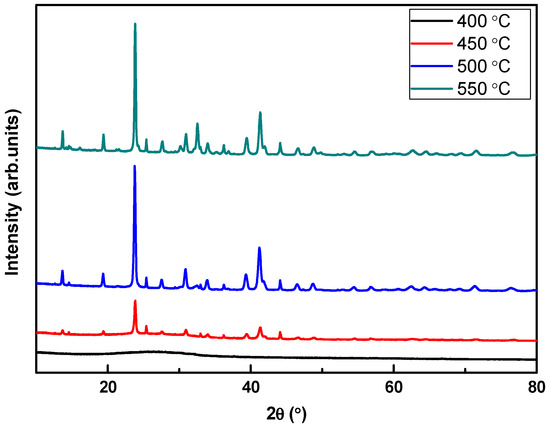
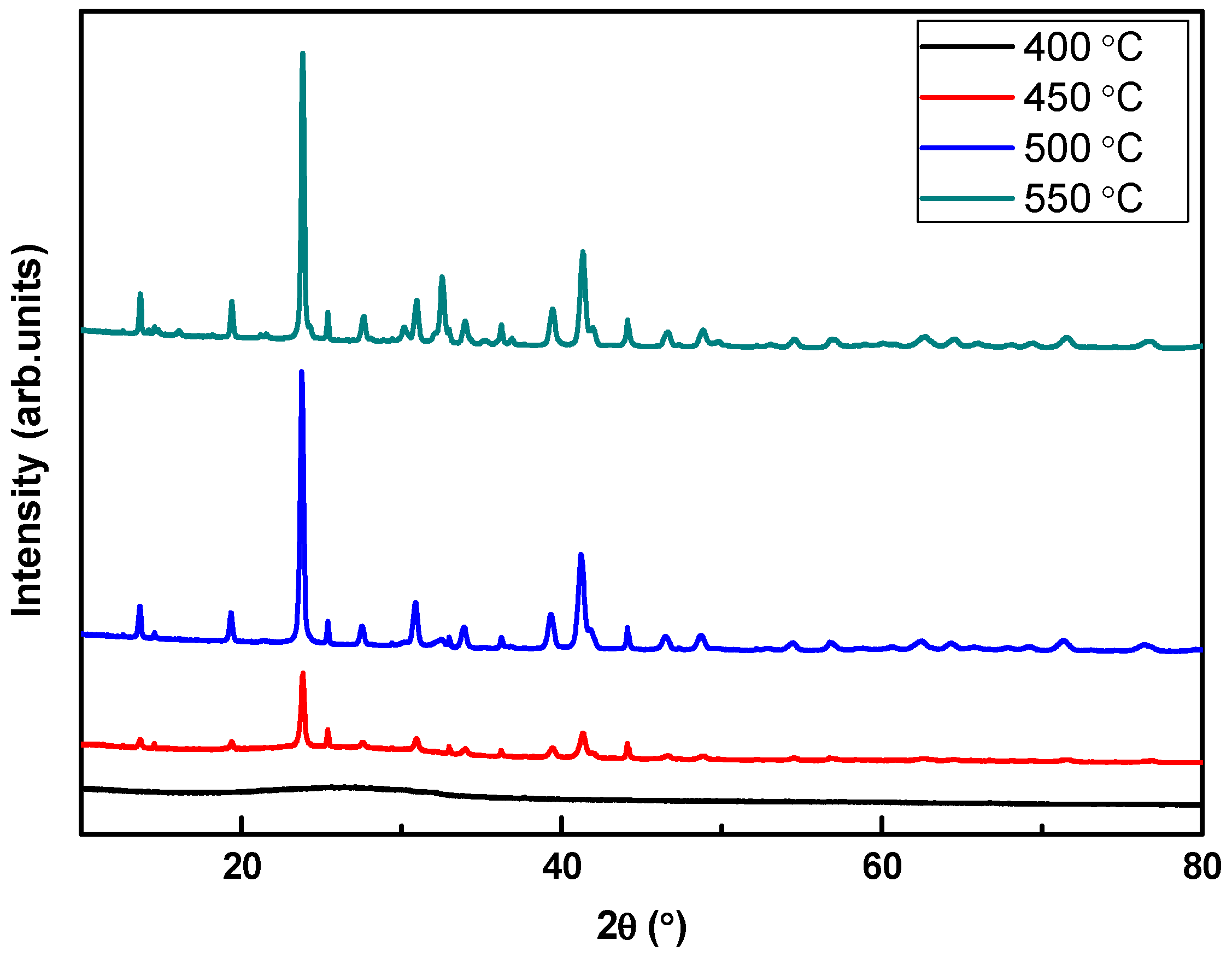
Figure 3 shows the XRD patterns recorded for the LCBA samples sintered at different temperatures. Specifically, at a sintering temperature of 400 °C, the XRD pattern exhibits a predominantly broad background with weak diffraction peaks, indicating that the LCBA sample remains largely amorphous with the onset of partial crystallization. This observation is consistent with thermal analysis, which indicated a Tc of ~480 °C for LCBA. Upon increasing the sintering temperature to 450 °C, distinct diffraction peaks begin to emerge, suggesting the development of crystalline phases within the LCBA matrix. Further increasing the sintering temperature to 500 °C results in a noticeable increase in peak intensity and sharper diffraction features, indicating enhanced crystallinity and improved structural ordering. At 550 °C, the XRD pattern shows well-defined and high-intensity diffraction peaks over the measured 2θ range, confirming the formation of a highly crystalline structure. This progressive sharpening and intensification of diffraction peaks with increasing sintering temperature clearly demonstrate the temperature-dependent crystallization behavior of LCBA. These results indicate that the sintering temperature plays a decisive role in controlling the LCBA structure, transitioning from a predominantly amorphous structure at lower temperatures to a highly crystalline phase at elevated temperatures. Appropriate selection of the sintering temperature is therefore essential for tailoring the structural characteristics of LCBA solid electrolytes, depending on the desired balance between amorphous and crystalline phases.
Figure 3.
XRD patterns recorded for the LCBA specimens sintered at different temperatures.
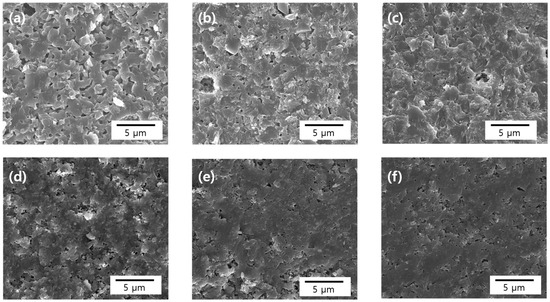
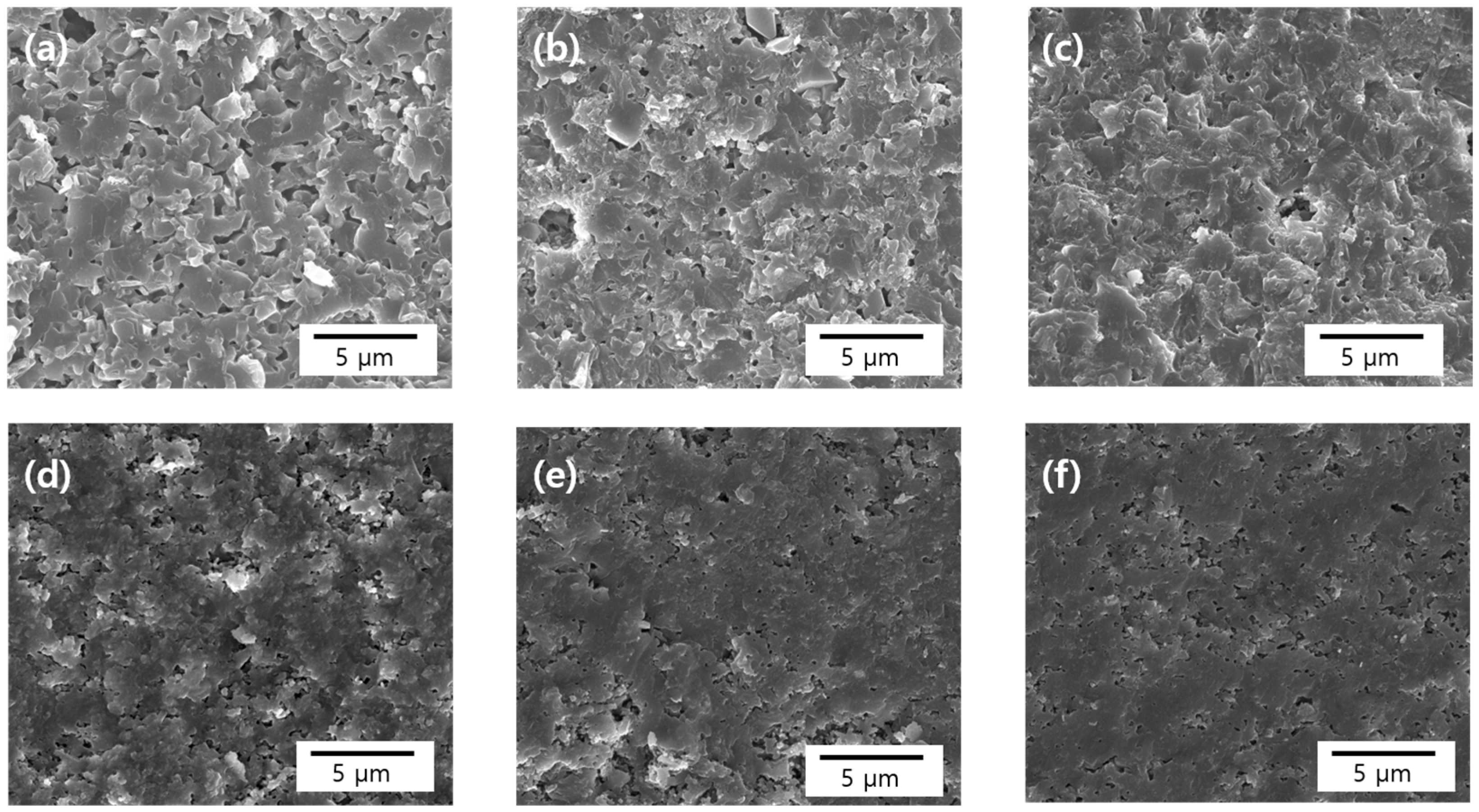
Figure 4 presents FE-SEM images of LCBA pellets sintered at 450, 500, and 550 °C, both with and without hot pressing, revealing pronounced microstructural differences between the two fabrication routes. For the pellets sintered without hot pressing (Figure 4a–c), a relatively high pore density is evident at all sintering temperatures. This indicates insufficient densification during sintering without hot pressing, which is typically associated with increased grain boundary resistance and reduced ionic conductivity. In contrast, the hot-pressed LCBA pellets (Figure 4d–f) exhibit a significantly denser microstructure even under identical sintering temperature conditions. This marked reduction in porosity and the improved interparticle contact demonstrate that hot-pressing effectively promotes densification of the sintered pellets. Such microstructural improvements are expected to minimize ion-blocking effects caused by pores, thereby facilitating lithium-ion transport and reducing grain boundary resistance. Moreover, the reduced porosity contributes to improved mechanical integrity by mitigating thermal expansion mismatch and limiting moisture penetration pathways, which suppresses the formation of microcracks. This structural stabilization plays a crucial role in achieving long-term cycling stability. Furthermore, the dense electrolyte structure inhibits straight-through lithium dendrite propagation, thereby enhancing the electrochemical reliability and safety of the cell. Overall, the hot-press process substantially improves the internal density of LCBA pellets, leading directly to enhanced ionic conductivity, reduced interfacial resistance, and improved long-term stability compared to conventionally sintered samples.
Figure 4.
Cross-sectional FE-SEM images recorded for the LCBA pellets sintered at different temperatures. (a–c) Without hot-pressing at 450, 500, and 550 °C. (d–f) With hot pressing at 450, 500, and 550 °C.
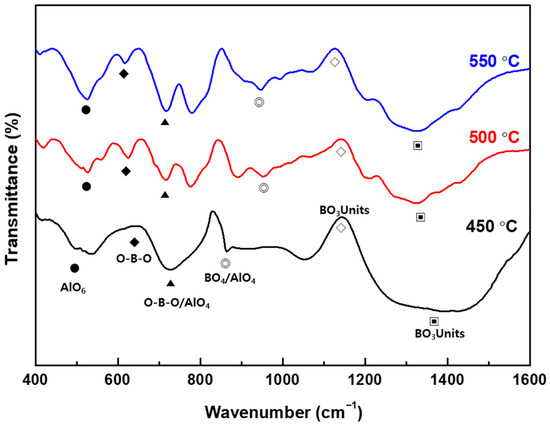
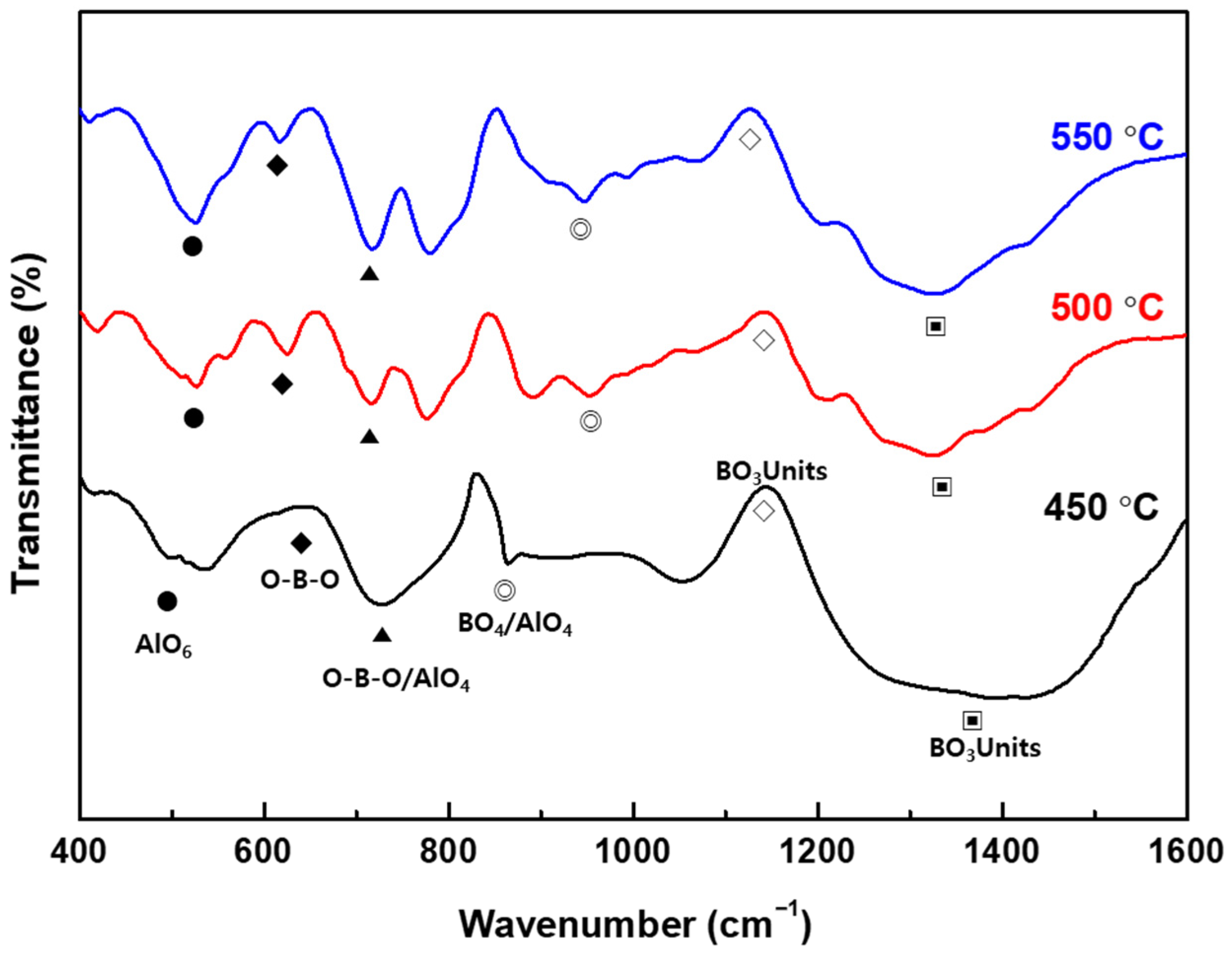
Figure 5 shows the Fourier transform infrared (FT-IR) spectra recorded for the LCBA pellets subjected to hot-press sintering at 450, 500, and 550 °C. These spectra were collected over the wavenumber range of 400–1600 cm−1, which corresponds to the stretching and bending vibrational modes of B–O and Al–O bonds, and is therefore suitable for analyzing structural changes in borate–aluminate glass networks.
Figure 5.
FT-IR spectra recorded for the LCBA pellets sintered at 450, 500, and 550 °C.
For the sample sintered at 450 °C, absorption bands associated with AlO6 and B–O–B linkages appear in the 500–700 cm−1 range, together with a broad and weak band near 1350 cm−1, which was attributed to the BO3 units. These broad and overlapping features indicate the coexistence of BO3 and BO4 units, suggesting an incompletely polymerized glass network due to insufficient structural rearrangement at this temperature. Upon increasing the sintering temperature to 500 °C, the absorption band near 1000 cm−1, corresponding to BO4/AlO4 tetrahedral units, becomes more pronounced, while the BO3-related band decreases in intensity. A slight shift in several other bands toward lower wavenumbers is also observed, reflecting changes in the local bonding environment and coordination states. These spectral changes indicate a temperature-induced transformation from triangular BO3 units to more stable tetrahedral BO4 units, accompanied by enhanced network polymerization. For the sample sintered at 550 °C, BO4-related bands dominate the spectrum, and the absorption features become sharper and more well defined, confirming the formation of a dense and structurally stabilized glass network. Such reduced band broadening suggests decreased structural disorder and increased network homogeneity with increasing sintering temperature.
Overall, the FT-IR results demonstrate that increasing the sintering temperature promotes BO3 → BO4 structural conversion and strengthens the B–O–Al linkages, leading to enhanced network polymerization and structural stability in the LCBA glass. This structural evolution is closely related to enhanced densification and the formation of continuous lithium-ion transport pathways, which are expected to contribute to enhanced ionic conductivity [49,50].
2.2. Ionic Transport Properties and Graphite/Solid Electrolyte Interfacial Adhesion
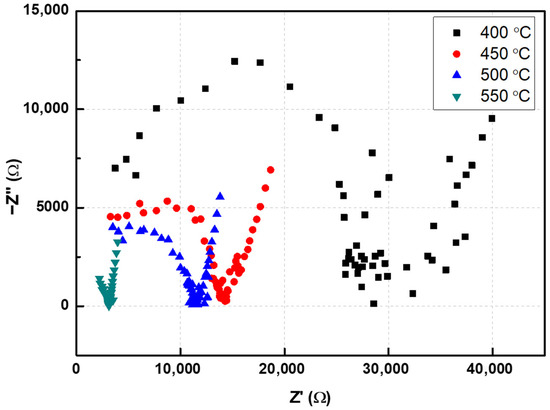
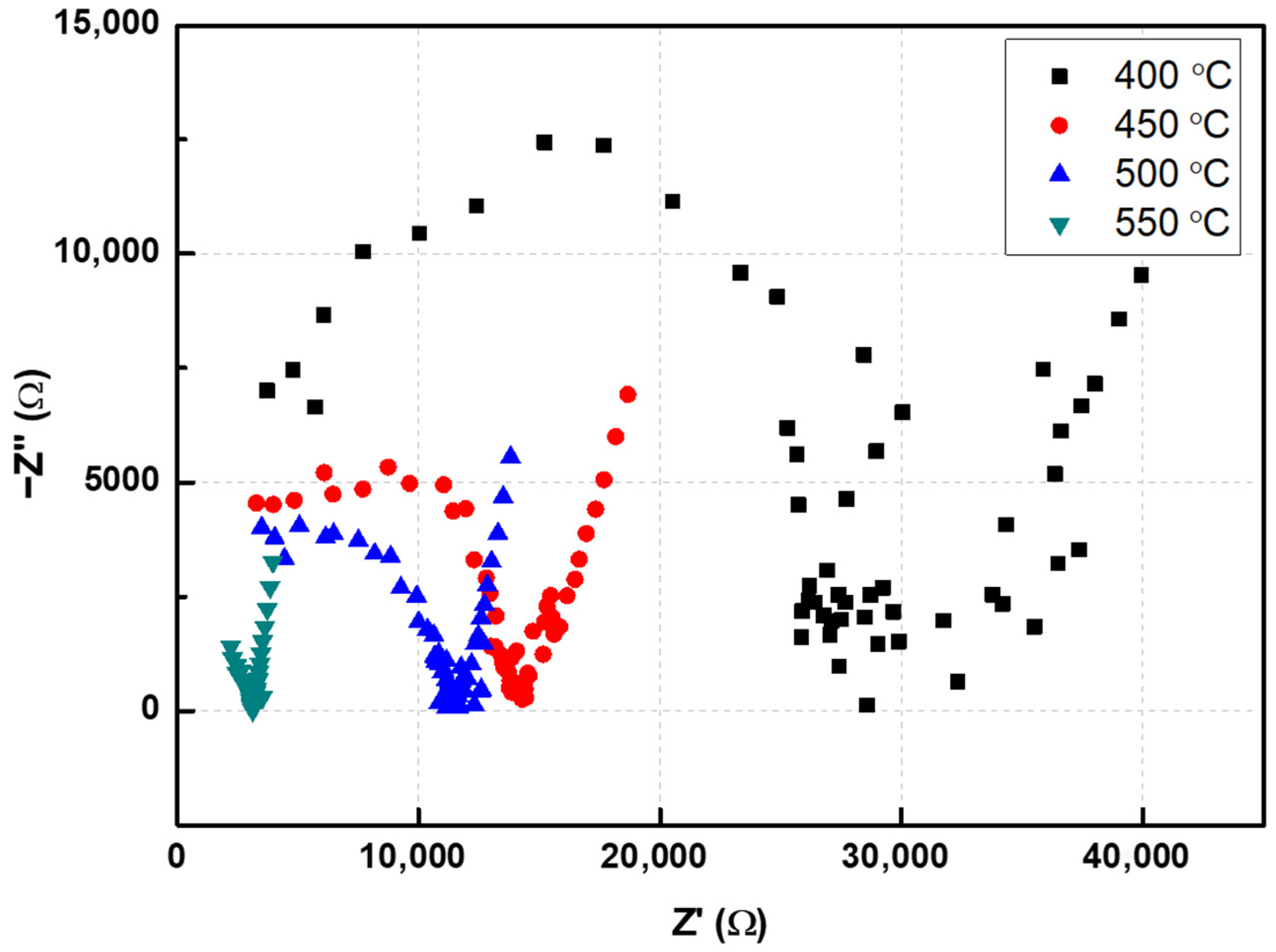
Figure 6 shows the Nyquist plots obtained for the LCBA pellets sintered at 400, 450, 500, and 550 °C; the corresponding electrochemical parameters determined using electrochemical impedance spectroscopy (EIS) are summarized in Table 2. All samples exhibit the characteristic impedance behavior of oxide-based solid electrolytes, with the overall impedance decreasing markedly as the sintering temperature increases.
Figure 6.
Nyquist plots obtained for the LCBA pellets sintered at different temperatures.
Table 2.
Thickness, resistance, and calculated ionic conductivity of the LCBA pellets sintered at different temperatures, as determined from EIS measurements.
The sample sintered at 400 °C exhibits the highest resistance (~28,000 Ω) and the lowest ionic conductivity (4.42 × 10⁻⁶ S cm−1) due to insufficient densification at temperatures below the Tg of LCBA (i.e., 430 °C). Limited structural relaxation at this temperature results in significant residual porosity and increased grain boundary resistance, thereby hindering continuous lithium-ion transport. Upon increasing the sintering temperature to 450 °C (i.e., above the Tg), the impedance is significantly reduced and the ionic conductivity increases to 7.34 × 10⁻⁶ S cm−1 due to enhanced network relaxation and partial densification. Further improvements are observed at 500 °C, which is above the Tc of LCBA (i.e., 480 °C). Specifically, structural rearrangement of the glass network contributes to a reduced resistance and an ionic conductivity of 9.30 × 10⁻⁶ S cm−1. The LCBA pellet sintered at 550 °C exhibits the lowest resistance (~3000 Ω) and the highest ionic conductivity (3.86 × 10⁻⁵ S cm−1). Considering the comparable sample dimensions, this enhancement is primarily attributed to the synergistic effect of geometric factors, such as pronounced densification and pore elimination, and structural factors, including the optimized connectivity and stabilization of the glass network above both Tg and Tc.
The thickness, EIS-derived resistance, and calculated ionic conductivity are summarized in Table 2 for the sintered LCBA pellets to reflect the effect of temperature during this process. Overall, the EIS results demonstrate that increasing the sintering temperature effectively reduces impedance and enhances the ionic conductivity of LCBA, with excessive porosity at 400 °C limiting performance, and optimal ionic transport being achieved at 550 °C.
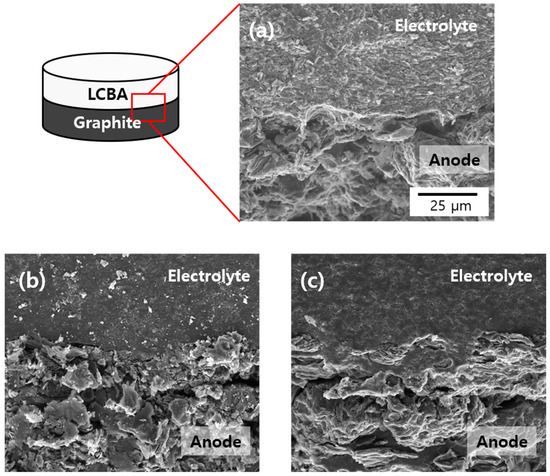
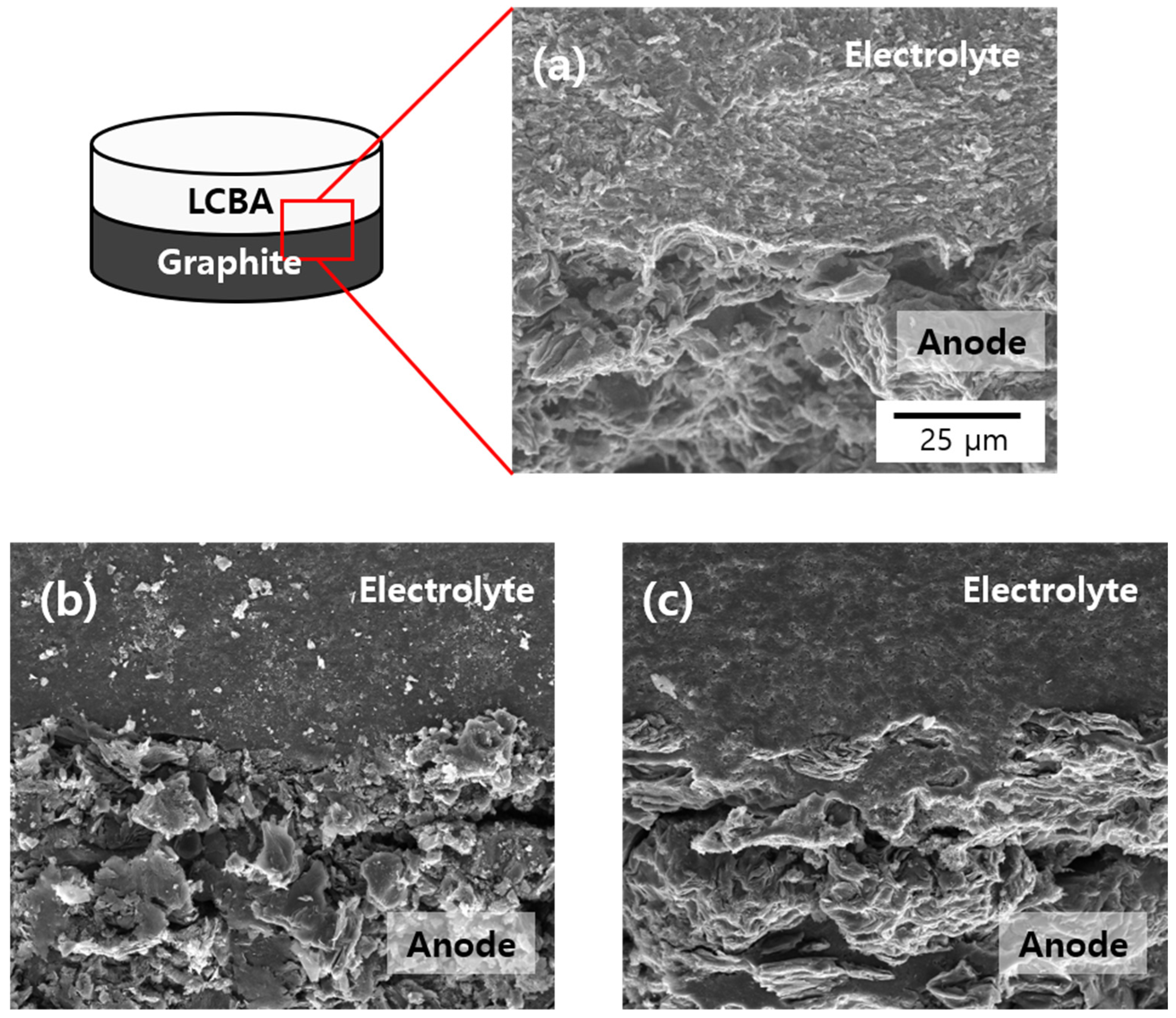
Figure 7 presents cross-sectional SEM images of the interfaces between the LCBA solid electrolyte and the LCBA–graphite composite anodes prepared using different LCBA/graphite ratios. The schematic illustration indicates the analyzed electrolyte–anode interfacial region, while Figure 7a–c show the interfacial microstructures of the samples with LCBA/graphite ratios of 3:7, 4:6, and 5:5, respectively. All samples were subjected to hot-press sintering at 550 °C for 3 h.
Figure 7.
Cross-sectional SEM images of the LCBA/LCBA–graphite interfaces prepared using LCBA/graphite ratios of (a) 3:7, (b) 4:6, and (c) 5:5, after hot pressing at 550 °C for 3 h.
For the composite prepared using the lowest LCBA content (i.e., LCBA/graphite = 3:7, Figure 7a), the electrolyte–anode interface appears relatively rough and discontinuous, with noticeable interfacial gaps and non-uniform contact regions. This indicates limited interfacial adhesion even under hot-press conditions, which can be attributed to the high graphitic fraction and the insufficient amount of LCBA to effectively fill interfacial voids. Such interfacial discontinuities are likely to hinder lithium-ion transport and increase interfacial resistance. Upon increasing the LCBA content (4:6, Figure 7b), the interfacial morphology becomes more compact and uniform, accompanied by a reduction in the number and size of interfacial voids. This suggests that, during hot pressing at 550 °C, the increased LCBA fraction more effectively fills the gaps between graphite particles, thereby enhancing mechanical interlocking and increasing the effective contact area between the solid electrolyte and the composite anode. Notably, the most homogeneous and continuous interfacial structure is observed for the composite containing the highest LCBA content (5:5, Figure 7c), with hot pressing significantly enhancing interfacial contact, thereby resulting in minimal interfacial porosity. In this case, LCBA effectively acts as both a binding phase and an ion-conducting medium, reinforcing interparticle connectivity and structural continuity at the electrolyte/anode interface.
Overall, even under identical hot-press conditions (550 °C for 3 h), interfacial adhesion between the LCBA solid electrolyte and the LCBA–graphite composite anode increases with higher LCBA content. This enhanced interfacial adhesion is expected to lower interfacial impedance and promote the formation of stable lithium-ion transport pathways, thereby improving the electrochemical reliability and performance of solid-state batteries.
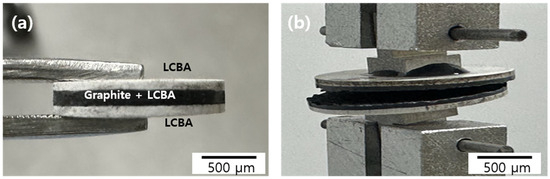
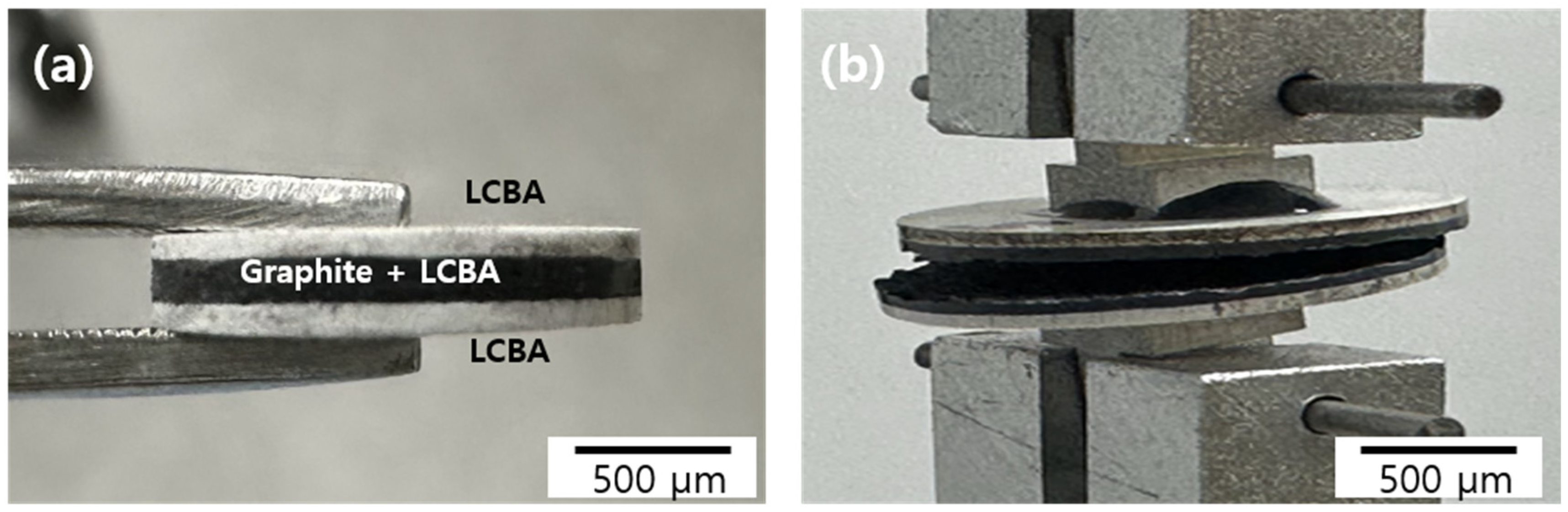
The photographic images presented in Figure 8 depict tensile testing of the LCBA/LCBA–graphite composite anode/LCBA stacked structures. Figure 8a shows the configuration of the stacked specimen, while Figure 8b illustrates the tensile test setup used to evaluate interfacial adhesion. Tensile tests were conducted for two composite compositions, namely graphite/LCBA ratios of 50:50 wt% and 60:40 wt%. All specimens were fabricated with an identical diameter of 12 mm, and the tensile test results were used to assess the interfacial adhesion strength and fracture behavior at the solid electrolyte–composite anode–solid electrolyte interface.
Figure 8.
Photographic images showing (a) the LCBA/LCBA–graphite composite/LCBA specimen and (b) the tensile test setup for interfacial adhesion measurement.
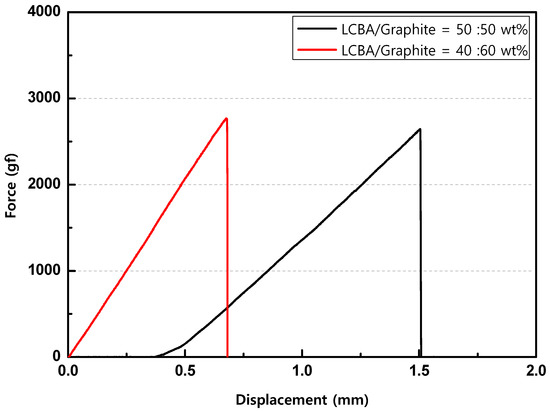
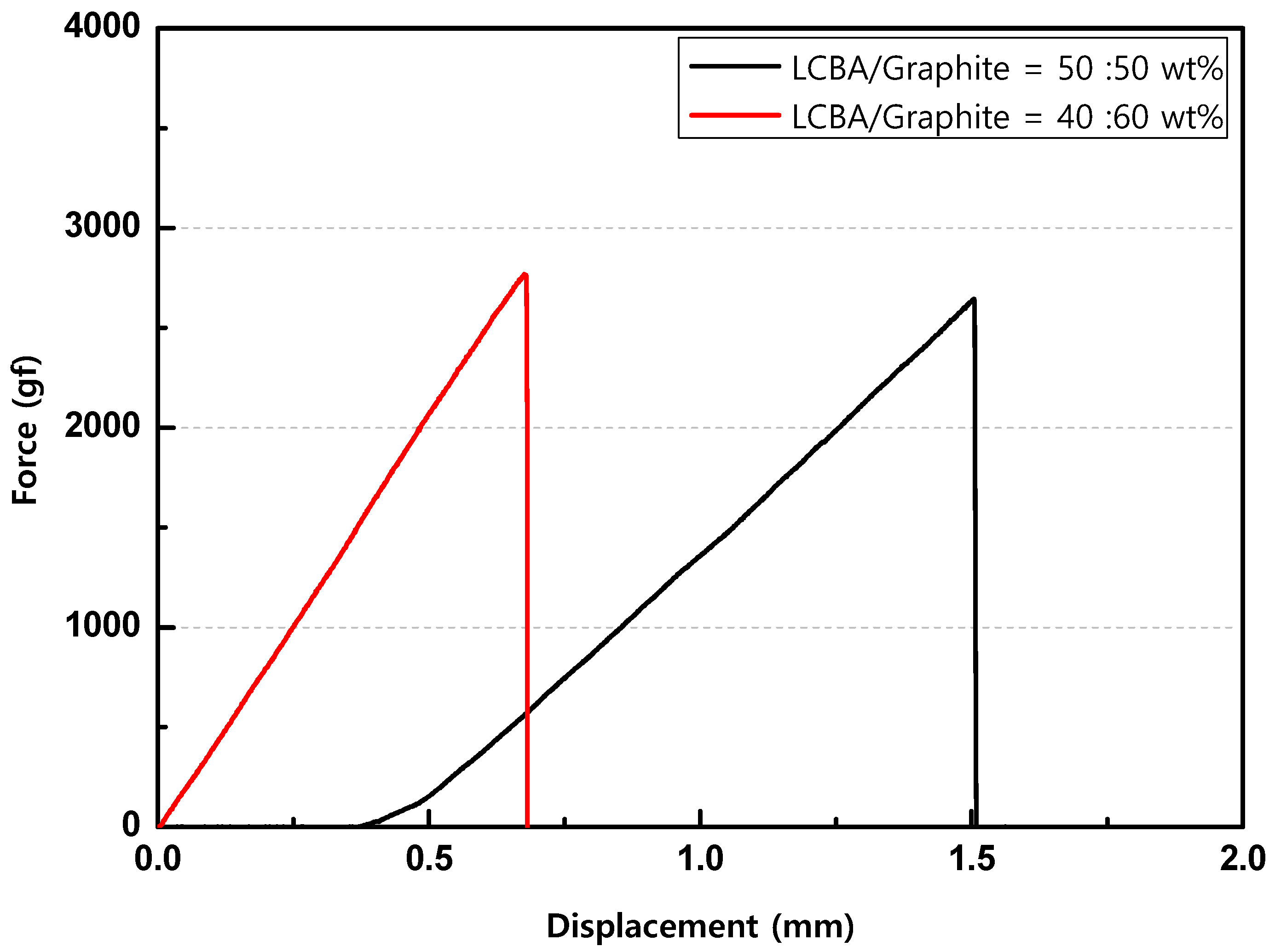
As presented in Figure 9, the force–displacement curves reveal distinct interfacial mechanical behaviors depending on the composite composition. Specifically, the specimen prepared using a graphite/LCBA ratio of 50:50 wt% sustains a maximum tensile force of ~2600–2700 gf with a large fracture displacement of ~1.4–1.5 mm, whereas the 60:40 wt% specimen reaches a comparable maximum force (~2700–2800 gf), but fails at a significantly smaller displacement of ~0.6 mm, indicating a more brittle interfacial response.
Figure 9.
Force–displacement curves obtained from tensile tests of LCBA/LCBA–graphite composite/LCBA structures prepared using graphite/LCBA ratios of 50:50 wt% and 60:40 wt%.
Table 3 summarizes the tensile interfacial properties of the LCBA/composite/LCBA structures. While the maximum tensile stresses were comparable (~0.23–0.24 MPa) regardless of the ratio, the interfacial fracture energy (J m−2) showed a marked dependence on composition. The 50:50 graphite/LCBA composite exhibited significantly higher fracture energy (180–200 J m−2) compared to the 60:40 specimen (70–90 J m−2), indicating that higher LCBA content enhances deformation tolerance. This mechanical stability is consistent with the improved interfacial densification and reduced resistance observed in SEM and EIS analyses. Crucially, this superior toughness enables the 50:50 composite to function as a mechanical buffer under realistic operating conditions. It effectively accommodates the volume expansion (~10%) of graphite anodes during lithiation and relaxes residual thermal stresses arising from CTE mismatches during sintering, thereby preventing interlayer delamination and ensuring long-term structural integrity.
Table 3.
Tensile interfacial properties of the LCBA/LCBA–graphite composite/LCBA structures prepared using different graphite/LCBA ratios.
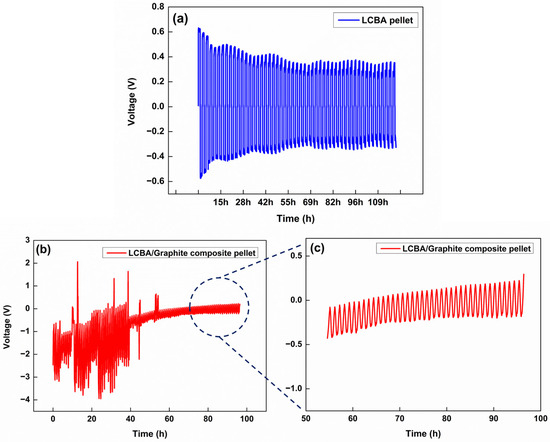
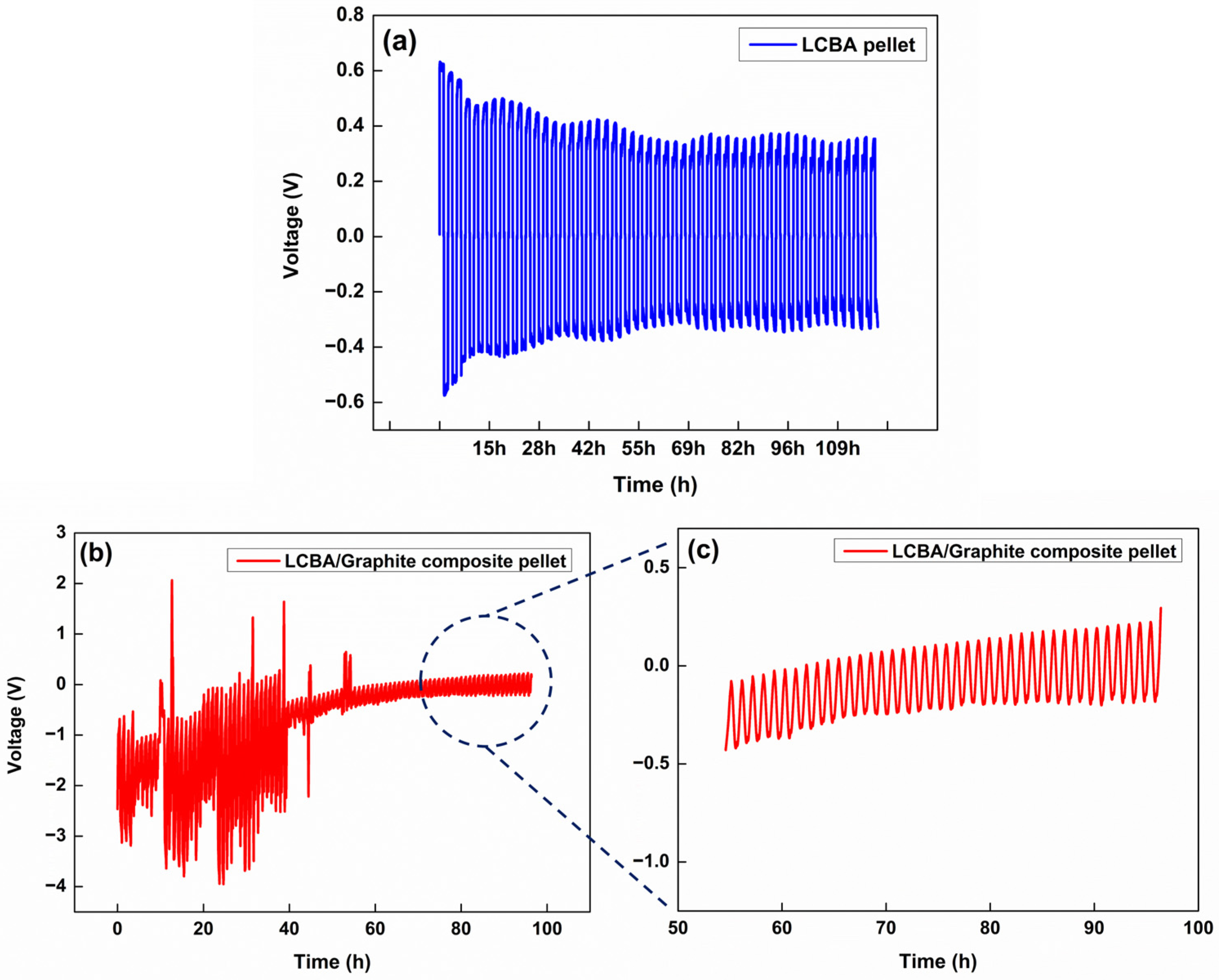
To evaluate the electrochemical stability of the LCBA solid electrolyte and its compatibility with the graphite anode, DC cycling tests were performed. Figure 10 shows the voltage profiles of the bare LCBA pellet and the LCBA/Graphite composite pellet measured at a current density of 0.01 mA/cm2. First, as shown in Figure 10a, the bare LCBA pellet exhibited highly stable lithium plating and stripping behavior, maintaining a constant overpotential over long-term cycling exceeding 100 h, following an initial induction period of approximately 10 h. This suggests that the synthesized LCBA glassy solid electrolyte possesses excellent structural and electrochemical stability without lithium dendrite formation under the applied current density. In contrast, the LCBA/Graphite composite pellet incorporating the graphite anode displayed behavior distinct from the bare LCBA pellet during the initial operation stage (Figure 10b). Irregular noise and rapid voltage fluctuations were observed in the voltage profile for up to approximately 40 h after the start of the test. This is attributed to a transient phenomenon occurring during the stabilization process, where the interface between the heterogeneous solid electrolyte and graphite particles becomes electrochemically activated and physical contact is established. Figure 10c, which presents a magnified view of the profile after 50 h (post-initial instability), confirms that the irregular noise disappears and a periodic cycling pattern is established. However, the voltage does not remain symmetric around 0 V but tends to drift gradually in the positive direction over time. This voltage drift occurs because the test cell was configured as an asymmetric cell combining LCBA and graphite, rather than a symmetric cell structure. Consequently, the result reflects the characteristic gradual shift in operating potential as cycling progresses due to the asymmetric electrode configuration; this is interpreted as an intrinsic electrochemical property of the asymmetric cell rather than cell degradation.
Figure 10.
DC cycling profiles at 0.01 mA/cm2 for (a) the LCBA pellet and (b) the LCBA/Graphite composite pellet. (c) Magnified view of the dashed area in (b) showing the stabilized region.
3. Materials and Methods
3.1. Sintering and Characterization of LCBA
LCBA glass powders were synthesized via a conventional solid-state reaction using Li2O (97%, Sigma-Aldrich, Seoul, Republic of Korea), B2O3 (99.98%, Sigma-Aldrich), Al2O3 (99%, Sigma-Aldrich), and chloride-based compounds as raw materials. Mixing and synthesis were conducted at Daejoo Electronic Materials Co., Ltd. (Siheung, Republic of Korea). The synthesized LCBA powders were designed to exhibit a Tg of 430 °C and a Tc of 480 °C.
After drying the powders at 70 °C for 24 h in a vacuum oven, they were uniaxially pressed into pellets (12 mm diameter, 0.5 mm thickness) under 90 MPa pressure using a tungsten carbide mold, followed by hot pressing at 170 MPa. Sintering was then performed at 400, 450, 500, or 550 °C using a heating rate of 5 °C min−1 and a dwell time of 3 h. The sintered pellets were sequentially polished using SiC sandpapers (#200–#2000 grit).
The thermal properties (Tg and Tc) were analyzed by TG–DSC (SDT-Q600, TA Instruments, New Castle, DE, USA) at a heating rate of 5 °C min−1 over a temperature range of 25–700 °C. Phase evolution was examined by XRD (SmartLCBA, Rigaku, Tokyo, Japan). The microstructural features and elemental distributions were characterized using FE-SEM (Nova NanoSEM 450, FEI, Hillsboro, OR, USA) combined with EDS. FT-IR spectroscopy (INVENIO, Bruker, Ettlingen, Germany) was conducted in the wavenumber range of 400–1600 cm−1 using the KBr pellet method to investigate the structural bonding characteristics.
The electrochemical properties were evaluated by EIS. For this purpose, gold blocking electrodes (~100 µm) were deposited on both sides of 10 mm-diameter pellets to form an Au/LCBA/Au configuration. Impedance measurements were performed at 25 °C over a frequency range of 7 MHz to 1 Hz using a potentiostat/impedance analyzer (VersaSTAT 3, Princeton Applied Research, Oak Ridge, TN, USA).
3.2. Co-Sintering and Characterization of the LCBA Solid Electrolytes and Graphite Anodes
LCBA solid electrolytes and graphite anodes were co-sintered to evaluate their applicability in ASSBs. Anode composites were prepared using graphite/LCBA weight ratios of 60:40 and 50:50, and dried at 60 °C for 24 h under vacuum. The LCBA electrolyte layers were uniaxially pressed at 90 MPa using a 12 mm tungsten carbide mold, followed by stacking of the anode composite and re-pressing at the same pressure to form bilayer pellets. The bilayer pellets were hot-pressed at 180 MPa and sintered at 550 °C with a heating rate of 5 °C min−1 and a holding time of 3 h. After sintering, the pellets were polished using SiC sandpapers (#200–#2000 grit). The microstructures and elemental distributions were analyzed by FE-SEM and EDS.
The mechanical adhesion strength at the electrolyte–anode interface was evaluated using pellets with an electrolyte/anode/electrolyte sandwich structure to prevent premature detachment during testing. Testing tabs were attached using adhesive glue, dried at 110 °C for 10 min, and evaluated using a universal testing machine (UTM, Yeonjin S-tech, Anyang-si, Republic of Korea).
To evaluate the electrochemical stability and interfacial properties of the LCBA solid electrolyte and LCBA/graphite composites, DC cycling measurements were conducted using a battery charge/discharge tester (WBCS 3000 Cycler, WonATech, Seoul, Republic of Korea). Lithium metal foils were attached to both sides of the prepared pellets to serve as electrodes, and the assemblies were sealed in Swagelok-type cells. Galvanostatic cycling tests were then performed at a constant current density of 0.01 mA/cm2 to monitor the voltage evolution and stabilization behavior during the charging and discharging processes.
4. Conclusions
In this study, the low-temperature sintering behavior of Li-glass solid electrolytes (LCBA) and their co-sintering characteristics with graphite anodes were investigated using a hot-press-assisted process. The LCBA electrolyte achieved high densification under sintering temperatures below 550 °C, and the sample sintered at 550 °C exhibited an ionic conductivity of 3.86 × 10⁻⁵ S cm−1, demonstrating stable lithium-ion transport under low-temperature processing conditions. Furthermore, the introduction of an LCBA/graphite composite interlayer significantly improved interfacial adhesion. The composite containing 50 wt% LCBA exhibited a maximum tensile stress of approximately 0.23 MPa and a high interfacial fracture energy of 180–200 J m−2, indicating enhanced mechanical stability and effective suppression of interfacial delamination caused by shrinkage mismatch. These results demonstrate that the combination of hot-press-assisted low-temperature sintering and composite interlayer design effectively enhances both ionic conductivity and interfacial reliability, highlighting the potential of LCBA-based solid electrolytes for next-generation all-solid-state batteries and multilayer ceramic battery applications.
Author Contributions
Conceptualization, Y.K. and H.L.; methodology, W.L. and J.C.; validation, Y.K. and J.A.; investigation, Y.S. and H.L.; writing—original draft preparation, Y.K. and W.L.; writing—review and editing, Y.S. and C.-B.Y. All authors have read and agreed to the published version of the manuscript.
Funding
This work was supported by the Technology Development Program for Multi-Layer Ceramic Batteries (MLCB) (RS-2023-00243593, Development of oxide-based solid electrolyte anode materials and electrodes) funded by the Ministry of Trade, Industry and Energy (MOTIE), Republic of Korea, and the Basic Science Research Program through the National Research Foundation of Korea (NRF) funded by the Ministry of Education, Republic of Korea (Grant No. RS-2025-25396489).
Institutional Review Board Statement
Not applicable.
Informed Consent Statement
Not applicable.
Data Availability Statement
The original contributions presented in the study are included in the article, further inquiries can be directed to the corresponding author.
Conflicts of Interest
The authors declare no conflicts of interest.
References
- Armand, M.; Tarascon, J.M. Building better batteries. Nature 2008, 451, 652–657. [Google Scholar] [CrossRef] [Scilit] [PubMed]
- Turcheniuk, K.; Bondarev, D.; Amatucci, G.G.; Yushin, G. Battery materials for low-cost electric transportation. Mater. Today 2021, 42, 57–72. [Google Scholar] [CrossRef] [Scilit]
- Zhao, Y.; Ding, Y.; Li, Y.; Peng, L.; Byon, H.R.; Goodenough, J.B.; Yu, G. A chemistry and material perspective on lithium redox flow batteries towards high-density electrical energy storage. Chem. Soc. Rev. 2015, 44, 7968–7996. [Google Scholar] [CrossRef] [Scilit]
- Roth, E.P.; Orendorff, C.J. How electrolytes influence battery safety. Electrochem. Soc. Interface 2012, 21, 45–49. [Google Scholar] [CrossRef] [Scilit]
- Goodenough, J.B.; Park, K.-S. The Li-ion rechargeable battery: A perspective. J. Am. Chem. Soc. 2013, 135, 1167–1176. [Google Scholar] [CrossRef] [Scilit]
- Yu, X.; Manthiram, A. Sustainable battery materials for next-generation electrical energy storage. Adv. Energy Sustain. Res. 2021, 2, 2000102. Available online: https://onlinelibrary.wiley.com/doi/full/10.1002/aesr.202000102 (accessed on 2 February 2025). [CrossRef] [Scilit]
- Kim, S.; Tanim, T.R.; Dufek, E.J.; Scoffield, D.; Pennington, T.D.; Gering, K.L.; Colclasure, A.M.; Mai, W.; Meintz, A.; Bennett, J. Projecting recent advancements in battery technology to next-generation electric vehicles. Energy Technol. 2022, 10, 2200303. [Google Scholar] [CrossRef] [Scilit]
- Qian, Y.; Hu, S.; Zou, X.; Deng, Z.; Xu, Y.; Cao, Z.; Kang, Y.; Deng, Y.; Shi, Q.; Xu, K.; et al. How electrolyte additives work in Li-ion batteries. Energy Storage Mater. 2019, 20, 208–215. [Google Scholar] [CrossRef] [Scilit]
- Peljo, P.; Girault, H.H. Electrochemical potential window of battery electrolytes: The HOMO–LUMO misconception. Energy Environ. Sci. 2018, 11, 2306–2309. [Google Scholar] [CrossRef] [Scilit]
- Feng, X.; Ouyang, M.; Liu, X.; Lu, L.; Xia, Y.; He, X. Thermal runaway mechanism of lithium ion battery for electric vehicles: A review. Energy Storage Mater. 2018, 10, 246–267. [Google Scholar] [CrossRef] [Scilit]
- Wang, Q.; Ping, P.; Zhao, X.; Chu, G.; Sun, J.; Chen, C. Thermal runaway caused fire and explosion of lithium ion battery. J. Power Sources 2012, 208, 210–224. [Google Scholar] [CrossRef] [Scilit]
- Campion, C.L.; Li, W.; Lucht, B.L. Thermal decomposition of LiPF6-based electrolytes for lithium-ion batteries. J. Electrochem. Soc. 2005, 152, A2327–A2334. [Google Scholar] [CrossRef] [Scilit]
- Monroe, C.; Newman, J. The impact of elastic deformation on deposition kinetics at lithium/polymer interfaces. J. Electrochem. Soc. 2005, 152, A396–A404. [Google Scholar] [CrossRef] [Scilit]
- Hu, X.; Deng, Z.; Lin, X.; Xie, Y.; Teodorescu, R. Research directions for next-generation battery management solutions in automotive applications. Renew. Sustain. Energy Rev. 2021, 152, 111695. [Google Scholar] [CrossRef] [Scilit]
- Iriyama, Y.; Wadaguchi, M.; Yoshida, K.; Yamamoto, Y.; Motoyama, M.; Yamamoto, T. 5V-class bulk-type all-solid-state rechargeable lithium batteries with electrode-solid electrolyte composite electrodes prepared by aerosol deposition. J. Power Sources 2018, 385, 55–61. [Google Scholar] [CrossRef] [Scilit]
- Liu, Q.; Geng, Z.; Han, C.; Fu, Y.; Li, S.; He, Y.; Kang, F.; Li, B. Challenges and perspectives of garnet solid electrolytes for all solid-state lithium batteries. J. Power Sources 2018, 389, 120–134. [Google Scholar] [CrossRef] [Scilit]
- Wang, Y.; Richards, W.D.; Ong, S.P.; Miara, L.J.; Kim, J.C.; Mo, Y.; Ceder, G. Design principles for solid-state lithium superionic conductors. Nat. Mater. 2015, 14, 1026–1031. [Google Scholar] [CrossRef] [Scilit]
- Zhao, Q.; Stalin, S.; Zhao, C.-Z.; Archer, L.A. Designing solid-state electrolytes for safe, energy-dense batteries. Nat. Rev. Mater. 2020, 5, 229–252. [Google Scholar] [CrossRef] [Scilit]
- Lau, J.; DeBlock, R.H.; Butts, D.M.; Ashby, D.S.; Choi, C.S.; Dunn, B.S. Sulfide solid electrolytes for lithium battery applications. Adv. Energy Mater. 2018, 8, 1800933. [Google Scholar] [CrossRef] [Scilit]
- Sakuda, A.; Hayashi, A.; Tatsumisago, M. Sulfide solid electrolyte with favorable mechanical property for all-solid-state lithium battery. Sci. Rep. 2013, 3, 2261. [Google Scholar] [CrossRef] [Scilit]
- Zhang, Q.; Cao, D.; Ma, Y.; Natan, A.; Aurora, P.; Zhu, H. Sulfide-based solid-state electrolytes: Synthesis, stability, and potential for all-solid-state batteries. Adv. Mater. 2019, 31, e1901131. [Google Scholar] [CrossRef] [Scilit]
- Murugan, R.; Thangadurai, V.; Weppner, W. Fast lithium ion conduction in garnet-type Li7La3Zr2O12. Angew. Chem. Int. Ed. Engl. 2007, 46, 7778–7781. [Google Scholar] [CrossRef] [Scilit] [PubMed]
- Kim, S.; Kim, J.-S.; Miara, L.; Wang, Y.; Jung, S.-K.; Park, S.Y.; Song, Z.; Kim, H.; Badding, M.; Chang, J.; et al. High energy and durable lithium metal batteries using garnet-type solid electrolytes with tailored lithium-metal compatibility. Nat. Commun. 2022, 13, 1883. [Google Scholar] [CrossRef] [Scilit]
- Takada, K.; Aotani, N.; Iwamoto, K.; Kondo, S. Solid state lithium battery with oxysulfide glass. Solid State Ion. 1996, 86–88, 877–882. [Google Scholar] [CrossRef] [Scilit]
- Lee, J.; Lee, T.; Char, K.; Kim, K.J.; Choi, J.W. Issues and advances in scaling up sulfide-based all-solid-state batteries. Acc. Chem. Res. 2021, 54, 3390–3402. [Google Scholar] [CrossRef] [Scilit]
- Tan, D.H.S.; Chen, Y.-T.; Yang, H.; Bao, W.; Sreenarayanan, B.; Doux, J.-M.; Li, W.; Lu, B.; Ham, S.-Y.; Sayahpour, B.; et al. Carbon-free high-loading silicon anodes enabled by sulfide solid electrolytes. Science 2021, 373, 1494–1499. [Google Scholar] [CrossRef] [Scilit]
- Kang, S.-G.; Kim, D.-H.; Kim, B.-J.; Yoon, C.-B. Sn-substituted argyrodite Li6PS5Cl solid electrolyte for improving interfacial and atmospheric stability. Materials 2023, 16, 2751. [Google Scholar] [CrossRef] [Scilit]
- Muramatsu, H.; Hayashi, A.; Ohtomo, T.; Hama, S.; Tatsumisago, M. Structural change of Li2S−P2S5 sulfide solid electrolytes in the atmosphere. Solid State Ion. 2011, 182, 116–119. [Google Scholar] [CrossRef] [Scilit]
- Sakuda, A.; Hayashi, A.; Takigawa, Y.; Higashi, K.; Tatsumisago, M. Evaluation of elastic modulus of Li2S−P2S5 glassy solid electrolyte by ultrasonic sound velocity measurement and compression test. J. Ceram. Soc. Jpn. 2013, 121, 946–949. [Google Scholar] [CrossRef] [Scilit]
- Famprikis, T.; Canepa, P.; Dawson, J.A.; Islam, M.S.; Masquelier, C. Fundamentals of inorganic solid-state electrolytes for batteries. Nat. Mater. 2019, 18, 1278–1291. [Google Scholar] [CrossRef] [Scilit] [PubMed]
- Lim, H.-D.; Park, J.-H.; Shin, H.-J.; Jeong, J.; Kim, J.T.; Nam, K.-W.; Jung, H.-G.; Chung, K.Y. A review of challenges and issues concerning interfaces for all-solid-state batteries. Energy Storage Mater. 2020, 25, 224–250. [Google Scholar] [CrossRef] [Scilit]
- Yamada, H.; Morimoto, N.; Mukohara, H.; Tojo, T.; Yano, S.; Magome, E.; Morimura, T.; Bekarevich, R.; Mitsuishi, K. Concerted influence of microstructure and adsorbed water on lithium-ion conduction of Li1.3Al0.3Ti1.7(PO4)3. J. Power Sources 2021, 511, 230422. [Google Scholar] [CrossRef] [Scilit]
- López-Aranguren, P.; Reynaud, M.; Głuchowski, P.; Bustinza, A.; Galceran, M.; López del Amo, J.M.; Armand, M.; Casas-Cabanas, M. Crystalline LiPON as a bulk-type solid electrolyte. ACS Energy Lett. 2021, 6, 445–450. [Google Scholar] [CrossRef] [Scilit]
- Lu, J.; Li, Y. Perovskite-type Li-ion solid electrolytes: A review. J. Mater. Sci. Mater. Electron. 2021, 32, 9736–9754. [Google Scholar] [CrossRef] [Scilit]
- Merrill, L.C.; Chen, X.C.; Zhang, Y.; Ford, H.O.; Lou, K.; Zhang, Y.; Yang, G.; Wang, Y.; Wang, Y.; Schaefer, J.L.; et al. Polymer–ceramic composite electrolytes for lithium batteries: A comparison between the single-ion-conducting polymer matrix and its counterpart. ACS Appl. Energy Mater. 2020, 3, 8871–8881. [Google Scholar] [CrossRef] [Scilit]
- DeWees, R.; Wang, H. Synthesis and properties of NaSICON-type LATP and LAGP solid electrolytes. ChemSusChem 2019, 12, 3713–3725. [Google Scholar] [CrossRef] [Scilit]
- Lee, Y.-G.; Fujiki, S.; Jung, C.; Suzuki, N.; Yashiro, N.; Omoda, R.; Ko, D.-S.; Shiratsuchi, T.; Sugimoto, T.; Ryu, S.; et al. High-energy long-cycling all-solid-state lithium metal batteries enabled by silver-carbon composite anodes. Nat. Energy 2020, 5, 299–308. [Google Scholar] [CrossRef] [Scilit]
- Ping, W.; Yang, C.; Bao, Y.; Wang, C.; Xie, H.; Hitz, E.; Cheng, J.; Li, T.; Hu, L. A silicon anode for garnet-based all-solid-state batteries: Interfaces and nanomechanics. Energy Storage Mater. 2019, 21, 246–252. [Google Scholar] [CrossRef] [Scilit]
- Kim, D.H.; Kang, S.G.; Kim, B.J.; Lee, H.; Kim, J.; Yoon, C.-B. Effect of the annealing temperature of Lithiophilic Ag–Cu co-deposition on the cycling performance of Li-metal anodes. Inorganics 2023, 11, 440. [Google Scholar] [CrossRef] [Scilit]
- Song, G.; Kim, B.; Hwang, I.; Kim, J.; Kim, J.; Yoon, C.-B. Controlling the all-solid surface reaction Between an Li1.3Al0.3Ti1.7(PO4)3 Electrolyte and Anode Through the Insertion of Ag and Al2O3 Nano-Interfacial Layers. Materials 2025, 18, 609. [Google Scholar] [CrossRef] [Scilit] [PubMed]
- Lee, C.-H.; Joo, K.H.; Kim, J.H.; Woo, S.G.; Sohn, H.-J.; Kang, T.; Park, Y.; Oh, J.Y. Characterizations of a new lithium ion conducting Li2O−SeO2−B2O3 glass electrolyte. Solid State Ion. 2002, 149, 59–65. [Google Scholar] [CrossRef] [Scilit]
- Lee, R.-H.; Lee, D.-W.; Lee, J.-K.; Kim, K.-N.; Yoon, J.-R.; Lee, S.-H. Electrical and ionic conductivity of Li2O-B2O3-Al2O3 glass electrolyte for solid-state batteries. J. Energy Storage 2024, 77, 110018. [Google Scholar] [CrossRef] [Scilit]
- Cho, K.I.; Lee, S.H.; Cho, K.H.; Shin, D.W.; Sun, Y.K. Li2O−B2O3−P2O5 solid electrolyte for thin film batteries. J. Power Sources 2006, 163, 223–228. [Google Scholar] [CrossRef] [Scilit]
- Dantas, N.O.; Silva, V.A.; Neto, O.O.D.; Nascimento, M.L.F. Control of crystallization kinetics and study of the thermal, structural and morphological properties of an Li2O−B2O3−Al2O3 vitreous system. Braz. J. Phys. 2012, 42, 347–354. [Google Scholar] [CrossRef] [Scilit]
- Muralidharan, P.; Venkateswarlu, M.; Satyanarayana, N. Sol–gel synthesis, structural and ion transport studies of lithium borosilicate glasses. Solid State Ion. 2004, 166, 27–38. [Google Scholar] [CrossRef] [Scilit]
- Pershina, S.V.; Kuznetsova, T.A.; Vovkotrub, E.G.; Belyakov, S.A.; Kuznetsova, E.S. Solid electrolyte membranes based on Li2O−Al2O3−GeO2−SiO2−P2O5 glasses for all-solid state batteries. Membranes 2022, 12, 1245. [Google Scholar] [CrossRef] [Scilit]
- Zhao, Y.; Zheng, K.; Sun, X. Addressing interfacial issues in liquid-based and solid-state batteries by atomic and molecular layer deposition. Joule 2018, 2, 2583–2604. [Google Scholar] [CrossRef] [Scilit]
- Tang, Y.; Zhang, Q.; Luo, Z.; Liu, P.; Lu, A. Effects of Li2O-Al2O3-SiO2 system glass on the microstructure and ionic conductivity of Li7La3Zr2O12 solid electrolyte. Mater. Lett. 2017, 193, 251–254. [Google Scholar] [CrossRef] [Scilit]
- Kamitsos, E.I.; Patsis, A.P.; Karakassides, M.A.; Chryssikos, G.D. Infrared reflectance spectra of lithium borate glasses. J. Non-Cryst. Solids 1990, 126, 52–67. [Google Scholar] [CrossRef] [Scilit]
- He, Y.; Shen, X.; Jiang, Y.; Lu, A. Effects of Li2O replacing Na2O on glass forming, structure and properties of Na2O–MgO–Al2O3–SiO2 glass and glass-ceramics. Mater. Chem. Phys. 2021, 258, 123865. [Google Scholar] [CrossRef] [Scilit]

Disclaimer/Publisher’s Note: The statements, opinions and data contained in all publications are solely those of the individual author(s) and contributor(s) and not of MDPI and/or the editor(s). MDPI and/or the editor(s) disclaim responsibility for any injury to people or property resulting from any ideas, methods, instructions or products referred to in the content. |
© 2026 by the authors. Licensee MDPI, Basel, Switzerland. This article is an open access article distributed under the terms and conditions of the Creative Commons Attribution (CC BY) license.