Article

Preparation of Fe3O4/P(U-AM-ChCl) Composite Hydrogel and Study on Its Mechanical and Adsorption Properties


1
School of Mechanical Engineering, Wuhan Polytechnic University, Wuhan 430023, China
2
Key Laboratory of Modern Acoustics, Ministry of Education, Institute of Acoustics, Department of Physics, Collaborative Innovation Center of Advanced Microstructures, Nanjing University, Nanjing 210093, China
*
Authors to whom correspondence should be addressed.
Inorganics 2026, 14(1), 5; https://doi.org/10.3390/inorganics14010005
Submission received: 27 November 2025 / Revised: 18 December 2025 / Accepted: 18 December 2025 / Published: 23 December 2025
(This article belongs to the Section Inorganic Materials)

Abstract

This study employed urea (U), acrylamide (AM), and choline chloride (ChCl) as raw materials to synthesize a deep eutectic solvent (DES), incorporated dispersed Fe3O4 as a filler within the DES, and effectively fabricated Fe3O4/P(U-AM-ChCl) composite hydrogels through in situ polymerization (SP). The hydrogels were analyzed through Fourier transform infrared spectroscopy (FTIR) and scanning electron microscopy (SEM). The influence of different Fe3O4 contents on the swelling behavior, anti-fatigue properties, and adsorption efficiency of the composite hydrogels was thoroughly examined. The results indicated that, in comparison to the hydrogel lacking Fe3O4, the hydrogel containing 1 wt% Fe3O4 demonstrated enhanced swelling and anti-fatigue characteristics, with its equilibrium swelling ratio (ESR) increasing by 16.34%, the time to achieve swelling equilibrium decreasing by 60%, the maximum stress recovery rate rising by 7.8%, and the toughness recovery rate improving by 7.28%.The adsorption efficiency of the hydrogel was improved, and adsorption equilibrium was achieved more quickly, due to the supplementary adsorption sites introduced by Fe3O4. When the Fe3O4/P(U-AM-ChCl) composite hydrogel was immersed in a 120 mg/L Cu2+ so-lution for 48 h, the adsorption capacity reached 171.5 mg/g. This study introduces a novel, viable approach for synthesizing hydrogels with reduced pore sizes and enhanced functionality, while also illustrating their prospective utility in water purification applications.

1. Introduction

Hydrogels are three-dimensional networks formed by cross-linked polymer chains, capable of absorbing a significant amount of water without dissolving [1,2,3,4]. The properties of a hydrogel are determined by the interactions between the polymer chains and the functional groups attached to them [5]. Different functional groups endow hydrogels with diverse properties, such as excellent stimuli-responsiveness [6,7,8] (e.g., to temperature, pH, light), adsorption capacity [9], and controlled drug release capability [10]. These properties render hydrogels promising for broad applications in various fields including sensors [11], water purification [12], and biomedicine [13]. For instance, in the field of water purification, the design flexibility in terms of hydrogel composition and pore structure has attracted significant research interest [14]. In food packaging, hydrogels can function as an economical, visual freshness sensor to monitor pH fluctuations during food degradation in real time, facilitating smart packaging [15]. Furthermore, the presence of specific functional groups on the three-dimensional polymer network enables hydrogels to adsorb metal ions from water through electrostatic interactions [16].
In recent years, numerous researchers have modulated the properties of hydrogels through the incorporation of metal ions as functional additives. This not only substantially improves the mechanical properties of hydrogels [17], but also introduces conductivity [18], responsiveness [19], and self-healing abilities [20], thereby expanding their potential applications across various disciplines. Chen et al. [21] conducted a systematic investigation into the influence of metal cations on the mechanical and electrical properties of hydrogels by incorporating FeCl3 and AlCl3 into alginate/polyacrylamide-based conductive hydrogels. Ferric oxide (Fe3O4) is a compound known for its excellent magnetic response [22], electrical conductivity [23], and good biocompatibility [24]. Incorporating it as a filler into hydrogels can impart rapid response and remote control capabilities to the hydrogels [25]. Furthermore, when Fe3O4 participates in the hydrogel polymerization process as a filler, the abundant hydroxyl groups on its surface engage in coordination complexation with metal ions, thereby enhancing the adsorption performance of the hydrogel [26]. Moreover, Fe3O4 not only improves the adsorption capacity but also enhances the mechanical properties of the hydrogel, which is beneficial for its application as an adsorbent in complex environments [27].
Hydrogels can be fabricated through various methods, among which in situ polymerization (SP) is a relatively advanced technique. It involves infiltrating reactive monomers into the interlayers or onto the surface of a substrate, followed by inducing the monomers to polymerize on the substrate surface or within its structure to form polymer chains [28]. SP can be categorized into photo-initiated SP [29] and thermal-initiated SP [30], which are facilitated by adding photo-initiators or thermal-initiators to the polymer, respectively. Thermal-initiated SP can uniformly trigger bulk polymerization, ensuring the homogeneous dispersion of fillers within the hydrogel to prevent the agglomeration of Fe3O4, thereby enhancing the overall performance of the hydrogel. Compared to traditional polymerization methods, SP offers advantages such as simple operation, low cost, precise temperature control, and effective regulation of polymer molecular weight and distribution, which has attracted extensive research interest. Yang et al. [31] described the application of injectable hydrogels prepared via SP in the field of regenerative medicine.
In recent years, deep eutectic solvents (DES) have garnered significant recognition as environmentally friendly solvents characterized by their high cost-efficiency. DES exhibits typical characteristics of ionic liquids, including non-flammability, minimal volatility, and high thermal stability. Compared to ionic liquids, DES can be more readily synthesized from inexpensive basic materials and is biocompatible [32]. Therefore, it has the capacity to mitigate safety concerns associated with lithium-ion batteries and environmental issues resulting from extremely toxic electrolytes, and is regarded by numerous researchers as a promising alternative to conventional organic solvent electrolytes [33]. In the domain of biomass refining, the pronounced hydrogen-bond basicity of DES can interact with the active sites of lignin structures, enabling selective lignin extraction while simultaneously suppressing the secondary condensation of lignin depolymerization within DES, thus facilitating a reduction in lignin’s relative molecular weight [34]. Furthermore, DES can be synthesized by combining precise proportions of a hydrogen bond donor (HBD) and a hydrogen bond acceptor (HBA), such as quaternary ammonium salts [35,36]. Researchers can modify the physicochemical characteristics of DES-based hydrogels to satisfy the specific demands of various applications by selectively altering the types and compositions of HBD and HBA within DES [37]. Urea/Choline Chloride (U/ChCl)-based DES demonstrates robust hydrogen bonding interactions that interfere with the ordered architecture of the ionic crystals, thereby reducing their eutectic point below the melting point of any single constituent. The hydrogen-bonding network established between the HBD and HBA confers excellent thermal stability to the DES [38]. Furthermore, acrylamide (AM), as a monomer, can be incorporated into DES, enabling DES to undergo polymerization for the synthesis of hydrogels. The ionic character and comparatively high polarity of DES also facilitate the high solubility of numerous metal ions in DES, especially in Choline Chloride (ChCl)-based DES [39]. For example, Zhou et al. [40] modified the physicochemical properties of a DES-based hydrogel by incorporating tannic acid and Cu2+, which not only enhanced the mechanical properties of the hydrogel but also endowed it with antibacterial, anti-inflammatory, and angiogenic effects.
This investigation utilized urea (U) and acrylamide (AM) as hydrogen bond donors (HBD), and choline chloride (ChCl) as the hydrogen bond acceptor (HBA) to formulate the DES. Fe3O4 particles were evenly distributed within the DES as constituents of the hydrogel infill. During the polymerization process, they introduced supplementary physical crosslinking sites, facilitating the localized construction of the gel network and anchoring the Fe3O4 particles within it. Ultimately, the Fe3O4/P(AM-U-ChCl) composite hydrogel was effectively synthesized via SP. The structure of the composite hydrogel was characterized by Fourier transform infrared spectroscopy (FTIR) and scanning electron microscopy (SEM), and the effects of different Fe3O4 particle concentrations on the mechanical properties, swelling behavior, pH responsiveness, and adsorption performance of the hydrogel were systematically investigated. Furthermore, this study conducts an in-depth examination of the adsorption capabilities of the Fe3O4/P(U-AM-ChCl) composite hydrogel for Cu2+ ions, assessing its applicability as an adsorbent across various environments by evaluating its mechanical properties and swelling behavior. This analysis aims to determine the potential of this hydrogel for removing metal ions from industrial wastewater.

2. Results and Analysis

2.1. Analysis of the Microscopic Morphology of Composite Hydrogels

The microstructure of the freeze-dried hydrogels was observed using SEM, and the results are shown in Figure 1. Figure 1a shows that the hydrogel without Fe3O4 addition exhibited uniformly distributed pores. From Figure 1b to Figure 1e, a significant increase in the number of pores can be observed in the hydrogel samples with filler addition. Furthermore, the addition of Fe3O4 also affected the pore size of the hydrogels; the pore diameters of SP1–SP5 hydrogels are 312.85 μm, 205.89 μm, 170.83 μm, 145.87 μm, and 113.97 μm, respectively., the pore size of the filler-containing samples decreased by up to 63.57%. This is because Fe3O4, acting as a filler, provided additional crosslinking points, facilitating the formation of a more compact pore structure [41].

2.2. FTIR Spectra of Composite Hydrogel

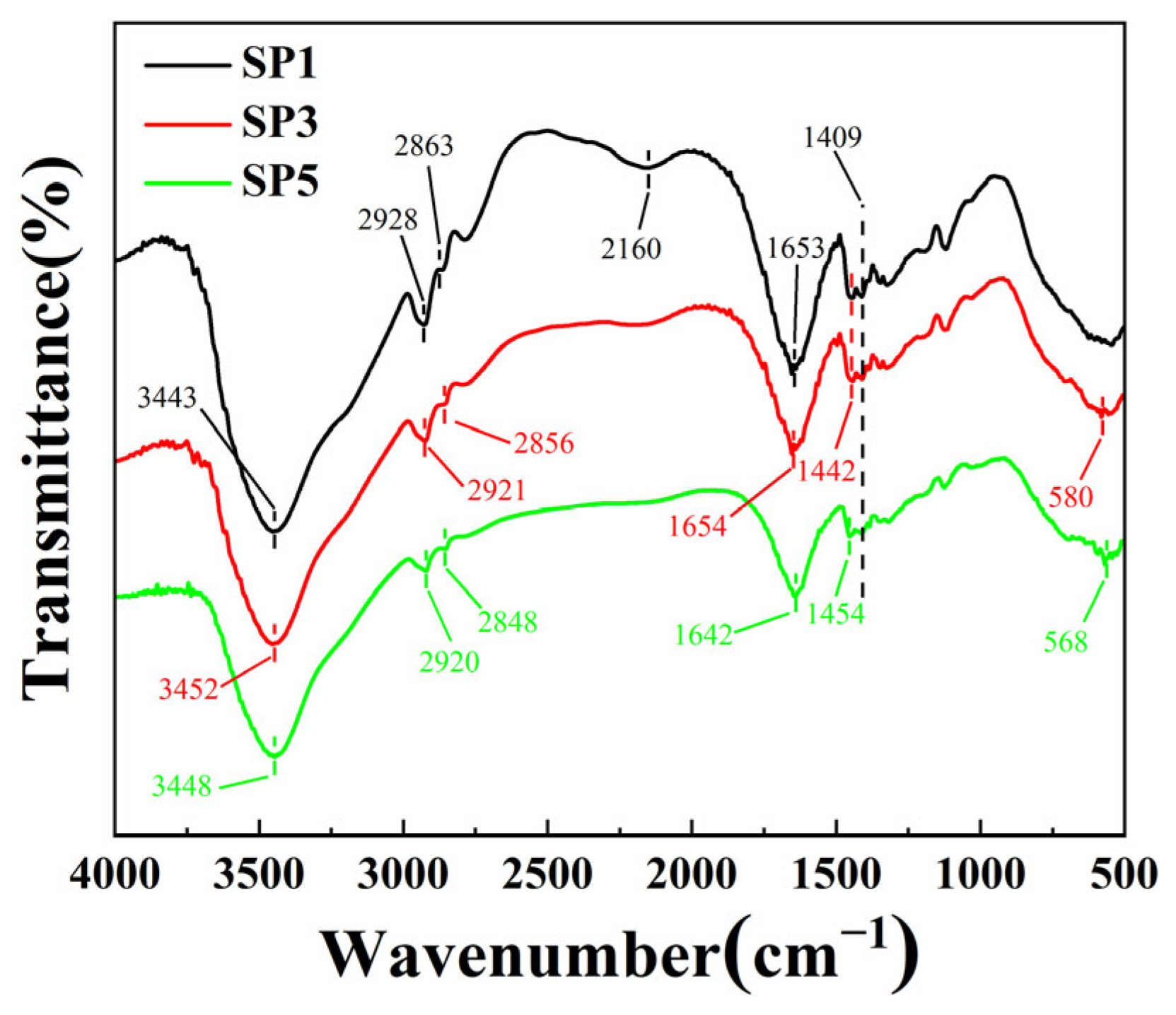
Figure 2 presents the infrared spectrum of the synthesized hydrogel. A broad absorption band is observed at 3700–3000 cm−1, corresponding to the O-H stretching vibration of water molecules and the N-H stretching vibration of urea molecules [42]. Absorption peaks detected at 2928 cm−1 and 2863 cm−1 correspond to the stretching vibrations of C-H groups [43,44]. The absorption band observed at 1653 cm−1 corresponds to the C=O stretching vibration characteristic of the amide I band [45]. Absorption maxima at 1442 and 1349 cm−1 are associated with the scissoring and twisting vibrations of CH2 groups [46]. The absorption peak at 1409 cm−1 is attributed to the vibration of the -CONH2 group [47]. In the SP1 hydrogel, the absorption peak at 2160 cm−1 is attributed to the stretching vibration of the C≡N group. Although the formulation does not incorporate raw materials containing cyanide, a significant quantity of heat is generated during the polymerization process, leading to the decomposition of urea at elevated temperatures and the formation of cyanate [48]. In SP3 and SP5 hydrogels, Fe3O4 offers potential coordination sites, modifying the cyanide absorption peak and manifesting as a comparatively subtle hump. In the infrared spectra of SP3 and SP5, an absorption peak at 580 cm−1 is detected, corresponding to the stretching vibration of Fe–O in Fe3O4 [49]. In the FTIR experiment, the changes in the peak values of functional groups in the hydrogel are detailed in Table 1.

2.3. Mechanical Properties of Composite Hydrogels

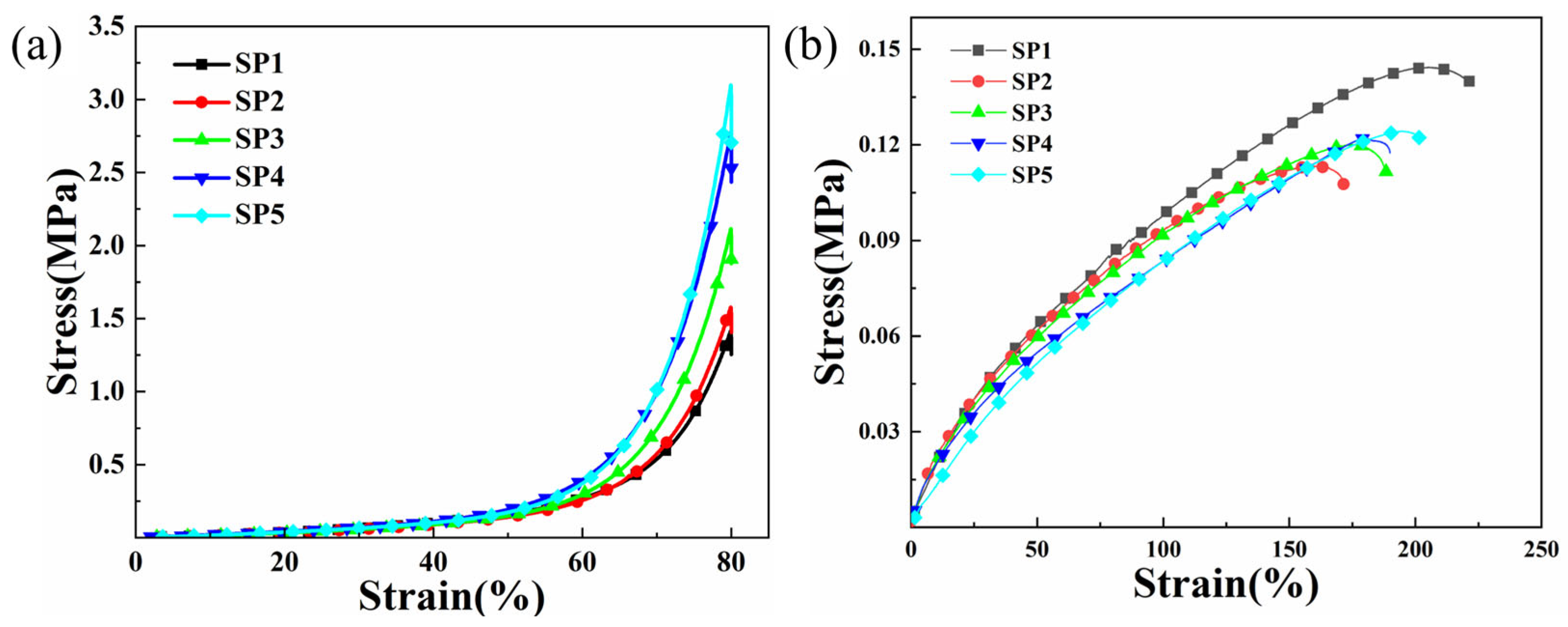
Figure 3a shows the compressive properties of the hydrogels. The results indicate that the compressive properties of the hydrogels improved with increasing Fe3O4 concentration. The maximum compressive strength of the SP5 hydrogel was 3.10 MPa, which is 2.21 times that of the SP1 hydrogel. This is because the dispersed Fe3O4 particles act as physical crosslinking points within the hydrogel network, hindering the slippage of polymer chains and thereby enhancing the overall compressive strength and rigidity, which is consistent with the FTIR results [50,51]. Figure 3b shows the tensile properties of the hydrogels. The SP1 hydrogel exhibited the highest tensile performance, while the hydrogels containing Fe3O4 showed a decrease in tensile properties. This is because the agglomeration of Fe3O4 creates stress concentration points; during stretching, cracks initiate at these particles and propagate, leading to a degradation in hydrogel performance. Among the SP2–SP5 hydrogels, the tensile properties improved with further increases in Fe3O4 concentration due to enhanced synergistic effects between Fe3O4 and the hydrogel matrix. In this study, Fe3O4 provided additional physical crosslinking sites during the hydrogel polymerization process, increasing the network crosslinking density. This change allows the hydrogel to effectively enhance its compressive strength when subjected to external loads, reaching a maximum of 3.10 MPa. Similarly, Liu et al. [52] prepared PVA/CS/CIP drug-loaded hydrogels through physical crosslinking, and the introduction of CS provided additional physical crosslinking sites for the hydrogel, increasing its compressive strength to 2.92 MPa.

2.4. Fatigue Resistance of Composite Hydrogels

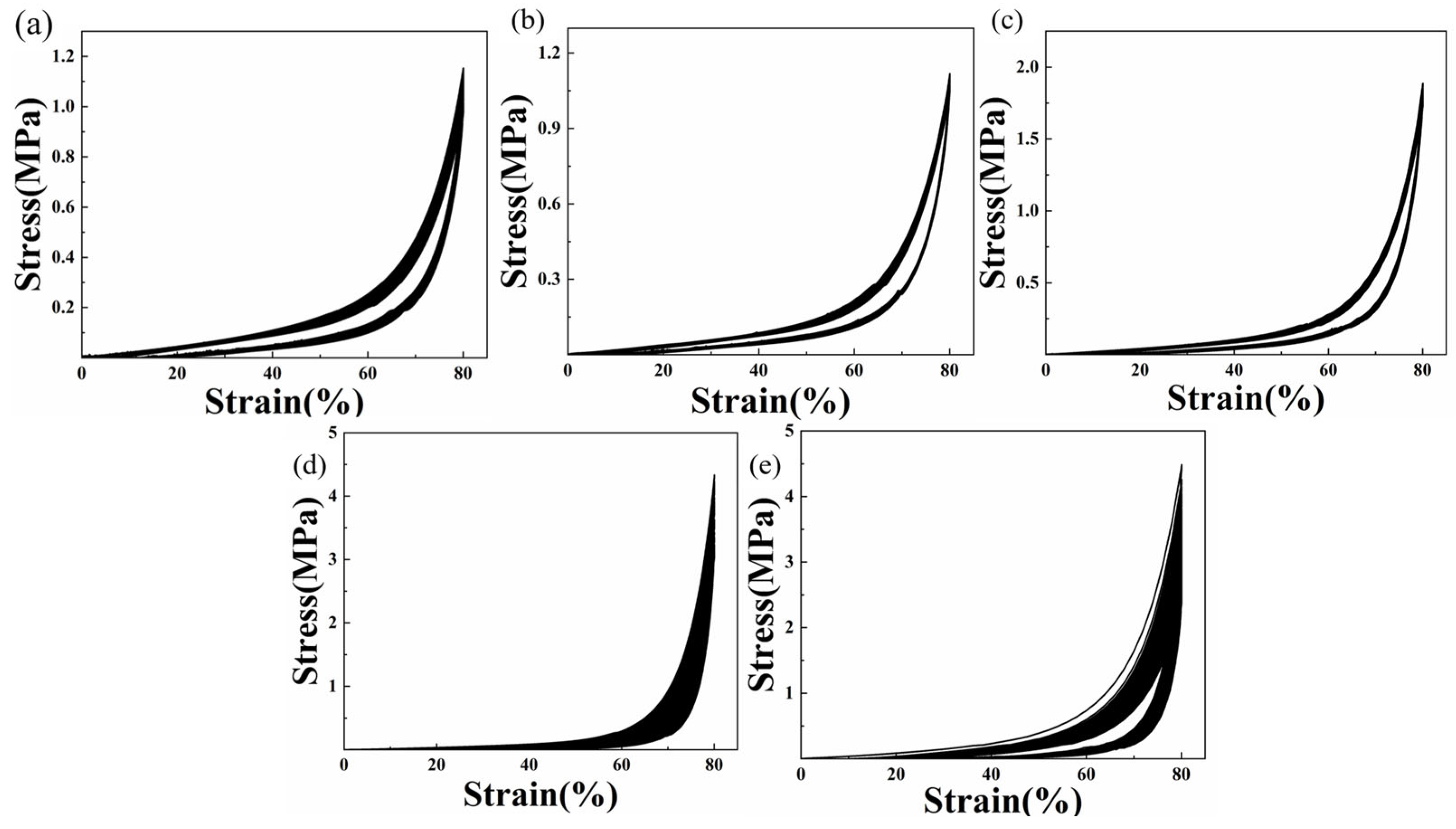
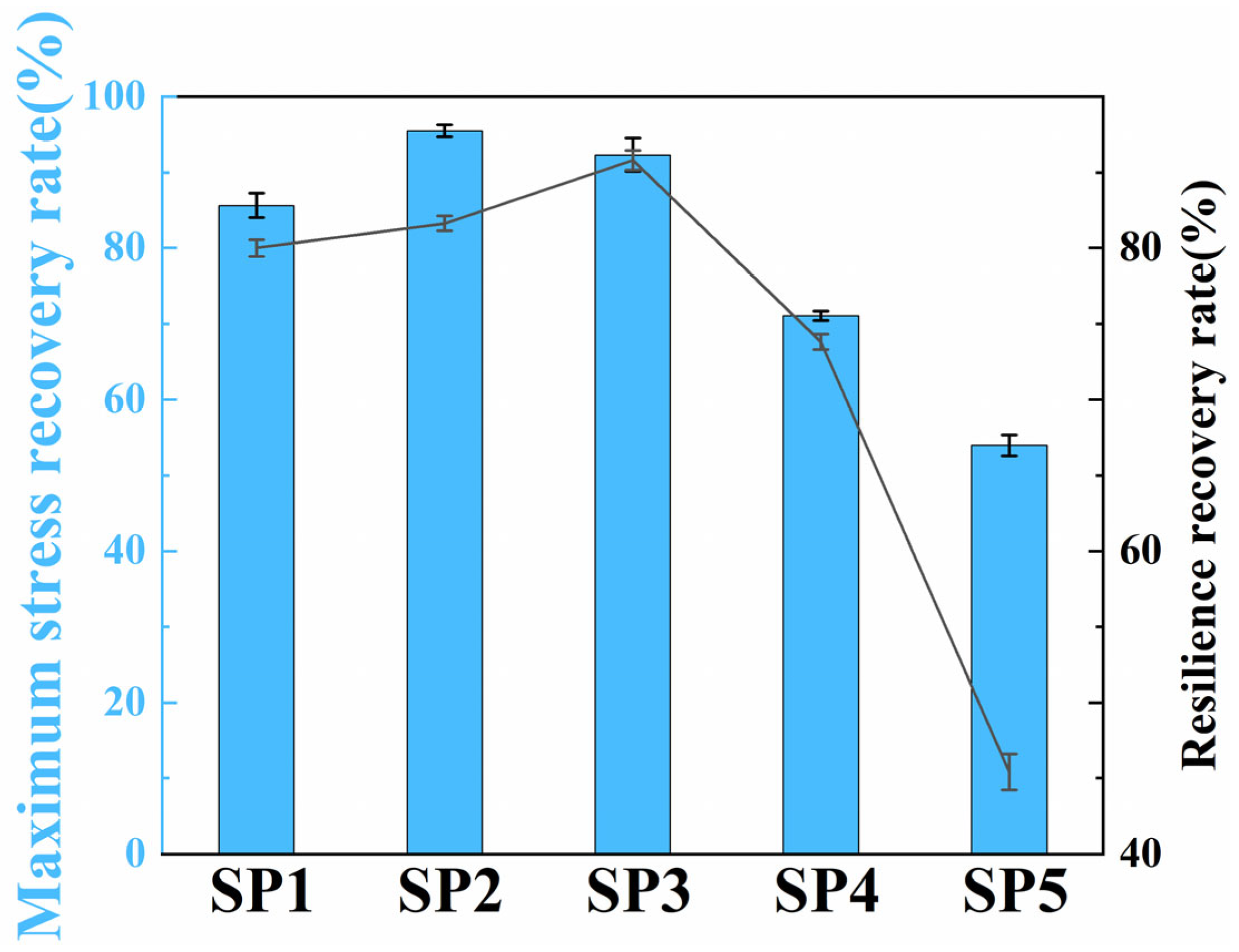
Figure 4a–c show the stress–strain curves of SP1, SP3, and SP5 hydrogels during 40 compression cycles, respectively. The dissipated energy of the hydrogels gradually increased with higher Fe3O4 concentrations. The energy dissipated by SP1, SP3, and SP5 hydrogels during the first compression cycle was 63.9 kJ, 71.153 kJ, and 317.425 kJ, respectively. This is attributed to the sliding of polymer segments during the compression-recovery cycles, which converts the work done by external forces into heat and dissipates it [53]. The SP3 hydrogel, with an appropriate Fe3O4 concentration, exhibited relatively uniform filler dispersion, allowing polymer segments to slide along the filler surfaces, resulting in only a slight increase in energy dissipation [54]. In contrast, hydrogels with excessively high Fe3O4 concentrations may experience filler-to-filler contact during compression cycles, leading to more significant frictional losses. Figure 5 shows the maximum stress recovery rate and toughness recovery rate of SP1, SP3, and SP5 hydrogels. SP1 and SP3 hydrogels demonstrated excellent anti-fatigue properties due to reversible physical interactions between molecular chains [55]. Compared to the SP1 hydrogel, the SP3 hydrogel with an appropriate filler content exhibited superior maximum stress recovery and toughness recovery rates. This is because the functional groups on the Fe3O4 particle surfaces can form additional hydrogen bonds with the hydrogel, enhancing reversibility throughout the dynamic cycles [56]. However, the SP5 hydrogel with a higher Fe3O4 concentration showed inferior performance. This may be due to agglomeration of the excessive filler, creating stress concentration points that lead to the formation of irreversible cracks during compression [57].

2.5. Swelling Performance of Hydrogel

2.5.1. Swelling Properties of Composite Hydrogels

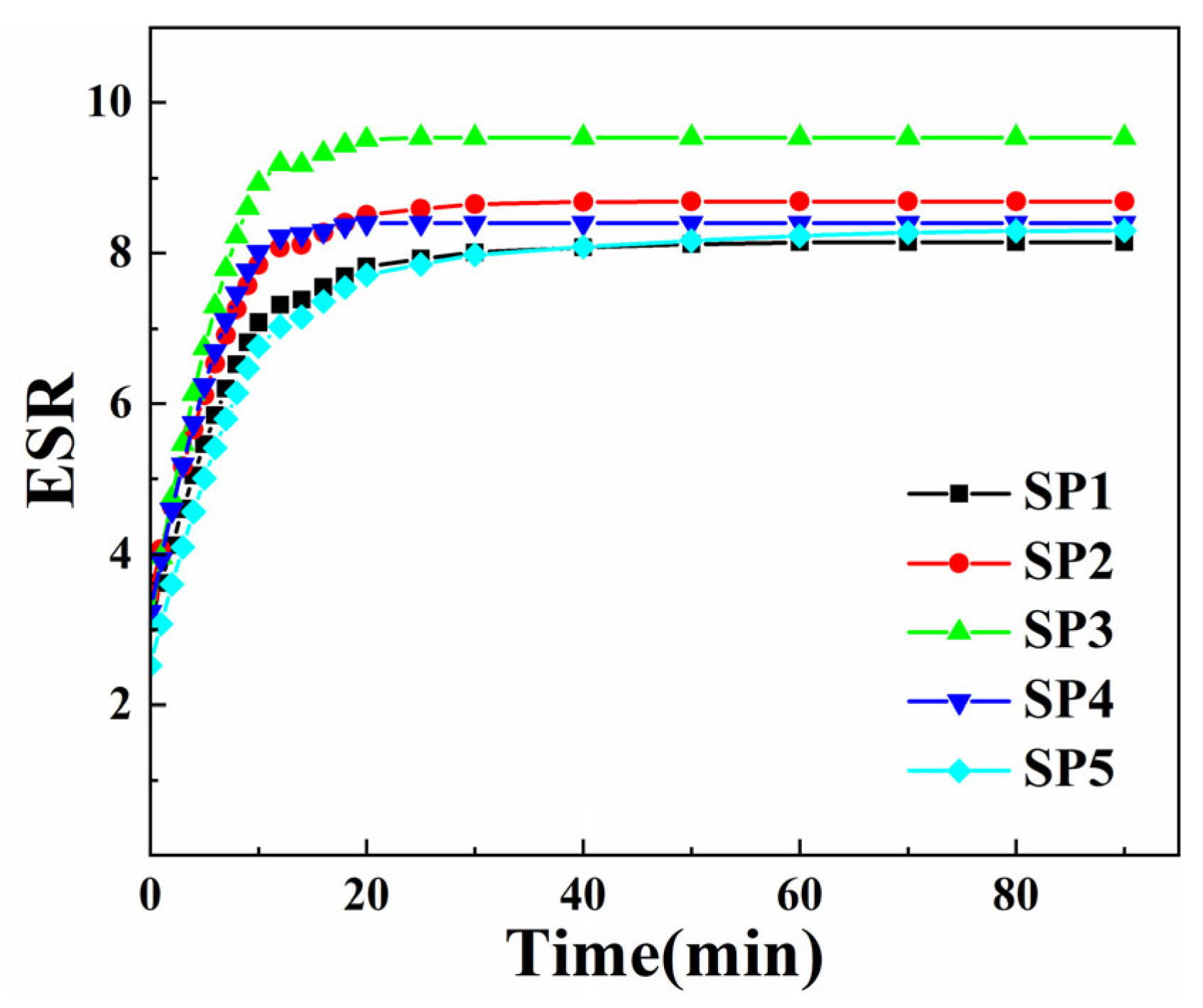
The swelling properties and pH responsiveness of the hydrogels are shown in Figure 6. Figure 6 shows that SP1 had the lowest swelling performance, requiring 50 min to reach swelling equilibrium. After adding an appropriate concentration of Fe3O4, the ESR of the hydrogel increased and the time required to reach swelling equilibrium decreased; compared to SP1, SP3’s ESR increased by 16.34% and required only 20 min to reach swelling equilibrium. This is because the addition of filler leads to the formation of more pores in the hydrogel, and water molecule penetration occurs not only at the periphery but also within the inner regions of these pores, enabling the composite hydrogel to undergo multiple swelling processes simultaneously, thus facilitating faster attainment of swelling equilibrium [58]. However, an excessively high Fe3O4 concentration increases the crosslinking density of the hydrogel, making its internal structure more rigid and consequently hindering water penetration into the hydrogel network [59].

2.5.2. Swelling Properties of Composite Hydrogel in Different pH Environments

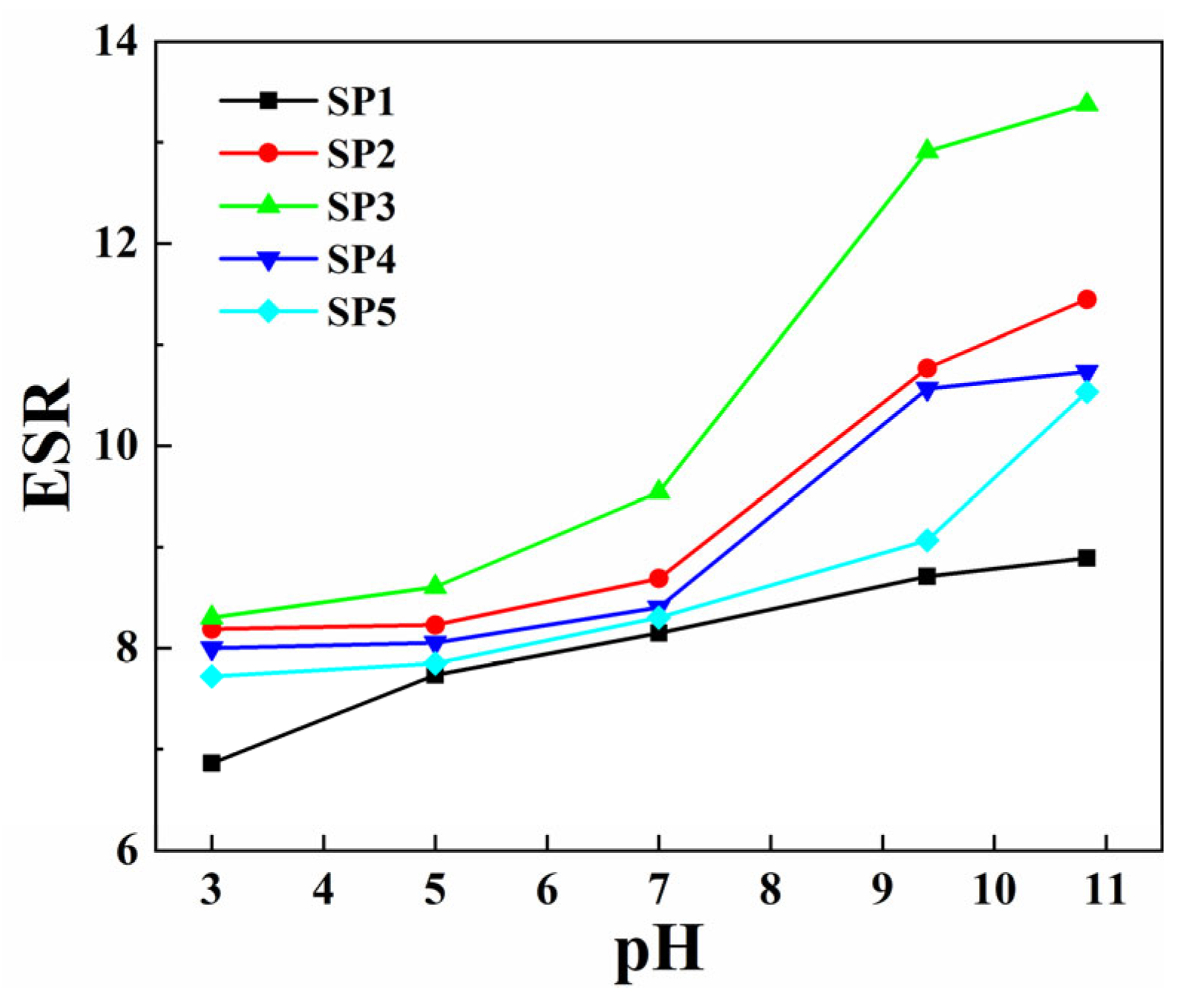
Figure 7 shows the ESR of the five hydrogel groups in different pH buffer solutions. The results indicate that the ESR of the hydrogels increased with increasing pH. Under acidic conditions, the protonation of carboxylate groups can induce hydrogen bonding interactions between polymer chains, causing the polymer network to contract and reducing the ESR [59]. Under alkaline conditions, the enhanced repulsion among anions generated from urea hydrolysis expands the internal space of the gel, providing more adsorption sites for water molecules and thereby increasing the ESR [60]. As the concentration of added Fe3O4 increased, the ESR showed an initial increase followed by a decrease. This is because an appropriate concentration of Fe3O4 facilitates the construction of a better three-dimensional hydrogel structure, allowing water molecules to penetrate more easily, which is consistent with the results in Figure 6.

2.6. Adsorption Properties of Composite Hydrogel

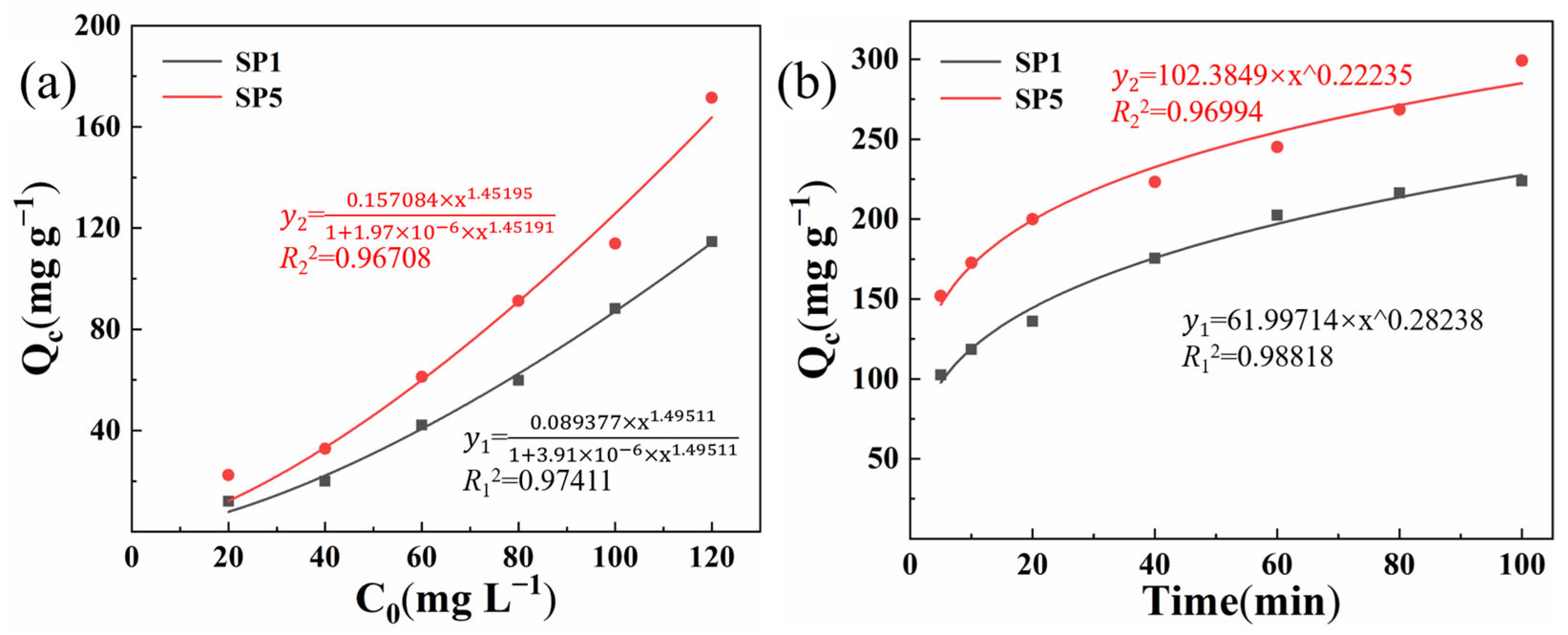
The adsorption isotherms of hydrogel samples SP1 and SP5 are shown in Figure 8a. As the initial Cu2+ concentration increased from 20 mg/L to 120 mg/L, the equilibrium adsorption capacities of SP1 and SP5 hydrogels increased from initial values of 17 and 22 mg/g to 114 and 171.5 mg/g, respectively. Throughout the adsorption process, the equilibrium adsorption capacity of SP5 consistently exceeded that of SP1. The adsorption of Cu2+ by the SP1 hydrogel is based on the formation of coordination bonds with oxygen atoms in the carboxyl groups [61]. The enhanced equilibrium adsorption capacity of the SP5 hydrogel is attributed to the additional active sites provided by the incorporated Fe3O4, which strengthens its coordination ability towards Cu2+ and facilitates Cu2+ access to these active sites for adsorption [26]. The Langmuir model can be employed to characterize the equilibrium adsorption capacity of SP1 and SP5, the fitting results are shown in Figure 8a. The results indicate that the model correlation coefficients for the two samples are approximately 0.97, reflecting a strong agreement between the model and the experimental data. The relationship between hydrogel adsorption capacity and time is shown in Figure 8b. During the adsorption process, the adsorption capacity of SP5 per unit time was consistently higher than that of SP1. The Allometric model was employed to determine the equilibrium adsorption capacities of SP1 and SP5. The fitting results are shown in Figure 8b. The correlation coefficients for the hydrogel fits of SP1 and SP5 were approximately 0.97 and 0.99, respectively, reflecting a strong concordance between the model and the experimental data. It can be observed that the SP5 hydrogel exhibits a decreased exponential factor, with its growth rate being approximately 78.74% of that of the SP1 hydrogel, indicating that SP5 attains adsorption equilibrium more rapidly than SP1.This finding is consistent with the trend observed in the swelling experiments, suggesting that the incorporation of inorganic material increases the availability of hydrophilic sites on the polymer chains, thereby promoting interactions with Cu2+ [26]. Humelnicu et al. [62] developed a chitosan-natural zeolite composite cryogel, which reached adsorption equilibrium in 180 min when adsorbing Cu2+ from water, with an adsorption capacity of 61.1 mg/g. In this investigation, the SP5 hydrogel exhibited an adsorption capacity of 299.11 mg/g for Cu2+. Although it necessitated a longer duration to attain adsorption equilibrium, its elevated adsorption capacity facilitates more efficient and comprehensive treatment of industrial effluent, resulting in discharge that meets regulatory standards.

3. Materials and Methods

3.1. Materials

AM, U, Fe3O4, N,N’-methylenebisacrylamide (MBA), and potassium persulfate (KPS) were all purchased from Tianjin Komio Chemical Reagent Co., Ltd. (Tianjin, China) and used directly. ChCl was purchased from Shanghai Shanpu Chemical Co., Ltd. (Shanghai, China) and was vacuum-dried at 80 °C for two hours prior to use to remove absorbed moisture. All reagents were of analytical grade.

3.2. Preparation of DES

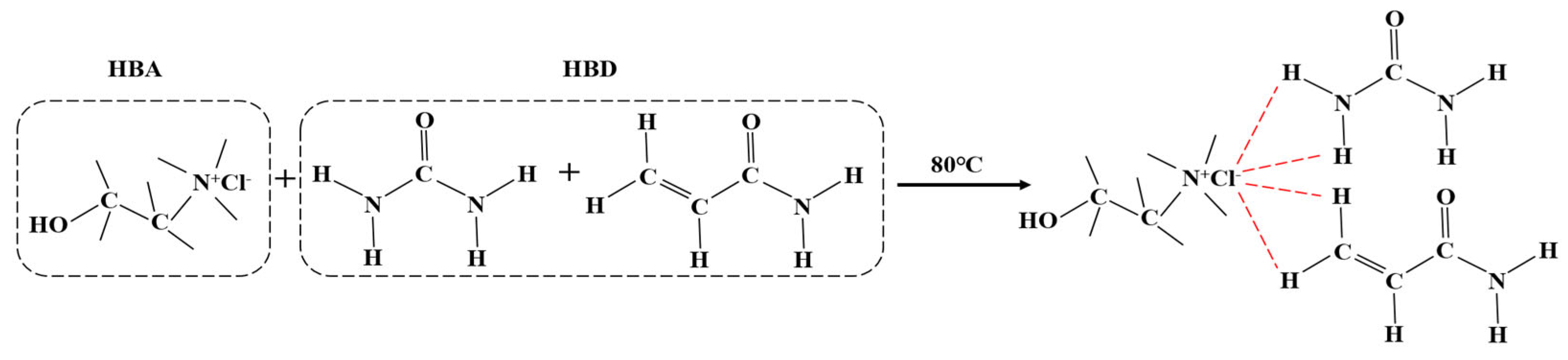
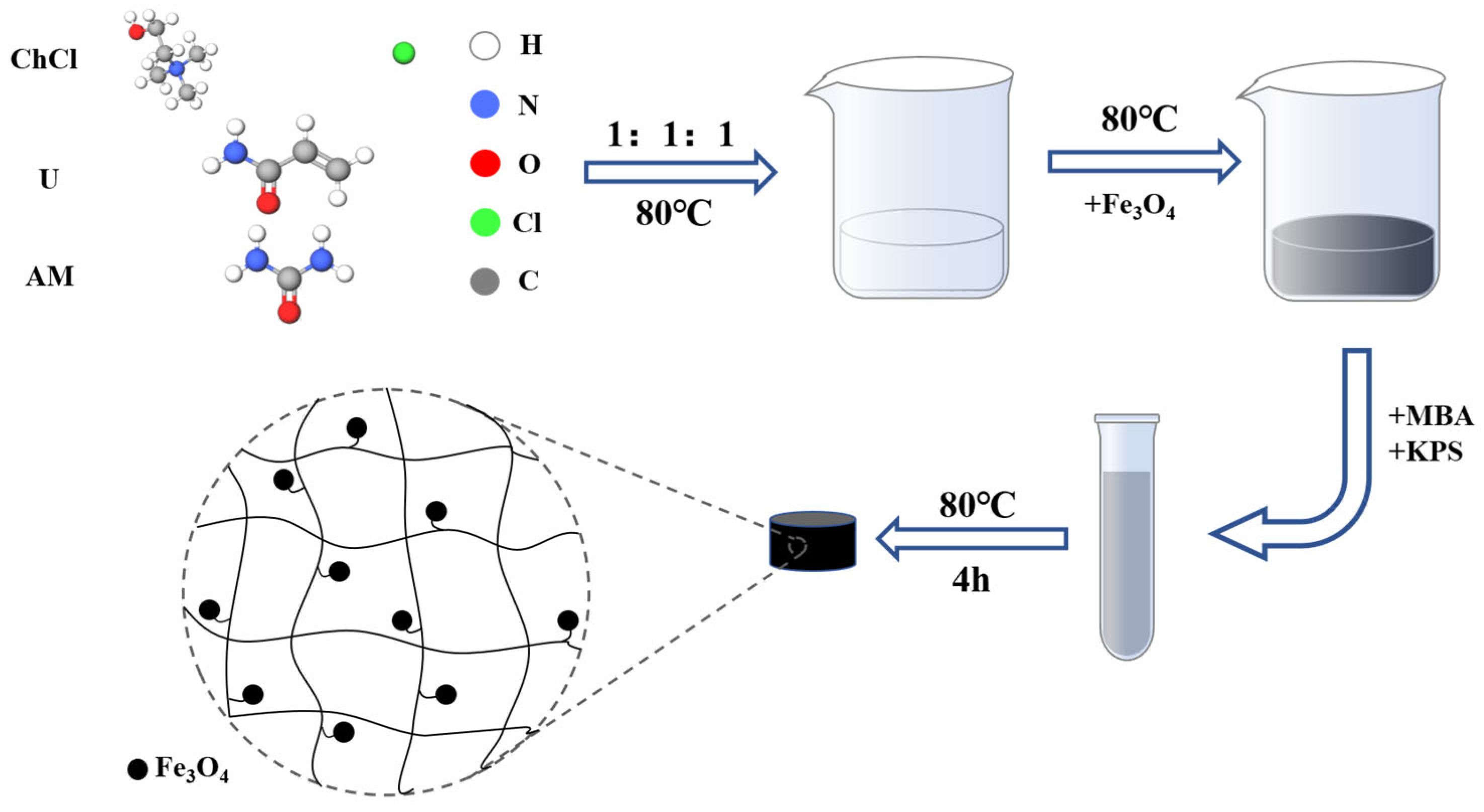
ChCl was selected as the HBA, while AM and U were chosen as the HBDs. The three raw materials were added to a beaker in a 1:1:1 molar ratio and stirred thoroughly at 80 °C until the mixture formed a homogeneous, transparent liquid, resulting in a polymerizable ternary DES solution. The formation equation of the DES is shown in Figure 9.

3.3. Preparation of Hydrogels by SP

To five separate groups of DES solutions, crosslinker (MBA), initiator (KPS), and different mass fractions of Fe3O4 were added according to the proportions listed in Table 2, and the mixtures were thoroughly blended to form homogeneous solutions. The mixed solutions were poured into test tubes with dimensions of 100 mm in length and 10 mm in diameter, which were subsequently placed in a vacuum drying oven. The mixtures were heated at 80 °C under vacuum for 4 h and then removed from the vacuum drying oven. Upon completion of the reaction, the test tubes were removed from the vacuum drying oven, allowed to cool to room temperature, and the prepared hydrogel samples were carefully extracted from the tubes for subsequent use. A schematic diagram illustrating the preparation process of the composite hydrogel is presented in Figure 10.

3.4. Characterization of Composite Hydrogels

The hydrogels were cut into cylindrical slices 1–3 mm-thick, soaked in distilled water for 7 days with daily water changes to remove the water-soluble ChCl. The cylindrical hydrogel slices were pre-frozen at −20 °C and then lyophilized in a vacuum freeze-dryer(Shanghai Lichen Instrument Technology Co., Ltd., Shanghai, China) at −60 °C until a constant weight was achieved for subsequent use.
The dried hydrogel samples were ground, and their spectral characteristics were analyzed using FTIR within the wavenumber range of 500 to 4000 cm−1. The cross-sections of the dried hydrogel samples were sputter-coated with gold using a high-vacuum ion sputterer, and their internal phase morphology was observed by SEM, Zeiss Ultra Plus-43-13 field-emission scanning electron microscope (Carl Zeiss AG, Oberkochen, Germany).

3.5. Performance Testing of Composite Hydrogel

3.5.1. Mechanical Testing of Hydrogel

The tensile properties of the composite hydrogel samples were tested on a microcomputer-controlled electronic universal testing machine, with the tensile speed set at 100 mm/min until sample fracture to measure the maximum tensile stress. Subsequently, the compression properties of the composite hydrogel samples were tested using a TA.XTC-18 texture analyzer (Shanghai Baosheng Company, Shanghai, China), where the compression head compressed the samples at a speed of 0.2 mm/s until the maximum compressive stress was reached.
The calculation formulas for the material’s tensile strength and compressive strength are as follows:
P   =   F S
In Formula (1), F represents the applied force, and S represents the cross-sectional area of the hydrogel.

3.5.2. Swelling Test of Hydrogel

Buffer solutions with pH 3 and 4.8 (citric acid/sodium citrate) and pH 9.4 and 10.8 (sodium carbonate/sodium bicarbonate) were prepared to investigate the pH responsiveness of the hydrogels. The pH values of the solutions were accurately measured using a digital pen-type pH meter (PH-208) with a precision of 0.01. To evaluate the swelling properties of the hydrogels, a gravimetric method was employed, where approximately 20 mg of the dried hydrogel sample was immersed in the prepared buffer solutions. At regular time intervals, the hydrogel was removed, its surface moisture was gently blotted with dry filter paper, and it was weighed; this process was repeated until the weight of the hydrogel stabilized.
The calculation formula for the Equilibrium Swelling Ratio (ESR) is as follows:
E S R   =   W t W 0 W 0
In Formula (2), W t represents the weight of the hydrogel after swelling at time t, and W 0 represents the weight of the dried hydrogel before swelling.

3.5.3. Fatigue Resistance Test of Hydrogel

The self-recovery performance was tested using an ETM502A microcomputer-controlled electronic universal testing machine (Shenzhen Wance Testing Equipment Co., Ltd., Shenzhen, China). The hydrogel was cut into small cylinders with a diameter of 10 mm and a length of 10 mm, and the compression head compressed them at a speed of 10 mm/min until 80% deformation was achieved. The area between the curve and the coordinate axis was measured to calculate the maximum stress recovery rate and toughness recovery rate of the composite hydrogel during compression.
The calculation formula for the maximum stress recovery rate is as follows:
η =   σ i σ 1
In Equation (3), σ i represents the maximum stress of the hydrogel in the i-th compression cycle, and σ 1 represents the maximum stress of the hydrogel in the first compression cycle.
The calculation formula for the toughness recovery rate is:
R =   S c i S c 1
In Equation (4), Where S c i represents the area between the stress–strain curve and the strain coordinate axis during the i-th compression of the composite hydrogel, and S c 1 represents the corresponding area during the first compression.

3.5.4. Adsorption Performance Testing of Hydrogel

To further investigate the adsorption performance of composite hydrogels containing different mass fractions of Fe3O4 towards Cu2+, this study designed both adsorption kinetics and adsorption isotherm experiments. In the adsorption kinetics experiments, dried hydrogel samples were added to a Cu2+ solution with an initial concentration of 500 mg/L, and the adsorption time was set to 5, 10, 20, 40, 60, 80, and 100 min, respectively, to obtain adsorption data at different time intervals. To study the adsorption isotherm characteristics of the hydrogels for Cu2+, dried hydrogel samples were added to Cu2+ solutions with different initial concentrations (20, 40, 60, 80, 100, and 120 mg/L) for 48 h isotherm experiments, investigating the hydrogel’s capacity to reach adsorption equilibrium at different concentrations. After reaching the specified adsorption time or equilibrium, the adsorbent was removed by centrifugation at 6000 rpm for 20 min, and the concentration of Cu2+ in the supernatant was determined using an ultraviolet spectrophotometer.
The calculation formula for the adsorption capacity Q e (mg g−1) is as follows [63]:
Q e =   C 0 V 1 C e V 2 m
In Formula (5), Q e (mg g−1) is the equilibrium adsorption capacity, C 0 (mg L−1) is the initial concentration, C e (mg L−1) is the equilibrium concentration, m (g) is the mass of the dried hydrogel, and V 1 and V 2 (L) are the solution volumes before and after adsorption, respectively. The adsorption capacities of the SP1 and SP5 hydrogels were fitted using either the Langmuir ETX1 or the Allometric model in the Origin software (version 2018, 64-bit; OriginLab Corporation, Northampton, MA, USA).

4. Conclusions

When the Fe3O4/P(U-AM-ChCl) composite hydrogel was immersed in a 120 mg/L Cu2+ solution for 48 h, its adsorption capacity attained 171.5 mg/g. This study introduces a novel, viable approach for synthesizing hydrogels with reduced pore sizes and enhanced functionality, while also illustrating their prospective utility in water purification applications. In Cu2+ solutions of identical concentration, the hydrogel exhibited increased adsorption of Cu2+ following the incorporation of Fe3O4, with the adsorption rate rising by 21.26%. Fe3O4, when used as a filler, markedly influenced the mechanical properties of the hydrogel. With the incorporation of an appropriate filler concentration, the compressive strength of the hydrogel was enhanced by a factor of 1.40, and the maximal toughness recovery rate was elevated by 5.82%. Furthermore, excessively high concentrations of Fe3O4 particulates caused agglomeration, leading to a reduction in the tensile strength of the hydrogel. This study proposed incorporating Fe3O4 as a filler into P(U-AM-ChCl) composite hydrogels, effectively enhancing their swelling properties, anti-fatigue performance, and adsorption capacity. This hydrogel is appropriate for the extraction of heavy metal ions from industrial effluent, offering a novel strategy for the development of durable hydrogels with enhanced mechanical stability, and demonstrates promising potential in water purification and environmental remediation.

Author Contributions

Conceptualization, Y.L., B.L. and M.Z.; methodology, Y.L. and M.Z.; software, Y.L. and J.L.; validation, J.L., M.Z. and H.L.; formal analysis, Y.L. and J.L.; investigation, J.L.; resources, B.L. and Z.H.; data curation, J.L. and M.Z.; writing—original draft preparation, J.L.; writing—review and editing, Y.L. and M.Z.; visualization, Y.W.; supervision, Z.H. and Y.W.; project administration, B.L. and Z.H.; funding acquisition, B.L. All authors have read and agreed to the published version of the manuscript.

Funding

This work was supported by the Hubei Provincial Science and Technology Talent Service Enterprise Program (2025DJB043), the Natural Science Foundation of Hubei Province (2024AFB959), the Fundamental Research Funds for the Central Universities (grants No.020414380195), and the General Fund of China Postdoctoral Science Foundation (CPSF) (2025M773331). The research was completed at Wuhan Polytechnic University.

Institutional Review Board Statement

Not applicable.

Informed Consent Statement

Not applicable.

Data Availability Statement

The original contributions presented in this study are included in the article. Further inquiries can be directed to the corresponding author.

Conflicts of Interest

The authors declare no conflict of interest.

Abbreviations

The following abbreviations are used in this manuscript:
UUrea
AMAcrylamide
ChClCholine chloride
MBAN,N’-methylenebisacrylamide
KPSPotassium persulfate
DESDeep eutectic solvent
SPIn situ polymerization
ESREquilibrium swelling ratio

References

  1. Yazdi, M.K.; Vatanpour, V.; Taghizadeh, A.; Taghizadeh, M.; Ganjali, M.R.; Munir, M.T.; Habibzadeh, S.; Saeb, M.R.; Ghaedi, M. Hydrogel membranes: A review. Mater. Sci. Eng. C 2020, 114, 111023. [Google Scholar] [CrossRef]
  2. Adeoye, A.J.; de Alba, E. A Simple Method to Determine Diffusion Coefficients in Soft Hydrogels for Drug Delivery and Biomedical Applications. ACS Omega 2025, 10, 10852–10865. [Google Scholar] [CrossRef]
  3. Frioni, T.; Bonicelli, P.G.; Ripa, C.; Poni, S. Soil incorporation of Superabsorbent Hydrogels to counteract water scarcity: Modelling tree physiological and biochemical response. Plant Physiol. Biochem. 2025, 223, 109775. [Google Scholar] [CrossRef]
  4. Sennakesavan, G.; Mostakhdemin, M.; Dkhar, L.K.; Seyfoddin, A.; Fatihhi, S.J. Acrylic acid/acrylamide based hydrogels and its properties—A review. Polym. Degrad. Stab. 2020, 180, 109308. [Google Scholar] [CrossRef]
  5. Karoyo, A.H.; Wilson, L.D. A Review on the Design and Hydration Properties of Natural Polymer-Based Hydrogels. Materials 2021, 14, 1095. [Google Scholar] [CrossRef]
  6. Dai, H.; Chen, Q.; Qin, H.; Guan, Y.; Shen, D.; Hua, Y.; Tang, Y.; Xu, J. A Temperature-Responsive Copolymer Hydrogel in Controlled Drug Delivery. Macromolecules 2006, 39, 6584–6589. [Google Scholar] [CrossRef]
  7. Gupta, P.; Vermani, K.; Garg, S. Hydrogels: From controlled release to pH-responsive drug delivery. Drug Discov. Today 2002, 7, 569–579. [Google Scholar] [CrossRef] [PubMed]
  8. Li, L.; Scheiger, J.M.; Levkin, P.A. Design and Applications of Photoresponsive Hydrogels. Adv. Mater. 2019, 31, 1807333. [Google Scholar] [CrossRef] [PubMed]
  9. Yuan, Z.; Wang, J.; Wang, Y.; Liu, Q.; Zhong, Y.; Wang, Y.; Li, L.; Lincoln, S.F.; Guo, X. Preparation of a poly(acrylic acid) based hydrogel with fast adsorption rate and high adsorption capacity for the removal of cationic dyes. RSC Adv. 2019, 9, 21075–21085. [Google Scholar] [CrossRef]
  10. He, H.; Cao, X.; Lee, L.J. Design of a novel hydrogel-based intelligent system for controlled drug release. J. Control. Release 2004, 95, 391–402. [Google Scholar] [CrossRef]
  11. Zhang, Q.; Yang, G.; Xue, L.; Dong, G.; Su, W.; Cui, M.J.; Wang, Z.G.; Liu, M.; Zhou, Z.; Zhang, X. Ultrasoft and Biocompatible Magnetic-Hydrogel-Based Strain Sensors for Wireless Passive Biomechanical Monitoring. ACS Nano 2022, 16, 21555–21564. [Google Scholar] [CrossRef]
  12. Chelu, M.; Musuc, A.M.; Popa, M.; Calderon Moreno, J.M. Chitosan Hydrogels for Water Purification Applications. Gels 2023, 9, 664. [Google Scholar] [CrossRef]
  13. Hoffman, A.S. Hydrogels for biomedical applications. Adv. Drug Deliv. Rev. 2012, 64, 18–23. [Google Scholar] [CrossRef]
  14. Gao, M.; Sun, M.; Bi, J.; Wang, S.; Guo, X.; Li, F.; Liu, J.; Zhao, Y. Removal of ciprofloxacin by PAA-PAM hydrogel: Adsorption performance and mechanism studies. J. Water Process Eng. 2025, 71, 107361. [Google Scholar] [CrossRef]
  15. Diana, R.; Milzi, L.; Gentile, F.S.; Pannico, M.; Musto, P.; Maiello, A.; Panunzi, B. A versatile pH-sensitive hydrogel based on a high-performance dye: Monitoring the freshness of milk and chicken meat. J. Food Compos. Anal. 2024, 135, 106667. [Google Scholar] [CrossRef]
  16. Khan, M.; Lo, I.M.C. A holistic review of hydrogel applications in the adsorptive removal of aqueous pollutants: Recent progress, challenges, and perspectives. Water Res. 2016, 106, 259–271. [Google Scholar] [CrossRef]
  17. Yang, Q.; Li, M.; Chen, R.; Gao, D.; Wang, Z.; Qin, C.; Yang, W.; Liu, H.; Zhang, P. Enhanced Mechanical Strength of Metal Ion-Doped MXene-Based Double-Network Hydrogels for Highly Sensitive and Durable Flexible Sensors. ACS Appl. Mater. Interfaces 2023, 15, 51774–51784. [Google Scholar] [CrossRef] [PubMed]
  18. Chen, Z.; Chen, X.; Wang, H.; Yang, T.; Huang, J.; Guo, Z. Metal ion mediated conductive hydrogels with low hysteresis and high resilience. Mater. Today Phys. 2025, 51, 101656. [Google Scholar] [CrossRef]
  19. Xin, F.; Lu, Q.; Liu, B.; Yuan, S.; Zhang, R.; Wu, Y.; Yu, Y. Metal-ion-mediated hydrogels with thermo-responsiveness for smart windows. Eur. Polym. J. 2018, 99, 65–71. [Google Scholar] [CrossRef]
  20. Zeng, L.; Song, M.; Gu, J.; Xu, Z.; Xue, B.; Li, Y.; Cao, Y. A Highly Stretchable, Tough, Fast Self-Healing Hydrogel Based on Peptide–Metal Ion Coordination. Biomimetics 2019, 4, 36. [Google Scholar] [CrossRef] [PubMed]
  21. Chen, C.-K.; Lin, C.-Y.; Chakravarthy, R.D.; Chen, Y.-H.; Chen, C.-Y.; Lin, H.-C.; Yeh, M.-Y. Effect of Metal Ions on the Conductivity, Self-Healing, and Mechanical Properties of Alginate/Polyacrylamide Hydrogels. Materials 2025, 18, 3871. [Google Scholar] [CrossRef]
  22. You, Z.; Weng, L.; Guan, L.; Zhang, X.; Wu, Z.; Chen, H.; Zhao, W. Preparation of magnetic-oriented electronic packaging composite materials with improved thermal conductivity and insulating properties by filling magnetic BN@Fe3O4 core-shell particles into epoxy. High Volt. 2025, 10, 219–227. [Google Scholar] [CrossRef]
  23. Katheria, A.; Das, P.; Nayak, J.; Roy, B.; Pal, A.; Biswas, S.; Das, N.C. MXene and Fe3O4 decorated g-C3N4 incorporated high flexible hybrid polymer composite for enhanced electrical conductivity, EMI shielding and thermal conductivity. Next Mater. 2025, 6, 100292. [Google Scholar] [CrossRef]
  24. Zhang, X.; Wang, Q.; Zheng, W.; Li, Z.; Qu, L.; Tian, Y.; Zhang, D.; Yan, T.; Zhou, Q. Magnetic Fe3O4 Nanoparticles Modified Hydroxyapatite Whisker: A Novel Framework with Superior Osteogenic Efficacy. Adv. Sci. 2025, 12, e09715. [Google Scholar] [CrossRef]
  25. Hu, X.; Nian, G.; Liang, X.; Wu, L.; Yin, T.; Lu, H.; Qu, S.; Yang, W. Adhesive Tough Magnetic Hydrogels with High Fe3O4 Content. ACS Appl. Mater. Interfaces 2019, 11, 10292–10300. [Google Scholar] [CrossRef]
  26. Facchi, D.P.; Cazetta, A.L.; Canesin, E.A.; Almeida, V.C.; Bonafé, E.G.; Kipper, M.J.; Martins, A.F. New magnetic chitosan/alginate/Fe3O4@SiO2 hydrogel composites applied for removal of Pb(II) ions from aqueous systems. Chem. Eng. J. 2018, 337, 595–608. [Google Scholar] [CrossRef]
  27. Wang, Y.-Q.; Zhu, Y.; Wang, J.-H.; Li, X.-N.; Wu, X.-G.; Qin, Y.-X.; Chen, W.-Y. Fe3+, NIR light and thermal responsive triple network composite hydrogel with multi-shape memory effect. Compos. Sci. Technol. 2021, 206, 108653. [Google Scholar] [CrossRef]
  28. You, R.; He, Z.; Xue, F.; Ju, S. Construction of robust H2TiO3@PAM hydrogel ion-sieve via in-situ polymerization for Li+ adsorption. Surf. Interfaces 2025, 56, 105697. [Google Scholar] [CrossRef]
  29. Zhang, J.; Wang, S.; Zhao, Z.; Si, D.; Zhou, H.; Yang, M.; Wang, X. An In situ Forming Hydrogel Based on Photo-Induced Hydrogen Bonding. Macromol. Res. 2020, 28, 1127–1133. [Google Scholar] [CrossRef]
  30. Li, J.; Li, B.; Tang, J.; Zhou, M.; Wu, A.; Hu, Z.; Wang, Y. Preparation of acrylamide-urea composite hydrogels based on deep eutectic solvents and their self-healing and pressure-sensitive properties. J. Porous Mater. 2025, 32, 1351–1363. [Google Scholar] [CrossRef]
  31. Yang, J.-A.; Yeom, J.; Hwang, B.W.; Hoffman, A.S.; Hahn, S.K. In situ-forming injectable hydrogels for regenerative medicine. Prog. Polym. Sci. 2014, 39, 1973–1986. [Google Scholar] [CrossRef]
  32. Chen, Z.; Greaves, T.L.; Warr, G.G.; Atkin, R. Mixing cations with different alkyl chain lengths markedly depresses the melting point in deep eutectic solvents formed from alkylammonium bromide salts and urea. Chem. Commun. 2017, 53, 2375–2377. [Google Scholar] [CrossRef] [PubMed]
  33. Zhou, K.; Dai, X.; Li, P.; Zhang, L.; Zhang, X.; Wang, C.; Wen, J.; Huang, G.; Xu, S. Recent advances in deep eutectic solvents for next-generation lithium batteries: Safer and greener. Prog. Mater. Sci. 2024, 146, 101338. [Google Scholar] [CrossRef]
  34. Xiao, T.; Hou, M.; Guo, X.; Cao, X.; Li, C.; Zhang, Q.; Jia, W.; Sun, Y.; Guo, Y.; Shi, H. Recent progress in deep eutectic solvent(DES) fractionation of lignocellulosic components: A review. Renew. Sustain. Energy Rev. 2024, 192, 114243. [Google Scholar] [CrossRef]
  35. Mota-Morales, J.D.; Gutiérrez, M.C.; Sanchez, I.C.; Luna-Bárcenas, G.; del Monte, F. Frontal polymerizations carried out in deep-eutectic mixtures providing both the monomers and the polymerization medium. Chem. Commun. 2011, 47, 5328–5330. [Google Scholar] [CrossRef]
  36. Smith, E.L.; Abbott, A.P.; Ryder, K.S. Deep Eutectic Solvents (DESs) and Their Applications. Chem. Rev. 2014, 114, 11060–11082. [Google Scholar] [CrossRef]
  37. Zhao, L.; Ke, Z.; Qi, S.; Dai, C.; Zhang, Y.; Tang, S.; Chen, W. Innovative development of deep eutectic solvent based supramolecular hydrogel as excellent surface functional material of porous silica gel with favorable chromatographic performance. Microchem. J. 2024, 207, 112247. [Google Scholar] [CrossRef]
  38. Larriba, M.; Ayuso, M.; Navarro, P.; Delgado-Mellado, N.; Gonzalez-Miquel, M.; García, J.; Rodríguez, F. Choline Chloride-Based Deep Eutectic Solvents in the Dearomatization of Gasolines. ACS Sustain. Chem. Eng. 2018, 6, 1039–1047. [Google Scholar] [CrossRef]
  39. Yan, Y.; He, C.; Zhang, L.; Dong, H.; Zhang, X. Freeze-resistant, rapidly polymerizable, ionic conductive hydrogel induced by Deep Eutectic Solvent (DES) after lignocellulose pretreatment for flexible sensors. Int. J. Biol. Macromol. 2023, 224, 143–155. [Google Scholar] [CrossRef]
  40. Zhou, R.; Huang, J.; Zhang, W.; Wang, W.; Peng, W.; Chen, J.; Yu, C.; Bo, R.; Liu, M.; Li, J. Multifunctional hydrogel based on polyvinyl alcohol/chitosan/metal polyphenols for facilitating acute and infected wound healing. Mater. Today Bio 2024, 29, 101315. [Google Scholar] [CrossRef]
  41. Savina, I.N.; Gun’ko, V.M.; Turov, V.V.; Dainiak, M.; Phillips, G.J.; Galaev, I.Y.; Mikhalovsky, S.V. Porous structure and water state in cross-linked polymer and protein cryo-hydrogels. Soft Matter 2011, 7, 4276–4283. [Google Scholar] [CrossRef]
  42. Cheng, D.; Liu, Y.; Yang, G.; Zhang, A. Water- and Fertilizer-Integrated Hydrogel Derived from the Polymerization of Acrylic Acid and Urea as a Slow-Release N Fertilizer and Water Retention in Agriculture. J. Agric. Food Chem. 2018, 66, 5762–5769. [Google Scholar] [CrossRef]
  43. Chen, F.; Miao, C.; Duan, Q.; Jiang, S.; Liu, H.; Ma, L.; Li, Z.; Bao, X.; Lan, B.; Chen, L.; et al. Developing slow release fertilizer through in-situ radiation-synthesis of urea-embedded starch-based hydrogels. Ind. Crops Prod. 2023, 191, 115971. [Google Scholar] [CrossRef]
  44. Li, W.; Wang, D.; Yang, W.; Song, Y. Compressive mechanical properties and microstructure of PVA–HA hydrogels for cartilage repair. RSC Adv. 2016, 6, 20166–20172. [Google Scholar] [CrossRef]
  45. Wang, H.; Yu, X.; Tang, X.; Sun, Y.; Zeng, X.; Lin, L. A self-healing water-dissolvable and stretchable cellulose-hydrogel for strain sensor. Cellulose 2021, 29, 341–354. [Google Scholar] [CrossRef]
  46. Biswal, D.; Singh, R.P. Characterisation of carboxymethyl cellulose and polyacrylamide graft copolymer. Carbohydr. Polym. 2004, 57, 379–387. [Google Scholar] [CrossRef]
  47. Dai, X.; Wang, J.; Teng, F.; Shao, Z.; Huang, X. Zr (IV)-crosslinked polyacrylamide/polyanionic cellulose composite hydrogels with high strength and unique acid resistance. J. Polym. Sci. Part B Polym. Phys. 2019, 57, 981–991. [Google Scholar] [CrossRef]
  48. Nicolini, K.P.; Fukamachi, C.R.B.; Wypych, F.; Mangrich, A.S. Dehydrated halloysite intercalated mechanochemically with urea: Thermal behavior and structural aspects. J. Colloid Interface Sci. 2009, 338, 474–479. [Google Scholar] [CrossRef] [PubMed]
  49. Youssef, A.M.; Abdel-Aziz, M.E.; El-Sayed, E.S.A.; Abdel-Aziz, M.S.; Abd El-Hakim, A.A.; Kamel, S.; Turky, G. Morphological, electrical & antibacterial properties of trilayered Cs/PAA/PPy bionanocomposites hydrogel based on Fe3O4-NPs. Carbohydr. Polym. 2018, 196, 483–493. [Google Scholar] [CrossRef]
  50. Pruksawan, S.; Lim, J.W.R.; Lee, Y.L.; Lin, Z.; Chee, H.L.; Chong, Y.T.; Chi, H.; Wang, F. Enhancing hydrogel toughness by uniform cross-linking using modified polyhedral oligomeric silsesquioxane. Commun. Mater. 2023, 4, 75. [Google Scholar] [CrossRef]
  51. Bryant, S.J.; Anseth, K.S.; Lee, D.A.; Bader, D.L. Crosslinking density influences the morphology of chondrocytes photoencapsulated in PEG hydrogels during the application of compressive strain. J. Orthop. Res. 2004, 22, 1143–1149. [Google Scholar] [CrossRef]
  52. Liu, Y.; Li, Z.; Xie, S.; Lu, D.; Liu, D.; Xu, H.; Wu, P.; Si, B.; Zhang, C.; Lin, X.; et al. Eco-Friendly Fabrication of PVA/Chitosan Hydrogel With Superior Mechanical Strength and Antibacterial Efficacy. J. Appl. Polym. Sci. 2025, 143, e58063. [Google Scholar] [CrossRef]
  53. Zhou, Q.; Dong, L.; Wu, J.; Shi, Y.; Feng, X.; Lu, X.; Zhu, J.; Mu, L. Versatile Ionic Gel Driven by Dual Hydrogen Bond Networks: Toward Advanced Lubrication and Self-Healing. ACS Appl. Polym. Mater. 2021, 3, 5932–5941. [Google Scholar] [CrossRef]
  54. Zhu, J.; Abeykoon, C.; Karim, N. Investigation into the effects of fillers in polymer processing. Int. J. Lightweight Mater. Manuf. 2021, 4, 370–382. [Google Scholar] [CrossRef]
  55. Löwenberg, C.; Balk, M.; Wischke, C.; Behl, M.; Lendlein, A. Shape-Memory Hydrogels: Evolution of Structural Principles To Enable Shape Switching of Hydrophilic Polymer Networks. Acc. Chem. Res. 2017, 50, 723–732. [Google Scholar] [CrossRef] [PubMed]
  56. Li, T.; Xie, Z.; Xu, J.; Weng, Y.; Guo, B.-H. Design of a self-healing cross-linked polyurea with dynamic cross-links based on disulfide bonds and hydrogen bonding. Eur. Polym. J. 2018, 107, 249–257. [Google Scholar] [CrossRef]
  57. Song, S.; Wang, Q.; Wang, H.; Sun, X. The Influence of Carbon Black Dosage and Type on the Fatigue Failure Characteristics of Rubber Materials. J. Appl. Polym. Sci. 2025, 142, e56882. [Google Scholar] [CrossRef]
  58. Stoychev, G.; Guiducci, L.; Turcaud, S.; Dunlop, J.W.C.; Ionov, L. Hole-Programmed Superfast Multistep Folding of Hydrogel Bilayers. Adv. Funct. Mater. 2016, 26, 7733–7739. [Google Scholar] [CrossRef]
  59. Mohammadi, R.; Saboury, A.; Javanbakht, S.; Foroutan, R.; Shaabani, A. Carboxymethylcellulose/polyacrylic acid/starch-modified Fe3O4 interpenetrating magnetic nanocomposite hydrogel beads as pH-sensitive carrier for oral anticancer drug delivery system. Eur. Polym. J. 2021, 153, 110500. [Google Scholar] [CrossRef]
  60. Wahid, F.; Wang, H.-S.; Lu, Y.-S.; Zhong, C.; Chu, L.-Q. Preparation, characterization and antibacterial applications of carboxymethyl chitosan/CuO nanocomposite hydrogels. Int. J. Biol. Macromol. 2017, 101, 690–695. [Google Scholar] [CrossRef]
  61. Van Tran, V.; Park, D.; Lee, Y.-C. Hydrogel applications for adsorption of contaminants in water and wastewater treatment. Environ. Sci. Pollut. Res. 2018, 25, 24569–24599. [Google Scholar] [CrossRef] [PubMed]
  62. Humelnicu, D.; Dragan, E.S.; Ignat, M.; Dinu, M.V. A Comparative Study on Cu2+, Zn2+, Ni2+, Fe3+, and Cr3+ Metal Ions Removal from Industrial Wastewaters by Chitosan-Based Composite Cryogels. Molecules 2020, 25, 2664. [Google Scholar] [CrossRef] [PubMed]
  63. Jiang, Y.; Li, F.; Ding, G.; Chen, Y.; Liu, Y.; Hong, Y.; Liu, P.; Qi, X.; Ni, L. Synthesis of a novel ionic liquid modified copolymer hydrogel and its rapid removal of Cr (VI) from aqueous solution. J. Colloid Interface Sci. 2015, 455, 125–133. [Google Scholar] [CrossRef] [PubMed]
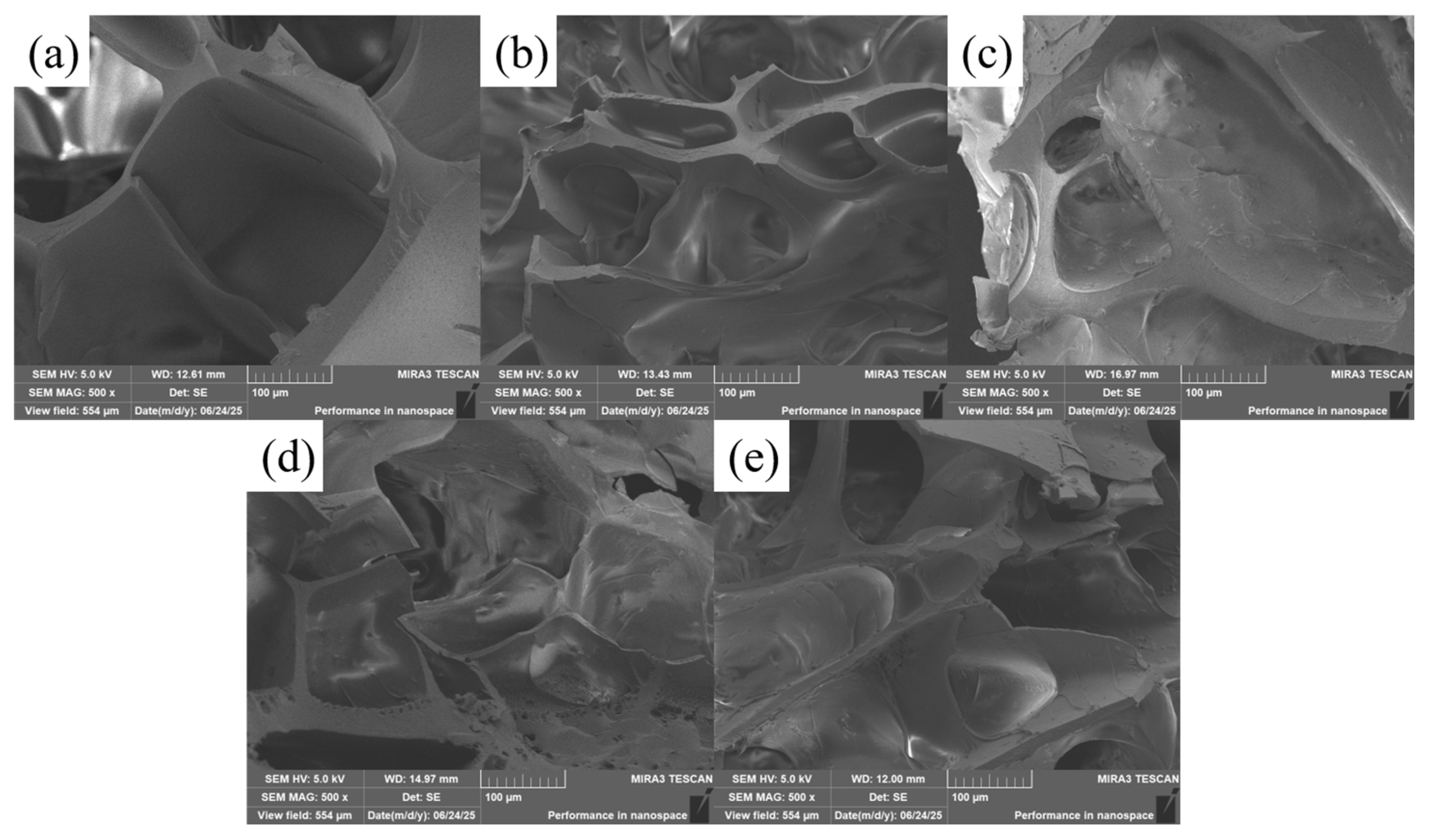
Figure 1. SEM images of hydrogels (a) SP1, (b) SP2, (c) SP3, (d) SP4, and (e) SP5.
Inorganics 14 00005 g001
Figure 2. FTIR spectra of SP1, SP3, and SP5 hydrogels.
Inorganics 14 00005 g002
Figure 3. Compressive (a) and tensile (b) curves of the composite hydrogel.
Inorganics 14 00005 g003
Figure 4. Stress–strain curves of SP1-SP5 hydrogels (ae) subjected to 40 compression cycles.
Inorganics 14 00005 g004
Figure 5. Maximum stress recovery rate and toughness recovery rate of SP1–SP5 hydrogels after 40 compression cycles.
Inorganics 14 00005 g005
Figure 6. Swelling performance of the composite hydrogel.
Inorganics 14 00005 g006
Figure 7. pH responsiveness curve of the composite hydrogel.
Inorganics 14 00005 g007
Figure 8. (a) Adsorption curves of SP1 and SP5 for different concentrations of Cu2+ (b) Adsorption curves of SP1 and SP5 for Cu2+ over different time periods.
Inorganics 14 00005 g008
Figure 9. Formation equation of DES.
Inorganics 14 00005 g009
Figure 10. Schematic diagram of the preparation of composite hydrogel.
Inorganics 14 00005 g010
Table 1. Functional groups and their related peaks of SP1, SP3, and SP5 hydrogels.
IdentificationChemical GroupWavenumber (cm−1)References
1O-H stretching vibration of water molecules and N-H stretching vibration of urea molecules3700–3000[42]
2Stretching vibration of the C-H groupSP1:2928, 2863[43,44]
SP3:2921, 2856
SP5:2920, 2848
3C≡N stretching vibrationSP1:2160[48]
4Amide I C=O stretching vibrationSP1:1653[45]
SP3:1654
SP5:1642
5CH2 bending and twisting vibrationsSP1:1442, 1349[46]
SP3:1442, 1349
SP5:1454, 1349
6Vibration of the -CONH2 group1409[47]
7Fe-O stretching vibrationSP3:580[49]
SP5:568
Table 2. Composition of composite hydrogel samples.
SamplesAM/U/ChCl
(Molar Ratio)
KPS (wt%)MBA (wt%)Fe3O4 (wt%)
SP11:1:110.80
SP21:1:110.80.5
SP31:1:110.81
SP41:1:110.82
SP51:1:110.83
Disclaimer/Publisher’s Note: The statements, opinions and data contained in all publications are solely those of the individual author(s) and contributor(s) and not of MDPI and/or the editor(s). MDPI and/or the editor(s) disclaim responsibility for any injury to people or property resulting from any ideas, methods, instructions or products referred to in the content.