1. Introduction
Since the first isolation of bissilicates ([
o-C
6H
4(SiPhF
2)
2F]
−) bearing a bridging fluoride unit was reported by Tamao et al. [
1,
2], the chemistry of oligo-fluorosilanes exhibiting a high potential to encapsulate fluoride ion has been studied and reported. Regarding the encapsulation of fluoride, cyclic oligo-fluorosilanes have attracted much attention due to their potential as fluoride absorption functions [
3,
4,
5,
6]. In addition to silacyclic compounds [
7,
8,
9,
10,
11], which have attracted significant attention in organic/inorganic chemistry for the creation of optoelectronic materials, oligofluorosilanes incorporated within a cyclic framework should be of great interest, as the cyclic architecture facilitates multi-site interactions between the fluoride ion and the silane moieties, thereby significantly strengthening the encapsulation ability through a cooperative effect [
5,
6,
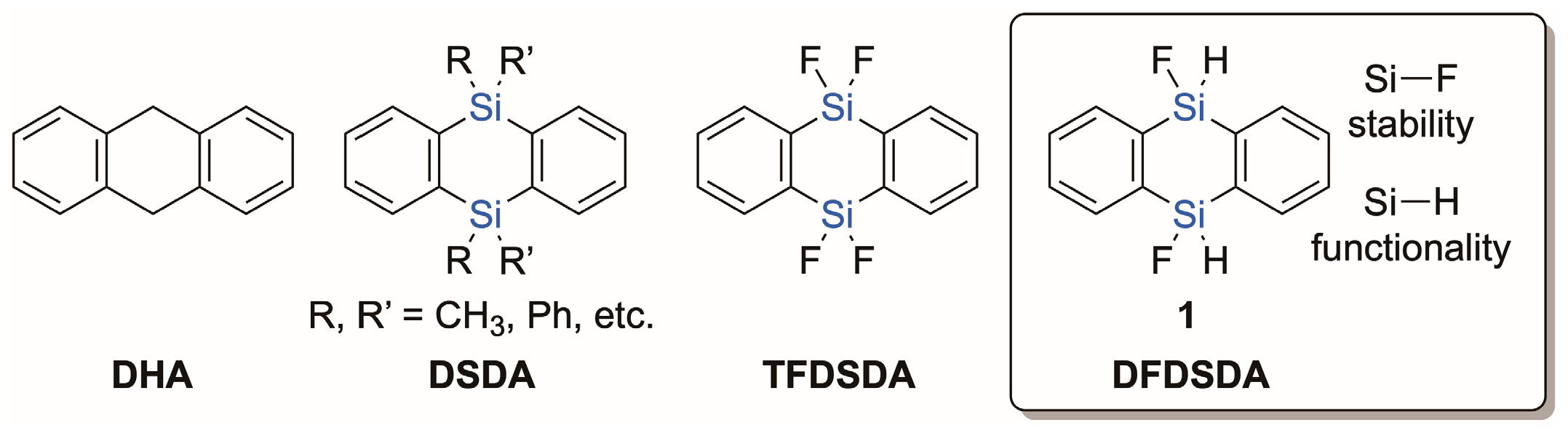
12]. Concurrently, the 9,10-dihydroanthracene (
DHA) framework, derived from anthracene, offers a robust and versatile platform for molecular design modifications [
13,
14,
15,
16]. Unlike planar, linearly fused polycyclic aromatic hydrocarbons (PAHs), the
DHA molecule is characterized by the sp
3-hybridized bridgehead atoms at the C9 and C10 positions, which force the central six-membered ring into a characteristic boat or saddle-shaped conformation. This inherent bent geometry effectively prevents the excessive aggregation often observed in planar PAHs while still allowing for controlled, favorable π-stacking interactions in the solid state. Such structural features render
DHA derivatives highly promising for advanced optoelectronic applications and the development of responsive materials. Furthermore, the bridgehead positions are chemically reactive and tolerant to functionalization, providing an accessible pathway for profound structural and electronic tuning. Replacing these bridgehead carbons with heteroatoms, specifically silicon, allows us to fundamentally alter the electronic interaction between the bridging group and the flanking aromatic rings, offering a potent pathway to overcome the stability limitations inherent to pure carbon PAHs [
17,
18,
19,
20,
21,
22,
23]. Combined considerations of above-mentioned viewpoints, fluoride encapsulation and skeletal motif of 9,10-dihydroanthracene lead the advanced molecular design of a 9,10-disila-9,10-dihydroanthracene (
DSDA) skeleton where the C9 and C10 atoms of
DHA are replaced with silicon atoms (
Figure 1) [
23,
24,
25,
26].
The molecular design of
DSDA is driven by the recognized benefits of silicon incorporation in hyper-conjugated systems, including the exploration of unique electronic phenomena, such as σ-conjugation [
27,
28,
29,
30]. Pioneering work in this field established the fundamental chemistry of 9,10-disila-9,10-dihydroanthracene, with many reported derivatives bearing alkyl or aryl groups (e.g., methyl, ethyl, phenyl) on the silicon atoms [
23,
24,
25,
26]. The incorporation of silicon atoms in a cyclic π-skeleton fundamentally alters the chemical and electronic profile of the scaffold. Silicon is less electronegative than carbon (Si = 1.90 vs. C = 2.55) [
31], making the silicon centers relatively electropositive. The resulting DSDA framework leverages the benefits of the
DHA topology but introduces new reactivity dictated by the Si centers, especially electrophilicity/Lewis acidity due to the combined low-lying σ* orbitals.
To maximize the chemical stability and optimize the frontier molecular orbitals of the
DSDA framework for potential materials science applications, our strategy involves the installation of highly electronegative fluorine atoms (Pauling electron negativity = 4.0) [
26] directly at these silicon bridgehead positions. In addition, as fluorine is structurally similar to hydrogen, possessing a relatively small van der Waals radius (F = 1.47 Å, H = 1.2 Å), the combination of high electronegativity and small size makes fluorination the gold standard for tuning molecular electronics and enhancing stability. Furthermore, the Si–F bond is thermodynamically robust, with an average energy of approximately 129 kcal/mol, which contributes directly to the resulting molecule’s increased oxidative, hydrolytic, and thermal stability. From these viewpoints, there have been much interest in the synthetic study of fluorine-substituted 9,10-disila-9,10-dihydroanthracene derivatives as potential smart materials. The synthesis of such F-substituted 9,10-disila-9,10-dihydroanthracense necessitates overcoming significant synthetic hurdles associated with organosilicon chemistry. While the Si–F bond is known to be thermodynamically very stable, the construction of this linkage, particularly in a site-selective manner within a 9,10-dihydroanthracene skeleton is not trivial. Silicon chemistry is fundamentally challenging due to the inherent difficulty in forming and the overall instability of unsaturated silicon systems, resulting in a diminished structural diversity compared to carbon analogues. Finally, the only synthetic example of 9,9,10,10-tetrafluoro-9,10-disila-9,10-dihydroanthracene (
TFDSDA) has been reported [
32], which demonstrated its effective fluoride-encapsulation character with a bridging fluoride between the two silicon atoms. We have thus designed and targeted the synthesis of 9,10-difluoro-9,10-disila-9,10-dihydroanthracene (
DFDSDA:
1), aiming to achieve the dual objective of enhanced molecular stability, realized through the strong Si–F bonds, and retained synthetic utility, ensured by the presence of active Si–H functionalities [
26]. This compound represents a conceptually innovative core for silicon chemistry from viewpoint of its potential optoelectronic properties and its future applications.
2. Results and Discussion
Following the established literature procedure [
33,
34],
p-methoxyphenyltrimethoxysilane AnsSi(OCH
3)
3, where Ans =
p-methoxyphenyl, was initially prepared. Subsequent reduction of AnsSi(OCH
3)
3 with LiAlH
4 furnished the corresponding silane, AnsSiH
3 (
3) [
33,
34]. The purified trihydrosilane
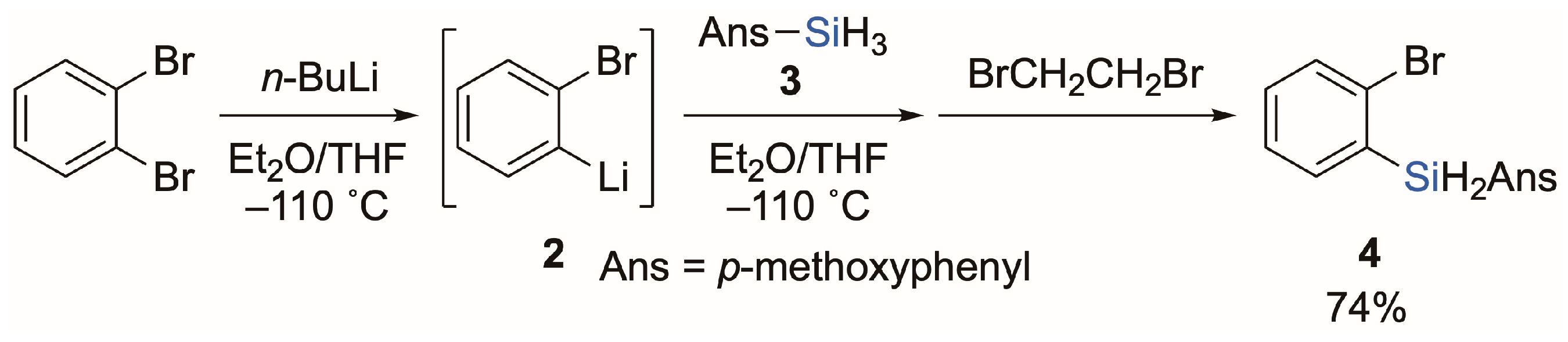
3 was then subjected to a coupling reaction with
o-bromolithiobenzene (
2), which was generated in situ at −110 °C in an Et
2O/THF mixed solvent. Subsequent quenching of the reaction mixture with 1,2-dibromoethane afforded 2-bromophenyl(
p-methoxyphenyl)silane (
4) in a good isolated yield of 74% (
Scheme 1). Compound
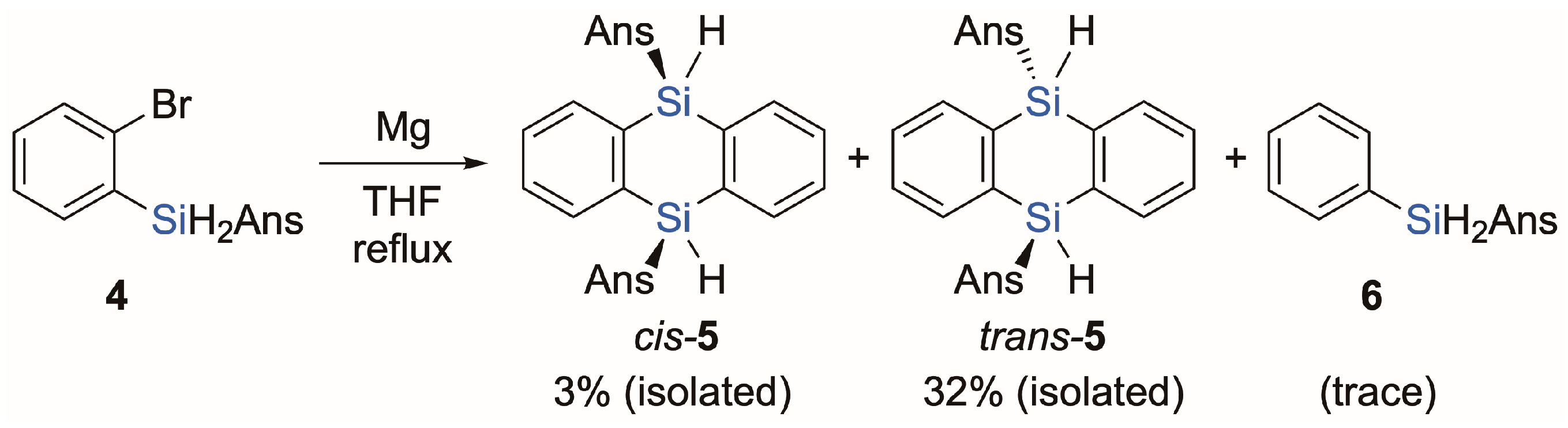
4 was intermolecularly cyclized by heating in the presence of magnesium in refluxing THF for 3 h [
26]. This reaction successfully yielded the 9,10-bis(
p-methoxyphenyl)-9,10-disila-9,10-dihydroanthracenes (
5) as an isomeric mixture of
cis- and
trans-isomers (
cis-
5:
trans-
5 = 3:10) in 35% overall yield. A small amount of phenyl(
p-methoxyphenyl)silane
6 was also isolated as a byproduct (
Scheme 2). The resulting isomer mixture was separated through continuous recrystallization and subsequent column chromatography (SiO
2 with hexane/benzene(1:1) as the eluent. This rigorous purification process yielded both
cis-
5 (3%) and
trans-
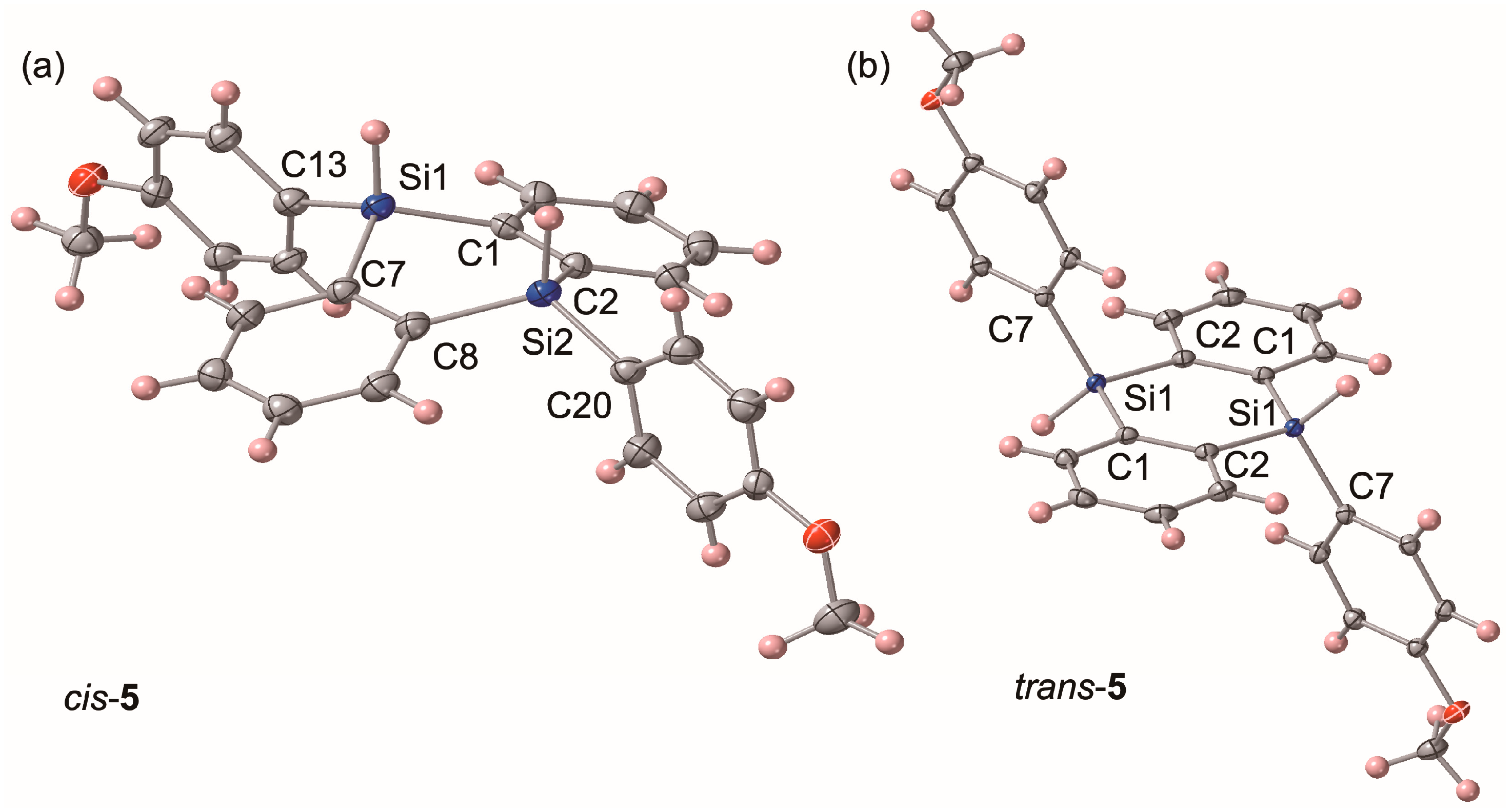
5 (32%) in their pure forms, which were essential for their unequivocal identification based on spectroscopic data and, critically, single-crystal X-ray diffraction (SC-XRD) crystallographic analysis (
Figure 2).
The
cis-isomer of 9,10-bis(
p-methoxyphenyl)-9,10-disila-9,10-dihydroanthracene (
cis-
5) adopts a bent conformation in its 9,10-disila-9,10-dihydroanthracene skeleton, a structure characterized by a dihedral angle of 29.7° between the two Si
2C
6 planes (
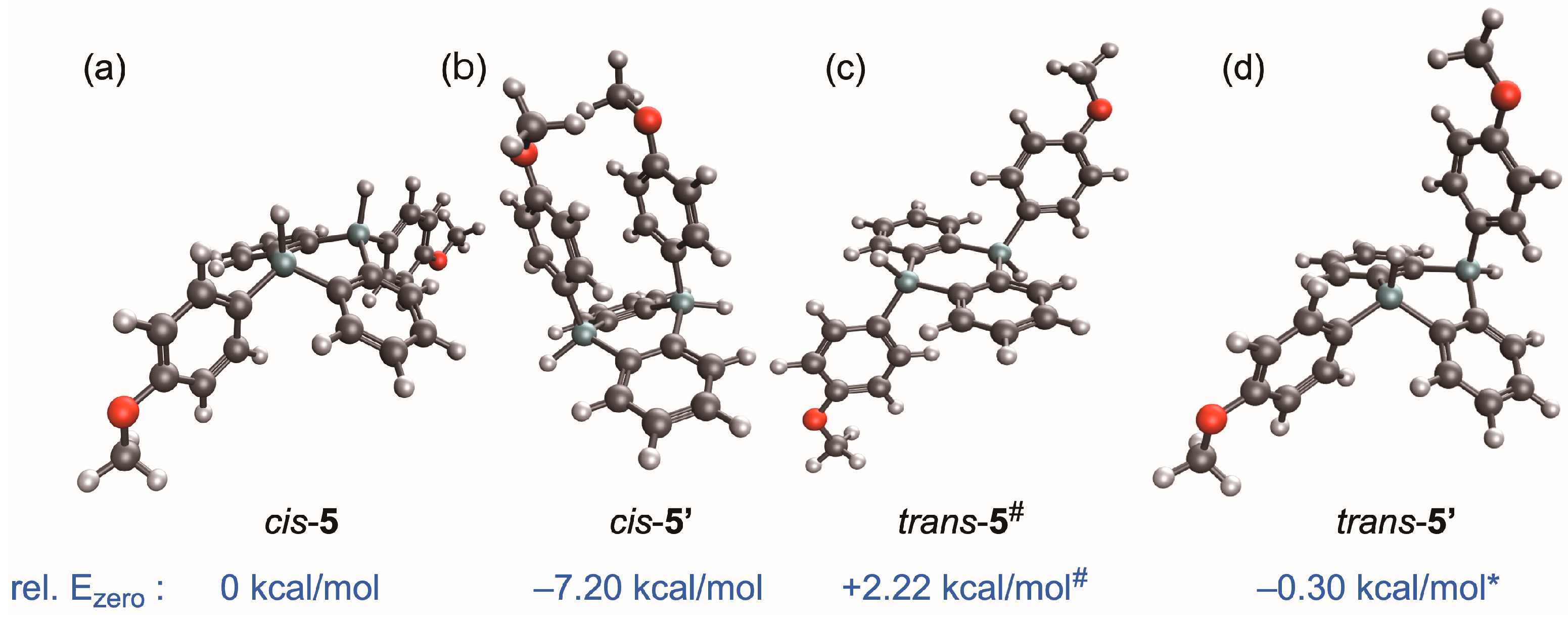
Figure 2a). This inherent skeletal bending dictates that the two substituents attached to the silicon atoms occupy distinct conformational environments. Indeed, theoretical calculations (B3PW91-D3(bj)/6-311G(3d,p)) [
35] identified two minimum-energy conformers for the cis-isomer, designated
cis-
5 and
cis-
5′ (
Figure 3). In
cis-
5, the
p-methoxyphenyl groups are oriented equatorially and anti-parallel (
Figure 3a). Conversely,
cis-
5′ features the groups in axial positions, facing one another (
Figure 3b). Although
cis-
5′ is calculated to be thermodynamically more stable than cis-5 by 7.20 kcal/mol, the crystalline state structure unambiguously corresponds to
cis-
5, suggesting a dominant influence of crystal packing forces. Furthermore, the observed structure of
trans-
5 in the solid state displays an entirely planar 9,10-disila-9,10-dihydroanthracene skeleton, maintaining intramolecular crystallographic
Ci symmetry. Intriguingly, this
Ci symmetric geometry for
trans-
5 is optimized as a first-order saddle point, rendering it thermodynamically unstable (2.22 kcal/mol less stable than
cis-
5). The true minimum-energy structure for the trans-isomer is bent (dihedral angle of 43° between the Si
2C
6 planes), calculated to be marginally more stable than
cis-
5 by 0.30 kcal/mol. This collective evidence clearly indicates that the conformations of both the
cis- and
trans-isomers in the solid state are significantly governed by crystal packing effects.
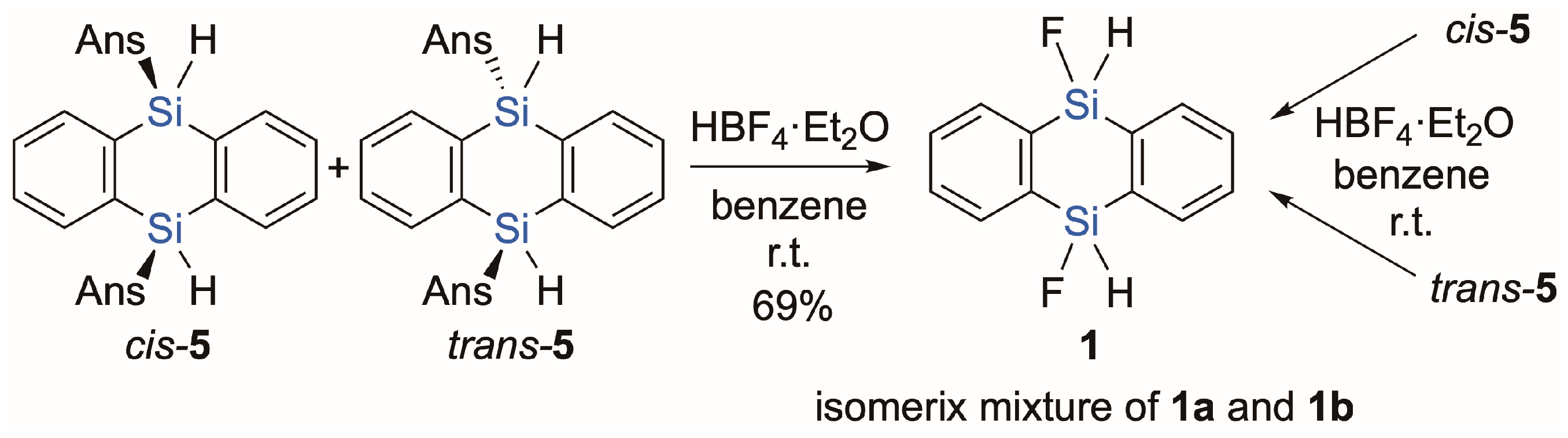
Treatment of the
cis/
trans isomeric mixture of 9,10-bis(
p-methoxyphenyl)-9,10-disila-9,10-dihydroanthracenes
5 with an excess of HBF
4·Et
2O in C
6D
6 successfully afforded the diastereomeric mixture of 9,10-difluoro-9,10-disila-9,10-dihydroanthracenes (
1a:
1b = 5:8) in a 69% chemical yield (
Scheme 3) as judged by
1H NMR spectra. Crucially, the independent fluorination reactions performed on the isolated
cis-
5 and
trans-
5 isomers, respectively, both yielded the identical diastereomeric mixture of
1 (with the same ratio of
1a:
1b =
ca. 1:1). This observation strongly suggests that the fluorination of
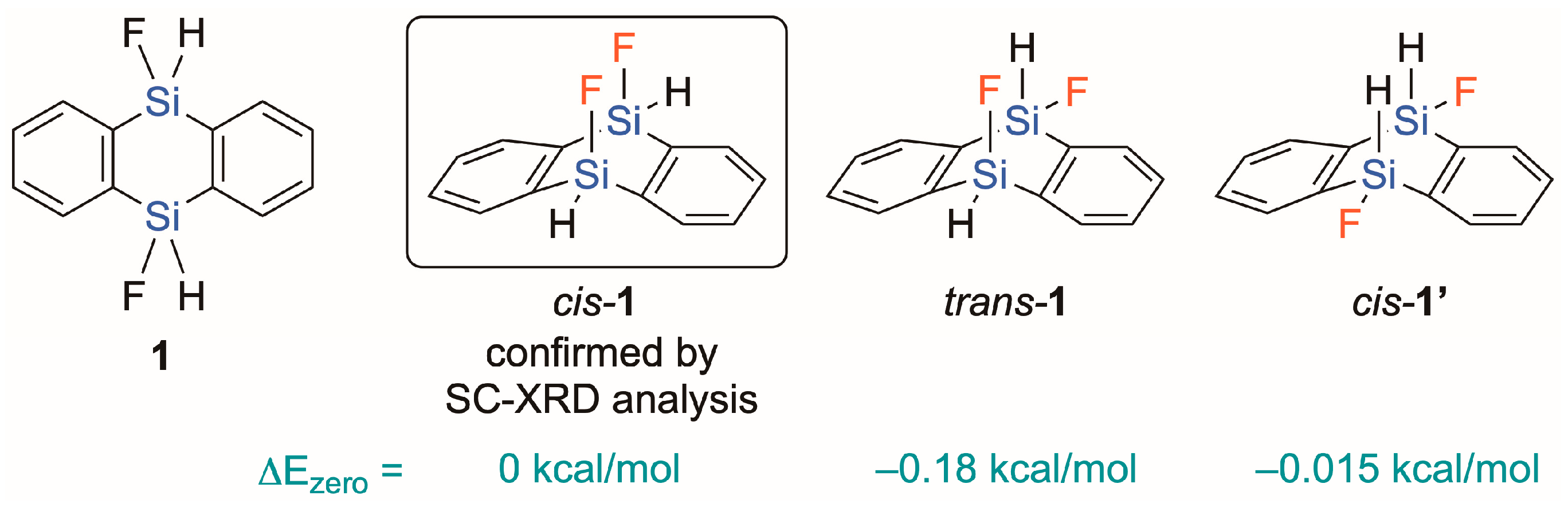
5 proceeds non-stereoselectively. Although the two resulting isomers proved challenging to separate due to their lability during conventional purification methods such as silica gel chromatography, persistent recrystallization successfully yielded a few single crystals of
cis-
1, which unequivocally established the identity of one of the obtained diastereomers based on SC-XRD analysis. By inference, the remaining isomer should be the
trans-isomer (
trans-
1) or rotamer
cis-
1′ (
Figure 4), which were found as minimum structures by the theoretical calculations at MP2/def2TZVP level [
35]. As the energetic difference between the
cis-isomers is quite small (−0.015 kcal/mol for
cis-
1′ vs.
cis-
1) and the isomerization barrier between the two cis-isomers should also be very small (ΔE
‡zero(
cis-
1→
cis-
1′) = 1.8 kcal/mol at B3PW91-D3(bj)/6-31G(d) level) [
35], the possibility that the remaining isomer would be
cis-
1′ can be excluded on the basis of the experimental result that the observed diastereomer ratio observed in
1H NMR spectra remained unchanged even upon heating the mixture to 60 °C without any coalescence. Thus, the generated isomer other than
cis-
1 should be most probably the
trans-isomer (
trans-
1). Theoretical calculations revealed compelling insights into the energetic landscape of these isomers (
Figure 4), indicating that the trans-isomer (
trans-
1) is the most thermodynamically stable species, albeit with a small energy difference (E
zero = −0.18 kcal/mol, E
zero = zero-point corrected energy) relative to
cis-
1 at the MP2/def2TZVP level [
35]. Furthermore, the calculated energy difference between the
cis- and
trans-isomers (ΔE
zero = 0.18 kcal/mol) leads to an estimated equilibrium ratio of 1.0:1.3 based on the Boltzmann distribution, which shows a slight deviation from the experimentally observed ratio (
1a:
1b = 5:8 or 1:1). While complete spectroscopic identification of the second isomer remains elusive at this stage, the strong energetic preference suggests that the generated isomer
1b is most likely the thermodynamically favored
trans-
1, with
1a corresponding to the
cis- isomer (
cis-
1).
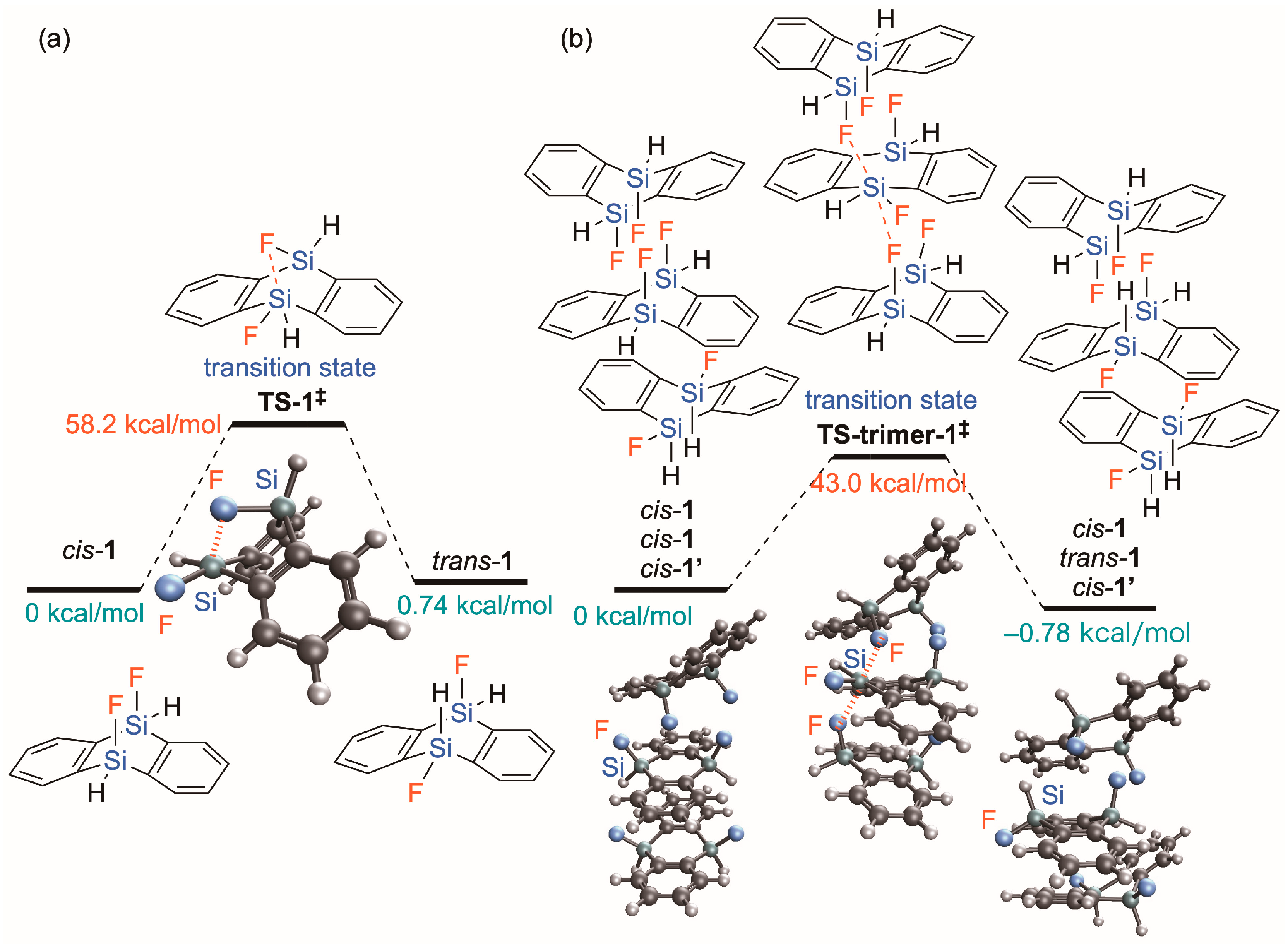
The plausible isomerization pathways from cis-1 to trans-1 were investigated using Density Functional Theory (DFT) calculations at the B3PW91-D3(BJ)/6-31G(d) level, incorporating the Polarizable Continuum Model (PCM) for benzene [
35]. Analysis of the Potential Energy Surface (PES) revealed a single viable pathway for this transformation, as depicted in
Figure 5. Although the calculated activation barrier remains substantial (ΔE
‡zero(
cis-
1→
trans-
1) = 58 kcal/mol), the proposed mechanism is chemically reasonable. It involves the approach of a fluorine atom in
cis-
1 to the silicon center, forming a transient pentacoordinate silicate transition state
TS-1‡ [
36,
37,
38]. Subsequent Berry pseudo-rotation of
TS-1‡ facilitates the geometric interconversion between the
cis and
trans forms. Based on this mechanistic insight, we hypothesized that the coordination of an external donor moiety to the silicon center could facilitate isomerization by stabilizing the pentacoordinate silicate species, thereby attenuating the energy barrier [
37,
38]. Consistent with this hypothesis, even the weak coordination of a single benzene molecule resulted in a slight reduction in the barrier (ΔE
‡zero = 57 kcal/mol). We further explored a dimeric model, (
cis-
1)
2, in which one molecule of
cis-
1 acts as an intermolecular donor. This model demonstrated a slightly more favorable barrier of ΔE
‡zero = 54.2 kcal/mol. for isomerization to the
cis-
1/
trans-
1 pair. Moreover, PES calculations for trimer complexes (converting [
cis-
1,
cis-
1,
cis-
1′] to [
cis-
1,
trans-
1,
cis-
1′]) suggested that the transformation could proceed with a lower barrier of ΔE
‡zero = 43.0 kcal/mol. This process involves a transition state,
TS-trimer-1‡ (
Figure 5b), which features a hexacoordinate disilicate geometry. Although this barrier height does not yet fully rationalize the experimental observations, these findings strongly suggest that oligomeric clusters of
1 serve as the key species driving the isomerization process.
As
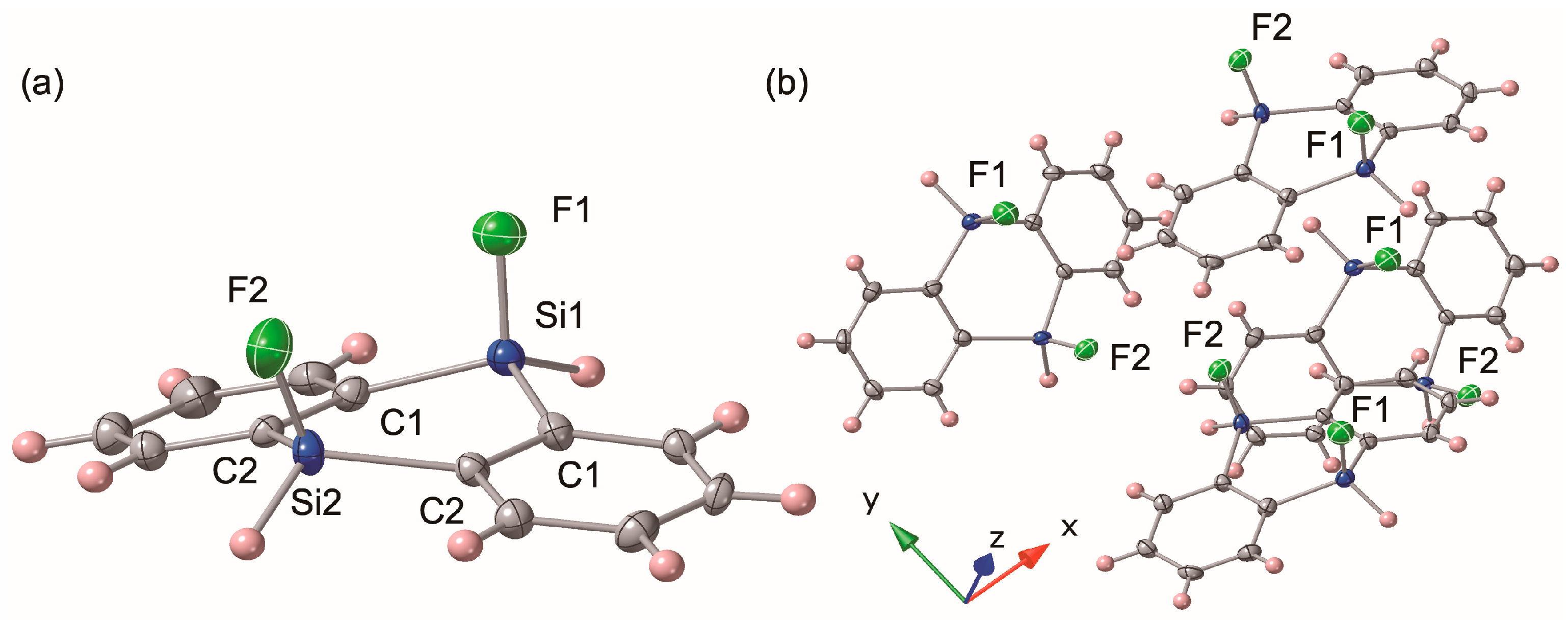
Figure 6 showed the molecular structure of
cis-
1 revealed by SC-XRD analysis, the determined geometry of
cis-
1 confirms that
cis-9,10-difluoro-9,10-disila-9,10-dihydroanthracene adopts a structure featuring the two fluorine atoms occupying the axial positions on the respective silicon atoms. The molecule possesses a crystallographic mirror symmetry (
Cm) situated on the Si1-Si2-F1-F2 plane. Analysis of the skeletal curvature reveals a dihedral angle of 22.8° between the two Si
2C
6 planes. The resulting packing structure of
cis-
1 in the crystalline state exhibited no discernible specific arrangement, as illustrated in the molecular packing diagram
Figure 6b, suggesting that the strong intermolecular interactions were not dominant in dictating the overall crystal packing motif.
The structural parameters derived from the theoretically optimized geometry of
cis-
1 at MP2/def2TZVP level demonstrated excellent consistency with those obtained via SC-XRD analysis (optimized structural parameters: Si–F, 1.608 Å; Si–C, 1.862 Å; C–Si–C, 110.3°). As illustrated in
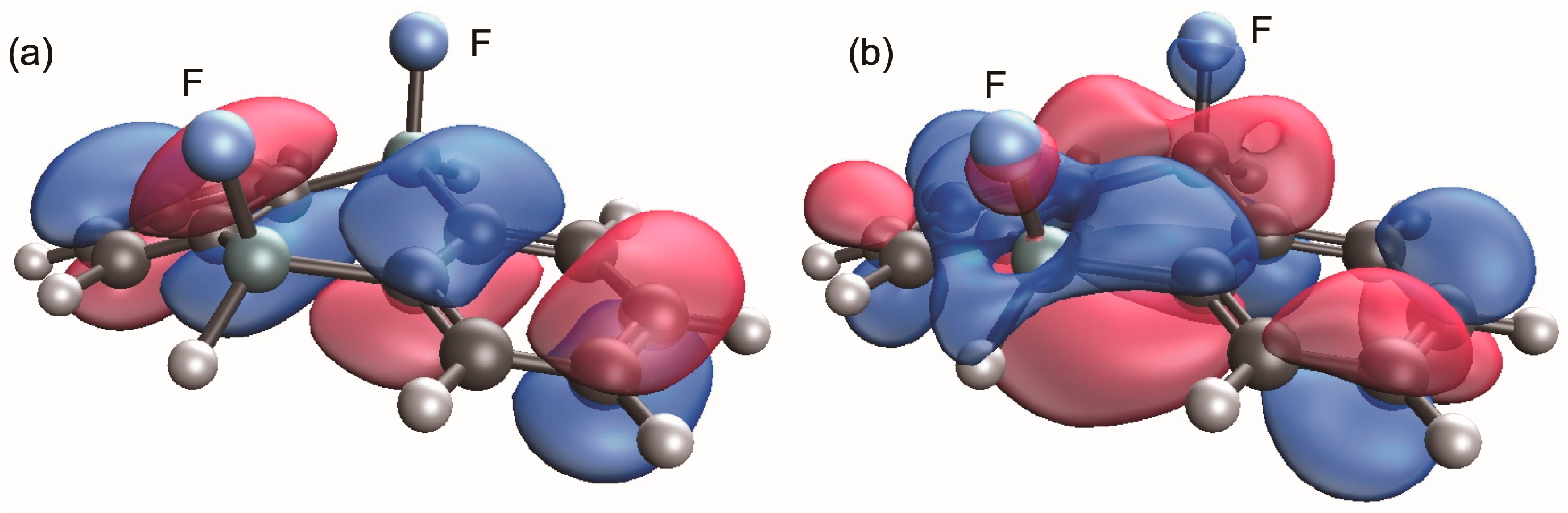
Figure 7, the frontier molecular orbitals are effectively delocalized across the 9,10-disila-9,10-dihydroanthracene skeleton, exhibiting a resemblance to those of an anthracene, which is attributed to the coupling of the low-lying Si–F σ* orbitals with the π/π* orbitals of the neighboring aromatic rings. Notably, since the LUMO of
cis-
1 is predominantly localized around the silicon centers, we hypothesized that
cis-
1 should possess a strong capacity to encapsulate a fluoride ion, analogous to the previously reported
TFDSDA. The fluoride encapsulation ability of 9,10-difluoro-9,10-disila-9,10-dihydroanthracenes was assessed using theoretically calculated fluoride-ion affinity (FIA) [
39,
40,
41]. Recognizing the critical role of solvation effects [
39], the Conductor-like Polarizable Continuum Model (CPCM) for toluene was employed in these calculations. The FIAs were determined relative to antimony pentafluoride (SbF
5) using the following equation: FIA(
DSDA) = [E
zero(
DADA) + E
zero(SbF
6−)] − [E
zero([
DSDA–F]
−) + E
zero(SbF
6)], where
DSDA = fluorinated 9,10-disila-9,10-dihydroanthracene (calculated at B3PW91-D3(bj)/def2TZVP [cpcm, toluene]). As a result, it was shown that FIA(
cis-
1) = −197 kJ/mol and FIA(
trans-1) = −221 kJ/mol, indicating the stronger fluoride encapsulation ability of
cis-
1 relative to
trans-1, and comparable to that of the previously reported
TFDSDA (FIA(
TFDSDA) = −194 kJ/mol).
Guided by the calculated FIAs of 9,10-difluoro-9,10-disila-9,10-dihydroanthracenes (
1), we attempted the fluoride-encapsulation reaction of
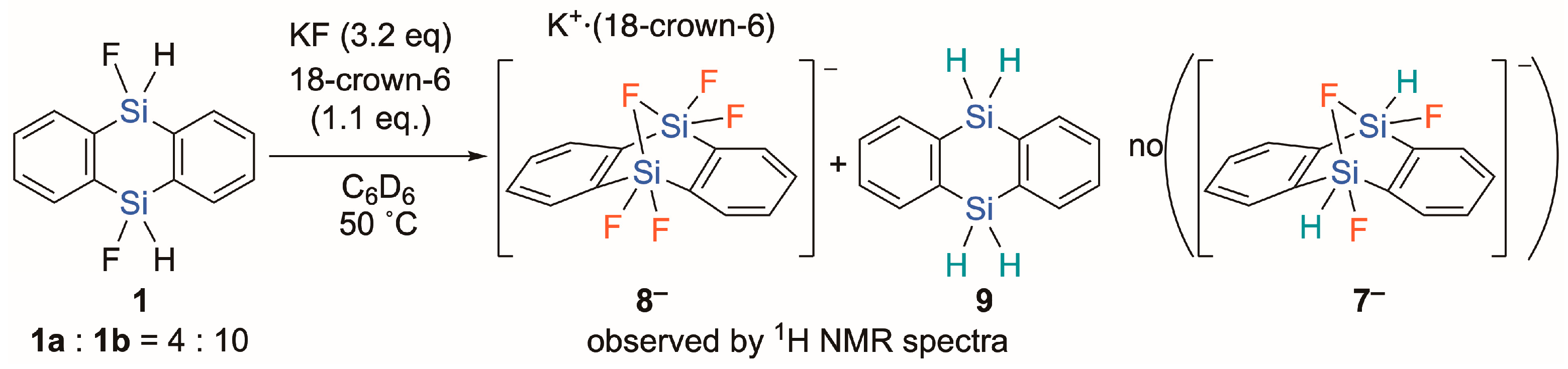
1 in the presence of 18-crown-6-ether (1,4,7,10,13,16-hexaoxacyclooctadecane, denoted as 18-crown-6). When
cis-
1 was treated with 3.2 equivalents of KF and an equimolar amount of 18-crown-6 in C
6D
6 at 50 °C, the outcome was entirely unexpected, that is, the anticipated trifluoro-9,10-disila-9,10-dihydroanthracene anion (
7−) was not generated. Instead, pentafluoro-9,10-disila-9,10-dihydroanthracene anion (
8−) and the completely de-fluorinated 9,10-disila-9,10-dihydroanthracene (
9) were formed quantitatively in a 1:1 ratio, as evidenced by the
1H and
19F NMR spectra (
Scheme 4). Given that 9,9,10,10-tetrafluoro-9,10-disila-9,10-dihydroanthracene (
TFDSDA) has been reported to encapsulate fluoride to give
8−, it is highly probable that the KF/18-crown-6 system promotes a disproportionation process involving intermolecular H/F exchange and rearrangement of
1, ultimately leading to the formation of
8− and
9. Although definitive identification of compound
9 was challenging due to its lability toward air, making isolation extremely difficult, the observation of a characteristic triplet signal at δ = −49 ppm (
JSiH = 201 Hz) in the
1H-coupled
29Si NMR spectrum strongly supports the assigned structure. These results collectively demonstrate that the addition of KF and 18-crown-6 serves to catalyze a complex intermolecular H/F redistribution within compound
1.
3. Materials and Methods
3.1. General Information
All manipulations were carried out under an argon atmosphere using Schlenk-line techniques. All solvents were purified by standard methods. Trace amounts of water and oxygen remaining in the solvents were thoroughly removed by bulb-to-bulb distillation from potassium mirror prior to use.
1H,
13C, and
29Si NMR spectra were measured on a Bruker AVANCE-400 spectrometer (Bruker, Ettlingen, Germany) (
1H: 400 MHz;
13C: 101 MHz;
29Si: 79.5 MHz). Signals arising from residual C
6D
5H (7.16 ppm) in C
6D
6 was used as the internal standard for the
1H NMR spectra, that of C
6D
6 (128.0 ppm) was used for the
13C NMR spectra, and external SiMe
4 (0.0 ppm) was used for the
29Si NMR spectra, respectively. Multiplicity of signals in
13C NMR spectra was determined by DEPT technique. High-resolution mass spectra (HRMS) and Low-resolution mass spectra (LRMS) were obtained on a JEOL JMS-T100LP (Direct Analysis in Real Time, DART) and SHIMADZU GCMS-QP2010 (Electron Ionization, EI) mass spectrometers (JEOL: Tokyo, Japan, SHIMADZU: Kyoto, Japan), respectively. All melting points were determined on a Büchi Melting Point Apparatus M-565 (Zug, Switzerland) and are uncorrected. (
p-methoxyphenyl)silane
3 was prepared according to the reported procedure [
33,
34].
3.2. Synthesis of 2-Bromophenyl(p-methoxyphenyl)silane (4)
n-BuLi (6.0 mL, 1.51 M in hexane, 9.06 mmol) was dissolved in an Et2O (20.0 mL)/THF (20.0 mL) mixed solvent at −110 °C in a round flask, the solution was stirred at −110 °C for 30 min. To the solution was added dropwise an Et2O solution of trihydrosilane 3 (4.17 g, 30.4 mmol), and then the reaction mixture was stirred at −110 °C for 2 h. After subsequent quenching of the reaction mixture with 1,2-dibromoethane (5.0 mL, 58.0 mmol), the reaction mixture was slowly warmed up to room temperature. All volatiles were removed under reduced pressure, and hexane was added. After all insoluble inorganic salts had been removed by filtration through a pad of celite, the solvent was removed from the filtrate under reduced pressure. The residue was purified by column chromatography [hexane, dichloromethane, SiO2] to afford 2-bromophenyl(p-methoxyphenyl)silane (4) as a colorless oil (2.01 g, 6.85 mmol, 74%). 4: colorless oil, 1H NMR (400 MHz, C6D6) δ 3.24 (s, 3H), 5.24 (s, 2H), 6.73–6.78 (m, 3H), 6.85 (dd, J = 6.29, 6.29 Hz, 1H), 7.30–7.34 (m, 2H), 7.49 (d, J = 8.8 Hz, 2H); 13C{1H} NMR (101 MHz, C6D6) δ54.7 (CH3), 114.5 (CH), 121.2 (C), 127.0 (CH), 131.6 (C), 132.1 (CH), 132.5 (CH), 135.8 (C), 137.8 (CH), 138.6 (CH), 161.7 (C); 29Si{1H} NMR (79.5 MHz, C6D6) δ −33.3; LRMS (EI), m/z: Found: 292 ([M]+), Calcd. for H13C13OSiBr ([M]+): 291.9919.
3.3. Synthesis of 9,10-Bis(p-methoxyphenyl)-9,10-disila-9,10-dihydroanthracenes (cis-5, trans-5)
2-Bromophenyl(p-methoxyphenyl)silane (4) (170 mg, 0.580 mmol) was dissolved in THF (10.0 mL) in a round flask in which magnesium (1.19 g, 49.0 mmol) was placed. The reaction mixture was stirred under reflux conditions for 3 h, and slowly warmed up to room temperature. All volatiles were removed under reduced pressure, and hexane was added. After all insoluble inorganic salts were removed by filtration through a pad of celite, the solvent was removed from the filtrate under reduced pressure to give 9,10-bis(p-methoxyphenyl)-9,10-disila-9,10-dihydroanthracenes (5) as an isomeric mixture of cis- and trans-isomers (cis-5:trans-5 = 3:10). The isomeric mixture was purified by column chromatography [hexane, benzene, SiO2] to afford the cis-isomer of 9,10-bis(p-methoxyphenyl)-9,10-disila-9,10-dihydroanthracene as colorless solids (3.5 mg, 8.2 μmol, 3%), and the trans-isomer of 9,10-bis(p-methoxyphenyl)-9,10-disila-9,10-dihydroanthracene as colorless solids (39.4 mg, 92.8 μmol, 32%). cis-5: colorless solids, Mp = 121–122 °C (decomp.). 1H NMR (400 MHz, C6D6) δ 3.24 (s, 6H), 5.80 (s, 2H), 6.73 (d, J = 8.6 Hz, 4H), 7.49 (d, J = 8.7 Hz, 4H), 7.72 (dd, J = 3.2, 5.4 Hz, 4H); 13C{1H} NMR (101 MHz, C6D6) δ 54.6 (CH3), 114.4 (CH), 124.6 (C), 129.2 (CH), 136.1 (CH), 138.0 (CH), 141.6 (C), 161.8 (C); 29Si{1H} NMR (119 MHz, C6D6) δ −30.8. trans-5: colorless solids, Mp = 128–129 °C (decomp.) 1H NMR (400 MHz, C6D6) δ 3.25 (s, 6H), 5.77 (s, 2H), 6.78 (d, J = 8.6 Hz, 4H), 7.17 (dd, J = 3.3, 3.3 Hz, 4H), 7.54 (d, J = 8.6 Hz, 4H), 7.74 (dd, J = 3.3, 5.4 Hz, 4H); 13C{1H} NMR (101 MHz, C6D6) δ54.6 (CH3), 114.5 (CH), 124.8 (C), 129.2 (CH), 136.1 (CH), 137.9 (CH), 141.7 (C), 161.8 (C); 29Si{1H} NMR (119 MHz, C6D6) δ −30.0; HRMS (DART), m/z: Found: 424.13305 ([M]+), Calcd. for C26H24O2Si2 ([M]+): 424.13148.
3.4. Synthesis of 9,10-Difluoro-9,10-disila-9,10-dihydroanthracenes (1) from an Isomer-Mixture of 5
The cis/trans isomeric mixture of 9,10-bis(p-methoxyphenyl)-9,10-disila-9,10-dihydroanthracenes 5 (97.0 mg, 0.228 mmol) was dissolved in benzene (3.0 mL) in a Schlenk flask. After the addition of an excess amount of HBF4·Et2O (0.20 mL, 1.48 mmol), the solution was stirred at room temperature for 1 min. All volatiles were removed under reduced pressure, and hexane was added. All volatiles were slowly removed under reduced pressure to give 9,10-difluoro-9,10-disila-9,10-dihydroanthracenes (1) as an isomeric mixture of cis- and trans-isomers (1a:1b = 5:8) as colorless solids (39.1 mg, 0.157 mmol, 69%). 1: colorless solids (diastereomeric mixture), 1H NMR (400 MHz, C6D6) δ 5.53 (d, 2JHF = 65 Hz, 2H, 1b), 5.58 (d, 2JHF = 65 Hz, 2H, 1a), 7.09–7.11 (m, 8H, 1a), 7.60–7.64 (m, 8H, 1b); 13C{1H} NMR (101 MHz, C6D6) δ 130.9 (CH), 131.0 (CH), 135.4 (CH), 135.6 (CH), 138.9 (C), 139.0 (C) [Definitive assignment of the NMR signals to the respective isomers, 1a and 1b, could not be achieved.]; 19F NMR (565 MHz, C6D6) δ −169.7 (d, 2JFH = 65 Hz, 1a), −167.5 (d, 2JFH = 65 Hz, 1b); 29Si{1H} NMR (119 MHz, C6D6) δ −15.0 (d, 1JSiF = 293 MHz, 1b), −14.8 (d, 1JSiF = 291 MHz, 1a); LRMS (EI), m/z: Found: 248 ([M]+), Calcd. for H10C12F2Si2 ([M]+): 248.0289.
3.5. Synthesis of 9,10-Difluoro-9,10-disila-9,10-dihydroanthracenes (1) from cis-5
The cis-isomer of 9,10-bis(p-methoxyphenyl)-9,10-disila-9,10-dihydroanthracenes (cis-5) (8.00 mg, 0.0188 mmol) was dissolved in C6D6 (0.50 mL) in a sealed NMR tube. After adding an excess amount of HBF4·Et2O (0.05 mL, 0.364 mmol), the solution was stirred at room temperature for 1 min. All volatiles were removed under reduced pressure and hexane was added. All volatiles were slowly removed under reduced pressure to give 9,10-difluoro-9,10-disila-9,10-dihydroanthracenes (1) as an isomeric mixture (1a:1b = ca. 1:1) as colorless solids.
3.6. Synthesis of 9,10-Difluoro-9,10-disila-9,10-dihydroanthracenes (1) from trans-5
The trans-isomer of 9,10-bis(p-methoxyphenyl)-9,10-disila-9,10-dihydroanthracenes 5 (16.9 mg, 0.0398 mmol) was dissolved in C6D6 (0.60 mL) in a screw cap NMR tube. After adding an excess of HBF4·Et2O (0.05 mL, 0.364 mmol), the solution was stirred at room temperature for 1 min. All volatiles were removed under reduced pressure and hexane was added. All volatiles were slowly removed under reduced pressure to give 9,10-difluoro-9,10-disila-9,10-dihydroanthracenes (1) as an isomeric mixture (1a:1b = ca. 1:1) as colorless solids.
3.7. Reaction of 9,10-Difluoro-9,10-disila-9,10-dihydroanthracenes (1) with KF/18-Crown-6
The isomeric mixture of 9,10-difluoro-9,10-disila-9,10-dihydroanthracenes 1 (189 mg, 0.0760 mmol) was dissolved in C6D6 (0.4 mL) in a J. Young. NMR tube. After adding KF (14.0 mg, 0.241 mmol) and 18-crown-6-ether (226 mg, 0.085 mmol), the solution was heated at 50 °C for 8 days. 8−: 1H NMR (400 MHz, C6D6) δ 7.12 (dd, J = 2.0, 3.3 Hz, 4H), 7.56 (dd, J = 2.0, 3.3 Hz, 4H); 13C{1H} NMR(101 MHz, C6D6) δ; 19F NMR (565 MHz, C6D6) δ −115.3 (br); 29Si{1H} NMR (119 MHz, C6D6) δ −77.7 (sextet, 1JSi-F = 128 Hz). 9: 1H NMR (400 MHz, C6D6) δ 4.99 (s, 4H), 7.23 (dd, J = 2.0, 3.3 Hz, 4H), 8.17 (dd, J = 2.0, 3.3 Hz, 4H); 13C{1H} NMR (101 MHz, C6D6) δ; 29Si{1H} NMR (119 MHz, C6D6) δ −49.0(s); 29Si NMR (119 MHz, C6D6) δ −49.0 (t, JSiH = 201 Hz).
3.8. X-Ray Crystallographic Analysis of cis-5, trans-5 and cis-1
Single crystals of
cis-
5,
trans-
5 and
cis-
1 were obtained after recrystallization from hexane/benzene (
cis-
5), hexane/benzene (
trans-
5), hexane (
cis-
1), respectively. Intensity data were collected on a Bruker APEX-II system or a RAPID IP-system using Mo-Ka radiation (λ = 0.71073 Å), and the preliminary data were collected on the BL02B1 beamline of SPring-8 (proposal numbers: 2025B1561, 2025B1719, 2025B1581, 2025A1949, 2025A1823, 2024A1857) on a PILATUS3 X CdTe 1M camera using synchrotron radiation (λ = 0.4135 Å). The structures were solved using SHELXT-2018 and refined by a full-matrix least-squares method on
F2 for all reflections using SHELXL-2018 [
42]. All non-hydrogen atoms were refined anisotropically, and the positions of all hydrogen atoms were calculated geometrically and refined as riding models. Supplementary crystallographic data were deposited at the Cambridge Crystallographic Data Centre (CCDC) under deposition numbers CCDC-2504972 (
cis-
1), CCDC-2504973 (
cis-
5), CCDC-2504974 (
trans-
5) and CCDC-2504975 (
6); these can be obtained free of charge via
https://www.ccdc.cam.ac.uk/structures/ (accessed on 3 January 2026).
3.9. Theoretical Calculations
Theoretical calculations for the geometry optimization and frequency calculations of were carried out using the
Gaussian 16 (Revision C.01) program package [
35]. Geometry optimizations were performed at the levels shown in the main text. Minimum energies for the optimized structures were confirmed by frequency calculations. Computational time was generously provided by the Supercomputer Laboratory at the Institute for Chemical Research (Kyoto University) and by the Research Center for Computational Science (Okazaki, Japan, Project: 25-IMS-C214/25-IMS-C360). The coordinates of the optimized structures are included in the corresponding .xyz files as
Supporting Information.