1. Introduction
Lunar laser ranging (LLR) has facilitated tests of the equivalence principle and relativistic parameters, as well as studies of the Moon’s inner structure [
1,
2,
3]. Generally, single-photon laser ranging, utilizing pulsed lasers combined with single-photon detectors (SPDs), enables high-precision long-range measurements from km-scale lidar [
4] to ~384,400 km LLR [
5]. In 2008, mm-level Earth-Moon ranging precision was first achieved by the APOLLO station [
6]. However, further improvements are constrained by Earth’s atmosphere and retroreflector arrays [
7,
8,
9]. In recent years, kW-class chirped amplitude-modulated (CAM) laser-based differential lunar laser ranging (DLLR) has been proposed as a promising candidate, theoretically achieving ~30 μm precision, since the adoption of high-power CAM lasers can enhance the photon return flux from the retroreflectors and significantly reduce atmospheric errors [
10,
11]. Therefore, the development of high-power CAM lasers is crucial for realizing this advanced measurement scheme.
A CAM laser can be generated by modulating the light amplitude with a linear frequency modulation (LFM, or chirped) radio-frequency (RF) signal. Two primary approaches exist for this purpose. The first involves the direct modulation of a laser diode (LD) by programming its injection current with the chirped RF waveform. An output power of 6.3 W was achieved after amplification, with a 25 MHz–1 GHz frequency range and a maximum modulation depth (MD) of ~70% [
12]. Furthermore, direct modulation of an LD achieved an output power of 8 W with 450 MHz bandwidth [
13]. However, direct modulation methods typically exhibit limited bandwidth, inferior modulation response linearity, and lower MD. External modulation has greater potential for obtaining high-quality CAM lasers due to its larger modulation bandwidth and high signal fidelity [
14]. This configuration typically consists of a continuous-wave (CW) laser cascaded with an optical modulator, such as acousto-optic modulators [
15], electro-optic intensity modulators (EOIMs) [
16,
17,
18], or electro-absorption modulators [
19]. Up to now, the highest output power of 29.5 W was reported using a combination of a non-planar ring oscillator, an EOIM, and two-stage fiber amplifiers over a 10 MHz–2.1 GHz modulation frequency range. However, the MD at 1 GHz degraded from 88% to 78% after amplification [
16]. Moreover, the stimulated Brillouin scattering (SBS) effect in single-frequency fiber amplifiers severely constrains further power scaling [
20].
In this work, we demonstrate a high-power CAM fiber laser system based on a dual-LFM scheme. An electro-optic phase modulator (EOPM) and an EOIM, driven by independent LFM signals, are used to broaden the seed laser spectrum into a uniform, step-like profile for SBS mitigation and generate the CAM waveform, respectively. After three-stage fiber amplifiers, the system achieves an average power of 256.5 W at 1064 nm with near-diffraction-limited beam quality. Through effective suppression of amplified spontaneous emission (ASE) and nonlinear effects, the CAM waveforms are well preserved. Consequently, the final output exhibits a MD exceeding 82% and total harmonic distortion (THD) below 7%. These key parameters are further used in simulations of single-photon differential ranging based on the lidar equation and Poisson statistics for photon detection. The results confirm the system’s feasibility for high-precision differential ranging beyond 100 km, demonstrating its promising potential for long-range single-photon ranging applications.
2. Experimental Setup
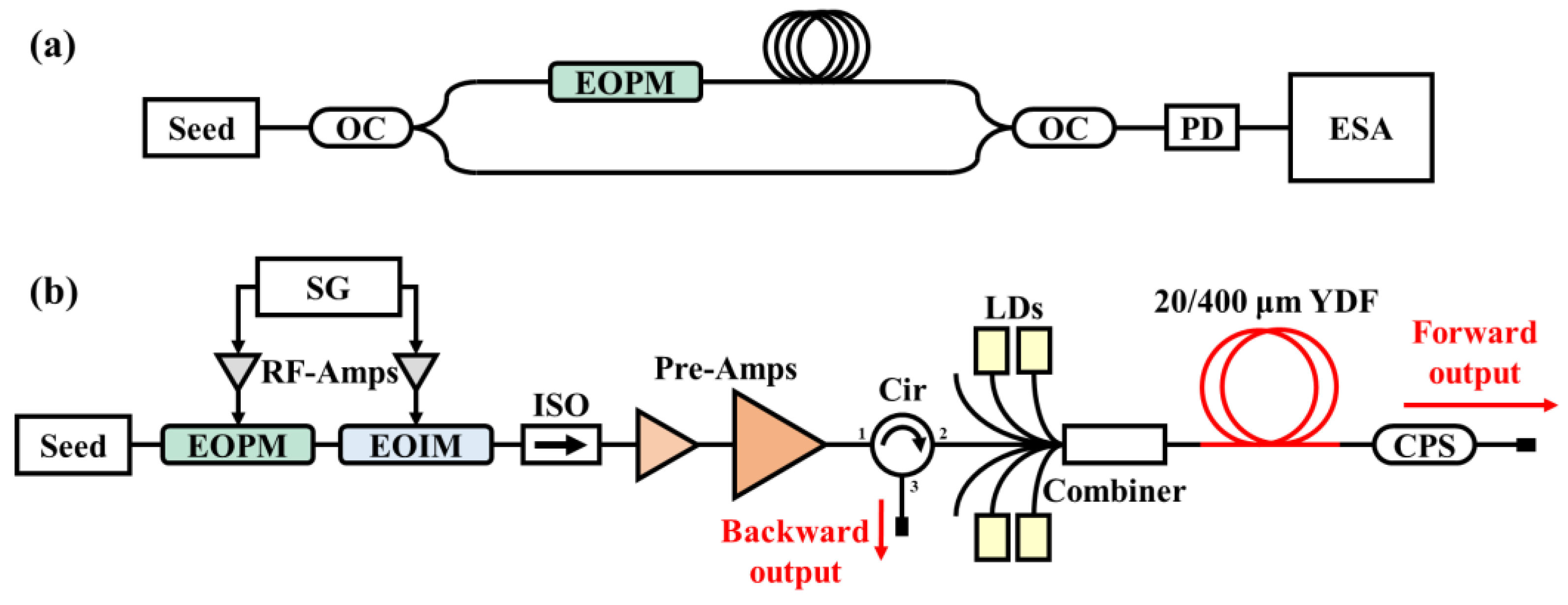
A 1064 nm distributed feedback (DFB, Connet Fiber Optics Co., Ltd., Shanghai, China) single-frequency laser with an output power of 60 mW is employed as the seed source. The seed laser linewidth and phase-modulated seed spectral profile are characterized using the delayed self-heterodyne interferometer shown in
Figure 1a. The seed laser is split into two paths via an optical coupler (OC) (MC Fiber Optics, Shenzhen, China). One path is phase-modulated by an EOPM (Exail, NIR-MPX-LN-10, Paris, France) and then delayed by 5 km of single-mode fiber, while the other path remains unmodulated. The two paths are recombined using another OC, and the combined optical signal is detected by a high-speed photodetector (PD, Thorlabs, DET08CFC, Newton, NJ, USA) and analyzed using an electrical spectrum analyzer (ESA, Agilent, N9020A, Santa Clara, CA, USA).
The high-power CAM fiber laser system consists of a dual-LFM modulation unit and three-stage ytterbium-doped fiber amplifiers, as shown in
Figure 1b. Two independent LFM electrical signals, each amplified by an RF amplifier, are applied to an EOPM and an EOIM (Exail, NIR-MX-LN-10, Paris, France), respectively. The EOPM first broadens the seed laser spectrum to effectively suppress SBS, while the EOIM subsequently imposes the LFM signal onto the optical carrier, generating a CAM laser output. The modulated seed is amplified through a three-stage amplifier chain, with optical isolators (ISOs) and bandpass filters (BPFs) inserted between each stage to suppress backward-propagating light and filter out ASE. A 10/125 μm Yb-doped single-clad fiber and a 10/125 μm Yb-doped double-clad fiber are utilized in the two pre-amplification stages, with lengths of 1 m and 4.4 m, producing output powers of 188.6 mW and 10.46 W, respectively. The main amplifier employs a 10 m long 20/400 μm Yb-doped double-clad fiber with an absorption coefficient of 1.2 dB/m at 976 nm. The Yb-doped fiber is pumped by four 976 nm LDs with a total maximum output power of 350 W via a (6 + 1) × 1 combiner. A cladding power stripper (CPS) is used to remove the residual pump light, followed by an end cap with anti-reflection coating to prevent back-reflection and enable high-power forward output. Backward-propagating light is monitored through port 3 of an optical circulator (Cir).
3. Results and Discussion
The seed laser linewidth is first measured using the experimental setup shown in
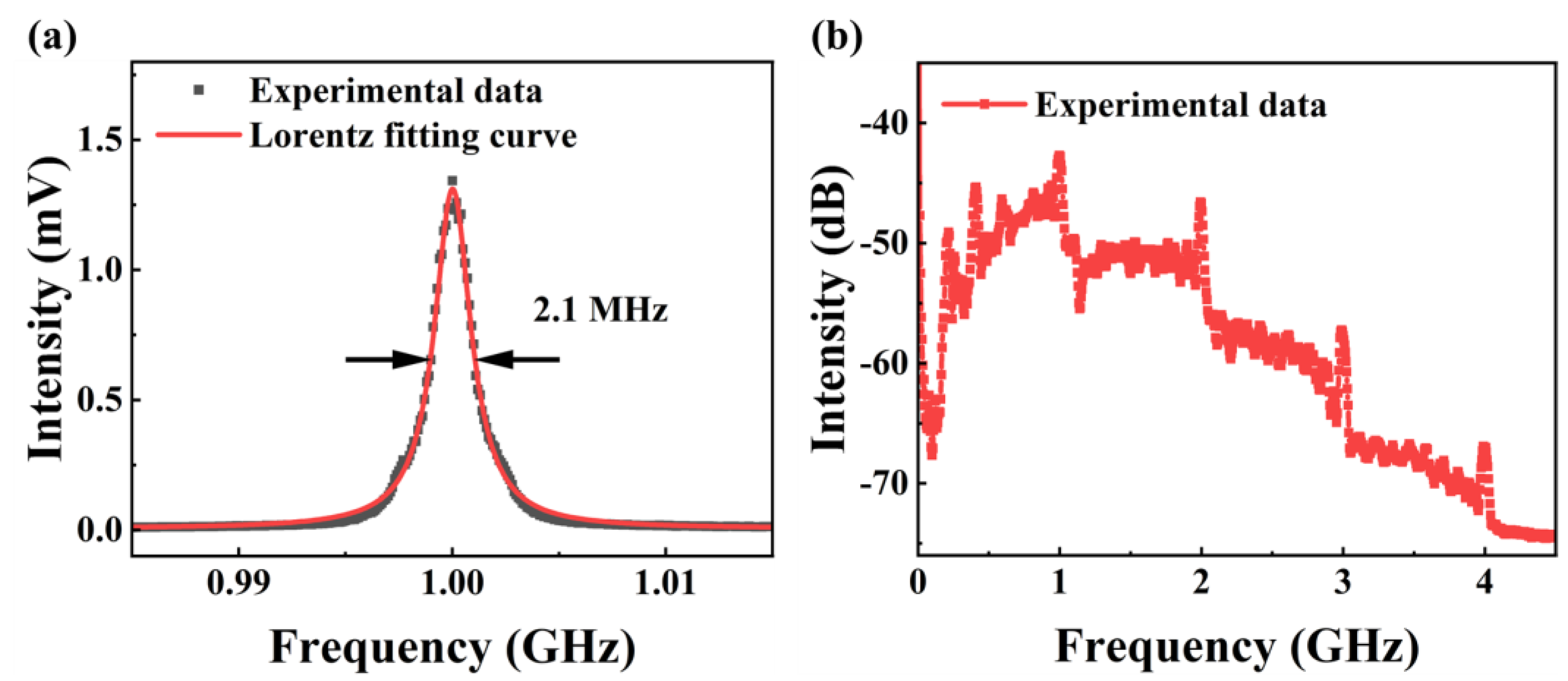
Figure 1a. To avoid zero-frequency noise, a 1 GHz sinusoidal signal is applied to the EOPM to generate frequency-shifted optical sidebands. The measured self-heterodyne spectrum, as shown in
Figure 2a, is fitted with a Lorentzian profile, yielding a full width at half maximum (FWHM) of 2.1 MHz, from which a DFB laser linewidth of ~1.1 MHz is deduced. Such a narrow linewidth necessitates SBS mitigation for power scaling.
The use of periodic broadband RF signals for phase modulation can effectively broaden the laser spectrum and reduce the spectral power density to suppress the SBS effect, thereby enabling high-power laser output [
21]. While LFM signals are well-suited for this purpose due to their rectangular and broadband RF spectrum, their potential for SBS suppression in high-power fiber lasers has remained largely unexplored. Here, we use an LFM signal with parameters optimized in our system (200–1000 MHz, ~220 ns period) specifically for SBS suppression to phase-modulate the seed laser, and characterize the resulting spectral profile. As shown in
Figure 2b, the measured spectrum reveals that the single-frequency laser is effectively broadened into a step-like profile with relatively uniform power distribution, which is near the desired rectangular spectrum for phase-modulation-based SBS mitigation [
22].
We next evaluate the effectiveness of this spectral broadening in suppressing SBS during CAM laser power amplification. The experimental setup shown in
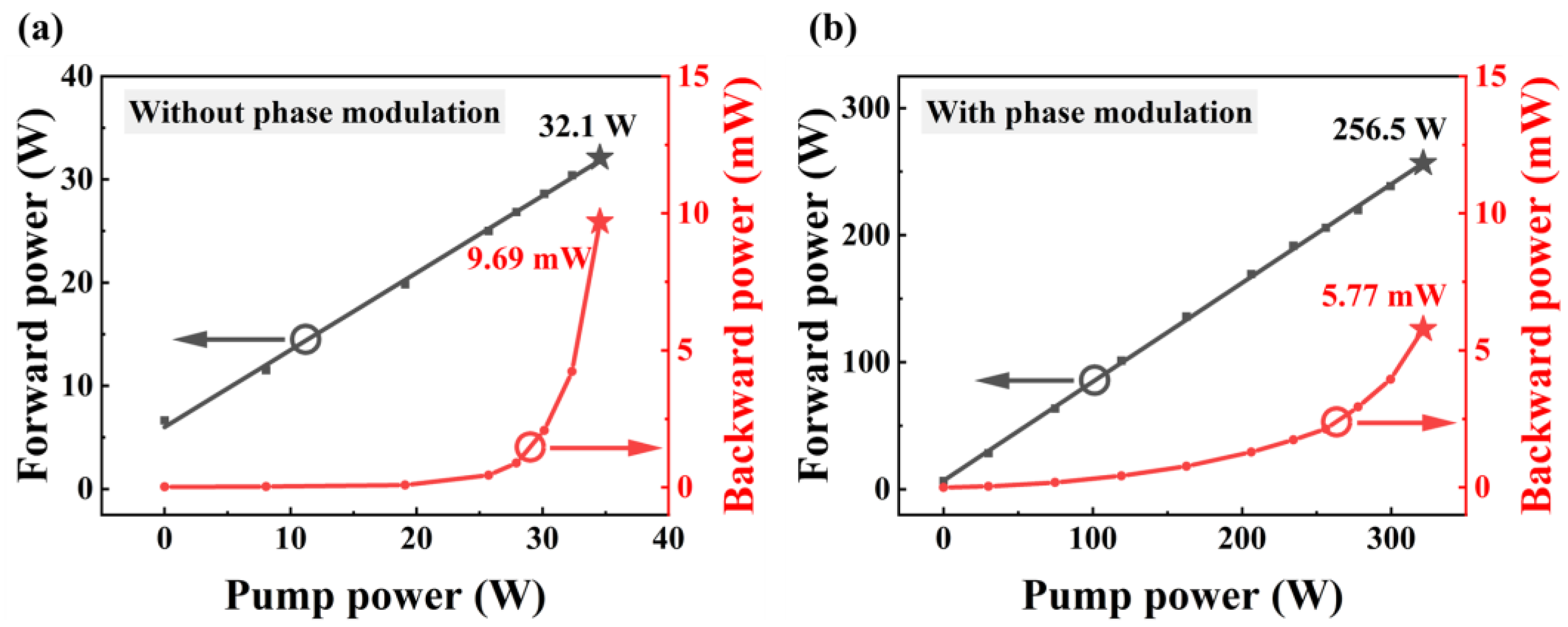
Figure 1b is used to conduct comparative experiments with and without LFM phase modulation. In both cases, an LFM signal drives the EOIM to generate a CAM laser, which is then injected into the amplification stage. The dependence of the forward and backward output power of the main amplifier on the pump power is depicted in
Figure 3. Without phase modulation, no signal is applied to the EOPM.
Figure 3a shows that the backward power reaches 9.69 mW when the forward output power is 32.1 W, corresponding to a reflectivity of approximately 0.3‰. As the pump power increases, the backward power exhibits exponential growth, severely limiting further power scaling. When LFM phase modulation is applied (dual-LFM scheme),
Figure 3b shows that the system achieves a maximum output power of 256.5 W at a pump power of 321.3 W, with a slope efficiency of 77.8%. The corresponding backward power is 5.77 mW, yielding a reflectivity of only 0.022‰ and representing an ~8-fold increase in output power compared to the case without phase modulation.
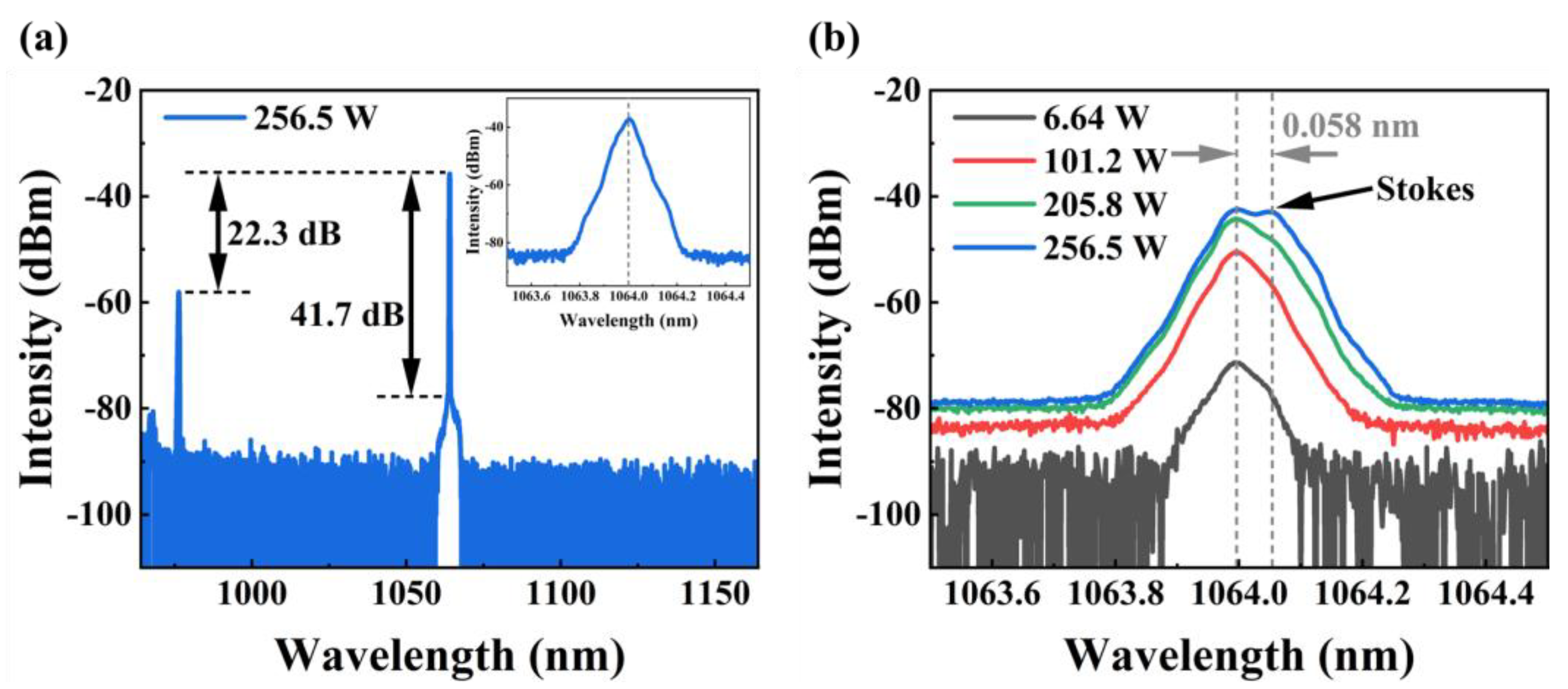
A spectrometer (YOKOGAWA, AQ6370D, Tokyo, Japan) with a resolution of 0.02 nm is used to measure the forward and backward output spectra from the main amplifier.
Figure 4a shows the forward spectrum at maximum output, where the inset provides detailed spectral information. The CAM laser is centered at 1064 nm with a 3 dB spectral width of approximately 0.05 nm. The suppression ratios relative to residual pump light and ASE are 22.3 dB and 41.7 dB, respectively. Spectral integration reveals that 99% of the total power is concentrated within the 1064 ± 0.25 nm range. Notably, no spectral components are observed at the Raman wavelength (~1110 nm), indicating that the laser power remains well below the stimulated Raman scattering threshold.
Figure 4b shows the backward spectra at different output powers. When the output power is below 205.8 W, no obvious Stokes peak is observed. However, when the output power increases to 256.5 W, the signal and Stokes peaks exhibit comparable intensities, indicating the onset of SBS. The spectral interval between the two peaks is ~0.058 nm (~15.36 GHz), which is a typical Stokes frequency shift in SBS in silica fiber [
23].
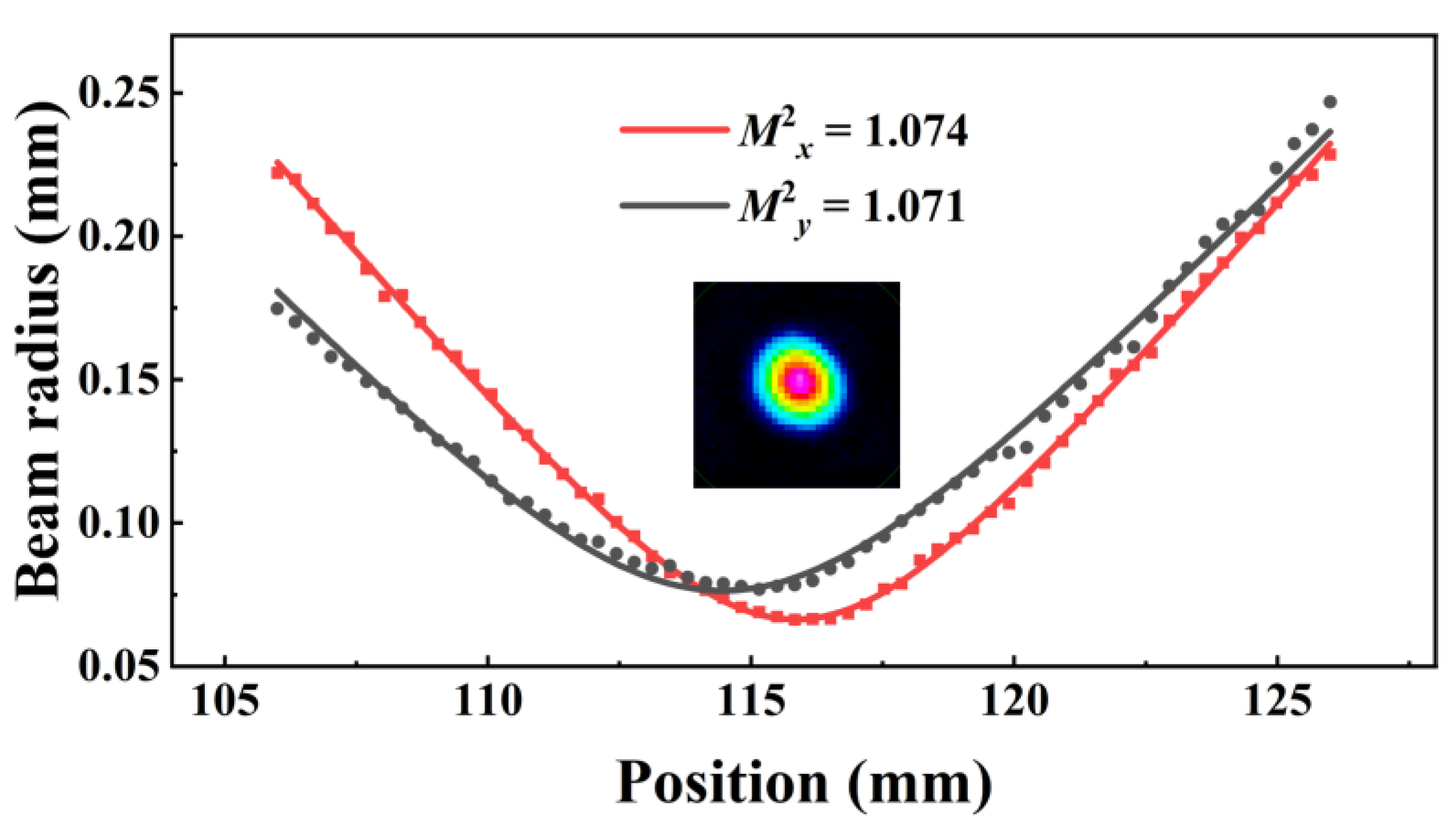
The beam quality factor
at maximum output power of 256.5 W is measured. As shown in
Figure 5, the intensity distribution at the beam waist approximates a Gaussian profile. The measured values are
= 1.074 and
= 1.071, with an average
= 1.073, indicating near-diffraction-limited beam quality. This excellent beam quality demonstrates that the CAM laser maintains high energy concentration and low divergence, which is beneficial for long-range lidar applications.
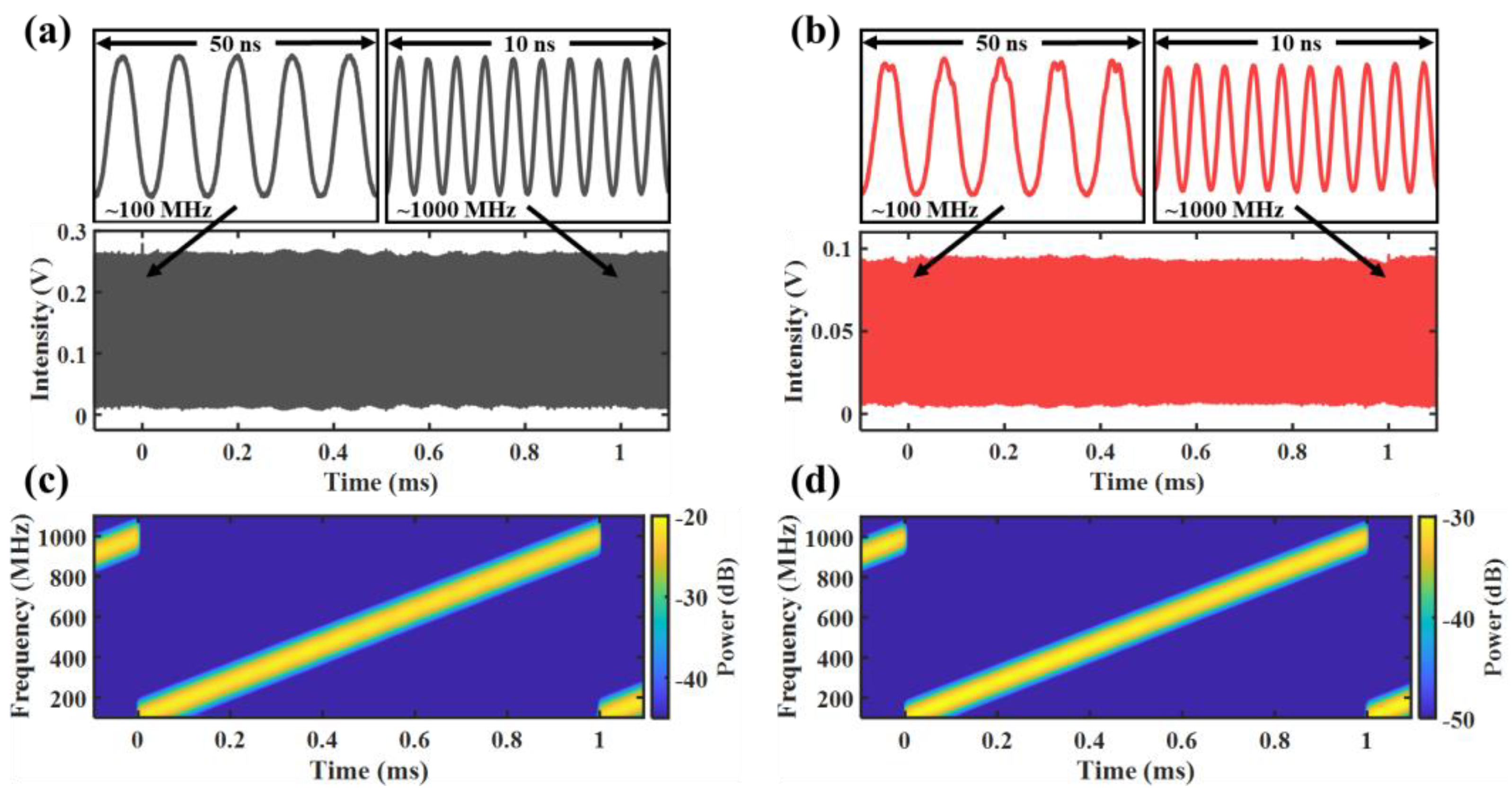
The EOIM is driven by an LFM electrical signal sweeping from 100 MHz to 1000 MHz with a period of 1 ms. To characterize the temporal and frequency properties of the CAM laser, one complete modulation period is captured using a PD and an oscilloscope (KEYSIGHT, DSOS404A, Santa Rosa, CA, USA).
Figure 6a and
Figure 6b present the temporal CAM waveforms of the modulated seed and the output at maximum power, respectively. The upper insets show magnified views of the waveforms at the beginning (left, ~100 MHz) and end (right, ~1000 MHz) of the modulation period. After amplification, the low-frequency region exhibits spurious modulation on the peaks, while the high-frequency region shows minor distortion. The lower panels show that the CAM waveforms exhibit amplitude fluctuations over the complete period, which are attributed to the non-uniform LFM electrical signal and the frequency-dependent dynamic extinction ratio of the EOIM. Short-time Fourier transform analysis is employed to examine the instantaneous modulation frequency variations, as shown in
Figure 6c and
Figure 6d for the modulated seed and maximum output, respectively. The results confirm a modulation period of 1 ms with modulation frequency increasing linearly over time, demonstrating that the multi-stage fiber amplification system does not introduce significant degradation in CAM linearity.
The MD and THD of the CAM laser are important parameters for photon counting CAM (PCCAM) lidar applications. MD determines the effective signal power, while THD may affect the ranging accuracy. Therefore, both parameters are characterized at various frequencies using a PD and an oscilloscope with a 1 μs time window. The MD is calculated using the formula:
where
and
represent the maximum and minimum voltages measured by the oscilloscope, respectively. The THD is calculated by the equation:
where
denotes the fundamental amplitude, and
,
, …, and
represent the amplitudes of the second, third, …, and
-th harmonics, respectively. Higher-order harmonics (fourth and above) are neglected as their amplitudes are below the noise floor.
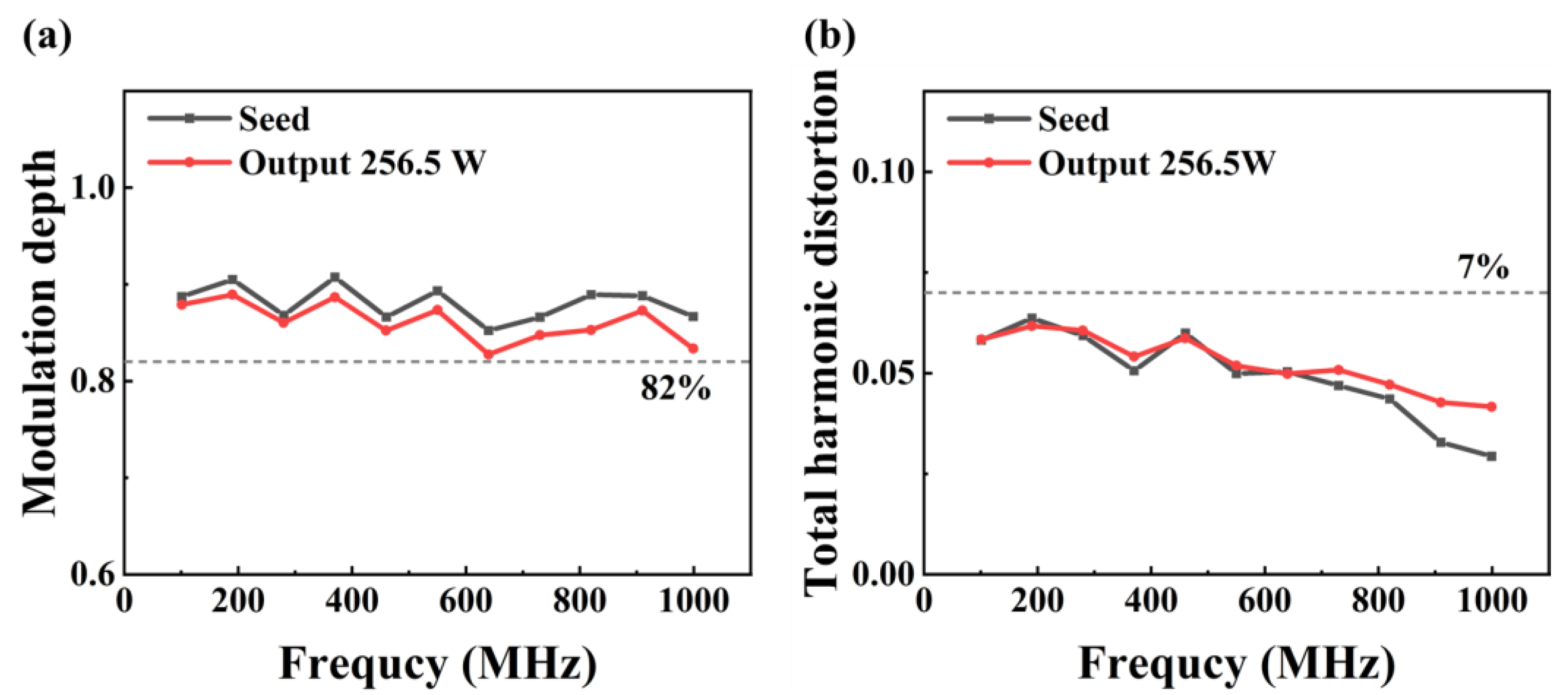
When the EOIM is biased at the quadrature point, its nonlinear transmission characteristic causes high MD to introduce high-order harmonics that distort the waveform and increase the THD. This inherent trade-off typically requires operating the modulated seed at an MD below its maximum to keep THD low. The MD and THD at different modulation frequencies are measured for both the modulated seed and the output at maximum power of 256.5 W, as shown in
Figure 7a,b. The modulated seed maintains relatively stable MD across the entire frequency range, with an average MD of 88.1%. It is worth noting that our EOIM has a static extinction ratio of >30 dB, but we deliberately operate at this reduced MD to maintain low THD. The MD at maximum output power decreases only slightly to an average of 86.1%, demonstrating that the MD is well preserved after multi-stage amplification. This is attributed to the suppression of ASE and the effective mitigation of nonlinear effects. The average THD for the modulated seed is 4.9%, showing a decreasing trend with increasing frequency. After amplification, the average THD increases slightly to 5.2%. This frequency-dependent behavior is mainly due to the RF signal attenuation at higher frequencies reducing the drive into the nonlinear regime of the modulator, thereby lowering the THD. At all tested frequencies, the MD exceeds 82% and the THD remains below 7% both before and after amplification.
We investigate the single-photon differential ranging performance of the high-power CAM laser under ideal transmission conditions through theoretical simulations. In 2021, Li et al. utilized a 600 mW laser to achieve laser ranging of 162.476 km at a signal photon rate of 80.8 counts per second (cps) [
24]. Based on the lidar equation, for our 256.5 W laser, the echo photon rate is calculated to be ~23,700 cps (~4.4 fW), accounting for both the power scaling and the single-photon energy difference. For a CAM signal with bandwidth
, the theoretical range resolution is given by:
where
is the speed of light. With a modulation bandwidth of 900 MHz (100–1000 MHz), the theoretical range resolution of our system is approximately 0.167 m.
The differential ranging capability of PCCAM lidar is evaluated via simulations at a reference distance of 162 km. Two target differential distances of
= 210 mm and
= 300 mm are investigated separately. Single-photon detection events are modeled using Poisson statistics:
where
is the number of detected photons in a time bin, and
is the expected photon number determined by the instantaneous signal power.
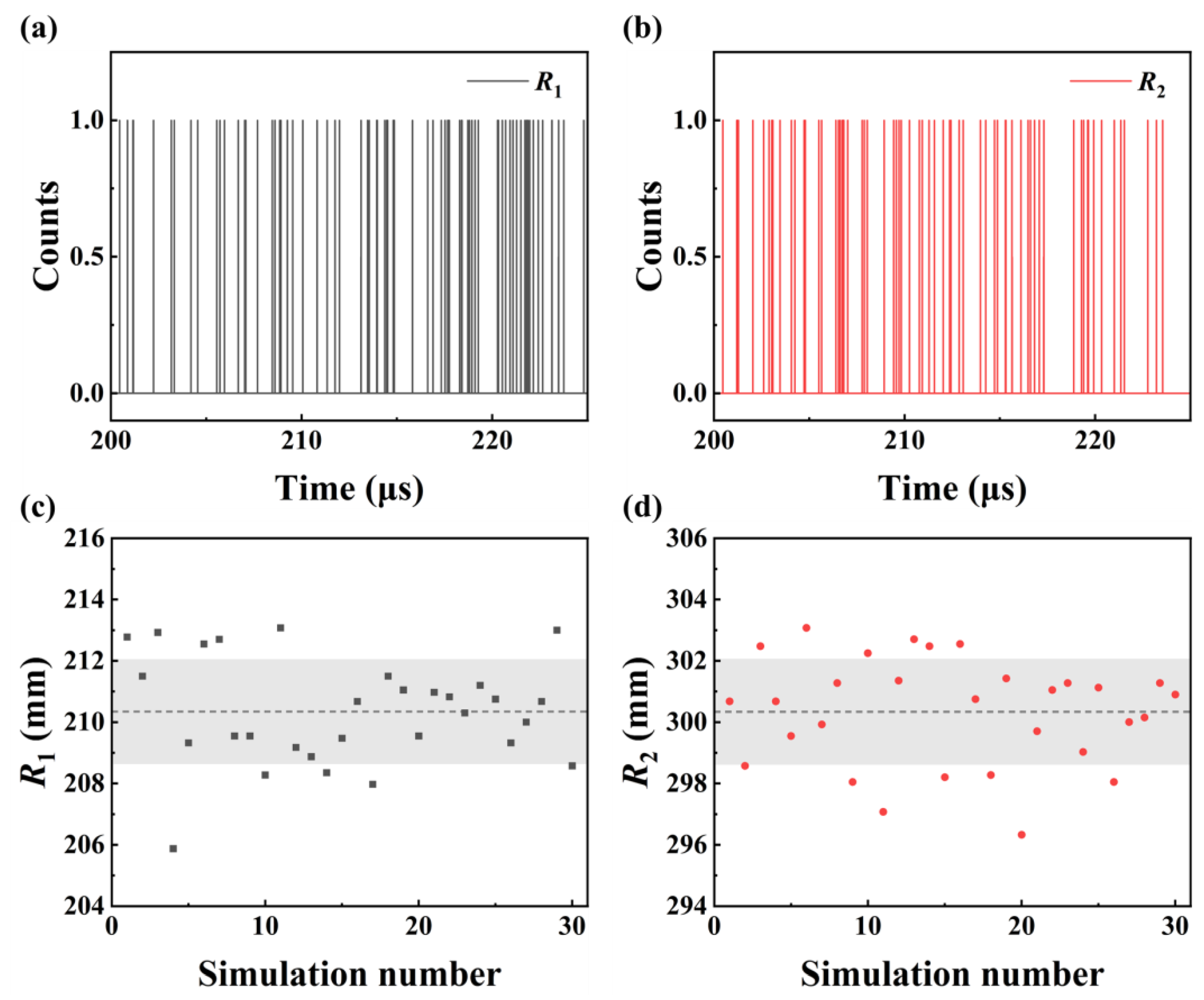
The simulation incorporates realistic detector parameters: SPD dead time of 1 μs and dark count rate of 1 kHz. The MD and THD of the CAM laser are set to 82% and 7%, respectively, representing the conservative bounds observed across all tested frequencies. Echo signals from 100 modulation periods are accumulated to enhance the signal-to-noise ratio. The accumulated photon detection events within a 25 μs observation window are shown in
Figure 8a,b. Distance is estimated by cross-correlating the accumulated photon counts with the reference signal, followed by statistical refinement based on the Poisson detection model. The results of 30 independent simulations for each case are shown in
Figure 8c and
Figure 8d, yielding differential distances of 210.34 ± 1.71 mm and 300.34 ± 1.73 mm, respectively. These results demonstrate the feasibility of high-precision ranging beyond 100 km, and further precision improvement can be achieved by increasing the accumulation time.