
Noise-Correlated Neural Network Channel Selection for Signal-to-Noise Ratio Enhancement in Holographic Data Storage


Abstract
1. Introduction
2. Neural Network
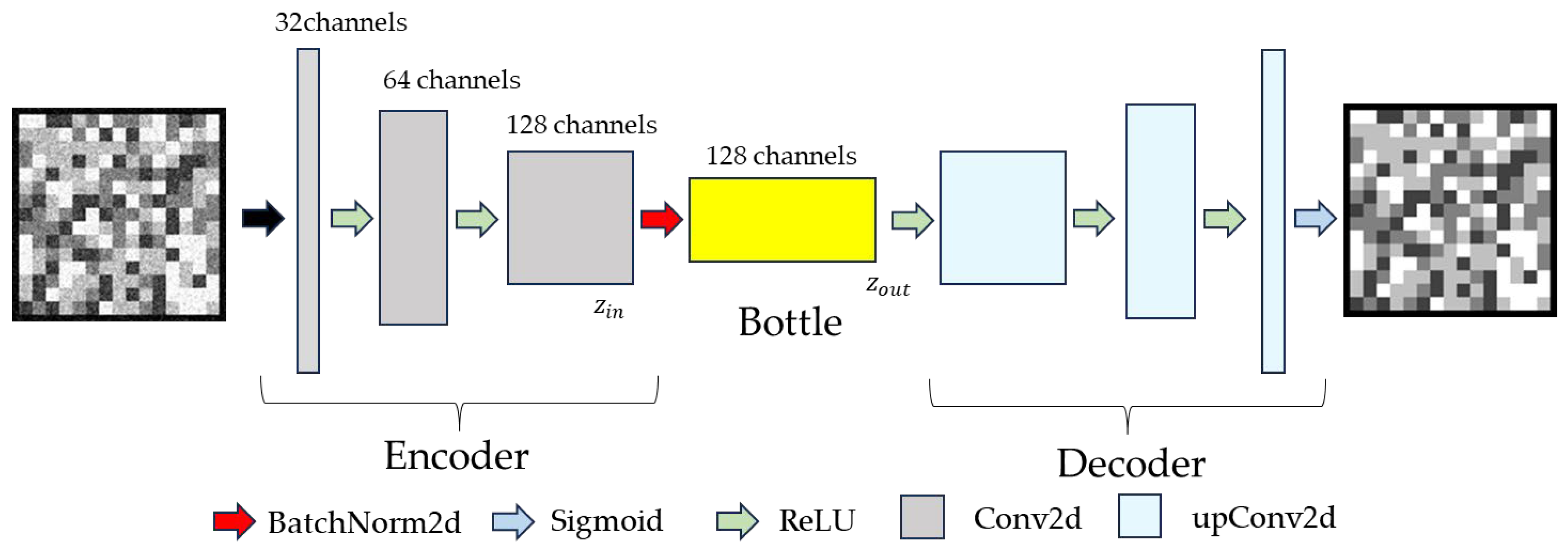
2.1. The Structure of Neural Network
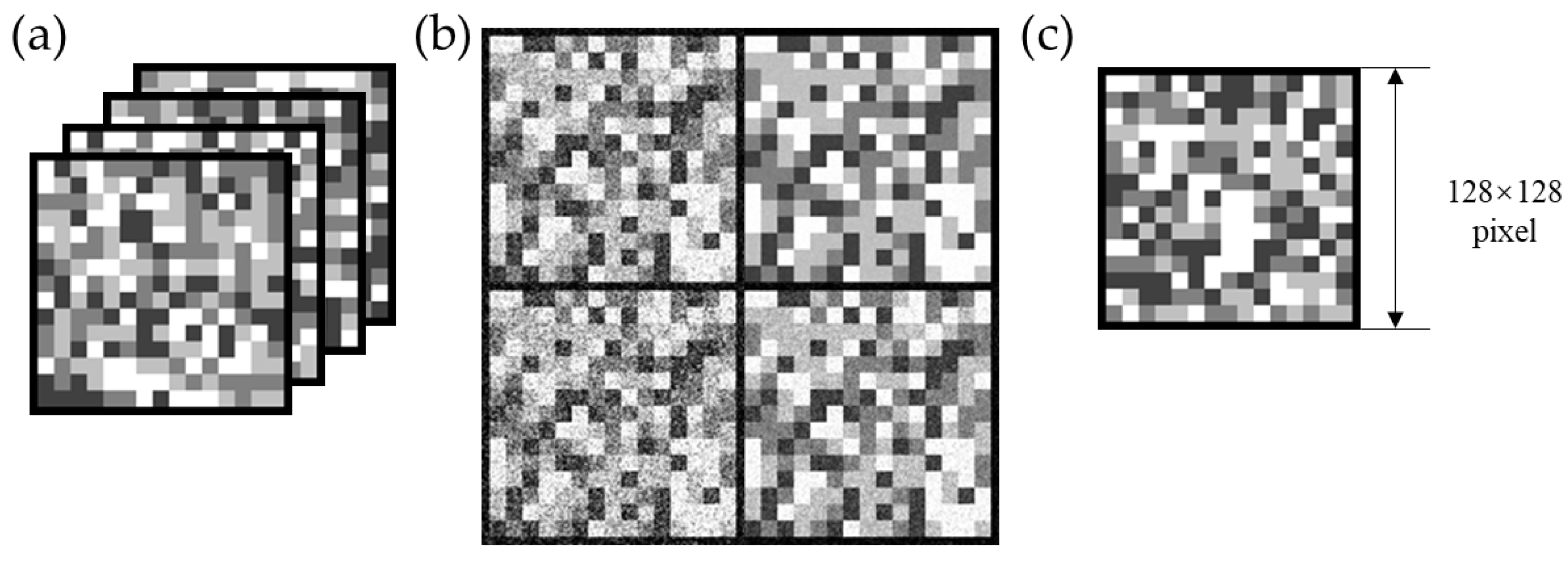
2.2. Dataset and Model Training

3. Experiments and Results
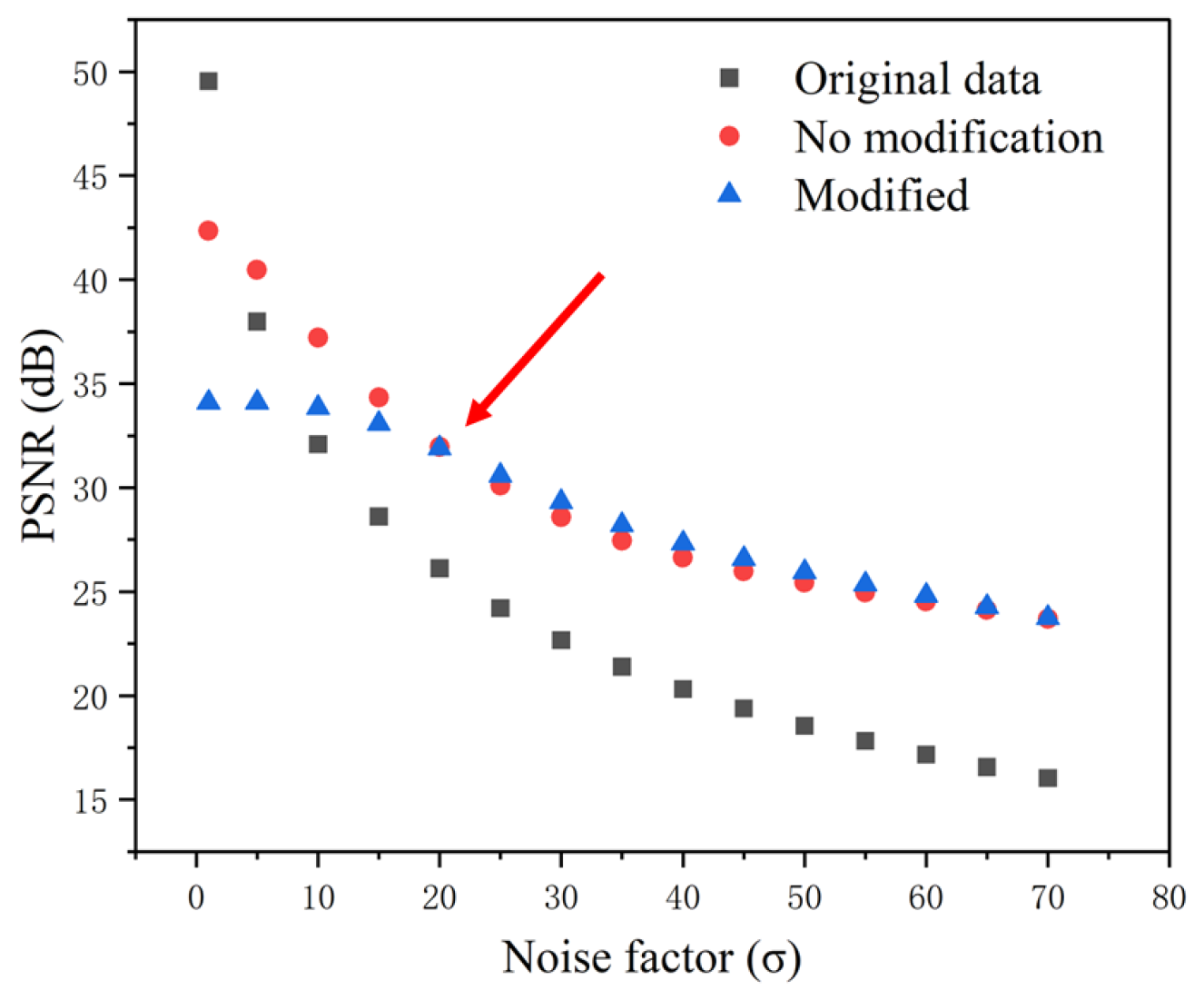
3.1. Channel Classification and Validation
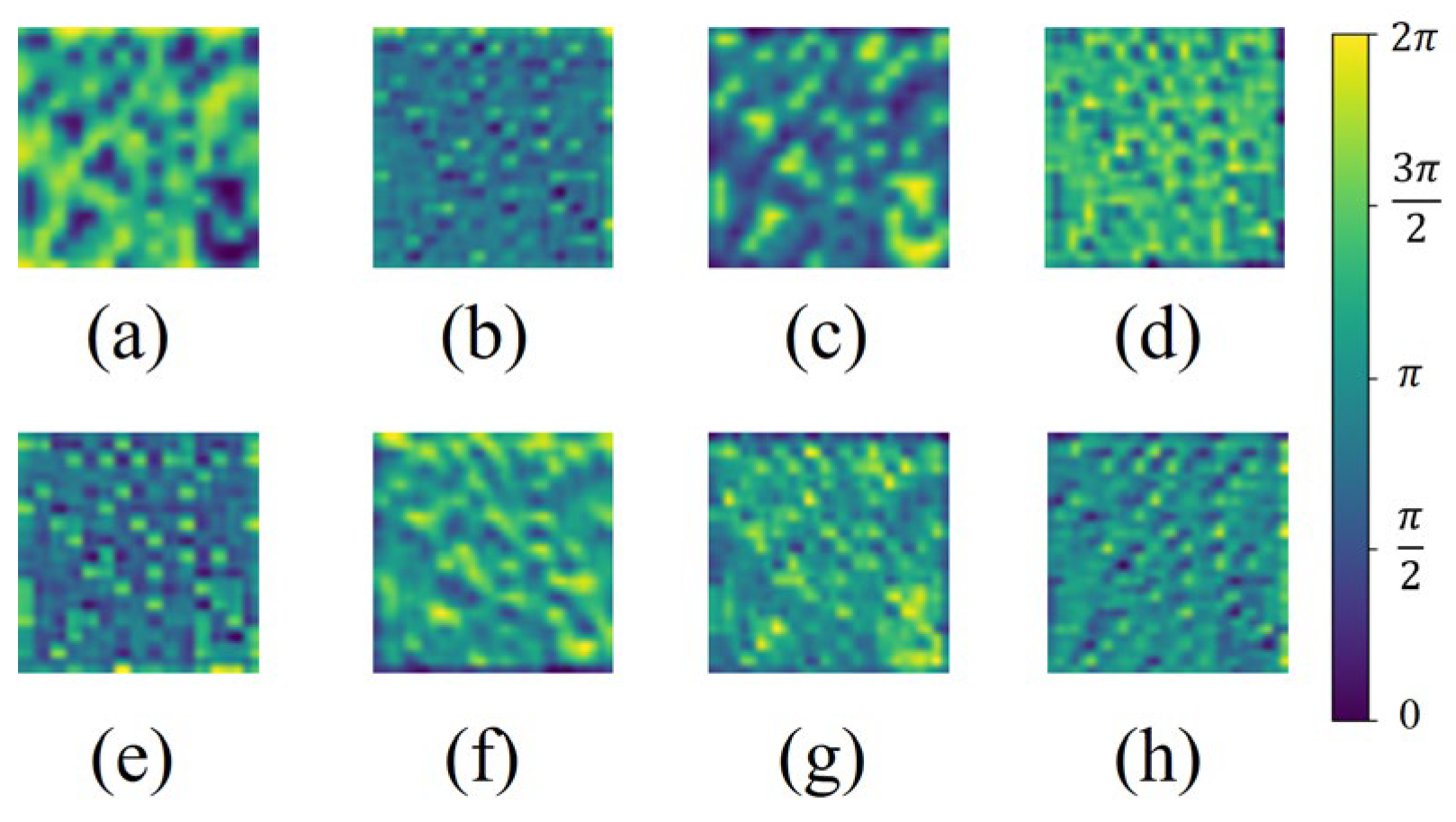
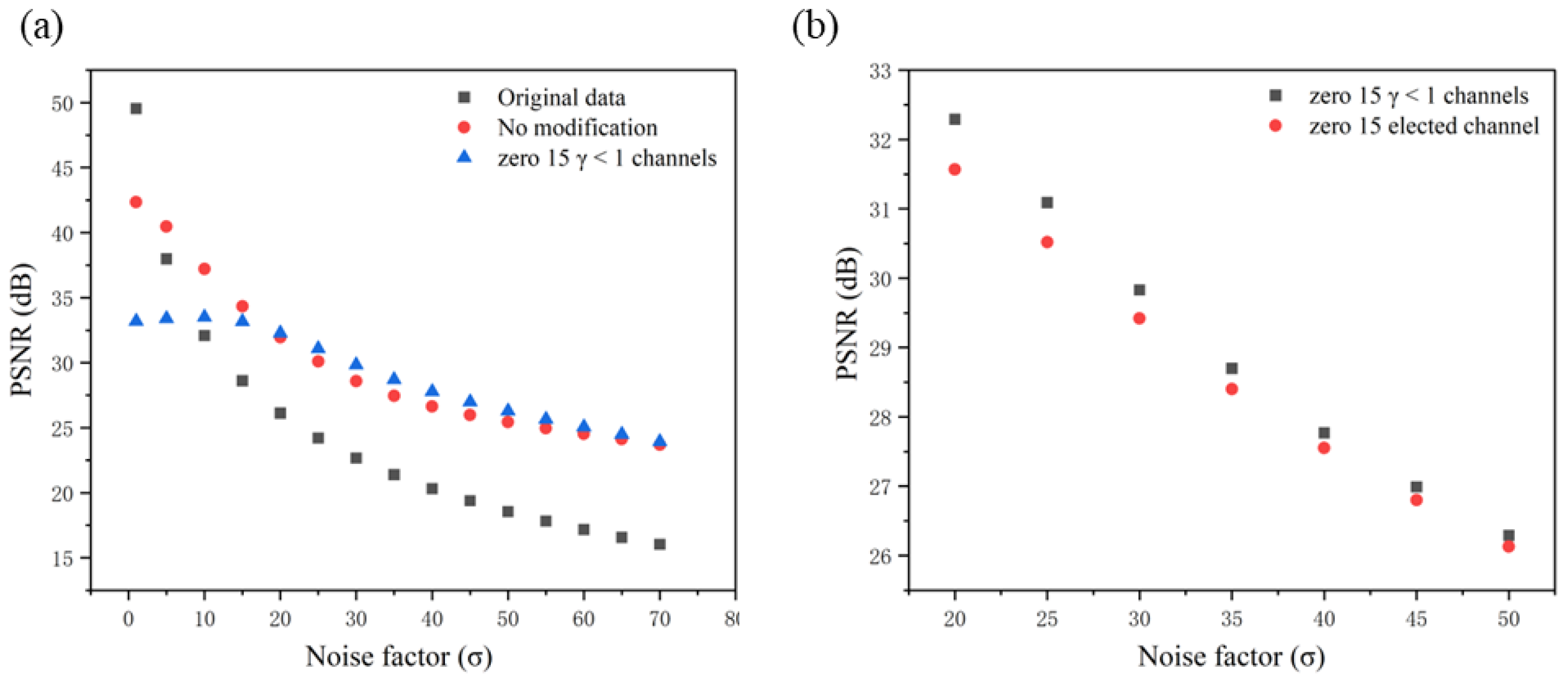
3.2. Search Noise Feature Manually
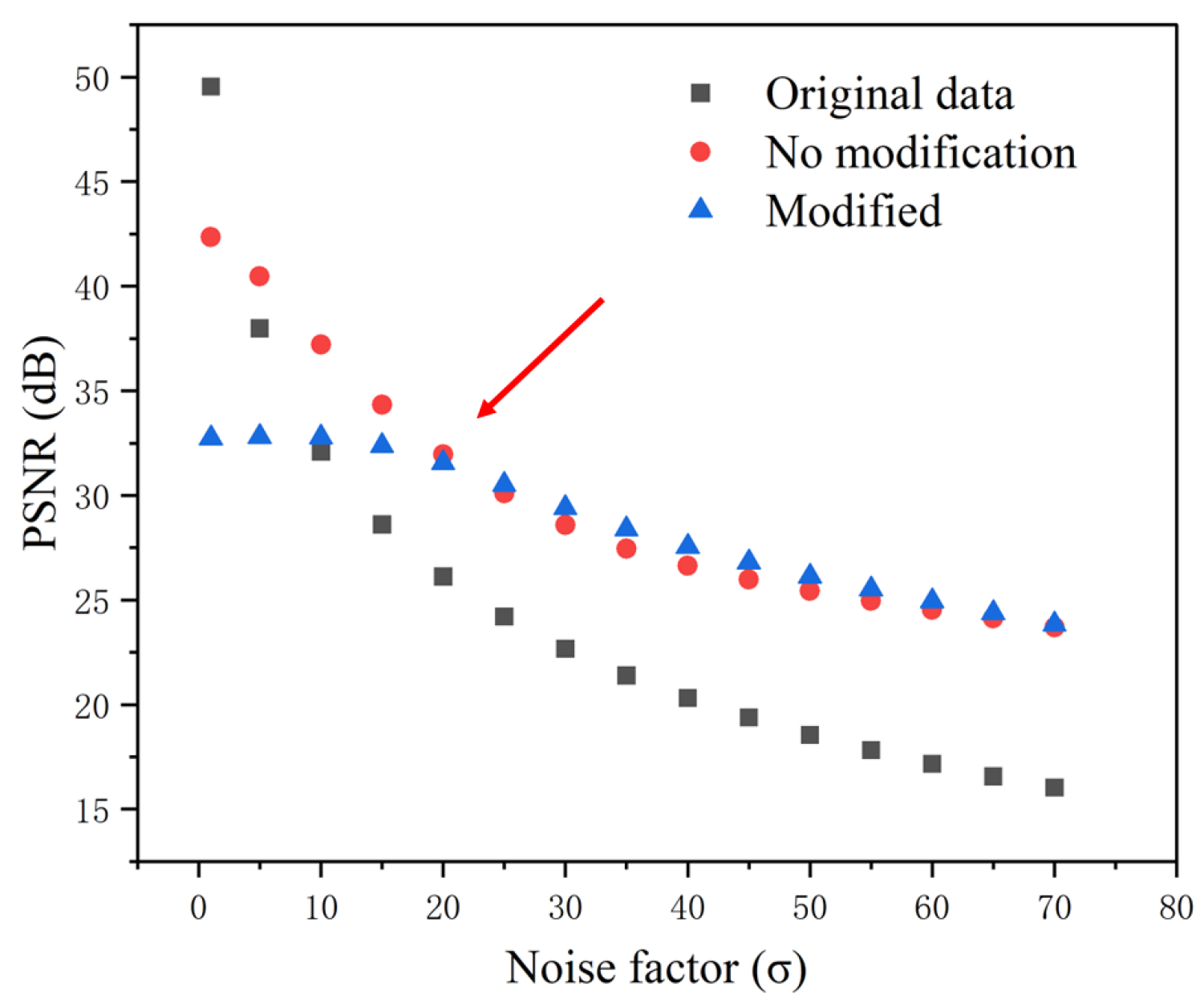
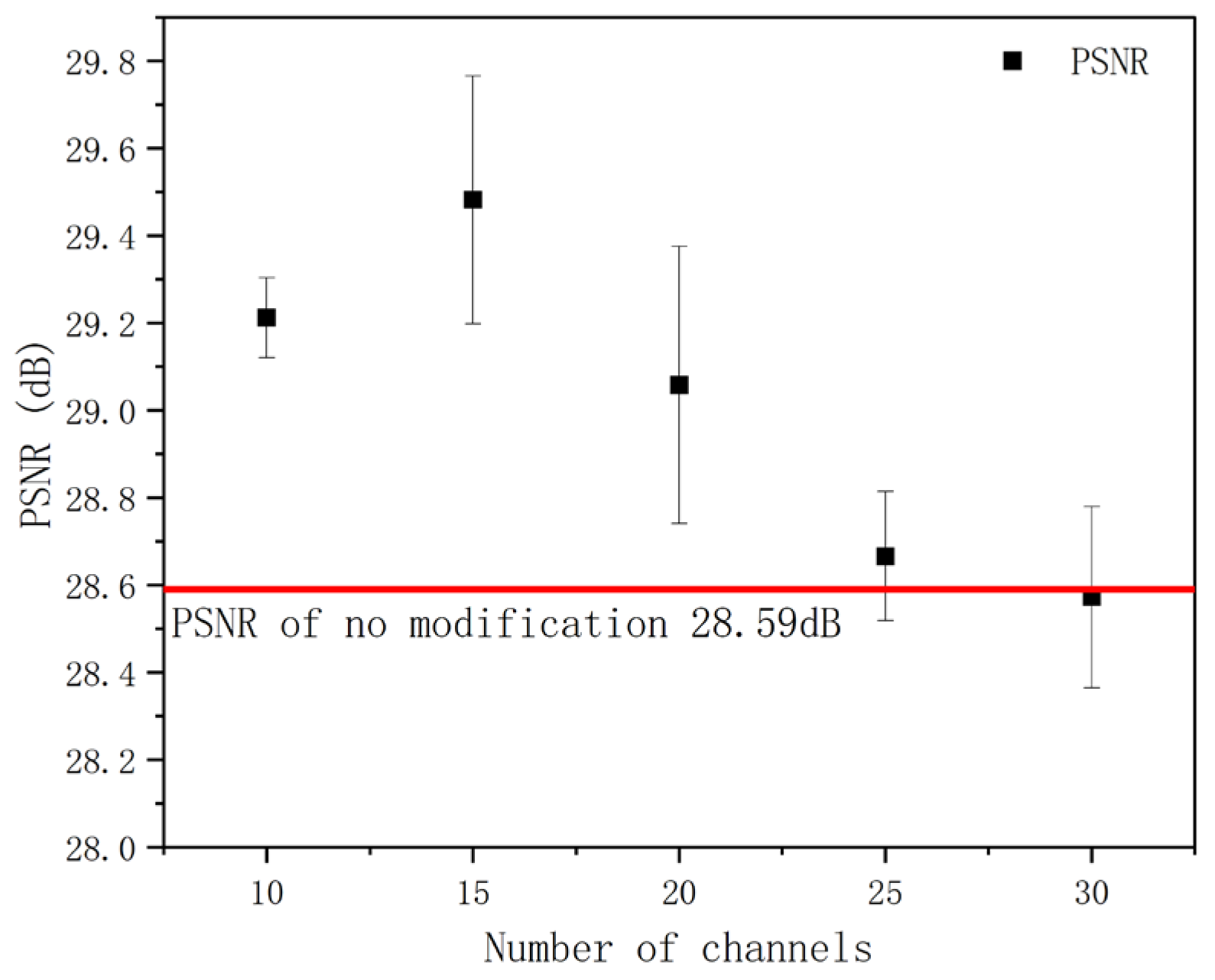
3.3. Introduce the Scale Factor γ
4. Conclusions
Author Contributions
Funding
Data Availability Statement
Conflicts of Interest
References
- Van Heerden, P.J. Theory of optical information storage in solids. Appl. Opt. 1963, 2, 393–400. [Google Scholar] [CrossRef]
- Brian, M.; Mark, A. Sparse modulation coding for increased capacity in volume holographic storage. Appl. Opt. 2000, 39, 6681–6688. [Google Scholar] [CrossRef] [PubMed]
- Lin, X.; Hao, J.; Zheng, M.; Dai, T.; Li, H.; Ren, Y. Optical holographic data storage—The time for new development. Opto-Electron. Eng. 2019, 46, 180642-1–180642-15. [Google Scholar] [CrossRef]
- Kuroda, K.; Matsuhashi, Y.; Fujimura, R.; Tsutomu, S. Theory of polarization holography. Opt. Rev. 2011, 18, 374–382. [Google Scholar] [CrossRef]
- Wang, J.; Tan, X.; Qi, P.; Wu, C.; Huang, L.; Xu, X.; Huang, Z.; Zhu, L.; Zhang, Y.; Lin, X.; et al. Linear polarization holography. Opto-Electron. Sci. 2022, 1, 210009-1–210009-20. [Google Scholar] [CrossRef]
- Yang, K.; Liu, F.; Liang, S.; Xiang, M.; Han, P.; Liu, J.; Dong, X.; Wei, Y.; Wang, B.; Shimizu, K.; et al. Data-driven polarimetric imaging: A review. Opto-Electron. Sci. 2024, 3, 230042-1–230042-44. [Google Scholar] [CrossRef]
- Zheng, S.; Tan, J.; Liu, H.; Lin, X.; Saita, Y.; Nomura, T.; Tan, X. Orthogonal matrix of polarization combinations: Concept and application to multichannel holographic recording. Opto-Electron. Adv. 2024, 7, 230180-1–230180-10. [Google Scholar] [CrossRef]
- Li, K.; Wang, Y.; Pi, D.; Li, B.; Luan, H.; Fang, X.; Chen, P.; Lu, Y.; Gu, M. Multi-dimensional multiplexing optical secret sharing framework with cascaded liquid crystal holograms. Opto-Electron. Adv. 2024, 7, 230121-1–230121-8. [Google Scholar] [CrossRef]
- Lin, X.; Huang, Y.; Shimura, T.; Fujimura, R.; Tanaka, Y.; Endo, M.; Nishimoto, H.; Liu, J.; Li, Y.; Liu, Y.; et al. Fast non-interferometric iterative phase retrieval for holographic data storage. Opt. Express 2017, 25, 30905–30915. [Google Scholar] [CrossRef]
- LeCun, Y.; Bengio, Y.; Hinton, G. Deep learning. Nature 2015, 521, 436–444. [Google Scholar] [CrossRef]
- Wu, S.; Yang, Z.; Ma, C.; Zhang, X.; Mi, C.; Zhou, J.; Guo, Z.; Jin, D. Deep learning enhanced NIR-II volumetric imaging of whole mice vasculature. Opto-Electron. Adv. 2023, 6, 220105. [Google Scholar] [CrossRef]
- Li, Z.; Sun, J.; Fan, Y.; Jin, Y.; Shen, Q.; Trusiak, M.; Cywińska, M.; Gao, P.; Chen, Q.; Zuo, C. Deep learning assisted variational Hilbert quantitative phase imaging. Opto-Electron. Sci. 2025, 2, 220023-1–220023-11. [Google Scholar] [CrossRef]
- Hao, J.; Lin, X.; Lin, Y.; Chen, M.; Chen, R.; Situ, G.; Hideyoshi, H.; Tan, X. Lensless complex amplitude demodulation based on deep learning in holographic data storage. Opto-Electron. Adv. 2023, 6, 220157. [Google Scholar] [CrossRef]
- Hao, J.; Lin, X.; Chen, R.; Lin, Y.; Liu, H.; Song, H.; Lin, D.; Tan, X. Phase retrieval combined with the deep learning denoising method in holographic data storage. Opt. Contin. 2022, 1, 51–62. [Google Scholar] [CrossRef]
- Tatsuki, T.; Fujimura, R. Deep-learning-enhanced single-shot detection of polarization-and phase-encoded signals for holographic data storage. ODS 2025: Industrial Optical Devices and Systems. SPIE 2025, 13610, 1361002. [Google Scholar] [CrossRef]
- Chen, R.; Wang, J.; Zhang, S.; Lin, D.; Li, X.; Zheng, J.; Cao, Q.; Hao, J.; Lin, X.; Tan, X. Deep learning-based phase retrieval with embedded data for holographic data storage. Opt. Express 2025, 33, 12731–12746. [Google Scholar] [CrossRef]
- Lin, Y.; Ke, S.; Song, H.; Liu, H.; Yang, R.; Lin, D.; Li, X.; Zheng, J.; Cao, Q.; Hao, J.; et al. Anti-noise performance analysis in amplitude-modulated collinear holographic data storage using deep learning. Opt. Express 2024, 32, 29666–29677. [Google Scholar] [CrossRef]
- Chen, Y.; Fan, Y.; Zhang, G.; Wang, Q.; Li, S.; Wang, Z.; Dong, M. Speckle noise suppression of a reconstructed image in digital holography based on the BM3D improved convolutional neural network. Appl. Opt. 2024, 63, 6000–6011. [Google Scholar] [CrossRef]
- Lin, Z.; Hao, J.; Lin, Y.; Liu, H.; He, C.; Lin, D.; Lin, X.; Tan, X. SNR enhancement for low-SNR amplitude-modulated holographic data storage based on deep learning. Opt. Express 2025, 33, 49488–49503. [Google Scholar] [CrossRef]
- Neyshabur, B.; Hanie, S.; Zhang, C. What is being transferred in transfer learning? Adv. Neural Inf. Process. Syst. 2020, 33, 512–523. [Google Scholar]
- Jetley, S.; Nicholas, A.; Namhoon, L.; Philip, H.S. Learn to pay attention. arXiv 2018, arXiv:1804.02391. [Google Scholar] [CrossRef] [PubMed]
- Schlemper, J.; Oktay, O.; Chen, L.; Matthew, J.; Knight, C.; Kainz, B.; Glocker, B.; Rueckert, D. Attention-gated networks for improving ultrasound scan plane detection. arXiv 2018, arXiv:1804.05338. [Google Scholar] [CrossRef]
- Oktay, O.; Schlemper, J.; Folgoc, L.L.; Lee, M.; Heinrich, M.; Misawa, K.; Mori, K.; McDonagh, S.; Hammerla, N.; Kainz, B.; et al. Attention u-net: Learning where to look for the pancreas. arXiv 2018, arXiv:1804.03999. [Google Scholar] [CrossRef]
- Liu, Z.; Li, J.; Shen, Z.; Huang, G.; Yan, S.; Zhang, C. Learning efficient convolutional networks through network slimming. In Proceedings of the IEEE International Conference on Computer Vision, Venice, Italy, 22–29 October 2017; pp. 2736–2744. [Google Scholar]
- Bourlard, H.; Kamp, Y. Auto-association by multilayer perceptrons and singular value decomposition. Biol. Cybern. 1988, 59, 291–294. [Google Scholar] [CrossRef]
- Hinton, G.E.; Zemel, R.S. Autoencoders, minimum description length, and Helmholtz free energy. Adv. Neural Inf. Process. Syst. 1994, 6, 3–10. [Google Scholar]
- Zhang, Y. A Better Autoencoder for Image: Convolutional Autoencoder. ICONIP17-DCEC. 2018. Available online: https://users.cecs.anu.edu.au/~Tom.Gedeon/conf/ABCs2018/paper/ABCs2018_paper_58.pdf (accessed on 26 January 2026).
- Le, Q.; Ngiam, J.; Coates, A.; Lahiri, A.; Prochnow, B.; Ng, A. On optimization methods for deep learning. In Proceedings of the 28th International Conference on International Conference on Machine Learning, Bellevue, WA, USA, 28 June–2 July 2011; pp. 265–272. [Google Scholar]
- Zeiler, M.; Fergus, R. Visualizing and understanding convolutional networks. In European Conference on Computer Vision; Springer International Publishing: Cham, Switzerland, 2014; pp. 818–833. [Google Scholar] [CrossRef]
- Pierre, B. Autoencoders, unsupervised learning and deep architectures. Workshop Conf. Proc. 2012, 27, 37–49. [Google Scholar]
- Ioffe, S.; Christian, S. Batch normalization: Accelerating deep network training by reducing internal covariate shift. Int. Conf. Mach. Learn. PMLR 2015, 37, 448–456. [Google Scholar]
- Maninis, K.K.; Pont-Tuset, J.; Arbeláez, P.; Van Gool, L. Deep retinal image understanding. In Proceedings of the International Conference on Medical Image Computing and Computer-Assisted Intervention; Springer International Publishing: Cham, Switzerland, 2016; pp. 140–148. [Google Scholar] [CrossRef]
- Xu, X.; Wang, X.; Luo, W.; Wang, H.; Sun, Y. Efficient Computer-Generated Holography Based on Mixed Linear Convolutional Neural Networks. Appl. Sci. 2022, 12, 4177. [Google Scholar] [CrossRef]
- Ferguson, T.S. An inconsistent maximum likelihood estimate. J. Am. Stat. Assoc. 1982, 77, 831–834. [Google Scholar] [CrossRef]
- Gu, C.; Sornat, G.; Hong, J. Bit-error rate and statistics of complex amplitude noise in holographic data storage. Opt. Lett. 1996, 21, 1070–1072. [Google Scholar] [CrossRef]
- Gu, C.; Dai, F.; Hong, J. Statistics of both optical and electrical noise in digital volume holographic data storage. Electron. Lett. 1996, 32, 1400–1402. [Google Scholar] [CrossRef]
- Ribeiro, M.I. Gaussian Probability Density Functions: Properties and Error Characterization; Institute for Systems and Robotics: Lisboa, Portugal, 2004. [Google Scholar]
- Bovik, A.C. Handbook of Image and Video Processing; Academic Press: Cambridge, MA, USA, 2010. [Google Scholar]




| Channel number | 1 * | 3 | 6 | 28 | 30 |
| γ | 0.9836 | 1.0071 | 0.9985 | 0.9943 | 0.9944 |
| Channel number | 31 | 34 | 45 | 48 | 110 |
| γ | 1.0130 | 0.9941 | 1.0007 | 1.0168 | 0.9993 |
| Channel number | 112 | 120 | 122 | 123 | 124 |
| γ | 1.0112 | 1.0007 | 0.9958 | 1.0137 | 1.0019 |
| Channel number | 1 * | 6 | 10 | 12 | 15 |
| γ | 0.9836 | 0.9985 | 0.9811 | 0.9952 | 0.9803 |
| Channel number | 28 | 30 | 34 | 38 | 81 |
| γ | 0.9943 | 0.9944 | 0.9941 | 0.9918 | 0.9918 |
| Channel number | 84 | 106 | 107 | 110 | 122 |
| γ | 0.9868 | 0.9954 | 0.9781 | 0.9993 | 0.9958 |
Disclaimer/Publisher’s Note: The statements, opinions and data contained in all publications are solely those of the individual author(s) and contributor(s) and not of MDPI and/or the editor(s). MDPI and/or the editor(s) disclaim responsibility for any injury to people or property resulting from any ideas, methods, instructions or products referred to in the content. |
© 2026 by the authors. Licensee MDPI, Basel, Switzerland. This article is an open access article distributed under the terms and conditions of the Creative Commons Attribution (CC BY) license.
Share and Cite
Deng, J.; Lin, D.; Lin, X.; Tan, X. Noise-Correlated Neural Network Channel Selection for Signal-to-Noise Ratio Enhancement in Holographic Data Storage. Photonics 2026, 13, 126. https://doi.org/10.3390/photonics13020126
Deng J, Lin D, Lin X, Tan X. Noise-Correlated Neural Network Channel Selection for Signal-to-Noise Ratio Enhancement in Holographic Data Storage. Photonics. 2026; 13(2):126. https://doi.org/10.3390/photonics13020126
Chicago/Turabian StyleDeng, Junqian, Dakui Lin, Xiao Lin, and Xiaodi Tan. 2026. "Noise-Correlated Neural Network Channel Selection for Signal-to-Noise Ratio Enhancement in Holographic Data Storage" Photonics 13, no. 2: 126. https://doi.org/10.3390/photonics13020126
APA StyleDeng, J., Lin, D., Lin, X., & Tan, X. (2026). Noise-Correlated Neural Network Channel Selection for Signal-to-Noise Ratio Enhancement in Holographic Data Storage. Photonics, 13(2), 126. https://doi.org/10.3390/photonics13020126