1. Introduction
Free-Space Optical Communication (FSOC) has been regarded as a significant development direction in future communications technology due to its ultra-high bandwidth, lack of spectrum licencing requirements, and inherent electromagnetic isolation properties [
1,
2,
3]. However, random perturbations in the refractive index caused by atmospheric turbulence induce random fluctuations in both the intensity and phase of the optical signal at the receiving end, resulting in optical intensity flicker that significantly degrades the performance of the communication link [
4,
5]. To mitigate the impact of atmospheric turbulence on FSOC systems, researchers have proposed various techniques for suppressing turbulence, including aperture averaging, adaptive optics, spatial diversity, and Multi-Aperture Reception (MAR) technology. Among these, Multi-Aperture Reception (MAR) employs multiple independent sub-apertures at the receiving end to capture the same optical signal. These signals are then combined in either the optical or electrical domain, thereby smoothing fluctuations caused by atmospheric turbulence, reducing optical intensity flicker at reception, and enhancing signal stability [
6].
In recent years, researchers have made significant progress in the design and experimental validation of multi-aperture receiving systems. Martinez et al. proposed an adaptive multi-aperture receiver integrated onto a silicon photonic chip, capable of real-time compensation for flicker caused by turbulence. Its effectiveness was demonstrated in indoor experiments during 10 Gbit/s data transmission [
7]. Furthermore, Li et al. designed and experimentally validated an indoor atmospheric turbulence simulation system based on a variable optical attenuator, capable of precisely reproducing specific turbulent channels, thereby facilitating experimental research on FSOC systems [
8]. Lao et al. established a 1 km urban-level link employing a four-aperture combination system at the receiving end. They verified that beam combination systems exhibit optimal performance when the sub-aperture spacing exceeds the atmospheric coherence length, with performance degrading as turbulence intensity increases. Pan et al. proposed a multi-aperture adaptive fibre-coupled communication structure and investigated its optical transmission performance, conducting flicker suppression and turbulence compensation experiments based on the Gamma–Gamma turbulent channel model [
9]. Recently, Liu Bo et al. experimentally verified near-field long-distance transmitter diversity and aperture averaging, investigating the fit between received data under varying turbulence conditions and different probability density function (PDF) models [
10].
Although current research provides significant support for theoretical modelling and systematic experimentation of MAR technology in suppressing turbulence-induced optical intensity flicker, certain shortcomings remain. When modelling the statistical characteristics of FSO signals, common probability density function (PDF) models include the log-normal (LN) distribution, Gamma–Gamma (GG) distribution, exponential-Weibull (EW) distribution, and the Málaga (M) distribution proposed in recent years. These models each possess distinct applicability ranges under varying turbulence intensities. For instance, the LN is suitable for modelling single-path channels under weak turbulence conditions, whereas the GG, owing to its two-parameter nature, can be applied across a wide range of turbulence scenarios from weak to strong [
11,
12]. The M distribution, owing to its superior fitting capability for signal tail characteristics, demonstrates greater flexibility and accuracy in modelling moderate-to-strong turbulence. Although literature has explored the application of various statistical models in FSO links, experimental data-based modelling and comparative studies of actual light intensity distributions under different turbulence conditions, particularly for multi-aperture receiving systems, remain relatively limited. Furthermore, systematic experimental comparative analyses addressing the differences in fitting accuracy among various models under actual turbulent scenarios remain scarce.
Therefore, this paper established an FSO experimental link based on single-aperture transmission and four-aperture reception. Received optical intensity data for each sub-aperture and the combined signal were collected under varying atmospheric turbulence intensities. Probability density function (PDF) fitting analysis was performed on the experimental data using LN, GG, EW, and M distributions, respectively, to quantitatively evaluate the applicability and fitting accuracy of each model under different turbulence intensities. Experimental results validate the effectiveness of multi-aperture merging techniques in suppressing signal flicker, whilst revealing the fitting advantages of the M distribution across varying turbulence intensities.
The principal contributions of this paper are as follows:
An atmospheric turbulence measurement experiment was established. Utilising an atmospheric coherence length measurement apparatus, continuous 24 h monitoring of atmospheric turbulence conditions during field experiments was conducted, enabling effective extraction of atmospheric coherence length.
An 865 m horizontal link was established, employing a four-aperture receiving system at the receiving end. Data acquisition for each sub-aperture at the receiving end utilised combined signals, verifying that multi-aperture reception effectively suppresses optical intensity flicker induced by turbulence.
Experimental data from the multi-aperture system were analysed using multiple probability density function (PDF) models. Comparing fitting errors across turbulence intensities revealed that the M distribution demonstrated superior accuracy under all turbulence conditions, effectively characterising the statistical properties of received optical intensity in free-space optical communications.
3. Experimental System Setup
To achieve a more precise analysis of turbulence intensity within the experimental environment, measurements of the atmospheric coherence length along the experimental link were first conducted, followed by a four-aperture free-space optical reception experiment.
3.1. Experimental Measurement of Atmospheric Turbulence Parameters
Using the atmospheric coherent length measurement apparatus constructed in the laboratory, variations in atmospheric turbulence characteristic parameters
r0 along the experimental path were measured. The K-means clustering algorithm proposed in reference [
23] was employed to achieve effective extraction of
r0. This experiment commenced at 08:00 on 20 May 2025 and concluded at 08:00 on 21 May 2025, continuously monitoring atmospheric turbulence variations over a 24 h period.
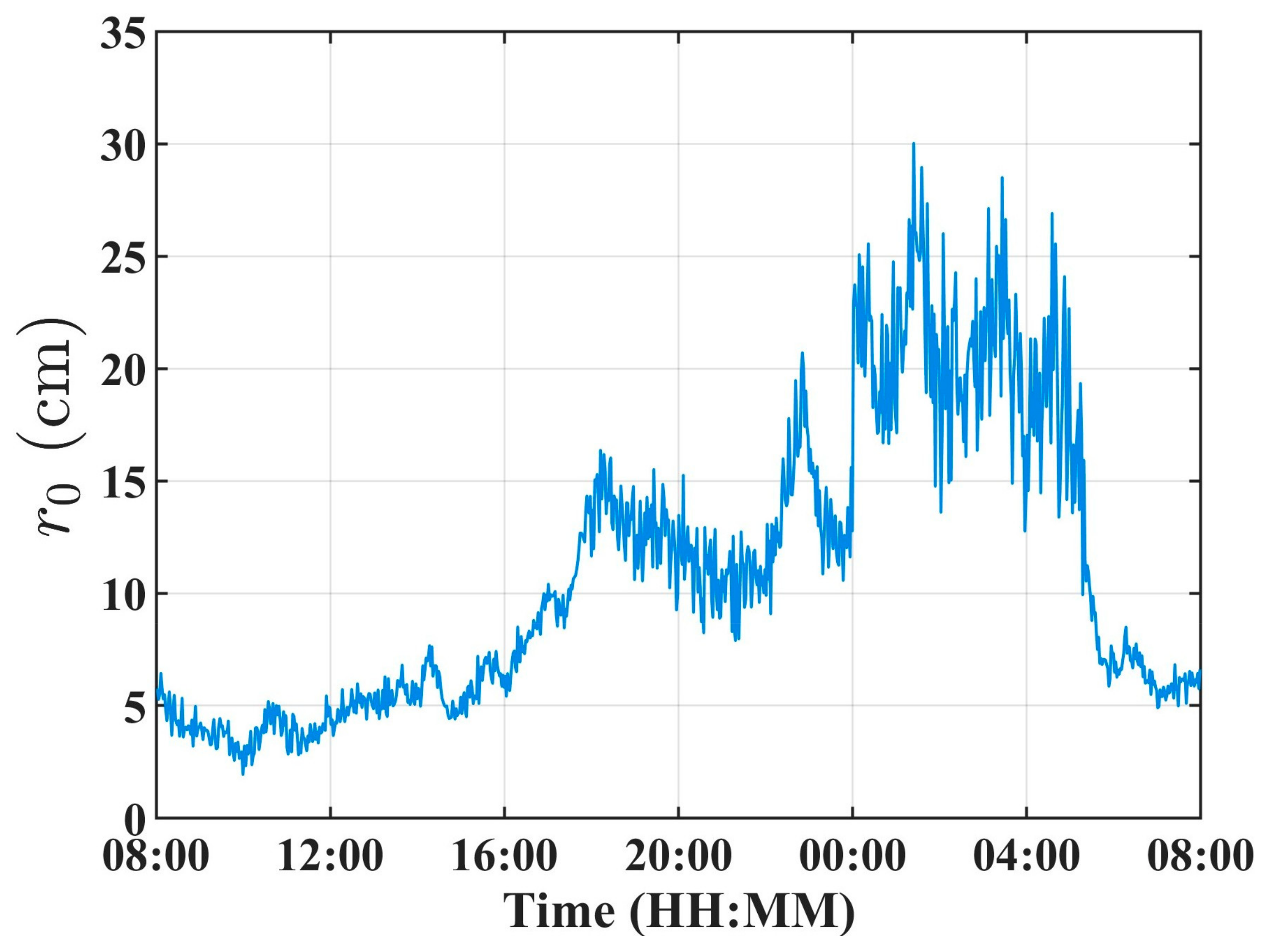
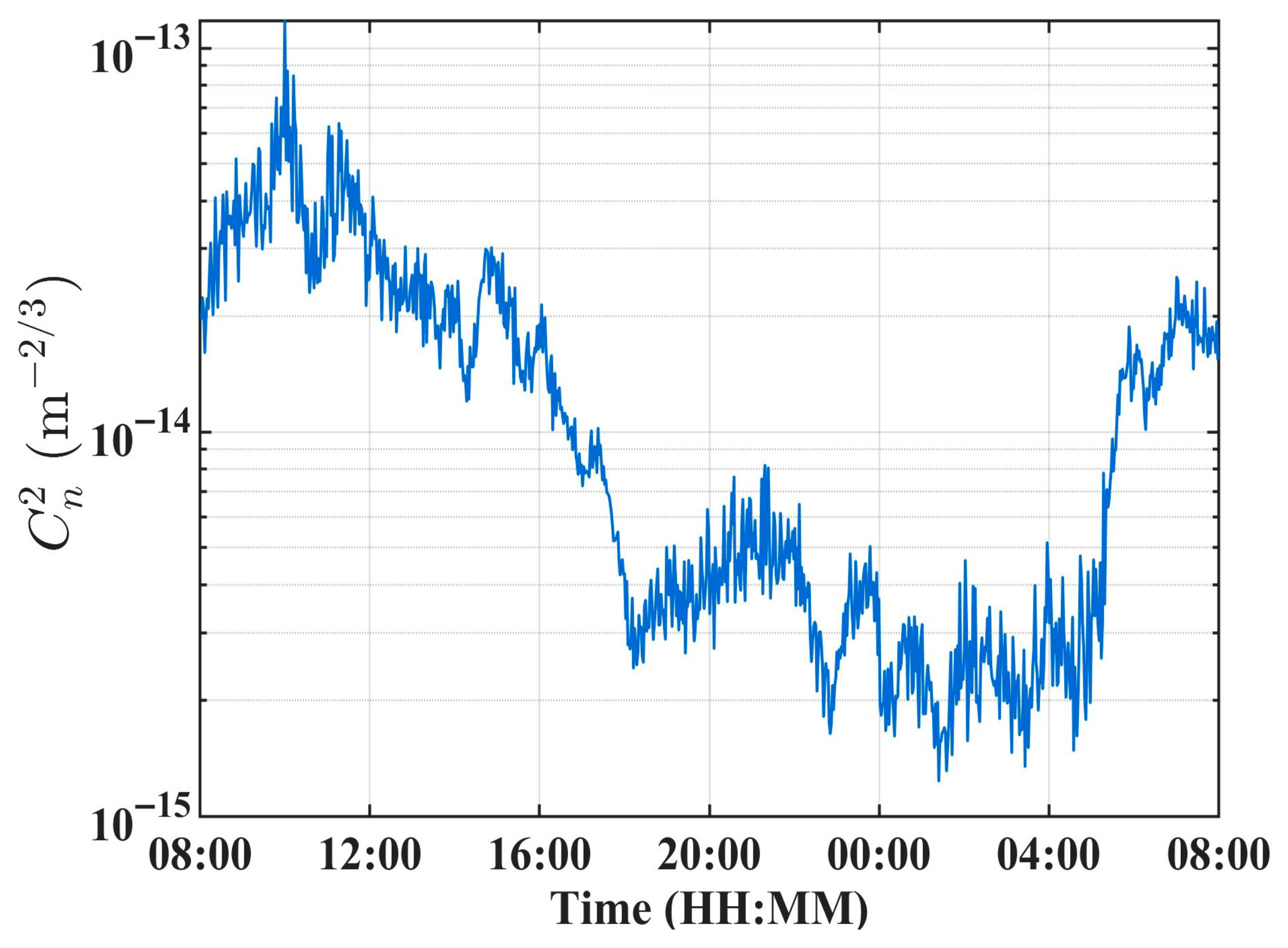
Figure 1 illustrates the measured atmospheric coherence length as a function of time. The graph demonstrates significant fluctuations in atmospheric coherence length throughout the diurnal cycle, with variations ranging from approximately 3 cm to 29 cm. The atmospheric coherence length of plane waves can be inverted from
r0 to obtain
via formula
, yielding a 24 h variation curve for
. As can be seen from
Figure 2, the 24 h
variation range is between 10
−15 and 10
−13, with atmospheric turbulence fluctuating between weak and moderately strong turbulence. From 08:00 to 16:00, turbulence remained at a moderately strong level. Particularly between 09:00 and 12:00, the atmospheric refractive index structure constant
fluctuated between
, corresponding to an atmospheric coherence length
r0 ranging from 1.990 cm to 5.613 cm. During this period, the mean value of
was
, with the corresponding
r0 being 3.848 cm, Between 18:00 and 05:00, the atmosphere exhibited weak turbulence, particularly between 23:00 and 04:20 when turbulence levels ranged from
. The atmospheric coherence length
varied between 10.663 cm and 17.805 cm during this period, with
averaging 5.097 × 10
−15 m
−2/3 and r
0 averaging 13.081 cm. The medium-to-strong turbulence experiments for the multi-aperture reception tests commenced in the morning, while the weak turbulence experiments were scheduled to begin after midnight.
To provide a clear classification of turbulence regimes, the scintillation index (SI) is adopted as the primary classification metric in this work. The turbulence conditions are classified as weak turbulence for , moderate turbulence for , and relatively strong turbulence for . According to this criterion, the majority of the 24 h experimental data correspond to weak-to-moderate turbulence conditions.
3.2. Experiment on Free-Space Optical Transmission Using Four Aperture Receivers
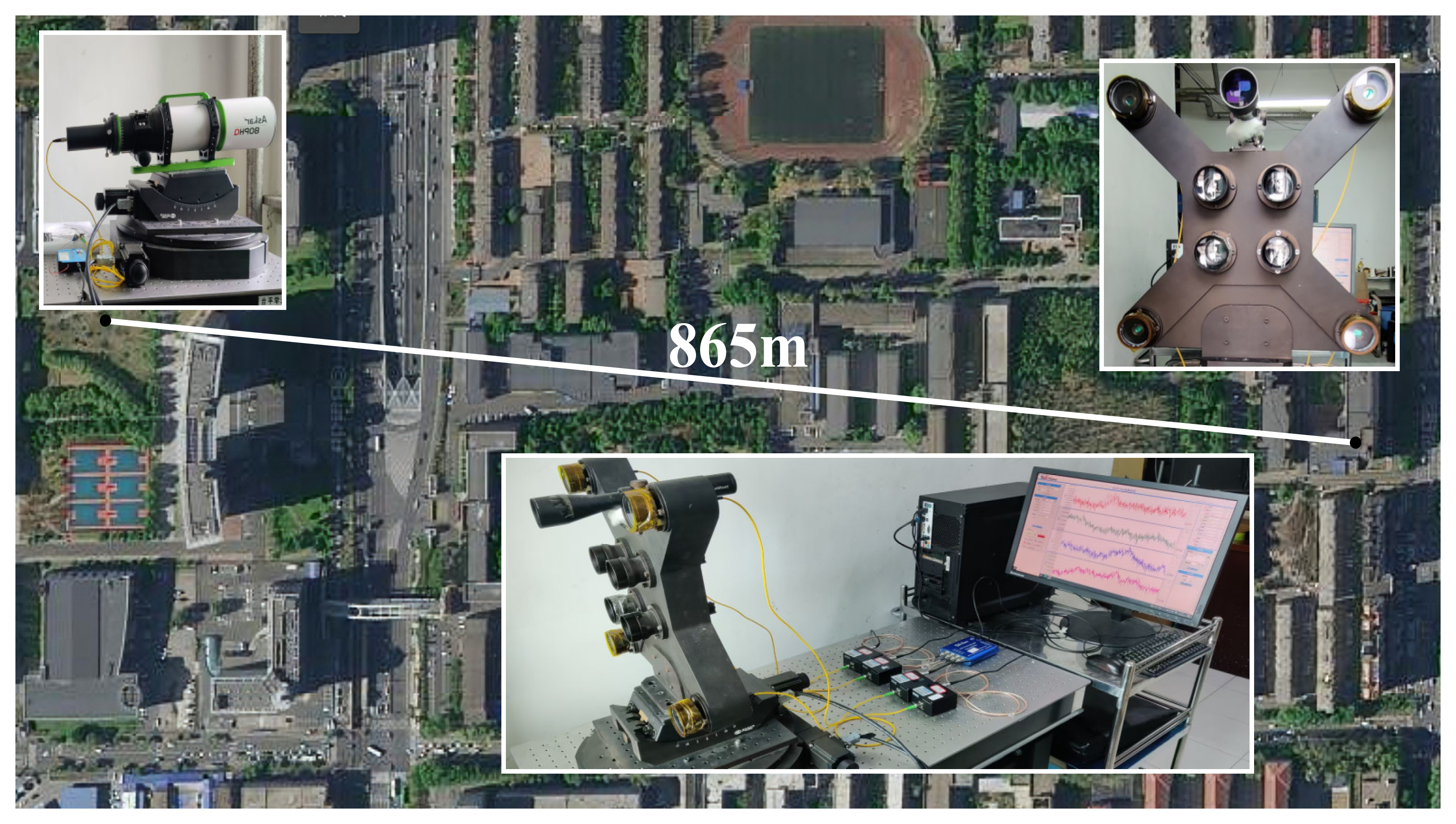
To validate the statistical characteristics of light intensity reception across sub-apertures within a multi-aperture receiving system, an 865 m urban free-space laser communication link was established. The experiment was conducted in Changchun City, Jilin Province, China, under environmental conditions where the temperature fluctuated between 18 °C and 22 °C, the Air Quality Index (AQI) ranged from 30 to 39, relative humidity varied between 60% and 77%, wind speed was 1 to 2 m/s, visibility spanned 14–16 km, and atmospheric pressure was approximately 1005 hPa. The experimental setup is illustrated in
Figure 3. The transmitter was positioned on the 13th floor of the Science and Technology Building in the South Campus of Changchun University of Science and Technology, while the receiver was situated on the 9th floor of the Second Teaching Building in the East Campus. For analytical convenience, the receiving system employed a four-aperture configuration with equidistant spacing, arranged in a regular square array. Given the sufficiently small focal length of the receiving collimator, no correction for arrival angle fluctuations was applied in this experiment.
To ensure the independence of each sub-channel, the experimental correlation width was set at 3.66 cm, with the atmospheric coherence length remaining below 35 cm throughout the experimental period. Consequently, the sub-aperture spacing was established at 37 cm, whilst the sub-aperture diameter was ultimately determined to be 50 mm to satisfy the sub-channel independence requirement. The sub-aperture diameter remained fixed at 50 mm throughout the experiment, representing a practical compromise between optical collection efficiency, alignment error, and long-term outdoor stability.
The optical signal power received by each sub-aperture was measured using photodetector (model KG-PR-200M-A-FC, Beijing Kangguan Century Optoelectronics Technology Co., Ltd., Beijing, China) was used to convert the received optical signal into an electrical signal. Synchronous acquisition and recording of the received power were performed via a 24-bit, four-channel isolated data acquisition card, the VK701H+ v2. In the present experimental system, the received optical signals from different sub-apertures are combined using an optical beam combiner located at the backend of the sub-aperture array. Each sub-aperture independently collects the incident optical field, and the corresponding optical beams are subsequently guided to the beam combiner, where they are superimposed to form a single combined optical signal. The combining process is performed in the optical domain and is inherently incoherent, the resulting combined signal corresponds to the direct superposition of the optical intensities contributed by each sub-aperture, which is equivalent to an equal-gain combining scheme. As a result, the combined irradiance can be expressed as the summation of the individual sub-aperture irradiances. The experimental link’s receiving and transmitting end configurations are illustrated in
Figure 3. A large-aperture telescope was employed at the transmitting end, while the receiving end utilised the outer ring of the apparatus’s four apertures to receive the optical signals.
To analyse the statistical characteristics of received light intensity across sub-apertures under varying turbulence intensities and their fit to probability density function models, experiments were conducted during two representative time periods: morning and early morning, corresponding to moderate and weak turbulence conditions, respectively. Each sampling session lasted one minute at a sampling frequency of 1 MHz, with the entire experimental process completed within ten minutes. According to frozen turbulence theory, atmospheric turbulence conditions may be considered stable within this timescale. Specific system parameters are detailed in
Table 1.
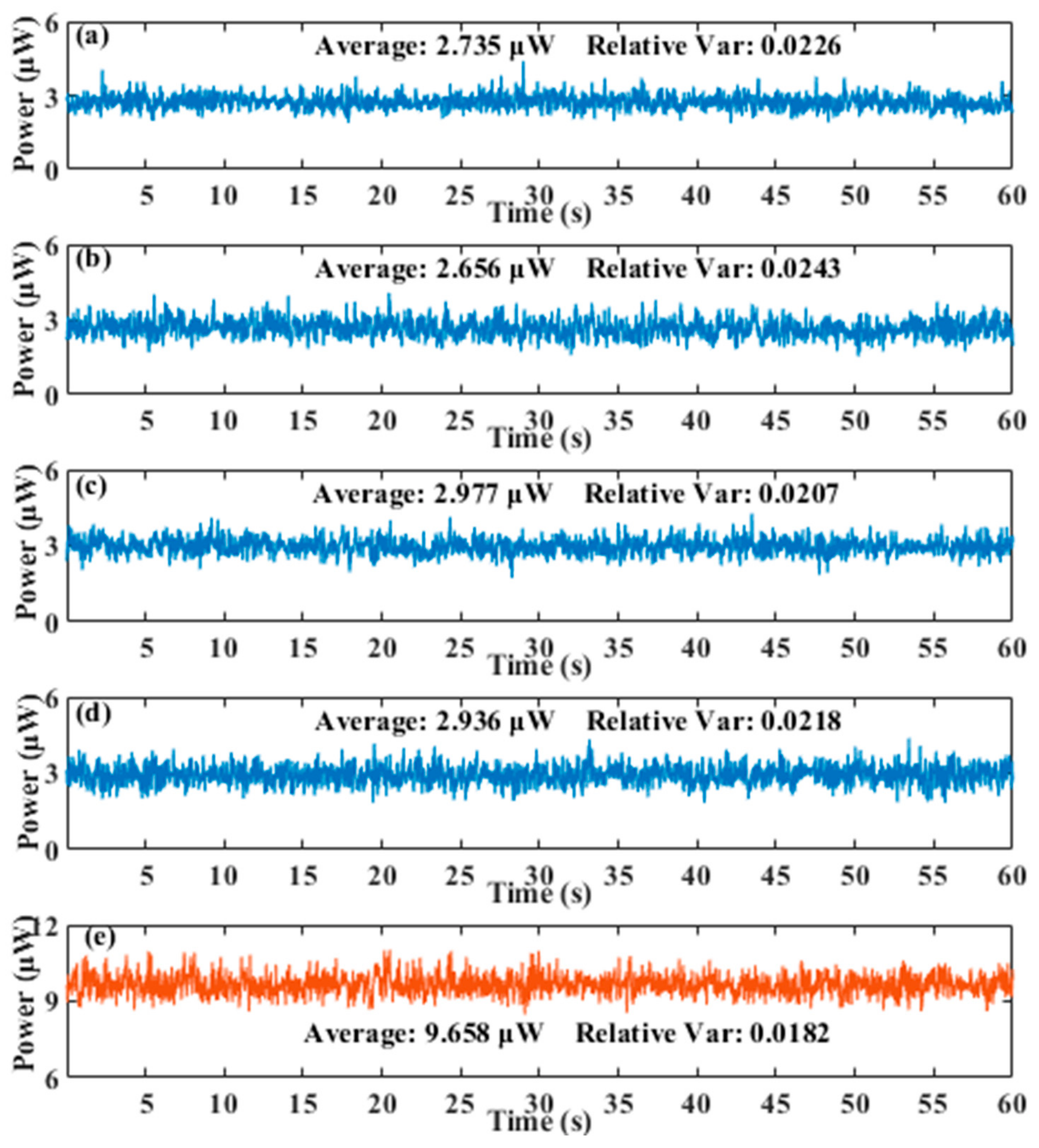
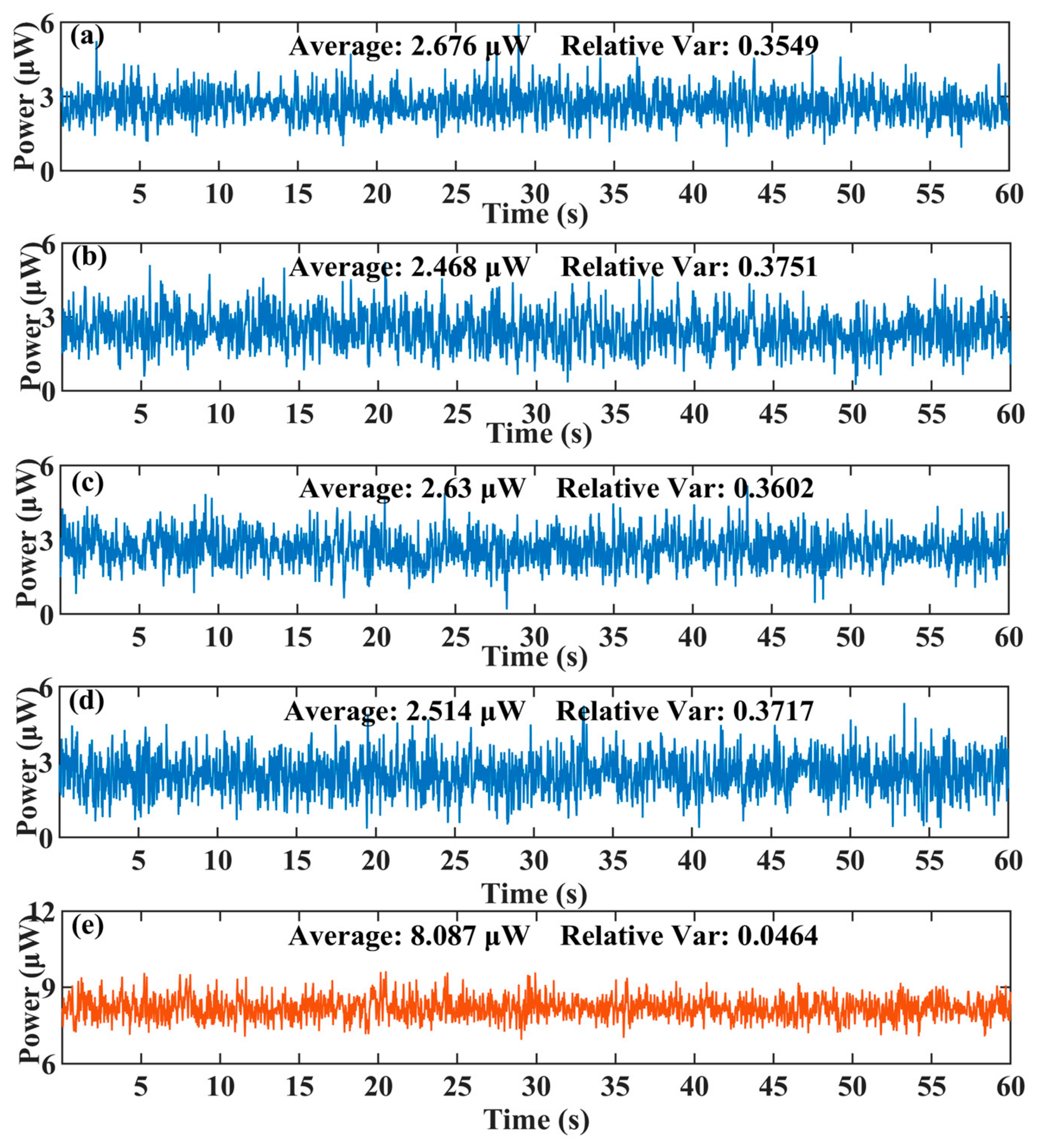
Experimental results for two typical atmospheric turbulence intensities are shown in
Figure 4 and
Figure 5. It can be observed that the light intensity and relative variance received by the four sub-apertures are comparable. At a correlation width of 2.75 cm, the relative variance of light intensity fluctuations decreases from 0.36 to 0.04. At a correlation width of 17.35 cm, the relative variance of light intensity fluctuations remains essentially unchanged.
4. Results and Discussion
4.1. Statistical Fitting of Sub-Aperture Irradiance Under Different Turbulence Conditions
To quantitatively evaluate the fitting performance of different statistical models under varying turbulence intensities, this study modelled the probability distribution of received power across various aperture sizes under both weak and moderately strong turbulence conditions. LN, EW, Gamma–Gamma, and M distributions were employed for fitting. The results were then compared with measured data to evaluate each model’s applicability and fitting accuracy across different turbulence scenarios.
To investigate the channel characteristics of each sub-aperture, the Levenberg–Marquardt least-squares fitting algorithm, implemented using the lsqcurvefit function in MATLAB R2023a, was employed to fit both experimental data and theoretical PDFs [
24]. Here, the PDF model first fits the data in the linear domain before displaying the results in the logarithmic domain. It should be noted that parameter estimation for each model is performed entirely in the linear domain, whereas the logarithmic coordinate system is adopted only for visualisation purposes, in order to more clearly illustrate the variation characteristics of the probability density function in low-irradiance regions dominated by deep fading events. As a result, deviations between fitted models and experimental histograms at higher irradiance levels may appear more pronounced in logarithmic plots, particularly where the number of high-irradiance samples is limited due to the long-tailed nature of turbulence-induced irradiance fluctuations.
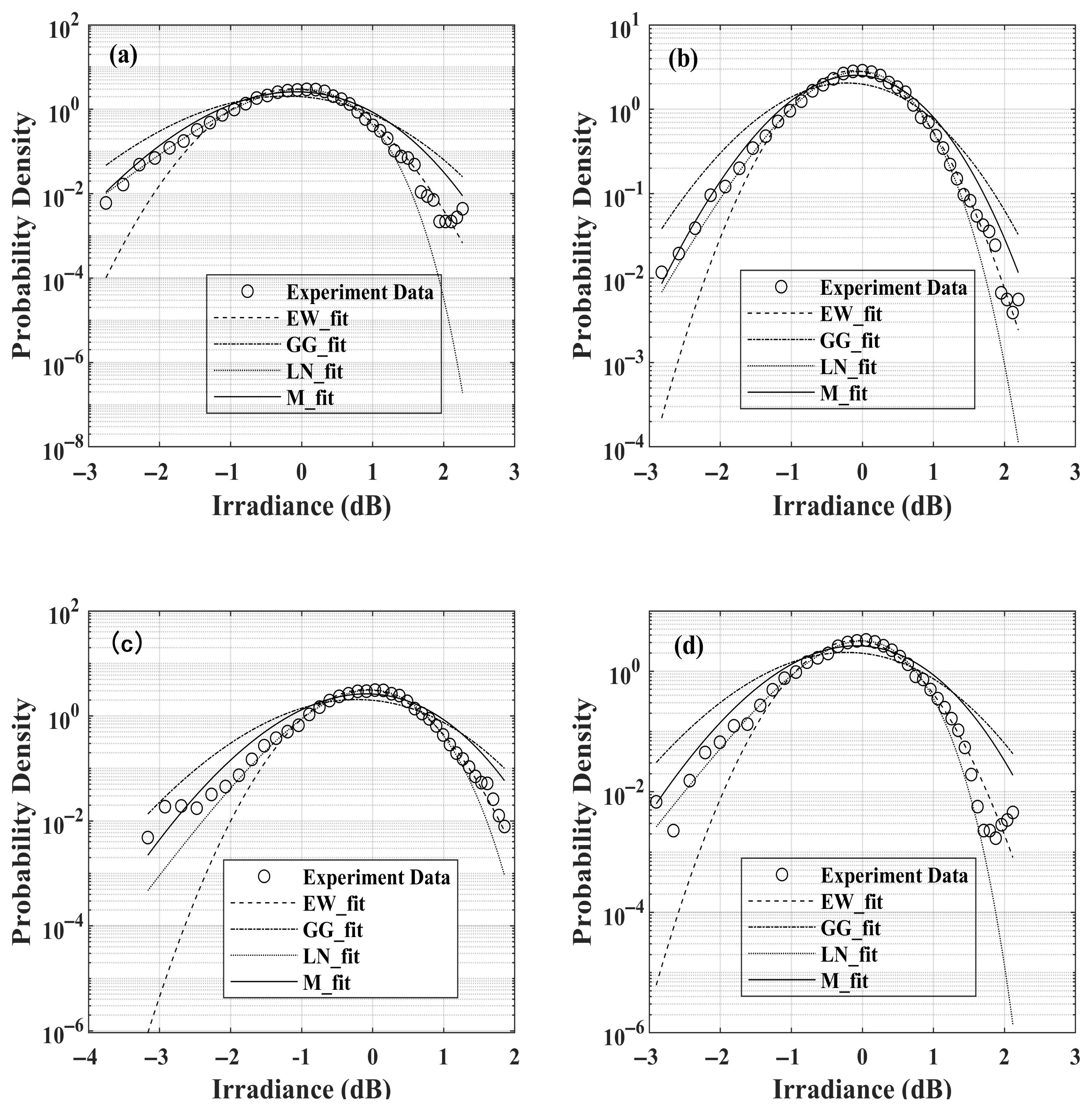
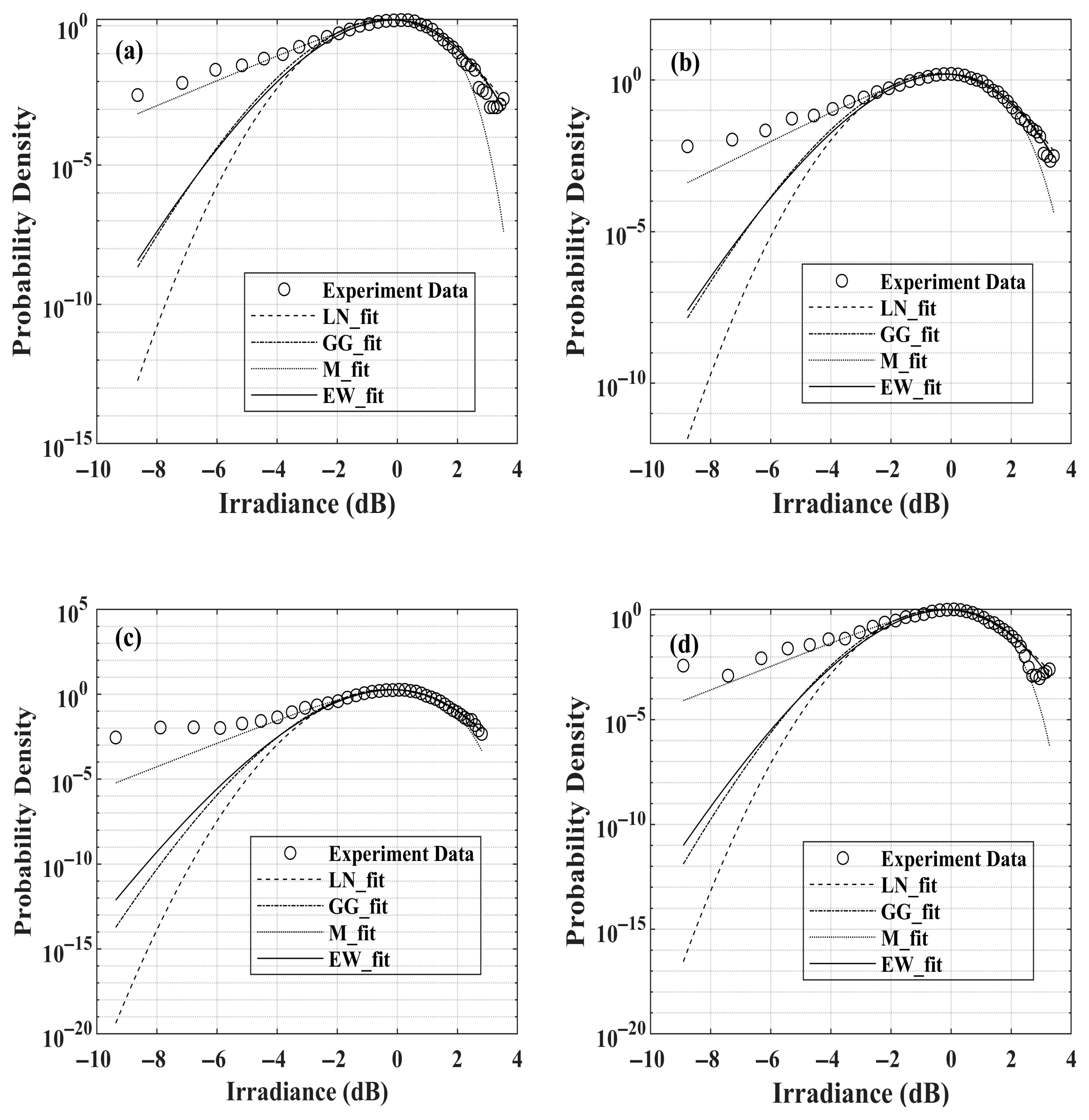
Figure 6 and
Figure 7 display the fits of the sub-aperture experiment’s received optical intensity to the LN, GG, EW, and M distribution models under weak turbulence and moderate-to-strong turbulence conditions, respectively. The results indicate that under weak turbulence, the distribution shapes of the received signals from each sub-aperture are approximately symmetric with rapid tail decay. The M-distribution and LN-distribution exhibit the smallest root mean square error (RMSE), demonstrating their greater accuracy in characterising the statistical properties under weak turbulence conditions. As atmospheric turbulence intensified, signal fluctuations increased, distributions deviated from Gaussian shapes, tails elongated, exhibiting typical turbulent speckle characteristics. At this stage, traditional LN and GG models fail to adequately fit the tails. The M-distribution, however, incorporates additional shape parameters (such as
α and
β), enabling more flexible characterisation of asymmetric and long-tailed distributions, with significantly lower fitting errors than other models. Particularly in combined signal statistics, the M-distribution demonstrates robustness and generalisability for signals averaged across multiple apertures.
4.2. Statistical Modelling of Combined-Aperture Irradiance
Under weak turbulence and moderate turbulence conditions, the combined experimental received light intensity was fitted to various PDFs.
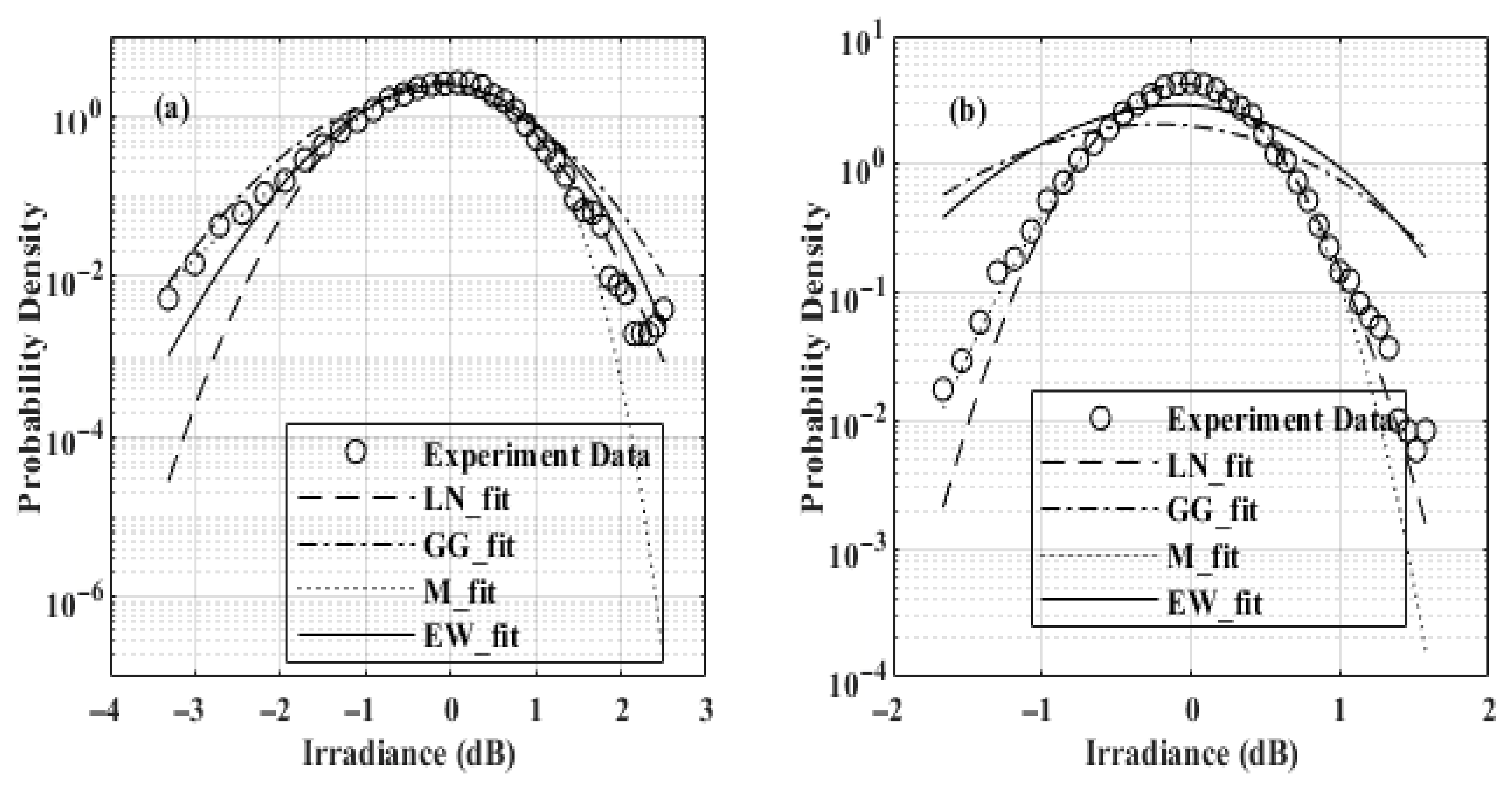
Figure 8 shows that under weak turbulence, the M-distribution exhibits a fitting error of 0.039, demonstrating superior fitting performance compared to the EW (0.048) and Gamma–Gamma distribution (0.061), representing an 18.75% improvement over the next-best model. Under medium turbulence, the M-distribution exhibits a fitting error of 0.033, demonstrating superior fitting performance compared to the EW (0.038) and Gamma–Gamma distribution (0.052), with an improvement of 13.16% over the next-best model. The results indicate that, when employing optimal fitting parameters, the M distribution is suitable for statistical modelling and performance analysis of multi-aperture receiving systems under varying turbulence intensity conditions.
It can be observed in
Figure 8 that the Málaga (M) distribution provides excellent agreement with the experimental data in the low-irradiance region, which is primarily influenced by deep fading and scintillation effects. At higher irradiance levels, slight discrepancies become more visible in the logarithmic representation, mainly due to the reduced number of high-irradiance samples and finite-sample statistical effects, rather than a fundamental limitation of the statistical model.
4.3. Experimental Evolution of Málaga Distribution Parameters with Turbulence Strength
Table 2 lists the optimal fitting parameters for each statistical model used to generate the probability density function curves in
Figure 6 and
Figure 7 under different turbulence conditions. Additionally, the table includes the actual scintillation index (SI) calculated from experimental data, alongside theoretical SI values derived from the fitting parameters of each PDF model. These serve to comparatively evaluate the fitting accuracy of the respective models. It should be noted that
Table 2 contains data points where the atmospheric coherence length is close to or slightly below the sub-aperture diameter. These correspond to measurement regions with relatively strong turbulence over short time periods and have been incorporated to extend the scope of the statistical modelling.
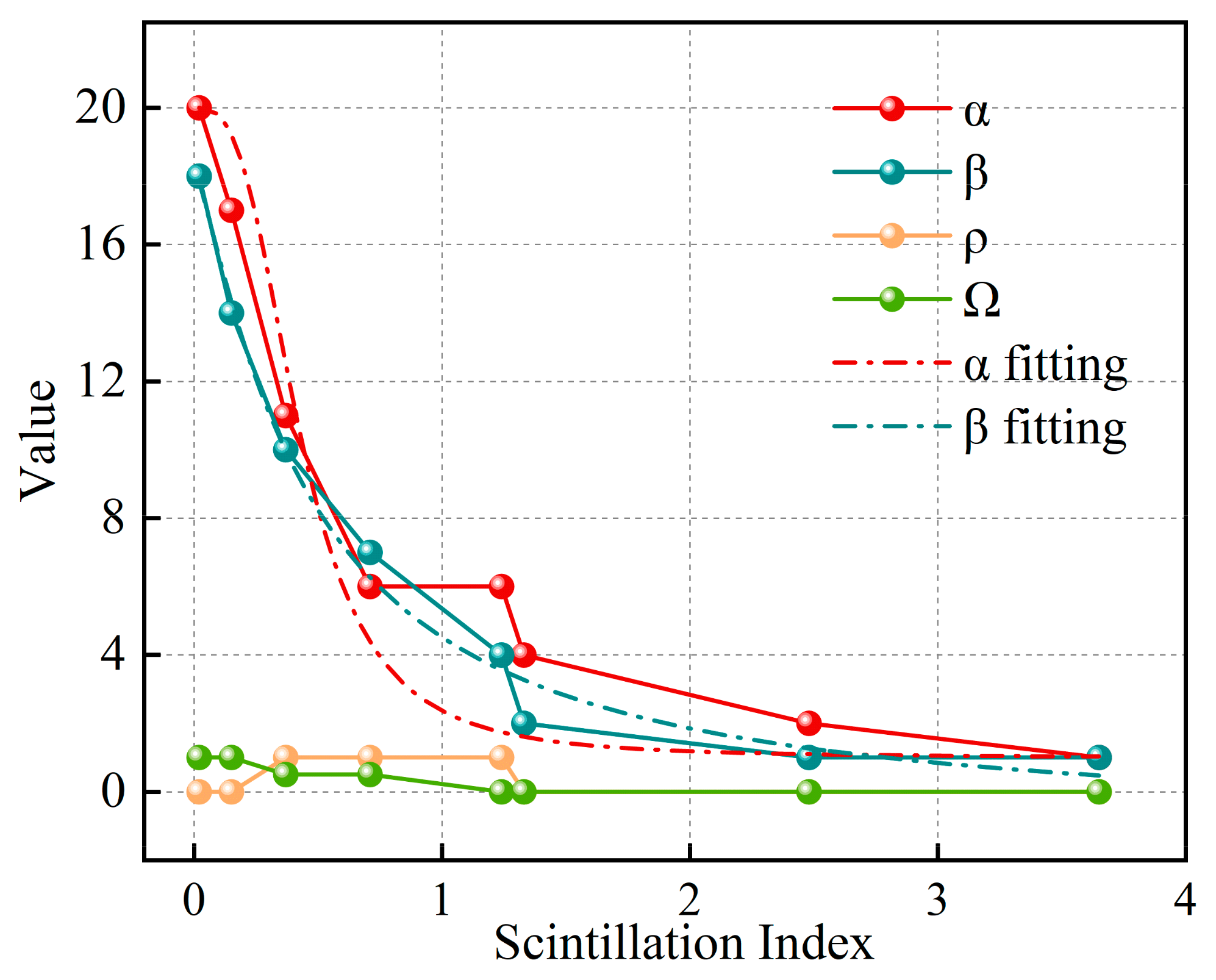
Figure 9 presents experimental results showing the variation of M-distribution parameters
α,
β, ρ, and Ω with the flicker index. It is evident that different parameters exhibit distinct responses to turbulence intensity. Specifically, the shape parameters
α and
β decrease monotonically with the flicker index, exhibiting a significant reduction in magnitude. As the scintillation index increases from 0.02 to 3.65,
α decreases from 20 to 1 and
β from 18 to 1. This trend aligns with their physical interpretations: since α relates to large-scale scattering and
β describes small-scale attenuation, both scattering structures are weakened when turbulent perturbations intensify and reduce light field coherence, consequently leading to a marked reduction in both
α and
β as the flicker index increases. Furthermore, the variations in
α and
β are well-fitted by the logistic function, indicating a stable mapping relationship between them across different turbulence intensities. This establishes the M distribution as the key parameter most effectively reflecting turbulence strength.
In contrast, the relationship between ρ and Ω with respect to SI does not exhibit a monotonic trend. Experimental results indicate that ρ experiences a brief increase in the moderate turbulence range, while approaching zero under both weak and strong turbulence conditions. Ω, meanwhile, declines rapidly when SI < 1 before subsequently tending towards zero. This outcome reflects the fact that these two parameters are primarily determined by the physical characteristics inherent to the system structure itself. ρ represents the coefficient coupling scattered power to the optical axis component, while Ω denotes the line-of-sight (LOS) field average power. These parameters are predominantly governed by beam directivity, energy dissipation, and system geometry, rather than being solely driven by turbulence intensity. Consequently, their lack of a unified trend with respect to SI is physically well-founded.
In summary, α and β exhibit high sensitivity to turbulence intensity, with their variations under SI reflecting turbulence’s direct influence on light intensity statistics. In contrast, ρ and Ω are more constrained by the system’s energy distribution and structural characteristics, being less affected by turbulence fluctuations. This study, based on field experimental data, reveals the differential responses of various parameters within the M-distribution to turbulence, providing new physical rationale for establishing turbulence statistical models grounded in the M-distribution.
5. Conclusions
To investigate the performance of multi-aperture receiving systems in free-space laser communications, this paper first obtained atmospheric turbulence intensity parameters through field measurements, effectively extracting the 24 h atmospheric coherence length. Subsequently, an outdoor experimental platform featuring a four-aperture receiving system was established based on an 865 m free-space link. Experiments demonstrated that the multi-aperture receiving structure effectively suppresses light intensity flicker fluctuations caused by turbulence. Building upon this foundation, four representative statistical models—the LN model, Gamma–Gamma model, EW distribution, and Generalised M distribution—were employed to perform PDF fitting on received optical intensity data under varying turbulence conditions, yielding optimal fitting parameters. Results demonstrate that the Generalised M distribution exhibits superior modelling capability under both weak and moderate turbulence conditions. Compared to traditional PDF models, it provides more stable fitting performance in multi-aperture systems, thereby establishing a theoretical basis for subsequent system performance modelling and optimisation. It is important to emphasise that flicker suppression in multi-aperture receiving systems is primarily governed by spatial diversity conditions, and thus the sub-aperture spacing must be substantially greater than the turbulence-induced correlation width. This condition remained consistently satisfied throughout the entire experimental process. Even when condition D was not strictly met, diversity gain was still predominantly driven by this factor.