Article

The Impact of Phase Change in Laser-Ablated Aluminum Alloy Materials on Ablation Damage Characteristics


1
Southwest Institute of Technical Physics, Chengdu 610095, China
2
College of Electronics and Information Engineering, Sichuan University, Chengdu 610064, China
*
Author to whom correspondence should be addressed.
Photonics 2025, 12(12), 1158; https://doi.org/10.3390/photonics12121158
Submission received: 13 August 2025 / Revised: 13 November 2025 / Accepted: 20 November 2025 / Published: 25 November 2025

Abstract

Laser weapons, characterized by their rapid response capabilities, precision targeting, and operational stealth, have emerged as essential directed energy systems for neutralizing missile, satellite, and drone threats. This paper examines the widely utilized 7075 high-strength aluminum alloy in military applications, conducting a comprehensive analysis of the material’s ablation characteristics under continuous laser exposure. The study elucidates the phase change phenomena and elemental separation mechanisms that occur as a result of ablation. Findings indicate that the aluminum (Al) element primarily undergoes a process of melting, driven by gravitational flow and subsequent resolidification, resulting in the formation of a bright silver Al-rich solidified layer at the base of the ablation zone. Conversely, the zinc (Zn) element vaporizes at elevated temperatures, with its byproducts oxidizing and condensing in the atmosphere, leading to the formation of gray- white zinc oxide (ZnO) deposits above the ablation area. This research highlights the synergistic damage mechanisms of vaporization and melting, thereby providing a critical theoretical framework for understanding the damage mechanisms associated with laser ablation of aluminum alloys.

1. Introduction

Lasers have emerged as a fundamental technology in contemporary industrial processing, attributed to their remarkable characteristics of monochromaticity, directionality, coherence, and high energy density [1,2]. The swift advancement of laser technology has facilitated its application in the domains of national defense and security. Laser weapons, recognized as efficient directed energy weapons [3], offer significant advantages including rapid response times, high precision in targeting, cost-effectiveness, and enhanced operational concealment [4,5]. These weapons have demonstrated considerable potential in neutralizing various targets, such as missiles, satellite reconnaissance platforms, and unmanned aerial vehicles (drones), positioning them as essential assets in future information warfare [6,7].
Among the diverse array of metal structural materials, aluminum alloys are extensively utilized as critical load-bearing components in aerospace vehicles [8], electronic equipment enclosures [9], vehicular structural elements, and military apparatus including missiles and drones [10]. This widespread use is primarily due to their low density, high thermal conductivity, excellent corrosion resistance, and superior formability. Notably, the 7075 high-strength aluminum alloy [11] is frequently employed in vital structures such as aircraft frames [12], wing beams [13], and missile casings [14], owing to its outstanding overall performance.
The principal destructive mechanism employed by laser weapons against targets is laser ablation [15]. This process involves the interaction of high-energy laser beams with materials, resulting in the generation of extremely high temperatures and energy densities, which induce complex thermophysical phenomena and morphological alterations on the material surface, including melting, vaporization, and splashing [16,17,18]. Consequently, conducting comprehensive research on the ablation characteristics of typical structural materials, such as the 7075 aluminum alloy, is of paramount theoretical and military significance. Numerous researchers have investigated the interaction between lasers and aluminum alloys. Pornaila [19] examined the transition during nanosecond laser ablation of aluminum, from normal vaporization to phase explosion. They found that when the laser energy density surpasses the phase explosion threshold, a phase explosion occurs after the laser irradiation ends. Xu [20] analyzed the laser-induced damage threshold (LIDT) and ablation rate of Ti alloy (Ti-6Al-4V) and Al alloy (Al7075) under laser irradiation with a 30 fs pulse duration, 110 Hz repetition rate, and 800 nm wavelength. Peng Z [21] investigated how pulse number and laser energy density influence laser ablation of aluminum alloys. Their simulations and experiments show that both laser energy density and pulse count directly impact thermal diffusion and ablation depth in aluminum alloys. Additionally, the onset of surface vaporization is largely dependent on these two factors.
This article is dedicated to the investigation of the ablation behavior of 7075 aluminum alloy targets subjected to continuous laser irradiation, encompassing systematic research efforts. By employing both experimental observations and theoretical modeling, and integrating the dynamic response characteristics of materials with the laser energy deposition process, this study aims to elucidate the impact of state changes occurring during the ablation process on the resulting ablation morphology. Furthermore, it seeks to uncover the patterns of elemental spatial separation induced by variations in boiling points, thereby providing critical material response data for laser weapon damage databases.

2. Experimental Research

2.1. Experimental System

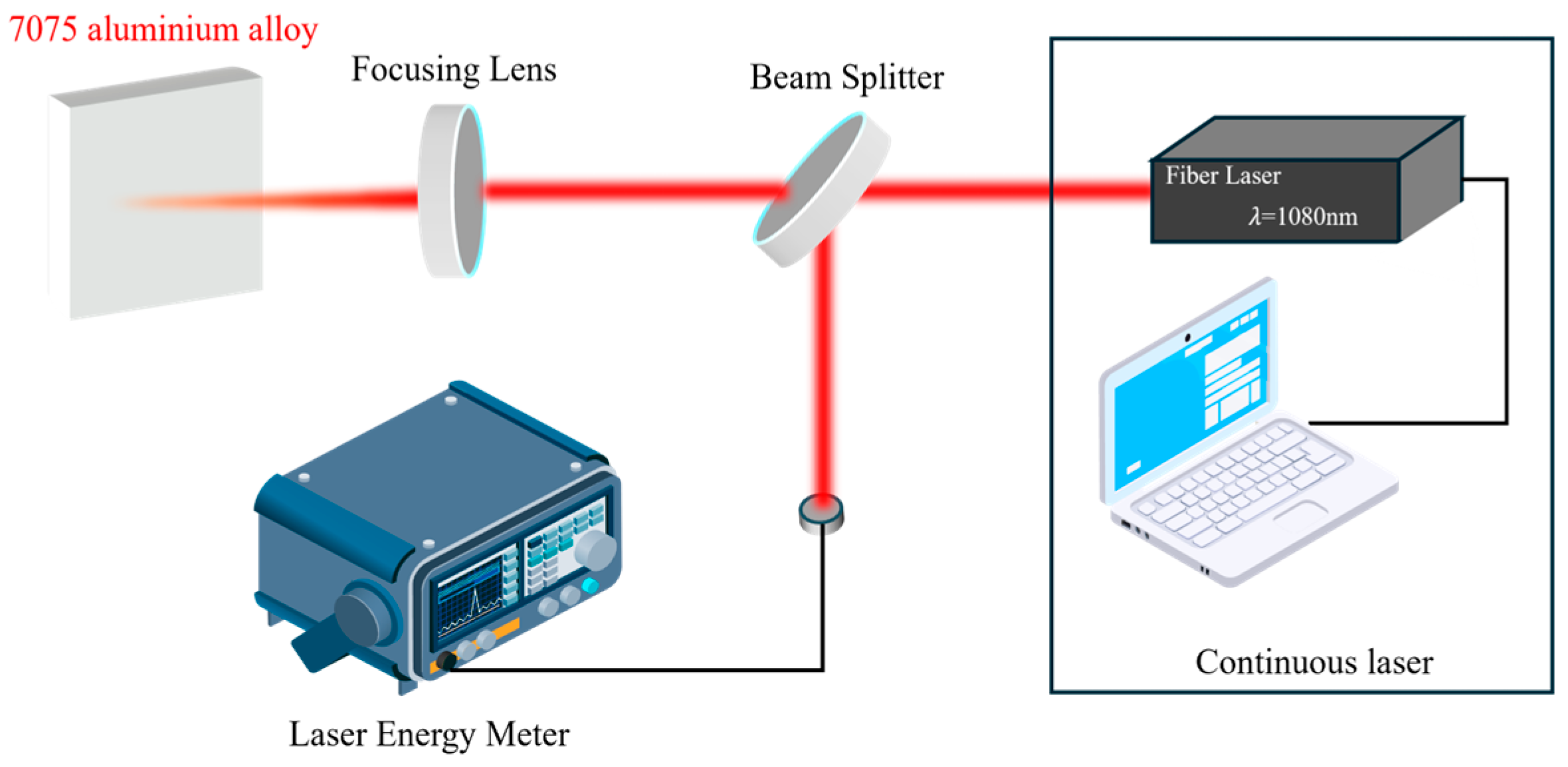
This study employs a continuous laser for conducting ablation experiments on 7075 aluminum alloy (hereinafter referred to as aluminum alloy). The configuration of the experimental system is illustrated in Figure 1. The laser source utilized is an MFSC-10,000 W continuous fiber laser, manufactured by Chuangxin Laser Co., Ltd. (Shenzhen, China), which features an output wavelength of 1.08 μm, a maximum continuous output power exceeding 10,000 W, and a power stability of ±1.5%. The laser beam is divided into two beams in an 8:2 ratio via a beam splitter, with 80% of the energy directed as the primary processing beam. This beam is subsequently focused through a lens with a focal length of 20 cm and is horizontally directed onto the surface of a vertically positioned aluminum alloy target situated on an optical platform. The beam diameter before focusing measures 6 cm. The remaining 20% of the energy beam is allocated for real-time monitoring of the laser energy. The experiment utilized an MFSC-10,000 W continuous fiber laser and transformed its output beam from a flat top to a near Gaussian distribution using a mode field adapter for the following experiments and simulations.
The dimensions of the aluminum alloy target material employed in this experiment are as follows: length and width of 200 mm, and thickness ranging from 6.4 mm to 12.7 mm. The output power of the laser is established at 10 kW (notably, the actual output power slightly exceeds the set value; thus, the subsequent analyses in this article will utilize the measured power value). The diameter of the laser spot applied to the surface of the target material after focusing is 3.0 cm. The ablation time is defined as the duration from the initiation of laser beam irradiation on the surface of the aluminum alloy target material until the target material is penetrated by the ablation process. The chemical composition of the 7075 aluminum alloy target material is presented in Table 1.

2.2. Experimental Results

2.2.1. Different Power Densities

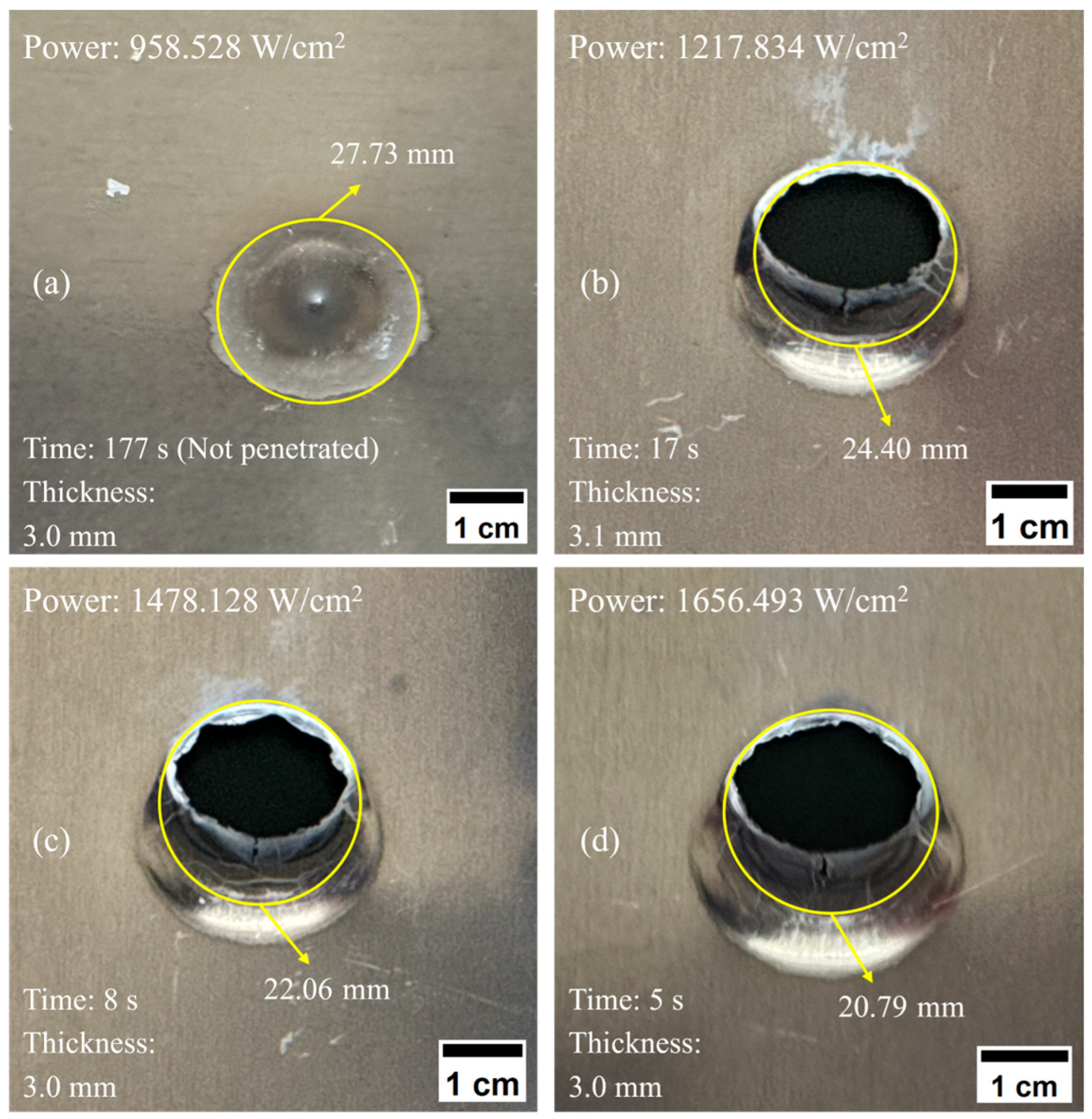
Aluminum alloy targets of the same thickness (≈3.0 mm) were selected for ablation experiments using a continuous laser with different power densities (958.528 W/cm2~1656.493 W/cm2). The ablation results are shown in Figure 2.
Figure 2a shows the ablation result of a 3.0 mm aluminum alloy target irradiated by a continuous laser with a power density of 958.528 W/cm2. After 177 s of continuous ablation, the aluminum alloy was not penetrated. A central ablation pit with a diameter of 27.73 mm was formed due to partial melting and spallation. When the power density was increased to 1217.834 W/cm2, the aluminum alloy was penetrated after 17 s of laser irradiation, leaving an ablation hole with a diameter of 24.40 mm. When the power density was further increased to 1478.128 W/cm2 and 1656.493 W/cm2, the target material was penetrated in 8 s and 5 s, respectively, with the ablation hole diameters decreasing to 22.06 mm and 20.79 mm. Overall, the following pattern is observed: “As the energy density of the continuous laser increases, the ablation penetration time gradually decreases, and the diameter of the ablation hole gradually reduces.”
At lower power levels, the ablation area primarily exhibits mechanical fracture and laminar spallation at the edges due to thermal stress. As the power increases, the temperature at the center of the heat source rises sharply, and the material transitions from local melting to being dominated by complete melting and vaporization phase changes. This is manifested as smooth hole walls and a bulge of the molten solidified layer beneath the ablation area. A small amount of gray-white powder is observed above the ablation area (Figure 2b,c). This gray-white powder is preliminarily inferred to be formed during the ablation process, where the melted aluminum alloy further heats up, turns into vapor, and escapes.

2.2.2. Different Target Thicknesses

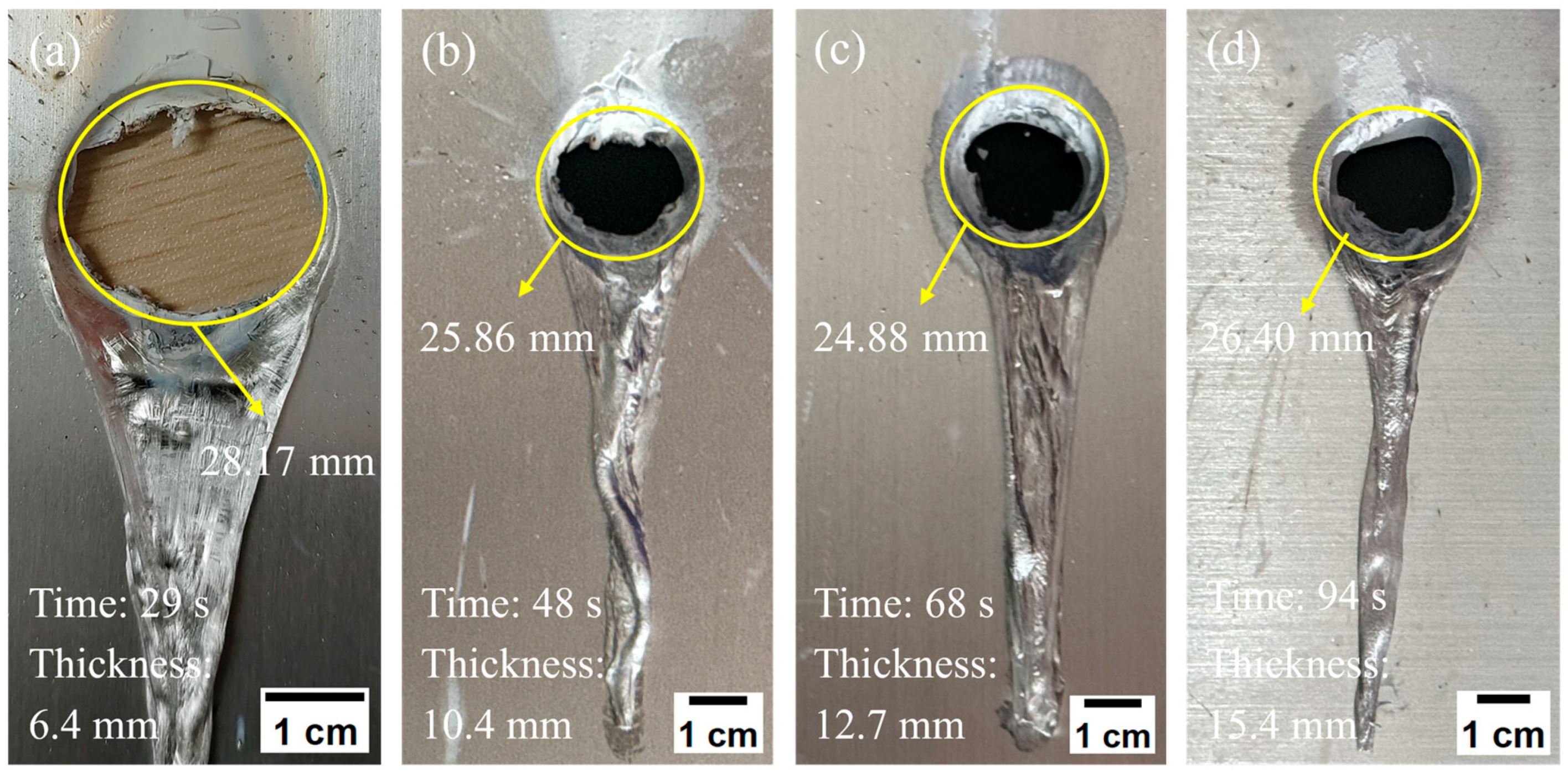
The ablation experiment was performed on aluminum alloy targets of varying thicknesses utilizing a continuous laser with a power density of 1416.84 W/cm2. The results of the ablation process are illustrated in Figure 3. It was observed that the duration required for ablation penetration increased progressively from 10 s to 94 s, indicating that the ablation time extended with the increase in thickness.
Upon ablation of thick aluminum alloy targets, a significant quantity of bright silver, strip-shaped material is observed remaining on the surface, as illustrated in Figure 3. This material is a result of high-temperature melting during the ablation process, which subsequently flows under the influence of gravity (with the aluminum alloy positioned vertically) before ultimately cooling and solidifying. Furthermore, in each set of ablation experiments, a gray-white powder is noted above the ablation area. It is hypothesized that this gray-white powder is generated during the ablation process, wherein certain metallic elements from the melted aluminum alloy are subjected to further heating, resulting in their transformation into vapor that subsequently escapes.

2.3. Microscopic Morphology and Elemental Analysis

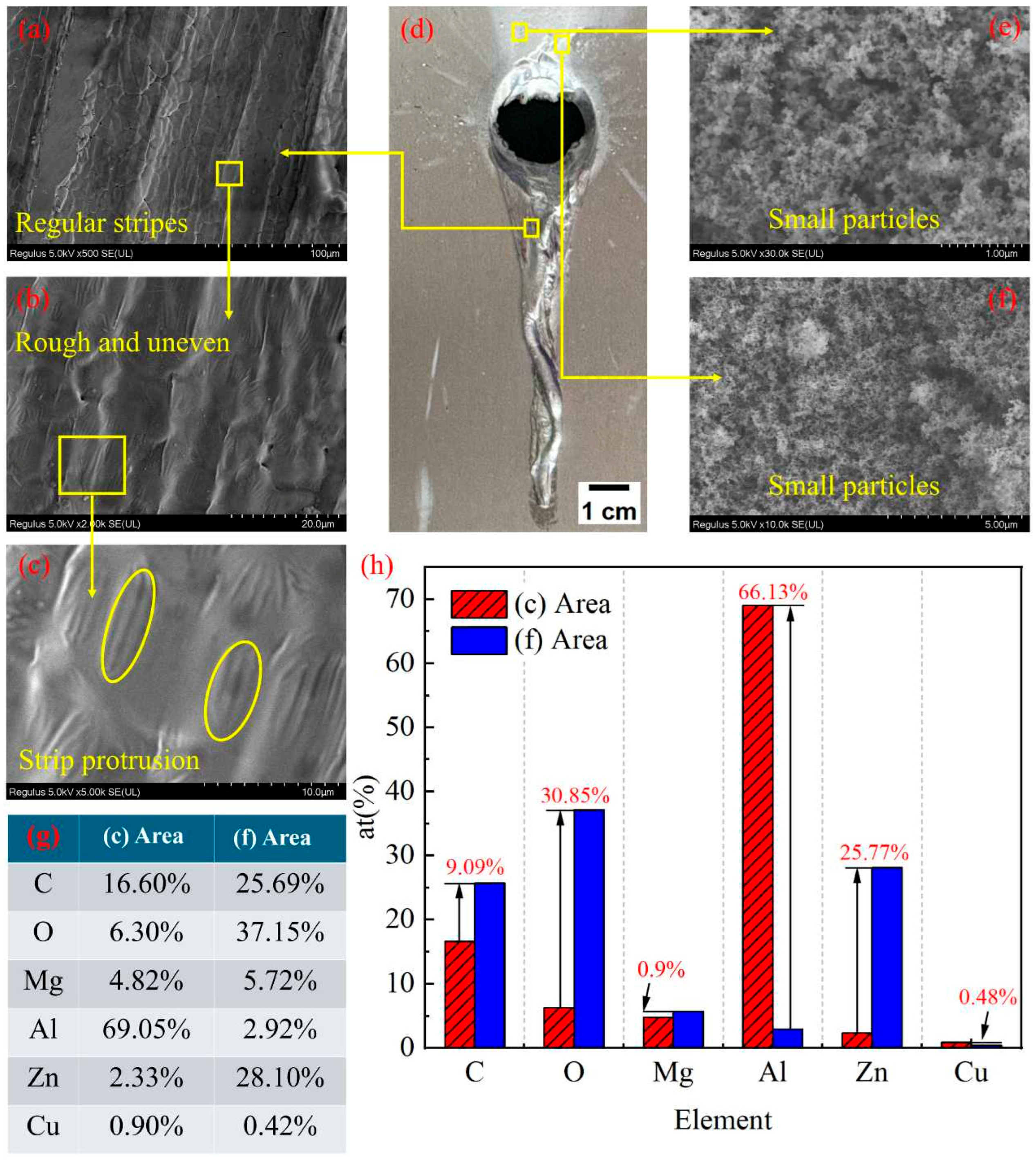
To conduct a more in-depth analysis of the ablation outcomes of continuous laser exposure on aluminum alloy and to investigate the underlying ablation mechanisms, scanning electron microscopy (SEM) coupled with energy dispersive X-ray spectroscopy (EDS) was employed to examine the microstructural and elemental variations in the gray-white powder and the bright silver strip material depicted in Figure 3c. The findings are presented in Figure 4, with Figure 4d corresponding to Figure 3b.
Figure 4a–c illustrate the microstructural analysis of the bright silver material, while Figure 4e,f depict the microstructural analysis of the gray-white material. Elemental analysis was conducted on Figure 4c,f, with the findings presented in Figure 4g,h.
The vaporized zinc oxide deposits above the ablation zone result in a gray-white powdery substance predominantly composed of ZnO [22]. The microstructure, as shown in Figure 4e,f, reveals uniformly stacked nanoscale particles, characteristic of vapor deposition processes. Elemental analysis indicates that this substance contains 28.10% zinc and 37.15% oxygen. This suggests that during the initial phase of ablation, low-boiling-point zinc (melting point 692.65 K [23], boiling point 1180.15 K [24]) preferentially absorbs laser energy and vaporizes, creating a plasma cloud rich in zinc vapor [25,26]. These zinc vapors react vigorously with atmospheric oxygen during their ascent, resulting in the formation of zinc oxide (ZnO) gas-phase compounds, which subsequently condense on the surface to form particle aggregates approximately 20 nm in size, intermixed with trace amounts of aluminum, magnesium, copper oxides, and carbon.
In contrast, beneath the ablation area, high-boiling-point aluminum (melting point 933.45 K [23], boiling point 2740.15 K [26]) remains in a molten state and undergoes processes of liquid sinking, directional cooling, and re-solidification due to gravitational forces, resulting in the formation of a bright silver, strip-like substance (Figure 4d). The surface of this material exhibits a regular striped arrangement (Figure 4a), and upon magnification, one can observe rugged grooves (Figure 4b) and strip-shaped raised textures (Figure 4c). Elemental analysis reveals that this substance is primarily composed of metallic aluminum, with a content of 69.05%, indicating that it is fundamentally a solid metal structure resulting from the recrystallization of molten aluminum [27,28].
Furthermore, in the context of the original 7075 aluminum alloy, the proportion of aluminum exceeds 90%, significantly surpassing the concentrations of the other three metal elements (magnesium, zinc, and copper) as well as the two elements carbon and oxygen. Notably, the concentrations of carbon and oxygen in the two products are markedly elevated [29]. The oxygen content arises from the oxidation of the vaporized metal (zinc) and the molten metal (aluminum) surfaces due to exposure to air. High-power lasers instantly vaporize 7075 aluminum alloy targets, generating a high-temperature, high-pressure metal plasma cloud [30,31]. The immense energy present is sufficient to break down molecules like CO2 and H2O in the surrounding air. The carbon atoms or ions produced from this dissociation can react with molten and gaseous metals (such as Al, Zn, Mg, etc.) to form carbon oxides [32]. These reaction products are then effectively trapped and fixed within the sediment’s microstructure during the subsequent rapid condensation and deposition stages [33]. Ultimately, this leads to an increase in C content.
The spatial segregation of the ablation products can be attributed to the combined effects of phase transition separation resulting from differences in boiling points (zinc vaporization and ascent versus aluminum melting and descent) and the coupling of oxidation deposition. The gray-white substance above represents the vaporization and oxidation deposition chain product of the lightweight metal zinc, whereas the bright silver substance below signifies the melting, solidification, and crystallization product of the heavier metal aluminum. Collectively, these materials exemplify the characteristic spatial separation observed in aluminum alloy laser ablation, effectively achieving the distinct separation of the heavy metal (zinc) and the light metal (aluminum).

3. Theoretical Analysis

3.1. Examination of Modifications in the Ablation Process

The interaction between laser energy and materials constitutes a complex dynamic process characterized by the coupling of multiple physical fields. Central to this interaction is the absorption of laser energy by the material, which subsequently induces various physical phenomena, including phase transitions (from solid to liquid to gas) [34]. When a laser beam is directed perpendicularly onto the surface of an aluminum alloy, the energy is primarily transformed into thermal energy, resulting in the heating of the material. Under conditions of continuous laser irradiation—typically at relatively low power densities—the high thermal conductivity of aluminum alloys leads to considerable thermal conduction losses. This phenomenon renders the material less susceptible to rapid severe deformation or extensive mass transfer, such as ablation [35,36]. Consequently, achieving a molten state in the material often necessitates sustained energy input and a requisite duration for thermal accumulation.
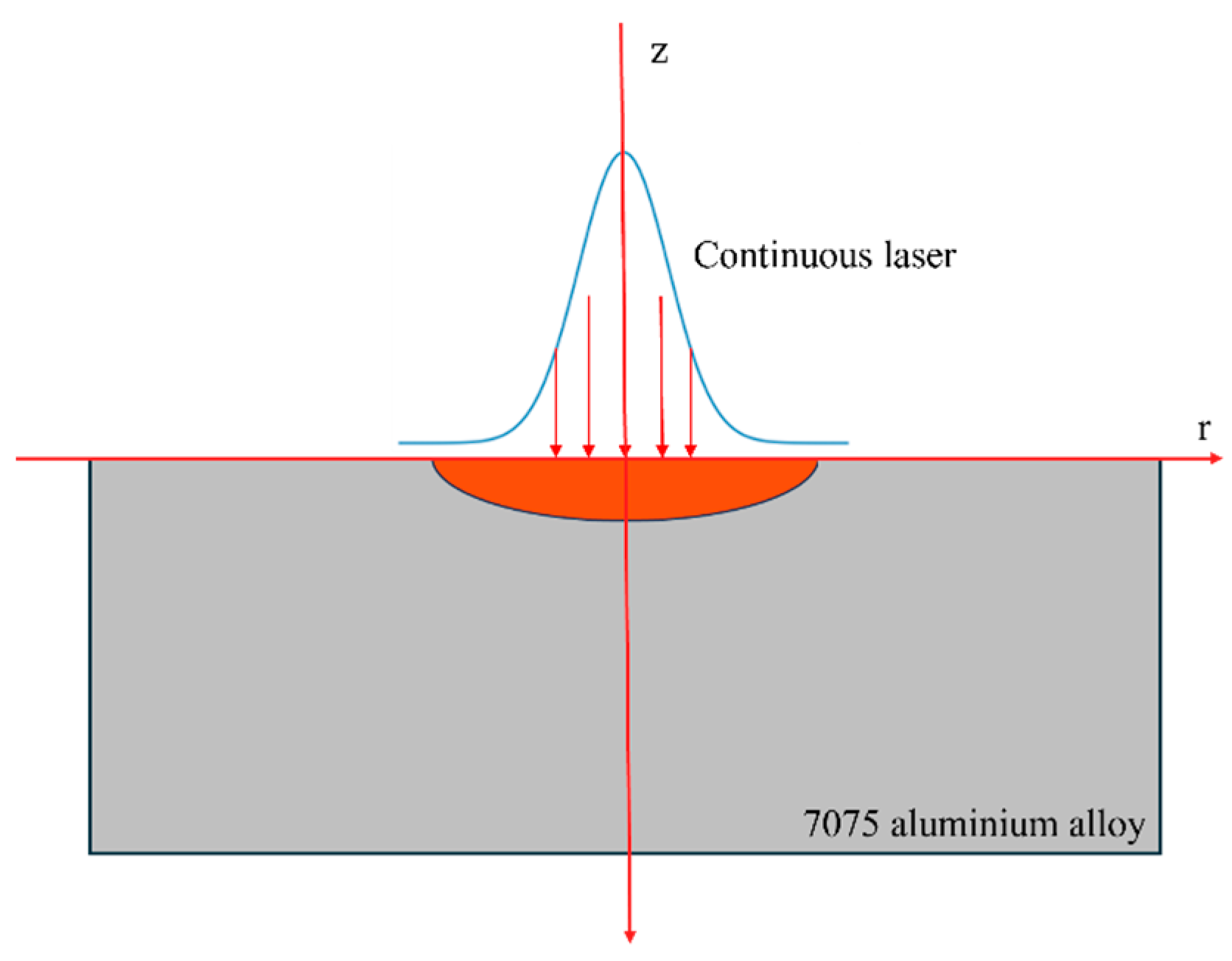
Figure 5 illustrates a schematic representation of laser action, z   indicating the direction of laser propagation, which is perpendicular to the material surface and parallel to the surface itself. r is the direction parallel to the surface of the material, and it is assumed that the center of the laser action on the surface of the aluminum alloy is the origin of the coordinate system.
When the surface of an aluminum alloy is subjected to laser irradiation, the laser beam typically exhibits a Gaussian spatial distribution, characterized by a specific spatial profile:
p r = exp r 2 r 1 2
The radius of the Gaussian laser spot is denoted as r 1 , which allows for the derivation of the spatial power distribution of the Gaussian laser as follows:
p r = p 0 exp r 2 r 1 2
p 0 is the power displayed in the continuous laser, and since continuous Gaussian lasers are uniformly distributed in time, their spatial distribution of power versus energy follows the following equation:
Q = p t
Consequently, the spatial energy distribution of the Gaussian laser can be determined.
Q r , t = p 0 exp r 2 r 1 2 t
When a continuous laser is directed onto the surface of a target material, the material absorbs the laser energy, converting it into thermal energy. This heat conduction within the material results in a rapid increase in temperature. According to Lambert’s law, the intensity of the incident laser diminishes exponentially with increasing depth as the material absorbs the laser energy.
T r , z , t z = A T ( 1 R ) Q r , t exp α z
In this scenario, R represents the reflectivity of the aluminum alloy to the laser, while A T and α denote the absorption rate function and absorption coefficient of the aluminum alloy, respectively, as they relate to variations in temperature distribution T . The variable   z indicates the depth of the aluminum alloy in the direction of laser propagation.
Furthermore, the heat conduction equations for aluminum alloys in the r   and z   directions can be expressed as:
ρ c T r , z , t z = 1 r r r k T r , z , t z + z k T r , z , t z
In these equations, k ,   ρ and c represent the thermal conductivity, density, and specific heat capacity of the aluminum alloy, respectively.
In the process of heat conduction will be accompanied by thermal vibration, then let the displacement distribution function of aluminum alloy is u ( r , z , t ) . The thermal vibration equations can be derived from the wave equation, represented as follows:
ρ 2 u r , z , t t 2 = B + 4 3 G 2 u 1 ( r , z , t ) z 2 B γ T r , z , t z
B ,   G and γ correspond to the bulk modulus, shear modulus, and thermal expansion coefficient of the aluminum alloy, respectively.
When the temperature of the aluminum alloy T r , z , t reaches a critical threshold, it may undergo melting and vaporization.
Based on the above ablation mechanism, COMSOL Multiphysics 6.3 software was employed to model aluminum alloys with dimensions of 200 mm in length and width, and a thickness ranging from 6.4 mm to 12.7 mm. The geometric dimensions of the computational domain (length, width, height) were scaled down to 1/400th of the experimental sample size, with the specific physical parameters detailed in Table 2. The model is intended to reveal trends in temperature rise and melting behavior, rather than to provide quantitative predictions.

3.2. Analysis of Changes in State of Matter and Temperature

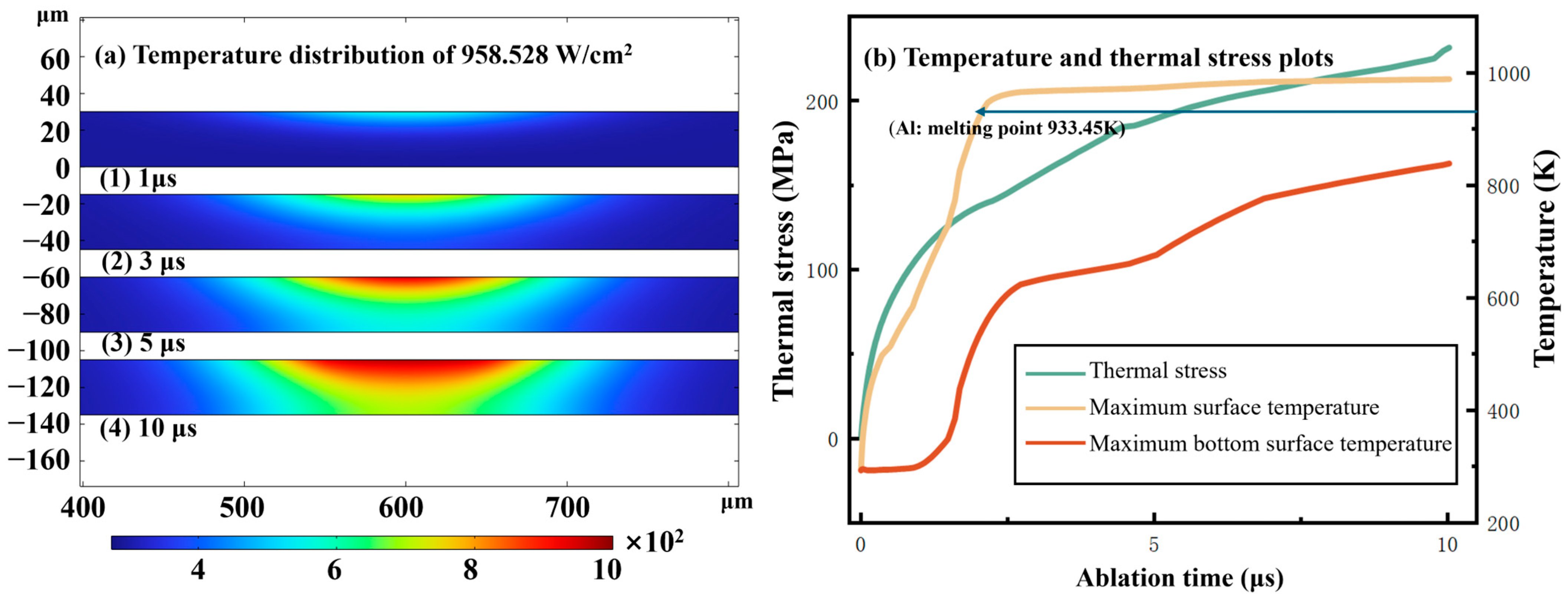
The experiment corresponding to Figure 2a, where penetration was not achieved, was simulated. The results shown in Figure 6a show the simulated temperature distribution over time in the aluminum alloy target under a laser power density of 958.528 W/cm2. Figure 6b shows the curves of the maximum temperature on the aluminum alloy surface, the maximum temperature on the bottom surface, and the thermal stress over time.
As the irradiation time increases, the inhomogeneity of the temperature distribution inside the target material intensifies. The central region consistently maintains the highest temperature (Figure 6a). Heat primarily diffuses from the high-temperature central region to the interior and peripheral areas of the material through thermal conduction, forming time-varying radial and depth-wise temperature gradients. The temperature at the center point of the target surface rises rapidly during the initial stage of irradiation, far exceeding the melting point of pure aluminum (933.45 K) (Figure 6b). In contrast, the temperature at the center point of the bottom surface does not reach the melting point. Under the combined effects of high temperature and significant thermal stress, the surface material partially melts, accompanied by microcracks or spallation caused by local stress exceeding the material’s strength. Ultimately, a shallow molten ablation pit morphology, consistent with experimental observations (Figure 2a), is formed on the surface.
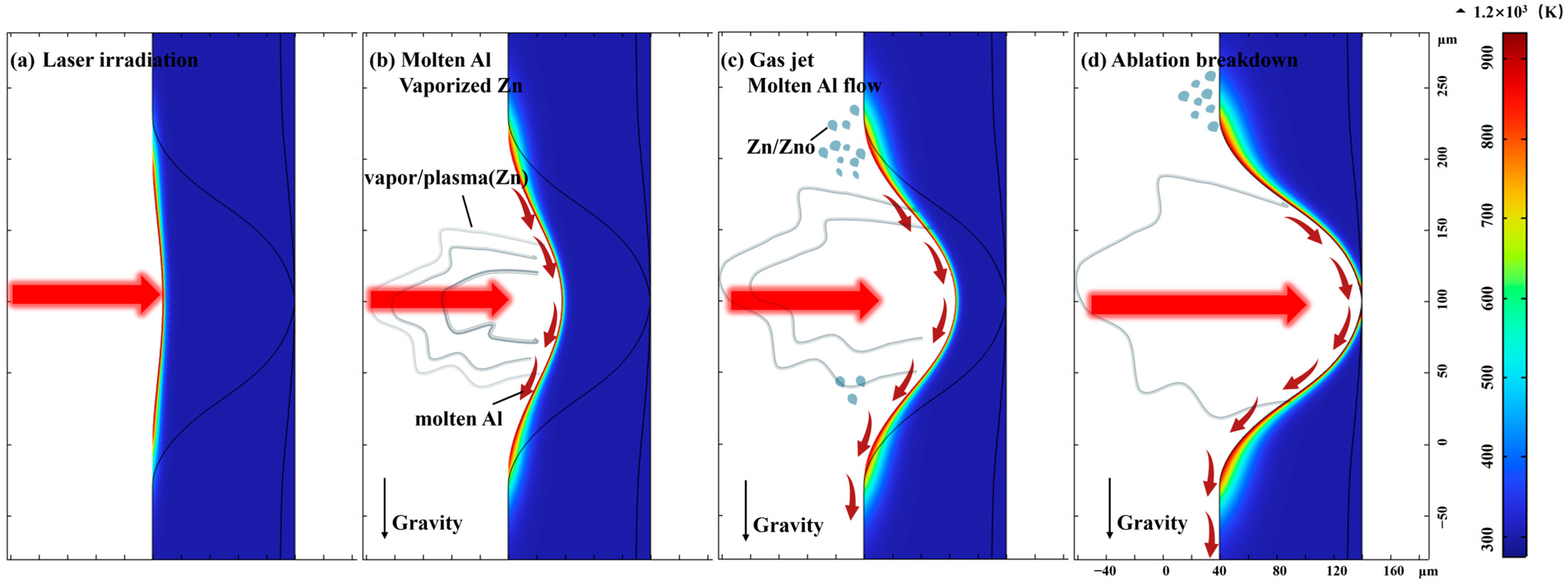
The mechanism of material separation on the surface of aluminum alloy during the experimental procedure has been thoroughly examined, yielding the results depicted in Figure 7, which illustrates the separation mechanism during the ablation process.
In the initial phase of laser irradiation, the surface of the material experiences a rapid increase in temperature. The laser energy absorbed by the surface primarily diffuses into the interior and surrounding regions of the material through thermal conduction, resulting in the formation of radial and depth-wise temperature gradients that evolve over time (refer to Figure 7a). The temperature of the metal target material steadily rises as the duration of laser irradiation increases. This indicates that, during this stage, the laser primarily heats the target material via surface absorption, leading to a continuous increase in its surface temperature. Once the surface temperature reaches or exceeds the melting point of aluminum (933.45 K), the material begins to transition into a molten state, creating a molten pool in the central area of the laser spot. This molten region gradually expands inward due to the effects of heat conduction. Concurrently, the zinc component within the aluminum alloy reaches its boiling point (1180.15 K) and initiates a vigorous vaporization process, generating rapidly expanding metal vapor and plasma clouds containing zinc (illustrated in Figure 7b). These zinc vapors react energetically with atmospheric oxygen during their ascent, resulting in the formation of zinc oxide (ZnO) gas-phase compounds. The ZnO subsequently condenses and adheres to the ablated area, resulting in the accumulation of a gray-white powder. Meanwhile, aluminum remains in a molten state and experiences liquid sinking due to gravitational forces (as shown in Figure 7c).
2 Z n ( g ) + O 2 ( g ) = 2 Z n O ( g )
Z n O g c o n d e n s a t e Z n O s
Additionally, there is a small amount
2 M g g + O 2 g = 2 M g O g
M g O g c o n d e n s a t e M g O s
With the ongoing exposure to laser, the processes of energy absorption, melting, vaporization, and sustained burning cause the small holes to deepen. Eventually, when a small hole breaches the full thickness of the target material, ablation penetration occurs (as illustrated in Figure 7d). Following surface condensation, zinc and its oxides begin to nucleate, resulting in the formation of gray-white powdery particle clusters. Meanwhile, molten aluminum experiences directional cooling and solidification, leading to the creation of bright silver strip-like materials, which align with the experimental morphology depicted in Figure 3.
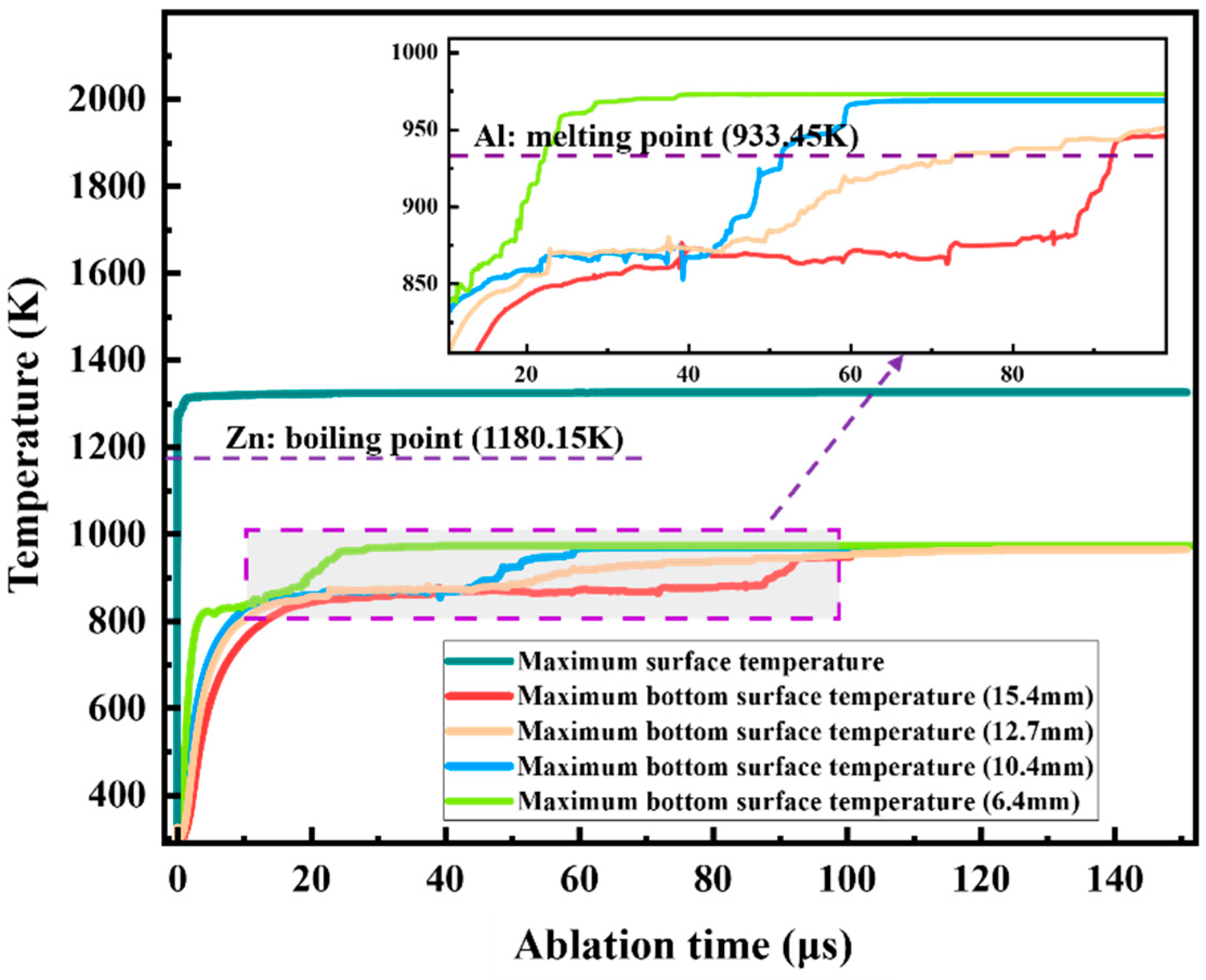
To determine if the temperature during laser ablation reaches the melting point of aluminum and the boiling point of zinc, experiments were performed on aluminum alloys of varying thicknesses, as shown in Figure 3, while maintaining the same power density (1416.84 W/cm2). The maximum temperature simulations for both the surface and the bottom of the ablation area during the process are presented in Figure 8.
The simulation results show that the maximum surface temperature of aluminum alloy targets with different thicknesses is basically the same at the same power density (deep green line in Figure 8). When exposed to high power density, the surface temperature of aluminum alloy rapidly increases at the onset of irradiation, quickly surpassing the melting point of pure aluminum (933.45 K) and even the boiling point of zinc (1180.15 K). These elevated temperatures lead to significant phase changes in the material, resulting in a molten aluminum matrix while zinc effectively vaporizes upon reaching its boiling point, which supports the material separation mechanism illustrated in Figure 8.
As the duration of laser exposure extends, heat continues to transfer to the bottom surface, eventually raising the temperature at the center of the bottom surface to the melting point of aluminum (933.45 K, as depicted in the enlarged image). At this stage, the material experiences erosion and penetration. The timing of reaching the melting temperature on the surfaces of aluminum alloys with varying thicknesses, as shown in the enlarged image, aligns closely with the experimental observations (Figure 3c,d).
The findings indicate that under a constant high-power density laser (1416.84 W/cm2), the surface temperature of the aluminum alloy rapidly escalates, significantly exceeding the melting point of aluminum and the boiling point of zinc within a short timeframe, regardless of thickness changes (ranging from 6.4 mm to 15.4 mm), while remaining well below the boiling point of aluminum (2740.15 K). Aluminum remains in a liquid state due to its high boiling point and flows downward under gravity within the ablation area. Upon contacting the cooler substrate, it solidifies, resulting in a dense, smooth, bright silver metal layer. During this process, zinc vapor becomes supersaturated in the cold air, leading to the homogeneous nucleation and condensation of approximately 20 nm nanoparticles, which accumulate above the ablation pit to create a porous layer. Figure 6 illustrates that, for the same power density, an increase in thickness results in a longer time required for penetration.

4. Conclusions

Under continuous high-power density laser irradiation, 7075 aluminum alloy demonstrates notable melting, penetration, and vaporization effects. When the laser power density is constant, increasing the thickness of the aluminum alloy significantly extends the time needed for ablation penetration. Furthermore, an analysis of element migration during the ablation process highlights the predominant changes in aluminum and zinc: most zinc elements separate from the aluminum matrix at high temperatures, vaporizing alongside a small quantity of other elements, which then oxidize and condense in the air, forming gray-white oxide deposits on the ablation area. Concurrently, most aluminum elements undergo melting and cooling solidification, resulting in bright silver solidification products primarily composed of aluminum due to gravity’s influence below the ablation area. This study offers insights into the ablation mechanisms of typical structural materials like 7075 aluminum alloy when subjected to continuous laser exposure.

Author Contributions

Conceptualization, J.X.; Methodology, T.L., R.G.; Validation, X.W., C.L.; Formal analysis, X.D., J.H. (Junyi He); Resources, Y.X.; Data curation, L.Z.; Writing—original draft, X.L.; Writing—review and editing, J.H. (Jinghua Han). All authors have read and agreed to the published version of the manuscript.

Funding

This research was funded by National MCF Energy R&D Program [2024YFE03190004], Innovation Center for Special Optical Glass Materials Technology [CXZX-TZGXBL-KYJJ-2025-06], Shaanxi Natural Science Foundation Program [2025JC-YBMS-770].

Data Availability Statement

Data are contained within the article.

Conflicts of Interest

Authors Jing Xiao, Rongjun Guo, Xinming Wu, Congzhou Li, Junyi He, Yongjun Xu, Xianchao Liu and Lian Zhang were employed by Southwest Institute of Technical Physics. The remaining authors declare that the research was conducted in the absence of any commercial or financial relationships that could be construed as a potential conflict of interest.

References

  1. Zhou, Z.; Sun, W.; Wu, J.; Chen, H.; Zhang, F.; Wang, S. The fundamental mechanisms of laser cleaning technology and its typical applications in industry. Processes 2023, 11, 1445. [Google Scholar] [CrossRef]
  2. Pathak, A.; Kumar, A.; Kumar, A.; Kumar, A. Application of laser technology in the mechanical and machine manufacturing industry. In Laser-Based Technologies for Sustainable Manufacturing; CRC Press: Boca Raton, FL, USA, 2023; pp. 107–155. [Google Scholar]
  3. Ahmed, S.A.; Mohsin, M.; Ali, S.M.Z. Survey and technological analysis of laser and its defense applications. Def. Technol. 2021, 17, 583–592. [Google Scholar] [CrossRef]
  4. Lionis, A.; Tsigopoulos, A.; Cohn, K. An application of artificial neural networks to estimate the performance of high-energy laser weapons in maritime environments. Technologies 2022, 10, 71. [Google Scholar] [CrossRef]
  5. Lyubomir, L.; Edmunds, T.; Risham Singh, G. Applications of laser technology in the army. J. Def. Manag. 2021, 11, 210. [Google Scholar]
  6. Borja, L.J. High-energy LASER directed energy weapons: Military doctrine and implications for warfare. In Routledge Handbook of the Future of Warfare; Routledge: London, UK, 2023; pp. 353–363. [Google Scholar]
  7. Li, X.; Li, F.; Song, J.; Chen, Z. Developments and trends of directed energy technology in the United States. In Proceedings of the 2023 IEEE 7th International Symposium on Electromagnetic Compatibility (ISEMC), Hangzhou, China, 20–23 October 2023; IEEE: New York, NY, USA, 2023; pp. 1–6. [Google Scholar]
  8. Li, S.S.; Yue, X.; Li, Q.Y.; Peng, H.L.; Dong, B.X.; Liu, T.S.; Yang, H.Y.; Fan, J.; Shu, S.L.; Qiu, F.; et al. Development and applications of aluminum alloys for aerospace industry. J. Mater. Res. Technol. 2023, 27, 944–983. [Google Scholar] [CrossRef]
  9. Roy, S.; Allard, L.F.; Rodriguez, A.; Porter, W.D.; Shyam, A. Comparative evaluation of cast aluminum alloys for automotive cylinder heads: Part II—Mechanical and thermal properties. Metall. Mater. Trans. A 2017, 48, 2543–2562. [Google Scholar] [CrossRef]
  10. Anand, S.; Mishra, A.K. High-performance materials used for UAV manufacturing: Classified review. Int. J. All Res. Educ. Sci. Methods 2022, 10, 2811–2819. [Google Scholar]
  11. Lin, R.; Liu, B.; Zhang, J.; Zhang, S. Microstructure evolution and properties of 7075 aluminum alloy recycled from scrap aircraft aluminum alloys. J. Mater. Res. Technol. 2022, 19, 354–367. [Google Scholar] [CrossRef]
  12. Zhou, B.; Liu, B.; Zhang, S. The advancement of 7xxx series aluminum alloys for aircraft structures: A review. Metals 2021, 11, 718. [Google Scholar] [CrossRef]
  13. Brown, J.; Burford, D. Friction Stir Fabrication of Spar T-Joints Made from 7075 Aluminum. Frict. Stir Weld. Process. VI 2011, 213–220. [Google Scholar] [CrossRef]
  14. Mandal, K.K.; Kuar, A.S.; Mitra, S. Experimental investigation on laser micro-machining of Al 7075 Alloy. Opt. Laser Technol. 2018, 107, 260–267. [Google Scholar] [CrossRef]
  15. Fu, B.; Zhao, X.; Zhang, H.; Xu, L. Application and Progress of Laser Technology for Thrombus Ablation. Chin. J. Lasers 2022, 49, 1907001. [Google Scholar]
  16. Zuo, J.; Lin, X. High-power laser systems. Laser Photonics Rev. 2022, 16, 2100741. [Google Scholar] [CrossRef]
  17. Guo, L.; Wang, H.; Liu, H.; Huang, Y.; Wei, Q.; Leung, C.L.A.; Wu, Y.; Wang, H. Understanding keyhole induced-porosities in laser powder bed fusion of aluminum and elimination strategy. Int. J. Mach. Tools Manuf. 2023, 184, 103977. [Google Scholar] [CrossRef]
  18. Inogamov, N.A.; Petrov, Y.V.; Khokhlov, V.A.; Zhakhovskii, V.V. Laser ablation: Physical concepts and applications. High Temp. 2020, 58, 632–646. [Google Scholar] [CrossRef]
  19. Porneala, C.; Willis, D.A. Observation of nanosecond laser-induced phase explosion in aluminum. Appl. Phys. Lett. 2006, 89, 211121. [Google Scholar] [CrossRef]
  20. Xu, S.; Chen, Y.; Liu, H.; Miao, X.; Yuan, X.; Jiang, X. Femtosecond laser ablation of Ti alloy and Al alloy. Optik 2020, 212, 164628. [Google Scholar] [CrossRef]
  21. Peng, Z.; Yin, J.; Cui, Y.; Cao, Y.; Lu, L.; Yan, Y.; Hu, Z. Numerical and experimental investigation on pulsed nanosecond laser ablation processing of aluminum alloy. J. Mater. Res. Technol. 2022, 19, 4708–4720. [Google Scholar] [CrossRef]
  22. Cholkar, A.; Chatterjee, S.; Richards, C.; McCarthy, É.; Perumal, G.; Regan, F.; Kinahan, D.; Brabazon, D. Biofouling and corrosion protection of aluminum alloys through ultrafast laser surface texturing for marine applications. Adv. Mater. Interfaces 2024, 11, 2300835. [Google Scholar] [CrossRef]
  23. Chen, W.; Hilhorst, A.; Bokas, G.; Gorsse, S.; Jacques, P.J.; Hautier, G. A map of single-phase high-entropy alloys. Nat. Commun. 2023, 14, 2856. [Google Scholar] [CrossRef]
  24. Ma, S.; Zhang, Z.; Li, H.; Guo, S.; Xing, X.; Du, Z. Deposition characteristics and growth mechanism of flue gas in the treatment of zinc-containing dust by rotary hearth furnace. Metall. Res. Technol. 2024, 121, 411. [Google Scholar] [CrossRef]
  25. Wu, C.; Zhigilei, L.V. Microscopic mechanisms of laser spallation and ablation of metal targets from large-scale molecular dynamics simulations. Appl. Phys. A 2014, 114, 11–32. [Google Scholar] [CrossRef]
  26. Zhang, Y.; Jin, K.; Li, Z.; Wei, S.; Guo, J. Microstructures, wear and corrosion behaviors of laser cladding in situ synthetic Al3Ti/AlNi/AlNi3/MgNi2 composite coatings on magnesium alloy using Al as middle layer. J. Mater. Eng. Perform. 2023, 32, 4216–4228. [Google Scholar] [CrossRef]
  27. Zhu, C.; Lyu, S.; Mei, Y.; Lin, J. Effects of Laser Ablation on Corrosion Resistance of Adhesive-bonded Aluminum Joint. China Mech. Eng. 2017, 28, 2893–2897. [Google Scholar]
  28. Nie, J.; Zhang, H.; Zhang, D.; Su, X.; Zhang, J.; Shan, D.; Guo, B.; Xu, J. Laser-induced removal of thermal control coatings on aluminum alloy surfaces: Thermal-impact coupling effects and processes. Appl. Surf. Sci. 2025, 706, 163524. [Google Scholar] [CrossRef]
  29. Zhou, B.; Liu, B.; Zhang, S.; Lin, R.; Jiang, Y.; Lan, X. Microstructure evolution of recycled 7075 aluminum alloy and its mechanical and corrosion properties. J. Alloys Compd. 2021, 879, 160407. [Google Scholar] [CrossRef]
  30. Pan, J.Y.; Zhuang, P.; Yu, X.H. Picosecond laser ablation of 7075 aluminum alloy numerical simulation and experimental study. Laser Infrared 2022, 52, 994–999. [Google Scholar]
  31. Habiba, K.; Makarov, V.I.; Weiner, B.R.; Morell, G. Fabrication of nanomaterials by pulsed laser synthesis. Manuf. Nanostruct. 2014, 10, 263–292. [Google Scholar]
  32. Chen, M.H.; Wang, X.F.; Zhang, L.N.; Qin, Q.Z. Matrix-isolation infrared spectroscopy of reaction products between 532 nm laser-ablated metallic tantalum and CO2. Acta Chim. Sin. 1999, 20, 1619–1621. [Google Scholar]
  33. Vorobyev, A.Y.; Guo, C. Nanochemical effects in femtosecond laser ablation of metals. Appl. Phys. Lett. 2013, 102, 074107. [Google Scholar] [CrossRef]
  34. Wang, X.; Xu, X. Molecular dynamics simulation of heat transfer and phase change during laser material interaction. J. Heat Transf. 2002, 124, 265–274. [Google Scholar] [CrossRef]
  35. Wang, D.; Wei, S.; Yuan, X.; Liu, Z.; Weng, Y.; Zhou, Y.; Xiao, T.; Goda, K.; Liu, S.; Lei, C. Ultrafast imaging for uncovering laser–material interaction dynamics. Int. J. Mech. Syst. Dyn. 2022, 2, 65–81. [Google Scholar] [CrossRef]
  36. Oane, M.; Mahmood, M.A.; Popescu, A.C. A state-of-the-art review on integral transform technique in laser–material interaction: Fourier and non-Fourier heat equations. Materials 2021, 14, 4733. [Google Scholar] [CrossRef] [PubMed]
Figure 1. Presents a schematic diagram of the experimental system.
Photonics 12 01158 g001
Figure 2. Ablation results of aluminum alloy with the same thickness (≈3.0 mm). (a) for 958.528 W/cm2 and 117 s; (b) for 1217.834 W/cm2 and 17 s; (c) for 1478.128 W/cm2 and 8 s; (d) for 1656.493 W/cm2 and 5 s.
Photonics 12 01158 g002
Figure 3. The ablation results of aluminum alloy subjected to a consistent power density of 1416.84 W/cm2. (a) For ablation time (29 s), and the sample thickness(6.4 mm); (b) For ablation time (48 s), and the sample thickness(10.4 mm); (c) For ablation time (68 s), and the sample thickness(12.7 mm); (d) For ablation time (94 s), and the sample thickness(15.4 mm).
Photonics 12 01158 g003
Figure 4. Results of Scanning Electron Microscopy (SEM) and Elemental Analysis. (a) Regular stripes; (b) Rough and uneven; (c) Strip production; (d) Overall ablation morphology; (e) Small particels-I; (f) Small particels-II; (g) The types and relative contents of elements in zones C and F; (h) Bar chart of element types and relative contents in regions C and F.
Photonics 12 01158 g004
Figure 5. Schematic Diagram of Laser Action.
Photonics 12 01158 g005
Figure 6. Simulation of non-penetrated aluminum alloy (a) Temperature distribution diagram (b) Graphs of maximum surface/bottom temperature and thermal stress versus time.
Photonics 12 01158 g006
Figure 7. Schematic diagram of separation mechanism during ablation process.
Photonics 12 01158 g007
Figure 8. Maximum Temperature Curve of Aluminum Alloy Surface and Bottom with Different Thicknesses (6.4–12.7 mm).
Photonics 12 01158 g008
Table 1. Chemical composition of the 7075 aluminum alloy (Mass fraction%).
IngredientsAlSiMnCrFeZnTiCuMgOthers
Contentallowance0.50.150.16–0.30.505.1–6.10.11.2–2.02.0–3.00.15
Table 2. Thermodynamic parameters.
Density   ρ n /(kg·m−3) Specific   Heat   Capacity   c n /(J·kg−1·K−1) Thermal   Conductivity   k n /(W·m−1·K−1)
2810960150
Melting point T m /(K)Absorption ratio (1080 nm) α n /(m−1)Thermal expansion coefficient γ n /(K−1)
748.15(Zn)908.15(Al)1.0 × 1083.0 × 10−5
Disclaimer/Publisher’s Note: The statements, opinions and data contained in all publications are solely those of the individual author(s) and contributor(s) and not of MDPI and/or the editor(s). MDPI and/or the editor(s) disclaim responsibility for any injury to people or property resulting from any ideas, methods, instructions or products referred to in the content.