Article

Utilizing States of Polarization in One-Dimensional Corite Codes with Two-Code Keying for Optical Code-Division Multiple Access

Department of Electrical Engineering, Chang Gung University, Taoyuan City 33302, Taiwan
Photonics 2024, 11(9), 819; https://doi.org/10.3390/photonics11090819

Submission received: 28 June 2024 / Revised: 28 August 2024 / Accepted: 29 August 2024 / Published: 30 August 2024
(This article belongs to the Special Issue Optical Fiber Communication Systems and Networks)

Abstract

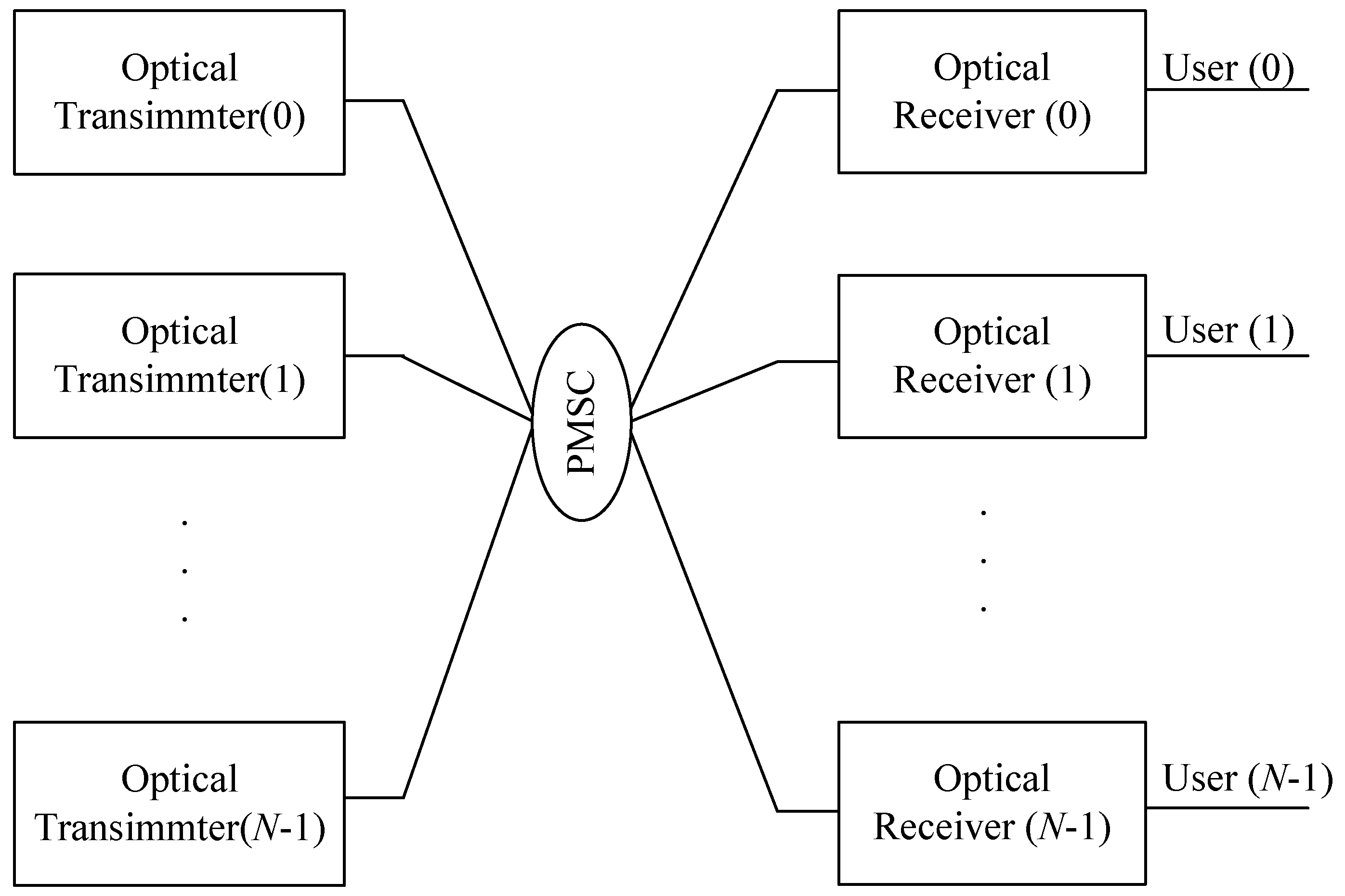
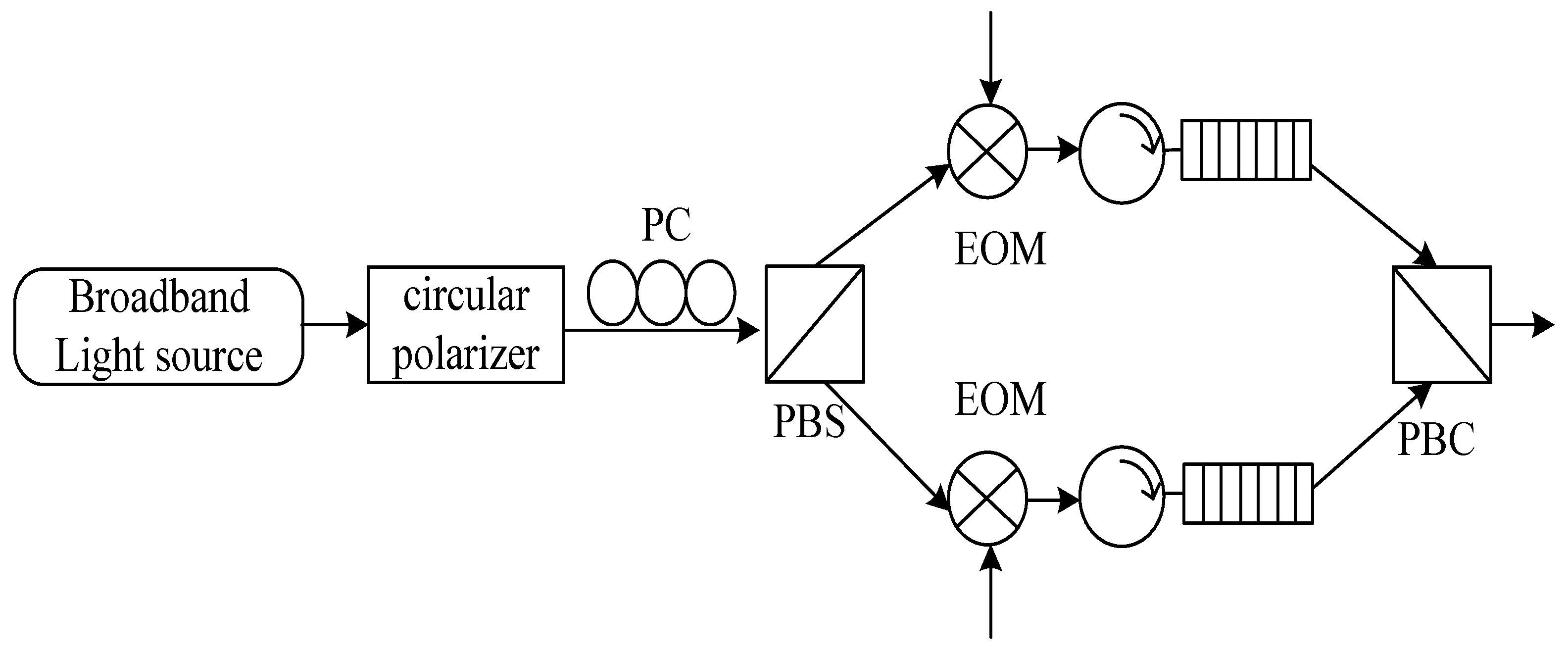
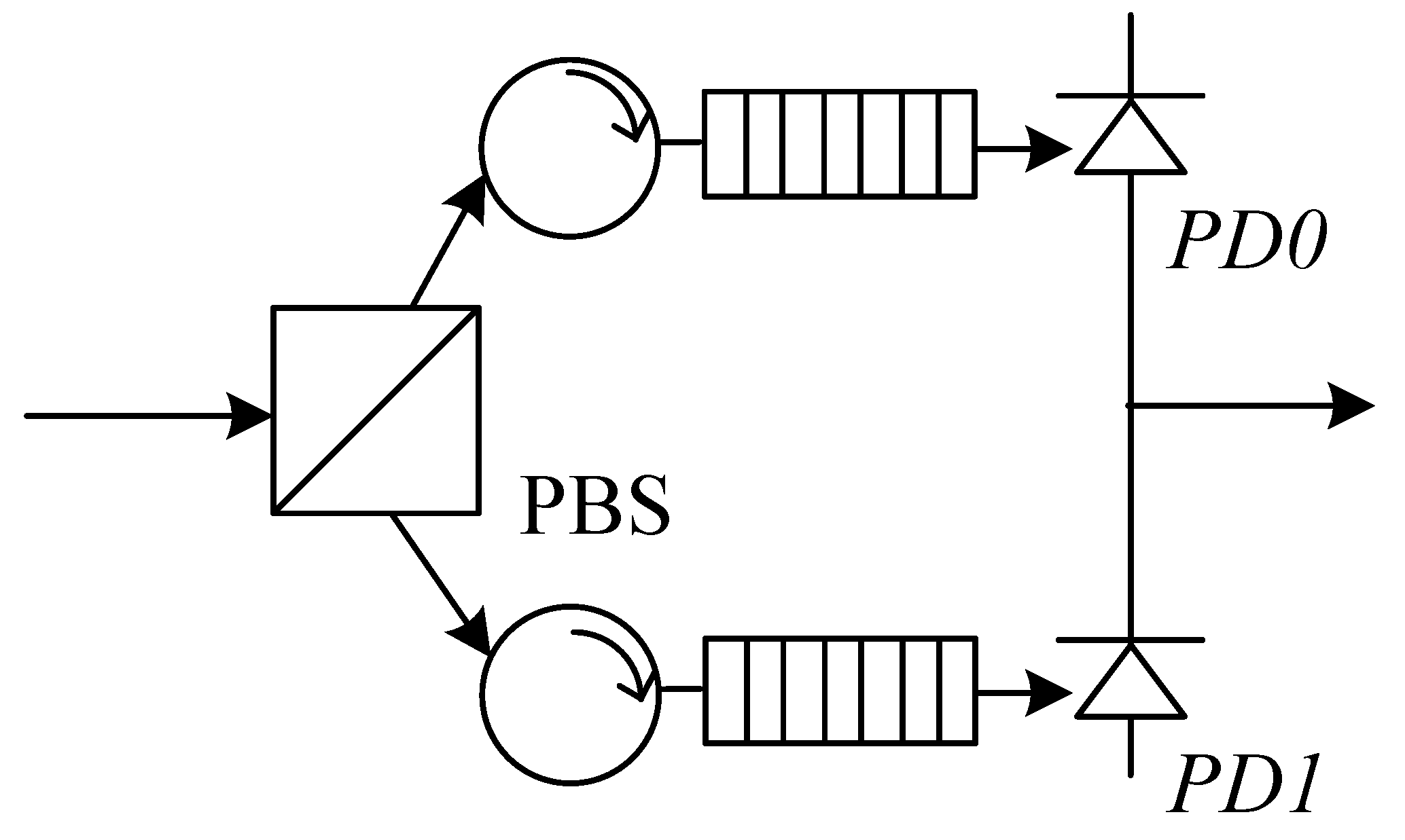
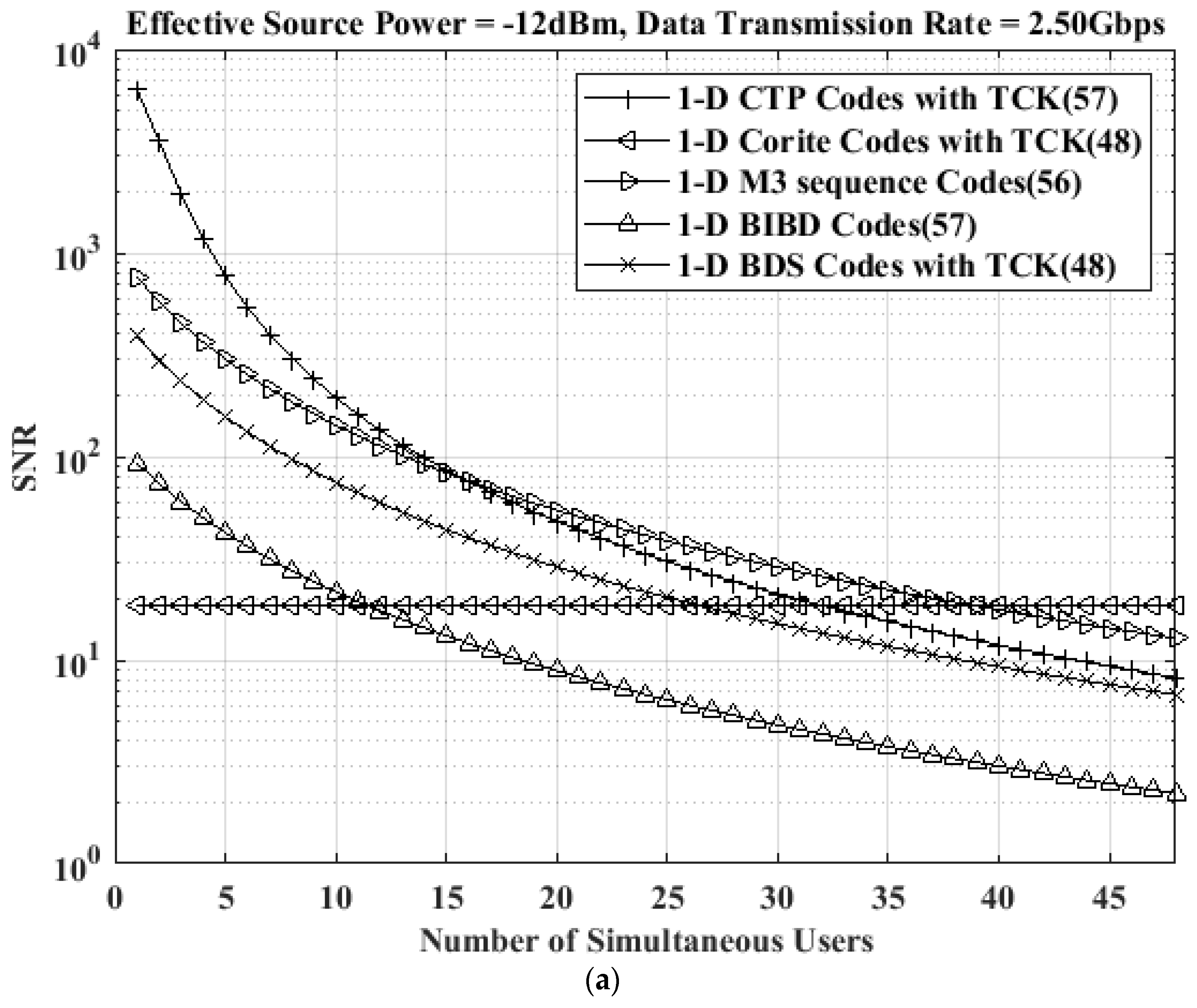
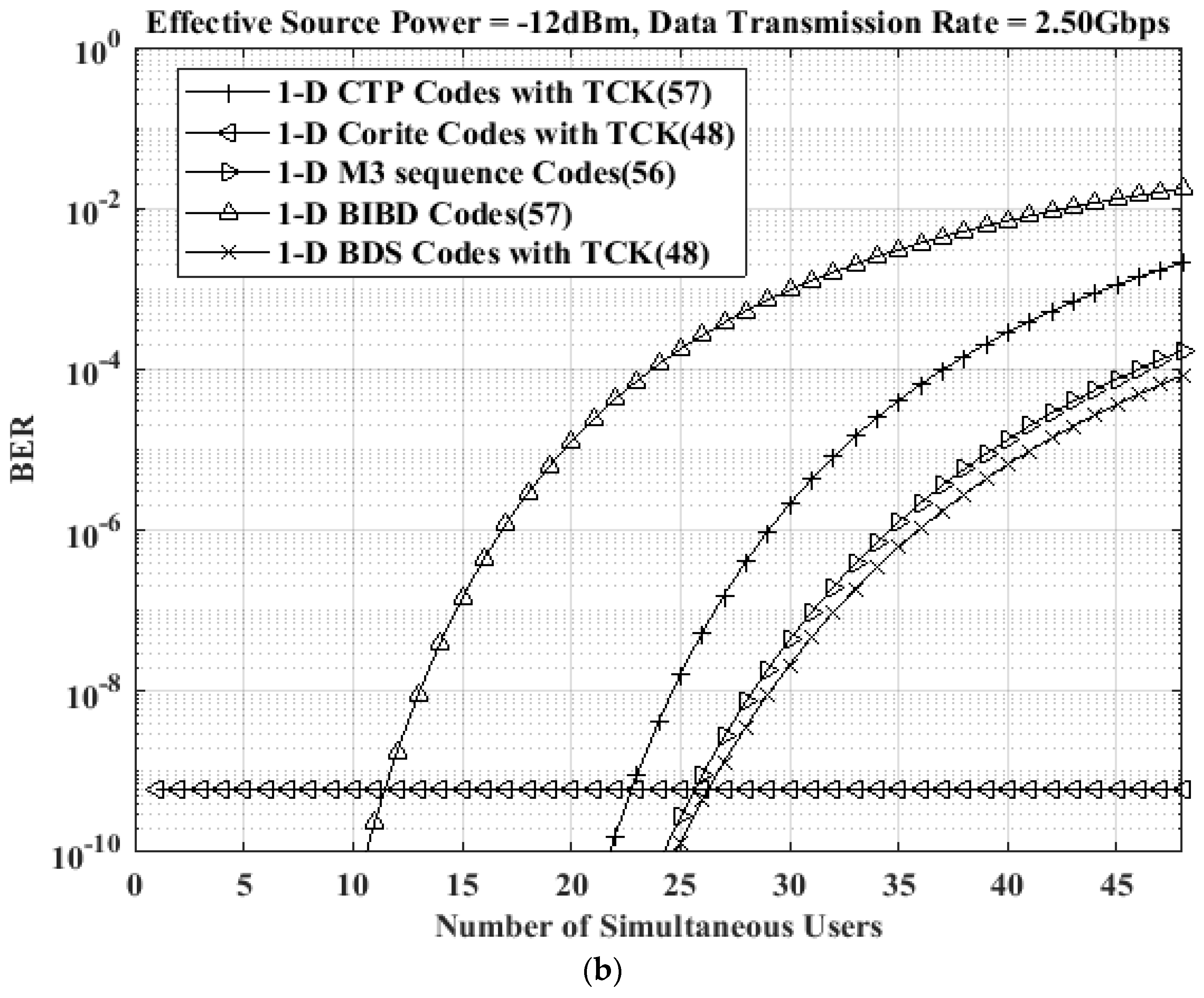
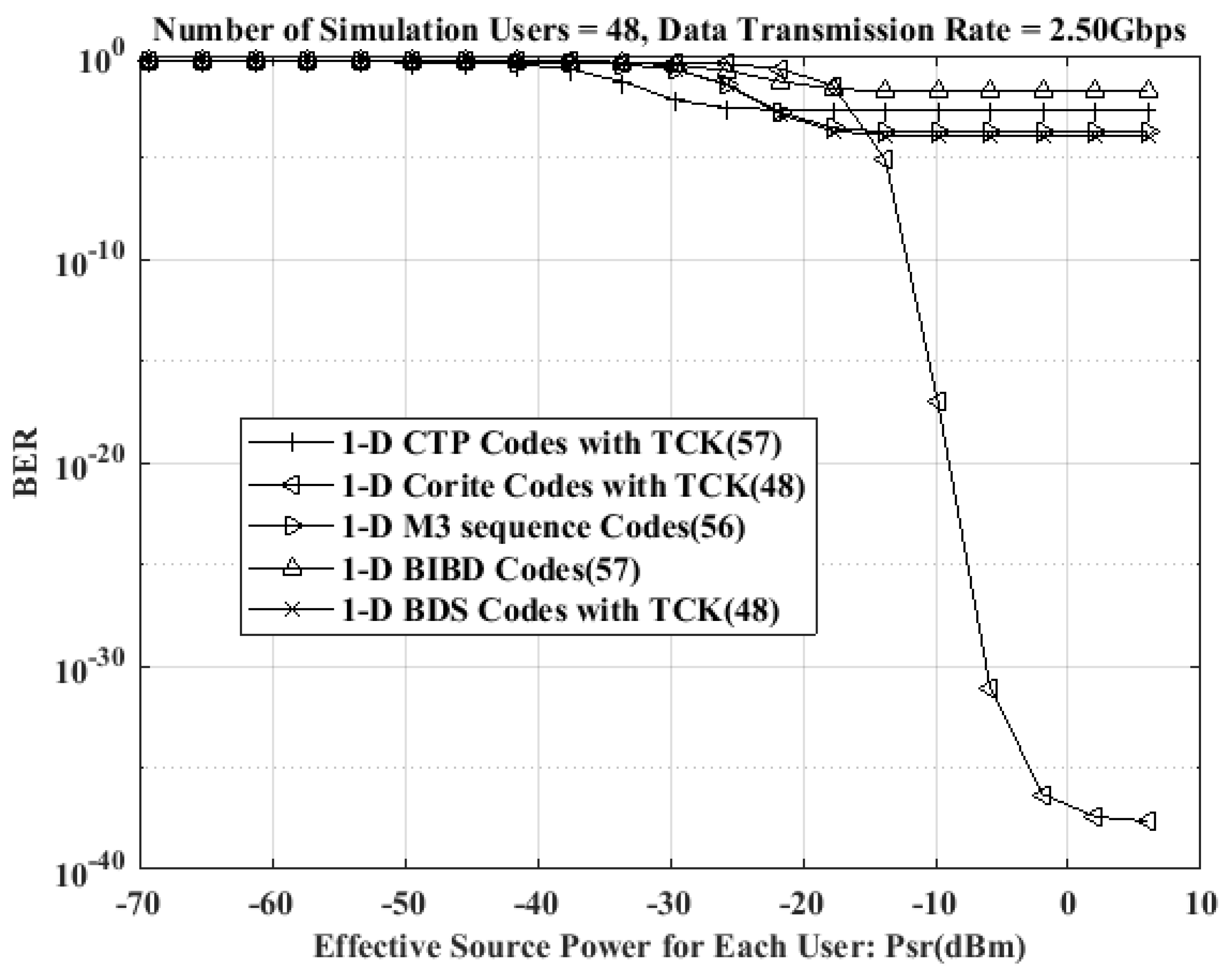
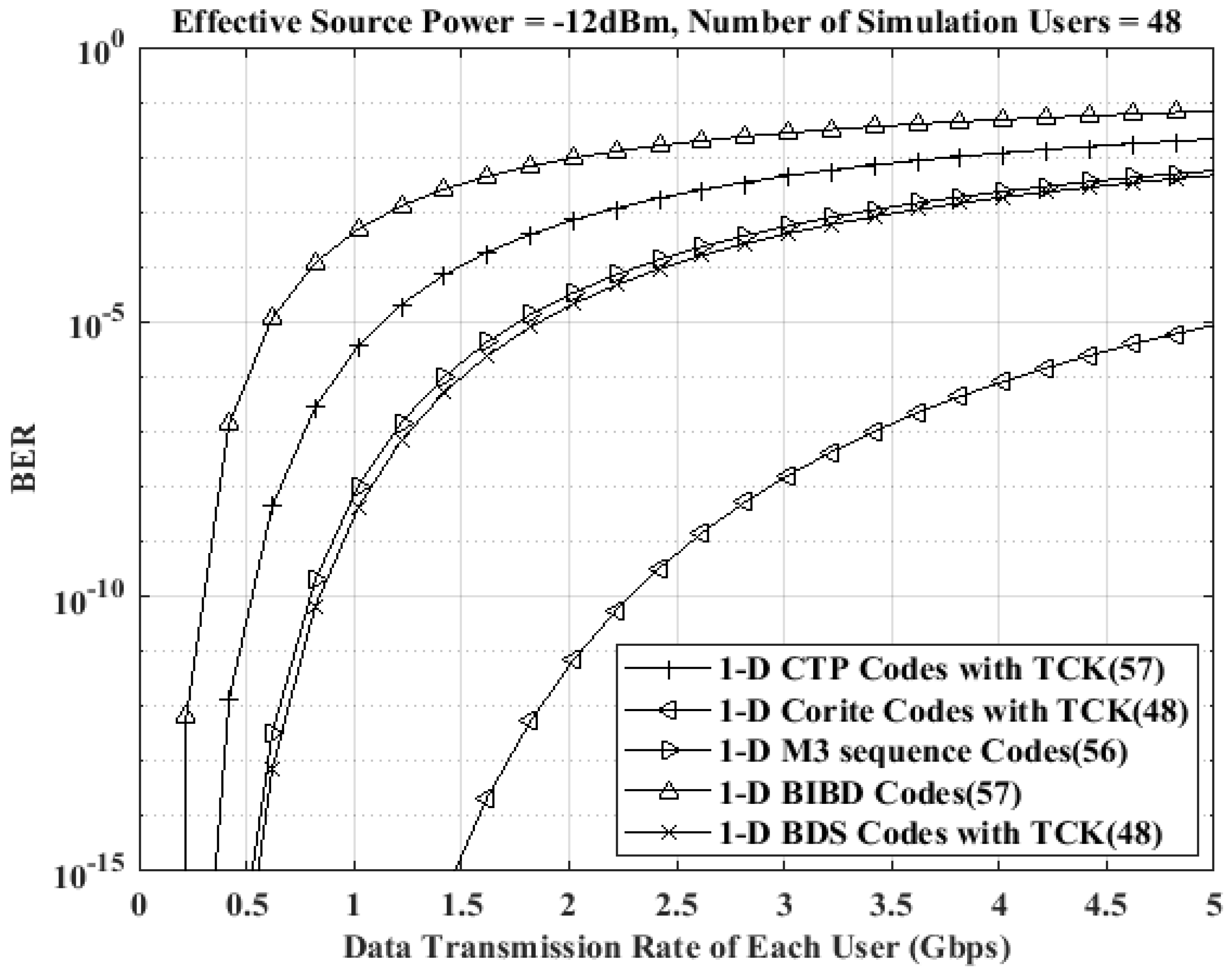
We propose a novel family of codes comprising two mutually orthogonal states of polarization (SOPs) for the spectral encoding of one-dimensional (1D) Corite codes with two-code keying (TCK) for use in the spectral amplitude coding (SAC) of optical code-division multiple access (OCDMA) networks. We design these 1D Corite codes with TCK to create a specific code operation function, an encoding optical transmitter structure, and a decoding optical receiver structure, respectively. In the proposed system, multi-user interference (MUI) can occur due to interference from other simultaneous users. However, we have modified the cross-correlation to cancel out the MUI. Although the proposed system recovers bits successfully, it still suffers from phase-induced intensity noise (PIIN). Our numerical results demonstrate that the proposed system using 1D Corite codes with TCK can support a larger number of simultaneous users than other systems that use 1D CTP codes with TCK, 1D M3 sequence codes, 1D BIBD codes, and 1D BDS codes with TCK. Specifically, the proposed system can support up to 48 simultaneous users, which is a notable improvement. Our numerical results indicate that the proposed system using 1D Corite codes with TCK can achieve a data transmission rate of up to 2.5 Gbps, which is a significant improvement.
Keywords: multi-user interference (MUI); optical polarization (OP); optical code-division multiplexing (OCDMA); two-code keying (TCK) multi-user interference (MUI); optical polarization (OP); optical code-division multiplexing (OCDMA); two-code keying (TCK)