Review

The Use of Thermal and Mineral Waters for Balneological and Recreational Purposes in Poland

by
Anna Szafarczyk
* and
Małgorzata Ulmaniec
PK, Faculty of Environmental Engineering and Energy, Krakow University of Technology, Warszawska 24, 31-155 Krakow, Poland
*
Author to whom correspondence should be addressed.
Limnol. Rev. 2026, 26(3), 48; https://doi.org/10.3390/limnolrev26030048
Submission received: 30 June 2026 / Revised: 22 July 2026 / Accepted: 10 August 2026 / Published: 12 August 2026

Abstract

This article discusses the use of thermal and mineral waters in Poland in balneology, rehabilitation, and recreation. It highlights their importance for health, economy, and tourism, as well as the country’s significant hydrogeothermal potential, particularly in the Carpathians, the Sudetes, and the Polish Lowlands. The authors present a classification of waters, their chemical and thermal properties, and their main applications: therapeutic baths, drinking cures, inhalations, peloidotherapy, and hydrotherapy. A significant portion of the study reviews the latest global research confirming the effectiveness of balneotherapy in the treatment of musculoskeletal and skin disorders, indicating the need for further clinical research. The paper also discusses Polish spas and recreational centers using thermal waters, pointing to their growing role in health care and wellness tourism. Limitations to the development of balneotherapy, such as high drilling costs, geological risks, and the need to maintain therapeutic water parameters, are highlighted.

1. Introduction

Thermal and mineral waters constitute a significant portion of Poland’s natural resources, playing a significant role in both balneology and broadly defined recreation and health tourism. Their physicochemical properties, including elevated temperatures and specific mineral composition, determine their use in preventative health care, SPA treatment, and biological regeneration. Recent decades have seen dynamic development of infrastructure using these resources, particularly in the context of growing public interest in a healthy lifestyle and wellness tourism. Poland has significant hydrogeothermal potential and mineral water resources, the distribution of which is linked to the country’s geological structure, particularly in the Carpathians, Sudetes, and Polish Lowlands. The tradition of using these waters for therapeutic purposes dates back centuries, and modern spas continue and develop these practices, integrating them with modern technological solutions and service standards. At the same time, there is rapid development of recreational facilities, such as thermal baths and swimming pool complexes, which use thermal waters as an attractive element of their tourist offers. Despite the growing importance of thermal and mineral waters in the economy and health care, issues related to their exploitation, classification, and effective use remain the subject of numerous studies and discussions. The need for a comprehensive understanding of the current state of knowledge regarding their properties, applications, and legal and environmental conditions is particularly important. The purpose of this review article is to analyze and synthesize the available literature on the use of thermal and mineral waters in Poland for balneological and recreational purposes, with particular emphasis on their properties and development directions and the challenges associated with their sustainable use.

2. The Latest Global Research on the Use of Thermal and Mineral Waters

The international literature on the use of mineral and thermal waters for balneological and recreational purposes clearly highlights two complementary lines of research. The first is clinical–therapeutic in nature and encompasses the evaluation of the effectiveness of balneotherapy, hydrotherapy, and other non-pharmacological forms of treatment for musculoskeletal disorders. The second focuses on identifying the hydrogeochemical and hydrodynamic characteristics of thermal waters, as well as their importance for health tourism, recreation, and regional development.
The literature review was conducted using the Science Direct database, using keywords related to the research topic and their English equivalents. Additionally, publications available via ResearchGate were used to supplement the search. Statistical and environmental data were obtained from official sources, i.e., the Environmental Protection Inspection and the Central Statistical Office, using an internet search engine. The analysis included publications and reports directly related to the subject of the work, while studies unrelated to the scope of the research or duplicating previously presented results were omitted.
In the clinical field, the work by Harzy, Ghani and Akasbi [1] is particularly significant. It provides a systematic review of randomized controlled trials on the short- and long-term therapeutic effects of natural thermal waters on knee osteoarthritis. The authors assessed the effectiveness of mineral water therapy on pain and motor function, and the analysis included randomized controlled trials. This publication is an important reference point for assessing the scientific evidence regarding balneotherapy in rheumatological conditions. A meta-analysis of randomized controlled trials presented in publications from various countries and analyzed in the article [2] showed that balneotherapy using natural mineral waters significantly reduces pain, disability, and, to a lesser extent, depression in patients with fibromyalgia. The obtained effects, particularly in terms of pain and disability, persist for up to 6 months after treatment.
More recent studies [3,4] have a similar profile. A study on the improvement in the quality of life after balneotherapy using thermal waters rich in hydrogen sulfide and an attempt to assess the contribution of minerals to the achieved effects shows that thermal waters play a role in improving patients’ quality of life. The study on the combined use of intensive balneotherapy and aquatic exercise in knee osteoarthritis focuses on short-term clinical and functional outcomes. Both publications show that modern balneological research is not limited to the mere observation of symptoms, but also includes the assessment of the functioning and the quality of life of patients.
Also significant in review and interdisciplinary research is the work reported in [5], which systematizes non-pharmacological treatment methods that influence pain modulation and function in spondyloarthropathies. The publication [6] compares balneotherapy in the public health systems of Spain, France, Italy, and Portugal. Both works indicate that spa treatment is increasingly being analyzed not only as a medical intervention but also as an element of health policy and the organization of care systems.
Another important direction is hydrogeological and hydrochemical studies, which allow for the assessment of thermal water resources as a potential basis for treatment and recreation. The work reported in [7] concerns the modeling of selected hydrodynamic and hydrochemical parameters of the geothermal water system, using the medicinal waters of Cieplice as an example. The title indicates that the authors analyzed the functioning of the water system and its characteristics relevant to therapeutic use. The study [8] determines the yield of thermal–mineral springs flowing into the Bečva River in Teplice, demonstrating the importance of measuring resources and yields for thermal water management.
Maria et al. [9] and Yang et al. [10] also explore the hydrogeochemical theme. The first paper, which examines the hydrogeochemical properties of thermal springs in Ciwidey, analyzes them in the context of natural therapeutic applications in medical geology. The second paper describes water–rock interactions in karst and the mechanisms of H2SiO3 enrichment of thermal–mineral waters in the Shiqian fault zone. Both publications demonstrate that the potential for balneological use of thermal waters depends on their chemical composition, geological conditions, and geochemical processes occurring in the water system.
The importance of valorizing water resources for health and recreational tourism is also increasingly emphasized in the international literature. Jetimov et al. [11] analyze and evaluate the mineral waters of the Alakol Basin in the context of recreational and health tourism. Razbaev [12] indicates promising directions for the development of recreational and health tourism in the southern Aral Sea regions. A similar approach is represented by a study on thermal and mineral waters regarding their natural potential for the development of health tourism in Bosnia and Herzegovina. Such studies demonstrate that thermal resources are considered not only as a treatment facility but also as a factor in local and regional development.
Hot springs in Bhutan constitute a significant element of local culture and tradition. Their use for medicinal purposes is deeply rooted in the ethnopharmacological knowledge of the community. Gurung and Yangden [13] demonstrate that balneotherapy in hot springs is particularly important for musculoskeletal and skin conditions, which correlates with their physicochemical properties. The authors’ study includes three springs in the Gasa and Punakha districts, which exhibit a hydrogeochemical facies of Na+–Cl, and calcium, sodium, potassium, and magnesium concentrations correlate with perceived health benefits.
Work on the development of hydrogeological research in Serbia and the use of thermal waters in spa tourism indicates that the region’s geological and tectonic complexity favors the formation of numerous mineral, thermal, and thermomineral springs. Milanović and Vasić [14] present the historical development of hydrogeology in Serbia from the late 19th century to the present day, emphasizing the importance of thermal and thermomineral waters for spa tourism, treatment, and recreation. The authors point to the need for sustainable use and monitoring of these resources in the context of local and regional development.
In the context of Bosnia and Herzegovina, thermal and mineral waters are presented as having natural potential for the development of spa tourism. The authors [15] point out that complex geology and tectonics have led to the creation of numerous mineral, thermal, and thermomineral springs, which have played an important role in health care, spa tourism, and recreation for a long time. The article presents selected thermal waters used in spas registered as medical facilities and describes the challenges of balneological offers and opportunities for improving spa destinations.
Research on low-enthalpy geothermal hot springs in Mexico combines hydrogeochemical characteristics with therapeutic zoning and implications for wellness tourism. Puy-Alquiza et al. [16] analyze the waters’ chemical composition, geochemical processes, and occurrence conditions and then propose zoning for therapeutic applications. The authors emphasize that thermal waters can support both health and recreational purposes while maintaining the resource’s sustainability, which is crucial for sustainable thermal resource management.
The article [17] discusses the importance of groundwater as a strategic water resource in Serbia, highlighting its large, still untapped potential and role in crisis situations. It also highlights the need for quantitative and qualitative monitoring and the use of GIS tools to identify hydrogeological features and develop maps to support the management of these resources.
A significant addition to this field are publications devoted to the environmental quality and safety of thermal water use. Valeriani et al. [18] analyze the biodiversity of microflora in the waters of thermal springs and natural spa pools. Berikten et al. [19] examine fungal contamination of thermal springs in pool water and air samples, and Şener et al. [20] assess the risk associated with the mixture of medications and beauty products in the thermal waters of Kütahyi. These sources indicate that the modern use of thermal waters requires not only their therapeutic valorization but also microbiological and chemical monitoring.
Hot springs, called onsen in Japan and oncheon in Korea, are a key element of the culture of both regions, deeply connected to centuries-old traditions of bathing and balneology. Despite sharing geothermal resources, their utilization varies between countries. There are approximately 27,000 hot springs in Japan. Their primary functions are relaxation, social integration, and therapy. Using onsens is subject to strict etiquette: bathing requires washing and rinsing beforehand, and the pools must be entered completely nude. Many facilities operate in conjunction with traditional ryokan inns and are sometimes used as a local source of renewable energy. In South Korea, hot springs are highly commercialized. Large public jjimjilbang baths and water parks dominate, where bathing is social rather than contemplative. These facilities offer shared water areas, separate undressed areas, thermal pools, saunas, ice chambers, and sleeping areas. In North Korea, hot springs have historically served medicinal and industrial purposes, including agriculture and food processing. Today, they operate primarily in state-run sanatoriums and large resorts, such as Yangdok. Compared to the South, recreational use of hot springs by locals is less common, reflecting a cultural belief that excessive sweating leads to nutrient loss [21,22].
Among these sources, the issue of the waters of Cieplice is particularly important for Poland, as it fits into the broader research on thermal resources used in spa treatment. The work of Liber-Makowska and Kiełczawa [7] demonstrates that analyzing hydrodynamic and hydrochemical parameters is essential for proper management of a geothermal system. Furthermore, the results of the review [1] and more recent clinical studies indicate that thermal waters are important not only as an object of interest in hydrogeology but also as a viable tool supporting the treatment of musculoskeletal disorders. From a broader perspective, the world literature confirms that balneology, recreation, and health tourism constitute a common area of the use of mineral and thermal resources, requiring a simultaneous medical, geological, and environmental approach.

3. Description and Characteristics (Definition) of Waters

Natural mineral waters in European Union countries are regulated by directives [23,24]. However, the provisions of these directives do not apply to natural mineral waters used for therapeutic purposes in thermal facilities [23]. There is also no legal definition of thermal waters in law of the European Union [25].
In Poland, groundwater can be divided into ordinary waters and brines, medicinal waters, and thermal waters [26]. This division results from applicable legal provisions. The use and protection of ordinary waters is regulated by the Water Law [27], while brines, medicinal waters, and thermal waters, as minerals, are subject to the Geological and Mining Law [26]. Depending on the type of rock layers, the depth of their occurrence, the type of dissolved gases, the content of colloids and suspensions, and the pressure and residence time in given regions, groundwater is characterized by various properties, the measure of which is the chemical composition and the degree of mineralization [28]. Substances dissolved in water determine the chemical composition of waters and present their chemical, physical and organoleptic properties [29]. The composition of groundwater can be divided into: inorganic substances (minerals), organic substances, gases and microorganisms [30,31]. Inorganic substances (minerals) dissolved in water can be divided into: main components (principal ions), secondary components (minor components), and trace elements. The main components include: anions: chlorides ( C l ), sulfates ( S O 4 2 ), bicarbonates ( H C O 3 ), and carbonates ( C O 3 2 ); cations: sodium ( N a + ), magnesium ( M g 2 + ), calcium ( C a 2 + ), and potassium ( K + ). Subsidiary components include: anions: nitrates ( N O 3 ), nitrites ( N O 2 ), silicates ( H 4 S i O 4 ); cations: ammonium ( N H 4 + ), iron ( F e 2 + , F e 3 + ). Trace elements include compounds of other elements found in water.
Natural and synthetic organic substances occur in water in much smaller quantities than inorganic substances. Humic substances—fulvic and humic acids—dominate among natural organic substances. Gases dissolved in water most commonly include CO2, N2, O2, CH4, and H2S. The type of gas depends on the environment and the gas’s origin—atmospheric, biochemical, chemical, or radiogenic. The solubility of gases in water increases with increasing pressure and decreases with increasing temperature and salt concentration. Microorganisms in groundwater are usually bacteria, utilizing the processes of organic matter decomposition and other oxidation–reduction processes. Major components account for over 90% of the dissolved substances in typical natural waters [31]. The chemical composition of water is often determined solely by the major ions.
Water mineralization is a chemical characteristic of water determined in hydrogeochemical studies to assess water quality and is used in water classifications. It is calculated by summing the concentrations of all mineral components (ions) of water. Approximate measures of water mineralization include dry residue, dissolved substances, specific electrolytic conductivity, and even water hardness. Water mineralization is expressed in mg/dm3 or g/dm3 [29]. Dry residue corresponds to the mass of sediment remaining after evaporation of a specific volume of water and drying at 105 °C. It includes both minerals and suspended solids. Based on this, groundwater is conventionally divided into three groups: normal or freshwaters leaving less than 0.5 g/L of sediment, acratopegic waters leaving 0.5–1.0 g/L of sediment, and mineral waters leaving more than 1 g/L (1000 mg/dm3) of sediment.
To assess the hydrogeochemical type of water, determination of the main components is required.
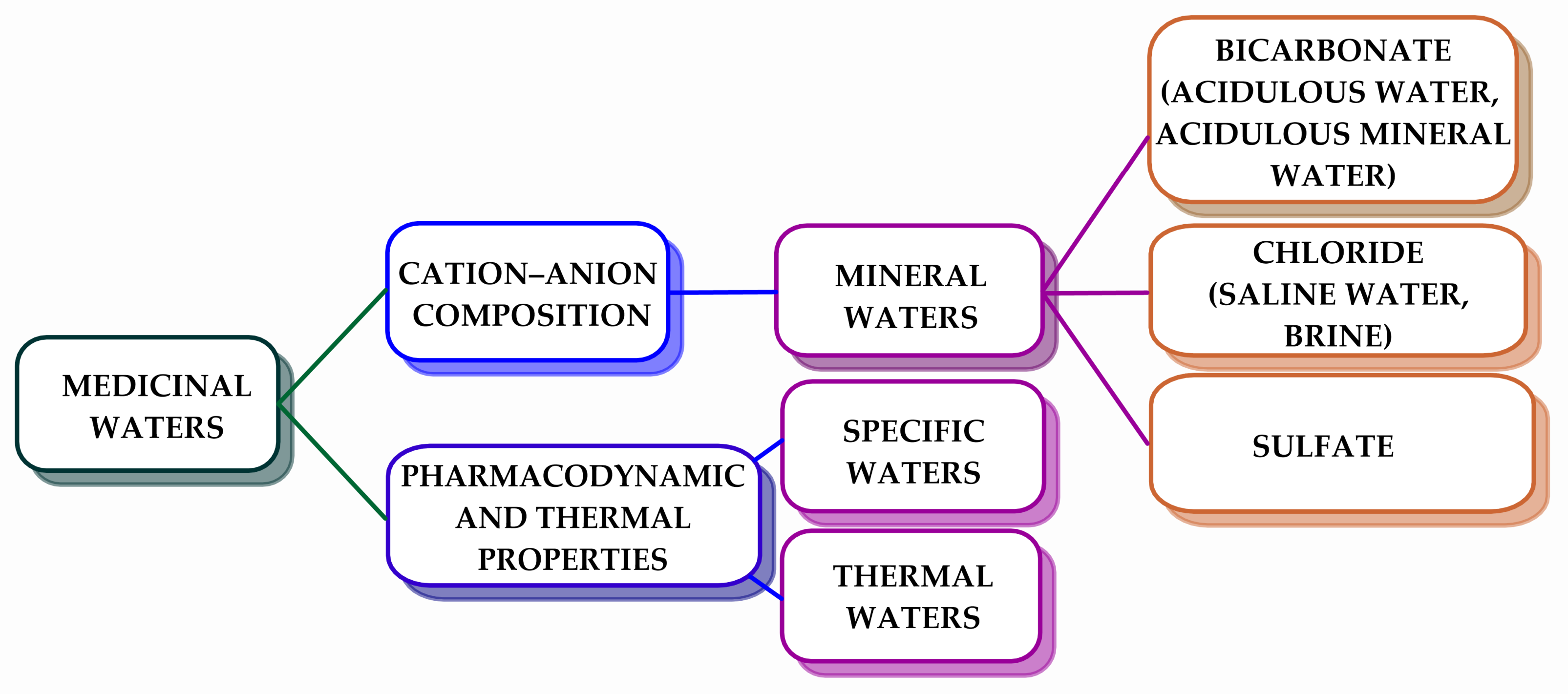
Mineral water is water containing at least 1000 mg/dm3 of dissolved solid components [29]. A significant portion of mineral waters has medicinal properties, confirmed based on many years of medical observations and scientific research. They are distinguished by the stability of their chemical composition and physical properties and meet sanitary requirements for drinking water [28]. In balneology, not all medicinal waters are mineral waters. The classification of medicinal waters in balneology and hydrogeology in Poland is based on two criteria. The first, used for mineral waters, is the anionic–cationic composition (Figure 1), and the second, used for specific and thermal waters, is pharmacodynamic and thermal properties [32].
Depending on the cation content, bicarbonate waters are classified as sodium, potassium, calcium, and magnesium bicarbonate waters; chloride waters as sodium, calcium, and magnesium chloride waters; and sulfate waters as sodium, calcium, magnesium, and ferrous sulfate waters. Specific waters contain specific components with minimal therapeutic properties. Their mineralization can be lower than 1000 mg/dm3. Specific waters are distinguished as ferrous, fluoride, bromide, iodide, manganese, arsenic, sulfide, boron, silica, radium, carbonic acid, and oxalic. Thermal waters are specific waters whose main characteristic is a temperature above 20 °C. These waters allow us to distinguish the biological effects of temperature from the effects of the components contained in them: hypothermal waters have temperatures between 20 °C and 35 °C, homeothermal waters have temperatures between 35 °C and 40 °C (isothermal), and hyperthermal waters have temperatures above 40 °C [32].
Radon is a distinct and relevant component of selected Polish medicinal waters and should be discussed separately from other mineral water therapies. Clinical studies suggest that radon therapy may reduce pain in rheumatic diseases, while hydrogeological research confirms the occurrence of 222Rn in Polish medicinal waters, including sites in Świeradów-Zdrój, the Ślęża Massif, and the Izera Range [33,34,35,36,37]. Because its medical use requires controlled exposure conditions, radon should be presented as a separate balneological category with specific indications and safety considerations [33,34].
Taking into account the sensitivity of water temperature changes to the human body, waters are divided into cool (20–27 °C), neutral (35–36 °C), warm (38–39 °C), and hot (40–42 °C) waters [38]. Due to the fact that gases are also present in water composition, waters can be divided into hydrogen sulfide, sulfide–hydrogen–methane, carbonic acid, oxalic, radon, nitrogen, and methane waters [32]. Brine is water with a dissolved solid mineral content of at least 35 g/dm3. Chloride–sodium waters with a balneochemical mineralization below 1.5% are considered salty waters, and those with a higher value are brines. According to the hydrogeological classification, salty waters are waters with mineralization ranging from 10 to 35 g/L and brines are those with mineralization above 35 g/L.

4. Forms of Water Use in Balneology and Recreation

Balneology is a field of science that uses natural resources to prevent and treat chronic diseases. It is based on the use of therapeutic gases, mineral waters, thermal waters and mud. Their purpose is to restore health and improve the functioning of the body. The term “balneotherapy” derives from a combination of a Latin words balneum (bath) and a Greek word therapeia (treatment). Balneotherapy, a branch of physiotherapy, encompasses practices and methods that use medically and legally recognized mineral–medicinal waters, muds (peloids), and natural gases from natural sources for therapeutic purposes [39,40]. Treatment using these methods can take place, for example, in health resorts.
In Poland, the use of mineral waters, muds (peloids), and natural gases for therapeutic purposes is permitted under several key regulations. The basic legislation is the Act on Spa Treatment, Spa Resorts and Spa Protection Areas, and Spa Municipalities [41]. Article 2, paragraph 1 of this act defines spa waters as natural mineral waters, thermal waters, spa muds (peloids), and natural spa gases that have healing properties and can be used for therapeutic purposes. Article 3 of the aforementioned act specifies that spa waters may be used for spa purposes, including balneotherapy and other therapeutic treatments.
The regulation of the Minister of Health on natural mineral waters, spring waters, and table waters [42], article 1, paragraph 2 indicates that natural mineral waters may have properties of physiological significance, which translates into a beneficial effect on human health, and authorizes their use for therapeutic purposes (crenotherapy—drinking therapy with medicinal waters—and balneotherapy).
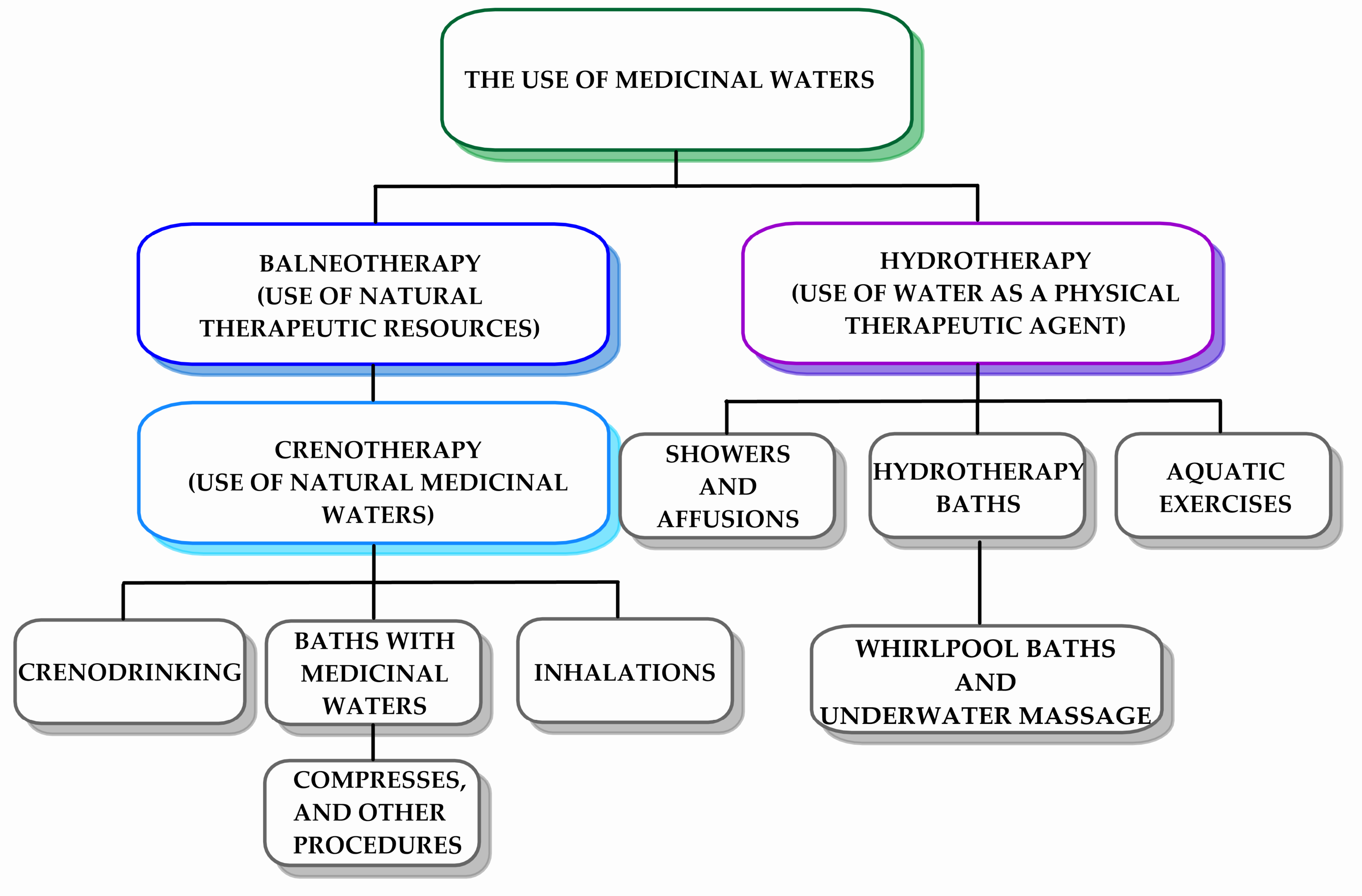
The regulation of the Minister of Health on guaranteed services in the field of therapeutic rehabilitation [43] provides a list of treatments, defined as guaranteed services, that may be financed by the National Health Fund as part of spa treatment and therapeutic rehabilitation. This regulation also specifies the criteria for the access to services, duration and frequency of treatments, and requirements for facilities providing treatments. As part of guaranteed services in the field of therapeutic rehabilitation, specific treatments are available in Poland, including bathing in mineral/thermal water (balneotherapy), treatments using peloids (mud masks and compresses), and inhalation (aerosol therapy) using natural gases and water aerosols. Figure 2 presents the main forms of use of medicinal waters.
According to Kochański [32], balneology applies physiological stimuli to the body at a specific time, dose, and quantitatively defined cycle. The body’s task is to adapt to them (activate adaptive mechanisms), thereby activating body reserves and thus influencing the mechanisms regulating its functioning. It is advisable to introduce numerous gentle treatments to force the body into a state of constant adaptation.
Thermal–mineral baths are the most common form of balneotherapy, used for dermatological conditions (psoriasis and atopic dermatitis), rheumatological conditions (joint atrophy, rheumatoid arthritis, and osteoporosis), and back pain [39,40,44]. Brine baths are used for rheumatological and dermatological conditions, hydrogen sulfide baths for skin and respiratory diseases, carbonic acid baths for cardiovascular and rheumatological diseases [45], and radon baths for rheumatic and pain conditions. Systematic studies from 2023–2024 have shown that bathing in thermal mineral waters significantly reduces pain and improves quality of life and joint function in patients with osteoarthritis (knees, hips, hands, and lumbar spine) [39,44]. Chloride–sodium mineral waters, alkaline bicarbonate waters, acidic waters, low-mineralized waters, and hydrogen sulfide waters are used for internal treatment as part of a drinking cure (crenotherapy), which is used for nephrolithiasis and diseases of the kidneys, urinary tract, bladder, liver, and biliary tract. Saline waters, hydrogen sulfide waters, alkaline, acidic waters, and radon waters are used for inhalation in the treatment of chronic respiratory conditions (asthma and chronic bronchitis). These treatments utilize inhalers that generate steam or therapeutic aerosols. Another form of therapeutic water use is peloid therapy, in which peloids are applied in the form of baths, compresses, sitz baths, and peat tampons, which are used for chronic internal, rheumatological, and dermatological diseases. Water at varying temperatures and pressures is used to relax muscles, improve circulation, and enhance well-being as part of so-called hydrotherapy. These treatments utilize hydromassage, showers, and balneological tubs with hydromassage systems. The final specified form of therapeutic water use involves the use of therapeutic gases such as carbon dioxide, radon, hydrogen sulfide, oxygen, air, and ozone present in the water. These therapeutic gases are used through inhalation or in carbonated baths in the form of dry carbonic acid baths and cryotherapy using solid CO2 [45].
Thermal and mineral waters are used in the rehabilitation of the musculoskeletal and respiratory systems, as well as in dermatology after injuries and surgeries. Unlike strict balneotherapy (treatment prescribed by a physician), recreation in spa waters is more relaxing, promotes general development, and is accessible to healthy individuals seeking improved well-being. Recreation in the context of spa waters is active relaxation and biological regeneration, combining pleasure with preventative health care, using natural resources (mineral, thermal, and brine waters).
In the context of recreation, balneology is used for preventative and therapeutic purposes. Water recreation involves the use of thermal baths, spas, and water parks. Spa tourism often combines treatment with recreation [46]. Thalassotherapy, which utilizes the beneficial effects of the sea through sunbathing, air bathing, and outdoor exercise, is also considered a recreational treatment with a positive impact on health.
The mechanisms of balneotherapy include chemical, thermal, and mechanical effects. Hydrostatic water pressure facilitates joint mobilization and strengthens muscles [44]. High water temperature causes analgesia (reduction of pain), muscle relaxation, and increased mobility [39]. Mineral composition and the content of individual elements have a beneficial effect on the body [40].
The effects of bathing in thermal waters depend on many factors, such as chemical composition, temperature (including its change during bathing), the type of exercise, additional mechanical effects such as showering, and the duration of the bath. The heat of thermal water stimulates nervous mechanisms, leading to vasodilation, improved tissue blood flow, and lower blood pressure. This effect results from overheating the body and is achieved by full immersion in water at a temperature of 38–40 °C. These baths should be taken between 3:00 a.m. and 3:00 p.m. and require consultation with a physician, who determines the number and duration of treatments. Bathing in thermal waters improves circulatory, renal, and pulmonary function. They also have a beneficial effect on smooth and skeletal muscles, stimulating the secretion of tissue hormones (histamine, adrenaline, acetylcholine, and bradykinin), accelerating metabolism, and reducing inflammation.
Cold baths should be taken between 3:00 p.m. and 3:00 a.m. in water at a temperature of 20–27 °C. They result in vasoconstriction, which leads to increased blood pressure and increased muscle tension. Movement and pearl massage are important during bathing. The effects can be enhanced by the controlled use of minerals such as sodium or calcium chloride, which improve blood circulation in the skin.
Due to their chemical composition, selected thermal waters can be used for inhalation, rinsing body cavities, or for “drinking cures”. In addition to the concentration of sodium and calcium chloride, the content of iodides and sodium bicarbonate determines the suitability of water for inhalation; the content of magnesium, potassium, and sulfates also determines the suitability of water for drinking cures [38]. To date, 50 natural elements out of 88 naturally occurring elements have been detected in groundwater [30].
Bathing in sulfur-containing waters causes sulfur to penetrate the skin in the form of hydrogen sulfide, which is easily absorbed by the mucous membranes of the digestive tract, bronchi, and genital tract. Sulfur waters are legally recognized as therapeutic when they contain at least 1 mg/L of sulfur determined iodometrically in accordance with the Polish Geological and Mining Law [26], while in balneotherapy practice waters with hydrogen sulfide (H2S) concentrations in the range of 10–50 mg/L are used, which is confirmed by empirical studies [3,47,48]. These waters have a keratolytic effect on the skin, exfoliating the epidermis, softening and loosening intercellular connections, and keratoplastically intensifying the formation of elastic epidermis. Baths increase blood pressure and accelerate heart rate. The body’s immunity is increased and metabolism is accelerated. Baths are recommended for musculoskeletal problems, rheumatic diseases, degenerative joint and spine conditions, and gout. Calcium sulfate waters improve metabolism and intestinal peristalsis, and are indicated in the treatment of liver disease, obesity, and diabetes (they increase insulin secretion) [49,50].
Bathing in waters containing sodium chloride causes it to penetrate the skin, decreasing the excitability of sensory and motor nerves, leading to reduced excitability and pain. An increase in sodium chloride concentration and water temperature improves blood circulation. If the body is not rinsed or dried after bathing, a salt film forms on its surface. This results in the regulation of blood circulation, normalization of blood pressure, and stimulation of metabolism. These baths have a beneficial effect on the muscular system and have analgesic and hardening effects [50].
Clinical studies reported in the literature [39,44] indicate a significant reduction in pain (16/17 studies in osteoarthritis), improved quality of life (8/17 studies), and improved joint function, mobility, and stair climbing as a result of balneotherapy. These same studies also demonstrate a positive effect of thermal baths on dermatological conditions, including improved skin condition in psoriasis and eczema. According to [44], the majority of clinical studies come from Hungary (eight studies), Turkey (six studies), and France, Austria, and Italy (three each). The methodological quality of many studies is limited (a high risk of error in 7/17 studies and a moderate risk in 8/17). Protano believes that new clinical studies with better statistical methods are required.

Use of Thermal and Medicinal Waters in Poland

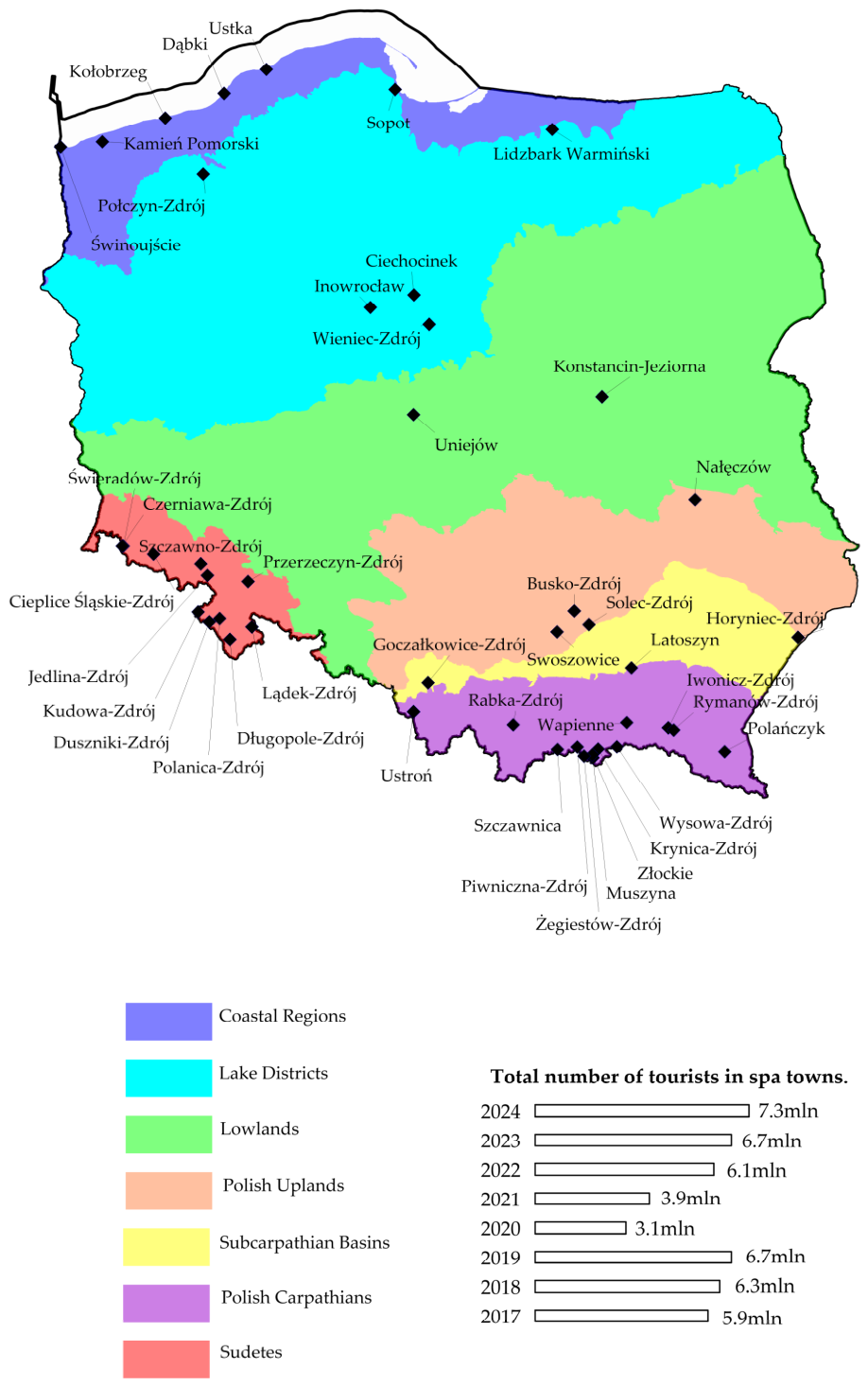
According to the Polish literature [45,51,52,53], thermal and medicinal waters are used in Poland in three main areas: balneotherapy (spa treatment), heating, and recreation and thermal bathing. The locations of spa towns where these waters are used are shown in Figure 3, and the forms of use and water temperatures are shown in Table 1.
Therapeutic waters in Polish health resorts are mainly: brine waters (sodium chloride)—Ciechocinek, Konstancin; sulfide–hydrogen waters—Iwonicz Zdrój; radon waters (the only ones in Poland)—Świeradów-Zdrój; carbonic acid waters—Duszniki Zdrój; iodine-bromine waters—Iwonicz Zdrój; geothermal thermal waters—Podhale, Cieplice, Lądek Zdrój. These waters are used in the treatment of rheumatological diseases (rheumatoid arthritis and degenerative diseases of joints and spine) [54,55], dermatological diseases (psoriasis, atopic dermatitis, and allergies), respiratory diseases (asthma and chronic bronchitis), circulatory system diseases, musculoskeletal diseases, and post-injury and post-surgery rehabilitation. A spa therapy study in Poland showed that in patients with joint and disc degeneration after a 21-day spa stay a statistically significant increase in HDL cholesterol was observed in women and a decrease in LDL and triglycerides in the control group [46].
The following categories of thermal waters can be distinguished: weakly mineralized waters (<1 g/dm3) found in Cieplice Śląskie and Lądek Zdrój and mineral waters (>1 g/dm3) in the Polish Lowlands, the Carpathian Foredeep, and Iwonicz. A component found in significant concentrations only in thermal waters is silicic acid (Cieplice Śląskie, Lądek Zdrój) [38].
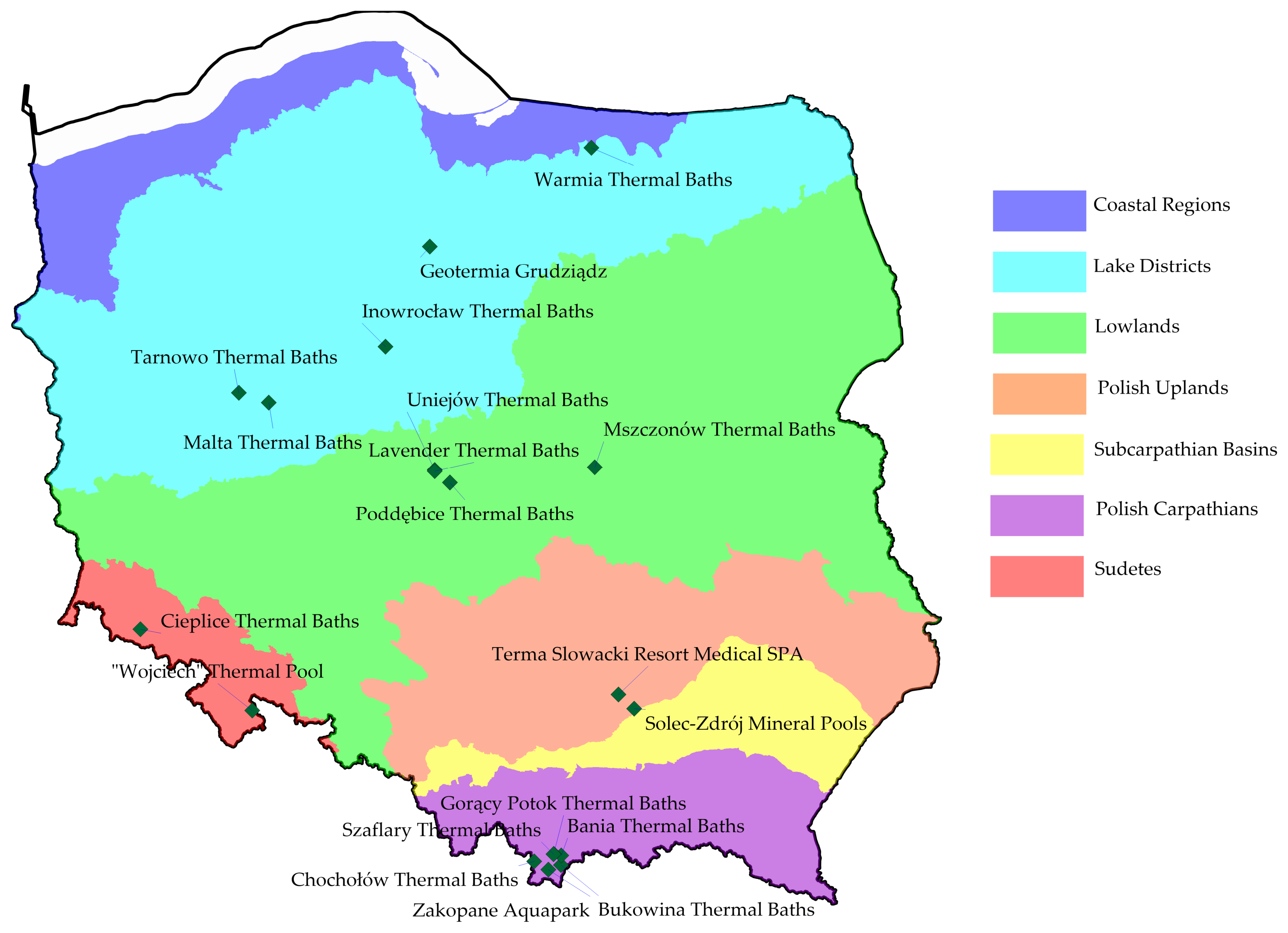
To date, several geothermal bathing areas and recreational centers have been built in Poland [53]. Their locations are shown in Figure 4 and their characteristics in Table 2.
In the paper [56], it was stated that at the end of 2020 the total installed thermal power of geothermal systems in Poland was 74.6 MW.
In Poland, the use of thermal waters for balneological and recreational purposes is considerably well developed, but it is still concentrated in a few regions [57] and remains smaller than in countries with a longer thermal tradition, such as Hungary, Iceland and France [58]. The Polish literature emphasizes that this direction of use is most important in the Carpathians, Podhale, the Carpathian foothills and the Sudetes, while heating applications dominate in the Polish Lowlands. In Poland, thermal waters are used in health resorts, swimming pools, aqua parks and spa complexes, but their share in the total direct use of geothermal energy is relatively small. An older review indicated that spas and recreational facilities together accounted for approximately 7% of direct geothermal water applications, with balneo-recreational facilities alone accounting for approximately 2.5%. Compared to Western and Central Europe, Poland has similar raw material potential in selected regions but a smaller number of long-operating, multi-functional balneological and recreational facilities.
The most recognizable and intensively developed region is Podhale, where favorable hydrogeothermal conditions favor combining recreation, balneotherapy and partly heating [58,59,60,61]. The group of key facilities includes, among others: Zakopane, Szymoszkowa, Szaflary, Bukowina Tatrzańska and Białka Tatrzańska, and in the Polish Lowlands, among others, Uniejów, Mszczonów and Grudziądz [58,59,60,61]. In the Sudetes, health resorts with a balneological tradition, such as Cieplice Śląskie-Zdrój and Lądek-Zdrój, play an important role where thermal waters are primarily of medicinal importance. Development prospects are good because state documents assume further use of the geothermal potential also for recreation and balneology. The Polish Geological Institute—National Research Institute indicates that Polish thermal waters should primarily be used for heating, domestic hot water, recreation and balneology, and in many regions there is still a need for better identification of resources and the profitability of development. The government strategic project “Development and use of geothermal potential in Poland” assumes the promotion and development of the use of this potential, as well as providing local governments with data and planning tools. The most important limitations are high drilling costs, geological risk, long investment preparation time and the need to adjust the water quality to the specific function of the facility [59,60,61]. In the case of balneological facilities, an additional problem may be the need to maintain the therapeutic parameters of the water, and in the case of recreational facilities, the profitability increases only when combined with other functions, e.g., hotel, spa or heating [58,59,60,61]. Therefore, multifunctional projects that make the most of the resource in a cascade system develop best [59,60,61].
Polish health resorts are an important element of the national health care system and the health tourism sector. Their functioning is based primarily on the use of natural medicinal raw materials, which include mineral waters, brine, medicinal gases and thermal waters. Poland has significant resources of these raw materials, which creates favorable conditions for the development of spa treatment and modern wellness and spa tourism. In recent years, this sector has been showing clear upward trends, supported by both demographic changes and growing interest in preventive health care and active forms of recreation.
According to data from the Polish Geological Institute, Poland is one of the countries with significant resources of medicinal and thermal waters [57,58,59,60]. Over a hundred deposits of medicinal waters and several dozen thermal water deposits have been documented in the country, and their number is systematically increasing as a result of geological research and new drilling [57,58,59,60]. Of particular importance are the Carpathian, Sudetes and lowland regions of central Poland, where there are favorable hydrogeological conditions for the exploitation of medicinal waters. As a result, there are currently several dozen statutory health resorts, such as Krynica-Zdrój, Muszyna, Busko-Zdrój, Ciechocinek, Polanica-Zdrój and Kołobrzeg, which have been performing an important therapeutic and rehabilitation function for many decades. At the same time, centers using thermal water are developing in areas including Uniejów, Bukowina Tatrzańska and Białka Tatrzańska.
The economic and social importance of the spa sector is reflected in the number of people using its services. According to data from the Central Statistical Office, in 2023 there were 257 spa treatment facilities in Poland, which accommodated approximately 904,000 patients. The vast majority of them received inpatient treatment, including sanatorium stays combined with rehabilitation and preventive treatments. In the same year, approximately 38 million treatments were performed. These data indicate the sector’s recovery following the COVID-19 pandemic and the return to a long-term growth trend. Of particular note is the increase in the number of spa patients compared to the previous year, which indicates a growing demand for spa services [62].
Analyzing Poland’s position compared to other European countries, it is important to note that the country’s spa sector is among the largest in Central Europe in terms of the number of domestic spa patients served [63]. At the same time, its structure differs from the models operating in the neighboring countries. In the Czech Republic, spa treatment has a strongly developed international dimension. Spas such as Karlovy Vary, Marianske Lázně, and Františkovy Lázně have attracted significant numbers of foreign visitors for many years, and their brands are recognized in the global health tourism market. Similarly, according to Ref. [64], in Hungary, the development of the sector has been based on the extensive use of geothermal resources, as exemplified by Budapest and Hévíz, which are among the most renowned European thermal destinations [61]. Germany, on the other hand, boasts an extensive network of spa towns, which offer highly specialized medical and rehabilitation services, often aimed at clients with high purchasing power [63].
In this context, Poland stands out primarily due to the significant public funding of spa treatment by the National Health Fund and the Social Insurance Institution. This allows for relatively broad access to spa services, but at the same time the sector remains more dependent on the domestic patient market than in the Czech Republic or Hungary. This limits the internationalization of the industry, even though Polish spas offer comparable natural assets and competitive prices.
The sector’s development prospects should be viewed positively. One of the most important growth factors is the aging population. As the number of people beyond working age increases, so does the demand for rehabilitation, treatment of chronic conditions, and preventative health care. Another important factor is the dynamic development of wellness tourism, which includes regenerative stays, spa services, thermal baths, and various forms of health-promoting activities. Today’s clients increasingly treat spas not only as places of treatment but also as centers of relaxation and better quality of life.
An additional impetus for development comes from investments related to the use of geothermal energy. The development of thermal infrastructure enables the expansion of recreational opportunities and increases the attractiveness of regions with geothermal resources [58,59,60,61]. In many cases, thermal waters are used simultaneously for balneological, recreational, and energy purposes, promoting the sustainable development of local economies [58,59,60,61].
In summary, the Polish mineral and thermal spa sector is currently experiencing stable growth. It serves nearly one million patients annually, boasts significant natural resources, and benefits from favorable demographic and social trends. Although the sector’s internationalization remains lower than in the Czech Republic or Hungary, the potential for further development is significant. In the coming years, we can expect a further increase in the importance of health tourism, an increase in geothermal investments, and a gradual strengthening of the position of Polish spas in the European health and wellness market [58,59,61,63,64].

5. Conclusions

Thermal and mineral waters in Poland constitute an important natural resource with well-established applications in balneotherapy, recreation, and—outside the scope of this review—energy use. The analysis shows that Polish spa treatment is based on a broad range of medicinal waters and gases, while recreational thermal facilities are developing dynamically, especially in regions with favorable hydrogeothermal conditions such as Podhale, the Carpathian Foredeep, and selected areas of the Sudetes and Polish Lowlands. The sector is supported by a growing body of clinical and practical evidence confirming the health value of spa treatments and by the increasing social demand for prevention, rehabilitation, and wellness-oriented services.
At the same time, the review identifies several limitations that constrain fuller use of this potential. The main barriers include high drilling and investment costs, geological risk, long preparation times for projects, and the need to match water quality to a specific function while maintaining therapeutic parameters in balneological facilities. Compared with countries such as Hungary, the Czech Republic, or France, Poland still has fewer long-operating multifunctional facilities and a lower degree of internationalization of spa services. These constraints mean that the existing resource base is not yet fully translated into economic, therapeutic, and regional-development benefits.
The most promising development pathway is the further integration of balneology, recreation, and geothermal use within coordinated local strategies. Future progress will depend on better resource recognition, improved planning tools, and stronger linkage between health tourism, geothermal infrastructure, and local economic development. As the population ages and demand for preventive and rehabilitative care rises, Polish spas and thermal facilities are likely to gain greater importance in both the health care system and the wellness market.
Development should prioritize multifunctional projects that use thermal water in a cascade system, combining balneological, recreational, hotel, and heating functions where technically and economically feasible. Such an approach increases resource efficiency, improves investment profitability, and supports sustainable regional development. In practice, this means designing facilities so that the same geothermal resource can serve several complementary purposes rather than a single isolated function.

Author Contributions

Conceptualization and methodology: A.S. and M.U.; investigation: A.S. and M.U.; data collection and validation: A.S. and M.U.; writing—Introduction: A.S.; writing—The latest global research on the use of thermal and mineral waters: A.S.; writing—Description and characteristics (definition) of waters: M.U.; writing—Forms of water use in balneology and recreation: A.S.; writing—Conclusion: A.S.; figures—M.U.; tables: A.S. and M.U.; writing—proofreading and editing: A.S. All authors have read and agreed to the published version of the manuscript.

Funding

This research received no external funding.

Data Availability Statement

No new data were created or analyzed in this study. Data sharing is not applicable to this article.

Conflicts of Interest

The authors declare no conflicts of interest.

References

  1. Harzy, T.; Ghani, N.; Akasbi, N. Short- and long-term therapeutic effects of thermal mineral waters in knee osteoarthritis: A systematic review of randomized controlled trials. Clin. Rheumatol. 2009, 28, 501–507. [Google Scholar] [CrossRef] [PubMed]
  2. García-López, H.; García-Giménez, M.T.; Obrero-Gaitán, E.; Lara-Palomo, I.C.; Castro-Sánchez, A.M.; Romero-del Rey, R. Effectiveness of balneotherapy in reducing pain, disability, and depression in patients with Fibromyalgia syndrome: A systematic review with meta-analysis. Int. J. Biometeorol. 2024, 68, 1935–1951. [Google Scholar] [CrossRef] [PubMed]
  3. Ferrara, E.; Scaramuzzino, M.; Murmura, G.; Balice, G.; Sinjari, B. Quality-of-life improvements following balneotherapy with hydrogen sulfide-rich thermal waters: A retrospective analysis with exploratory assessment of mineral contributions. Complement. Ther. Med. 2026, 98, 103354. [Google Scholar] [CrossRef] [PubMed]
  4. Regazzo, G.; Contessa, P.; Forcato, B.; Fornasiero, M.; Gaiofatto, M.; Gibellini, M.; Massimo, F.; Venturini, E.; Scanu, A.; Masiero, S. Intensive combined balneotherapy and aquatic exercise for knee osteoarthritis: Short-term clinical and functional outcomes. Front. Med. 2026, 13, 1790566. [Google Scholar] [CrossRef] [PubMed]
  5. Ungureanu, A.E.; Stanciu, L.E.; Uzun, A.B.; Gheorghe, E.; Pazara, L.; Miclaus, S.R.; Ciortea, V.M.; Suceveanu, A.I.; Iliescu, M.G. Multidisciplinary non-pharmacological treatments with effects on pain modulation and functioning in spondyloarthropathies—A systematic review. Balneo PRM Res. J. 2023, 14, 579. [Google Scholar] [CrossRef]
  6. de Oliveira, N.D.; Hellmann, F.; Cantista, P. Comparative analysis of balneotherapy in European public health systems: Spain, France, Italy, and Portugal. Int. J. Biometeorol. 2023, 67, 597–608. [Google Scholar] [CrossRef] [PubMed]
  7. Liber-Makowska, E.; Kiełczawa, B. Modelling of selected hydrodynamic and hydrochemical parameters of a geothermal water system: An example of Cieplice therapeutic waters. Environ. Earth Sci. 2020, 79, 289. [Google Scholar] [CrossRef]
  8. Julínek, T.; Říha, J.; Geršl, M.; Holešovský, J.; Cabalka, M. Determination of the yield of thermal mineral springs emerging into the Bečva River in the Teplice Spa. J. Hydrol. Hydromech. 2025, 73, 95–107. [Google Scholar] [CrossRef]
  9. Maria, R.; Nurohman, H.; Lestiana, H.; Mayandari Shoedarto, R.; Naidania Dida, E.; Jakah, J.; Ernowo, R.; Rahayudin, Y. Hydrogeochemical properties of thermal springs for natural therapeutic uses in medical geology at the Ciwiday area, West Java, Indonesia. Rud.-Geol.-Naft. Zb. 2026, 41, 197–211. [Google Scholar] [CrossRef]
  10. Yang, P.; Chen, Z.; Zhou, M.; Zhou, J.; Ao, Y.; Geng, Z.; Li, C.; Yang, B. Water-rock interactions in karst: Enrichment mechanisms of H2SiO3 in thermal mineral waters in the Shiqian fracture zone, China. Environ. Earth Sci. 2025, 84, 569. [Google Scholar] [CrossRef]
  11. Jetimov, M.; Ekici, M.; Tokpanov, Y. Geoecological analysis and evaluation of mineral waters in the Alakol basin in the context of recreational and health tourism. Bull. LN Gumilyov Eurasian Natl. Univ. Chem. Geogr. Ser. 2025, 153, 91–105. [Google Scholar] [CrossRef]
  12. Razbaev, S.N. In the Aral Sea Regions Promising Directions for the Development of Recreational and Healthy Tourism. Acad. J. Digit. Econ. Stab. 2025, 38, 522–528. [Google Scholar]
  13. Gurung, T.; Yangden, T. Ethnopharmacological knowledge and physicochemical properties of hot springs in Bhutan. BMC Complement. Med. Ther. 2025, 25, 393. [Google Scholar] [CrossRef] [PubMed]
  14. Milanović, S.; Vasić, L. Razvoj i značaj hidrogeoloških istraživanja u Republici Srbiji. Vodoprivreda 2024, 56, 331–332. [Google Scholar] [CrossRef]
  15. Operta, M.; Banda, A. Thermal mineral water as a natural potential for the development of SPA tourism in Bosnia and Herzegovina. In Proceedings of the International Tourism and Hospitality Management Conference, Sarajevo, Bosnia and Herzegovina, 30 September–4 October 2015. [Google Scholar]
  16. Puy-Alquiza, M.J.; Puy, M.Y.M.; Salazar-Hernández, M.D.C.; Prol-Ledesma, R.M.; Zubia, V.Y.O. Hydrogeochemical characterization and therapeutic zoning of low-enthalpy geothermal hot springs in Mexico: Implications for wellness tourism and sustainable resource management. Glob. J. Earth Sci. Eng. 2025, 12, 66–90. [Google Scholar] [CrossRef]
  17. Vakanjac, B.; Banković, R.; Ristić Vakanjac, V.; Milanović, S.; Vasić, L.; Bakrać, S.; Kozić, N. Groundwater as an important resources in emergency situations of the Republic of Serbia. In Proceedings of the 11th International Scientific Conference on Defensive Technologies OTEH, Tara, Serbia, 9–11 October 2024. [Google Scholar]
  18. Valeriani, F.; Protano, C.; Gianfranceschi, G.; Leoni, E.; Galasso, V.; Mucci, N.; Vitali, M.; Spica, V.R. Microflora thermarum Atlas project: Biodiversity in thermal spring waters and natural SPA pools. Water Sci. Technol.-Water Supply 2018, 18, 1472–1483. [Google Scholar] [CrossRef]
  19. Berikten, D.; Koldemir Gündüz, M. Fungal contamination in thermal springs: A comparative study between pool water and air samples. Int. J. Chem. Technol. 2025, 9, 333–343. [Google Scholar] [CrossRef]
  20. Şener, H.; Yavuz Güzel, E.; Karakuş, H. Risk assessment of a mixture of pharmaceuticals and personal care products (PPCPs) in thermal waters of Kütahya, Türkiye. Environ. Geochem. Health 2026, 48, 185. [Google Scholar] [CrossRef] [PubMed]
  21. Serbulea, M.; Payyappallimana, U. Onsen (hot springs) in Japan—Transforming terrain into healing landscapes. Health Place 2012, 18, 1366–1373. [Google Scholar] [CrossRef] [PubMed]
  22. Poh, J.; Tjiawi, H.; Chidire, A.; Veerasamy, B.B.; Massier, T.; Romagnoli, A.; Wu, W.; Lu, D.; Lim, J.W.M.; Yang, L.; et al. Geothermal development in South, Southeast and East Asia: A review. Renew. Sustain. Energy Rev. 2025, 209, 115043. [Google Scholar] [CrossRef]
  23. Directive 2009/54/EC of the European Parliament and of the Council of 18 June 2009 on the Exploitation and Marketing of Natural Mineral Waters. Available online: https://eur-lex.europa.eu/legal-content/EN/ALL/?uri=celex%3A32009L0054 (accessed on 11 June 2026).
  24. Directive 2003/40/EC of 16 May 2003 Establishing The list, Concentration Limits and Labelling Requirements for the Constituents of Natural Mineral Waters and the Conditions for Using Ozone-Enriched Air for the Treatment of Natural Mineral Waters and Spring Waters. Available online: https://eur-lex.europa.eu/legal-content/EN/ALL/?uri=CELEX%3A32003L0040 (accessed on 11 June 2026).
  25. Elster, D.; Szőcs, T.; Gál, N.; Hansen, B.; Voutchkova, D.D.; Schullehner, J.; Lions, J.; Martarelli, L.; Giménez-Forcada, E.; Díaz-Muñoz, J.A.; et al. Terminologies and characteristics of natural mineral and thermal waters in selected European countries. Geologija 2022, 65, 21–46. [Google Scholar] [CrossRef]
  26. Ustawa z Dnia 9 Czerwca 2011 r. Prawo Geologiczne i Górnicze. Dz. U. 2026 poz. 69. Available online: https://isap.sejm.gov.pl/isap.nsf/download.xsp/WDU20260000069/O/D20260069.pdf (accessed on 11 June 2026).
  27. Ustawa z Dnia 20 Lipca 2017 r. Prawo Wodne. Dz. U. 2017 poz. 1566. Available online: https://isap.sejm.gov.pl/isap.nsf/download.xsp/WDU20170001566/U/D20171566Lj.pdf (accessed on 11 June 2026).
  28. Bryja, A.; Cieśla, G.; Czarnecka, L.; Dębska, B.; Główka, A.; Gołębiowska, K.; Gondek, E.; Janik, M.; Kapelan, A.; Listwan, R.; et al. Raport o Stanie Środowiska w Województwie Małopolskim w 2010 Roku; Wojewódzki Inspektorat Ochrony Środowiska w Krakowie: Kraków, Poland, 2010; Volume 3, pp. 73–89. Available online: https://www.krakow.wios.gov.pl/Press/publikacje/raporty/raport10/index.htm (accessed on 24 June 2026).
  29. Bocheńska, T.; Dowgiałło, J.; Kleczkowski, A.S.; Krajewski, S.; Macioszczyk, A.; Małecka, D.; Rogóż, M.; Różkowski, A.; Sadurski, A.; Szczepański, A.; et al. Słownik Hydrogeologiczny; Państwowy Instytut Geologiczny: Warszawa, Poland, 2002; pp. 9–338.
  30. Macioszczyk, A. Hydrogeochemia; Wydawnictwa Geologiczne: Warszawa, Poland, 1987; pp. 1–475. [Google Scholar]
  31. Witczak, S.; Kania, J.; Kmiecik, E. Katalog Wybranych Fizycznych i Chemicznych Wskaźników Zanieczyszczeń Wód Podziemnych i Metod Ich Oznaczania; Biblioteka Monitoringu Środowiska: Warszawa, Poland, 2013; pp. 15–20. [Google Scholar]
  32. Kochański, J.W. Balneologia i Hydroterapia; Wydawnictwa Akademii Wychowania Fizycznego: Wrocław, Poland, 2002; pp. 1–250. [Google Scholar]
  33. Falkenbach, A.; Kovacs, J.; Franke, A.; Jörgens, K.; Ammer, K. Radon therapy for the treatment of rheumatic diseases—Review and meta-analysis of controlled clinical trials. Rheumatol. Int. 2005, 25, 205–210. [Google Scholar] [CrossRef] [PubMed]
  34. Franke, A.; Reiner, L.; Pratzel, H.G.; Franke, T.; Resch, K.L. Long-term efficacy of radon spa therapy in rheumatoid arthritis—A randomized, sham-controlled study and follow-up. Rheumatology 2000, 39, 894–902. [Google Scholar] [CrossRef] [PubMed]
  35. Pachocki, K.A.; Wieprzowski, K.; Bekas, M.; Różycki, Z. Występowanie radonu 222Rn w wodach leczniczych. Rocz. Państw. Zakładu Hig. 2009, 60, 129–136. [Google Scholar]
  36. Przylibski, T.A.; Fijałkowska, L.; Bielecka, A. Potencjalnie lecznicze wody radonowe Masywu Ślęży. Prz. Geol. 2008, 56, 763–771. [Google Scholar]
  37. Prusak, A.; Przylibski, T.A. Potencjalnie lecznicze wody radonowe wschodniej części Wysokiego Grzbietu Gór Izerskich (Sudety) o największej zawartości radonu w Polsce. Prz. Geol. 2023, 71, 58–70. [Google Scholar] [CrossRef]
  38. Latour, T.; Smętkiewicz, K. Właściwości fizykochemiczne i chemiczne wód geotermalnych i ich zastosowanie lecznicze ze szczególnym uwzględnieniem wody z odwiertu PIG/AGH-2 w Uniejowie. Biul. Uniejowski 2012, 1, 79–93. [Google Scholar] [CrossRef]
  39. Protano, C.; Vitali, M.; De Giorgi, A.; Marotta, D.; Crucianelli, S.; Fontana, M. Balneotherapy using thermal mineral water baths and dermatological diseases: A systematic review. Int. J. Biometeorol. 2024, 68, 1005–1013. [Google Scholar] [CrossRef] [PubMed]
  40. Nasermoaddeli, A.; Kagamimori, S. Balneotherapy in medicine: A review. Environ. Health Prev. Med. 2005, 10, 171–179. [Google Scholar] [CrossRef] [PubMed]
  41. Ustawa z Dnia 28 Lipca 2005 r. o Lecznictwie Uzdrowiskowym, Uzdrowiskach i Obszarach Ochrony Uzdrowiskowej oraz o Gminach Uzdrowiskowych. Dz. U. 2025 poz. 1135. Available online: https://isap.sejm.gov.pl/isap.nsf/download.xsp/WDU20250001135/T/D20251135L.pdf (accessed on 11 June 2026).
  42. Rozporządzenie Ministra Zdrowia z Dnia 31 marca 2011 r. w Sprawie Naturalnych Wód Mineralnych, Wód Źródlanych i Wód Stołowych. Dz. U. Nr 85, poz. 466. Available online: https://isap.sejm.gov.pl/isap.nsf/download.xsp/WDU20110850466/O/D20110466.pdf (accessed on 11 June 2026).
  43. Rozporządzenie Ministra Zdrowia z Dnia 6 listopada 2013 r. w Sprawie Świadczeń Gwarantowanych z Zakresu Rehabilitacji Leczniczej Dz. U. 2013 poz. 1522. Available online: https://isap.sejm.gov.pl/isap.nsf/download.xsp/WDU20130001522/O/D20131522.pdf (accessed on 11 June 2026).
  44. Protano, C.; Fontana, M.; De Giorgi, A.; Marotta, D.; Cocomello, N.; Crucianelli, S.; Del Cimmuto, A.; Vitali, M. Balneotherapy for osteoarthritis: A systematic review. Rheumatol. Int. 2023, 43, 1597–1610. [Google Scholar] [CrossRef] [PubMed]
  45. Durlej, E.; Sowiżdżał, A. The selected aspects of distribution and utilization therapeutic waters in Sudety region. Gaz Woda Tech. Sanit. 2025, 9, 156099. [Google Scholar] [CrossRef]
  46. Lund, J.W. Direct Heat Utilization of Geothermal Energy. In Comprehensive Renewable Energy, 2nd ed.; Sayigh, A., Ed.; Elsevier: Amsterdam, The Netherlands, 2012; pp. 171–188. [Google Scholar] [CrossRef]
  47. Carbajo, J.M.; Maraver, F.S. Mineral Waters: New Applications for Health. Evid.-Based Complement. Altern. Med. 2017, 2017, 8034084. [Google Scholar] [CrossRef] [PubMed]
  48. Sulfide Water. Available online: https://www.malinowydwor.pl/en/the-strongest-sulfide-water-rehabilitation-center/sulfide-water (accessed on 15 July 2026).
  49. Lazzerini, F.T.; Cardoso Da Silva, P.S. Guarani aquifer system (GAS): Geothermal spa balneology assessment. Bol. Soc. Esp. Hidrol. Méd. 2020, 35, 33–59. [Google Scholar] [CrossRef]
  50. Ciężkowski, W.; Kiełczawa, B.; Liber-Makowska, E.; Przylibski, T.A.; Żak, S. Wody lecznicze region sudeckiego: Wybrane problemy. Prz. Geol. 2016, 64, 671–682. [Google Scholar]
  51. Kępińska, B. Energia geotermalna w Polsce—Stan wykorzystania, perspektywy rozwoju. Geological Exploration Technology, Geothermal Energy, Sustainable Development. Tech. Poszuk. Geol. 2011, 50, 27–35. [Google Scholar]
  52. Kępińska, B. Thermal Springs and SPAS in Poland. In Proceedings of the International Geothermal Days, Bad Urach, Germany, 17–22 September 2001. [Google Scholar]
  53. Halaj, E. Geothermal bathing and recreation centres in Poland. Environ. Earth Sci. 2015, 74, 7497–7509. [Google Scholar] [CrossRef]
  54. Nguyen Dinh, C.; Nowak, J. Natural Radioactivity in Thermal Waters: A Case Study from Poland. Energies 2021, 14, 541. [Google Scholar] [CrossRef]
  55. Kasperczak, M.; Kuciel-Lewandowska, J.; Gnus, J.; Paprocka-Borowicz, M. Assessment of Changes in Lipids Metabolism in Patients with Degenerative Joints and Discs Diseases Subjected to Spa Therapy. BioMed Res. Int. 2019, 2019, 4732654. [Google Scholar] [CrossRef] [PubMed]
  56. Kępińska, B. Wykorzystanie energii geotermalnej w Polsce w latach 2019–2021. Prz. Geol. 2021, 69, 559–565. [Google Scholar]
  57. Ciężkowski, W.; Chowaniec, J.; Górecki, W.; Krawiec, A.; Rajchel, L.; Zuber, A. Mineral and thermal waters of Poland. Prz. Geol. 2010, 58, 762–773. [Google Scholar] [CrossRef]
  58. Czubernat, M.; Tomaszewska, B. Review of Polish spas using thermal waters in balneotherapy and healing purposes. Miner. Resour. Manag. 2021, 37, 103–124. [Google Scholar] [CrossRef]
  59. Dryglas, D.; Hadzik, A. The development of the thermal tourism market in Poland. Geotourism 2016, 3–4, 27–42. [Google Scholar] [CrossRef]
  60. Hajto, M.; Kępińska, B. Geothermal energy use, country update for Poland, 2022–2024. In Proceedings of the European Geothermal Congress, Zurich, Switzerland, 6–10 October 2025. [Google Scholar]
  61. Kurek, K.A.; Heijman, W.; van Ophem, J.; Gędek, S.; Strojny, J. Geothermal spas as a local development factor, the case of Poland. Geothermics 2020, 85, 101777. [Google Scholar] [CrossRef]
  62. Lecznictwo Uzdrowiskowe i Turystyka w Uzdrowiskach w Latach 2017–2024. Available online: https://krakow.stat.gov.pl/publikacje-i-foldery/zdrowie-pomoc-spoleczna/lecznictwo-uzdrowiskowe-i-turystyka-w-uzdrowiskach-w-latach-2017-2024,6,1.html (accessed on 15 July 2026).
  63. Orekhovska, I.; Bergier, B. Medical tourism in Poland—Development proposals. Health Probl. Civiliz. 2021, 15, 225–233. [Google Scholar] [CrossRef]
  64. Erfurt-Cooper, P. An Assessment of the Role of Natural Hot and Mineral Springs in Health, Wellness and Recreational Tourism. Ph.D. Thesis, James Cook University, Townsville, Australia, 2011. [Google Scholar] [CrossRef]
Figure 1. Criteria for the division of medicinal waters in balneology in Poland.
Limnolrev 26 00048 g001
Figure 2. The main forms of the use of medicinal waters.
Limnolrev 26 00048 g002
Figure 3. Location of spa towns using mineral and thermal waters.
Limnolrev 26 00048 g003
Figure 4. Location of bathing areas where thermal waters are used in Poland.
Limnolrev 26 00048 g004
Table 1. Spa towns using thermal and mineral waters in Poland, along with the form of water use and their temperature.
Main Type of BathSpa TownNames of Water Intakes, Springs, Boreholes and Types of WaterOutlet Temperature
Carbon dioxide baths (using natural carbonated mineral waters—szczawy) and
radon baths in the following spa towns:
Czerniawa-Zdrój
Świeradów-Zdrój
Długopole-Zdrój
Długopole-ZdrójRenata: bicarbonate–calcium–magnesium acidulous mineral water containing iron and naturally occurring radon
Kazimierz: bicarbonate–calcium–magnesium–sodium acidulous mineral water containing iron and radon
Emilia: low-mineralized bicarbonate–calcium–magnesium acidulous mineral water containing iron and naturally occurring radon
9.3–10 °C
Duszniki-ZdrójJan Kazimierz: bicarbonate–calcium–sodium acidulous mineral water 16 °C
Krynica-ZdrójŁukasz, P-1 oraz W-3: natural therapeutic acidulous mineral waters, characterized by a high content of carbon dioxide and calcium and magnesium ions8–12 °C
Kudowa-ZdrójK-200 Stanisław Moniuszko: strongly carbonated bicarbonate–sodium–calcium acidulous mineral water containing arsenic, sulfides, and iron
Leon Marchlewski: bicarbonate–sodium–calcium acidulous mineral water with naturally occurring radon
Jędrzej Śniadecki: natural acidulous mineral water
12–14 °C
MuszynaMilusia: bicarbonate–magnesium–sodium–calcium acidulous mineral water 8–14 °C
NałęczówBarbara: low-mineralized ferruginous mineral water10–15 °C
Piwniczna-ZdrójZdrój św. Kingi: bicarbonate–sodium–calcium–magnesium acidulous mineral water9 °C
Polanica-ZdrójWielka Pieniawa: bicarbonate–sodium–calcium acidulous mineral water, rich in magnesium, iron, and silica16–17 °C
Pieniawa Józefa: low-mineralized bicarbonate–calcium acidulous mineral water11.3–11.8 °C
Szczawno ZdrójMieszko: bicarbonate–sodium acidulous mineral water8–14 °C
Czerniawa-ZdrójIntake No. 4 (Jan 2): low-mineralized bicarbonate–calcium–magnesium acidulous mineral water, rich in iron, fluoride, and naturally occurring radon10–11 °C
Świeradów-ZdrójP2: bicarbonate–calcium–magnesium acidulous mineral water containing iron, fluoride, and naturally occurring radon10–11 °C
SzczawnicaZdrój Szymona: bicarbonate–chloride–sodium–calcium–boron acidulous mineral water
Zdrój Jana: bicarbonate–chloride–sodium–iodide acidulous mineral water
10–12 °C
ZłockieZłockie-8: 0.16% bicarbonate–calcium–magnesium acidulous mineral water8–10 °C
Wysowa-ZdrójJózef II: bicarbonate–chloride–sodium acidulous mineral water, rich in iodine
Słone: bicarbonate–sodium–calcium acidulous mineral water containing iron, boron, and sulfides
10–14 °C
Żegiestów-Zdrójspring Anna: bicarbonate–calcium–magnesium ferruginous acidulous mineral water with a mineralization of approximately 0.25%8 °C
Zofia II: bicarbonate–magnesium–sodium–calcium acidulous mineral water with a mineralization of 0.39% 11 °C
Sodium chloride (saline) baths and
thermal waters in the following spa towns:
Ciechocinek
Konstancin Jeziorna
Rabka-Zdrój
Ustka
Ustroń
Uniejów
Lidzbark Warmiński
CiechocinekIntake No. 14 (Terma 14): highly mineralized chloride–sodium iodide brine36–37 °C
Intake No. 16 (Terma 16): chloride–sodium iodide brine with a higher mineralization36–37 °C
Goczałkowice-ZdrójGN-1, GN-2,G-21: highly mineralized (approximately 7.5%) chloride–sodium–iodide ferruginous brine14–18 °C
InowrocławIL-1: brine containing chlorides, sodium, and sulfur compounds, among other constituents20 °C
Kamień PomorskiEdward III: highly mineralized chloride–sodium mineral water (brine), rich in iodides, bromides, iron, and boron14–16 °C
Konstancin JeziornaWarszawa IG-1: chloride–sodium mineral water containing bromides, iodides, iron, and boron29 °C
KołobrzegWarcisław (spring No. 7), Barnim, Bogusław, Emilia: natural iodide and chloride–sodium brines containing high concentrations of minerals, including iodine, bromine, calcium, iron, and magnesium14–20 °C
Połczyn-ZdrójIG-1: natural, highly mineralized chloride–sodium iodide brine with a mineralization of approximately 7.5%36–38 °C
Rabka-ZdrójKrakus, Warzelnia, Helena, Rabka-18, Rabka-19: highly mineralized iodide–chloride–sodium–bromide brine14–16 °C
Rabka IG-2: the most recently drilled borehole28–30 °C
ŚwinoujścieJantar, Teresa, XXX-lecia: natural, highly mineralized chloride–sodium mineral waters (brines), enriched with bromides and barium, with a brine concentration ranging from 4.18% to 4.55%14–18 °C
UstkaUstka IGH-1: highly mineralized chloride–sodium mineral water, rich in iodides and magnesium, with a salinity of approximately 3.4%20.5 °C
UstrońU-3, U-3A: chloride–sodium–calcium ferruginous, iodide, and fluoride brine27.8–32.8 °C
UniejówPIG/AGH-1, PIG/AGH-2: slightly saline thermal chloride–sodium waters with a mineralization of approximately 8 g/L containing significant amounts of iodine, fluoride, sulfur compounds, naturally occurring radon, and metasilicic acid68–70 °C
SopotZdrój św. Wojciecha: 4.3–4.4% bromide–iodide brine20–21 °C
DąbkiChloride–sodium iodide mineral water from Połczyn-ZdrójNot applicable
PolańczykIG-2: chloride–bicarbonate–sodium mineral water containing bromides, iodides, and fluorides10–15 °C
Lidzbark WarmińskiGT-1: highly mineralized therapeutic mineral water (brine) with chlorides and sodium as the dominant constituents, together with valuable trace elements, including iodides ~21 °C
Sodium chloride baths (saline acidulous mineral waters, carbonated saline mineral waters)Iwonicz-ZdrójEmma, Zofia-6, Klimkówka-27, Iwonicz II: highly mineralized chloride–bicarbonate–sodium iodide acidulous mineral waters13–15 °C
Rymanów-ZdrójRymanów Zdrój 4,5,6: bicarbonate–chloride–sodium–calcium mineral waters containing bromides and iodides12–14 °C
Wysowa-ZdrójAnna (odwiert W-13): highly mineralized bicarbonate–chloride–sodium acidulous mineral water, rich in iodides, bromides, and boron8–12 °C
Sulfide and hydrogen sulfide baths and
radon baths in the following spa towns:
Lądek-Zdrój
Przerzeczyn-Zdrój
thermal waters in the following spa towns:
Busko-Zdrój
Lądek-Zdrój
Przerzeczyn-Zdrój
Solec-Zdrój
Busko-ZdrójBusko C-1: sulfide–hydrogen sulfide brine, rich in iodides, bromides, and boron25° C
LW-1, LW-2: unique sulfide–hydrogen sulfide brine, rich in iodides, bromides, and boron13.5–13.8 °C
Horyniec-ZdrójRóża III, Róża IV: bicarbonate–calcium–sodium–magnesium mineral water with a high hydrogen sulfide content (very strong sulfide waters)13.5 °C
Lądek–ZdrójSpring Zdzisław (L-2): low-mineralized sulfide–fluoride mineral water with natural radioactivity43.9 °C
Spring Jerzy: low-mineralized mineral water (0.02%), rich in naturally occurring radon, sulfide ions, and fluoride ions28–38.3 °C
Spring Wojciech: low-mineralized radioactive sulfide–fluoride mineral water29 °C
Spring Chrobry: low-mineralized hypothermal fluoride–sulfide mineral water with natural radioactivity29.6 °C
Przerzeczyn ZdrójBorehole nr II: specific, low-mineralized mineral water (0.02–0.043%) containing hydrogen sulfide, naturally occurring radon, and fluoride 12 °C
Borehole nr IX: radon–sulfide mineral water18–20 °C
SwoszowiceZdrój Główny, Napoleon: sulfate–bicarbonate–calcium–magnesium mineral waters, also containing numerous other trace elements10 °C
Solec ZdrójSpring Malina: very highly mineralized chloride–sodium brine containing sulfides, bromides, iodides, and boron, with an exceptionally high concentration of active sulfur compounds20 °C
Szyb Solecki: sulfide brine with a unique composition of trace elements and sulfide ions13.5–14 °C
Wieniec-Zdrójborehole 3E: sulfate–chloride–calcium–sodium mineral water containing hydrogen sulfide18 °C do 25 °C
WapienneKamila, Marta, Zuzanna: unique low- and moderately mineralized sulfide–hydrogen sulfide mineral waters8 °C do 12 °C
LatoszynLatoszyn W-1: calcium sulfate mineral water (sulfide–hydrogen sulfide water), rich in sulfates14 °C do 15 °C
Fluoride–silica baths and
thermal waters in the spa town:
Cieplice Śląskie-Zdrój
Cieplice Śląskie-Zdrój Cieplice-1: low-mineralized fluoride–silica mineral waters86–87 °C
Cieplice-2: low-mineralized fluoride–silica mineral waters65 °C
Table 2. Bathing areas and recreational centers using thermal waters in Poland.
Holiday ResortPool Water TemperatureLocation
Chochołów Thermal Baths32–38 °CChochołów
Bania Thermal Baths34–38 °CBiałka Tatrzańska
Bukowina Thermal Baths30–38 °CBukowina Tatrzańska
Malta Thermal Baths27–36 °CPoznań
Cieplice Thermal Baths27–36 °CJelenia Góra
Tarnowo Thermal Baths28–36 °CTarnowo Podgórne
Gorący Potok Thermal Baths32–40 °CSzaflary
Uniejów Thermal Baths32–35 °CUniejów
Warmia Thermal Baths30–38 °CLidzbark Warmiński
Poddębice Thermal Baths32–36 °CPoddębice
Terma Slowacki Resort Medical SPA29–34 °CBusko-Zdrój
Inowrocław Thermal Baths28–32 °CInowrocław
“Wojciech” Thermal Pool29–32 °CStronie Śląskie
Solec-Zdrój Mineral Pools24–36 °CSolec-Zdrój
Lavender Thermal Baths31–34 °CUniejów
Zakopane Aquapark29–36 °CZakopane
Mszczonów Thermal Baths30–34 °CMszczonów
Geotermia Grudziądz26–32 °CGrudziądz
Szaflary Thermal Baths30–38 °CSzaflary
Disclaimer/Publisher’s Note: The statements, opinions and data contained in all publications are solely those of the individual author(s) and contributor(s) and not of MDPI and/or the editor(s). MDPI and/or the editor(s) disclaim responsibility for any injury to people or property resulting from any ideas, methods, instructions or products referred to in the content.