1. Introduction
Freshwater ecosystems are increasingly exposed to anthropogenic and climatic pressures that alter their ecological functioning and biogeochemical balance [
1,
2]. Among these pressures, eutrophication remains one of the most persistent and globally significant threats, resulting from excessive nutrient enrichment and leading to algal blooms, oxygen depletion, and biodiversity loss [
3]. Although eutrophication mechanisms are widely studied, their manifestation varies substantially depending on lake morphology, hydrology, and catchment characteristics.
Shallow coastal lakes are particularly vulnerable due to strong sediment–water interaction, wind-driven resuspension, seasonal water-level fluctuations, and, in some cases, marine intrusion. In such systems, eutrophication is tightly linked to external nutrient loading and hydrometeorological forcing. A recent study conducted on Vrana Lake in Croatia demonstrated the applicability of a Geographic Information Systems–based Multi-Criteria Decision Analysis (GIS–MCDA) framework integrated with Fuzzy Analytical Hierarchy Process (F-AHP) to model water quality and identify zones susceptible to eutrophication [
4]. That study incorporated physicochemical parameters (water temperature (WT), electrical conductivity (EC), dissolved oxygen (DO), turbidity), environmental drivers (distance from water resources, land nutrient runoff, environmental pollutants), and meteorological parameters (wind, precipitation, air temperature (AT)), supported by Monte Carlo sensitivity analysis to ensure model robustness.
However, the applicability of such frameworks to morphologically different lake types remains insufficiently explored. Deep upland lakes differ substantially from shallow coastal systems. They often exhibit stronger thermal stratification, reduced sediment resuspension, absence of marine influence, and distinct nutrient retention dynamics. Fundamental limnological differences between shallow polymictic systems and deep stratified lakes may limit the direct transferability of such approaches. Deep lakes are typically characterized by thermal stratification, which alters circulation patterns and vertical transport processes [
5]. Stratification restricts vertical mixing and often leads to oxygen depletion in deeper layers [
6]. In addition, longer water residence times influence nutrient cycling and internal loading processes, resulting in distinct physicochemical dynamics compared to shallow systems [
7]. Consequently, methodologies developed for shallow coastal environments cannot be assumed to be directly transferable.
Lough Tay, located in the Wicklow Mountains (Ireland), represents a deep upland lake embedded within a steep mountainous catchment and lacking coastal processes. To the best of the author’s knowledge, the lake has not previously been examined in the scientific literature with respect to spatially explicit eutrophication susceptibility modelling. Moreover, monitoring is limited to a single in situ monitoring location, which precludes spatial interpolation of water quality parameters and restricts conventional modelling approaches.
The objective of this study is therefore not to replicate a coastal shallow lake assessment, but to evaluate whether a GIS–MCDA F-AHP framework originally developed for a shallow coastal lake [
4] can be applied to a deep upland lake using exclusively external environmental drivers. Specifically, the study aims to:
Analyse temporal relationships between measured water quality parameters and meteorological conditions at Lough Tay during 2024.
Develop a GIS-based Eutrophication Susceptibility Index (ESI) using external spatial drivers.
Assess the methodological transferability of the F-AHP framework across morphologically distinct lake types.
By focusing on methodological robustness and transferability, this study contributes to the development of adaptable decision-support tools for lakes with limited monitoring infrastructure.
2. Materials and Methods
2.1. Study Area
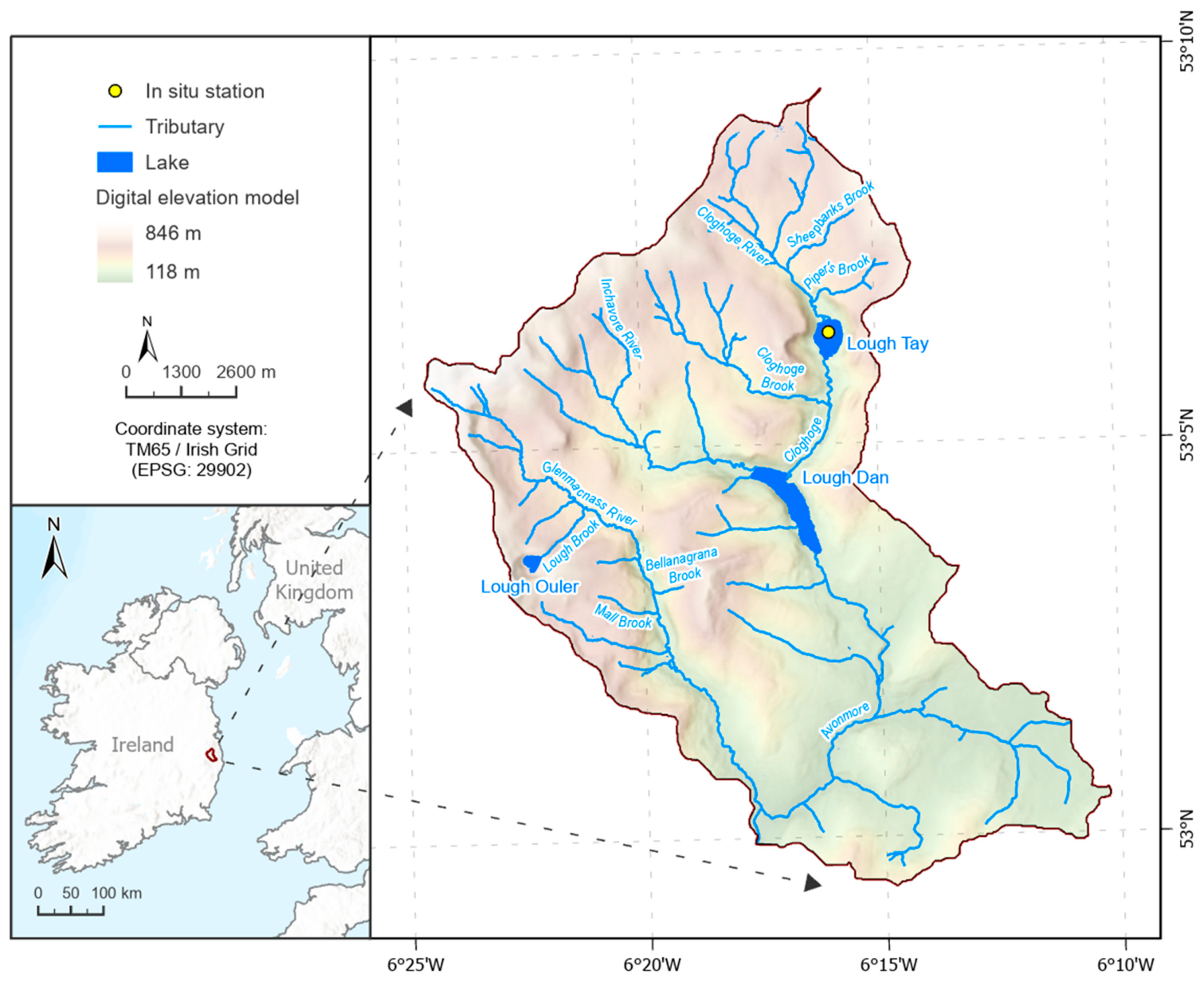
Lough Tay is a deep upland lake located in the Wicklow Mountains, Ireland (
Figure 1), at approximately 250 m a.s.l., within a steep glacial valley between Djouce and Luggala mountains [
8]. The lake has a surface area of ~50 ha, a maximum depth of 35 m and a mean depth of 10.1 m, and is classified under the Water Framework Directive as a deep, low-alkalinity lake (<20 mg/L CaCO
3) [
8]. It is fed by the Cloghoge River and drains southwards into Lough Dan.
Unlike shallow coastal lakes influenced by salinity intrusion and extensive littoral interaction, Lough Tay is embedded within a mountainous catchment characterized by steep slopes and relatively confined hydrological inflows. The absence of marine connectivity distinguishes it fundamentally from coastal systems such as Vrana Lake [
4]. Morphologically, its depth allows for seasonal thermal stratification, resulting in vertical mixing and nutrient redistribution processes that differ substantially from shallow polymictic systems. These contrasts are central to assessing the methodological transferability of eutrophication susceptibility modelling.
The study area is influenced by a temperate oceanic climate characteristic of Ireland, with precipitation occurring throughout the year and no distinct dry season. Rainfall is typically highest during autumn and winter (October–January), while relatively lower values are observed in spring (April–June) [
9]. Such climatic conditions play an important role in lake hydrology and nutrient transport processes, particularly through surface runoff and inflow dynamics, which are relevant for assessing eutrophication susceptibility in upland systems.
2.2. Data Collection
Water quality monitoring at Lough Tay is conducted at a single sampling location (
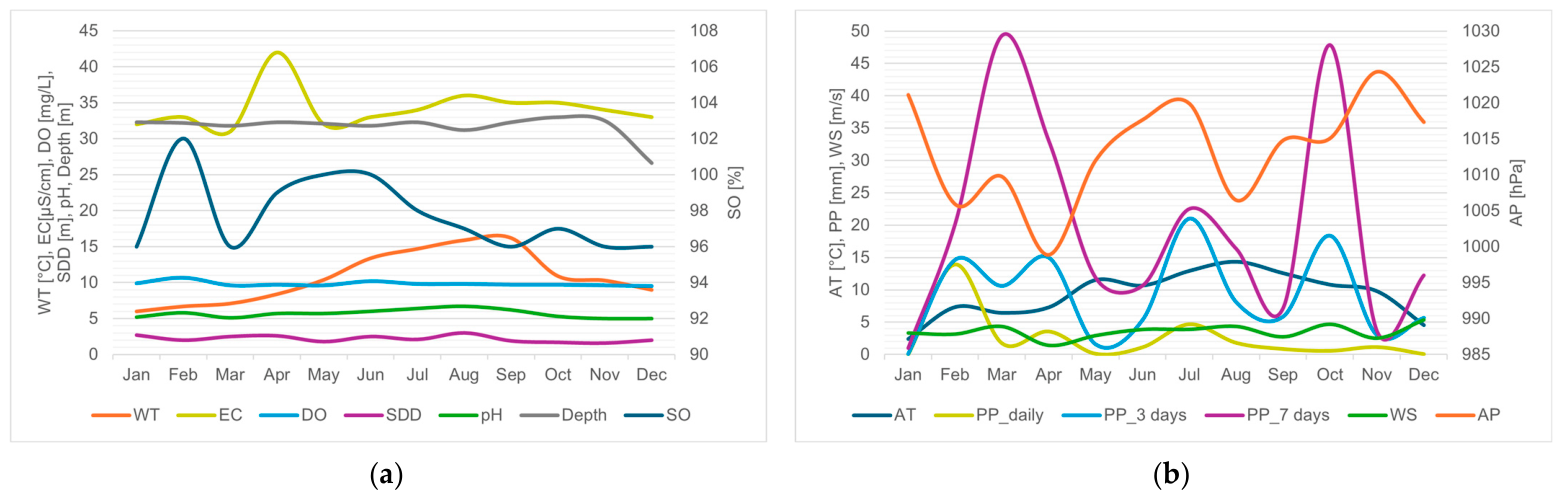
Figure 1). During 2024, monthly measurements were carried out, providing 12 temporal observations. The monitored physicochemical parameters included saturated oxygen (SO), WT, EC, DO, transparency (Secchi disk depth = SDD), pH, and water depth. In addition, meteorological variables were incorporated into the analysis, including AT, air pressure (AP), daily precipitation (PP_daily), cumulative precipitation over the previous three days (PP_3 days), cumulative precipitation over the previous seven days (PP_7 days), and wind speed (WS).
The water quality data used in this study were obtained from the Environmental Protection Agency (EPA) Catchments database, which forms part of Ireland’s national Water Quality Monitoring Programme implemented under the EU Water Framework Directive (WFD). Measurements of physicochemical parameters, including WT, DO, pH, and EC, are conducted using calibrated multiparameter probes, while water transparency is determined using a Secchi disk. All measurements follow standardized field and laboratory protocols in accordance with national monitoring procedures and relevant ISO standards (e.g., ISO 5667 [
10] for water sampling).
Quality assurance and quality control (QA/QC) procedures, including instrument calibration, standardized sampling protocols, and data validation, are implemented within the EPA monitoring framework to ensure data reliability and consistency. The monitoring programme defines the parameters, sampling frequency, and methodological requirements; however, it does not prescribe specific instrument models, as instrumentation is selected in accordance with standardized measurement protocols.
All parameters were analysed to assess temporal variability, seasonal dynamics, and potential relationships between hydrological and meteorological drivers influencing lake ecosystem conditions. Due to the presence of only a single monitoring location, spatial variability of in situ water quality parameters could not be assessed. This limited spatial coverage precludes in-lake spatial interpolation and reinforces the relevance of external-driver-based GIS–MCDA modelling applied in this study.
2.3. Temporal Analysis of Water Quality and Meteorological Parameters
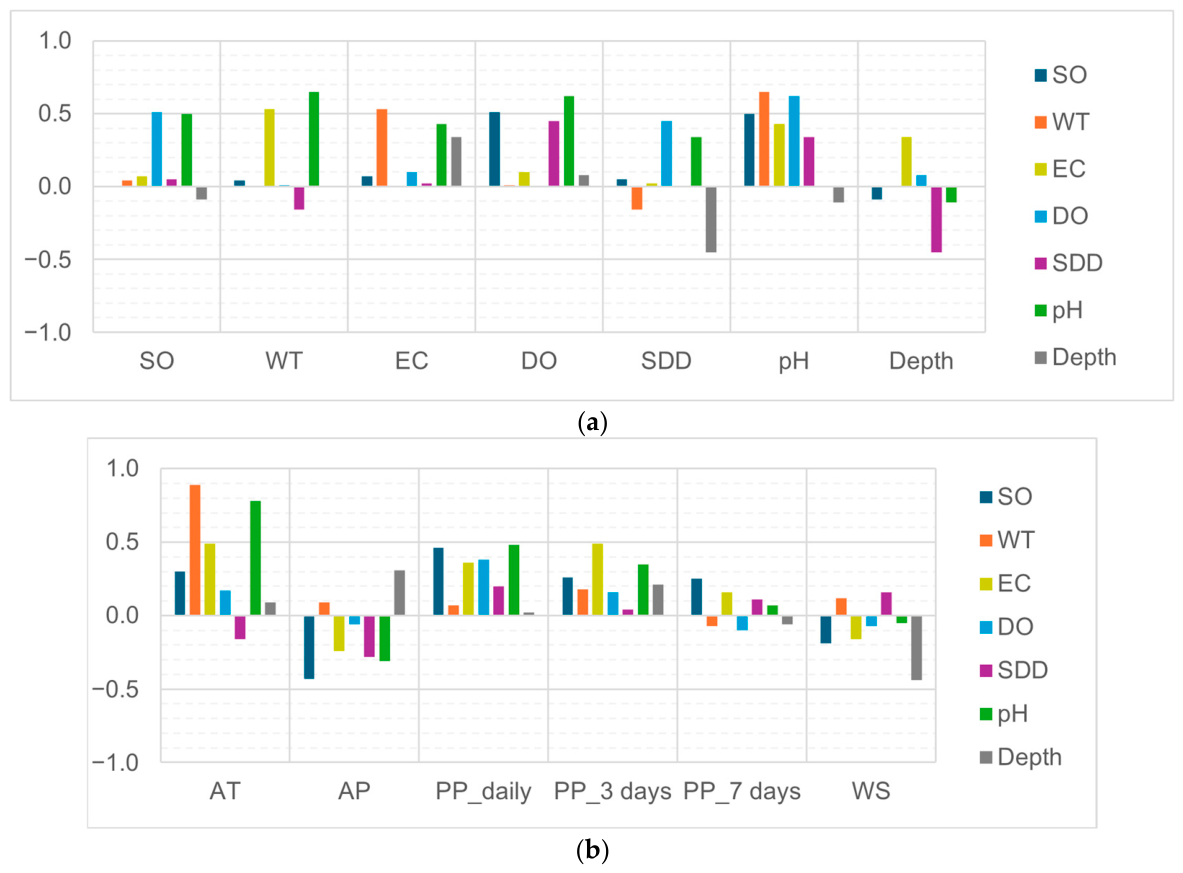
Spearman’s rank correlation analysis was performed to quantify relationships between meteorological variables and in situ water quality parameters. This non-parametric approach was selected due to the presence of non-normal data distributions and its robustness to outliers and monotonic but non-linear relationships [
11,
12].
For each monitoring campaign, station-level measurements were used as input for the correlation analysis. Meteorological variables were analysed for each monitoring date, while PP effects were evaluated using cumulative totals over the three days and seven days preceding each field measurement (PP_3 days and PP_7 days, respectively), in order to account for delayed hydrological response within the lake system.
Correlation analysis was conducted using standard statistical procedures implemented in Excel. Temporal comparison focused on monitoring days to identify relationships between physicochemical conditions and short-term meteorological forcing. Although spatial extrapolation is not possible due to single-point monitoring, these dynamics provide ecological context for interpreting susceptibility modelling. Spearman rank correlation coefficients were calculated in Microsoft Excel 2021 (Microsoft Corporation, Redmond, WA, USA) using built-in functions (RANK.AVG for ranking and CORREL for correlation analysis). Statistical significance (p-values) was calculated using the t-distribution (T.DIST.2T function). Due to the limited sample size (n = 12), the statistical power of the analysis is constrained, and results should be interpreted with caution. The correlation analysis is considered exploratory, aiming to identify potential monotonic relationships, and no correction for multiple comparisons was applied due to the limited sample size.
2.4. Conceptual Framework
The methodological framework follows the structured GIS–MCDA process outlined in [
4] and consistent with broader MCDA principles:
Unlike the original Vrana Lake application [
4], this study isolates external drivers to evaluate cross-system applicability.
2.4.1. Setting the Goal
The goal of the GIS-MCDA is to model eutrophication susceptibility in Lough Tay based on exclusively external environmental drivers, adhering to SMART (specific, measurable, achievable, relevant, and time-bound) criteria [
4].
2.4.2. Selection of Criteria
To evaluate eutrophication susceptibility independently of internal measurements, four external drivers were selected (
Table 1):
Distance from water resources (hydrological inflow influence);
Nitrogen export potential (derived from land use);
Distance from environmental pollutants;
Wind exposure index.
Table 1.
Summary of the dataset and fuzzy standardization of criteria.
Table 1.
Summary of the dataset and fuzzy standardization of criteria.
| Code | Criteria | Data Type | Data Source | Low Eutrophication Susceptibility
Value: 0 | High Eutrophication Susceptibility
Value: 1 | Fuzzy and Shape Membership Function |
|---|
| C1 | Distance from water resource | Raster
(30 m) | Copernicus
digital elevation model (DEM) [13] | 0 m | 885 m | Linear
Monotonically decreasing |
| C2 | Distance from land nutrient runoff | Vector
(polygon) | Land cover/land use (LCLU) [14] | 0 m | 738 m | Linear
Monotonically decreasing |
| C3 | Distance from environmental pollutants | Vector
(point) | Geofabrik [15] | 315 m | 1058 m | Linear
Monotonically decreasing |
| C4 | Wind exposure index | Raster
(25 m) | ERA5 post-processed daily statistics [16] | 0.80 | 0.91 | Linear
Monotonically increasing |
These drivers represent core eutrophication processes described in the literature [
17,
18,
19]. The exclusion of measured water quality parameters from spatial modelling is deliberate, reflecting monitoring limitations and reinforcing the methodological focus.
Hydrological inputs play a fundamental role in shaping lake water quality by delivering freshwater, sediments, and dissolved nutrients. A stream network was derived from a high-resolution Copernicus DEM using flow accumulation analysis. The DEM was pre-processed to remove artificial sinks while preserving natural depressions.
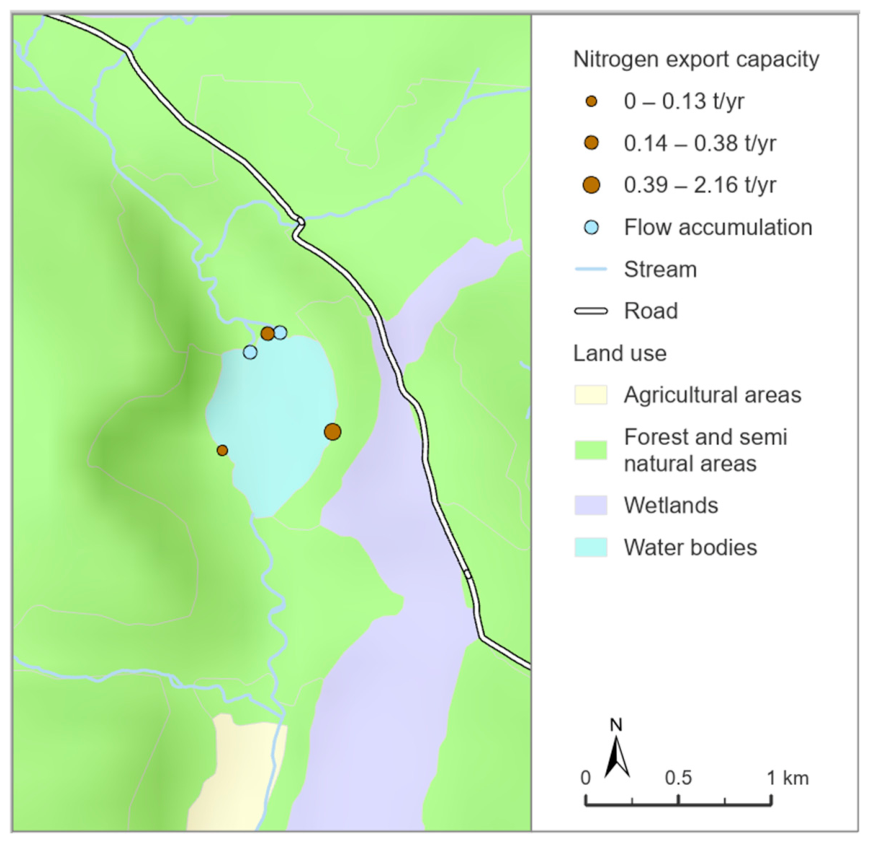
The analysis identified only one significant tributary within the catchment area, the River Cloghoge, which enters the lake at two separate inflow points. Both entry locations were treated as having equal hydrological influence, as they originate from the same upstream drainage system and represent bifurcated terminal sections of a single watercourse rather than independent tributaries. Consequently, both inflow points were assigned to the same influence category in the spatial modelling framework.
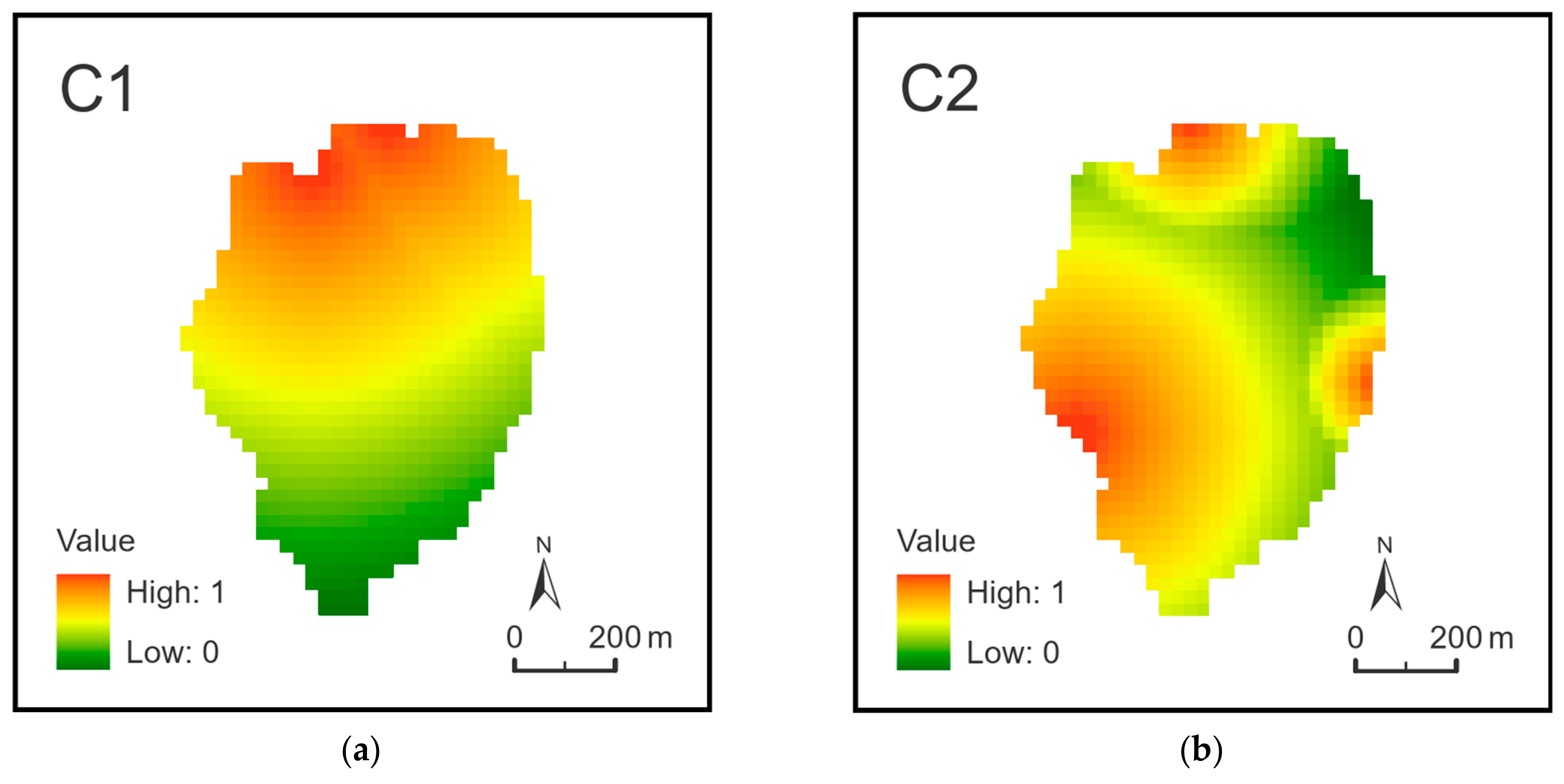
To incorporate hydrological influence into the spatial model, the identified inflow points were used as source locations within a Distance Accumulation analysis. Distances were calculated as cost-weighted distances rather than simple Euclidean distances, allowing the model to account for both spatial proximity and the relative influence of hydrological inputs. A cost-distance raster was generated to represent decreasing hydrological influence with increasing distance from the inflow zones. Given that only one tributary system was detected, no hierarchical classification based on stream length was applied. Instead, a uniform influence weight was assigned to both entry points, ensuring methodological consistency and reflecting their equivalent hydrological contribution to lake conditions (
Figure 2).
Land cover type strongly influences nutrient runoff and nitrogen export to lake systems. LCLU polygons adjacent to the lake shoreline were extracted and considered as primary nutrient source areas. For each polygon, nitrogen export potential was estimated by combining its area with literature-based nitrogen export coefficients expressed in t/km
2/yr for different land cover classes (e.g., forest, grassland) [
17].
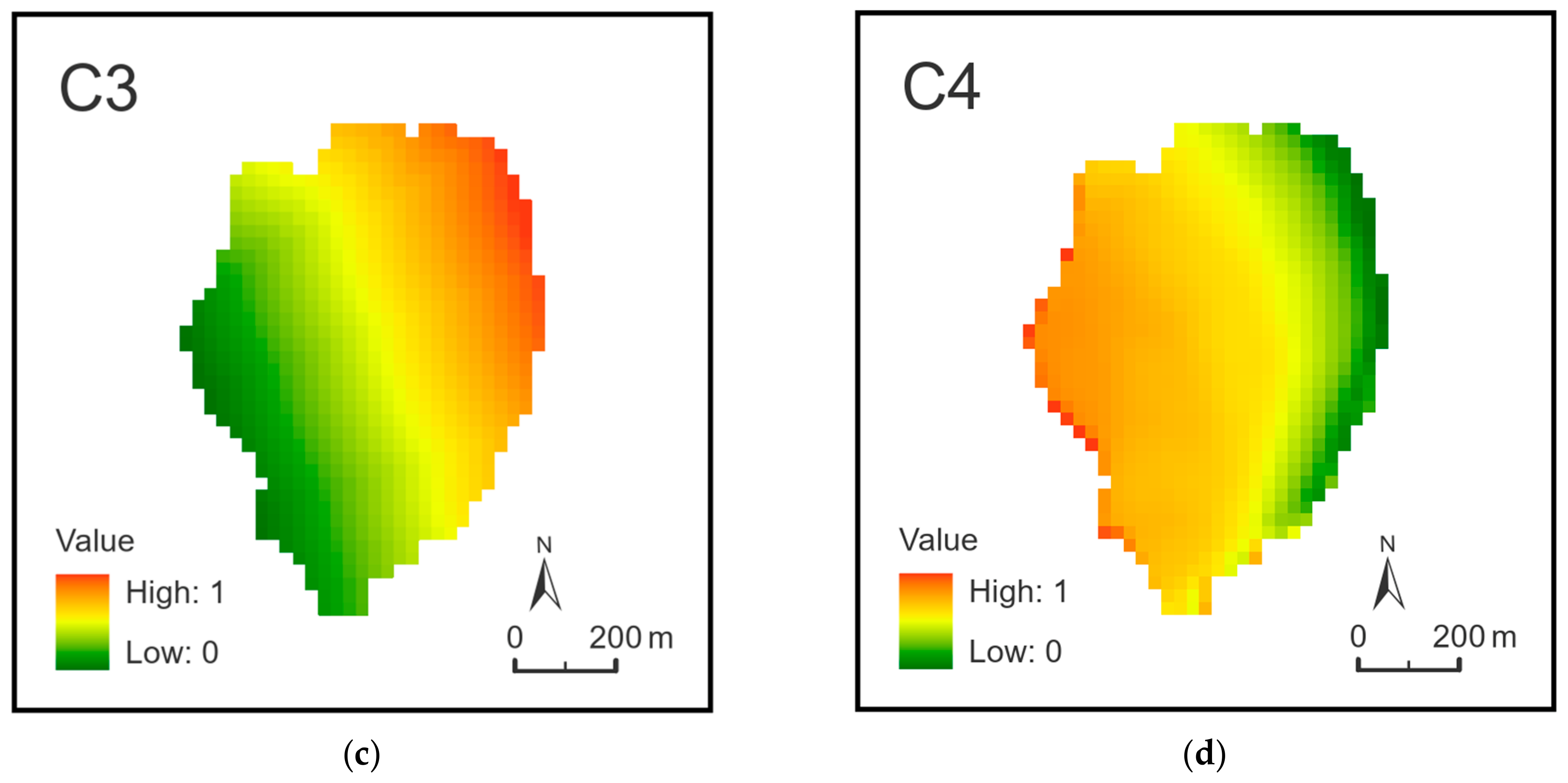
Centroids along the lake boundary were identified as representative nutrient entry points. These points were classified into three natural classes using the Jenks classification method to improve spatial interpretability (
Figure 2). To integrate nutrient pressure into a spatial influence model, nitrogen export classes were used as a cost surface within the Distance Accumulation tool, assigning higher weights to higher nitrogen export values. In this way, the resulting distances reflect not only proximity to nutrient sources but also their relative magnitude of impact. The resulting cost-distance raster reflects both proximity and magnitude of nutrient pressure, highlighting areas potentially more vulnerable to eutrophication.
Although no major industrial facilities are located within the immediate catchment (the nearest industrial zones are approximately 60 km away toward the coastal urban areas), the transportation network represents a potential source of diffuse pollution [
18]. Roads may contribute to non-point source contamination through surface runoff carrying suspended solids, hydrocarbons, heavy metals, and other pollutants into adjacent water bodies.
Transportation network data were processed as vector features, and spatial influence was assessed using a distance-based approach (
Figure 2). The Distance Accumulation tool was applied to generate a cost-distance raster, where proximity to roads represents higher potential influence. As with other criteria, a cost-weighted distance approach was applied, ensuring that spatial influence is represented as a function of both distance and relative environmental pressure. This approach allows spatial prioritization of shoreline segments and nearshore zones potentially affected by runoff from transport corridors.
Wind represents a key physical driver influencing surface mixing, sediment resuspension, and oxygen dynamics in lake systems [
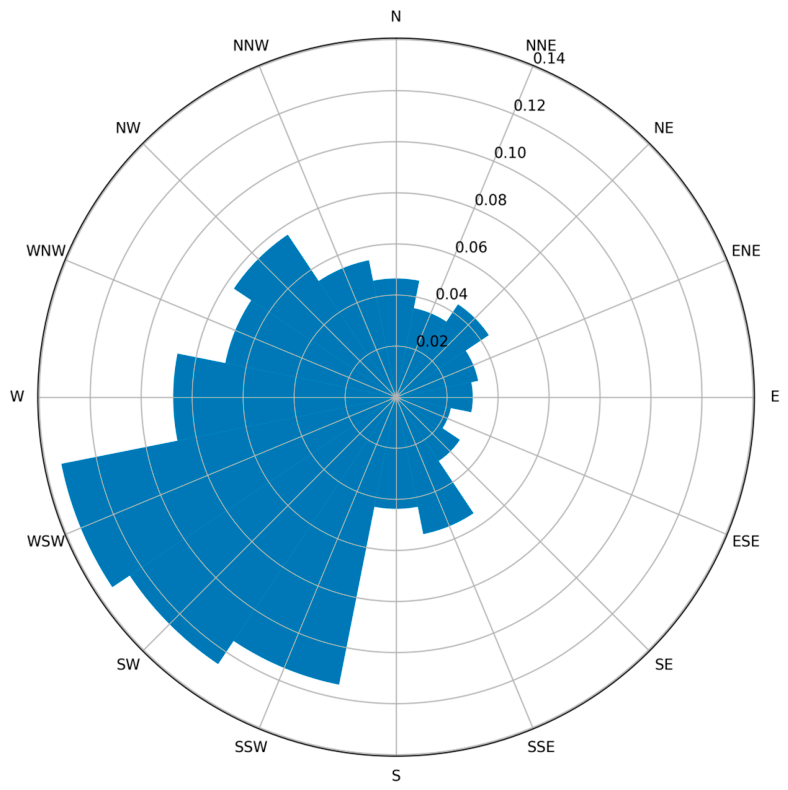
12]. Prevailing wind directions and intensities were analysed using meteorological ERA5 post-processed daily statistics. A wind rose was constructed for the entire year 2024 to identify dominant wind directions and seasonal variability in wind patterns affecting the lake. The analysis identified WSW, SW, and SSW winds as dominant throughout the year (
Figure 3).
Wind data were not used as direct raw inputs but were instead integrated into a spatial model through a wind exposure index (Windward/Leeward Index) in SAGA 9.6.0. This index was calculated by combining dominant wind direction data with a DEM to account for topographic sheltering effects and fetch length. In this approach, terrain orientation relative to prevailing wind directions determines whether a location is windward (exposed) or leeward (sheltered), allowing spatial differentiation of wind influence across the lake surface. The resulting raster represents spatial variability in wind-driven forcing and its potential impact on mixing processes and water quality.
2.4.3. Criteria Standardization
All spatial layers were standardized using fuzzy membership functions scaled between 0 (lowest susceptibility) and 1 (highest susceptibility), following the fuzzy standardization approach described in [
4]. Fuzzy logic was selected as it allows gradual transitions between classes and is particularly suitable for environmental data that lack clearly defined thresholds.
The selection of membership functions was based on the nature of each criterion, supported by relevant literature, expert judgement, and local environmental characteristics. The standardization process was performed in ArcGIS Pro 3.6.0 (Esri Inc., Redlands, CA, USA) using the Fuzzy Membership tool and linear fuzzy membership functions (
Table 1). Linear membership functions were selected to ensure methodological consistency with previous GIS–MCDA application [
4] and to provide a transparent and reproducible standardization approach. Given the data-scarce nature of the study, the use of more complex non-linear functions (e.g., sigmoid) was not supported by sufficient empirical data and would introduce additional uncertainty. For parameters such as wind exposure, a monotonically increasing linear membership function was applied, assuming that higher values correspond to greater influence. In contrast, criteria representing distances from water resources, land-based nutrient runoff sources, and transportation-related pollution were standardized using a combination of the decision-maker approach and linear fuzzy membership functions with monotonically decreasing values. This approach assumes that influence decreases with increasing distance from the respective source areas. The standardized values for each criterion are summarized in
Table 1.
2.4.4. Weight Determination Using F-AHP
To reflect the relative importance of different criteria, weights were determined using the F-AHP [
4,
20]. This method extends traditional AHP by incorporating triangular fuzzy numbers in pairwise comparisons, allowing uncertainty in expert judgments to be represented more realistically. The comparison matrix was constructed to satisfy reciprocity conditions, and preference intensities were defined within a flexible range controlled by a selected parameter (σ > 1) [
20].
Triangular fuzzy numbers were applied in pairwise comparisons following the mathematical formulation presented in [
4] (
Table 2). Matrix consistency was evaluated using a dedicated consistency index ranging from 0 to 1, where values closer to 0 indicate higher logical coherence of expert judgments. Consistency index was 0.056 (
Table 3) and this matrix was accepted for further GIS-MCDA analysis. The weighting approach follows a previously published GIS–MCDA framework applied to a shallow lake system [
4], where a broader set of criteria, including water quality parameters, was considered. In the present study, these parameters were excluded due to the lack of spatially distributed monitoring data.
The resulting similarity in weights among certain criteria reflects their conceptual grouping, particularly for distance-based environmental pressures (C1–C3), rather than a lack of sensitivity in expert judgement. In previous applications of this methodology, the robustness of the weighting scheme was confirmed through Monte Carlo sensitivity analysis, demonstrating low sensitivity of model outputs to variations in weights.
2.4.5. Criteria Aggregation
The final eutrophication susceptibility map was generated using the Weighted Linear Combination (WLC) method [
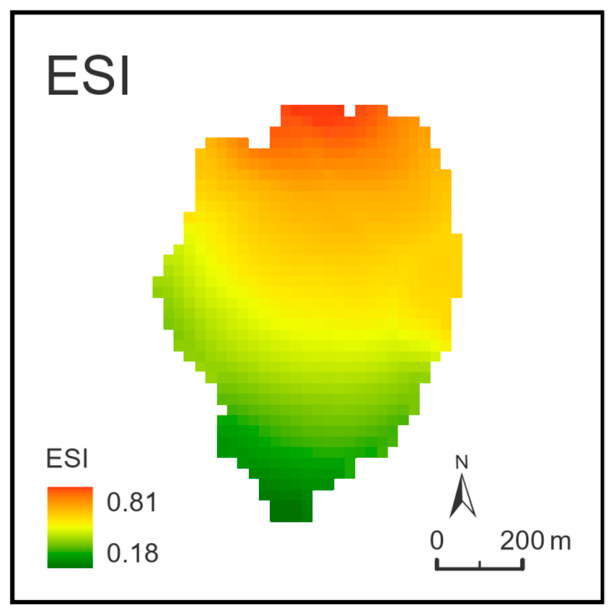
4] at a spatial resolution of 25 m. This approach integrates standardized raster layers with their corresponding weight coefficients to produce a composite eutrophication susceptibility index (ESI). The aggregation was performed using the Raster Calculator tool in ArcGIS Pro 3.6.0 (Esri Inc., Redlands, CA, USA). In this procedure, each standardized criterion was multiplied by its assigned weight, and the weighted layers were subsequently summed to obtain the final ESI map.
2.4.6. Validation Using Remote Sensing Proxy
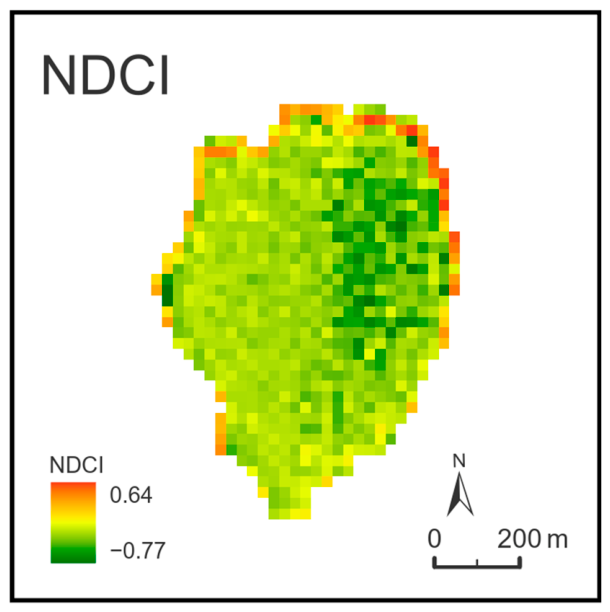
To provide an indirect validation of the ESI map, Sentinel-2 imagery was used to derive the Normalized Difference Chlorophyll Index (NDCI) as a proxy for spatial variability in algal productivity [
21]. While the ESI represents overall susceptibility to water quality degradation, NDCI reflects only chlorophyll-related processes and is therefore used as a partial proxy for validation. The NDCI was calculated using red and red-edge bands (B4 and B5) following Mishra and Mishra (2012) [
21] as:
where
represents remote sensing reflectance. For Sentinel-2 data, bands B5 (705 nm) and B4 (665 nm) were used as approximations of these wavelengths. B4 is associated with strong chlorophyll absorption, while B5 is sensitive to variations in chlorophyll concentration, making it suitable for detecting algal biomass in inland waters.
Based on long-term monitoring data (2009–2024), peak chlorophyll concentrations in Lough Tay typically occur during July and August. However, due to the absence of cloud-free Sentinel-2 imagery during these months, the closest available cloud-free image, acquired in early September 2024, was selected.
The NDCI raster was classified into five equal-interval classes (very low to very high) to enable comparison with the ESI classification. NDCI values were interpreted as relative indicators of chlorophyll variability rather than absolute concentrations. The comparison between ESI and NDCI was performed using a class-based agreement approach and interpreted as a qualitative validation.
4. Discussion
While shallow polymictic systems have been extensively investigated using spatial modelling approaches, fewer studies have examined the transferability of such frameworks to deep upland lakes characterized by stratification dynamics and limited monitoring coverage. In this study, temporal analysis confirmed strong atmospheric control over physicochemical dynamics, particularly the relationship between AT and WT.
To the best of the author’s knowledge, Lough Tay has not previously been examined in the scientific literature with respect to water quality assessment or eutrophication susceptibility modelling. Existing documentation has primarily focused on ecological surveys and regulatory monitoring [
8], without spatially explicit modelling of environmental vulnerability. This study therefore addresses a methodological and geographic research gap by applying a GIS–MCDA F-AHP framework to a deep upland system lacking a dense monitoring network.
Temporal analysis confirmed strong atmospheric control over physicochemical dynamics, particularly the negative relationship between WT and DO, consistent with established thermodynamic principles and findings from deep temperate lakes undergoing seasonal stratification [
24,
25]. However, unlike shallow coastal lakes where sediment resuspension and continuous mixing dominate [
4,
12], although deep lakes differ structurally from shallow polymictic systems due to stratification dynamics and reduced sediment resuspension.
The observed relationships between other physicochemical parameters are also consistent with established and recent findings on climate driven lake processes. The positive relationship between WT and pH can be explained by enhanced biological activity during warmer periods, particularly increased phytoplankton productivity and photosynthetic uptake of CO
2, which shifts the carbonate equilibrium toward higher pH values [
3]. This interpretation is further supported by recent studies linking temperature increase with enhanced phytoplankton growth and biogeochemical activity in lakes [
26,
27]. The very strong relationship between AT and WT confirms the dominant role of atmospheric forcing in regulating lake thermal dynamics, as widely reported for temperate lakes under climate change [
5,
25]. Moderate associations between WT, EC, and pH may reflect the combined influence of temperature-dependent chemical processes and biologically mediated changes in ionic composition, while variability in SDD is consistent with the influence of hydrodynamic and mixing processes on water transparency [
7].
A central premise of this study was that, in the absence of spatially distributed in situ data, external environmental drivers could provide a basis for modelling spatial susceptibility. The lack of spatially distributed monitoring data prevents validation of spatial patterns derived from the model. Therefore, the results should be interpreted as a conceptual representation of environmental susceptibility rather than a direct measurement of in-lake spatial variability. The resulting ESI map therefore represents spatial pressure rather than directly measured trophic state. In deep lakes with single-point monitoring, the model more appropriately functions as a spatial proxy of vulnerability derived from external drivers. The WLC approach applied in this study is inherently compensatory, allowing trade-offs between criteria. This means that low values in one factor may be offset by higher values in others, potentially masking localized environmental risks. Therefore, the resulting ESI should be interpreted as an integrated susceptibility index rather than a representation of critical threshold exceedance. The north–south gradient observed in the ESI aligns with hydrological connectivity patterns, particularly proximity to the River Cloghoge inflow, and with spatial variability in land-derived nutrient export potential. These findings are consistent with established understanding of non-point source pollution and catchment–lake interactions [
17,
19]. A key limitation of this study is the limited number of observations (n = 12), which reduces statistical power and restricts the robustness of inferential analysis. Consequently, the correlation results should be interpreted as indicative rather than conclusive, serving primarily to identify potential relationships under data scarce conditions.
Importantly, the methodological transfer from a shallow coastal system [
4] to a deep upland lake required conceptual adjustment. The weighting scheme applied in this study follows the approach used in the referenced framework, where its robustness was evaluated through Monte Carlo sensitivity analysis, demonstrating low sensitivity of model outputs to variations in weights. While the structural MCDA framework proved adaptable, interpretation shifted from integrated water quality mapping toward vulnerability modelling. Its applicability depends not only on computational design but also on ecological context and data availability. This distinction is particularly relevant in data scarce systems, where interpolation-based approaches are not feasible [
11]. The results support the broader argument that flexible, spatially explicit tools are necessary for freshwater management under monitoring constraints [
1]. In this case, the approach provides a decision-support tool for identifying zones of potential susceptibility in a previously understudied lake system.
The comparison with the Sentinel-2 derived NDCI further supports the spatial patterns identified by the ESI model. The observed agreement between higher susceptibility zones and elevated chlorophyll-related signals suggests that the model captures key environmental drivers influencing biological productivity within the lake system. However, this comparison should be interpreted with caution. While the ESI represents overall susceptibility to eutrophication, NDCI reflects only chlorophyll-related processes and therefore provides a partial proxy rather than a comprehensive validation. Other important components of water quality, such as DO, nutrient concentrations, and chemical composition, are not captured by the NDCI.
The use of a cloud-free image from early September, instead of the peak summer period, introduces additional uncertainty, although elevated chlorophyll levels are expected to persist into early autumn. Furthermore, the classification of NDCI values was not calibrated to in situ measurements, and therefore reflects relative spatial variability rather than absolute trophic conditions. Despite these limitations, the high level of agreement within ±1 class (87.05%) indicates a strong spatial correspondence between the modelled susceptibility and the remote sensing proxy. This supports the conceptual validity of the ESI as a tool for identifying zones of potential water quality degradation in data-scarce environments.
Future research should aim to validate susceptibility outputs through expanded spatial monitoring and multi-depth profiling to capture stratification effects. Expanding spatial monitoring beyond a single sampling point would allow empirical validation of susceptibility gradients and refinement of weighting schemes under alternative climatic scenarios. Scenario-based modelling incorporating projected climate warming would further strengthen predictive capacity and enhance applicability in long-term freshwater conservation planning.
5. Conclusions
This study evaluated the transferability of a GIS–MCDA F-AHP framework from a shallow coastal lake to a deep upland lake with limited monitoring data. Temporal analysis confirmed that meteorological forcing, particularly AT, strongly influences in situ physicochemical dynamics at Lough Tay.
Due to the availability of water quality measurements at only a single monitoring location, spatial modelling was based exclusively on four external environmental drivers: distance from water resources, nitrogen export potential derived from land cover, proximity to environmental pollutants represented by the transportation network, and wind exposure. The resulting ESI, generated at 25 m resolution, ranged from 0.18 to 0.81 and indicated predominantly moderate to good environmental conditions, with increased susceptibility in the northern sector near hydrological inflows. The results should be interpreted as a spatial proxy of environmental susceptibility rather than a direct representation of in-lake spatial variability, considering data limitations, particularly the lack of spatially distributed in situ measurements. Future research should focus on expanding monitoring networks and integrating additional datasets to improve model validation and predictive capacity.
To the best of the author’s knowledge, this represents the first spatial susceptibility assessment of Lough Tay. The findings demonstrate that the GIS–MCDA framework is structurally transferable across morphologically distinct lake types; however, its interpretation must reflect data availability and system characteristics. In deep upland lakes with sparse monitoring, the framework provides a spatial proxy of environmental pressure rather than a direct assessment of trophic state.
This study contributes to the development of adaptable decision-support tools for freshwater systems lacking dense monitoring infrastructure, supporting broader efforts to improve freshwater ecosystem resilience under increasing environmental change.