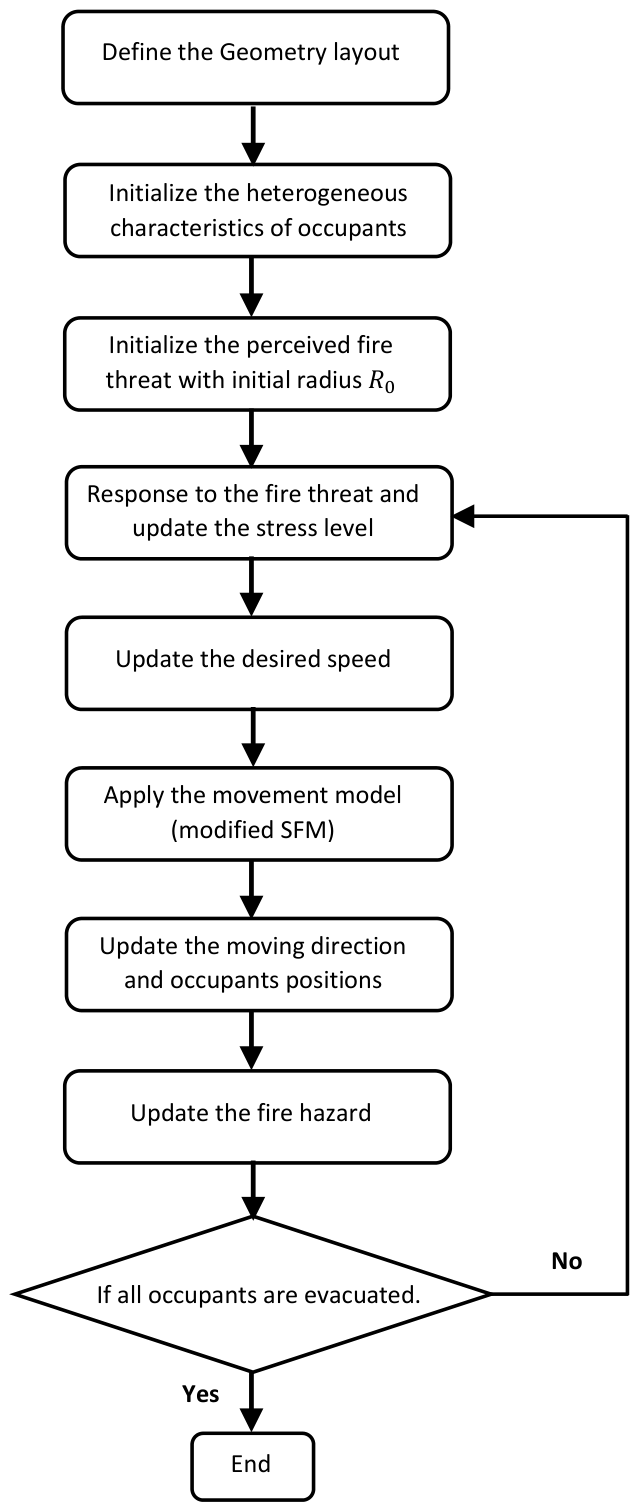
1. Introduction
Fire emergency evacuation is considered one of the most challenging problems in safety research. Obtaining a safe and successful evacuation in a fire emergency situation is essential [
1]. In such a scenario, the physiological and psychological characteristics of evacuees are affected by the fire threat, which can affect the success of the evacuation process [
2,
3]. To obtain an effective evacuation plan in fire emergency situations, crowd dynamics and evacuee movement patterns under the threat of fire hazards should be carefully investigated. The investigation process is accomplished through multiple experiments. However, performing human-based experimental studies for evacuation during fire emergency situations is infeasible due to critical safety concerns, as well as ethical considerations and cost constraints [
4]. Consequently, crowd management and evacuation models provide a safe alternative that can be used to study and investigate the evacuation process, as well as the behavior of evacuees in such critical evacuation scenarios [
5].
Crowd modeling techniques are usually classified into macroscopic and microscopic models based on the level of detail investigated for each occupant [
6]. In macroscopic studies, only large-scale (group) behavior is considered while neglecting individual details and their interior interactions [
7]. Generally, this class includes continuous models that represent crowd movement using fluid or gas models. On the other hand, in microscopic models, individual details are considered to simulate occupants’ movements and their interaction with each other, as well as the interaction with the surrounding environment [
7]. Microscopic models can be further classified into discrete models such as cellular automaton (CA) models and lattices gas models, and continuous models such as the utility maximization model, the magnetic force model, and the social force model (SFM) [
8,
9]. Usually, discrete models require fewer computational resources compared to continuous models; however, they provide fewer information, results, and details. The social force model is considered one of the most popular and widely used individual-based models that can simulate highly realistic crowd movement scenarios. This is because of its ability to describe different crowd patterns and generate many self-organization phenomena for crowd movement, such as the faster-is-slower effect and lane formation.
The main idea behind SFM is to represent the interaction between occupants and the surrounding environment using force terms that can describe the movement of an occupant [
10]. Different movement phenomena are not represented in the original SFM, such as obstacle avoidance, group cooperation, overtaking, and counter-flow. Hence, several research works have highlighted some of these movement phenomena [
9]. Due to the popularity and reliability of SFM, several fire evacuation research works utilize it to study the behavior of occupants and their moving patterns [
11]. Modifications of the SFM are typically used in these works to describe the additional details required in fire evacuation scenarios, such as the change in stress levels and its effect on individual characteristics, realistic paths in the vicinity of fire sources preventing individuals from moving directly into the fire, and the change in the physical characteristics of individuals when they are affected by the fire threat.
In this work, a fire emergency situation is considered and an evacuation model is proposed. The model aims to realistically simulate the interaction of the occupants with the fire event while considering the impact of the fire on stress levels and the desire to escape. In addition, to further simulate more realistic scenarios, the non-homogeneity in physical abilities of the occupants is considered. The effects of fire location and room exit width on occupant movement patterns and overall evacuation performance are studied to provide guidance in designing layouts for fire-fighting planning.
The contributions of this paper can be summarized as follows:
Proposing a modified SFM that introduces a combined normal and tangential fire-avoidance force to the Social Force Model to construct highly plausible simulation-based escape paths.
Merging the operational effects of dynamic psychological stress into a variable desired velocity field governed by multi-distance sigmoid modeling.
Integrating civilian structural heterogeneity into the crowd dynamics through a stochastic, time-varying physique coefficient to capture varying personal abilities.
The rest of this paper is organized as follows.
Section 2 provides a review of related work in the literature. Our methodology and assumptions are illustrated in
Section 3.
Section 4 shows our numerical results and the related discussions. Lastly, concluding remarks and related future research are presented in
Section 5.
2. Related Work
Different evacuation models have been presented in the literature to investigate and study the evacuation process and its characteristics during fire hazards. These models varied from simple [
4,
11,
12,
13,
14,
15,
16,
17,
18,
19] to a more complex environment [
20,
21,
22,
23,
24].
In [
11], an evacuation scenario is considered during a critical, life-endangering fire hazard event. The effects of fire threat and the surrounding environment on stress levels and physical abilities represented by the desired speed of the evacuees are studied. A simple environment consisting of a single room with a single exit is considered with a fixed-size fire event emergency. A modified SFM is proposed by adding a normally directed fire avoidance force from the fire source towards the evacuees. Furthermore, the effects of the location of the fire event on the evacuation time, the number of evacuated occupants, stress levels, and the trajectories of evacuees are studied. The work in [
11] is extended in [
12] by considering a more realistic model to simulate the fire event. A fire dynamics simulator (FDS) is used to represent the characteristics of the fire event, including smoke spreading that affects visibility, temperature, toxic gas concentration, and radiant heat flux. These characteristics affect both the stress level and the desired moving speed of the evacuees. In this model, a modified SFM is also proposed. The modification is performed by adding a fire avoidance force to the original SFM. The magnitude of this force depends on the distance from the fire event and the radiant heat flux in the same direction used in [
11]. In [
13], the effect of smoke on the behavior of evacuees during fire hazards is studied. In this model, it is assumed that psychological pressure results from confronting smoke that affects the moving speed of the evacuees. A modification of the original SFM is proposed, considering human–smoke interaction forces that can describe the change in physical abilities such as breathing difficulty and poor visibility due to the fire event and the smoke. This force aims to find a reliable route that can avoid moving through the smoke. In order to increase the allowable smoke spreading, the fire spreading rate is neglected. In [
14], a spreading fire hazard is studied in industrial buildings with a single exit. In this work, SFM is integrated with the fire dynamic model to investigate and understand the crowd dynamics in this scenario. A modified SFM is proposed that considers the fire as a dynamic, circularly shaped obstacle that projects a normally directed repulsive force towards the occupants. Additionally, a sliding friction force with relatively high amplitude is assumed to be initiated when an occupant touches the fire obstacle. In [
15], the effect of arranging the classroom layout on the evacuation process during fire hazards is investigated. A simple classroom with a single exit is considered. The Pathfinder simulator is used to simulate the evacuation process for four different layouts inside the classroom and investigate their effects on the evacuation time. In [
16], a modified SFM is proposed to simulate evacuation behavior during fire hazards. This modification is set by considering additional radiating repulsive forces that can model fire and smoke avoidance behavior. This force can change the moving pattern as well as the moving speed, and a safe route can be obtained. Moreover, to represent the decrease in stress level of the occupants when they successfully pass the fire threat, the magnitude of the proposed force is modeled as a dependent function of the angle between the moving direction of the occupant and the direction of the force.
In addition to investigating crowd movements, some research work focuses on studying the behavior and attitudes of occupants during fire evacuation. In [
17], the problem of high-density crowd evacuation during a fire hazard in a simple room with a single exit is investigated. In such a scenario, the fear produced from the fire threat results in forming a crowded area near the exit. Unfair competition is observed due to the multiple collisions and pushing behaviors between occupants. A modified SFM is proposed to describe this behavior. Traditionally, in the original SFM, the occupants are modeled as circles with fixed radius. The modified SFM relaxes this modeling assumption by introducing a variable occupant effective radius. This effective radius changes according to the waiting time and the surrounding density of the occupants. Moreover, obstacles and exit arrangements are investigated to enhance the efficiency of the evacuation process. In [
4], the behavior of competition and cooperation between occupants in an evacuation process during a fire hazard are studied. During life-threatening events, some occupants stop following well-coordinated motion behavior and start to be competitive. This change in pattern affects the crowd dynamics and the overall evacuation process. A modified SFM is introduced to investigate the crowd dynamics in this scenario. This modification considers the angular effect on the interaction between occupants. Moreover, the desired moving speed is modeled as a function of the interpersonal distance between occupants. For a competitive occupant and a cooperative occupant, this function has an increasing and decreasing pattern, respectively. Simulation results are performed considering a single exit room with different exit widths. The results show that different patterns near the exit are observed for the competitive and cooperative evacuee cases. In [
18], virtual experiments were built to examine the behavior of the occupants and their moving patterns under a fire evacuation scenario. A simple layout of a room with a single exit is considered. Different evacuation scenarios with obstacles, no obstacles, and fire obstacles are considered. In the case of fire obstacles, the simulation results show that the occupants adapt trajectories that maintain a higher distance and larger detour angle from the fire obstacles to achieve a safer evacuation. Moreover, in a corridor layout, in order to avoid the fire event, an orderly queuing pattern is observed, which decreases the average evacuation time for the occupants. In [
19], fear propagation and its impact on crowd dynamics during emergency evacuation are studied. It is assumed that the fear state of occupants can change from a relaxed state to an anxious state based on the received threat, the surrounding environment, and the state of surrounding neighbors. Moreover, when the threat level decays, the fear spreading rate decreases, and consequently, the state of occupants can change from an anxious state back again to a relaxed state. SFM is used to simulate the crowd behavior in this situation. While applying the SFM, the desired moving speed of occupants is affected by their state; anxious occupants are expected to have a higher desire to escape compared to relaxed occupants. Hence, anxious occupants have a higher desired speed compared to relaxed occupants.
During a life-threatening situation, selecting an appropriate route is essential to have an effective evacuation. In addition, selecting an appropriate exit can significantly affect the safety of the evacuation process and the evacuation time. Consequently, different research works investigate the exit selection problem under emergency evacuation [
13,
24,
25,
26]. In [
25], a rule-based exit selection model is proposed as a part of the tactical or strategic level that affects the operational level by changing the desired direction. In this model, the selection process is based on maximizing a utility function that depends on the distance to the exit, the congestion level at the exit, and the state of the fire threat at this exit. Based on an assessment process, evacuees can select the appropriate exit to obtain an effective evacuation. However, spreading fire events can change the exit safety state, affecting the exit utility. Consequently, evacuees can dynamically assess the available exits and change the selected exit, if necessary, to guarantee a safer evacuation. In [
26], an emergency evacuation scenario with an exit selection problem is studied. The model is described as a two-layer model. The upper layer concerns the path planning module, while the lower layer models the actual moving behavior. For the upper layer, a multiple-subpopulation artificial bee colony with a memory algorithm is proposed to optimally select routes and exits for the smallest evacuation time. In this optimization problem, the level of congestion at each exit and the distance to the final exit are considered when calculating the weight of each exit. In the lower layer, SFM is used to simulate the actual movement of occupants. Finally, dynamical evaluation of the optimization problem can adaptively select the appropriate exit for the shortest evacuation time.
Recently, investigating crowd dynamics and movement during emergency evacuation in a complex environment and large building has gained more attraction due to the increasing number of these layouts. In addition, the complex structure of these environments makes it harder for professional rescuers to save people from the inside early, increasing the social losses of deaths and injuries. Different research works consider various simulators to simulate the evacuation process in the case of a complex environment [
20,
21,
22,
23,
24]. The simulation process aims to merge the structure of the environment, the occupant movement model, and the fire spreading model by integrating different simulators together.
In [
20], a self-rescue mechanism is proposed to overcome the difficulties of evacuation during an emergency in a complicated structure such as a high-rise building. This mechanism is obtained by studying the crowd evacuation behavior through simulation experiments that simulate the behavior of occupants inside the building based on SFM. Moreover, based on the FDS model, a simplified fire spreading model is proposed. The effect of fire and smoke on the health state of the evacuees is calculated. In addition, an extension for the SFM is proposed to handle the stairway evacuation scenario in which lower speed limits are observed. It is concluded that using an optimal routine training based on SFM evacuation and a central alarm system can significantly decrease social losses during fire hazards in high-rise buildings. In [
21], the decision making process of occupants is investigated during an emergency evacuation of large infrastructures. A system that can simulate the evacuation process during a fire hazard is presented. The developed simulation system integrates three types of data obtained from different simulators: data related to fire dynamics obtained from the PyroSim platform, data related to the infrastructures obtained from the building information modeling platform, and data related to occupant movement dynamics obtained from the AnyLogic simulation platform. Moreover, an optimal route planning algorithm considering the utilization of each exit is proposed to obtain a dynamical and real-time evacuation plan. A validation for the introduced simulation system is performed through simulating the busy Chegongmiao underground subway station in China. In [
22], an evacuation scenario during a fire hazard in the complex layout of a subway station is studied. An improved SFM is proposed by considering an environmental role force that reflects the impact of the fire hazard on the evacuees. This impact is based on visibility, surrounding temperature, toxicity level, and distance from the fire source. Moreover, to model the different levels of awareness of occupants, the moving speed is derived dependently on the levels of fire safety knowledge, the familiarity level with the environment, and the psychological state. In addition, a dynamic path planning algorithm considering the multi-exit and multi-floor connections is proposed.
Based on this literature review, some research gaps can be identified, including limitations in some previous SFM-based models, where unrealistic movement of occupants toward or excessively close to the fire source is observed, as well as the assumption of a homogeneous evacuees. In the present work, our main goal is to prevent the unrealistic behavior of moving directly and getting closer to the source of the fire threat during an emergency evacuation scenario. To overcome this issue, a modified SFM is proposed to describe more reasonable moving patterns. Unlike most of the existing modified models in the literature that assume a normal avoidance force similar to the forces in the original SFM, we consider combined normal and tangential forces. This combination allows the evacuee to change his moving direction more freely without being constrained by the desired direction or by the direction of the target point. Consequently, the occupant direction can be finely adjusted to safely avoid the fire event. Moreover, the variation in the stress level resulting from encountering the source of threat and its impact on the occupants’ state and escape desire is considered in the proposed model. Finally, the common assumption used in most previous works is to consider the homogeneous occupants’ case. However, for realistic concerns, in the proposed model, the non-homogeneity of occupants’ characteristics and physical abilities is considered by integrating a physique coefficient into the modified SFM.
4. Numerical Results
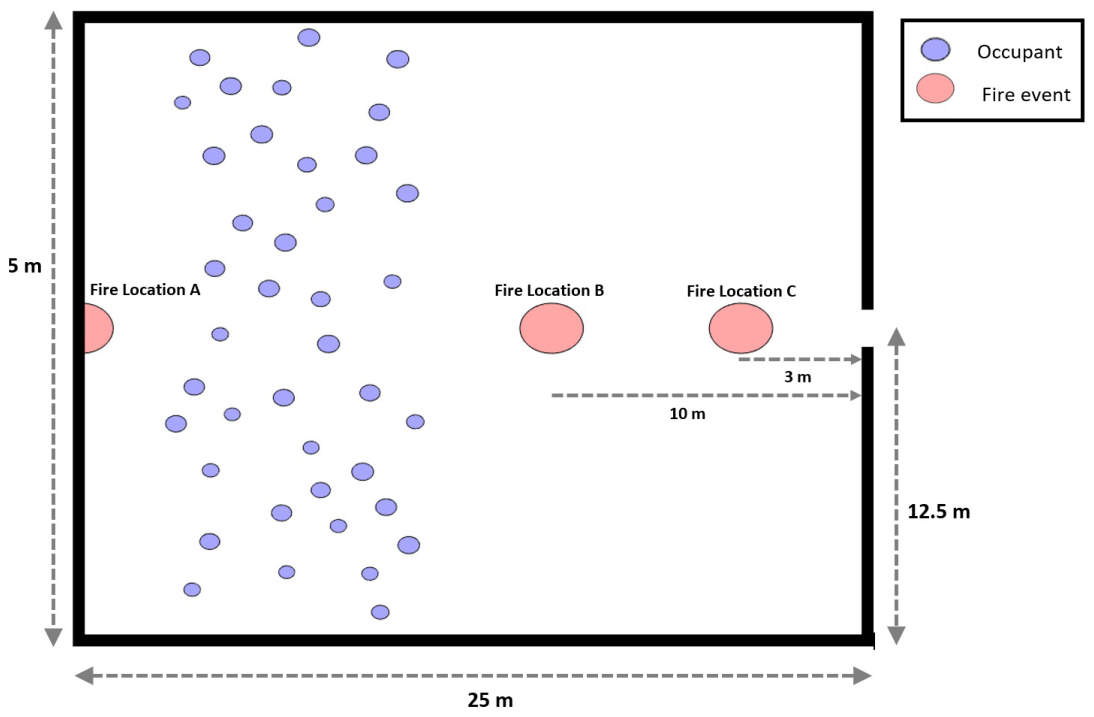
In this section, the results of applying the proposed evacuation model and the modified SFM are presented and compared with other existing models in literature through different simulation experiments. In these simulation experiments, the model simulates the evacuation process of 40 occupants from a square, single-exit room with size 25 m × 25 m. Three different scenarios are considered based on the location of the center of the fire event as shown in
Figure 3. Following [
11,
12,
14,
19,
32,
34,
35], the simulation parameters are summarized in
Table 1. It is noted that the SFM parameters
,
,
,
, and
k are from the work in [
34]. The fire dynamic parameters
,
C, and
Q are from the work in [
14]. The occupants’ heterogeneity parameters
,
,
,
,
,
, and
are from the work in [
19,
32,
35]. The stress variation parameters:
,
, and
are from the work in [
11,
12] with some modifications. The repulsive fire force parameters
,
are set to balance between the normal and tangential repulsive fire forces. If
is set to zero (representing previous models with only normal repulsion), the trajectory exhibits an implausible pattern where the occupant moves excessively close to the fire before performing a sudden, unsafe turn. Conversely, if
is set too high relative to
, the detour is initiated prematurely, producing an over-exaggerated deviation. The values selected for our simulations balance these two behaviors perfectly, establishing a smooth, natural, and highly plausible avoidance curve. Finally, unless otherwise stated, we assume that the exit width is 2 m.
4.1. Comparative Studies
In this subsection, the performance of the proposed evacuation model and the modified SFM is compared with other existing models in literature to examine their reliability. For simplicity and clarity, a simple comparison between the evacuation trajectory and the speed profile is presented for a single occupant case.
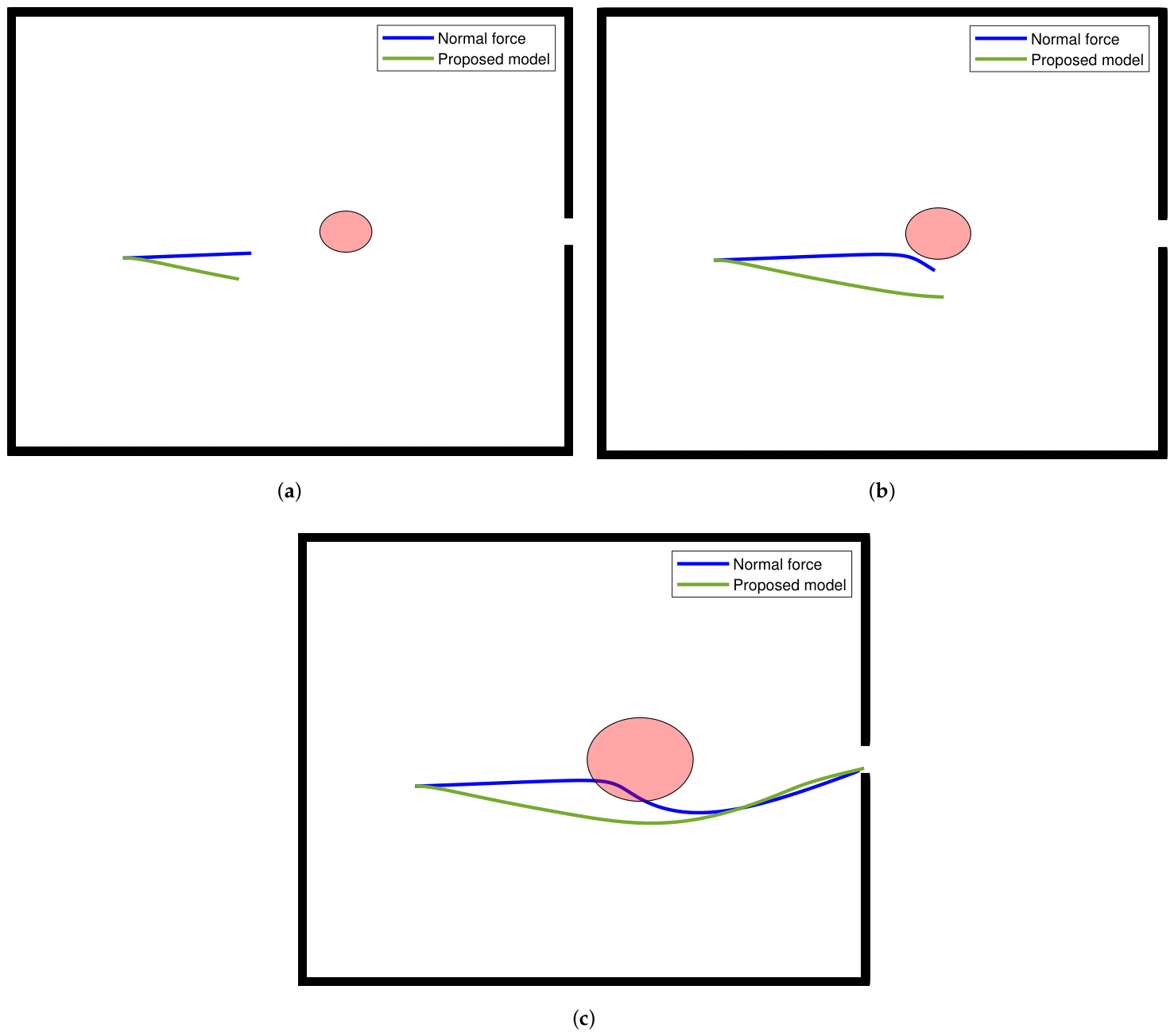
Figure 4 compares the performance and reliability of the proposed model with existing models in the literature that only consider a normal fire avoidance force [
11,
12]. In this figure, the fire source is located in front of the occupants and blocks the direct path between the occupants and the room exit. From the figure, the fire spreading process can be observed. In this process, the radius of the fire event increases with time, which is considered a dynamical obstacle affecting the occupants’ movement and evacuation behavior.
Figure 4a displays the evacuation trajectories at the beginning (the first four seconds) of the evacuation process for the proposed model and a model considering a normal fire avoidance force. From
Figure 4a, unrealistic behavior is observed in which an occupant moving according to the normal fire avoidance force will not evade the fire event from the beginning in such a situation. Moreover, the occupant will move directly to the fire source to get closer to his destination, which is the room exit located behind the fire event. However, the proposed model can demonstrate the unsafe situation and the fear felt by the occupants by allowing them to evade the fire events from the beginning.
Figure 4b presents the evacuation trajectories at a relative middle moment during the evacuation process. From
Figure 4b, the occupant moving according to the normal fire avoidance force will start the fire evading process when relatively close to the fire threat. As can be observed from
Figure 4b, when the occupant is relatively close to the fire event, the magnitude of the fire avoidance force becomes large enough to change the moving direction of the occupant. On the other hand, the proposed model allows the occupant to safely avoid and overtake the fire threat with a reasonably safe distance.
Figure 4c shows that both models achieve a relatively similar evacuation time. For an occupant moving according to the proposed model, it takes 10.6 s to evacuate, and for an occupant moving according to a normal fire avoidance force, it takes 10.9 s, which are approximately equal. In conclusion, from this figure, the proposed model allows a safer and reasonable evacuation process compared with the models considering only a normal fire avoidance force while maintaining an approximately similar evacuation time.
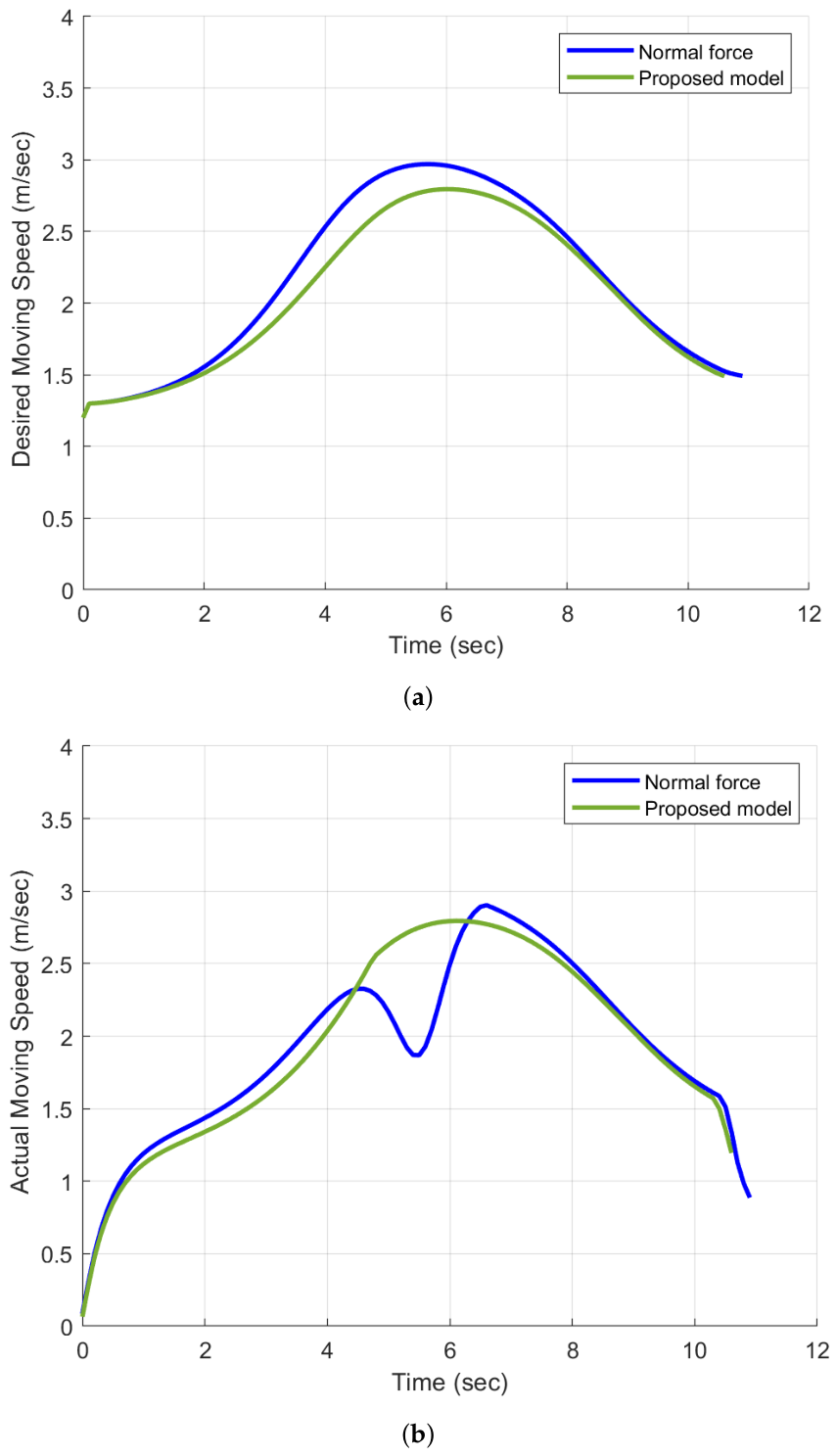
Figure 5 shows the desired and actual speed profiles throughout the evacuation time for the occupants whose evacuation trajectories are presented in
Figure 4.
Figure 5a shows the desired speed profile. It is clear from this figure that at the beginning of the evacuation process, the desired speed follows an increasing manner. This is because the fire is located in front of the occupants, which initiates an unsafe feeling and increases the stress level. Consequently, seeking an effective evacuation, the desired speed is increased. In addition, when the occupants successfully overtake the fire threat and a clear path to the exit is obtained, the stress level starts to decrease, and the required desired speed decreases. Moreover, an occupant operating according to a normal fire avoidance force has stress levels and desired speeds higher than an occupant following the proposed model. This is because in the proposed model, a safer trajectory is obtained by allowing the occupant to move away from the fire, which decreases the stress level and the required speed. However, in a normal force model, the unrealistic movement shown in
Figure 4 puts the occupant in direct contact with the fire threat; consequently, the stress level reaches its highest values as well as the desired speed.
Figure 5b shows the actual moving speed profile. The actual moving speeds have a relatively similar pattern to the desired moving speeds. From
Figure 4, the proposed model makes more curvature-shaped trajectories, but this trajectory helps him maintain his moving speed, as shown in
Figure 5b. On the other hand, the moving speed in a model considering only a normal fire avoidance force will be negatively affected when an occupant is in front of the fire event. This negative effect is clear in the middle region in
Figure 5b, where the moving speed starts to decrease when he makes a sudden change in his moving direction and starts to increase his moving speed again.
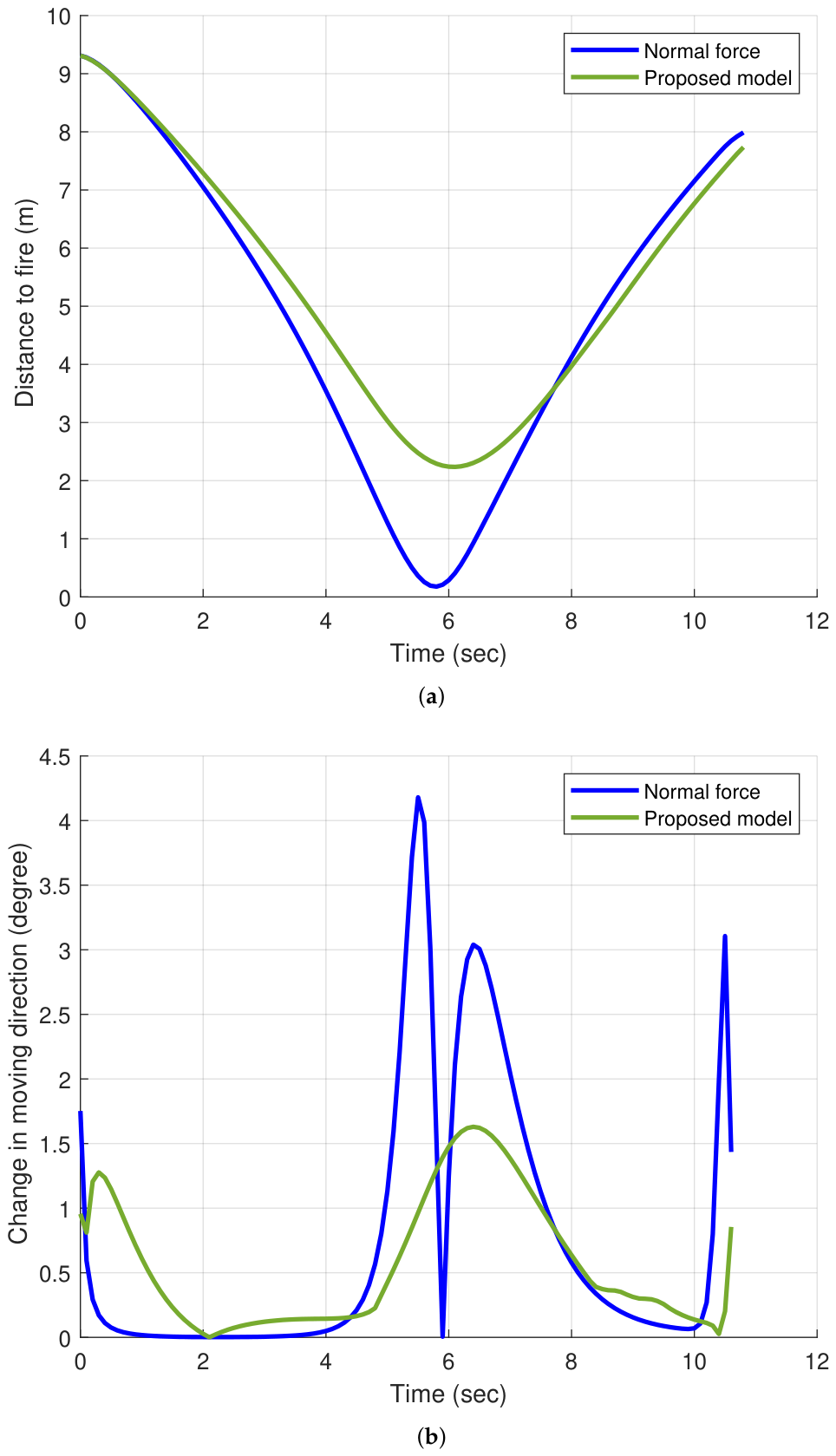
To further investigate and compare between the proposed model and the modified models in the literature that consider only the normal fire avoidance force,
Figure 6 presents a comparison between the two models in terms of safety represented by the distance from the fire source and smoothness represented by the change in the moving direction.
Figure 6a shows the distance from the fire source. Generally, at the beginning of the evacuation, when the fire hazard is located along the evacuation path, the evacuee should avoid the fire. However, the occupant prefers not to deviate too far from the straight path toward the target. Consequently, the distance between the evacuee and the fire source starts to decrease. This approach continues until the occupant passes the fire source (the fire source is no longer along the path) and a safe path toward the desired target becomes clear, after which the distance starts to increase again. Clearly, the normal fire avoidance force model results in a very small distance to the fire, which is avoided in the proposed model. In
Figure 6b, the change in the moving direction every time step is presented for the two models. From this figure, at the start and the end of the evacuation process, both models produce nearly the same performance. However, in the middle range (between 4 and 8 s), the fluctuation and the change in the moving direction of the evacuee in the normal fire avoidance force are higher. This is because this model allows the evacuee to move toward the fire source and become too close to it, and then a large repulsive force is produced to avoid the fire.
4.2. Effect of the Fire Hazard
In this subsection, the effect of the fire threat on the evacuation process is examined by simulating the evacuation process considering three different fire locations, as shown in
Figure 3. These three locations represent three different scenarios: the fire being behind the occupants (Fire Location A), along the evacuation path (Fire Location B), or close to the exit (Fire Location C). It is noted that an evacuation is flagged as unsuccessful at the time step
t where an occupant’s boundary intersects with the spreading fire radius, satisfying the geometric condition
. Upon contact, the occupant’s velocity is immediately set to zero (
), and their state transitions into a fixed structural obstacle. These trapped occupants are not removed from the simulation domain; instead, they continue to participate in the force framework, generating standard evacuee-to-evacuee repulsive forces governed by Equation (
7) that physically obstruct other remaining evacuees. Moreover, in our simulation scenario, these stationary unsuccessful occupants are near the fire, and they act as a pushing force to other occupants towards the exit.
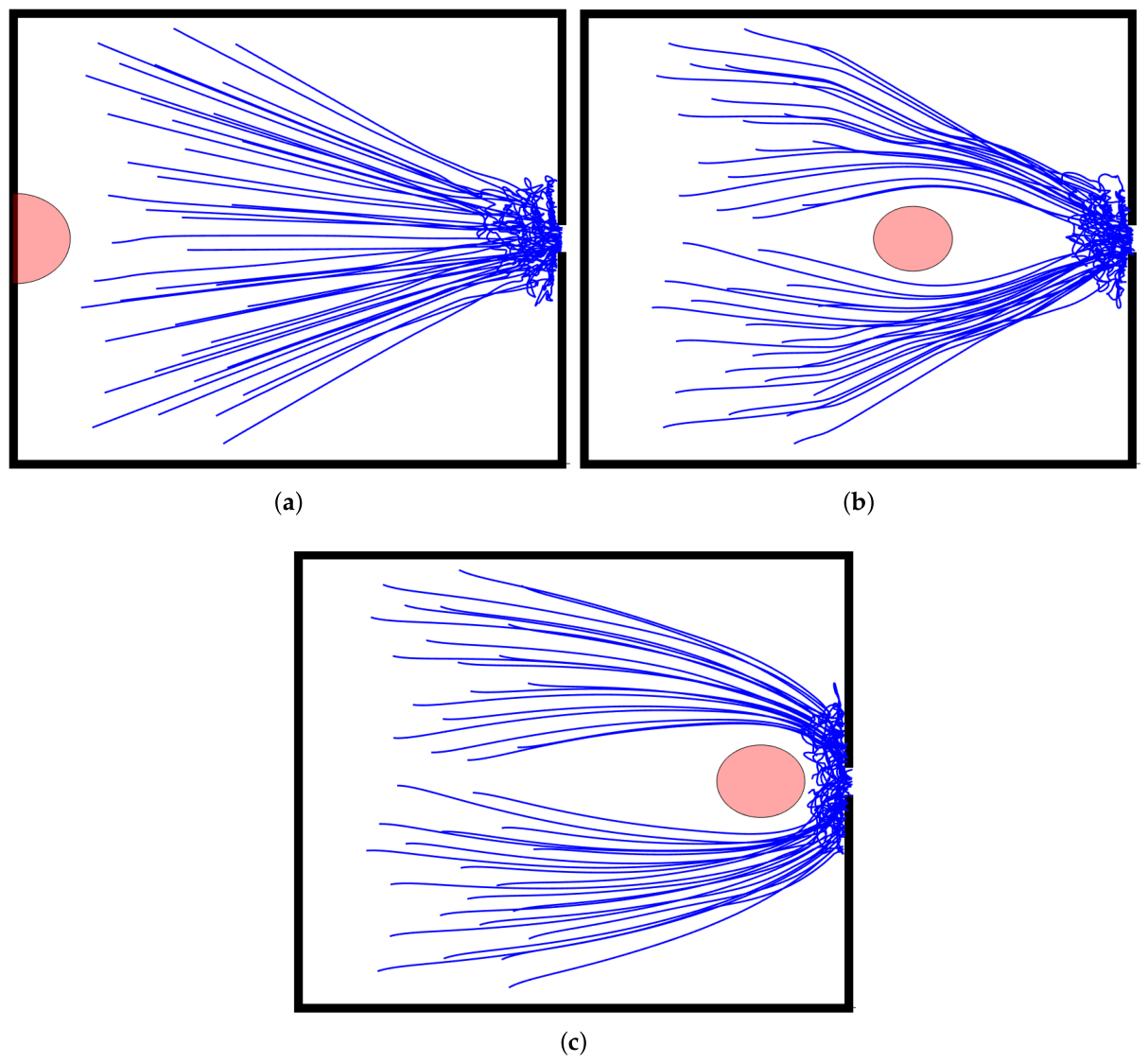
In
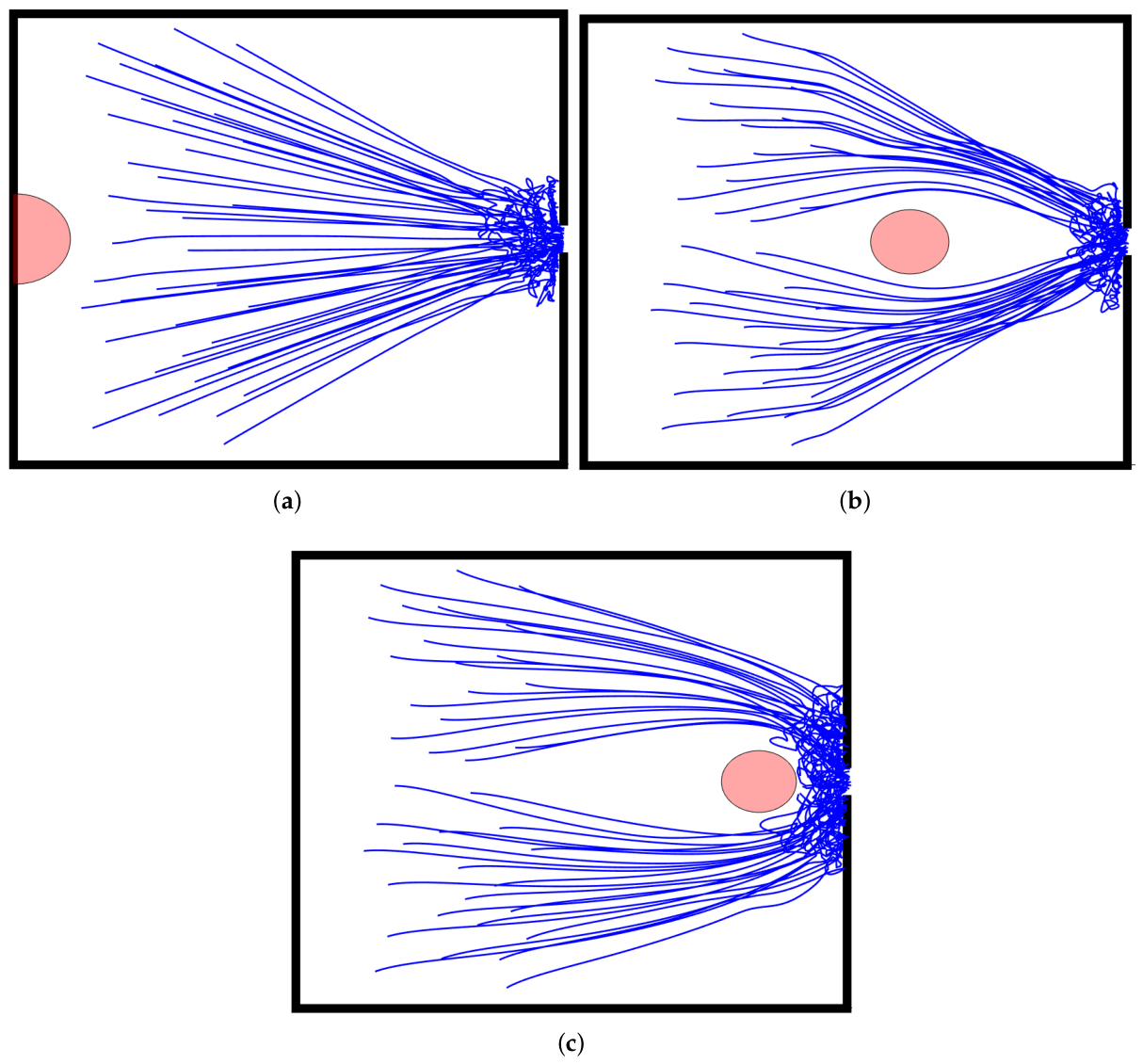
Figure 7, the evacuation trajectories for the three simulation cases of fire hazards are presented. In these cases, different levels of threat are perceived by the occupants. This resulted in different evacuation patterns, as shown in
Figure 7. In all cases, the occupants escape from the room using the exit located on the right side of the room.
Figure 7a shows the evacuation trajectories in the first simulation case (Fire Location A), where the fire hazard started on the left side of the room. In this case, the fire is behind the occupants; it can affect the evacuation behavior by changing stress levels, which consequently changes the desired speed. However, escape trajectories are approximately not affected by the fire threat. The occupants are escaping from the room and are oriented toward the exit with no need of curved routes. On the other hand, in the second (Fire Location B) and the third (Fire Location C) simulation cases, the evacuation trajectories are clearly affected by the fire sources, as shown in
Figure 7b and
Figure 7c, respectively. This is because the occupants are forced to avoid the fire to safely reach the exit. In addition, a guarding area around the fire can be observed, the width of this guarding area can be controlled by the amplitudes of the normal and tangent forces represented by the constants
and
in (
11), respectively. This guard area resulted from the unsafe feeling of getting closer to the fire event and the preference of the occupant to keep a safe distance from the fire sources. Moreover, occupants directly located in front of the fire sources are significantly affected by the fire event compared to the occupants located on the upper and lower sides of the room. Hence, occupants located in front of the fire sources have more curved trajectories compared to the other occupants. Finally, in
Figure 7b, the fire source is relatively far from the exit. Therefore, the occupants are gathered in front of the exit to compete for successful evacuation. However, in
Figure 7c, the fire source is very close to the exit, which results in a smaller safe area in front of the exit. Consequently, the occupants are gathered in a thinner and taller region around the exit.
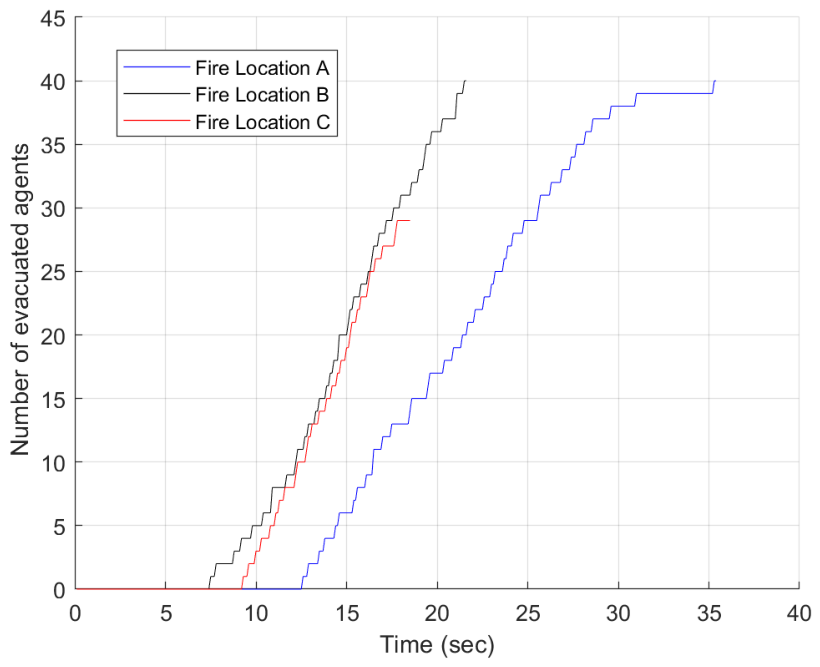
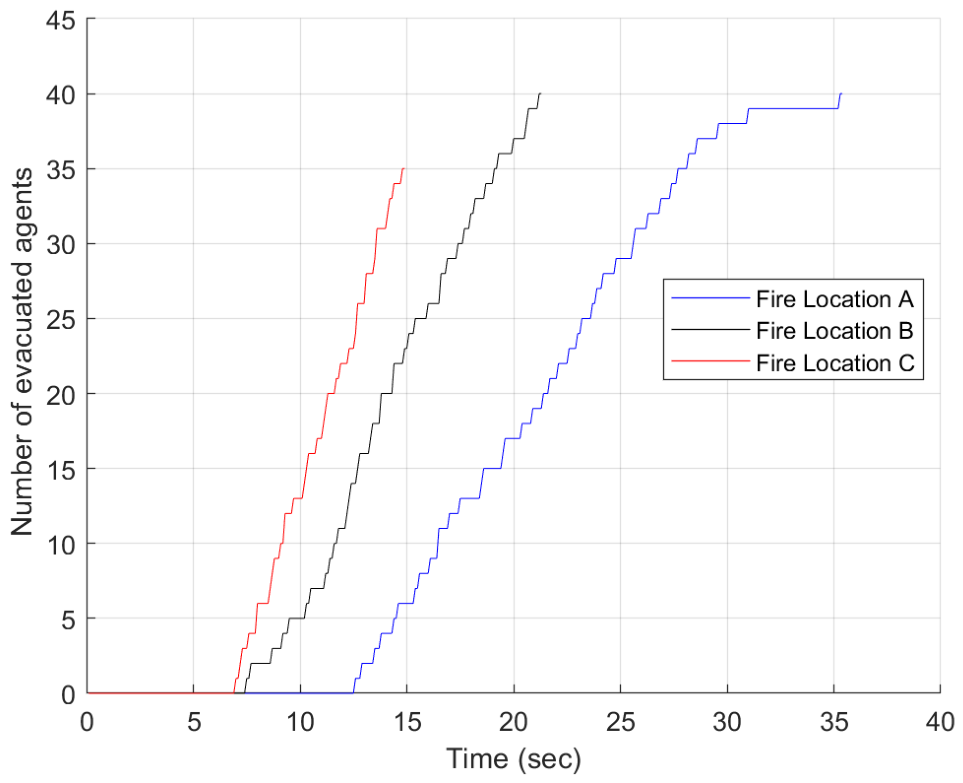
Further investigation into the evacuation process of the different simulation scenarios can be performed by observing the number of successfully evacuated occupants.
Figure 8 shows the cumulative number of successfully evacuated occupants for the different scenarios through simulation time for the proposed model. From this figure, the location of the fire event can significantly affect the evacuation time and the success of the evacuation process. In the case of Fire Location A, where the fire is far from the exit, the occupants endure lower stress levels. Hence, they move without an exaggerated rush, which results in a longer evacuation time. Moreover, since the fire event is far from the exit, it does not cause any social loss through deaths or injuries, and all occupants can successfully evacuate from the room. In the two other simulation cases, the fire locations clearly affect the occupants’ behavior by increasing the stress levels and the desired speed. As a result, occupants begin to evacuate the room early in these cases compared to the first case. Considering the second case (Fire Location B), similarly to the first case, all occupants successfully evacuated from the room. On the other hand, for the case of Fire Location C, the fire is very close to the exit. As the fire spreads, the chance that the occupants can be safely evacuated from the room decreases. After a certain simulation time, the fire blocks the exit, and consequently, not all occupants are evacuated successfully.
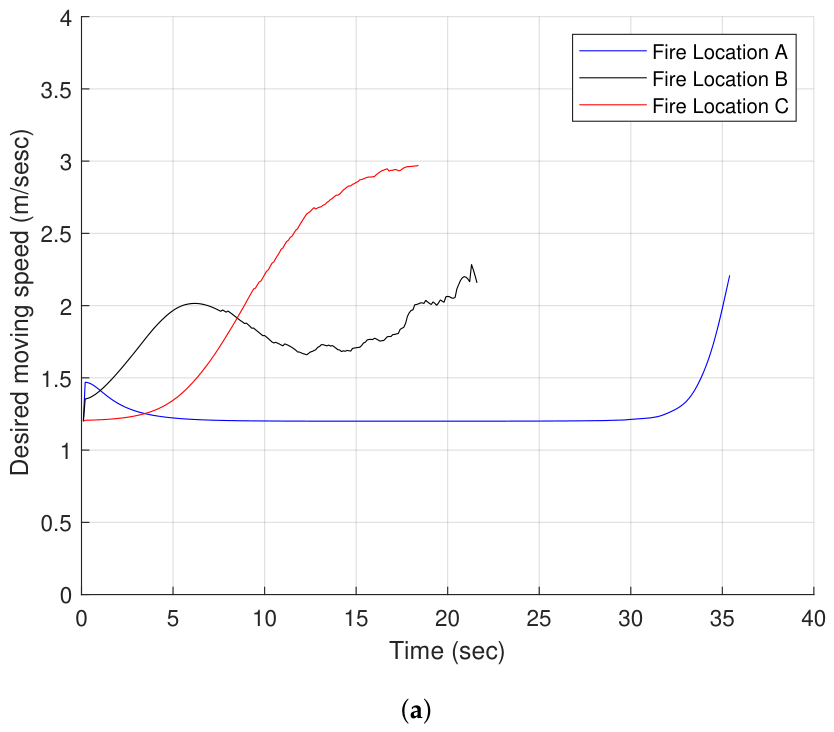
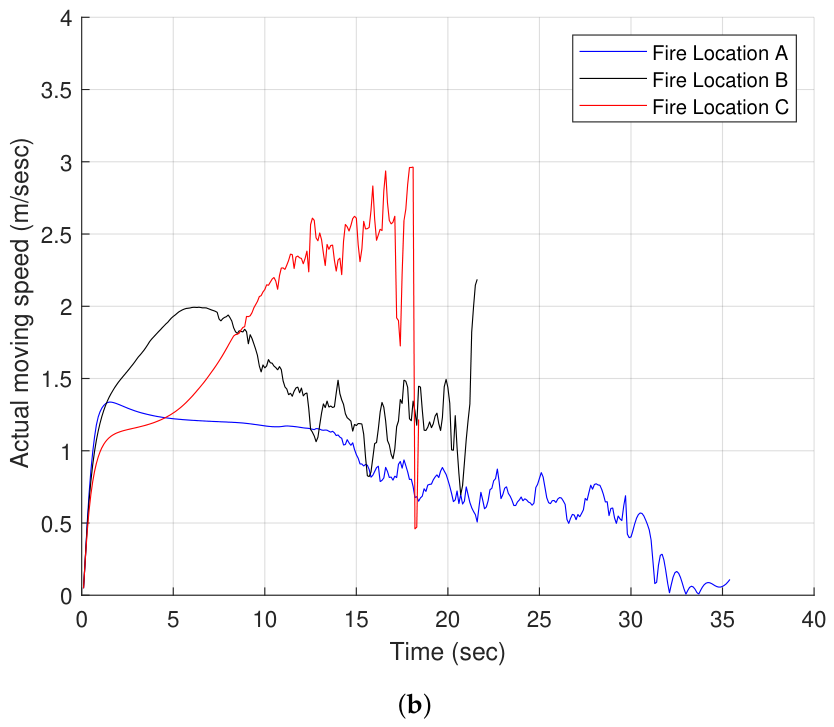
The behavior of the occupants can also be understood by observing the actual moving speed and the desired speed as an indicator of the stress level.
Figure 9 presents the average actual moving speed and the average desired speed for the three simulation cases. From the figure, the case of Fire Location A has the lowest average desired speed. This is because the fire source is located in the opposite direction of the desired moving direction (direction to the exit). At the beginning of the simulation, the evacuees are relatively close to the fire source, and hence, the desired speed slightly increases. However, evacuees move away from the fire event, which decreases the level of stress and the desired speed to its minimum values. Moving with a lower speed increases the evacuation time, allowing the fire to spread, cover more areas, and be closer to the evacuees. Consequently, the stress levels and the desired speeds increase again, as can be observed at the end of the evacuation process. For the case of Fire Location B, the occupants start the evacuation process by moving to the exit. This motion makes the occupants come closer to the fire event. Hence, the occupants start to feel unsafe, which increases stress levels and the desired speeds. The levels of stress continue to increase until the occupants successfully overtake the fire event. After that, the stress level and the desired speed start to decrease. However, in a similar manner to the case of Fire Location A, congestion at the exit increases the evacuation time, which allows the spreading fire to get closer to the competing occupants at the exit. As a result, the level of stress and the desired speed start to increase again. Finally, for the critical case of Fire Location C, the stress levels and desired speeds gradually increase from the beginning and reach their maximum values. This is because the occupants are forced to come very close to the fire to access the exit. Generally, at the beginning of the evacuation process, the actual moving speeds are continuously updated to approach the desired speeds. However, when occupants congregate at the exit, the allowable movements are limited, which decreases the actual moving speeds compared to the desired speeds.
4.3. Effect of Threat Perception on Stress Level
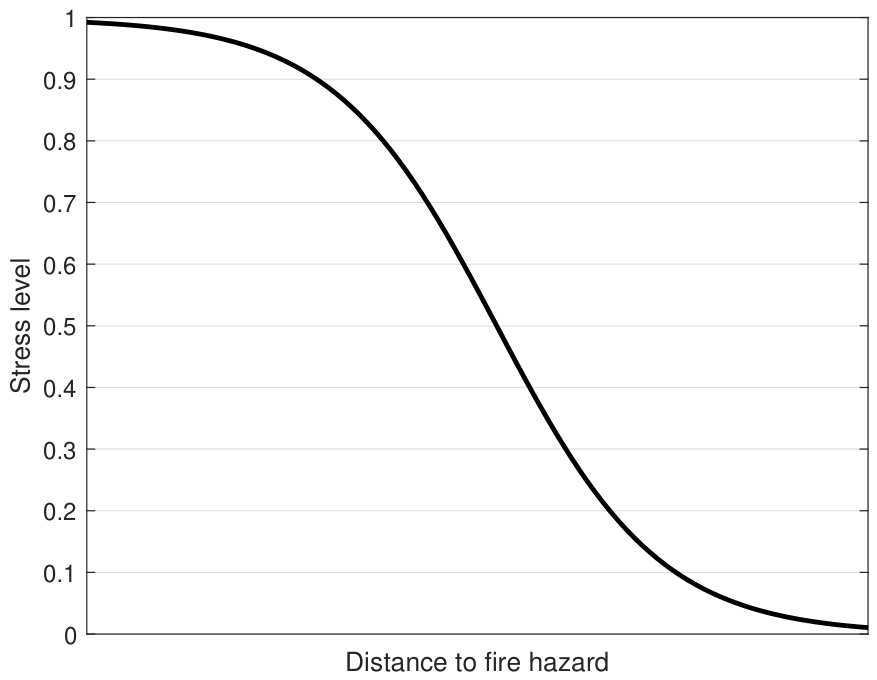
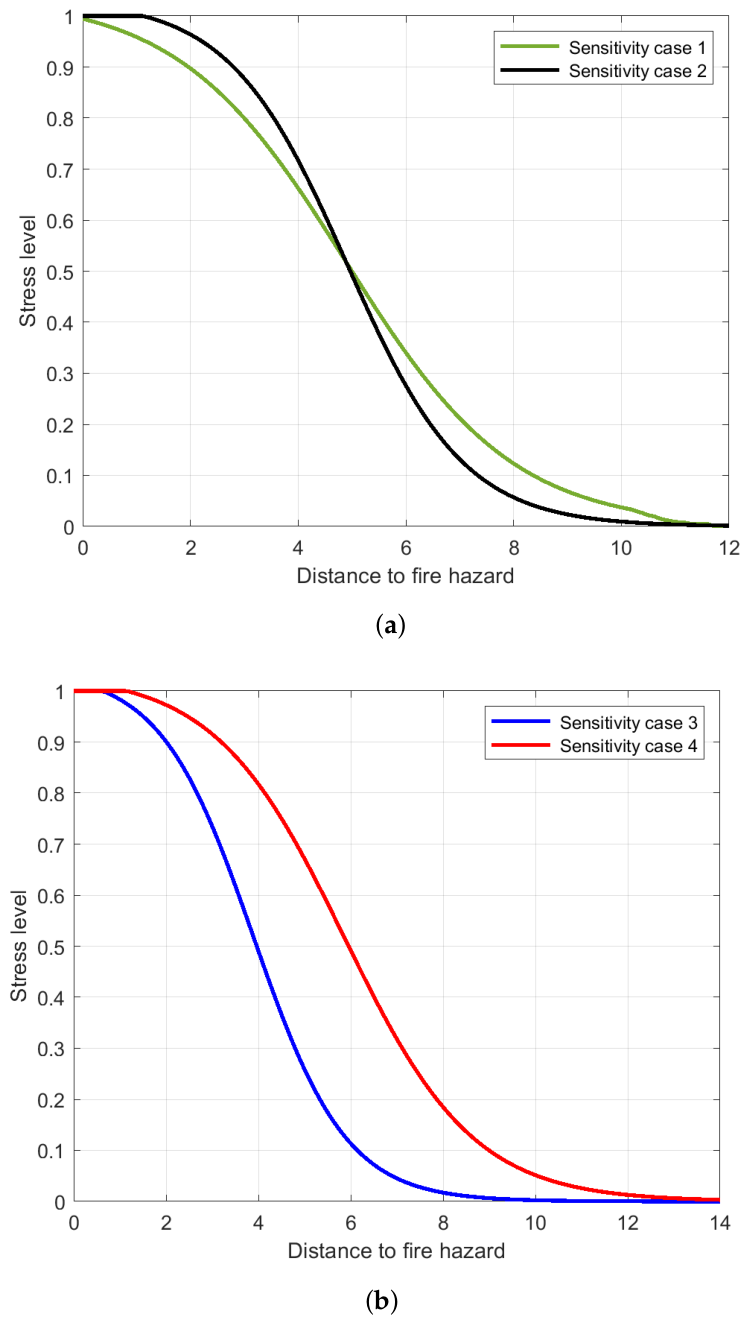
Generally, during an emergency event, occupants perceive the threat differently with variant sensitivity levels. This variation in perception affects the fire stress triggering distance and the increasing rate of the stress level for the different occupants. The constants
and
in (
3) can be used to represent this variation of perception by controlling the fire stress triggering distance and the transition rate of the stress level. In this subsection, we investigate the effects of the different parameters of the stress model on the evacuation process. Different sigmoid functions are studied to represent different fire stress trigger distances and the transition rates of the level of stress.
In
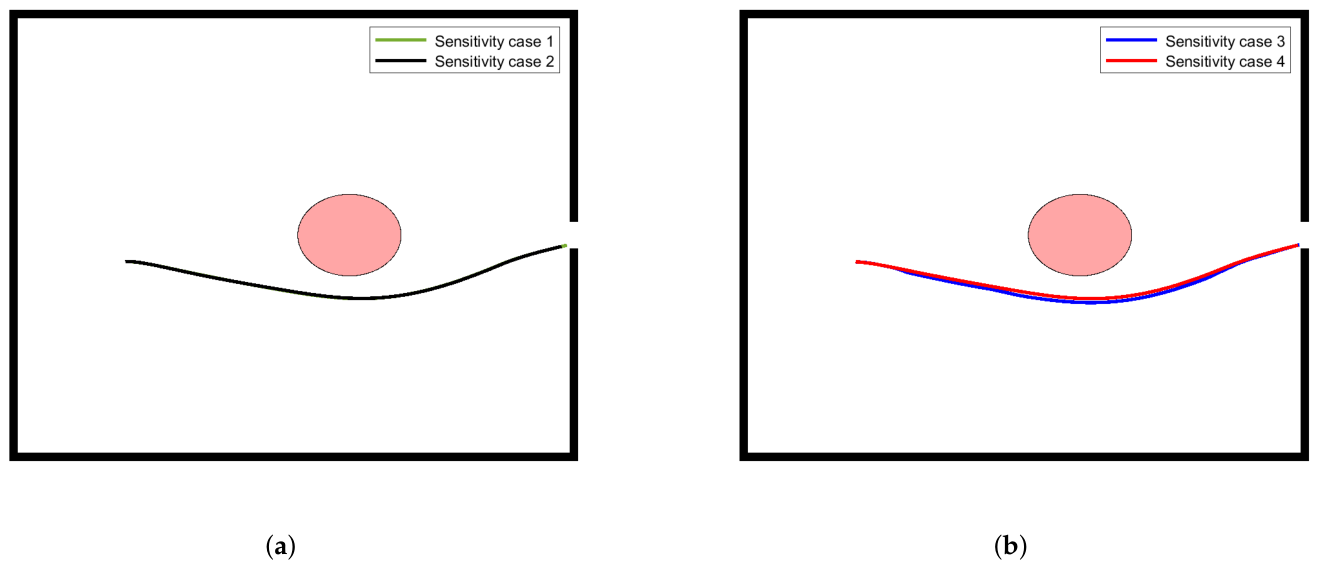
Figure 10, four different cases of stress sensitivity are considered.
Figure 10a presents two cases with approximately the same fire stress trigger distance, which means that stress levels begin to increase at the same initial distance from the fire threat. At the beginning (with a larger distance to the fire hazard), in Sensitivity case 1, the stress level starts to increase with a faster rate compared to Sensitivity case 2. However, as the distance to the fire hazard decreases, the previous pattern becomes inverted.
Figure 10b presents the other two cases. In this figure, the change in the fire stress trigger distance is investigated while maintaining an approximately fixed growing rate. In sensitivity case 3, the stress level starts to increase at a relatively smaller distance to the fire hazard compared to sensitivity case 4, which initiates the growth process in the stress level early. The values of the constants
and
for the four sensitivity cases are summarized in
Table 2. It is noted that sensitivity case 1 is the main case considered in all the other results.
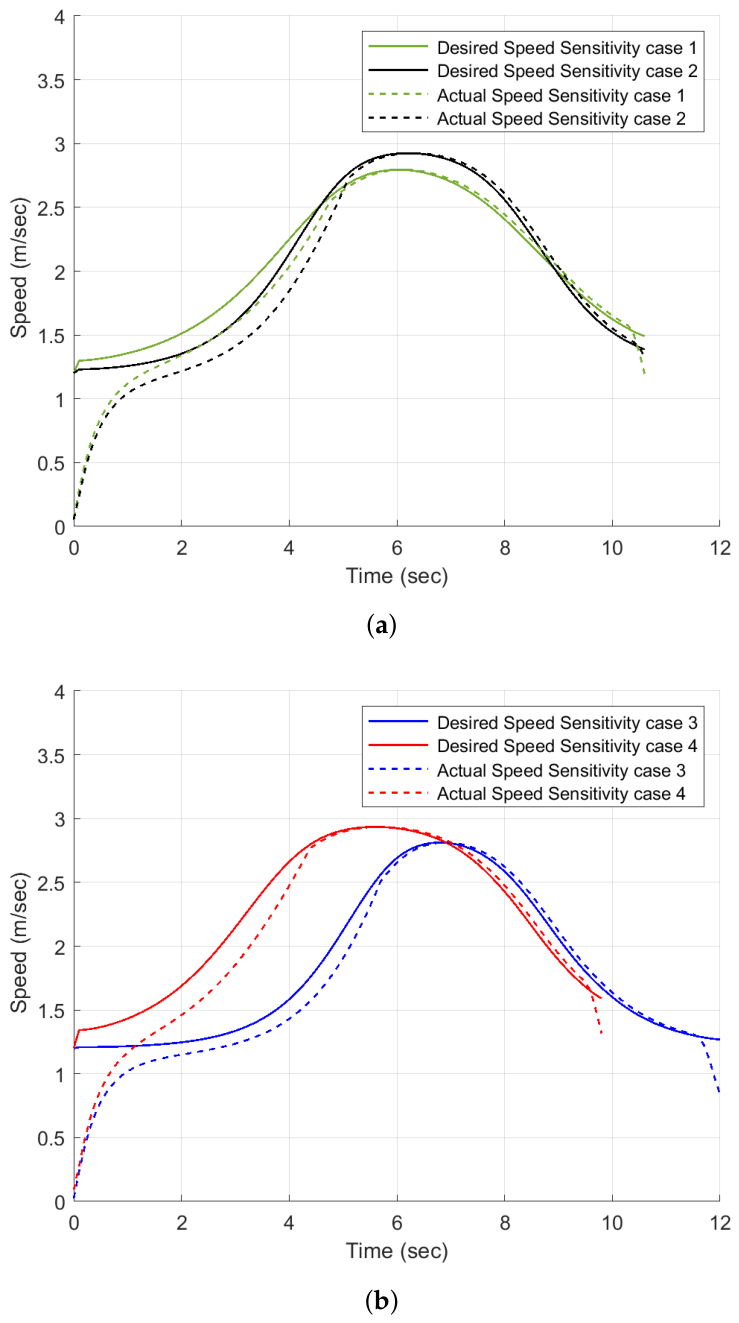
The effect of the different cases of stress sensitivity can be further understood by observing the actual and desired speeds as indicators of stress level.
Figure 11 presents the speeds for the four different cases of stress sensitivity. As mentioned before, the actual moving speeds have a relatively similar pattern as the desired moving speeds. In
Figure 11a, the speeds of sensitivity case 1 and sensitivity case 2 are compared. From this figure, the effect of the stress sensitivity and its transition rate on the moving speed is clearly understood. At the beginning of the evacuation process, the rate of increase of the stress level in sensitivity case 1 is higher than sensitivity case 2 (as shown in
Figure 10a). Consequently, the escape desire, represented by the desired moving speed, is higher in sensitivity case 1 compared to sensitivity case 2. Moreover, as observed from
Figure 10a, as the evacuation process progresses, the previous pattern becomes inverted.
Figure 11b compares the speeds of Sensitivity case 3 and Sensitivity case 4. As indicated in
Figure 10b, the stress level starts to increase early in Sensitivity case 4 compared to Sensitivity case 3. Hence, the desired speeds follow a similar pattern. Moreover, it can be noticed that sensitivity case 4 has a shorter evacuation time compared to sensitivity case 3. This is because the occupants in sensitivity case 4 acquire higher speed values early that allow them to finish the evacuation process faster.
Related to the evacuation time, from
Figure 11a, sensitivity cases 1 and 2 have approximately the same evacuation time. This is reflected in the occupants’ trajectories. As can be observed from
Figure 12a, both cases give the same trajectory. However, from
Figure 11b, sensitivity case 3 has a longer evacuation time compared to sensitivity case 4. This is reflected in the trajectories, resulting in a more curvature-shaped trajectory in the case of sensitivity case 3 compared to sensitivity case 4. This is because during the longer evacuation time, the fire size increases, which produces a greater repulsive force on the occupants.
4.4. Effect of Multiple Stress Factors
Stress is induced during life-threatening situations as a result of the change in psychological states and the unsafe feelings of the evacuees. As mentioned before, different factors can affect the level of stress. In our system model and the previous results, we consider the effect of the distance between the fire sources and the evacuees on the stress levels. However, in this section, in addition to the previous factor, we study the effect of the exit state represented by the distance between the fire source and the exit on the stress level. To model this effect, similarly to (
3), a sigmoid function is used as follows:
Here,
is the distance between the exit and the center of the fire threat at time
t.
,
, and
are constants; the values of these constants can control both the occupant sensitivity to the fire threat and the state transition of the stress level.
Now, the effects of the two factors can be combined to express the overall stress level. Different functional relationships can be used to perform this combination. In this subsection, a maximum operator is adopted based on a dominant-stressor assumption. According to Lazarus’ appraisal theory [
37], “response to stressors is determined by the degree to which an event is perceived as threatening, harmful or challenging.” Therefore, in the presence of multiple simultaneous stressors, the most severe perceived threat may dominate the overall psychological response. Moreover, highly influential factors cannot be diluted by weaker contributors. The maximum value between
and
is evaluated as follows:
It must be acknowledged that alternative functional relationships, such as additive or weighted linear combinations of stressors, could lead to significantly altered psychological responses and evacuation speeds. For instance, while a weighted sum allows multiple mild stressors to aggregate into high panic, the maximum operator used here strictly follows the premise that the single most severe threat dominates an individual’s behavioral response, leaving other formulations as excellent subjects for future validation.
Now, the moving desired speed of occupant
i at time
t can be expressed as
Considering the modified model for the stress level,
Figure 13 and
Figure 14 show the evacuation trajectories and the cumulative number of successfully evacuated occupants for the three simulation cases of fire hazards, respectively. Clearly, only the critical case of Fire Location C is affected by the modified stress level. This is because in the other simulation cases, the distance between the fire source and the exit is large enough to not induce any further stress. However, in the case of Fire Location C, this distance is smaller and continues to decrease as the fire spreads, which induces more stress that affects the psychological states of the evacuees. This effect can be understood from the larger fluctuation and the wider covered area of the trajectories near the exit in
Figure 13c compared to those of
Figure 7c. Furthermore, comparing
Figure 14 with
Figure 8, in the case of Fire Location C, the occupants start to evacuate early from the room, allowing a higher number of successfully evacuated occupants in a shorter evacuation time.
4.5. Effect of Exit Width
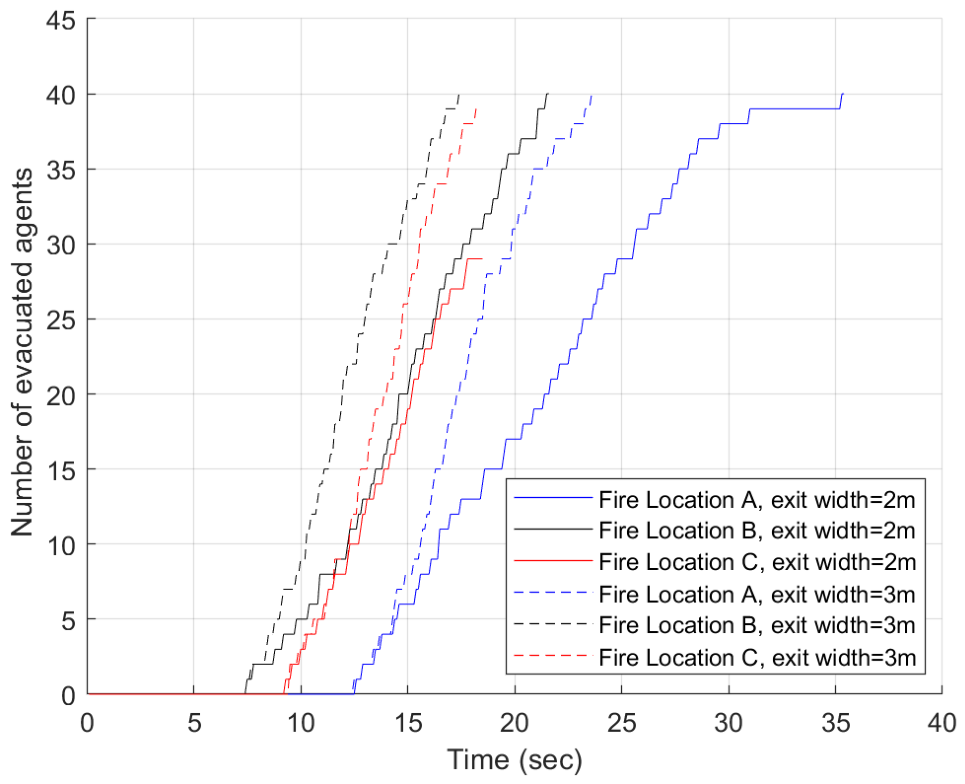
The width of the available exits is considered one of the most critical design parameters that can significantly affect the evacuation process and its success. Exits are bottlenecks in the evacuation process. During normal evacuation, the evacuees are cooperative. However, in evacuation under life-threatening events, a high level of stress is dominant. In such a case, crossing bottlenecks, such as exits, is challenging. Consequently, the evacuees start to act competitively to enhance their chances of escaping and congest in front of the exits. This congestion significantly increases the overall evacuation time. Generally, increasing the width of the exit can remarkably enhance the performance of the evacuation process and decrease the evacuation time. In
Figure 15, the cumulative numbers of successfully evacuated occupants are presented for the three simulation cases with different exit widths. Clearly, the evacuation times for the three simulation cases decrease as the width of the exit increases. Furthermore, in case of Fire Location C, increasing the exit width increases the chance of successful evacuation and the number of successfully evacuated occupants.
In
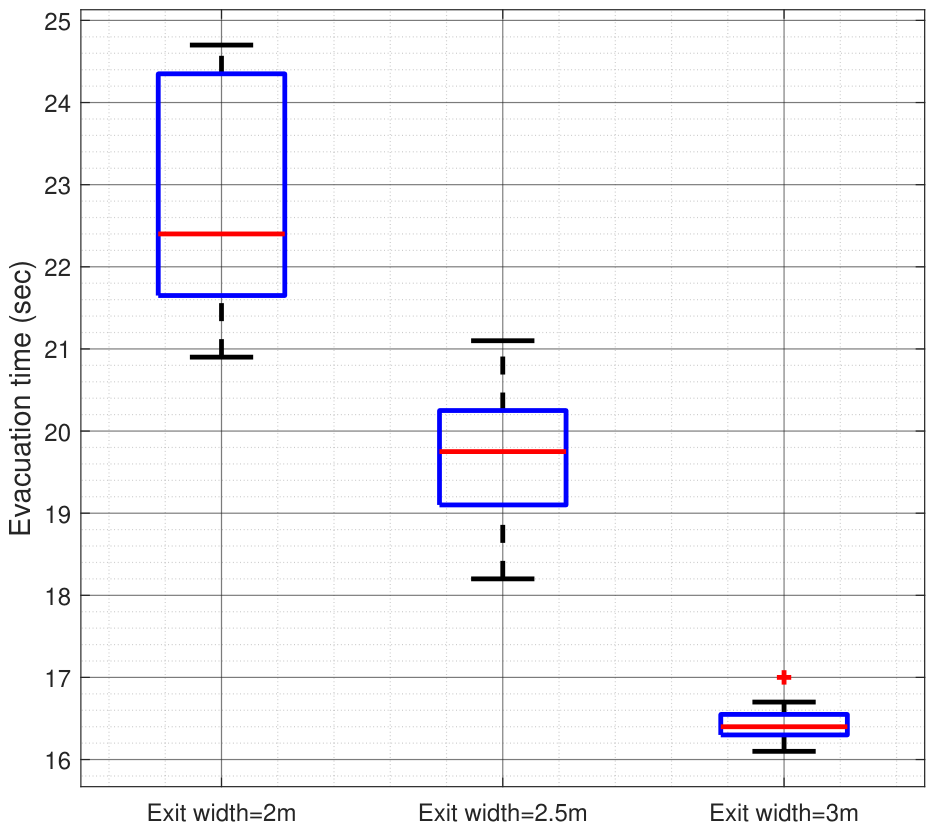
Figure 16, the case of Fire Location B is considered, and different exit widths are studied. Again, as concluded from
Figure 15, the evacuation time decreases as the width of the exit increases. To rigorously quantify the stochastic behavior of the crowd dynamics, the evacuation simulation is repeated for 20 independent runs across multiple exit widths to generate the statistical boxplot shown in
Figure 16. As observed in the plot, the primary numerical tendency indicates that both the median evacuation time and its associated statistical variance decrease significantly as the exit width expands. At narrower exit configurations, high crowding density intensifies random inter-occupant physical interactions, leading to larger standard deviations. Conversely, wider exits mitigate these structural bottlenecks, allowing occupants to exit smoothly and causing the variance to stabilize near minimal values. This marked reduction in variability directly confirms the mathematical stability and robustness of the model under divergent congestion conditions.
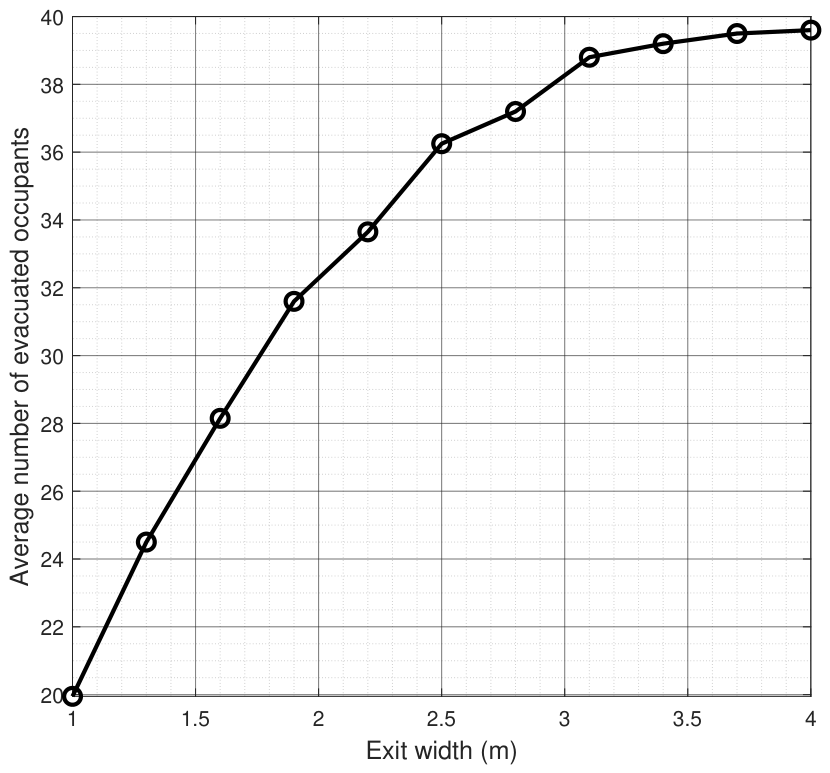
In
Figure 17, the case of Fire Location C is considered as the worst-case scenario, and the effect of the door width on the average number of successfully evacuated occupants is investigated. In this figure, each point is simulated 20 times, and the average is calculated. In the critical case of Fire Location C, when the fire source is close to the exit, not all occupants can be successfully evacuated before the fire blocks the exit. A key designing factor, when the layout can cause a fire event to occur near the exit, is the exit width. This is because in this case, the main bottleneck in the evacuation process is the exit. Moreover, the main source of increasing the evacuation time is the congestion around the exit, which is increased due to the higher stress levels in the case of emergency evacuation. As can be noticed from the figure, as the width of the exit increases, the average number of successfully evacuated occupants increases. Also, this figure can be used to estimate an appropriate exit width to guarantee a desired level of evacuation performance.