1. Introduction
Targeted radionuclide therapy (TRT) has emerged as an important modality in nuclear medicine [
1,
2]. Compared with conventional β-emitting radionuclides, α-emitting radionuclides exhibit high linear energy transfer (LET) and a short tissue penetration range, enabling highly efficient induction of DNA double-strand breaks in tumor cells [
3]. These characteristics make them particularly promising for the treatment of micrometastatic and refractory malignancies [
4,
5].
Among α-emitting systems,
212Pb has attracted considerable attention due to its decay chain. Its daughter nuclides,
212Bi and
212Po, emit high-energy α particles, while its half-life (10.64 h) is well matched to the pharmacokinetics of many targeting vectors [
6]. As a result,
212Pb is regarded as a promising in vivo generator for α therapy. At present,
212Pb is mainly produced via generator systems based on
228Th/
212Pb or
224Ra/
212Pb [
7,
8]. Therefore, the availability of parent radionuclides is a key factor limiting their broader application.
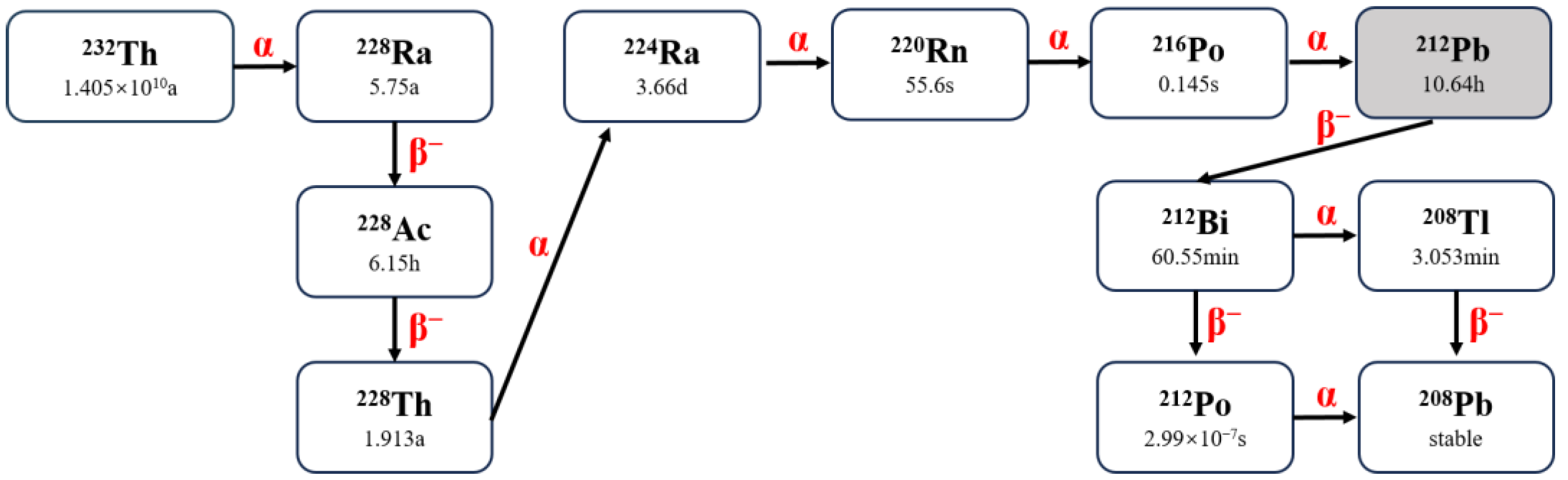
Natural thorium (
232Th) is an abundant resource, and its decay series contains several medically relevant radionuclides, including
228Ra,
228Th, and
224Ra, which can potentially serve as precursors for
212Pb production systems (
Figure 1) [
9]. However, direct separation of
228Th from natural thorium matrices is extremely difficult. In contrast, separation of
228Ra followed by ingrowth of its daughter nuclides provides a more practical route for generator construction.
A major challenge arises from the extremely low concentration of radium in thorium ores and processed solutions. The Th/Ra mass ratio can reach up to 10
9, resulting in a system dominated by high concentrations of Th
4+ and associated nitrate salts. Such conditions lead to high ionic strength, complex speciation, and strong matrix effects, which significantly hinder selective radium separation. Conventional methods, including solvent extraction, ion exchange, and chromatographic techniques [
10,
11,
12,
13,
14], often suffer from reduced selectivity, limited loading capacity, complex operation, and high reagent consumption under these conditions.
Sulfate co-precipitation is a well-established and widely used approach for radium separation in environmental and industrial systems due to its simplicity and strong enrichment capability [
15,
16,
17,
18,
19]. Owing to the chemical similarity between Ra
2+ and Ba
2+, radium can be effectively incorporated into BaSO
4 crystals via isomorphic substitution during precipitation. However, systematic studies on BaSO
4 precipitation behavior, radium co-precipitation efficiency, and thorium distribution in high-concentration thorium nitrate systems remain limited.
In this work, we propose a BaSO4 co-precipitation-based strategy for the separation of trace radium from thorium-rich nitrate solutions. The precipitation behavior of BaSO4, precipitation kinetics, radium co-precipitation efficiency, and thorium recovery characteristics were systematically investigated. This study provides experimental evidence for radium recovery from natural thorium systems and supports the development of 228Th/212Pb or 224Ra/212Pb generator systems.
2. Materials and Methods
2.1. Chemicals and Reagents
Thorium nitrate (Th(NO3)4·xH2O), disodium ethylenediaminetetraacetate dihydrate (EDTA-2Na·2H2O), sodium hydroxide (NaOH), sodium sulfate (Na2SO4), nitric acid (HNO3), and barium chloride dihydrate (BaCl2·2H2O) of analytical grade were purchased from Macklin Biochemical Co., Ltd. (Shanghai, China) or Sinopharm Chemical Reagent Co., Ltd. (Shanghai, China), and were used as received without further purification. A 226Ra standard solution was supplied by Isotope and Radiation Corporation (Beijing, China). Ultrapure water with a resistivity of 18.2 MΩ (Hitech Master-S, Shanghai, China) was used in all experiments.
2.2. Preparation of Working Solutions
A 100 mM BaCl2 stock solution was prepared by dissolving 1.2274 g of BaCl2·2H2O in 50 mL of ultrapure water. A thorium nitrate solution with a thorium concentration of 20.0 g/L was prepared by dissolving 24.2775 g of Th(NO3)4·xH2O in 500 mL of ultrapure water. An alkaline EDTA solution was prepared by dissolving 15.0 g of EDTA-2Na·2H2O and 4.5 g of NaOH in 100 mL of ultrapure water and was subsequently used to dissolve the precipitate prior to radionuclide analysis.
The concentrations of metal ions in all solutions were calibrated using inductively coupled plasma atomic emission spectrometry (ICP-AES, Ultima Expert, Kyoto, Japan).
All experiments were performed at least in duplicate. The relative standard deviation (RSD) was within ±5% for non-radioactive measurements and within ±10% for radiotracer experiments.
2.3. Barium Precipitation Experiments
Barium precipitation experiments were performed in 100 mL glass beakers. A 12.5 mL aliquot of thorium nitrate solution (20.0 g/L Th) was first added, and the total volume was adjusted to 50 mL using ultrapure water. The solution was stirred at 600 rpm to ensure homogeneity. Sodium sulfate (Na2SO4) was then added in stoichiometric amounts according to the designed sulfate concentrations. After complete dissolution, 0.5 mL of 100 mM BaCl2 solution was added dropwise under continuous stirring. The reaction was maintained under constant stirring for 6 h to ensure precipitation equilibrium. The resulting suspension was filtered through a 0.45 μm membrane filter. The residual Ba2+ concentration in the filtrate was determined by ICP-AES to evaluate the precipitation efficiency.
To investigate the effect of thorium matrix concentration on BaSO4 precipitation behavior, the volume ratios of Th(NO3)4 solution, BaCl2 solution, and ultrapure water were systematically adjusted while maintaining a constant total volume of 50 mL. The dependence of Ba2+ precipitation efficiency on sulfate concentration was evaluated under different thorium concentrations.
2.4. Kinetics of BaSO4 Precipitation
The precipitation kinetics of BaSO4 were investigated in thorium nitrate solutions with a thorium concentration of 15 g/L. Na2SO4 was first dissolved under magnetic stirring at 600 rpm to ensure complete homogenization. Subsequently, a predetermined volume of 100 mM BaCl2 solution was added dropwise while maintaining the total reaction volume at 50 mL. The suspension was continuously stirred throughout the reaction to ensure uniform mixing. At selected time intervals, 2 mL aliquots were withdrawn from the reaction mixture. Each sample was immediately filtered through a 0.45 μm membrane filter to remove solid phases, followed by appropriate dilution prior to ICP-AES analysis of residual Ba2+ concentration.
To minimize disturbance of the system, sampling was performed rapidly and consistently under identical conditions. The temporal evolution of Ba2+ concentration was used to evaluate the precipitation kinetics, including the initial precipitation rate, approach to equilibrium, and the influence of the thorium matrix on precipitation behavior.
2.5. Recovery of Thorium from the Supernatant
After completion of BaSO4 precipitation, the suspension was allowed to stand overnight to ensure complete solid–liquid separation. Subsequently, 20 mL of the supernatant was collected by siphoning. Under continuous magnetic stirring at 1000 rpm, 10 M NaOH solution was slowly added dropwise to the supernatant while the pH was continuously monitored. The addition of NaOH induced the hydrolysis of thorium, resulting in the formation of thorium precipitate. At predetermined pH values, 2 mL aliquots were withdrawn, filtered, and appropriately diluted for ICP-AES analysis to determine the residual thorium concentration. The precipitation efficiency of thorium was evaluated based on its concentration decrease in solution. The evolution of thorium precipitation as a function of pH was used to assess its distribution behavior in the BaSO4 co-precipitation system. This also provided insight into the feasibility of thorium recovery from high-salinity nitrate media.
2.6. Radiotracer Experiments for Radium Co-Precipitation
The co-precipitation behavior of radium was investigated using a standard 226Ra solution as a radiotracer, owing to its chemical similarity to 228Ra. Na2SO4 was dissolved in 37.5 mL of thorium nitrate solution (20 g/L), followed by the addition of predetermined volumes of ultrapure water and a 226Ra standard solution. The mixture was stirred at 600 rpm using a magnetic stirrer. Subsequently, a specified volume of BaCl2 solution was slowly added dropwise under continuous stirring. After 3 h of reaction, stirring was stopped, and the suspension was allowed to stand overnight to ensure complete phase separation. The supernatant was removed by siphoning, leaving approximately 10 mL of residual suspension, which was then vacuum-filtered through a 0.45 μm membrane filter. Both the filter membrane and the collected precipitate were dissolved in an alkaline EDTA solution.
The radioactivity of 226Ra in the dissolved solution was determined using the radon emanation method with an FD-125B radon/thoron analyzer (CNCS, Beijing, China). The radium co-precipitation recovery was calculated based on the measured radioactivity, thereby evaluating the enrichment efficiency of the BaSO4 co-precipitation system.
3. Results and Discussion
3.1. Precipitation Behavior of Barium in High-Concentration Thorium Nitrate Solutions
The precipitation efficiency of barium was evaluated based on the residual Ba
2+ concentration in the filtrate. A lower residual Ba
2+ concentration indicates a higher extent of BaSO
4 precipitation.
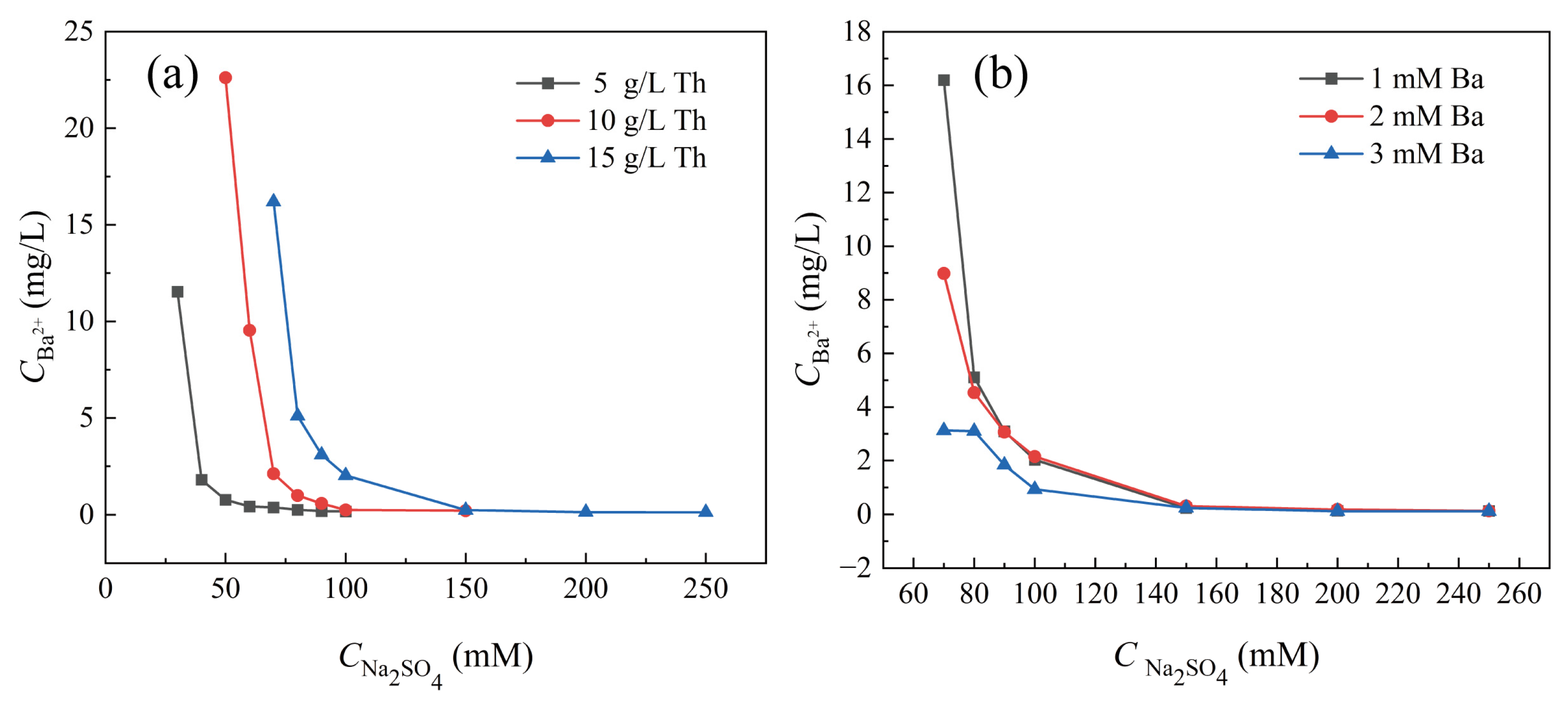
Figure 2a presents the effect of sulfate concentration on Ba
2+ precipitation efficiency at different thorium concentrations.
As shown in
Figure 2a, relatively high residual Ba
2+ concentrations were observed at low sulfate concentrations, indicating incomplete precipitation of BaSO
4 under sulfate-deficient conditions. With increasing SO
42− concentration, the residual Ba
2+ concentration decreased sharply, demonstrating a progressive enhancement in precipitation efficiency. Even in highly concentrated thorium nitrate solutions, nearly complete precipitation of Ba
2+ was achieved when sulfate was present in excess, suggesting that BaSO
4 precipitation remained effective at elevated thorium concentrations.
A comparison of different thorium concentrations further revealed that higher sulfate concentrations were required to achieve comparable Ba
2+ removal efficiencies as thorium concentration increased. This trend can be attributed primarily to the elevated ionic strength induced by Th
4+, which reduces the effective activity of sulfate ions and weakens their interaction with Ba
2+. In addition, competitive complexation between Th
4+ and SO
42− may further decrease the availability of free sulfate ions, thereby inhibiting BaSO
4 nucleation and crystal growth.
Figure 2b shows the influence of initial Ba
2+ concentration on precipitation behavior at a fixed thorium concentration of 15 g/L. When the sulfate concentration exceeded 80 mM, the residual Ba
2+ concentrations became nearly identical across different initial Ba
2+ concentrations. Upon further increasing sulfate concentration to 150–200 mM, the precipitation efficiency reached a maximum, indicating that sulfate was present in significant excess and sufficient to drive complete BaSO
4 formation.
Overall, these results demonstrate that excess sulfate conditions are essential to overcome matrix effects in concentrated thorium nitrate systems, thereby ensuring efficient BaSO4 precipitation and providing a suitable chemical environment for subsequent radium co-precipitation.
3.2. Kinetic Characteristics of BaSO4 Precipitation
The precipitation kinetics of BaSO
4 were investigated at a thorium concentration of 15 g/L and a sulfate concentration of 200 mM, using initial Ba
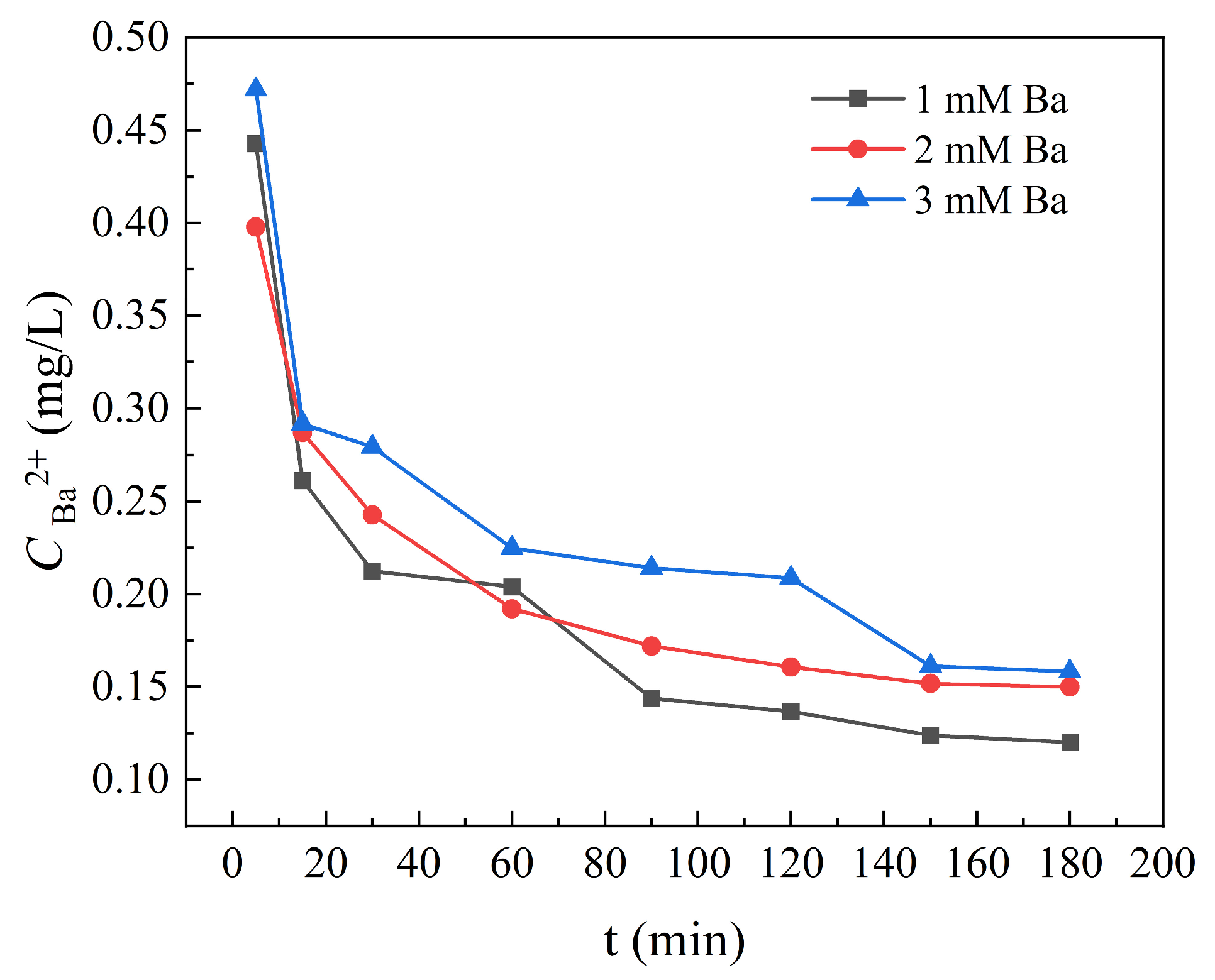
2+ concentrations ranging from 1 to 3 mM. The corresponding kinetic profiles are shown in
Figure 3. The purpose of this experiment was to determine the minimum reaction time required for essentially complete BaSO
4 precipitation under high-thorium conditions, thereby providing an appropriate reaction time for subsequent radium co-precipitation experiments.
As illustrated in
Figure 3, BaSO
4 precipitation proceeded rapidly upon the introduction of sulfate ions. Within the first 5 min of reaction, the residual Ba
2+ concentration decreased to below 1 mg/L, indicating that BaSO
4 nucleation occurred almost instantaneously under the experimental conditions. With increasing reaction time, the residual Ba
2+ concentration continued to decrease gradually, indicating continued BaSO
4 crystal growth and the progressive establishment of precipitation equilibrium. After approximately 3 h, the Ba
2+ concentration stabilized at values below 0.2 mg/L, suggesting that the system had effectively reached precipitation equilibrium.
The rapid initial decrease in Ba2+ concentration indicates that high supersaturation, induced by excess sulfate, promotes instantaneous nucleation of BaSO4. In contrast, the slower decrease observed at later stages is attributed to the gradual approach of the precipitation system toward equilibrium, resulting in a further decrease in dissolved barium concentration.
Overall, these results demonstrate that BaSO4 precipitation in high-concentration thorium nitrate solutions exhibits favorable and reproducible kinetics. A reaction time of 3 h was therefore selected for subsequent radium co-precipitation experiments to ensure complete attainment of equilibrium conditions.
3.3. Behavior and Recovery of Thorium During BaSO4 Precipitation
The variation of thorium concentration during the BaSO4 precipitation process was systematically monitored to evaluate its distribution behavior in the co-precipitation system. The experimental results showed that the concentration of Th4+ in the solution remained essentially unchanged throughout BaSO4 formation, indicating that thorium did not undergo detectable co-precipitation or incorporation into the BaSO4 solid phase.
This negligible interaction between thorium and the BaSO
4 precipitate suggests that BaSO
4 precipitation may be advantageous for thorium-radium separation systems. On one hand, it is expected to minimize the loss of thorium during the radium enrichment process, thereby facilitating subsequent thorium recovery. On the other hand, it may reduce the contribution of thorium to the radioactive background in the BaSO
4 precipitate, which is beneficial for subsequent radium purification and handling [
20].
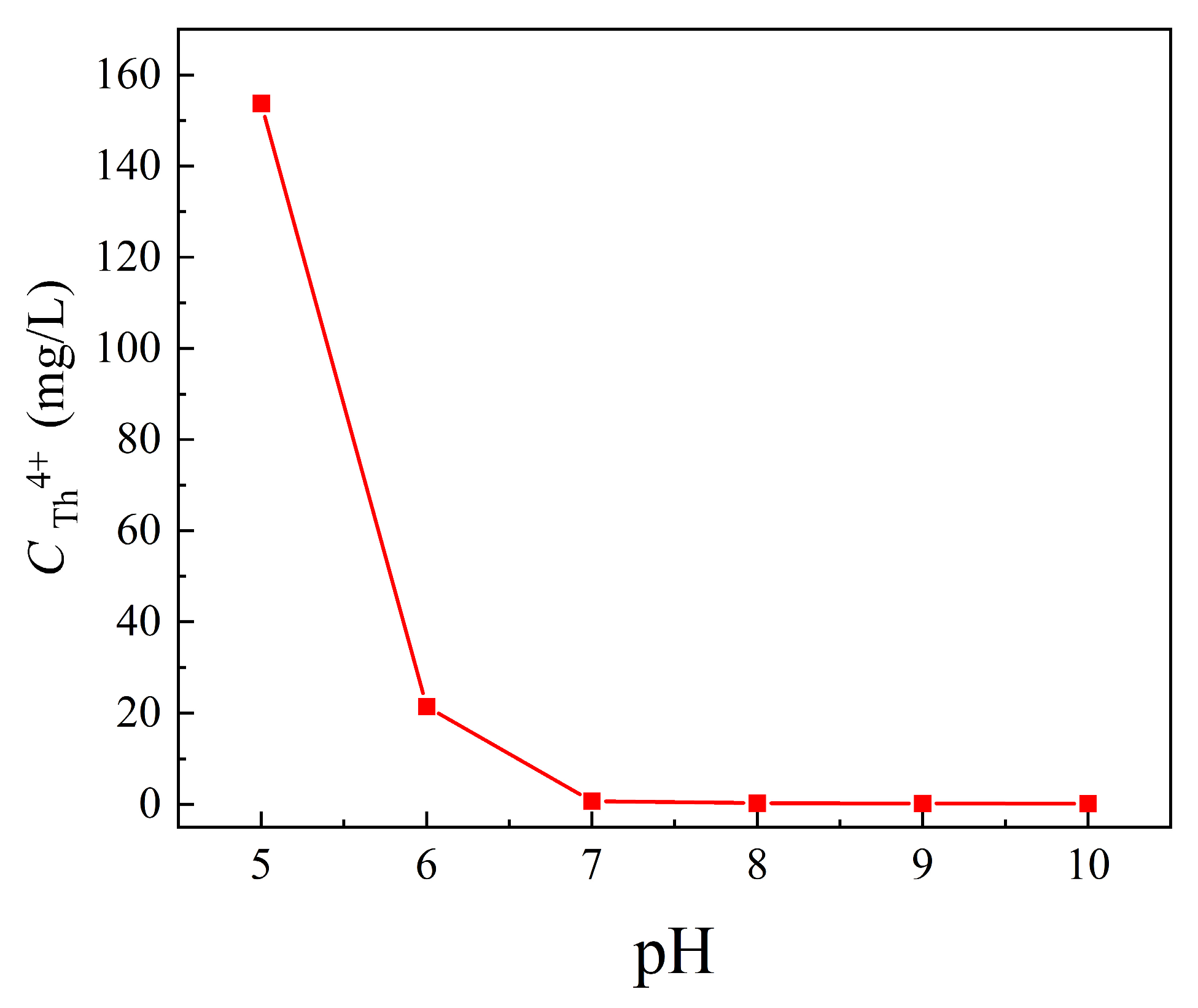
To enable thorium recovery and minimize radioactive liquid waste, the thorium remaining in the supernatant was further precipitated by controlled addition of NaOH solution under continuous stirring. The precipitation behavior of thorium as a function of pH is shown in
Figure 4.
As shown in
Figure 4, a significant decrease in thorium concentration was observed when the pH reached approximately 5.0 ± 0.05, at which point the thorium concentration decreased from 15 g/L to approximately 150 mg/L. Upon further increase in pH toward near-neutral conditions, thorium precipitation became nearly complete. The recovered thorium precipitate can be readily re-dissolved and recycled into the separation process, enabling a closed-loop utilization of thorium resources. This recycling strategy not only improves process sustainability but also reduces the environmental burden associated with thorium-containing waste streams.
Overall, these results demonstrate that the BaSO4 co-precipitation process enables highly selective radium enrichment while effectively retaining thorium in the liquid phase for subsequent recovery, thereby establishing a practical and sustainable separation-recycle framework for thorium-based systems.
3.4. Co-Precipitation Behavior of Radium in the BaSO4 System
The co-precipitation behavior of radium in the BaSO
4 system was investigated using a standard
226Ra tracer solution, and the results are summarized in
Table 1.
At an initial Ba
2+ concentration of 1 mM, the radium co-precipitation recovery exceeded 70%, demonstrating that efficient radium incorporation into the BaSO
4 phase can be achieved even at relatively low barium levels. With increasing Ba
2+ concentration, the radium recovery gradually increased. When the Ba
2+ concentration reached 3 mM, the recovery reached approximately 81%. This trend can be attributed to the increased amount of BaSO
4 solid phase formed at higher Ba
2+ concentrations, which provides a greater number of available lattice sites for radium incorporation via isomorphic substitution. Due to the close chemical similarity between Ra
2+ and Ba
2+, radium ions can be effectively incorporated into the growing BaSO
4 crystal lattice during precipitation, rather than remaining in the aqueous phase [
21].
The results indicate that radium enrichment can be efficiently achieved under millimolar Ba2+ concentrations without requiring excessive reagent consumption, highlighting the practical economic advantage of the proposed approach. Although the single-stage recovery was limited to approximately 81%, the reproducibility of the precipitation process suggests that overall radium recovery could be further improved through multistage co-precipitation or repeated enrichment cycles. Importantly, given the analogous chemical behavior of 226Ra and 228Ra, these results provide strong experimental support for extending this method to natural thorium-derived systems for 228Ra separation. This, in turn, offers a feasible pathway for the subsequent production of 224Ra and its application as a parent nuclide in 212Pb generator systems.
4. Conclusions
This study systematically demonstrated the feasibility of separating trace 228Ra from high-salinity thorium nitrate systems using a BaSO4 co-precipitation strategy, with emphasis on precipitation behavior, kinetic characteristics, radium incorporation, and thorium recovery. After the co-precipitation of radium with BaSO4, the resulting Ba(Ra)SO4 precipitate is retained for the ingrowth of 228Th. The accumulated 228Th is subsequently separated and used as the parent radionuclide for the preparation of a 212Pb generator. Therefore, efficient recovery of radium by BaSO4 co-precipitation is a crucial step in the overall production route of 212Pb.
The results showed that BaSO4 precipitation proceeds efficiently under excess sulfate conditions even in concentrated thorium matrices. Elevated ionic strength and competitive interactions involving Th4+ require sufficient sulfate excess to ensure complete Ba2+ removal. Under optimized conditions, radium co-precipitation efficiency exceeded 80% at a Ba2+ concentration of 3 mM, demonstrating effective enrichment of trace radium species at relatively low reagent dosage. Thorium exhibited negligible co-precipitation with BaSO4, indicating excellent selectivity of the proposed process. Furthermore, thorium in the supernatant could be efficiently recovered by precipitation and recycled, enabling a closed-loop separation strategy and reducing radioactive waste generation. Compared with conventional solvent extraction and chromatographic approaches, the proposed method offers advantages including operational simplicity, low cost, and high applicability to high-ionic-strength systems.
Overall, the BaSO4 co-precipitation process provides an effective and scalable route for radium isotope separation from thorium-containing systems. This approach offers important experimental support for the preparation of 228Th/212Pb or 224Ra/212Pb generator systems and contributes to the development of reliable supply pathways for medical alpha-emitting radionuclides.