Review

A Review of the Application of Oxalic Acid in Hydrometallurgical Processes

1
Jiangxi Provincial Key Laboratory of Low-Carbon Processing and Utilization of Strategic Metal Mineral Resources, Jiangxi University of Science and Technology, Ganzhou 341000, China
2
School of Mining Engineering, Jiangxi University of Science and Technology, Ganzhou 341000, China
3
State Key Laboratory of Complex Nonferrous Metal Resources Clean Utilization, Kunming University of Science and Technology, Kunming 650031, China
*
Author to whom correspondence should be addressed.
Separations 2026, 13(2), 66; https://doi.org/10.3390/separations13020066
Submission received: 17 January 2026 / Revised: 31 January 2026 / Accepted: 10 February 2026 / Published: 12 February 2026

Abstract

Conventional hydrometallurgical processes typically employ inorganic acids as leaching agents; however, these processes are frequently associated with significant environmental pollution and suffer from poor metal selectivity. Oxalic acid, as a green alternative leaching agent, demonstrates considerable application potential owing to its mild acidity, strong reducing capability, and superior complexing properties. This paper presents a systematic review of recent advances in the application of oxalic acid in hydrometallurgy, encompassing the coordination chemistry between oxalic acid and metal ions, its role as a selective leaching agent, and strategies for handling multicomponent oxalate-rich solutions. Furthermore, the industrial prospects of oxalic acid-based leaching technologies are discussed. Research indicates that oxalic acid exhibits high selectivity and efficient leaching performance for critical metals—including vanadium, lithium, cobalt, nickel, and gallium—from both primary ores and solid secondary resources. The underlying leaching mechanism primarily involves the formation of stable chelation complexes between oxalate anions and high charge-density metal ions, or valence state modulation via reduction, enabling selective dissolution and separation of target metals. In multicomponent oxalate systems, where metals predominantly exist as anionic complexes, established enrichment and purification approaches include anion exchange extraction, as well as precipitation techniques based on valence adjustment and double salt crystallization. To advance the industrial implementation of oxalic acid leaching technologies, further in-depth investigation is required into the recycling mechanisms of oxalic acid and the fundamental reaction pathways governing leaching and metal recovery processes.

1. Introduction

With the continuous increase in global demand for metal resources, hydrometallurgy technology has garnered extensive attention owing to its merits such as high efficiency, low energy consumption, and environmental friendliness [1,2]. Particularly in the processing of complex polymetallic ores and the recycling of secondary resources, hydrometallurgy exhibits distinctive advantages. Inorganic acids, such as sulfuric acid and hydrochloric acid, as conventional strong acids, are extensively utilized in hydrometallurgy. However, they present issues such as severe equipment corrosion, poor selectivity, and challenging waste liquid treatment [3,4,5]. In contrast, oxalic acid, characterized by its mild acidity and strong coordination ability, has emerged as one of the ideal substitutes for traditional inorganic acids. Oxalic acid, recognized as a significant organic acid, assumes a crucial role in the selective precipitation of metal ions, solvent extraction, and electro-deposition processes. Its ability to form stable complexes with diverse metal ions has progressively facilitated its utilization in the separation and purification of valuable metals such as vanadium (V), iron (Fe), and aluminum (Al) [6,7,8]. In addition, the oxalic acid exhibits favorable biodegradability and imposes a low environmental burden, which aligns with the development trajectory of green metallurgy. In recent years, researchers have further improved its applicability in complex systems by optimizing the oxalic acid concentration, reaction temperature, and pH value [9,10]. When combined with novel separation technologies, such as the membrane separation and solvent extraction coupling process [11], the potential of oxalic acid for the co-recovery of multiple metals is gradually being explored, offering a sustainable technical approach for hydrometallurgy. In contrast to conventional inorganic acids, oxalic acid presents a sustainable and functionally distinct alternative—its dual capacity for selective complexation and mild reduction enables effective mitigation of environmental pollution while overcoming the limited selectivity commonly associated with strong mineral acids. This review systematically examines the principles of coordination chemistry and the strategic regulation of leaching processes, highlighting how their synergistic application enhances separation efficiency across a broad spectrum of primary mineral ores and complex secondary resources.

2. Coordination Behavior of Oxalic Acid Toward Metal Ions

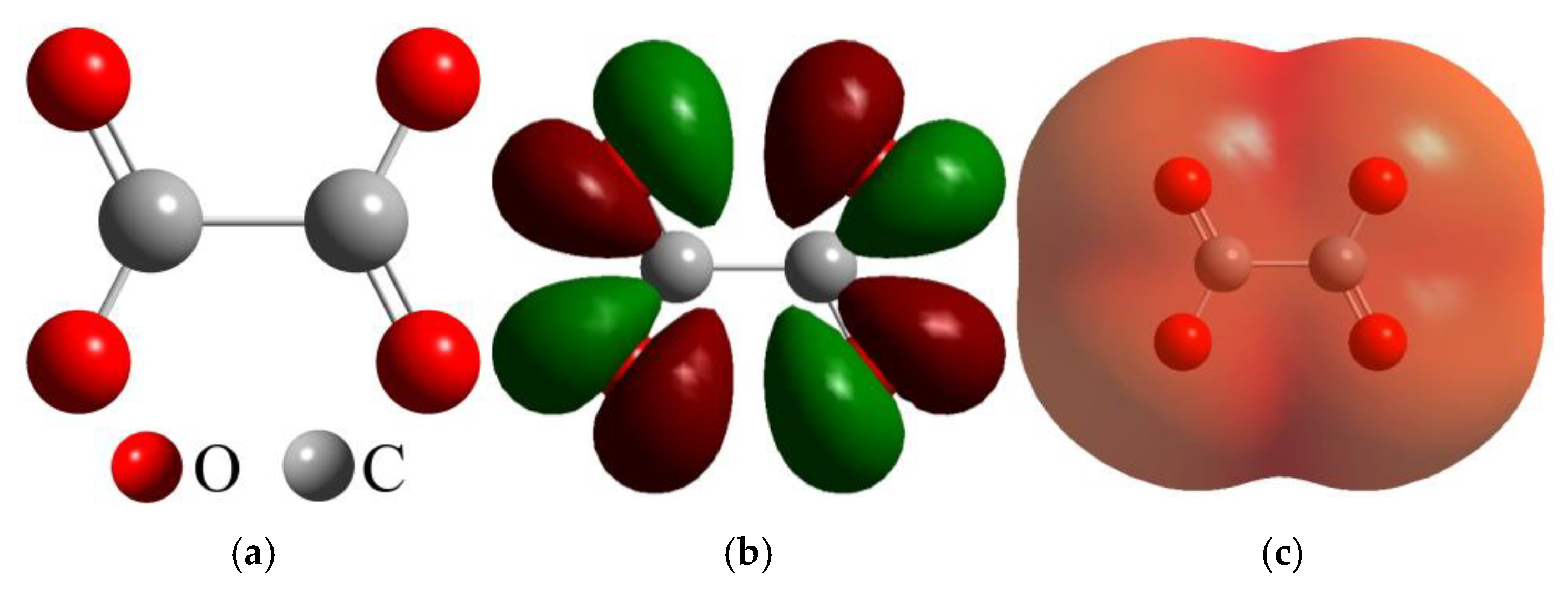
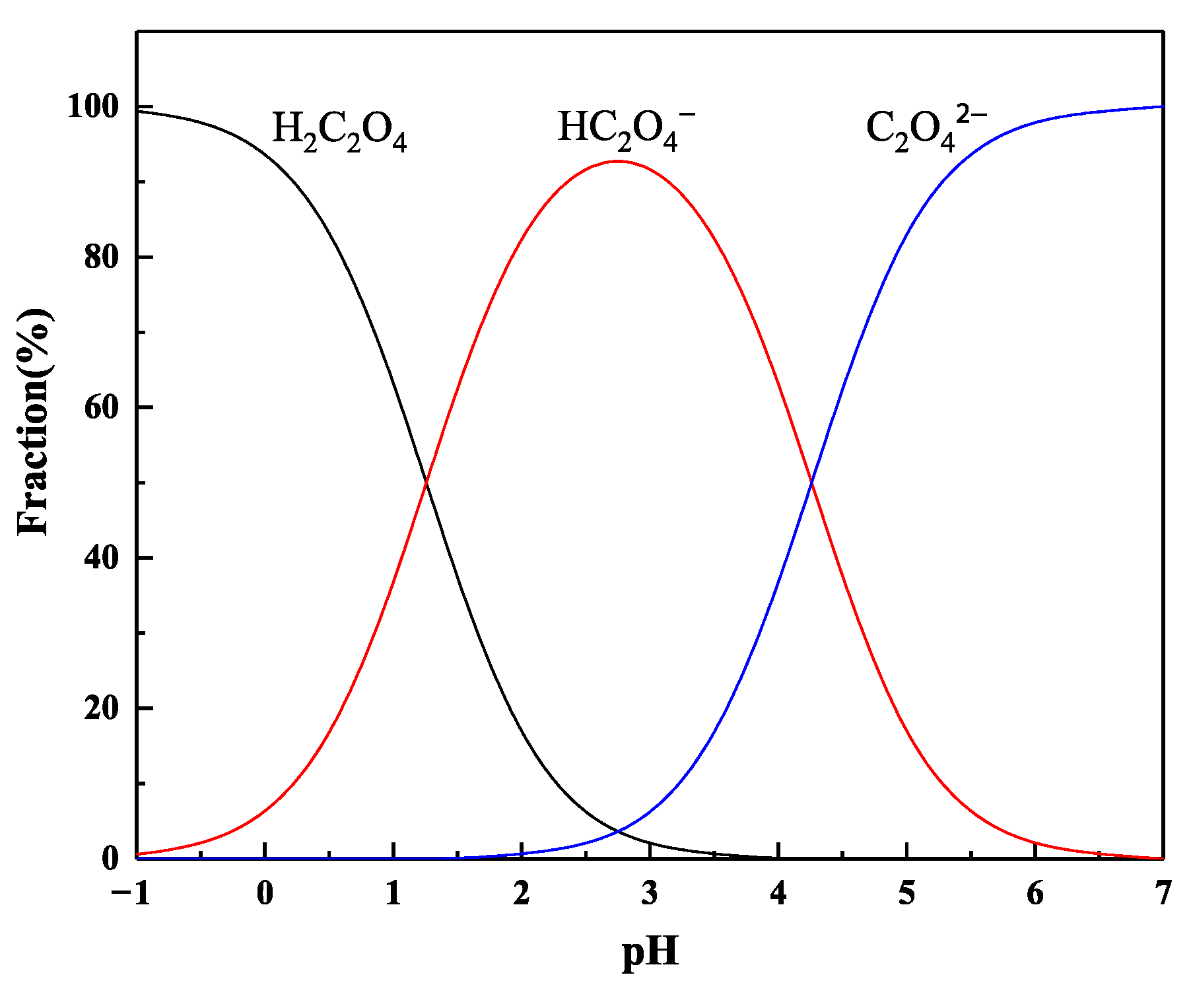
Oxalic acid (H2C2O4), the simplest dicarboxylic acid, possesses a molecular structure that contains two dissociable protons, with pKa1 and pKa2 values being 1.25 and 4.14, respectively [12]. In an aqueous solution, oxalic acid undergoes gradual dissociation, resulting in the formation of HC2O4 and C2O42− (Figure 1). The oxalate ion (C2O42−) functions as a potent chelating ligand and can establish stable complexes with various metal ions via a bidentate coordination mode. The coordination ability is intricately associated with the molecular symmetry, charge distribution, and orbital hybridization characteristics. Density functional theory (DFT) calculations indicated that the two oxygen atoms in C2O42− possess a relatively high electron density, which facilitated robust coordination with the metal center (Figure 2). Moreover, the C–C bond length tended to contract, thereby enhancing the rigidity and thermodynamic stability of the ligand.
The geometric configuration and electronic structure of C2O42− directly influenced its coordination selectivity. As presented in Table 1, the optimized C–C bond length was 1.64 Å, which was close to the typical single-bond length. Meanwhile, the bond lengths of both C=O and C–O were 1.26 Å, and the Mulliken charges were also the same. This indicated that the C=O double bond and the C–O single bond in oxalate exhibited the same chemical properties. Mulliken charge analysis indicated that the negatively charged oxygen atoms were predominantly distributed at the carboxyl end, offering a favorable binding site for metal ions. This structural characteristic promoted the formation of highly stable octahedral or planar tetragonal complexes, particularly demonstrating a stronger complexation propensity towards trivalent ions with higher charge density, such as Fe3+ and Al3+ [14].
The coordination mode of C2O42− predominantly relied on the charge, radius, and electronic configuration of the central metal ion. In the case of high-valent metal ions (e.g., Fe3+, Cr3+), oxalate has a tendency to form electrically neutral or low-solubility three-dimensional network structure precipitates, with stability constants exceeding 1015 [15], which are notably higher than those of the complexes associated with divalent ions (e.g., Ca2+, Mg2+). This difference originates from the “hard-hard” interaction in the Lewis acid-base theory [16]. The electrostatic attraction between a metal center featuring a high charge density and a rigid ligand was stronger, which facilitated the occurrence of the complexation reaction and consequently significantly improved the thermodynamic stability of the complex.
The distribution of the HOMO orbital revealed that the highest occupied molecular orbital of oxalate was mainly localized on the oxygen atoms of the two carboxyl groups (Figure 2). This suggested that the active sites for electron donation were concentrated in the regions of the oxygen atoms. The electrostatic potential map further showed that the negative potential regions were prominently distributed around the four oxygen atoms, especially at the terminal oxygen atoms of the carboxyl groups, which was consistent with the results of the Mulliken charge analysis. This potential distribution feature enabled C2O42− to easily establish strong electrostatic attraction with metal cations through oxygen atoms, and subsequently form stable chelate structures. This electronic structure characteristic explained the fundamental mechanism behind its higher complexation affinity for high-valent metal ions like Fe3+ and Al3+. The above-mentioned analysis demonstrated that the coordination activity of oxalate mainly stemmed from the strong donor properties of its electron-rich oxygen atoms. Additionally, the minimum electrostatic potential was located in the carboxyl oxygen region, which confirmed it as the preferred reaction site for binding with metal ions [17,18]. This electronic structural characteristic enabled C2O42− to exhibit remarkable selectivity when interacting with metal ions of different valences. Specifically, it showed a more distinct tendency to form stable chelates with trivalent ions of high charge density, thus providing theoretical support for its selective coordination in complex multi-metal systems.

3. Advances in the Application of Oxalic Acid as a Leaching Agent in Hydrometallurgy

To address diverse issues such as environmental pollution, poor selectivity, and ammonia nitrogen wastewater caused by inorganic acids, oxalic acid, a clean and environmentally friendly organic acid, has been increasingly used in the extraction of various metals in recent years. Compared with the traditional leaching process using sulfuric acid, oxalic acid acts as an effective reducing agent and an excellent ligand. After switching to oxalic acid, the treatment of leaching waste liquid becomes simpler, and its environmental impact is smaller. It functions as an eco-friendly solvent and has a wide biological origin. Moreover, it offers the advantages of high acidity and excellent complexing ability, thus being widely used in metal leaching.

3.1. Application and Mechanism Analysis of Oxalic Acid in Mineral Extraction

During the processing of primary minerals, the key advantage of oxalic acid lies in its selective leaching capacity for specific metals. This characteristic is particularly significant when dealing with low-grade ores or associated ores with complex compositions.

3.1.1. Selective Leaching Mechanism

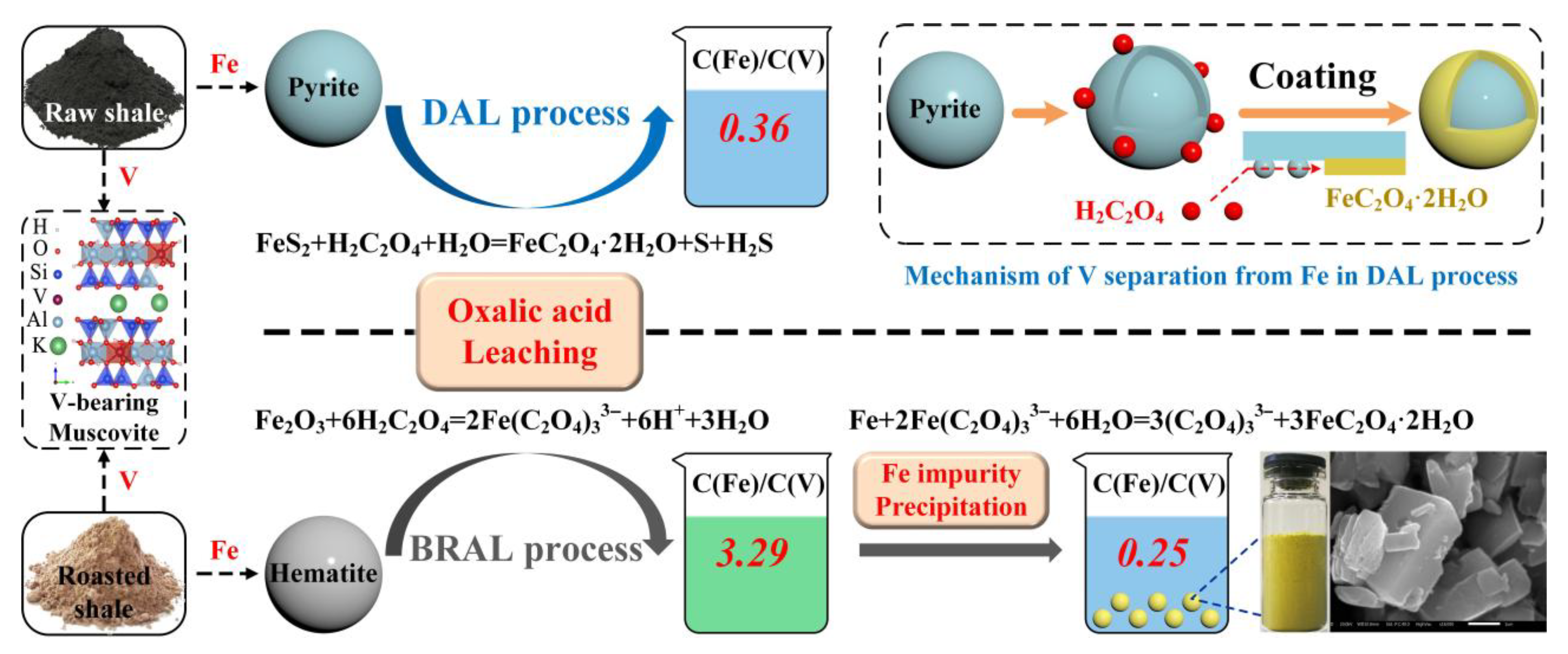
The selectivity of oxalic acid predominantly stems from two aspects: first, the difference in the stability of complexes formed with various metal ions; second, its reducing property that could change the valence state of metals, thus influencing their dissolution behavior. As demonstrated with vanadium-bearing shale under optimized leaching conditions, oxalic acid achieved a vanadium extraction yield of 71.5% while suppressing iron dissolution to only 3.4%, resulting in a low V/Fe separation factor of 0.0476—strong evidence of its high selectivity for vanadium over iron. In contrast, sulfuric acid leaching under identical conditions yielded a marginally higher vanadium recovery (74.1%) but induced substantially greater iron co-dissolution (13.0%), raising the V/Fe separation factor to 0.1754 and thereby diminishing selectivity by more than threefold (Figure 3). This comparative analysis confirms that oxalic acid offers superior selectivity for vanadium enrichment from unroasted ores relative to conventional inorganic acids.
For calcined vanadium-bearing shale, oxalic acid leaching enhanced vanadium extraction (86.8%) but concurrently increased iron dissolution (35.2%), leading to a marked reduction in V/Fe selectivity. Crucially, however, the elevated iron concentration in the leachate enabled efficient downstream recovery of high-purity ferrous oxalate (FeC2O4) via iron powder reduction and precipitation (Figure 3). Thus, while selectivity toward vanadium decreases upon thermal pretreatment, the altered leach solution composition supports integrated resource valorization—transforming a selectivity trade-off into a strategic advantage for multi-metal recovery.
Collectively, these results underscore that the selectivity of oxalic acid leaching is not intrinsic but context-dependent, governed critically by both process parameters (e.g., temperature, acid dosage, redox environment) and feedstock-specific properties (e.g., mineral phase distribution, Fe speciation, and structural stability upon roasting).
Similarly, in the process of removing Fe from red clay to improve the quality of ceramic raw materials, treatment with 1.0 M oxalic acid at 100 °C for 2.5 h could reduce the Fe2O3 content from 17.1% to 3.64%, with a removal rate of 78.71%, while the contents of Al2O3 and SiO2 remain basically unchanged [19,20]. This demonstrated the robust complexing and dissolving capabilities of oxalic acid with respect to Fe, along with its relative inertness towards the mineral phase structures of Al and silicon (Si).

3.1.2. Synergistic Leaching and Process Innovation

To address the limitations of single oxalic acid leaching in specific systems, such as its inadequate capacity to destroy the mineral structure, researchers have developed a synergistic leaching system. Wang et al. found that when extracting lithium (Li) from clay-type lithium ores, the use of a “H2SO4-H2C2O4” combined leaching system could significantly enhance the efficiency [21].
The mechanism was as follows: The H+ ions provided by sulfuric acid disrupt the mineral lattice, thus releasing Li+ ions. Subsequently, the C2O42− ions in the solution reacted with Li+ ions to form the soluble Li2C2O4. This method not only reduced acid consumption and shortened the leaching time but also improved the Li recovery rate. More importantly, subsequent research achieved a high Li leaching rate of 92.33% by using only oxalic acid through a process of “roasting-grinding oxalic acid powder-water leaching”, and the leaching solution could be recycled, which indicated the environmental friendliness and economic efficiency of the process [22].

3.1.3. Comparison with Other Organic Acids

Among various organic acids, oxalic acid stands out notably. Angela Manka Tita and her colleagues carried out a comparison of the leaching effects of oxalic acid, ascorbic acid, citric acid, and five other organic acids on Li in clay-type lithium ore. They found that the leaching efficiency of oxalic acid was on par with that of sulfuric acid, capable of leaching more than 80% of Li within one hour [23]. This phenomenon was mainly attributed to the high acidity (pKa1 = 1.25) and strong complexing ability of oxalic acid, enabling efficient leaching under mild conditions. Obviously, oxalic acid exhibits higher acidity than most common organic acids and, consequently, demonstrates broader applicability in the extraction of valuable metals from both primary mineral ores and secondary resources such as end-of-life magnets, spent catalysts, and electronic waste.
Biswas et al. carried out a comparison of the extraction of nickel (Ni) and cobalt (Co) from chromite using oxalic acid, citric acid, and gluconic acid [24]. They found that oxalic acid could efficiently leach Ni and Co. Subsequently, by applying the response surface methodology (RSM) in combination with the Box–Behnken design (BBD), it was found that the leaching behaviors of Ni and Co followed completely different kinetic models. Specifically, the leaching of Ni followed the Ginstling–Brounstein (GB) equation, which was classified as a three-dimensional diffusion model. In contrast, the leaching of Co followed a kinetic model that combined the mixed spherical shrinking core model and the diffusion model.

3.2. Application and Process Optimization of Oxalic Acid in Solid Waste Extraction

The composition of solid waste is extremely complex. The high selectivity and environmental compatibility of oxalic acid make it more valuable in the field of secondary resource recovery. Relevant research has progressed from single leaching to integrated processes that combine multiple pretreatment and post-treatment technologies.

3.2.1. Selective Recovery of Single Oxalic Acid Leaching

In systems containing spent catalysts, metallurgical slags, and electronic waste, oxalic acid can promote the selective enrichment of valuable metals. For example:
(1) Waste catalyst: In the oxalic acid leaching study of V2O5-WO3/TiO2 waste catalyst, under the optimal conditions, the leaching rates of V and Fe reached 84% and 96%, respectively [8]. After dissolution and complexation, Fe precipitated as FeC2O4, while V remained in the solution in the form of VO(C2O4)22− and other species, which facilitated subsequent separation. The leaching and precipitation reactions of V and Fe did not occur in one single step; instead, they were composed of multiple reaction units.
(2) Lithium-ion batteries: When oxalic acid was employed to conduct the leaching process on the black powder in lithium-ion batteries, the leaching rate of the Li element reached as high as 98.8%, whereas the leaching rates of Co, Ni, and manganese (Mn) were remarkably low (below 1.5%) [25,26]. Moreover, this process could simultaneously leach Li, Al, and Fe [27]. The fundamental driving force was due to the extremely low solubility of transition metal oxalates (e.g., CoC2O4, NiC2O4), which precipitated in the residue during the leaching process. In contrast, lithium oxalate was soluble, thus allowing for separation in a single leaching step [28,29,30].
In addition to directly using oxalic acid for leaching, Liu et al. [31] developed a reductive calcination approach using a mixture of spent LIBs and herbal medicine residues (HMR), which effectively reduced metal oxides prior to subsequent oxalic acid leaching. This sequential treatment achieved leaching efficiencies of 99.6% for Li, along with minimal dissolution of Ni (0.9%), Co (0.4%), and Mn (1.7%), highlighting a highly selective recovery of lithium. These results underscored the potential of integrating thermochemical pretreatments with organic acid leaching to improve metal selectivity in resource recovery processes.
(3) Other wastes: Research, including the simultaneous retrieval of Fe and rare earth elements from NdFeB waste [32], the recovery of Li from borax extraction waste residue (with an extraction rate of 99.92%) [33], the selective elution of arsenic from arsenic antimony dust [34], the recovery of gallium (Ga) and germanium (Ge) from jarosite residue [35], and the recovery of Ga from discarded light-emitting diodes [35], had demonstrated the high efficiency and selectivity of oxalic acid for specific target metals. Zhou et al. carried out a comprehensive investigation on the recovery of the valuable metal gallium from waste light-emitting diodes [36]. They also compared the effects of hydrochloric acid, oxalic acid, citric acid, and malic acid on the leaching process of gallium. The results showed that under the optimal conditions, when oxalic acid was used as the leaching agent, the leaching rate of gallium reached the highest level, up to 90.36%. Compared with other leaching agents, the potential mechanism for the efficient leaching of gallium by oxalic acid lies in its relatively high dissociation constant and the release of a large quantity of H+ in the presence of iron ions. This, in turn, formed ferrous oxalate precipitation and promoted the dissociation of oxalic acid.

3.2.2. Construction of Binary and Multi-Element Leaching Systems

To enhance the leaching efficiency or accomplish the co-recovery of multiple metals, the establishment of binary/multi-component leaching systems represents a significant avenue.
(1) Oxalic acid-inorganic acid system: When processing tin zinc slag containing tin, the “H2SO4 + H2C2O4” system could selectively and efficiently leach tin (Sn), while lead (Pb) remained concentrated in the residue. This enabled the separation of Sn and Pb and was well integrated with the existing zinc (Zn) smelting process [37,38]. In the recycling of spent lithium iron phosphate (LFP) batteries, the “H3PO4 − H2C2O4” system was utilized, which efficiently leached Li and Fe and promoted the low-cost regeneration of electrode materials [39].
(2) Oxalic acid-reducing agent system: The “oxalic acid-sodium sulfite” system was applied to treat red mud. Consequently, a V leaching rate of 90.4% was reached, and the dissolution of Fe was restricted to 9.6%. This notably enhanced the subsequent separation efficiency [40].
(3) Deep eutectic solvents (DES): The DES, consisting of choline chloride and oxalic acid, was used to extract bismuth (Bi) from blast furnace dust. An extraction efficiency of 94.9% was achieved, which indicated the potential of DES as a green solvent to replace traditional acid solutions [41].

3.2.3. Coupling with Other Technologies

(1) Pretreatment: After the hydrothermal carbonization of sewage sludge, oxalic acid leaching could effectively recover nitrogen (N) and phosphorus (P) from the sludge [42]. In the context of lithium-ion batteries, reduction roasting could convert high valent metal oxides into lower valence states or metallic elements that were easier to handle, thereby enhancing the efficiency of subsequent oxalic acid leaching of lithium [31,43]. The “potassium bisulfate acidification roasting-oxalic acid leaching” process for the recovery of tantalum (Ta) and niobium (Nb) from tin slag [44] and the process of mixing high alumina fly ash with granulation agents, followed by roasting and oxalic acid leaching for the recovery of Li, Ga, and rare earth elements [45] also fall into this category.
(2) Ultrasonic enhancement: The introduction of ultrasonic waves during oxalic acid leaching could enhance mass transfer and interfacial reactions via its cavitation effect, thereby increasing the selective leaching rate of Li to over 98% [46].
(3) Biological synergy: The utilization of oxalic acid generated by fungal metabolism for leaching presents a novel biochemical combined approach for the recovery of metals from electronic waste [47].

3.3. Advantages and Challenges of Using Oxalic Acid as a Leaching Agent

Table 2 summarizes the indicators of oxalic acid as a leaching agent for extracting various metals. Oxalic acid, distinguished by its unique acidity, complexing ability, and reducing property, has demonstrated its technical feasibility and environmental advantages as a green leaching agent in the extraction of various metals, such as V, Li, Co, Ni, and Ga, especially in selective extraction. Its application methods have evolved from simple leaching to integrated processes that are strongly coupled with acid/reducing agents, roasting/mechanical/ultrasonic/biological pretreatments, ranging from primary minerals to complex solid wastes.
However, the large-scale industrial application of this technology still faces challenges. First, the cost of oxalic acid is higher than that of common inorganic acids, and its recycling is difficult, which directly affects the process economy. Second, for some highly insoluble mineral phases, the leaching kinetics of oxalic acid is relatively slow, requiring higher temperatures or longer reaction times. Finally, the complexes formed by oxalic acid with certain metals are highly stable. Although this is beneficial for leaching, it may present new difficulties for the subsequent separation and purification of metals from the leaching solution.

4. Purification and Enrichment of Multicomponent Oxalate Solutions: Strategies, Mechanisms and Challenges

The complexity of the oxalic acid leaching solution system represents the core characteristic that sets it apart from traditional inorganic acid systems. Oxalic acid not only provided H+ but also acted as a strong ligand to form stable, negatively charged metal oxalate complex anions (e.g., Fe(C2O4)33−, VO(C2O4)22−) with various metal ions (e.g., Fe3+, Al3+, VO2+) [7]. This distinctive solution chemistry property, which endowed oxalic acid with outstanding leaching selectivity, also offered new opportunities and challenges for the subsequent separation and enrichment of target metals. Conventional separation methods based on cationic forms (such as the extraction or precipitation of simple metal cations) were often no longer applicable. Therefore, it is essential to develop specialized separation techniques tailored to the characteristics of complex anions.

4.1. Solvent Extraction Method: Efficient Separation Based on Complex Anions

Solvent extraction technology is a crucial method for treating multicomponent oxalate solutions. This is because it has high selectivity, a large processing capacity, and is convenient for continuous operation. The essence of this technology lies in the specific interaction between the extractant and the target metal oxalate complex anion.

4.1.1. The Anion Exchange Mechanism of Amine Extractants

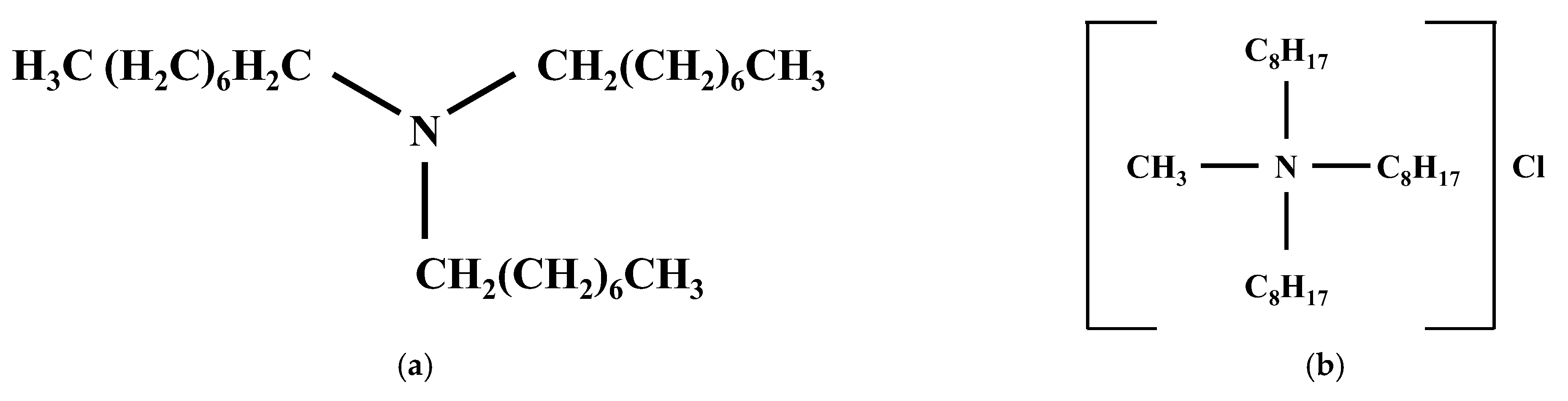
Primary amines (e.g., Alamine 336) [48,49] and quaternary ammonium salts (e.g., Aliquat 336) [7,50,51] stand out as the most frequently employed and highly efficient extractants in oxalic acid systems, the molecular structures of the two extractants are illustrated in Figure 4. In the aqueous phase, these substances either become protonated or inherently possess a positive charge (R3NH+ or R4N+), and they can participate in an anion exchange mechanism with negatively charged metal oxalate complex anions through electrostatic interaction. This interaction leads to the formation of electrically neutral ion pair complexes, which are then extracted into the organic phase.
In the study on the recovery of V and molybdenum (Mo) from the multicomponent oxalate solution of spent catalysts, Alamine 336 effectively achieved the co-extraction of both elements [48,49]. Mechanistic investigations showed that at a specific pH, V mainly existed in the form of VO(C2O4)22−, which could combine with two protonated amine molecules. Subsequently, selective stripping (stripping V with sulfuric acid and molybdenum with ammonia water) utilized the stability differences of different metal complexes in various chemical environments to achieve a thorough separation.
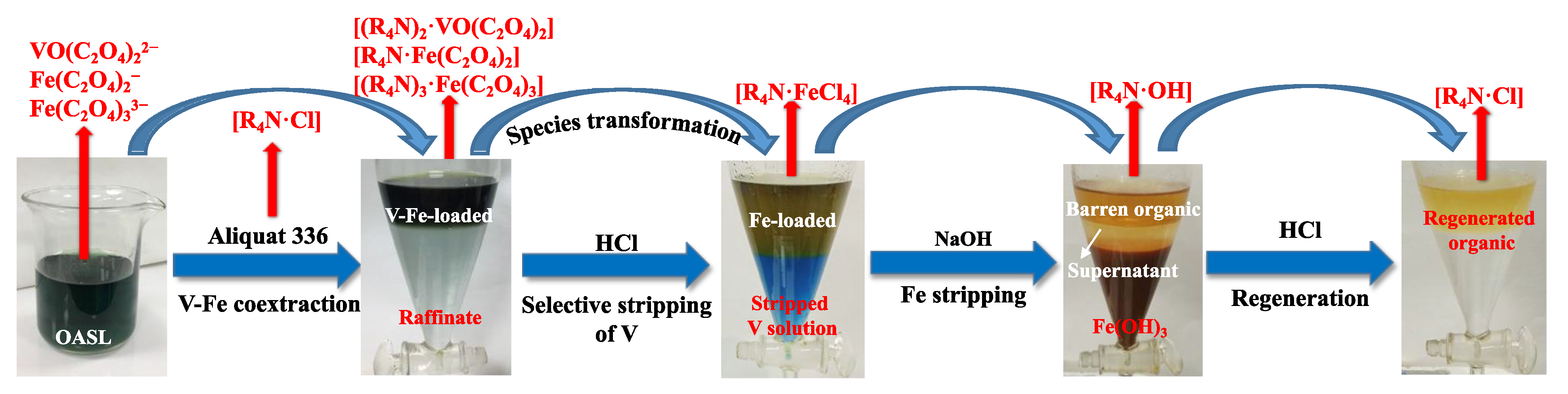
Similarly, Liu et al. confirmed that Aliquat 336 demonstrated extremely high selectivity for V in the oxalic acid leachate of vanadium-bearing shale and could effectively separate impurities such as Fe and Al [7,50]. In an oxalic acid solution, V and impurities like Al and Fe all existed in the form of negatively charged complex anions, including VO(C2O4)22−, Fe(C2O4)33−, Al(C2O4)2, Al(C2O4)33−. Due to the extremely strong selectivity of Aliquat 336 for [VO(C2O4)2]2−, the separation of V from impurity ions was achieved. The extraction mechanisms of vanadium, iron, and aluminum in the oxalic acid system were confirmed to follow an anion exchange pathway (Figure 5), as elucidated by infrared spectroscopy, ultraviolet-visible spectroscopy, and electrospray mass spectrometry. The studies on the extraction from oxalic acid solutions of hafnium (Ha), tantalum (Ta)/niobium (Nb) provided direct evidence for the anion exchange mechanism by identifying the extracted species as [(R3NH)4·Hf(C2O4)4] or [(R2R’NH)3·MO(C2O4)3] through the slope method and infrared spectroscopy [52,53].

4.1.2. The Cation Exchange Mechanism of Acidic Phosphorus (Phosphine) Type Extractants

Although amine extractants were predominant, acidic phosphorus-based extractants, such as 2-ethylhexyl phosphonic acid mono-2ethylhexyl ester (PC88A), also demonstrate significant application potential in specific systems, and their mechanism of action generally entails H+ exchange. For instance, when extracting U(VI) and Pu (IV) from a mixed oxalic acid-nitric acid system, PC88A could undergo cation exchange reactions with metal cations or neutral complexes through its P-OH groups [54]. However, in a strongly complexing pure oxalic acid medium, metals mainly existed as anions, which limited the application scope of acidic extractants, unless the metals could exist in the form of cations or neutral complexes.

4.1.3. New Extraction System and Synergistic Effects

To enhance the extraction rate and selectivity, continuous exploration is underway for new extractants and synergistic systems. The outstanding selectivity of Cyanex® 936P in Li extraction, which reached 98.8%, indicated that it was feasible to design extractants with specific recognition capabilities for alkali metals [27].
More notably, Usman et al. introduced a synergistic system consisting of benzoyltrifluoroacetone (HBTA) and trioctylphosphine oxide (TOPO), which achieved a 92% Li extraction rate within 6 min [55]. This synergistic effect may stem from HBTA providing coordination sites for lithium binding, while TOPO stabilized the extracted complexes through neutral coordination or solvation. As a result, it significantly accelerated the mass transfer kinetics and offered a new approach for high-throughput recovery.

4.1.4. Challenges of Solvent Extraction for Multicomponent Oxalate Solutions

The advantages of solvent extraction in oxalic acid systems are marked by high selectivity and continuous operation. However, the challenges it faces are also substantial. First, the extractant may have a certain extraction capacity for oxalic acid itself, leading to the loss of oxalic acid and potentially affecting the loading of the organic phase. Second, the target metal solution obtained after stripping usually contains sulfate or chloride ions, among others. How to separate the metal product from oxalate and achieve high-quality conversion (such as preparing high-purity oxides) is a crucial step that needs to be addressed. Finally, the wastewater containing oxalic acid generated during the extraction process must be properly treated to achieve the closed-loop circulation of oxalic acid.

4.2. Precipitation and Crystallization Method: Separation Based on Solubility Product and Valence State Regulation

The precipitation method is characterized by relatively simple operation and low cost. It is particularly suitable for the recovery of metals from multicomponent oxalate solutions with relatively simple compositions or those that have undergone pretreatment, or for the removal of specific impurities.

4.2.1. Direct Precipitation and Crystallization Separation

This method directly utilized the low solubility product of the target metal oxalate or specific double salts to achieve separation.
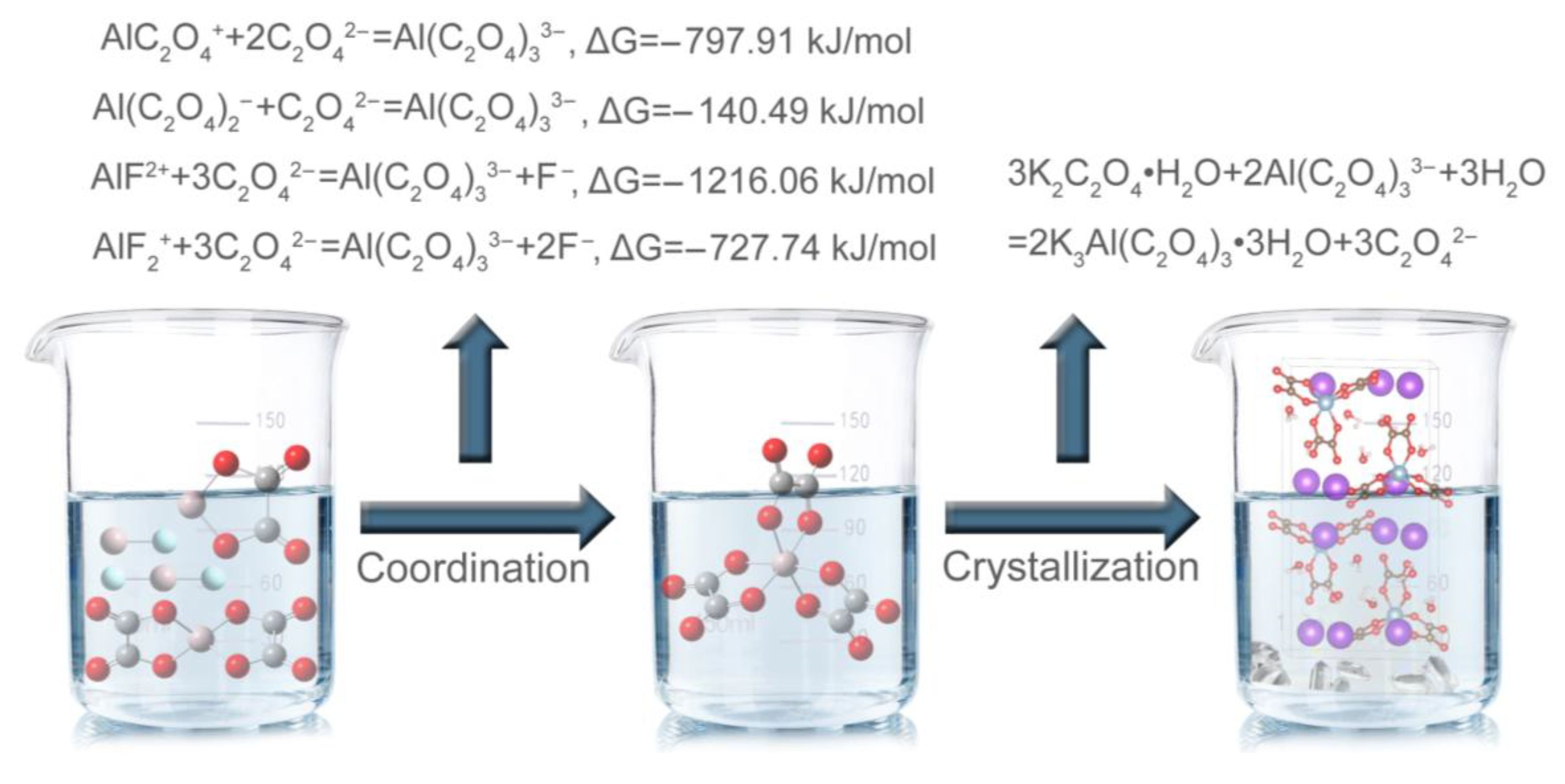
Impurity removal: The removal of Fe from the vanadium leaching solution was a typical example. The addition of potassium oxalate could selectively precipitate Fe in the form of the double salt K3Fe(C2O4)3·3H2O crystals, achieving a Fe removal rate of 90.7% with only 1.4% V loss [56]. This took advantage of the property that the Fe (III) oxalate complex anion forms an insoluble double salt with potassium ions. Similarly, K3Al(C2O4)3·3H2O crystals were successfully recovered from wastewater via low-temperature crystallization, leveraging the coordination of oxalate ions with Al3+ to form the stable anionic complex [Al(C2O4)3]3− (Figure 6) [57].
Valuable metal recovery: During the leaching process of recovering Mo from spent catalysts, Ni directly formed a NiC2O4 precipitate and was separated from the dissolved molybdate. Subsequently, Ca(OH)2 was added to the molybdenum-containing leaching solution, and Mo was recovered in the form of CaMoO4 or ultimately as MoO3 [58]. This phenomenon exemplified the concept of stepwise precipitation.

4.2.2. Reduction Precipitation Method

The introduction of a reducing agent to modify the valence state of the metal, thereby altering its binding form and solubility with oxalic acid, is a potent approach for achieving selective precipitation.
Separation of Fe and V: Reduced Fe powder was added to the multicomponent oxalate solution that contained Fe (III) and V. In this process, Fe3+ was reduced to Fe2+. Subsequently, the excess Fe2+ reacted with C2O42− in the solution to form a FeC2O4·2H2O precipitate with extremely low solubility, thus achieving the deep removal of Fe. Meanwhile, V (usually V(IV)) remained in the solution [6,9,59].
Directional preparation of vanadium products: By hydrothermally reducing and precipitating the vanadium oxalate leaching solution, high-purity VO2(B) (with a purity of 99.53%) [60] or V2O3 could be directly produced by controlling the precipitation path [61,62]. This process integrated reduction, hydrolysis, and crystallization, and it acted as a model for an integrated clean process of “leaching product preparation”.

4.2.3. Hydrolysis Precipitation and pH Gradient Separation

By adjusting the pH value, the metal oxalate complexes could be dissociated, and the metals could precipitate in the form of hydroxides or hydrated oxides. For instance, when gradually separating Al, Si, and Ti from the oxalic acid leachate of red mud, various bases (such as NaOH, CaO, and CaCO3) were added to adjust the pH gradually. The sequential separation was achieved by taking advantage of the pH differences at which the hydroxides of each element precipitate [63,64]. However, the presence of oxalate ions formed strong complexes with metal ions, generally requiring a higher pH or heating to ensure complete precipitation. This may affect the crystal form and purity of the precipitates.

4.2.4. Challenges of Chemical Precipitation in Complex Oxalic Acid Solution with Multiple Components

The advantages of the precipitation method are manifested in its intuitive principle, low equipment requirements, and suitability for treating high-concentration solutions. However, its limitations are also obvious: the selectivity is relatively poor, especially in the separation of metals with similar chemical properties; the precipitates are often mixtures and require further purification; the introduced precipitants (such as Ca2+, K+) may introduce new impurities, thus increasing the difficulty of subsequent treatment; oxalate ions acting as ligands are co-precipitated or lost, which is not conducive to their recycling.

5. Summary and Prospect

Oxalic acid, distinguished by its unique acidity, reducing property, complexing ability, and other beneficial characteristics, has been widely used in hydrometallurgy in recent years. A significant amount of literature has reported on the recovery of valuable metals from primary minerals and solid wastes via oxalic acid leaching. Meanwhile, the purification and enrichment technologies for multicomponent oxalate solutions have also continuously advanced in recent years. Both solvent extraction and chemical precipitation methods have been thoroughly investigated.
However, during the application of oxalic acid in hydrometallurgy, numerous challenges still remain, such as high costs, long reaction times, and wastewater treatment issues. Therefore, future research should focus on the following directions to promote the transformation of this field from laboratory scale to large-scale industrial application, thereby laying a solid foundation for the greening, efficiency improvement, and industrialization of the entire oxalic acid hydrometallurgy process.

5.1. Prospects of Oxalic Acid as a Leaching Agent

(1) Enhancing the recycling of oxalic acid: Develop efficient and cost-effective processes for the recovery and regeneration of oxalic acid to achieve closed-loop recycling and reduce reagent consumption.
(2) Exploring the microscopic reaction mechanisms: Thoroughly investigate the microscopic mechanisms and kinetic models of the reactions between oxalic acid and multiple metals in complex matrices to offer a theoretical foundation for precise process control.
(3) Innovating external field enhancement technologies: Optimize the coupling with external field enhancement technologies, such as photoelectric and microwave technologies, to further improve reaction efficiency and selectivity.
(4) Conducting life cycle assessment: Carry out a full process life cycle assessment to comprehensively evaluate the sustainability of the oxalic acid hydrometallurgical process from both environmental and economic standpoints.

5.2. Prospects for the Purification and Enrichment of Multicomponent Oxalate Solutions

(1) Strengthening separation mechanisms and process simulation: Conduct in-depth research on the microscopic reaction mechanisms and kinetics of different metal oxalate complexes during the extraction or precipitation processes. Subsequently, establish thermodynamic models to provide theoretical support for precise process design and intelligent control.
(2) Developing green and efficient new separation materials: Design and synthesize novel extractants or adsorption materials with higher recognition and selectivity for specific metal oxalate anions. Additionally, develop green precipitants to reduce secondary pollution.
(3) Focusing on the resource utilization and recycling of oxalate ions: Regard oxalate ions as process resources rather than waste. Develop efficient and low energy-consuming oxalate recovery technologies (such as low temperature crystallization, membrane concentration, and electrodialysis) to achieve a closed loop cycle of leaching separation regeneration. This is essential for reducing process costs and enhancing environmental friendliness.
(4) Exploring disruptive separation technologies: Evaluate the application potential of emerging technologies such as membrane separation (e.g., nanofiltration, electrodialysis), ion imprinting, and biomimetic adsorption in oxalate systems. These technologies may offer more energy-efficient and compact separation solutions.
(5) Promoting integrated processes and digital twins: Systematically integrate and optimize unit operations, including leaching, purification, enrichment, product preparation, and oxalate regeneration. Employ digital technologies to construct digital twins of the processes, thus achieving full process visualization, predictability, and optimal control.

Author Contributions

M.S.: Investigation and Writing—original draft preparation; Z.L.: Project administration, Funding acquisition, Writing—review and editing and Resources; Z.Z.: Investigation, Writing—original draft preparation and Writing—review and editing; Q.L.: Formal analysis and Investigation; W.L.: Formal analysis and Validation; H.L.: Validation and Investigation; Y.L.: Validation and Investigation. All authors have read and agreed to the published version of the manuscript.

Funding

This study was funded by the National Natural Science Foundation of China (No. 52204269), and the Open Project for State Key Laboratory of Complex Nonferrous Metal Resources Clean Utilization, Kunming University of Science and Technology, (CNMRCUKF20).

Data Availability Statement

No new data were created or analyzed in this study.

Conflicts of Interest

The authors declare no conflict of interest.

References

  1. Martín, M.I.; García-Díaz, I.; López, F.A. Properties and perspective of using deep eutectic solvents for hydrometallurgy metal recovery. Miner. Eng. 2023, 203, 108306. [Google Scholar] [CrossRef]
  2. Zhang, Y.; Bo, W.; Zheng, Q.; Liu, T.; Xue, N.; Hu, P.; Liu, H. A review of processing and utilization technology for vanadium shale resources. Sep. Purif. Technol. 2025, 379, 135185. [Google Scholar] [CrossRef]
  3. Choi, J.-W.; Shim, H.-W.; Kim, H.-I.; Kim, S.-K.; Tran, D.T.; Bae, M. Toward closed-loop hydrometallurgy: A critical review of wastewater reuse strategies for end-of-life LiFePO4 battery recycling. Green Chem. 2025, 27, 10423–10443. [Google Scholar] [CrossRef]
  4. Liu, Z.; Zhou, H.; Li, W.; Luo, X.; Wang, J.; Liu, F. and coextraction of rees and fe from ndfeb sludge by co-leaching and stepwise precipitation. Sep. Purif. Technol. 2022, 282, 119795. [Google Scholar] [CrossRef]
  5. Xue, N.-N.; Zhang, Y.-M.; Huang, J.; Liu, T.; Wang, L.-Y. Separation of impurities aluminum and iron during pressure acid leaching of vanadium from stone coal. J. Clean. Prod. 2017, 166, 1265–1273. [Google Scholar] [CrossRef]
  6. Hu, P.; Zhang, Y.; Huang, J.; Liu, T.; Yuan, Y.; Xue, N. Eco-friendly leaching and separation of vanadium over iron impurity from vanadium-bearing shale using oxalic acid as a leachant. ACS Sustain. Chem. Eng. 2018, 6, 1900–1908. [Google Scholar] [CrossRef]
  7. Liu, Z.; Huang, J.; Zhang, Y.; Liu, T.; Hu, P.; Liu, H.; Zheng, Q. Separation and recovery of vanadium and iron from oxalic-acid-based shale leachate by coextraction and stepwise stripping. Sep. Purif. Technol. 2020, 244, 116532. [Google Scholar]
  8. Wu, W.; Wang, C.; Bao, W.; Li, H. Selective reduction leaching of vanadium and iron by oxalic acid from spent V2O5-WO3/TiO2 catalyst. Hydrometallurgy 2018, 179, 52–59. [Google Scholar] [CrossRef]
  9. Hu, P.; Zhang, Y.; Liu, T.; Huang, J.; Yuan, Y.; Yang, Y. and recovery of iron impurity from a vanadium-bearing stone coal via an oxalic acid leaching-reduction precipitation process. Sep. Purif. Technol. 2017, 180, 99–106. [Google Scholar] [CrossRef]
  10. Zhao, J.-Y.; Mu, P.-P.; Liu, H.; Chachina, S.B.; Zhang, X.-G.; Zhang, S.-G.; Pan, D. Extraction and response surface methodology optimization of tungsten and molybdenum from spent fluidized catalytic cracking catalysts. Tungsten 2025, 7, 268–283. [Google Scholar] [CrossRef]
  11. Ruya, P.M.; Van Eygen, G.; Silva, M.P.; Volodine, A.; Reyniers, G.; Wenten, I.G.; Yang, X. Achieving simultaneous fractionation of transition metal ions using solvent-extraction based membranes. J. Membr. Sci. 2025, 735, 124564. [Google Scholar] [CrossRef]
  12. Hong, G.; Nam, H.; Mweene, L.; Kim, H. strategies of salicylhydroxamic acid collector with oxalic acid in goethite flotation. Inorg. Chem. Commun. 2025, 171, 113528. [Google Scholar] [CrossRef]
  13. Xiong, Q.; Liu, Z.; Li, Q.; Lin, H.; Tang, X.; Luo, X. Ionic speciation and coordination mechanisms of vanadium, iron, and aluminum in the oxalic acid leachate of shale. Separations 2025, 12, 235. [Google Scholar] [CrossRef]
  14. Dellien, I.; Løkke, O.C.; Korvenranta, J.; Naesaekkaelae, E. Thermodynamic properties of iron oxalates and malonates in perchlorate medium. Acta Chem. Scand. 1977, 31a, 473–479. [Google Scholar] [CrossRef]
  15. Kanižaj, L.; Molčanov, K.; Dubraja, L.A.; Klaser, T.; Jurić, M. Homo- and heterometallic oxalate-based complexes obtained using [Cr(C2O4)3]3—Building block—Two polymorphs of a solvate. Polyhedron 2022, 211, 115556. [Google Scholar] [CrossRef]
  16. Yao, B.; Yan, Y.; Yang, Y.; Yu, S.; Chen, Y.; Liu, Q.; Zhu, Z.; Jiao, D.; Xing, Z.; Wang, D.; et al. Synergistic lewis acid-base pairs-mediated microenvironment optimization for hydrogen evolution in ph-universal and alkaline seawater. Appl. Catal. B Environ. Energy 2026, 386, 126384. [Google Scholar] [CrossRef]
  17. Hao, H.; Liu, Y.; Yuan, J.; Dong, X.; Wang, Z.; Xu, C.; Chen, J. Redox assisted solvent extraction to enable highly efficient separation of cerium from other lanthanides: Experimental studies and dft calculations. Hydrometallurgy 2024, 225, 106264. [Google Scholar] [CrossRef]
  18. Shathi, A.S.; Mostafa, G.; Rahman, A.; Biswas, P.K.; Alam, S.; Rana, S.; Uddin, R.; Nuruzzaman, M.; Shahriar, S.; Zaman, M.N. Iron removal from red clay using oxalic acid leaching for enhanced ceramic industry applications. Heliyon 2024, 10, e38863. [Google Scholar] [CrossRef] [PubMed]
  19. Hu, P.; Zhang, Y.; Zheng, Q. Vanadium selective separation enhancement from iron in black shale using oxalic acid due to fes2 (100) surface passivation: A theoretical and experimental study. J. Mol. Liq. 2022, 368, 120627. [Google Scholar] [CrossRef]
  20. Hu, P.; Zhang, Y.; Liu, T.; Huang, J.; Yuan, Y.; Zheng, Q. Highly selective separation of vanadium over iron from stone coal by oxalic acid leaching. J. Ind. Eng. Chem. 2017, 45, 241–247. [Google Scholar] [CrossRef]
  21. Wang, F.; Yang, M.; Yang, Y.; Tian, Y. Synergistic leaching of lithium from clay-type lithium ore using sulfuric acid and oxalic acid. Appl. Clay Sci. 2024, 262, 107623. [Google Scholar] [CrossRef]
  22. Wang, F.; Yang, Y.; Yang, M.; Tian, Y.; Yuan, H. Lithium was extracted from lithium-poor clay ores after short calcination by oxalic acid leaching. Particuology 2025, 98, 204–214. [Google Scholar] [CrossRef]
  23. Tita, A.M.; Mends, E.A.; Kar, U.; Hussaini, S.; Chu, P. Leaching of li-bearing sedimentary claystones using organic acids. Green Smart Min. Eng. 2025, 2, 156–167. [Google Scholar] [CrossRef]
  24. Biswas, S.; Chakraborty, S.; Chaudhuri, M.G.; Banerjee, P.C.; Mukherjee, S.; Dey, R. Optimization of process parameters and dis complex oxalic acid leaching solutions kinetics of nickel and cobalt from lateritic chromite overburden using organic acids. J. Chem. Technol. Biotechnol. 2014, 89, 1491–1500. [Google Scholar] [CrossRef]
  25. Rouquette, L.M.; Altenschmidt, L.; Culina, M.; Brant, W.R.; Ebin, B.; Petranikova, M. Kinetics study of the dissolution of black mass material using oxalic acid as a leaching agent. J. Hazard. Mater. Adv. 2025, 18, 100750. [Google Scholar] [CrossRef]
  26. Rouquette, L.M.; Petranikova, M.; Vieceli, N. Complete and selective recovery of lithium from ev lithium-ion batteries: Modeling and optimization using oxalic acid as a leaching agent. Sep. Purif. Technol. 2023, 320, 124143. [Google Scholar] [CrossRef]
  27. Ajiboye, E.A.; Dzwiniel, T. Selective leaching and solvent extraction of lithium from spent batteries. Hydrometallurgy 2025, 238, 106566. [Google Scholar] [CrossRef]
  28. Szymczycha-Madeja, A. Kinetics of mo, ni, v and al leaching from a spent hydrodesulphurization catalyst in a solution containing oxalic acid and hydrogen peroxide. J. Hazard. Mater. 2011, 186, 2157–2161. [Google Scholar] [CrossRef] [PubMed]
  29. Mazurek, K. Recovery of vanadium, potassium and iron from a spent vanadium catalyst by oxalic acid solution leaching, precipitation and ion exchange processes. Hydrometallurgy 2013, 134–135, 26–31. [Google Scholar] [CrossRef]
  30. Erust, C.; Akcil, A.; Bedelova, Z.; Anarbekov, K.; Baikonurova, A.; Tuncuk, A. Recovery of vanadium from spent catalysts of sulfuric acid plant by using inorganic and organic acids: Laboratory and semi-pilot tests. Waste Manag. 2016, 49, 455–461. [Google Scholar] [CrossRef]
  31. Liu, X.; Wang, B.; Ma, Y.; Zhou, X.; Yang, J.; He, Y.; Tang, J.; Su, F.; Yang, W. Preferential and efficient extraction of lithium under the combined action of reduction of herb-medicine residue and leaching of oxalic acid. Waste Manag. 2024, 174, 44–52. [Google Scholar]
  32. Liu, Q.; Tu, T.; Guo, H.; Cheng, H.; Wang, X. High-efficiency simultaneous extraction of rare earth elements and iron from ndfeb waste by oxalic acid leaching. J. Rare Earths 2021, 39, 323–330. [Google Scholar] [CrossRef]
  33. Aladağ, M.; Erdem, M. Selective lithium leaching from dolomite-hosted clay-based boron extraction waste with oxalic acid to obtain a pregnant solution with a low mg/li ratio. Sep. Purif. Technol. 2025, 377, 134428. [Google Scholar]
  34. Ling, H.; Huang, Y.; Jiao, F.; Qiu, Z.; Qin, W.; Liu, W. A novel process for separating arsenic and antimony from arsenic-antimony dust via leaching with oxalic acid solution. Sep. Purif. Technol. 2025, 374, 133760. [Google Scholar] [CrossRef]
  35. Mondal, P.P.; Hintersatz, C.; Dhiman, S.; Guy, B.M.; Matys, S.; Ahammad, S.Z.; Jain, R. Gallium and germanium leaching from jarosite cake by organic acid: A combined experimental and dft approach. J. Environ. Manag. 2025, 394, 127375. [Google Scholar] [CrossRef]
  36. Zhou, J.; Zhu, N.; Liu, H.; Wu, P.; Zhang, X.; Zhong, Z. Recovery of gallium from waste light emitting diodes by oxalic acidic leaching. Resour. Conserv. Recycl. 2019, 146, 366–372. [Google Scholar] [CrossRef]
  37. Deng, T.; Yang, Z.; Wang, F.; Jiang, W.; Yang, B.; Xu, B.; Luo, H.; Liang, P. Efficient separation and enrichment of sn from zinc leaching residue by two-stage leaching and hydrolytic precipitation. Sep. Purif. Technol. 2025, 378, 134699. [Google Scholar] [CrossRef]
  38. Wang, Y.; Liu, B.; Sun, H.; Huang, Y.; Han, G. Selective extraction and recovery of tin from hazardous zinc-leaching residue by oxalic acid/sulfuric acid mixture leaching and hydrolytic precipitation. J. Clean. Prod. 2022, 342, 130955. [Google Scholar] [CrossRef]
  39. Li, P.; Luo, S.; Zhang, L.; Wang, Y.; Zhang, H.; Wang, J.; Yan, S.; Hou, P.; Wang, Q.; Zhang, Y.; et al. Study on efficient and synergistic leaching of valuable metals from spent lithium iron phosphate using the phosphoric acid-oxalic acid system. Sep. Purif. Technol. 2022, 303, 122247. [Google Scholar] [CrossRef]
  40. Li, W.; Yan, X.; Niu, Z.; Zhu, X. Selective recovery of vanadium from red mud by leaching with using oxalic acid and sodium sulfite. J. Environ. Chem. Eng. 2021, 9, 105669. [Google Scholar] [CrossRef]
  41. Qiao, Z.; Yang, Y.; He, Q.; Yang, H.; Li, W.; Li, Z.; Wang, W.; Shen, Z. Recovery of bismuth and other metals from blast furnace dust by leaching with oxalic acid-based deep eutectic solvent and precipitation. Hydrometallurgy 2023, 220, 106091. [Google Scholar] [CrossRef]
  42. Tong, Y.; Liu, W.; Wang, Z.; Liu, J.; Zhou, J. Method for preparing high-purity struvite by extracting nitrogen and phosphorus from sewage sludge using a coupled process of hydrothermal carbonization and oxalic acid leaching. Sustain. Chem. Pharm. 2025, 43, 101885. [Google Scholar] [CrossRef]
  43. Cun, Z.; Wang, C.; Xing, P.; Li, H.; Sun, Z. lithium extraction from spent LiNixCoyMnzO2 LIBs using environmentally friendly oxalic acid: The facilitating effect of self-activation roasting. J. Environ. Manag. 2025, 396, 128128. [Google Scholar] [CrossRef] [PubMed]
  44. Cheje Machaca, D.M.; Juyo Salazar, R.B.; De Carvalho, T.C.; Romano Espinosa, D.C.; Soares Tenório, J.A. Recovery of niobium and tantalum from tin slags: An alternative approach using acid roasting and oxalic leaching. Miner. Eng. 2025, 232, 109564. [Google Scholar] [CrossRef]
  45. Shao, P.; Hou, H.; He, Z.; Wang, L.; Wang, W. Selective separation and stepwise enrichment of li, ga, and rees from high-alumina fly ash via oxalic acid leaching. Sep. Purif. Technol. 2025, 376, 134128. [Google Scholar] [CrossRef]
  46. Deng, H.; Hong, R.; Wang, B.; Xu, J.; Yang, G.; Shi, Z.; He, W.; Li, G. Ultrasonic enhanced preferential leaching process of li from waste lithium-ion batteries using oxalic acid focused on optimization and mechanism. Sep. Purif. Technol. 2025, 364, 132327. [Google Scholar] [CrossRef]
  47. Vakilchap, F.; Naderi, A.; Mousavi, S.M. Innovative oxalic acid production improvement via mixed culture strategy and its application in eco-friendly hybrid leaching of spent printed circuit boards. J. Environ. Manag. 2025, 387, 125680. [Google Scholar] [CrossRef]
  48. Kim, H.-I.; Lee, K.-W.; Mishra, D.; Yi, K.-M.; Hong, J.-H.; Jun, M.-K.; Park, H.-K. Separation and recovery of vanadium from leached solution of spent residuehydrodesulfurization (rhds) catalyst using solvent extraction. J. Ind. Eng. Chem. 2014, 20, 4457–4462. [Google Scholar] [CrossRef]
  49. Kim, H.-I.; Lee, K.-W.; Mishra, D.; Yi, K.-M.; Hong, J.-H.; Jun, M.-K.; Park, H.-K. Separation of molybdenum and vanadium from oxalate leached solution of spent residue hydrodesulfurization (rhds) catalyst by liquid–liquid extraction using amine extractant. J. Ind. Eng. Chem. 2015, 21, 1265–1269. [Google Scholar] [CrossRef]
  50. Liu, Z.; Huang, J.; Zhang, Y.; Liu, T.; Hu, P.; Liu, H.; Luo, D. Separation and recovery of vanadium and aluminum from oxalic acid leachate of shale by solvent extraction with aliquat 336. Sep. Purif. Technol. 2020, 249, 116867. [Google Scholar] [CrossRef]
  51. Karekar, C.; Chourasiya, G.; Patil, S. Studies on the extraction of plutonium(iv) from aqueous nitric acid—Oxalic acid by aliquat-336. Solvent Extr. Ion Exch. 1983, 1, 765–774. [Google Scholar] [CrossRef]
  52. Yakabe, K.; Minami, S. Liquid-liquid extraction of hafnium complex ion from aqueous oxalic acid solution with high molecular weight amine. J. Inorg. Nucl. Chem. 1975, 37, 1973–1976. [Google Scholar] [CrossRef]
  53. Djordjević, C.; Goričan, H.; Sevdić, D. Solvent extraction of niobium and tantalum—Vii: Extraction with di-n-octylamino alcohols from oxalic metal solutions. J. Inorg. Nucl. Chem. 1969, 31, 1487–1494. [Google Scholar] [CrossRef]
  54. Mapara, P.M.; Godbole, A.G.; Swarup, R.; Nagar, M.S. Extraction of uranium and plutonium from oxalate bearing solutions using phosphonic acid: Solvent extraction, extraction chromatography and infrared studies. J. Radioanal. Nucl. Chem. 1999, 240, 631–635. [Google Scholar] [CrossRef]
  55. Saleem, U.; Buvik, V.; Knuutila, H.K.; Bandyopadhyay, S. Recovery of lithium from oxalic acid leachate produced from black mass of spent electric vehicle li-ion batteries. Chem. Eng. J. Adv. 2024, 20, 100648. [Google Scholar] [CrossRef]
  56. Liu, Z.; Huang, J.; Zhang, Y.; Liu, T.; Hu, P.; Liu, H.; Zheng, Q. Separation and recovery of iron impurities from a complex oxalic acid solution containing vanadium by K3Fe(C2O4)3·3H2O crystallization. Sep. Purif. Technol. 2020, 232, 115970. [Google Scholar] [CrossRef]
  57. Liu, Z.; Sheng, M.; He, Y.; Zhou, H.; Huang, J.; Luo, X.; Zhang, Y. Coordination mechanism of aluminum with oxalate and fluoride in aluminum crystallization from vanadium extraction wastewater. J. Mol. Liq. 2022, 347, 117992. [Google Scholar] [CrossRef]
  58. Liu, J.; Qiu, Z.; Yang, J.; Cao, L.; Zhang, W. Recovery of mo and ni from spent acrylonitrile catalysts using an oxidation leaching–chemical precipitation technique. Hydrometallurgy 2016, 164, 64–70. [Google Scholar] [CrossRef]
  59. Hu, P.; Zhang, Y. Mechanism of vanadium selective separation from iron in shale under an environmentally friendly oxalate ligand system. Sep. Purif. Technol. 2021, 276, 119269. [Google Scholar] [CrossRef]
  60. Kang, Q.; Zhang, Y.; Bao, S. An environmentally friendly hydrothermal method of vanadium precipitation with the application of oxalic acid. Hydrometallurgy 2019, 185, 125–132. [Google Scholar] [CrossRef]
  61. Chen, X.; Zhang, J.; Yan, B. A clean method of precipitation vanadium from the vanadium bearing oxalic acid leaching solution. Miner. Eng. 2021, 165, 106864. [Google Scholar] [CrossRef]
  62. Chen, X.; Zhang, J.; Yan, B. Hydrothermal precipitation of V3+ ions in v-bearing oxalic acid leachate to prepare V2O3. Hydrometallurgy 2021, 205, 105734. [Google Scholar] [CrossRef]
  63. Li, W.; Wang, N.; Lu, F.; Chai, H.; Gu, H. Selective separation of aluminum, silicon, and titanium from red mud using oxalic acid leaching, iron precipitation and ph adjustments with calcium carbonate. Hydrometallurgy 2024, 223, 106221. [Google Scholar] [CrossRef]
  64. Yang, Y.; Wang, X.; Wang, M.; Wang, H.; Xian, P. Iron recovery from the leached solution of red mud through the application of oxalic acid. Int. J. Miner. Process. 2016, 157, 145–151. [Google Scholar] [CrossRef]
Figure 1. Species Distribution of Oxalic Acid in Aqueous Solution.
Separations 13 00066 g001
Figure 2. Optimal molecular structure (a), HOMO orbital (b), and electrostatic potential map (c) of C2O42− [13].
Separations 13 00066 g002
Figure 3. Schematic diagram of vanadium extraction mechanism from vanadium shale by oxalic acid leaching [6].
Separations 13 00066 g003
Figure 4. (a) Molecular formula of Alamine 336 (b) Molecular formula of Aliquat 336 [7].
Separations 13 00066 g004
Figure 5. Separation and recovery of vanadium and iron from oxalic-acid-based shale leachate by coextraction and stepwise stripping [7].
Separations 13 00066 g005
Figure 6. Coordination mechanism of aluminum in the aluminum crystallization [57].
Separations 13 00066 g006
Table 1. Structural Information of C2O42− Molecule.
Bond Length (Å)Mulliken Charge
C–CC=OC–OCO (C=O)O (C–O)
1.641.261.260.048−0.524−0.524
Table 2. Summary of Oxalic Acid Leaching Performance Indices for various Metals.
MaterialsExperimental ObjectiveLeaching AgentLeaching EfficiencyMain Ion SpeciationReferences
Vanadium shaleSelective leaching of V and separation from FeH2C2O4V: 71.5%;
Fe: 3.4%
[VO(C2O4)2]2−, FeC2O4(s)[6,9,19]
Red clayRemoval of Fe for ceramic applicationsH2C2O4Fe removal: 78.71%[Fe(C2O4)3]3−[20]
Clay-type lithium oreSynergistic leaching to enhance Li activityH2SO4 + H2C2O4Li: 93.45%Li+, [Al(C2O4)3]3−[21]
Spent LIBsPreferential leaching of Li over Co/Ni/MnH2C2O4Li: 98.8%;
Co, Ni, Mn < 1.5%
Li+, MC2O4(s) (M=Co, Ni, Mn)[25,26,28,29,30]
Spent V2O5-WO3/TiO2 catalystSelective reduction leaching of V and FeH2C2O4V: 84%;
Fe: 96%
[VO(C2O4)2]2−, FeC2O4(s)[8]
Spent LIBsReductive calcination and selective leaching LiH2C2O4Li: 99.6%;
Ni: 0.9%;
Co: 0.4%
Li+, MC2O4(s) (M=Co, Ni)[31]
Waste SMD LEDsRecovery of rare metal GaH2C2O4Ga: 90.36%[Ga(C2O4)3]3−[36]
Zinc-leaching residueSelective extraction and enrichment of SnH2SO4 + H2C2O4Sn: 90.5%
Pb: 99.8%
[Sn(C2O4)2]2−, PbSO4(s)[37,38]
Blast furnace dustExtraction of Bi using green solventsChloride- H2C2O4 Bi: 94.9%[Bi(C2O4)3]3−[41]
Red mudSelective recovery of V and Fe suppressionH2C2O4 + Na2SO3V: 90.4%;
Fe: 9.6%
[VO(C2O4)2]2−, [Fe(C2O4)3]3−[40]
Disclaimer/Publisher’s Note: The statements, opinions and data contained in all publications are solely those of the individual author(s) and contributor(s) and not of MDPI and/or the editor(s). MDPI and/or the editor(s) disclaim responsibility for any injury to people or property resulting from any ideas, methods, instructions or products referred to in the content.