
Recovery of Fe, Pb and Zn from Blast Furnace Gas Ash by Intensive Calcination and Magnetic Separation Techniques


Abstract
1. Introduction
2. Materials and Methods
2.1. Materials
2.2. Methods
3. Results and Discussion
3.1. Gasification Reduction Calcination
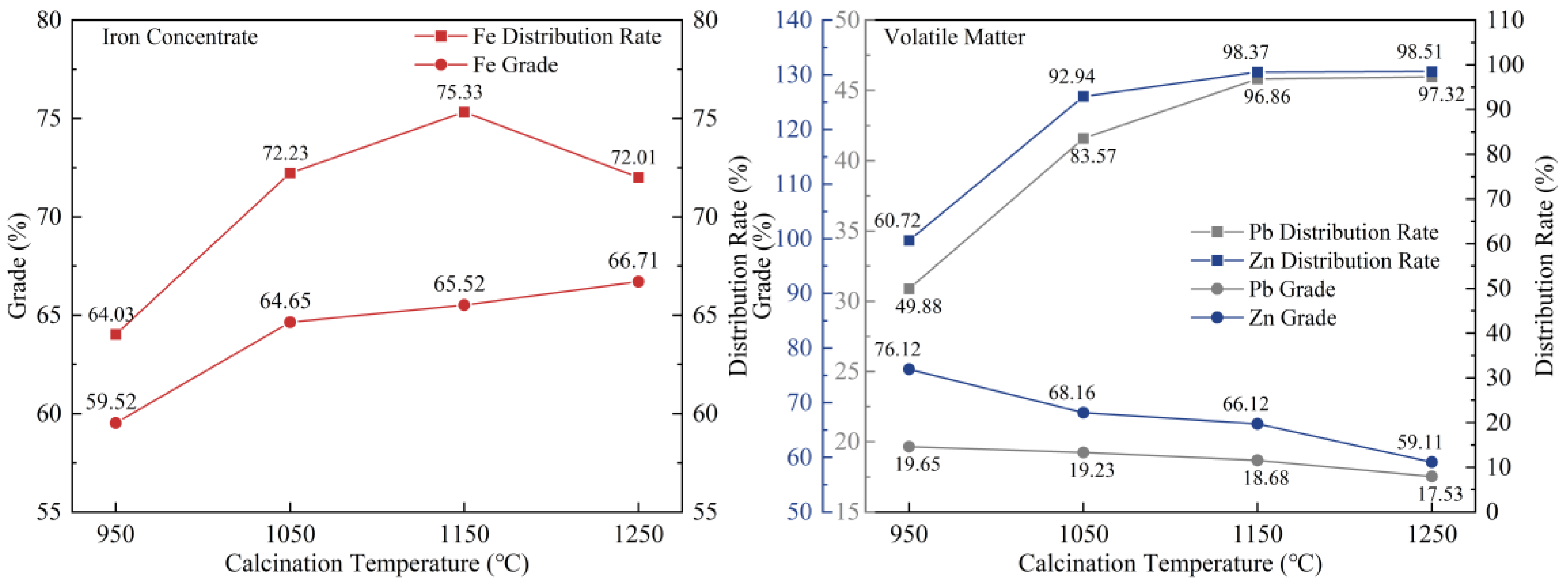
3.1.1. Calcination Temperature
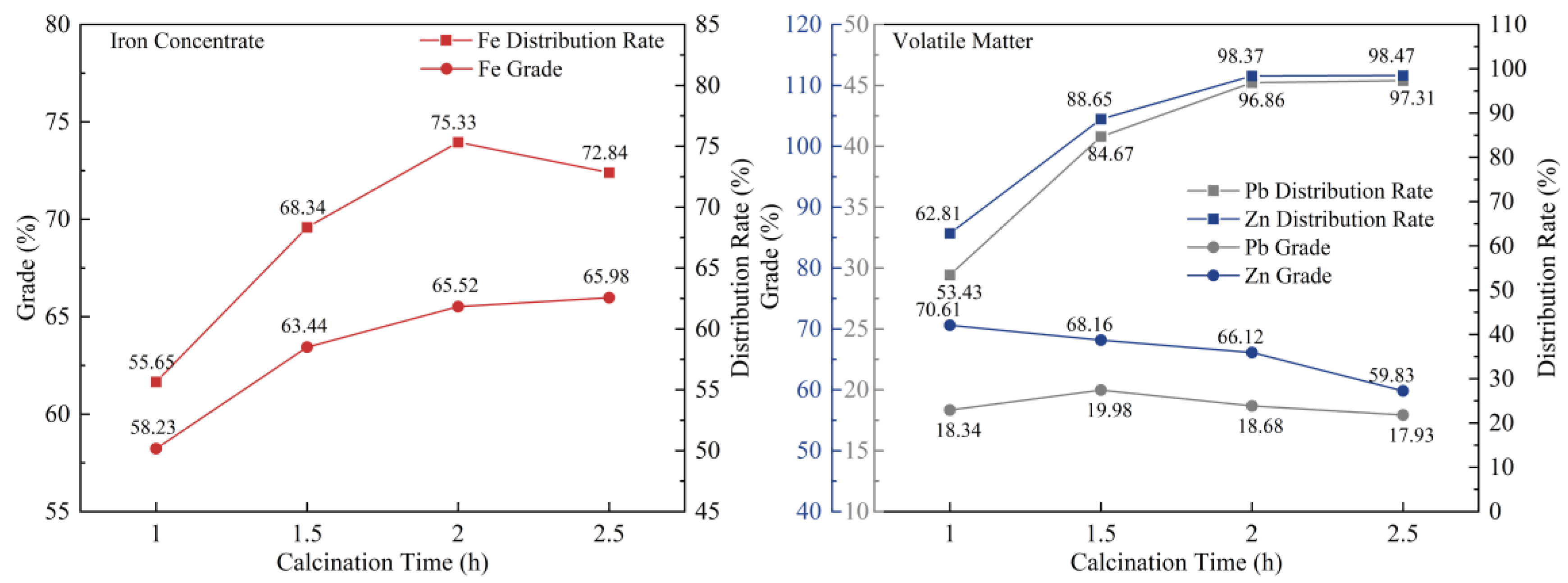
3.1.2. Calcination Time
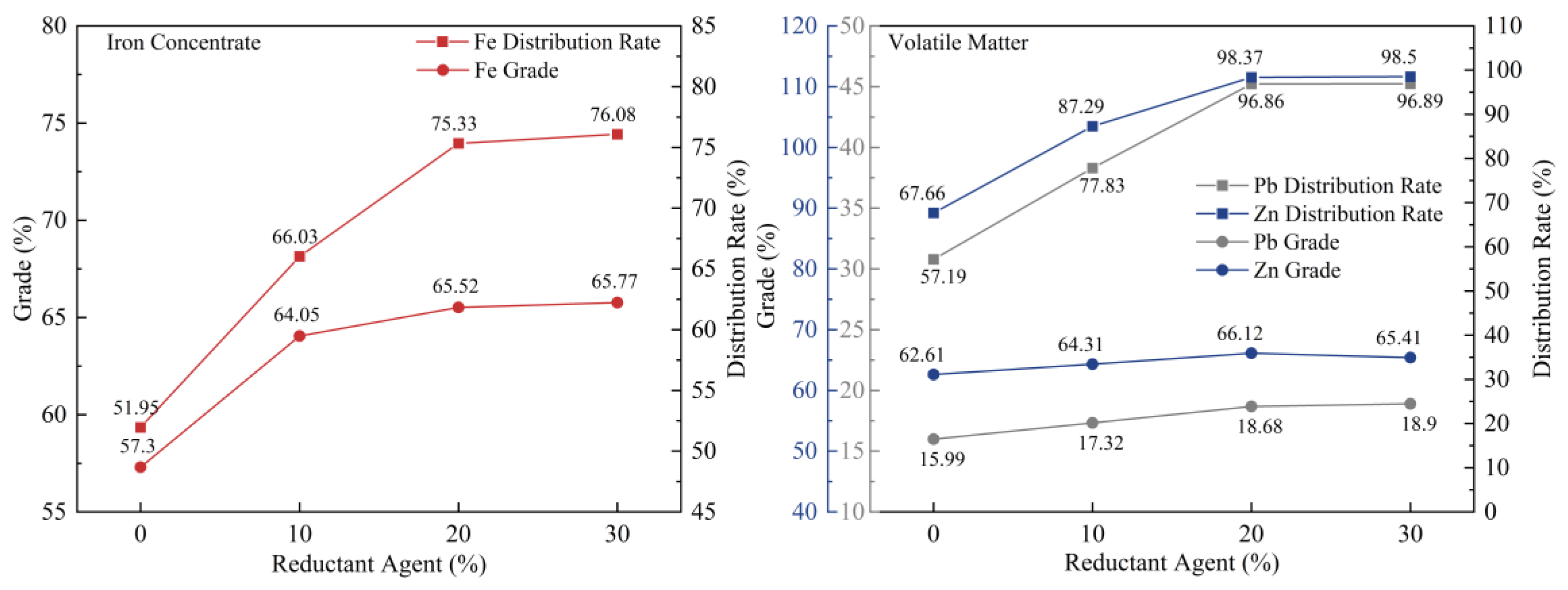
3.1.3. Reductant Agent
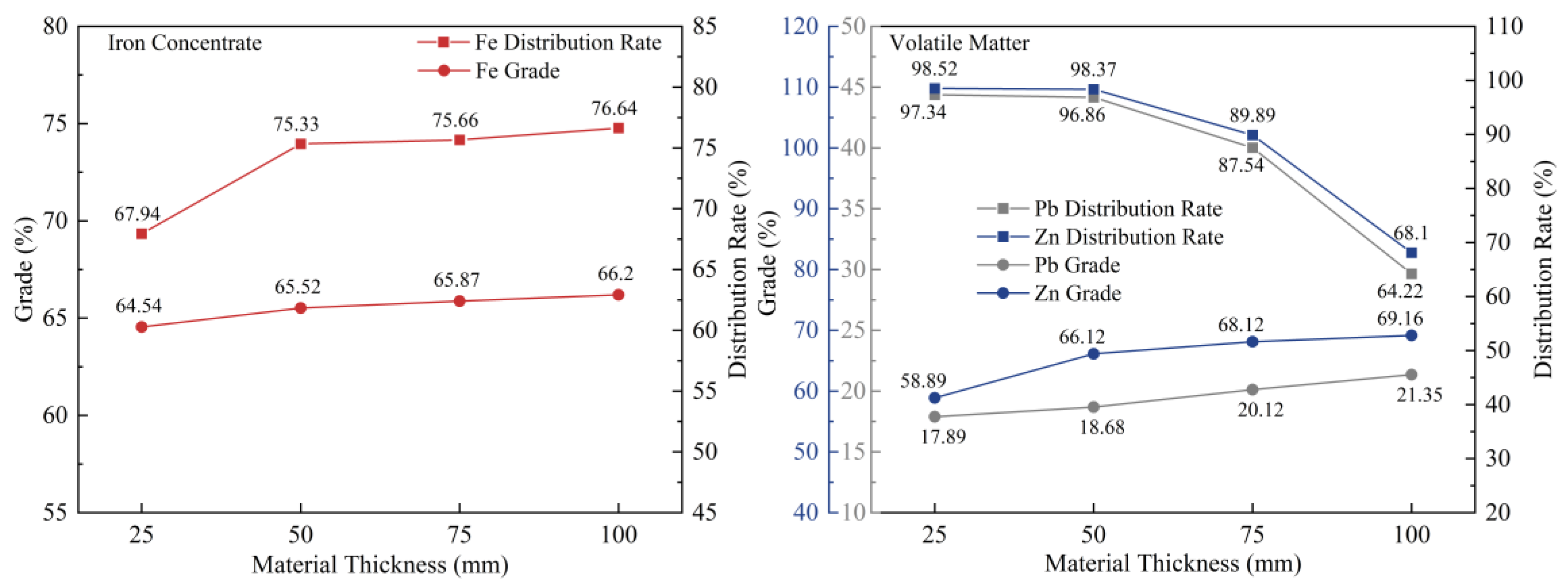
3.1.4. Material Thickness
3.1.5. Cooling Method for Roasted Ore
3.2. Roasted Ore Grinding Magnetic Separation Test
3.3. Study of Calcination Reaction Mechanism
4. Conclusions
- (1)
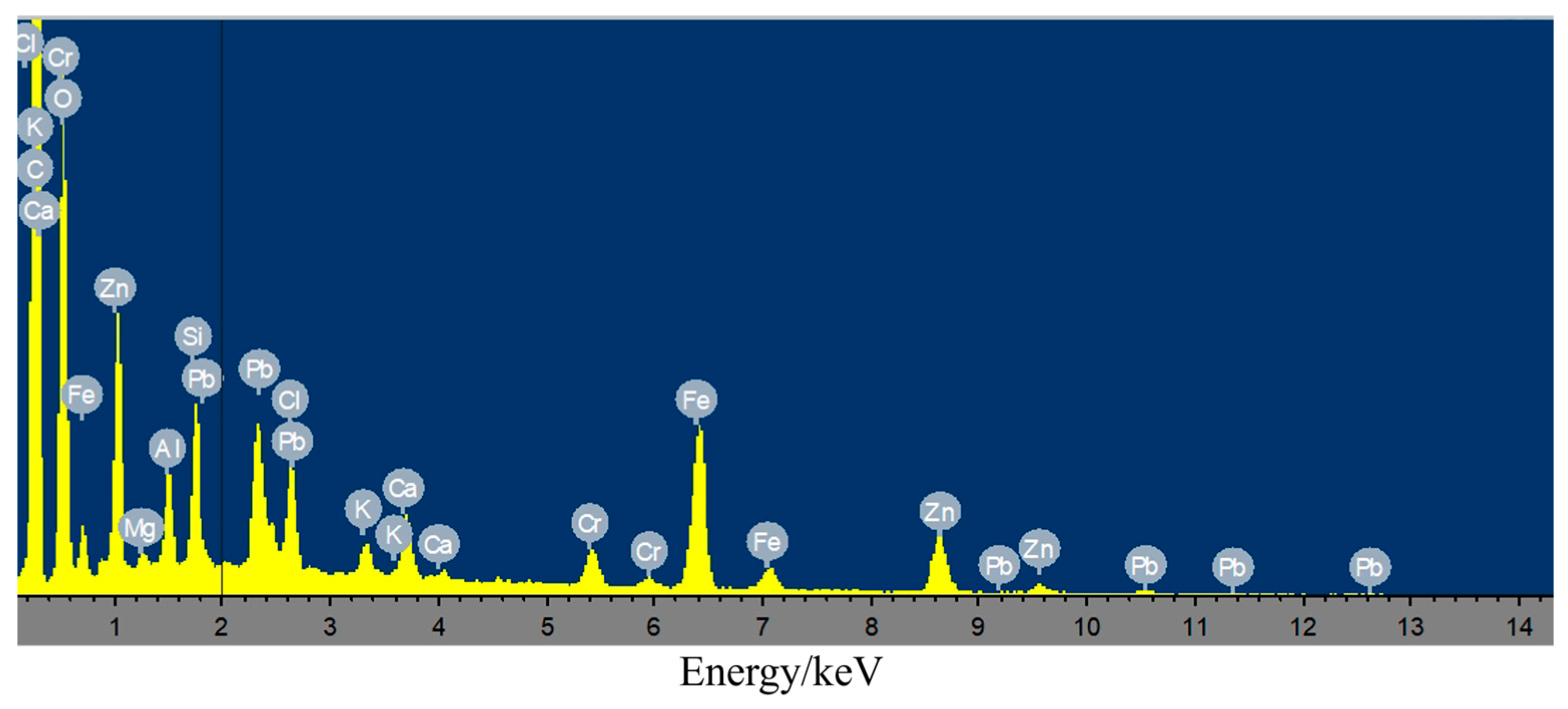
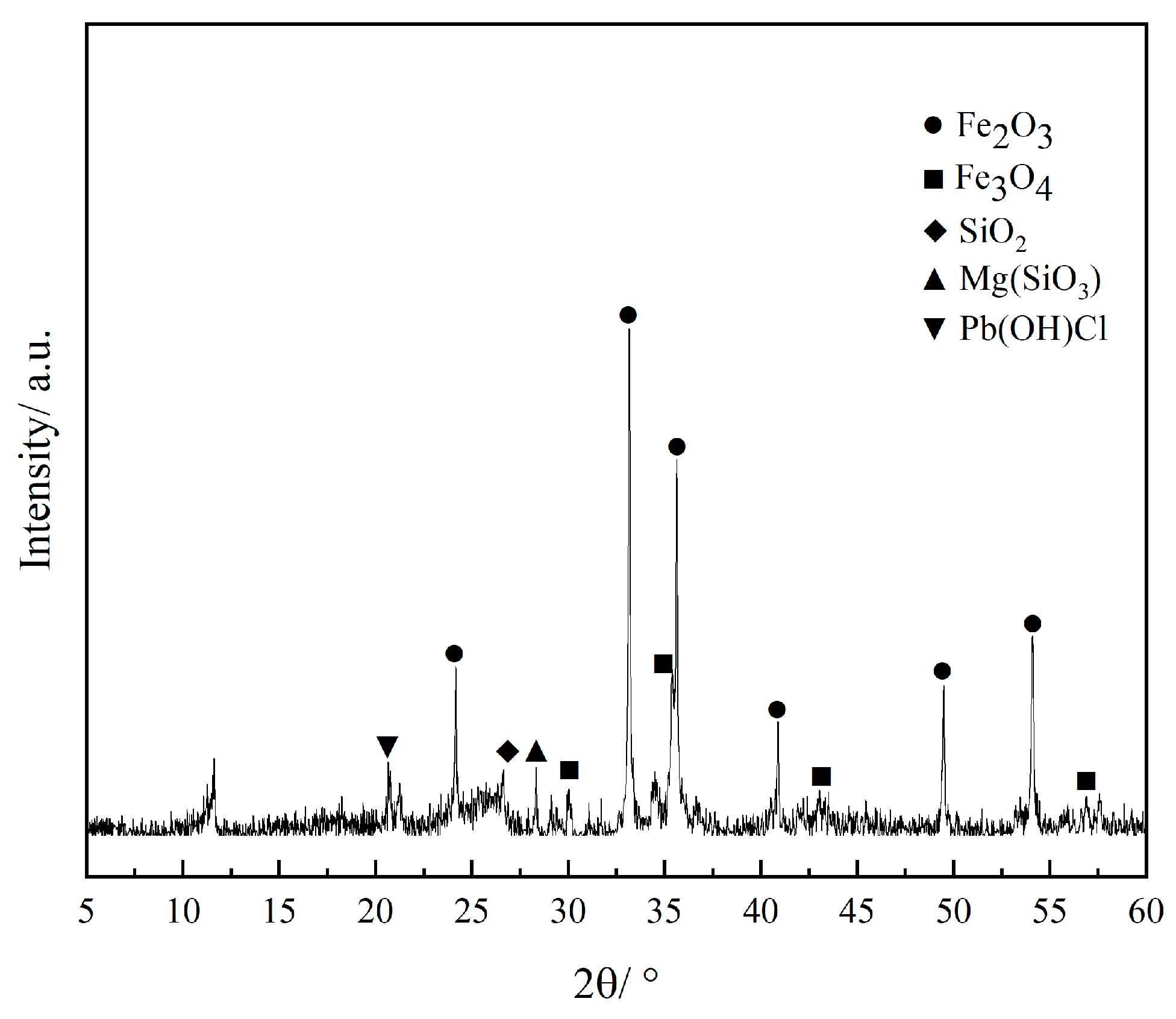
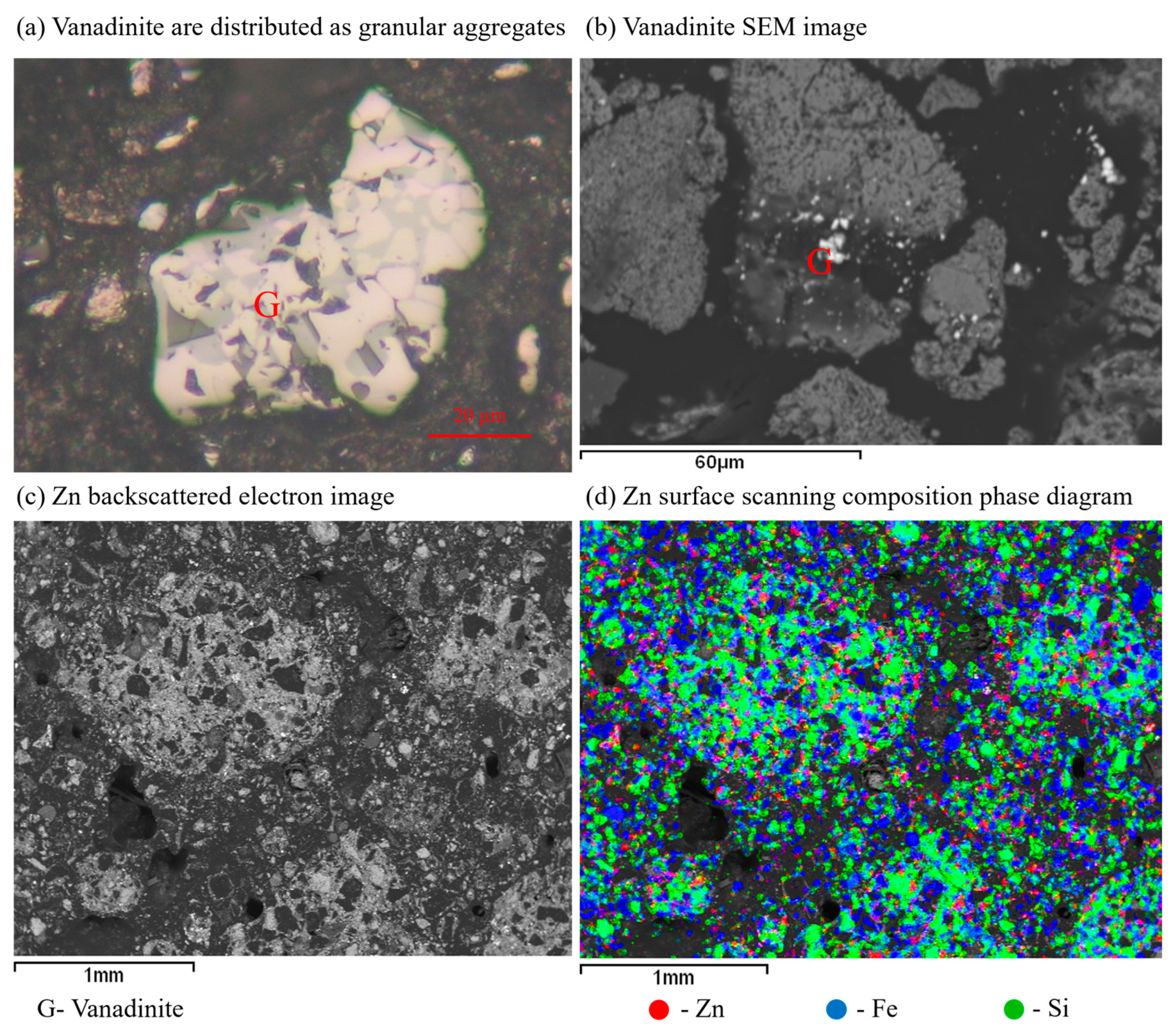
- Blast furnace gas dust mainly contains valuable elements such as iron, lead, zinc, and carbon. The iron minerals are primarily magnetite and hematite. Lead exists mainly as lead vanadate and basic lead chloride, while zinc is associated with O, S, and Fe in the form of zinc ferrite. Gas dust is an artificial ore with complex components and mineral phases, making it extremely difficult to utilize through conventional mineral processing methods.
- (2)
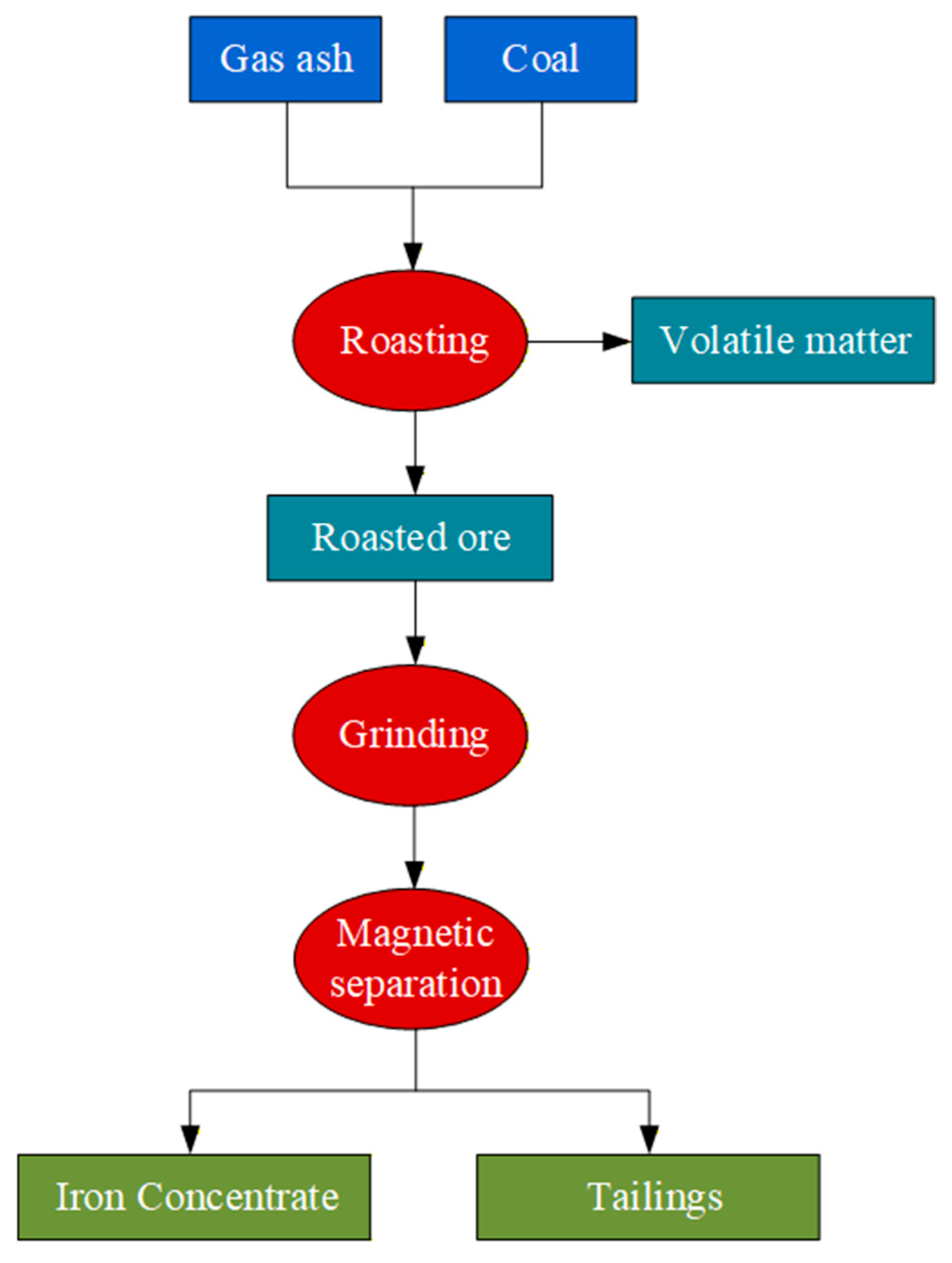
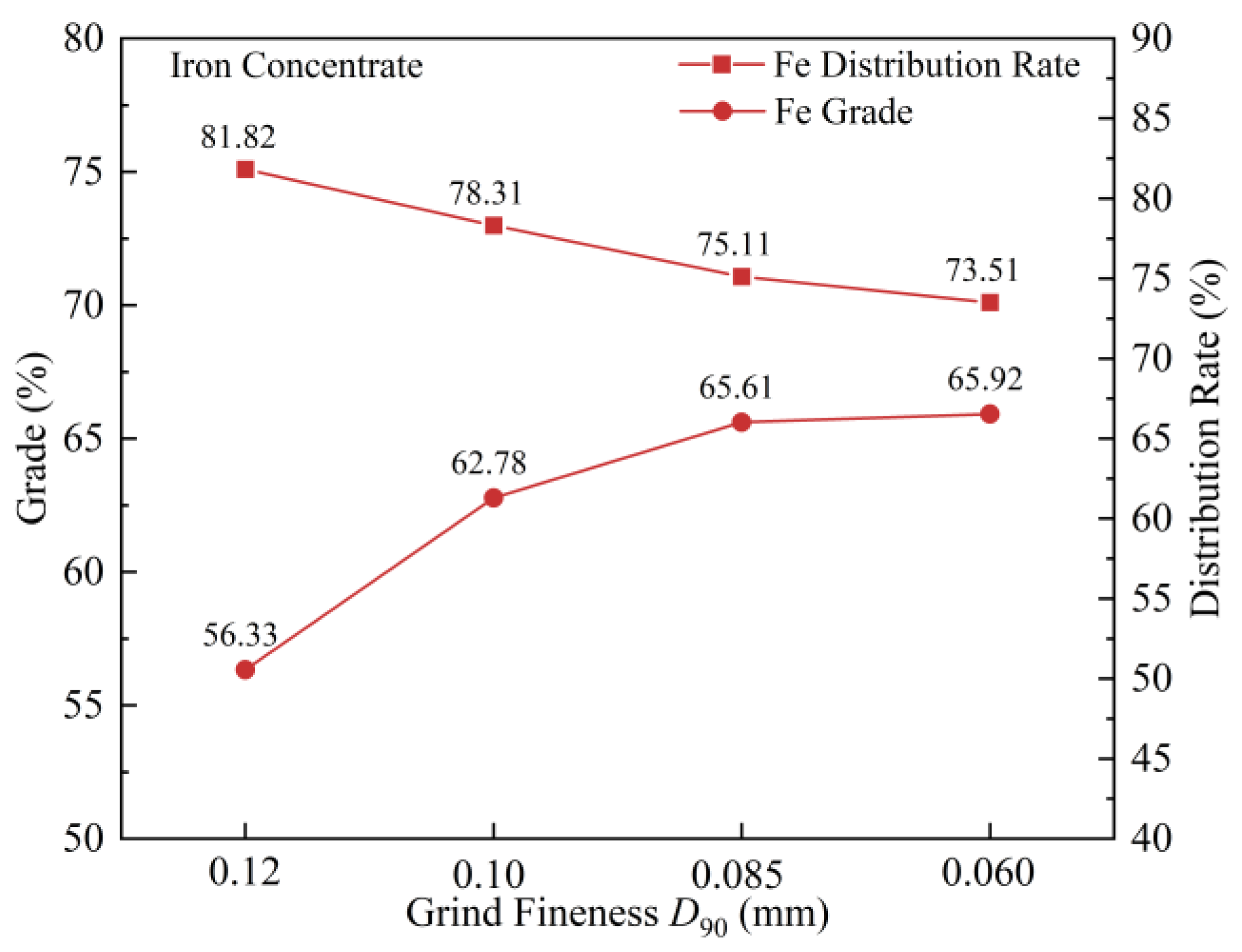
- Using a gasification reduction calcination–grinding-weak magnetic separation process, with a calcination temperature of 1150 °C, 20% anthracite as the reducing agent, and a calcination time of 2 h, the distribution ratios of Pb and Zn in the volatile matter reach 96.86% and 98.37%, respectively. When the roasted sand is ground to a particle size of D90 = 0.085 mm, an iron concentrate with an Fe grade of 65.61% can be obtained.
- (3)
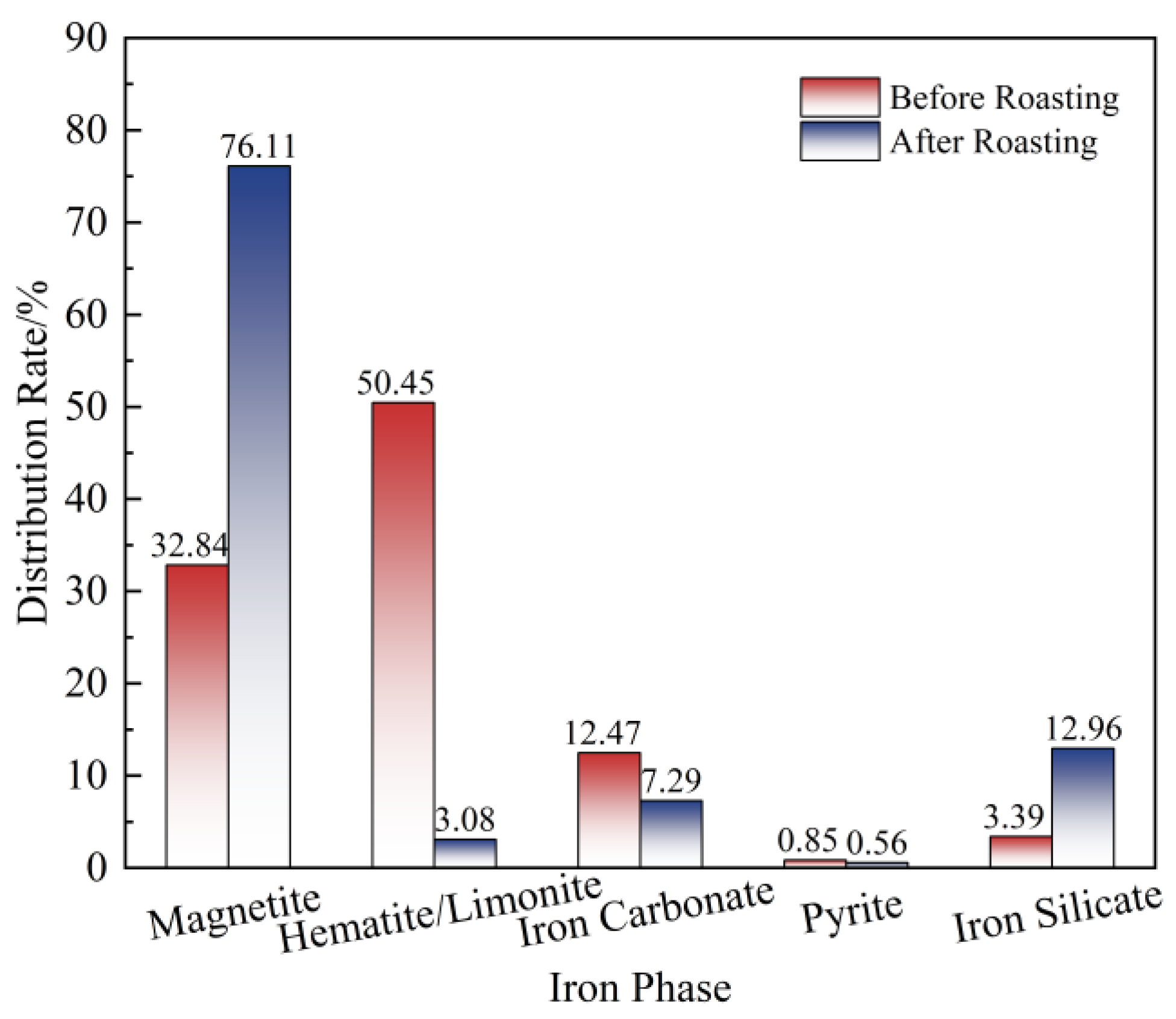
- The key to effective gasification reduction calcination is maintaining the furnace reaction atmosphere. It is essential to reduce lead and zinc oxides to metals for timely volatilization, collection, and to transform iron oxide into magnetite to avoid over-reduction. The final iron-selecting tailings can be used as an additive in cement and other construction materials. The combined selection and metallurgy process enables the efficient comprehensive utilization of blast furnace gas dust.
- (4)
- This study successfully demonstrated the technical feasibility of the integrated process at the laboratory scale. However, it must be acknowledged that the current work still has certain limitations, which provide clear directions for future research. Firstly, the static roasting method adopted in the experiments differs fundamentally from ideal industrial continuous reactors in terms of mass and heat transfer conditions. Subsequent studies should therefore focus on simulation and scale-up experiments based on dynamic systems to evaluate the engineering performance of the process. Secondly, the proposed reaction mechanism is primarily inferred from macroscopic product analysis. Future work involving systematic microstructural analysis of intermediate phases would offer more direct kinetic evidence for the phase transformation processes, thereby providing deeper insights into the intrinsic mechanisms governing reduction and volatilization behaviors.
Author Contributions
Funding
Data Availability Statement
Conflicts of Interest
References
- She, X.; Xue, Q.; Wang, J.; Kong, L. Comprehensive utilization of zinc-containing dust in iron and steel plants and comparison of related treatment processes. Ironmaking 2010, 29, 56–62. [Google Scholar]
- Wu, L.; Hao, Y.; Yue, C.; Hu, T. Resource utilization technologies and their selection of mud containing iron from iron and steel enterprises. Environ. Eng. 2016, 34, 113–117. [Google Scholar]
- Li, H.; Du, G.; Du, J.; Shi, X. Steel industry solid waste comprehensive utilization industry development status and trends. China Steel Focus 2021, 1, 116–117. [Google Scholar]
- Liu, L. Development status and suggestions of comprehensive utilization of solid waste in China’s iron and steel industry. China Resour. Compr. Util. 2021, 39, 113–116. [Google Scholar]
- Zhen, H.; Sun, Y.; Zhang, S.; Wang, Q. Comprehensive utilization of blast furnace gas sludge. China Resour. Compr. Util. 2019, 37, 79–82. [Google Scholar]
- Chang, F.; Wu, S.; Zhang, F.; Lu, H.; Du, K. Characterization of sintering dust, blast furnace dust and carbon steel electric arc furnace dust. Charact. Miner. Met. Mater. 2016, 2015, 83–90. [Google Scholar]
- Sofilić, T.; Rastovčan-Mioč, A.; Cerjan-Stefanović, Š.; Novosel-Radović, V.; Jenko, M. Characterization of steel mill electric-arc furnace dust. Adv. Waste Manag. J. Hazard Mater. 2004, 109, 139–143. [Google Scholar] [CrossRef] [PubMed]
- Machado, J.G.; Brehm, F.A.; Moraes, C.A.M.; Dos Santos, C.A.; Vilela, A.C.F.; Da Cunha, J.B.M. Chemical, physical, structural and morphological characterization of the electric arc furnace dust. J. Hazard. Mater. 2006, 136, 953–960. [Google Scholar] [CrossRef] [PubMed]
- Luo, G.; Jia, Z.; Shi, P. Study on extraction of potassium, zinc and lead from blast furnace gas ash of Baotou Steel. China Nonferrous Metall. 2024, 53, 113–124. [Google Scholar]
- Qiu, W.; Chen, C. Extraction of arsenic and zinc by coprocessing of arsenic sulfideslag and blast furnace dust. China Nonferrous Metall. 2025, 54, 149–156. [Google Scholar]
- Jiaerheng, A.; Sha, L.; Yue, Z.; Mihaguli. Brief introduction on American dangerous waster treatment technolog and application present condition. Xinjiang Environ. Prot. 2005, 27, 44–47. [Google Scholar]
- Huang, Q.; Wang, Q.; Dong, L.; Xue, Y.; Jin, D. Management and disposal of hazardous waste in USA. Environ. Prot. Sci. 2004, 30, 41–42+52. [Google Scholar]
- de Araújo, J.A.; Schalch, V. Recycling of electric arc furnace (EAF) dust for use in steel making process. J. Mater. Res. Technol. 2014, 3, 274–279. [Google Scholar] [CrossRef]
- Pishdadazar, H.; Moghissi, A.A. Hazardous waste sites in the United States. Nucl. Chem. Waste Manag. 1980, 1, 161–309. [Google Scholar] [CrossRef]
- Mbuligwe, S.E.; Kaseva, M.E. Assessment of industrial solid waste management and resource recovery practices in Tanzania. Resour. Conserv. Recycl. 2006, 47, 260–276. [Google Scholar] [CrossRef]
- Makkonen, H.T.; Heino, J.; Laitila, L.; Hiltunen, A.; Pöyliö, E.; Härkki, J. Optimisation of steel plant recycling in Finland: Dusts, scales and sludge. Resour. Conserv. Recycl. 2002, 35, 77–84. [Google Scholar] [CrossRef]
- Bai, S.; Zhang, B.; Wu, C.; Jia, G. Study on efficient utilization of BF gas slime. China Metall. 2007, 17, 40–44. [Google Scholar]
- Li, Z.; Huo, S.; Nie, Y.; Dai, Q.; Liu, S. Experimental research on recovering carbon, iron and zinc concentrate from blast furnace sludge. Conserv. Util. Miner. 2017, 206, 64–67. [Google Scholar]
- Yi, G.; Shi, Y. Fundamental properties and magnetic roasting of blast fureace dust. China Metall. 2016, 26, 29–34. [Google Scholar]
- Liu, F. Studies on the Technology of Ammonia Leaching-Extraction-Electrolyzing Zinc for Blast Furnace Ashes. Master’s Thesis, Anhui University of Technology, Ma’anshan, China, 2017. [Google Scholar]



| Component | Fe | Zn | Pb | SiO2 | CaO | MgO | Al2O3 | S | P |
|---|---|---|---|---|---|---|---|---|---|
| Content | 22.46 | 10.57 | 3.22 | 6.51 | 3.22 | 1.13 | 2.32 | 1.22 | 0.038 |
| Component | C | MnO | CuO | NiO | Cr2O3 | TiO2 | Na2O | K2O | burning loss |
| Content | 27.02 | 0.23 | 0.01 | 0.031 | 0.038 | 0.22 | 0.71 | 1.43 | 21.88 |
| Fixed Carbon | Ash Content | Volatile Matter | Moisture Content | S | P |
|---|---|---|---|---|---|
| 79.88 | 12.10 | 7.52 | 0.35 | 0.022 | 0.003 |
| Component | SiO2 | Al2O3 | CaO | MgO | Fe |
|---|---|---|---|---|---|
| Content | 44.22 | 20.36 | 19.23 | 1.22 | 5.56 |
| Cooling Method | Product | Yield (%) | Grade (%) | Distribution Rate (%) | ||||
|---|---|---|---|---|---|---|---|---|
| Pb | Zn | Fe | Pb | Zn | Fe | |||
| Furnace cooling | Iron concentrate | 24.51 | 0.07 | 0.17 | 64.76 | 0.57 | 0.39 | 71.41 |
| Tailings | 59.23 | 0.11 | 0.21 | 10.73 | 2.15 | 1.15 | 28.59 | |
| Volatile matter | 16.26 | 18.12 | 65.23 | / | 97.28 | 98.46 | / | |
| Feed | 100.00 | 3.03 | 10.77 | 22.23 | 100.00 | 100.00 | 100.00 | |
| Water quenching cooling | Iron concentrate | 25.65 | 0.08 | 0.18 | 65.52 | 0.67 | 0.43 | 75.33 |
| Tailings | 58.44 | 0.13 | 0.22 | 9.42 | 2.48 | 1.20 | 24.67 | |
| Volatile matter | 15.91 | 18.68 | 66.12 | / | 96.86 | 98.37 | / | |
| Feed | 100.00 | 3.07 | 10.69 | 22.31 | 100.00 | 100.00 | 100.00 | |
Disclaimer/Publisher’s Note: The statements, opinions and data contained in all publications are solely those of the individual author(s) and contributor(s) and not of MDPI and/or the editor(s). MDPI and/or the editor(s) disclaim responsibility for any injury to people or property resulting from any ideas, methods, instructions or products referred to in the content. |
© 2025 by the authors. Licensee MDPI, Basel, Switzerland. This article is an open access article distributed under the terms and conditions of the Creative Commons Attribution (CC BY) license.
Share and Cite
Gao, C.; Yang, H.; Xu, J.; Sai, M. Recovery of Fe, Pb and Zn from Blast Furnace Gas Ash by Intensive Calcination and Magnetic Separation Techniques. Separations 2026, 13, 10. https://doi.org/10.3390/separations13010010
Gao C, Yang H, Xu J, Sai M. Recovery of Fe, Pb and Zn from Blast Furnace Gas Ash by Intensive Calcination and Magnetic Separation Techniques. Separations. 2026; 13(1):10. https://doi.org/10.3390/separations13010010
Chicago/Turabian StyleGao, Chunqing, Huifen Yang, Jian Xu, and Mingyu Sai. 2026. "Recovery of Fe, Pb and Zn from Blast Furnace Gas Ash by Intensive Calcination and Magnetic Separation Techniques" Separations 13, no. 1: 10. https://doi.org/10.3390/separations13010010
APA StyleGao, C., Yang, H., Xu, J., & Sai, M. (2026). Recovery of Fe, Pb and Zn from Blast Furnace Gas Ash by Intensive Calcination and Magnetic Separation Techniques. Separations, 13(1), 10. https://doi.org/10.3390/separations13010010