Introduction
Ischemic stroke is one of the leading causes of death and disability-adjusted life years (DALYs) [
1]. It is caused by multiple mechanisms including cardiac diseases, atherosclerosis, cervical artery dissection and microangiopathy. On the other hand, suicide too is a major public health issue, being the 15th leading cause of death worldwide [
2] and self-harm accounting for a significant number of DALYs. Suicide attempts are approximately 20 times more frequent than completed suicides [
2] and are the most important risk factor for subsequent suicides [
3,
4,
5,
6]. Although there is a debate about the exact proportion [
7], most suicides are related to mental disorders [
8], with mood disorders including bipolar disorders, substance use related disorders, schizophrenia and personality disorders being the most common diagnoses. Methods of suicide vary with time and between countries [
2]. In 2021 in Switzerland, men attempted suicide by hanging (35%), firearm (20%), jumping from height (12%) or the tracks (11%), while women used hanging (23%), drug poisoning (22%), jumping from height (18%) or the tracks (14%) [
9]. Whereas suicide, suicide attempts and depression are well studied following a stroke, strokes following a suicide attempt (SFSA) are rarely reported. In total, we identified 16 cases in the worldwide literature [
10,
11,
12,
13,
14,
15,
16,
17,
18,
19,
20,
21,
22,
23,
24,
25].
Given the limited information available, more data is needed to assess the quality of the current evaluation and management of SFSA at our institution and elsewhere. We report a consecutive series of SFSA over 18 years in a single University hospital adding the published cases from the literature to assess the clinical presentation, mechanisms, quality of management, and outcome of patients with SFSA in ours and other institutions.
Methods
We retrospectively reviewed the discharge diagnoses of all hospitalized patients between 2003 and 2021 using the Acute Stroke Registry and Analysis of Lausanne (ASTRAL), the associated ASTRAL-E (includes transient ischemic attacks [TIAs], subacute strokes, intracerebral hemorrhage) and the electronic hospital archives. ASTRAL is a prospective cohort of all acute ischemic stroke patients admitted to the stroke unit and/or intensive care unit of the Centre Hospitalier Universitaire Vaudois (CHUV) within 24 h of the last known well [
26]. Stroke was defined according to the WHO definition as “a new syndrome of rapidly developing clinical symptoms and/or signs of focal disturbance of cerebral function lasting longer than 24 h with no apparent cause other than vascular origin, regardless of whether infarction was evident on cerebral radio imaging” [
27]. We defined SFSA as strokes within seven days following a suicide attempt and compared them to all other consecutive patients from ASTRAL. To ascertain that no SFSA were missed, we searched our electronic medical records combining the terms “stroke” or “TIA” with “suicide attempt” or “suicide”.
Demographics, vascular risk factors, and acute clinical and radiological findings were collected, including the type of suicide attempt, mechanism of stroke, initial clinical deficit and findings on neurovascular imaging. Psychiatric comorbidities were considered present if an ICD-10 diagnosis used in the Elixhauser Comorbidity Index “depression” or “psychosis” was documented in the medical records. Clinical outcome measured by the modified Rankin Scale (mRS) was determined at seven days and three months after stroke onset.
In addition, we performed a literature search on Medline from 1964 onwards using the terms “suicide attempt”, “stroke”, “hanging”, “near-drowning”, “hara-kiri”, “toxic ingestion”, “carotid dissection”, “vene/venous section” in English, as well as screening the references of identified articles for further reports in any language. Native-speaking physicians extracted data from articles published in languages other than English. National Institutes of Health Stroke Scale (NIHSS) and mRS were reconstructed from the clinical descriptions in the identified cases.
We calculated the SFSA frequency among all acute ischemic stroke patients during the observation period in ASTRAL and in all suicide attempts visiting our emergency department. Then we combined available data from our SFSA patients with those published and compared them with all non-SFSA patients from ASTRAL analyzing the baselines characteristics of both groups. Continuous variables were described as median ± interquartile range and categorical variables were expressed as percentages. Given the small number of patients in the SFSA group, only descriptive comparisons were reported.
The study was performed according to the guidelines of the cantonal ethics commission for research on humans of the Canton of Vaud. Although patients received a written information from the hospital that their routinely collected clinical data may be used for quality and scientific purposes, a patient’s decision to opt out from data analysis did not need to be considered because this was a quality assurance project of the diagnostic/treatment practice in our institutions. Such analyses aiming at the evaluation of treatment efficiency and safety for quality purposes fall outside the Swiss Human Research Act of 2011.
Results
During the observational period, six out of 6,767 acute ischemic strokes (0.0009%), and six out of 14,587 suicide attempts (0.0004%) were identified as SFSA in our center. We excluded a 7th patient with a suicide attempt with a benzodiazepine overdose for not fulfilling our definition of SFSA.
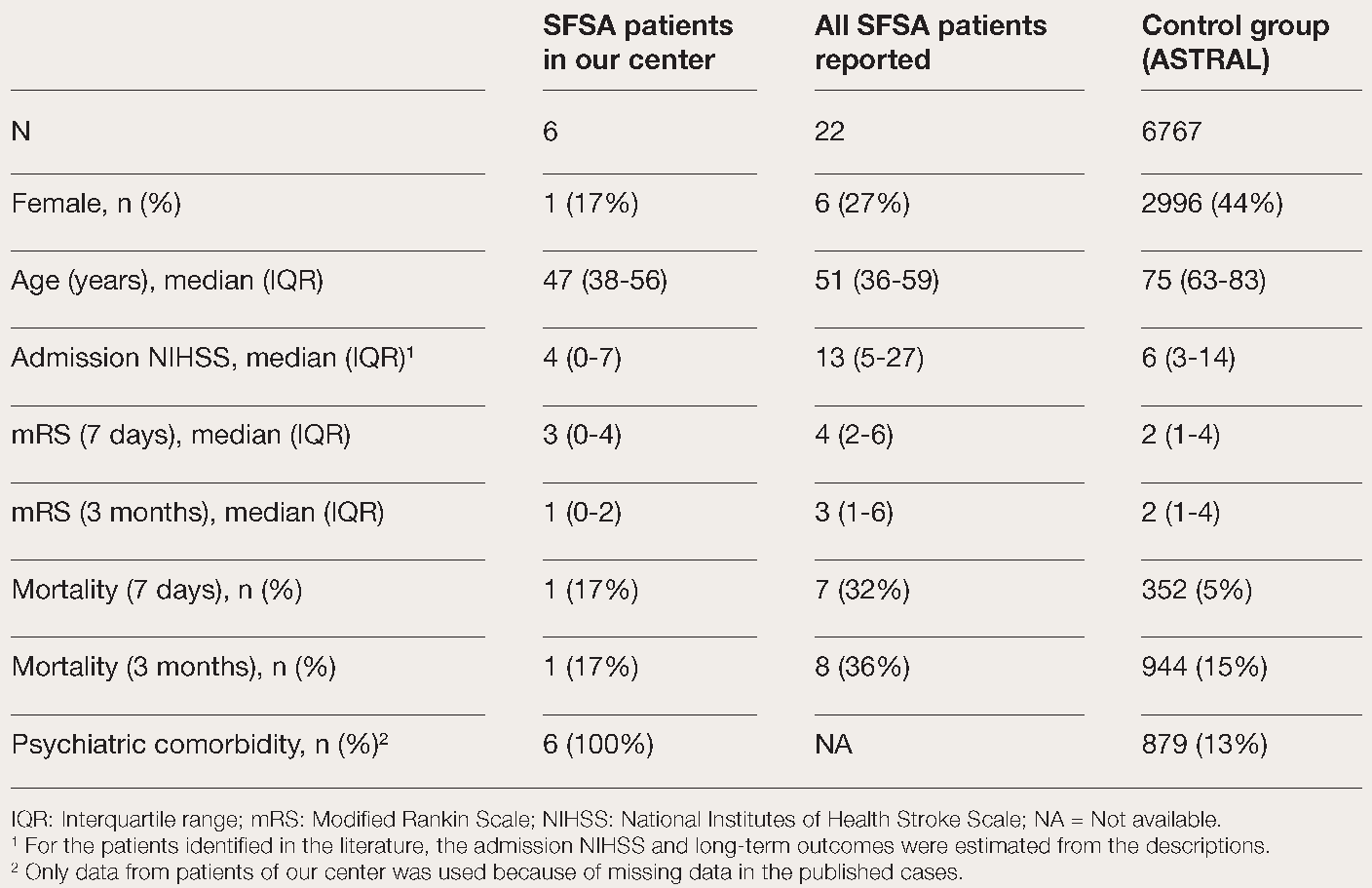
Among the six patients included, five were male, with a median age of 47 years. The initial NIHSS score was four (median, range 0–7). The patients had few stroke risk factors and all of them had a history of psychiatric disorders (
Table 1).
The mechanisms leading to stroke varied and were linked to the type of suicide attempt. Two suicide attempts were by hanging, three by hemorrhage (two venesection and one arterial section—Hara-kiri), and one by drowning in a lake. The drowning patient (patient #1) had an embolus from insufficiently anticoagulated atrial fibrillation (AF) as the presumed stroke mechanism occurring simultaneously with the suicide attempt. In the hanging attempts (patients #2 and #5), the stroke mechanism was carotid dissection, whereas in the patients with extensive hemorrhage (patients #3, #4 and #6), several stroke mechanisms could be suspected: A) hypotension due to hypovolemia with border-zone infarction, B) activation of the coagulation cascade (e.g., factor VII expression) due to acute bleeding with systemic hypercoagulability, and/or C) hypothetic cardiac arrhythmia related to the activation of the coagulation cascade due to acute blood loss leading to thromboembolic stroke.
Below there is a summary of the circumstances of each SFSA patient (for further details see
Table 2).
Patient #1: Attempted drowning in a lake. The patient was found comatose, hypothermic (26.8 °C) and with a Glasgow Coma Scale of 8, leading to intubation. A moderate left hemisyndrome was not registered. After extubation on the next day, the diagnosis of a right deep middle cerebral artery (MCA) embolic stroke was made using computed tomography. The suicide attempt followed the diagnosis of a TIA due to a new onset AF five days earlier. A vitamin K antagonist had been started (international normalized ratio [INR] = 1.1 on admission). The likely stroke mechanism was AF related to insufficient anticoagulation. There was no psychiatric diagnosis except for an adjustment disorder following the TIA diagnosis.
Patient #2: Found hanging on a rope from a tree, probably after a few minutes. Right embolic MCA stroke from right internal carotid artery dissection. Diagnosed with recurrent major depressive disorder (MDD).
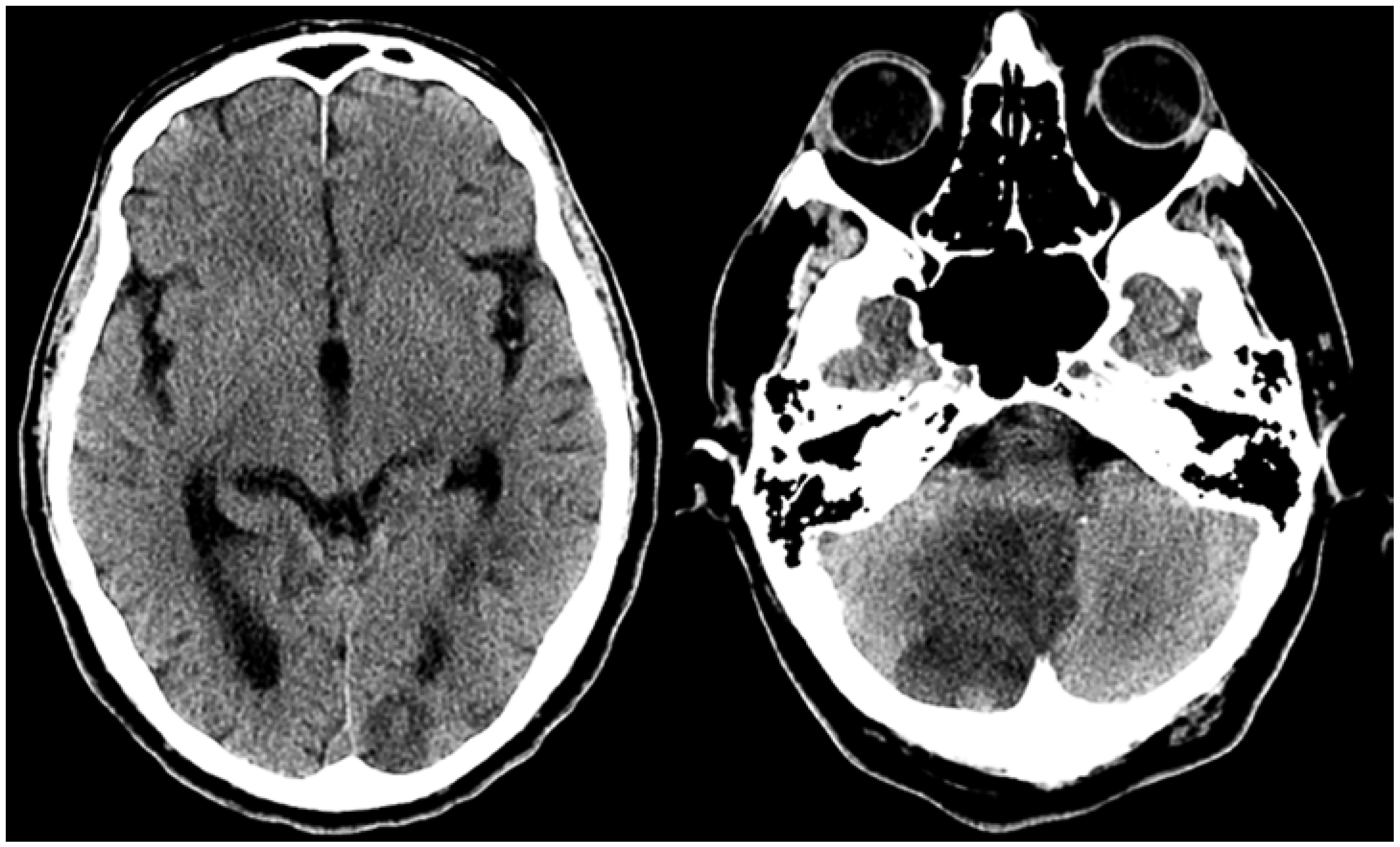
Patient #3: Venesection in the neck, both wrists and legs with a kitchen knife. The patient called the daughter afterwards. Suffered multilevel posterior circulation strokes with a fall of hemoglobin from 155 to 109. As indicated before, in patients with extensive hemorrhage (patients #3 and #4), several stroke mechanisms can be suspected.
Figure 1 shows the neuroimaging for patient #3. The patient was diagnosed with recurrent MDD with psychotic features and a not otherwise specified personality disorder.
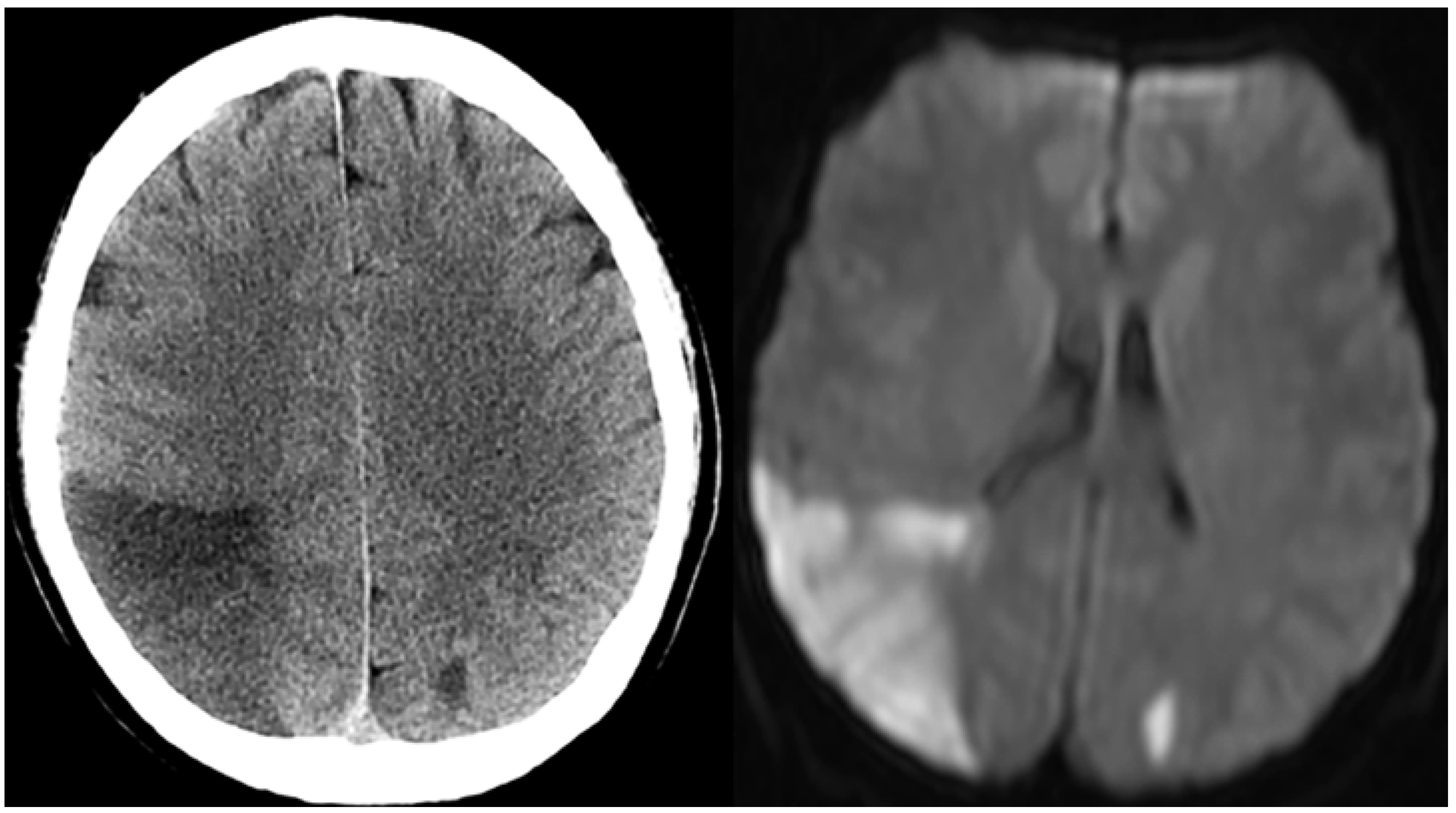
Patient #4: Hara-kiri-like self-stabbing with a kitchen knife resulting in multiple thoracic and abdominal injuries requiring several blood transfusions. Potential stroke mechanisms after extensive hemorrhage apply. Acute neuroimaging showed bihemispheric strokes (
Figure 2). The patient was diagnosed with MDD with psychotic features. The patient committed in-hospital suicide by defenestration after having been transferred from the intensive care unit to the visceral surgery division four days after the initial suicide attempt.
Patient #5: Found hanging from a balcony after five minutes. Suffered from occlusive dissection of the left common and internal carotid artery. Patient was suspected to have a bipolar disorder.
Patient #6: Self-inflicted stab resulting in a cervicotomy and phlebotomy of the palmar side of the left wrist. Cardiac arrest with low-flow duration of five minutes. Suffered from multiple bilateral ischemic lesions in the parieto-occipital territories and the junctional regions. The patient was diagnosed with an acute and transient psychotic disorder combined with cannabis and cocaine dependence.
One patient exhibited clinical signs of post-anoxic encephalopathy, which was confirmed by a subacute magnetic resonance imaging. None of the patients underwent thrombolysis. All patients received 100 mg of acetylsalicylic acid following confirmation of the stroke. Patient #1 (confirmed AF) received long-term and patient #5 transitory oral anticoagulation, respectively.
The overall clinical outcome was positive, with a mRS of 0 at three months in four patients. Patient #4, who committed in-hospital suicide had had no major neurologic deficit at that time. Patient #6 had a Heidelberg’s anti-step splint for walking (mRS of 1).
Psychiatric comorbidity included acute depressive episodes (n = 2, one after a recent TIA), recurrent depressive disorder (n = 2, one with a previous suicide attempt), and acute and transient psychotic disorder (n = 1). Patient #5 was not formally evaluated by a psychiatrist but had a suspected bipolar disorder.
After reviewing the literature, we found 16 other cases from 1989 to 2023 [
10,
11,
12,
13,
14,
15,
16,
17,
18,
19,
20,
21,
22,
23,
24,
25]. As in our case series, variable suicide methods led to different types of strokes (
Table 3).
When comparing all 22 SFSA patients to the non-SFSA patients in the ASTRAL registry, we found the SFSA patients to be significantly younger (median age of 51 vs. 75 years), with 83% being male. SFSA patients also had higher admission NIHSS scores (median of 13 vs. 6) and higher mortality rates at three months (36 vs. 15%). The six patients in our center exhibited a higher incidence of psychiatric comorbidities. The most common stroke mechanism was carotid dissection due to hanging (41%), but several other stroke mechanisms have been identified or were suspected.
Discussion
This retrospective review of SFSA in a single institution and in the literature shows that this association is exceedingly rare and that the underlying stroke mechanisms are heterogeneous. Given that this is, in part, a quality assurance project, compared to other stroke patients, patients with SFSA are younger, most of them are male and have a higher incidence of psychiatric comorbidities. The observed three months mortality rate was about two times higher in SFSA patients compared to the older control group.
Various mechanisms of SFSA have been identified, with carotid artery dissection from hanging being the most frequent. Given that hanging is the most common method of suicide reported in Switzerland, it is likely that cervical artery dissection is the most prevalent mechanism of stroke among the studied population. During the observation period, out of the 14,587 suicide attempts documented in our center, only six patients were identified with SFSA. This data underscores the rarity of stroke following a suicide attempt.
Regarding psychiatric comorbidities, we found a significant difference between the observed cases in our center and the ASTRAL database. All six patients suffered from a significant psychiatric illness, compared to only 12.4% in non-SFSA stroke patients. This difference can be explained by the fact that psychiatric disorders are the most common cause for completed and attempted suicide including severe suicide attempts, defined as a suicide attempt that “would have been fatal had it not been for rapid and effective pre-hospital care or other emergency treatment, or in some cases, chance” [
28].
The neurological outcome of our six patients was mostly good. However, the overall three months mortality in all 22 reported cases was significantly higher compared to other stroke patients, despite the lower age. One of our patients committed suicide shortly after the suicide attempt, and the seven other patients who died according to the literature, did so from complications following the stroke, that would be massive cerebral infarction of the territory of both anterior and left middle cerebral arteries [
10,
18,
20,
22,
23,
25], diffuse encephalomalacia, and hemorrhagic alveolar and interstitial lung edema [
12]. This confirms the potential traumatic severity of suicide attempts.
In conclusion, SFSA is exceedingly rare, but presents a unique clinical challenge due to the complex etiology involving both physical and psychiatric factors. Compared to general stroke patients, those with SFSA seem to be younger, predominantly male, have more severe strokes, and a higher medium-term mortality. The most common cause of SFSA in our study group was carotid artery dissection due to hanging, reflecting the high prevalence of this suicide method in Switzerland. Despite the elevated mortality rate, the possibility of favorable neurological outcomes for SFSA patients exists, indicating that with timely and suitable intervention, recovery may be achievable. Considering the rarity of SFSA relative to the total number of suicide attempts, there is a need for increased awareness among healthcare professionals to ensure that these cases are recognized and managed appropriately.