

Pharmakotherapie der Alkoholabhängigkeit †

Summary
Einleitung
Neurobiologische Grundlagen

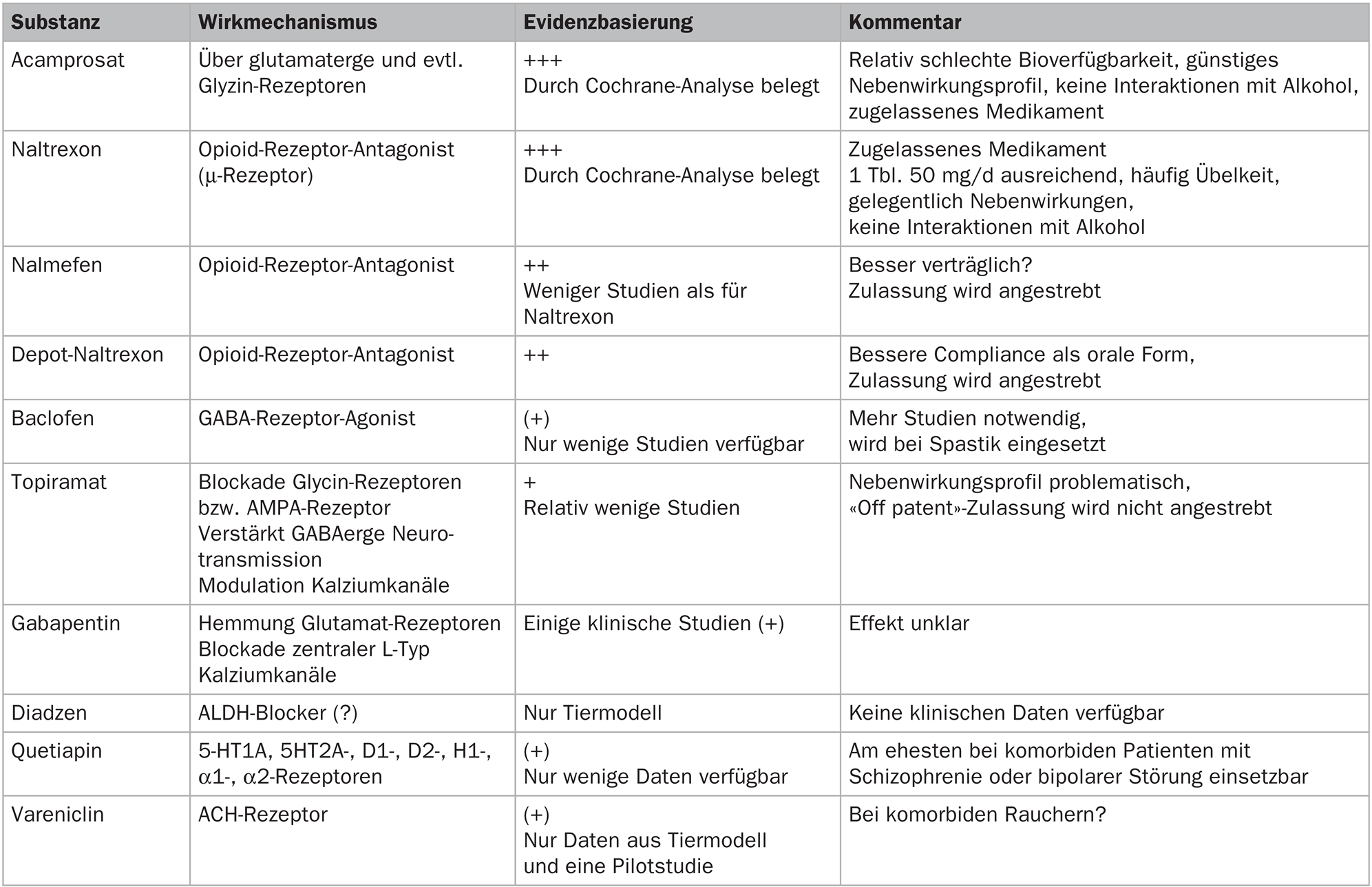 |
Acamprosat
Präklinische Untersuchungen
Klinische Evidenz
Opiat-Antagonisten
Klinische Studien
Depot-Naltrexon
Nalmefen
Baclofen
Topiramat
Gabapentin
Zusammenfassung
- a)
- Promotion einer Abstinenz;
- b)
- Rückfallprophylaxe;
- c)
- Trinkmengenreduktion bzw. Vermittlung risikoärmeren Konsums;
- d)
- Stabilisierung des risikoärmeren Konsums.
Literatur
- Soyka, Kuefner H (2008) Alkoholismus – Missbrauch und Abhängigkeit, (6. Auflage). Stuttgart, Thieme.
- Berglund M, Thelander S, Jonsson E (2003) Treating Alcohol and Drug Abuse. An Evidence Based Review. Weinheim: Wiley-VCH.
- Schmidt P, Köhler J, Soyka M. Evidenzbasierte Leitlinien in der stationären Behandlung alkoholabhängiger Patienten: Das Leitlinienprogramm der Deutschen Rentenversicherung Bund. Suchtmed. 2007;9:53–64.
- Adcock RA, Thangavel A, Whitfield-Gabrieli S, Knutson B, Gabrieli JD. Reward-motivated learning: mesolimbic activation precedes memory formation. Neuron. 2006;50(3):507–17.
- Basavarajappa BS, Hungund BL. Role of the endocannabinoid system in the development of tolerance to alcohol. Alcohol Alcohol. 2005;40: 156–24.
- Foster Olive M. Metabotropic Glutamate Receptor Ligands as Potential Therapeutics for Addiction. Current Drug Abuse Reviews. 2009;2:83–98.
- Gianoulakis C. Endogenous opioids and addiction to alcohol and other drugs of abuse. Curr Top Med Chem. 2009;9(11):999–1015.
- Heilig M, Egli M. Pharmacological treatment of alcohol dependence: target symptoms and target mechanisms. Pharmacol Ther. 2006;111: 855–76.
- Heilig M, Koob GF. A key role for corticotrophin-releasing factor in alcohol dependence. Tends Neusosci. 2008;30:399–406.
- Herz A. Endogenous opioid systems and alcohol addiction. Psychopharmacology. (Berl) 1997;129(2):99–111.
- Koob GF. Alcoholism: allostasis and beyond. Alcohol Clin Exp Res. 2003;27:232–43.
- Maccionini P, Colombo G. Role of the GABAB receptor in alcohol-seeking and drinking behaviour. Alcohol. 2009;43:555–8.
- Vengeliene V, Bilbao A, Molander A, Spanagel R. Neuopharmacology of alcohol addiction. Br J Pharmacol. 2008;154:299–315.
- Mayo-Smith MF, et al. Pharmacological management of alcohol withdrawal. A meta-analysis and evidence-based practice guideline. JAMA. 1997;278:144–51.
- Mayo-Smith MF, Breecher LH, Fischer TL, et al. Management of alcohol withdrawal delirium. An evidence-based practice guideline. Arch Intern Med. 2004;164:1405–12.
- Soyka M, Kranzler HR, Berglund M, Gorelick D, Hesselbrock V, Johnson BA, et al. World Federation of Societies of biological Psychiatry (WFSBP) Guidelines for Biological Treatment of Substance Use and Related Disorders, Part 1: Alcoholism. World J Biol Psychiatry. 2008;9: 6–23.
- Feltenstein MW, See RE. The neurocircuitry of addiction: an overview. Br J Pharmacol. 2008;154:261–74.
- Petrakis IL. A rational approach to the pharmacotherapy of alcohol dependence. J Clin Psychopharmacol. 2006;Suppl 1:S3–S12.
- Weiss F, Porrino LJ. Behavioral neurobiology of alcohol addiction: recent advances and challenges. J Neurosci. 2002;22:3332–7.
- Economidou D, Mattioli L, Cifani C, Perfumi M, Massi M, Cuomo V, et al. Effect of the cannabiniod CB1 receptor antagonist SR-141716A on ethanol self-administration and ethanol-seeking behaviour in rats. Psychopharmacology. 2006;183:394–403.
- Lingford-Hughes A, Reid AG, Myers J, Feeney A, Hammers A, Taylor L, et al. (2010) A (11c) Ro 15 45 13 PET study suggests that alcohol dependence in man is associated with reduced (alpha) 5 benzodiazepine receptors in limbic regions. J Psychopharmacol 2010 (in Press).
- Edenberg HJ, Dick DM, Xuei X, Tian H, Almasy L, Bauer LO, et al. Variations in GABRA 2, encoding the 2 subunit of the GABA (A) receptor, are associated with alcohol dependence and with brain oscillations. Am J Genet. 2004;74:705–14.
- Dick DM, Plunkett J, Wetherill LF, Xuei X, Goate A, Hesselbrock V, et al. Association between GABRA1 and drinking behaviors in the Collaborative Study on the Genetics of Alcoholism sample. Alcohol Clin Exp Res. 2006;30:1101–10.
- Soyka M, Preuss UW, Hesselbrock V, Zill P, Koller G, Bondy B. GABA-A2 receptor subunit gene (GABRA2) polymorphisms and risk for alcohol dependence. J Psychiatr Res. 2008;42:184–91.
- Fuller R, Branchey L, Brightwell D, et al. Disulfiram treatment of alcoholism. JAMA. 1986;256:1449–55.
- Mann K, Kiefer F, Spanagel R, Littleton J. Acamprosate: recent findings and future research directions. Alcohol Clin Exp Res. 2008;32(7): 1105–10.
- Cano-Cebrian MJ, Zornoza-Sabina T, Guerri C, Polache A, Granero L. Acamprosate blocks the increase in dopamine extracellular levels in nucleus accumbens evoked by chemical stimulation of the ventral hippocampus. Naunyn Schmiedebergs Arch Pharmacol. 2003;368(4):324–7.
- Chau P, Stomberg R, Fagerberg A, Soderpalm B, Ericson M. Glycine receptors involved in acamprosate’smodulation of accumbal dopamine levels: an in vivo microdialysis study. Alcohol Clin Exp Res. 2010;34:32–8.
- Dahchour A, De Witte P. Ethanol and amino acids in the central nervous system: assessment of the pharmacological actions of acamprosate. Prog Neurobiol. 2000;60:343–62.
- Heyser CJ, Moc K, Koob GF. Effects of naltrexone alone and in combination with acamprosate on the alcohol deprivation effect in rats. Neuropsychopharmacology. 2003;28(8):1463–71.
- Lee MR, Hinton DJ, Wu J, Mishra PK, Port JD, Macura SI, et al. Acamprosate reduces ethanol drinking behaviors and alters the metabolite profile in mice lacking ENT1. Neurosci Lett. 2010;490:90–5.
- Littleton J. Acamprosate in alcohol dependence: how does it work? Addiction. 1995;90(9):1179–88.
- Spanagel R, Pendyala G, Abarca C, Zghoul T, Sanchis-Segura C, Magnone MC, et al. The clock gene Per2 influences the glutamatergic system and modulates alcohol consumption. Nat Med. 2005;11(1): 35–42.
- Bolo N, Nedelec JF, Muzet M, De Witte P, Dahchour A, Durbin P, et al. Central effects of acamprosate: part 2. Acamprosate modifies the brain in-vivo proton magnetic resonance spectrum in healthy young male volunteers. Psychiatry Res. 1998;82(2):115–27.
- Umhau JC, Momenan R, Schwandt ML, Singley E, Lifshitz M, Doty L, et al. Effect of acamprosate pn magnetic resonance spectoscopy measures of central glutamate in detoxified alcohol-dependent individuals: a randomized controlled experimental medicine study. Arch Gen Psychiatry. 2010;67:1069–77.
- Vengeliene V, Leonardi-Essmann F, Sommer WH, Marston HM, Spanagel R. Glycine transporter-1 blockade leads to persistently reduced relapse-like alcohol drinking in rats. Biol Psychiatry. 2010;68:704–11.
- Miyamoto E. Molecular mechanism of Neuronal Plasticity: Induction and Maintenance of Long-Term Potentiation in the Hippocampus. J Pharmacol Sci 2006;100:433–42.
- Nicoll RA, Malenka RC. Expression Mechanism Underlying NMDA Receptor-Dependent Long-Term Potentiation. Ann NY Acad Sci. 2009; 868:515–25.
- Rösner S, Hackl-Herrwerth A, Leucht S, Lehert P, Vecchi S, Soyka M. Acamprosate for alcohol dependence. Cochrane Database Syst Rev. 2010 Sep 8; 9 (CD004332).
- Sass H, Soyka M, Mann K, Zieglgansberger W. Relapse prevention by acamprosate. Results from a placebo-controlled study on alcohol dependence. Arch Gen Psychiatry. 1996;53(8):673–80.
- Whitworth AB, Fischer F, Lesch OM, Nimmerrichter A, Oberbauer H, Platz T, et al. Comparison of acamprosate and placebo in long-term treatment of alcohol dependence. Lancet. 1996;347(9013):1438–42.
- Baltieri DA, De Andrade AG. Acamprosate in alcohol dependence: a randomized controlled efficacy study in a standard clinical setting. J Stud Alcohol. 2004;65(1):136–9.
- Barrias J, Chabac S, Ferreira L, Fonte A, Potgieter A, Teixeira de Sousa E. Acamprosate: multicenter Portuguese efficacy and tolerance evaluation study. Psiquiatria Clinica. 1997;18:149–60.
- Besson J, Aeby F, Kasas A, Lehert P, Potgieter A. Combined efficacy of acamprosate and disulfiram in the treatment of alcoholism: a controlled study. Alcohol Clin Exp Res. 1998;22(3):573–9.
- Chick J, Howlett H, Morgan MY, Ritson B. United Kingdom Multicentre Acamprosate Study (UKMAS): a 6-month prospective study of acamprosate versus placebo in preventing relapse after withdrawal from alcohol. Alcohol Alcohol. 2000;35(2):176–87.
- Gual A, Lehert P. Acamprosate during and after acute alcohol withdrawal: a double-blind placebo-controlled study in Spain. Alcohol Alcohol. 2001; 36(5):413–8.
- Kiefer F, Jahn H, Tarnaske T, Helwig H, Briken P, Holzbach R, et al. Comparing and combining naltrexone and acamprosate in relapse prevention of alcoholism: a double-blind, placebo-controlled study. Arch Gen Psychiatry. 2003;60(1):92–9.
- Mason BJ, Goodman AM, Chabac S, Lehert P. Effect of oral acamprosate on abstinence in patients with alcohol dependence in a double-blind, placebo-controlled trial: the role of patient motivation. J Psychiatr Res. 2006;40(5):383–93.
- Anton RF, O’Malley SS, Ciraulo DA, Cisler RA, Couper D, Donovan DM, et al. Combined pharmacotherapies and behavioral interventions for alcohol dependence: the COMBINE study: a randomized controlled trial. JAMA. 2006;295(17):2003–17.
- Namkoong K, Lee BO, Lee PG, Choi MJ, Lee E. Acamprosate in Korean alcohol-dependent patients: a multi-centre, randomized, double-blind, placebo-controlled study. Alcohol Alcohol. 2003;38(2):135–41.
- Froehlich JC, Harts J, Lumeng L, Li TK: Naloxone attenuates voluntary ethanol intake in rats selectively bred for high ethanol preference. Pharmacol Biochem Behav. 1990; 35(2):385–90.
- Froehlich JC, Harts J, Lumeng L, Li TK. Naloxone attenuation of voluntary alcohol consumption. Alcohol Alcohol Suppl 1987;1:333-7.
- Froehlich JC, Li TK. Recent developments in alcoholism:opioid peptides. Recent Dev Alcohol. 1993;11:187–205.
- Holter SM, Spanagel R. Effects of opiate antagonist treatment on the alcohol deprivation effect in long-term ethanol-experienced rats. Psychopharmacology. (Berl) 1999;145(4):360–9.
- Matsuzawa S, Suzuki T, Misawa M, Nagase H. Different roles of mu-, delta- and kappa-opioid receptors in ethanol-associated place preference in rats exposed to conditioned fear stress. Eur J Pharmacol. 1999; 368(1):9–16.
- Monti PM, Rohsenow DJ, Hutchison KE, Swift RM, Mueller TI, et al. Naltrexone’s effect on cue-elicited craving among alcoholics in treatment. Alcohol Clin Exp Res. 1999;23(8):1386–94.
- Spanagel R, Weiss F. The dopamine hypothesis of reward: past and current status. Trends Neurosci. 1999;22(11):521–7.
- Swift RM, Whelihan W, Kuznetson O, Buongiorno G, Hsuing H. Naltrexone-induced alterations in human ethanol intoxication. A u J Psychiatry. 1994;151:1463–7.
- O’Malley SS, Jaffe AJ, Chang G, Schottenfeld RS, Meyer RE, Rounsaville B. Naltrexone and coping skills therapy for alcohol dependence. A controlled study. Arch Gen Psychiatry. 1992;49(11):881–7.
- Volpicelli JR, Alterman AI, Hayashida M, O’Brien CP. Naltrexone in the treatment of alcohol dependence. Arch Gen Psychiatry. 1992;49(11): 876–80.
- Anton RF, Moak DH, Latham P, Waid LR, Myrick H, Voronin K, et al. Naltrexone combined with either cognitive behavioral or motivational enhancement therapy for alcohol dependence. J Clin Psychopharmacol. 2005;25(4):349–57.
- Anton RF, Moak DH, Latham PK, Waid LR, Malcolm RJ, Dias JK, et al. Posttreatment results of combining naltrexone with cognitive-behavior therapy for the treatment of alcoholism. J Clin Psychopharmacol. 2001; 21(1):72–7.
- Anton RF, Moak DH, Waid LR, Latham PK, Malcolm RJ, Dias JK. Naltrexone and cognitive behavioral therapy for the treatment of outpatient alcoholics: results of a placebo-controlled trial. Am J Psychiatry. 1999; 156(11):1758–64.
- Balldin J, Berglund M, Borg S, Mansson M, Bendtsen P, Franck J, et al. A 6-month controlled naltrexone study: combined effect with cognitive behavioral therapy in outpatient treatment of alcohol dependence. Alcohol Clin Exp Res. 2003;27(7):1142–9.
- Carroll K, Ziedonis D, O’Malley S, McCance-Katz E, Gordon L, Rounsaville B. Reduction in heavy drinking as a treatment outcome in alcohol dependence. A pilot study of disulfiram vs naltrexone. The American Journal on Addictions. 1993;2(1):77–9.
- Chick J, Anton R, Checinski K, Croop R, Drummond DC, Farmer R, et al. A multicentre, randomized, double-blind, placebo-controlled trial of naltrexone in the treatment of alcohol dependence or abuse. Alcohol Alcohol. 2000;35(6):587–93.
- Davidson D, Wirtz PW, Gulliver SB, Longabaugh R. Naltrexone’s suppressant effects on drinking are limited to the first 3 months of treatment. Psychopharmacology. (Berl) 2007;194(1):1–10.
- Gastpar M, Bonnet U, Boning J, Mann K, Schmidt LG, Soyka M, et al. Lack of efficacy of naltrexone in the prevention of alcohol relapse: results from a German multicenter study. J Clin Psychopharmacol. 2002;22(6):592–8.
- Guardia J, Caso C, Arias F, Gual A, Sanahuja J, Ramirez M, et al. A double-blind, placebo-controlled study of naltrexone in the treatment of alcohol-dependence disorder: results from a multicenter clinical trial. Alcohol Clin Exp Res. 2002;26(9):1381–7.
- Hersh D, Van Kirk JR, Kranzler HR. Naltrexone treatment of comorbid alcohol and cocaine use disorders. Psychopharmacology. (Berl) 1998; 139(1–2):44–52.
- Heinala P, Alho H, Kiianmaa K, Lonnqvist J, Kuoppasalmi K, Sinclair JD. Targeted use of naltrexone without prior detoxification in the treatment of alcohol dependence: a factorial double-blind, placebo-controlled trial. J Clin Psychopharmacol. 2001;21(3):287–92.
- Huang MC, Chen CH, Yu JM, Chen CC. A double-blind, placebo-controlled study of naltrexone in the treatment of alcohol dependence in Taiwan. Addict Biol. 2005;10(3):289–92.
- Killeen TK, Brady KT, Gold PB, Simpson KN, Faldowski RA, Tyson C, et al. Effectiveness of naltrexone in a community treatment program. Alcohol Clin Exp Res. 2004;28(11):1710–7.
- Latt NC, Jurd S, Houseman J, Wutzke SE. Naltrexone in alcohol dependence: a randomised controlled trial of effectiveness in a standard clinical setting. Med J Aust. 2002;176(11):530–4.
- Lee A, Tan S, Lim D, Winslow RM, Wong KE, Allen J, et al. Naltrexone in the treatment of male alcoholics – an effectiveness study in Singapore. Drug And Alcohol Review. 2001;20(2):193–9.
- Monti PM, Rohsenow DJ, Swift RM, Gulliver SB, Colby SM, Mueller TI, et al. Naltrexone and cue exposure with coping and communication skills training for alcoholics: treatment process and 1-year outcomes. Alcohol Clin Exp Res. 2001;25(11):1634–47.
- Petrakis IL, Poling J, Levinson C, Nich C, Carroll K, Rounsaville B. Naltrexone and disulfiram in patients with alcohol dependence and comorbid psychiatric disorders. Biol Psychiatry. 2005;57(10):1128–37.
- Pettinati HM, Kampman KM, Lynch KG, Xie H, Dackis C, Rabinowitz AR, et al. A double blind, placebo-controlled trial that combines disulfiram and naltrexone for treating co-occurring cocaine and alcohol dependence. Addict Behav. 2008;33(5):651–67.
- Rösner S, Hackl-Herrwerth A, Leucht S, Vecchi S, Srisurapanont M, Soyka M. Opioid antagonists for alcohol dependence. Cochrane Database Syst Rev. 2010 Dec. 8; 12: CD001867.
- Morley KC, Teesson M, Reid SC, Sannibale C, Thomson C, Phung N, et al. Naltrexone versus acamprosate in the treatment of alcohol dependence: A multi-centre, randomized, double-blind, placebo-controlled trial. Addiction. 2006;101(10):1451–62.
- Oslin DW, Berrettini W, Kranzler HR, Pettinati H, Gelernter J, Volpicelli JR, et al. A functional polymorphism of the mu-opioid receptor gene is associated with naltrexone response in alcohol-dependent patients. Neuropsychopharmacology. 2003;28(8):1546–52.
- Anton RF, Oroszi G, O’Malley S, Couper D, Swift R, Pettinati H, et al. An evaluation of mu-opioid receptor (OPRM1) as a predictor of naltrexone response in the treatment of alcohol dependence: results from the Combined Pharmacotherapies and Behavioral Interventions for Alcohol Dependence (COMBINE) study. Arch Gen Psychiatry. 2008; 65(2):135–44.
- Gelernter J, Gueorguieva R, Kranzler HR, Zhang H, Cramer J, Rosenheck R, et al. Opioid receptor gene (OPRM1, OPRK1, and OPRD1) variants and response to naltrexone treatment for alcohol dependence: results from the VA Cooperative Study. Alcohol Clin Exp Res. 2007; 31(4):555–63.
- Gueorguieva R, Wu R, Donovan D, Rounsavilla BJ, Couper D, Krystal JH, et al. Baseline Trajectories of Drinking Moderate Acamprosate and Naltrexone Effects in the COMBINE study. Alcohol Clin Exp Res. 2011;35: 523–31.
- Gueorguieva R, Wu R, Donovan D, Rounsaville B, Couper D, Krystal J, et al. Naltrexone and combined behavioural interventions effects on trajectories of drinking in the COMBINE study. Drug Alcohol Depend. 2010;107:221–9.
- Johnson BA. Progress in the development of topiramate for treating alcohol dependence: from a hypothesis to a proof-of-concept study. Alcohol Clin Exp Res. 2004;28:1137–44.
- Bartus RT, Emerich DF, Hotz J, Blaustein M, Dean RL, Perdomo B, et al. Vivitrex, an injectable, extended-release formulation of naltrexone, provides pharmacokinetic and pharmacodynamic evidence of efficacy for 1 month in rats. Neuropsychopharmacology. 2003;28(11):1973–82.
- Kranzler HR, Modesto-Lowe V, Nuwayser ES. Sustained-release naltrexone for alcoholism treatment: a preliminary study. Alcohol Clin Exp Res. 1998;22(5):1074–9.
- Kranzler HR, Wesson DR, Billot L. Naltrexone depot for treatment of alcohol dependence: a multicenter, randomized, placebo-controlled clinical trial. Alcohol Clin Exp Res. 2004;28(7):1051–9.
- Garbutt JC, Kranzler HR, O’Malley SS, Gastfriend DR, Pettinati HM, et al. Efficacy and tolerability of long-acting injectable naltrexone for alcohol dependence: a randomized controlled trial. Jama. 2005;293(13): 1617–25.
- Johnson BA, Ait-Daoud N, Aubin HJ, Van Den Brink W, Guzzetta R, Loewy J, et al. A pilot evaluation of the safety and tolerability of repeat dose administration of long-acting injectable naltrexone (Vivitrex) in patients with alcohol dependence. Alcohol Clin Exp Res. 2004;28(9): 1356–61.
- Galloway GP, Koch M, Cello R, Smith DE. Pharmacokinetics, safety, and tolerability of a depot formulation of naltrexone in alcoholics: an open-label trial. BMC Psychiatry. 2005;5:18.
- Emmerson PJ, Liu MR, Woods JH, Medzihradsky F. Binding affinity and selectivity of opioids at mu, delta and kappa receptors in monkey brain membranes. J Pharmacol Exp Ther. 1994;271(3):1630–7.
- Ingman K, Hagelberg N, Aalto S, Nagren K, Juhakoski A, Karhuvaara S, et al. Prolonged central mu-opioid receptor occupancy after single and repeated nalmefene dosing. Neuropsychopharmacology. 2005;30(12): 2245–53.
- Dixon R, Gentile J, Hsu HB, Hsiao J, Howes J, Garg D, et al. Nalmefene: safety and kinetics after single and multiple oral doses of a new opioid antagonist. J Clin Pharmacol. 1987;27(3):233–9.
- Gal TJ, DiFazio CA. Prolonged antagonism of opioid action with intravenous nalmefene in man. Anesthesiology. 1986;64(2):175–80.
- Soyka M, Rosner S. Nalmefene for treatment of alcohol dependence. Expert Opin Invest Drugs. 2010;1451–9.
- Mason BJ, Ritvo EC, Morgan RO, Salvato FR, Goldberg G, Welch B, et al. A double-blind, placebo-controlled pilot study to evaluate the efficacy and safety of oral nalmefene HCl for alcohol dependence. Alcohol Clin Exp Res. 1994;18(5):1162–7.
- Mason BJ, Salvato FR, Williams LD, Ritvo EC, Cutler RB. A double-blind, placebo-controlled study of oral nalmefene for alcohol dependence. Arch Gen Psychiatry. 1999;56(8):719–24.
- Anton RF, Pettinati H, Zweben A, Kranzler HR, Johnson B, Bohn MJ, et al. A multi-site dose ranging study of nalmefene in the treatment of alcohol dependence. J Clin Psychopharmacol. 2004;24(4):421–8.
- Kenna GA, Lomastro TL, Schiesl A, Leggio L, Swift RM. Review of topiramate: an antiepileptic for the treatment of alcohol dependence. Curr Drug Abuse Rev. 2009;2:135–42.
- Xi ZX, Stein EA. Baclofen inhibits heroin self-administration behavior and mesolimbic dopamine release. J Pharmacol Exp Ther. 1999;290: 1369–74.
- Cousins MS, Roberts DC, de Wit H. GABAB receptor agonists for the treatment of drug addiction: a review of recent findings. Drug Alcohol Depend. 2002;65:209–20.
- Bowery NG, Hudson AL, Price GW. GABAA and GABAB receptor site distribution in the rat central nervous system. Neuroscience. 1987;20: 365–83.
- Fadda P, Scherma M, Fresu A, Collu M, Fratta W. Baclofen antagonizes nicotine-, cocaine-, and morphine-induced dopamine release in the nucleus accumbens of rat. Synapse. 2003;50:1–6.
- Addolorato G, Leggio L, Cardone S, Ferrulli A, Gasbarrini G. Role of the GABAB receptor system in alcoholism and stress: focus on clinical studies and treatment perspectives. Alcohol. 2009;43:559–63.
- Ameisen O. (2009) Das Ende meiner Sucht. Kunstmann Verlag.
- Ameisen O. (2011) High-Dose Baclofen for Suppression of Alcohol Dependence. Alcohol Clin Exp res soi: 10-.1111/j.1530-0277.2010.01412.x.
- Leggio L, Garbutt JC, Addolorato G. (2009) Effectiveness and safety of Baclofen in the Treatment of Alcohol dependent patients. CNS & Neurological Disorders Drug Targets.
- Colombo G, Addolorato G, Agabio R, Carai MAM, Pibiri F, et al. Role of GABAB receptor in alcohol dependence: Reducing effect of baclofen on alcohol intake and alcohol motivational properties in rats and amelioration of alcohol withdrawal syndrome an alcohol craving in human alcoholics. Neurotox Res. 2004;6:403–14.
- Yoshida M, Yokoo H, Tanaka T, Emoto H, Tanaka M. Opposite changes in the mesolimbic metabolism in the nerve terminal and cell body sites induced by locally infused baclofen in the rat. Brain Res. 1994;636: 111–4.
- Colombo G, Agabio R, Carai MAM, Lobina C, Pani M, Reali R, et al. Ability of baclofen in reducing alcohol intake and withdrawal severity: I – preclinical evidence. Alcohol Clin Exp Res. 2000;24:58–66.
- Colombo G, Serra S, Brunetti G, Atzori G, Pani M, Vacca G, et al. The GABAB receptor agonists baclofen and CGP 44532 prevent acquisition of alcohol drinking behaviour in alcohol-preferring rats. Alcohol Alcohol. 2002;37:499–503.
- Colombo G, Serra S, Brunetti G, Vacca G, Carai MAM, Gessa GL. Suppression by baclofen deprivation effect in Sardinian alcohol-preferring (sP) rats. Drug Alcohol Depend. 2003;70:105–8.
- Colombo G, Serra S, Vacca G, Carai MAM, Gessa GL. Baclofen-induced suppression of alcohol deprivation effect in Sardinian alcohol-preferring (sP) rats exposed to different alcohol concentrations. Eur J Pharmacol. 2006;550:123–6.
- Colombo G, Serra S, Vacca G, Gessa GL, Carai MAM. Suppression by baclofen of the stimulation of alcohol intake induced by morphine and WIN 55,212-2 in alcohol-preferring rats. Eur J Pharmacol. 2004;492: 189–93.
- Colombo G, Vacca G, Serra S, Brunetti G, Carai MAM, Gessa GL. Baclofen suppresses motivation to consume alcohol in rats. Psychopharmacology (Berl). 2003;167:221–4.
- Anstrom KK, Cromwell HC, Markowski T, Woodward DJ. Effect of baclofen on alcohol and sucrose self-administration in rats. Alcohol Clin Exp Res. 2003;27:900–8.
- Besheer J, Lepoutre V, Hodge CW. GABAB receptor agonists reduce operant ethanol self-administration and enhance ethanol sedation in C57BL/6J mice. Psychopharmacology (Berl). 2004;174:358–66.
- Liang JH, Chen F, Krstew E, Cowen MS, Carroll FY, Crawford D, et al. The GABAB receptor allosteric modulator CGP7930, like baclofen, reduces operant self-administration of ethanol in alcohol-preferring rats. Neuropharmacology. 2006;50:632–9.
- Leggio L, Ferrulli A, Cardone S, Miceli A, Kenna GA, Gasbarrini G, et al. Renin an Aldosterone but not the natriuretic peptide correlate with obsessive craving in medium-term abstinent alcohol-dependent patients: a longitudinal study. Alcohol. 2008;42:375–81.
- Walker BM, Koob GF. The y-aminobutryric acid-B receptor agonist baclofen attenuates responding for ethanol in ethanol dependent rats. Alcohol Clin Exp Res. 2007;31:11–8.
- File SE, Zharkovsky A, Gulati K. Effects of baclofen and nitrendipine on ethanol withdrawal responses in the rat. Neuropharmacology. 1991; 30:183–90.
- Knapp DJ, Overstreet DH, Breese GR. Baclofen blocks expression and sentization of anxiety-like behavior in an animal model of repeated stress and ethanol withdrawal. Alcohol Clin Exp Res. 2007;31:582–95.
- Humeniuk RE, White JM, Ong J. The effects of GAGAB ligands on alcohol withdrawal in mice. Pharmacol Biochem Behav. 1994;49:561–6.
- Czachowski CL, Legg BH, Stansfield KH. Ethanol and sucrose seeking and consumption following repeated administration of the GAGAB agonist baclofen in rats. Alcohol Clin Exp Res. 2006;30:812–8.
- Addolorato G, Leggio L, Abenavoli L, Gabio R, Caputo F, Capristo E, et al. Baclofen in the treatment of alcohol withdrawal syndrome: a comparative study vs diazepam. Am J Med. 2006;119:e13–e18.
- Liu J, Wang L. (2011) Baclofen for alcohol withdrawal. Cochrane Database Syst Rev CD008502.
- Addolorato G, Leggio L, Abenavoli L, Agabio R, Caputo F, Capristo E, et al. Baclofen in the treatment of alcohol withdrawal syndrome: a comparative study vs diazepam. Am J Med. 2006;119:e13–e18.
- Addolorato G, Caputo, F, Capristo E, Domenicali M, Bernardi M, Janiri L, et al. Baclofen efficacy in reducing alcohol carving and intake: a preliminary double-blind randomized controlled study. Alcohol Alcohol. 2002;37:504–8.
- Addolorato G, Caputo F, Capristo E, Janiri L, Bernardi M, Agabio R, et al. Rapid suppression of alcohol withdrawal syndrome by Baclofen. Am J Med. 2002;112:226–9.
- Flannery BA, Garbutt JC, Cody MW, Renn W, Grace K, Osborne M, et al. Baclofen for alcohol dependence: a preliminary open-label study. Alcohol. Clin Exp Res. 2004;28:1517–23.
- Leggio L, Ferrulli A, Malandrino N, Miceli A, Capristo E, Gasbarrini G, et al. Insulin but not insulin growth factor-1 correlates with craving in currently drinking alcohol-dependent patients. Alcohol Clin Exp Res. 2008;32:450–8.
- Addolorato G, Leggio L, Ferrulli A, Cardone S, Vonghia L, Mirijello A, et al. Effectiveness and safety of baclofen for maintenance of alcohol abstinence in alcohol-dependent patients with liver cirrhosis: randomised, double-blind controlled study. Lancet. 2007;370:1915–22.
- Addolorato G, Leggio L, Ferrulli A, Cardone S, Bedogni G, Caputo F, et al. (2011) Dose-Response Effect of Baclofen in Reducing Daily Alcohol Intake in Alcohol Dependence: Secondary analysis of A Randomized, Double-blind, Placebo-controlled Trial. Alcohol Alcohol (in press).
- Garbutt JC, Kampov-Polevoy AB, Gallop R, Kalka-Juhl L, Flannery BA. Efficacy and safety of baclofen for alcohol dependence: a randomized, double-blind, placebo-controlled trial Alcohol Clin Exp Res. 2010;34: 1849–57.
- Ait-Daoud N, Malcolm RJ, Johnson BA. An overview of medications for the treatment of alcohol withdrawal and alcohol dependence with an emphasis on the use of older and newer anticonvulsants. Addictive Behav. 2006;31:1628–49.
- Gabriel KI, Cunningham CL. Effects of topiramate on ethanol and saccharin consumption and preferences in C57BL/6 mice. Alcohol Clin Exp Res. 2005;29:75–80.
- Nguyen Sa, Malcolm R, Middaugh LD. Topiramate reduces ethanol consumption by C57BL/6 mice. Synapse. 2007;61:150–6.
- Farook JM, Morell DJ, Lewis B, Littleton JM, Barron S. Topiramate (Topamax) reduces conditioned abstinence behaviours and handlinginduced convulsions (HIC) after chronic administration of alcohol in Swiss-Webster mice. Alcohol Alcohol. 2007;42:296–300.
- Hargreaves GA, McGregor IS. Topiramate reduces the motivation to consume alcohol and has a marked antidepressant effect in rats. Alcohol Clin Exp Res. 2007;31:1900–7.
- Miranda R Jr, MacKillop J, Monti PM, et al. Effects of topiramate on urge to drink and the subjective effects of alcohol: a preliminary laboratory study. Alcohol Clin Exp Res. 2008;32(3):489–97.
- Johnson BA, Ait-Daoud N, Bowden CL, et al. Oral topiramate for treatment of alcohol dependence: a randomised controlled trial. Lancet. 2003;361:1677–85.
- Johnson BA, Rosenthal N, Capece JA, Wiegand F, Mao L, Beyers K, et al. Topiramate for treating alcohol dependence: A Multi-site randomized controlled trial. JAMA. 2007;298:1641–51.
- De Sousa, AA, De Sousa J, Kapoor H. An open randomized trial comparing disulfiram and topiramate in the treatment of alcohol dependence. J Subst Abuse Treat. 2008;34:460–3.
- Florez G, Saiz A, Garcia-Portilla P, Alvarez S, Nogueiras L, Bobes J. Topiramate for the Treatment of Alcohol Dependence: Comparison with Naltrexone. Eur Addict Res. 2011;17:29–36.
- Arbaizar B, Dierssen-Sotos T, Gomez-Acebo I, Llorca J. Topiramate in the treatment of alcohol dependence: a meta-analysis. Actas Esp Psiquiatr. 2010;38(1):8–12.
- Flórez G, Garcia-Portilla P, Alvarez S, et al. Using topiramate or naltrexone for the treatment of alcohol-dependent patients. Alcohol Clin Exp Res. 2008;32(7):1251–9.
- Baltieri DA, Daro FR, Ribeiro PL, Andrade AG. Effects of topiramate or naltrexone on tobacco use among male alcohol-dependent outpatients. Drug Alcohol Depend. 2009;105:33–41.
- Paparrigoulos T, Tzavellas E, Karaiskos D, Kourlaba G, Liappas I. Treatment of alcohol dependence with low-dose topiramate: an open-label controlled study. BMC Psychiatry. 2011;11: 41 doi.10.1186/1471244X-11-41.
- Johnson BA, Rosenthal N, Capece JA, et al. Topiramate improves the physical health and quality of life of alcohol-dependent individuals: the US multi-site randomized controlled trial. Arch Intern Med. 2008; 168(11):1188–99.
- Furieri FA, Nakamura-Palacioa EM. Gabapentin reduces alcohol consumption and craving: a randomized, double-blind, placebo-controlled trial. J Clin Psychiatry. 2007;68:1691–700.
- Myrick H, Anton R, Voronin K, Wang W, Henderson S. A double-blind evaluation of gabapentin on alcohol effects and drinking in a clinical laboratory paradigm. Alcohol Clin Exp Res. 2007;31:221–7.
- Anton RF, Myrick H, Baros AM, Latham PK, Randall PK, Wright TM, et al. Efficacy of a combination of flumazenil and gabapentin in the treatment of alcohol dependence: relationship to alcohol withdrawal symptoms. J Clin Psychopharmacol. 2009;29:334–42.
- Brower KJ, Myra Kim H, Strobbe S, Karam-Hage MA, Consens F, Zucker RA. A randomized double-blind pilot trial of gabapentin versus placebo to treat alcohol dependence and comorbid insomnia. Alcohol Clin Exp Res. 2008;32:1429–38.
- Eriksson CJ. The role of acetaldehyde in the actions of alcohol (update 2000). Alcohol Clin Exp Res. 2001;25(5 Suppl. ISBRA):15S–32S.
- Quintanilla ME, Tampier L, Sapag A, Israel Y. Polymorphisms in the mitochondrial aldehyde dehydrogenase gene (Aldh2) determine peak blood acetaldehyde levels and voluntary ethanol consumption in rats. Pharmaco-genet Genomics. 2005;15:427–31.
- Keung WM, Vallee BL. Daidzin and daidzein suppress free-choice ethanol intake by Syrian golden hamsters. Proc Natl Acad Sci USA 1993a;90: 10008–12.
- Keung WM, Vallee BL. Daidzin: a potent, selective inhibitor of human mitochondrial aldehyde dehydrogenase. Proc Natl Acad Sci USA 1993b; 90:1247–51.
- Keung WM Lazo O, Kunze L, Vallee BL. Daidzin suppresses ethanol consumption by Syrian golden hamsters without blocking acetaldehyde metabolism. Proc Natl Acad Sci USA 1995;92:8990–3.
- Keung WM, Klyosov AA, Vallee BL. Daidzin inhibits mitochondrial aldehyde dehydrogenase and suppresses ethanol intake of Syrian golden hamsters. Proc Natl Acad Sci USA 1997;94:1675–9.
- Arolfo MP, Overstreet DH, Ayo L, Fan P, Lawrence AJ, Tao G, et al. Suppression of heavy drinking and alcohol seeking by a selective ALDH-2 inhibitor. Alcohol Clin Exp Res. 2009;33(11):1935–44.
- Colombo G, Serra S, Brunetti G, et al. Stimulation of voluntary ethanol intake by cannabinoid receptor agonists in ethanol-preferring sP rats. Psychopharmacology. 2002;159:181–7.
- Colombo G, Serra S, Vacca G, Carai MA, Gessa GL. Endocannabinoid system an alcohol addiction: pharmacological studies. Pharmacol Biovhem Behav. 2005;81:369–80.
- Femenia T, Garcia-Gutierrez MS, Manzanares J. CB1 Receptor Blockade Decreses Ethanol Intake and Associated Neurochemical Changes in Fawn-Hooded rats. Alcohol Clin Exp Res. 2010;34:131–41.
- George DT, Herion DW, Jones CL, Phillips MJ, Hersh J, Hill D, et al. Rimonabant (SR141716) has no effect on alcohol self-administration or endocrine measures in nontreatment-seeking heavy alcohol drinkers. Psychopharmacology (Berl). 2010;208(I):37–44 .
- Hungund BL, Basavarajappa BS. Are anandamide and cannabinoid receptors involved in ethanol tolerance? A review of the evidence. Alcohol Alcohol. 2000;35:126–33.
- Lallemand F, de Witte P. Ethanol induces higher BEC in CB1 cannabinoid receptor knockout mice while decreasing ethanol preference. Alcohol Alcohol. 2005;40:54–62.
- Racz I, et al. A critical role for the cannabinoid CB1 receptors in alcohol dependence and stress-stimulated ethanol drinking. J Neurosci. 2003; 23:2453–8.
- Soyka M, Koller G, Schmidt P, Lesch OM, Leweke M, Fehr C, et al. Cannabinoid receptor 1 antagonist Rimonabant (SR 141716) for Treatment of Alcohol Dependence: Results from a Placebo-Controlled Double-Blind Trial. J Clin Psychopharmacol. 2008;28:317–24 .
- Ray LA, Heydari A, Zorick T. (2919) Quetiapine for the treatment of alcoholism: Scientific rationale and review of the literature. Drug Alcohol Rev. 29:568–75.
- Philipps MJ, Hersh J, Hill D, Heilig M, Ramchandani VA, Geyer C. (2010): Rimonabant (SR141716) has no effect on alcohol self-administration or endocrine measures in nontreatment-seeking heavy alcohol drinkers. Psychopharmacology. (Berl) 208:37–44.
- Kampman KM, Pettinati HM, Lynch KJ, et al. A doubleblind, placebocontrolled pilot trial of quetiapine for the treatment of type A andf type B alcoholism. J Clin Psychopharmacol. 2007;27:344–51.
- Martinotti G, Andreoli S, Di Nicola M, Giannantononio M, Sarchiapone M, Janiri L. Quetiapine decreases alcohol consumption, craving, and psychiatric symptoms in dually diagnosed alcoholics. Hum Psychopharmacol. 2008;23:417–24.
- Croissant B, Klein O, Gehrlein L, et al. Quetiapine in relapse prevention in alcoholics suffering from craving and affective symptoms: a case series. Eur Psychiatry. 2006;21:570–3.
- Potvin S, Stip E, Lipp O, et al Quetiapine in patients with comorbid schizophrenia-spectrum and substance use disorders: an open-label trial. Curr Med Res Opin. 2006;22:1277–85.
- Bito-Onon JJ, Simms JA, Chatterjee S, Holgate J, Bartlett SE. Varenicline, a partial agonist at neuronal nicotinic acetylcholine receptors, reduces nicotine-inducedincreases in 20% ethanol operant self-administration in Sprague-Dawley rats. Addict Biol. 2011;16:440–9.
- Wouda JA, Riga D, De Vries W, Stegeman M, van Mourik Y, Schetters D, et al. Varenicline attenuates cue-induced relapse to alcohol, but not nicotine seeking, while reducing inhibitory response control. Psychopharmacology (Berl). 2011, (in Druck).
- Fucito LM, Toll BA, Wu R, Romano DM, Tek E, O’Malley SS. A preliminary investigation of varenicline for haevy drinking smokers. Psychopharmacology. (Berl). 2011, (in Druck).
- Spanagel R, Kiefer F. Drugs for relapse prevention of alcoholism: ten years of progress. TIPS. 2008;29:109–15.
- Blomeyer AC, et al. Interaction between CRHR1 gene and stressful life events predicts adolescent heavy alcohol use. Biol Psychiatry. 2008;63: 146–51.
- Hansson AC, et al. Variation at the rat CrHr1 locus and sensitivity to relapse into alcohol seeking induced by environmental stress. Proc Natl Acad Sci USA. 2006;103:15236–41.
- Schank JR, Pickens CL, Rowe KE, Cheng K, Thorsell A, Rice KC, et al. (2011) Stress-induced reinstatement of alcohol-seeking in rats is selectively suppressed by the neurokinin 1 (NK1) antagonist L8822429. Psychopharmacology (in press).
This is an open-access article distributed under the terms of the Creative Commons Attribution Non-Commercial No Derivatives (CC BY-NC-ND) 4.0 License.
Share and Cite
Soyka, M. Pharmakotherapie der Alkoholabhängigkeit. Swiss Arch. Neurol. Psychiatry Psychother. 2011, 162, 268-277. https://doi.org/10.4414/sanp.2011.02309
Soyka M. Pharmakotherapie der Alkoholabhängigkeit. Swiss Archives of Neurology, Psychiatry and Psychotherapy. 2011; 162(7):268-277. https://doi.org/10.4414/sanp.2011.02309
Chicago/Turabian StyleSoyka, Michael. 2011. "Pharmakotherapie der Alkoholabhängigkeit" Swiss Archives of Neurology, Psychiatry and Psychotherapy 162, no. 7: 268-277. https://doi.org/10.4414/sanp.2011.02309
APA StyleSoyka, M. (2011). Pharmakotherapie der Alkoholabhängigkeit. Swiss Archives of Neurology, Psychiatry and Psychotherapy, 162(7), 268-277. https://doi.org/10.4414/sanp.2011.02309
