Next Article in Journal
Centres de Thérapies Brèves (CTB) à Genève: la crise dans les centres de crise?
Previous Article in Journal
A brief review of neurobiological principles of insomnia
 
 
Swiss Archives of Neurology, Psychiatry and Psychotherapy is published by MDPI from Volume 176 Issue 1 (2026). Previous articles were published by another publisher in Open Access under a CC-BY (or CC-BY-NC-ND) licence, and they are hosted by MDPI on mdpi.com as a courtesy and upon agreement with EMH Editores Medicorum Helveticorum.
Review

Current concepts of Stroke Units in Germany and Europe †

by
E. Bernd Ringelstein
1,*,
Otto Busse
2 and
Martin A. Rittera
1
1
Department of Neurology, UKM, University of Münster, Münster, Germany
2
Secretary General of the German Stroke Society, Berlin, Germany
*
Author to whom correspondence should be addressed.
Lecture at the Symposium for the Official Inauguration of the Neurocenter of Southern Switzerland (Lugano, May 6, 2010).
Swiss Arch. Neurol. Psychiatry Psychother. 2011, 162(4), 155-160; https://doi.org/10.4414/sanp.2011.02275
Published: 1 January 2011

Summary

Stroke units provide an effective package of care and are beneficial beyond the use of other procedures, even thrombolysis. At the same time, stroke units offer the logistics to effectively coordinate the “chain of care” needed in the complex setting of an organised acute stroke service. The various factors effective in stroke unit care are supported by randomised controlled trials and include (1) the exclusive treatment of stroke patients in a dedicated environment, (2) a multi-professional team approach, and (3) the combination of effective emergency management with early mobilisation and rehabilitation. Stroke unit treatment, as such, reduces mortality by 21% and dependency by 13% as assessed one year after the stroke. Even 10 years after the index event, its effectiveness is still valid. Stroke unit treatment also facilitates an increased use of, and expertise on, thrombolytic therapy thus improving results within centres. Mortality decreases and expertiseimproves in high volume centres with many patients per year. Current stroke unit concepts also incorporate quality assessment and quality control tools including benchmarking of pre-defined quality criteria to steadily improve stroke services. In Germany, about 200 certified stroke units are in service and about 60% of all stroke patients are treated in such facilities.

Background

Stroke Units (SU) are hospital based infrastructures which enable and facilitate the complex process of organised treatment of stroke patients. Stroke Unit treatment is effective across all age groups and across all grades of stroke severity, independent of additional therapeutic procedures including thrombolysis. While thrombolysis serves only a small proportion of stroke patients, stroke unit treatment is beneficial for all of them [31]. Furthermore, stroke units provide the necessary logistics to coordinate the entire chain of care for stroke patients along a continuum [1]. SU treatment constitutes a broad approach with many small elements of therapy provided by a stroke-trained multi-disciplinary team. Indredavik et al. [2] designed a rehabilitation driven SU model which offers both early acute treatment but also early mobilisation and rehabilitation. The basic principle of the Norwegian model is the “out-of-bed” order within 24 hours after admission. A short period of automated monitoring of vital parameters and intravenous (i.v.) thrombolysis have also been incorporated into their model. The Helsingborg declaration (2006) defines a SU as “a Stroke Unit with dedicated beds offering an organised approach to inpatient care through multidisciplinary care by a dedicated stroke team” [3].

Evidence based principles of stroke unit service

Factors effective in SU treatment and based on randomised controlled trials, include (1) the exclusive treatment of stroke patients in a dedicated environment, (2) a multiprofessional team approach including physicians, nurses, physiotherapists, speech therapists and social services, and, (3) the combination of an effective acute medical treatment with early rehabilitation. If all these aspects are covered by a SU, it is termed “comprehensive stroke unit” [4].
Intravenous thrombolysis has unequivocally been proven to be effective within 4.5 h after the onset of symptoms, and these encouraging results from clinical trials have been reproduced in clinical routine [5]. I.v. thrombolysis in acute stroke patients is closely related to SU services, because there is a significant association between the percentage of patients treated on SUs and the proportion of patients receiving thrombolysis within a given population [6,7].
Although not evidence-based at the highest level, continuous monitoring of vital parameters within the first few days after an acute stroke seems to be beneficial in itself [8,9,10,11].
Evidence level 1 can be accounted for the treatment on a SU itself with a number needed to treat (NNT) of 15 to prevent one disabling stroke or death independent from any other stroke related procedure, even thrombolysis. The NNT of thrombolysis with rt-PA within 4.5 h from symptom onset is 2–21, depending on the time from onset to treatment, and the NNT of the therapy with aspirin within 48 hours after the event is 83.
Especially in thrombolysis, the “time-is-brain” aspect is most vital. If a patient can be treated within 60 minutes from symptom onset, the NNT is 2, whereas it is 21 if the patient is treated within 210 to 270 minutes after symptom onset.
When setting goals for stroke services up to the year 2015, the Helsingborg declaration (2006) defines the role of a SU as “the backbone of integrated stroke services/chain of care because there is sufficient evidence that the health outcomes of patients managed in dedicated SUs are better than those of patients managed in general medical wards” [3].
A recent meta-analysis of 25 observational studies showed that the results of randomised controlled trials (RCT) could be replicated in the “natural habitat” [12]. The authors were able to show that significantly fewer patients treated in SUs died (minus 21%) and were significantly less often dependent (minus 13%) than patients treated on general wards. Indredavik and co-workers were able to demonstrate that the effect of SU treatment on death and disability was sustained even after ten years [13]: The rate of death or recurrent events was 50% lower in patients treated on SUs compared with controls.
There has only been one prospective, non-randomised, controlled trial regarding German SUs [14]. Patients were either treated in one of three certified SUs or on regular wards claiming to offer state-of-the art stroke services. More than 200 patients with stroke or transient ischaemic attack (TIA) were included in each group. Outcome was determined by independent physicians from health insurance companies. After multiple regression analysis, over a 50% decrease for both endpoints, dependence and death, was demonstrated in patients treated on SUs.

Infrastructure and processes

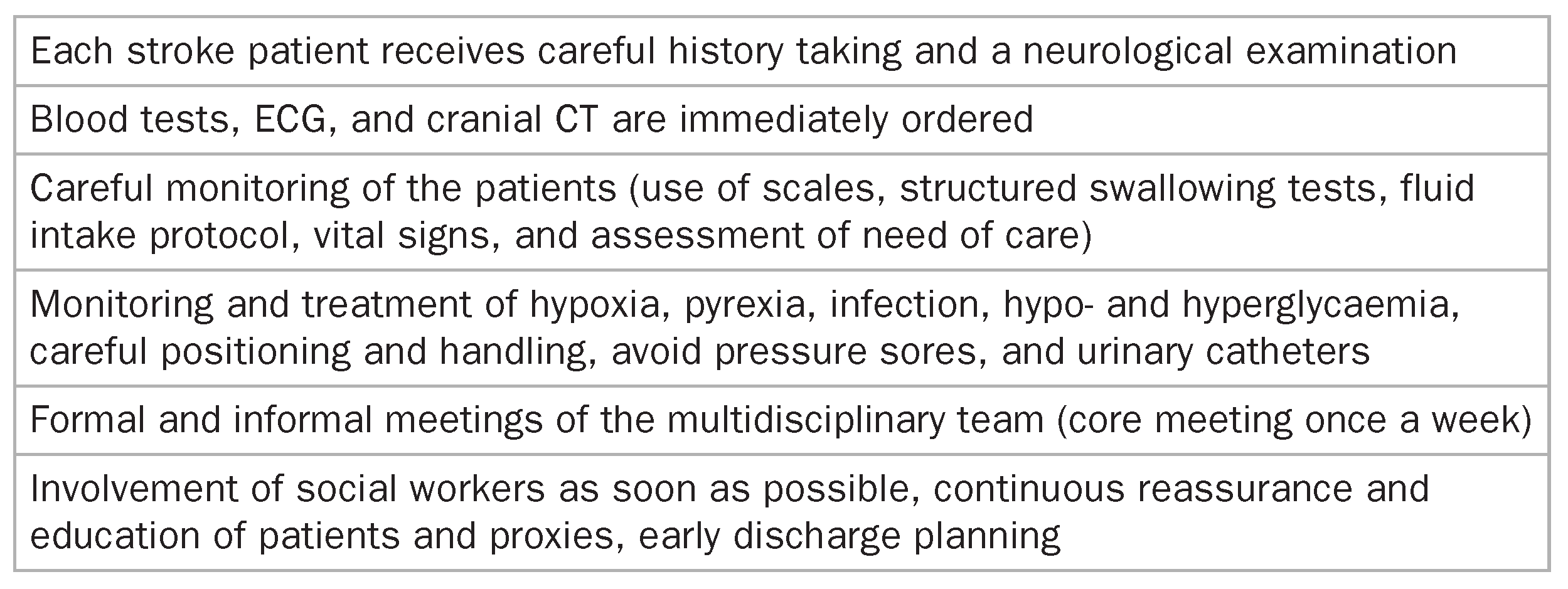
What makes SU treatment so special? The minimum requirements for a SU and its related processes are given in Table 1 [15]. It is possible that the difference between SUs and mixed regular wards, or intermediate care wards, may be explained by the physicians’ unintended neglect of calm and immobile stroke patients in contrast to demanding patients suffering from other disorders. On mixed wards, stroke patients do not receive the necessary diagnostic and therapeutic appreciation in due time, whereas this is guaranteed on SUs using time-locked quality indicators and pathways, such as in units certified according to the criteria of the German stroke society and the German Stroke Foundation.
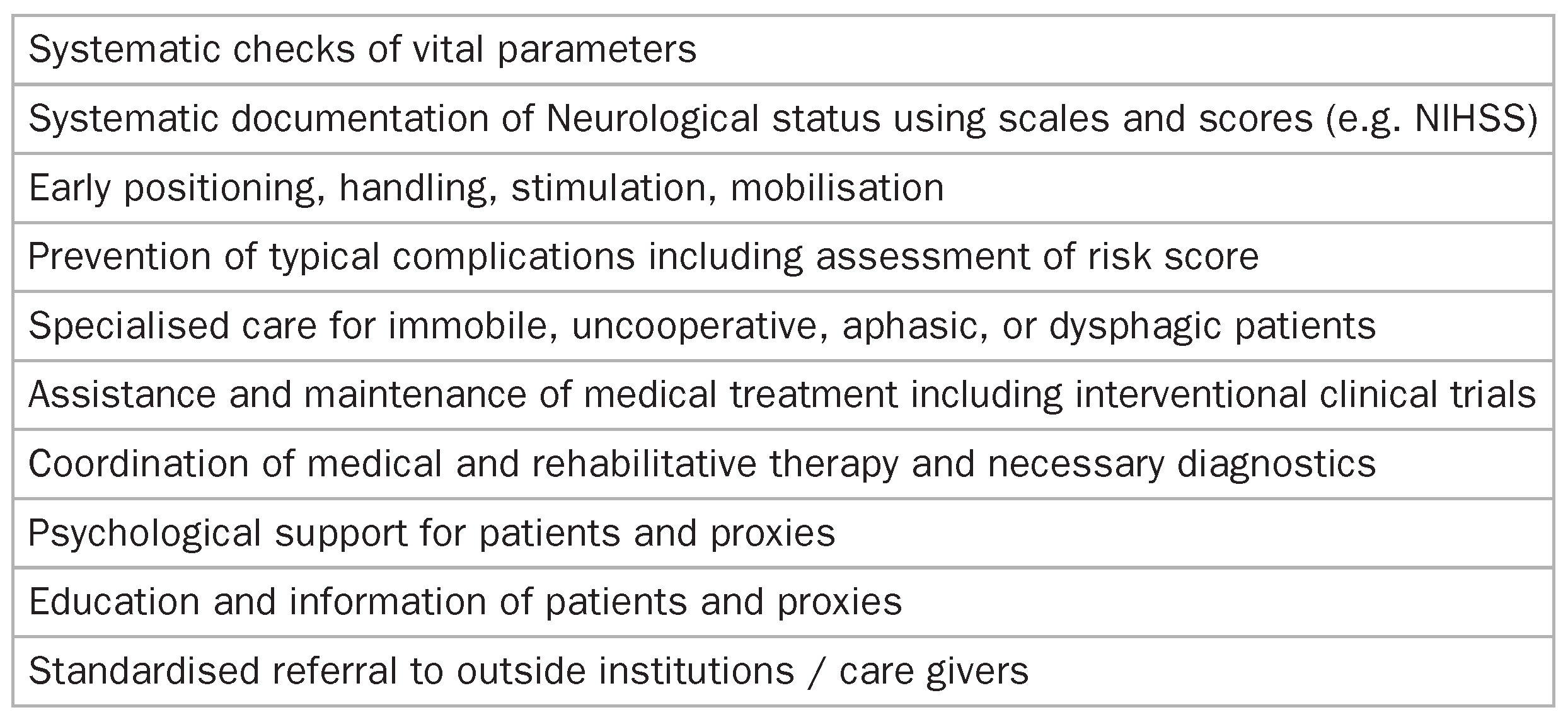
The multidisciplinary team involved in the SU service comprises of specialised nurses, physiotherapists, speech therapists, occupational therapists and social workers. All specialties contribute to the process thus defining the “team approach”. Each specialty delivers facets from their own perspective to the complete therapeutics’ concert, and it is the job of the whole team to define their priorities of care and to take respective actions. A large extent of the specialisation is acquired “on the job”, in that team members learn from each other by constantly discussing patients and thus learning varying perspectives. The German Stroke Society has established a certified curriculum for specialised stroke nursing. This curriculum comprises of more than 200 hours of training with a special focus on stroke. The German Stroke Society requires a minimum number of certified nurses on a Stroke Unit to grant high quality care. Nurses are involved in determining stroke severity, the monitoring of vital parameters and in the direct delivery of therapeutic interventions, as well as reassurance and communication with patients and their proxies (Table 2).

Progress within the last years

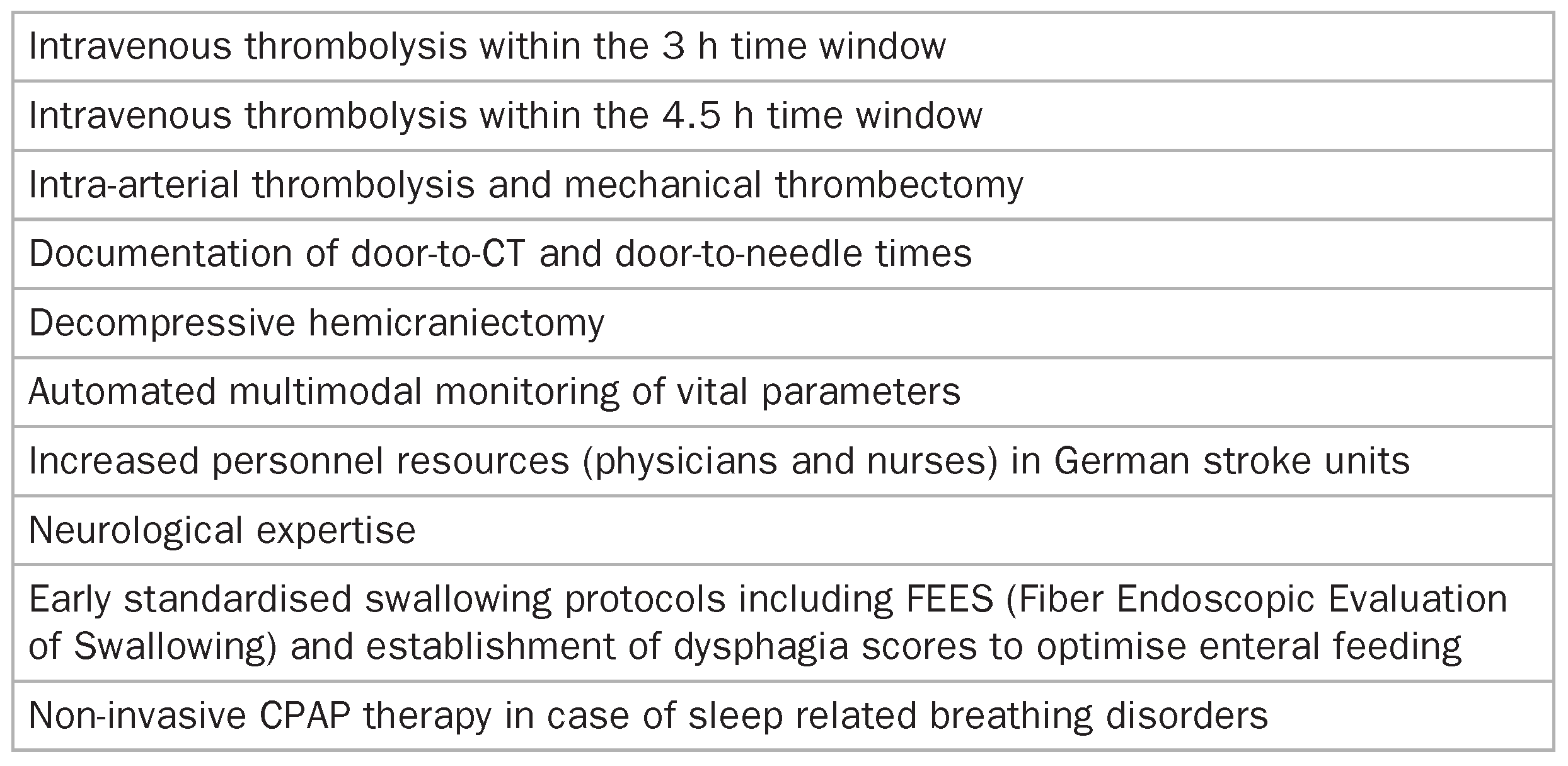
The initial, evidence-based SU concept has not yet incorporated modern therapeutic interventions such as the ones listed in Table 3. Some of these interventions have now been established as being effective (level of evidence I), such as intravenous thrombolysis or decompressive hemicraniectomy in malignant infarction in the territory of the middle cerebral artery [16].
Intra-arterial fibrinolysis and early standardised swallowing tests are considered to be level II evidence-based. The latter have now been supported by the implementation of fibre-optic endoscope evaluation of swallowing [17], which is incorporated in the decision of whether or not to orally feed stroke patients [18]. Therefore, it is likely that the gross NNT on modern SUs is below the “15” mentioned above. The German infrastructure has been the basis of the Austrian SU concept and will probably be the basis of SU service in Switzerland in the near future.

Effects of quantity, quality and economy of stroke unit treatment

There are effects of quantity in the treatment of stroke patients. Although not unequivocally accepted [19], current evidence from the literature is overwhelming, showing that higher case numbers lead to greater expertise of the team and better functional outcomes of the patients treated. Saposnik and co-workers showed that the mortality one week after stroke was significantly lower in hospitals treating many stroke patients than in hospitals with lower case numbers [20]. They based their findings on the observation of more than 26’000 stroke patients treated in 606 Canadian hospitals. The seven-day mortality was 9.5% in hospitals treating less than 50 patients per year, 7.3% in hospitals treating 100–199 strokes per year, and only 6.0% in facilities treating more than 200 patients with stroke per year (p <0.001). In Germany, two types of SU are distinguished: The “regional Stroke Unit”, which would best be translated as a “primary stroke centre” (PSC) on the international level, serves most stroke patients of a given catchment area. It is mostly located in primary or secondary hospitals. To gain the official certification as a “regional Stroke Unit” of the German Stroke Society, the absolute minimum is 250 patients per year treated in a minimum of four beds in any PSC. It is planned to increase the absolute minimum number to 300 patients per stroke unit per year. For units with more than 4 beds, a minimum of 80 patients per year and per bed are suggested,
The “überregionale Stroke Unit” is similar to the “comprehensive stroke Centre” (CSC) on the international European level. A minimum of 450 patients per year need to be treated at this facility, and the minimum number of beds is 6. It is planned to increase the minimum number of patients to 100 per bed and year for the official certification by the German Stroke Society. CSCs need to maintain neurosurgery, vascular surgery and neuroradiology on a 24 hour a day/7 day a week basis, and details can be found in Table 4.
A recent hospital survey from Germany showed that 663 patients were treated on average in a comprehensive stroke centre (CSC, “überregionale Stroke Unit”) and 448 patients were treated on average in a primary stroke centre (PSC, “regional Stroke Unit”). The percentage of patients being treated with thrombolysis was 7.6% in CSCs and 6.8% in PSCs, compared with 3.3% on average in Europe [6]. At present, only 4 out of approximately 200 certified Stroke Units in Germany are run by internists, and the others are run by neurologists. Those Stroke Units not run by neurologists have to ensure there is permanent neurological expertise on-site by hiring two full-time neurologists with stroke expertise in order to be eligible for certification.
An increase of the proportion of patients receiving thrombolysis within the last 6 years in all German “überregionalen Stroke Units” was observed. In Table 5, the exemplary development of case numbers and rates of thrombolysis in a large CSC of a German University hospital illustrates this association. The continuous improvement in infrastructure and process management leads to higher case numbers and more potent acute therapies. Meanwhile, the rate of patients receiving thrombolysis in these centres comes close to the 24% maximum portion of patients qualified for such therapy within 3 hours, as calculated in a paper by Boode and co-workers [21].
Heuschmann and co-workers demonstrated, in the data set of the German Stroke Registers Study Group (ADSR), that facilities treating less than 5 patients with rt-PA per year produce significantly worse outcomes than centres treating more than 16 patients per year [22]. The latter showed a 50% decrease in mortality compared with the data from the NINDS-trial. Data from the SITS-registry (SITS = Safe Implementation of Thrombolysis in Stroke) showed that continuous use of thrombolysis leads to results as good as in the controlled randomised trials [23]. The SITS-registry has been a pre-requisite of the European Medicines Agency (EMEA), prior to the approval of rt-PA in acute stroke therapy.

Stroke Units – The European perspective

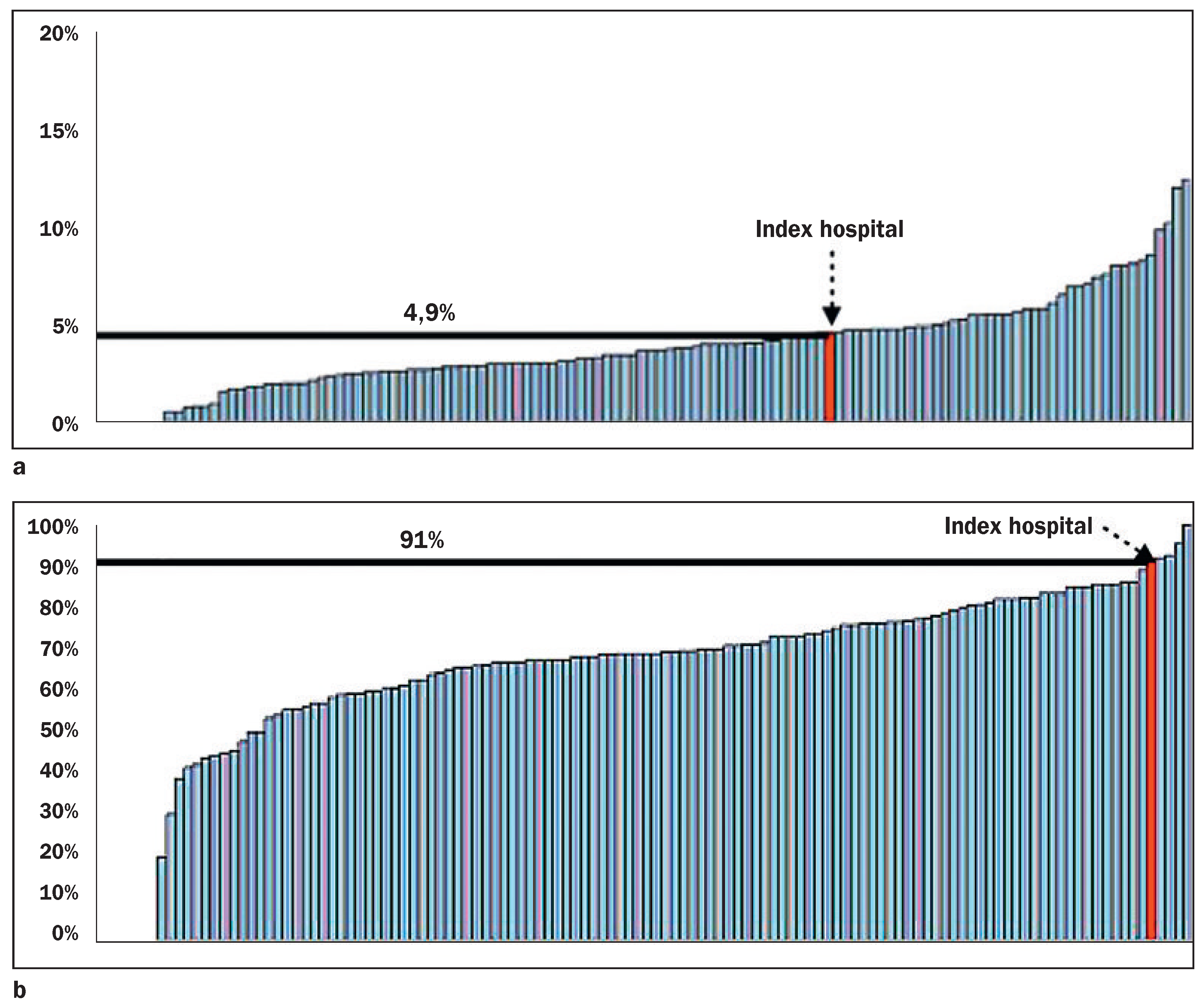
SUs are cost intensive. However SUs are highly effective and stroke sequels are also costly. Stroke is extremely frequent in Europe and has topped the incidence of myocardial infarction in some European countries [24]. There are major discrepancies in Europe in the use of resources for stroke patients [6]. This holds true for the differentiation between haemorrhagic and ischemic stroke by imaging, which is performed 0% in some hospitals and more than 85% in others [30]. Equally discrepant is the provision of SUs, defined as hospital structures meeting basic requirements of the procedures named in this paper [25]. Only 3.6% of the European hospitals have facilities that would meet the definition of a PSC and 4.9% have facilities that resemble CSCs. In Germany, the corresponding numbers for 2005 were 12% for PSCs and 15.8% for CSCs, which was among the highest percentages in Europe [7]. World-wide renowned stroke physicians were asked, in a questionnaire, about their opinion on the necessity of various aspects of a SU including personnel, diagnostics, monitoring and infrastructure, for example, to be considered by SUs. The items were classified as being “absolutely necessary”, “important” and “not so important”. The items listed in Table 6 were classified as absolutely necessary by >75%, or >50% of the experts, respectively. The upper part of the list basically resembles the requirements of the “regionale Stroke Unit” (PSC) and the lower part comprises of the requirements of the “überregionale Stroke Unit” (CSC) in Germany. A CSC should also provide interventional neuroradiology (intra-arterial thrombolysis, mechanical thrombectomy, aneurysm coiling, intracranial stenting), neurosurgery services (decompressive hemicraniectomy, external ventricular drainage, haematoma evacuation), vascular surgery (carotid endarterectomy), echocardiography, full MRI services, and extra- and intracranial Doppler and colour-coded duplex sonography. The hospital should provide anticoagulation clinics and a “stroke faculty” to work on scientific stroke projects and to participate in clinical trials. The implementation of clinical pathways is strongly recommended to structure and control the treatment of stroke patients. A benchmarking tool comparing SUs from a given region with each other is a further important facet of the concept. Continuous reporting of quality indicators leads to reflection of one’s own approach and in general to an increase of quality. An example of the feedback given by the German Stroke Registers Study Group is given in Figure 1.

What comes next in Germany and Europe?

At this time, 161 SUs are certified according to the requirements of the German stroke society and 40 more facilities are expected to be re-certified in the next future according to the new criteria in Germany. This leads to a total number of more than 200 SUs in service. From this number, an estimate about the actual supply of Germany with SU beds can be made. Given an average size of 6 beds per SU and an average of 100 patients per SU bed per year, a total of 120000 stroke patients can be treated in SUs in Germany. Currently, stroke incidence is about 200000 strokes per year, so about 60% of all stroke patients are treated in certified SUs. Another 20% of stroke patients are treated in neurological departments without a certified SU.
The quality indicators of the German Stroke Registers Study Group have been adjusted according to the latest scientific developments [26]. Infrastructural indicators have been implemented, and a further focus will be the analysis of the infrastructural and process related requirements for hospitals establishing “telemedicine” consults in cooperation with CSCs [27]. Using these structures may help to cover the complete area of Germany with qualified stroke expertise, even in rural areas.
In Europe, there are tendencies to establish SUs that incorporate features of the Scandinavian “rehabilitationdriven” approach and of the British “acute-care-driven” approach. Elements of the German intensive-care-like approach are also considered important, which emphasises the importance of multimodal monitoring, ultra-early aetiological clarification and active medical treatment. To meet the need for mobilisation and rehabilitation aspects in German units, a new concept under the name “Comprehensive Stroke Unit” has been driven forward. In this case, “comprehensive”, which is not a familiar term in the German language (the CSC of the European terminology is usually termed “überregionale Stroke Unit”, which could possibly be translated as “tertiary stroke centre”), means complete care in the “sense from admission to discharge home” including early rehab and without referral to a stepdown rehabilitation facility or an outside hospital. A certification algorithm for this specialised SU has recently been published.
In summary, both the German and the European model concentrate on the following items: the exclusive treatment of stroke patients at SUs, a multidisciplinary, stroke-trained team, and the combination of per-acute therapies including multimodal monitoring, invasive procedures and, at the same time, integration of speech therapy, dysphagia therapy, physiotherapy, mobilisation and training of activities of daily living. Finally, the early involvement of social services facilitates the discharge of the patient to an appropriate environment at the earliest possible time and in his/her best achievable status.

References

  1. Langhorne P, Pollock A in conjunction with The Stroke Unit Trialists’ Collaboration. What are the components of effective stroke unit care? Age and Ageing 2002, 31, 1365–71.
  2. Indredavik, B; Bakke, F; Solberg, R; Rokseth, R; Haheim, LL; Holme, I. Benefit of a stroke unit: a randomized controlled trial. Stroke 1991, 22, 1026–31. [Google Scholar] [CrossRef]
  3. Kjellström, T; Norrving, B; Shatchkute, A. Helsingborg Declaration 2006 on European Stroke Strategies. Cerebrovasc Dis. 2007, 23, 299–341. [Google Scholar] [CrossRef]
  4. Ringelstein, EB; Grond, M; Busse, O. Time is brain – Competence is brain. Die Weiterentwicklung des Stroke Unit-Konzeptes in Europa. Nervenarzt 2005, 76, 1024–7. [Google Scholar] [CrossRef]
  5. Wardlaw JM, Murray V, Berge E, Del Zoppo GJ. Thrombolysis for acute ischaemic stroke. Cochrane Database Syst Rev. 2009 Oct 7;(4): CD000213.
  6. Leys D, Ringelstein EB, Kaste M, Hacke W for the Executiv Committee of the European Stroke Initiative. Facilities available in European hospitals treating stroke patients. Stroke 2007;38:2985–91.
  7. Ringelstein EB, Meckes-Ferber S, Hacke W, Kaste M, Brainin M, Ley D for the European Initiative (EUSI) executive committee. European Stroke facilities survey: The German and Austrian Perspective. Cerebrovasc Dis. 2009;27:138–45.
  8. Candelise, L; Gattinoni, M; Bersano, A; Micieli, G; Sterzi, R; Morabito, A. the behalf of the PROSIT Study Group. Stroke-unit care for acute stroke patients: an observational follow-up study. Lancet 2007, 369, 299–305. [Google Scholar] [CrossRef]
  9. Cavallini, A; Micieli, G; Marcheselli, S; Quaglini, S. Role for monitoring in management of acute ischemic stroke patients. Stroke 2003, 34, 2599–603. [Google Scholar] [CrossRef]
  10. Roquer, J; Rodriguez-Campello, A; Gomis, M; Jimenez-Conde, J; CuadradoGoida, E; Vivanco, R; et al. Acute stroke unit care and early neurological deterioration in ischemic stroke. J Neurol. 2008, 255, 1012–7. [Google Scholar] [CrossRef]
  11. Sulter, G; Elting, JW; Langedijk, M; Maurits, NM; De Keyser, J. Admitting acute ischemic stroke patients to a stroke care monitoring unit versus a conventional stroke unit. A randomized pilot study. Stroke 2003, 34, 101–4. [Google Scholar] [CrossRef]
  12. Seenan, P; Long, M; Langhorne, P. Stroke Units in their natural Habitat. Systematic review of observational studies. Stroke 2007, 38, 1886–92. [Google Scholar] [CrossRef] [PubMed]
  13. Indredavik, B; Bakke, F; Slördahl, SA; Rokseth, R; Haheim, LL. Stroke unit treatment. 10-year follow-up. Stroke 1999, 30, 1524–7. [Google Scholar] [CrossRef]
  14. Walter, A; Seidel, G; Thie, A; Raspe, H. Semi-intensive stroke unit versus conventional care in acute ischemic stroke or TIA – A prospective study in Germany. J Neurol Sci. 2009, 287, 131–7. [Google Scholar] [CrossRef]
  15. Langhorne, P; Dennis, MS. Stroke units: the next 10 years. The Lancet 2004, 363, 834–5. [Google Scholar] [CrossRef]
  16. Vahedi, K; Hofmeijer, J; Juettler, E; Vicaut, E; George, B; Algra, A; et al. DECIMAL, DESTINY, and HAMLET investigators. Early decompressive surgery in malignant infarction of the middle cerebral artery: a pooled analysis of three randomised controlled trials. Lancet Neurol. 2007, 6, 215–22. [Google Scholar] [CrossRef]
  17. Langmore, SE. Endoscopic evaluation and treatment of swallowing disorders; Thieme: New York, Stuttgart, 2001. [Google Scholar]
  18. Dziewas, R; Warnecke, T; Ölenberg, S; Teismann, I; Zimmermann, J; Kraemer, C; et al. Towards a basic endoscopic assessment of swallowing in acute stroke – Development and evaluation of a simple dysphagia score. Cerebrovasc Dis. 2008, 26, 41–7. [Google Scholar] [CrossRef]
  19. Geraedts, M. Spärliche Evidenz für explizite Mindestmengen. Die seit Januar 2004 gültige Mindestmengenvereinbarung muss als politische Kompromisslösung gelten. Dtsch Ärztebl 2004, 101, A1402–4. [Google Scholar]
  20. Saposnik, G; Baibergenova, A; O’Donnell, M; Hill, MD; Kapral, MK; Hachinski, V. behalf of the Stroke Outcome Research Canada (SORCan) Working Group. Hospital volume and stroke outcome. Does it matter? Neurology 2007, 69, 1142–51. [Google Scholar] [CrossRef] [PubMed]
  21. Boode, B; Welzen, V; Franke, C; van Oostenbrugge, R. Estimating the number of stroke patients eligible for thrombolytic treatment if delay could be avoided. Cerebrovasc Dis. 2007, 23, 294–8. [Google Scholar] [CrossRef] [PubMed]
  22. Heuschmann, PU; Kolominski-Rabas, PL; Roether, J; Misselwitz, B; Lowitzsch, K; Heidrich, J; et al. for The German Stroke Registers Study Group. Predictors of in-hospital mortality in patients with acute ischemic stroke treated with thrombolytic therapy. JAMA 2004, 292, 1831–8. [Google Scholar] [CrossRef] [PubMed]
  23. Wahlgren, N; Ahmed, N; Dávalos, A; Ford, GA; Grond, M; Hacke, W; et al. SITS-MOST investigators. Thrombolysis with alteplase for acute ischaemic stroke in the Safe Implementation of Thrombolysis in Stroke-Monitoring Study (SITS-MOST): an observational study. Lancet 2007, 369, 275–82. [Google Scholar] [CrossRef]
  24. Thom, T; Haase, N; Rosamond, W; Howard, VJ; Rumsfeld, J; Manolio, T; et al. American Heart Association Statistics Committee and Stroke Statistics Subcommittee: Heart Disease and Stroke Statistics – 2006 Update. A Report From the American Heart Association Statistics Committee and Stroke Statistics Subcommittee. Circulation 2006, 113, e85–151. [Google Scholar]
  25. Leys, D; Ringelstein, EB; Kaste, M. Hacke W for the European Stroke Initiative executive committee. The main components of stroke unit care: results of The European expert survey. Cerebrovasc Dis. 2007, 23, 344–52. [Google Scholar] [CrossRef] [PubMed]
  26. Heuschmann, PU; Biegler, MK; Busse, O; Elsner, S; Grau, A; Hasenbein, U; et al. Development and implementation of evidence-based indicators for measuring quality of acute stroke care. The Quality Indicator Board of the German Stroke Registers Study Group (ADSR). Stroke 2006, 37, 2573–8. [Google Scholar] [CrossRef]
  27. Audebert, HJ; Schenkel, J; Heuschmann, PU; Bogdahn, U; Haberl, RL. for the Telemedic Pilot Project for Integrative Stroke Care (TEMPiS) Group: Effects of the implementation of a telemedical stroke network: the Telemedic Pilot Project for Integrative Stroke Care (TEMPiS) in Bavaria, Germany. Lancet Neurol. 2006, 5, 742–8. [Google Scholar] [CrossRef] [PubMed]
  28. Deutsche Schlaganfall Gesellschaft. Zertifizierungskriterien von Stroke Units. Available at: http://www.dsg-info.de/images/stories/DSG/PDF/StrokeUnits/Stroke-Units-Zertifizierungskriterien2008.pdf, last visit 10/23/2010.
  29. Ringelstein EB et al. Nervenarzt. 2011 (in press).
  30. Grieve, R; Huton, J; Bhalla, A; Rastenyte, D; Ryglewicz, D; Sarti, C; et al. on behalf of the Biomed II European Study of Stroke Care. A Comparison of the Costs and Survival of Hospital-Admitted Stroke Patients Across Europe. Stroke 2001, 32, 1684–91. [Google Scholar] [CrossRef]
  31. Stroke Unit Trialists’ Collaboration (SUTC). Organised inpatient (stroke unit) care for stroke (Cochrane Review). In: The Cochrane Library, Oxford: Update Software, Issue 3, 2003.
Figure 1. Examples of the quality report of a German stroke unit. Figure 1a shows the the intra-hospital mortality as a percentage. Figure 1b shows the percentage of patients receiving a structured dysphagia screening at the stroke unit. Each blue bar represents the percentage achieved by any hospital participating in the project. The red bar signifies the own hospital so the own results can be compared to the data from other hospitals participating in the same project. For “Intrahospital mortality” a low percentage value would be desirable. A benchmark has not yet been implemented for this item. The item is not adjusted to confounders such as stroke severity on admission and age, but these data are also available within the report. The mortality for the “index hospital” was 4.9%. For “Structured dysphagia screening”, a high percentage (e.g. over 90%) would be desirable.
Sanpp 162 00155 g001
Table 1. Features that contribute to the overall efficacy of Stroke Units (modified from [15]).
Sanpp 162 00155 i001
Table 2. Specific tasks for nurses in stroke care.
Sanpp 162 00155 i002
Table 3. Therapies missing in the RCTs on Stroke-Unit treatment.
Sanpp 162 00155 i003
Table 4. [28] Key components of German Stroke Units.
Sanpp 162 00155 i004
Table 5. Case numbers and percentage of patients treated with thrombolysis in a large German Unit in the years 2004–2009.
Sanpp 162 00155 i005
Table 6. Features considered absolutely necessary by international stroke experts [25].
Sanpp 162 00155 i006
Disclaimer/Publisher’s Note: The statements, opinions and data contained in all publications are solely those of the individual author(s) and contributor(s) and not of MDPI and/or the editor(s). MDPI and/or the editor(s) disclaim responsibility for any injury to people or property resulting from any ideas, methods, instructions or products referred to in the content.