Contemporary digital consumption is particularly pronounced among Generation Alpha (born after 2010) and Generation Z (born 1995 to 2010), who represent a fundamental paradigm shift in digital media engagement. These cohorts are distinguished from previous generations by their status as true digital natives who integrate technology seamlessly into daily routines from early childhood (
Dunas & Vartanov, 2020;
Šramová & Pavelka, 2023). Unlike previous generations, who engaged in more passive, scheduled media consumption, these cohorts demonstrate intentional, selective, and highly interactive engagement patterns, with a pronounced preference for mobile-first, on-demand content across platforms such as TikTok and Instagram (
Cifuentes-Ambra et al., 2023;
Laor & Galily, 2022).
The scale of digital engagement among these generations has reached unprecedented levels, with profound implications for cognitive development and behavioral patterns. Screen time among Generation Alpha and Generation Z has escalated dramatically, with the average 17–19-year-old spending approximately 6 h daily on mobile digital devices (
Manwell et al., 2022). These digital natives demonstrate complex multitasking behaviors, frequently using smartphones as second screens while engaging with other media content (
Yeşilyurt & Karaduman, 2025). Current research indicates that Generation Z students spend 9 h or more per day on smartphones and social media, with 70% acknowledging internet addiction (
Ahmed, 2019). While media consumption remained stable until 2010, it increased significantly by 2014, particularly among teenagers (
Zdanowicz et al., 2020).
This excessive digital consumption has given rise to the culturally significant concept of “brain rot,” which has emerged as a metaphor for the perceived cognitive decline and mental exhaustion associated with overconsumption of low-quality digital content, particularly among younger generations (
Özpençe, 2024;
Yousef et al., 2025). Brain rot refers to the deterioration of mental or intellectual abilities due to overconsumption of trivial, repetitive, or low-value online content. This phenomenon reflects growing societal concerns about how constant exposure to trivial online content can erode attention spans, critical thinking, and emotional well-being in the digital age (
Abdo & Pego-Fernandes, 2025;
Sage, 2025). The cultural resonance of this term, exemplified by its designation as Oxford’s Word of the Year 2024, reflects widespread anxieties about technology’s impact on cognitive health and meaningful communication (
Yazgan, 2025).
The concerns surrounding excessive digital consumption are increasingly supported by empirical research revealing significant neurobiological and cognitive consequences. Existing neuroscience research reveals concerning impacts that may be associated with excessive digital stimulation on developing brains, with studies demonstrating significant cognitive, emotional, and behavioral consequences. Research has shown that prolonged screen exposure has been associated with impaired learning and memory acquisition, reduced academic performance, and alterations in brain structure and function (
Neophytou et al., 2019). Excessive digital media use correlates with increased rates of anxiety, depression, and behavioral problems in youth (
Manwell et al., 2022), while chronic overuse may disrupt normal brain maturation processes, particularly in regions responsible for emotional regulation and executive function (
Nivins et al., 2024;
Small et al., 2022;
Yousef et al., 2025).
The addictive potential of digital platforms is consistent with strategic neurobiological targeting mechanisms. Specifically, social media platforms employ intermittent reinforcement schedules, algorithmically delivering unpredictable rewards such as likes and notifications. This mechanism may potently activate the brain’s dopamine reward pathways (
Lindström et al., 2021). These variable reinforcement patterns appear to engage midbrain limbic dopamine systems, particularly through social prediction error mechanisms in the ventral tegmental area, where dopamine neurons may encode differences between expected and received social rewards (
Solié et al., 2022). The unpredictable nature of these social rewards may create heightened anticipation and reinforce repeated engagement behaviors, establishing patterns similar to those observed in substance addiction (
De et al., 2025;
J. Wang & Wang, 2025).
Concurrent with these neurobiological changes, digital devices are increasingly replacing traditional cognitive processes, potentially leading to measurable neuroplastic changes in brain structure and function. The phenomenon of cognitive offloading, defined as the use of external tools or actions to reduce mental effort in memory tasks (
Risko & Gilbert, 2016), has become particularly relevant. While this strategy enhances immediate task performance, particularly under high cognitive load conditions (
Morrison & Richmond, 2020), research demonstrates complex long-term consequences for memory consolidation. Specifically, cognitive offloading can diminish memory retention for offloaded information—termed the “Google effect” unless individuals maintain explicit intentions to remember (
Grinschgl et al., 2021).
To address these critical gaps in assessment capabilities, this study aims to develop and validate the Brain Rot Scale (BRS), a new tool designed to assess digital content overconsumption patterns among Generation Alpha and Generation Z. The BRS aims to capture the unique characteristics of contemporary short-form, algorithm-driven content consumption behaviors that existing digital addiction measures fail to adequately assess. Through rigorous psychometric evaluation, the study aims to establish the BRS as a specialized tool for measuring the cognitive, behavioral, and emotional consequences of excessive consumption of low-quality digital content. This research aims to provide researchers, clinicians, and educators with an empirically validated instrument to identify problematic digital consumption patterns among digital natives, addressing the critical gap in assessment tools for emerging forms of internet behavioral addiction.
Literature Review
1. Transformation of Digital Media Consumption Patterns
The emergence of short-form video platforms has fundamentally transformed media consumption patterns among digital natives, creating a paradigmatic shift from traditional passive, scheduled viewing to active, algorithm-driven engagement characterized by continuous scrolling behaviors. This transformation represents more than a simple technological evolution; it constitutes a complete restructuring of how individuals interact with digital content and process information. Research shows that infinite scrolling mechanisms contribute to perceived loss of self-control and negative internal states, creating psychological experiences that users find difficult to regulate independently (
Park & Jung, 2024). The behavioral patterns associated with these platforms are characterized by binge-scrolling behaviors that are driven by satisfaction and dependence on cognitive consumption values, establishing sustained engagement cycles that exceed users’ initial intentions and conscious awareness (
Q. Zhang et al., 2024). These consumption patterns generate significant data inefficiencies, with substantial mobile data allocated to unwatched content (
G. Zhang et al., 2023), while fostering addictive behaviors that raise concerns about user well-being and sustainable digital media engagement (
Szalkowski et al., 2025;
Q. Zhang et al., 2024). The technological architecture of contemporary platforms significantly impairs users’ capacity to retain behavioral intentions through constant context switching, creating cognitive disruption that undermines deliberate decision-making processes and goal-directed behavior (
Chiossi et al., 2023). Research reveals that increased consumption of short-form content is linked to poor sustained attention, independent of consumption duration, suggesting that the rapid switching nature of content rather than time spent is the critical factor in attention degradation (
Lin et al., 2024). The continuous engagement facilitated by these platforms is further reinforced by flow experiences and cognitive lock-in mechanisms that sustain user attention through serendipitous content discovery, creating a perpetual cycle of consumption that becomes increasingly difficult to voluntarily interrupt (
Yang et al., 2023).
2. Neurobiological Mechanisms of Digital Platform Addiction
The addictive potential of digital platforms is grounded in well-established neurobiological mechanisms that demonstrate remarkable similarities to traditional substance addiction pathways. Digital platform addiction shares fundamental neurobiological mechanisms with traditional substance addiction, particularly through dopamine-mediated reward pathways and striatal circuits underlying craving and compulsive behavior (
Antons et al., 2020;
Weinstein & Lejoyeux, 2020). Both addiction types demonstrate heightened activation in reward regions like the ventral tegmental area and nucleus accumbens, alongside reduced activity in executive control areas, impairing decision-making and inhibitory control mechanisms essential for self-regulation (
Poisson et al., 2021). The strategic implementation of intermittent reinforcement schedules through unpredictable digital rewards creates particularly potent activation of dopamine systems, establishing powerful conditioning mechanisms that drive continued engagement beyond conscious intention. Intermittent reinforcement from unpredictable digital rewards potently activates dopamine systems, while social prediction errors in the ventral tegmental area drive platform engagement through unexpected social feedback delivered through sophisticated algorithmic systems (
Mestre-Bach & Potenza, 2023). This neurobiological process underlies the compelling nature of social media use, as dopamine-mediated reward learning drives users to maximize social reward acquisition by continuing to engage with the platform (
Schultz, 2024). These neurobiological processes result in measurable neuroplastic changes that reflect the brain’s adaptation to digital engagement patterns. Neuroplastic changes, including reduced gray-matter volume and altered white-matter density, occur in both digital and substance addictions, though digital engagement uniquely affects sensory, motor, and cognitive processing regions (
Dresp-Langley & Hutt, 2022). Research demonstrates that digital technology engagement produces structural changes, including increased gray matter volume in frontal regions associated with goal achievement and deduction (
Hongo et al., 2023), while virtual reality-based cognitive training enhances neural activity by increasing alpha and beta EEG power (
Gangemi et al., 2023). These neuroplastic adaptations reflect the brain’s dynamic reorganization of functional networks during human-machine interaction (
T. Zhang et al., 2022), with gamified learning environments promoting cognitive enhancement and emotional regulation through network reorganization (
Kumar et al., 2024).
3. Cognitive Offloading and Memory Consolidation Alterations
The phenomenon of cognitive offloading—defined as the use of external digital tools or actions to reduce mental effort in memory, navigation, and information retrieval tasks (
Risko & Gilbert, 2016)—has fundamentally altered memory consolidation processes and cognitive development patterns, particularly among Generation Alpha and Generation Z who have integrated digital systems into their cognitive architecture from early developmental stages. This transformation is exemplified by the well-documented “Google effect,” in which individuals demonstrate significantly reduced retention of information they believe is reliably stored in external digital systems (
Schooler & Storm, 2021). The decision-making process underlying cognitive offloading reflects sophisticated value-based metacognitive evaluation, in which users continuously balance cognitive effort expenditure with perceived memory utility and accessibility (
Gilbert, 2024). The decision to engage in cognitive offloading is primarily driven by metacognitive evaluations of memory confidence rather than actual memory ability, with individuals demonstrating value-based decision-making processes when balancing cognitive effort against memory retention needs (
Gilbert, 2024;
X. Hu et al., 2019). While cognitive offloading can enhance immediate task performance, particularly under high cognitive load (
Morrison & Richmond, 2020), and improve memory retention of non-offloaded information through “saving-enhanced memory” effects, excessive reliance on digital systems can contribute to a phenomenon termed “digital dementia.” This condition is characterized by attention deficits, memory impairment, and structural brain changes that occur during critical developmental periods when cognitive architecture is still forming (
Ali et al., 2024). Empirical research indicates that 84.5% of students actively utilize smartphones as external memory systems, with significant correlations observed between this reliance and increased rates of depression, anxiety, and reduced emotional intelligence (
Mohan & Ponnusamy, 2023;
Musa & Ishak, 2021). This cognitive-efficiency trade-off underscores the complex metacognitive processes underlying digital dependency decisions among younger generations. It highlights the multifaceted nature of contemporary digital consumption, which extends beyond simple entertainment or communication.
4. Assessment Limitations and Measurement Gaps
Current assessment methodologies for digital consumption patterns demonstrate significant limitations when applied to contemporary short-form, algorithm-driven content engagement behaviors. Existing digital addiction and problematic internet use scales face significant limitations when applied to contemporary content consumption patterns, particularly those involving short-form, algorithm-driven platforms that operate through fundamentally different engagement mechanisms than traditional digital media (
Griffiths, 2021;
Kokshagina et al., 2023;
Omrawo et al., 2023;
Pastor, 2025). Most existing scales require extensive additional validation work and demonstrate inconsistent psychometric properties across different populations and contexts, while traditional measures were primarily developed and validated for adult populations, leaving significant gaps in assessment tools specifically designed for younger demographics who represent the primary consumers of contemporary digital content (
Omrawo et al., 2023;
Tiego et al., 2019). The rapid, repetitive consumption cycles characteristic of platforms like TikTok differ substantially from the longer-form digital engagement patterns for which current assessment tools were originally designed and validated. The advanced algorithmic systems that personalize content delivery create uniquely addictive patterns that differ substantially from traditional social media addiction mechanisms, yet there remains an absence of valid and specific psychometric tools to assess these emerging forms of digital behavioral addiction (
Kokshagina et al., 2023;
Pastor, 2025). Short video addiction represents an emerging form of internet behavioral addiction characterized by dependent and excessive use patterns that significantly affect decision-making processes, necessitating specialized measurement instruments that can accurately capture these contemporary digital consumption behaviors among Generation Alpha and Generation Z.
Neurobiological research, cognitive psychology, and cultural recognition of digital overconsumption phenomena have led to the development of specialized assessment tools. The “brain rot” phenomenon, characterized by cognitive decline and mental exhaustion from low-quality digital content, has gained attention due to its cultural resonance. This highlight concerns technology’s impact on cognitive health and meaningful communication, especially among younger generations who engage with algorithm-driven platforms. The lack of empirically validated assessment tools is a significant limitation in research and clinical practice. Based on the theoretical framework and the identified gap in measurement tools, the following hypotheses were formulated to guide the development and validation of the Brain Rot Scale (BRS):
- −
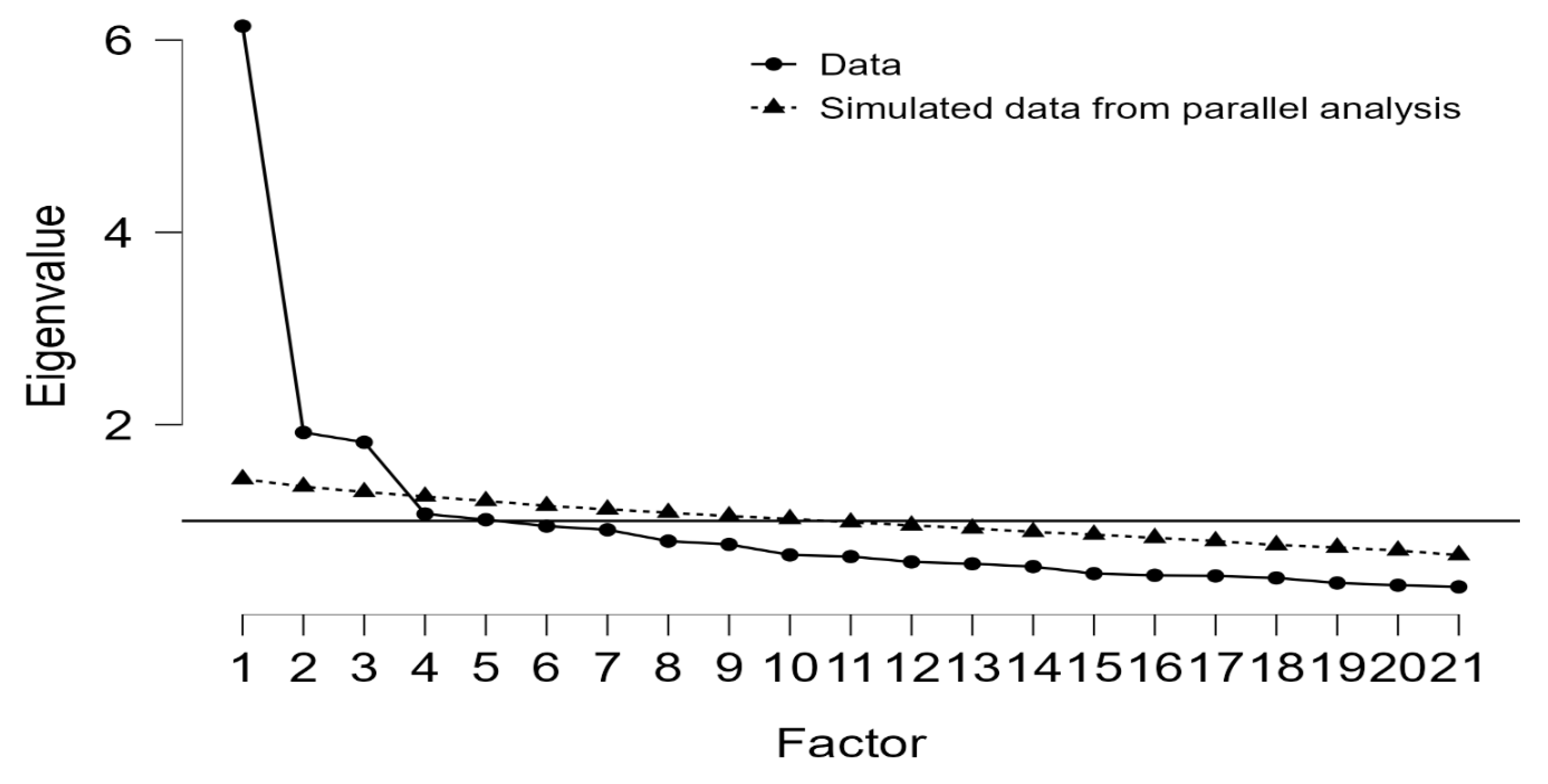
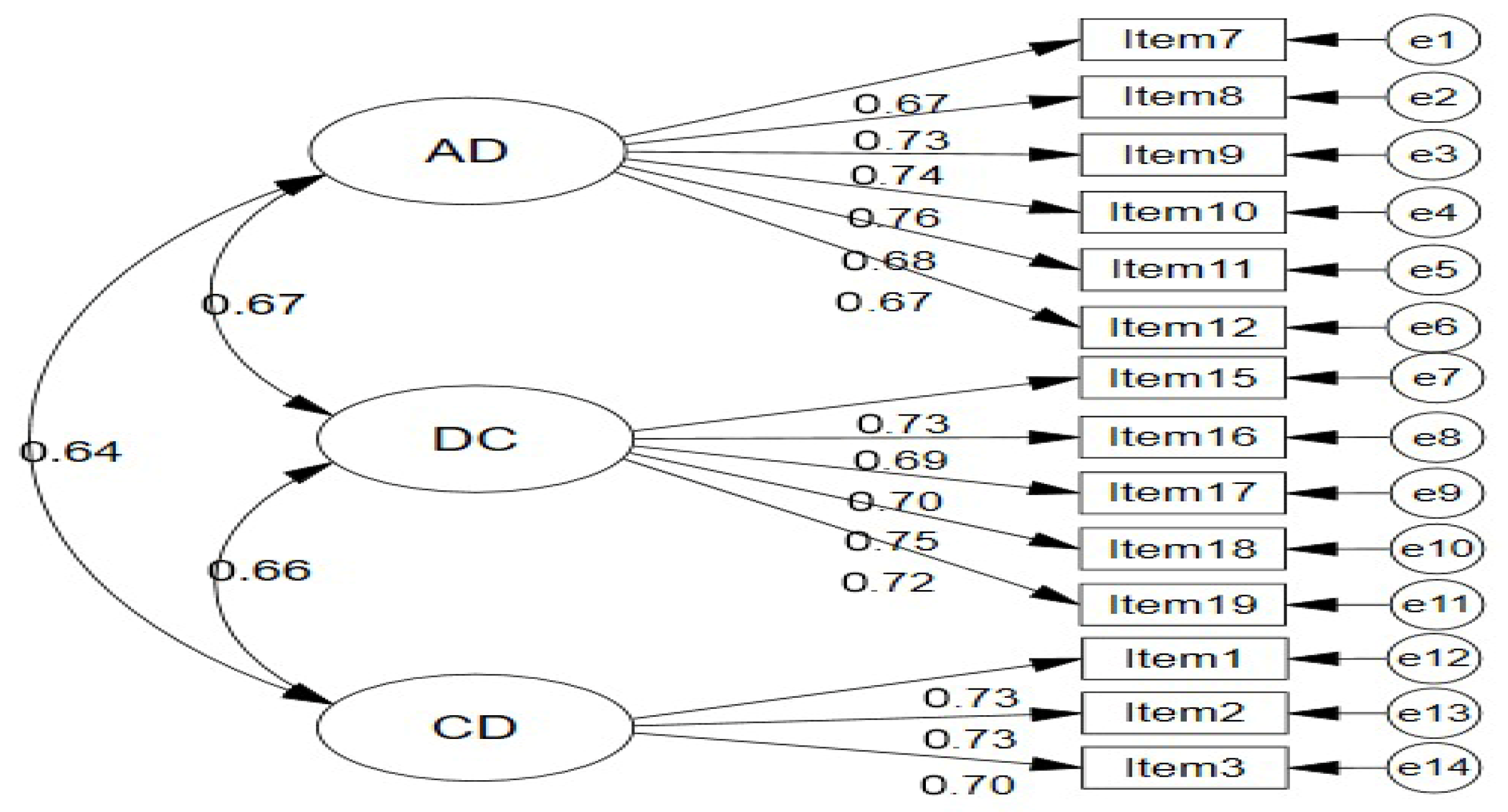
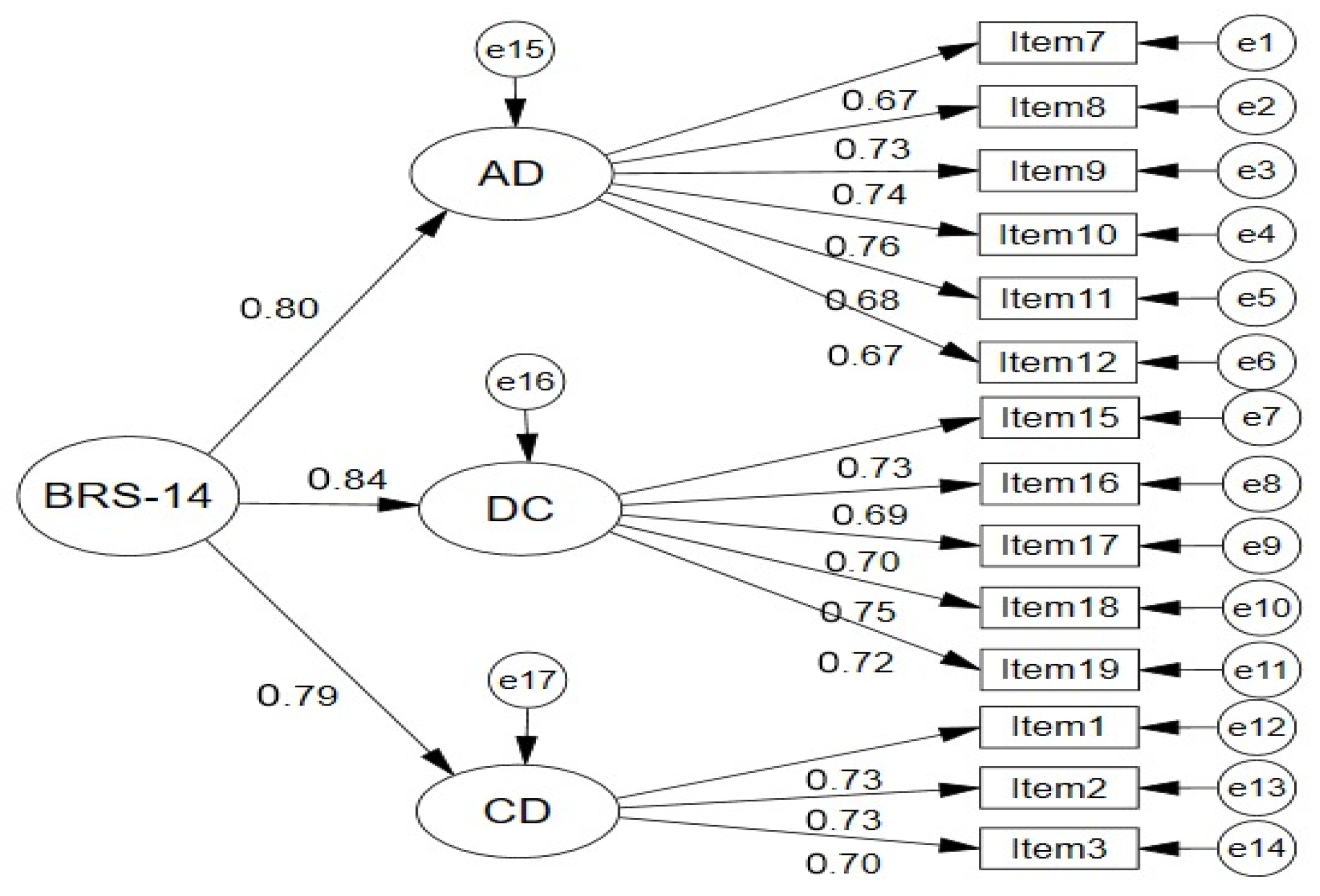
H1: The Brain Rot Scale will demonstrate a multifactorial structure, reflecting the distinct yet related dimensions of digital content overconsumption.
- −
H2: The scale and its subscales demonstrate good internal consistency, with reliability indices (Cronbach’s alpha, McDonald’s omega, and Guttman’s lambda) exceeding the threshold of 0.70.
- −
H3: The factor structure identified through exploratory factor analysis will be confirmed, with the confirmatory factor analysis model demonstrating adequate fit to the data (CFI > 0.90, TLI > 0.90, RMSEA < 0.08).




 ,
,