Article

Study on the Formation of Complex Chemical Waveforms by Different Computational Methods


1
College of Chemical Engineering, Beijing University of Chemical Technology, Beijing 100029, China
2
Faculty of Chemical Engineering, Kunming University of Science and Technology, Kunming 650500, China
*
Authors to whom correspondence should be addressed.
Processes 2020, 8(4), 393; https://doi.org/10.3390/pr8040393
Submission received: 19 February 2020 / Revised: 23 March 2020 / Accepted: 25 March 2020 / Published: 27 March 2020
(This article belongs to the Section Chemical Processes and Systems)

Abstract

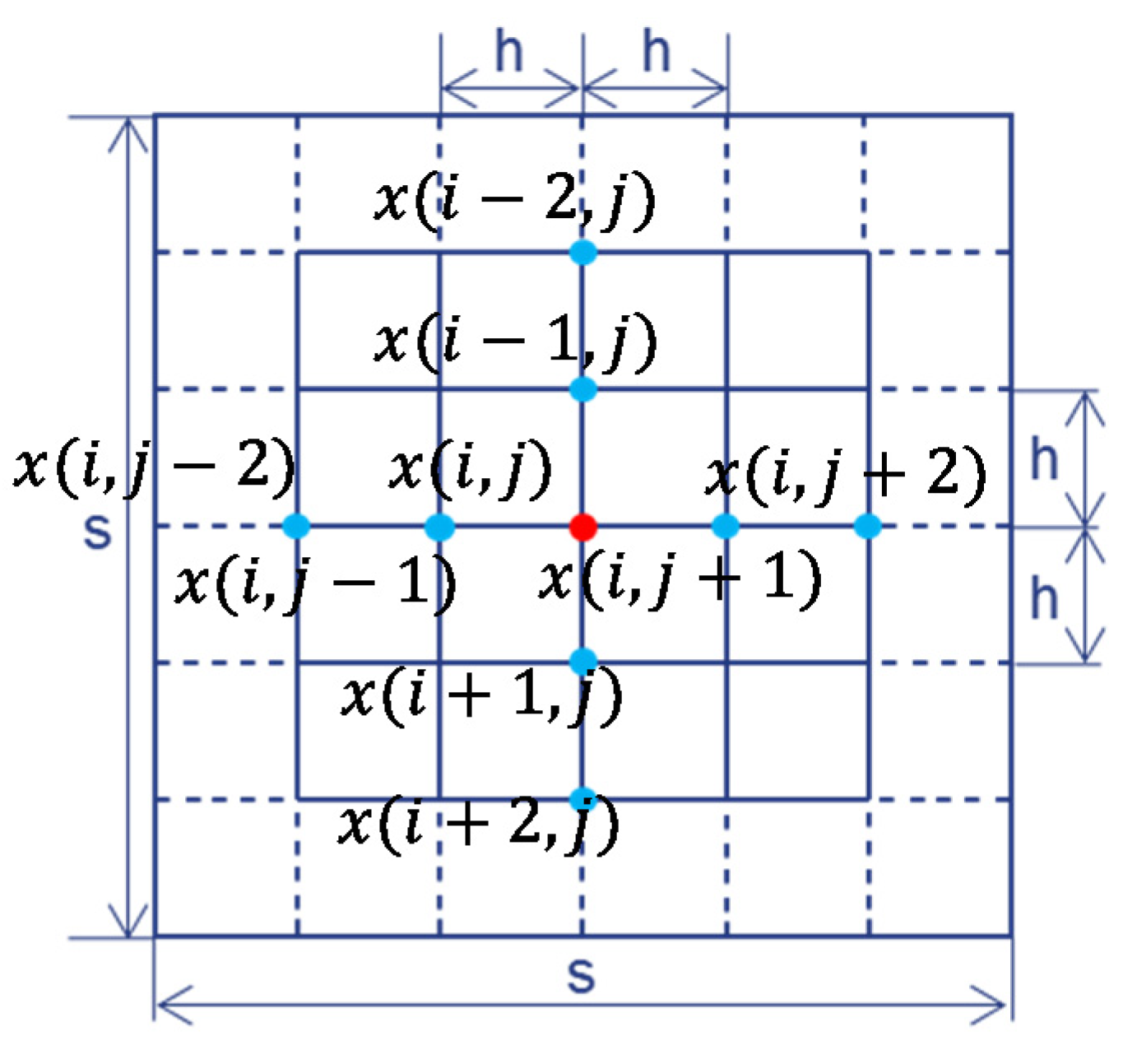
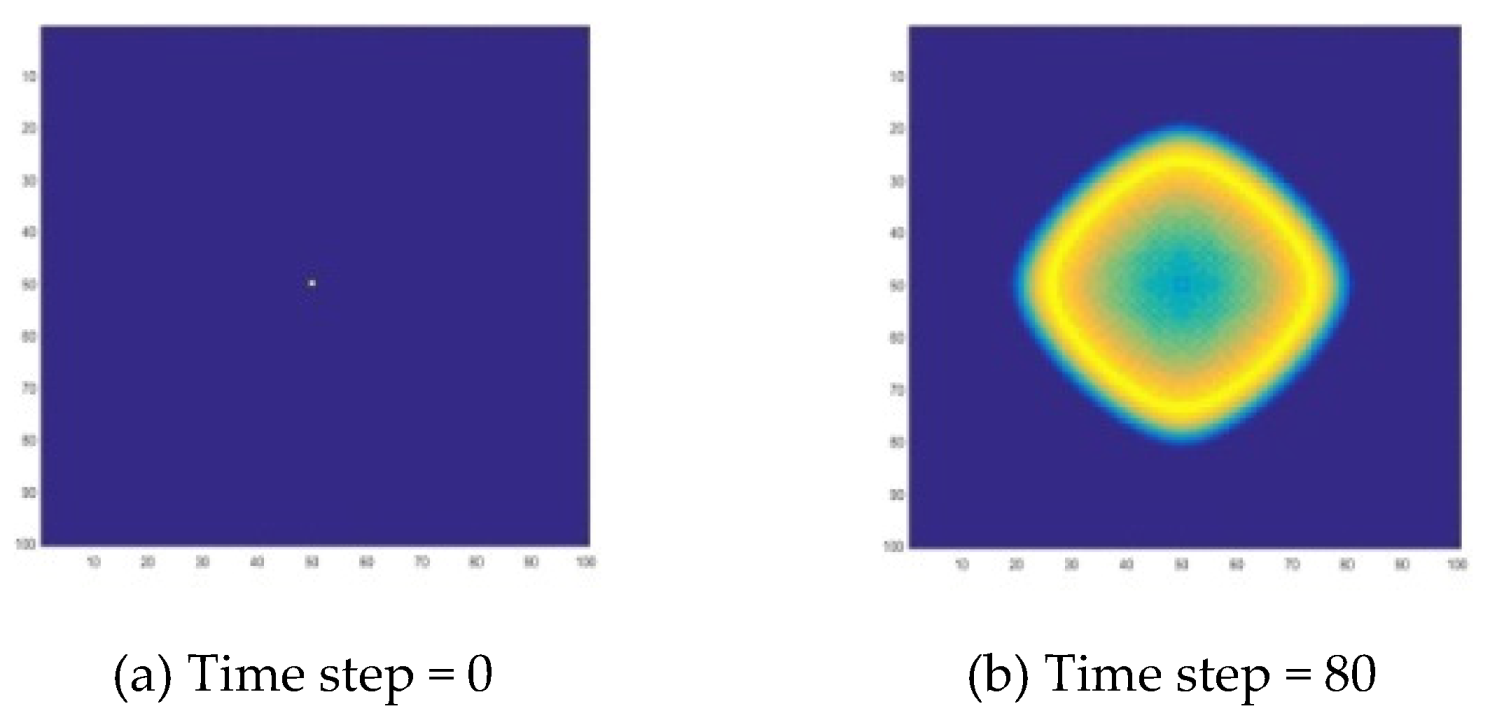
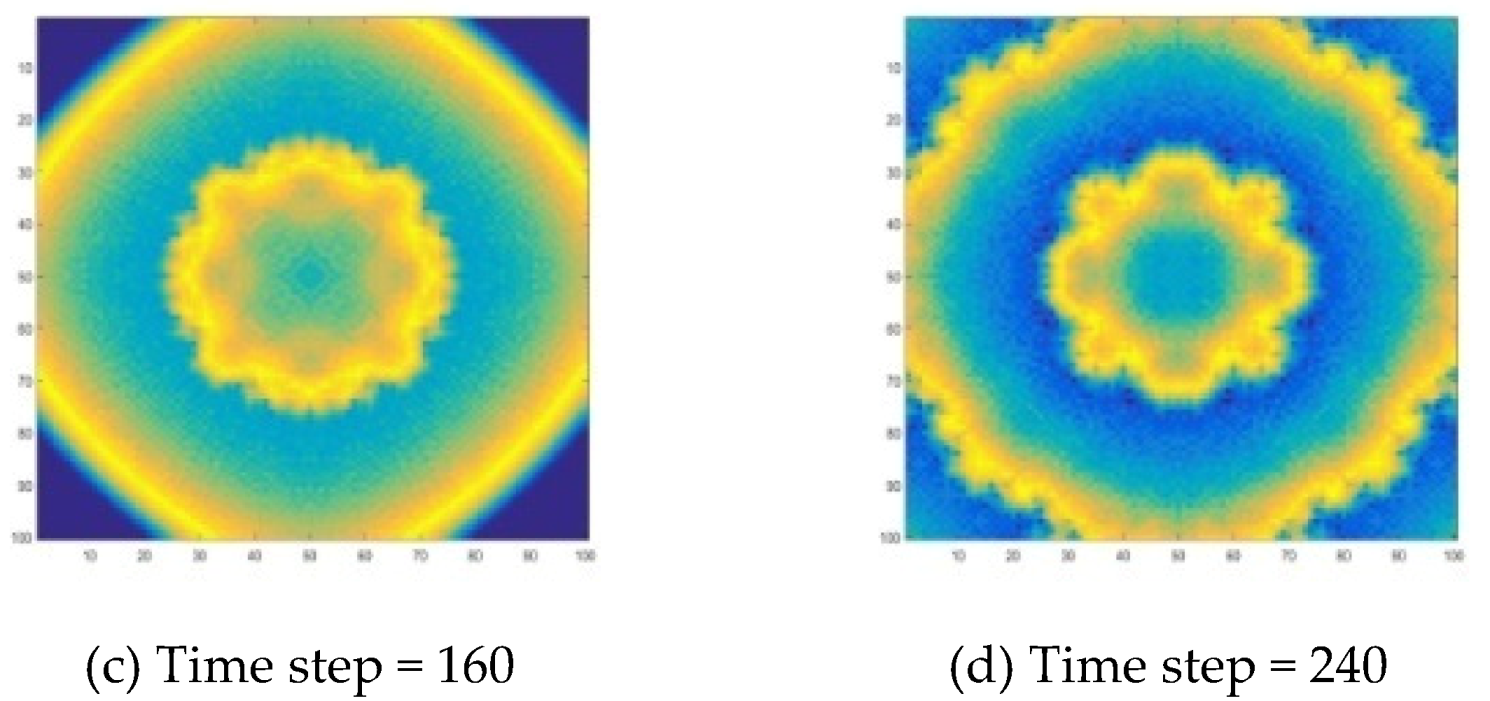
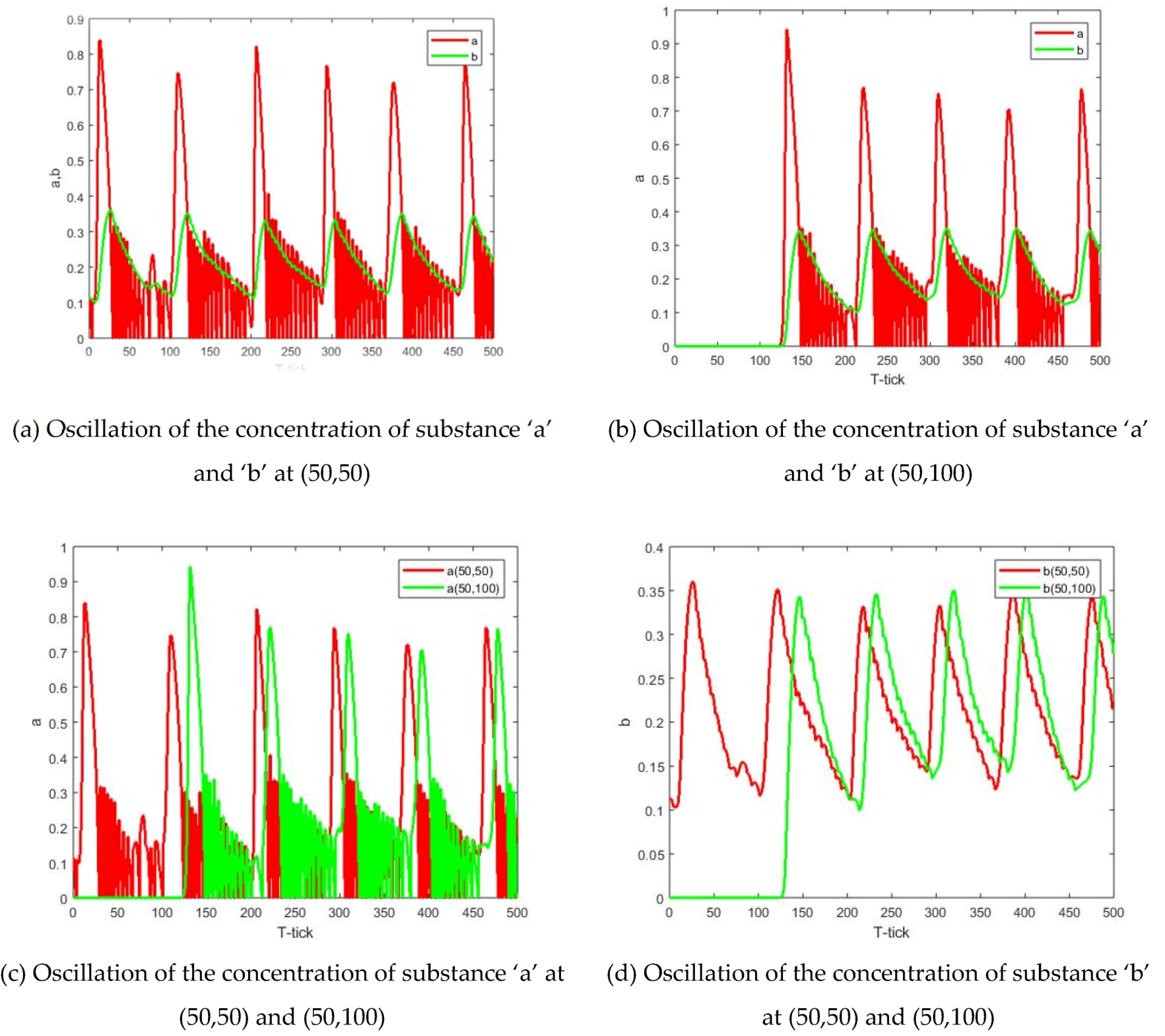
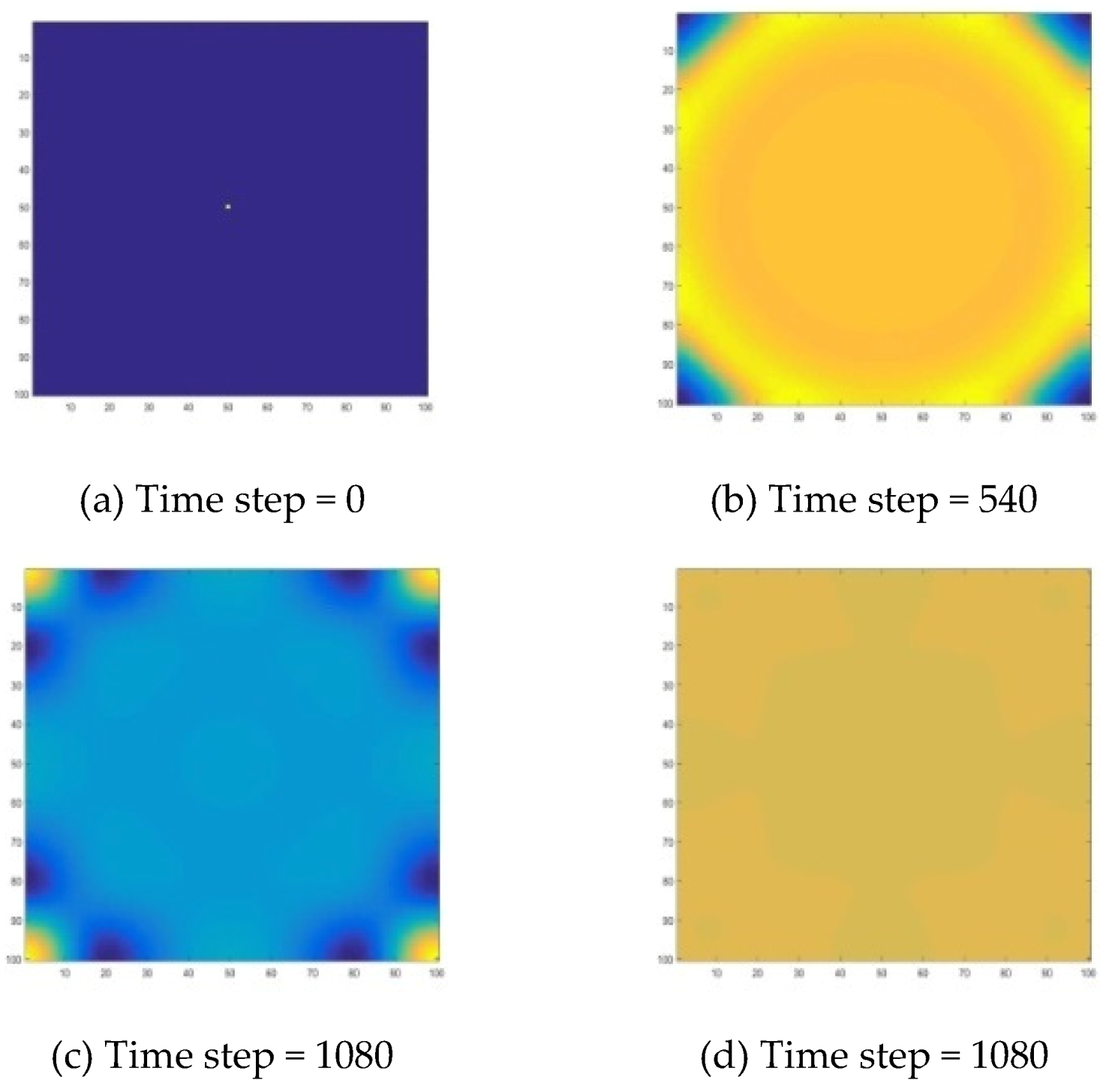
Chemical wave is a special phenomenon that presents periodic patterns in space-time domain, and the Belousov–Zhabotinsky (B-Z) reaction is the first well-known reaction-diffusion system that exhibits organized patterns out of a homogeneous environment. In this paper, the B-Z reaction kinetics is described by the Oregonator model, and formation and evolution of chemical waves are simulated based on this model. Two different simulation methods, partial differential equations (PDEs) and cellular automata (CA) are implemented to simulate the formation of chemical waveform patterns, i.e., target wave and spiral wave on a two-dimensional plane. For the PDEs method, reaction caused changes of molecules at different location are considered, as well as diffusion driven by local concentration difference. Specifically, a PDE model of the B-Z reaction is first established based on the B-Z reaction kinetics and mass transfer theory, and it is solved by a nine-point finite difference (FD) method to simulate the formation of chemical waves. The CA method is based on system theory, and interaction relations with the cells nearest neighbors are mainly concerned. By comparing these two different simulation strategies, mechanisms that cause the formation of complex chemical waves are explored, which provides a reference for the subsequent research on complex systems.
Keywords: Belousov–Zhabotinsky reaction; cellular automata; partial differential equations; finite difference Belousov–Zhabotinsky reaction; cellular automata; partial differential equations; finite difference