Article

Non-Intrusive Monitoring Algorithm for Resident Loads with Similar Electrical Characteristic

1
Department of Engineering, Electric and Electronical Engineering, University of Strathclyde, Glasgow G1 1XW, UK
2
Department of Engineering, Electric and Electronical Engineering, University of Strathclyde, Glasgow G1 1RX, UK
*
Author to whom correspondence should be addressed.
Processes 2020, 8(11), 1385; https://doi.org/10.3390/pr8111385
Submission received: 7 September 2020 / Revised: 11 October 2020 / Accepted: 19 October 2020 / Published: 30 October 2020
(This article belongs to the Special Issue Power System Expansion Planning)

Abstract

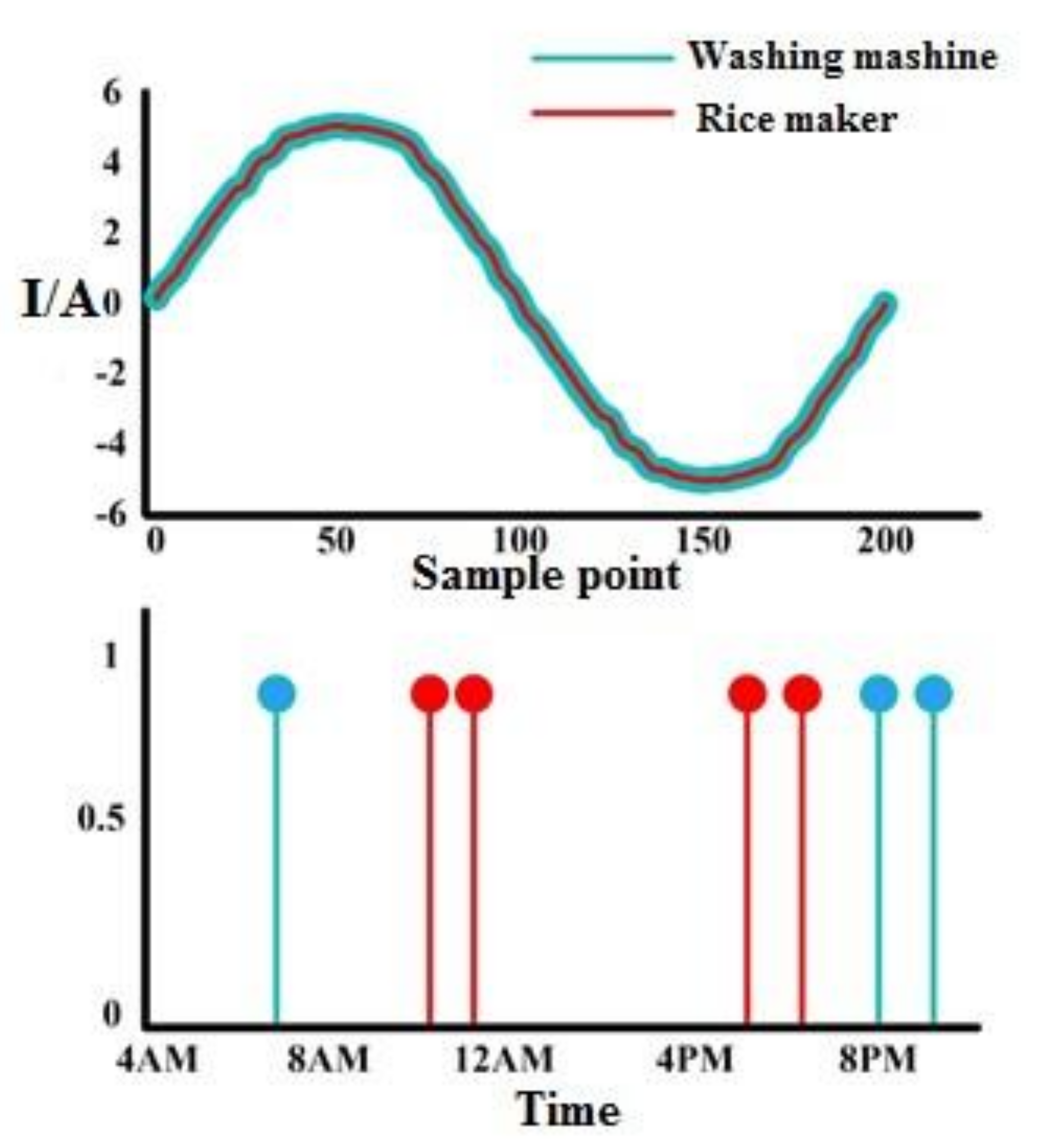
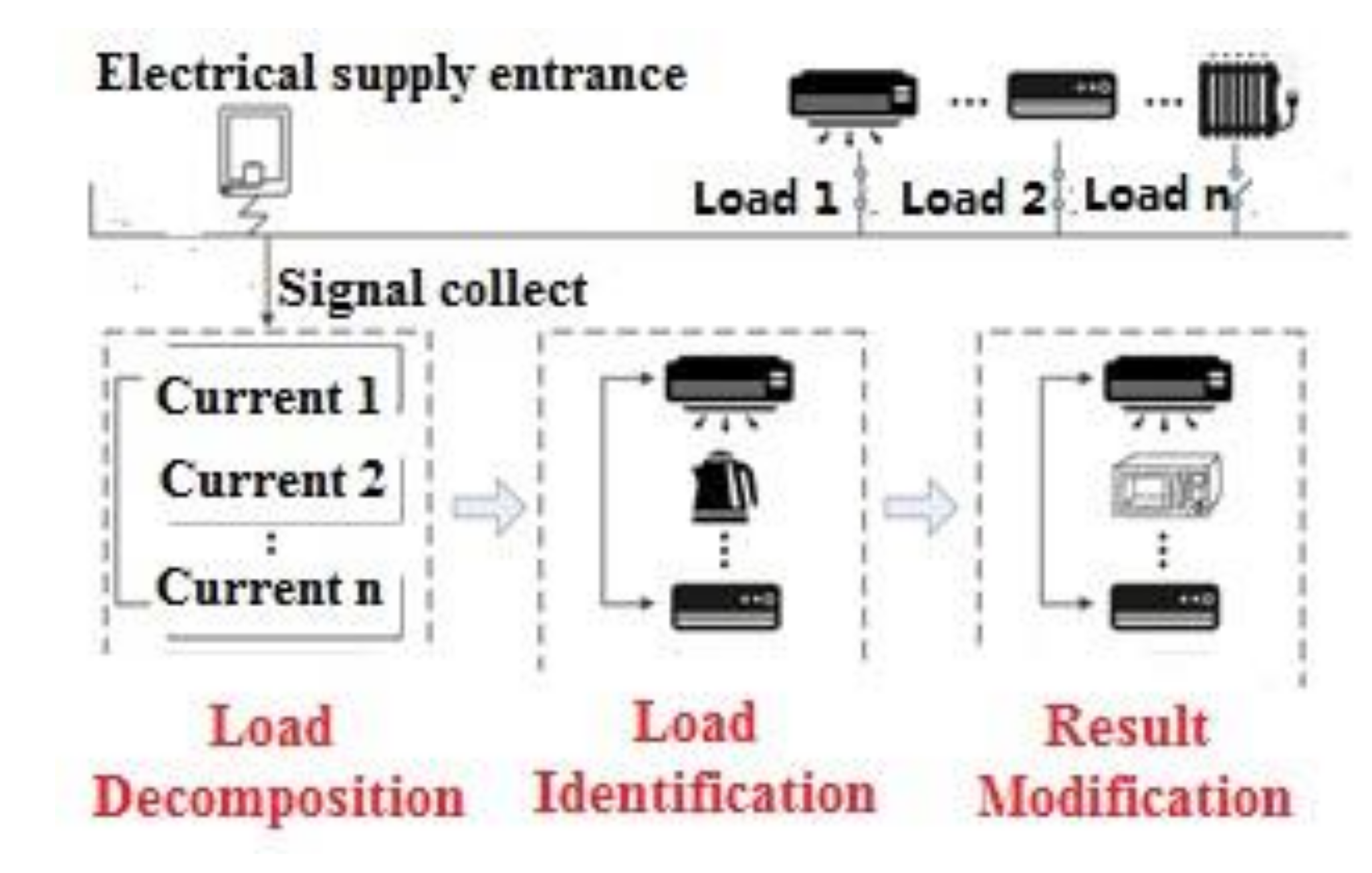
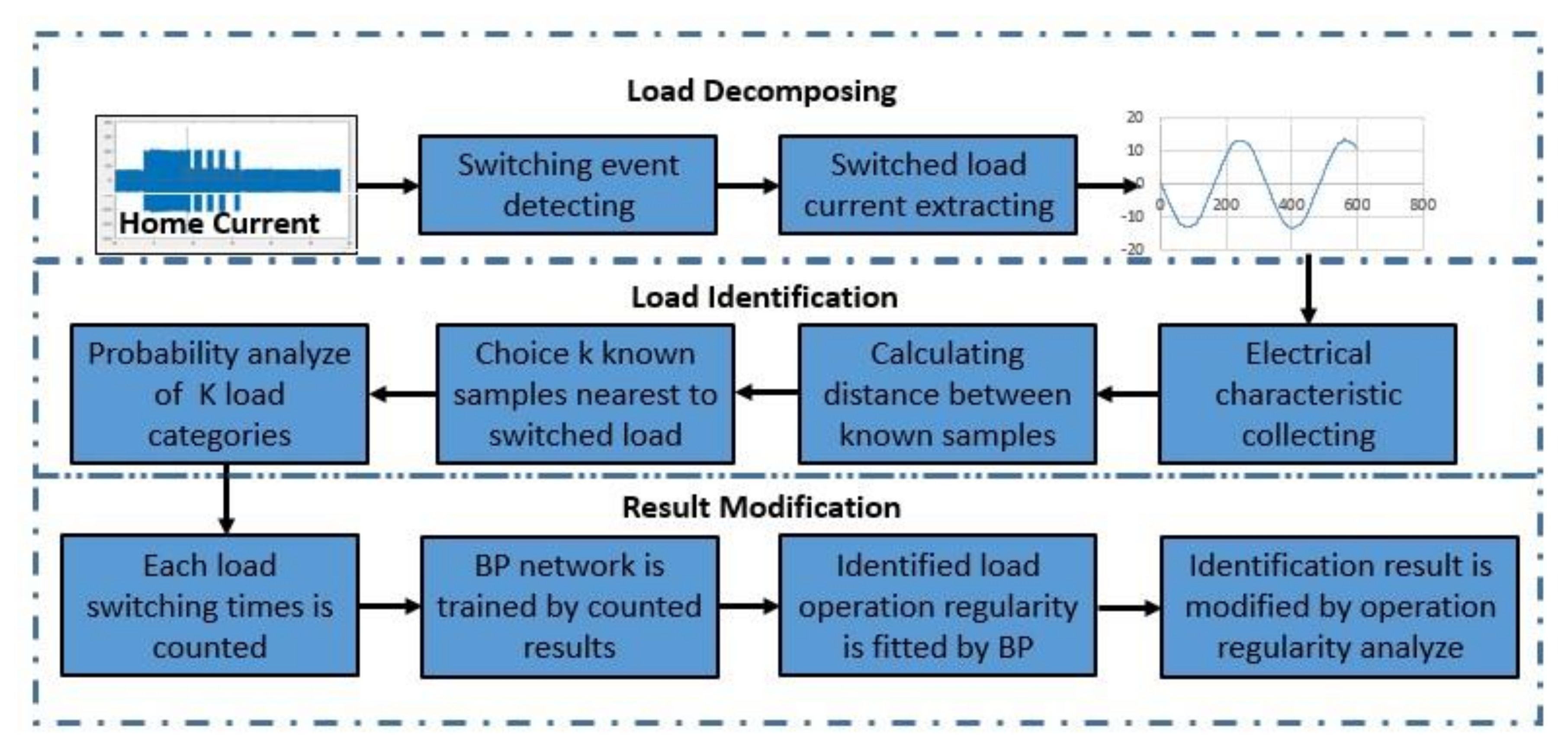
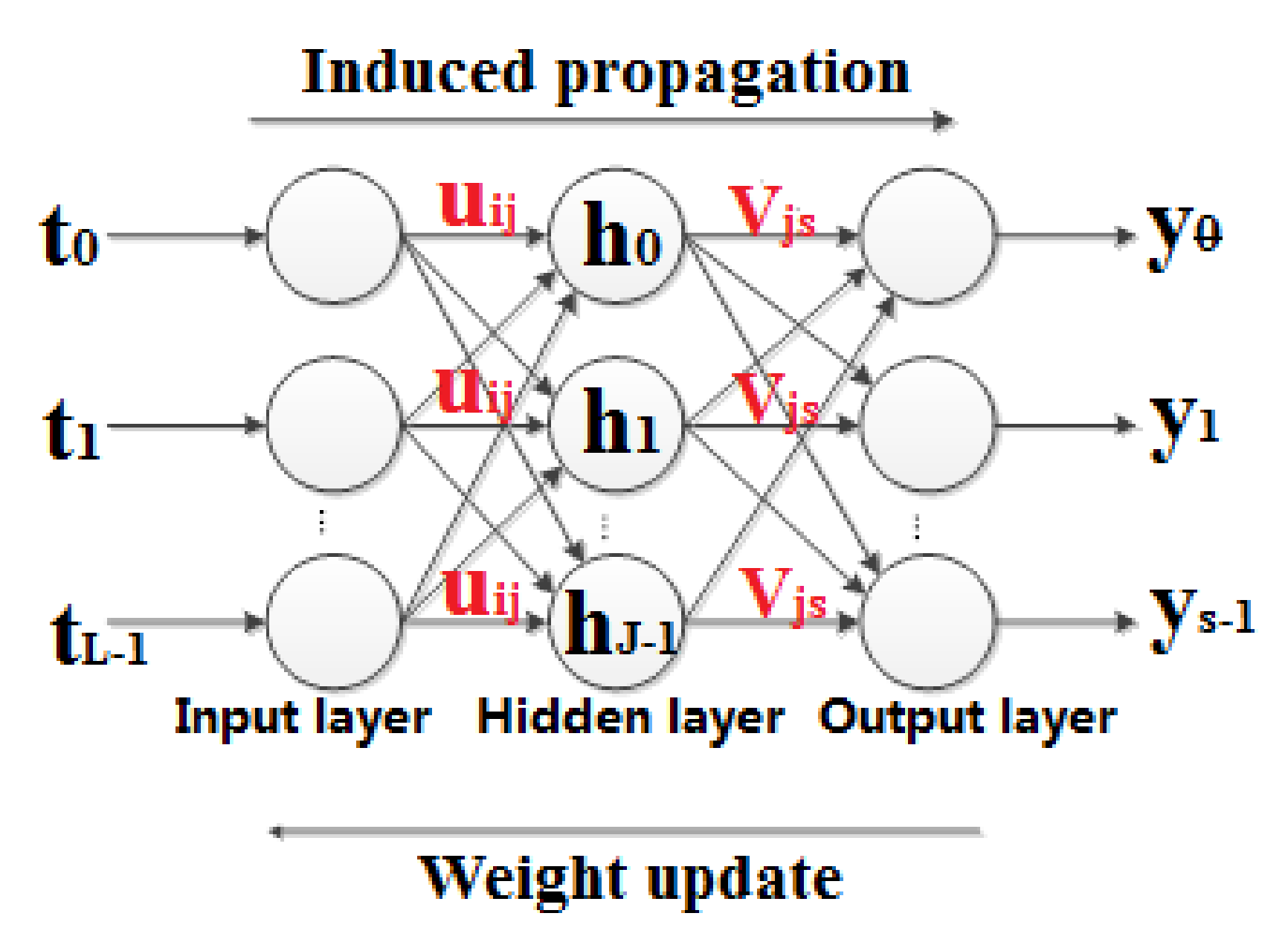
Non-intrusive load monitoring is a vital part of an overall load management scheme. One major disadvantage of existing non-intrusive load monitoring methods is the difficulty to accurately identify loads with similar electrical characteristics. To overcome the various switching probability of loads with similar characteristics in a specific time period, a new non-intrusive load monitoring method is proposed in this paper which will modify monitoring results based on load switching probability distribution curve. Firstly, according to the addition theorem of load working currents, the complex current is decomposed into the independently working current of each load. Secondly, based on the load working current, the initial identification of load is achieved with current frequency domain components, and then the load switching times in each hour is counted due to the initial identified results. Thirdly, a back propagation (BP) neural network is trained by the counted results, the switching probability distribution curve of an identified load is fitted with the BP neural network. Finally, the load operation pattern is profiled according to the switching probability distribution curve, the load operation pattern is used to modify identification result. The effectiveness of the method is verified by the measured data. This approach combines the operation pattern of load to modify the identification results, which improves the ability to identify loads with similar electrical characteristics.
Keywords: non-intrusive load monitoring; signal decomposition; load identification; modification of monitoring result non-intrusive load monitoring; signal decomposition; load identification; modification of monitoring result