Article

Modelling Unconfined Groundwater Recharge Using Adaptive Neuro-Fuzzy Inference System

by
Khaled Mohamed Nabil I. Elsayed
1,
Rabee Rustum
1,* and
Adebayo J. Adeloye
2
1
Institute for Infrastructure and Environment, School of Energy, Geosciences, Infrastructure and Society, Heriot Watt University, Dubai Campus, Dubai Knowledge Park, Blocks 5 & 14, Dubai 38103, UAE
2
Institute for Infrastructure and Environment, School of Energy, Geosciences, Infrastructure and Society, Heriot Watt University, Edinburgh EH14 4AS, UK
*
Author to whom correspondence should be addressed.
Processes 2020, 8(10), 1280; https://doi.org/10.3390/pr8101280
Submission received: 31 August 2020 / Revised: 3 October 2020 / Accepted: 5 October 2020 / Published: 13 October 2020
(This article belongs to the Section Process Control, Modeling and Optimization)

Abstract

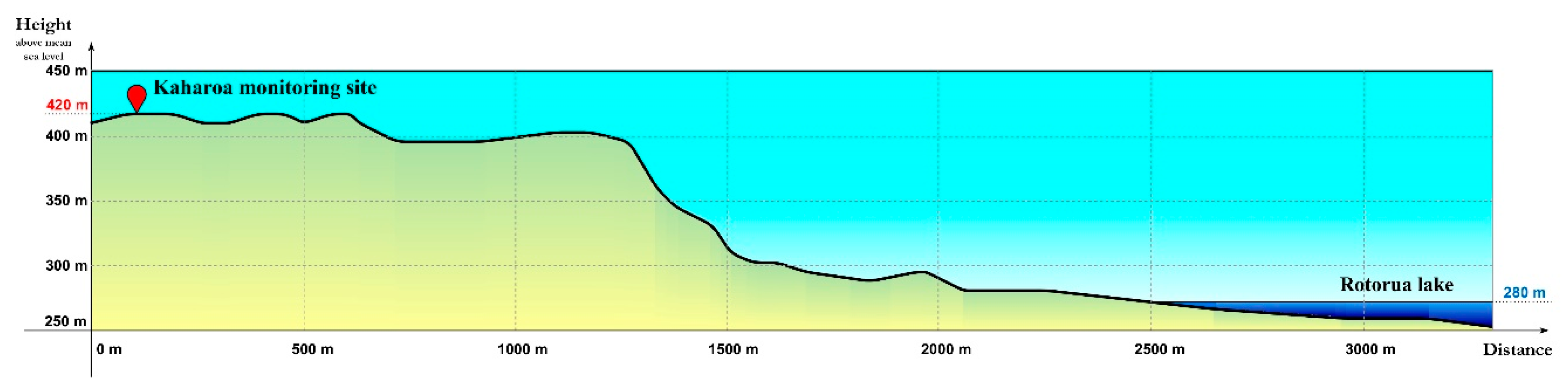
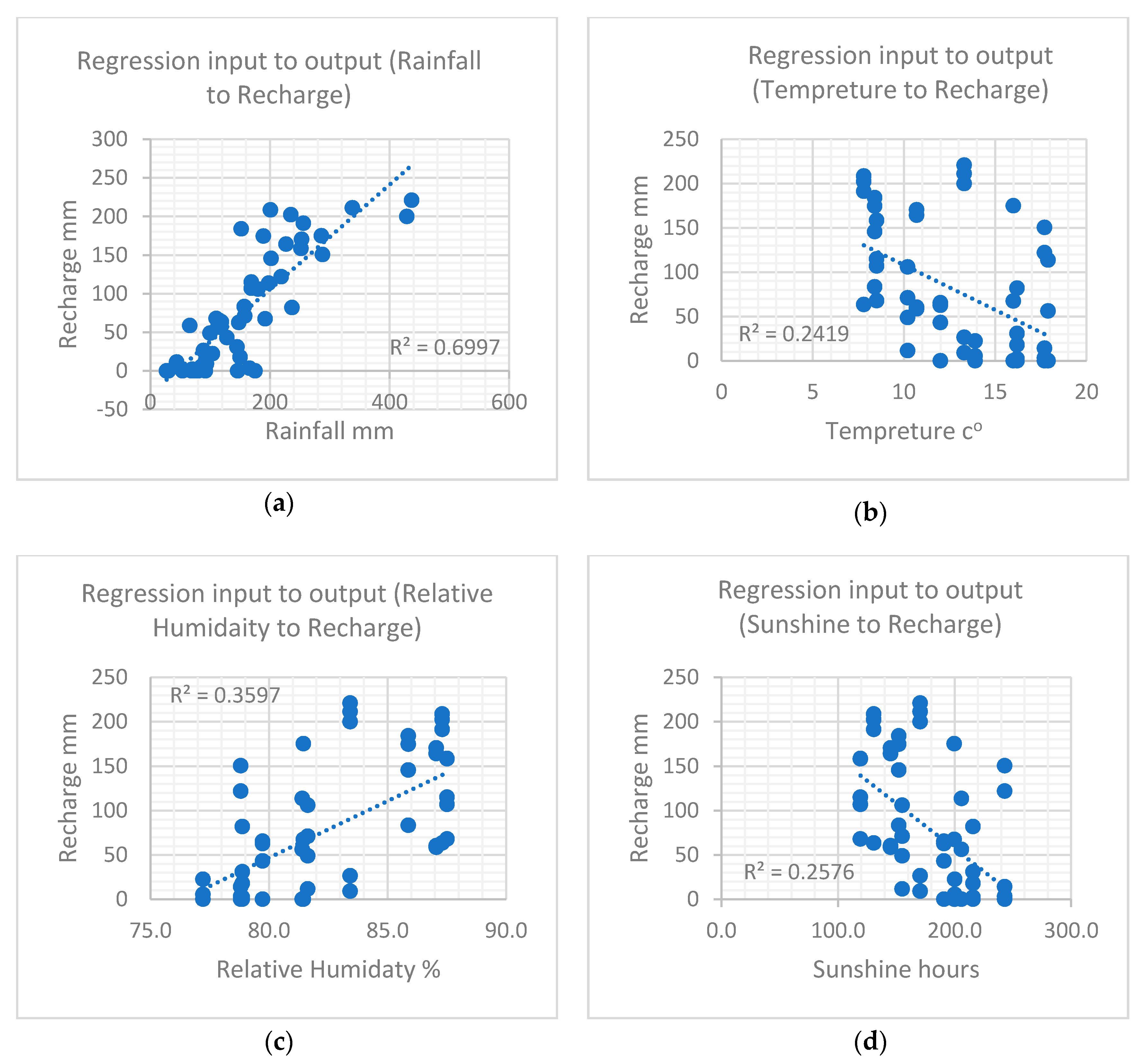
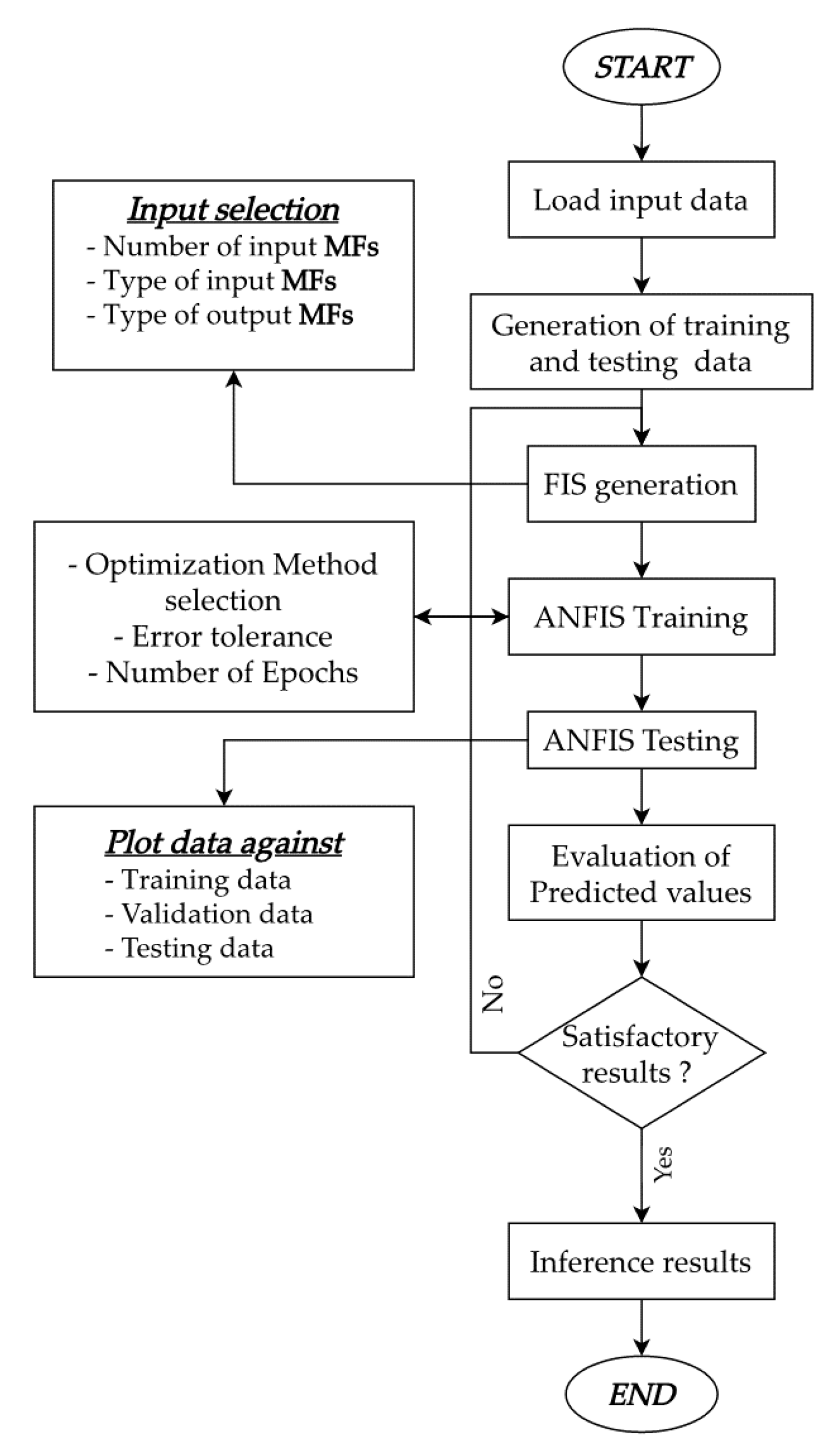
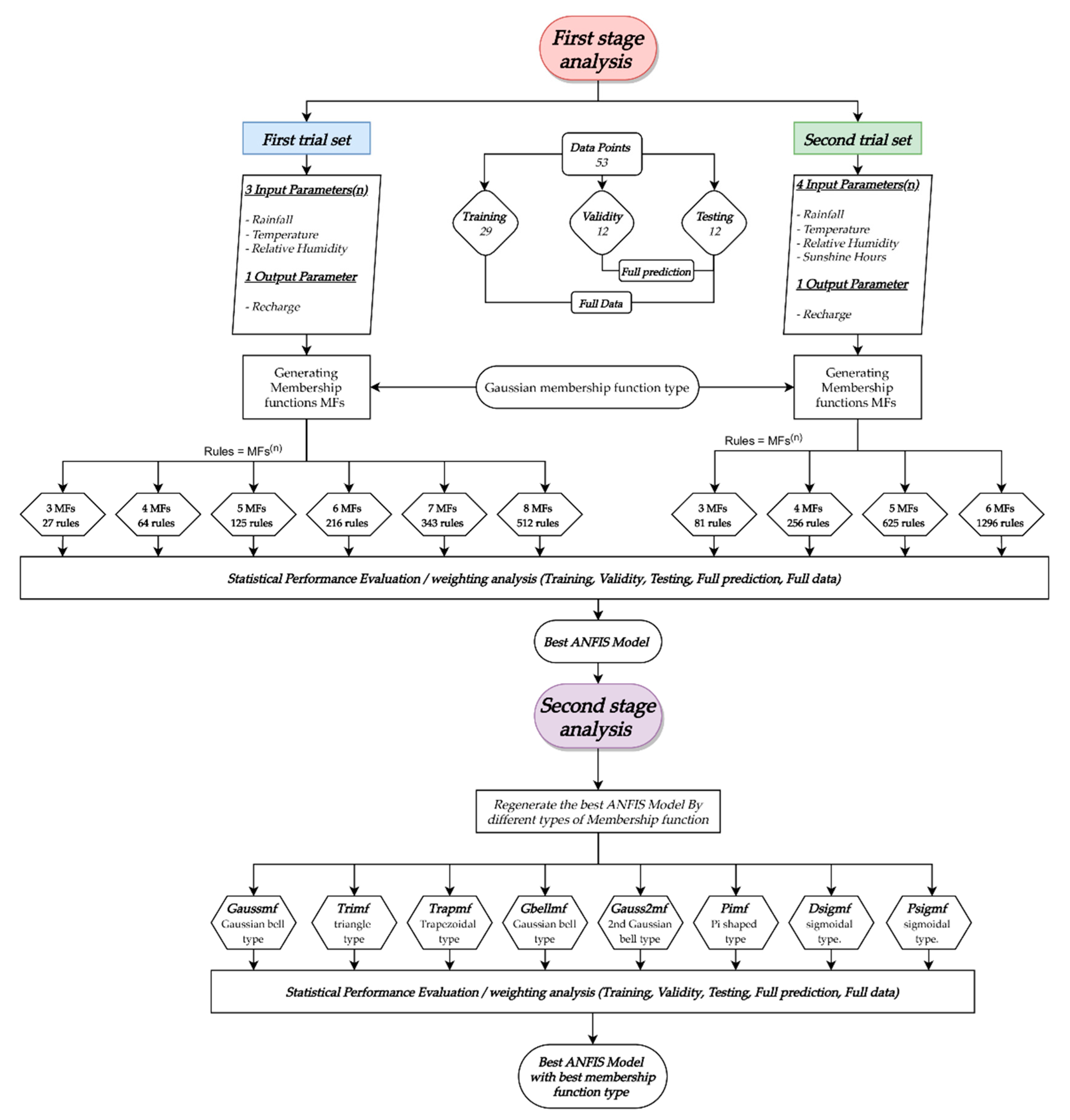
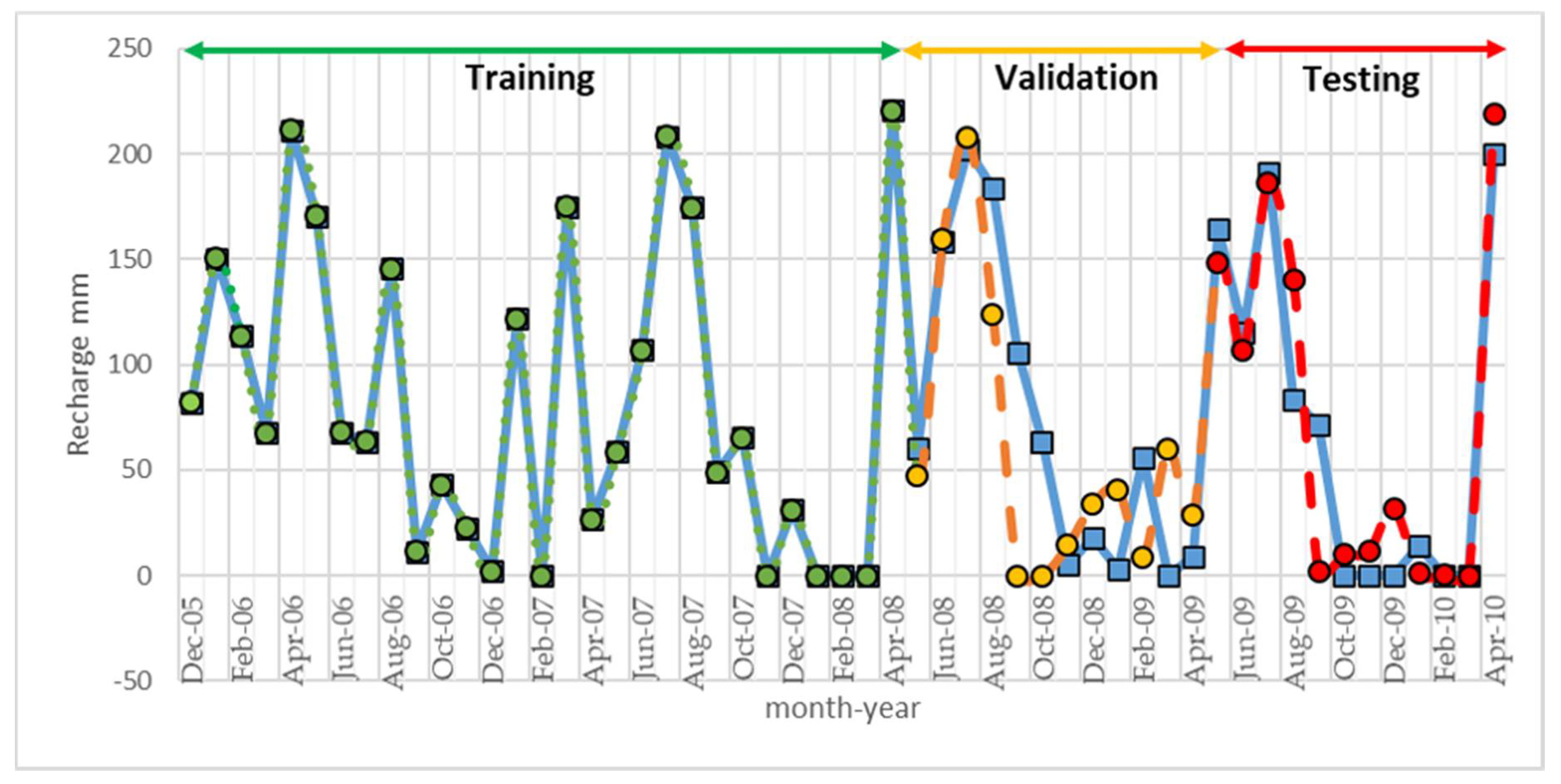
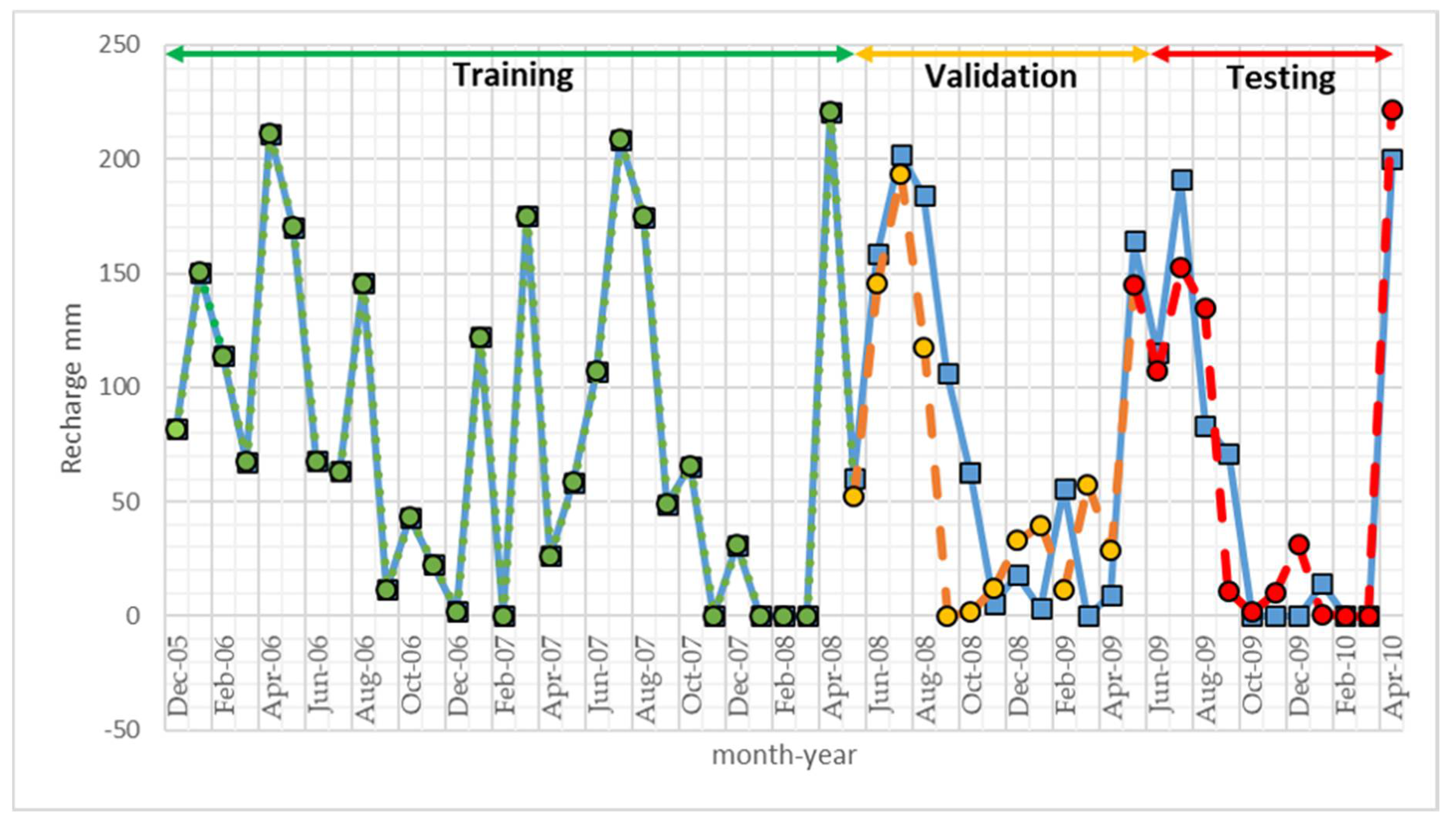
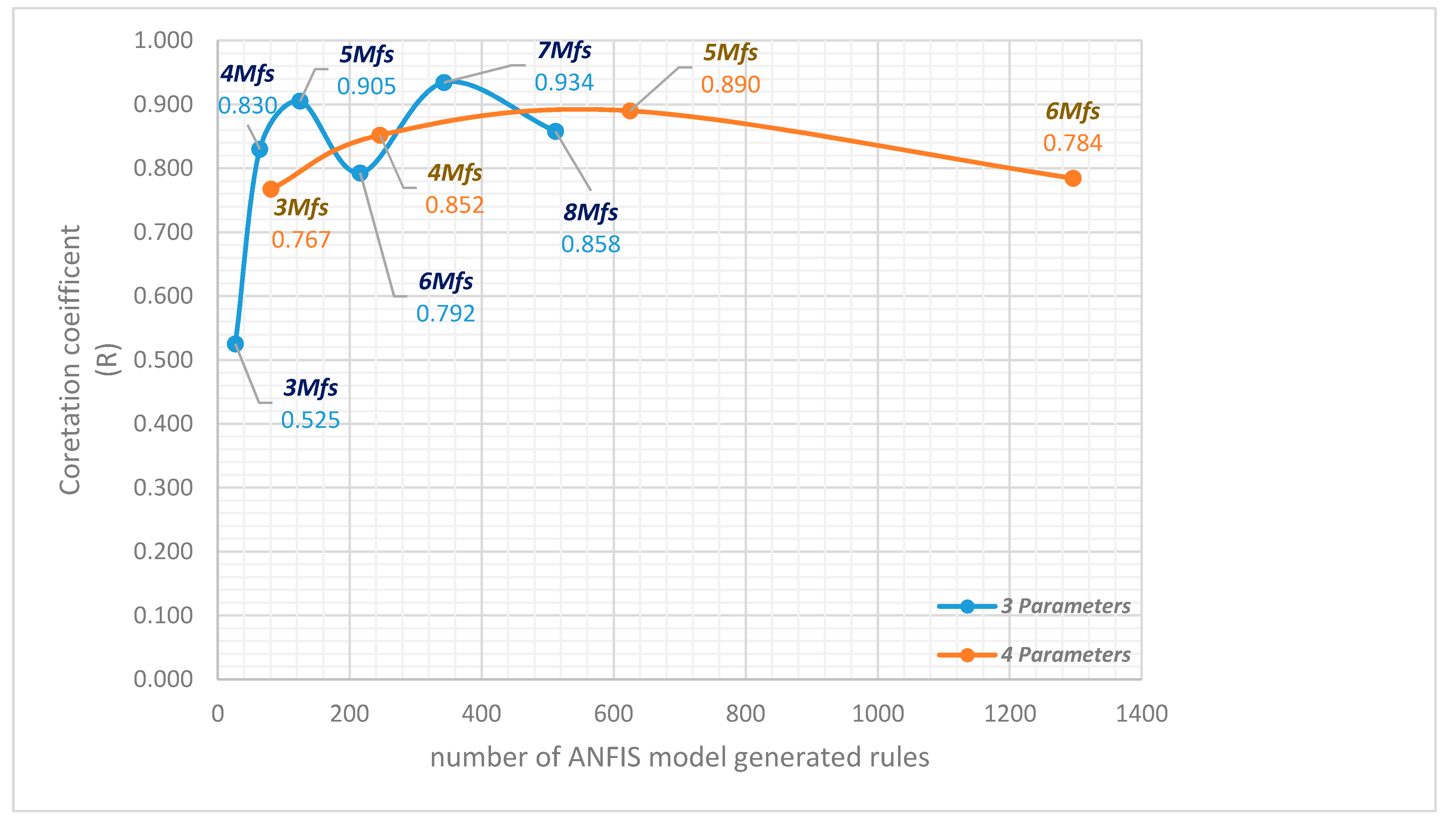
Estimating groundwater recharge using mathematical models such as water budget or soil water balance method has been proved to be very difficult due to the complex, uncertain multidimensional nature of the process, despite the simplicity of the concept. Artificial Intelligence (AI) techniques have been proposed to deal with this complexity and uncertainty in a similar way to human thinking and reasoning. This study proposed the use of the Adaptive Neuro-Fuzzy Inference System (ANFIS) to model unconfined groundwater recharge using a set of data records from Kaharoa monitoring site in the North Island of New Zealand. Fifty-three data points, comprising a set of input parameters such as rainfall, temperature, sunshine hours, and radiation, for a period of approximately four and a half years, have been used to estimate ground water recharge. The results suggest that the ANFIS model is overall a reliable estimator for groundwater recharge, the correlation coefficient of the model reached 93% using independent data set. The method is easy, flexible and reliable; hence, it is recommended to be used for similar applications.

Keywords: groundwater recharge; fuzzy logic; adaptive neuro-fuzzy inference system; water budget; soil water balance; lysimeter groundwater recharge; fuzzy logic; adaptive neuro-fuzzy inference system; water budget; soil water balance; lysimeter