Degradation Pathways and Energy Efficiency on Non-Thermal Plasma for Sulfonamide Antibiotics Removal: A Comparative Study


Abstract
1. Introduction
2. Materials and Methods
2.1. Experimental Set-Up of the NTP
2.2. Chemical Characteristics
2.3. Analytical Procedures
2.4. Calculation of Energy per Order
2.5. Statistical Analysis
3. Results and Discussion
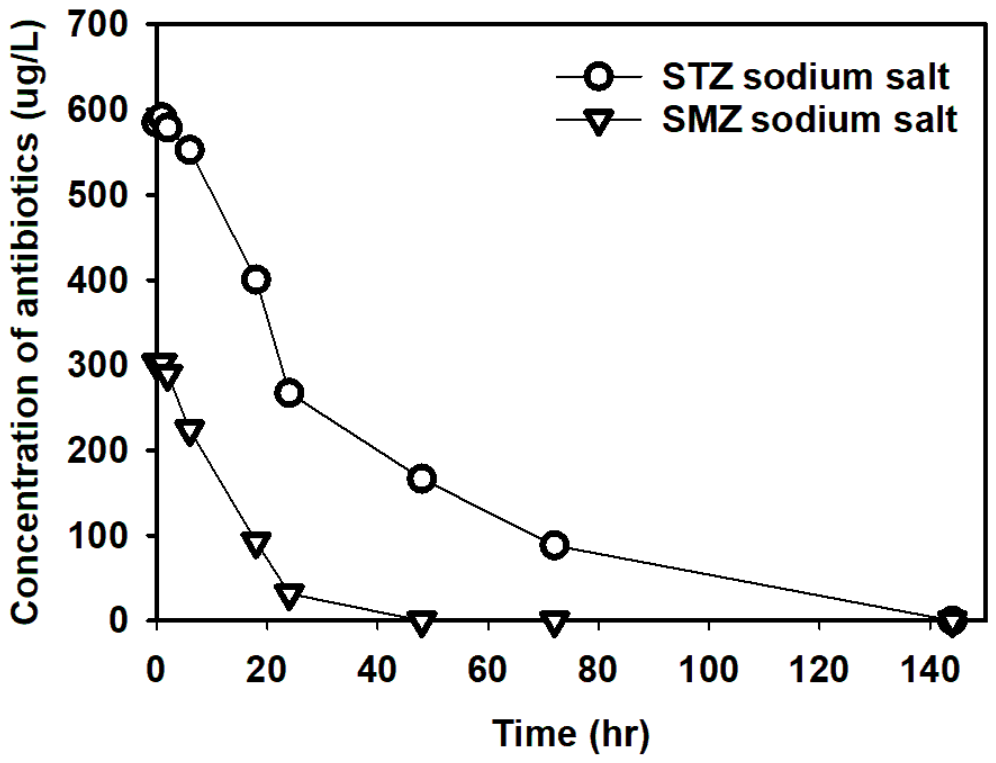
3.1. Parent Antibiotics Degradation from NTP Treatment
3.2. Degradation Efficiency and Kinetics of NTP Versus Other Processes
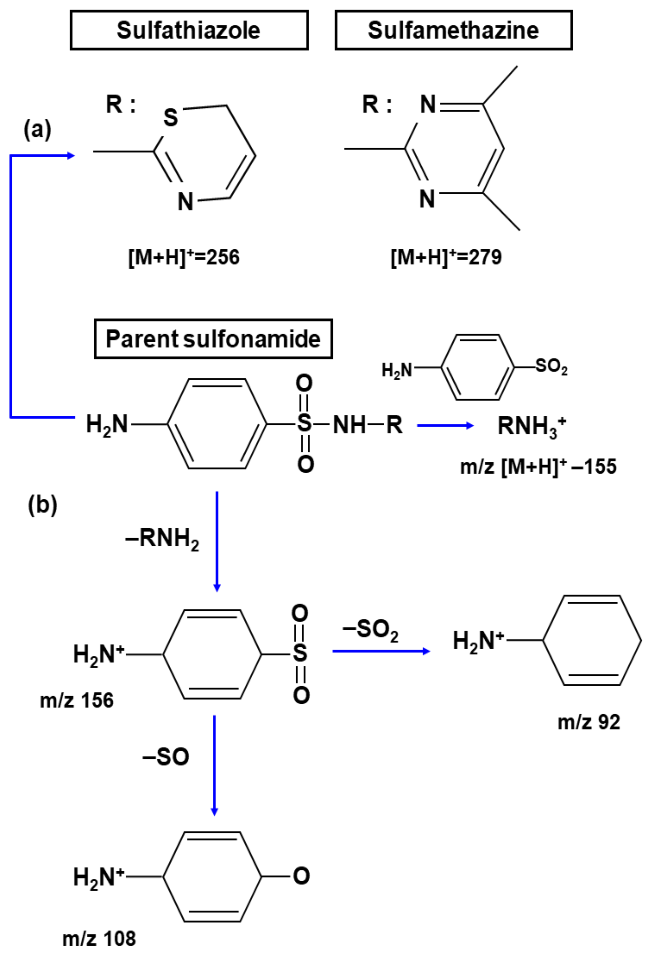
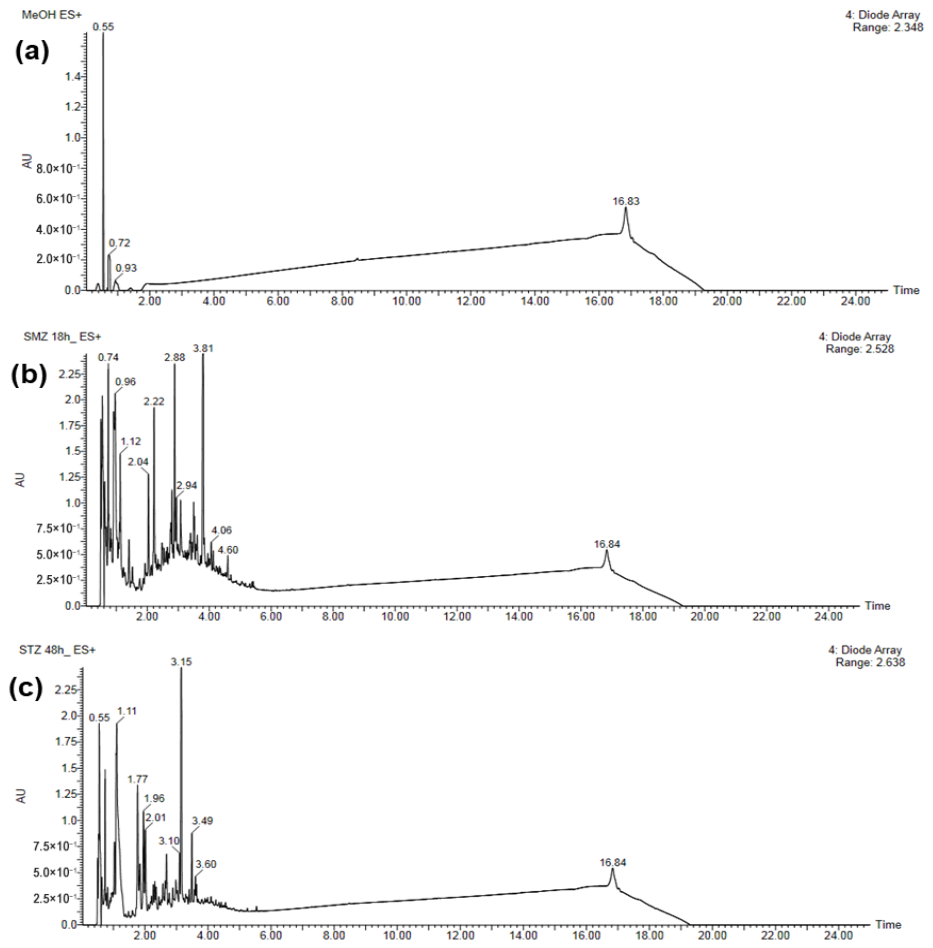
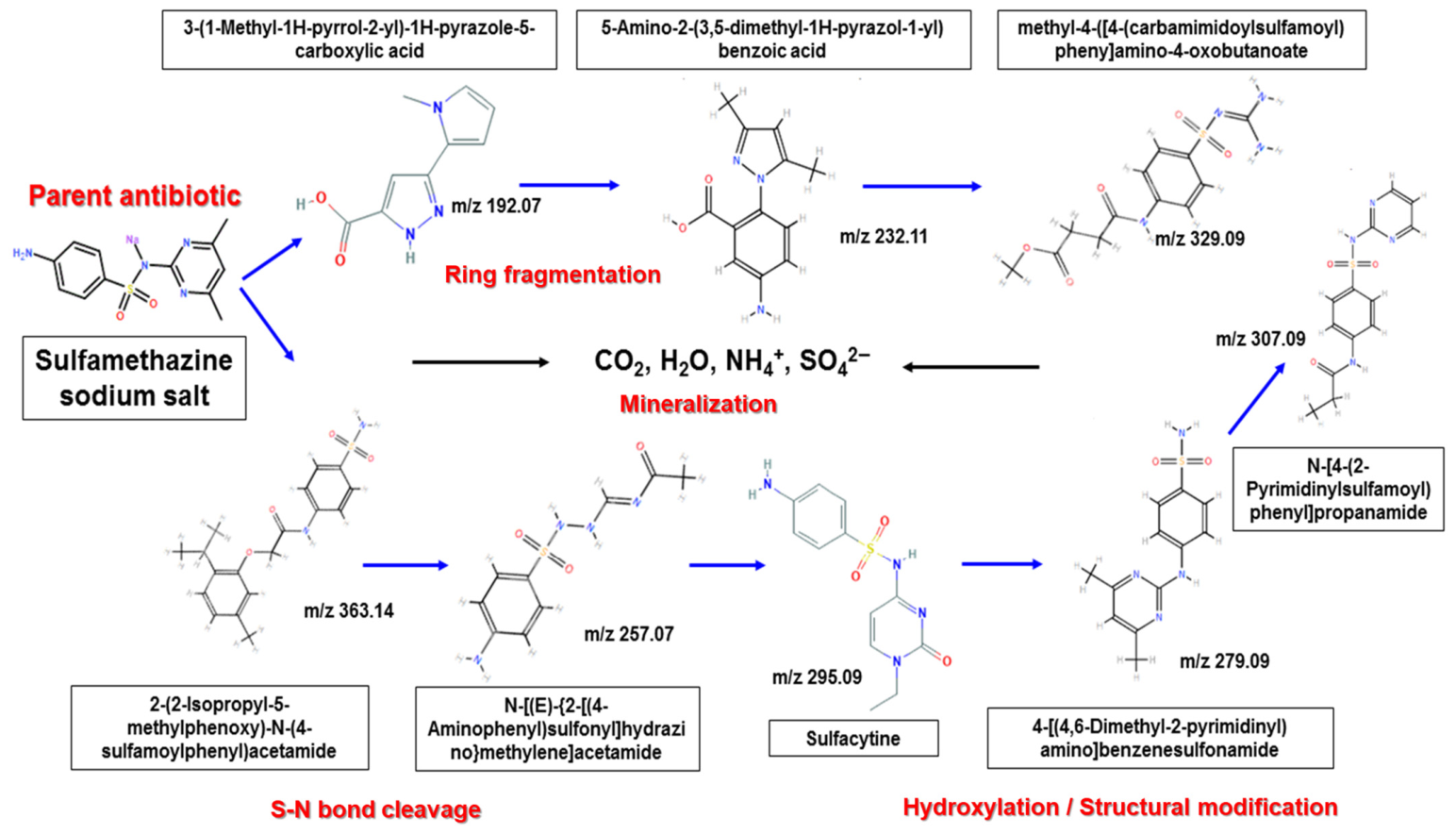
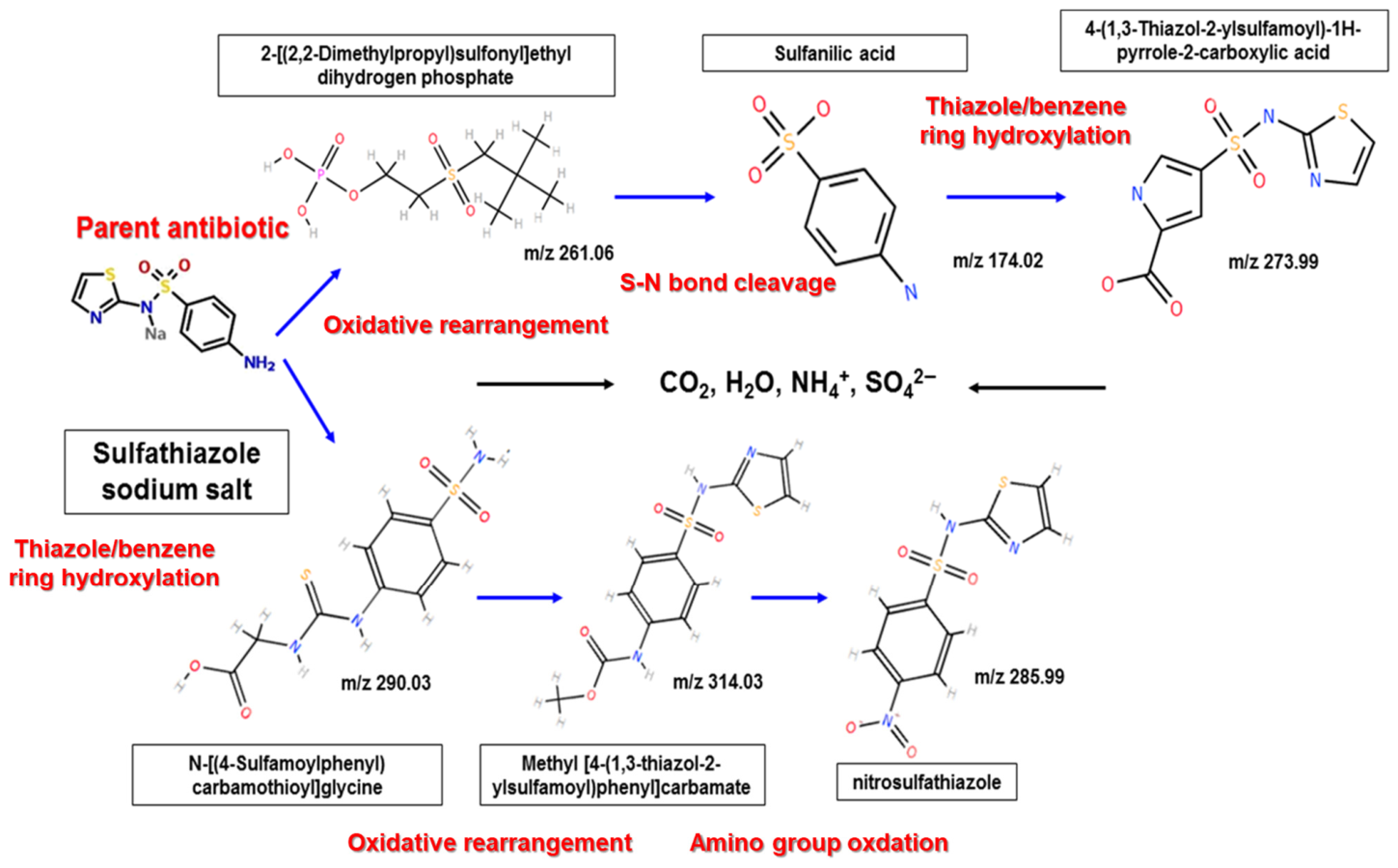
3.3. Degradation Pathways on Chemical Transformation of Target Antibiotics
3.4. Comparative Studies for EEO About NTP and Other Processes
3.5. Outlook on NTP Process Treatment
4. Conclusions
Supplementary Materials
Author Contributions
Funding
Data Availability Statement
Conflicts of Interest
Abbreviations
| AOP | Advanced oxidation process |
| EEO | Electrical energy per order |
| LC-MS/MS | Liquid chromatography–tandem mass spectrometry |
| NTP | Non-thermal plasma |
| ROS | Reactive oxygen species |
| SMZ | Sulfamethazine |
| STZ | Sulfathiazole |
References
- Klauson, D.; Sarcos, N.R.; Krichevskaya, M.; Kattel, E.; Dulova, N.; Dedova, T.; Trapido, M. Advanced oxidation processes for sulfonamide antibiotic sulfamethizole degradation: Process applicability study at ppm level and scale-down to ppb level. J. Environ. Chem. Eng. 2019, 7, 103287. [Google Scholar] [CrossRef]
- Zhang, L.; Bai, J.; Zhang, K.; Wang, Y.; Xiao, R.; Campos, M.A.; Acuña, J.J.; Jorquera, M.A. Occurrence, bioaccumulation and ecological risks of antibiotics in the water-plant-sediment systems in different functional areas of the largest shallow lake in North China: Impacts of river input and historical agricultural activities. Sci. Total Environ. 2022, 857, 159260. [Google Scholar] [CrossRef]
- Wang, J.; Wang, Z.; Cheng, Y.; Cao, L.; Bai, F.; Yue, S.; Xie, P.; Ma, J. Molybdenum disulfide (MoS2): A novel activator of peracetic acid for the degradation of sulfonamide antibiotics. Water Res. 2021, 201, 117291. [Google Scholar] [CrossRef]
- Kotnala, S.; Nayak, A.; Bhushan, B. Nature-based solutions for the remediation of antibiotic pollution in waste water: A comprehensive review. Environ. Eng. Res. 2026, 31, 250091. [Google Scholar] [CrossRef]
- Nayak, A.; Goyal, S.; Bhushan, B.; Negi, P. Metal Organic Framework composites for removal of organic pollutants: Focus on advanced features, gaps and prospects. Environ. Eng. Res. 2026, 31, 250108. [Google Scholar] [CrossRef]
- Xiao, R.; Huang, D.; Du, L.; Song, B.; Yin, L.; Chen, Y.; Gao, L.; Li, R.; Huang, H.; Zeng, G. Antibiotic resistance in soil-plant systems: A review of the source, dissemination, influence factors, and potential exposure risks. Sci. Total Environ. 2023, 869, 161855. [Google Scholar] [CrossRef] [PubMed]
- Pelalak, R.; Alizadeh, R.; Ghareshabani, E.; Heidari, Z. Degradation of sulfonamide antibiotics using ozone-based advanced oxidation process: Experimental, modeling, transformation mechanism and DFT study. Sci. Total Environ. 2020, 734, 139446. [Google Scholar] [CrossRef] [PubMed]
- Duan, W.; Cui, H.; Jia, X.; Huang, X. Occurrence and ecotoxicity of sulfonamides in the aquatic environment: A review. Sci. Total Environ. 2022, 820, 153178. [Google Scholar] [CrossRef]
- Jiang, Z.-R.; Wang, P.; Zhou, Y.-X.; Wang, C.; Jiang, J.; Lan, Y.; Chen, C. Fabrication of a 3D-blocky catalyst (CoMnOx@sponge) via mooring Co-Mn bimetallic oxide on sponge to activate peroxymonosulfate for convenient and efficient degradation of sulfonamide antibiotics. Chem. Eng. J. 2022, 446, 137306. [Google Scholar] [CrossRef]
- Bai, S.; Jin, C.; Zhu, S.; Ma, F.; Wang, L.; Wen, Q. Coating magnetite alters the mechanisms and site energy for sulfonamide antibiotic sorption on biochar. J. Hazard. Mater. 2021, 409, 125024. [Google Scholar] [CrossRef]
- Kim, H.-J.; Won, C.-H.; Kim, H.-W. Pathogen Deactivation of Glow Discharge Cold Plasma While Treating Organic and Inorganic Pollutants of Slaughterhouse Wastewater. Water Air Soil Pollut. 2018, 229, 237. [Google Scholar] [CrossRef]
- Park, R.; Kim, J.-G.; Kim, H.-W. Prediction of varying microcystins during non-thermal plasma oxidation of harvested microalgal biomass. J. Hazard. Mater. 2021, 403, 123596. [Google Scholar] [CrossRef]
- Usman, M.; Monfort, O.; Gowrisankaran, S.; Hameed, B.H.; Hanna, K.; Al-Abri, M. Dual functional materials capable of integrating adsorption and Fenton-based oxidation processes for highly efficient removal of pharmaceutical contaminants. J. Water Process Eng. 2023, 52, 103566. [Google Scholar] [CrossRef]
- Qiu, G.; Chen, H.; Srinivasa Raghavan, D.S.; Ting, Y.-P. Removal behaviors of antibiotics in a hybrid microfiltration-forward osmotic membrane bioreactor for real municipal wastewater treatment. Chem. Eng. J. 2021, 417, 129146. [Google Scholar] [CrossRef]
- Lee, D.; Lee, J.-C.; Nam, J.-Y.; Kim, H.-W. Degradation of sulfonamide antibiotics and their intermediates toxicity in an aeration-assisted non-thermal plasma while treating strong wastewater. Chemosphere 2018, 209, 901–907. [Google Scholar] [CrossRef]
- Lee, J.-C.; Kim, H.-J.; Kim, H.-W.; Lim, H. Iron-impregnated spent coffee ground biochar for enhanced degradation of methylene blue during cold plasma application. J. Ind. Eng. Chem. 2021, 98, 383–388. [Google Scholar] [CrossRef]
- Yao, H.; Sun, P.; Minakata, D.; Crittenden, J.C.; Huang, C.-H. Kinetics and Modeling of Degradation of Ionophore Antibiotics by UV and UV/H2O2. Environ. Sci. Technol. 2013, 47, 4581–4589. [Google Scholar] [CrossRef] [PubMed]
- An, H.; Lee, J.-C.; Park, R.; Kim, H.-W. Integration of submerged microfiltration and cold plasma for high-strength livestock excreta. J. Hazard. Mater. 2021, 401, 123280. [Google Scholar] [CrossRef]
- Kim, H.-J.; Won, C.-H.; Hong, Y.-P.; Lee, I.H.; Kim, H.-W. Energy-effective elimination of harmful microcystins by a non-thermal plasma process. Chemosphere 2021, 284, 131338. [Google Scholar] [CrossRef]
- Kim, H.-J.; Lee, U.; Kim, H.-W.; Cho, M.; Lee, J. Zero Discharge of Dyes and Regeneration of a Washing Solution in Membrane-Based Dye Removal by Cold Plasma Treatment. Membranes 2022, 12, 546. [Google Scholar] [CrossRef]
- Aziz, K.H.H.; Miessner, H.; Mahyar, A.; Mueller, S.; Moeller, D.; Mustafa, F.; Omer, K.M. Degradation of perfluorosurfactant in aqueous solution using non-thermal plasma generated by nano-second pulse corona discharge reactor. Arab. J. Chem. 2021, 14, 103366. [Google Scholar] [CrossRef]
- Heberlein, J.; Murphy, A.B. Thermal plasma waste treatment. J. Phys. D Appl. Phys. 2008, 41, 053001. [Google Scholar] [CrossRef]
- Jiang, B.; Zheng, J.; Qiu, S.; Wu, M.; Zhang, Q.; Yan, Z.; Xue, Q. Review on electrical discharge plasma technology for wastewater remediation. Chem. Eng. J. 2014, 236, 348–368. [Google Scholar] [CrossRef]
- Kim, H.-J.; Nam, G.-S.; Jang, J.-S.; Won, C.-H.; Kim, H.-W. Cold Plasma Treatment for Efficient Control over Algal Bloom Products in Surface Water. Water 2019, 11, 1513. [Google Scholar] [CrossRef]
- Chen, H.; Zhai, J.; Ji, Y.; Song, W.; Hu, Y.; He, S.; Qian, L.; Wang, S. Review on Process Intensification of Non-Thermal Plasma Oxidation in Multiphase Reactor for Wastewater Treatment: Mass Transfer Enhancement and Waste Energy-Driven Conversion. Water 2026, 18, 649. [Google Scholar] [CrossRef]
- Kim, H.-J.; Lee, T.-H.; Hong, Y.; Lee, J.-C.; Kim, H.-W. Enhanced oxidation of parabens in an aqueous solution by air-assisted cold plasma. Chemosphere 2024, 361, 142570. [Google Scholar] [CrossRef]
- Oh, S.; Nam, J.-Y.; Hong, Y.; Lee, T.-H.; Lee, J.-C.; Kim, H.-W. Degradation and Ecotoxicity Mitigation of Perfluorooctane Sulfonate by Aeration-Assisted Cold Plasma. Appl. Sci. 2025, 15, 2936. [Google Scholar] [CrossRef]
- Baran, W.; Adamek, E.; Sobczak, A.; Makowski, A. Photocatalytic degradation of sulfa drugs with TiO2, Fe salts and TiO2/FeCl3 in aquatic environment—Kinetics and degradation pathway. Appl. Catal. B Environ. 2009, 90, 516–525. [Google Scholar] [CrossRef]
- Białk-Bielińska, A.; Kumirska, J.; Palavinskas, R.; Stepnowski, P. Optimization of multiple reaction monitoring mode for the trace analysis of veterinary sulfonamides by LC–MS/MS. Talanta 2009, 80, 947–953. [Google Scholar] [CrossRef]
- Le-Minh, N.; Stuetz, R.M.; Khan, S.J. Determination of six sulfonamide antibiotics, two metabolites and trimethoprim in wastewater by isotope dilution liquid chromatography/tandem mass spectrometry. Talanta 2012, 89, 407–416. [Google Scholar] [CrossRef] [PubMed]
- Zhao, J.; Meng, X. Experimental analysis of a slant perforated mesh-plate photoreactor for water detoxification. Chemosphere 2023, 315, 137782. [Google Scholar] [CrossRef]
- Kyere-Yeboah, K.; Bique, I.K.; Qiao, X.-C. Advances of non-thermal plasma discharge technology in degrading recalcitrant wastewater pollutants. A comprehensive review. Chemosphere 2023, 320, 138061. [Google Scholar] [CrossRef] [PubMed]
- Zhou, L.; Yang, X.; Ji, Y.; Wei, J. Sulfate radical-based oxidation of the antibiotics sulfamethoxazole, sulfisoxazole, sulfathiazole, and sulfamethizole: The role of five-membered heterocyclic rings. Sci. Total Environ. 2019, 692, 201–208. [Google Scholar] [CrossRef] [PubMed]
- Pang, R.; Li, N.; Hou, Z.; Huang, J.; Yue, C.; Cai, Y.; Song, J. Degradation of sulfonamide antibiotics and a structurally related compound by chlorine dioxide: Efficiency, kinetics, potential products and pathways. Chem. Eng. J. 2023, 451, 138502. [Google Scholar] [CrossRef]
- Lin, C.-C.; Huang, C.-Y. Degradation of sulfamethazine in water in thermally activated persulfate process. J. Taiwan Inst. Chem. Eng. 2024, 155, 105229. [Google Scholar] [CrossRef]
- Zhao, Q.; Zhang, X.; Huang, D.; Chen, L.; Li, S.; Chovelon, J.-M.; Zhou, L.; Xiu, G. Cu(II) assisted peroxymonosulfate oxidation of sulfonamide antibiotics: The involvement of Cu(III). Chemosphere 2021, 284, 131329. [Google Scholar] [CrossRef]
- Zhang, T.; Yang, Y.; Li, X.; Yu, H.; Wang, N.; Li, H.; Du, P.; Jiang, Y.; Fan, X.; Zhou, Z. Degradation of sulfamethazine by persulfate activated with nanosized zero-valent copper in combination with ultrasonic irradiation. Sep. Purif. Technol. 2020, 239, 116537. [Google Scholar] [CrossRef]
- Fu, C.; Yi, X.; Liu, Y.; Zhou, H. Cu2+ activated persulfate for sulfamethazine degradation. Chemosphere 2020, 257, 127294. [Google Scholar] [CrossRef]
- Wu, J.T.; Wu, C.H.; Liu, C.Y.; Huang, W.J. Photodegradation of sulfonamide antimicrobial compounds (sulfadiazine, sulfamethizole, sulfamethoxazole and sulfathiazole) in various UV/oxidant systems. Water Sci. Technol. 2015, 71, 412–417. [Google Scholar] [CrossRef]
- Wu, C.H.; Kuo, C.Y.; Dong, C.D.; Chen, C.W.; Lin, Y.L. Removal of sulfonamides from wastewater in the UV/TiO2 system: Effects of pH and salinity on photodegradation and mineralization. Water Sci. Technol. 2019, 79, 349–355. [Google Scholar] [CrossRef]
- Hu, Z.; Xie, X.; Li, S.; Song, M.; Liang, G.; Zhao, J.; Wang, Z. Rational construct CQDs/BiOCOOH/uCN photocatalyst with excellent photocatalytic performance for degradation of sulfathiazole. Chem. Eng. J. 2021, 404, 126541. [Google Scholar] [CrossRef]
- Kim, H.-J.; Lee, U.; Lee, I.; Hong, Y.; Lee, J. Enhancement of polystyrene microplastic removal by near dissolved organic matter microfiltration (NDOM MF) coupled with cold plasma treatment. J. Water Process Eng. 2023, 54, 103901. [Google Scholar] [CrossRef]
- Li, H.; Li, T.; He, S.; Zhou, J.; Wang, T.; Zhu, L. Efficient degradation of antibiotics by non-thermal discharge plasma: Highlight the impacts of molecular structures and degradation pathways. Chem. Eng. J. 2020, 395, 125091. [Google Scholar] [CrossRef]
- Di, G.; Zhu, Z.; Zhang, H.; Qiu, Y.; Yin, D.; Crittenden, J. Simultaneous sulfamethazine oxidation and bromate reduction by Pd-mediated Z-scheme Bi2MoO6/g-C3N4 photocatalysts: Synergetic mechanism and degradative pathway. Chem. Eng. J. 2020, 401, 126061. [Google Scholar] [CrossRef]
- Esrafili, A.; Tahergorabi, M.; Malakootian, M.; Kermani, M.; Gholami, M.; Farzadkia, M. Synergistic effects of catalytic and photocatalytic ozonation on four sulfonamides antibiotics degradation in an aquatic solution. Desalin. Water Treat. 2020, 182, 260–276. [Google Scholar] [CrossRef]
- Lei, K.; Zhu, Y.; Chen, W.; Pan, H.-Y.; Cao, Y.-X.; Zhang, X.; Guo, B.-B.; Sweetman, A.; Lin, C.-Y.; Ouyang, W.; et al. Spatial and seasonal variations of antibiotics in river waters in the Haihe River Catchment in China and ecotoxicological risk assessment. Environ. Int. 2019, 130, 104919. [Google Scholar] [CrossRef] [PubMed]
- Pan, M.; Lyu, T.; Zhan, L.; Matamoros, V.; Angelidaki, I.; Cooper, M.; Pan, G. Mitigating antibiotic pollution using cyanobacteria: Removal efficiency, pathways and metabolism. Water Res. 2021, 190, 116735. [Google Scholar] [CrossRef]
- Kim, H.-J.; Won, C.-H.; Kim, H.-W. Optimized Pretreatment of Non-Thermal Plasma for Advanced Sewage Oxidation. Int. J. Environ. Res. Public Health 2020, 17, 7694. [Google Scholar] [CrossRef]



| Item | Process | Removal Efficiency (%) | k (h−1) | 95% CI (h−1) | R2 |
|---|---|---|---|---|---|
| SMZ | NTP (This study) | 99.9 | 0.0731 | [0.0596–0.0866] | 0.99 |
| O3/H2O2 [7] | 86.3 | 1.74 | 0.97 | ||
| TAP (Thermally activated persulfate) [35] | 11~100 | 0.318~84.018 | 0.7636~0.9968 | ||
| Cu/PMS [36] | 82.6 | - | - | ||
| US-PS [37] | 24.4 | - | - | ||
| nZVC-PS [37] | 56.6 | - | - | ||
| nZVC-PS-US [37] | 96.4 | - | - | ||
| Cu2+ activated persulfate [38] | 96.5 | - | - | ||
| STZ | NTP (This study) | 99.9 | 0.0276 | [0.0238–0.0314] | 0.98 |
| O3/H2O2 [7] | 89.3 | 1.74 | 0.97 | ||
| UV/Na2S2O8 [39] | 96 | 0.846 | 0.97 | ||
| UV/NaBrO3 [39] | 99 | 1.368 | 0.99 | ||
| UV/TiO2 [40] | 99.9 | 1.14 | 0.98 | ||
| 4-CQDs/BiOCOOH/uCN 50 [41] | 99.2 | - | - |
| Component Name | Neutral Mass (Da) | Observed Neutral Mass (Da) | Observed m/z | Observed RT (min) | Isotope Match Mz RMS PPM |
|---|---|---|---|---|---|
| 3-(1-Methyl-1H-pyrrol-2-yl)-1H-pyrazole-5-carboxylic acid | 191.07 | 191.07 | 192.07 | 1.47 | 2.69 |
| 5-Amino-2-(3,5-dimethyl-1H-pyrazol-1-yl)benzoic acid | 231.10 | 231.10 | 232.11 | 2.30 | 2.26 |
| Methyl-4-([4-(carbamimidoylsulfamoyl)pheny]amino-4-oxobutanoate | 328.08 | 328.08 | 329.09 | 2.83 | 1.65 |
| 2-(2-Isopropyl-5-methylphenoxy)-N-(4-sulfamoylphenyl)acetamide | 362.13 | 362.13 | 363.14 | 2.81 | 13.14 |
| N-[(E)-(2-[(4-Aminophenyl) sulfonyl] hydrazine) methylene]acetamide | 256.06 | 256.06 | 257.07 | 2.95 | 2.67 |
| Sulfacytine | 294.08 | 294.08 | 295.09 | 3.46 | 1.31 |
| 4-[(4,6-Dimethyl-2-pyrimidinyl)amino]benzenesulfonamide | 278.08 | 278.08 | 279.09 | 3.56 | 2.39 |
| N-[4-(2-Pyrimidinylsulfamoyl)phenyl]propanamide | 306.08 | 306.08 | 307.09 | 3.68 | 2.57 |
| Component Name | Neutral Mass (Da) | Observed Neutral Mass (Da) | Observed m/z | Observed RT (min) | Isotope Match Mz RMS PPM |
|---|---|---|---|---|---|
| 2-[(2,2-Dimethylpropyl)sulfonyl] ethyl dihydrogen phosphate | 260.05 | 260.05 | 261.06 | 0.58 | 0.53 |
| Sulfanilic acid | 173.01 | 173.01 | 174.02 | 1.18 | 1.66 |
| 4-(1,3-Thiazol-2-ylsulfamoyl)-1H-pyrrole-2-carboxylic acid | 272.99 | 272.99 | 273.99 | 1.28 | 3.44 |
| N-[(4-Sulfamoylphenyl)carbamothioyl]glycine | 289.02 | 289.02 | 290.03 | 1.85 | 1.04 |
| Methyl-[4-(1,3-thiazol-2-ylsulfamoyl)phenyl]carbamate | 313.02 | 313.02 | 314.03 | 2.62 | 0.34 |
| Nitrosulfathiazole | 284.99 | 284.99 | 285.99 | 2.77 | 10.98 |
| Antibiotics | Process | EEO (kWh/m3/Order) | Reference |
|---|---|---|---|
| SMZ sodium salt | NTP | 22.4 | This study |
| SMZ | Pd-BMCN | 831.7 | [44] |
| STZ sodium salt | NTP | 7.5 | This study |
| STZ | Catalytic ozonation | 53.6~108.8 | [45] |
| Photocatalytic ozonation | 29.7~51.4 | [45] | |
| STZ | 4-CQDs/BiOCOOH/uCN 50 W (LED lamp) | 364 | [41] |
| STZ | 4-CQDs/BiOCOOH/uCN 300 W (Xenon lamp) | 885 | [41] |
Disclaimer/Publisher’s Note: The statements, opinions and data contained in all publications are solely those of the individual author(s) and contributor(s) and not of MDPI and/or the editor(s). MDPI and/or the editor(s) disclaim responsibility for any injury to people or property resulting from any ideas, methods, instructions or products referred to in the content. |
© 2026 by the authors. Licensee MDPI, Basel, Switzerland. This article is an open access article distributed under the terms and conditions of the Creative Commons Attribution (CC BY) license.
Share and Cite
Kim, H.-J.; Lee, D.; Han, S.; Lee, J.-C.; Kim, H.-W. Degradation Pathways and Energy Efficiency on Non-Thermal Plasma for Sulfonamide Antibiotics Removal: A Comparative Study. Processes 2026, 14, 1312. https://doi.org/10.3390/pr14081312
Kim H-J, Lee D, Han S, Lee J-C, Kim H-W. Degradation Pathways and Energy Efficiency on Non-Thermal Plasma for Sulfonamide Antibiotics Removal: A Comparative Study. Processes. 2026; 14(8):1312. https://doi.org/10.3390/pr14081312
Chicago/Turabian StyleKim, Hee-Jun, Donggwan Lee, Sanghoon Han, Jae-Cheol Lee, and Hyun-Woo Kim. 2026. "Degradation Pathways and Energy Efficiency on Non-Thermal Plasma for Sulfonamide Antibiotics Removal: A Comparative Study" Processes 14, no. 8: 1312. https://doi.org/10.3390/pr14081312
APA StyleKim, H.-J., Lee, D., Han, S., Lee, J.-C., & Kim, H.-W. (2026). Degradation Pathways and Energy Efficiency on Non-Thermal Plasma for Sulfonamide Antibiotics Removal: A Comparative Study. Processes, 14(8), 1312. https://doi.org/10.3390/pr14081312