Article

Sustainable Polysulfone Composite Membranes Incorporating Medium-Density Fiberboard Residue for Dairy Effluent Remediation

by
Bruna Naiara Silva de Oliveira Almeida
1,
Rafael Agra Dias
1,*,
Pamela Thainara Vieira da Silva
1,
Renê Anisio da Paz
1,
Bruna Aline Araujo
1,
Carlos Bruno Barreto Luna
1,
Renate Maria Ramos Wellen
2 and
Edcleide Maria Araújo
1
1
Department of Materials Engineering, Federal University of Campina Grande, Av. Aprígio Veloso, 882, Campina Grande 58429-900, PB, Brazil
2
Department of Materials Engineering, Federal University of Paraíba, Campus I—Cidade Universitária, João Pessoa 58051-900, PB, Brazil
*
Author to whom correspondence should be addressed.
Processes 2026, 14(8), 1265; https://doi.org/10.3390/pr14081265
Submission received: 13 March 2026 / Revised: 9 April 2026 / Accepted: 11 April 2026 / Published: 15 April 2026

Abstract

The global shift toward sustainable industrial processes has increased the demand for advanced materials capable of performing under harsh conditions, with high-temperature polymer nanocomposites emerging as a key development area. This study investigates the fabrication of sustainable polysulfone (PSU)/medium-density fiberboard (MDF) nanocomposites through phase inversion, using PSU—a matrix known for its high glass transition temperature—as the base. Membranes were created by adding MDF residue at 1, 3, 5, 7, and 10 phr (parts per hundred resin). Characterization included analyzing polymer solution viscosity, ATR-FTIR, contact angle, SEM, porosity, equilibrium water content, average pore radius, tensile testing, and permeation performance. Incorporating MDF residue increased solution viscosity and affected porosity and the structure of the top layer. Mechanical testing showed MDF acted as a functional additive, improving the elastic modulus and tensile strength, and supporting overall structural stability under hydraulic stress. The membranes exhibited competitive water flux and maintained high selectivity (80–92% rejection; over 95% turbidity removal) at 1.0 and 2.0 bar. The 3 and 5 phr levels optimized performance, demonstrating that repurposing industrial waste within high-performance matrices is a practical approach for producing durable materials that meet the needs of energy systems and complex industrial separation processes.

1. Introduction

The global shift toward sustainable industrial processes and the growth of the green energy sector have increased demand for advanced materials capable of operating under harsh conditions. In this context, high-temperature polymer nanocomposites are a key area for the energy industry, providing solutions for complex thermal separations and managing high-load industrial streams [1]. Among high-performance matrices, polysulfone (PSU) is notable for its exceptional thermal stability, chemical resistance, and high glass-transition temperature [2,3], ensuring structural reliability in energy-intensive environments where standard polymers often fail [4]. These properties are especially important in industrial sectors where membrane systems need to withstand rigorous thermal and chemical cleaning cycles (Cleaning-in-Place, CIP), which are common in bioenergy recovery processes [5,6].
However, the hydrophobic nature of PSU often limits its performance due to fouling, necessitating the addition of hydrophilic additives to adjust its surface characteristics and structure. A key challenge in modern material engineering for the energy sector is aligning high thermomechanical performance with the circular economy. Integrating industrial by-products into polymer matrices offers a sustainable pathway to develop functional green nanocomposites [7,8]. In this scenario, medium-density fiberboard (MDF) waste appears as a promising lignocellulosic residue. MDF mainly consists of a complex network of cellulose, hemicellulose, and lignin, which contain numerous polar functional groups, such as hydroxyl (-OH) and carbonyl (C=O) groups. The selection of MDF as an additive is justified by these oxygenated groups, which can improve the hydrophilicity of the PSU matrix and facilitate hydrogen bonding during membrane formation process [9].
When incorporated into a high-performance matrix such as PSU, these sustainable fillers can tune the membrane’s morphology and phase-inversion kinetics [10,11,12]. The interaction between the lignocellulosic components of the MDF and the PSU/solvent exchange rate can lead to controlled pore formation. The choice of the phase inversion technique via non-solvent induced phase separation (NIPS) is justified by its flexibility in controlling membrane structure. This method allows for precise tuning of pore size and distribution, which are directly influenced by the hydrophilic MDF particles. Additionally, NIPS ensures that the fillers are evenly distributed within the PSU matrix, preventing leaching and maintaining structural stability during high-pressure separations [13,14,15,16]. As demonstrated by Ghaemi, et al. (2012) [17], lignocellulosic components enhance surface functionality and mechanical robustness. Furthermore, Habert, et al. (2006) [18] and Sotto, et al. (2011) [19] report that such fillers enhance structural stability and porosity, thereby influencing demixing dynamics—factors vital to maintaining efficiency in high-demand industrial separations.
The practical relevance of these optimized materials is clearly evident in one of the most challenging environments for material durability in the bio-industrial sector: dairy effluent treatment [20]. These streams require robust separation systems to recover organic content for energy conversion, yet they often cause substantial fouling and structural stress [21,22]. Therefore, developing PSU/MDF nanocomposites that preserve mechanical integrity and resist fouling is vital to the efficiency of energy-intensive bioprocesses. Despite this potential, systematic studies of the composition of powdered MDF waste and its role in flat-sheet PSU membranes for these high-performance applications remain limited.
This study uniquely proposes the fabrication and characterization of sustainable PSU/MDF nanocomposites produced via phase inversion. By integrating MDF waste into a high-temperature polymer matrix, this work addresses key sustainability challenges in the energy industry and evaluates how different filler contents affect the thermo-mechanical stability and morphology of the membranes. Our findings demonstrate that using industrial waste as a functional additive is a technically viable strategy for producing high-performance materials that meet the rigorous requirements of modern sustainable energy systems.

2. Materials and Methods

The polymer matrix was PSU (UDEL® P3500 LCD MB7) with a weight-average molecular weight (Mw) of approximately 81,000 g·mol−1, supplied as yellowish granules by Solvay (Alpharetta, GA, USA). NMP (1-Methyl-2-pyrrolidone, 99.92% purity, Sigma Aldrich (St. Louis, MO, USA) was used as the solvent, provided by Neon Comercial (Suzano, Brazil). The MDF waste, used as a functional filler, was sourced from local sawmills in Campina Grande, PB, Brazil, as fine sawdust. To ensure a controlled particle size for membrane incorporation, the MDF was sieved through a 200-mesh standard sieve, resulting in a maximum particle size of 74 µm. Chemically, this lignocellulosic waste consists of cellulose, hemicellulose, and lignin, which have polar hydroxyl and carbonyl groups. These components function as hydrophilic modifiers within the PSU matrix.

2.1. Membrane Preparation

Prior to solution preparation, the PSU granules and MDF waste were dried in a vacuum oven at 80 °C for 24 h to remove residual moisture. For the pristine polymer solution, NMP was mixed with PSU under continuous stirring at approximately 25 °C for 4 h. In formulations containing MDF, the filler was first dispersed in the solvent for 30 min to prevent agglomeration, and then the polymer was added gradually. All dispersions were also stirred for 4 h at the same ambient temperature using the magnetic stirrer. After mixing, the solutions were allowed to stand for 24 h to ensure complete stabilization and eliminate trapped air bubbles. The specific compositions of the prepared membranes are summarized in Table 1.
The solutions were poured onto a glass support and spread with a glass rod. The support was immediately dipped into a distilled water bath to precipitate and form membranes. Lastly, the membranes were stored in distilled water.

2.2. Viscosity Characterization

Viscosity measurements of the dope solutions were performed using a Quimis Q860M21 rotary viscometer (Diadema, Brazil), with a measurement range of 100 to 600,000 mPa·s. The analyses were conducted at a controlled temperature of 25 °C, using spindle No. 2 at a constant rotation speed of 35 RPM. All measurements were taken after readings stabilized to ensure accurate rheological behavior of the PSU/MDF dispersions.

2.3. Attenuated Total Reflectance Fourier-Transform Infrared Spectroscopy (ATR-FTIR)

The Attenuated total reflectance Fourier-transform infrared spectroscopy (ATR-FTIR) spectra were recorded on a Bruker Alpha II spectrometer (Bruker, Billerica, MA, USA) in the mid-infrared region (4000–400 cm−1), with a resolution of 4 cm−1 and an average of 32 scans per spectrum.

2.4. Contact Angle Characterization

Membrane hydrophilicity was evaluated using a portable contact angle meter, the Phoenix-i model from Surface Electro Optics (SEO, Suwon, Republic of Korea). The analysis was conducted using the sessile drop method, in which a drop was manually formed on the flat membranes using a micrometer dispenser. Subsequently, the contact angle was analyzed using specialized software.

2.5. Scanning Electron Microscopy (SEM)

Micrographs of the membrane surface and cross-section (cryogenically fractured in liquid nitrogen) were taken using a VEGA 4-TESCAN (Brno, South Moravian Region, Czech Republic), operated at 10 kV. Before imaging, a thin gold layer was applied to all samples to reduce charge buildup.

2.6. Porosity, Equilibrium Water Content (EWC) and Mean Pore Radius

The membrane porosity ( ε , %) was determined using the geometric method, defined as the ratio of the pore volume to the total geometric volume of the membrane [23]. For the composite membranes, the theoretical density of the solid matrix ( ρ m a t r i x , g/cm3) was calculated using the rule of mixtures, with the polymer mass fraction ( τ P S U , dimensionless) multiplied by the density of polysulfone ( ρ P S U , 1.24 g/cm3) plus the filler mass fraction ( τ M D F , dimensionless) multiplied by the density of the MDF residue ( ρ M D F , 0.70 g/cm3), according to Equation (1) [24]:
ρ m a t r i x = τ P S U · ρ P S U + ( τ M D F · ρ M D F )
The porosity was then determined by relating the volume occupied by the dry membrane mass ( W , g) to the total geometric volume, defined by the membrane area ( A , cm2) and the dry membrane thickness ( l , cm), using Equation (2).
ε % = 1 ( W / ρ m a t r i x ) ( A × l ) · 100
Additionally, the Equilibrium Water Content ( E W C , %) was measured to assess water absorption capacity. Samples were immersed in distilled water for 48 h and weighed before immersion ( W w , g) and after drying at 50 °C ( W d , g). The EWC was calculated using Equation (3) [25].
E W C ( % ) = W w W d W w · 100
The mean pore radius ( r m ) was calculated using the Guerout-Elford-Ferry equation (Equation (4)) [24,25], based on porosity and hydraulic permeability data measured at an operational pressure of 105 Pa:
r m =   2.9 1.75 ε · 8 η l Q ε · A · P
In this equation, η is the water viscosity (8.9 × 10⁻⁴ Pa·s), l is the dry membrane thickness (m), Q is the permeation rate or flow rate (m3/s), ε is the membrane porosity (%), A is the membrane area (m2), and P is the transmembrane pressure difference (105 Pa).

2.7. Mechanical Characterization

Tensile tests were conducted in accordance with ASTM D 882-12 [26] at 25 °C using an Oswaldo Filizola BME (São Paulo, Brazil) testing machine with a 500 N load cell. A total of ten samples were tested at a crosshead speed of 10 mm/min.

2.8. Flow and Selectivity Measurements

The membrane performance analyses were first conducted using permeation flux tests in a perpendicular filtration cell. The experiments were performed with distilled water at constant pressures of 1.0 and 2.0 bar, with the permeate flux monitored over time. The effective filtration area of the cell was approximately 13.0 cm2. Figure 1 provides a schematic representation of the filtration system used to determine the permeate flux with water.
To evaluate Rejection Efficiency (R, %), a milk/water mixture at 100 mg·L−1 was prepared. Membrane selectivity was assessed by calculating the rejection rate, defined as the ratio of the milk concentration in the permeate (Cp) to that in the feed solution (C0), as shown in Equation (5). Additionally, the clarity of the permeate from the oil-water separation assays was monitored using a DELLAB digital turbidimeter to supplement the rejection data. Permeate samples were collected at transmembrane pressures of 1.0 and 2.0 bar at a constant temperature of 25 °C. Initial and final concentrations were measured by UV–Vis spectrophotometry (UV-M51, Bel Photonics, Piracicaba, Brazil).
R % = C 0 C p C 0 · 100

3. Results and Discussion

3.1. Viscosity

The viscosity results for pure PSU and various MDF loading solutions are presented in Table 2. A consistent rise in viscosity was noted as MDF content increased, from 397 mPa·s (pure PSU) to 471 mPa·s (10MDF). This trend is primarily due to the hydrodynamic effect and steric hindrance caused by the dispersed MDF particles within the matrix. The physical presence of these particles acts as a barrier, limiting the mobility of the PSU polymer chains and hindering the free flow of the solution [27,28].
According to Poletto, et al. (2012) [29], although the lignocellulosic residue contains hydroxyl groups that could favor surface interactions, the increase in viscosity in phase-inversion systems is strongly governed by the mechanical shear resistance imposed by the filler. According to Chou and Yang (2005) [30], the viscosity of the casting solution is one of the most critical parameters, as it governs thermodynamic stability and precipitation kinetics. In this context, the observed increase suggests a delayed demixing phenomenon, in which higher viscosity reduces solvent diffusion into the non-solvent during immersion. This delay in formation kinetics is a key indicator that the introduction of MDF will directly affect the morphological organization and the thickness of the selective layer in the membranes [2].

3.2. ATR-FTIR Spectra Analysis

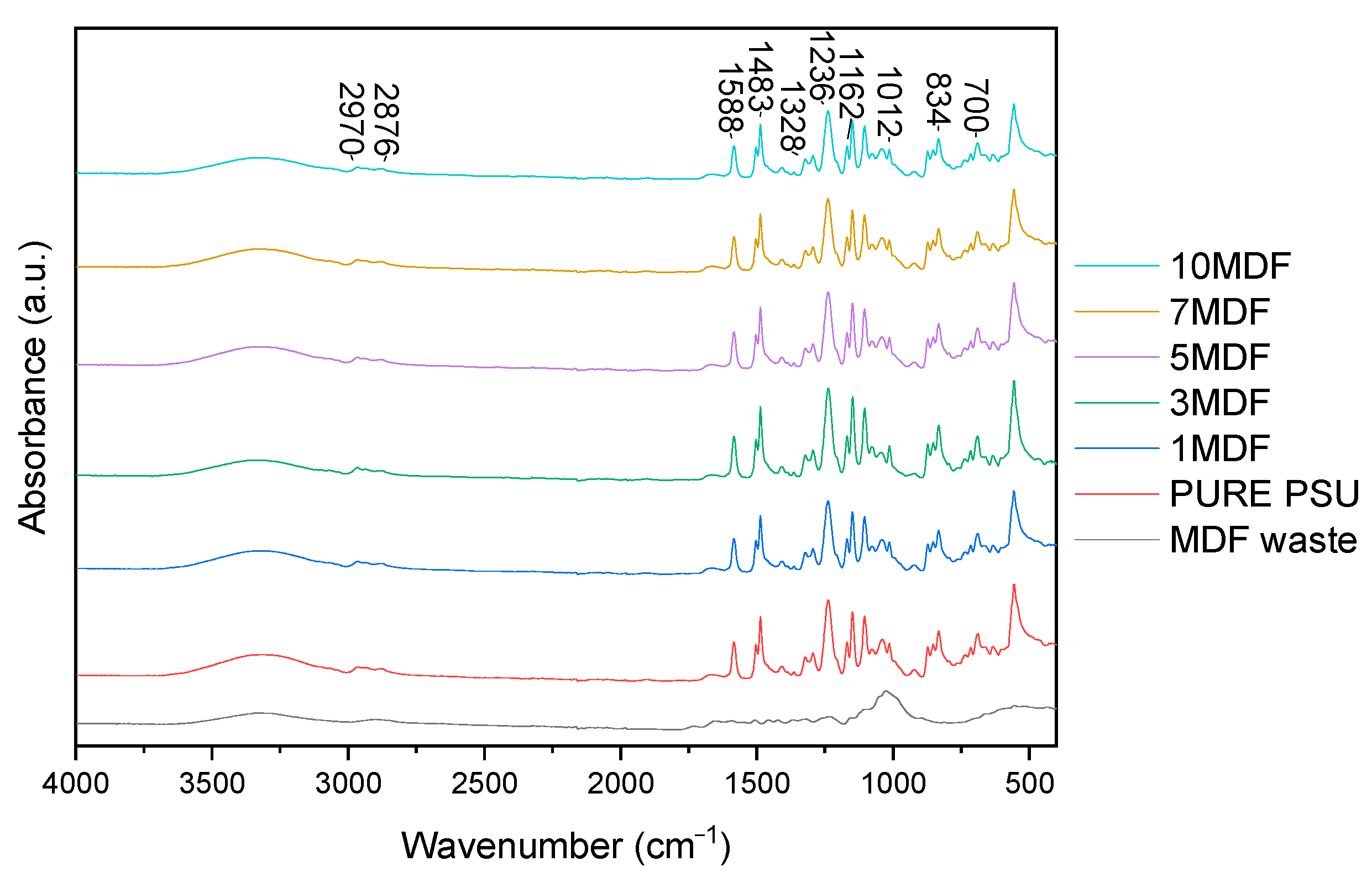
The characterization of the membranes using Fourier-Transform Infrared Spectroscopy (FTIR) is shown in Figure 2 to elucidate the structural changes resulting from the incorporation of MDF residue as a filler. From Figure 2, the characteristic polymer absorption bands identified upon incorporation are as follows: at 1162 cm−1, corresponding to the symmetric stretch of the sulfone group; at 1236 cm−1, attributed to the aromatic ether; at 1328 cm−1, related to the asymmetric stretch of the sulfone group; at 2970 cm−1, corresponding to the aromatic C–H stretch of CH3; at 2876 cm−1, assigned to the aliphatic C–H stretch of CH3; at 1483 and 1588 cm−1, associated with the C–C stretch of aromatic rings; at 1012 cm−1, attributed to the asymmetric C–O stretch; and at 700 and 834 cm−1, corresponding to the rocking vibration of the C–H bond. These characteristic bands are consistent with those reported by Nguyen, et al. (2025) [31].
The MDF residue, being a lignocellulosic material, contains hydroxyl groups (–OH) capable of forming specific physical interactions, such as hydrogen bonding, dipole–dipole interactions, and van der Waals forces [9]. In this context, hydrogen bonding interactions may occur between the hydroxyl groups of the lignocellulosic phase and the oxygen atoms of the sulfone units in PSU. Dipole–dipole interactions between the sulfone groups and the dipoles present in the MDF constituents may also contribute secondarily to interfacial adhesion. Additionally, van der Waals forces are present as interactions between the phases, although they are intrinsically weak. However, after incorporation of the residue, no significant peak shifts or new absorption bands were observed. This behavior can be attributed to the higher intensity of the polymer’s characteristic bands compared with those of the MDF residue, which effectively masked the weaker signals associated with these secondary physical interactions, especially given the relatively low filler content in the composites [3,13].
This lack of direct chemical evidence in the spectra reinforces previous observations that the increased solution viscosity stems from physical steric hindrance caused by the dispersed MDF particles, while maintaining the predominant chemical integrity of the PSU matrix. Despite the absence of new bands, the physical anchoring of MDF particles through secondary interactions is evidenced by changes in membrane morphology and transport properties, as discussed in the subsequent sections. According to Mokhtar, et al. (2023) [32] and He, et al. (2024) [33], incorporating lignocellulosic residues into polymeric matrices often yields a stable physical blend in which the filler acts as a rheological and structural modifier without altering the main vibrational bands of the polysulfone host matrix.

3.3. Contact Angle

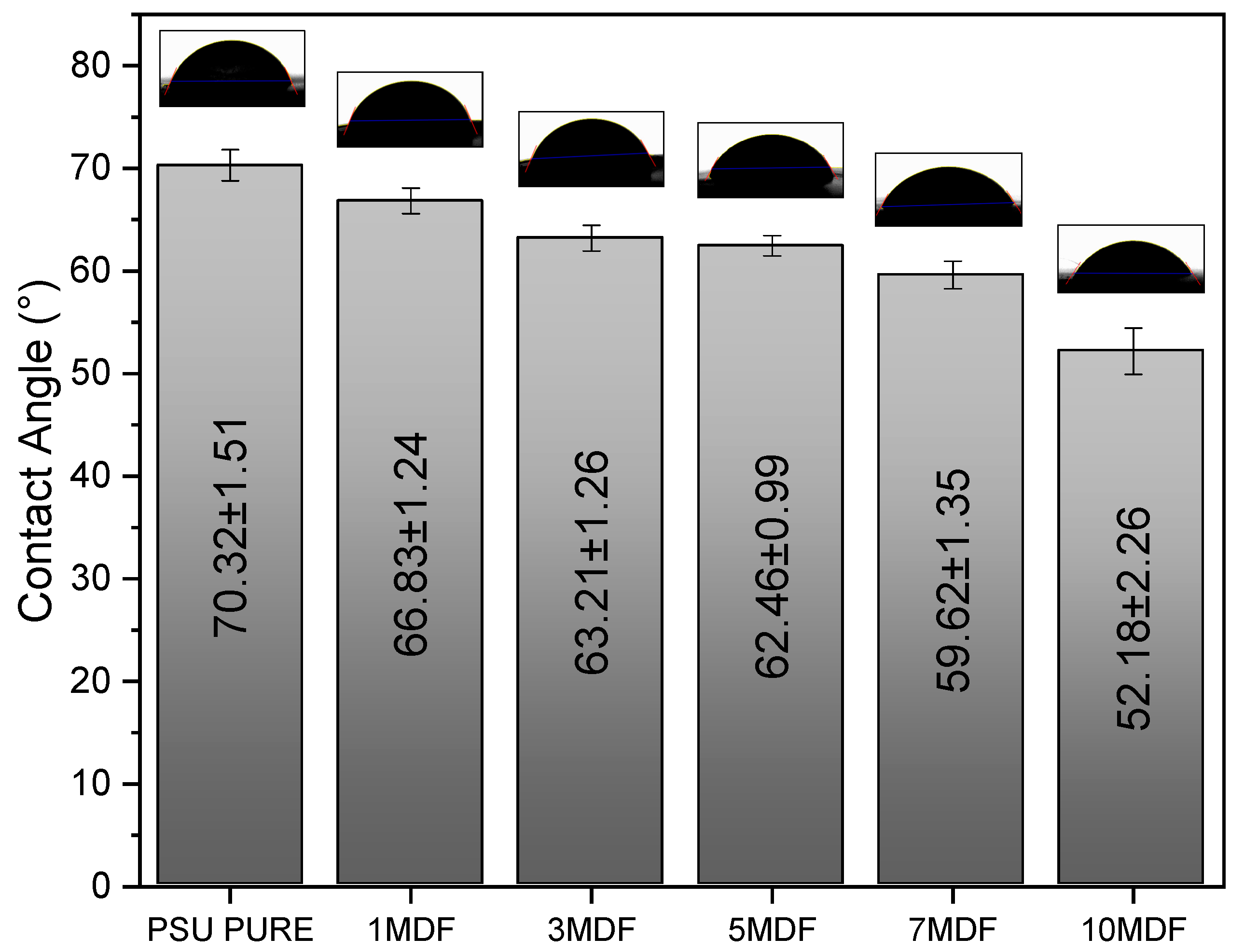
Membrane modification through additive incorporation is an effective strategy to mitigate the limited intrinsic hydrophilicity of polymers such as polysulfone, as reported by Li, et al. (2016) [3]. The surface wettability of the prepared membranes was evaluated using contact angle measurements, which quantify the interaction between a water droplet and the membrane surface [34]. The results are shown in Figure 3.
A clear, progressive decrease in contact angle is observed as the MDF residue content increases. The pristine PSU membrane exhibited the highest value (70.32°), consistent with the literature [10,13]. Upon addition of MDF, the values decreased significantly, reaching a minimum of 52.18° for the sample with 10 phr of filler. This sharp reduction confirms that increasing MDF in the polymer matrix substantially improves surface affinity for water.
Although FTIR results indicated a physical blend, the presence of lignocellulosic particles at the membrane-water interface alters the surface thermodynamic behavior. MDF is rich in hydroxyl groups (–OH), which, when exposed on the surface, form intermolecular hydrogen bonds with water molecules. According to Mokhtar, et al. (2023) [32], He, et al. (2024) [33] and Tafreshi and Fashandi (2019) [35], this physical interaction reduces interfacial tension and increases surface free energy, facilitating droplet spreading. Thus, the MDF residue effectively acts as a surface-modifying agent, suggesting a potential increase in permeate flux and resistance to fouling.

3.4. SEM Morphological Analysis

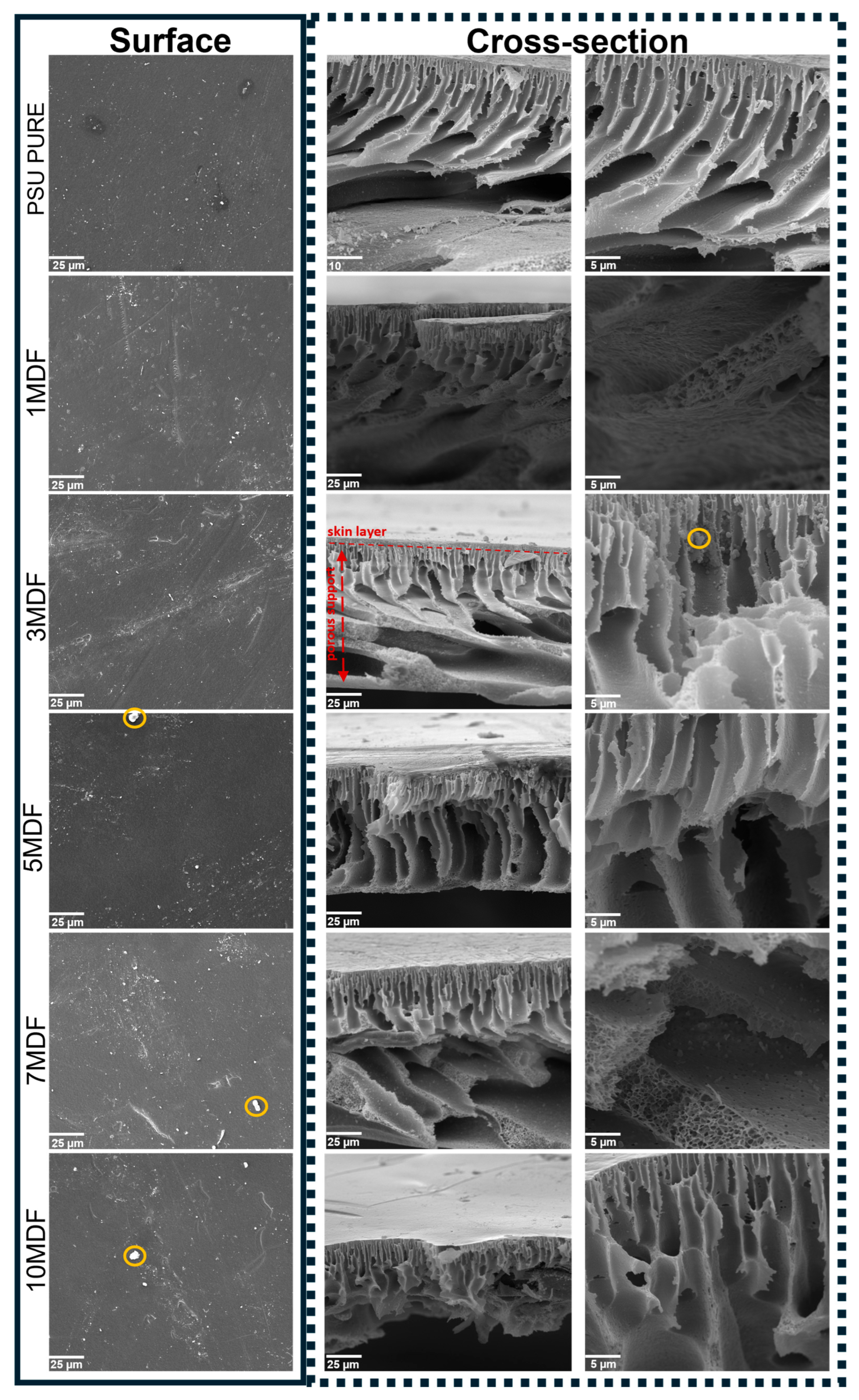
Figure 4 shows SEM micrographs of the membrane surfaces and cross-sections for the different MDF loadings. The selective layer exhibits a relatively uniform morphology with few visible pores. At the same time, the porous support exhibits the typical asymmetric structure of PSU-based membranes, comprising a slightly porous layer over a substructure of pores, macropores, and fingers [18,36].
In the membrane containing 3MDF, a slightly porous top layer and a highly porous support are clearly visible (highlighted in red in Figure 4). This morphology results from delayed phase inversion due to low affinity between the solvent and the nonsolvent, thereby slowing polymer precipitation. Consequently, a superficial barrier forms during solvent–nonsolvent exchange, promoting the development of more closed cellular structures and reducing the size of surface pores [16]. As shown in Table 3, incorporating MDF substantially increased the thickness of this selective layer (skin layer), which rose from 0.87 ± 0.13 µm in pure PSU to values exceeding 2.30 µm in the additive-containing compositions.
According to Zinadini, et al. (2017) [37], introducing solid additives can significantly alter the viscosity of the casting solution, thereby influencing membrane formation kinetics. The increased viscosity induced by MDF delays demixing, thereby justifying the thickening of the skin layer. Conversely, a downward trend in total thickness was observed at higher loadings (reaching 71.88 ± 7.52 µm in the 10MDF sample). As discussed by Loh, et al. (2011) [38], variations in solution composition and viscosity can lead to more compact overall structures by suppressing or restricting macrovoid growth.
Particles dispersed within the polymer matrix were also observed—particularly in the MDF-containing formulations—both on the surface and within the cross-section (highlighted in yellow in Figure 4). Because the MDF solutions had higher viscosities than pure PSU, polymer solubility may have been reduced, leading to incomplete dissolution or localized polymer precipitation [39,40]. This physical rearrangement, combined with the presence of hydrophilic MDF components at the membrane interface, suggests that the residue acts as a structural and surface-tuning agent. This is consistent with the contact angle results, as the migration of hydrophilic groups to the surface—a phenomenon also observed by Zinadini, et al. (2017) [37] in mixed matrix membranes—promotes a more wettable and denser matrix than pristine PSU.

3.5. Porosity, EWC and Mean Pore Radius Analysis

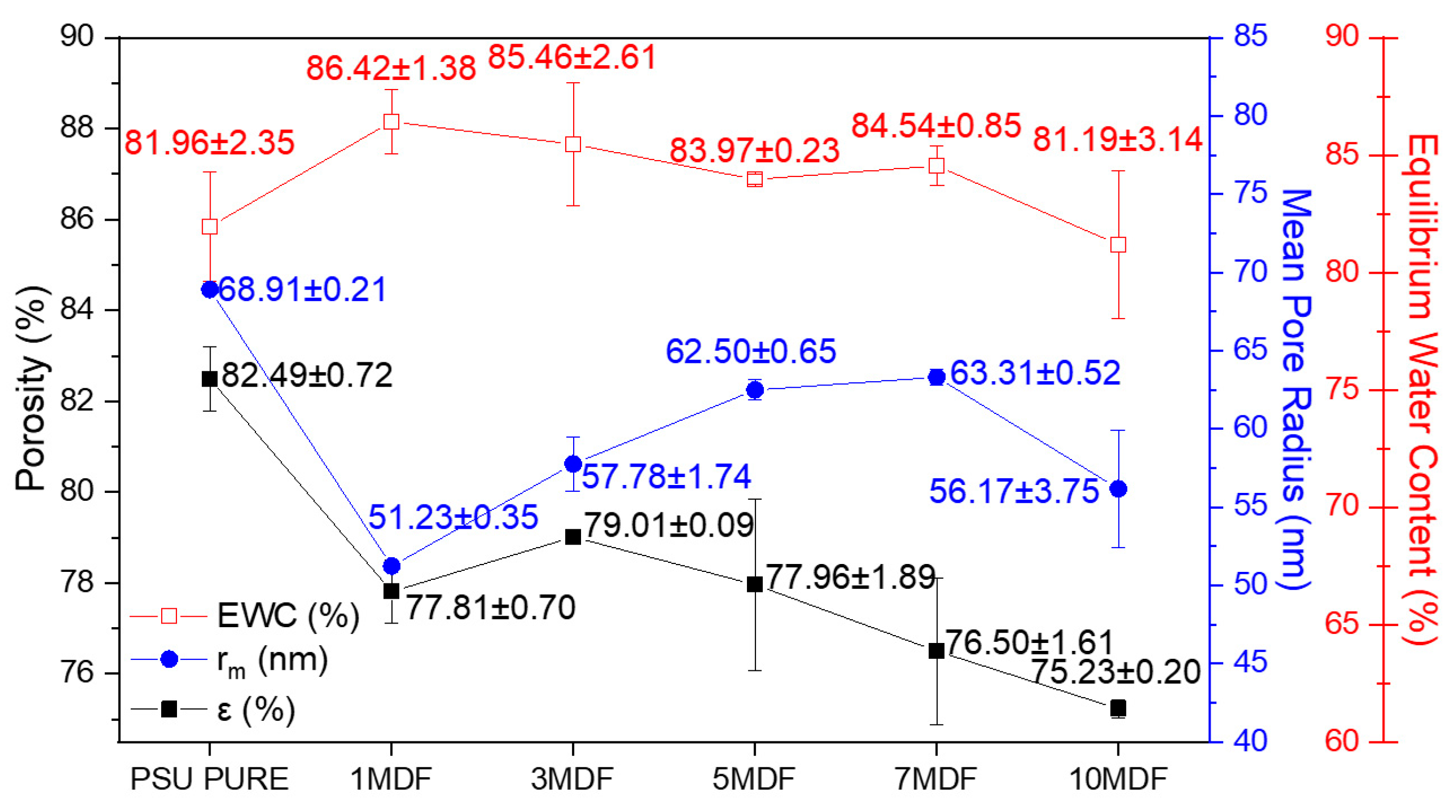
The quantitative structural parameters of the PSU/MDF membranes, including porosity (ε), water uptake, and mean pore radius (rm), are shown in Figure 5. Joint analysis of these variables provides insight into how the internal architecture of the polymeric matrix was reconfigured by the presence of the MDF residue during phase inversion.
As shown in Figure 5, incorporating MDF progressively reduced porosity, decreasing from 82.49 ± 0.72% (PURE PSU) to 75.23 ± 0.20% for the 10MDF sample. This decrease is directly related to the increase in the viscosity of the dope solution, as previously discussed. According to Ding, et al. (2016) [41] and Nazri, et al. (2021) [42], the presence of lignocellulosic additives increases mass-transport resistance, delaying the exchange between the solvent and the non-solvent during the coagulation bath. These delayed precipitation kinetics hinder the formation and expansion of large voids, resulting in a more compact matrix with a higher wall density, as corroborated by visual evidence from cross-sectional SEM micrographs.
In contrast, EWC showed a different pattern: for most additive-containing compositions, values were higher than those for pure PSU (81.96 ± 2.35%), peaking at 86.42 ± 1.38% in the 1MDF sample. This suggests that membrane hydrophilicity does not depend exclusively on void volume but is strongly influenced by surface chemistry. As highlighted by Ding, et al. (2016) [41], the abundance of hydroxyl groups (-OH) intrinsic to the cellulose and lignin structure of the MDF increases the thermodynamic affinity of the polymeric matrix for water. These groups promote water retention through hydrogen bonding within the internal microchannels, explaining why the membrane exhibits a higher absorption capacity despite being physically less porous. However, in the 10MDF sample, equilibrium water content dropped to 81.19 ± 3.14%, indicating that the severe reduction in porosity and the narrowing of the channels imposed a physical limit that overcame the filler’s chemical affinity.
Regarding the mean pore radius, the highest value was recorded for the PURE PSU membrane (68.91 ± 0.21 nm), followed by an immediate refinement upon the addition of MDF, reaching 51.23 ± 0.35 nm in the 1MDF sample. This refinement is consistent with the SEM surface analysis, which showed a more homogeneous and reduced pore distribution. The MDF acts as a heterogeneous nucleation agent, promoting the formation of a thicker, more restrictive selective layer. According to Nazri, et al. (2021) [42], this “pore-tuning” effect is characteristic of cellulosic additives that interfere with thermodynamic demixing, favoring the formation of smaller surface pores, which is essential for increasing the membrane’s retention efficiency. Thus, the use of MDF residue not only promotes sustainability, as advocated by Amusa, et al. (2021) [43], but also acts as a precise morphological modifier for the polysulfone structure.

3.6. Mechanical Test

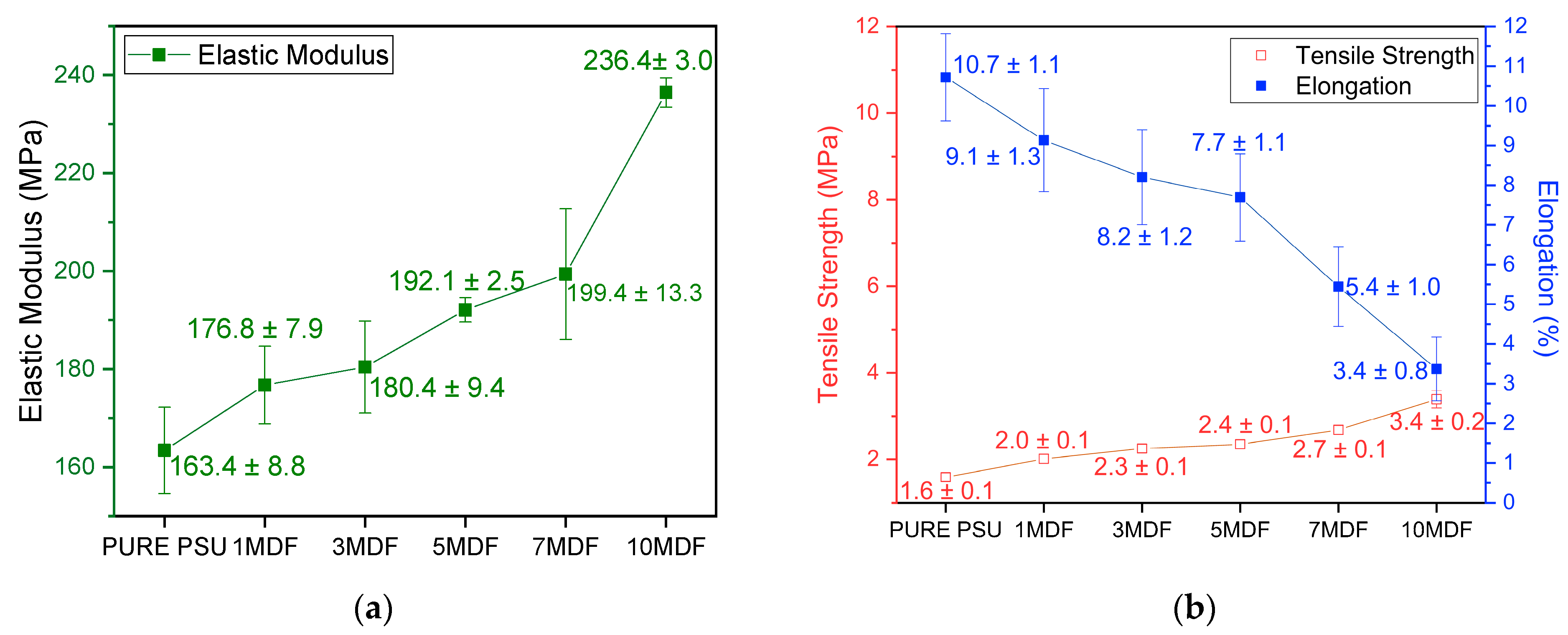
The mechanical properties of the pure PSU and PSU/MDF composite membranes were assessed in terms of elastic modulus, tensile strength, and elongation at break, as shown in Figure 6. The results demonstrate a significant, linear reinforcing effect resulting from the addition of MDF residue into the polymeric matrix.
The elastic modulus increased significantly with higher MDF loadings, rising from 163.4 ± 8.8 MPa for pure PSU to 236.4 ± 3.0 MPa for the 10MDF sample. This upward trend shows that the MDF particles, which have high intrinsic stiffness, acted as reinforcement points that limited the mobility of the polysulfone chains. According to Zhang, et al. (2022) [44], the presence of lignocellulosic components can form a strong support network within the matrix due to their naturally high mechanical stiffness, explaining the greater resistance to elastic deformation seen in these composites.
Similarly, the tensile strength steadily increased, nearly doubling from 1.6 ± 0.1 MPa (PURE PSU) to 3.4 ± 0.2 MPa (10MDF). This improvement is naturally connected to the dense morphology observed via SEM and excellent interfacial adhesion. As explained by Zhang, et al. (2022) [44], the abundance of hydroxyl groups in lignocellulose promotes the formation of a dense hydrogen bond network, which helps transfer stress effectively between the filler and the polymer. The significant rise in tensile strength confirms effective interfacial adhesion and stress transfer between the MDF lignocellulosic particles and the PSU matrix, indicating that the filler was well distributed without causing structural defects at these levels. Additionally, the decrease in porosity and the filling of structural voids by the MDF—aligning with the “artificial wood” lignocellulosic membrane idea proposed by Pylypchuk, et al. (2021) [45]—lead to a sturdier final structure that is highly resistant to tensile failure.
In contrast, the elongation at break steadily declined, decreasing from 10.7 ± 1.1% to 3.4 ± 0.8% for the 10MDF sample. This shift from ductile to more brittle behavior is typical of polymer systems reinforced with rigid biomass fillers. The MDF particles serve as stress concentrators, impeding the molecular sliding of the PSU chains. This decrease in ductility aligns with the reduction in the mean pore radius (rm) and the increased matrix density discussed earlier; a more compact, interconnected structure, as indicated by Pylypchuk, et al. (2021) [45], has less free volume for plastic deformation, leading to premature rupture under strain.

3.7. Flux and Selectivity Analysis

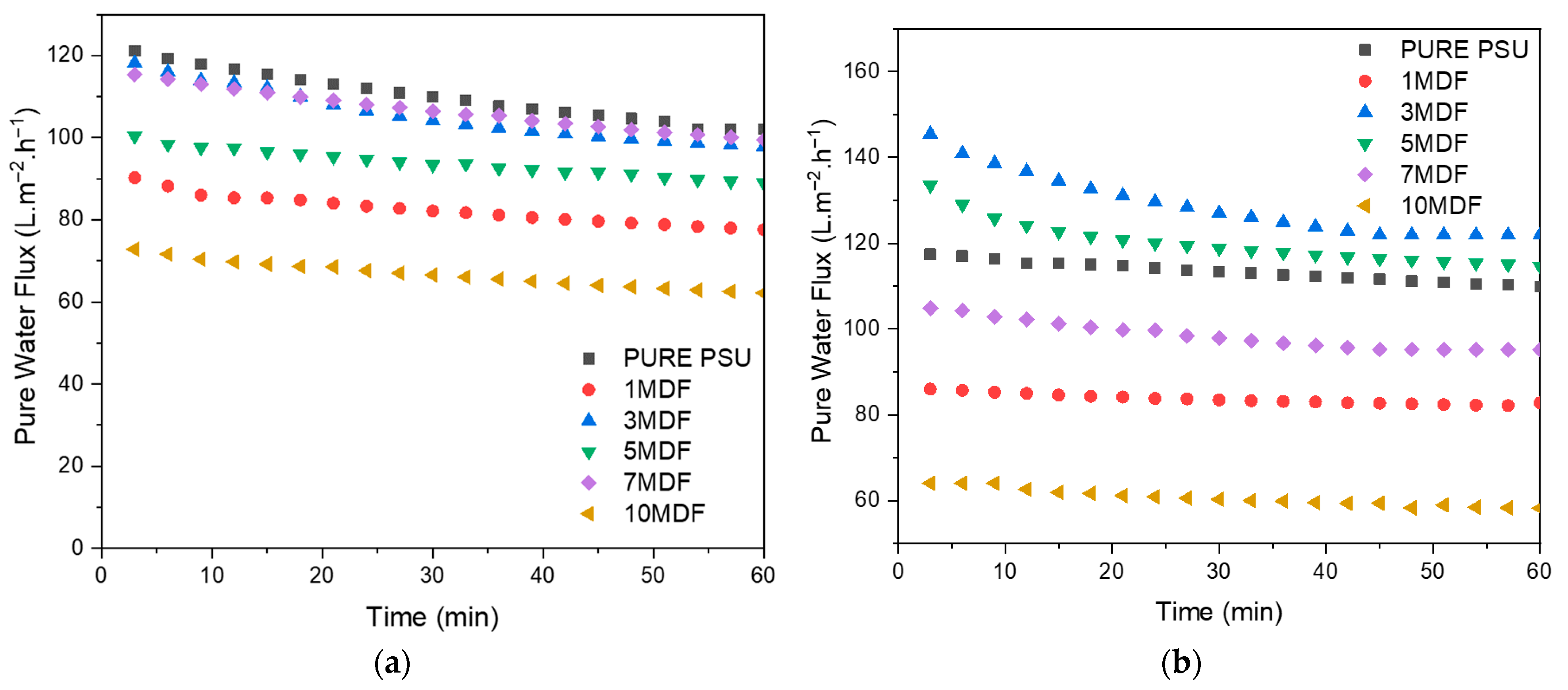
The hydraulic performance of the membranes was assessed using pure water flux at pressures of 1 and 2 bar, as shown in Figure 7. The permeability profile over time provides important information about the structural stability and hydraulic resistance of the composite membranes.
At 1 bar, the Pure PSU membrane showed the highest stabilized flux (102.05 L·m−2·h−1), which aligns with its higher porosity and mean pore radius (rm) discussed earlier. When MDF was added, a controlled decrease in permeability was observed. Samples 3MDF (97.86 L·m−2·h−1) and 7MDF (99.46 L·m−2·h−1) maintained fluxes very close to the pure membrane, indicating that intermediate residue levels do not significantly reduce membrane productivity. Conversely, the 10MDF sample had the lowest flux (62.17 L·m−2·h−1), showing a very dense polymeric matrix. According to Nazri, et al. (2021) [42] and the “artificial wood” concept by Pylypchuk, et al. (2021) [45], this behavior is due to the lignocellulosic filler filling voids in the structure, resulting in a denser, more tortuous structure.
A significant scientific finding was observed when the pressure was increased to 2 bar. While Pure PSU and 10MDF showed a tendency toward stabilization or a slight decrease, indicating sensitivity to compaction, the 3MDF (121.93 L·m−2·h−1) and 5MDF (114.61 L·m−2·h−1) membranes significantly exceeded the flux of the pure membrane under steady-state conditions. The superior flux stability of the MDF composite membranes at 2.0 bar, compared to pure PSU, is due to the mechanical reinforcement from the lignocellulosic particles. The MDF fibers serve as structural ‘pillars’ within the polymer matrix, boosting the overall stiffness of the porous support. This reinforcement prevents the collapse or deformation of macrovoids and flow channels under transmembrane pressure, a phenomenon known as pore compaction. Specifically, the interfacial adhesion between the PSU and the rigid cellulose/lignin components of the MDF residue restricts polymer chain mobility, preserving the pore structure and maintaining smooth water transport pathways even at higher pressures. This supports the findings of Zhang, et al. (2022) [44], where the network of physical interactions between the additive and the polymer strengthens the pore walls, allowing the membrane to operate more effectively at increased pressures.
All samples showed a sharp decline in flux during the first 30 min, after which it stabilized. This pattern is typically associated with initial mechanical compaction, in which hydrostatic pressure physically rearranges polymer chains and compresses the porous structure until a stable hydraulic resistance is achieved, as discussed in the literature on phase inversion membranes [13,15,46].
The comparative data in Table 4 confirm the high performance of the developed membranes. At both 1 and 2 bar, the 3MDF and 5MDF samples consistently outperformed various literature benchmarks, including membranes modified with carbon nanotubes, commercial surfactants, and noble nanoparticles (TiO2). Notably, at 2 bar, the MDF-reinforced structure achieved a flux that was up to 300% higher than that of commercial polysulfone standards. These results validate the use of MDF waste not only as a sustainable filler but also as a superior additive for producing high-flux membranes that surpass current technical and commercial standards.
The decline in permeate flux for membranes with higher MDF loadings (7MDF and 10MDF) can be explained by two synergistic phenomena. First, the significant increase in dope solution viscosity (as shown in Table 2) delays demixing during phase inversion. This slows the exchange between NMP and water, resulting in a thicker, denser selective layer that increases hydraulic resistance. Second, at these higher concentrations, the likelihood of filler agglomeration increases. These MDF clusters act as physical barriers, disrupting the formation of continuous macrovoids and reducing the matrix’s effective porosity, as supported by the lower total thickness and porosity values observed for the 10MDF sample [1,28].
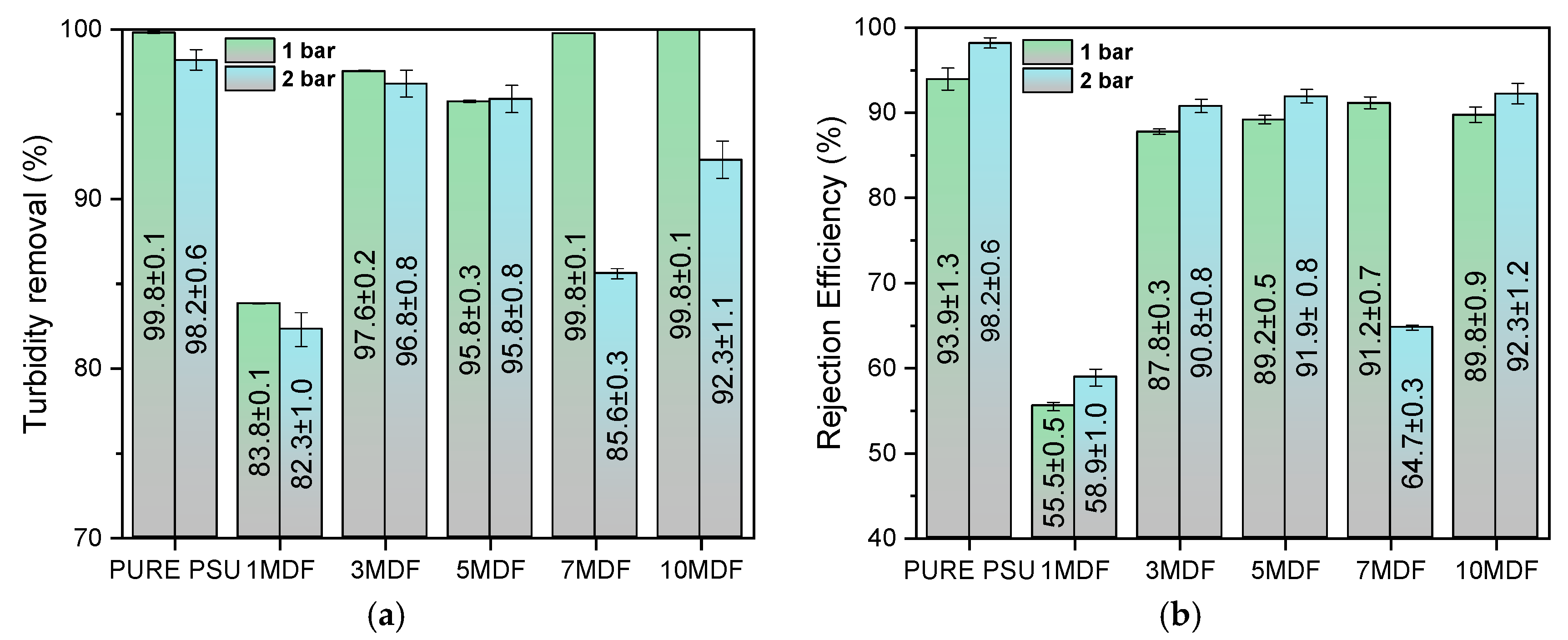
The selectivity results (Figure 8) show that adding MDF residue at levels up to 5 phr improves membrane performance, especially under higher hydrostatic pressure. The 3MDF and 5MDF membranes demonstrated “self-stabilizing” behavior, where increasing the pressure from 1 to 2 bar led to improved rejection efficiency (91.9% for 5MDF) without reducing turbidity removal (95.8%). This effect is supported by Mokhtar, et al. (2023) [32], who found that cellulosic additives in PSU matrices act as structural reinforcers, boosting both hydrophilicity and pore stability during operation.
Unlike pure PSU, where compaction often leads to flux loss, the optimized compositions (3 and 5 phr) leveraged the rigidity of the MDF to maintain active, selective flow channels. According to Amusa, et al. (2021) [43], the compatibility between lignocellulosic biomass and PSU is crucial; moderate loadings ensure uniform dispersion that strengthens the pore walls, preventing elastic deformation that would otherwise allow solute passage at higher pressures.
Conversely, the sharp decline in selectivity for the 7MDF sample at 2 bar (R% of 64.7% and turbidity of 85.6%) indicates that a critical filler loading was reached. At higher concentrations, the interface between the lignocellulosic fiber and the polymer may experience microscopic adhesion failures. As Deepa and Arthanareeswaran (2022) [52] state, excess additives can create preferential pathways (interfacial voids) that, while stable at low pressures, expand under 2 bar, allowing colloids and emulsified fats to pass through. Therefore, the 3 and 5 phr MDF compositions are the most promising, offering a balance of high selectivity and the structural strength needed for industrial-scale dairy effluent treatment.
The chemical stability of the PSU/MDF composite membranes is crucial for their application in dairy effluent treatment, which often involves chemical cleaning (Cleaning-in-Place) with acidic and alkaline solutions. PSU is known for its high chemical resistance, maintaining structural integrity across a wide pH range (2–13) and resisting degradation by common cleaning agents [2,53]. Adding MDF residue as a physical filler does not weaken this stability, as confirmed by FTIR analysis. The lignocellulosic parts of the MDF are physically protected within the strong, chemically inert PSU matrix. This protective effect allows the composite membrane to resist acid and base washes without significant loss of selectivity or mechanical strength, consistent with literature on the chemical cleaning of PSU membranes in dairy applications and the protection of natural fibers by polymer matrices [17,54,55].
The data presented in Table 5 provide a quick comparative reference between the membranes developed in this study and various polymeric systems reported in the recent literature. It is observed that the 3MDF and 5MDF membranes achieve a superior balance between high porosity (~79%) and selective efficiency (~90% milk rejection), thereby maintaining separation stability superior to that of conventional additives. Furthermore, the mechanical reinforcement and the reduction in contact angle (~62°) confirm that the use of MDF residue not only acts as a sustainable and low-cost filler but also confers high-performance properties to the PSU membranes, matching or exceeding the performance of several systems modified with nanomaterials.

4. Conclusions

This study confirmed the development of PSU/MDF composite membranes as an environmentally and technically sustainable solution aligned with circular economy principles. The results showed that polysulfone maintained its structural integrity and inherent thermal stability, providing a high-performance base for incorporating lignocellulosic waste without compromising its essential engineering properties. MDF residue proved effective as a functional additive, with its interactions and dispersion within the matrix enhancing surface hydrophilicity and influencing the porous structure, as evidenced by ATR-FTIR and SEM analyses. Additionally, adding MDF provided significant structural reinforcement, increasing the elastic modulus and stiffness of the membranes. This mechanical improvement, supported by data on porosity, EWC, and pore size, was essential in maintaining structural stability and preventing pore deformation under hydraulic pressures up to 2.0 bar. Regarding separation performance, membranes with 3 and 5 phr of MDF achieved the best balance between permeability and selectivity, maintaining high rejection rates and excellent permeate clarity, both critical for industrial processes with strict operational and cleaning requirements. Ultimately, these findings demonstrate that reusing MDF waste in engineering polymers is a practical strategy for producing advanced, cost-effective materials capable of withstanding demanding conditions, thereby supporting sustainable water management and resource recovery in the energy and process sectors.

Author Contributions

Conceptualization, B.N.S.d.O.A., R.A.D., P.T.V.d.S., R.A.d.P., E.M.A. and R.M.R.W.; methodology, B.N.S.d.O.A., R.A.D., P.T.V.d.S. and R.A.d.P.; software, B.N.S.d.O.A., R.A.D. and P.T.V.d.S.; validation, B.N.S.d.O.A., R.A.D., P.T.V.d.S., R.A.d.P. and B.A.A.; formal analysis, B.N.S.d.O.A., R.A.D., P.T.V.d.S., R.A.d.P., C.B.B.L. and B.A.A.; investigation, B.N.S.d.O.A., R.A.D., P.T.V.d.S., R.A.d.P. and B.A.A.; resources, E.M.A.; data curation, B.N.S.d.O.A., R.A.D., P.T.V.d.S. and R.A.d.P.; writing—original draft preparation, B.N.S.d.O.A. and R.A.D.; writing—review and editing, R.A.D. and E.M.A.; visualization, R.A.D. and C.B.B.L.; supervision, E.M.A., R.M.R.W., R.A.d.P. and R.A.D.; project administration, E.M.A.; funding acquisition, E.M.A. All authors have read and agreed to the published version of the manuscript.

Funding

This study was partially funded by the Coordenação de Aperfeiçoamento de Pessoal de Nível Superior-Brasil (CAPES), Finance Code 001. The authors also acknowledge support from the National Council for Scientific and Technological Development (CNPq) through the Research Productivity Fellowships (PQ) awarded to researchers Renate Maria Ramos Wellen (Process No. 303426/2021-7) and Edcleide Maria Araújo (Process No. 312014/2020), and the Junior Postdoctoral Fellowship (PDJ) granted to Carlos Bruno Barreto Luna (Process No. 152382/2022-9). Additionally, the authors thank FAPESQ (Fundação de Apoio à Pesquisa do Estado da Paraíba), LDCM (Laboratório de Desenvolvimento e Caracterização de Membranas), and UFCG for the laboratory infrastructure provided.

Data Availability Statement

The original contributions presented in this study are included in the article. Further inquiries can be directed to the corresponding author.

Conflicts of Interest

The authors declare no conflicts of interest.

References

  1. Guillen, G.R.; Pan, Y.; Li, M.; Hoek, E.M.V. Preparation and Characterization of Membranes Formed by Nonsolvent Induced Phase Separation: A Review. Ind. Eng. Chem. Res. 2011, 50, 3798–3817. [Google Scholar] [CrossRef]
  2. Bildyukevich, A.V.; Plisko, T.V.; Liubimova, A.S.; Volkov, V.V.; Usosky, V.V. Hydrophilization of polysulfone hollow fiber membranes via addition of polyvinylpyrrolidone to the bore fluid. J. Membr. Sci. 2017, 524, 537–549. [Google Scholar] [CrossRef]
  3. Li, S.; Cui, Z.; Zhang, L.; He, B.; Li, J. The effect of sulfonated polysulfone on the compatibility and structure of polyethersulfone-based blend membranes. J. Membr. Sci. 2016, 513, 1–11. [Google Scholar] [CrossRef]
  4. Parani, S.; Oluwafemi, O.S. Membrane Distillation: Recent Configurations, Membrane Surface Engineering, and Applications. Membranes 2021, 11, 934. [Google Scholar] [CrossRef]
  5. AlSawaftah, N.; Abuwatfa, W.; Darwish, N.; Husseini, G.A. A Review on Membrane Biofouling: Prediction, Characterization, and Mitigation. Membranes 2022, 12, 1271. [Google Scholar] [CrossRef]
  6. Zakaria, N.A.S.; Goh, P.S.; Lau, W.J.; Ismail, A.F. Ultrafiltration for Laundry Wastewater Treatment, 1st ed.; Royal Society of Chemistry: Cambridge, UK, 2024; pp. 76–114. [Google Scholar]
  7. Sari, R.M.; Torres, F.G.; Troncoso, O.P.; De-la-Torre, G.E.; Gea, S. Analysis and availability of lignocellulosic wastes: Assessments for Indonesia and Peru. Environ. Qual. Manag. 2021, 30, 71–82. [Google Scholar] [CrossRef]
  8. Abu-Zurayk, R.; Khalaf, A.; Alnairat, N.; Waleed, H.; Bozeya, A.; Abu-Dalo, D.; Rabba’a, M. Green polymer nanocomposites: Bridging material innovation with sustainable industrial practices. Front. Mater. 2025, 12, 76–114. [Google Scholar] [CrossRef]
  9. Jonoobi, M.; Ghorbani, M.; Azarhazin, A.; Zarea Hosseinabadi, H. Effect of surface modification of fibers on the medium density fiberboard properties. Eur. J. Wood Wood Prod. 2018, 76, 517–524. [Google Scholar] [CrossRef]
  10. Steen, M.L.; Hymas, L.; Havey, E.D.; Capps, N.E.; Castner, D.G.; Fisher, E.R. Low temperature plasma treatment of asymmetric polysulfone membranes for permanent hydrophilic surface modification. J. Membr. Sci. 2001, 188, 97–114. [Google Scholar] [CrossRef]
  11. Machado, P.S.T.; Habert, A.C.; Borges, C.P. Membrane formation mechanism based on precipitation kinetics and membrane morphology: Flat and hollow fiber polysulfone membranes. J. Membr. Sci. 1999, 155, 171–183. [Google Scholar] [CrossRef]
  12. Kanagaraj, P.; Nagendran, A.; Rana, D.; Matsuura, T.; Neelakandan, S.; Malarvizhi, K. Effects of polyvinylpyrrolidone on the permeation and fouling-resistance properties of polyetherimide ultrafiltration membranes. Ind. Eng. Chem. Res. 2015, 54, 4832–4838. [Google Scholar] [CrossRef]
  13. Dias, R.A.; da Silva Barbosa Ferreira, R.; da Nóbrega Medeiros, V.; Araujo, B.A.; da Silva, P.T.V.; da Paz, R.A.; Araújo, E.M.; de Lucena Lira, H. Influence of Solvent Content in the Coagulation Bath and of Polyvinylpyrrolidone on the Properties of PSF/PES Blend Membranes For Water/Oil Separation. Polym. Adv. Technol. 2025, 36, e70210. [Google Scholar] [CrossRef]
  14. Ferreira, R.d.S.B.; Dias, R.A.; Araújo, E.M.; Oliveira, S.S.L.; da Nóbrega Medeiros, V.; de Lucena Lira, H. Hollow fiber membranes of polysulfone/attapulgite for oil removal in wastewater. Polym. Bull. 2023, 80, 1729–1749. [Google Scholar] [CrossRef]
  15. Medeiros, V.D.; Silva, B.I.; Ferreira, R.D.; Oliveira, S.S.; Dias, R.A.; Araújo, E.M. Optimization of Process Parameters for Obtaining Polyethersulfone/Additives Membranes. Water 2020, 12, 2180. [Google Scholar] [CrossRef]
  16. Serafim, C.M.; da Paz, R.A.; Dias, R.A.; Medeiros, V.D.; da Silva, P.T.; Luna, C.B.; Wellen, R.M.; Araújo, E.M. Exploring the Effect of the Porogenic Agent on Flat Membranes Based on Polyamide 6 (PA6)/Carbon Nanotubes (MWCNT) Nanocomposites. Processes 2025, 13, 3155. [Google Scholar] [CrossRef]
  17. Ghaemi, N.; Madaeni, S.; Alizadeh, A.; Daraei, P.; Badieh, M.; Falsafi, M.; Vatanpour, V. Fabrication and modification of polysulfone nanofiltration membrane using organic acids: Morphology, characterization and performance in removal of xenobiotics. Sep. Purif. Technol. 2012, 96, 214–228. [Google Scholar] [CrossRef]
  18. Habert, A.; Borges, C.; Kronemberger, F.; Ferraz, H.; Nobrega, R. Processos de Separação por Membranas, 1st ed.; E-Papers Serviços Editoriais Ltda: Rio de Janeiro, Brazil, 2006; pp. 25–43. [Google Scholar]
  19. Sotto, A.; Boromand, A.; Zhang, R.; Luis, P.; Arsuaga, J.M.; Kim, J.; Van der Bruggen, B. Effect of nanoparticle aggregation at low concentrations of TiO2 on the hydrophilicity, morphology, and fouling resistance of PES–TiO2 membranes. J. Colloid Interface Sci. 2011, 363, 540–550. [Google Scholar] [CrossRef]
  20. Vourch, M.; Balannec, B.; Chaufer, B.; Dorange, G. Treatment of dairy industry wastewater by reverse osmosis for water reuse. Desalination 2008, 219, 190–202. [Google Scholar] [CrossRef]
  21. Galvão, D.F.; dos Santos Gomes, E.R. Os processos de separação por membranas e sua utilização no tratamento de efluentes industriais da indústria de laticínios: Revisão bibliográfica. Rev. Inst. Laticínios Cândido Tostes 2015, 70, 349–360. [Google Scholar] [CrossRef]
  22. Lopes, A.I.G. Sistema de gestão ambiental para a indústria do setor de laticínios: Um estudo bibliométrico. Int. J. Dev. Res. 2021, 11, 46008–46012. [Google Scholar]
  23. Feng, C.; Shi, B.; Li, G.; Wu, Y. Preparation and properties of microporous membrane from poly(vinylidene fluoride-co-tetrafluoroethylene) (F2.4) for membrane distillation. J. Membr. Sci. 2004, 237, 15–24. [Google Scholar] [CrossRef]
  24. Kusumocahyo, S.P.; Ambani, S.K.; Kusumadewi, S.; Sutanto, H.; Widiputri, D.I.; Kartawiria, I.S. Utilization of used polyethylene terephthalate (PET) bottles for the development of ultrafiltration membrane. J. Environ. Chem. Eng. 2020, 8, 104381. [Google Scholar] [CrossRef]
  25. Chakrabarty, B.; Ghoshal, A.K.; Purkait, M.K. Effect of molecular weight of PEG on membrane morphology and transport properties. J. Membr. Sci. 2008, 309, 209–221. [Google Scholar] [CrossRef]
  26. ASTM D882-12; Standard Test Method for Tensile Properties of Thin Plastic Sheeting. ASTM International: West Conshohocken, PA, USA, 2012.
  27. Kikuta, N.; Shindo, T.; Sugiyama, Y.-k.; Yamada, T.; Okamoto, S. Cobalt-catalyzed [2 + 2 + 2] cycloaddition copolymerization of diyne and internal alkyne monomers to highly branched polymers. Polymer 2021, 212, 123133. [Google Scholar] [CrossRef]
  28. Dias, R.A.; Medeiros, V.d.N.; Silva, B.I.A.; Araújo, E.M.; Lira, H.d.L. Study of The Influence of Viscosity on The Morphology of Polyethersulfone Hollow Fiber Membranes/Additives. Mat. Res. 2019, 22, e20180913. [Google Scholar] [CrossRef]
  29. Poletto, P.; Duarte, J.; Lunkes, M.S.; Santos, V.D.; Zeni, M.; Meireles, C.S.; R Filho, G.; Bottino, A. Avaliação das características de transporte em membranas de poliamida 66 preparadas com diferentes solventes. Polímeros 2012, 22, 273–277. [Google Scholar] [CrossRef][Green Version]
  30. Chou, W.L.; Yang, M.C. Effect of take-up speed on physical properties and permeation performance of cellulose acetate hollow fibers. J. Membr. Sci. 2005, 250, 259–267. [Google Scholar] [CrossRef]
  31. Nguyen, H.T.; Ngo, M.-H.; Nguyen, T.-D. Application of Waste PET Bottles as Filtration Membranes with PSU and Different Pore-Forming Agents for Improved Stability in Acidic and Basic Environments. J. Macromol. Sci. Part B Phys. 2025, 1–23. [Google Scholar] [CrossRef]
  32. Mokhtar, H.; Ayob, A.; Tholibon, D.A.; Othman, Z. Preparation and Characterization of Polysulfone Composite Membrane Blended with Kenaf Cellulose Fibrils. J. Adv. Res. Appl. Sci. Eng. Technol. 2023, 31, 91–100. [Google Scholar] [CrossRef]
  33. He, Q.; Gao, J.; Chen, Z.; Ding, Y.; Xia, M.; Xu, P.; Chen, Y. Preparation of wood-based hydrogel membranes for efficient purification of complex wastewater using a reconstitution strategy. Front. Environ. Sci. Eng. 2024, 18, 84. [Google Scholar] [CrossRef]
  34. Abdel-Karim, A.; Gad-Allah, T.A.; El-Kalliny, A.S.; Ahmed, S.I.A.; Souaya, E.R.; Badawy, M.I.; Ulbricht, M. Fabrication of modified polyethersulfone membranes for wastewater treatment by submerged membrane bioreactor. Sep. Purif. Technol. 2017, 175, 36–46. [Google Scholar] [CrossRef]
  35. Tafreshi, J.; Fashandi, H. Environmentally Friendly modification of polysulfone ultrafiltration membrane using organic plant-derived nanoparticles prepared from basil seed gum (BSG) and Ar/O2 low-pressure plasma. J. Environ. Chem. Eng. 2019, 7, 103245. [Google Scholar] [CrossRef]
  36. Drioli, E.; Giorno, L.; Fontananova, E. Comprehensive Membrane Science and Engineering, 2nd ed.; Elsevier: Amsterdam, The Netherlands, 2017; pp. 91–109. [Google Scholar]
  37. Zinadini, S.; Rostami, S.; Vatanpour, V.; Jalilian, E. Preparation of antibiofouling polyethersulfone mixed matrix NF membrane using photocatalytic activity of ZnO/MWCNTs nanocomposite. J. Membr. Sci. 2017, 529, 133–141. [Google Scholar] [CrossRef]
  38. Loh, C.H.; Wang, R.; Shi, L.; Fane, A.G. Fabrication of high performance polyethersulfone UF hollow fiber membranes using amphiphilic Pluronic block copolymers as pore-forming additives. J. Membr. Sci. 2011, 380, 114–123. [Google Scholar] [CrossRef]
  39. Santos Filho, E.; Machado de Medeiros, K.; Araujo, E.; Ferreira, R.; Oliveira, S.; Medeiros, V. Membranes of polyamide 6/clay/salt for water/oil separation. Mater. Res. Express 2019, 6, 105313. [Google Scholar] [CrossRef]
  40. Ebrahimi, M.; Kujawski, W.; Fatyeyeva, K. Fabrication of Polyamide-6 Membranes—The Effect of Gelation Time towards Their Morphological, Physical and Transport Properties. Membranes 2022, 12, 315. [Google Scholar] [CrossRef]
  41. Ding, Z.; Liu, X.; Liu, Y.; Zhang, L. Enhancing the Compatibility, Hydrophilicity and Mechanical Properties of Polysulfone Ultrafiltration Membranes with Lignocellulose Nanofibrils. Polymers 2016, 8, 349. [Google Scholar] [CrossRef]
  42. Nazri, A.I.; Ahmad, A.L.; Hussin, M.H. Microcrystalline Cellulose-Blended Polyethersulfone Membranes for Enhanced Water Permeability and Humic Acid Removal. Membranes 2021, 11, 660. [Google Scholar] [CrossRef]
  43. Amusa, A.; Ahmad, A.; Adewole, J. Study on lignin-free lignocellulosic biomass and PSF-PEG membrane compatibility. BioResources 2021, 16, 1063–1075. [Google Scholar] [CrossRef]
  44. Zhang, C.; Zhang, P.; Cheng, L.; Li, J.; Jian, R.; Ji, M.; Li, F. A strong, hydrophobic, transparent and biodegradable nano-lignocellulosic membrane from wheat straw by novel strategy. J. Clean. Prod. 2022, 356, 131879. [Google Scholar] [CrossRef]
  45. Pylypchuk, I.; Selyanchyn, R.; Budnyak, T.; Zhao, Y.; Lindström, M.; Fujikawa, S.; Sevastyanova, O. “Artificial Wood” Lignocellulosic Membranes: Influence of Kraft Lignin on the Properties and Gas Transport in Tunicate-Based Nanocellulose Composites. Membranes 2021, 11, 204. [Google Scholar] [CrossRef]
  46. Ferreira, R.D.; Oliveira, S.S.; Salviano, A.F.; Araújo, E.M.; Leite, A.M.; Lira, H.D. Polyethersulfone Hollow Fiber Membranes Developed for Oily Emulsion Treatment. Mat. Res. 2019, 22, e20180854. [Google Scholar] [CrossRef]
  47. Liu, Y.; Jiang, M.; Hu, J.; Guo, Z.; Liu, J.; Fu, X.; Liu, L.; Jiang, S. Polypyrrole-bound carbon nanotube conductive polysulfone membranes for self-cleaning of fouling. Compos. Commun. 2024, 52, 102155. [Google Scholar] [CrossRef]
  48. Burts, K.; Plisko, T.; Penkova, A.; Ermakov, S.; Bildyukevich, A. Influence of PEG-PPG-PEG Block Copolymer Concentration and Coagulation Bath Temperature on the Structure Formation of Polyphenylsulfone Membranes. Polymers 2024, 16, 1349. [Google Scholar] [CrossRef] [PubMed]
  49. Pak, S.; Ahn, J.; Kim, H. High performance and sustainable CNF membrane via facile in-situ envelopment of hydrochar for water treatment. Carbohydr. Polym. 2022, 296, 119948. [Google Scholar] [CrossRef]
  50. Arandia, K.; Balyan, U.; Mattsson, T. Development of a fluid dynamic gauging method for the characterization of fouling behavior during cross-flow filtration of a wood extraction liquor. Food Bioprod. Process. 2021, 128, 30–40. [Google Scholar] [CrossRef]
  51. Yuliwati, E.; Porawati, H.; Elfidiah, E.; Melani, A. Performance of Composite Membrane for Palm Oil Wastewater Treatment. J. Appl. Membr. Sci. Technol. 2019, 23, 1–10. [Google Scholar] [CrossRef][Green Version]
  52. Deepa, K.; Arthanareeswaran, G. Influence of various shapes of alumina nanoparticle in integrated polysulfone membrane for separation of lignin from woody biomass and salt rejection. Environ. Res. 2022, 209, 112820. [Google Scholar] [CrossRef]
  53. Mulder, M. Basic Principles of Membrane Technology, 2nd ed.; Springer Science & Business Media: Berlin, Germany, 1996; pp. 40–42. [Google Scholar]
  54. Azwa, Z.N.; Yousif, B.F.; Manalo, A.C.; Karunasena, W. A review on the degradability of polymeric composites based on natural fibres. Mater. Des. 2013, 47, 424–442. [Google Scholar] [CrossRef]
  55. Corbatón-Báguena, M.-J.; Álvarez-Blanco, S.; Vincent-Vela, M.-C. Cleaning of ultrafiltration membranes fouled with BSA by means of saline solutions. Sep. Purif. Technol. 2014, 125, 1–10. [Google Scholar] [CrossRef]
  56. Yang, X.; Liu, H.; Zhao, Y.; Liu, L. Preparation and characterization of polysulfone membrane incorporating cellulose nanocrystals extracted from corn husks. Fibers Polym. 2016, 17, 1820–1828. [Google Scholar] [CrossRef]
  57. Alasfar, R.H.; Kochkodan, V.; Ahzi, S.; Barth, N.; Koç, M. Preparation and Characterization of Polysulfone Membranes Reinforced with Cellulose Nanofibers. Polymers 2022, 14, 3317. [Google Scholar] [CrossRef] [PubMed]
  58. Daria, M.; Fashandi, H.; Zarrebini, M.; Mohamadi, Z. Contribution of polysulfone membrane preparation parameters on performance of cellulose nanomaterials. Mater. Res. Express 2019, 6, 015306. [Google Scholar] [CrossRef]
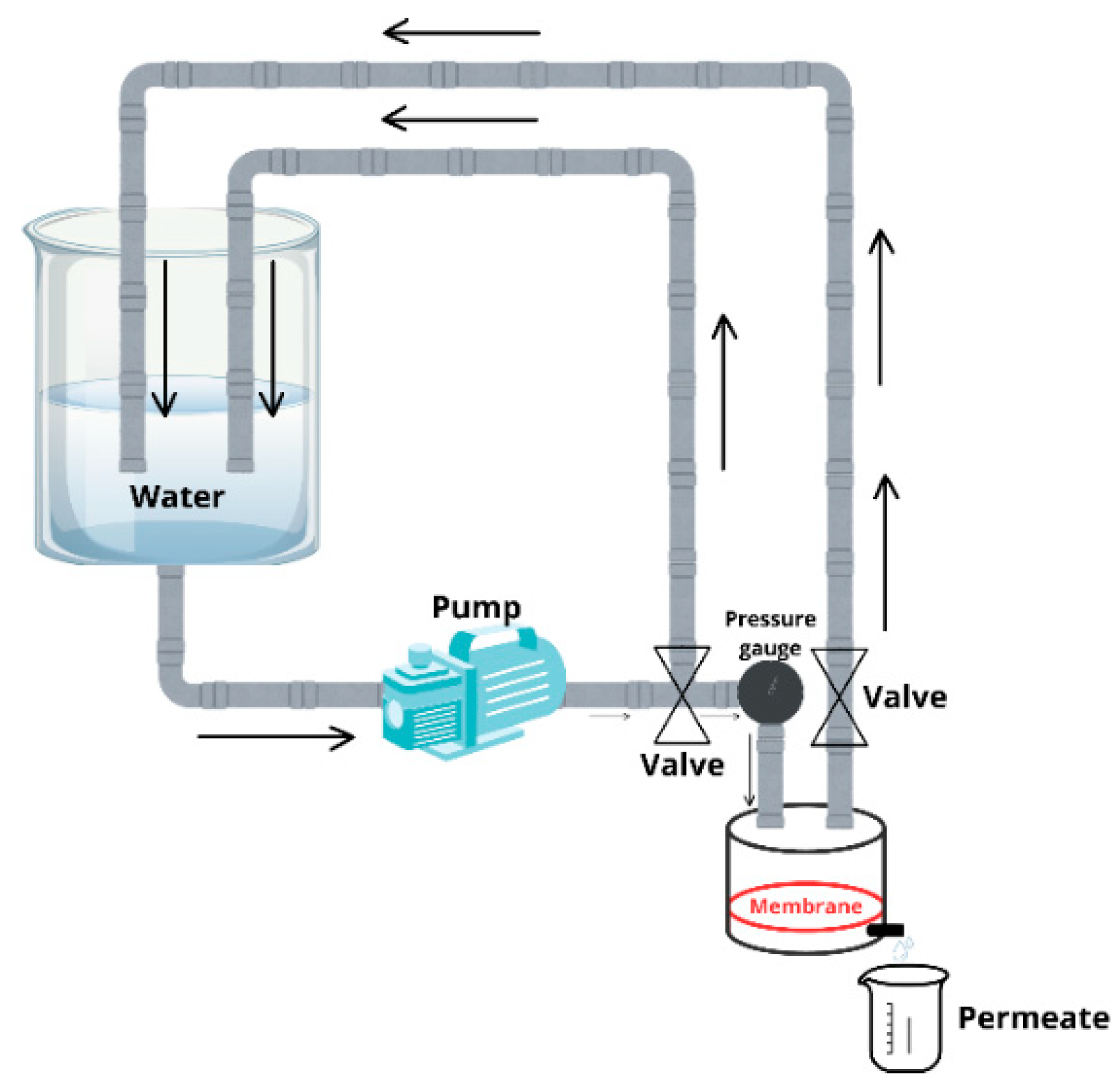
Figure 1. Schematic representation of the filtration setup employed to measure the permeate flux using water [13].
Processes 14 01265 g001
Figure 2. FTIR spectrum of the membranes recorded within the wavenumber range of 4000 to 400 cm−1.
Processes 14 01265 g002
Figure 3. Water Contact Angle for Flat Membranes of Pure PSU and Its Analogs Containing MDF Residue.
Processes 14 01265 g003
Figure 4. SEM micrographs of the membranes, highlighting the surface morphology and the cross-sectional structure of the developed materials.
Processes 14 01265 g004
Figure 5. Physical and structural parameters of the PSU/MDF membranes as a function of filler content: porosity (ε), equilibrium water content (EWC), and mean pore radius (rm). The data labels represent the mean values for each composition.
Processes 14 01265 g005
Figure 6. Effect of different MDF concentrations on the mechanical properties of the membranes: (a) Elastic Modulus and (b) Tensile Strength and Elongation.
Processes 14 01265 g006
Figure 7. Hydraulic performance of pure PSU and PSU/MDF membranes: (a) pure water flux at 1 bar pressure and (b) pure water flux at 2 bar pressure.
Processes 14 01265 g007
Figure 8. Performance of PSU and PSU/MDF membranes: (a) turbidity removal at 1 and 2 bar; (b) rejection efficiency of dairy effluent at 1 and 2 bar.
Processes 14 01265 g008
Table 1. Composition of polymeric solutions varying the MDF content.
MembraneNMP (wt%)PSU (wt%)MDF (phr 1)
PURE PSU8515-
1MDF85151
3MDF85153
5MDF85155
7MDF85157
10MDF851510
1 phr = parts per hundred resin.
Table 2. Composition and Viscosity of the Solutions.
MembraneViscosity (mPa·s)
PURE PSU397.1
1MDF419.4
3MDF431.7
5MDF437.6
7MDF443.4
10MDF471.4
Table 3. Total thickness and filtration-layer thickness of the membranes obtained from SEM analysis.
MembraneSkin Layer Thickness (µm)Total Thickness (µm)
PURE PSU0.87 ± 0.13135.85 ± 8.81
1MDF2.36 ± 0.81163.01 ± 1.44
3MDF2.32 ± 0.55128.05 ± 3.67
5MDF2.29 ± 0.25103.21 ± 5.19
7MDF2.48 ± 0.80152.23 ± 7.13
10MDF1.75 ± 0.8371.88 ± 7.52
Table 4. Comparison of PWF results obtained with other membrane systems.
Pressure
(Bar)
MembranePWF
(L·m−2·h−1)
References
11MDF~78This work
3MDF~98This work
5MDF~89This work
7MDF~99This work
10MDF~62This work
PSU + Nanotubes + PVP~48[47]
Pure PSU~46[48]
PSU + Synperonic F108~55[48]
Cellulose Nanofiber + Hydrochar~56[49]
21MDF~83This work
3MDF~122This work
5MDF~115This work
7MDF~95This work
10MDF~58This work
Commercial Polysulfone~38[50]
PSU + Wood extraction liquor~12[50]
Pure PVDF~52[51]
PVDF + TiO2~83[51]
Table 5. Comparative performance and structural properties of PSU/MDF membranes developed in this work versus polymeric membranes from the literature.
MembraneAdditiveContact Angle
(°)
ε
(%)
rm
(nm)
Young’s Modulus
(MPa)
PWF 1–2 Bar
(L·m−2·h−1)
R (%)—1 BarReferences
3MDFMDF~63.2~77.8~57.8~180.4~98–122~87.8This work
5MDFMDF~62.5~79.0~62.5~192.1~89–115~89.2This work
PSU + CNCCellulose Nanocrystals
(CNC)
~86.2~56.5-~258.2~63~59[56]
PSU + CNFCellulose Nanofiber
(CNF)
~57.9~64.0~2.1234.5~72-[57]
PSU + CNCCellulose Nanocrystals
(CNC)
-~80.3~14.0-~5~98.1 (indigo blue)[58]
PSU + CNFCellulose Nanofiber
(CNF)
-~76.5~13.0-~3~96.5 (indigo blue)[58]
Disclaimer/Publisher’s Note: The statements, opinions and data contained in all publications are solely those of the individual author(s) and contributor(s) and not of MDPI and/or the editor(s). MDPI and/or the editor(s) disclaim responsibility for any injury to people or property resulting from any ideas, methods, instructions or products referred to in the content.