Article

CFD Simulation on Jet Flow Field Characteristics of CO2 Perforation Fracturing

1
Changqing Downhole Technology Company, CNPC Chuanqing Drilling Engineering Company Limited, Xi’an 710018, China
2
National Engineering Laboratory for Low-Permeability Oil & Gasfield Exploration and Development, Xi’an 710018, China
3
School of New Energy, Xi’an Shiyou University, Xi’an 710065, China
*
Author to whom correspondence should be addressed.
Processes 2026, 14(8), 1236; https://doi.org/10.3390/pr14081236
Submission received: 13 February 2026 / Revised: 23 March 2026 / Accepted: 8 April 2026 / Published: 13 April 2026

Abstract

During the CO2 fracturing of unconventional oil and gas resources, the structural and operational parameters significantly influence the fracturing effectiveness. To quantitatively reveal the influence mechanisms of key parameters on the CO2 jet flow field through perforations, this study employed computational fluid dynamics (CFD) via Ansys Fluent to simulate and compare the effects of the nozzle contraction angle, injection rate, confining pressure, and fluid temperature. The results indicate that the contraction angles and injection rates have a more significant influence on the jet temperature, pressure, and velocity than the confining pressures and fluid temperatures. As the contraction angle increases, the average velocity of the jet core region increases by 5.0% (with the most significant growth at 35°), and the length of the potential core increases correspondingly. The flow through the perforations is characterized by an instantaneous drop of 2.5 °C in temperature and 2.7 MPa in pressure, then transitions to a regime of temperature recovery and dynamical pressure decay along the fracture. Increasing the fracturing displacement raises the maximum jet velocity to 104.7 m/s (an average increase of 15.5%), extends the potential core length, and amplifies the temperature and pressure drops across the perforation from 1.1 °C and 1.2 MPa to 4.2 °C and 4.8 MPa, respectively. Conversely, higher confining pressure reduces the average jet velocity by 4.3%, shortens the potential core, and diminishes the perforation temperature and pressure drops from 5 °C and 3 MPa to 2 °C and 2.5 MPa. In contrast, elevating the fluid temperature increases the jet velocity by an average of 6.3% but exerts minimal influence on the potential core length; the temperature drop at the perforation remains at approximately 2 °C, while the pressure drop rises from 2.2 MPa to 2.9 MPa. Collectively, both the confining pressure and fluid temperature significantly affect the density and velocity characteristics of the jet. An increase in confining pressure enhances the density of the CO2 jet fluid, which may potentially improve the fracturing impact in actual engineering applications. Quantitatively, the influence of each parameter on the temperature, pressure, and velocity of the CO2 jet is ranked from the most significant to the least as follows: nozzle contraction angle > fracturing injection displacement > formation confining pressure > fluid temperature. The findings of this research have direct implications for practical application, informing the optimization of the fracturing design to achieve greater efficiency and lower risk in CO2 fracturing operations.

1. Introduction

As an advanced technique, fracturing has proven to be highly advantageous for developing unconventional oil and gas resources. However, the ongoing advancement in unconventional oil and gas exploration and development has posed greater demands on the corresponding reservoir development technologies [1]. CO2 fracturing possesses low surface tension, high fluidity, rapid return and discharge, superior seam-making capabilities, minimal reservoir damage, and effective production enhancement, which is highly significant for the exploration and development of low-permeability oilfields [2].
In SC-CO2 fracturing and jetting, Pu et al. [3] established a numerical simulation model for SC-CO2 jet drilling technology. The results show that the flow field structure of a supercritical SC-CO2 jet has typical compressible flow field characteristics. As the jet is fully expanded, its pressure fluctuation is slight and less affected by the distance between the nozzle and the wall. When the jet is in a state of under-expansion, the flow field structure characteristics have a significant impact on the pressure distribution and peak pressure. At the same time, when the distance is large, such as when the nozzle pressure ratio = 5, the pressure ratio has a more significant impact on the flow field and the pressure peak and distribution. The pressure distribution of different flow fields should be fully considered in the application. Gong et al. [4] established a fracture propagation model and found that, in comparison with the conventional hydraulic fracturing model, SC-CO2 fracturing generates longer yet narrower fractures. An increase in the perforation azimuth angle leads to a significant compression of fractures in the near-wellbore zone, a reduction in fracture width, and a notable fracture deflection. With the increase in injection flow rate, the net pressure inside the fractures rises, which enhances the compressive effect of SC-CO2 on fractures and is conducive to the formation of high-quality fracture networks with greater length and larger aperture. Additionally, the increase in formation temperature results in a decrease in the inlet width of fractures and an increase in the fracture length. To clarify the thermal cracking effect of an SC-CO2 jet on coal and rock masses, Wei et al. [5] conducted an experimental investigation on the phase transition temperature and its impact on the ambient temperature during SC-CO2 jet injection. The results show that the ambient temperature decreases as the SC-CO2 jet temperature decreases; conversely, when the initial jet temperature increases, the ambient temperature experiences a more significant reduction. And when the initial temperature of the jet is increased, the environmental temperature will be further reduced. In addition, the thermal stress applied to coal at a low temperature can promote the development and expansion of cracks inside the coal and on its surface. In contrast, the thermal stress produced by low-temperature nitrogen can only affect the surface cracks of coal. Furthermore, increasing the initial temperature of the jet can improve the development and expansion of the crack.
Relevant researchers have conducted studies on the rock-breaking capacity of CO2 jets and the variation patterns of impact pressure [6,7]. In terms of rock-breaking capacity, Kolle et al. [8] first proposed the use of supercritical CO2 (SC-CO2) coiled tubing drilling and conducted experiments on SC-CO2 jet rock breaking. The results indicated that compared to high-pressure water jets, the rock-breaking efficiency of SC-CO2 jets in Mancos shale was 3.3 times higher, with specific rock-breaking energy being 20% of that of water jets. In the same year, an exploratory drilling experiment in a 4400 m depleted gas well was successful, as it preliminarily confirmed the feasibility of applying SC-CO2 fluid in underbalanced drilling. Li et al. [9] found that compared with water and nitrogen jets, SC-CO2 jets cause more severe tensile and shear damage to rocks, making volume damage more likely to occur, and the rock-breaking advantage increases with the increase in jet distance. Chen et al. [10] analyzed the process of SC-CO2 jet breaking rocks in carbonate geothermal reservoirs through a numerical simulation. The results indicated that compared with water jets, SC-CO2 jets exhibit superior performance in terms of flow velocity, particle transport path, and formation penetration capacity. The stress analysis further indicated that SC-CO2 jets are more prone to inducing tensile and shear damage in rocks. The study also pointed out that increasing the jet temperature can reduce the viscosity and density of SC-CO2, thereby enhancing its impact. An et al. [11] indicated that SC-CO2 jets not only cause structural damage to reservoir rocks through chemical dissolution but also effectively improve the reservoir pore structure, thereby enhancing the oil and gas recovery efficiency. The above research indicates that high-velocity SC-CO2 jets possess both the mechanical impact of traditional jets and the thermal shock effect of high-temperature fluids. Compared with water jets, SC-CO2 jets require lower initiation pressure for rock fragmentation, have higher rock-breaking efficiency, and have the advantage of avoiding reservoir contamination.
In terms of the CO2 jet impact flow field, many researchers have also conducted studies. Tian et al. [12] explored the influence of different confining pressures and impact target distances on the flow field characteristics and erosion performance of SC-CO2 jets. The results showed that when the inlet pressure was constant, the jet impact pressure and perforation depth significantly decreased as the ambient pressure increased. When the pressure difference was constant, the impact pressure hardly changed with the ambient pressure, but the erosion depth first increased and then decreased. With the target distance increased, both the perforation degree and volume decreased, and the perforation diameter first increased and then decreased, with eight times the nozzle diameter being the critical distance. Wang et al. [13] conducted a numerical study on the influence of different operating parameters on the flow field characteristics of SC-CO2 jets. The results indicated that increasing the nozzle diameter and the inlet flow rate helped to increase the jet’s axial velocity and the length of the potential core, while the confining pressure had the opposite effect. Meanwhile, the order of influence of each operating parameter was nozzle diameter > inlet flow rate > confining pressure. Huang et al. [14] studied the flow field characteristics and rock-breaking mechanism of SC-CO2 jets using a high-speed CCD camera and rock-breaking experiments. The results indicated that the nature of the submerged environment significantly affected the flow field of the SC-CO2 jets. When the jet entered a gaseous CO2 environment, an intense phase change process occurred, and shock waves were generated near the interface. The experiment also found that in a gaseous CO2 submerged environment, SC-CO2 jets tend to form large but shallow crushing pits, while in a submerged environment composed of SC-CO2 itself, the jets are more likely to produce deeper crushing pits with smaller diameters.
Although the above studies have greatly promoted the understanding of the basic characteristics of SC-CO2 jets, most of the existing achievements focus on the qualitative analysis of free jets or specific submerged media, and few focus on the actual engineering scenario of CO2 perforation fracturing. Notably, the recent studies on perforation fracturing in layered media have shown that perforation geometry significantly affects fracture initiation and propagation, with vertically oriented perforations being more conducive to fracture penetration across bedding interfaces [15]. Meanwhile, the creep characteristics of reservoir media can reduce fracture conductivity, highlighting the importance of considering medium viscoelasticity in fracturing simulations [16]. Additionally, the differential impacts of multi-scale natural fractures on the hydraulic fracture network formation were investigated [17,18]. The nozzle contraction angle, a key structural parameter of fracturing tools, has not been specifically studied in depth for its regulatory effect on the CO2 jet flow field in the perforation–fracture system. This study takes the CO2 perforation fracturing engineering scenario as the research object, constructs an integrated three-dimensional flow field model of the nozzle–perforation–fracture system, and quantitatively reveals the influence mechanisms of the nozzle contraction angle and other key parameters on the CO2 jet flow field characteristics. The research results can provide a theoretical basis for the optimized structural design of nozzles and the rational selection of operating parameters in CO2 perforation fracturing and have an important engineering application value for improving the fracturing efficiency of unconventional oil and gas resources.

2. Numerical Method

2.1. Simulation Zone and Operational Parameters

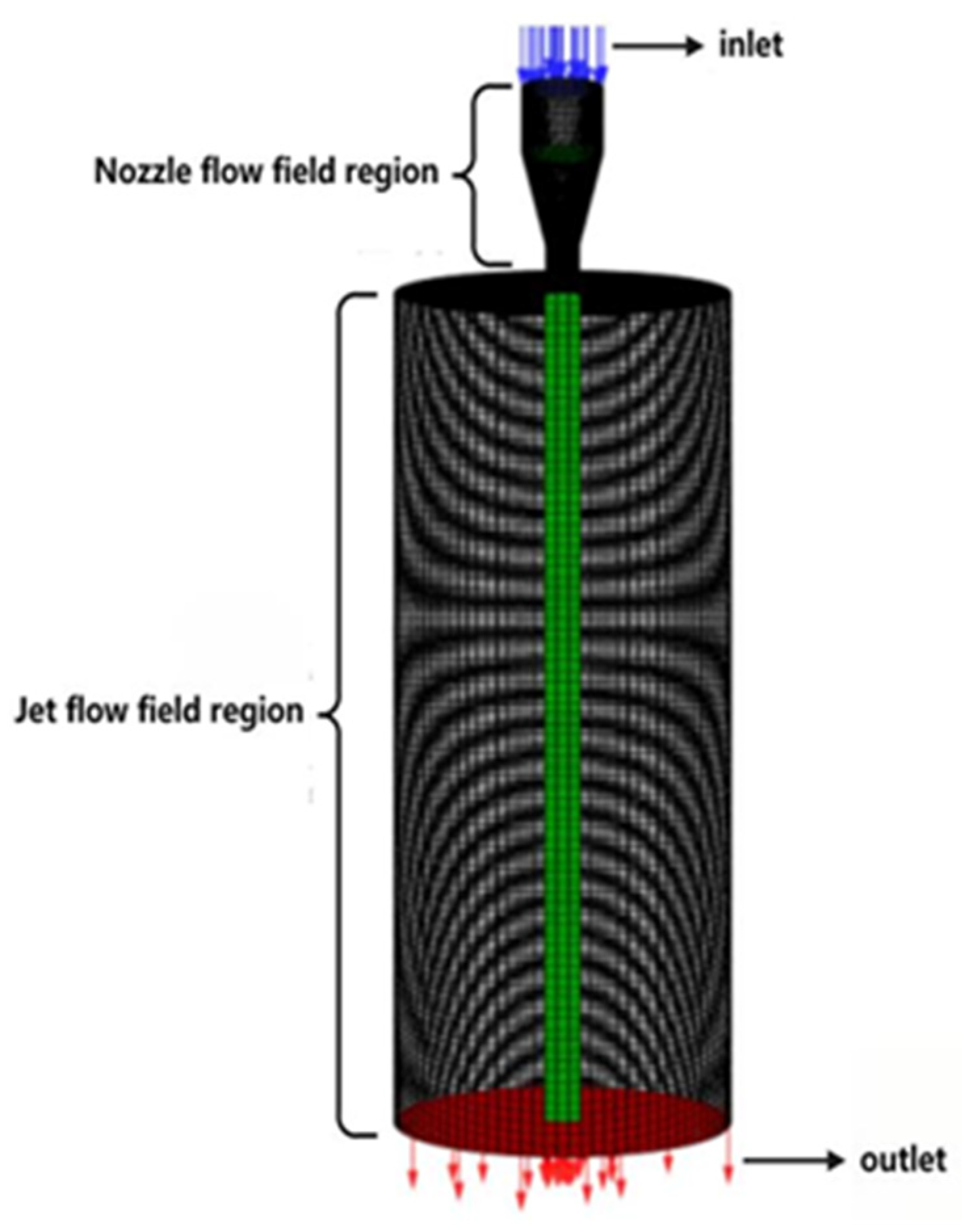
Figure 1 presents the full three-dimensional numerical model of the jet flow field without any symmetry assumptions or geometric simplifications, comprising the nozzle flow field region and the downstream jet flow field region. The multi-region meshing method is used to divide the flow field area into structured grids composed of hexahedral elements, which makes the calculation easier to converge. In addition, to improve the calculation accuracy and simulation reliability, local grid refinement is performed in areas where the jet velocity and pressure gradient change significantly, ensuring the accurate characterization of the three-dimensional flow, pressure, and temperature distributions of the CO2 jet so that it is consistent with actual operating conditions.
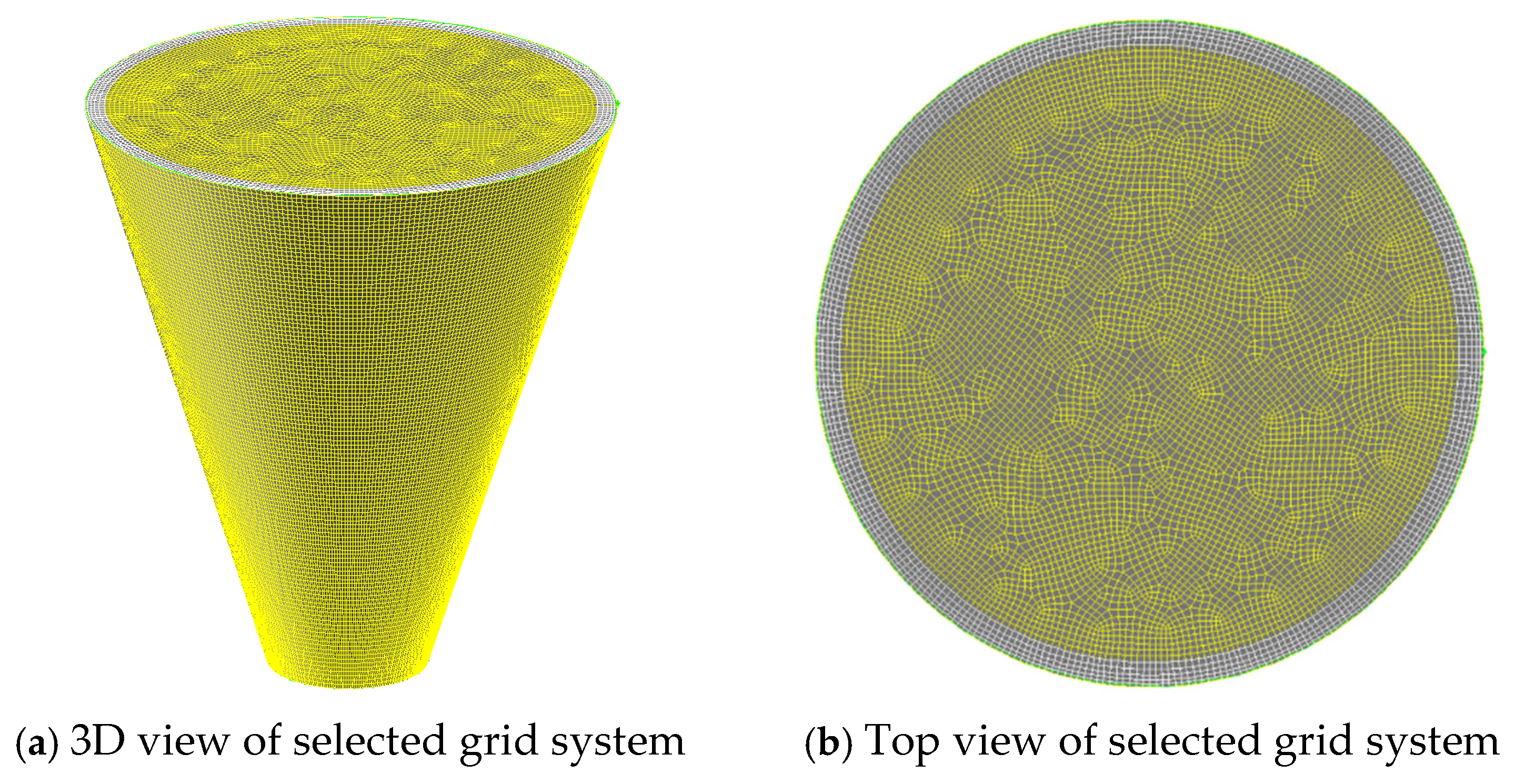
Figure 2 shows the boundary layer mesh design near the nozzle wall. In view of the stringent requirements of supercritical CO2 simulation on the density of boundary layer meshes, five boundary layers are arranged near the nozzle wall, with the first layer having a thickness of 0.1 mm, and the enhanced wall treatment method is adopted to ensure that the dimensionless wall distance y+ ≈ 1 in the entire computational domain. This design can directly solve the viscous sublayer without relying on the wall functions, meeting the boundary layer resolution requirements of supercritical CO2 jet simulation and ensuring the accuracy of flow field calculation in the near-wall region.
Table 1 summarizes the operational parameters designed for this study.

2.2. Computational Method

Since CO2 is a compressible fluid and its physical properties are greatly affected by temperature and pressure changes, especially in the near-critical region, simulating its flow requires not only satisfying the mass and momentum conservation equations but also considering the energy conservation equation. In addition, when studying the jet characteristics of the CO2 fluid, it is necessary to input its fluid properties that change with temperature and pressure. The numerical simulations are performed using Ansys Fluent 2023, and the thermophysical properties of CO2 are calculated using its built-in NIST real gas state model, which is constructed based on the high-precision NIST REFPROP database (Version 8.0), with the multiparameter Span–Wagner equation of state as its core. This model has superior accuracy in characterizing the dynamic variations in key CO2 properties such as density and viscosity across a wide range of temperatures and pressures, and it is particularly suitable for calculations in the near-critical region. The temperature and pressure ranges configured for the model fully encompass all the simulation conditions (with a confining pressure of 15–35 MPa, a fluid temperature of 0–60 °C, and a formation wall temperature of 80 °C), and the near-critical characteristics and phase behavior of CO2 are fully considered (all the simulated conditions are above the critical pressure of CO2, with no significant gas–liquid phase transition in the nozzle and perforation regions). The governing equations of the model are as follows.
The mass conservation equation [19,20,21,22] is given by
ρ t + ρ u x + ρ v y + ρ w z = 0
where ρ is the fluid density, t is the time, and u, v, and w are the components of the velocity vector at any point in the flow field in each direction.
The momentum conservation equations [19] are given by
ρ u t + ρ u u x + ρ u v y + ρ u w z = x μ u x + y μ u y + z μ u z p x + S u
ρ v t + ρ v u x + ρ v v y + ρ v w z = x μ v x + y μ v y + z μ v z p y + S v
ρ w t + ρ w u x + ρ w v y + ρ w w z = x μ w x + y μ w y + z μ w z p z + S w
where Su, Sv, and Sw are the source terms, and μ is the dynamic viscosity.
The energy conservation equation [19] is given by
ρ T t + ρ u T x + ρ v T y + ρ w T z = S T + x k h c p T x + y k h c p T y + z k h c p T z
where ST is the viscous dissipation term, kh is the thermal conductivity, and cp is the specific heat capacity.
The model employs the SST k-ω turbulence model to close and solve the viscous equations, which is selected for its excellent ability to predict jet flows, separated flows, and flows with adverse pressure gradients. It combines the advantages of the k-ω model in the free shear layers and the k-ε model in the boundary layers and has a built-in compressibility correction term that effectively addresses the effects of low-speed compression while avoiding the numerical dissipation issues associated with hypersonic models, which is highly suitable for simulating the complex turbulent characteristics of high-speed CO2 jets such as high Reynolds number, strong shear, and possible flow separation in the perforation–fracture system. The transport equations of k and ω in the model [23] are shown as follows
ρ k t + ρ u j k x j = P k β * ρ ω k + x j μ + σ k μ t k x j
ρ ω t + ρ u j ω x j = γ ρ μ t P k β ρ ω 2 + x j μ + σ ω μ t ω x j + 2 1 F 1 ρ σ ω 2 ω k x j ω x j
where uj is the velocity component, μ is the molecular dynamic viscosity, k is the turbulent kinetic energy, ω is the specific dissipation rate, μt is the turbulent viscosity, Pk is the effective turbulent production term, F1 is the blending function, β* is the turbulent kinetic energy dissipation coefficient, and β and γ are the equation coefficients of ω.

2.3. Model Settings and Boundary Conditions

Based on the high-speed compressible nature of CO2 jets, a coupled implicit density-based solver is selected. Since the simulation object is a direct jet flow field, aiming at the complex turbulent characteristics of perforation jets, such as a high Reynolds number, a strong shear, and a possible flow separation, the shear stress transport (SST) k-ω turbulence model is adopted in this study, and the energy equation is opened simultaneously in the model. The second-order upwind scheme with higher solution accuracy is selected as the discretization format. This format ensures computational stability while having high numerical accuracy and low numerical dissipation, which helps to more clearly distinguish the jet front, turbulent structure, and possible discontinuities.
In Figure 1, the blue arrow represents the inlet boundary of the model. The mass flow rate is set as the inlet boundary condition according to the compressibility of the liquid CO2 fluid. Since the research object is the CO2 formation jet, to avoid the influence of the flow field boundary on the jet characteristics, the wall surface of the entire jet flow field area is set at a no-slip wall temperature boundary condition of 80 °C, and the wall surface at the nozzle is set as a no-slip adiabatic boundary condition. The conjugate heat transfer between the rock and the fluid is neglected in the simulation for the following reasons: first, the primary objective of this study is to characterize the jet flow field within the 0–220 mm perforation and near-fracture region, where the rock–fluid heat transfer is a secondary factor with a significantly weaker influence on the dynamics of the core jet than the jet’s own intrinsic hydrodynamic behavior; second, the considerable thermal inertia of the reservoir rock ensures a stable temperature at the rock–fluid interface during short-duration jet action, rendering the thermal influence of the rock on the jet temperature field negligible within the timeframe of interest; third, omitting the conjugate heat transfer enables a simplified numerical model without compromising the accuracy of the core findings, avoiding prohibitive computational costs and ensuring efficiency and convergence in multi-parameter variable simulations. The Joule–Thomson cooling effect of the jet is primarily dominated by the sudden expansion of CO2 through the perforation accompanied by a pressure drop, with minimal influence from the external thermal boundary conditions; the temperature recovery process of the jet is slightly related to the thermal environment of the wall, but the thermal boundary conditions only introduce a mild quantitative sensitivity on the temperature recovery rate, without altering the overall trend of gradual temperature recovery along the fracture depth or qualitatively affecting the total temperature recovery amplitude.

2.4. Grid Independence

In the fluid calculation process, there are often errors caused by the grid scale that affect the convergence, accuracy, and efficiency of iterative calculations [24]. Therefore, grid independence verification is necessary. In this study, grid models with different division methods are selected for calculation and analysis. By adjusting the grid density, three types of structured grids with different cell densities are obtained: coarse (540,582 cells), medium (910,467 cells), and fine (1,400,352 cells). The same boundary conditions are set for calculation, and the fluid velocity, fluid temperature, and outlet dynamic pressure at the outlet of the perforation are selected as comparison objects. The results are shown in Table 2, and the relative change rates of key parameters between adjacent grid schemes are calculated for quantitative analysis.
From Table 2, it can be seen that there are slight differences in the velocity, temperature, and pressure at the perforation outlet among the three types of grids. The relative change rates of the key parameters between the N2 and N3 grids are less than 1.2%, indicating that continuing to refine the grid only brings marginal improvements in accuracy while significantly increasing the computational time (the N3 grid calculation time is 1.6 times that of the N2 grid). Therefore, the grid with 910,467 cells is determined as the optimal grid scheme, which balances numerical calculation accuracy and computational efficiency.

2.5. Model Validation

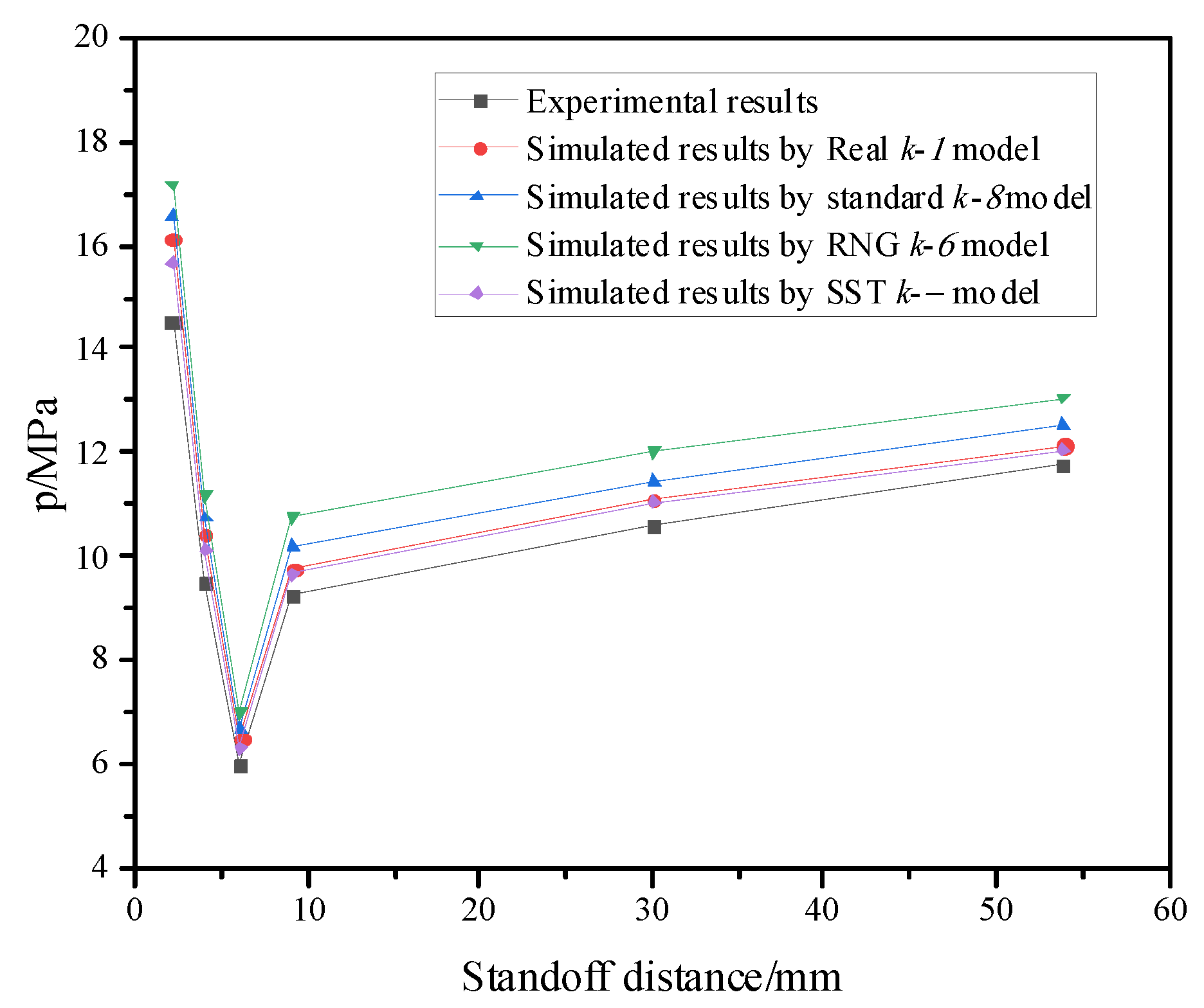
To ensure the reliability and accuracy of the numerical simulation results, in addition to the grid independence verification, the model is further validated by comparing it with published experimental data. The numerical simulations were performed using the same geometric model and experimental conditions as reported in Reference [25], employing four commonly used turbulence models: the realizable k-ε model, the standard k-ε model, the RNG k-ε model, and the SST k-ω model, which was adopted in this study. The simulated results were compared with the experimental data from Reference [25], as illustrated in Figure 3.
The comparison reveals that the simulation results obtained with the SST k-ω model are in closest agreement with the experimental data, with a relative deviation of 5.51%. This deviation is smaller than that of the realizable k-ε (7.91%), standard k-ε (11.22%), and RNG k-ε (15.86%) models. This demonstrates that the SST k-ω model provides satisfactory accuracy in predicting the characteristics of the CO2 jet flow field under fracturing conditions, thereby justifying its selection for the subsequent numerical analysis in this study.

3. Results and Discussions

According to the jet theory, the core region of CO2 jets is crucial for its application performance. The length, temperature, pressure, and axial velocity of the jet core region are important parameters to measure the jet cutting and impact breaking capacity. Specifically, the initial size of the potential core reflects the initial momentum concentration of the jet, and its axial velocity is the core index to evaluate the jet energy level [26]. Therefore, this study will systematically investigate the variation law of CO2 jet flow field characteristics under different operating parameters by analyzing the length, temperature, pressure, and axial velocity of the jet core region.

3.1. Influence of Contraction Angle

To investigate the influence of the nozzle contraction angle on the CO2 jet flow field characteristics, a common conical straight nozzle with a contraction section and a straight section is used as the simulation object. The contraction angles are set to 15°, 20°, 25°, 30°, and 35° for calculation. In this set of simulations, the fracturing displacement is 3.0 m3/min, the ambient confining pressure is 25 MPa, and the fluid temperature is 45 °C to simulate the influence of different contraction angles on the CO2 jet flow field characteristics.
Figure 4 shows the variation curves of CO2 fluid characteristics through perforations with a fracture depth under different contraction angles. With the change in nozzle contraction angle, the maximum velocity on the axis of each nozzle, i.e., the fluid velocity in the core region, increases with the increase in contraction angle, with the increase rates of 3.4%, 4.5%, 5.2%, and 6.8%, respectively, and the average increase rate is 5.0%. The trends of fluid velocity variation along the axis are essentially the same: the velocity changes rapidly within 0–92 mm, then slows down subsequently. This is because the jet is in the development stage at the initial stage of flow, the nozzle diversion effect is strong, the along-path resistance is small, and the flow velocity increases rapidly. Subsequently, the flow enters a fully developed stage. The growth in flow velocity then slows due to the combined effects of accumulated flow-path resistance, attenuated diversion, and limited flow space. There is an approximate proportional relationship between the length of the potential core formed by different contraction angles and the overall length of the nozzle, and the length of the potential core increases with the nozzle contraction angle, as shown in Figure 5. At the same time, the jet velocity in the core region also increases with the nozzle contraction angle.
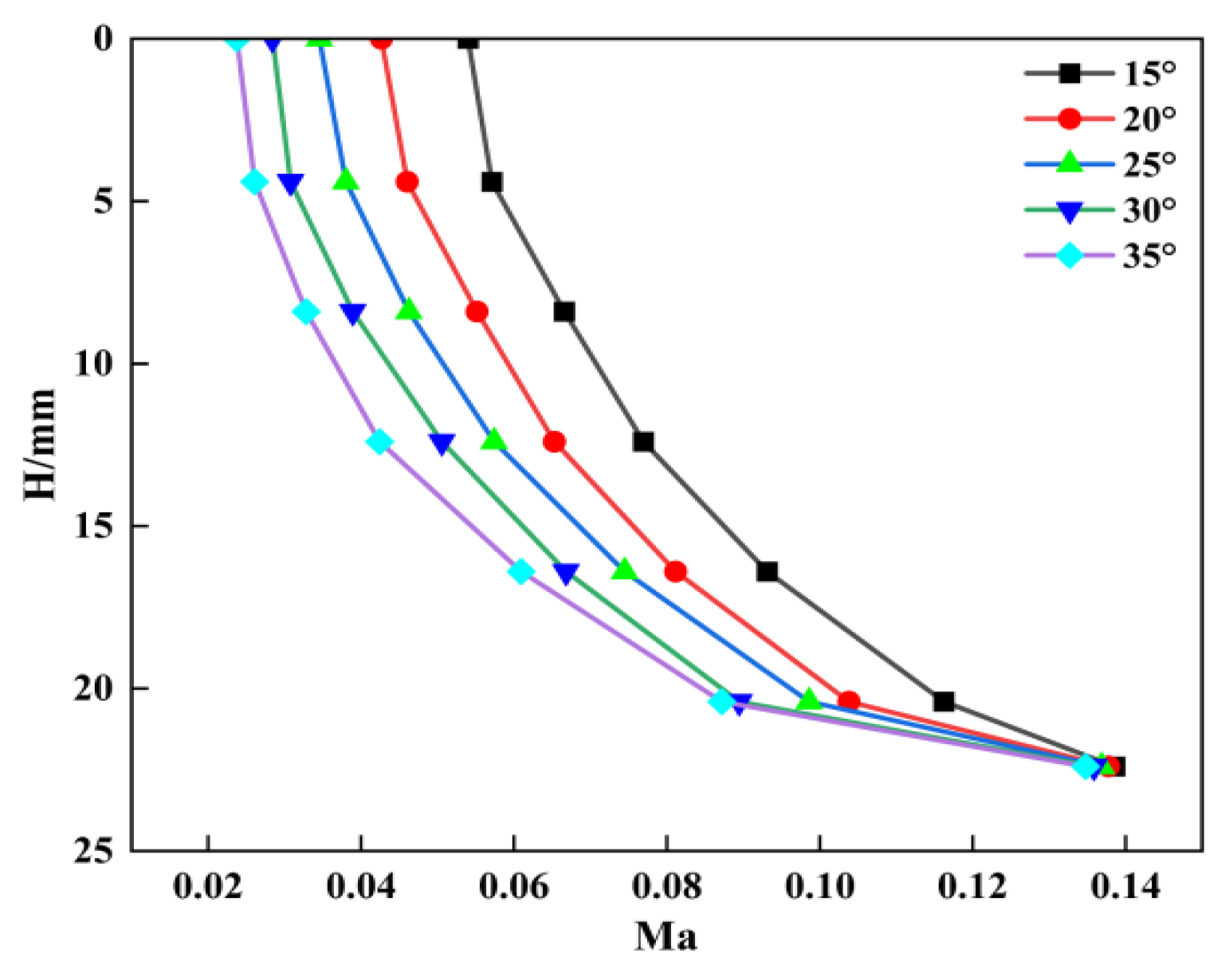
Figure 6 shows the distribution of the Mach number (Ma) along the centerline of the CO2 jet at different heights (H) for various contraction angles. At a fixed height, the Mach number decreases monotonically with an increasing contraction angle (15° > 20° > 25° > 30° > 35°), demonstrating that a smaller contraction angle strengthens the nozzle’s acceleration effect. This leads to higher jet velocity and enhanced compressibility. At a fixed contraction angle, Ma increases as H decreases, indicating continuous flow acceleration. These results confirm that a smaller contraction angle concentrates jet momentum and increases the Mach number.
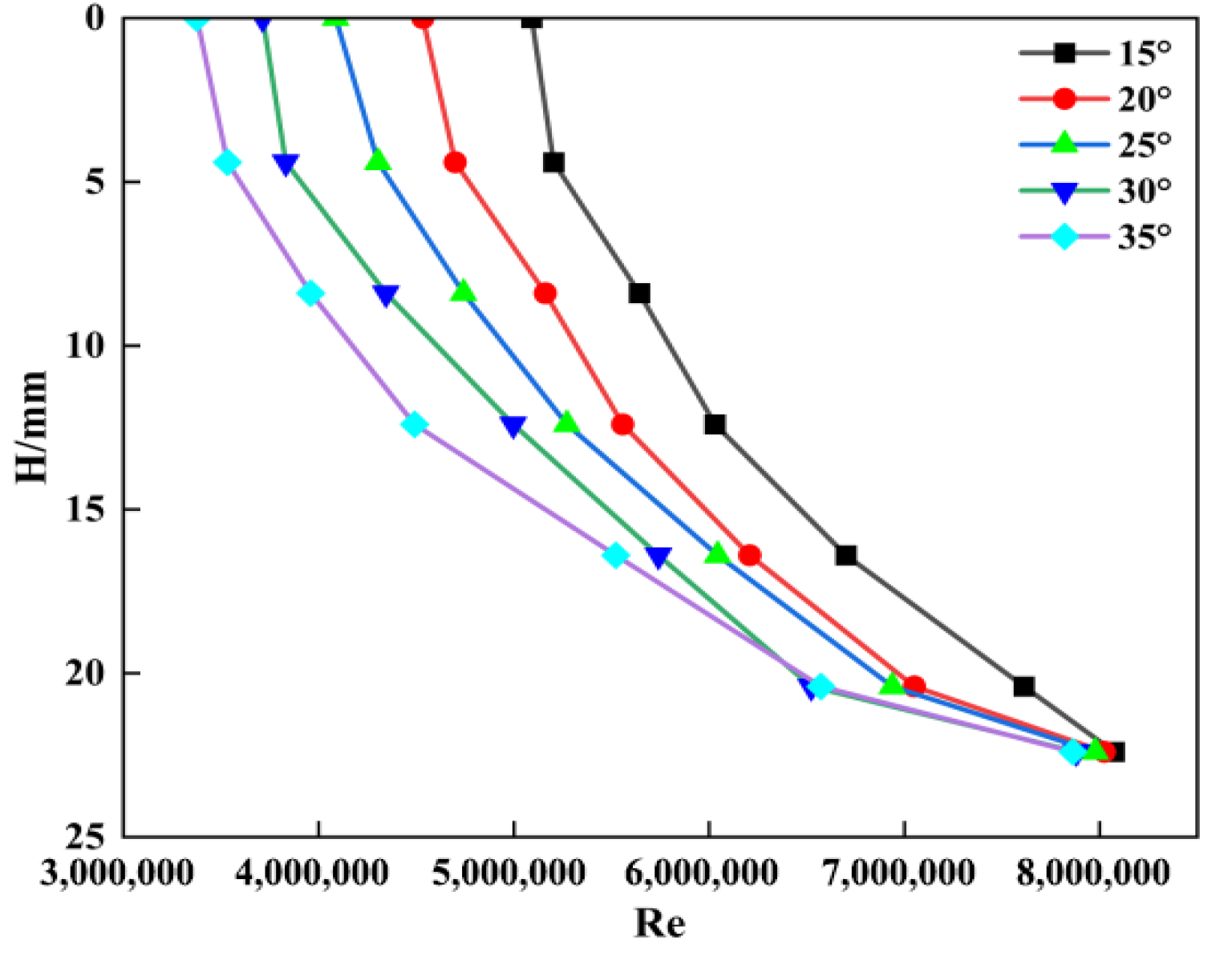
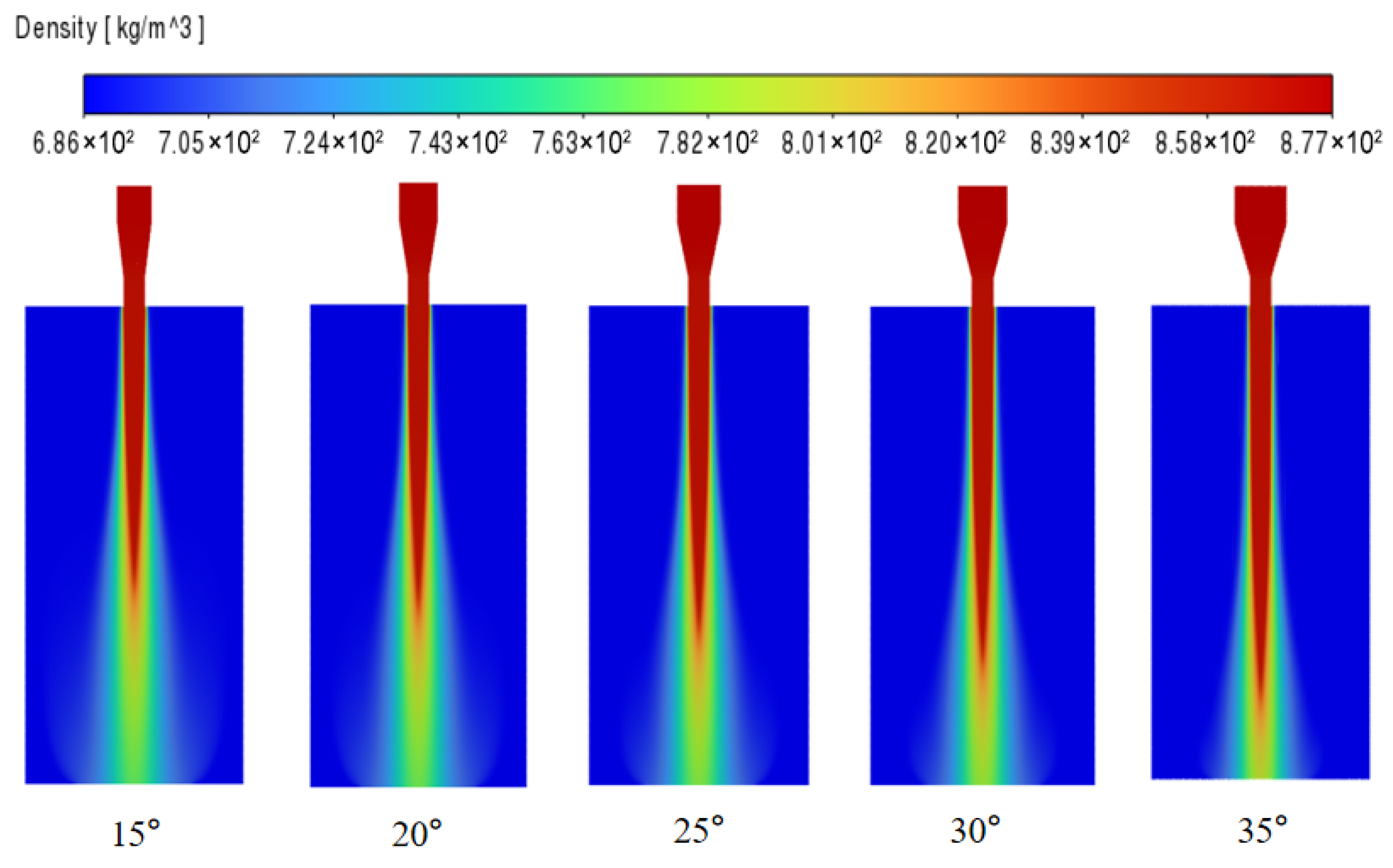
Figure 7 presents the Reynolds number (Re) distribution along the CO2 jet centerline at different heights (H) for various contraction angles. At a fixed H, Re decreases monotonically with an increasing contraction angle (15° > 20° > 25° > 30° > 35°), indicating that a smaller contraction angle enhances the turbulence intensity of the jet core. The higher Re corresponds to stronger lateral mixing and diffusion, which is inhibited by the nozzle’s geometric constraint, leading to a steeper density gradient as shown in Figure 8.
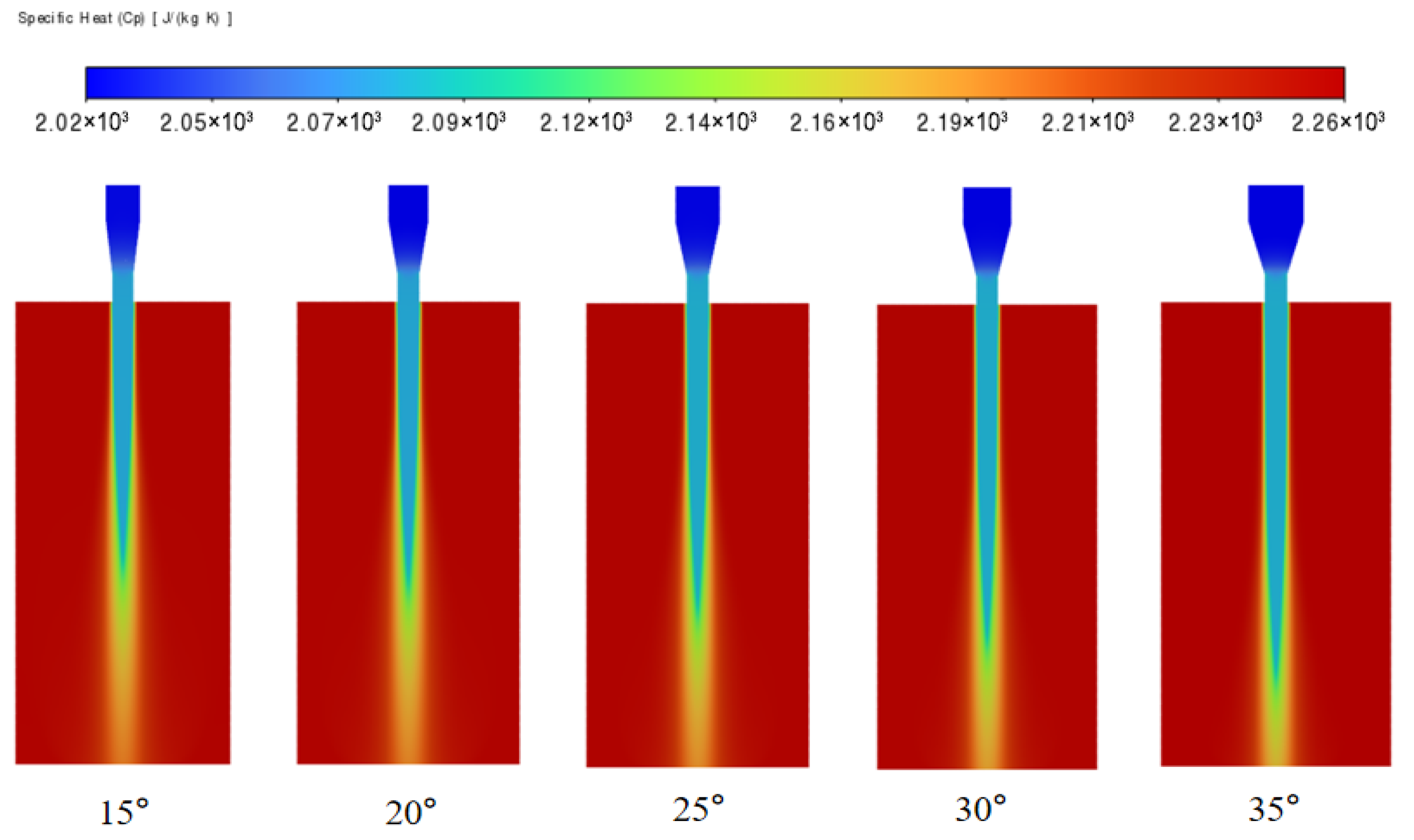
Figure 9 shows the specific heat contours of CO2 during perforation under different contraction angles. The constant pressure specific heat of CO2 increases significantly in the jet core region, from about 2020 J/(kg·K) at the nozzle to about 2260 J/(kg·K) at the downstream of the perforation, while the specific heat in the peripheral region of the jet remains at a low level. With the increase in contraction angle, the lateral range of the high specific heat region narrows gradually, and the specific heat gradient in the core region becomes more obvious, which is caused by the stronger expansion effect in the jet core region and more significant changes in the temperature and pressure.
With the variation in the nozzle contraction angle, the CO2 temperature and pressure after passing through the perforations exhibit distinct trends along the fracture depth. Immediately after passing through the perforation, the fluid experiences an instantaneous temperature drop of approximately 2.5 °C. Subsequently, the temperature recovers gradually with increasing fracture depth. Conversely, following an initial pressure drop of about 2.7 MPa at the perforation, the dynamic pressure shows a continuous decay along the fracture depth. This occurs because, as the fluid passes through the perforation, it undergoes abrupt expansion due to the sudden increase in flow area. This abrupt expansion causes a sharp pressure drop, which triggers the Joule–Thomson cooling effect. Concurrently, a rapid heat exchange with the surrounding medium takes place. These combined effects lead to the initial observed drops in temperature and pressure. With the increase in fracture depth, the turbulent mixing effect of the jet weakens, the heat exchange between the fluid and the medium tends to balance, and the energy dissipated by the along-path resistance is converted into heat; in actual fracturing operations, the heat exchange effect caused by the formation of the geothermal gradient may be a key factor in driving the temperature recovery of the jet fluid, promoting the gradual recovery of the fluid temperature. However, the weakening of the flow space constraint increases the expansion space of the fluid, and the attenuation of the jet kinetic energy weakens the accumulation of pressure energy, ultimately leading to the gradual decay of dynamic pressure along the fracture depth.

3.2. Influence of Confining Pressure

In oil and gas development, the ambient pressure (i.e., confining pressure) surrounding the jet significantly impacts the characteristics of the submerged jet flow field. With the increase in operation depth, the confining pressure also increases. Therefore, the ambient confining pressures are set to 15 MPa, 20 MPa, 25 MPa, 30 MPa, and 35 MPa for calculation. In this set of simulations, a nozzle with a contraction angle of 35°, a fracturing displacement of 3 m3/min, and a fluid temperature of 45 °C are selected to simulate the influence of different confining pressures on the CO2 jet flow field characteristics.
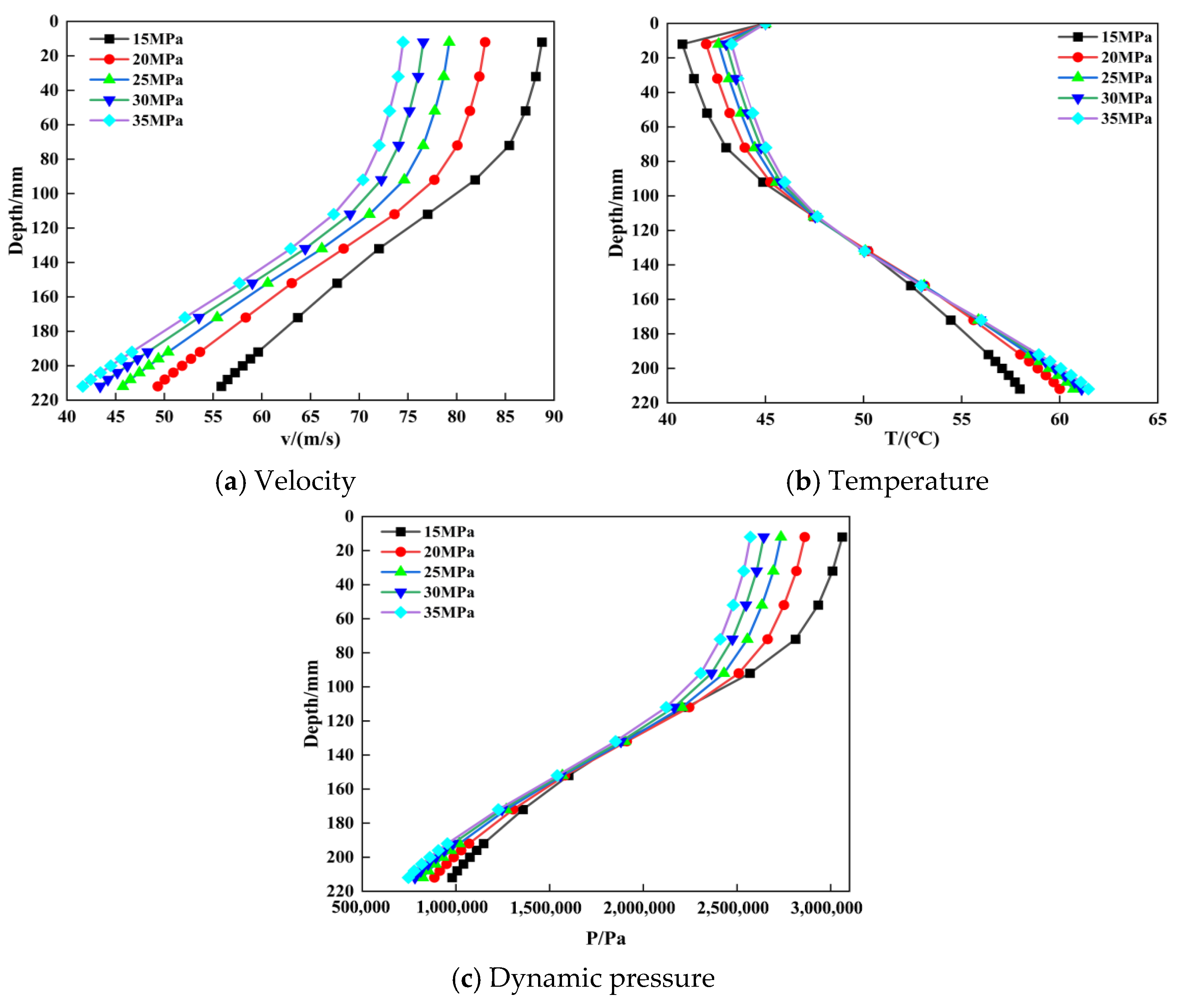
Figure 10 shows the variation curves of CO2 fluid characteristics through perforations with a fracture depth under different ambient confining pressures. With the change in ambient confining pressure, the maximum velocity on the axis of each nozzle, i.e., the fluid velocity in the core region, decreases with the increase in confining pressure, with the decrease rates of 6.6%, 4.5%, 3.4%, and 2.7%, respectively. The average decrease rate is 4.3%. This is because when the confining pressure increases, the fracture pore space is compressed and reduced, the fluid flow cross-section is limited, and at the same time, the compressibility of CO2 fluid is enhanced, and the viscosity is increased, which directly increases the viscous resistance and turbulent resistance between the fluid and the perforation wall, and the flow energy loss is intensified. Therefore, the higher the ambient confining pressure, the lower the flow velocity at the same fracture depth.
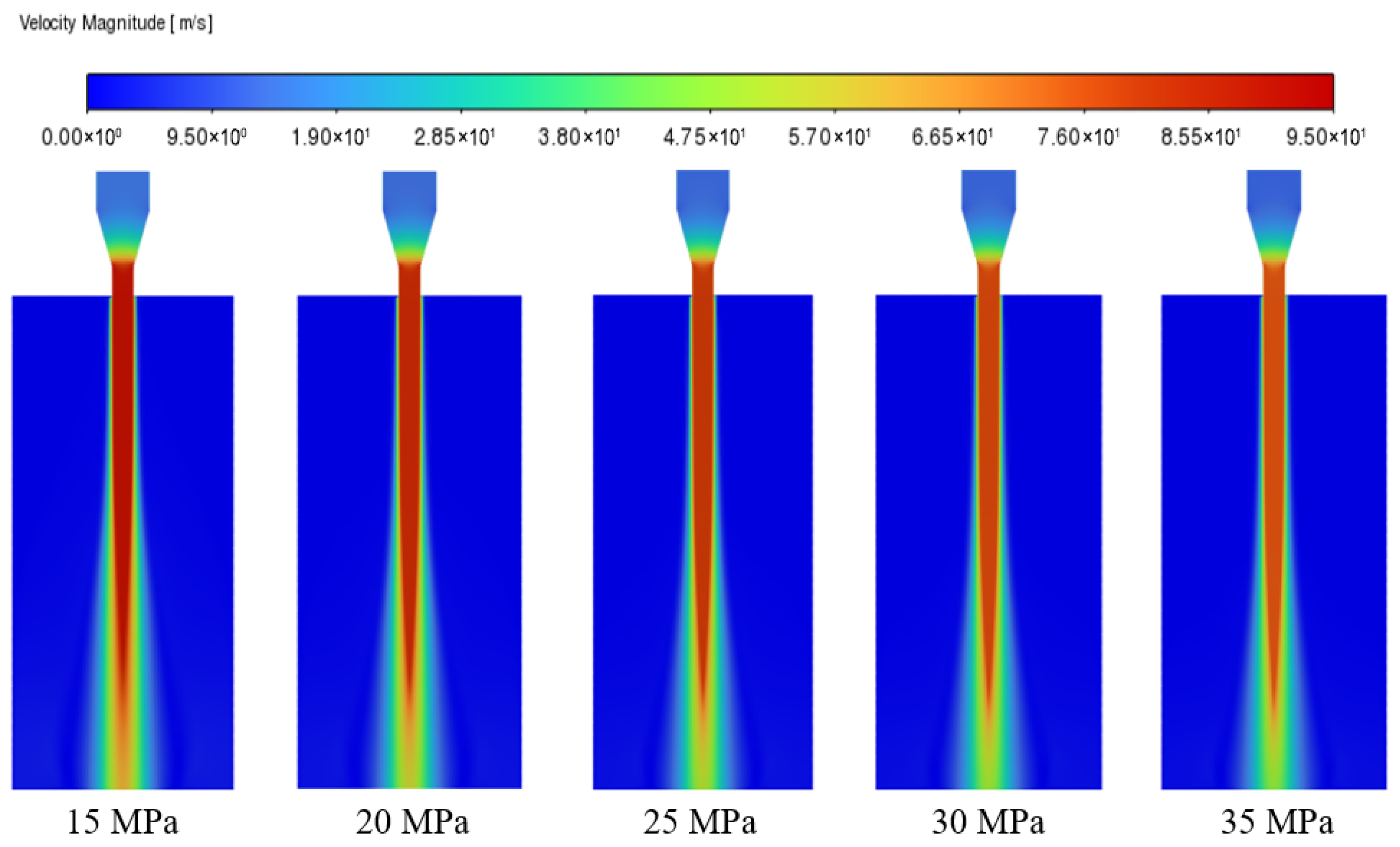
The axial velocity change trend of the fluid is basically the same, and the length of the potential core decreases with the increase in ambient confining pressure, as shown in Figure 11. At the same time, the jet velocity in the core region decreases with the increase in ambient confining pressure, while the density of the CO2 jet fluid is significantly increased. As the ambient confining pressure increases, the temperature and pressure drop, and the perforations diminish from 5 °C to 2 °C and from 3 MPa to 2.5 MPa, respectively. This is because when the ambient confining pressure increases, it will reduce the pressure differential across the perforation for CO2, directly leading to a progressively smaller pressure drop magnitude after passing through. It also inhibits the expansion degree of CO2 through the perforation, reducing compressibility and the Joule–Thomson coefficient and eliminating the superimposed phase change latent heat effects. Furthermore, it makes the flow field around the perforation more regular and heat exchange more sufficient, ultimately reducing the expansion work and internal energy loss of CO2, leading to progressively smaller temperature drop magnitudes after passing through. Subsequently, with the progress of the jet, the temperature of CO2 increases with the increase in fracture depth, while the dynamic pressure of CO2 decreases with the increase in fracture depth. In actual fracturing operations, increasing the confining pressure appropriately may enhance the impact of the CO2 abrasive jet by increasing the density.
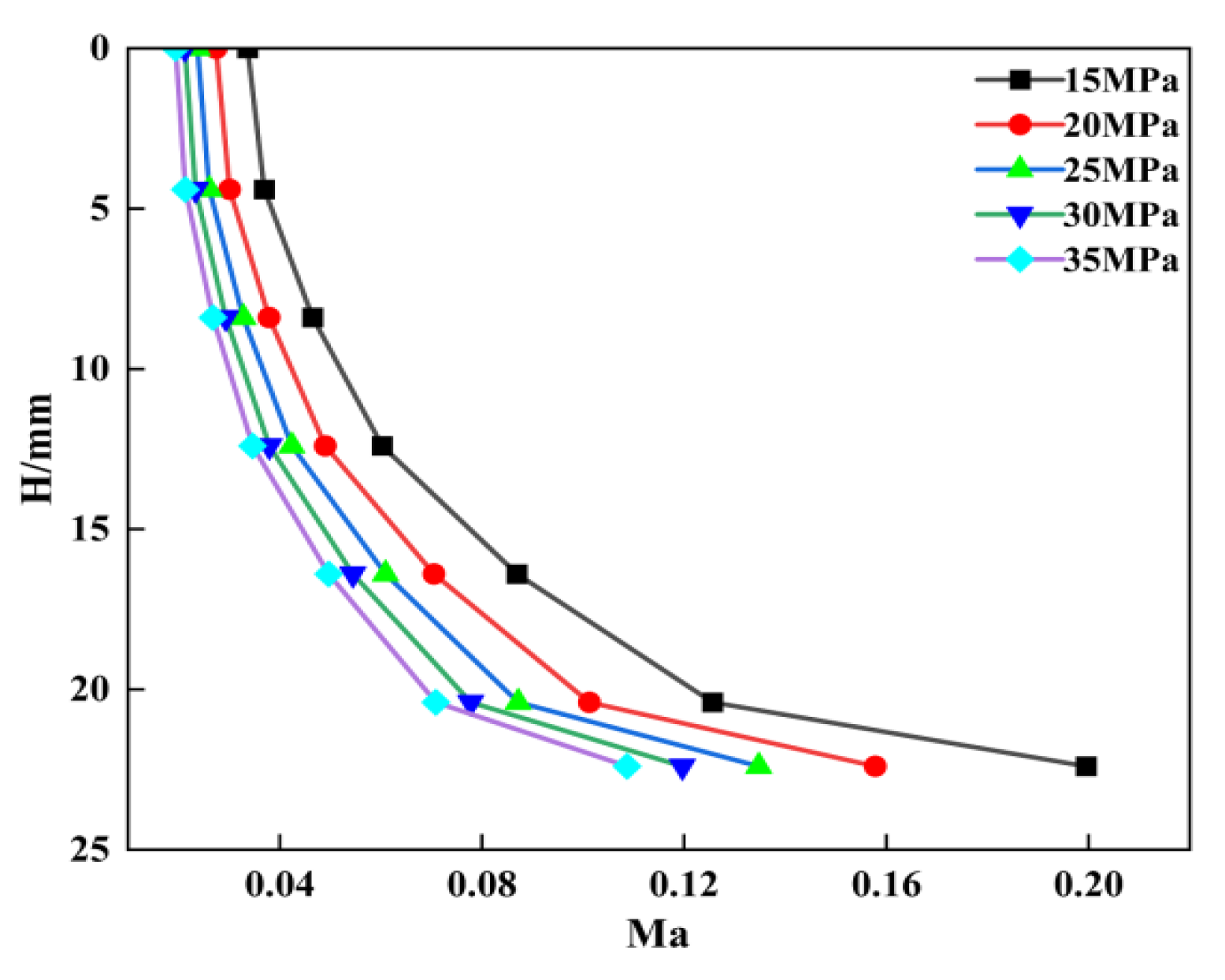
Figure 12 presents the Mach number (Ma) distribution along the CO2 jet centerline at different heights (H) for various confining pressures. At a fixed H, Ma decreases monotonically with an increasing confining pressure (15 MPa > 20 MPa > 25 MPa > 30 MPa > 35 MPa), demonstrating that a higher confining pressure suppresses jet expansion and acceleration, thus reducing jet core velocity and Mach number. These results align with the velocity variation trend in Figure 11.
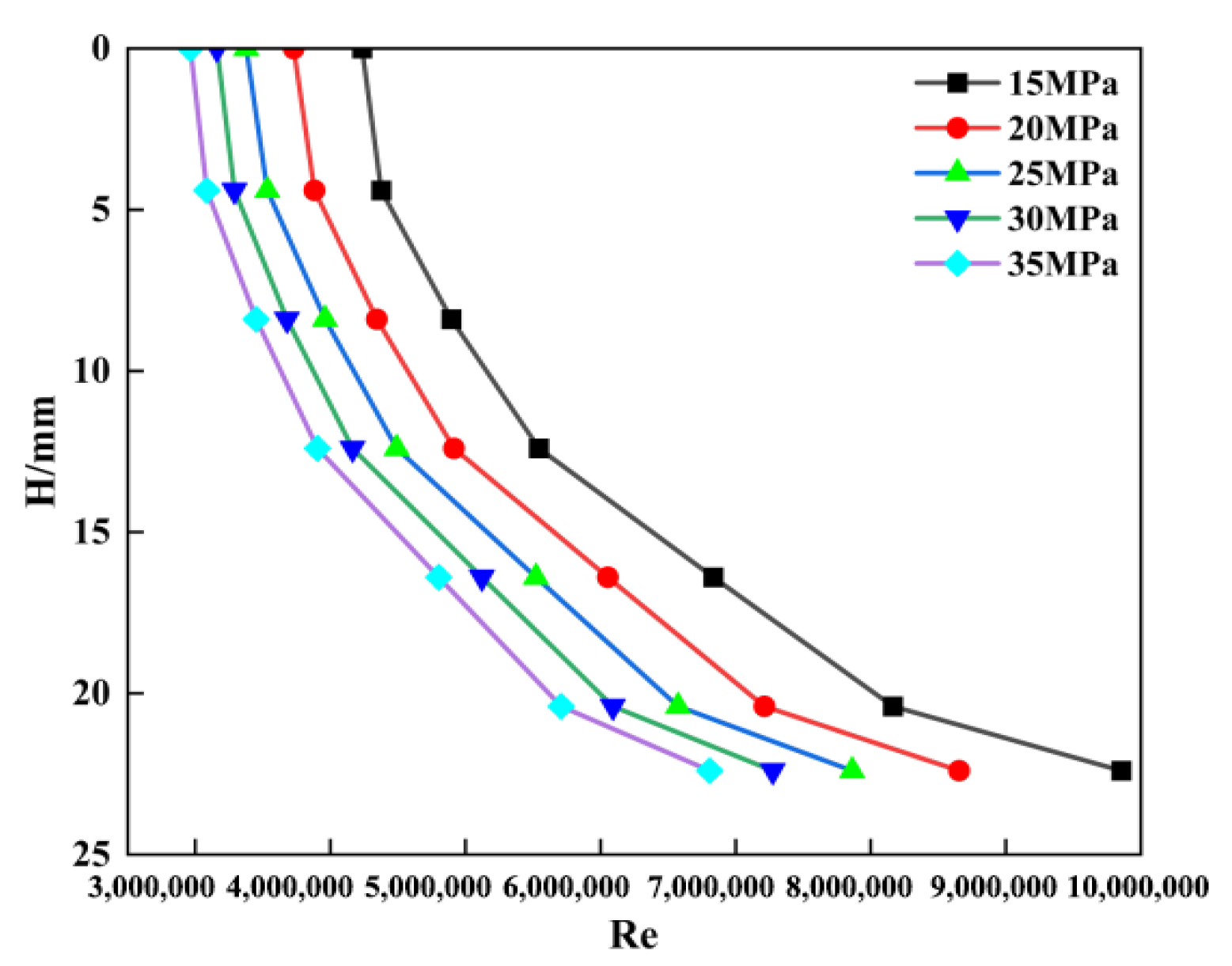
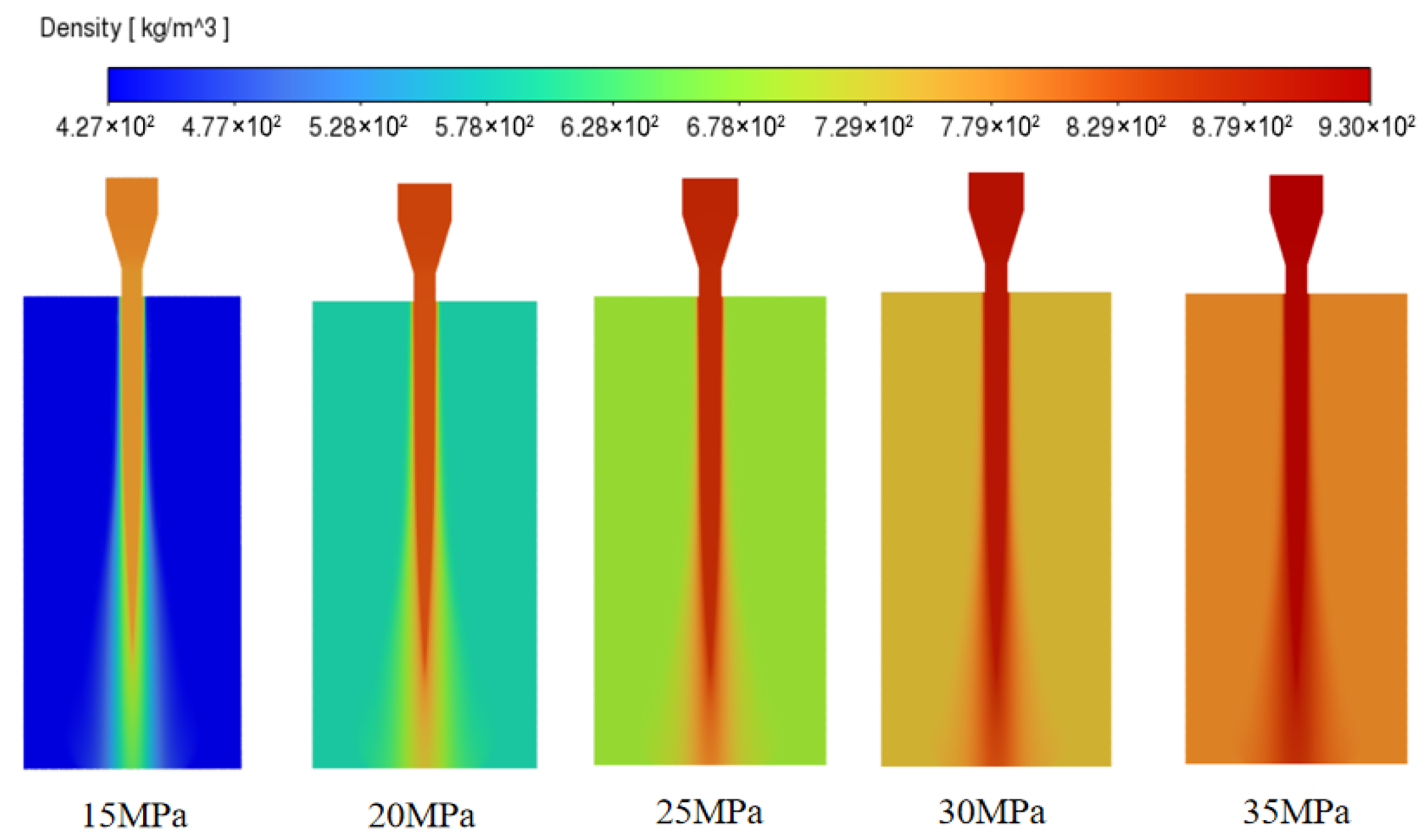
Figure 13 shows the Reynolds number (Re) distribution of the CO2 jet under different confining pressures. The Re in the jet core region decreases as the confining pressure increases. The lower Re indicates a weaker turbulence intensity, which reduces the lateral mixing of the jet, leading to a more concentrated high-density region as shown in Figure 14.
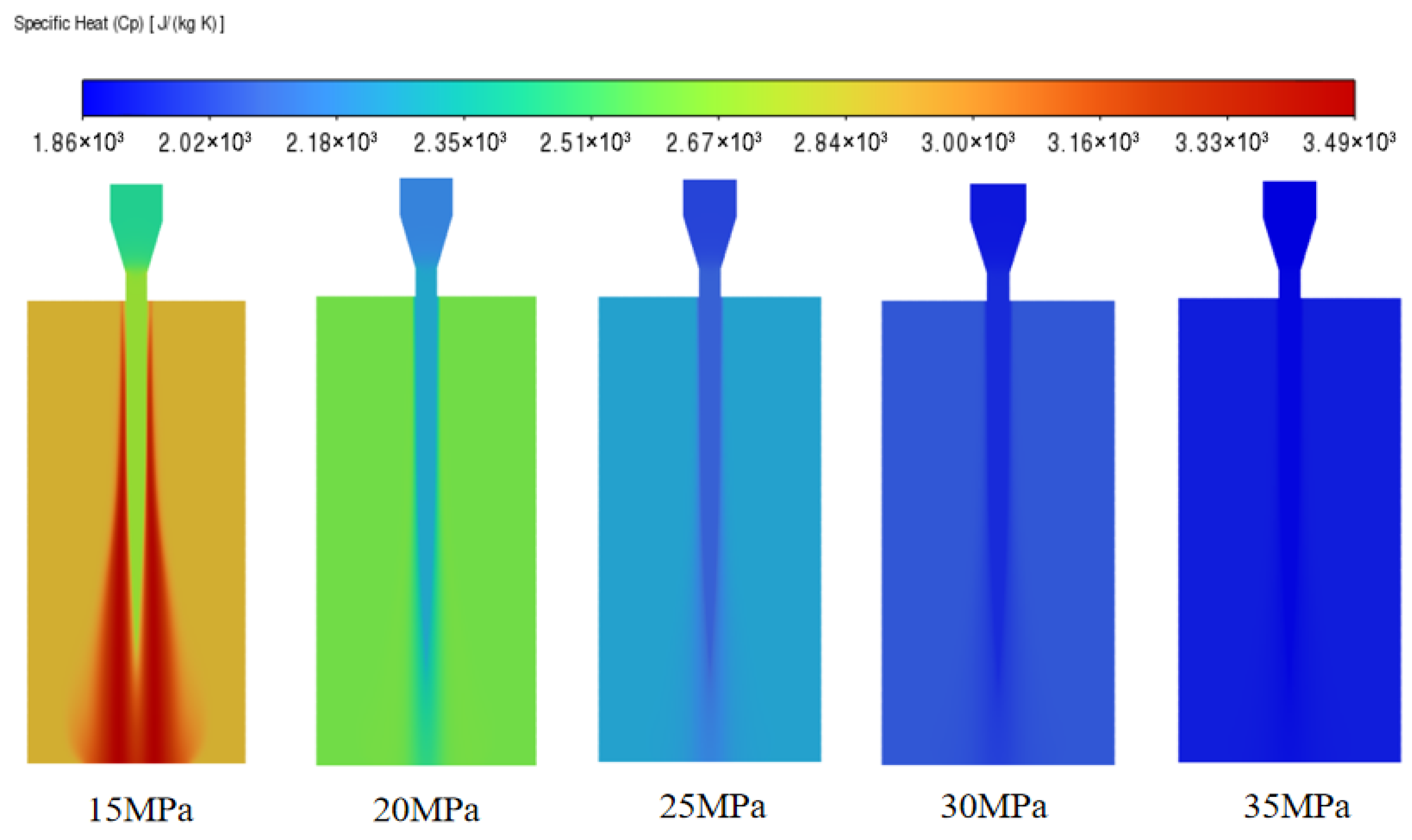
Figure 15 shows the constant-pressure specific heat (cp) contours of CO2 during perforation under different confining pressures. With increasing confining pressure, the overall constant-pressure specific heat decreases significantly. The background cp drops stepwise, and the cp difference between the jet core and the peripheral regions diminishes. The lateral extent of the high-cp core narrows markedly, and the cp gradient within the core becomes more gradual. This is attributed to the strong reduction in CO2-specific heat caused by pressure elevation in the supercritical or near-critical regime, which weakens the thermophysical contrast between the jet and its surroundings.
Notably, the variation in confining pressure leads to a coupling change in jet velocity and density: a higher confining pressure reduces the jet velocity and potential core length but significantly increases the density of the CO2 jet fluid. This trade-off between velocity and density is an important consideration for engineering applications, and the comprehensive impact on the fracturing effect needs to be combined with actual reservoir conditions for rational evaluation.

3.3. Influence of Fracturing Displacement

To study the influence of fracturing displacement on the CO2 jet flow field characteristics, fracturing displacements of 2 m3/min, 2.5 m3/min, 3 m3/min, 3.5 m3/min, and 4 m3/min are selected for calculation. In this set of simulations, the contraction angle is 35°, the ambient confining pressure is 25 MPa, and the fluid temperature is 45 °C to simulate the influence of fracturing displacement on the CO2 jet flow field characteristics.
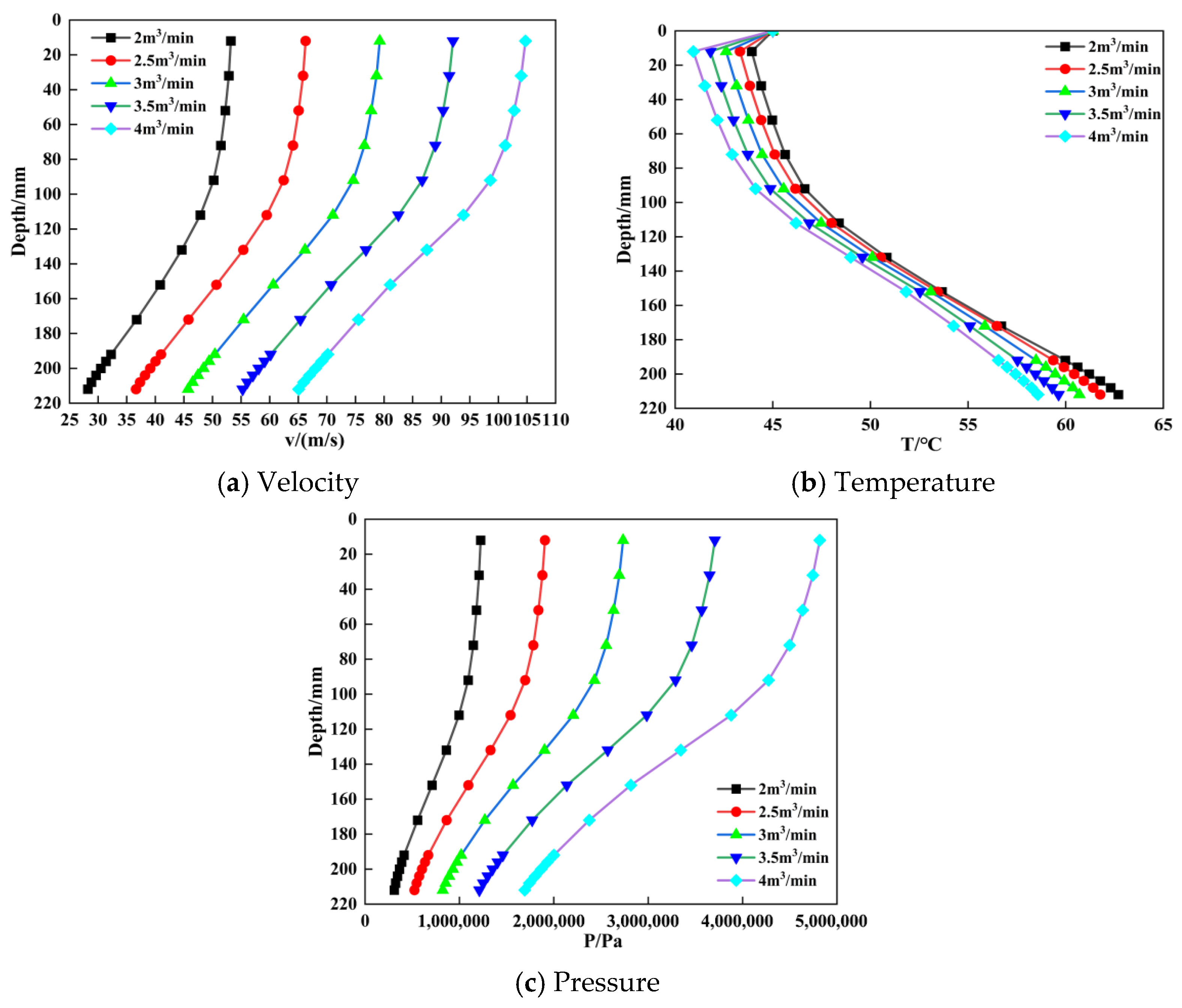
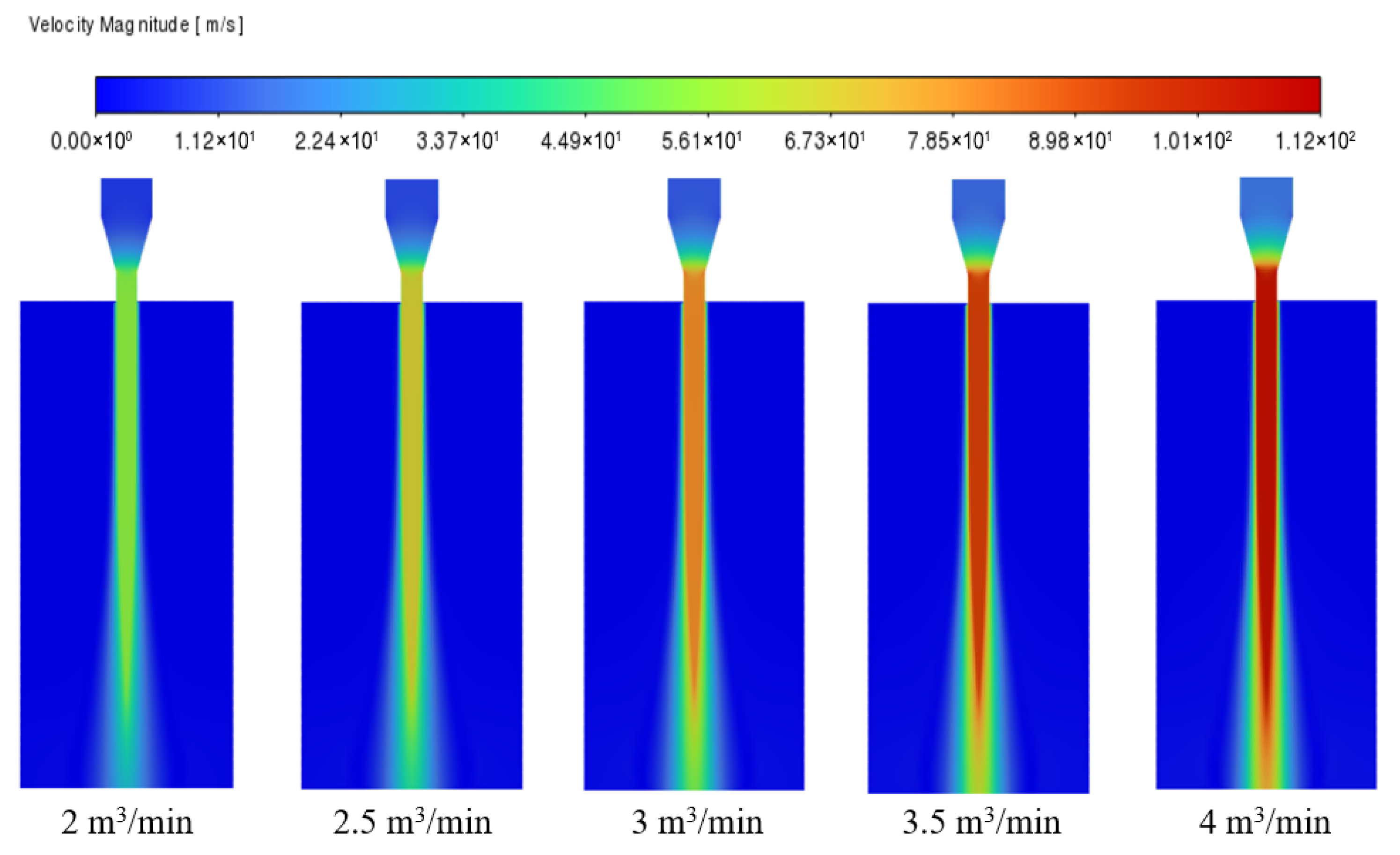
Figure 16 shows the variation curves of the CO2 fluid characteristics through perforations with fracture depth under different fracturing displacements. With the change in fracturing displacement, the maximum velocity on the axis of each nozzle, i.e., the fluid velocity in the core region, increases with the increase in fracturing displacement. The maximum value is 104.7 m/s at 4 m3/min, with the increase rates of 19.8%, 16.4%, 13.9%, and 12.1%, respectively, and the average increase rate is 15.5%. This indicates that the influence of increasing fracturing displacement on the jet velocity growth gradually decreases, and the increase in fracturing displacement also increases the length of the jet core region, as shown in Figure 17. Based on the above analysis, under different displacement conditions, the initial width of the jet constant-velocity core is basically the same, while the fluid velocity and core length in the jet core region increase significantly with the increase in displacement. This indicates that when the nozzle contraction angle is determined, increasing the injection displacement helps to form a jet constant-velocity core structure with better hydrodynamic characteristics.
With the increase in fracturing displacement, the temperature and pressure drops generated after passing through the perforations become larger (from 1.1 °C to 4.2 °C and from 1.2 MPa to 4.8 MPa). This is because the increase in fracturing displacement causes the CO2 flow velocity in the perforations to rise sharply, intensifying the flow congestion and local resistance loss and directly amplifying the pressure drop through the perforations; at the same time, the high pressure drop promotes the high-speed and large-scale expansion of CO2, the heat exchange compensation fails, and the internal energy loss increases sharply. The Joule–Thomson effect is strengthened, and the latent heat absorption of phase change is superimposed under the near-critical state, eventually leading to a synchronous and significant increase in the temperature drop as the pressure drops. Subsequently, with the progress of the jet, the temperature of CO2 increases with the increase in fracture depth, while the dynamic pressure of CO2 decreases with the increase in fracture depth.
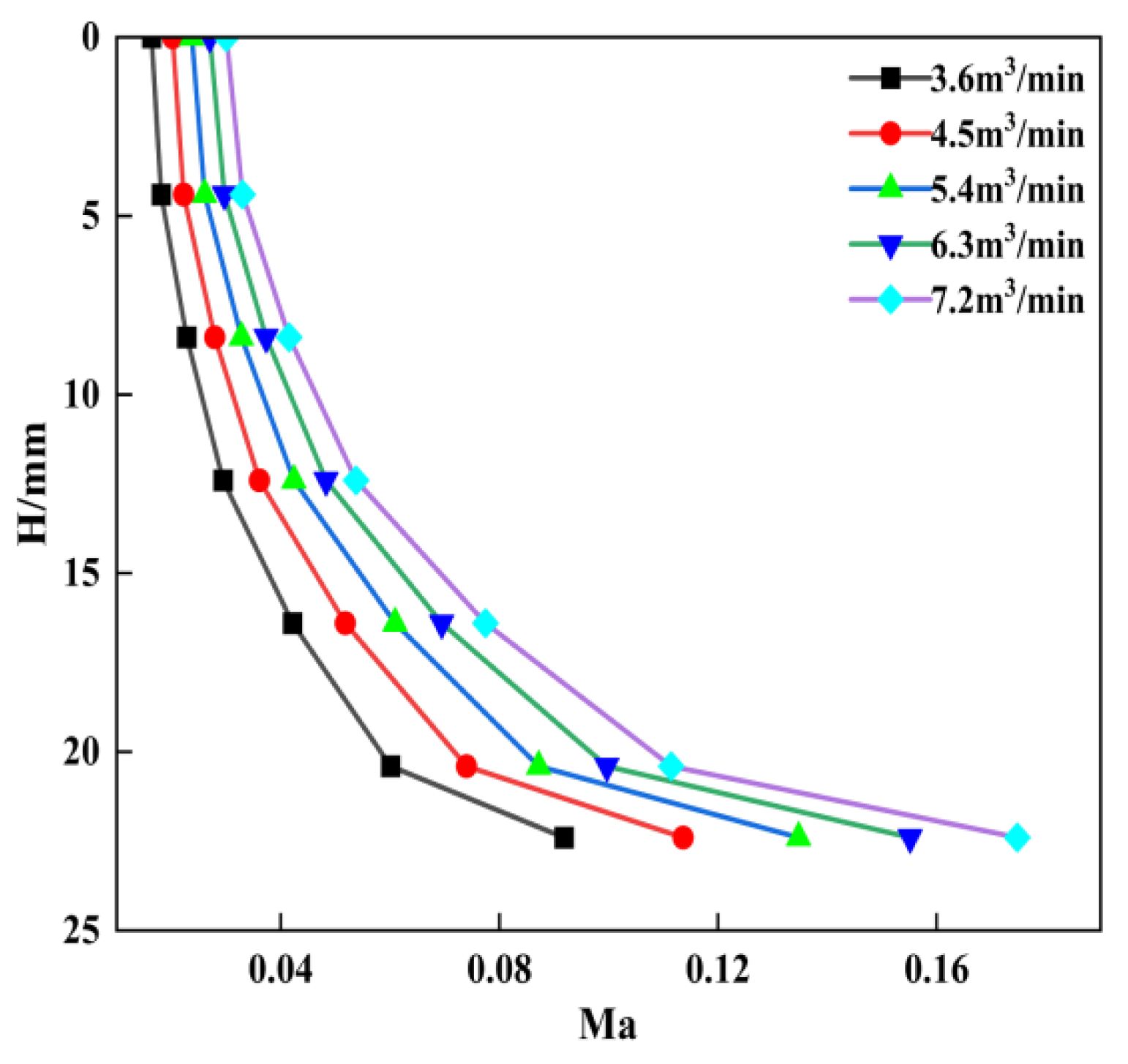
Figure 18 shows the Mach number (Ma) distribution of the CO2 jet under different injection displacements. The maximum Ma in the jet core region increases with the increase in displacement. A higher displacement increases the mass flow rate and jet velocity, leading to a higher Mach number, which reflects the enhanced compressibility effect of the jet core region.
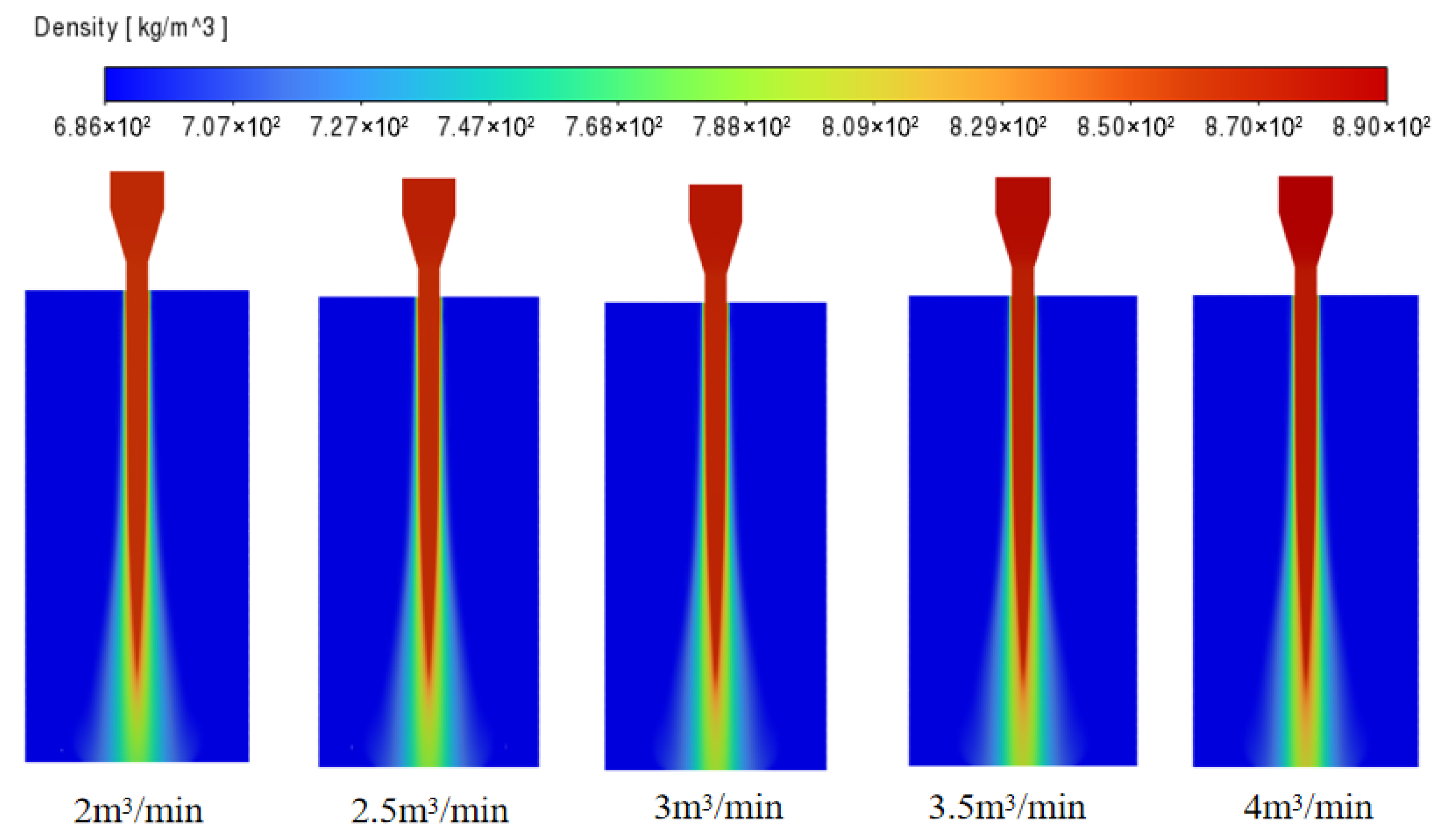
Figure 19 presents the Reynolds number (Re) distribution along the CO2 jet centerline at different heights (H) for various injection displacements. At a fixed H, Re increases with the injection displacement. A higher Re signifies a stronger turbulence intensity in the jet core. The increased jet momentum from a higher displacement suppresses excessive lateral diffusion, resulting in a steeper density gradient as shown in Figure 20.
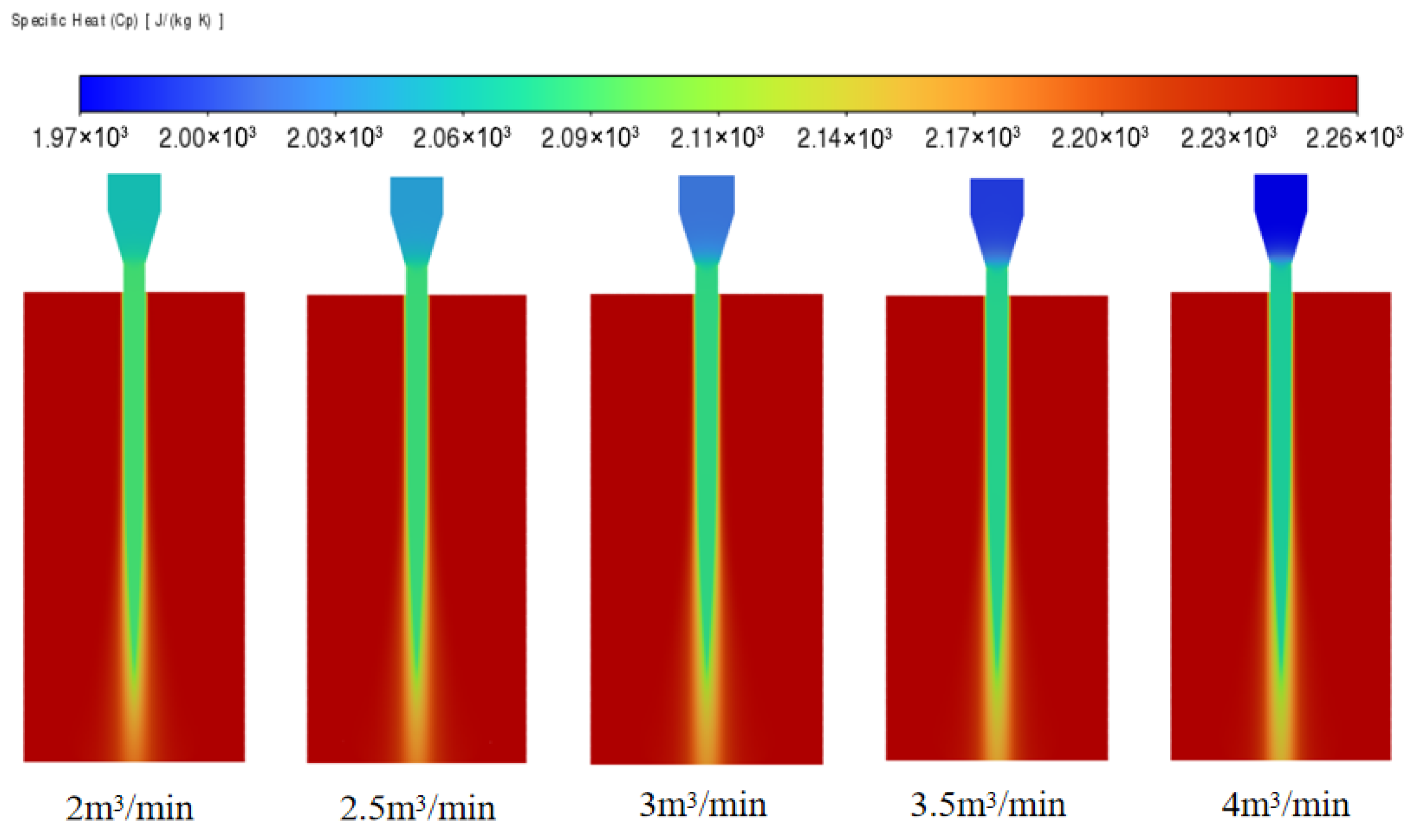
Figure 21 shows the specific heat contours of CO2 during perforation under different injection displacements. With increasing displacement, the CO2 specific heat in the downstream jet core region increases markedly while the background specific heat remains stable. The lateral extent of the high-cp core narrows slightly, and the cp gradient within the core becomes more pronounced. This is caused by the stronger expansion effect and larger temperature and pressure variations in the jet core, which intensify the contrast between the jet and its surroundings.

3.4. Influence of Fluid Temperature

While the influence of temperature is often considered less in conventional hydraulic fracturing jets, the physical properties of CO2 fluid are highly sensitive to temperature changes. Consequently, this sensitivity has a notable influence on the CO2 jet flow field characteristics. The fluid temperatures of 0 °C, 15 °C, 30 °C, 45 °C, and 60 °C are selected for calculation. In this set of simulations, the contraction angle is 35°, the ambient confining pressure is 25 MPa, and the fracturing displacement is 3 m3/min to simulate the influence of fluid temperature on the CO2 jet flow field characteristics.
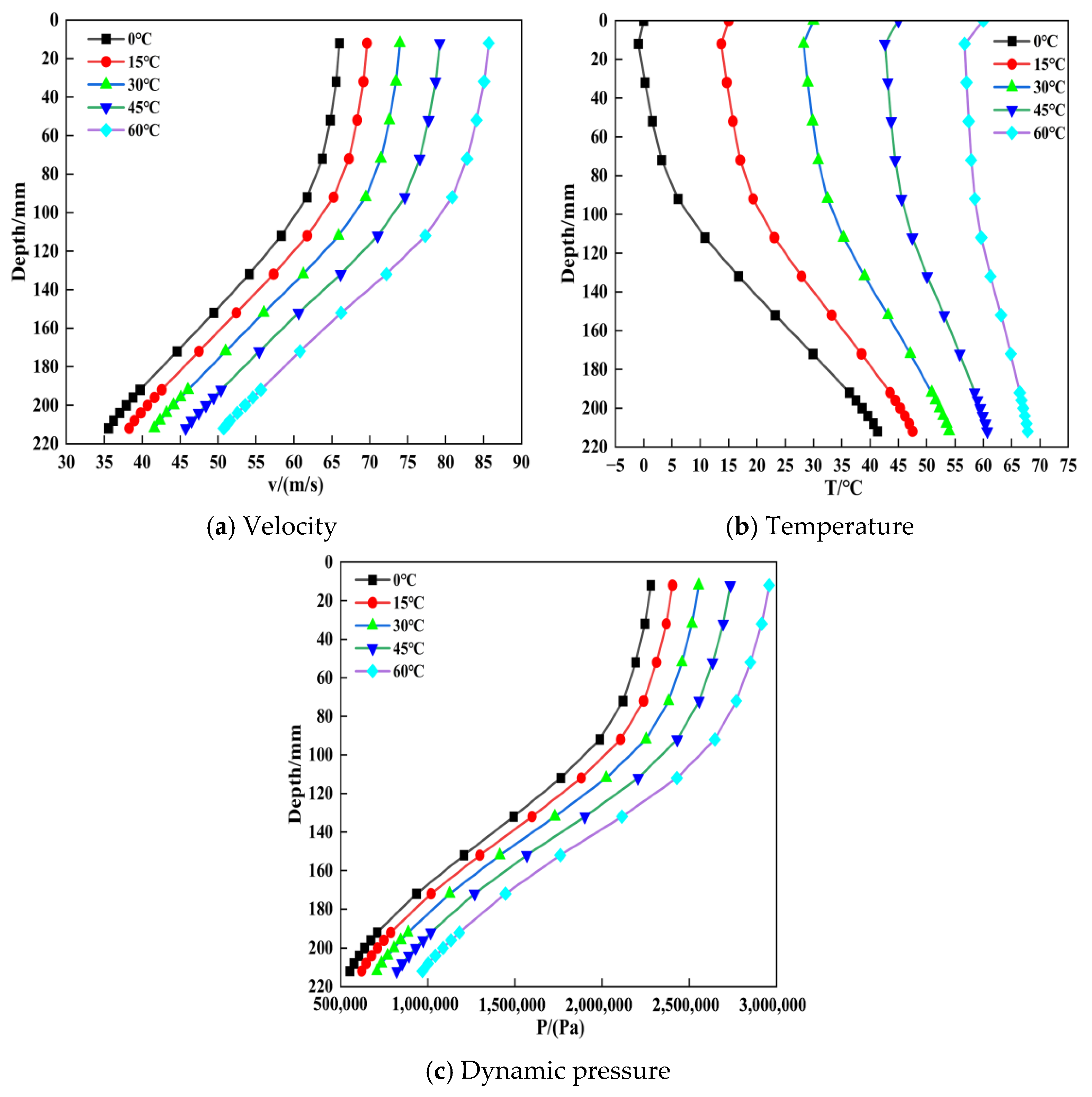
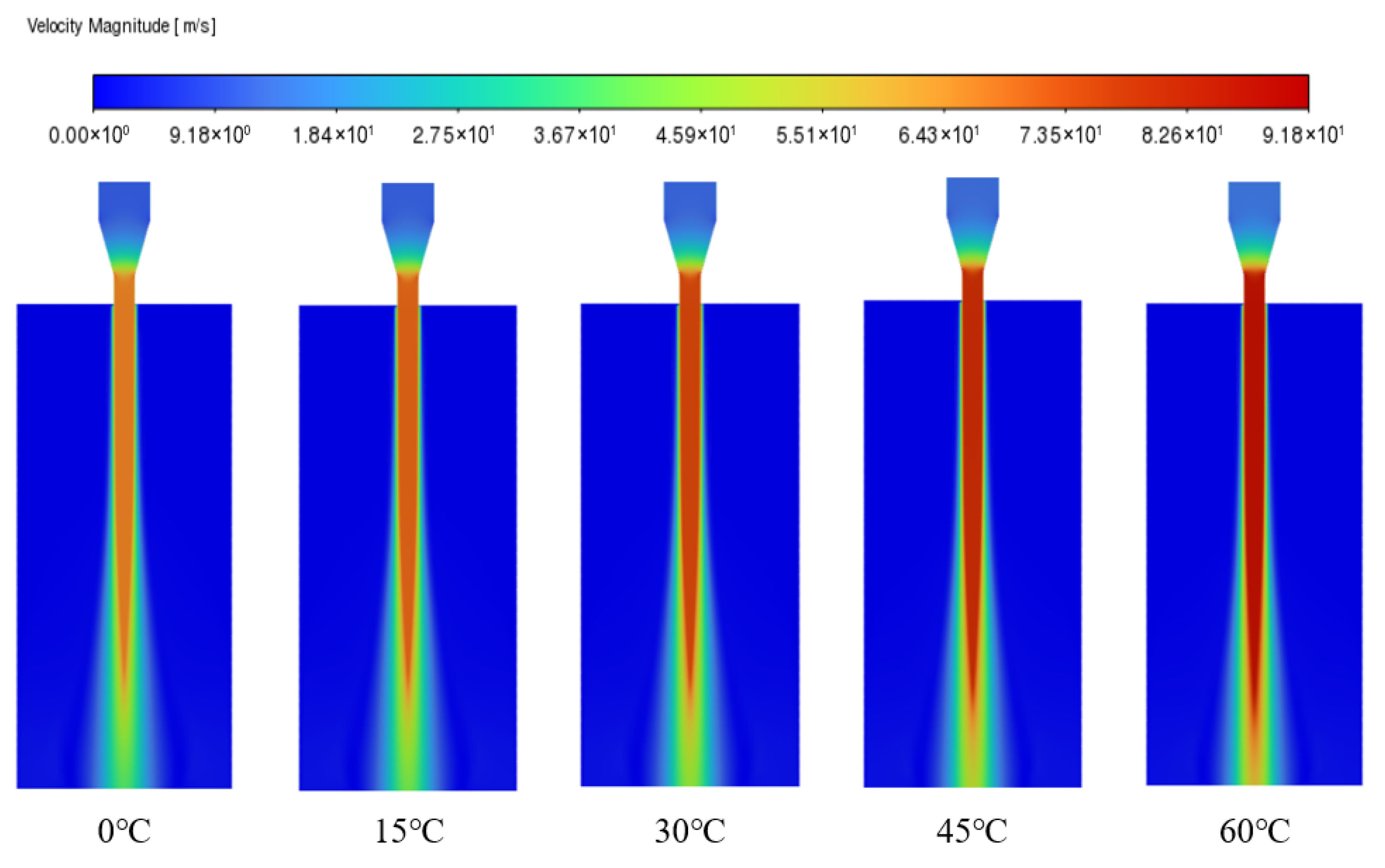
Figure 22 shows the variation curves of the CO2 fluid characteristics through perforations with fracture depths under different fluid temperatures. With the change in fluid temperature, the maximum velocity on the axis of each nozzle, i.e., the fluid velocity in the core region, increases with the increase in fluid temperature and has the increase rates of 5.2%, 5.9%, 6.6%, and 7.5%, respectively. The average increase rate is 6.3%. This indicates that the influence of increasing fluid temperature on the jet velocity growth gradually strengthens, but the influence of increasing the fracturing displacement on the length of the jet core region is significantly weaker than that of the nozzle contraction angle, which confines the pressure and fracturing displacement, as shown in Figure 23. Although the increase in fluid temperature can increase the jet velocity, it will simultaneously reduce its density and viscosity. This means the energy loss of the jet does not increase during the mixing and entrainment process with the surrounding fluid, so the length of the potential core will not change significantly with the increase in temperature. In summary, increasing the fluid temperature can effectively increase the jet velocity, but it does not have a significant impact on the spatial distribution of the jet core region. The direct simulation results show that the CO2 fluid undergoes an instantaneous temperature drop after passing through the perforation and exhibits an obvious temperature recovery trend along the fracture propagation direction; the core driving forces for the downstream temperature recovery of the jet are the kinetic energy dissipation and the formation of the geothermal gradient.
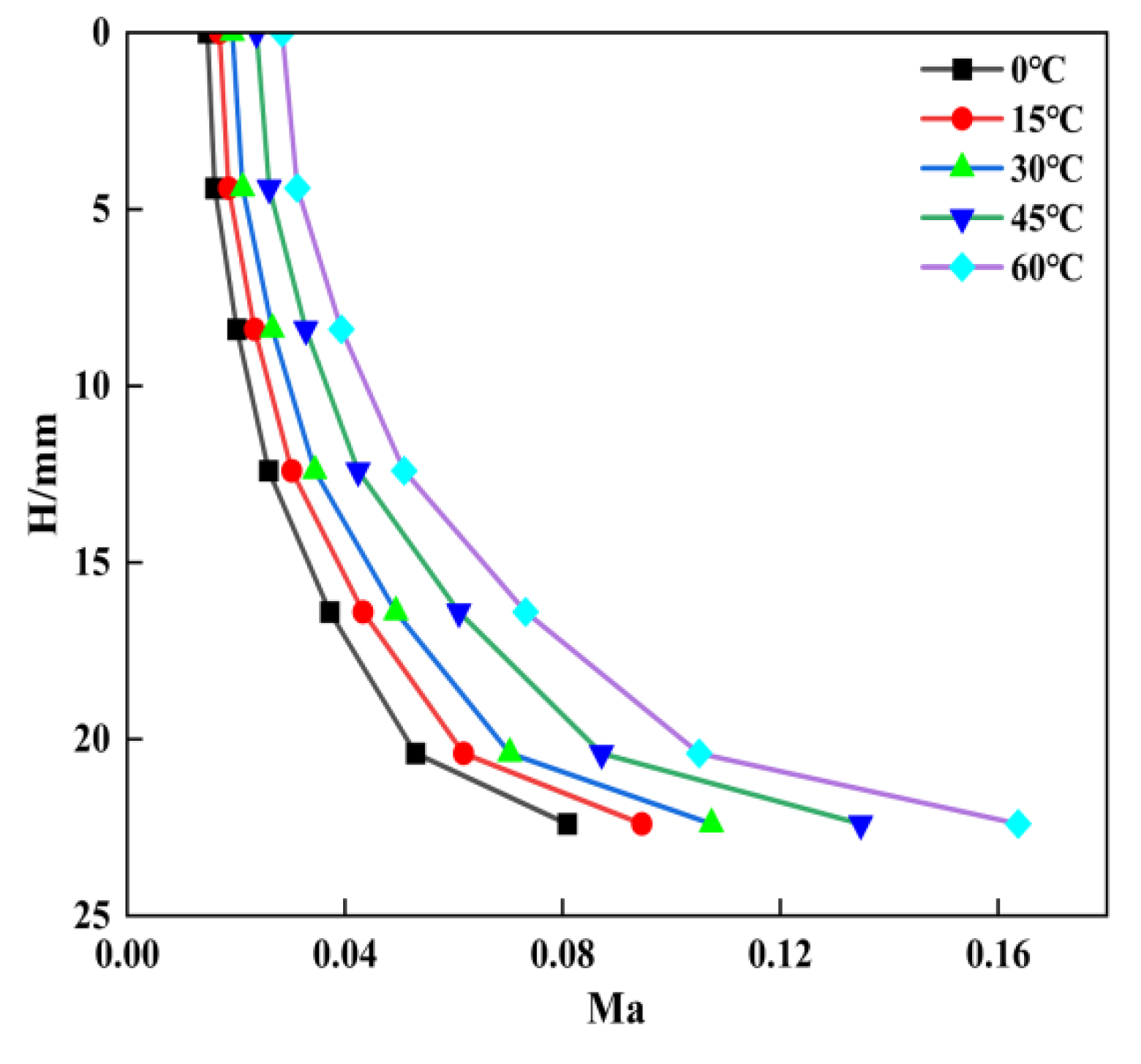
Figure 24 presents the Mach number (Ma) distribution along the CO2 jet centerline at different heights (H) for various fluid temperatures. At a fixed H, Ma increases with temperature from 0 °C to 60 °C. A higher temperature lowers the CO2 viscosity and density, which reduces the flow resistance and boosts the jet velocity, resulting in a higher Mach number. At a fixed temperature, Ma rises with decreasing H toward the nozzle exit, reflecting a continuous jet acceleration. These results align with the velocity variation trend in Figure 23.
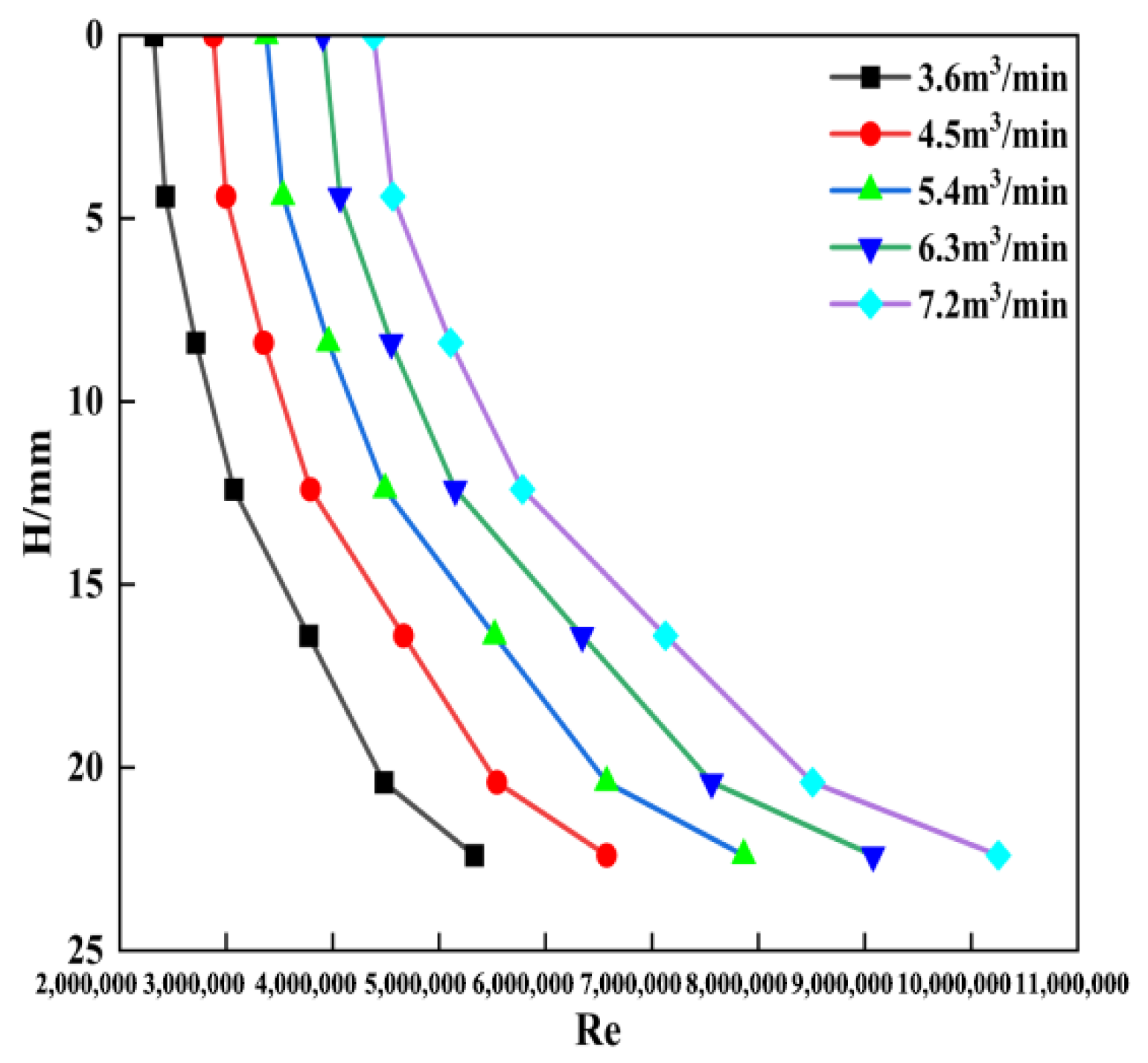
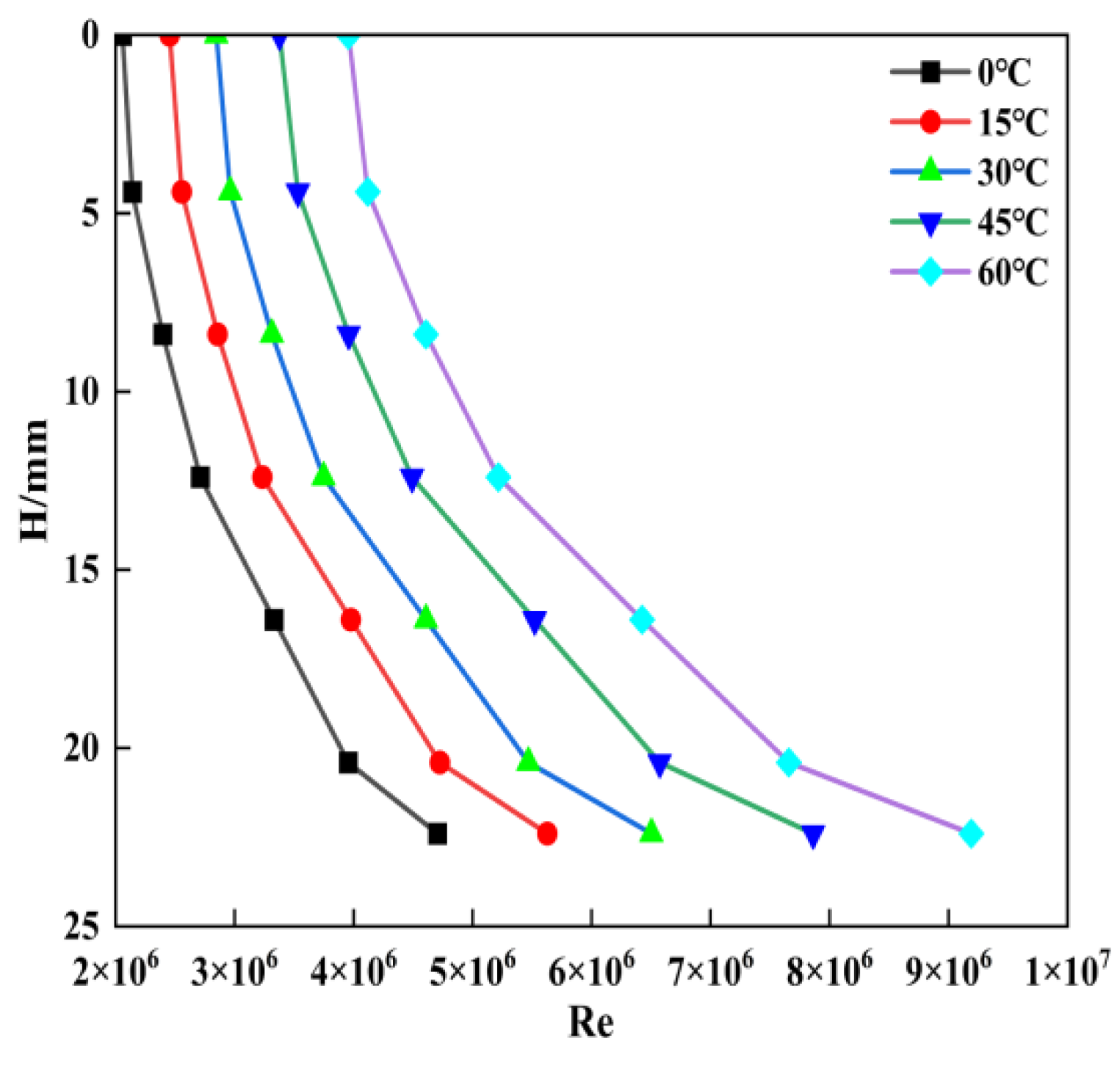
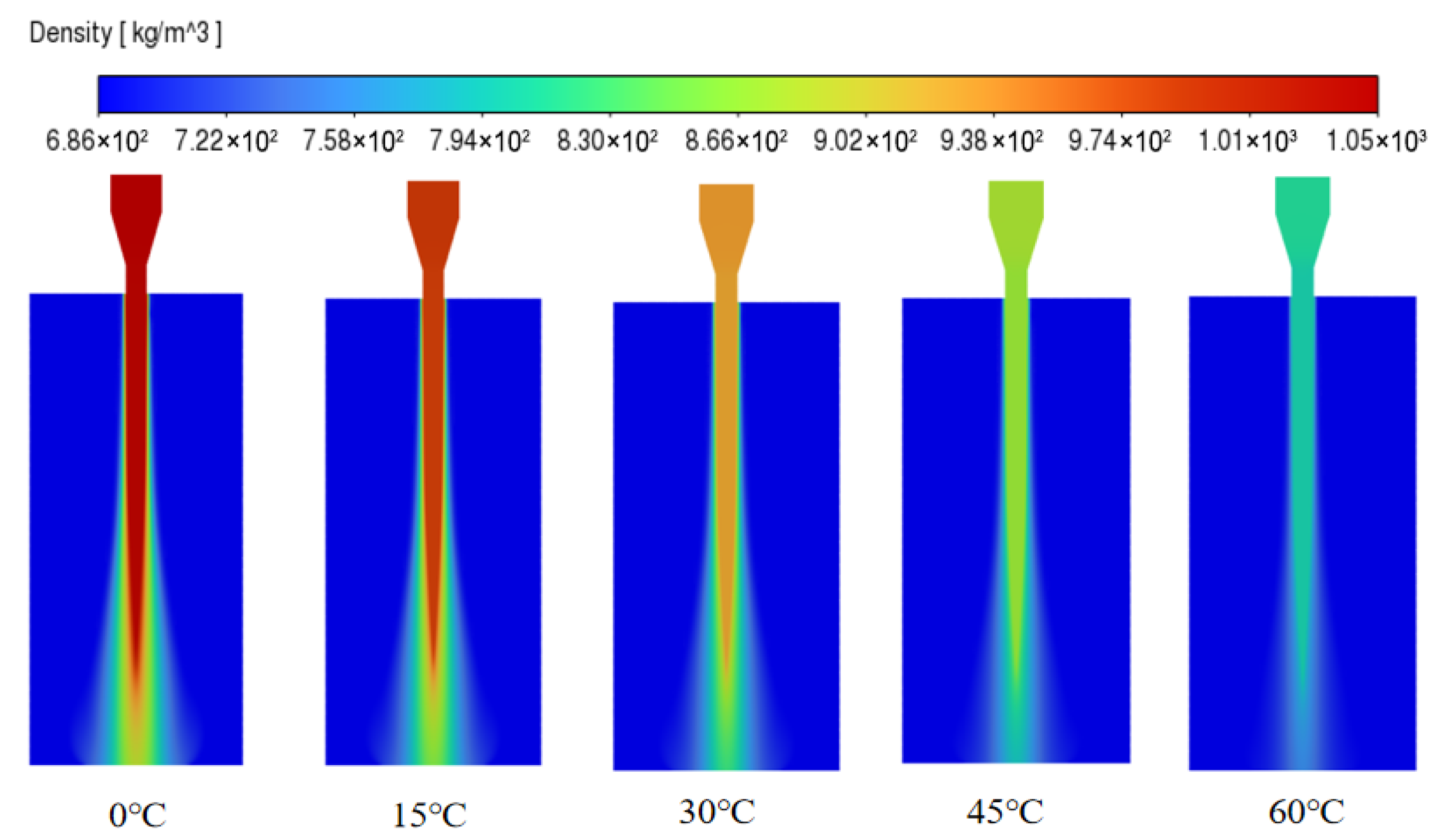
Figure 25 shows the Reynolds number (Re) distribution along the CO2 jet centerline at different heights (H) under various fluid temperatures. At a given height H, Re increases with the rising fluid temperature. A higher Re indicates a stronger turbulence intensity in the jet core, which promotes the lateral mixing of the jet, leading to a gentler density gradient and expanded high-density region, as shown in Figure 26.
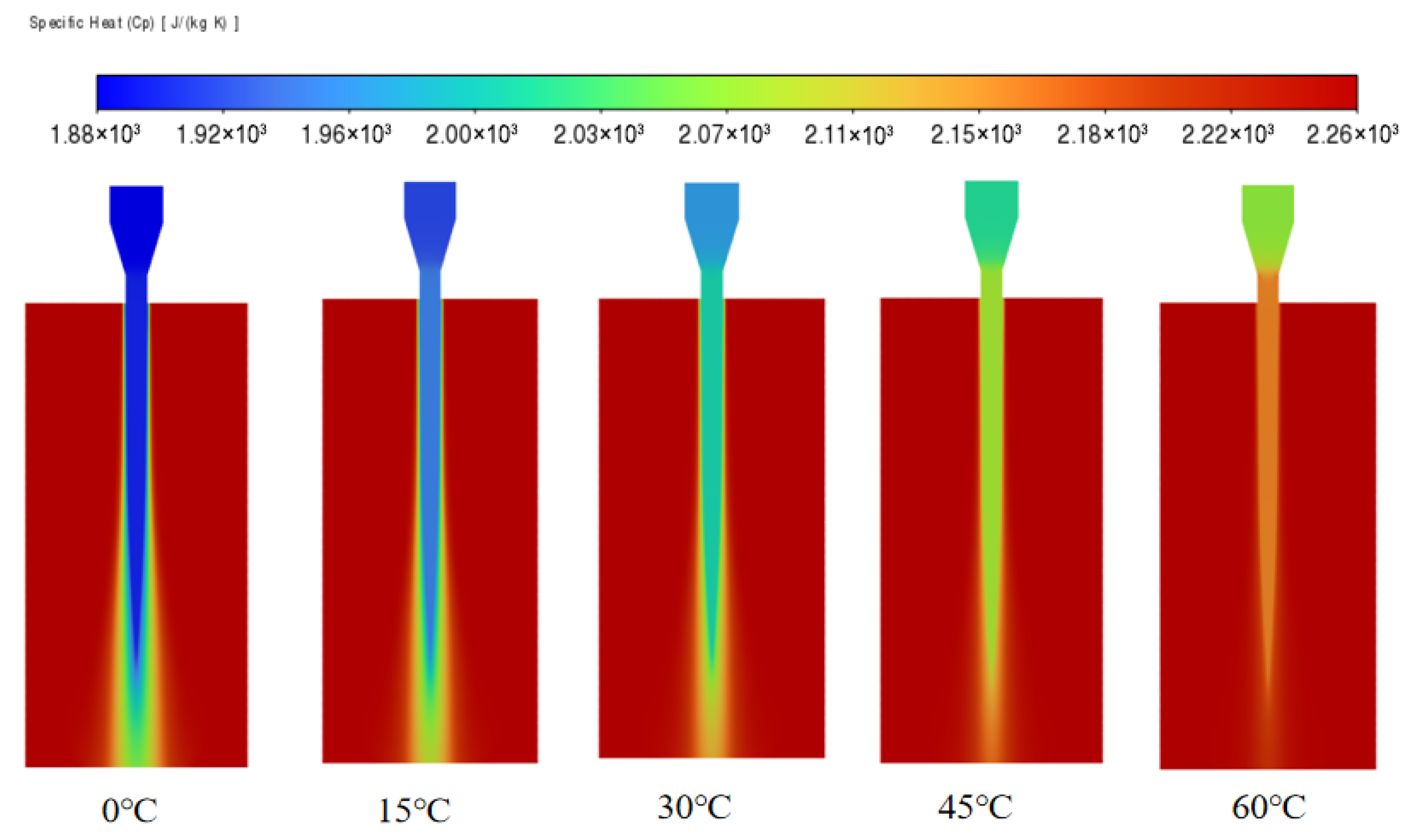
Figure 27 shows the contours of the constant-pressure specific heat (cp) of CO2 during perforation at different fluid temperatures. As the fluid temperature rises, the overall specific heat increases notably. The background specific heat rises gradually, and the contrast in specific heat between the jet core and the surrounding area increases. The lateral extent of the high-cp core widens significantly, and the specific heat gradient within the core becomes gentler. This is due to the substantial increase in CO2 specific heat caused by the temperature rise in the supercritical or near-critical region.
The comprehensive analysis of the Mach number and the Reynolds number distributions under different parameters reveals a significant coupling relationship between these dimensionless parameters and jet thermophysical properties (density and specific heat): the Mach number is positively correlated with the jet core velocity and throttling expansion effect, with higher values corresponding to lower density and a higher specific heat in the core region for momentum-enhancing parameters, a higher confining pressure reducing the Mach number to induce a higher density and lower specific heat, and a higher fluid temperature increasing the Mach number to result in lower density and higher specific heat. The Reynolds number is positively correlated with turbulence intensity, where higher values intensify the lateral mixing to gentle the spatial gradients of the density and the specific heat, yet this effect is constrained by parameter-specific mechanisms leading to the coexistence of a high Reynolds number and steep thermophysical property gradients in some cases. The quantitative statistics confirm the influence of each parameter on the temperature, pressure, and velocity of the CO2 jet and rank them from the most to least significant as follows: nozzle contraction angle > fracturing injection rate > formation confining pressure > fluid temperature. This demonstrates that the nozzle structural parameters have a stronger regulatory effect on the characteristics of the jet core region than the operating parameters, which provides a clear priority for the optimization of CO2 perforation fracturing parameters in engineering practice.


4. Conclusions

In order to quantitatively reveal the influence mechanisms of the key structural and operational parameters on the CO2 jet flow field through perforations in CO2 fracturing, this study employs Ansys Fluent to construct a full three-dimensional numerical model of the nozzle–perforation–fracture system (without symmetry simplifications), and simulates and compares the effects of the nozzle contraction angle, fracturing injection rate, formation confining pressure, and fluid temperature on jet flow field characteristics. The SST k-ω turbulence model is validated by experimental data, and the variation laws of jet core velocity, potential core length, temperature/pressure evolution, thermophysical properties (density, specific heat), and dimensionless parameters (Mach number, Reynolds number) are systematically analyzed. The main findings and targeted engineering guidance are summarized as follows:
  • The nozzle contraction angle exhibits the most significant influence on the CO2 jet flow field characteristics. A larger contraction angle increases the average velocity in the jet core region (by an average of 5.0%, with the most significant growth at 35°) and extends the potential core length; the Mach number and Reynolds number in the core region decrease with the increasing contraction angle, and the high specific heat region in the jet core narrows with a more obvious gradient.
  • The increased fracturing injection rate significantly enhances the maximum jet velocity (reaching 104.7 m/s at 4 m3/min, with an average increase of 15.5%) and extends the potential core length and also leads to substantially greater temperature and pressure drops across the perforation (from 1.1 °C and 1.2 MPa to 4.2 °C and 4.8 MPa). The Mach number and Reynolds number in the jet core increase with the injection rate, and the thermophysical property gradient of the jet core is significantly intensified. Engineering guidance: for fracturing under high confining pressure (>25 MPa), the fracturing injection rate should be increased appropriately to enhance the jet expansion effect and improve the thermophysical property gradient of the jet core region.
  • An elevated formation confining pressure reduces the average jet velocity in the core region (by an average of 4.3%) and shortens the potential core length, and the associated temperature and pressure drops across the perforation also diminish (from 5 °C and 3 MPa to 2 °C and 2.5 MPa); meanwhile, the CO2 jet fluid density is significantly increased, and the overall specific heat of the jet decreases with a gentler thermophysical property gradient. The Mach number and Reynolds number in the jet core decrease with increasing confining pressure, leading to a more concentrated high-density jet region.
  • An increased fluid temperature raises the average jet velocity by an average of 6.3% but has a minimal effect on the potential core length; the temperature drop at the perforation remains around 2 °C, while the pressure drop increases from 2.2 MPa to 2.9 MPa. The jet density decreases with increasing temperature, the overall specific heat increases significantly, and the Mach number and Reynolds number in the jet core show an increasing trend.
  • Quantitatively, the influence of each parameter on the temperature, pressure, and velocity of the CO2 jet is ranked in descending order as follows: nozzle contraction angle > fracturing injection rate > formation confining pressure > fluid temperature. This indicates that the nozzle structural parameters exert a stronger regulatory effect on the characteristics of the jet core region than operational parameters, which is the key priority for the optimized design of CO2 perforation fracturing tools and the rational selection of operating parameters.
The research results reveal the intrinsic physical mechanisms of the CO2 jet flow field evolution in the perforation–fracture system under the coupling effect of multiple parameters and provide clear theoretical support and targeted engineering guidance for the optimization of nozzle structural design and operating parameter selection in CO2 perforation fracturing of unconventional oil and gas resources, which is conducive to improving the fracturing efficiency and reducing construction risks.

Author Contributions

Conceptualization, Y.Z.; methodology, L.C. and M.Z.; validation, L.C.; formal analysis, Z.L. and L.T.; investigation, M.Z.; resources, Y.T.; data curation, Y.Z.; writing—original draft preparation, Z.L. and L.T.; writing—review and editing, J.L.; visualization, Y.T.; funding acquisition, J.L. All authors have read and agreed to the published version of the manuscript.

Funding

This research is supported by the National Science and Technology Major Project of China “Phase-Mixed Drive Technology and Integrated Demonstration for CCUS-EOR in Conglomerate Reservoirs of the Junggar Basin” (grant no. 2025ZD1408405).

Data Availability Statement

The data that support the findings of this study are available from the first author.

Conflicts of Interest

Author Zefeng Li, Yining Zhou, Jianping Lan, Mian Zhang and Yuchen Tian were employed by CNPC Chuanqing Drilling Engineering Company Limited, Changqing Downhole Technology Company, and the National Engineering Laboratory for Low-permeability Oil and Gasfield Exploration and Development. The author Long Chai was employed by CNPC Chuanqing Drilling Engineering Company Limited and the Changqing Downhole Technology Company. The remaining authors declare that the research was conducted in the absence of any commercial or financial relationships that could be construed as a potential conflict of interest.

References

  1. He, X.; Li, P.; Qian, H.; Shi, H.; Su, Y. Impacts of additives in hydraulic fracturing technology: An experimental investigation in the Sulige Gas Field, China. Environ. Earth Sci. 2025, 84, 558. [Google Scholar] [CrossRef]
  2. Xia, Y.; Li, L.; Wang, Z. Experimental and numerical study on influencing factors of replacement capacity and slickwater flowback efficiency using pre-CO2 fracturing in tight oil reservoirs. J. Petrol. Sci. Eng. 2022, 215, 110697. [Google Scholar] [CrossRef]
  3. Pu, C.; Liu, Z.; Pu, G. Simulation investigation on the structure and its influence on the impinging pressure of the carbon dioxide jet. ACS Omega 2023, 8, 25326–25335. [Google Scholar] [CrossRef]
  4. Gong, W.; Shi, X.; Xu, X.; Zhang, Y.; Huang, W.; Liu, X.; Xu, H. Study on fracture propagation patterns of supercritical CO2 fracturing in perforated wells based on displacement discontinuity method. J. South China Norm. Univ. (Nat. Sci.) 2025, 57, 43–54. (In Chinese) [Google Scholar] [CrossRef]
  5. Wei, J.; Li, X.; Liu, Y.; Zhang, H.; Chen, C.; Tian, Y.; Li, H.; Gao, M. The effect of thermal stresses on coal cracks evolution induced by a supercritical carbon dioxide jet. Int. J. Coal Sci. Technol. 2026, 13, 5. [Google Scholar] [CrossRef]
  6. Wang, H.; Li, G.; Shen, Z.; Tian, S.; Sun, B.; He, Z.; Lu, P. Experiment on rock breaking with supercritical carbon dioxide jet. J. Petrol. Sci. Eng. 2015, 127, 305–310. [Google Scholar] [CrossRef]
  7. Can, C. Flow Characteristic and Enhancement Mechanism of Supercritical Carbon Dioxide Jet Fracturing. Ph.D. Thesis, Wuhan University, Wuhan, China, 2019. Available online: https://kns.cnki.net/kcms2/article/abstract?v=Jz5IuRg0t02IFjLb1hb-mc6wxlwX7r9VI4ovCTTpIe0ROPK27ujvuJsOQfjVPGy5xQi08iI9A124PcHl1oUT_l7u7y_WvaSNImQZySFsg9BpuER6hLddFgPTmSj9vuFaSoJiamynskXgVYTR2pN5jjTGOL7ATO1ZF7Fr-Yxi3F_bInuDFPEldtJ55RWxCcvU&uniplatform=NZKPT&language=CHS (accessed on 1 March 2019). (In Chinese)
  8. Kolle, J.; Marvin, M. Jet-assisted coiled tubing drilling with supercritical carbon dioxide. In Proceedings of the ETCE/OMAE 2000 Joint Conference: Energy for the New Millennium, New Orleans, LA, USA, 14–17 February 2000. [Google Scholar]
  9. Li, M.; Wang, G.; Cheng, W.; Pu, S.; Ni, H.; Shi, X. Heat-fluid-solid coupling mechanism of supercritical carbon dioxide jet in rock-breaking. Petrol. Explor. Dev. 2021, 48, 1258–1268. (In Chinese) [Google Scholar] [CrossRef]
  10. Chen, J.; Yang, R.; Huang, Z.; Wu, X.; Zhang, S.; Wang, H.; Ma, F. Simulation study of supercritical carbon dioxide jet fracturing for carbonate geothermal reservoir based on fluid-thermo-mechanical coupling model. Petrol. Sci. 2023, 20, 1750–1767. [Google Scholar] [CrossRef]
  11. An, Q.; Zhang, Q.; Li, X.; Zhang, X. Experimental study of temperature and pressure effects on rock damage caused by SC-CO2. Geothermics 2023, 114, 102797. [Google Scholar] [CrossRef]
  12. Tian, S.; He, Z.; Li, G.; Wang, Z.; Shen, Z.; Liu, Q. Influences of ambient pressure and nozzle-to-target distance on SC-CO2 jet impingement and perforation. J. Nat. Gas Sci. Eng. 2016, 29, 232–242. [Google Scholar] [CrossRef]
  13. Wang, X.; Zheng, Y.; Wu, J. Numerical simulation of supercritical CO2 jet behavior. China Pet. Mach. 2019, 47, 90–97. (In Chinese) [Google Scholar] [CrossRef]
  14. Huang, M.; Hu, Y.; Wang, X. Experimental investigation on the flow and rock breaking characteristics of supercritical carbon dioxide jets. J. Petrol. Sci. Eng. 2020, 187, 106735. [Google Scholar] [CrossRef]
  15. Zhang, Z.; Tang, J.; Zhang, J.; Meng, S.; Li, J. Modeling of scale-dependent perforation geometrical fracture growth in naturally layered media. Eng. Geol. 2024, 336, 107499. [Google Scholar] [CrossRef]
  16. Tang, J.; Zhang, M.; Guo, X.; Geng, J.; Li, Y. Investigation of creep and transport mechanisms of CO2 fracturing within natural gas hydrates. Energy 2024, 300, 131214. [Google Scholar] [CrossRef]
  17. Tang, J.; Li, J.; Zhang, Z.; Fan, Y.; Jiang, W.; Meng, S.; Zhao, X. Differential impacts of multi-scale natural fractures on hydraulic fracture network formation. Earth-Sci. Rev. 2026, 272, 105315. [Google Scholar] [CrossRef]
  18. Zhang, M.; Tang, J.; Lv, W.; Hu, E.; Li, J.; Zhang, H.; Huang, F.; Sun, Z.; Ehlig-Economides, C. Research on the storage performance evaluation and economic prediction. Appl. Energy 2026, 404, 126779. [Google Scholar] [CrossRef]
  19. Shi, W.; Fu, T.; Liu, K. A class of exponential time-stepping mass-momentum-energy-preserving schemes for Korteweg-de Vries equations. Appl. Math. Comput. 2026, 508, 129620. [Google Scholar] [CrossRef]
  20. Han, H.; Xu, J.; Lei, L.; Xin, G.; Zhang, J. Experimental investigation of manifold microchannel heat sink structures on flow and heat transfer characteristics. Case Stud Therm. Eng. 2025, 77, 107351. [Google Scholar] [CrossRef]
  21. Zhang, J.; An, J.; Xin, G.; Wang, X.; Huang, J.; Zhou, Q.; Wu, Z. Numerical investigation of novel manifold microchannel heat sinks with countercurrent regions. Int. J. Heat Mass Transf. 2023, 214, 124389. [Google Scholar] [CrossRef]
  22. Zhang, J.; An, J.; Xin, G.; Wang, X.; Huang, J.; Li, L.; Wu, Z. Thermal and hydrodynamic characteristics of single-phase flow in manifold microchannels with countercurrent regions. Int. J. Heat Mass Transf. 2023, 211, 124265. [Google Scholar] [CrossRef]
  23. Menter, F. Two-equation eddy-viscosity turbulence models for engineering applications. AIAA J. 1994, 32, 1598–1605. [Google Scholar] [CrossRef]
  24. Kang, S.; Shi, L.; Dai, L. Analyse of CFD simulation error and study of grid convergence. J. Eng. Thermophys. 2010, 31, 2009–2013. (In Chinese) [Google Scholar]
  25. He, Z. Research on the Flow Field and Perforation Characteristics of the Abrasive Supercritical Carbon Dioxide Jet. Ph.D. Dissertation, China University of Petroleum, Beijing, China, 2016. Available online: https://kns.cnki.net/kcms2/article/abstract?v=Jz5IuRg0t01lkkAvnZu_rw5DSvS4n5TcxIn4FsMZHCr-yte0nsXgPBM4UyRHQaHBxMrM5vrxOmnFG2wxMgFvYIFdErZTRElNOxyLUAoKF6I99G1EovxhWECSY2eJuLytBDEbOmnDOIpHNrmIjSfzrsXiRrX3okd8u3QEeDoDxlhN0zE4TVSZJ-av4QD7-AGB&uniplatform=NZKPT&language=CHS (accessed on 1 May 2016). (In Chinese)
  26. Yang, X.; Cai, C.; Chen, X.; Zhang, P.; Zeng, X.; Peng, C.; Zhou, Y. Theoretical calculation of high-pressure CO2 jet in cases of composite rock-breaking based on span-wagner equation of state. J. Hydrodyn. 2022, 34, 948–964. [Google Scholar] [CrossRef]
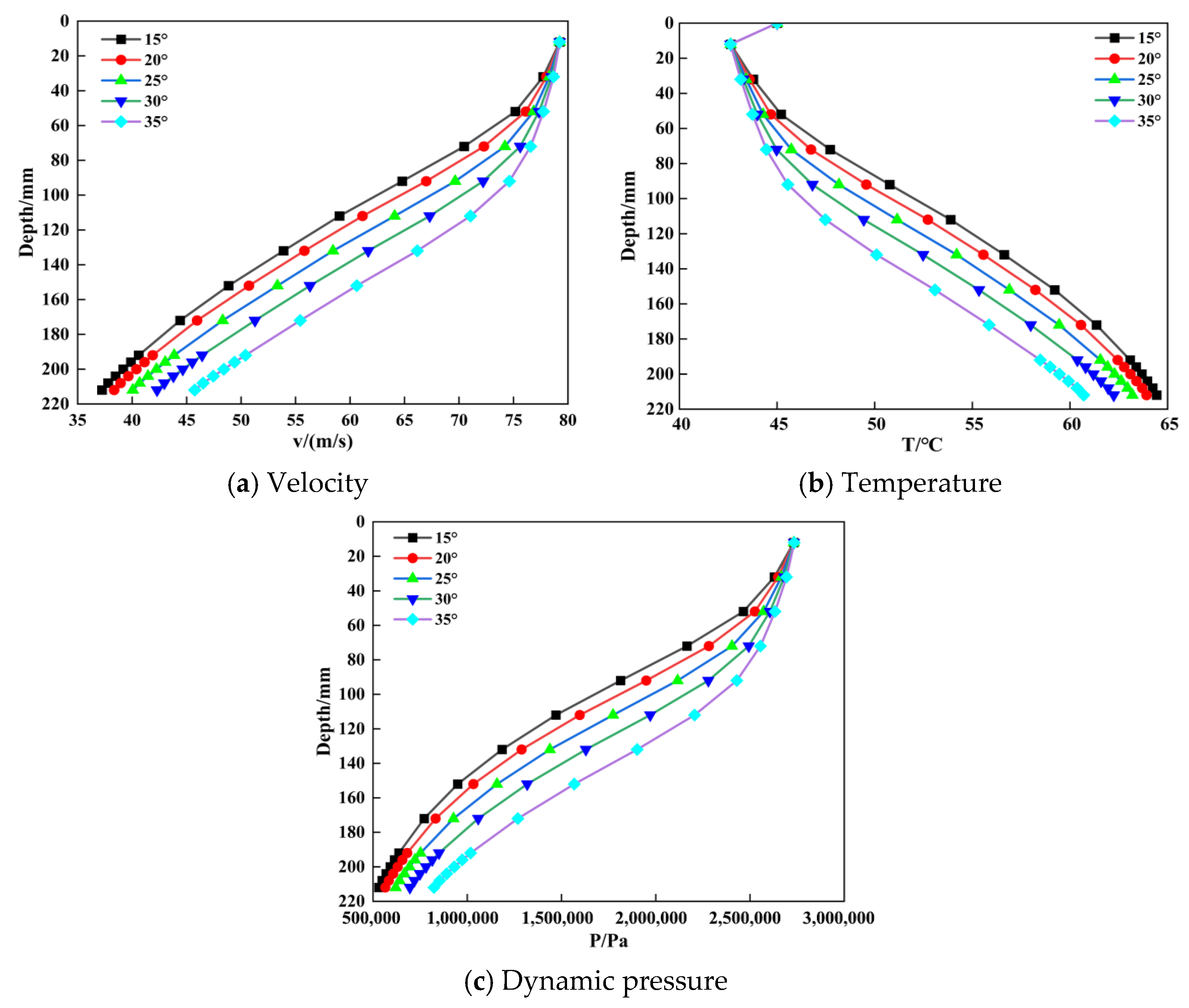
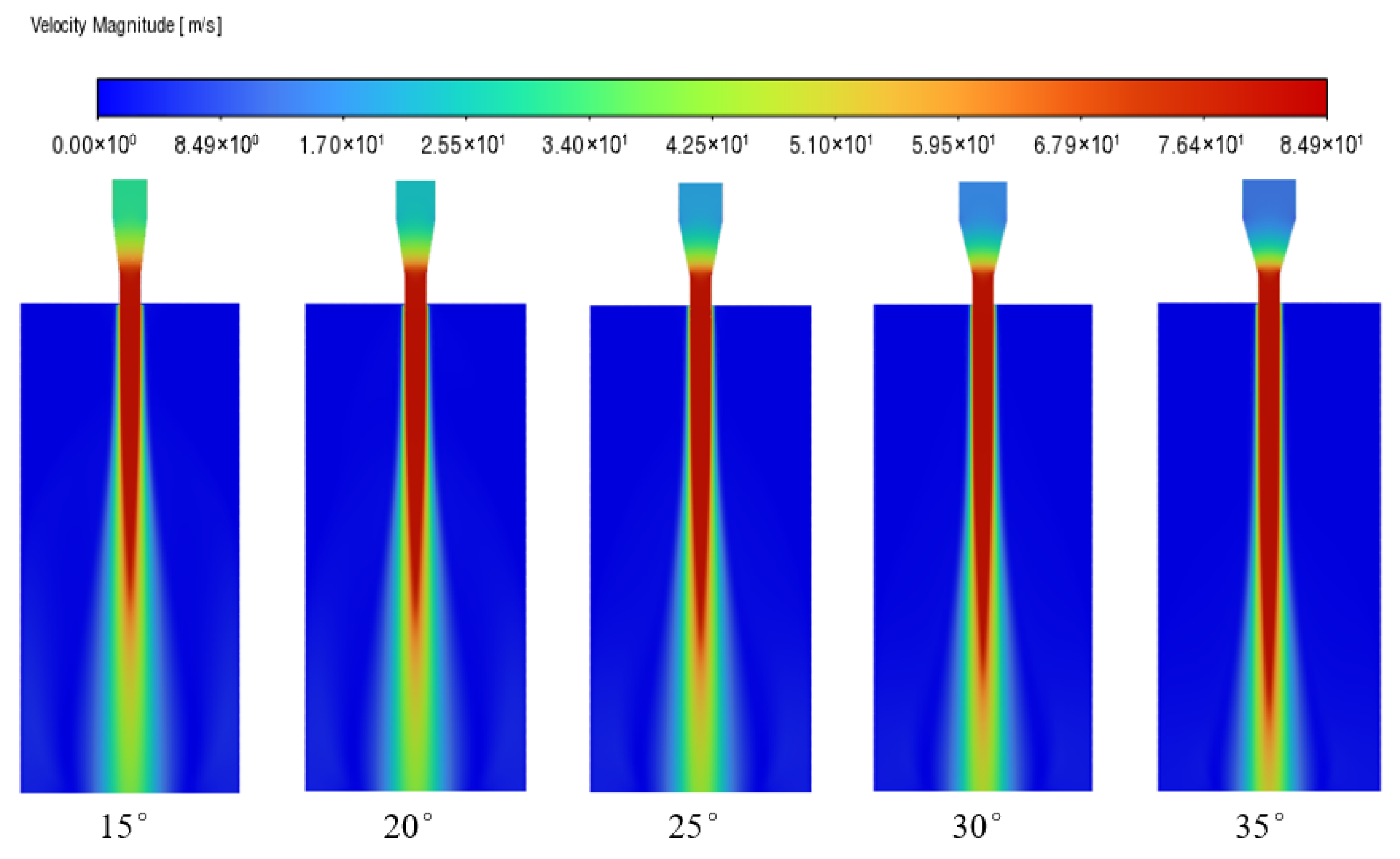
Figure 1. A schematic diagram of the three-dimensional numerical model.
Processes 14 01236 g001
Figure 2. Schematic diagrams of the boundary layer mesh design near the nozzle wall.
Processes 14 01236 g002
Figure 3. The comparisons between the simulated results and experimental results [25].
Processes 14 01236 g003
Figure 4. The variation in CO2 fluid characteristics through perforation with fracture depth under different contraction angles.
Processes 14 01236 g004
Figure 5. The CO2 velocity contours through perforations with different contraction angles.
Processes 14 01236 g005
Figure 6. The Mach number distribution of the CO2 jet under different contraction angles.
Processes 14 01236 g006
Figure 7. The Reynolds number distribution of the CO2 jet under different contraction angles.
Processes 14 01236 g007
Figure 8. The density contours of CO2 during perforation under different contraction angles.
Processes 14 01236 g008
Figure 9. The CO2 specific heat contours through perforations with different contraction angles.
Processes 14 01236 g009
Figure 10. The variation in CO2 fluid characteristics through perforation with fracture depth under different confining pressure.
Processes 14 01236 g010
Figure 11. The CO2 velocity contours through perforations with different ambient confining pressures.
Processes 14 01236 g011
Figure 12. The Mach number distribution of the CO2 jet under different confining pressures.
Processes 14 01236 g012
Figure 13. The Reynolds number distribution of the CO2 jet under different confining pressures.
Processes 14 01236 g013
Figure 14. The CO2 density contours through perforations with different ambient confining pressures.
Processes 14 01236 g014
Figure 15. The CO2 cp contours through perforations with different ambient confining pressures.
Processes 14 01236 g015
Figure 16. The variation in CO2 fluid characteristics through perforation with fracture depth under different fracturing displacement.
Processes 14 01236 g016
Figure 17. The CO2 velocity contours through perforations with different fracturing displacements.
Processes 14 01236 g017
Figure 18. The Mach number distribution of the CO2 jet under different injection displacements.
Processes 14 01236 g018
Figure 19. The Reynolds number distribution of the CO2 jet under different injection displacements.
Processes 14 01236 g019
Figure 20. The density contour of CO2 during perforation under different injection displacements.
Processes 14 01236 g020
Figure 21. The specific heat contour of CO2 during perforation under different injection displacements.
Processes 14 01236 g021
Figure 22. The variation in the CO2 fluid characteristics through perforation with fracture depth under different fluid temperature.
Processes 14 01236 g022
Figure 23. The CO2 velocity contours through perforations under different fluid temperatures.
Processes 14 01236 g023
Figure 24. The Mach number distribution of the CO2 jet under different fluid temperatures.
Processes 14 01236 g024
Figure 25. The Reynolds number distribution of the CO2 jet under different fluid temperatures.
Processes 14 01236 g025
Figure 26. The CO2 density contours through perforations under different fluid temperatures.
Processes 14 01236 g026
Figure 27. The CO2 specific heat contours through perforations under different fluid temperatures.
Processes 14 01236 g027
Table 1. The operational parameters in this study.
Contraction Angle/°Fracturing Displacement/(m3/min)Confining Pressure/MPaFluid Temperature/°C
15, 20, 25, 30, 353.02545
352.0, 2.5, 3.0, 3.5, 42545
353.015, 20, 25, 30, 3545
353.0250, 15, 30, 45, 60
Table 2. The grid independence verification.
N1N2N3
Grid cells540,582910,4671,400,352
Outlet velocity78.858 m/s79.238 m/s79.648 m/s
Outlet temperature42.235 °C42.627 °C43.002 °C
Outlet dynamic pressure2.70 MPa2.73 MPa2.75 MPa
Disclaimer/Publisher’s Note: The statements, opinions and data contained in all publications are solely those of the individual author(s) and contributor(s) and not of MDPI and/or the editor(s). MDPI and/or the editor(s) disclaim responsibility for any injury to people or property resulting from any ideas, methods, instructions or products referred to in the content.