

Protocol Proposal and Molecular Docking Mechanistic Elucidation of an Ecological Tanning Process for Fish Skin

 , ,
, ,  and
and 
Abstract
1. Introduction

| Process Stage | Agents | Concentration | Conditions | Key Observable/Objective |
|---|---|---|---|---|
| 12 rpm or Manual, Time (min or h), pH and T (°C) | ||||
| 1. Fleshing, Descaling, and Washing | Water and physical removing | 1.0 (L/kg) | Manual, ambient T | Complete removal of subcutaneous tissue; no visible dermal tearing; uniform skin surface |
| 2. Soaking | Water Dish detergent Cinnamon | 2.0 (L/kg) 2% 8% | 30 min, ambient T | Degreasing (detergent), antibacterial and antifungal activity, ichthyic odor neutralization (cinnamon) |
| 3. Liming | Water Dish detergent CaO Na2CO3 | 2.0 (L/kg) 2.5% 8% 2% | 120 min, ≈11.5, ambient T | Break the disulfide bonds of fibrous keratins to remove them, collagen fiber opening/swelling (intumescence), saponification, and epidermis loosening |
| 4. Deliming | Water Dish detergent Vinegar | 1.0 (L/kg) 2% 5% | 30 min, ≈8.5, ambient T | Residual lime removal reduces tanning costs and enhances reagent accessibility |
| 5. Bating | Water Dish detergent Mashed papaya (papain source) | 2.0 (L/kg) 2% 40% | 60 min, ≈8.5, ≈35 °C | Loss of turgidity, becoming soft, flaccid, and ready for the tanning agents to bind. Proteolysis removes non-fibrous proteins and interfibrillar materials, preventing structural stiffening and cardboard-like appearance of the leather. Intumescence is reversed. Positive thumb-pressure test |
| 6. Degreasing | Water Dish detergent Vinegar | 1.0 (L/kg) 1% 2% | 30 min, ≈7.5 ambient T | Absence of visible grease beads; uniform wettability across the dermal surface |
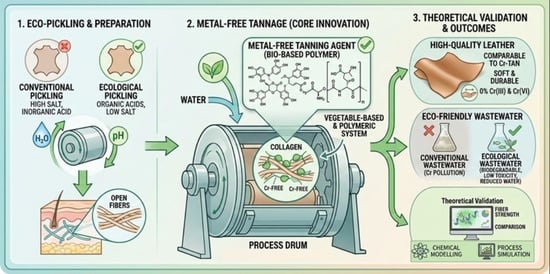
| 7. Pickling | Water NaCl Vinegar | 1.0 (L/kg) 1% 2% | 30 min, ≈4.0, ≈30 °C | Uniform surface charge with stable grain. Acidification of the collagen fibers (saline-acidic liquor) and swelling degree regulation (salt) prevent acid intumescence |
| 8. Tanning | Pickling water Black wattle (Acacia mearnsii) | 1.0 (L/kg) 10% | 60 min + 12 h * (rest in tanning liquor), ≈4.0, ambient T | Uniform tan coloration, stable grain pattern; pH ≈ 4.0 favors tanning agent penetration to dermal matrix: moderates the fixation rate between tannins and collagen |
| 9. Neutralization | Water NaHCO3 | 1.0 (L/kg) 0.8% | 60 min, ≈5.3, ambient T | Skin surface receptive to retanning agents: prepare collagen fiber network for subsequent retanning and fatliquoring |
| 10. Retanning | Water Pearl acacia (Acacia podalyriifolia) Vinegar | 1.0 (L/kg) 4% 1.5% | 30 min, ≈5.0, ambient T | Enhance final softness of leather (vegetable source/milder tanning agent) Process efficiency optimization by acidification (vinegar) |
| 11. Fatliquoring | Water at 50 °C Almond oil Vinegar Cinnamon | 0.6 (L/kg) 10% 0.7% 15% | 60 min, ≈5.0, 50 °C | Lubrication effect to reduce friction between fibers and fibrils, impart flexibility and handle, increase resistance to tearing, traction, softness, and elasticity (Oil), aromatic effect (Cinnamon) |
| 12. Finishing | Staking/softening; trimming | - | Manual, ambient T | Meticulous surface cleaning and structural trimming of irregular edges to ensure uniformity |
2. Materials and Methods
2.1. Artisanal-Grade Inputs: Reagents, Acceptance Checks, Roles in the Process, and Controls
2.1.1. Reagent Identity and Sourcing
2.1.2. Acceptance Criteria
2.1.3. Roles in the Process
2.1.4. Quality Assessment
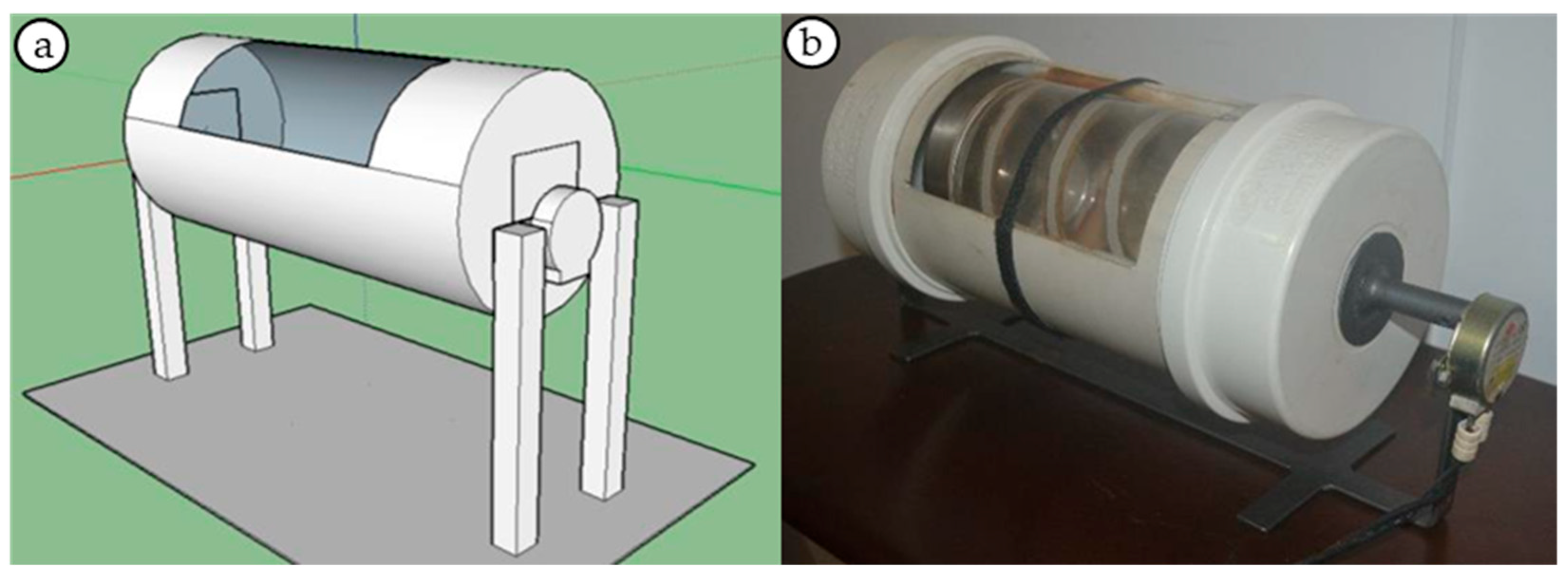
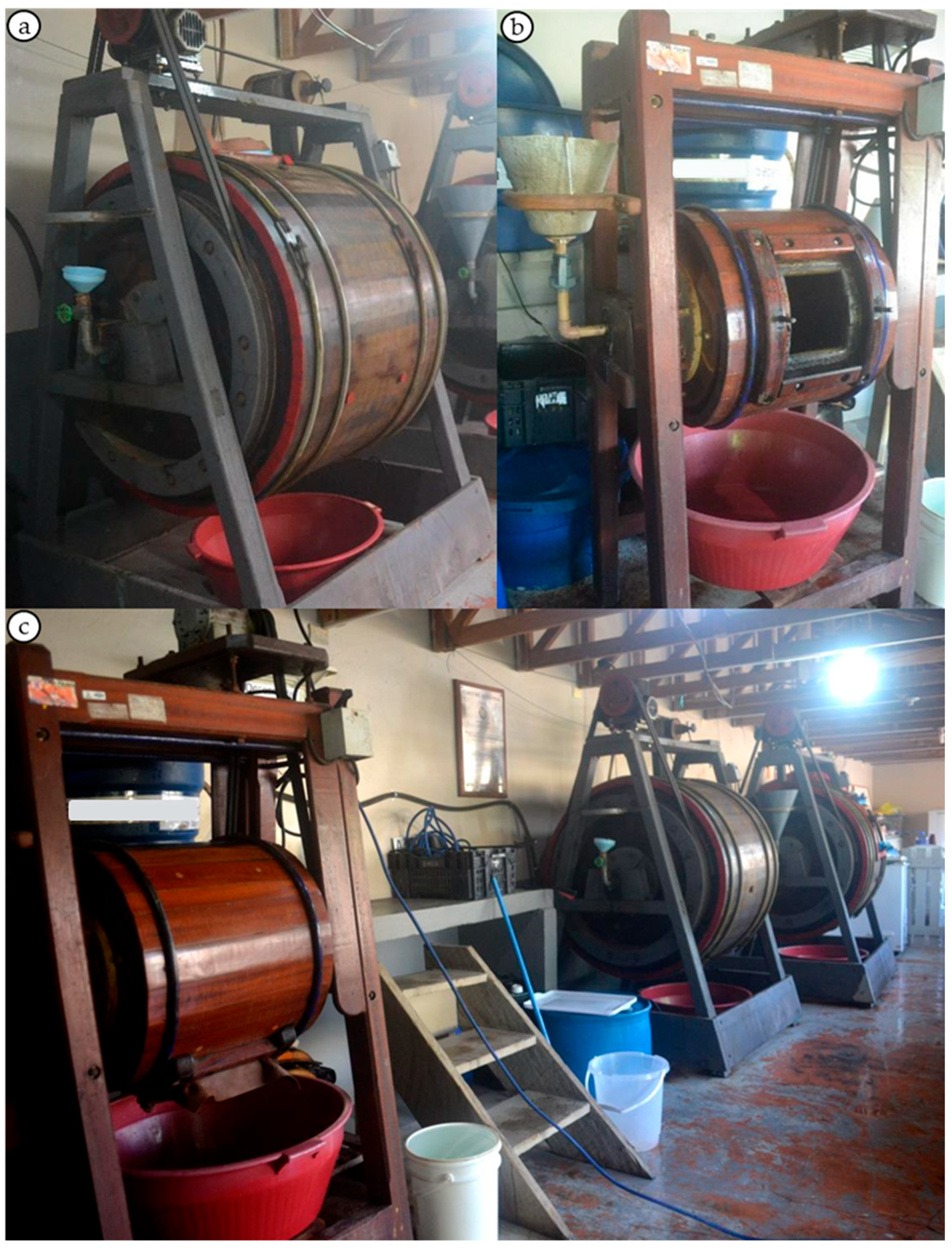
2.2. Equipment Used in the Tanning Process
2.3. Ecological Tanning Process
- i.
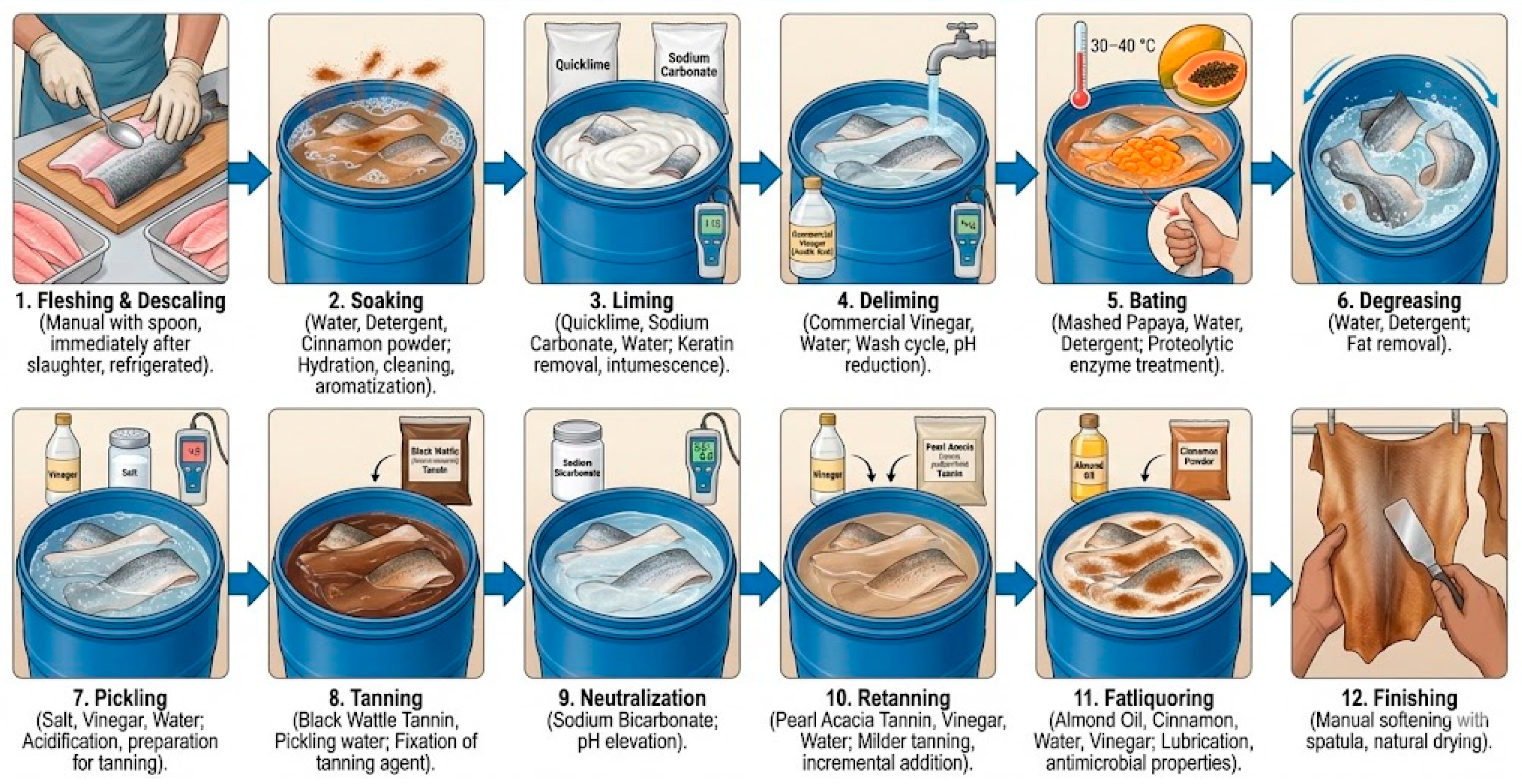
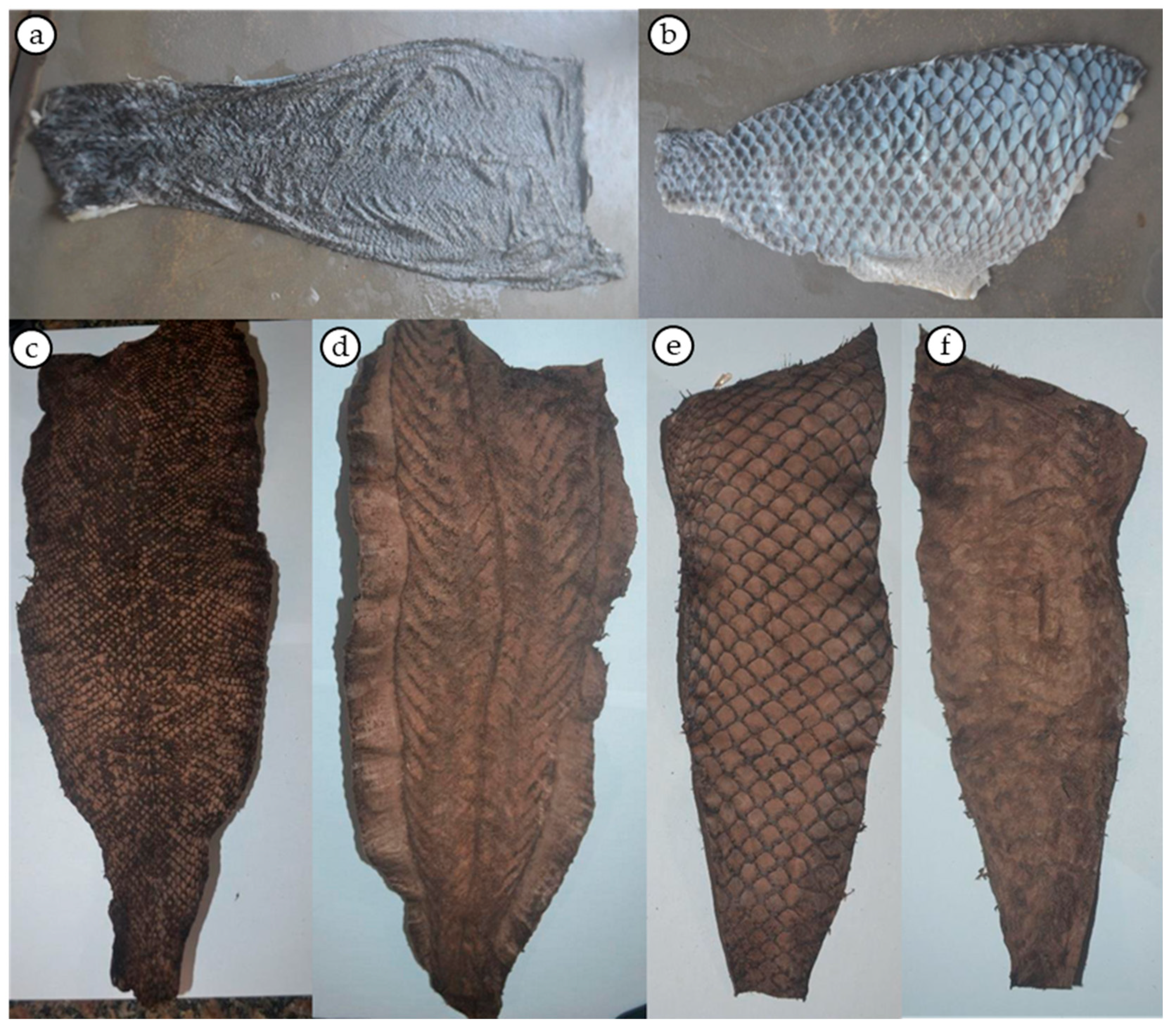
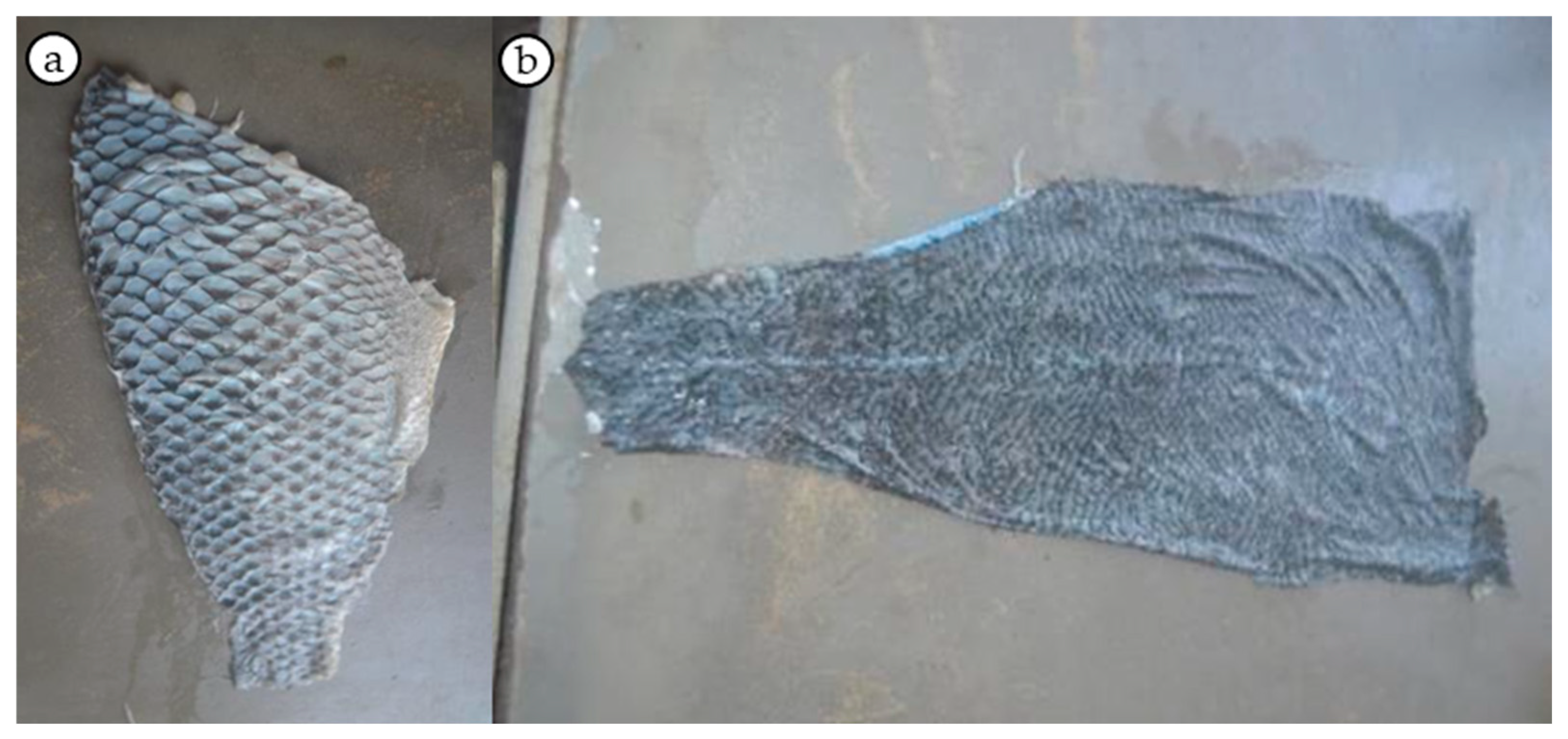
- Fleshing and Descaling: The removal of the skin must occur immediately after slaughter, before the decomposition process begins. Leather quality depends heavily on the time elapsed between skin removal, fleshing, and preservation. In the present work, refrigeration was used as a preservation method to minimize decomposition [38]. Mechanical removal of adhering subcutaneous tissue and scales was performed manually to prevent structural dermal tearing (Figure 5a,b).
- ii.
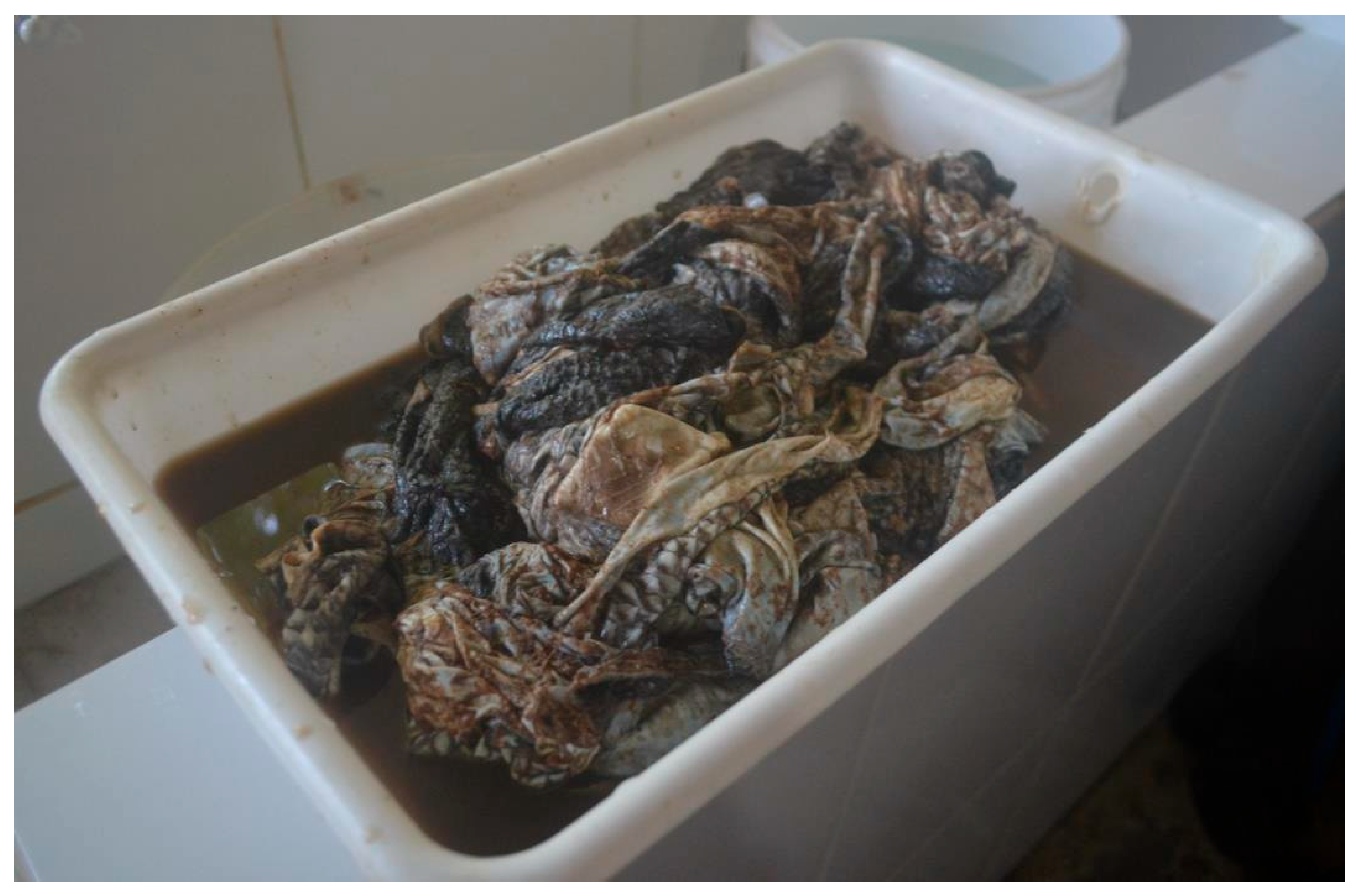
- Soaking: This stage aims to hydrate the skin with water (2.0 L/kg), remove excess fat with detergent (2%), and clean the skin. Cinnamon powder was added at 8% during this stage exclusively to preserve and aromatize the skin [39,40], leaving the solution and the leather with a brownish tint (Figure 6).
- iii.
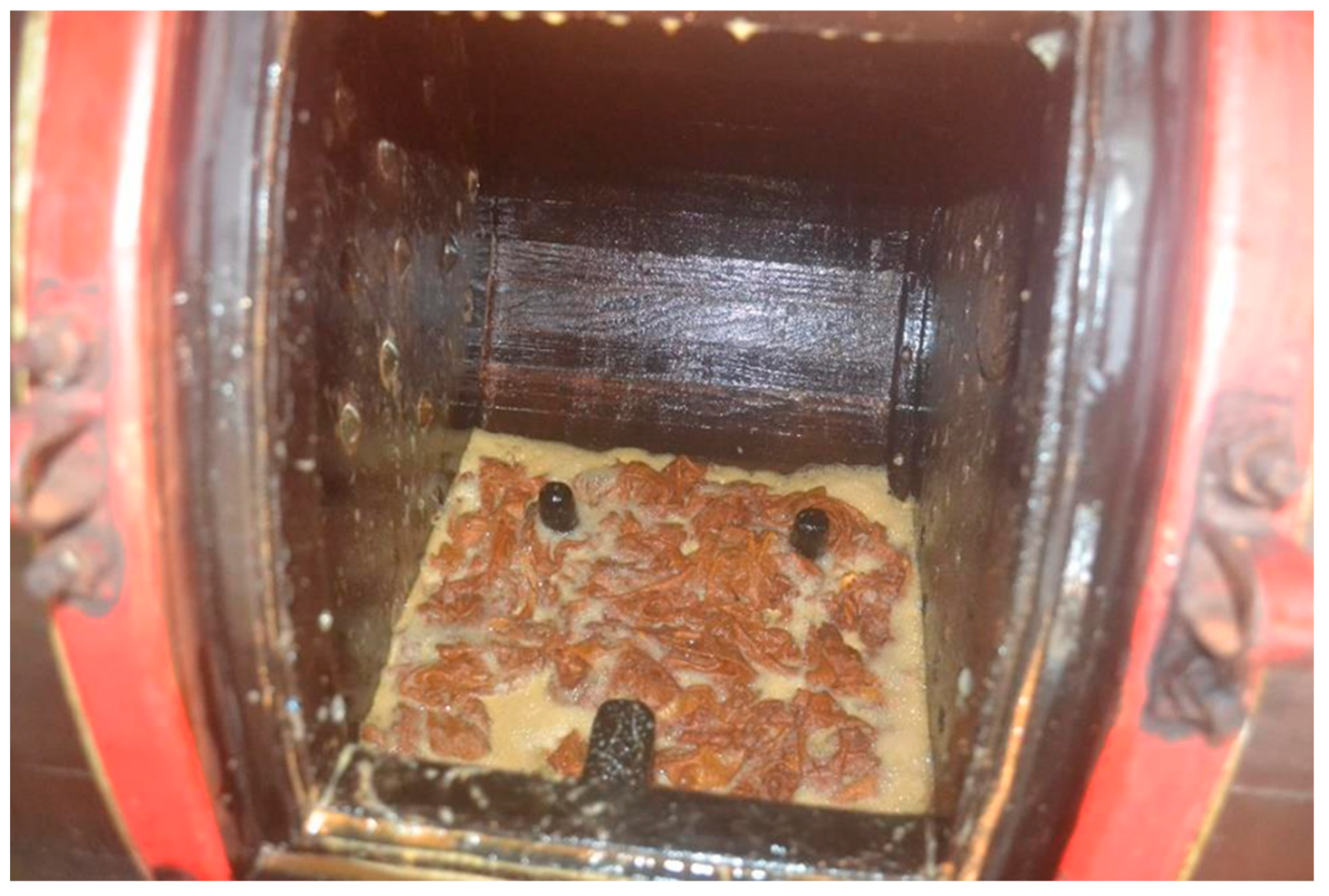
- Liming: Considered one of the most critical stages in the beamhouse sequence [21]. Its objective is to remove keratinous structures (epidermis and scales) to facilitate the opening and swelling (intumescence) of the fibrous structure. It also promotes epidermal removal [21]. The pH remained ≈11.5. Water (2.0 L/kg), dish detergent (2.5%), quicklime (CaO 8%), and Na2CO3. (2%) were used. The drum operated for 2 h at 12 rpm (Figure 7).
- iv.
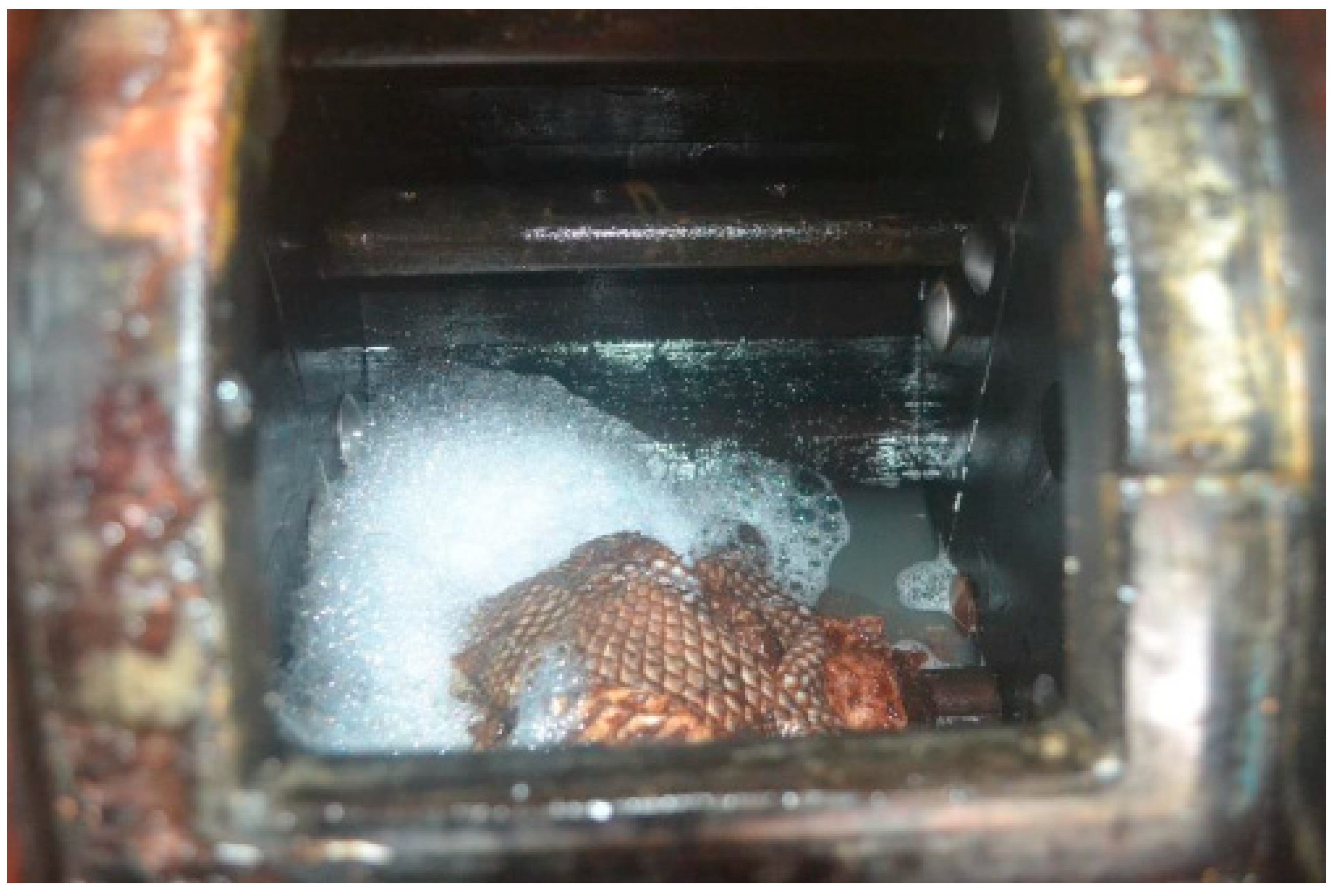
- Deliming: The skins underwent a washing cycle to remove the residual lime (Ca(OH)2) that had not chemically bonded to the fibrous structure. This stage marks the beginning of the pH reduction process (to ≈8.5). To this end, conventional industrial acids (e.g., formic or sulfuric acids) were replaced with commercial vinegar (5%) [22,24,41]. During this stage, the tanning drum was operated with detergent (2%) for 30 min at a rotational speed of 12 rpm (Figure 8).
- v.
- Bating: Skins are treated with proteolytic enzymes to digest keratinous materials. As a replacement for common bovine pancreatic enzymes, mashed papaya (C. papaya) (Figure 9a) was used at a 40% proportion [25,26,41,42]. Water (2.0 L/kg) was heated to ≈35 °C with dish detergent (2%). The pH was maintained at ≈8.5. The drum rotated for 60 min at 12 rpm. A manual thumb-pressure test on a smooth surface confirmed structural opening to proceed (Figure 9b). Enzymatic activity of the mashed papaya preparation (U/g) was not measured in this feasibility study, and no direct comparison with conventional bovine pancreatic bates was performed; quantitative characterization of proteolytic efficiency is designated as a priority for future work (Section 3.2.3 and Section 3.3.5).
- vi.
- Degreasing: Aims to remove any remaining fat from the leather, epidermis, hypodermis, and interfibrillar matrix, preparing the dermis to receive the tanning agent bridges [22,24,41,43,44]. The degreasing process utilized a solution of water (1.0 L/kg), vinegar (2%) to a pH reduction (≈7.5), and neutral detergent (1%). During this stage, the tanning drum was operated for 30 min at 12 rpm.
- vii.
- Pickling: The pickling stage marks the effective onset of the tanning process, during which the raw skin is chemically transformed into leather. In this phase, vinegar was again utilized to adjust the pH to ≈4.0 in a solution containing NaCl (1%) and water (1.0 L/kg) at 30 °C [22,24,41,43,44]. During this stage, the tanning drum was operated for 30 min at 12 rpm.
- viii.
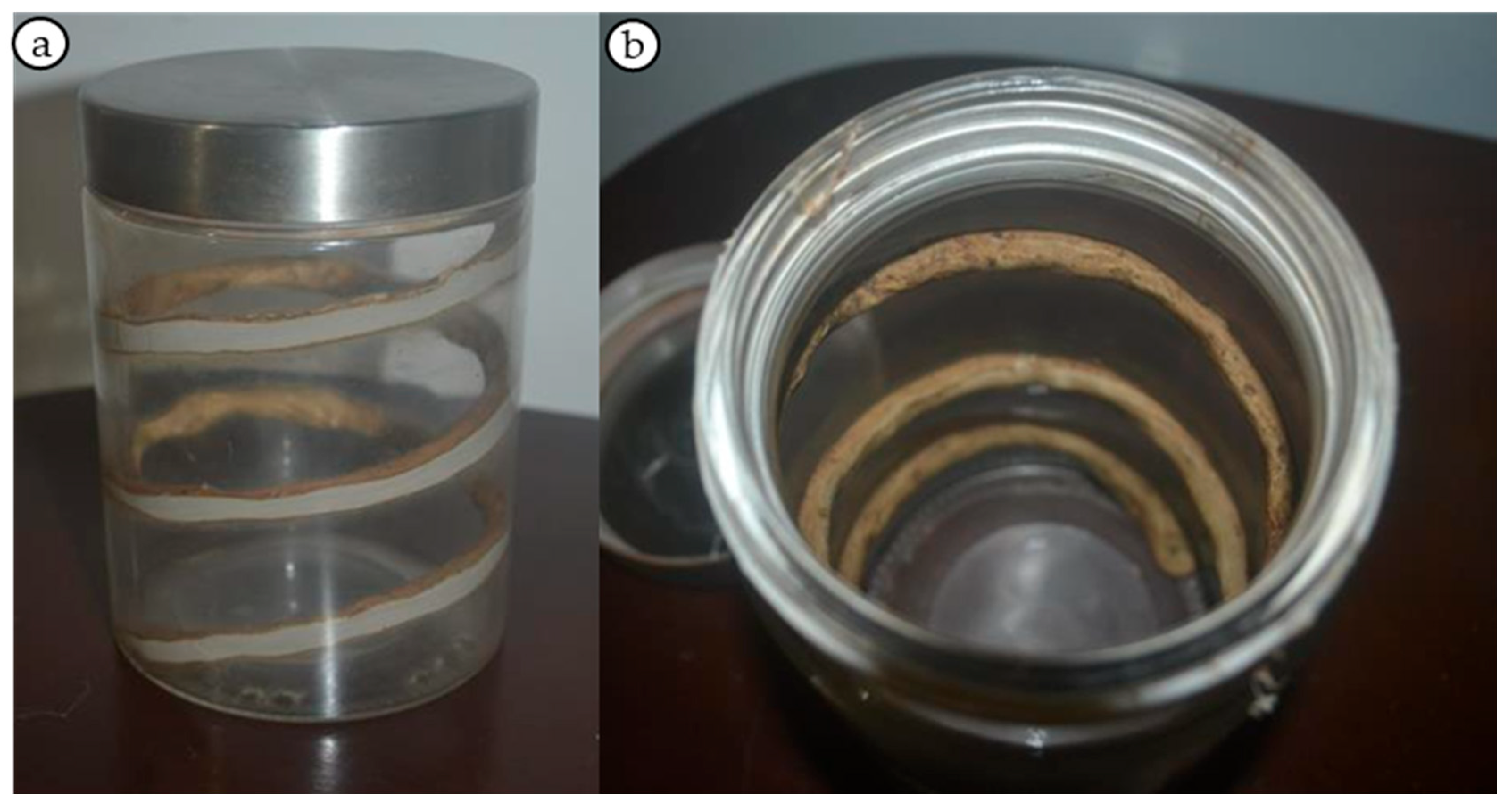
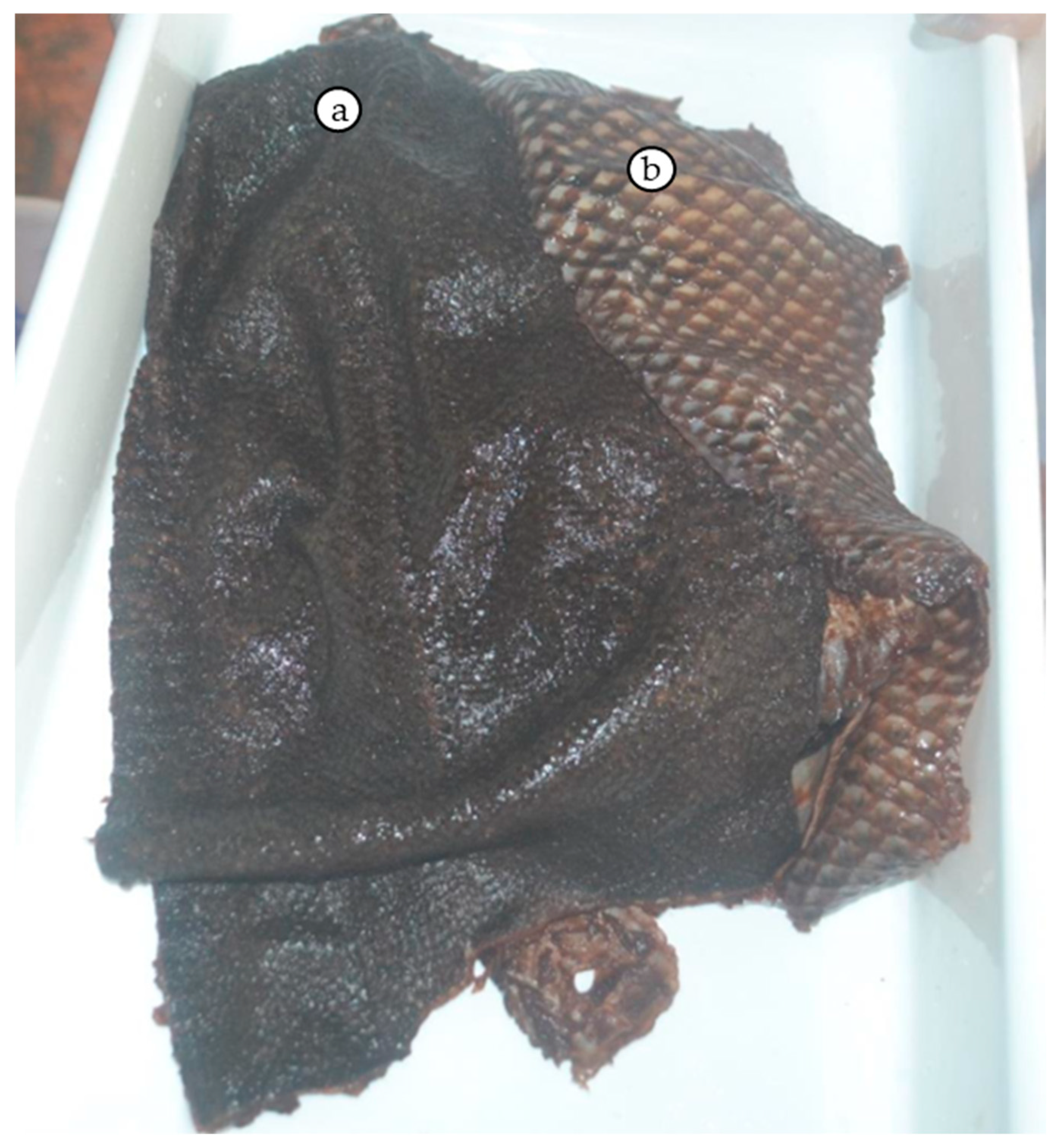
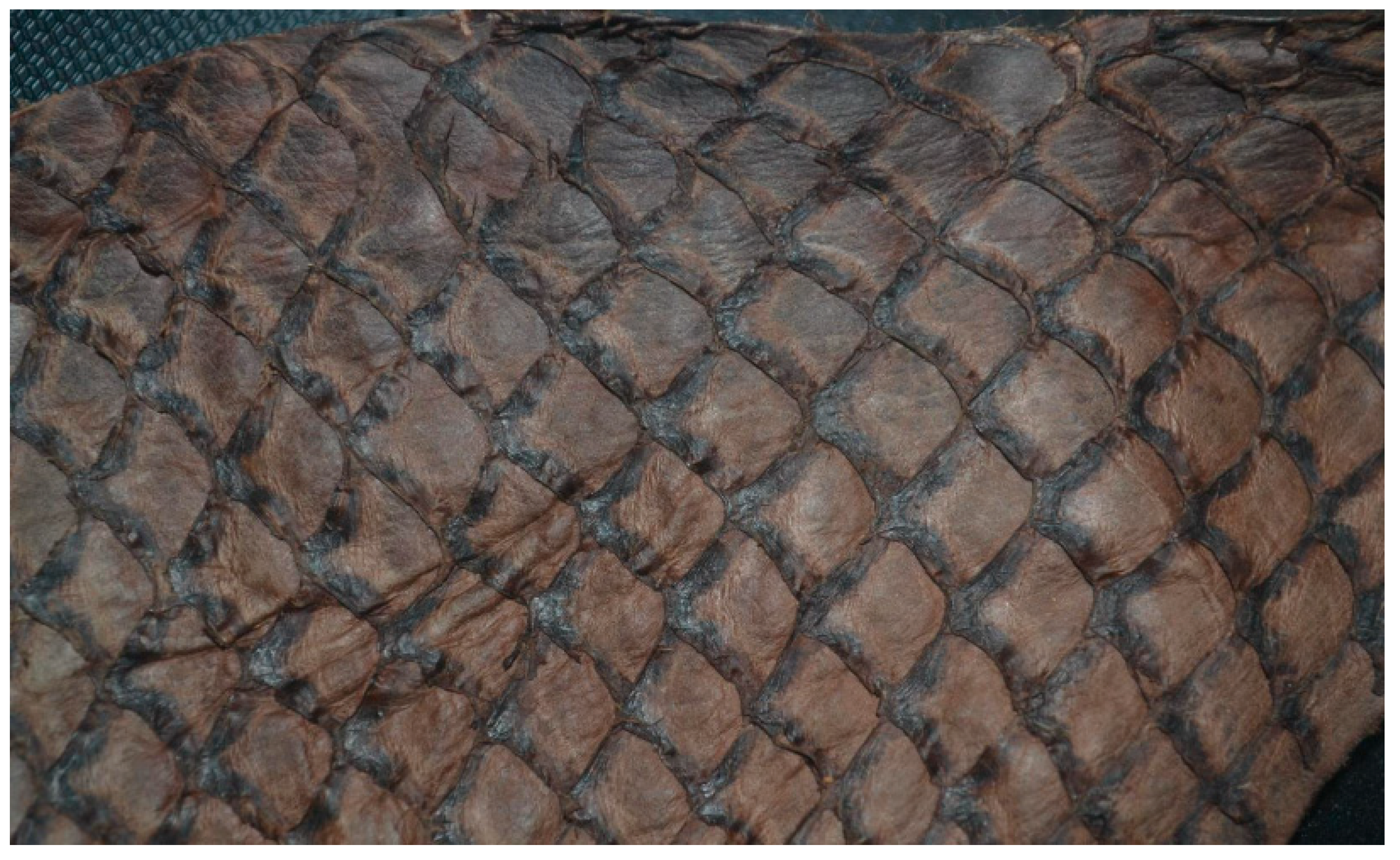
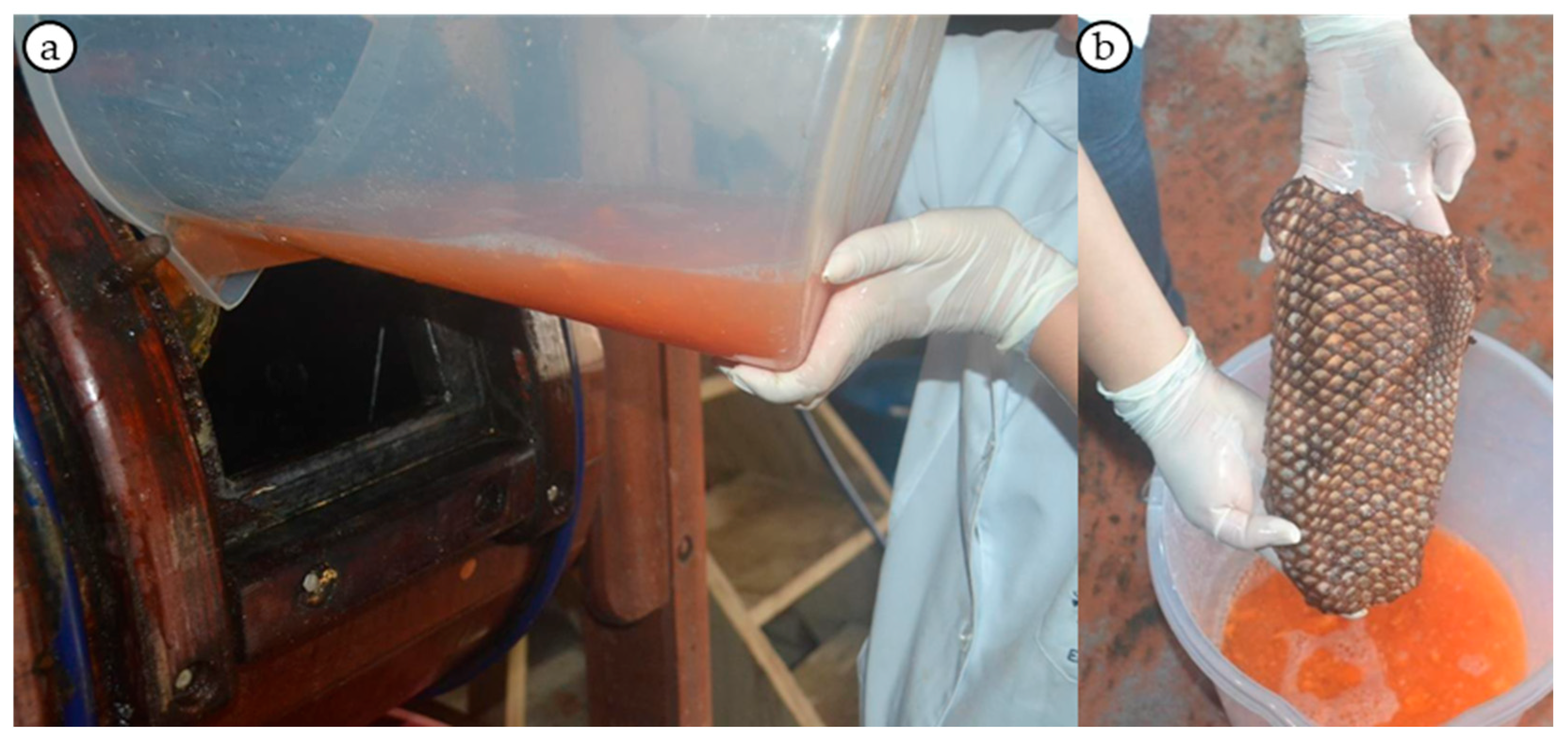
- Tanning: Effectively transforms the skin into an imputrescible material through the absorption, penetration, and fixation of the tanning agent. At a pH of ≈4.0, black wattle (A. mearnsii) tannin (10%) diluted in the pickling water was added as an alternative to chromium [3,36]. The drum rotated for 1 h at 12 rpm, followed by a 12 h resting period in the same solution (Figure 10a,b).
- ix.
- x.
- Retanning: In this stage, water (1.0 L/kg) and 4% pearl acacia (A. podalyriifolia) were used. This vegetable tannin source was used because it is characterized as a milder tanning agent with pH requirements for optimal effectiveness [46,47,48,49]. To optimize process efficiency, an acidifying agent (vinegar) was added incrementally at 10 min intervals, with pH monitored. The tanning drum was operated for 30 min at 12 rpm.
- xi.
- Fatliquoring: Oils are used to modify the physico-mechanical characteristics of the leather. Natural almond oil (10%) was mixed with water (0.6 L/kg) at 50 °C, and a small amount of vinegar (0.7%) was added. The drum rotated for 60 min at 12 rpm. Subsequently, cinnamon powder (15%) was added again due to its natural antibacterial and antifungal properties (Figure 11a,b). Agents were added as aromatic/antimicrobial adjuncts.
- xii.
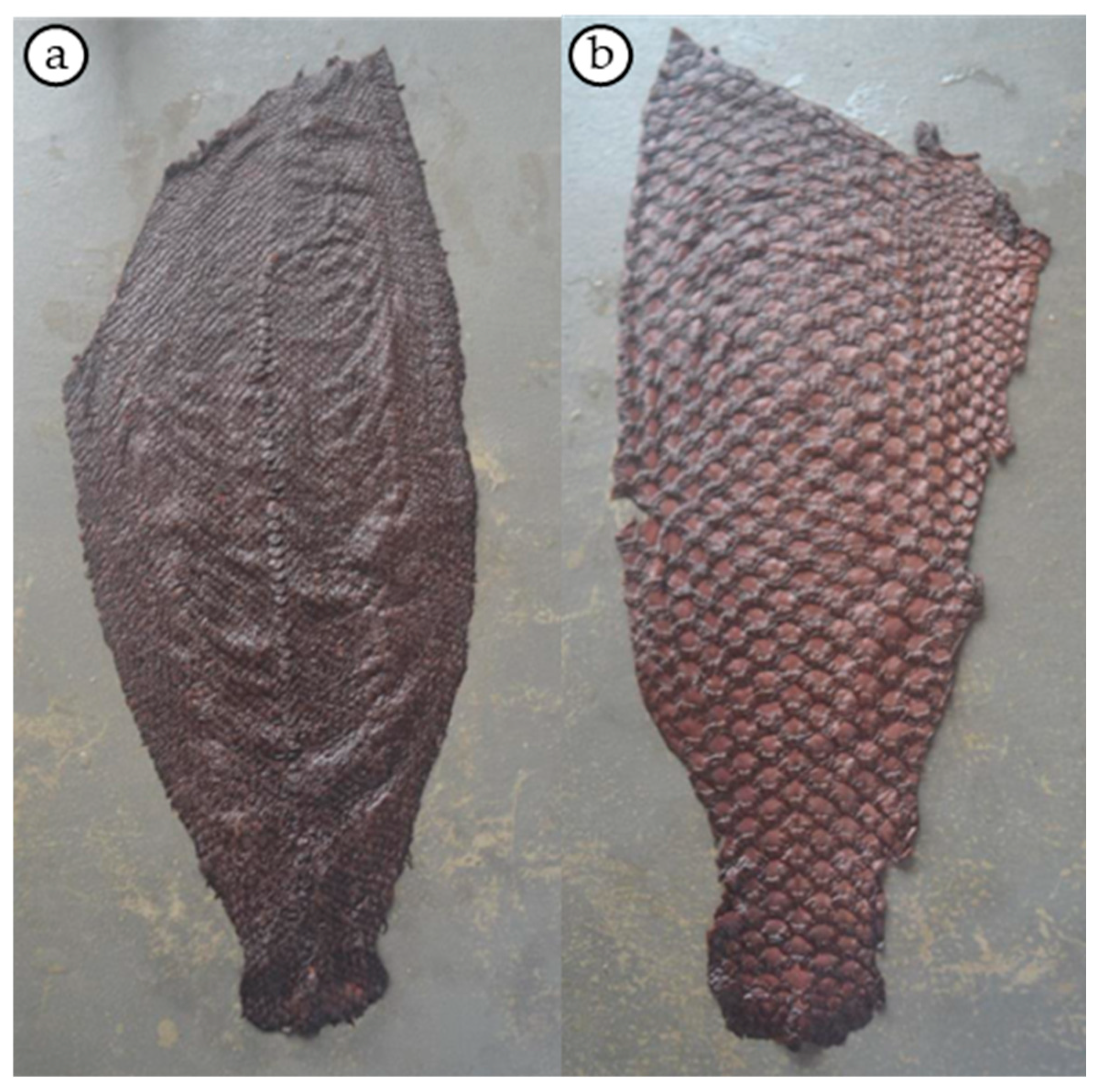
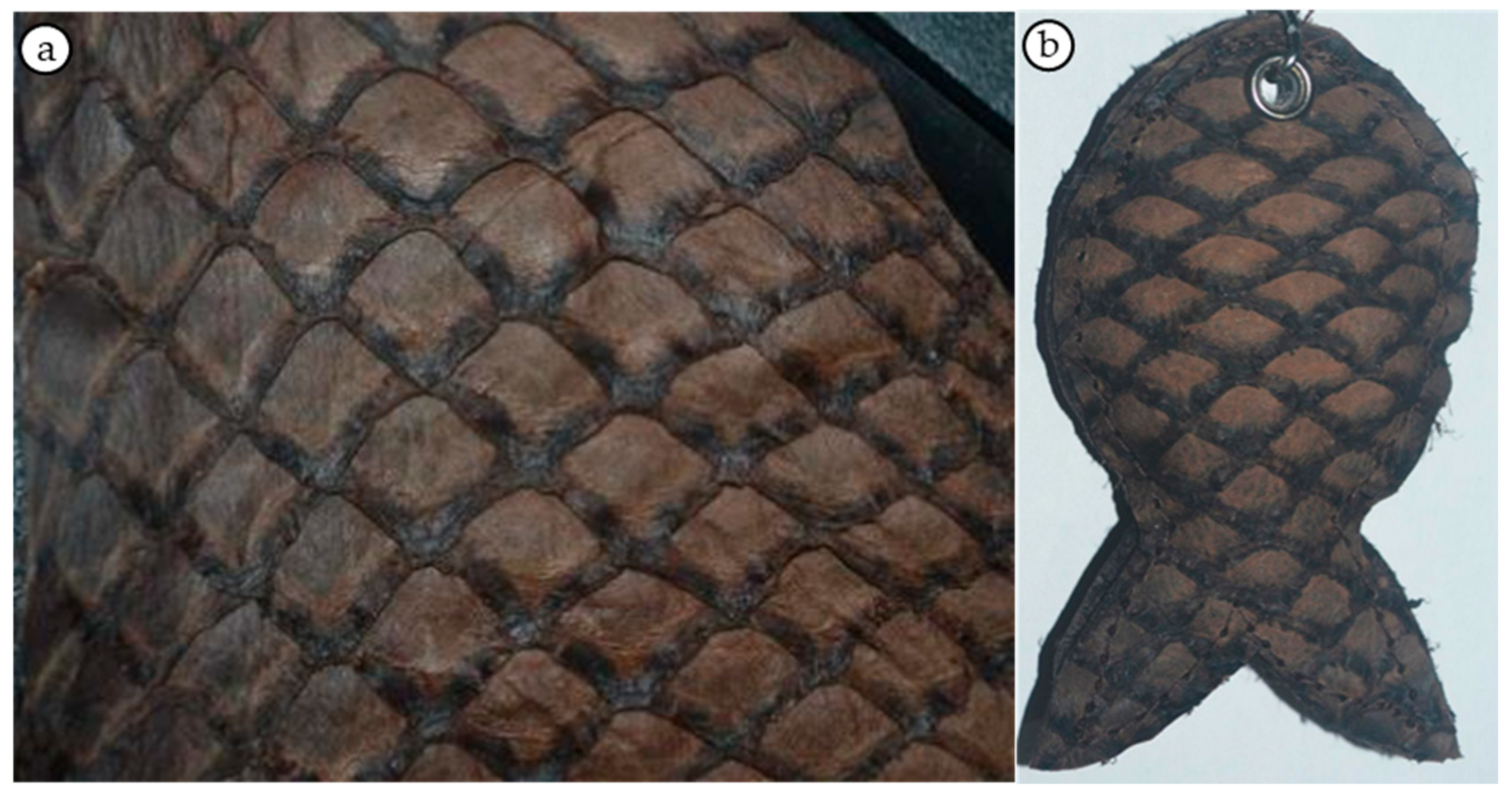
- Finishing: Performed after natural drying (Figure 12). While during this phase a mechanical softening is typically performed using specialized machinery, the softening process in this study was executed manually, utilizing a stainless-steel spatula to achieve the required handle.
2.4. Computational Modeling and In Silico Molecular Docking Framework
2.4.1. Rationale and Scope
2.4.2. Receptor Systems and Preparation
2.4.3. Ligand Sets and 3D Structure Generation
2.4.4. Search Space Definition and “In-Box” Initialization
2.4.5. Docking Engine Configuration and Reproducibility Strategy
2.4.6. Output Extraction and Score Aggregation
2.4.7. Papain Catalytic Nucleophile Annotation and Proximity Analysis
2.4.8. Interpretive Posture and Limitations
2.4.9. Reproducibility Statement
3. Results and Discussion
3.1. Ecological Tanning Process: Protocol Proposal
3.2. Macroscopic Results and Potentialities of Fish Leather for Artifact Manufacturing
3.2.1. Species-Specific Grain Attributes and Commercial Applications
3.2.2. Scaling Requirements and Experimental Agenda
3.2.3. Standardization Considerations and Reproducibility Framework
3.3. Theoretical Mechanisms of Ecological Tanning Agents: In Silico Molecular Docking
3.3.1. Vegetable Tanning Module: Polyphenol Interaction with the Collagen Triple Helix
3.3.2. Enzymatic Bating Module: Dipeptide Probe Accommodation in the Papain Catalytic Cleft
3.3.3. Antimicrobial Adjunct Module: Trans-Cinnamaldehyde Pocket Accommodation in the TraR Quorum-Sensing Regulator
3.3.4. Three-Metric Concordance and Score Reliability
3.3.5. Translational Predictions and Experimental Roadmap
- (i)
- Collagen–tannin module (highest priority): The consistent superiority of the multidentate polyphenol proxy across both collagen structures and all three-scoring metrics is the strongest computational finding in this study. The predicted experimental read-outs are shrinkage temperature (a standard industry test measuring the thermal stability conferred by tanning crosslinks) and ATR-FTIR spectroscopy (which can detect shifts in collagen amide bands and hydroxyl stretching frequencies caused by polyphenol binding). These are the highest-priority measurements for future validation; however, the predicted readouts apply to the polyphenol class generally, and the specific binding geometry and H-bond topology of condensed A. mearnsii proanthocyanidins on collagen may differ from those modeled with the PGG gallotannin proxy used here. Future docking work should therefore replace PGG with procyanidin B2, a chemically faithful representative of the condensed proanthocyanidin tannins present in black wattle extract.
- (ii)
- Papain–peptide module: The consistent cleft accommodation of all three dipeptide probes supports the enzymatic bating rationale but requires confirmation through direct enzymatic activity measurements (using standardized activity units per gram of papaya extract) and through structural assessment of the dermal fiber network before and after bating, using scanning electron microscopy.
- (iii)
- Cinnamaldehyde–QS module: The pocket-accommodation result supports the plausibility of quorum-sensing interference as one pathway of cinnamon’s antimicrobial action, but the lack of score-based selectivity over structural decoys means this finding is primarily hypothesis-generating. It should motivate microbiological assays measuring biofilm inhibition and minimum inhibitory concentrations of CAD against the specific bacteria present during wet fish-skin processing, as well as improved docking runs against LuxR-homolog receptors from those organisms and using the co-crystallized reference ligand as a calibration anchor.
4. Conclusions
Supplementary Materials
Author Contributions
Funding
Data Availability Statement
Acknowledgments
Conflicts of Interest
References
- Food and Agriculture Organization of the United Nations. The State of World Fisheries and Aquaculture 2024; FAO: Rome, Italy, 2024. [Google Scholar]
- FAO. FAO Report: Global Fisheries and Aquaculture Production Reaches a New Record High; FAO: Rome, Italy, 2024. [Google Scholar]
- Shi, J.; Sheng, L.; Salmi, O.; Masi, M.; Puig, R. Life Cycle Assessment Insights into Nanosilicates-Based Chrome-Free Tanning Processing Towards Eco-Friendly Leather Manufacture. J. Clean. Prod. 2024, 434, 139892. [Google Scholar] [CrossRef]
- Bhardwaj, A.; Kumar, S.; Singh, D. Tannery Effluent Treatment and Its Environmental Impact: A Review of Current Practices and Emerging Technologies. Water Qual. Res. J. 2023, 58, 128–152. [Google Scholar] [CrossRef]
- Environmental Protection Agency. IRIS Toxicological Review of Hexavalent Chromium [Cr(VI)] CASRN 18540-29-9; U.S. Environmental Protection Agency, Office of Research and Development: Washington, DC, USA, 2024. [Google Scholar]
- Meaza, I.; Williams, A.R.; Wise, S.S.; Lu, H.; Pierce, J.W. Carcinogenic Mechanisms of Hexavalent Chromium: From DNA Breaks to Chromosome Instability and Neoplastic Transformation. Curr. Environ. Health Rep. 2024, 11, 484–546. [Google Scholar] [CrossRef]
- Ding, W.; Remón, J.; Jiang, Z. Environmentally-Friendly Tanning for Leather Production: A Review. Environ. Chem. Lett. 2025, 23, 839–864. [Google Scholar] [CrossRef]
- Gendaszewska, D.; Pipiak, P.; Wieczorek, D.; Sieczyńska, K. Experimental Study on Chrome Tanned Leather Shavings Modification—Properties and Prospective for Future Application. Processes 2024, 12, 228. [Google Scholar] [CrossRef]
- Peñarubia, O.; Toppe, J.; Ahern, M.; Ward, A.; Griffin, M. How Value Addition by Utilization of Tilapia Processing By-Products Can Improve Human Nutrition and Livelihood. Rev. Aquac. 2023, 15, 32–40. [Google Scholar] [CrossRef]
- Astarloa, J.M.D.d. A Review of the Flatfish Fisheries of the South Atlantic Ocean. Rev. Biol. Mar. Oceanogr. 2002, 37, 113–125. [Google Scholar]
- Riestra, C.; de Astarloa, J.; Vieira, J.P.; Buratti, C.; Irigoyen, A.; Landaeta, M.; Hüne, M. Paralichthys Patagonicus. The IUCN Red List of Threatened Species 2020: E.T195089A165017727. Available online: https://www.iucnredlist.org/species/195089/165017727 (accessed on 31 March 2026).
- Castellini, D.L.; Díaz De Astarloa, J.M.; Pruvost, P.; González-Castro, M. Flatfishes of the Genus Paralichthys in the Southwestern Atlantic: Integrating Molecular Taxonomy and Morphometric Data. Cybium 2024, 48, 309–325. [Google Scholar] [CrossRef]
- dos Santos Jorge Sousa, K.; de Souza, A.; de Lima, L.E.; Erbereli, R.; de Araújo Silva, J.; de Almeida Cruz, M.; Martignago, C.C.S.; Ribeiro, D.A.; Barcellos, G.R.M.; Granito, R.N.; et al. Flounder Fish (Paralichthys sp.) Collagen a New Tissue Regeneration: Genotoxicity, Cytotoxicity and Physical–Chemistry Characterization. Bioprocess Biosyst. Eng. 2023, 46, 1053–1063. [Google Scholar] [CrossRef] [PubMed]
- Eom, S.J.; Kim, J.H.; Ryu, A.R.; Park, H.; Lee, J.H.; Park, J.H.; Lee, N.H.; Lee, S.; Lim, T.G.; Kang, M.C.; et al. Skin Improvement Effects of Ultrasound-Enzyme-Treated Collagen Peptide Extracts from Flatfish (Paralichthys olivaceus) Skin in an In Vitro Model. Int. J. Mol. Sci. 2024, 25, 9300. [Google Scholar] [CrossRef] [PubMed]
- Gu, H.; Wang, H.; Zhu, S.; Yuan, D.; Dai, X.; Wang, Z. Interspecific Differences and Ecological Correlations Between Scale Number and Skin Structure in Freshwater Fishes. Curr. Zool. 2023, 69, 491–500. [Google Scholar] [CrossRef]
- Zhang, E.; Tung, C.H.; Feng, L.; Zhou, Y.R. Superior Damage Tolerance of Fish Skins. Materials 2023, 16, 953. [Google Scholar] [CrossRef]
- Lauder, G.V.; Wainwright, D.K.; Domel, A.G.; Weaver, J.C.; Wen, L.; Bertoldi, K. Structure, Biomimetics, and Fluid Dynamics of Fish Skin Surfaces. Phys. Rev. Fluids 2016, 1, 60502. [Google Scholar] [CrossRef]
- Friedman, M. Chemistry, Antimicrobial Mechanisms, and Antibiotic Activities of Cinnamaldehyde against Pathogenic Bacteria in Animal Feeds and Human Foods. J. Agric. Food Chem. 2017, 65, 10406–10423. [Google Scholar] [CrossRef]
- Chen, X.; Liu, P.; Luo, X.; Huang, A.; Wang, G. Study on the Antibacterial Activity and Mechanism of Cinnamaldehyde Against Methicillin-Resistant Staphylococcus Aureus. Eur. Food Res. Technol. 2024, 250, 1069–1081. [Google Scholar] [CrossRef]
- Shu, C.; Ge, L.; Li, Z.; Chen, B.; Liao, S.; Lu, L.; Wu, Q.; Jiang, X.; An, Y.; Wang, Z.; et al. Antibacterial Activity of Cinnamon Essential Oil and Its Main Component of Cinnamaldehyde and the Underlying Mechanism. Front. Pharmacol. 2024, 15, 1378434. [Google Scholar] [CrossRef]
- Covington, A.D.; Wise, W.R. Tanning Chemistry: The Science of Leather; Royal Society of Chemistry: Cambridge, UK, 2019; ISBN 978-1-78801-204-1. [Google Scholar]
- Yang, T.; Zeng, Y.; Sun, Q.; Lei, C.; Shi, B. Effect of Pickling Materials on Leather Quality from a Hide Surface Charge Perspective. J. Am. Leather Chem. Assoc. 2022, 117, 279–287. [Google Scholar] [CrossRef]
- Wang, Y.N.; Hu, L. Essential Role of Isoelectric Point of Skin/Leather in Leather Processing. J. Leather Sci. Eng. 2022, 4, 25. [Google Scholar] [CrossRef]
- Li, X.; Wang, Y.N.; Li, J.; Shi, B. Effect of Sodium Chloride on Structure of Collagen Fiber Network in Pickling and Tanning. J. Am. Leather Chem. Assoc. 2016, 111, 230–237. [Google Scholar]
- Khambhaty, Y. Applications of Enzymes in Leather Processing. Environ. Chem. Lett. 2020, 18, 747–769. [Google Scholar] [CrossRef]
- Jayakumar, G.C.; Karthik, V.; Kandhan, J.S.; Kanagaraj, J. Effect of Enzymatic Treatment in Leather Manufacture at Different Processing Stage. J. Am. Leather Chem. Assoc. 2022, 117, 534–541. [Google Scholar] [CrossRef]
- Nugraha, M.G.; Andersson, R.; Andersson, B. On the Sherwood Number Correction Due to Stefan Flow. Chem. Eng. Sci. 2022, 249, 117292. [Google Scholar] [CrossRef]
- Bird, R.B.; Stewart, W.E.; Lightfoot, E.N. Transport Phenomena, Revised 2nd Edition; Wiley: Hoboken, NJ, USA, 2006; ISBN 0470115394. [Google Scholar]
- Lin, Y.; Jiang, Z.; Wang, Y.N.; Zeng, Y.; Xie, G.; Shi, B. Experimental and Computational Fluid Dynamics Investigation on Tanning Process in a Rotating Drum. J. Am. Leather Chem. Assoc. 2023, 118, 485–495. [Google Scholar] [CrossRef]
- Santos, D.A.; Dadalto, F.O.; Scatena, R.; Duarte, C.R.; Barrozo, M.A.S. A Hydrodynamic Analysis of a Rotating Drum Operating in the Rolling Regime. Chem. Eng. Res. Des. 2015, 94, 204–212. [Google Scholar] [CrossRef]
- Nie, F.; Liu, L.; Cui, J.; Zhao, Y.; Zhang, D.; Zhou, D.; Wu, J.; Li, B.; Wang, T.; Li, M.; et al. Oligomeric Proanthocyanidins: An Updated Review of Their Natural Sources, Synthesis, and Potentials. Antioxidants 2023, 12, 1004. [Google Scholar] [CrossRef]
- McNutt, A.T.; Francoeur, P.; Aggarwal, R.; Masuda, T.; Meli, R.; Ragoza, M.; Sunseri, J.; Koes, D.R. GNINA 1.0: Molecular Docking with Deep Learning. J. Cheminform. 2021, 13, 43. [Google Scholar] [CrossRef] [PubMed]
- CONAMA. Resolução CONAMA No 430 DE 13/05/2011—Federal; LegisWeb: São Paulo, Brazil, 2011; Volume 430, p. 9. [Google Scholar]
- SATRA. SATRA Leather Grading Accreditation. Available online: https://www.satra.com/bulletin/article.php?id=1906 (accessed on 23 February 2026).
- International Organization for Standardization Leather. Physical and Mechanical Tests. Determination of Tensile Strength and Percentage Elongation, 4th ed.; ISO: Geneva, Switzerland, 2020. [Google Scholar]
- Ogawa, S.; Yazaki, Y. Tannins from Acacia mearnsii De Wild. Bark: Tannin Determination and Biological Activities. Molecules 2018, 23, 837. [Google Scholar] [CrossRef] [PubMed]
- Xiao, Y.; Wang, C.; Zhou, J.; Wu, J.; Lin, W. Modular Design of Vegetable Polyphenols Enables Covalent Bonding with Collagen for Eco-Leather. Ind. Crops Prod. 2023, 204, 117394. [Google Scholar] [CrossRef]
- Gram, L. Microbiological Spoilage of Fish and Seafood Products. In Compendium of the Microbiological Spoilage of Foods and Beverages. Food Microbiology and Food Safety; Sperber, W., Doyle, M., Eds.; Springer: New York, NY, USA, 2009. [Google Scholar] [CrossRef]
- Didehdar, M.; Chegini, Z.; Tabaeian, S.P.; Razavi, S.; Shariati, A. Cinnamomum: The New Therapeutic Agents for Inhibition of Bacterial and Fungal Biofilm-Associated Infection. Front. Cell. Infect. Microbiol. 2022, 12, 930624. [Google Scholar] [CrossRef]
- Hasanzadeh Baboli, N.; Hosseini, S.F.; Gharsallaoui, A. Antibacterial and Anti-Biofilm Properties of Cinnamaldehyde-Loaded Nanoliposomes Against Listeria Monocytogenes and Salmonella Enteritidis Adhered to Stainless Steel. Int. J. Food Sci. Technol. 2023, 58, 5275–5282. [Google Scholar] [CrossRef]
- Zhang, X.; Gao, M.; Chattha, S.A.; Zhu, Y.; Peng, B.; Ye, Y. Application of Acidic Protease in the Pickling to Simplify the Pelt Bating Process. J. Leather Sci. Eng. 2021, 3, 27. [Google Scholar] [CrossRef]
- Song, Y.; Wu, S.; Yang, Q.; Liu, H.; Zeng, Y.; Shi, B. Factors Affecting Mass Transfer of Protease in Pelt During Enzymatic Bating Process. J. Leather Sci. Eng. 2019, 1, 7. [Google Scholar] [CrossRef]
- Freudenberg, U.; Behrens, S.H.; Welzel, P.B.; Müller, M.; Grimmer, M.; Salchert, K.; Taeger, T.; Pompe, W.; Werner, C. Electrostatic Interactions Modulate the Conformation of Collagen I. Biophys. J. 2007, 92, 2108–2119. [Google Scholar] [CrossRef]
- Morozova, S.; Muthukumar, M. Electrostatic Effects in Collagen Fibril Formation. J. Chem. Phys. 2018, 149, 163333. [Google Scholar] [CrossRef] [PubMed]
- Ali, R.M.; Nasr, A.I.; El-Shemy, K.A.; El-Khateeb, M.A. Bicarbonate Alternatives in the Neutralization Phase of Leather Tanning to Ensure Sustainability. Text. Leather Rev. 2024, 7, 481–492. [Google Scholar] [CrossRef]
- Dixon, R.A.; Sarnala, S. Proanthocyanidin Biosynthesis—A Matter of Protection. Plant Physiol. 2020, 184, 579–591. [Google Scholar] [CrossRef]
- Falcão, L.; Araújo, M.E.M. Vegetable Tannins Used in the Manufacture of Historic Leathers. Molecules 2018, 23, 1081. [Google Scholar] [CrossRef] [PubMed]
- de Andrade, C.A.; de Souza Carvalho, J.L.; Cunico, M.M.; Lordello, A.L.L.; Higaskino, C.E.K.; Almeida, S.C.d.C.; Dias, J.d.F.G.; Kerber, V.A.; Miguel, M.D.; Miguel, O.G. Antioxidant and Antibacterial Activity of Extracts, Fractions and Isolated Substances from the Flowers of Acacia Podalyriifolia A. Cunn. ex G. Don. Braz. J. Pharm. Sci. 2010, 46, 649–658. [Google Scholar] [CrossRef]
- Jæger, D.; O’Leary, M.C.; Weinstein, P.; Møller, B.L.; Semple, S.J. Phytochemistry and Bioactivity of Acacia Sensu Stricto (Fabaceae: Mimosoideae). Phytochem. Rev. 2019, 18, 129–172. [Google Scholar] [CrossRef]
- Francoeur, P.G.; Masuda, T.; Sunseri, J.; Jia, A.; Iovanisci, R.B.; Snyder, I.; Koes, D.R. Three-Dimensional Convolutional Neural Networks and a Cross-Docked Data Set for Structure-Based Drug Design. J. Chem. Inf. Model. 2020, 60, 4200–4215. [Google Scholar] [CrossRef] [PubMed]
- Ragoza, M.; Hochuli, J.; Idrobo, E.; Sunseri, J.; Koes, D.R. Protein–Ligand Scoring with Convolutional Neural Networks. J. Chem. Inf. Model. 2017, 57, 942–957. [Google Scholar] [CrossRef]
- Bella, J.; Eaton, M.; Brodsky, B.; Berman, H.M. Crystal and Molecular Structure of a Collagen-Like Peptide at 1.9 Å Resolution. Science 1994, 266, 75–81. [Google Scholar] [CrossRef]
- Kamphuis, I.G.; Kalk, K.H.; Swarte, M.B.A.; Drenth, J. Structure of Papain Refined at 1.65 Å Resolution. J. Mol. Biol. 1984, 179, 233–256. [Google Scholar] [CrossRef]
- Shokhen, M.; Khazanov, N.; Albeck, A. Challenging a Paradigm: Theoretical Calculations of the Protonation State of the Cys25-His159 Catalytic Diad in Free Papain. Proteins Struct. Funct. Bioinform. 2009, 77, 916–926. [Google Scholar] [CrossRef]
- Brackman, G.; Celen, S.; Hillaert, U.; van Calenbergh, S.; Cos, P.; Maes, L.; Nelis, H.J.; Coenye, T. Structure-Activity Relationship of Cinnamaldehyde Analogs as Inhibitors of AI-2 Based Quorum Sensing and Their Effect on Virulence of Vibrio spp. PLoS ONE 2011, 6, e16084. [Google Scholar] [CrossRef]
- Niu, C.; Afre, S.; Gilbert, E.S. Subinhibitory Concentrations of Cinnamaldehyde Interfere with Quorum Sensing. Lett. Appl. Microbiol. 2006, 43, 489–494. [Google Scholar] [CrossRef] [PubMed]
- Hass, V.; Liu, H.; Cook, W.; Walker, M.P.; Wang, Y. Distinct Effects of Polyphenols and Solvents on Dentin Collagen Crosslinking Interactions and Biostability. Dent. Mater. 2021, 37, 1794–1805. [Google Scholar] [CrossRef] [PubMed]
- Cassano, A. Leather Industry, Degreasing. In Encyclopedia of Membranes; Springer: Berlin/Heidelberg, Germany, 2016; pp. 1094–1095. [Google Scholar]
- Rawat, N.; Bhonsle, A.K.; Ngomade, S.B.L.; Atray, N. A Mini Review on Surfactants: Production, Applications, Recent Advances, and a Way Toward Biosurfactant. J. Solut. Chem. 2026, 55, 1–20. [Google Scholar] [CrossRef]
- Zhang, T.; Chen, W.; Tian, J.; Luo, G.; Ling, F. A Rationalized Leather Process for Wet-End: Pre-Tanning—Integrated Post-Tanning System. In Proceedings of the IULTCS 30th Global Congress, Beijing, China, 11–14 October 2009. [Google Scholar]
- Mohd Azmi, S.I.; Kumar, P.; Sharma, N.; Sazili, A.Q.; Lee, S.J.; Ismail-Fitry, M.R. Application of Plant Proteases in Meat Tenderization: Recent Trends and Future Prospects. Foods 2023, 12, 1336. [Google Scholar] [CrossRef]
- Abidin, M.Z.; Yuliatmo, R.; Griyanitasari, G. Evaluation of Physical Properties of Leather on the Bating Process by Combination of Papain Enzyme with Surfactant. Leather Footwear J. 2022, 22, 101–106. [Google Scholar] [CrossRef]
- Venetikidou, M.; Lykartsi, E.; Adamantidi, T.; Prokopiou, V.; Ofrydopoulou, A.; Letsiou, S.; Tsoupras, A. Proteolytic Enzyme Activities of Bromelain, Ficin, and Papain from Fruit By-Products and Potential Applications in Sustainable and Functional Cosmetics for Skincare. Appl. Sci. 2025, 15, 2637. [Google Scholar] [CrossRef]
- Trevisol, T.C.; Henriques, R.O.; Cesca, K.; Souza, A.J.A.; Furigo, A. In Vitro Effect on the Proteolytic Activity of Papain with Proteins of the Skin as Substrate. Int. J. Cosmet. Sci. 2022, 44, 542–554. [Google Scholar] [CrossRef]
- Zhang, X.; Chattha, S.A.; Song, J.; Zhang, C.; Peng, B. An Integrated Pickling-Bating Technology for Reducing Ammonia-Nitrogen and Chloride Pollution in Leather Manufacturing. J. Clean. Prod. 2022, 375, 134070. [Google Scholar] [CrossRef]
- Liu, H.; Song, Y.; Zeng, Y.; Shi, B. Effect of Surfactant on Basic Properties and Leather Bating Performance of Trypsin. Leather Sci. Eng. 2023, 33, 1–7. [Google Scholar] [CrossRef]
- Zhu, Y.; Song, J.; Zhang, X.; Gao, M.; Peng, B.; Zhang, C. Effect of Electrostatic Interaction Between Collagen and Enzymes on Permeation of Protease into the Pelt during Leather Bating Process. J. Am. Leather Chem. Assoc. 2023, 118, 428–438. [Google Scholar] [CrossRef]
- Chen, J.; Cai, Z.; Wei, Q.; Wang, D.; Wu, J.; Tan, Y.; Lu, J.; Ai, H. Proanthocyanidin-Crosslinked Collagen/Konjac Glucomannan Hydrogel with Improved Mechanical Properties and MRI Trackable Biodegradation for Potential Tissue Engineering Scaffolds. J. Mater. Chem. B 2020, 8, 316–331. [Google Scholar] [CrossRef] [PubMed]
- Hasanzadeh, E.; Mahmoodi, N.; Basiri, A.; Esmaeili Ranjbar, F.; Hassannejad, Z.; Ebrahimi-Barough, S.; Azami, M.; Ai, J.; Rahimi-Movaghar, V. Proanthocyanidin as a Crosslinking Agent for Fibrin, Collagen Hydrogels and Their Composites with Decellularized Wharton’s-Jelly-Extract for Tissue Engineering Applications. J. Bioact. Compat. Polym. 2020, 35, 554–571. [Google Scholar] [CrossRef]
- International Organization for Standardization. ISO 17235:2015|IULTCS/IUP 36 Leather—Physical and Mechanical Tests—Determination of Softness. Available online: https://www.iso.org/standard/63873.html (accessed on 23 February 2026).
- Oliveira, G.G.; Gasparino, E.; Castilha, L.D.; Marengoni, N.G.; Souza Dos Reis Goes, E.; Alves De Almeida, F.L.; Matiucci, M.A.; Feihrmann, A.C.; Granzoto, G.H.; Casetta, J.; et al. Characterization and Strength Quality of the Oryctolagus cuniculus Leather Compared to Oreochromis Niloticus Leather. Sci. World J. 2022, 2022, 4561404. [Google Scholar] [CrossRef]
- International Organization for Standardization. Leather—Physical and Mechanical Tests—Determination of Shrinkage Temperature up to 100 Degrees C, 3rd ed.; ISO: Geneva, Switzerland, 2002; Volume 3. [Google Scholar]
- International Organization for Standardization. ISO 3377-2 Leather—Physical and Mechanical Tests—Determination of Tear Load—Part 2: Double Edge Tear, 2nd ed.; ISO: Geneva, Switzerland, 2016. [Google Scholar]
- International Organization for Standardization. Leather—Physical and Mechanical Tests—Determination of Tear Load, 2nd ed.; ISO: Geneva, Switzerland, 2002. [Google Scholar]
- El Moujahed, S.; Errachidi, F.; Abou Oualid, H.; Botezatu-Dediu, A.V.; Ouazzani Chahdi, F.; Kandri Rodi, Y.; Dinica, R.M. Extraction of Insoluble Fibrous Collagen for Characterization and Crosslinking with Phenolic Compounds from Pomegranate Byproducts for Leather Tanning Applications. RSC Adv. 2022, 12, 4175–4186. [Google Scholar] [CrossRef] [PubMed]
- Vargas-Ramella, M.; da Silva, D.; Dilarri, G.; Zortea, A.V.L.; Mendes, C.R.; de Souza Laurentino, G.; Campagnol, P.C.B.; de Oliveira, A.F.; da Silveira, C.B. Quality Effects of Sodium Alginate Coating Cross-Linked with CaCl2 on Mugil Liza Fillets During Storage. Food Control 2025, 170, 111048. [Google Scholar] [CrossRef]
- Vargas-Ramella, M.; Echegaray, N.; Campagnol, P.C.B.; Lorenzo, J.M. Natural Polymer-Based Coatings for Animal-Derived Products: A Review of Applications, Functionality, Characterization, and Challenges. Foods 2025, 14, 2255. [Google Scholar] [CrossRef] [PubMed]








| System/Label | Vina Affinity (kcal/mol) | CNNscore | CNNaffinity |
|---|---|---|---|
| Collagen (1CAG)—flavanol_like | −3.5420 ± 0.3539 | 0.7705 ± 0.0096 | 3.5796 ± 0.0873 |
| Collagen (1CAG)—PGG | −5.5080 ± 0.1330 | 0.8742 ± 0.0094 | 5.6670 ± 0.0505 |
| Collagen (7CWK)—flavanol_like | −4.3680 ± 0.1640 | 0.6346 ± 0.0937 | 3.7022 ± 0.0758 |
| Collagen (7CWK)—PGG | −6.9820 ± 1.4343 | 0.8583 ± 0.0243 | 6.1390 ± 0.2379 |
| QS regulator (1L3L)—CAD_trans | −3.2600 ± 0.5536 | 0.7180 ± 0.0341 | 4.5268 ± 0.6739 |
| QS regulator (1L3L)—hydroCIN | −3.5680 ± 0.7303 | 0.7122 ± 0.0654 | 5.0730 ± 0.1776 |
| QS regulator (1L3L)—benzaldehyde | −2.8000 ± 0.4016 | 0.7220 ± 0.0492 | 4.2722 ± 0.6428 |
| Papain (9PAP)—pap_probe1 | −3.1760 ± 0.2190 | 0.7270 ± 0.0440 | 2.7796 ± 0.1571 |
| Papain (9PAP)—pap_probe2 | −3.5640 ± 0.2199 | 0.6691 ± 0.0364 | 3.5930 ± 0.6325 |
| Papain (9PAP)—pap_probe3 | −4.0480 ± 0.6999 | 0.6649 ± 0.0185 | 4.4758 ± 0.7923 |
Disclaimer/Publisher’s Note: The statements, opinions and data contained in all publications are solely those of the individual author(s) and contributor(s) and not of MDPI and/or the editor(s). MDPI and/or the editor(s) disclaim responsibility for any injury to people or property resulting from any ideas, methods, instructions or products referred to in the content. |
© 2026 by the authors. Licensee MDPI, Basel, Switzerland. This article is an open access article distributed under the terms and conditions of the Creative Commons Attribution (CC BY) license.
Share and Cite
Ferrante, M.I.S.; Philippe-Teixeira, J.; Schwarz, K.K.; Willemann, D.P.; Campagnol, P.C.B.; Vargas-Ramella, M. Protocol Proposal and Molecular Docking Mechanistic Elucidation of an Ecological Tanning Process for Fish Skin. Processes 2026, 14, 1173. https://doi.org/10.3390/pr14071173
Ferrante MIS, Philippe-Teixeira J, Schwarz KK, Willemann DP, Campagnol PCB, Vargas-Ramella M. Protocol Proposal and Molecular Docking Mechanistic Elucidation of an Ecological Tanning Process for Fish Skin. Processes. 2026; 14(7):1173. https://doi.org/10.3390/pr14071173
Chicago/Turabian StyleFerrante, Marilia Inês Soares, Juan Philippe-Teixeira, Kátia Kalko Schwarz, Daniel Pedro Willemann, Paulo Cezar Bastianello Campagnol, and Márcio Vargas-Ramella. 2026. "Protocol Proposal and Molecular Docking Mechanistic Elucidation of an Ecological Tanning Process for Fish Skin" Processes 14, no. 7: 1173. https://doi.org/10.3390/pr14071173
APA StyleFerrante, M. I. S., Philippe-Teixeira, J., Schwarz, K. K., Willemann, D. P., Campagnol, P. C. B., & Vargas-Ramella, M. (2026). Protocol Proposal and Molecular Docking Mechanistic Elucidation of an Ecological Tanning Process for Fish Skin. Processes, 14(7), 1173. https://doi.org/10.3390/pr14071173