Glucose and Xylose Production Under a Biorefinery Approach: Essential Oil Extraction, Hydrolysis of Orange Residues, and Reaction Kinetics at Pilot Scale
 , , , and
Abstract
1. Introduction
2. Materials and Methods
2.1. Pretreatment of Orange Waste and Orange Peel
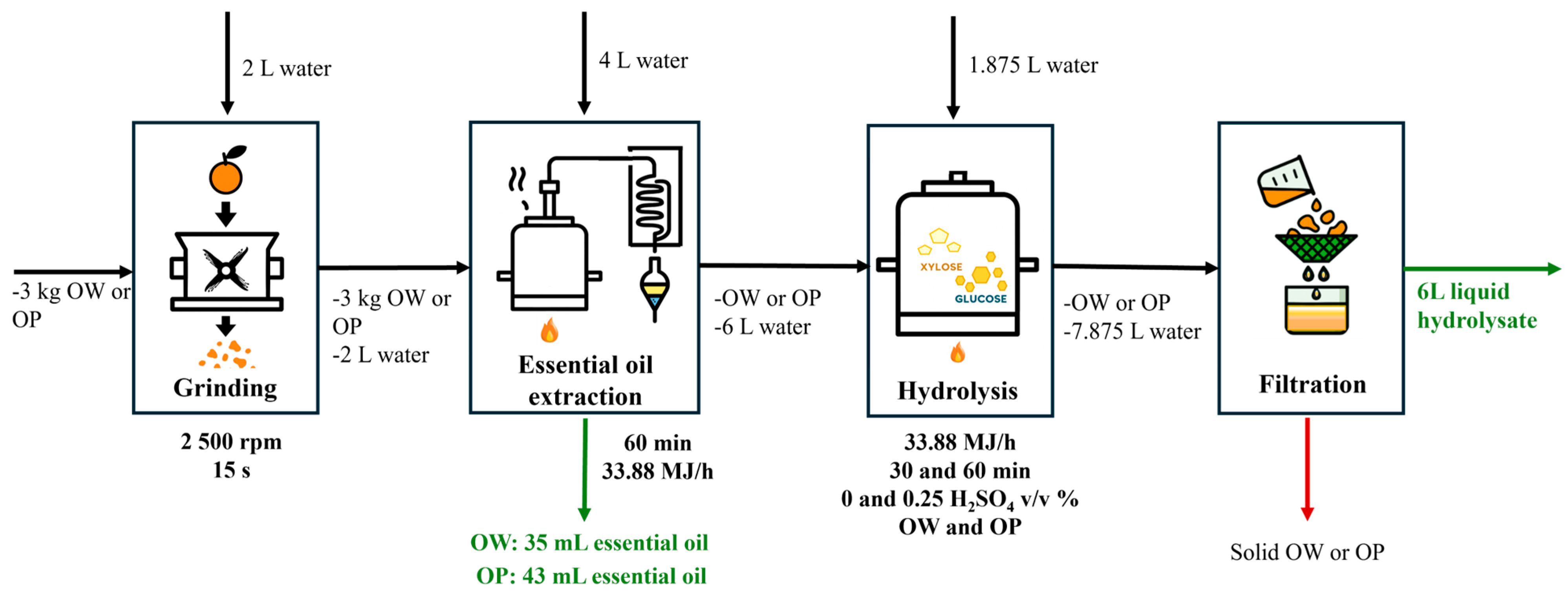
2.2. Essential Oil Extraction at Pilot Scale
2.3. Experimental Design for Glucose and Xylose Hydrolysis
2.4. Reaction Kinetics
2.5. Energy Consumption for Glucose and Xylose
3. Results and Discussion
3.1. Yields of Essential Oil Extraction at Pilot Scale
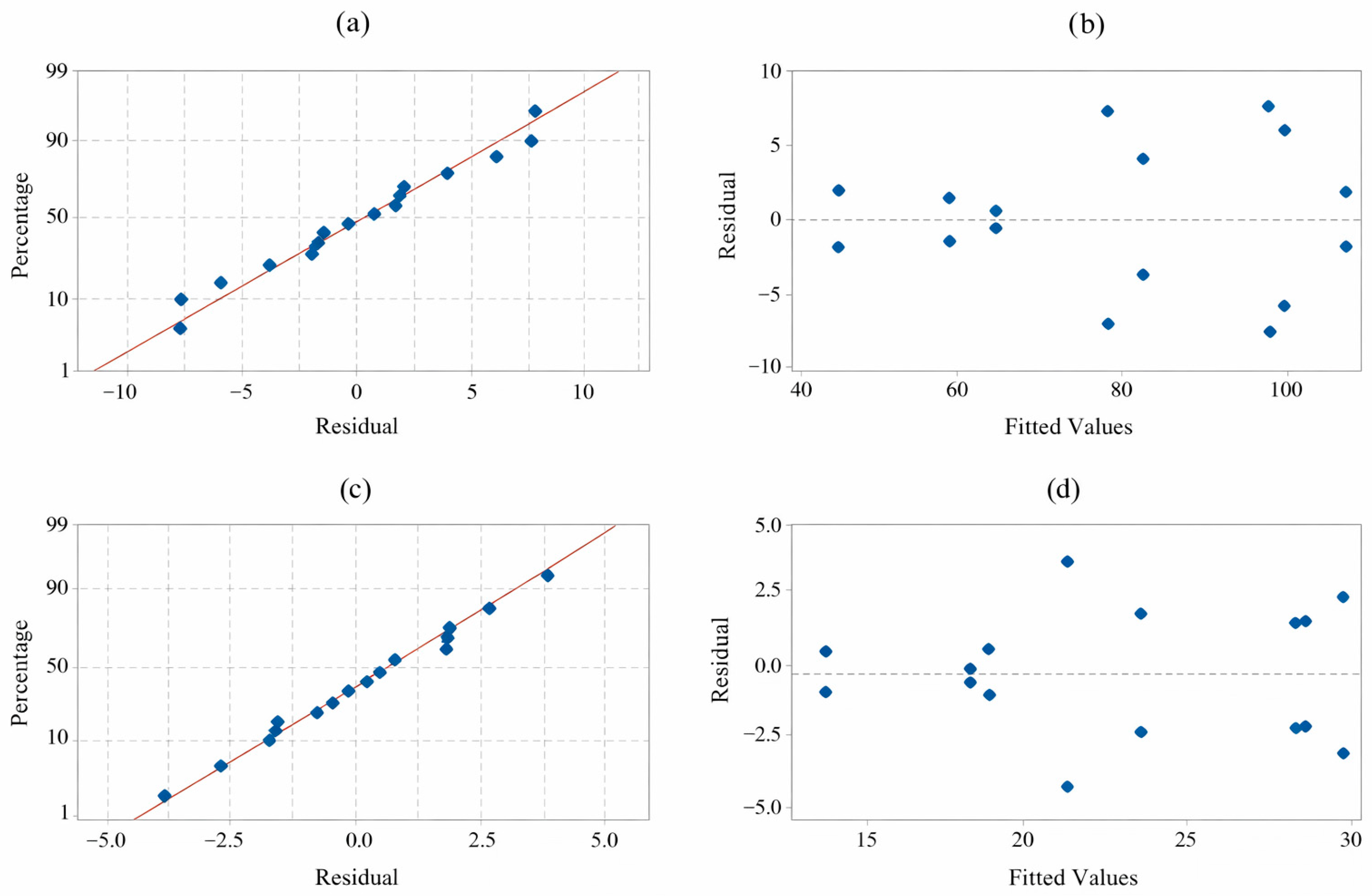
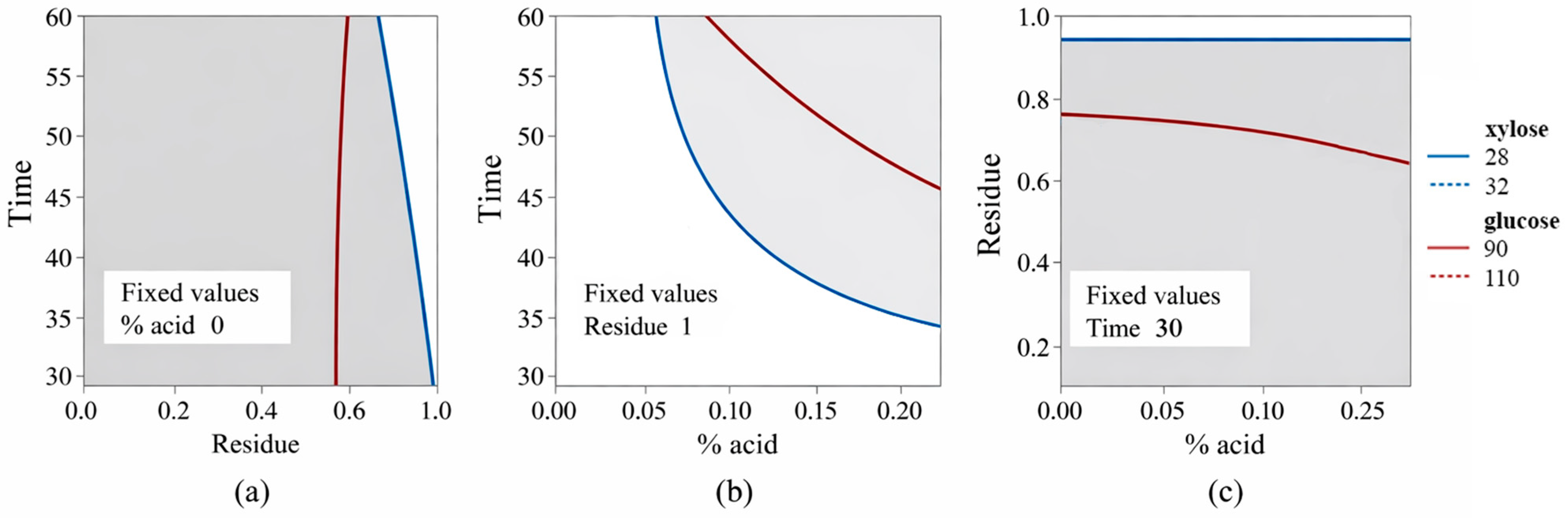
3.2. Factorial Design Applied to Glucose and Xylose
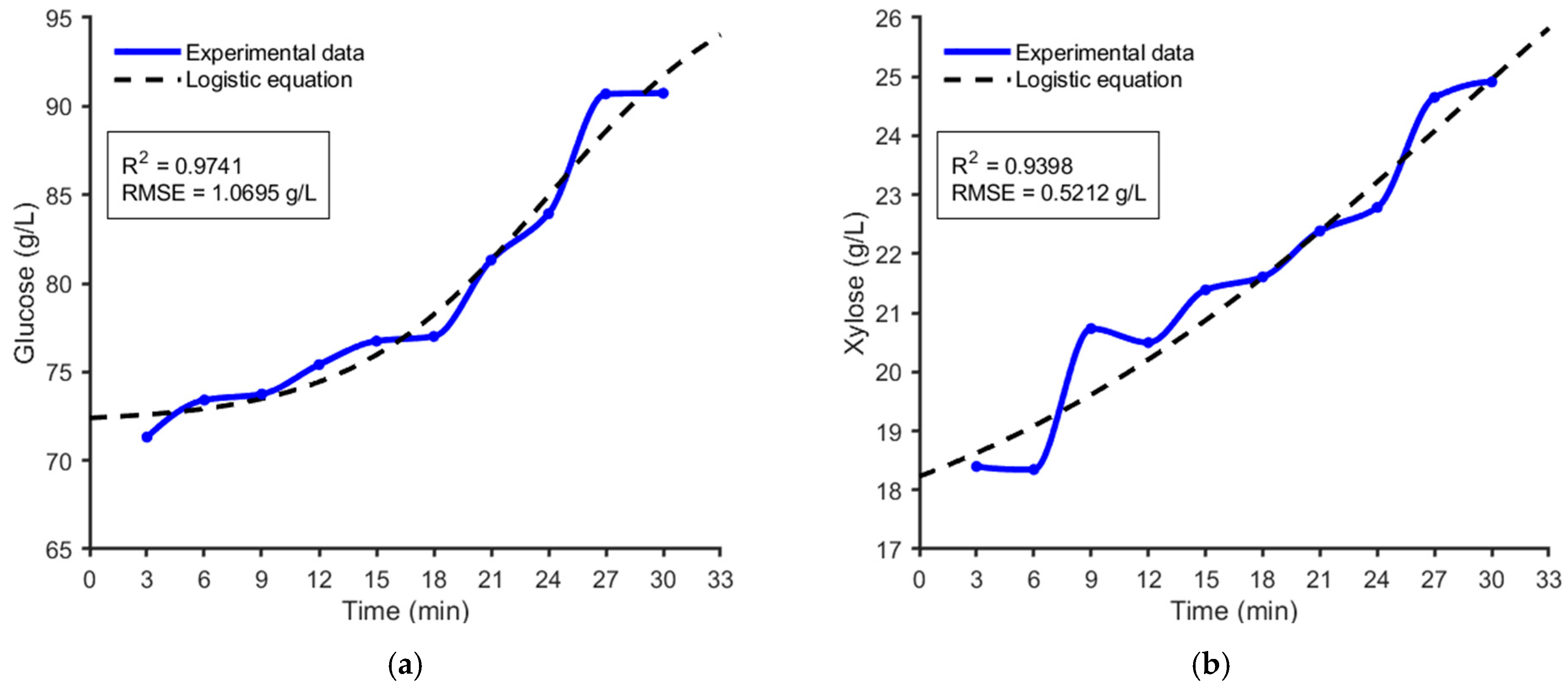
3.3. Reactions Kinetics
3.4. Results Discussions
3.5. Process Energy Consumption and Cost
4. Conclusions
Author Contributions
Funding
Data Availability Statement
Acknowledgments
Conflicts of Interest
References
- Maqbool, Z.; Khalid, W.; Atiq, H.T.; Koraqi, H.; Javaid, Z.; Alhag, S.K.; Al-Shuraym, L.A.; Bader, D.M.D.; Almarzuq, M.; Afifi, M.; et al. Citrus Waste as Source of Bioactive Compounds: Extraction and Utilization in Health and Food Industry. Molecules 2023, 28, 1636. [Google Scholar] [CrossRef] [Scilit] [PubMed]
- Food and Agriculture Organization of the United Nations. FAOSTAT. Available online: https://www.fao.org/faostat/en/#data (accessed on 28 November 2025).
- Consoli, S.; Caggia, C.; Russo, N.; Randazzo, C.L.; Continella, A.; Modica, G.; Cacciola, S.O.; Faino, L.; Reverberi, M.; Baglieri, A.; et al. Sustainable Use of Citrus Waste as Organic Amendment in Orange Orchards. Sustainability 2023, 15, 2482. [Google Scholar] [CrossRef] [Scilit]
- Lee, S.-H.; Park, S.H.; Park, H. Assessing the Feasibility of Biorefineries for a Sustainable Citrus Waste Management in Korea. Molecules 2024, 29, 1589. [Google Scholar] [CrossRef] [Scilit]
- Ortiz-Sanchez, M.; Cardona-Alzate, C.A.; Solarte-Toro, J.C. Orange Peel Waste as a Source of Bioactive Compounds and Valuable Products: Insights Based on Chemical Composition and Biorefining. Biomass 2024, 4, 107–131. [Google Scholar] [CrossRef] [Scilit]
- Midolo, G.; Cutuli, G.; Porto, S.M.C.; Ottolina, G.; Paini, J.; Valenti, F. LCA analysis for assessing environmenstal sustain a bility of new biobased chemicals by valorising citrus waste. Sci. Rep. 2024, 14, 21418. [Google Scholar] [CrossRef] [Scilit]
- Tsouko, E.; Maina, S.; Ladakis, D.; Kookos, I.K.; Koutinas, A. Integrated Biorefinery Development for the Extraction of Value-Added Components and Bacterial Cellulose Production from Orange Peel Waste Streams. Renew. Energy 2020, 160, 944–954. [Google Scholar] [CrossRef] [Scilit]
- Vilas-Boas, A.A.; Magalhães, D.; Gómez-García, R.; Campos, D.A.; Correia, M.; Pintado, M. Upcycled Orange Peel Ingredients: A Scoping Review on Phytochemical Composition, Extraction Techniques, and Biorefinery Strategies. Foods 2025, 14, 3766. [Google Scholar] [CrossRef] [Scilit]
- Gervasi, T.; Mandalari, G. Valorization of Agro-Industrial Orange Peel By-Products through Fermentation Strategies. Fermentation 2024, 10, 224. [Google Scholar] [CrossRef] [Scilit]
- Bustamante, D.; Tortajada, M.; Ramón, D.; Rojas, A. Production of D-Lactic Acid by the Fermentation of Orange Peel Waste Hydrolysate by Lactic Acid Bacteria. Fermentation 2020, 6, 1. [Google Scholar] [CrossRef] [Scilit]
- Patsalou, M.; Chrysargyris, A.; Tzortzakis, N.; Koutinas, M. A biorefinery for conversion of citrus peel waste into essential oils, pectin, fertilizer and succinic acid via different fermentation strategies. Waste Manag. 2020, 113, 469–477. [Google Scholar] [CrossRef] [Scilit]
- Soni, S. Limonene production: Insights, techniques, and future directions. Ind. Biotechnol. 2025, 21, 119–130. [Google Scholar] [CrossRef] [Scilit]
- El Hachlafi, N.; Elbouzidi, A.; Batbat, A.; Taibi, M.; Jeddi, M.; Addi, M.; Naceiri Mrabti, H.; Fikri-Benbrahim, K. Chemical Composition and Assessment of the Anti-Inflammatory, Antioxidant, Cytotoxic and Skin Enzyme Inhibitory Activities of Citrus sinensis (L.) Osbeck Essential Oil and Its Major Compound Limonene. Pharmaceuticals 2024, 17, 1652. [Google Scholar] [CrossRef] [Scilit]
- Giannopoulou, D.; Lampropoulou, A.; Maragou, M.; Koliadima, A. Exploring the influence of different vegetable oils on the stability of nanoemulsions in the presence and absence of nisin and limonene. J. Chem. Technol. Biotechnol. 2025, 100, 645–653. [Google Scholar] [CrossRef] [Scilit]
- Lin, H.; Li, Z.; Sun, Y.; Zhang, Y.; Wang, S.; Zhang, Q.; Cai, T.; Xiang, W.; Zeng, C.; Tang, J. D-Limonene: Promising and sustainable natural bioactive compound. Appl. Sci. 2024, 14, 4605. [Google Scholar] [CrossRef] [Scilit]
- Wang, X.; Huang, S.; Wang, S.; Chen, S.; Dong, S.; Zhu, Y. Effect of D-limonene on volatile fatty acids production from anaerobic fermentation of waste activated sludge under pH regulation: Performance and mechanisms. J. Environ. Manag. 2024, 370, 122828. [Google Scholar] [CrossRef] [Scilit]
- Pyo, Y.; Jung, Y.J. Microbial fermentation and therapeutic potential of p-cymene: Insights into biosynthesis and antimicrobial bioactivity. Fermentation 2024, 10, 488. [Google Scholar] [CrossRef] [Scilit]
- Ricci, A.; Rodolfi, M.; Cirlini, M.; Ganino, T.; Bernini, V.; Lazzi, C. Fermentation of orange pomace: Impact on essential oil composition and antimicrobial activity. Food Biosci. 2024, 61, 104677. [Google Scholar] [CrossRef] [Scilit]
- Saldanha, L.F.; Longo, V.D.; Romani, L.C.; Klein, G.H.; Camargo, A.F.; Fornari, A.C.; Bazoti, S.F.; Alves, S.L.; Treichel, H. Use of mixed fruit waste aimed at producing bioethanol and extracting D-limonene. Waste Biomass Valorization 2025, 16, 871–879. [Google Scholar] [CrossRef] [Scilit]
- Gutiérrez, M.C.; Serrano, A.; Alonso-Fariñas, B.; Siles, J.A.; Martín, M.A. Impact of D-limonene in the technical and economic feasibility of the anaerobic digestion applied in biorefineries. Biomass Convers. Biorefinery 2024, 14, 14877–14888. [Google Scholar] [CrossRef] [Scilit]
- Bouaita, R.; Derbal, K.; Panico, A.; Iasimone, F.; Pontoni, L.; Fabbricino, M.; Pirozzi, F. Methane Production from Anaerobic Co-Digestion of Orange Peel Waste and Organic Fraction of Municipal Solid Waste in Batch and Semi-Continuous Reactors. Biomass Bioenergy 2022, 160, 106421. [Google Scholar] [CrossRef] [Scilit]
- Carvalho, A.; Fragoso, R.; Gominho, J.; Duarte, E. Effect of Minimizing d-Limonene Compound on Anaerobic Co-Digestion Feeding Mixtures to Improve Methane Yield. Waste Biomass Valorization 2019, 10, 75–83. [Google Scholar] [CrossRef] [Scilit]
- Durán-Aranguren, D.D.; Yamakawa, C.K.; Ordenana, J.; Sierra, R.; Posada, J.A.; Mussatto, S.I. An Experimental Cascade Biorefinery from Orange Residues: Sequential Recovery of Bioactive Compounds, Pectin, and Fermentation of Sugar-Rich Side Streams Using Conventional and Non-Conventional Yeasts. Biomass Bioenergy 2025, 193, 107514. [Google Scholar] [CrossRef] [Scilit]
- Medina-Herrera, N.; Martínez-Ávila, G.C.G.; Robledo-Jiménez, C.L.; Rojas, R.; Orozco-Zamora, B.S. From Citrus Waste to Valuable Resources: A Biorefinery Approach. Biomass 2024, 4, 784–808. [Google Scholar] [CrossRef] [Scilit]
- Kasaeian, A.; Fereidooni, L.; Ahmadbeigi, A.; Kahedi, S.; Koohshoori, M.S.; Ghafarian, S.; Tajmousavilangerudi, A.; Salaripoor, H. Review on Bioethanol Production from Fruit Peels. Waste Biomass Valorization 2025, 16, 2669–2691. [Google Scholar] [CrossRef] [Scilit]
- Armenta, J.M.; Armenta, E.E.; Ayala, J.R.; Coronado, M.A.; Montes, D.G.; Quintana, L. Hydrolysis Assessment of Orange Peel and Brewer’s Spent Grain for Bioethanol Production. Processes 2025, 13, 1974. [Google Scholar] [CrossRef] [Scilit]
- da Costa, G.D.F.; Lima, P.V.; Cavalcante, R.M.; Young, A.F.; Araújo, O.Q. Simulation of Biorefinery for the Production of Limonene, Bio-Fertilizer and Biomethane from Orange Peels. In Proceedings of the 19th Conference on Sustainable Development of Energy, Water and Environment Systems (SDEWES 2024), Rome, Italy, 9–13 September 2024. [Google Scholar]
- Marchette, I.R.; Cavallari, R.B.C.; Rothier, F.D.C.; Bojorge, N.I.B.R.; Alhadeff, E.M.; Young, A.F.; dos Santos, B.F. Economic Assessment and Process Design to Valorize Citrus Juice Industry Waste. Biofuels Bioprod. Biorefining 2025, 19, 616–633. [Google Scholar] [CrossRef] [Scilit]
- Suzuki, L.L.; Cunha, I.L.C.; Teixeira, C.E.; Kulay, L.; dos Santos, M.T. The Modeling and Simulation of Waste Recovery Processes Applied to the Orange Juice Industry. Sustainability 2023, 15, 15225. [Google Scholar] [CrossRef] [Scilit]
- Manakas, P.; Balafoutis, A.T.; Kottaridi, C.; Vlysidis, A. Sustainability Assessment of Orange Peel Waste Valorization Pathways from Juice Industries. Biomass Convers. Biorefinery 2025, 15, 6525–6544. [Google Scholar] [CrossRef] [Scilit]
- Venkataraman, S.; Rajendran, D.S.; Kumar, P.S.; Rangasamy, G.; Vaidyanathan, V.K. A Comprehensive Review on the Refinery of Citrus Peel towards the Production of Bioenergy, Biochemical and Biobased Value-Added Products: Present Insights and Futuristic Challenges. Waste Biomass Valorization 2024, 15, 6491–6512. [Google Scholar] [CrossRef] [Scilit]
- Ortiz-Sánchez, M.; Piedrahita-Rodríguez, S.; Serna, D.L.R.; Alzate, C.A.C. Prefeasibility Analysis of Supercritical Fluid Extraction of Polyphenols from Orange as Part of Food Waste Biorefineries. In Bioactive Compounds; CRC Press: Boca Raton, FL, USA, 2025; pp. 91–109. [Google Scholar]
- Ortiz-Sanchez, M.; Agudelo-Patiño, T.; Cardona Alzate, C.A. Maximizing the Hesperidin Extraction Using Supercritical Carbon Dioxide and Ethanol: Theoretical Prediction and Experimental Results. Processes 2024, 12, 2457. [Google Scholar] [CrossRef] [Scilit]
- González-Miquel, M.; Díaz, I. Valorization of Citrus Waste through Sustainable Extraction Processes. In Food Industry Wastes; Academic Press: Cambridge, MA, USA, 2020; pp. 113–133. [Google Scholar] [CrossRef] [Scilit]
- Mohsin, A.; Hussain, M.H.; Zaman, W.Q.; Mohsin, M.Z.; Zhang, J.; Liu, Z.; Tian, X.; Salim-ur-Rehman; Khan, I.M.; Niazi, S.; et al. Advances in Sustainable Approaches Utilizing Orange Peel Waste to Produce Highly Value-Added Bioproducts. Crit. Rev. Biotechnol. 2022, 42, 1284–1303. [Google Scholar] [CrossRef] [Scilit]
- Mahato, N.; Sharma, K.; Sinha, M.; Dhyani, A.; Pathak, B.; Jang, H.; Park, S.; Pashikanti, S.; Cho, S. Biotransformation of Citrus Waste-I: Production of Biofuel and Valuable Compounds by Fermentation. Processes 2021, 9, 220. [Google Scholar] [CrossRef] [Scilit]
- Chithra, M.; Krishna, K.R.; Rakesh, S.; Kumar, A.R.; Manoprabha, M. Exploring Breadfruit Peel Waste as a Potential Source for Bio-Ethanol Production. Biomass Convers. Biorefinery 2025, 15, 13861–13869. [Google Scholar] [CrossRef] [Scilit]
- Ejaz, U.; Hanif, A.; Khan, A.A.; Jawad, L.; Rasheed, I.; Noor, B.; Alswat, A.S.; Sohail, M. Production and Characterization of Pectinase through Solid-State Fermentation of Orange Peels by a Mutant Yeast Strain. Int. J. Food Sci. 2025, 2025, 8853746. [Google Scholar] [CrossRef] [Scilit]
- Stavrakakis, I.; Melidis, P.; Kavroulakis, N.; Goliomytis, M.; Simitzis, P.; Ntougias, S. Bioeconomy-Based Approaches for the Microbial Valorization of Citrus Processing Waste. Microorganisms 2025, 13, 1891. [Google Scholar] [CrossRef] [Scilit]
- Kashyap, S. Bio-Valorization of Citrus Waste for the Production of Bioactive Molecules for Food Applications. In Microbial Bioprocessing of Agri-Food Wastes; CRC Press: Boca Raton, FL, USA, 2023; pp. 21–44. [Google Scholar] [CrossRef] [Scilit]
- Guerrero-Martin, C.A.; Rojas-Sanchez, A.N.; Cruz-Pinzón, D.F.; Milquez-Sanabria, H.A.; Sotelo-Tobon, D.L.; da Cunha, A.L.R.; Salinas-Silva, R.; Camacho-Galindo, S.; Costa Gomes, V.J.; Cunha Malagueta, D. The Advantage of Citrus Residues as Feedstock for Biogas Production: A Two-Stage Anaerobic Digestion System. Energies 2024, 17, 1315. [Google Scholar] [CrossRef] [Scilit]
- Chubur, V.; Hasan, G.; Kára, J.; Hanzlíková, I.; Chernysh, Y.; Sedláček, J.; Wang, J.; Roubík, H. Utilization of Citrus, Date, and Jujube Substrates for Anaerobic Digestion Processes. Biofuels Bioprod. Biorefining 2024, 18, 1917–1929. [Google Scholar] [CrossRef] [Scilit]
- Yadav, V.; Sarker, A.; Yadav, A.; Miftah, A.O.; Bilal, M.; Iqbal, H.M. Integrated Biorefinery Approach to Valorize Citrus Waste: A Sustainable Solution for Resource Recovery and Environmental Management. Chemosphere 2022, 293, 133459. [Google Scholar] [CrossRef] [Scilit]
- Satari, B.; Karimi, K. Citrus Processing Wastes: Environmental Impacts, Recent Advances, and Future Perspectives in Total Valorization. Resour. Conserv. Recycl. 2018, 129, 153–167. [Google Scholar] [CrossRef] [Scilit]
- Armenta, E.E.; Coronado, M.A.; Ayala, J.R.; León, J.A.; Montes, D.G. Essential Oil Extraction for All: A Flexible and Modular System for Citrus Biomass Waste. BioResources 2023, 18, 4977–4993. [Google Scholar] [CrossRef] [Scilit]
- Patsalou, M.; Samanides, C.G.; Protopapa, E.; Stavrinou, S.; Vyrides, I.; Koutinas, M. A Citrus Peel Waste Biorefinery for Ethanol and Methane Production. Molecules 2019, 24, 2451. [Google Scholar] [CrossRef] [Scilit]
- Suresh, A.; Velusamy, S.; Ayyasamy, S.; Rathinasamy, M. Techniques for Essential Oil Extraction from Kaffir Lime and Its Application in Health Care Products—A Review. Flavour Fragr. J. 2021, 36, 5–21. [Google Scholar] [CrossRef] [Scilit]
- Mosier, N.; Wyman, C.; Dale, B.; Elander, R.; Lee, Y.Y.; Holtzapple, M.; Ladisch, M. Features of Promising Technologies for Pretreatment of Lignocellulosic Biomass. Bioresour. Technol. 2005, 96, 673–686. [Google Scholar] [CrossRef] [Scilit]
- Munir, H.; Yaqoob, S.; Awan, K.A.; Imtiaz, A.; Naveed, H.; Ahmad, N.; Naeem, M.; Sultan, W.; Ma, Y. Unveiling the Chemistry of Citrus Peel: Insights into Nutraceutical Potential and Therapeutic Applications. Foods 2024, 13, 1681. [Google Scholar] [CrossRef] [Scilit] [PubMed]
- Yousef, T.A.; Hussein, R.K.; Alhamzani, A.G.; Al-Enazi, A.T.; Al-Osimi, M.B.; Abou-Krisha, M.M. Environment-Friendly Corrosion Inhibitors for Aluminum in Hydrochloric Acid: Quantum and Experimental Research. Metals 2022, 12, 1538. [Google Scholar] [CrossRef] [Scilit]
- Ayala, J.R.; Montero, G.; Coronado, M.A.; García, C.; Curiel-Alvarez, M.A.; León, J.A.; Sagaste, C.A.; Montes, D.G. Characterization of Orange Peel Waste and Valorization to Obtain Reducing Sugars. Molecules 2021, 26, 1348. [Google Scholar] [CrossRef] [Scilit] [PubMed]
- Fogler, H.S.; Goldsmith, B.R.; Nikolla, E.; Singh, N. Elements of Chemical Reaction Engineering, 7th ed.; Chapter 7, Section 7.5 “Nonlinear Regression”; Pearson: London, UK, 2025; pp. 290–294. [Google Scholar]
- Tjørve, K.M.C.; Tjørve, E. The Use of Gompertz Models in Growth Analyses, and New Gompertz-Model Approach: An Addition to the Unified-Richards Family. PLoS ONE 2017, 12, e0178691. [Google Scholar] [CrossRef] [Scilit]
- Cumberland, W.N.; Fong, Y.; Yu, X.; Defawe, O.; Frahm, N.; De Rosa, S. Nonlinear Calibration Model Choice between the Four and Five-Parameter Logistic Models. J. Biopharm. Stat. 2015, 25, 972–983. [Google Scholar] [CrossRef] [Scilit]
- Manyako, K.E.; Chiyanzu, I.; Mulopo, J.; Abdulsalam, J. Pilot-Scale Evaluation of Concentrating Solar Thermal Technology for Essential Oil Extraction and Comparison with Conventional Heating Sources for Use in Agro-Based Industrial Applications. ACS Omega 2022, 7, 20477–20485. [Google Scholar] [CrossRef] [Scilit]
- León, C.; Jordán, E.P.; Salazar, K.; Castellanos, E.X.; Salazar, F.W. Extraction System for the Industrial Use of Essential Oil of the Subtle Lemon (Citrus aurantifolia). J. Phys. Conf. Ser. 2020, 1432, 012044. [Google Scholar] [CrossRef] [Scilit]
- Armenta, E.E.; Armenta, J.M.; Coronado, M.A.; Ayala, J.R. Systems and Methods for Citrus Essential Oil Isolation: A Patent Review. J. Essent. Oil Res. 2024, 36, 94–104. [Google Scholar] [CrossRef] [Scilit]
- Corona Vázquez, B.; Roa-Morales, G.; Natividad, R.; Balderas-Hernández, P.; Saucedo-Luna, J. Thermal Hydrolysis of Orange Peel and Its Fermentation with Alginate Beads to Produce Ethanol. BioResources 2017, 12, 2955–2964. [Google Scholar] [CrossRef] [Scilit]
- Vinotha, T.; Umamaheswari, N.; Pandiyan, J.; Al-Ghanim, K.A.; Nicoletti, M.; Govindarajan, M. Biofuel Production from Mango and Orange Peel and Tapioca Shells by Fermentation Using Consortium of Bacteria: Agricultural and Food Waste Valorization. Fermentation 2023, 9, 678. [Google Scholar] [CrossRef] [Scilit]
- Ortiz, W.G.C.; Gordillo, J.F.I.; Velásquez, L.M.C.; Bueno, A.F.H. Cuantificación de azúcares reductores en las cáscaras de naranja y banano. Rev. Tecnol. 2013, 12, 72–76. [Google Scholar]
- Tejada Benítez, L.; Tejada Tovar, C.; Villabona Ortiz, Á.; Tarón Dunoyer, A.; Alvear, M.; Castillo, C.; Henao, D.; Marimón, W.; Madariaga, N. Producción de bioetanol a partir de la fermentación alcohólica de jarabes glucosados derivados de cáscaras de naranja y piña. Rev. Educ. Ing. 2010, 5, 120–125. [Google Scholar]



| Time (min) | 1: With Pulp 2: Without Pulp | Acid (% v/v) | Concentration (g/L) | |
|---|---|---|---|---|
| Glucose | Xylose | |||
| 30 | 1 | 0 | 108.50 | 30.38 |
| 30 | 1 | 0 | 104.72 | 26.78 |
| 30 | 1 | 0.25 | 92.40 | 26.50 |
| 30 | 1 | 0.25 | 104.80 | 30.22 |
| 30 | 2 | 0 | 46.71 | 14.19 |
| 30 | 2 | 0 | 42.56 | 13.22 |
| 30 | 2 | 0.25 | 69.54 | 20.06 |
| 30 | 2 | 0.25 | 84.82 | 18.52 |
| 60 | 1 | 0 | 104.61 | 32.38 |
| 60 | 1 | 0 | 89.01 | 26.82 |
| 60 | 1 | 0.25 | 85.29 | 25.99 |
| 60 | 1 | 0.25 | 77.03 | 22.17 |
| 60 | 2 | 0 | 64.34 | 18.89 |
| 60 | 2 | 0 | 63.04 | 18.42 |
| 60 | 2 | 0.25 | 56.84 | 17.97 |
| 60 | 2 | 0.25 | 60.08 | 25.75 |
| Glucose | Xylose | |||||||||||
|---|---|---|---|---|---|---|---|---|---|---|---|---|
| Source | df | Sum of Squares | Mean Square | Contribution | F-Value | p-Value | df | Sum of Squares | Mean Square | Contribution | F-Value | p-Value |
| Model | 7 | 6611.88 | 944.55 | 94.68% | 20.35 | 0.00017 | 7 | 449.79 | 64.26 | 86.84% | 7.54 | 0.00534 |
| Time (A) | 1 | 180.97 | 180.97 | 2.59% | 3.90 | 0.08373 | 1 | 4.54 | 4.54 | 0.88% | 0.53 | 0.48631 |
| Waste (B) | 1 | 4845.20 | 4845.20 | 69.38% | 104.40 | 0.00001 | 1 | 344.23 | 344.23 | 66.46% | 40.40 | 0.00022 |
| % acid (C) | 1 | 3.34 | 3.34 | 0.05% | 0.07 | 0.79528 | 1 | 2.33 | 2.33 | 0.45% | 0.27 | 0.61520 |
| A × B | 1 | 190.10 | 190.10 | 2.72% | 4.10 | 0.07759 | 1 | 29.05 | 29.05 | 5.61% | 3.41 | 0.10206 |
| A × C | 1 | 515.63 | 515.63 | 7.38% | 11.11 | 0.01033 | 1 | 14.75 | 14.75 | 2.85% | 1.73 | 0.22475 |
| B × C | 1 | 649.61 | 649.61 | 9.30% | 14.00 | 0.00569 | 1 | 52.76 | 52.76 | 10.19% | 6.19 | 0.03763 |
| A × B × C | 1 | 227.03 | 227.03 | 3.25% | 4.89 | 0.05792 | 1 | 2.13 | 2.13 | 0.41% | 0.25 | 0.63032 |
| Error | 8 | 371.26 | 46.41 | 5.32% | 8 | 68.17 | 8.52 | 13.16% | ||||
| Total | 15 | 6983.14 | 100% | 15 | 517.96 | 100.00% | ||||||
| Reference | Glucose (g/L) | Xylose (g/L) | Method | Conditions |
|---|---|---|---|---|
| Current study | 108.5 | 32.4 | Hydrolysis of OW, 0% H2SO4, prior integration with EO extraction | Modular system; reaction times of 30–60 min; wet, pulp-containing residue; no enzymes or supercritical CO2; absence of acid. |
| Armenta et al., 2025 [26] | 52.14 | 15.7 | Dilute acid hydrolysis of OP | 0, 0.5, and 1% H2SO4 at 125 °C; factorial design evaluating temperature, acid concentration, and time. |
| Corona Vázquez et al., 2017 [58] | 18 | 7 | Thermal hydrolysis of OP (high temperature and pressure) in the presence of H2SO4 | 120–180 °C, 600–1000 kPa, 30 min; agitation at 350 rpm; subsequent fermentation with immobilized yeast. |
| Vinotha et al., 2023 [59] | 1.75 1 | NA | Supercritical CO2 extraction/pretreatment followed by subsequent hydrolysis steps | Supercritical CO2 (>73 atm), high temperature; use of organic solvents and additional processing stages. |
| Patsalou et al., 2019 [46] | NA | NA | Distillation and acid hydrolysis | Storage at −20 °C; use of OW. EO extraction for 24 h at 70 °C. Acid hydrolysis with 0.5% v/v H2SO4 followed by enzymatic hydrolysis. Fermentation with P. kudriavzevii KVMP10 and S. cerevisiae strains. |
| Ayala et al., 2021 [51] | 24.6 | NA | Hydrolysis of fermentable sugars from OP | Moderate hydrolysis conditions of 0.5, 1, and 1.5% v/v; focus on characterization and integral valorization. |
| Tsouko et al., 2020 [7] | 4.9 1 | NA | Integrated stages for EO, pectin, ethanol, and methane production | Multi-stage sequence including EO and phenol extraction, acid hydrolysis, and an enzymatic step aimed at producing bacterial cellulose and other products. |
| Ortiz et al., 2013 [60] | 59.88 1 | NA | Delignification and acid hydrolysis | Particle size reduction to 3–5 mm, followed by NaOH delignification and subsequent acid hydrolysis. |
| Tejada et al., 2010 [61] | 80 1 | NA | Delignification and acid hydrolysis | NaOH delignification followed by acid hydrolysis with 5% v/v H2SO4. |
Disclaimer/Publisher’s Note: The statements, opinions and data contained in all publications are solely those of the individual author(s) and contributor(s) and not of MDPI and/or the editor(s). MDPI and/or the editor(s) disclaim responsibility for any injury to people or property resulting from any ideas, methods, instructions or products referred to in the content. |
© 2026 by the authors. Licensee MDPI, Basel, Switzerland. This article is an open access article distributed under the terms and conditions of the Creative Commons Attribution (CC BY) license.
Share and Cite
Armenta, E.E.; Coronado, M.A.; Ayala, J.R.; Armenta, J.M.; Montes, D.G.; Rojano, B.A. Glucose and Xylose Production Under a Biorefinery Approach: Essential Oil Extraction, Hydrolysis of Orange Residues, and Reaction Kinetics at Pilot Scale. Processes 2026, 14, 1154. https://doi.org/10.3390/pr14071154
Armenta EE, Coronado MA, Ayala JR, Armenta JM, Montes DG, Rojano BA. Glucose and Xylose Production Under a Biorefinery Approach: Essential Oil Extraction, Hydrolysis of Orange Residues, and Reaction Kinetics at Pilot Scale. Processes. 2026; 14(7):1154. https://doi.org/10.3390/pr14071154
Chicago/Turabian StyleArmenta, Edson E., Marcos A. Coronado, José R. Ayala, Jesús M. Armenta, Daniela G. Montes, and Benjamín A. Rojano. 2026. "Glucose and Xylose Production Under a Biorefinery Approach: Essential Oil Extraction, Hydrolysis of Orange Residues, and Reaction Kinetics at Pilot Scale" Processes 14, no. 7: 1154. https://doi.org/10.3390/pr14071154
APA StyleArmenta, E. E., Coronado, M. A., Ayala, J. R., Armenta, J. M., Montes, D. G., & Rojano, B. A. (2026). Glucose and Xylose Production Under a Biorefinery Approach: Essential Oil Extraction, Hydrolysis of Orange Residues, and Reaction Kinetics at Pilot Scale. Processes, 14(7), 1154. https://doi.org/10.3390/pr14071154